
Vienna is not simply a city you visit, it is a city you hear. There is a rhythm to it, a quiet elegance shaped by centuries of music that still lingers in its streets, its grand halls, and even in its quieter corners. From the soft echo of a violin in a narrow passageway to the anticipation that builds outside its most celebrated concert venues, Vienna offers an experience that feels both sensory and deeply rooted in history.
Names like Wolfgang Amadeus Mozart, Ludwig van Beethoven, and Johann Strauss II are not confined to the past here. They are present in the city’s architecture, its cultural rhythm, and the way music continues to be performed and appreciated today. Walking through Vienna, you are not just encountering landmarks, you are stepping into a living musical narrative, one that continues to evolve while remaining deeply connected to its origins.
Vienna’s Musical Soul at a Glance
🎻 Three composers, one city · Mozart, Beethoven, and Johann Strauss II all worked in Vienna and rest at the Zentralfriedhof.
🏛️ Vienna State Opera · Built 1861–1869 on the Ringstrasse. Bombed in 1945 and reopened on 5 November 1955 with Beethoven’s Fidelio.
🎼 Musikverein · Theophil Hansen’s 1870 concert hall on Karlsplatz. The Goldener Saal hosts the Vienna Philharmonic’s annual New Year’s Concert.
🌹 Strauss monument · Edmund Hellmer’s gilded bronze “Waltz King,” unveiled in Stadtpark on 26 June 1921. Stripped in 1935, regilded in 1991.
🏠 Composer homes · Mozarthaus (Domgasse 5, 1784–87, where The Marriage of Figaro was written) and Pasqualati House (Mölker Bastei 8, where Beethoven sketched the 5th, 6th, and 7th symphonies).
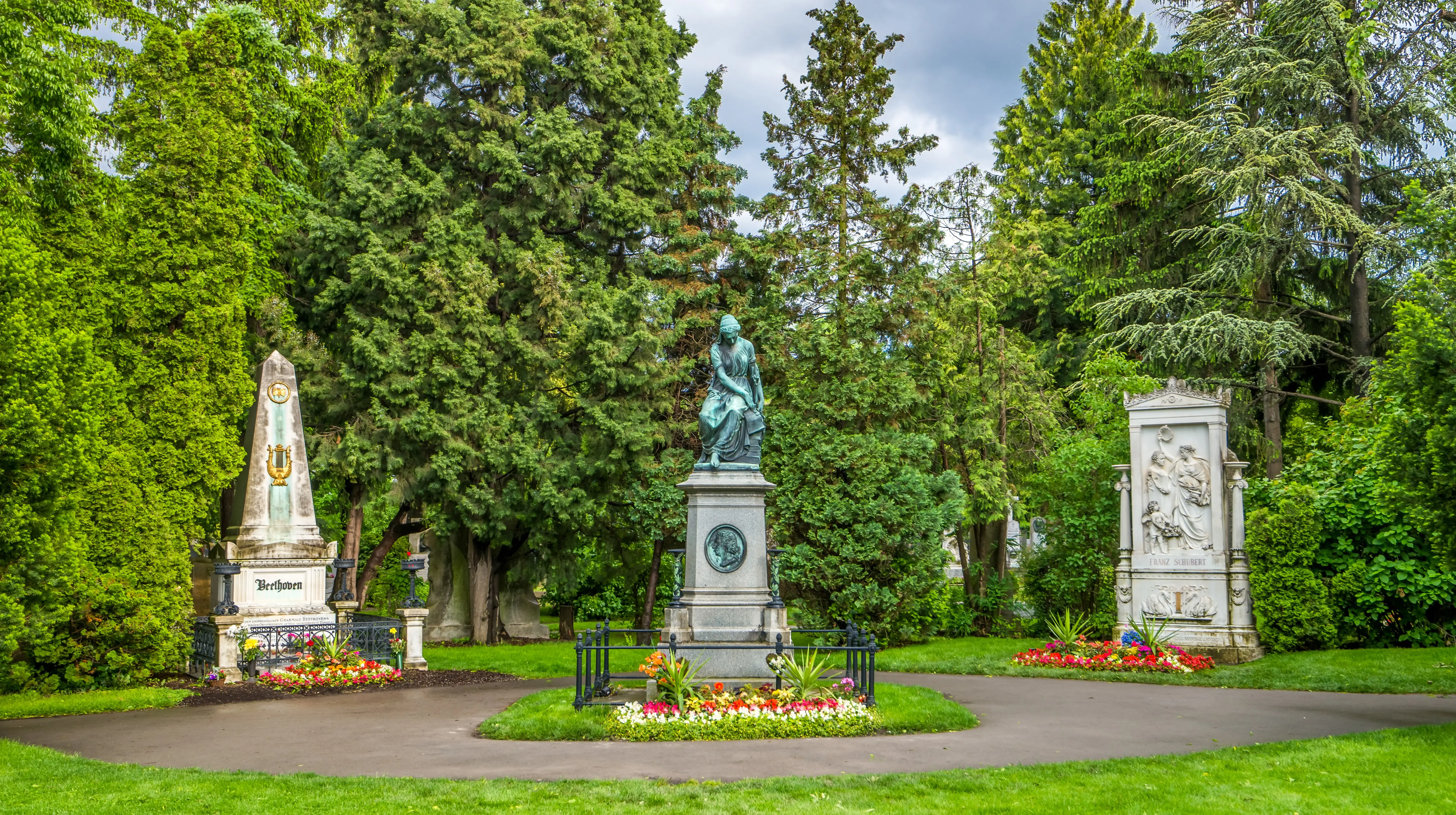
⚱️ Zentralfriedhof Group 32A · The Musicians’ Graves. Beethoven and Schubert were reinterred here in 1888, with a Mozart cenotaph between them.
A City Shaped by Music
Vienna’s identity as a global centre of classical music was shaped over centuries, during a time when the city stood at the heart of the Habsburg Empire. Music flourished here not only because of the extraordinary talent of its composers, but also because of the environment that supported them: patronage from the imperial court, an audience that valued artistry, and a cultural landscape that encouraged innovation. Composers were drawn to Vienna because it offered opportunity, recognition, and a vibrant creative community. It was a place where ideas could be exchanged, where performances could reach influential audiences, and where music could evolve. Over time, this concentration of talent transformed Vienna into a city where music was not simply appreciated, it was essential.
What is particularly striking today is how this legacy has been preserved without feeling static. Vienna has managed to maintain its musical heritage while allowing it to remain part of everyday life. Concerts continue to fill historic venues, music education thrives, and the appreciation for classical composition remains deeply ingrained in the culture. It is this continuity that gives Vienna its distinctive character, where the past is not distant, but integrated into the present.
The Grandeur of Performance: Vienna State Opera
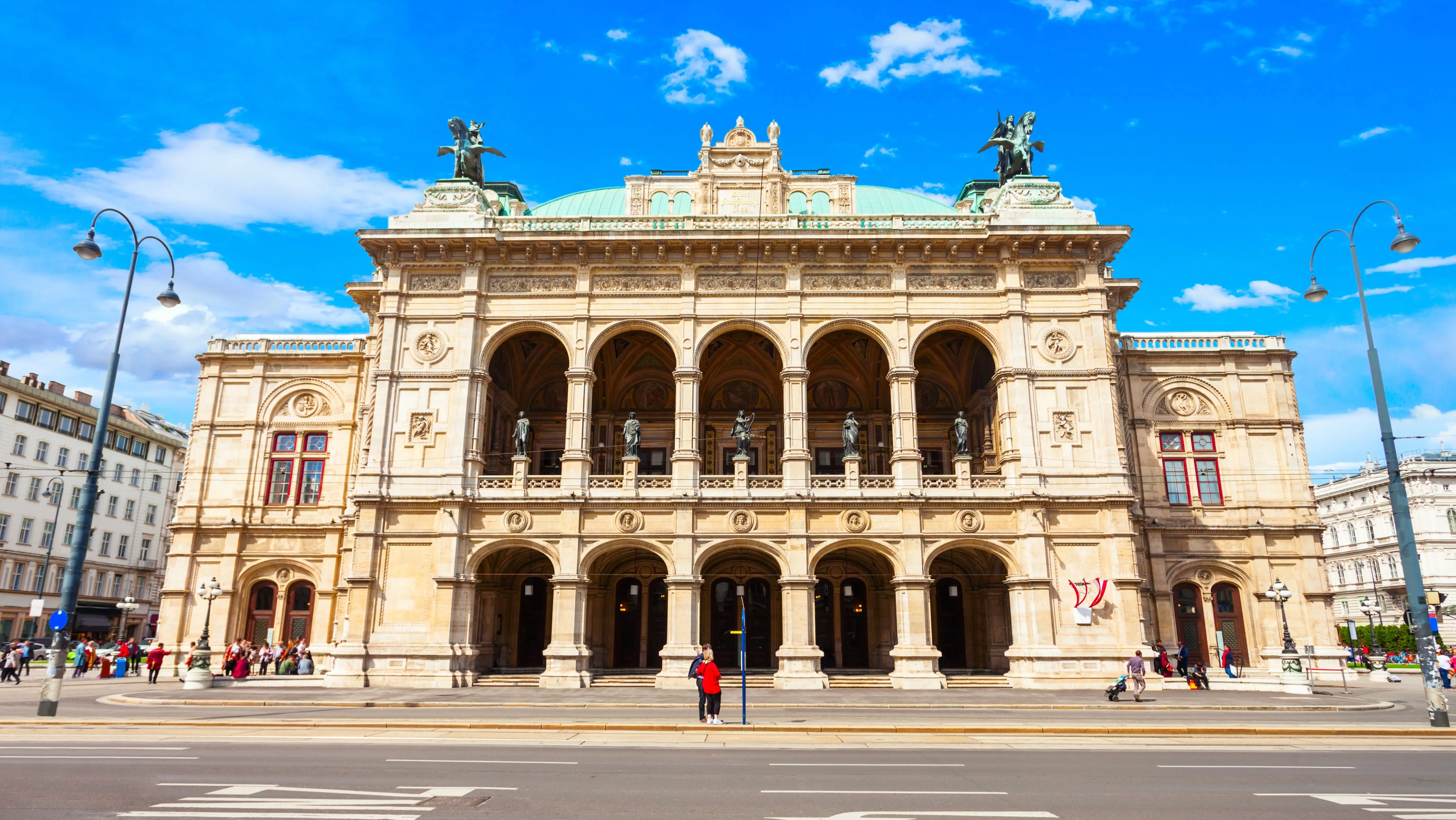
Few places capture the scale and significance of Vienna’s musical tradition as vividly as the Vienna State Opera. Located along the Ringstrasse, this iconic building stands as a symbol of the city’s dedication to performance and artistic excellence. The architecture itself reflects this commitment. With its ornate façade, arched windows, and carefully crafted details, the Opera conveys a sense of importance before you even step inside. It is a space designed not only for performance, but for experience, where attending an opera becomes an event in itself.
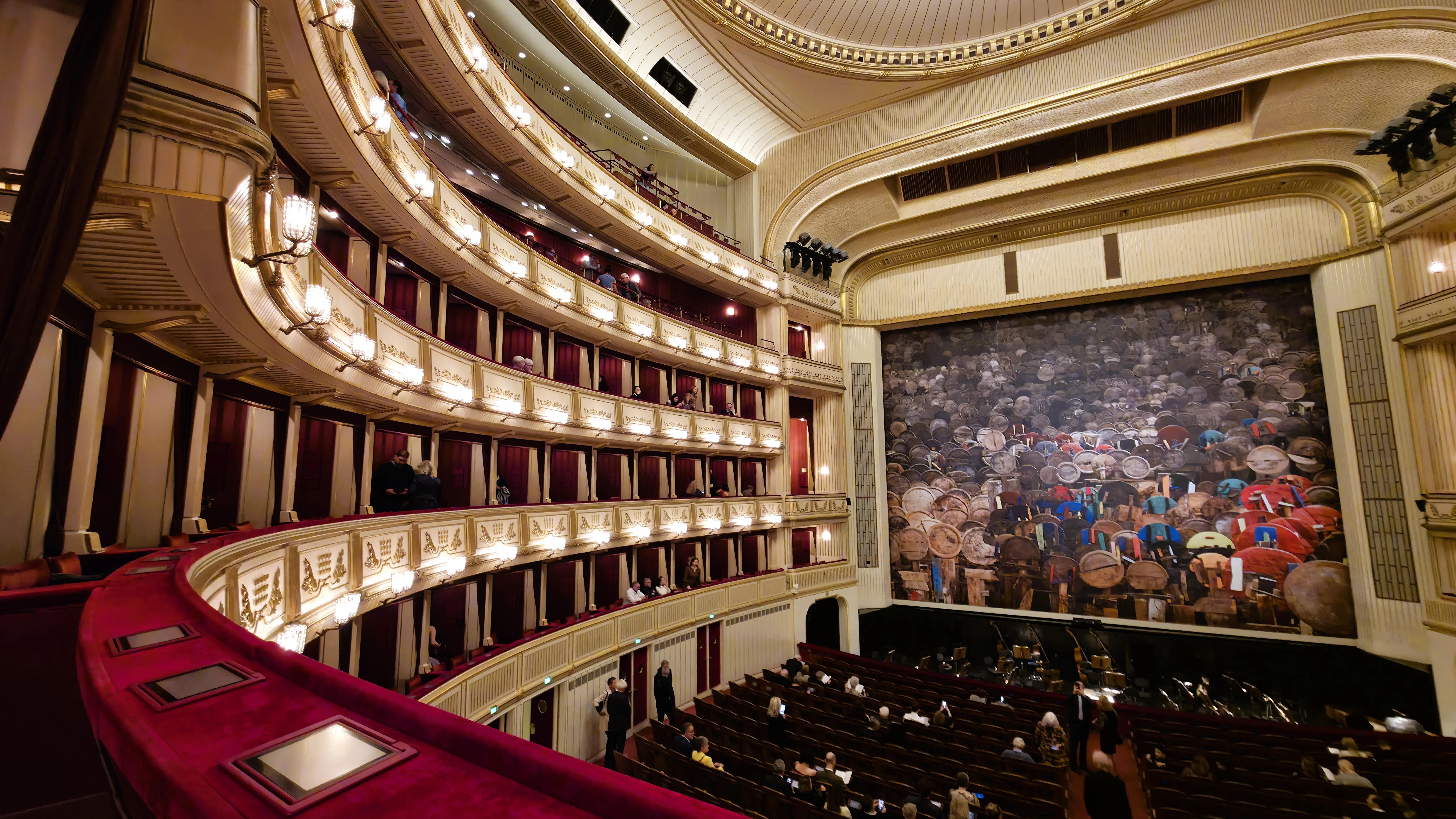
Even from the outside, there is a palpable sense of anticipation. Visitors gather, admire the structure, and imagine the performances taking place within its walls. Inside, the Opera is known for its world-class productions, but its significance extends beyond any single performance. It represents Vienna’s enduring relationship with music as a living art form, one that continues to evolve while remaining deeply rooted in tradition.
Refined Elegance: The Musikverein
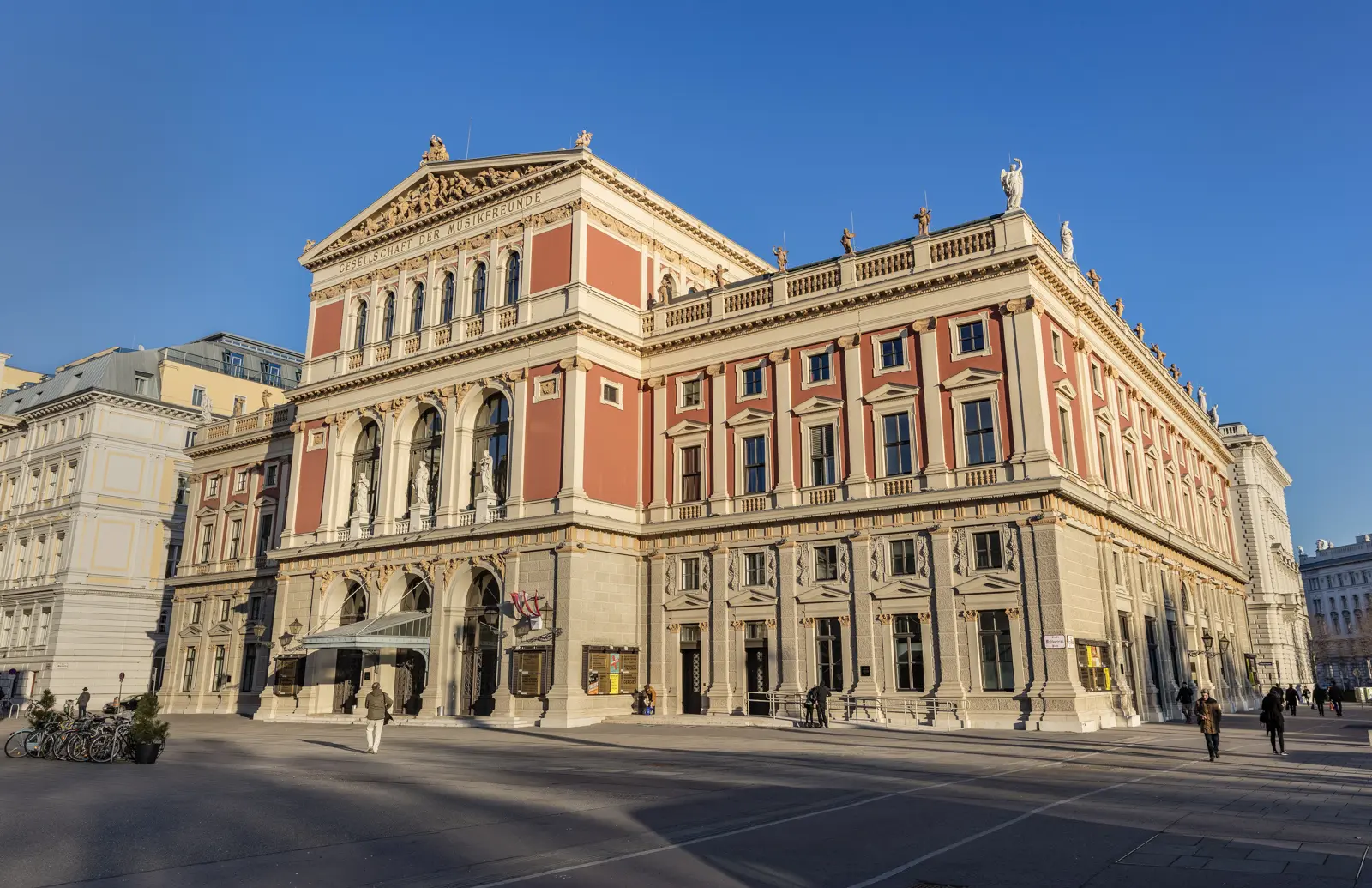
If the Vienna State Opera embodies grandeur, then the Musikverein on Karlsplatz represents refinement in its purest form. Home to the world-renowned Golden Hall, the Musikverein is celebrated for its exceptional acoustics and understated beauty. The building itself exudes elegance, with its classical proportions, intricate detailing, and warm golden tones that give the hall its distinctive character. It is a space where every element, from the design to the acoustics, has been carefully considered to enhance the musical experience.
The Musikverein is perhaps most famous for hosting the annual New Year’s Concert, an event that draws global attention and reinforces Vienna’s place at the centre of classical music. Yet beyond this single moment, the venue remains active throughout the year, hosting performances that continue to uphold the city’s musical traditions. Standing before it, or even simply knowing what takes place inside, you sense a continuity that spans generations. This is not a relic of the past, but a space where music continues to be created, performed, and celebrated at the highest level.
A Lighter Note: Stadtpark and Strauss
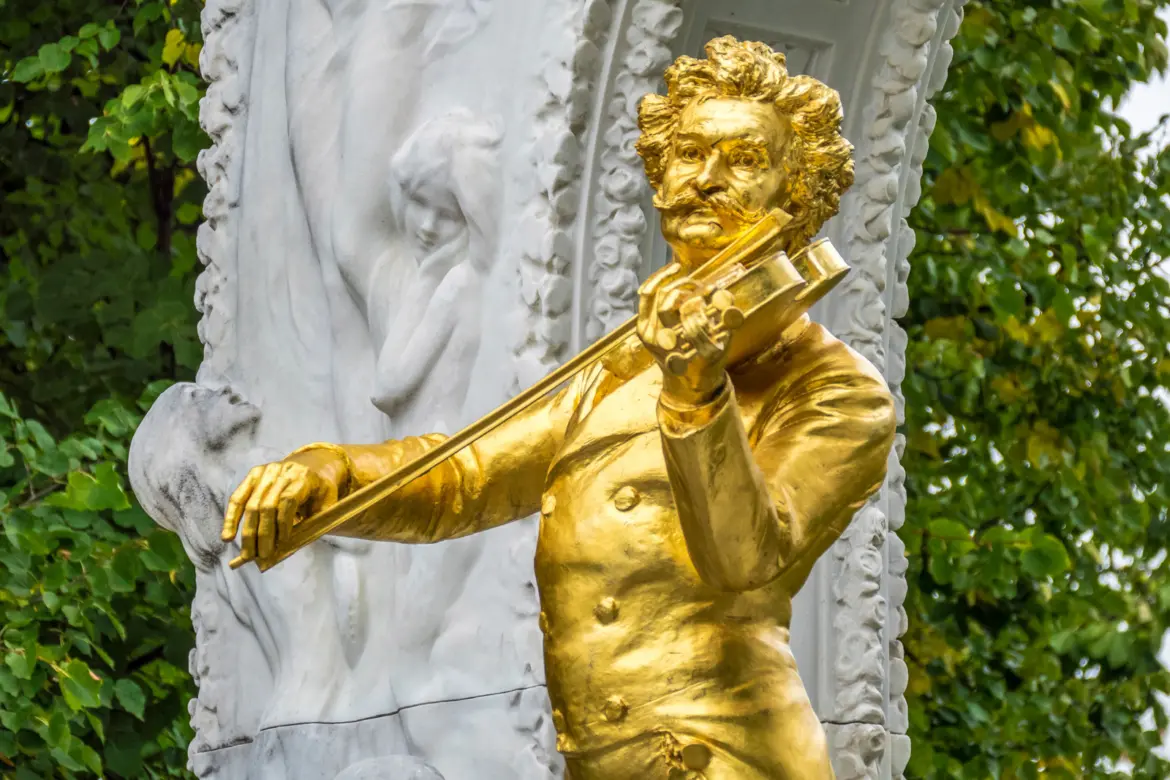
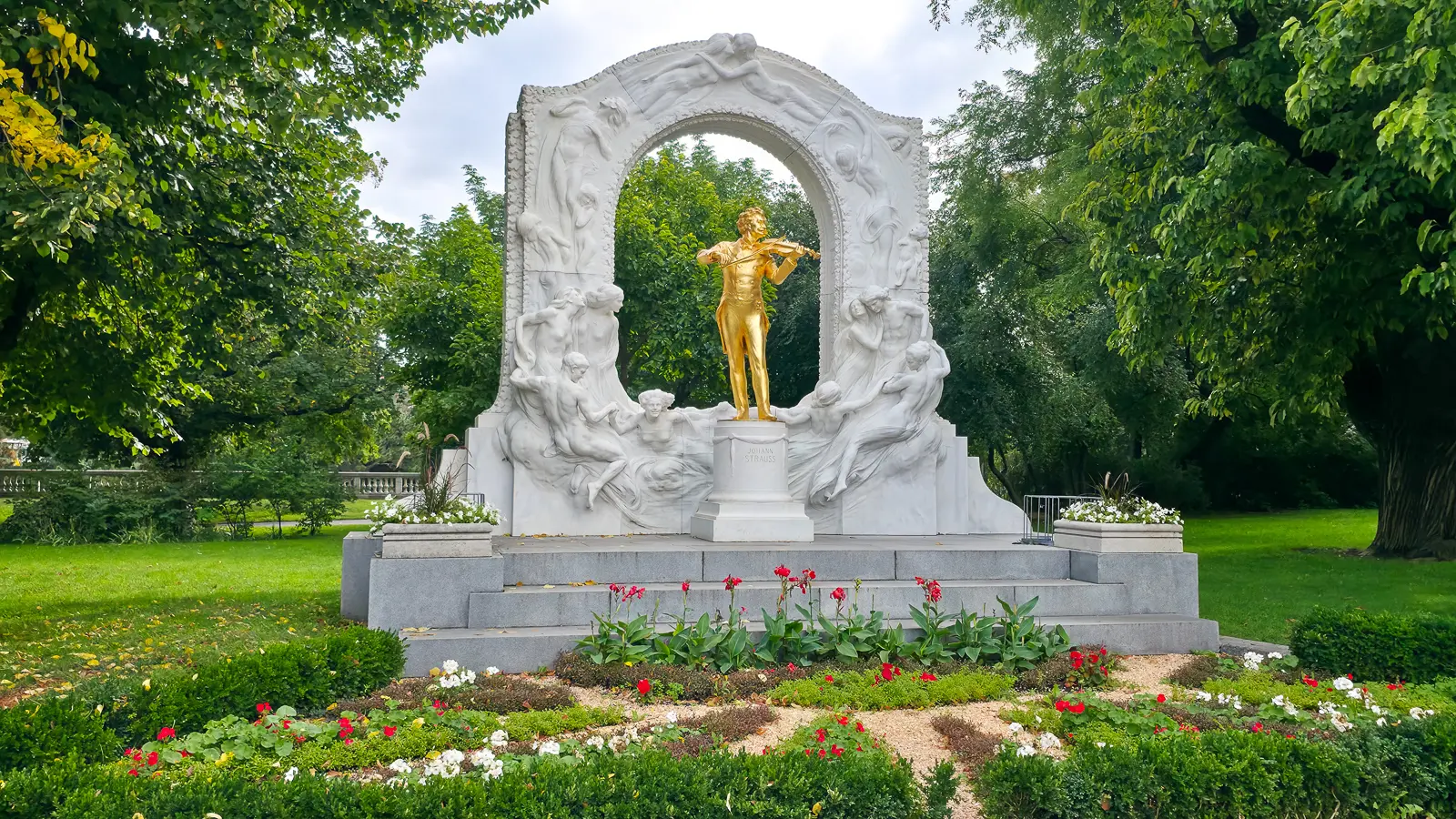
Not all of Vienna’s musical heritage is expressed through grand halls and formal performances. In the Stadtpark, the golden statue of Johann Strauss II offers a more accessible and lighthearted connection to the city’s musical past. Often referred to as the “Waltz King”, Strauss is depicted in a moment of musical inspiration, violin in hand, his figure framed by an elegant white marble arch adorned with delicate bas-reliefs of dancing couples and classical motifs. The monument, unveiled in 1921 and designed by sculptor Edmund Hellmer, captures not only the composer himself, but the movement, rhythm, and joy that defined his music.
Set within a green and open environment, the statue reflects the lively and elegant character of Strauss’ compositions. His music, particularly the waltz, introduced a sense of movement and celebration that resonated deeply with Viennese society and continues to do so today. The statue’s golden appearance, now one of the most photographed sights in Vienna, has its own history, having been removed in the 1930s and later restored in 1991, returning the monument to the gleaming form visitors recognize today.
The setting itself contributes to the experience. Unlike the formality of concert venues, Stadtpark feels relaxed and inviting. Visitors stroll through the pathways, pause near the statue, and take in the surroundings at their own pace. It is a reminder that music in Vienna is not confined to performance spaces; it is part of the city’s atmosphere, something that can be encountered in moments of leisure as much as in moments of formality.
Intimate Spaces: Mozarthaus Vienna and Pasqualati House
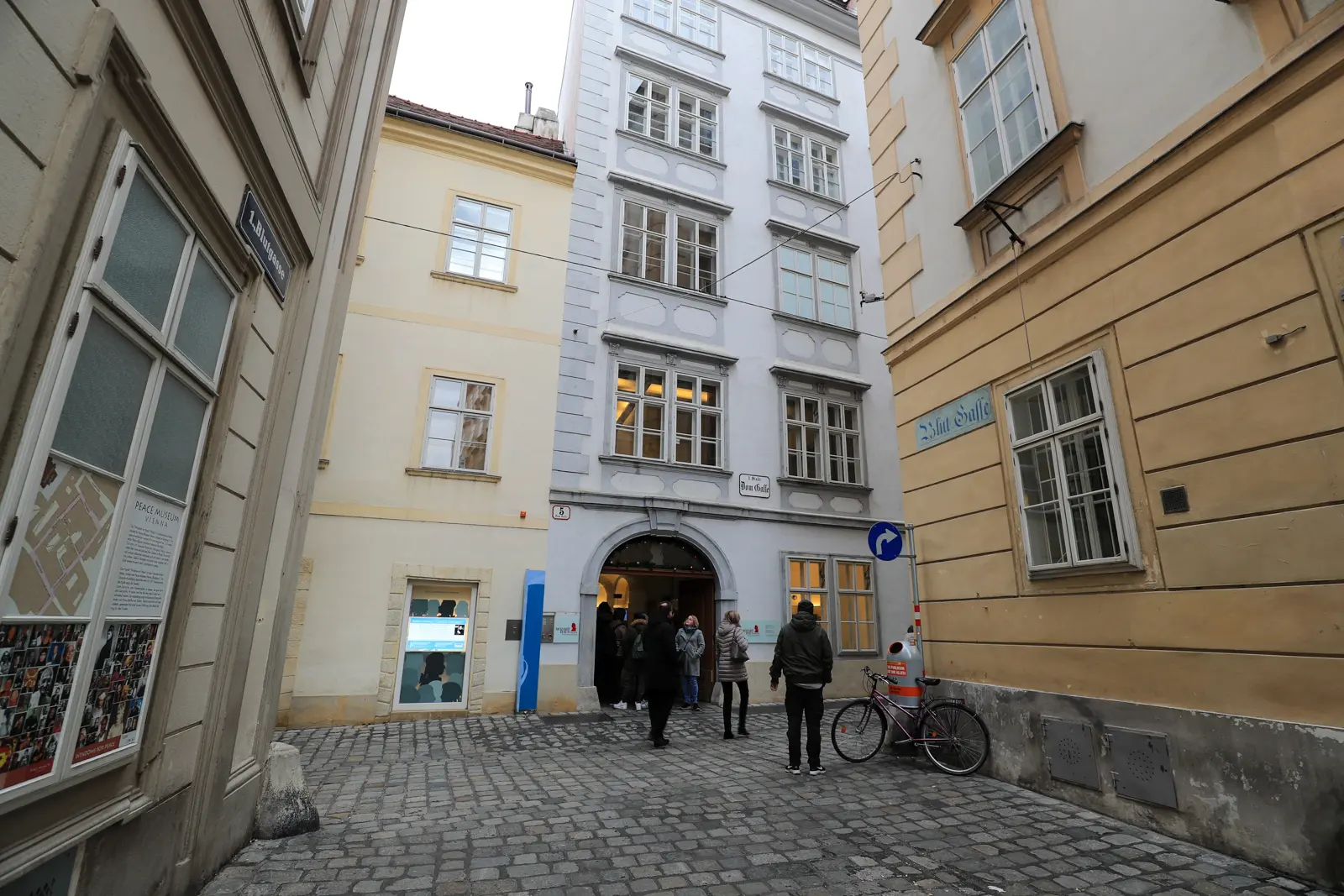
For a more personal connection to Vienna’s musical history, the Mozarthaus Vienna offers an experience that is both intimate and reflective. Unlike the grandeur of the Opera or the Musikverein, this space brings you closer to the everyday life of a composer. It is here that Wolfgang Amadeus Mozart lived during one of the most productive periods of his life. Walking through the rooms, you begin to imagine the environment in which he worked: the quieter moments of composition, the routines that shaped his days, and the context in which his music was created.
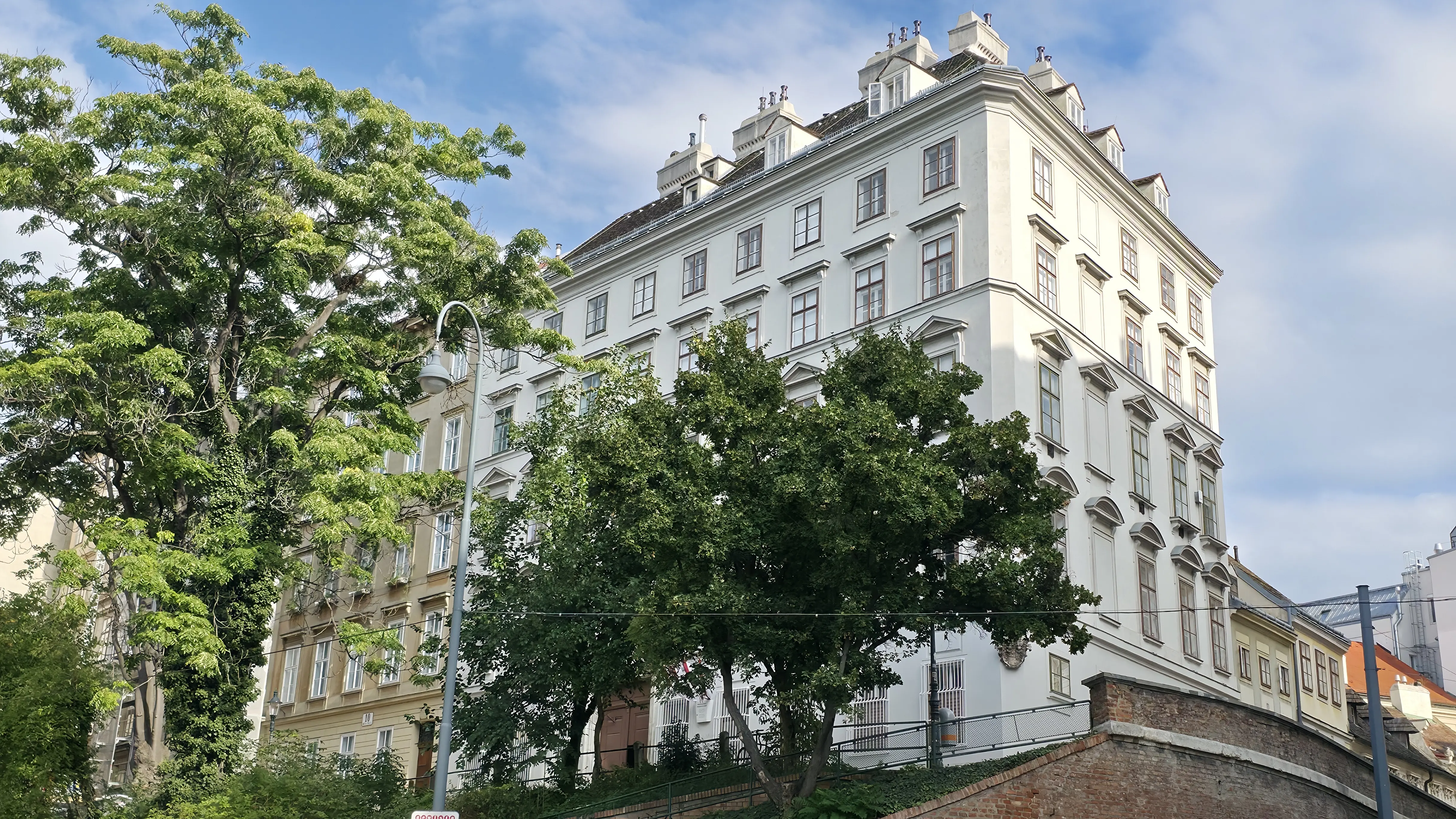
A similar sense of proximity can be found at the Pasqualati House, one of the residences where Ludwig van Beethoven lived while composing some of his most important works. Located along the city’s former fortifications, the setting offers a unique perspective, overlooking Vienna while remaining closely tied to its urban rhythm. It is said that Beethoven composed parts of his Fifth and Sixth Symphonies here, and the space carries a quiet intensity that reflects both his creative genius and the personal challenges he faced.
Together, these spaces shift the perspective from performance to person. They remind you that behind Vienna’s musical legacy are individuals who lived, struggled, and created within the very environments you can still explore today.
Reflection and Legacy: Vienna Central Cemetery
One of the most powerful and unexpected places to experience Vienna’s musical heritage is the Vienna Central Cemetery (Zentralfriedhof). Here, among the quiet pathways and expansive grounds, lie the graves of composers such as Ludwig van Beethoven, Franz Schubert, and Johann Strauss II.
The atmosphere is markedly different from the rest of the city. There is a stillness here that encourages reflection, a sense of space that allows you to pause and consider the legacy of those who shaped Vienna’s musical identity. It is not a place of spectacle, but of quiet recognition. Walking through the cemetery, you become aware of the continuity between past and present. The music that once filled Vienna’s halls continues to be performed today, and yet here, you are reminded of the individuals behind that legacy. It is a humbling experience, one that adds emotional depth to your understanding of the city.
Vienna Today: A Living Musical Experience
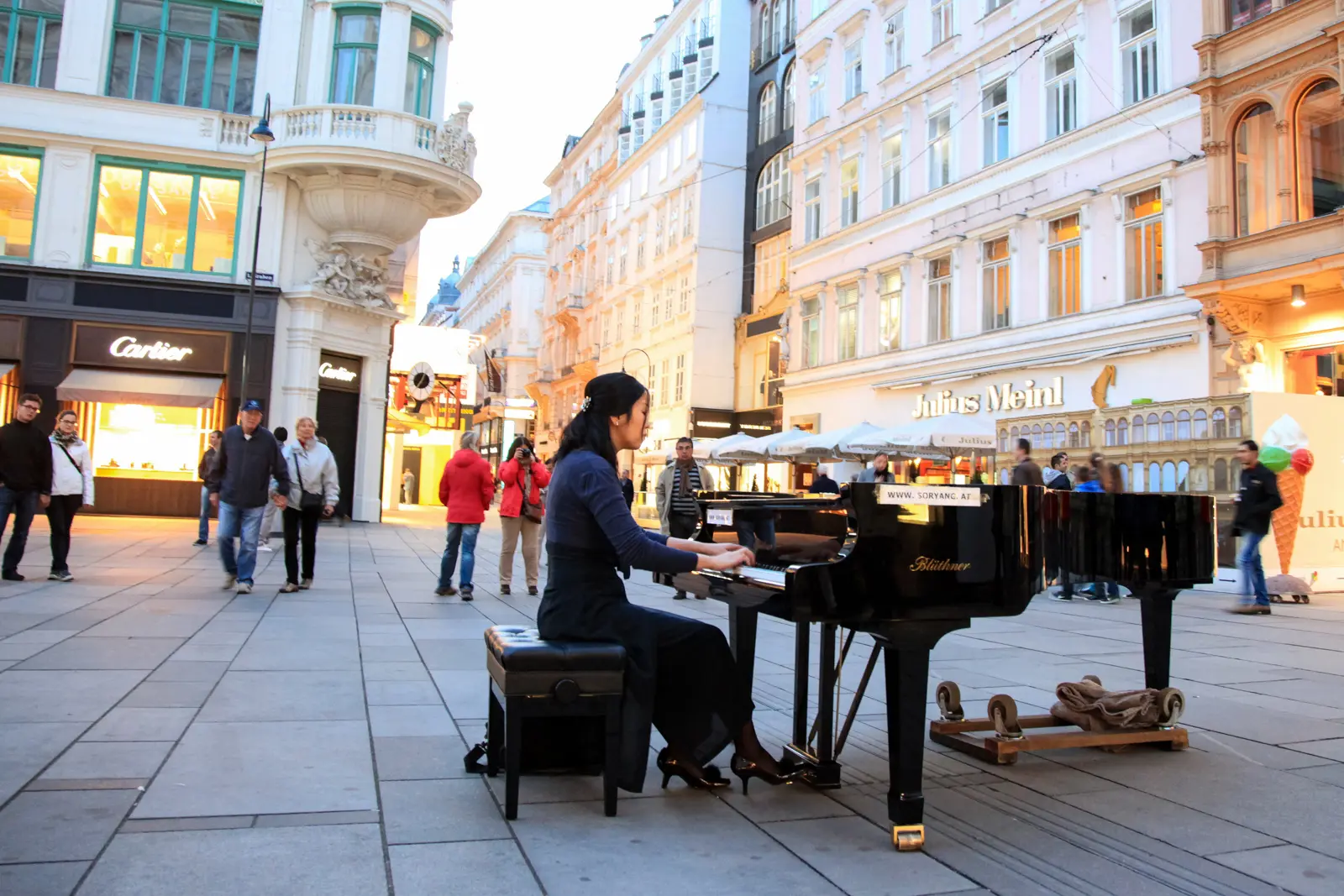
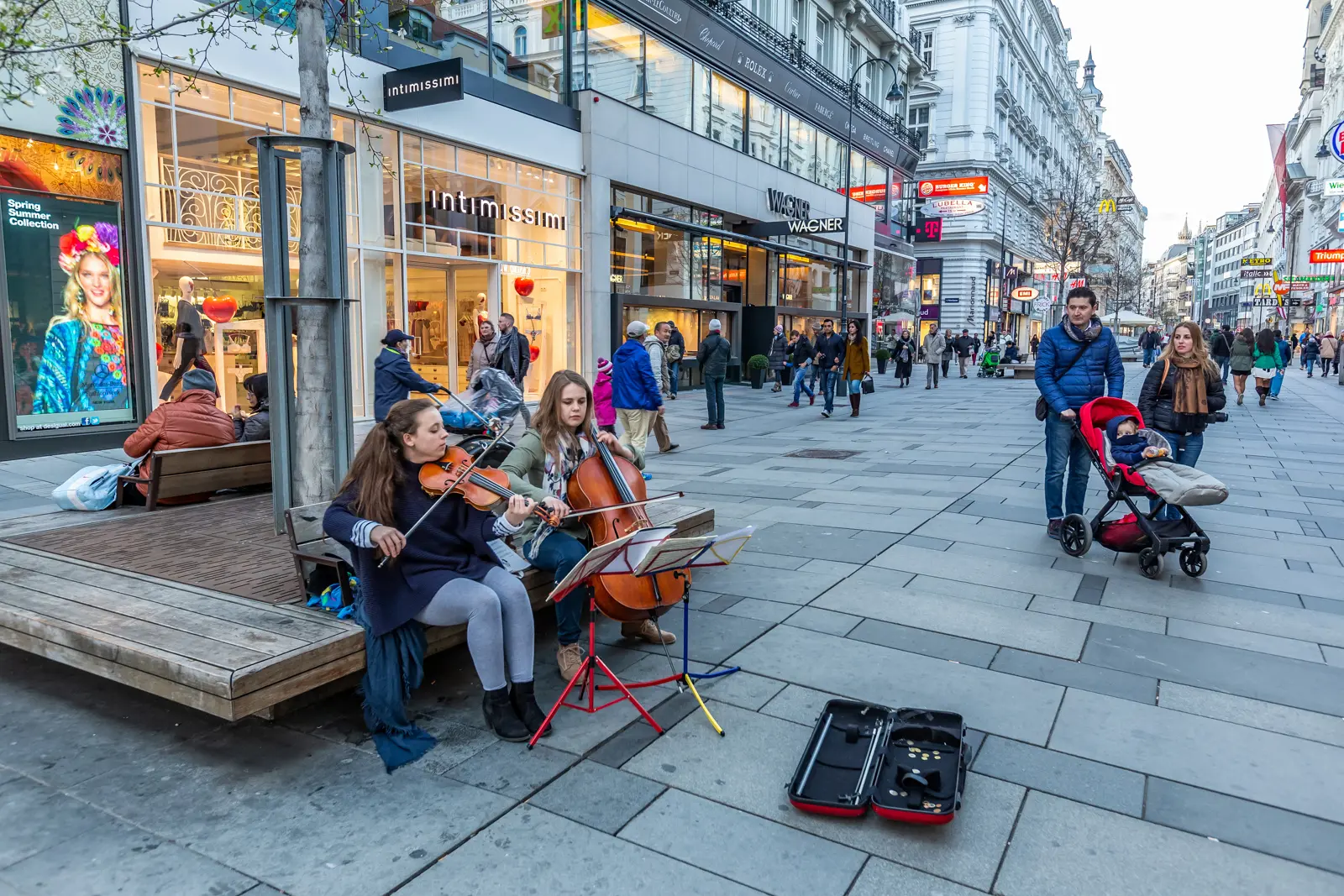
What makes Vienna truly remarkable is that its musical heritage is not confined to designated landmarks, it continues to live throughout the city in ways that feel organic and unforced. Music is not something you seek out here; it is something you encounter. Street musicians perform in public squares and along quiet streets, their melodies echoing through the city and blending with its natural rhythm. Posters advertising concerts and performances line the walls, offering constant reminders of the city’s vibrant cultural life. Even in moments of stillness, there is a sense that music is present, just beneath the surface.
This continuity is what defines Vienna. The city does not treat its musical past as something separate from its present. Instead, it allows both to coexist, creating an environment where history is not only preserved, but actively experienced. It is this seamless integration that gives Vienna its unique character, a place where music is not only remembered, but truly lived.
Bubbly Tips for Experiencing Vienna’s Musical Heritage
- Attend a classical music performance in Vienna for a true cultural experience: Whether at the Vienna State Opera or the Musikverein, experiencing live music in one of Vienna’s historic venues offers a deeper connection to the city’s musical legacy.
- Visit key composer landmarks in Vienna to connect with their lives: Explore places like Mozarthaus Vienna and Pasqualati House to gain a more personal understanding of how composers lived and created their work.
- Take time to explore Vienna’s parks for a more relaxed musical experience: A walk through Stadtpark offers a lighter, more accessible connection to Vienna’s music scene, especially with the iconic Johann Strauss statue.
- Listen for music as you explore Vienna’s streets and public spaces: Street musicians and spontaneous performances are part of the city’s atmosphere, adding an organic and contemporary layer to its historic musical identity.
- Visit Vienna Central Cemetery for a reflective connection to musical history: The Vienna Central Cemetery provides a quieter, more contemplative experience, where the legacy of composers like Beethoven and Schubert can be felt in a meaningful way.
- Plan your visit around seasonal concerts or events in Vienna: From formal performances to smaller chamber concerts, Vienna offers a wide range of opportunities to experience classical music throughout the year.
Final Thoughts
Exploring Vienna through its music is not about following a set path or checking off a list of landmarks. It is about engaging with the city on a deeper level, allowing its sounds, spaces, and stories to shape your experience.
The composers who lived and worked here contributed more than individual works; they helped define a cultural identity that continues to influence Vienna today. Their presence can be felt in grand concert halls, in quiet gardens, and in the subtle moments that unfold as you move through the city.
In Vienna, music is not confined to the past. It is part of the present, woven into the atmosphere and carried forward by those who continue to perform, listen, and appreciate it. Experiencing this connection transforms the way you see the city, turning it from a collection of beautiful sites into a living expression of art and history.
Have you ever visited a place where music felt as much a part of the experience as the architecture or the atmosphere? I would love to hear about it.
Happy travels!

🌟 Everything You Need to Plan Your Dream Trip in 2026
- 🌟 Luxury Hotels - Find premium stays with Booking.com & Hotels.com
- 🏡 Vacation Rentals - Discover unique properties on VRBO
- 🏞️ Guided Tours - Explore with Viator or GetYourGuide
- 🎫 Attraction Tickets - Skip the lines with Tiqets
- 🚢 Ocean Cruises - Set sail with Cruise Direct
- 📱 International SIMs - Stay connected with Saily
- 🚗 Car Rentals - Budget-friendly options from Discover Cars
- 🌐 Secure VPNs - Browse safely with NordVPN
- 💶 Currency Exchange - Best rates with Wise
- 🗣️ Learn Languages - Master the local language with Babbel and Rosetta Stone