
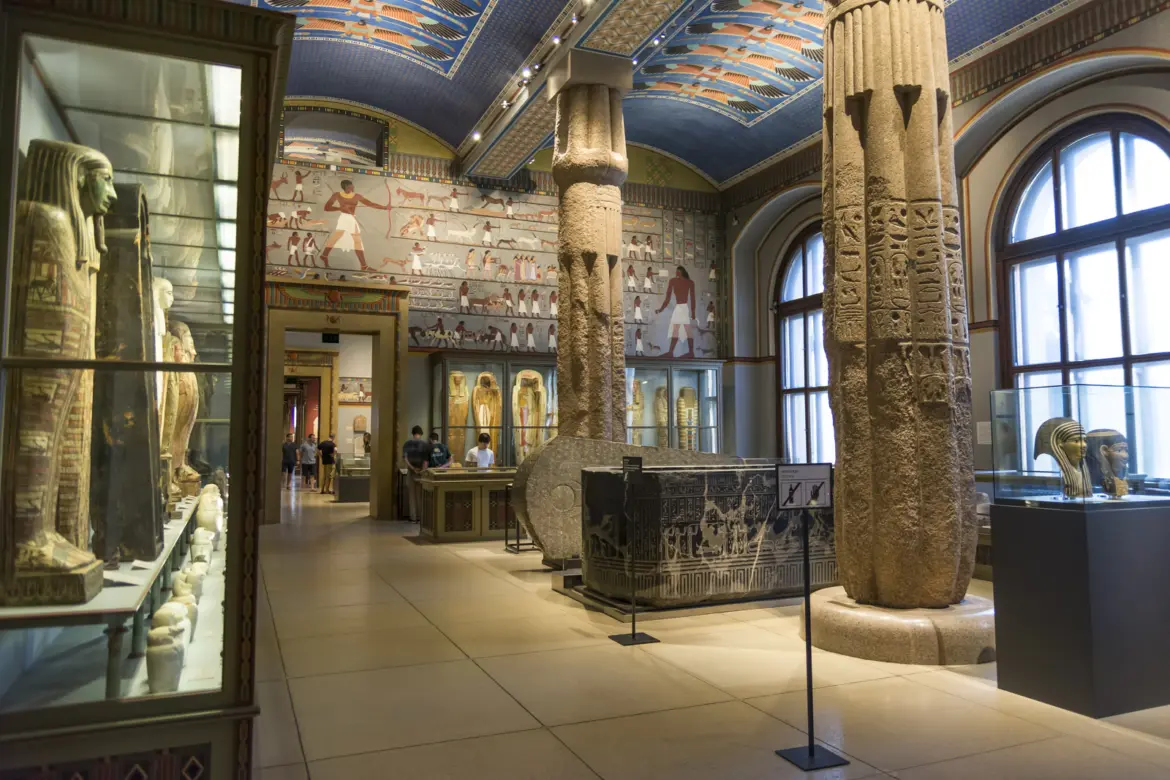
There are moments in travel when you step into a space and feel, almost instantly, that you have crossed into another world. Not geographically, but temporally, as though the distance is measured not in kilometers, but in centuries. Walking into the Egyptian and Near Eastern Collection galleries of the Kunsthistorisches Museum in Vienna is one of those moments, where the atmosphere shifts almost imperceptibly, yet completely.
The light softens, the sounds of the museum fade, and the rhythm of movement slows. What unfolds is not simply a collection of artifacts, but a carefully preserved passage through time, one that spans more than five thousand years of human history. Here, objects are not just displayed; they are contextualized, allowing you to move through civilizations that continue to shape our understanding of art, belief, and identity.
Egyptian and Near Eastern Collection at a Glance
🏛️ Museum: Kunsthistorisches Museum, Maria-Theresien-Platz, Vienna
🗿 Objects: Over 17,000, spanning nearly 4,500 years from the Predynastic Period (~3500–4000 BCE) to the early Christian era
🌍 Origins: Egypt, Nubia, Mesopotamia, and the Arabian Peninsula
🏺 Layout: Nine galleries (1–9) on the raised ground floor, organized into four themes: funerary cult, cultural history, sculpture and relief, and the development of writing
⭐ Don’t miss: The Offering Chapel of Ka-ni-nisut — a complete 5th dynasty Old Kingdom tomb chapel physically shipped from Giza in 1914, which you can walk inside
🦁 Don’t miss: The Babylonian lion relief from the Processional Way to the Ishtar Gate (time of Nebuchadnezzar II, 604–562 BCE)
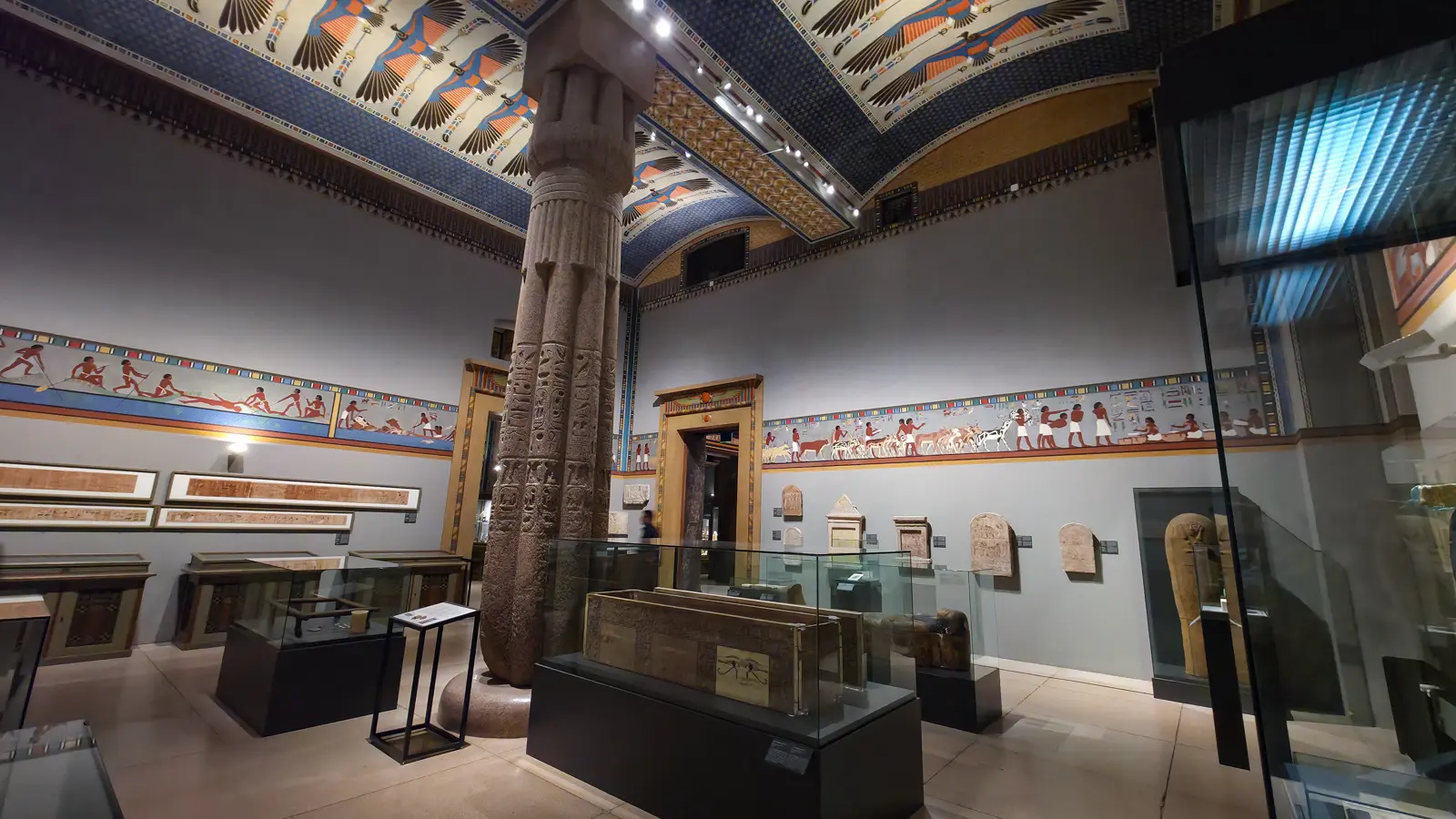
🏛️ Don’t miss: Three original Egyptian rose granite papyrus-bundle columns over six metres tall, gifted to Emperor Franz Joseph I in 1869 — they support the gallery ceilings
💀 Don’t miss: The rare 4th dynasty Reserve Head from Giza and the 11th–12th dynasty blue faience hippopotamus
🎨 Behind the scenes: Much of the Old Kingdom holdings come from Austrian Academy of Sciences excavations at Giza between 1912 and 1929, led by Hermann Junker
👑 Habsburg trivia: Archduke Ferdinand Maximilian (Franz Joseph’s younger brother and later Emperor of Mexico) collected around 2,000 Egyptian objects at Miramare Castle in Trieste — intended for a Mexican museum but sent to Vienna after his execution in 1867
🕰️ Opening hours: Tue–Sun 10:00–18:00 · Thu 10:00–21:00 · Closed Mondays
💶 Entry: Standard KHM admission (covers all collections in the main building)
⏱️ Time needed: 1.5–2 hours minimum, 3+ hours for a thorough visit
🚇 Getting there: U2 Museumsquartier or U3 Volkstheater · Rings Tram 1/2/71 to Burgring
💡 Tip: Arrive at opening or after 4 PM for the quietest galleries
A Collection Across Millennia
The Egyptian and Near Eastern Collection is one of the most significant collections of Egyptian antiquities in Europe, comprising more than 18,500 objects from Egypt, Nubia, Mesopotamia, and the Arabian Peninsula. Spanning five thousand years, from the Predynastic Period around 4500 BCE to the early Christian era, the collection presents an extraordinary continuity of artistic and cultural expression across millennia.
What becomes striking as you move through the galleries is the coherence of the collection. Despite the vast chronological and geographical range, there is a sense of connection between the objects, a shared visual language that reflects the underlying values, beliefs, and structures of these ancient societies. The pieces do not feel fragmented or isolated; rather, they form a narrative that unfolds gradually, revealing how these civilisations evolved while maintaining enduring cultural threads.
Life and Death Intertwined
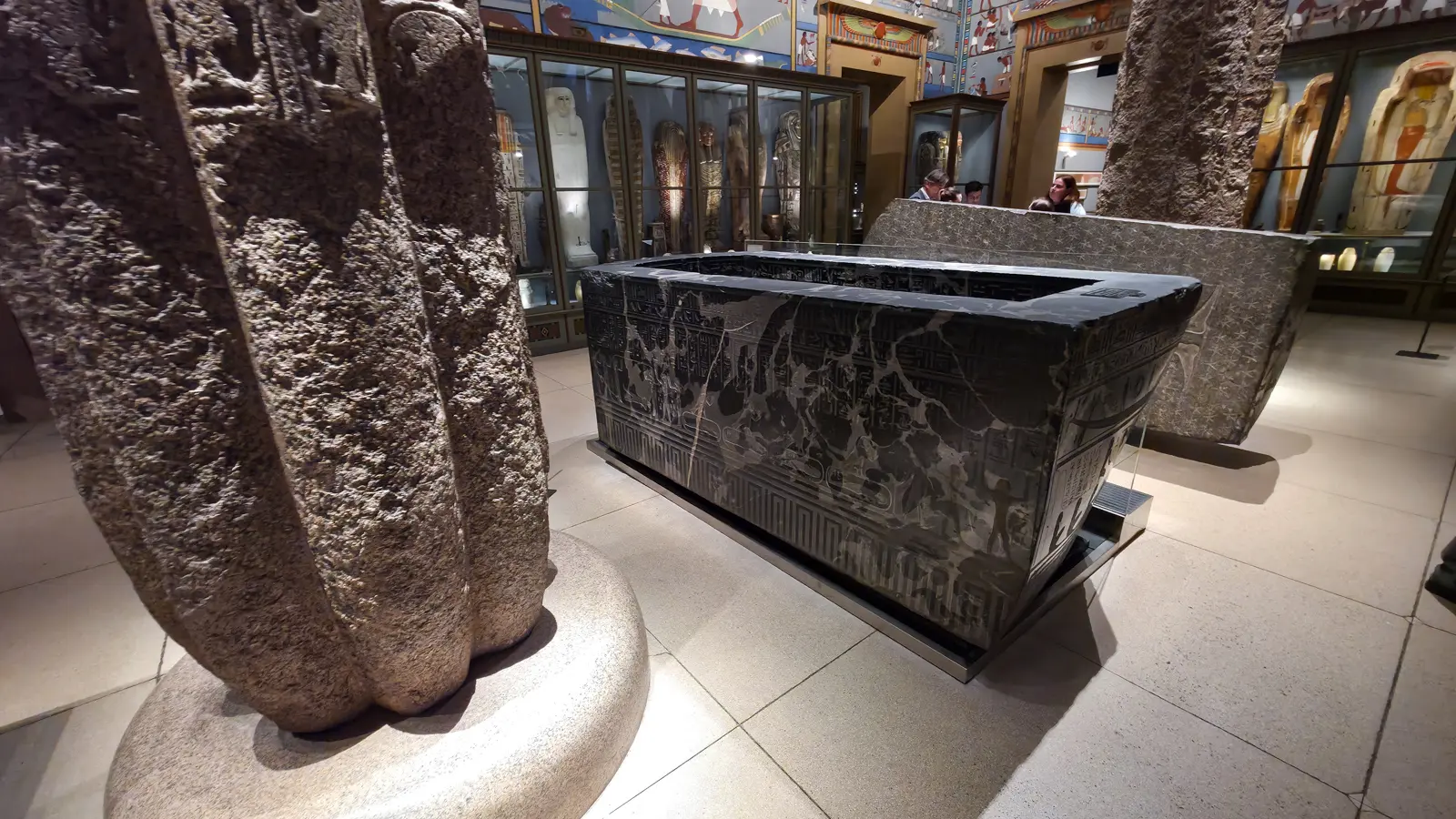
One of the most powerful themes within the Egyptian and Near Eastern Collection is the relationship between life and death in ancient Egyptian culture. Monumental stone sarcophagi, intricately painted wooden coffins, and carefully preserved mummies stand as quiet yet striking reminders of a worldview in which death was not an end, but a transition into another form of existence. The scale and craftsmanship of these objects immediately convey their importance, not as symbols of loss, but as preparations for continuity, reflecting a belief system in which the afterlife was an essential extension of life itself.
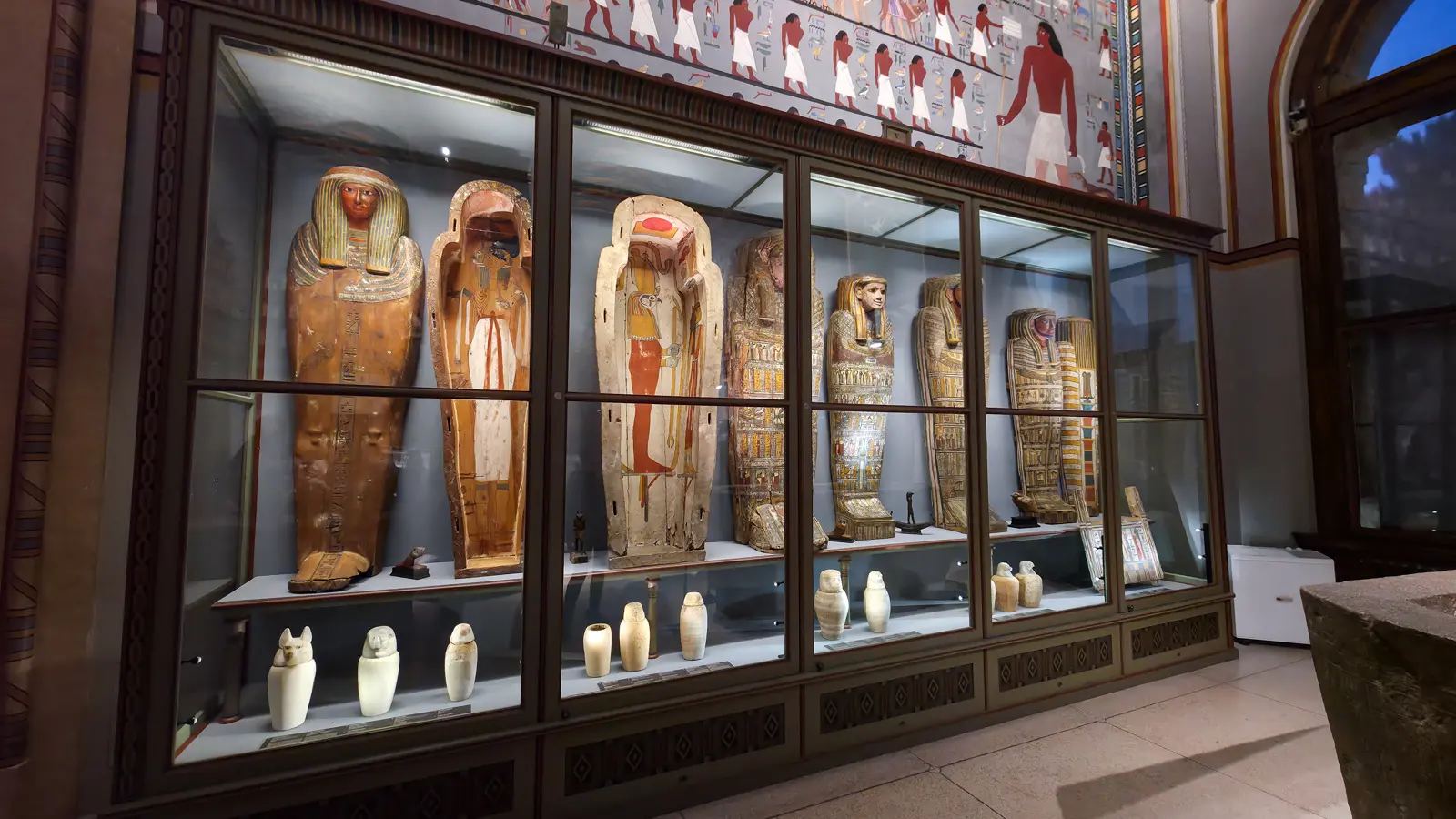
What becomes increasingly apparent is the depth of intention behind every detail. The decoration of coffins, often adorned with symbolic imagery and protective motifs, was not merely aesthetic, but deeply purposeful. Funerary items placed alongside the deceased were meant to accompany them into the next world, ensuring comfort, identity, and protection beyond death. Even the preservation of the body reflects a profound respect for continuity, an effort to maintain the integrity of the individual across realms. As you move through these galleries, the experience unfolds gradually, revealing a culture in which memory, identity, and the afterlife were inseparable. It is not an overwhelming encounter, but a quietly profound one, inviting reflection on how different societies understand legacy, remembrance, and what it means to endure beyond a lifetime.
Art, Identity, and Power
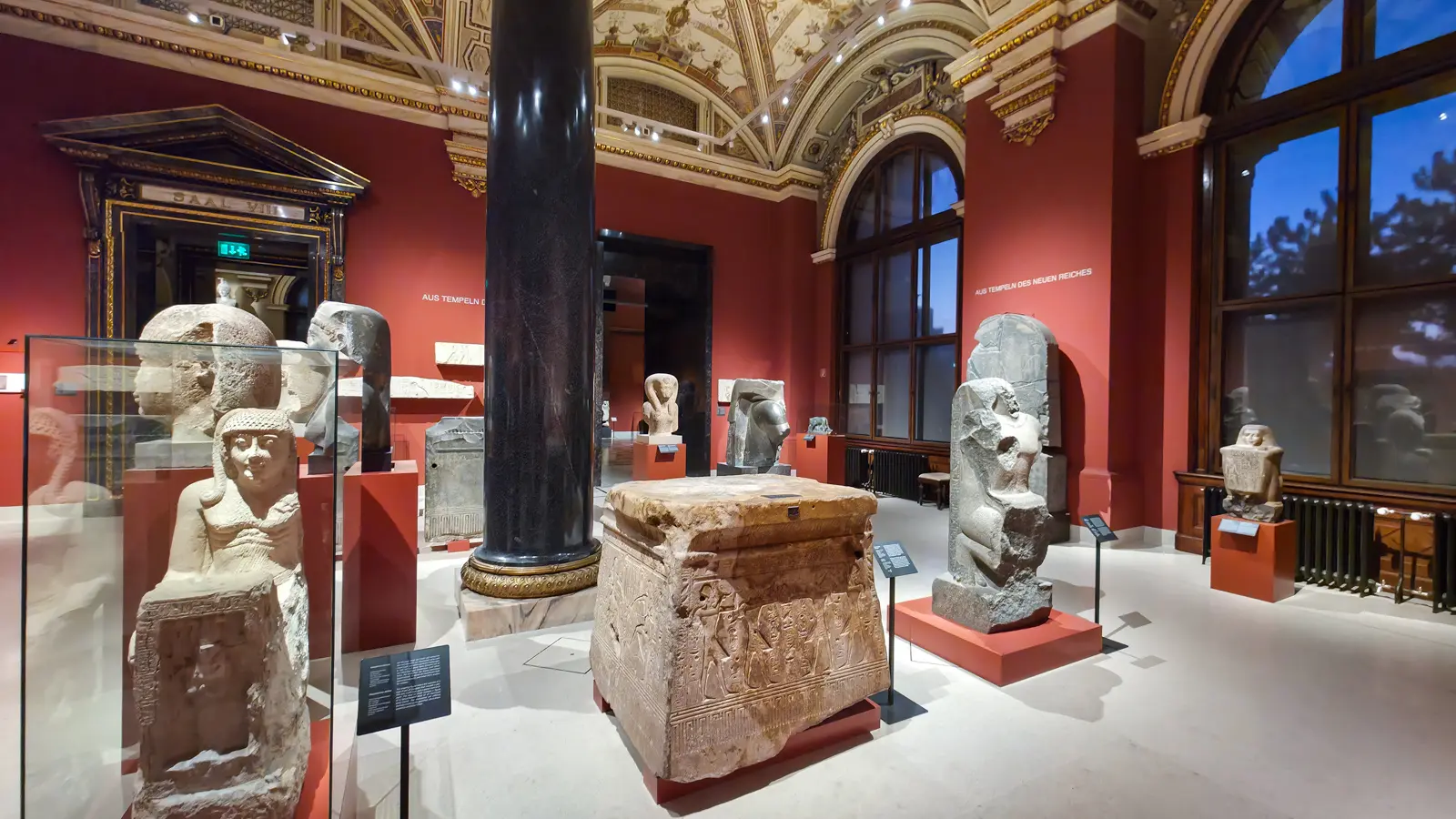
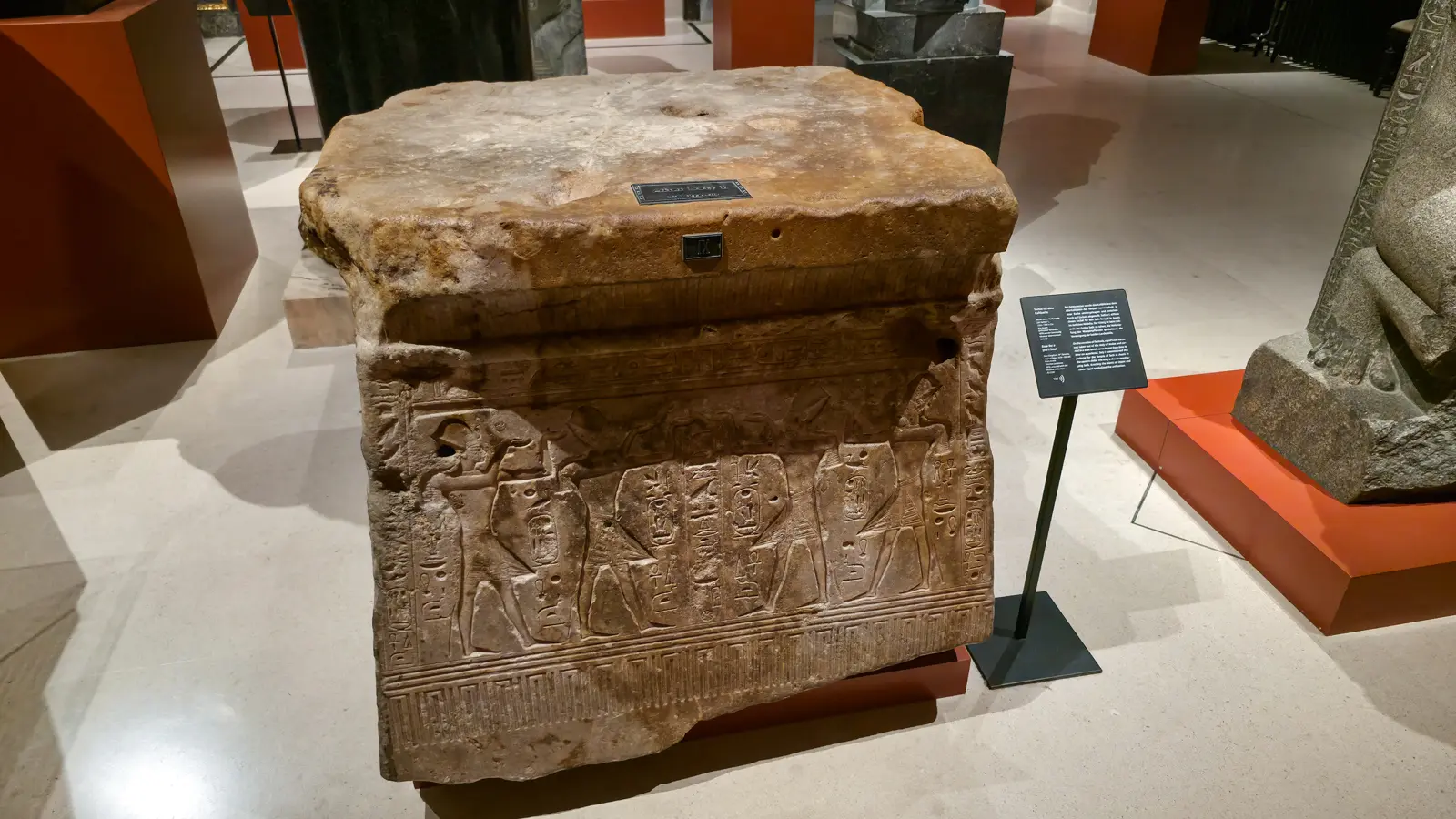
Beyond funerary traditions, the Egyptian and Near Eastern Collection offers remarkable insight into how art was used to define identity and express power. Statues and reliefs from tombs and temples present figures in composed, symbolic forms, often depicted in idealized proportions that emphasize stability, control, and permanence. The stillness of these figures is striking. Faces are calm, expressions restrained, and postures deliberate, creating a sense of presence that feels both timeless and authoritative. These are not fleeting representations, but carefully constructed images designed to endure, reflecting a cultural emphasis on order, hierarchy, and continuity.
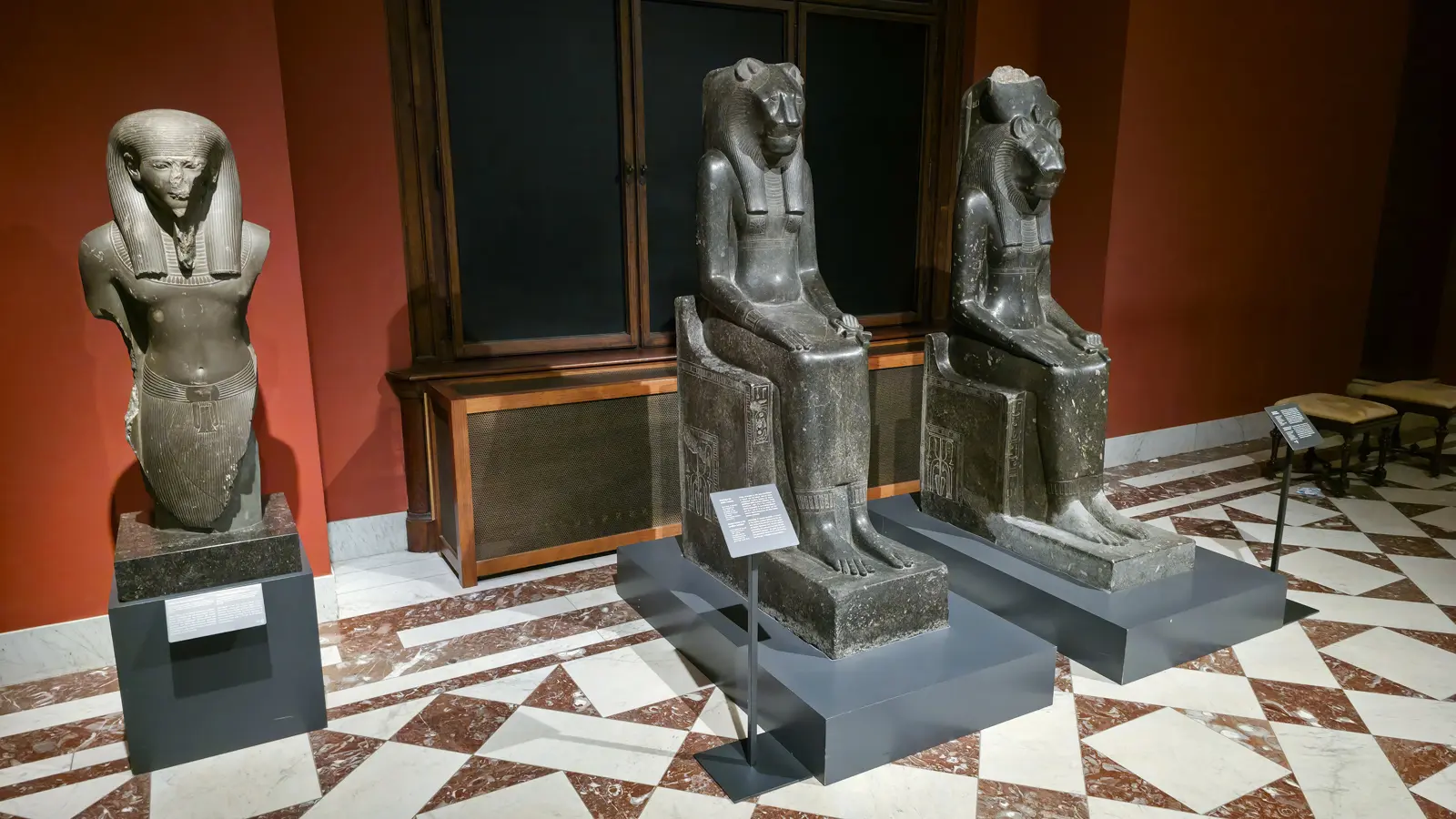
What becomes increasingly clear is the level of intention behind every element. These works were not created simply to resemble individuals, but to define how they were seen, both in life and beyond it. The precision of form, the repetition of visual conventions, and the use of symbolic gestures all contribute to a structured visual language that communicates status, role, and identity. Reliefs depicting scenes of offering, ritual, or daily activity further reinforce these ideas, situating individuals within a broader social and spiritual framework. In this way, art becomes both expressive and functional, shaping memory while preserving a carefully curated image of the self across time.
Among the most captivating pieces in the collection is the small but striking blue hippopotamus, often associated with Middle Kingdom funerary art. Covered in vibrant blue glaze and decorated with delicate motifs of plants and aquatic life, the figure stands in contrast to the more monumental works surrounding it. Yet its presence is no less meaningful. In ancient Egyptian symbolism, the hippopotamus embodied both protection and danger, associated with the life-giving forces of the Nile as well as its unpredictability. Placed within tombs, these figures carried layered meanings, reflecting both the beauty and complexity of the natural world.
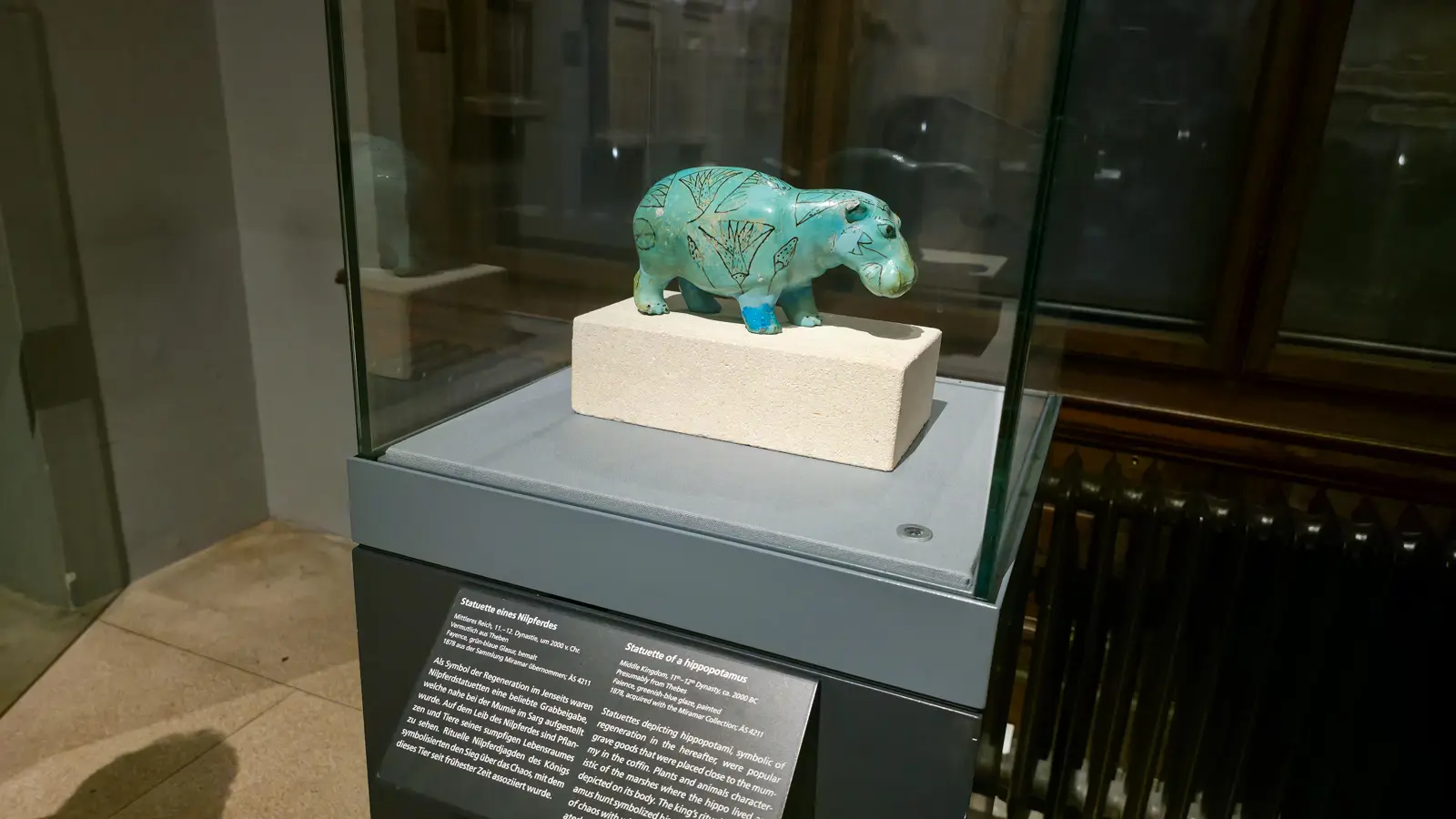
Encountering this piece introduces a different kind of intimacy into the gallery. While statues and reliefs convey power and permanence, the hippopotamus feels more personal, almost playful at first glance, yet deeply symbolic upon closer reflection. It reminds you that alongside the grand narratives of identity and authority, there existed a rich and nuanced relationship with nature, one that found expression even in the smallest of objects.
Writing and Everyday Life
While monumental works dominate the visual landscape, it is often the smaller, more personal objects that create the strongest connection. Papyri, inscribed fragments, tools, clothing, and cosmetic items offer glimpses into daily life, revealing the routines and practices that defined ordinary existence. These artifacts bring a sense of familiarity to the experience, grounding the grandeur of ancient civilizations in moments that feel intimate and human.
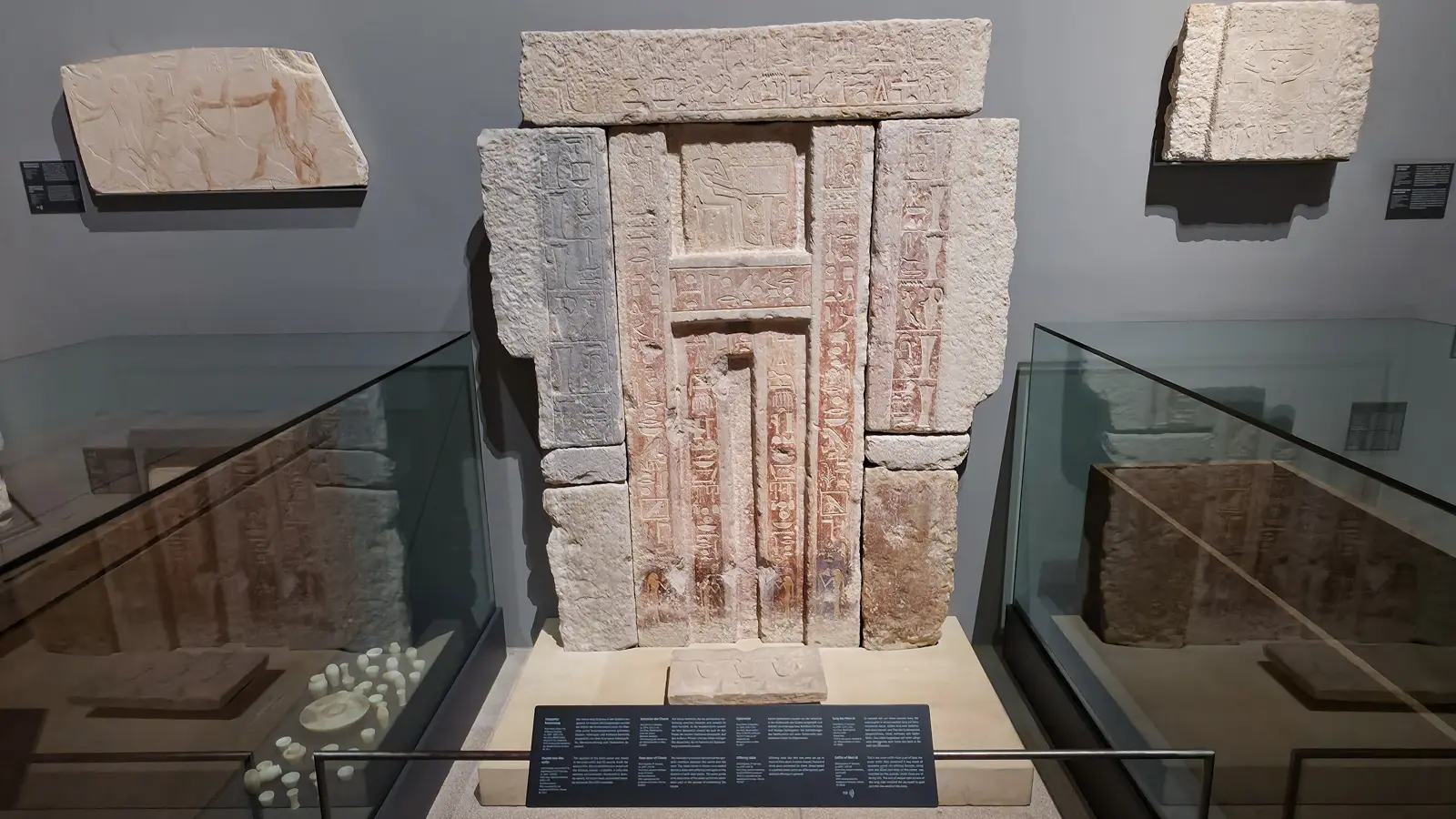
The presence of written language, preserved in multiple forms, highlights the importance of communication, administration, and storytelling in ancient societies. Egyptian hieroglyphs, alongside more practical scripts such as hieratic, appear on papyri as well as carved into stone and inscribed on limestone or clay fragments. These writings range from formal inscriptions to administrative records and personal texts, offering insight into how information was recorded, transmitted, and preserved. At the same time, everyday objects remind us that beyond the grand narratives of kings and rituals, there existed a world of individuals navigating daily life in ways that feel surprisingly relatable.
From Egypt to the Near East
The scope of the Egyptian and Near Eastern Collection extends beyond Egypt, incorporating significant works from the ancient Near East and broadening the cultural narrative of the galleries. Among these are artifacts from South Arabia, acquired through the expeditions of Eduard Glaser, whose late 19th-century journeys played an important role in shaping the imperial collection in Vienna. The inclusion of Mesopotamian works introduces a distinct visual and cultural dimension, exemplified by the striking glazed brick lion that once adorned the processional way to the Ishtar Gate of Babylon. These pieces bring a different aesthetic language into the space, characterized by bold forms, rich color, and architectural presence, while still reflecting shared themes of power, symbolism, and identity. Together, they connect multiple ancient worlds within a single setting, reinforcing the sense that this collection is not confined to one civilization, but represents a broader, interconnected history.
The Experience: Moving Through Time
What makes the Egyptian and Near Eastern Collection truly memorable is not only what it contains, but how it unfolds as you move through it. The galleries are arranged in a way that encourages a gradual, almost intuitive progression, where each space leads seamlessly into the next. There is no single focal point demanding attention; instead, the experience is cumulative, built through quiet observation and subtle transitions. As you walk, your sense of time begins to shift, no longer linear, but layered, as though multiple eras are present at once, coexisting within the same space.
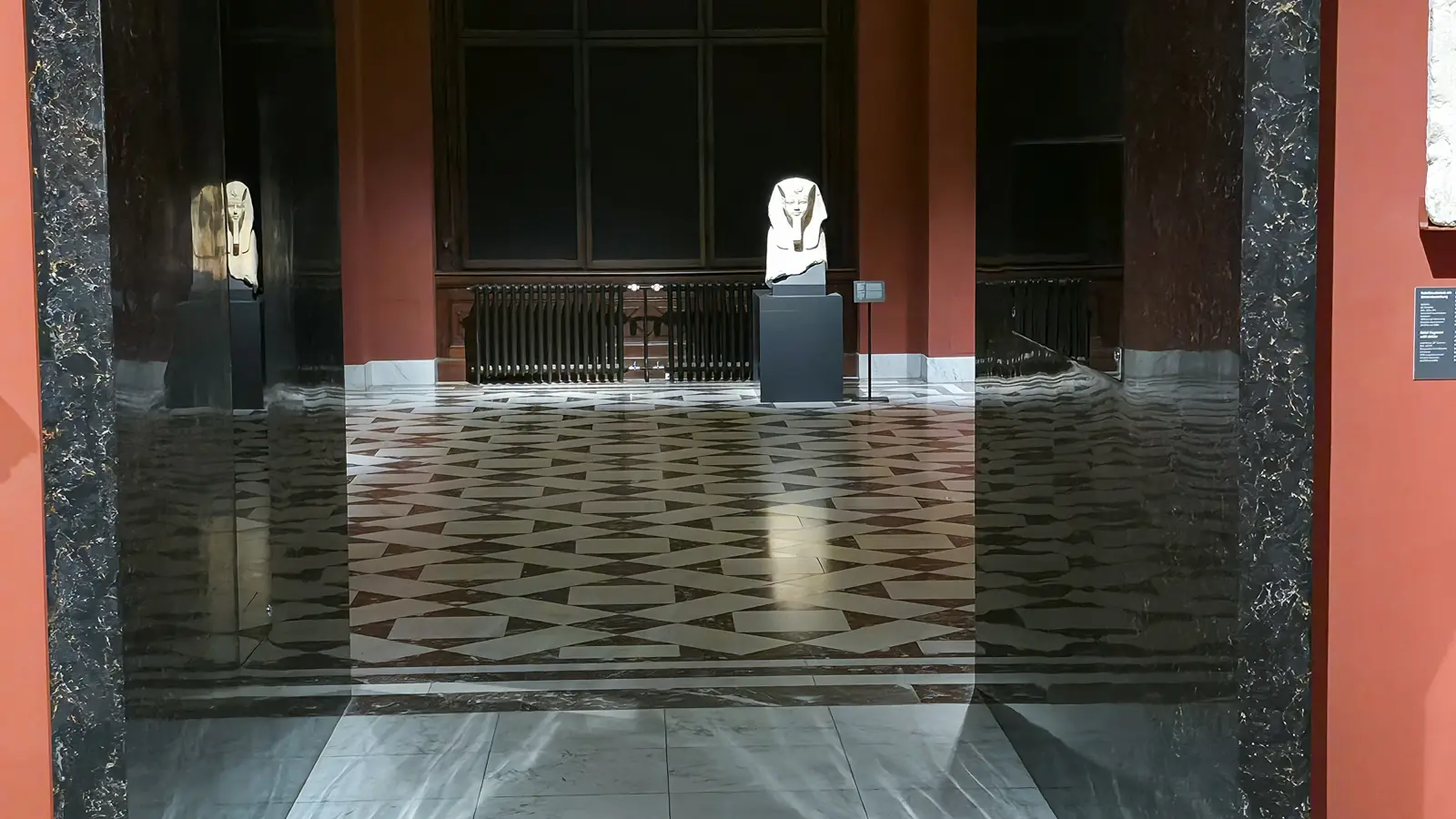
What emerges from this movement is a deeper awareness of connection. The objects begin to relate to one another across distances of time and geography, forming a narrative that is less about individual pieces and more about continuity. You are no longer simply observing artifacts, but engaging with a broader human story, one that reflects shared concerns, beliefs, and expressions across civilizations. It is this quiet immersion that defines the experience, a feeling that stays with you long after you leave the galleries, not as a memory of what you saw, but as a reflection of what you understood.
Bubbly Tips for Visiting the Egyptian and Near Eastern Collection
- Location: The collection is located within the Kunsthistorisches Museum on Maria-Theresien-Platz, one of the most central and accessible areas in Vienna.
- Time to explore: Plan for at least 1.5 to 2 hours to experience the collection at a comfortable pace, especially if you want to fully engage with the details.
- Highlights not to miss: Sarcophagi, mummies, decorated coffins, papyri, and the Babylonian lion relief are among the most memorable pieces.
- Best time to visit: Early morning or later in the afternoon allows for a quieter and more immersive experience.
- Take your time: This collection is best experienced slowly. Allow yourself to pause, observe, and absorb the atmosphere rather than moving quickly from one object to another.
Final Thoughts
The Egyptian and Near Eastern Collection offers more than a window into the past. It creates a space where time feels continuous, where ancient lives and modern perspectives intersect in meaningful ways.
What stays with you is not only the scale of history, but its continuity, the realization that across thousands of years, the desire to create, to remember, and to understand has remained remarkably constant.
Would this collection be part of your Vienna itinerary? Let me know if the comments section below.
Happy travels!

🌟 Everything You Need to Plan Your Dream Trip in 2026
- 🌟 Luxury Hotels - Find premium stays with Booking.com & Hotels.com
- 🏡 Vacation Rentals - Discover unique properties on VRBO
- 🏞️ Guided Tours - Explore with Viator or GetYourGuide
- 🎫 Attraction Tickets - Skip the lines with Tiqets
- 🚢 Ocean Cruises - Set sail with Cruise Direct
- 📱 International SIMs - Stay connected with Saily
- 🚗 Car Rentals - Budget-friendly options from Discover Cars
- 🌐 Secure VPNs - Browse safely with NordVPN
- 💶 Currency Exchange - Best rates with Wise
- 🗣️ Learn Languages - Master the local language with Babbel and Rosetta Stone