
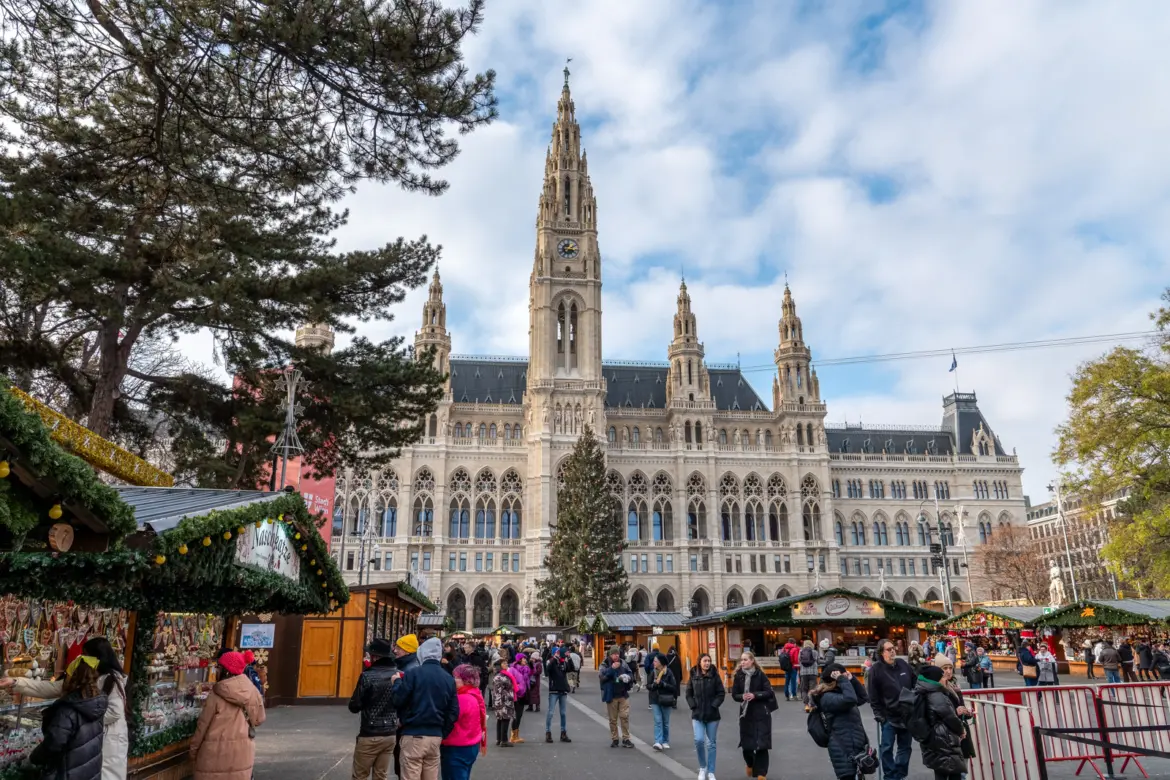
There are places in a city that you visit, and then there are places you experience. Rathausplatz is unmistakably the latter. Set against the grand backdrop of the Vienna City Hall, this expansive square is more than just an open space, it is where Vienna gathers, celebrates, and transforms throughout the year, offering a dynamic reflection of the city’s cultural rhythm.
What makes Rathausplatz so special is not just its scale or its setting, but its energy and adaptability. It shifts with the seasons, with the time of day, and with the events that bring it to life, creating an atmosphere that is never static. Whether quiet and contemplative in the early hours or vibrant and animated in the evening, it always feels as though something is unfolding, inviting you to pause, observe, and become part of the moment.
Rathausplatz at a Glance
🏛️ What it is: Vienna’s grand public square, set against the neo-Gothic City Hall (Rathaus) designed by Friedrich von Schmidt and completed in 1883
🗼 The tower: 98 meters tall, crowned by the Rathausmann knight statue — total height 103.3 meters, among the tallest civic buildings in Europe when completed in 1883
🎄 Winter — Christkindlmarkt: Mid-November to late December, ~150 stalls, one of the world’s oldest Christmas market traditions (since 1296)
⛸️ Winter — Wiener Eistraum: January to March, a vast network of ice paths and rinks beneath the illuminated City Hall
🎬 Summer — Film Festival: Early July to early September, free open-air screenings of opera, ballet, and concerts with international food stalls (since 1991)
⚡ Autumn — Vienna Electric Days: Austria’s largest electric mobility showcase with vehicles, panels, and live acts
🚇 Getting there: U2 Rathaus station · Tram 1, D, 71 to Rathausplatz/Burgtheater · 10 min walk from Stephansplatz
⏰ Best time: Late afternoon into evening for the best light on the facade; dusk for photography
The Setting: In the Shadow of City Hall
Standing in Rathausplatz, your gaze is naturally drawn toward the striking neo-Gothic façade of the Vienna City Hall. Designed by Friedrich von Schmidt — the former master builder of Cologne Cathedral — and constructed between 1872 and 1883, the Rathaus is Vienna’s most important secular neo-Gothic building. Around 30 million bricks and over 40,000 cubic meters of natural stone went into its creation, and its intricate stonework, soaring central tower, and symmetrical composition create a sense of grandeur that defines the entire space.
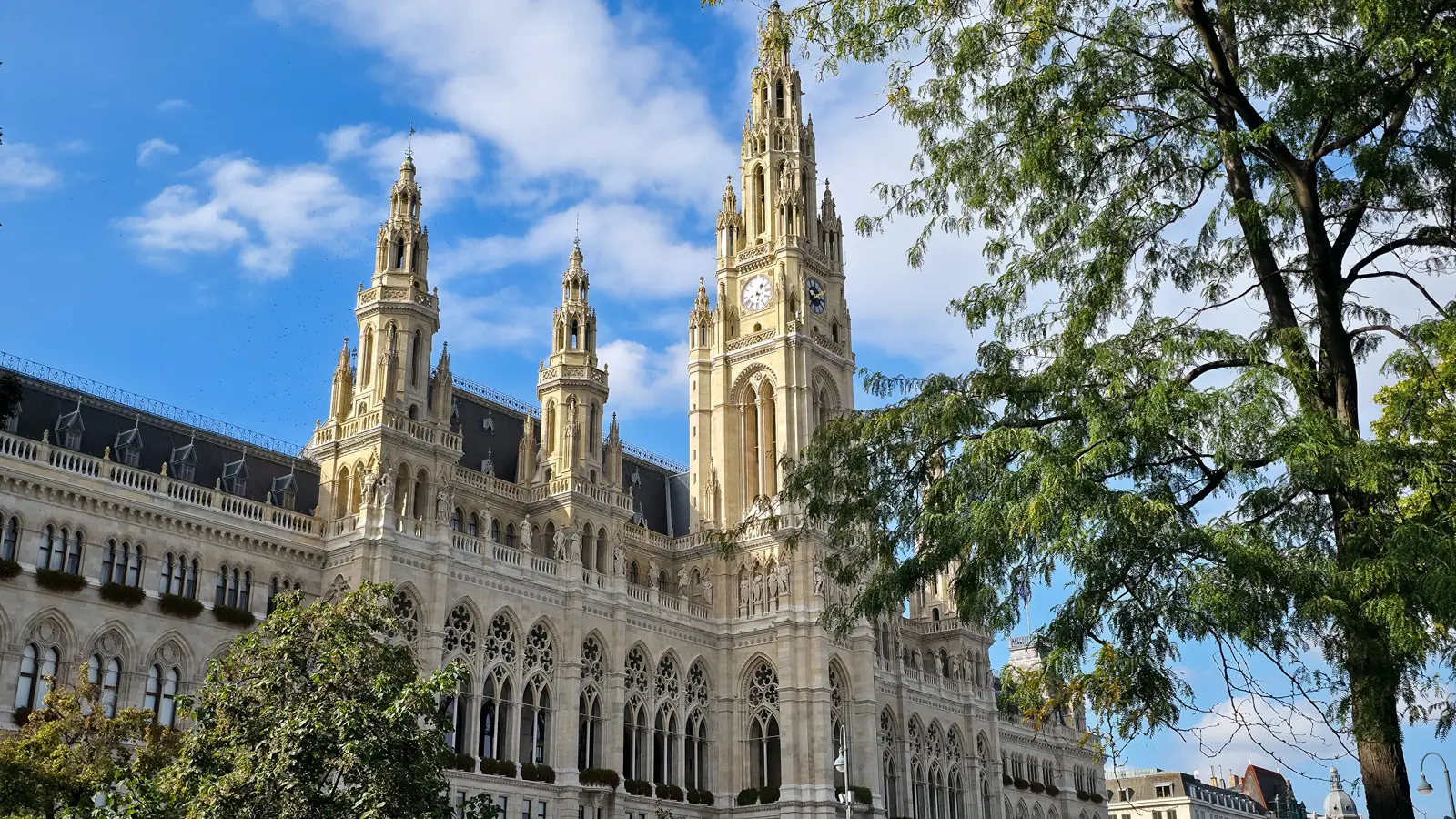
The central tower rises 98 meters — deliberately capped just below the 99-meter Votivkirche at Emperor Franz Joseph’s insistence that no secular building should rival a church. Schmidt’s clever workaround: the Rathausmann, a 3.4-meter armored knight statue added atop the tower, brought the total height to 103.3 meters and quietly surpassed the imperial limit. The building’s architectural detail becomes more apparent the longer you look, revealing layers of craftsmanship that reward slow observation.
What makes this setting particularly compelling is the relationship between the building and the square itself. Rathausplatz is intentionally open, allowing the scale and beauty of City Hall to fully unfold without obstruction. This openness creates a sense of perspective and movement, where the space feels both expansive and inviting. As you approach from the Ringstrasse or nearby avenues, the square reveals itself gradually, creating a natural sense of anticipation that enhances the overall experience.
The Atmosphere: Day to Night
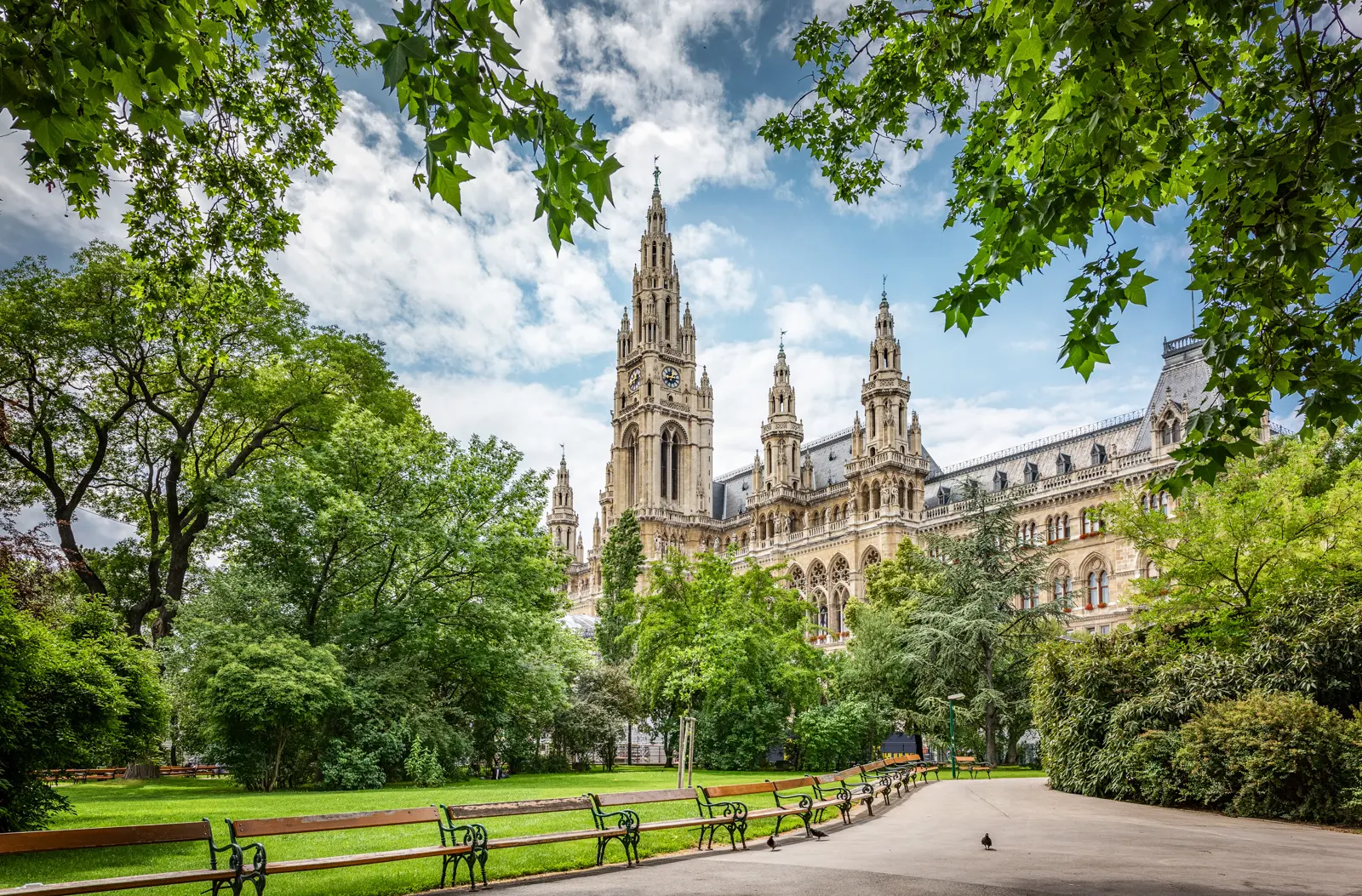
During the day, Rathausplatz feels calm, spacious, and almost contemplative. The openness of the square allows light to move freely across the space, illuminating the façade of City Hall and highlighting its architectural details in a way that feels soft and natural. People move through the square at a relaxed pace, and there is a sense of quiet balance between activity and stillness that makes the experience feel unhurried and grounded.
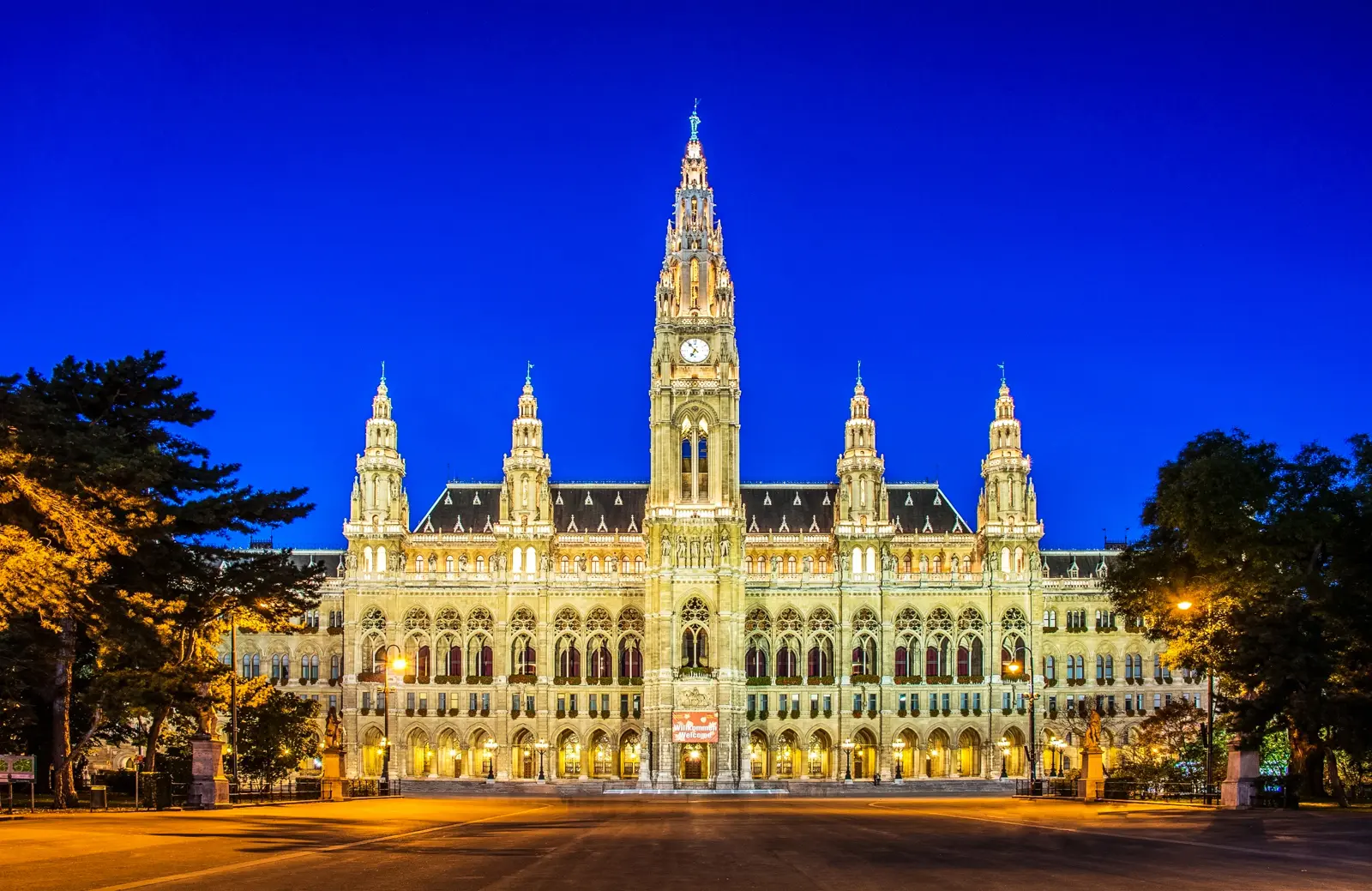
As evening approaches, the atmosphere begins to shift in subtle but noticeable ways. The fading daylight introduces warmer tones, and as the lights gradually illuminate the square, the entire setting takes on a more intimate and atmospheric quality. The architecture becomes more dramatic, the space more social, and the energy more vibrant, yet it never feels overwhelming. Instead, it settles into a rhythm that encourages you to linger, to slow down, and to take in the interplay between light, space, and movement.
The Seasons: A Square That Transforms
One of the most remarkable aspects of Rathausplatz is its ability to transform completely with the seasons, becoming a stage for some of Vienna’s most iconic cultural events.
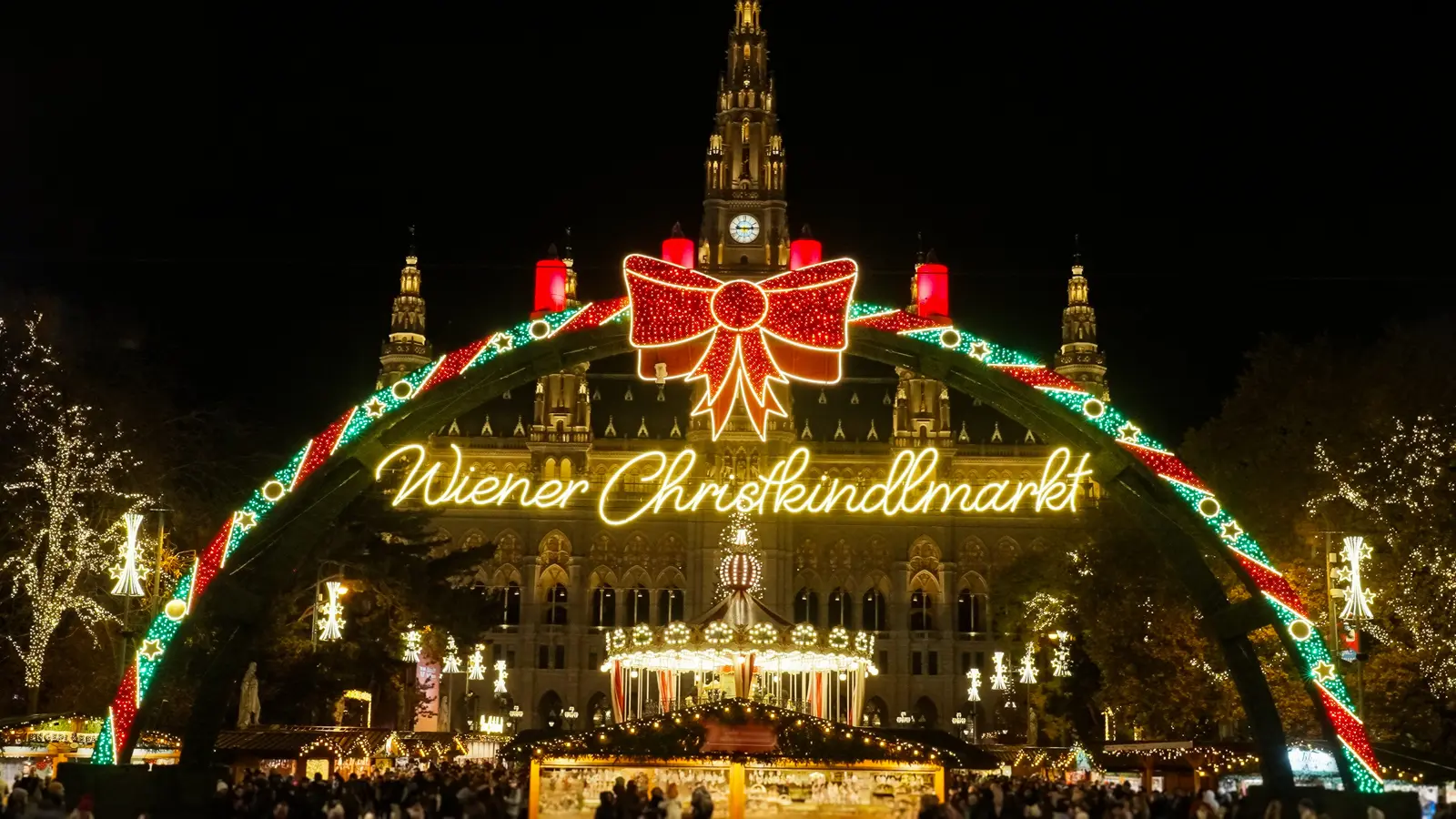
In the winter months, the square is home to the Wiener Christkindlmarkt, Vienna’s most famous Christmas market. Running from mid-November through late December, the market traces its roots to 1296, making it one of the oldest Christmas market traditions in the world. Around 150 stalls fill the square and the adjacent Rathauspark, offering handmade ornaments, Punsch, Maroni (roasted chestnuts), and Lebkuchen. Wooden stalls line the square, festive lights create a warm glow against the winter sky, and the scent of traditional treats fills the air, creating an atmosphere that feels both nostalgic and immersive.
As the holiday season fades, the square takes on a different winter character with the arrival of Vienna Ice World (Wiener Eistraum), where skaters glide across a vast network of ice paths and rinks beneath the illuminated Vienna City Hall, bringing movement and energy to the winter landscape.
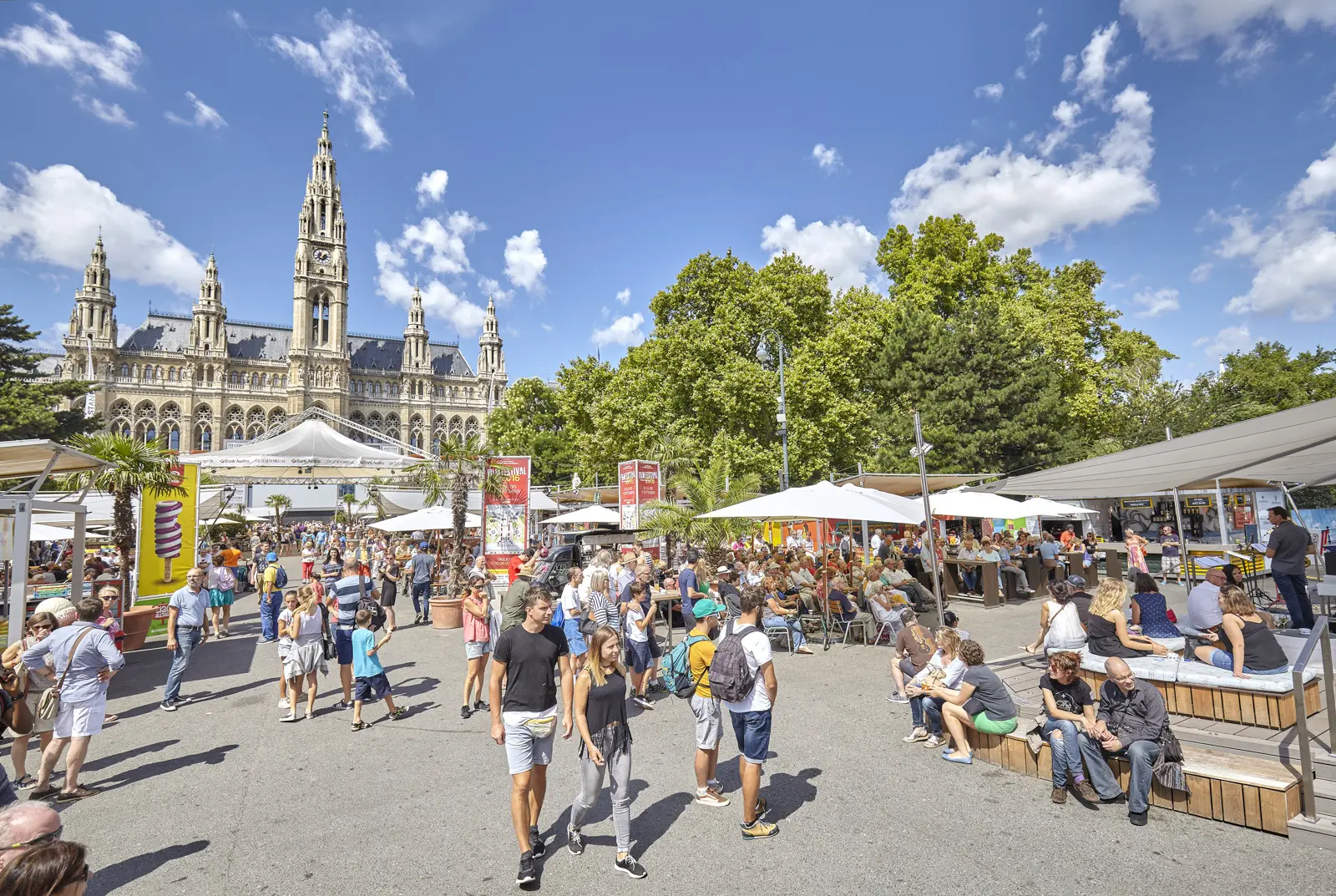
In contrast, the summer months introduce an entirely different rhythm. Rathausplatz becomes home to the Film Festival at Rathausplatz, an annual tradition since 1991. From early July through early September, open-air screenings of opera, ballet, classical music, and jazz play on a giant outdoor screen in front of City Hall, paired with international cuisine from around 25 food vendors and long, warm evenings. The atmosphere is lively yet relaxed, as visitors gather to dine, watch performances, and enjoy the unique experience of culture under the open sky. Admission is free, making it one of Vienna’s most accessible and beloved summer traditions.

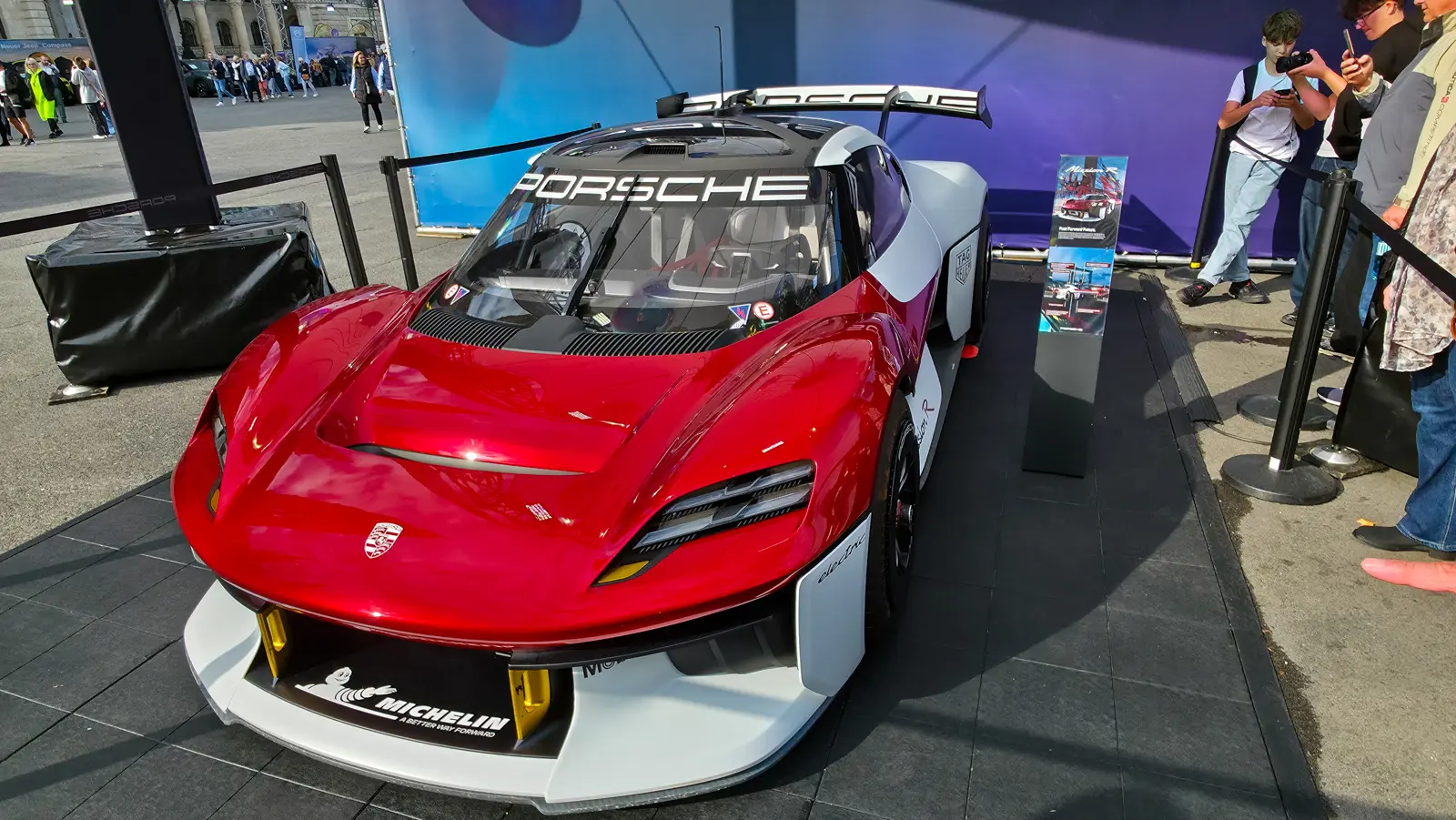
As the seasons transition into autumn, events such as Vienna Electric Days introduce a contemporary dimension – Austria’s largest electric mobility showcase, featuring innovative vehicles, panel discussions, and live acts. The contrast between cutting-edge technology and the historic Gothic backdrop of City Hall is particularly striking, reinforcing the square’s ability to bridge tradition and modernity. This constant evolution is what makes Rathausplatz so compelling, it is a space that continually reinvents itself while remaining deeply rooted in the identity of Vienna.
The Experience: Movement, Energy, and Stillness
What makes Rathausplatz truly memorable is the way it accommodates different kinds of experiences within a single, unified space. You can walk through it with intention, taking in the architecture and atmosphere, or you can slow down, finding a place to sit and observe the movement around you. There is a natural flow to the square, where people gather, pass through, and interact in ways that feel organic and unforced.
Even in its busiest moments, there is a sense of balance that defines the experience. The scale of the square allows for movement without congestion, creating an environment that feels lively but never chaotic. In quieter moments, this same space takes on a reflective quality, offering a pause within the rhythm of the city. It is this duality, the coexistence of energy and stillness, that gives Rathausplatz its unique character, allowing each visit to feel both familiar and new.
Bubbly Tips for Visiting Rathausplatz
- Location in Vienna: Rathausplatz is located in the heart of Vienna along the Ringstrasse, directly in front of the iconic Vienna City Hall and within walking distance of major attractions such as the Hofburg Palace and MuseumsQuartier.
- How to get there: U-Bahn U2 (Rathaus station), or Tram 1, D, 71 to Rathausplatz/Burgtheater stop. The square is a 10-minute walk from Stephansplatz.
- Best time to visit Rathausplatz Vienna: Late afternoon into evening offers the most atmospheric experience, especially as the light shifts and the square becomes illuminated, enhancing both the architecture and the overall ambiance.
- Seasonal highlights at Rathausplatz Vienna: In winter, experience the Vienna Christmas Market and ice skating; in summer, enjoy the Vienna Film Festival with open-air screenings and food stalls; throughout the year, events like Vienna Electric Days bring music and contemporary energy to the square.
- What to expect at Rathausplatz Vienna: A dynamic public square that transforms with the seasons, offering a mix of cultural events, open space, and one of the most iconic architectural backdrops in Vienna.
- Photography tips for Rathausplatz Vienna: Visit at dusk or early evening for the perfect combination of natural light and illuminated architecture, capturing both the scale of the square and the intricate details of City Hall.
- Take your time: Rathausplatz is best experienced slowly. Walk through the space, pause to observe the changing atmosphere, and allow yourself to fully take in the rhythm of the city.
Final Thoughts
Rathausplatz is more than just a square, it is a living expression of Vienna’s identity. Elegant yet lively, historic yet constantly evolving, it captures the essence of the city in a way that feels both immediate and enduring. It is a place where architecture, culture, and atmosphere come together, creating an experience that is as dynamic as it is memorable.
What stays with you is not only what you see, but what you feel. The openness of the space, the shifting light, the movement of people, and the ever-changing events all contribute to a sense of connection that lingers long after you leave. It becomes less about a single moment and more about an experience that continues to unfold, each visit offering something slightly different, yet equally compelling.
Would you visit Rathausplatz in winter, summer, or both? I’d love to hear your thoughts in the comments section below.
Until next time!

🌟 Everything You Need to Plan Your Dream Trip in 2026
- 🌟 Luxury Hotels - Find premium stays with Booking.com & Hotels.com
- 🏡 Vacation Rentals - Discover unique properties on VRBO
- 🏞️ Guided Tours - Explore with Viator or GetYourGuide
- 🎫 Attraction Tickets - Skip the lines with Tiqets
- 🚢 Ocean Cruises - Set sail with Cruise Direct
- 📱 International SIMs - Stay connected with Saily
- 🚗 Car Rentals - Budget-friendly options from Discover Cars
- 🌐 Secure VPNs - Browse safely with NordVPN
- 💶 Currency Exchange - Best rates with Wise
- 🗣️ Learn Languages - Master the local language with Babbel and Rosetta Stone