
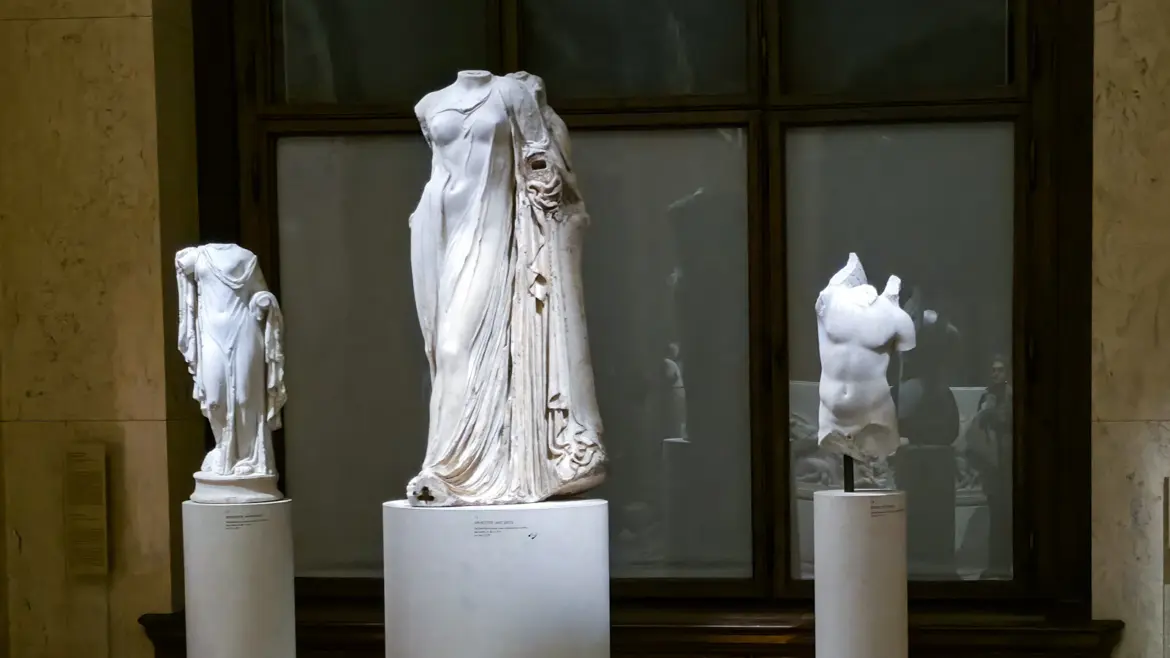
There are certain moments in a museum when history feels distant, something to be observed and admired from afar. And then there are moments when it feels unexpectedly close, almost familiar, as though the ideas, forms, and expressions you are seeing still exist in the world around you. Walking through the Greek and Roman Antiquities Collection at the Kunsthistorisches Museum is one of those experiences, where the connection between past and present becomes quietly tangible.
Here, the focus shifts in a meaningful way. The narrative is no longer centered on the afterlife, but on life itself – on the human figure, on thought, on the structures of societies that continue to shape how we understand beauty, identity, and community today. It is a transition that feels both subtle and profound, inviting you to engage not only with history, but with its enduring influence.
Collection of Greek and Roman Antiquities at a Glance
🏛️ What it is: Around 2,500 objects on permanent display, spanning more than 3,000 years from Bronze Age Cyprus (3rd millennium BCE) to the early Middle Ages
📍 Location: Raised ground floor (Hochparterre), Kunsthistorisches Museum, Maria-Theresien-Platz, 1010 Vienna — adjacent to the Egyptian and Near Eastern Collection
💎 The star object: Gemma Augustea — a Roman onyx cameo (~9–12 AD) depicting Emperor Augustus being crowned, acquired by Emperor Rudolf II in the early 17th century with a gold setting
🧩 Don’t miss: The Theseus mosaic from Salzburg, depicting the labyrinth and Ariadne’s red thread · the Sarcophagus with Fighting Amazons · the Brygos Cup (Greek vase masterpiece) · the Magdalensberg Youth (bronze) · the Votive Statue of a Man from Cyprus (larger than life-size)
💰 Hidden gem: The Senatus consultum de Bacchanalibus — a bronze tablet bearing a 186 BC Roman Senate decree banning secret Bacchic rites, one of the earliest surviving Latin legal inscriptions
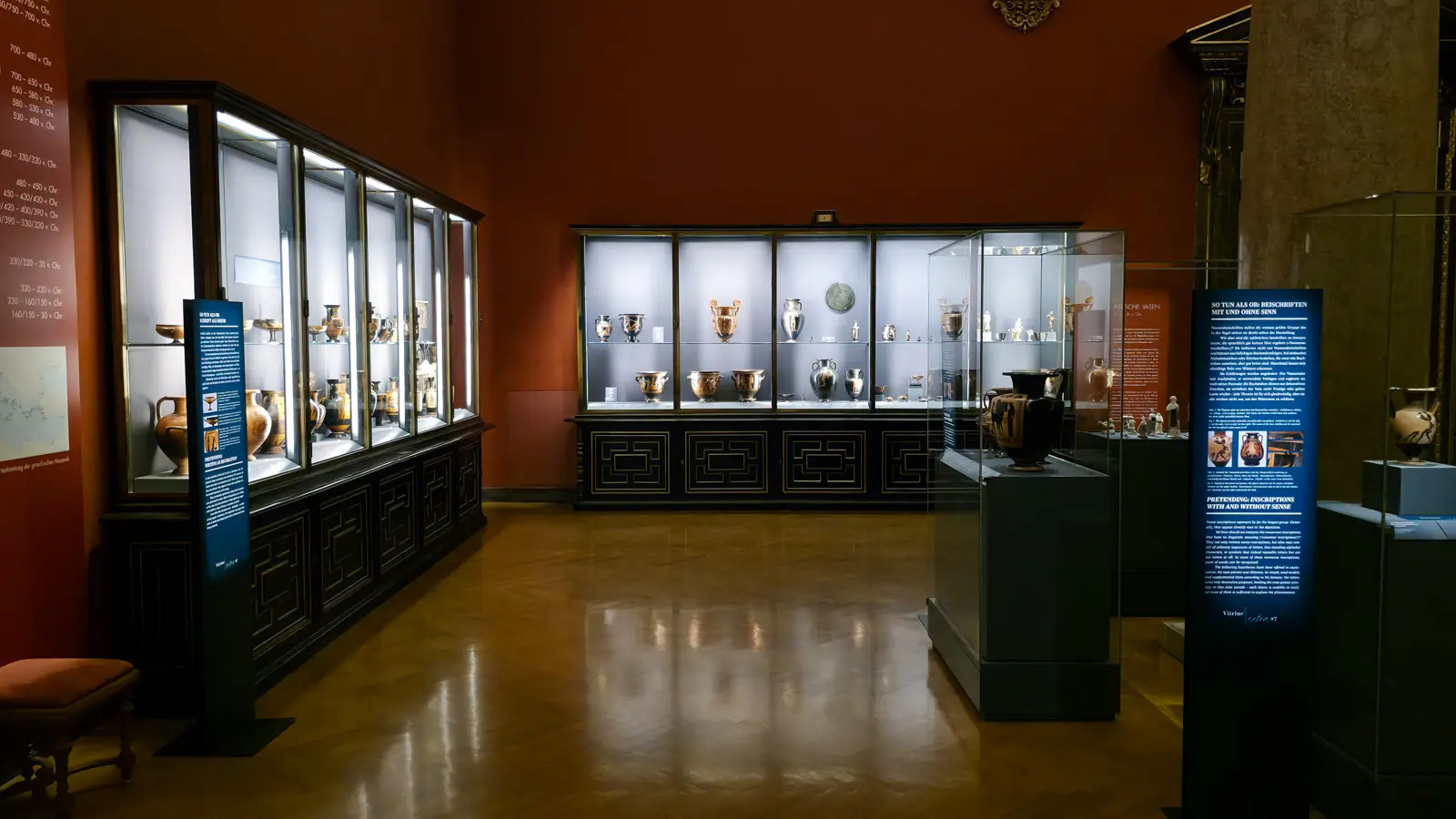
🏺 Vase collection standout: The Brygos Skyphos and other Greek vases spanning the Archaic through Classical periods
📿 Migration Period treasure: The Gold Treasure of Nagyszentmiklós — found in 1799 in modern-day Romania, one of the most important early medieval gold hoards ever discovered
A Collection Across Civilizations
The Collection of Greek and Roman Antiquities brings together artworks and everyday objects spanning more than three thousand years, from Bronze Age ceramics from Cyprus dating to the third millennium BCE through the early Greek world, the late Classical period, and into the Roman era and early medieval finds. Much of the collection originates from the Habsburg imperial holdings, reflecting centuries of collecting, scholarship, and preservation that have shaped Vienna’s cultural landscape. Today, the public collection includes around 2,500 objects, each contributing to a broader narrative that connects multiple civilizations across time.
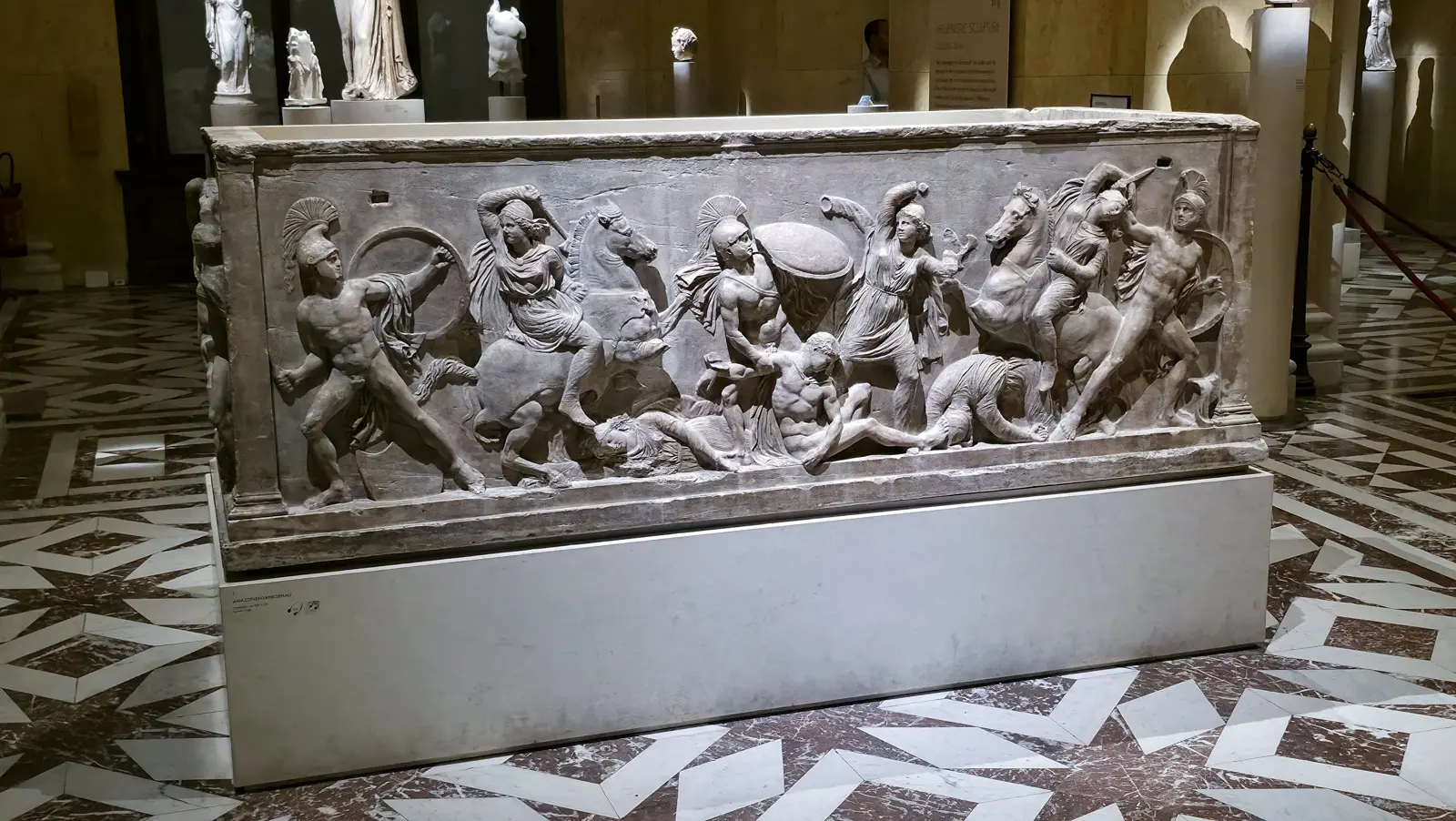
What becomes increasingly compelling as you move through the galleries is the breadth and richness of what is on display. It encompasses not only sculpture and monumental works, but also ceramics, architectural elements, mosaics, intricately carved cameos, and objects crafted from marble and precious materials. This diversity creates a layered narrative, where artistic developments, cultural exchanges, and historical shifts unfold gradually. The objects are not presented in isolation, but as part of an interconnected world, revealing how ideas and aesthetics moved across regions and evolved over time. Among the highlights, works such as the Sarcophagus with Fighting Amazons draw you in with their dynamic detail, inviting a closer look and offering a vivid glimpse into the storytelling traditions of antiquity.
The Human Form: Beauty and Ideal
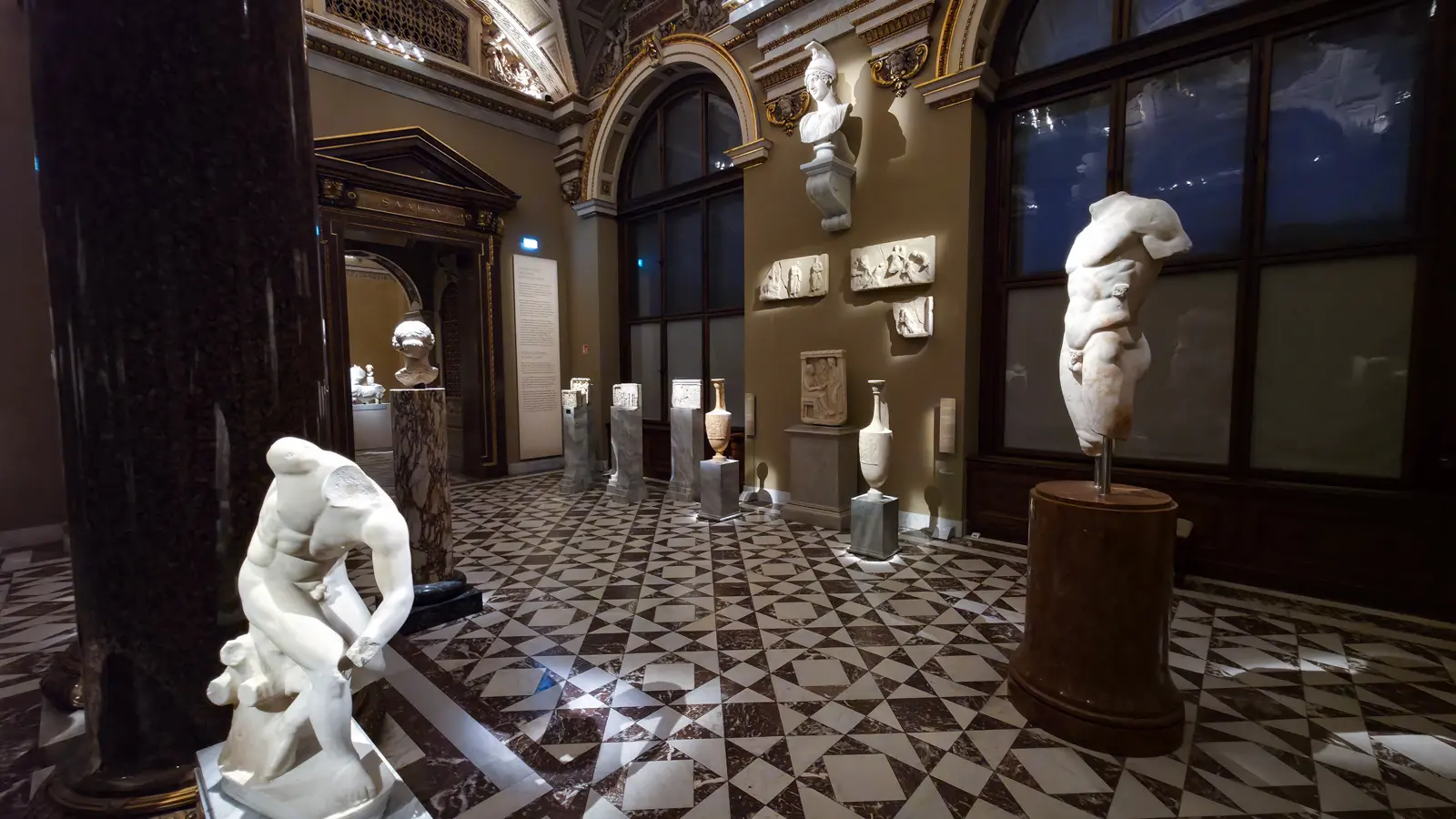
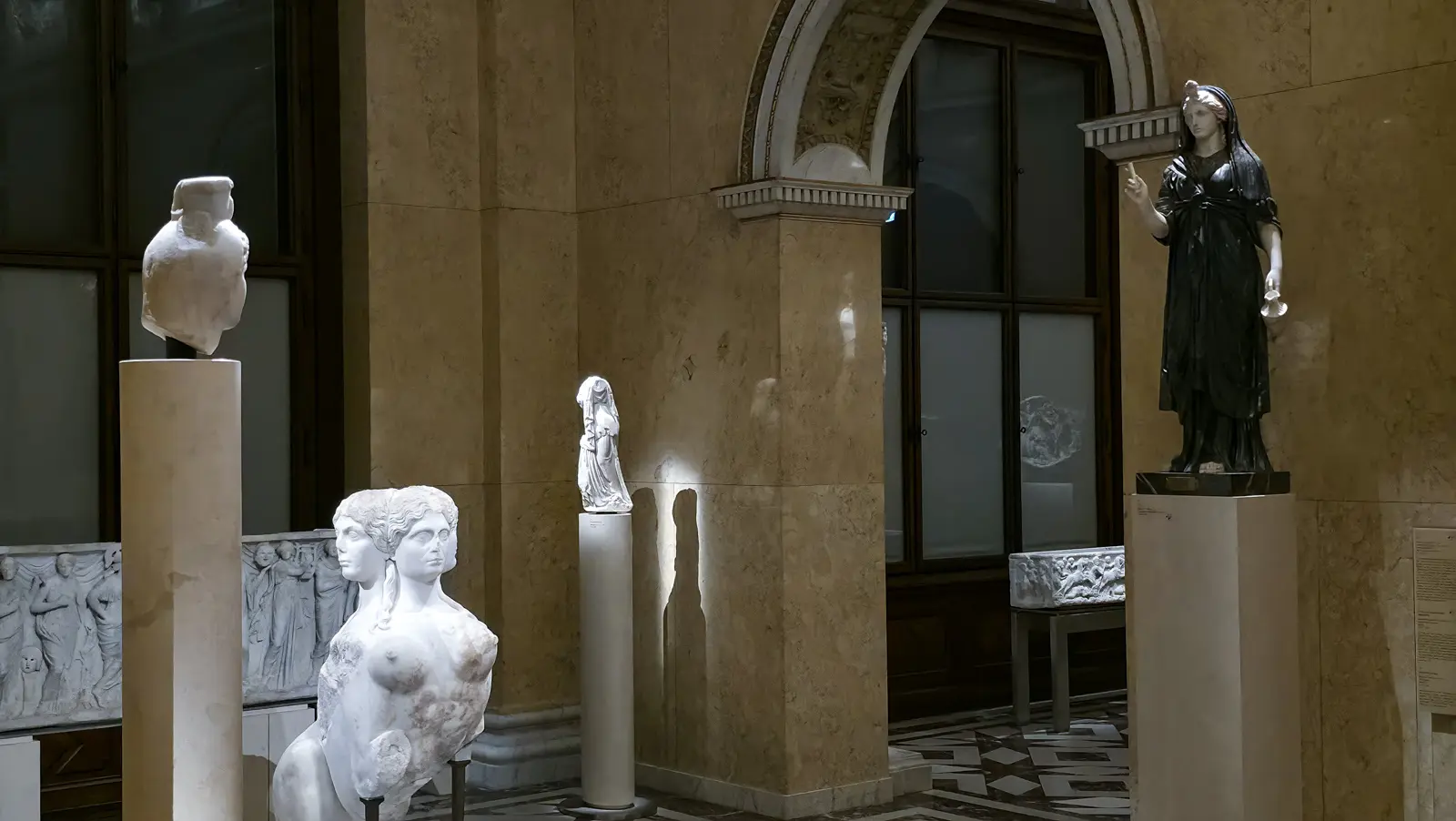
One of the most striking aspects of the Collection of Greek and Roman Antiquities is its sustained focus on the human figure. Greek sculpture, in particular, reflects an ongoing exploration of proportion, balance, and movement, where the body becomes a language through which ideas of harmony and perfection are expressed. Figures are often depicted in poised, natural stances, with subtle shifts in weight and posture that create a sense of fluidity, as though they might move at any moment. Drapery is carved with equal care, falling in soft, rhythmic folds that both reveal and conceal the form beneath, adding depth and texture to the composition. The result is a balance between idealization and vitality, where stillness and motion coexist in a way that feels remarkably lifelike.
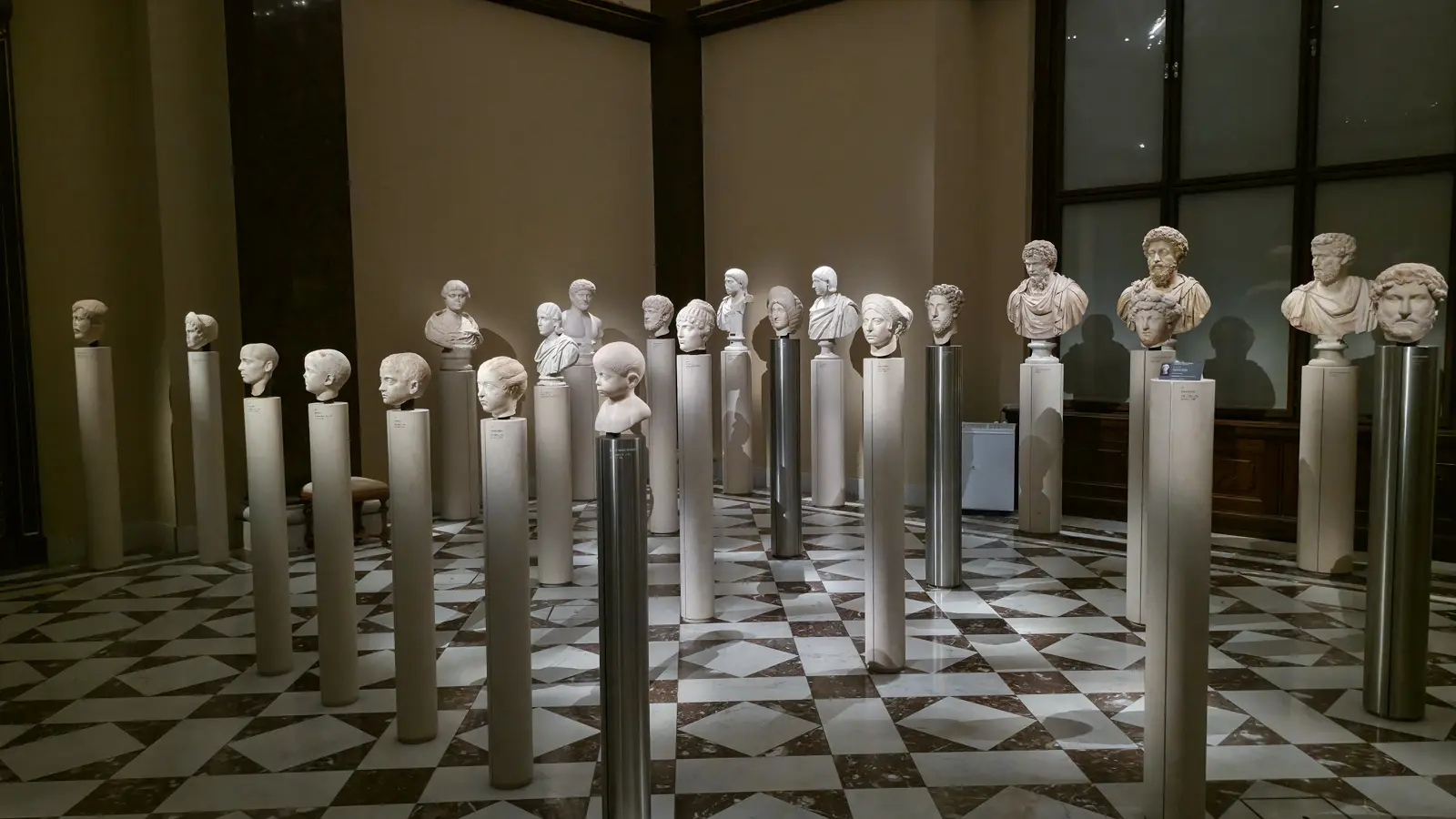
Roman works introduce a different dimension, often emphasizing individuality and realism over ideal perfection. Portraits reveal subtle expressions, signs of age, and distinct features that convey personality, experience, and social status. This attention to detail reflects a cultural shift toward representation as a means of preserving identity, rather than refining it into an ideal form. The contrast between Greek and Roman approaches creates a compelling dialogue between two ways of seeing: one that seeks timeless perfection, and one that embraces the uniqueness of the individual. Together, these works offer insight into how identity was constructed, perceived, and remembered across different cultures and moments in time.
Art and Everyday Life
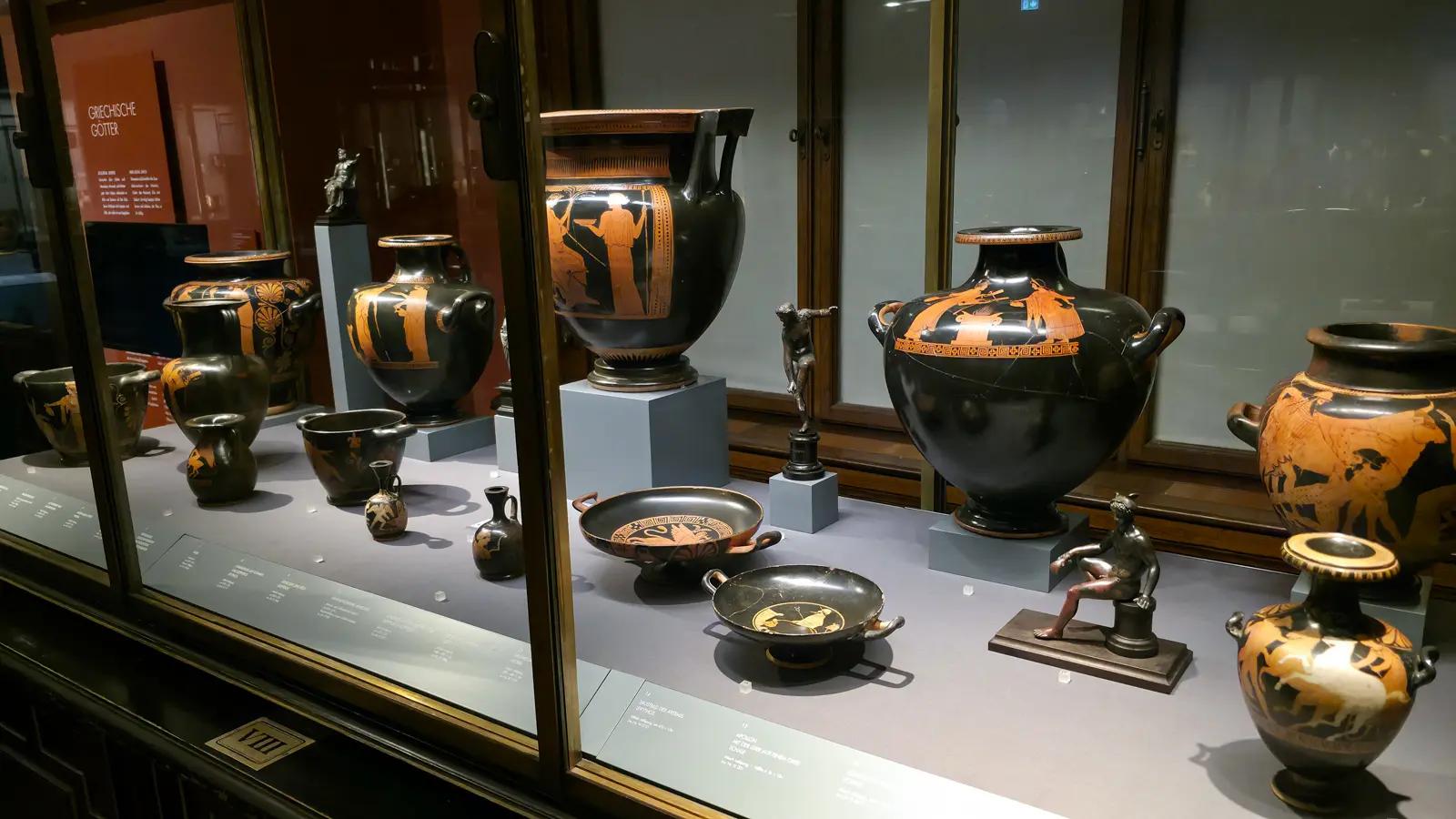
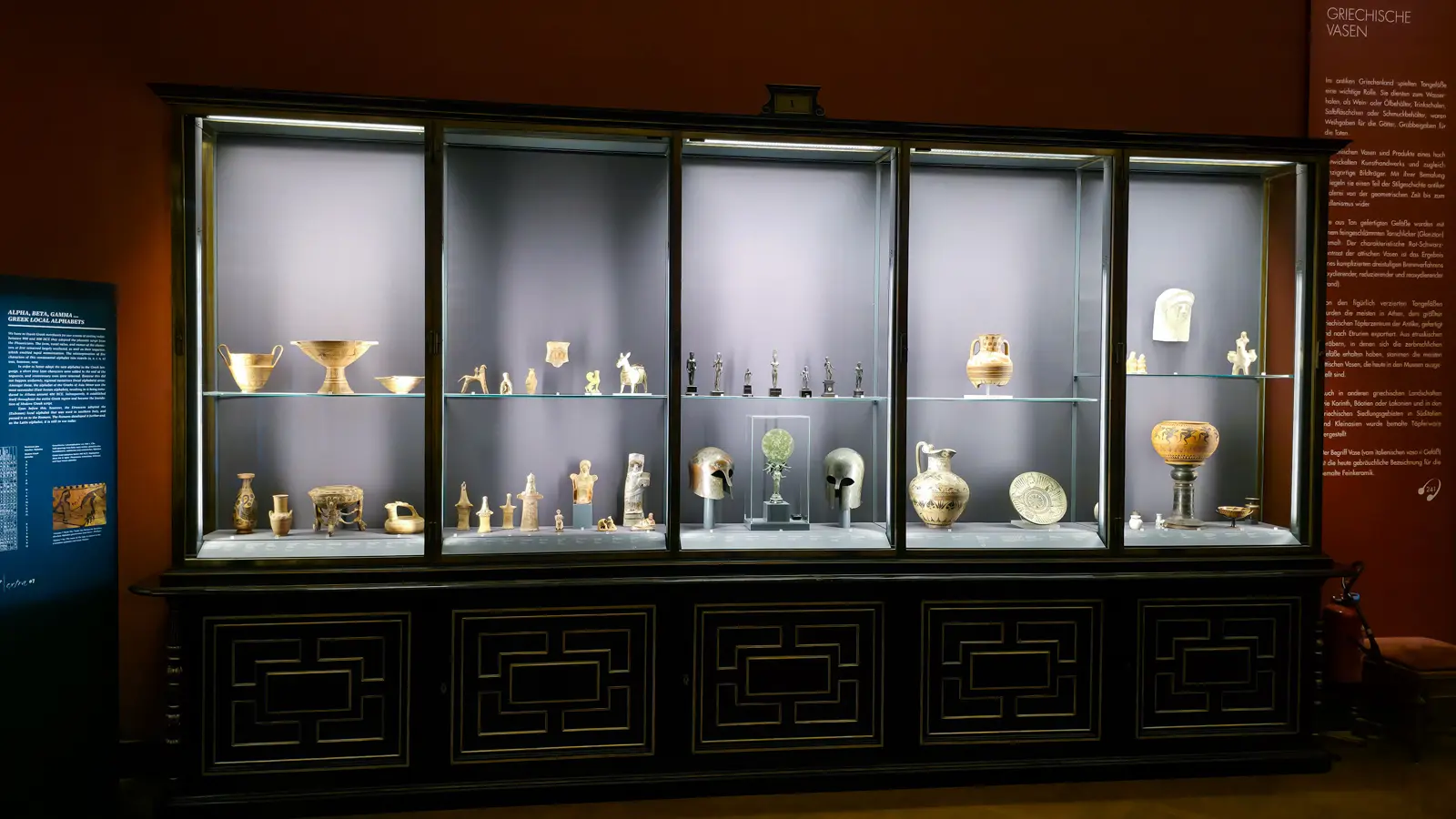
Beyond sculpture, the Collection of Greek and Roman Antiquities reveals a richly textured world of daily life through ceramics, tools, and decorative objects that speak to both function and beauty. Painted Greek vases stand out in particular, their surfaces covered with finely detailed scenes depicting mythology, rituals, athletic competitions, and moments of everyday activity. These images unfold like visual narratives, capturing gestures, interactions, and expressions with remarkable clarity. As you move closer, the level of detail becomes even more striking, from the precision of the figures to the rhythm of the compositions, offering a glimpse into the social and cultural fabric of ancient life.
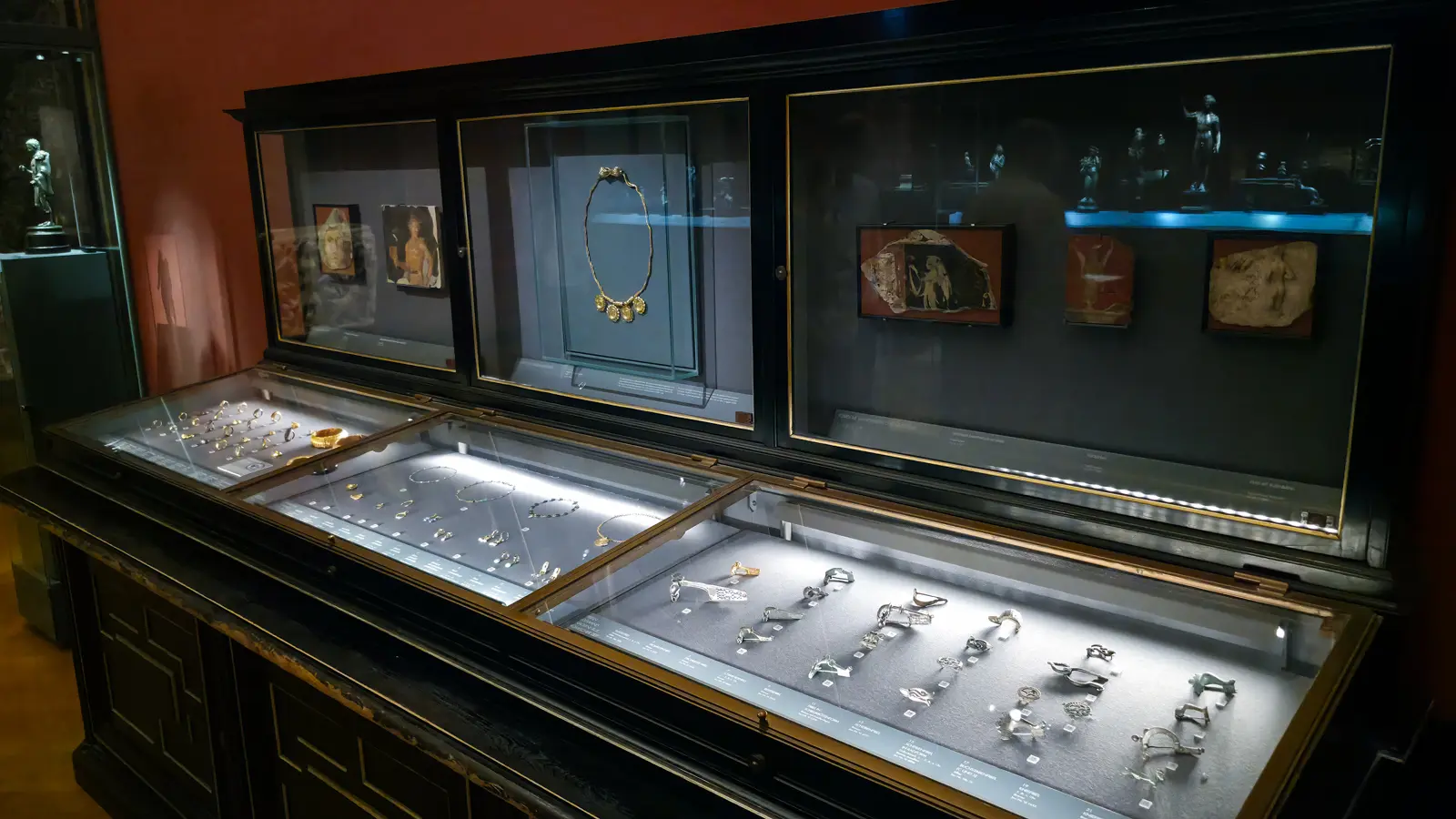
Alongside these works, the presence of jewelry, carved gemstones, and finely crafted decorative pieces adds another layer of richness to the collection. Delicate gold ornaments, intricately worked cameos, and precious stones carved with miniature scenes reveal a world where artistry extended into the most intimate objects. These pieces were not only decorative, but deeply symbolic, reflecting identity, status, and personal expression. What makes these objects especially engaging is their ability to bridge the gap between past and present. They speak not only of grand narratives, but of everyday experiences – adornment, celebration, craftsmanship – that feel surprisingly familiar. In this way, the collection moves beyond abstraction, grounding its historical scope in the lived realities of individuals and communities, where beauty and function were seamlessly intertwined.
Masterpieces and Materials
The Collection of Greek and Roman Antiquities is also renowned for its exceptional craftsmanship, particularly in objects such as Roman cameos, intricately carved gemstones, and finely worked materials that reveal an extraordinary level of technical precision. These pieces are often small in scale, yet astonishing in detail, where layers of stone are carefully carved to create depth, contrast, and narrative. The artistry is not only visual, but tactile, shaped through methods that required patience, control, and a deep understanding of the materials themselves. In these works, craftsmanship becomes a form of storytelling, where beauty and meaning are embedded within the very structure of the object.
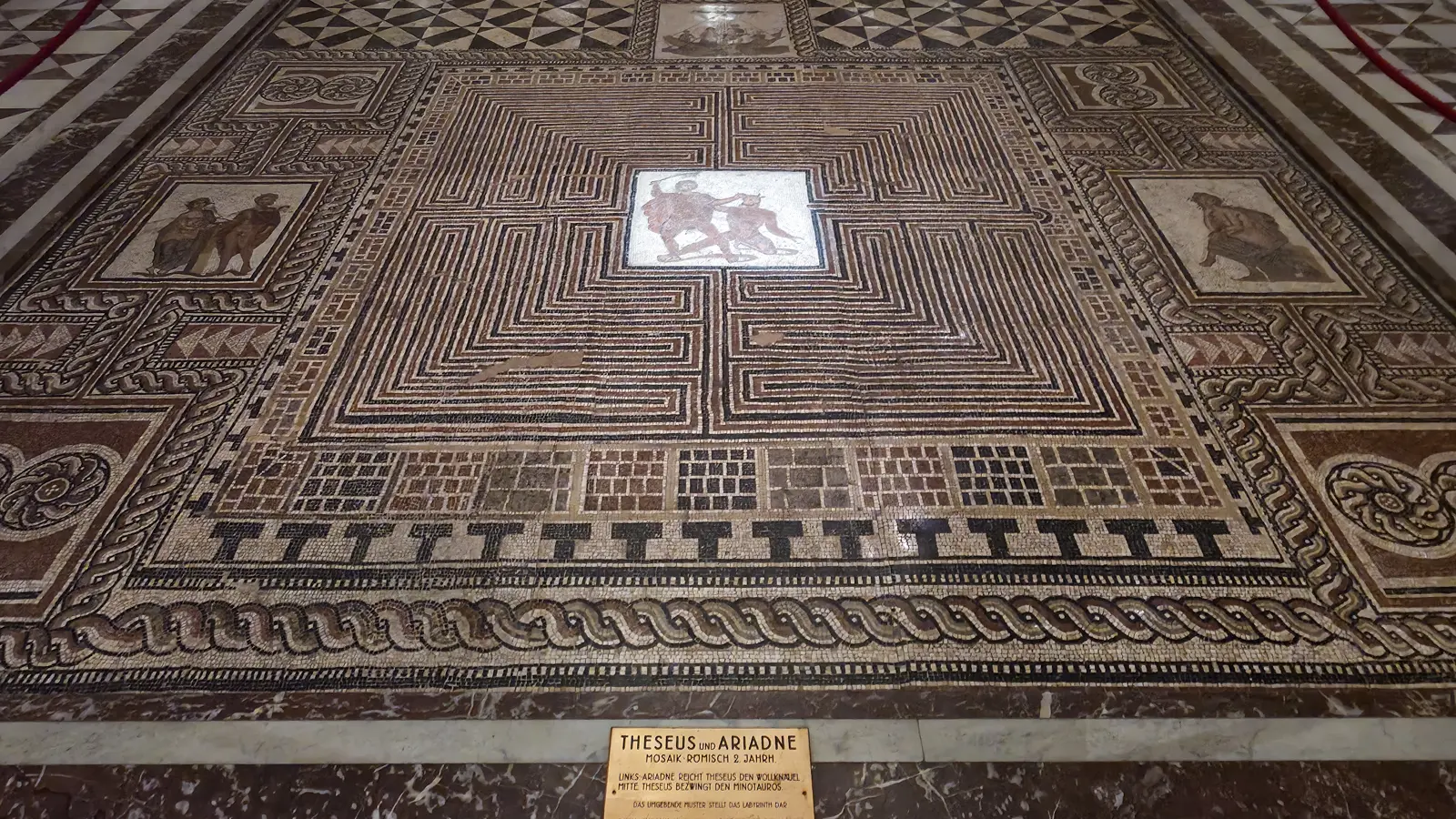
This attention to material and technique extends into larger works as well, including striking pieces such as the Theseus mosaic, where thousands of small tesserae come together to form a dynamic and richly detailed scene. The composition draws you in gradually, revealing movement, expression, and narrative through carefully arranged fragments of color and stone. It is a reminder that even monumental works are constructed through precision at the smallest level, where each element contributes to the whole. Stone, ceramic, bronze, and glass each carry their own histories, shaped by time, use, and conservation, adding another layer to the experience. As you move through the collection, you begin to appreciate not only what these objects represent, but how they were made, preserved, and understood, allowing you to see them not just as finished works, but as the result of enduring craftsmanship and expertise.
The Ephesos Museum: Walking Through Antiquity
Ephesos Museum at a Glance
🏛️ What it is: Annex of the Collection of Greek and Roman Antiquities, displaying finds from the ancient city of Ephesus (modern-day Turkey)
📍 Location: Neue Burg wing of the Hofburg Palace, Heldenplatz, 1010 Vienna — a 5-minute walk from the main KHM building
📅 Opened: Current form opened December 1978 (finds were brought to Vienna between 1896 and 1906 via Austrian archaeological expeditions)
⚔️ The centerpiece: The Parthian Monument — a 70-metre Roman relief frieze (~40 metres displayed) from the 2nd century AD, commemorating Emperor Lucius Verus’s Parthian War (161–165 AD) in five thematic cycles
🏛️ From the Seven Wonders: The Amazon from the Altar of the Artemision — sculpture from the Temple of Artemis, one of the Seven Wonders of the Ancient World
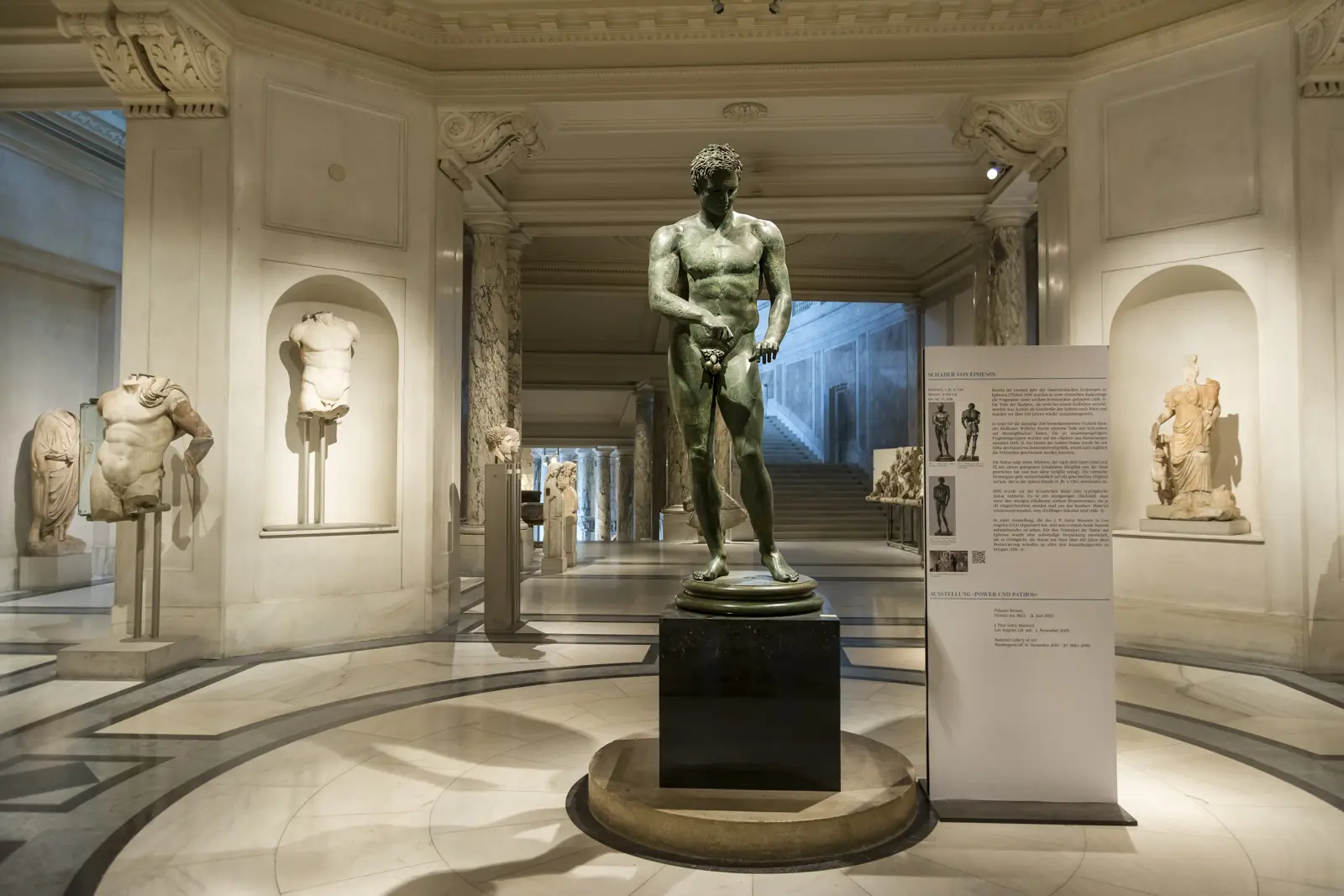
💪 The reconstructed athlete: A Roman bronze athlete statue painstakingly reassembled from 234 fragments unearthed at the Harbour Gymnasium of Ephesus in 1896
🧒 The tender one: Child with a Goose — a Roman marble after a Hellenistic original
🕰️ Hours: Same as the main KHM · Tue–Sun 10:00–18:00 · Thu until 21:00 · Closed Mondays
🎫 Ticket: Combined Kunsthistorisches Museum ticket covers both locations
One of the most unforgettable parts of the experience is the Ephesos Museum, part of the Kunsthistorisches Museum collections but located separately in the Neue Burg wing of the Hofburg on Heldenplatz. This distinction adds a sense of transition to the visit, as you move from the main museum into a space entirely dedicated to the ancient city of Ephesus.
Here, columns, reliefs, and architectural elements from temples and monumental buildings are displayed in a way that allows you to move through them, rather than simply observe them from a distance. The atmosphere feels more expansive and architectural, almost archaeological in nature. You are no longer just looking at artifacts, but walking among them, experiencing their scale and presence in a way that feels immediate. It is a rare opportunity to engage with antiquity not as a series of isolated objects, but as an environment, one that evokes the physical reality of an ancient city.
The Experience: Between Past and Present
What makes this collection so memorable is the way it bridges past and present in a way that feels both intellectual and intuitive. The ideas that emerged in ancient Greece and Rome, from philosophical inquiry to artistic innovation, continue to shape contemporary thought and aesthetics. As you move through the galleries, this continuity becomes increasingly apparent, revealing how deeply these cultures are embedded in the foundations of the modern world.
At the same time, the experience remains personal. There is a quiet recognition that what you are seeing is not entirely distant, but part of an ongoing human narrative. The objects feel grounded, relatable in subtle ways, and connected to experiences that persist across time. This dual awareness, of distance and familiarity, is what makes the visit so compelling, leaving you with a sense of connection that extends beyond the museum itself.
Bubbly Tips for Visiting the Collection of Greek and Roman Antiquities
- Location: Located within the Kunsthistorisches Museum, centrally positioned on Maria-Theresien-Platz in Vienna.
- Ephesos Museum location: The Ephesos Museum is part of the same museum collection but is located separately in the Neue Burg wing of the Hofburg Palace on Heldenplatz, just a short walk away.
- Time to explore: Plan for at least 1.5 to 2 hours to experience both the antiquities collection and the Ephesos Museum at a comfortable pace, allowing time to move between the two locations.
- Don’t miss: Painted Greek vases, Roman portrait sculptures, intricately carved cameos, the Theseus mosaic, and the immersive architectural space of the Ephesos Museum.
- Best time to visit: Early morning or late afternoon allows for a quieter, more contemplative experience.
- Take your time: Move slowly through the galleries and allow connections between objects and themes to emerge naturally.
Combined Practical Info
🕰️ Hours (both): Tue–Sun 10:00–18:00 · Thu until 21:00 · Closed Mondays
⏱️ Time needed: 1.5–2 hours for Greek/Roman + 60–90 min for Ephesos Museum · plan a half-day minimum for both
🚇 Getting there: U2 Museumsquartier or U3 Volkstheater · Tram 1/2/71 to Burgring · Ephesos Museum is a 5-minute walk across Heldenplatz from the main KHM building
💡 Tip: Do the main collection first, then walk to the Ephesos Museum — the visit makes more sense chronologically and you’ll have context for the Ephesos finds
Final Thoughts
The Collection of Greek and Roman Antiquities and the Ephesos Museum offer more than a journey through history. They provide a perspective on the foundations of the modern world, revealing how ideas, forms, and identities have evolved while remaining deeply connected across time.
What stays with you is not only the beauty of the objects, but the continuity they represent – a reminder that across centuries, the human desire to understand, create, and express has remained remarkably constant. It is a quiet, enduring connection that lingers long after you leave the museum, shaping the way you see both the past and the present.
Would you explore this side of the museum? I’d love to hear your thoughts in the comments section below.

🌟 Everything You Need to Plan Your Dream Trip in 2026
- 🌟 Luxury Hotels - Find premium stays with Booking.com & Hotels.com
- 🏡 Vacation Rentals - Discover unique properties on VRBO
- 🏞️ Guided Tours - Explore with Viator or GetYourGuide
- 🎫 Attraction Tickets - Skip the lines with Tiqets
- 🚢 Ocean Cruises - Set sail with Cruise Direct
- 📱 International SIMs - Stay connected with Saily
- 🚗 Car Rentals - Budget-friendly options from Discover Cars
- 🌐 Secure VPNs - Browse safely with NordVPN
- 💶 Currency Exchange - Best rates with Wise
- 🗣️ Learn Languages - Master the local language with Babbel and Rosetta Stone