
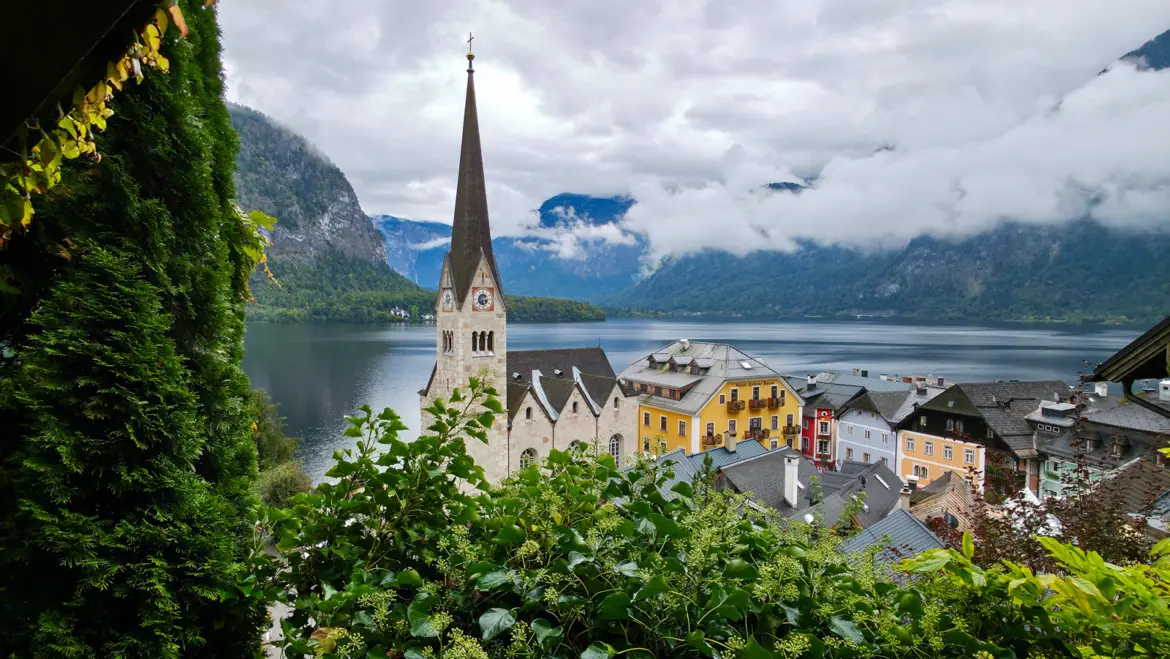
There are certain places in the world that become instantly recognizable, not because we have visited them, but because we have seen them before: in photographs, in films, in the quiet corners of our imagination. In Hallstatt, that image almost always includes one defining element: a slender church spire rising gracefully above the village, reflected in the still waters of the lake below. It is a scene that feels almost timeless, one that captures the essence of the village in a single, quiet moment.
The Evangelische Pfarrkirche Hallstatt (Evangelical Church of Hallstatt) is not just a landmark. It is the visual anchor that brings together the lake, the mountains, and the village into a composition that feels both natural and intentional. And yet, beyond its iconic presence, it remains a place of quiet simplicity, one that reveals itself gradually as you move through the village and begin to experience it beyond the image.
Evangelische Pfarrkirche Hallstatt at a Glance
⛪ Also known as: Christuskirche (Evangelical Church of Christ)
📅 Current church completed: October 1863 (Neo-Gothic, 5 years of construction)
🏛️ Prayer house first built: October 30, 1785 — three years after Joseph II’s Patent of Toleration (1781)
⚖️ Full church enabled by: Franz Joseph I’s Protestant Patent of 1861
💰 Construction cost: 37,000 guilders (≈ €400,000 today)
📍 Address: Oberer Marktplatz 167, 4830 Hallstatt
🎨 The iconic view: The slender Neo-Gothic spire reflected in Lake Hallstatt is the image of Hallstatt on postcards, screensavers, and in films like Ballerina (2025)
⛰️ Local oddity: The Protestant church sits in the village center while the Catholic Pfarrkirche sits above — historically the reverse of most Austrian villages, reflecting Hallstatt’s early and persistent Protestant community
📜 Historical depth: In 1734, 300 Protestants from Hallstatt, Ischl, and Goisern were forcibly deported to Transylvania in salt barges at night — Protestant worship became openly legal only in 1781
🎵 Summer bonus: Regular cultural concerts in the summer months draw musicians from around the world
💶 Entry: Free
🚆 From Vienna: ~3–3.5 hrs (train + ferry crossing)
💡 Tip: For the iconic reflection, walk along the waterfront or take a vantage point across the lake — early morning or late afternoon gives the calmest water and best light
The Setting: At the Heart of the Village
Set along the lakeside, the Evangelische Pfarrkirche Hallstatt occupies one of the most central and visually striking locations in Hallstatt. Whether you are walking through the market square, following the waterfront promenade, or arriving by boat, the church seems to orient your perspective, drawing your attention without ever overwhelming the scene. Its presence feels intuitive, as though it has always belonged exactly where it stands, quietly anchoring the village within its surroundings.
What makes this setting so remarkable is the way it interacts with everything around it. On calm days, the lake mirrors the church with near-perfect symmetry, creating a reflection that feels almost painterly in its precision. Behind it, the mountains rise dramatically, adding both depth and scale to the scene, while the surrounding homes soften the composition with their warmth and color. This layering of elements, water, architecture, and landscape, creates a visual harmony that feels both dynamic and serene, constantly shifting yet always balanced.
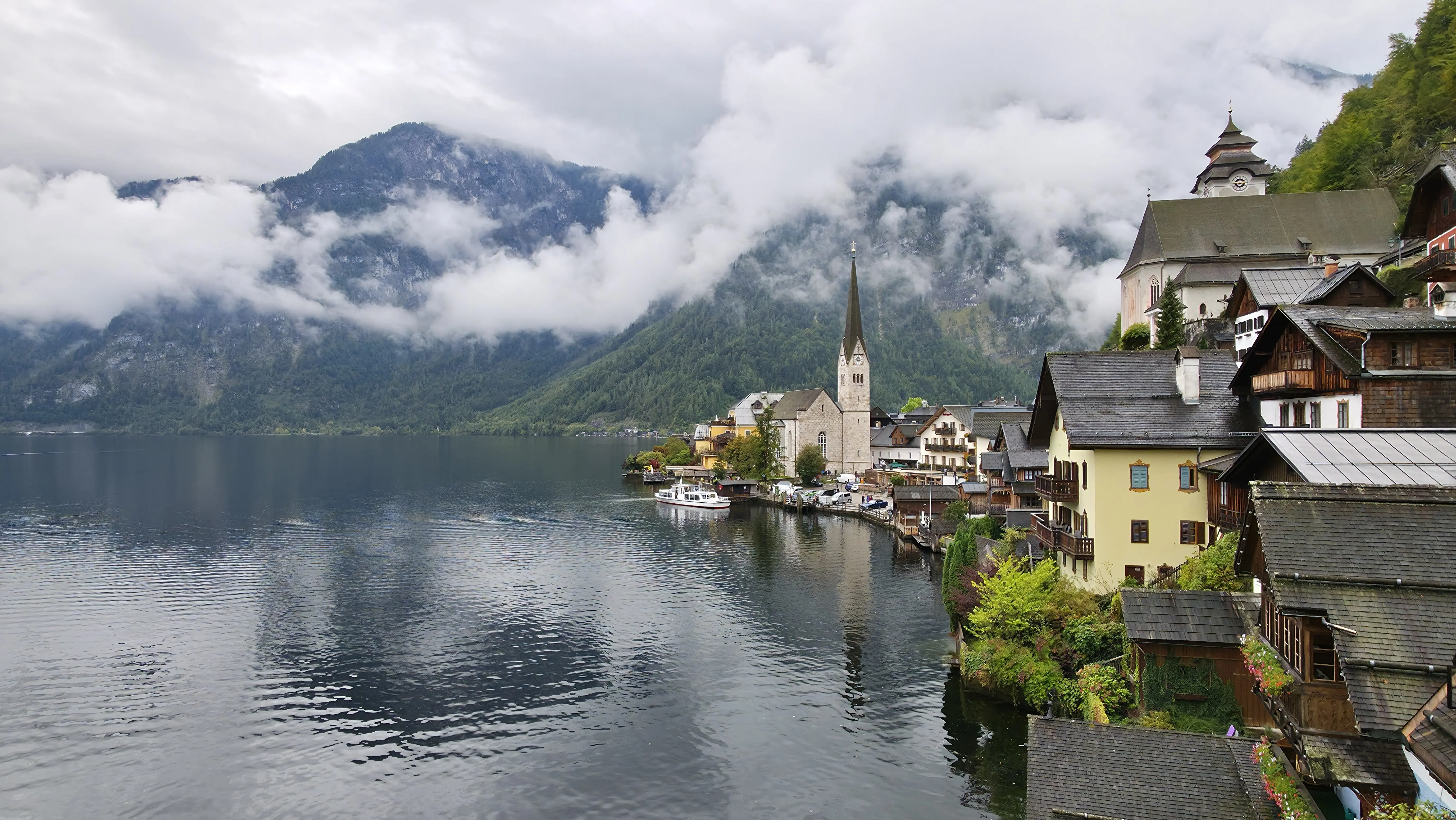
There is also a subtle rhythm to this space that reveals itself the longer you stay. The gentle movement of the water, the changing light throughout the day, and the quiet flow of people passing through the village all contribute to an atmosphere that feels alive, yet never hurried. It is not a place that demands attention, but one that holds it naturally, allowing you to settle into the moment and experience the scene as it unfolds.
A Brief History: A Different Chapter of Hallstatt
The Evangelische Pfarrkirche Hallstatt represents a distinct and often overlooked chapter in Hallstatt’s history, one shaped not simply by the introduction of Protestantism, but by its long struggle for survival and eventual re-establishment. Protestant ideas took root in Hallstatt as early as the 16th century, finding particularly fertile ground among the salt miners of the Salzkammergut, who were among the earliest converts to the Protestant Reformation in the region. But this community faced centuries of suppression. In 1734, in one of the most dramatic episodes of this history, some 300 Protestant men from Hallstatt, not including women and children, were forcibly deported under cover of darkness on salt barges, compelled to emigrate to Transylvania.
It was not until Emperor Joseph II’s Patent of Toleration in 1781 that Protestants were permitted to practice their faith more openly, and in the years that followed, the community established a modest house of prayer. The current Neo-Gothic church followed in 1863, made possible by Emperor Franz Joseph I’s Protestant Patent, which granted the Evangelical faith greater legal recognition and equality. The building that stands today is therefore not simply a place of worship, but a testament to resilience, to a community that endured suppression, exile, and generations of quiet persistence before earning the right to build visibly in their own village.
This history adds a layer of depth to Hallstatt that is easy to overlook. Compared to the older Catholic church perched above the village, this church feels more recent, but the faith it represents has been part of Hallstatt’s story for centuries. Its presence reminds us that even in places that appear timeless, history continues to evolve, and that continuity is not always static, sometimes it is hard won.
The Design: Simplicity and Elegance
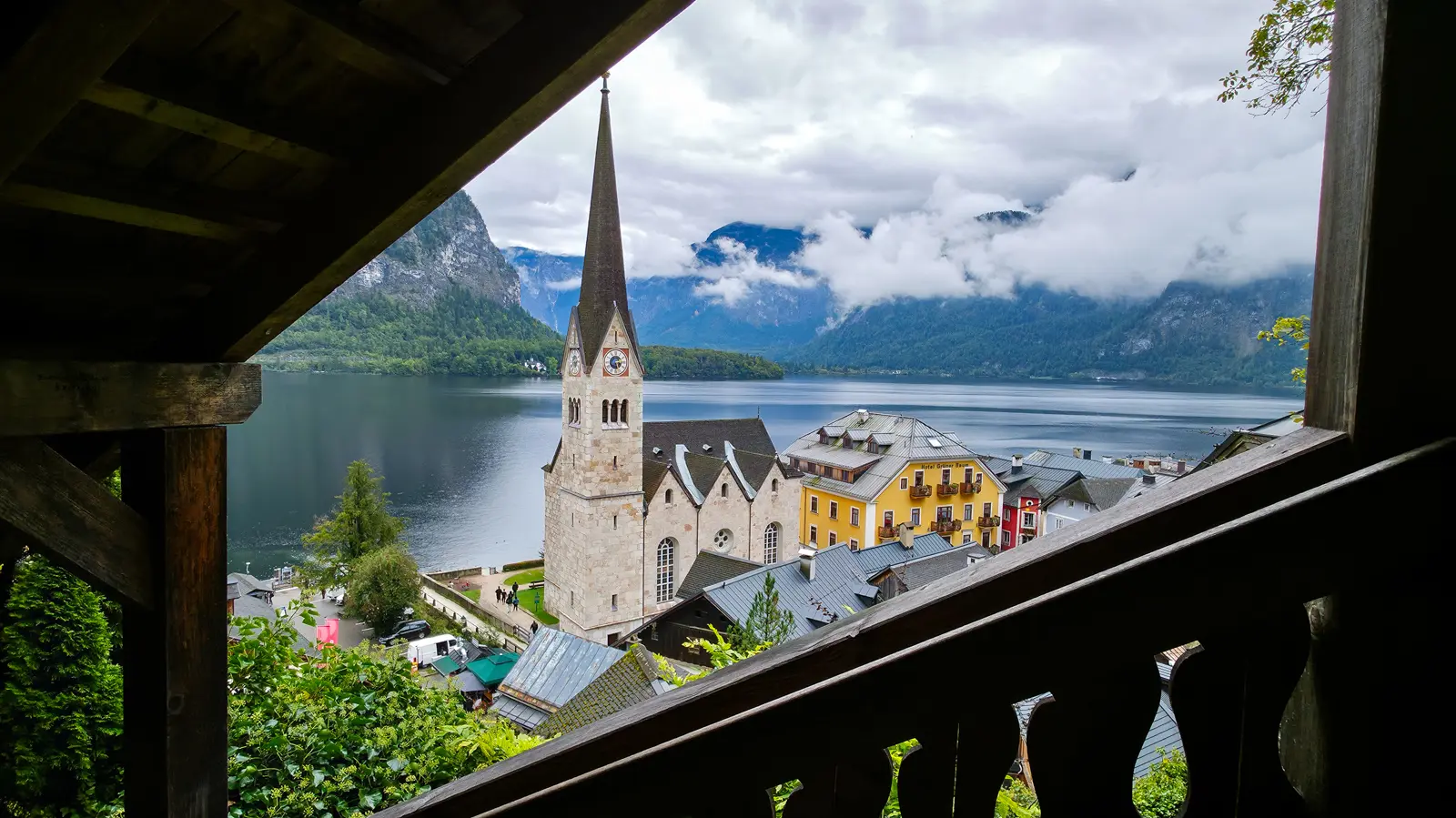
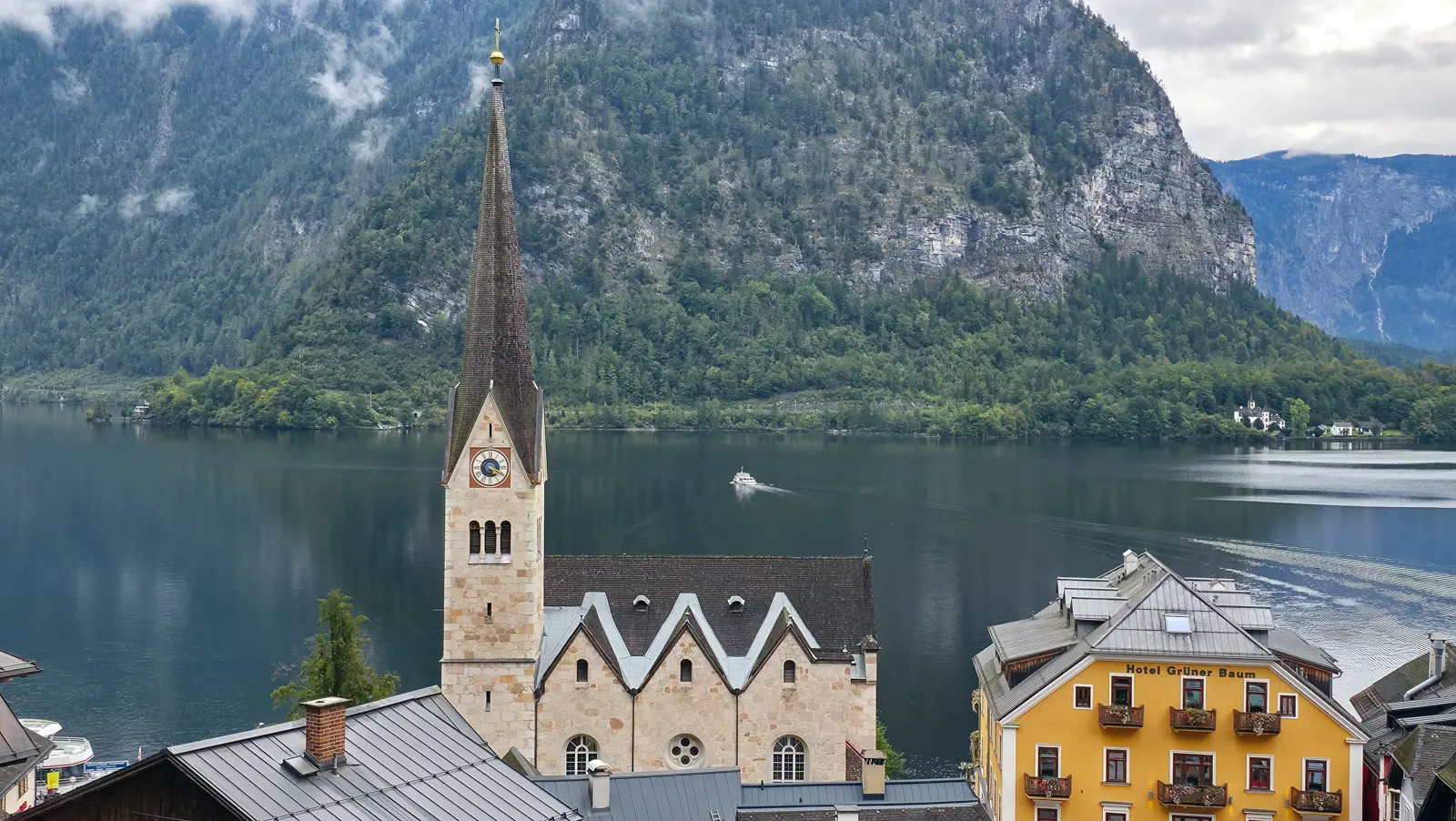
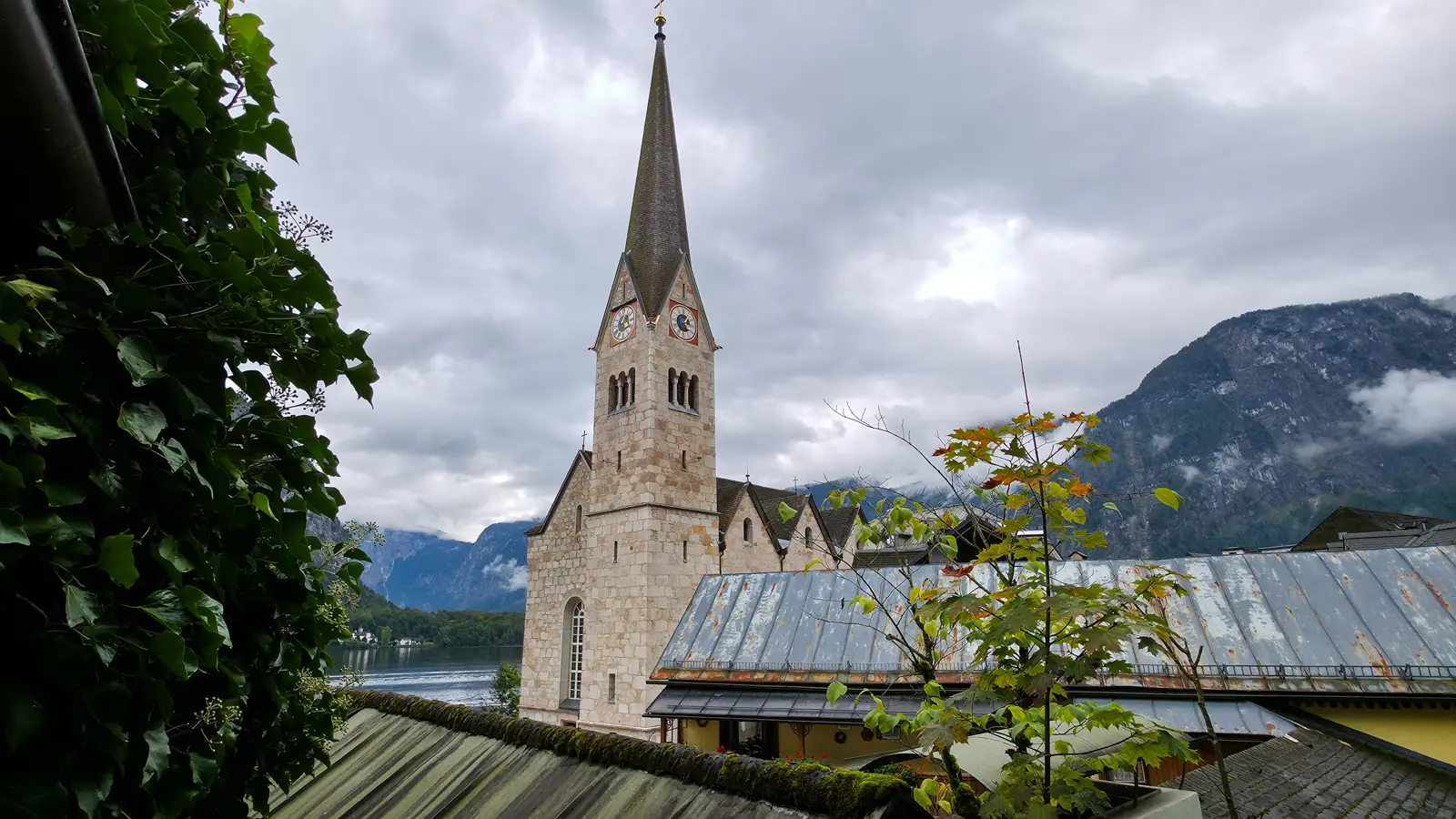
Architecturally, the Evangelische Pfarrkirche Hallstatt is defined by its elegant restraint and carefully balanced proportions. Its most distinctive feature is the slender bell tower, crowned by a sharply pointed spire that rises vertically above the village, drawing the eye upward and giving the structure a sense of lightness against the dramatic alpine backdrop. This vertical emphasis creates a striking contrast with the horizontal lines of the lake, allowing the church to stand out while remaining visually harmonious within the landscape. The design itself is rooted in Neo-Gothic influence, expressed through its clean lines, subtle detailing, and overall sense of refinement rather than ornamentation.
This simplicity is precisely what makes the church so visually compelling. It does not seek to dominate its surroundings, but instead complements them, allowing the natural beauty of Hallstatt to remain at the forefront. The bell tower and spire act almost as a visual anchor, guiding the composition of the village without overwhelming it. Over time, this balance between structure and setting has become part of the church’s identity. It is not only the form itself that leaves an impression, but the way it exists within the landscape, quietly shaping the overall image of Hallstatt and reinforcing the sense of harmony that defines it.
The Interior: Quiet and Understated
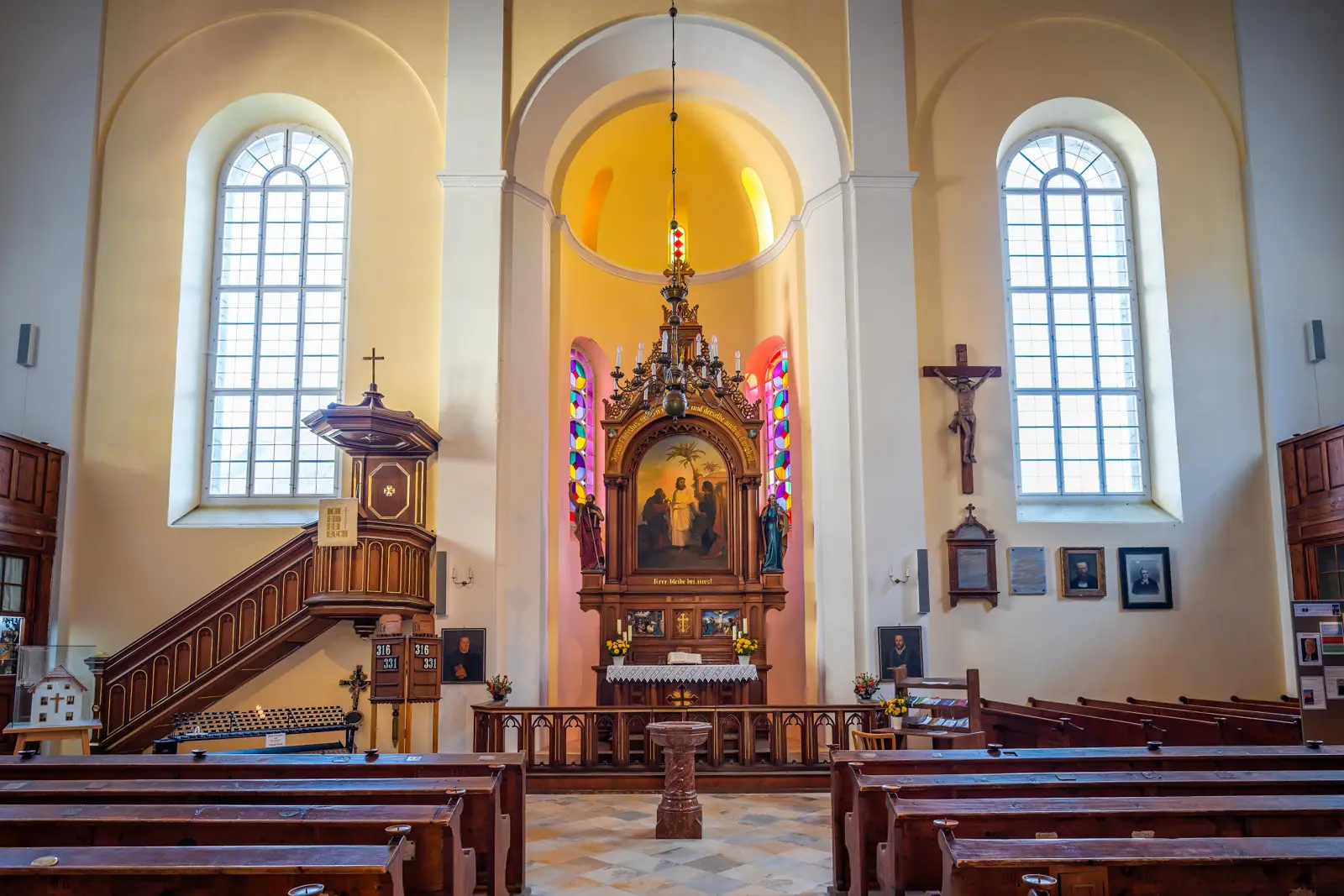
Stepping inside the Evangelische Pfarrkirche Hallstatt, the atmosphere shifts in a way that feels immediate yet subtle. The simplicity of the exterior carries through to the interior, where the space unfolds with quiet restraint. The layout is modest and uncluttered, defined by clean lines, light-colored surfaces, and an openness that allows the eye to move freely. Natural light filters gently through the windows, softening the space and creating a calm, even glow that changes throughout the day. There is no sense of excess here, only a carefully balanced environment that feels both intentional and effortless.
What emerges most strongly is not the architecture itself, but the feeling it creates. Without elaborate decoration or grand visual statements, the interior invites a more personal and introspective experience. The absence of ornamentation allows attention to settle, shifting the focus from what you see to what you feel. It is a place where time seems to slow, where the quiet presence of the space encourages you to pause, breathe, and simply be. In contrast to the movement of the village outside, the church offers a moment of stillness, one that lingers gently even after you step back out into the light.
The View: Reflection and Identity
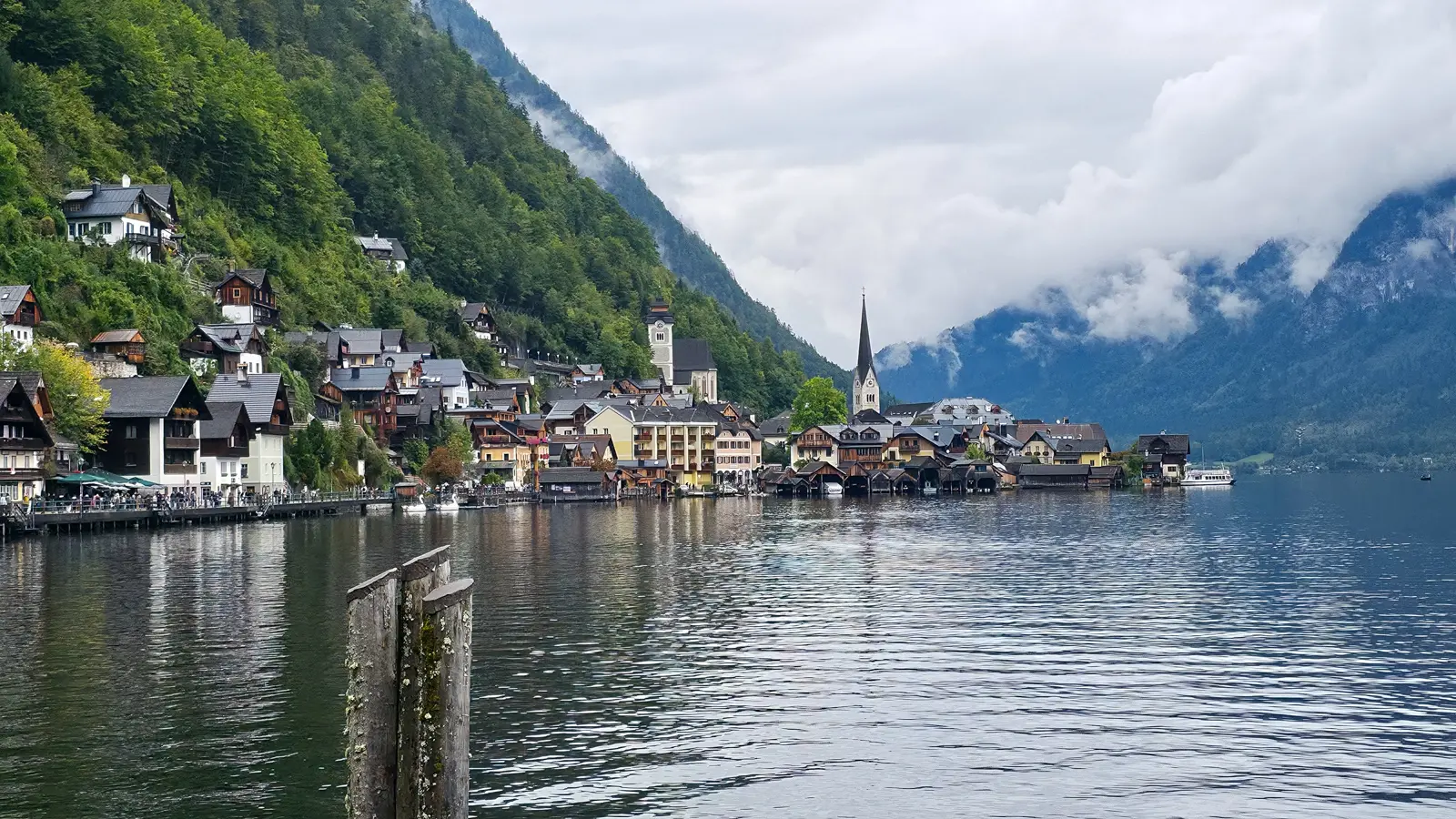
Perhaps the most iconic aspect of the Evangelische Pfarrkirche Hallstatt is not simply the structure itself, but the way it comes to define the image of Hallstatt. Seen from across the lake, the church becomes part of a composition that feels instantly recognizable, a scene that exists not only in reality, but in memory, photography, and imagination. It is the view that most people associate with Hallstatt, even before they arrive.
What makes this perspective so compelling is not just its visual balance, but the feeling it creates. The reflection in the water softens the landscape, blending the elements together and creating a sense of quiet continuity. The church no longer stands apart from its surroundings, but becomes part of a larger whole, where architecture and nature exist in harmony. It is a moment that invites stillness, one that feels less like something to observe and more like something to absorb.
In this way, the church becomes more than a landmark. It becomes a symbol of Hallstatt itself, representing not only its beauty, but the delicate balance between presence and stillness, between what is seen and what is felt.
The Experience: Familiar Yet Personal
What makes this place so meaningful is the quiet sense of familiarity it carries. Long before arriving in Hallstatt, the image of the church already exists, shaped by photographs, travel stories, and the collective imagination that surrounds the village. And yet, encountering it in person introduces a subtle but powerful shift. The image you thought you knew begins to soften and expand, no longer fixed or distant, but something you move through, something that changes with your perspective, your pace, and even the light around you.
As you walk along the waterfront or pass through the village, the experience unfolds gradually rather than all at once. The church appears and reappears from different angles, sometimes framed by the lake, sometimes partially hidden by the surrounding homes, sometimes reflected so clearly it feels almost unreal. These moments are not dramatic, but they are quietly immersive, creating a rhythm that feels both grounding and deeply personal. What begins as recognition becomes something more intimate, a connection that is less about seeing a place, and more about being present within it.
Bubbly Tips for Visiting Evangelische Pfarrkirche Hallstatt
- Location: The church is located directly along the lakeside in the heart of Hallstatt, near the market square and waterfront promenade, making it easily accessible and central to most village explorations.
- Getting there from Vienna: Hallstatt is approximately 3 to 3.5 hours from Vienna by train or car. If traveling by train, the journey includes a scenic ferry crossing from Hallstatt station across the lake, offering a beautiful introduction to the village.
- Best time for photos: Early morning or later in the day provides the most beautiful light and calmer waters, allowing for clearer reflections of the church in the lake.
- Where to stand: For the iconic view, walk along the waterfront or find a vantage point across the lake where the reflection is most visible and uninterrupted.
- A quick bite nearby: Just steps away, you’ll find Karmez Kebap Cart, a perfect stop for a quick and delicious bite while exploring the area.
- A cinematic perspective: Hallstatt, including areas around the lake and village, is featured in Ballerina, adding another layer to the experience of seeing this iconic setting in person.
Final Thoughts
The Evangelische Pfarrkirche Hallstatt is more than just a landmark. It is the image that defines Hallstatt, the element that brings together the village, the lake, and the surrounding mountains into a scene that feels both real and almost imagined.
And yet, beyond its visual beauty, it is the feeling it creates that stays with you. A sense of calm, of balance, of quiet connection to a place that unfolds gently, revealing itself over time. It is a reminder that sometimes, the most iconic places are also the most personal.
Is this the image you associate with Hallstatt? I’d love to hear your thoughts in the comments section below.
Happy travels!

🌟 Everything You Need to Plan Your Dream Trip in 2026
- 🌟 Luxury Hotels - Find premium stays with Booking.com & Hotels.com
- 🏡 Vacation Rentals - Discover unique properties on VRBO
- 🏞️ Guided Tours - Explore with Viator or GetYourGuide
- 🎫 Attraction Tickets - Skip the lines with Tiqets
- 🚢 Ocean Cruises - Set sail with Cruise Direct
- 📱 International SIMs - Stay connected with Saily
- 🚗 Car Rentals - Budget-friendly options from Discover Cars
- 🌐 Secure VPNs - Browse safely with NordVPN
- 💶 Currency Exchange - Best rates with Wise
- 🗣️ Learn Languages - Master the local language with Babbel and Rosetta Stone