
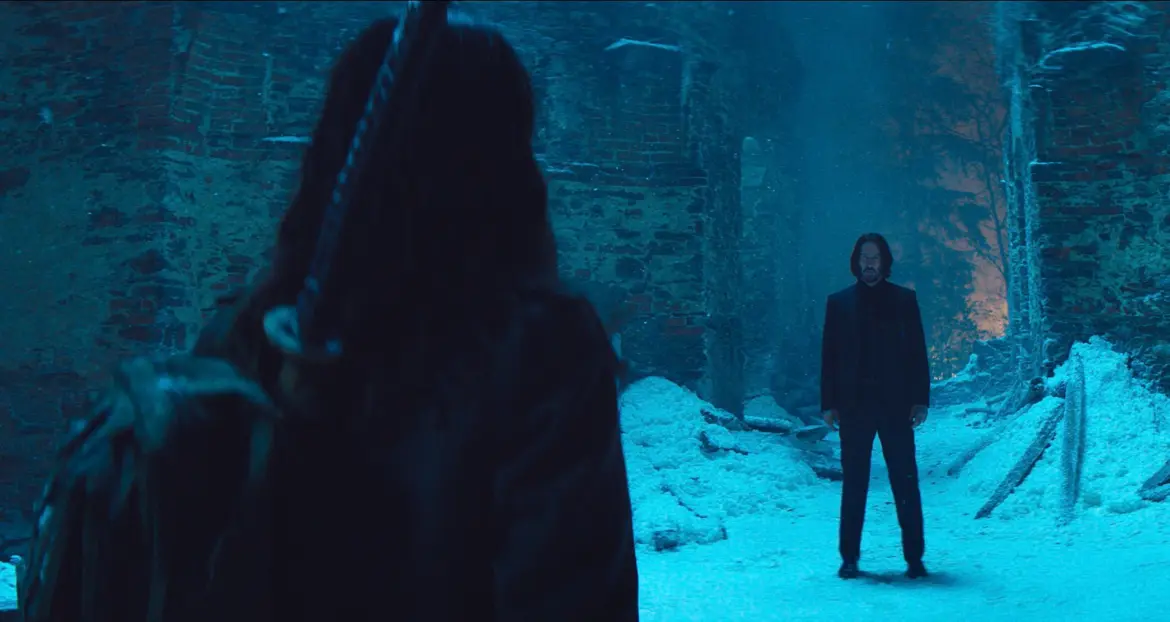
There are places in the world that feel almost too perfect to be real, places where the landscape, the architecture, and the atmosphere come together in a way that feels almost cinematic. Hallstatt is one of those places. Long before I learned that it would appear in the movie Ballerina (2025), there was already something about it that felt like stepping into a film, as though every corner, every reflection on the lake, every quiet street had been carefully composed.
So when I discovered that Hallstatt would serve as a setting in Ballerina, it felt less like a surprise and more like a confirmation. This is a place that naturally belongs on screen, not because it tries to impress, but because it doesn’t have to.
Ballerina Filming Locations at a Glance
🎬 Film: Ballerina (2025) — From the World of John Wick: Ballerina
🎭 Director: Len Wiseman · Starring: Ana de Armas as Eve Macarro
📅 Released: June 6, 2025 (Lionsgate)
⛪ Hallstatt’s role: The Cult’s stronghold and the film’s climactic confrontation
🎥 Filmed in Hallstatt: Real exterior plates and select on-location footage
🎭 Stand-in locations: Szentendre (Hungary) for the village square; Šenk Špejchar restaurant in Březnice (Czech Republic) for the shop interior + parking exterior; Český Krumlov and Telč as alpine stand-ins
🏔️ Real-world Hallstatt highlights: Lake Hallstatt, Pfarrkirche Mariä Himmelfahrt, hillside cemetery, narrow village stairways
❄️ Best season for the cinematic atmosphere: Winter (matches the film’s snow-covered look)
🚆 From Vienna: ~3–3.5 hrs (train + ferry crossing)
💡 Tip: Stay overnight — the village transforms once the day-trip crowds leave
Hallstatt as a Filming Location
In Ballerina (2025), Hallstatt is featured as part of the film’s European setting – a remote, atmospheric village that contrasts sharply with the urban environments typically associated with the John Wick universe. Portions of the film were shot in and around Hallstatt, while other scenes were recreated elsewhere, a common approach in film production that allows directors to balance authenticity with logistical flexibility.
What matters most is not just where the cameras were placed, but why Hallstatt was chosen at all. It offers something that cannot be easily replicated – a sense of isolation, a layered history, and a visual harmony that feels both real and heightened at the same time. In the film, this setting becomes more than a backdrop; it becomes part of the mood, shaping the tension and atmosphere of the scenes that unfold within it.
The Atmosphere: Why Hallstatt Feels Cinematic
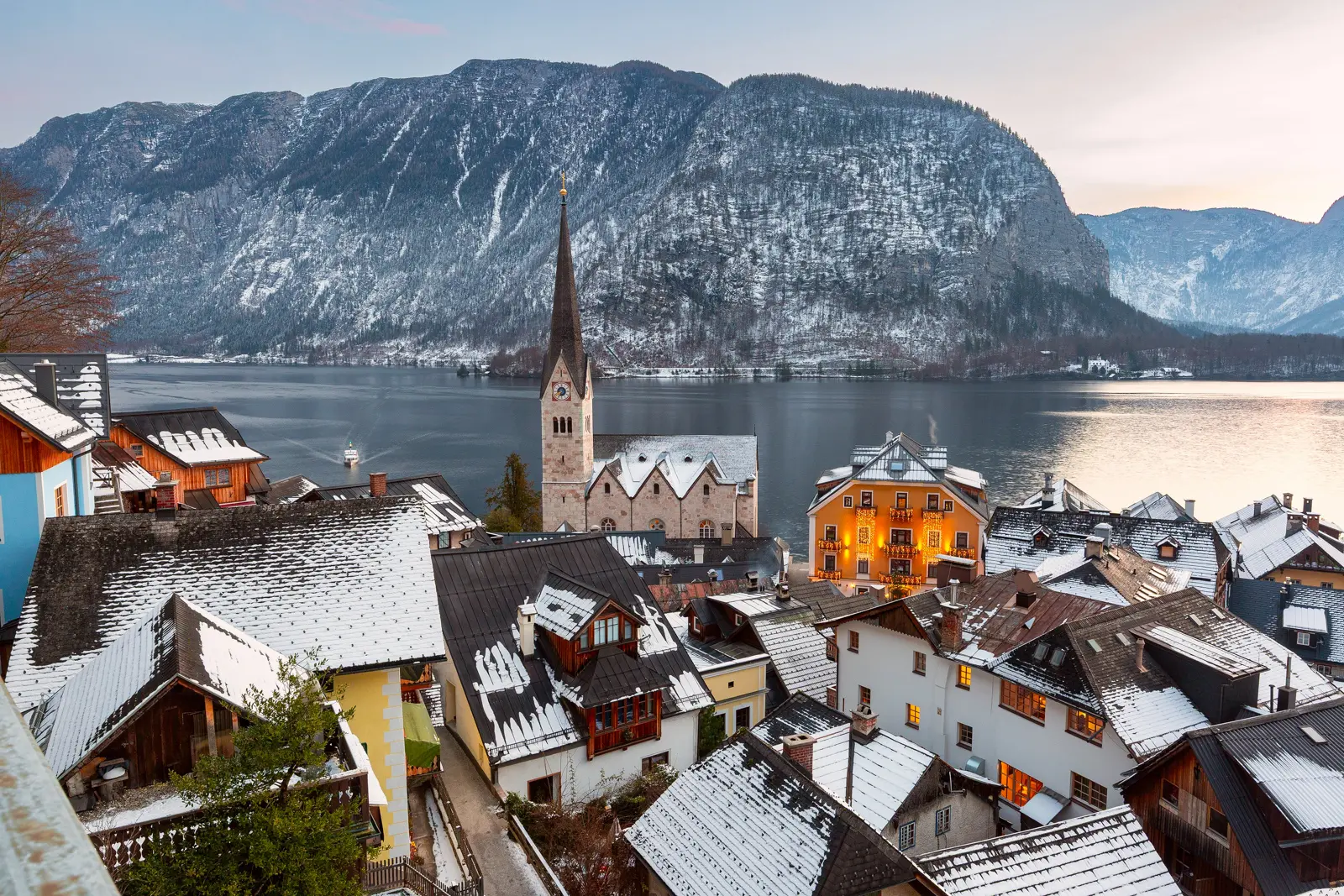
What makes Hallstatt so compelling on screen is not just its beauty, but its atmosphere. On a misty or rainy day, the village takes on an entirely different character. The mountains fade slightly into the background, the lake becomes softer and more reflective, and the streets feel quieter, more introspective. Even the smallest details begin to shift, the sound of footsteps softens, the air feels heavier, and the pace of movement slows almost instinctively. It is in these moments that Hallstatt feels less like a destination and more like a scene waiting to unfold, where the mood is already set before anything happens.
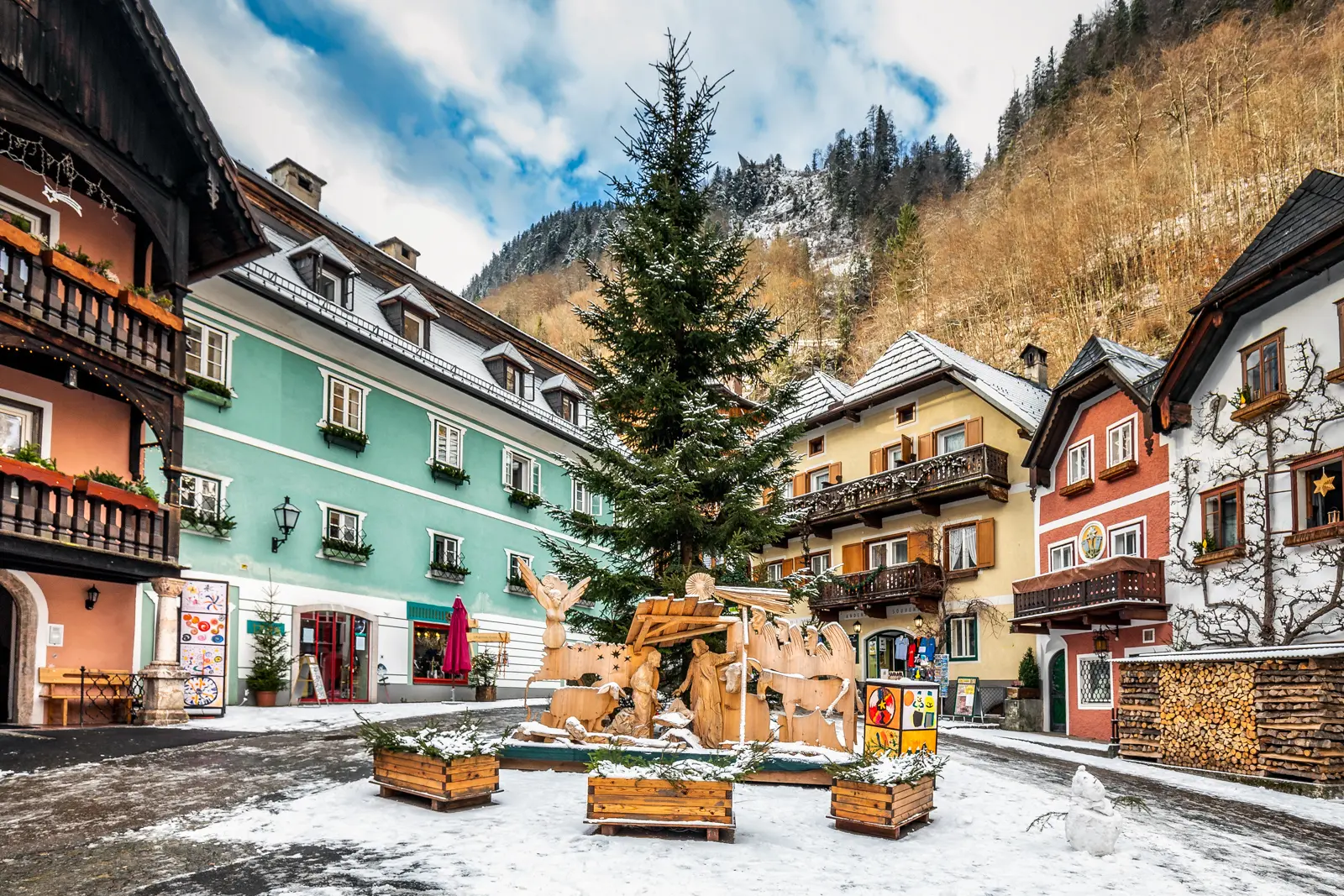
This sense of atmosphere becomes even more pronounced in winter, the season chosen to represent Hallstatt in Ballerina. Covered in snow, the village takes on a quieter, more isolated presence, where the beauty of the setting contrasts even more sharply with the intensity of the story. There is a natural duality here that filmmakers are instinctively drawn to, the coexistence of serenity and tension, of stillness and movement. The calm surface of the lake, the narrow streets, and the historic buildings create a setting that can hold both softness and strength at once. It is easy to see how this environment supports the narrative of Ballerina, where emotion and action unfold side by side, each made more striking by the stillness that surrounds it.
Places That Feel Made for the Screen
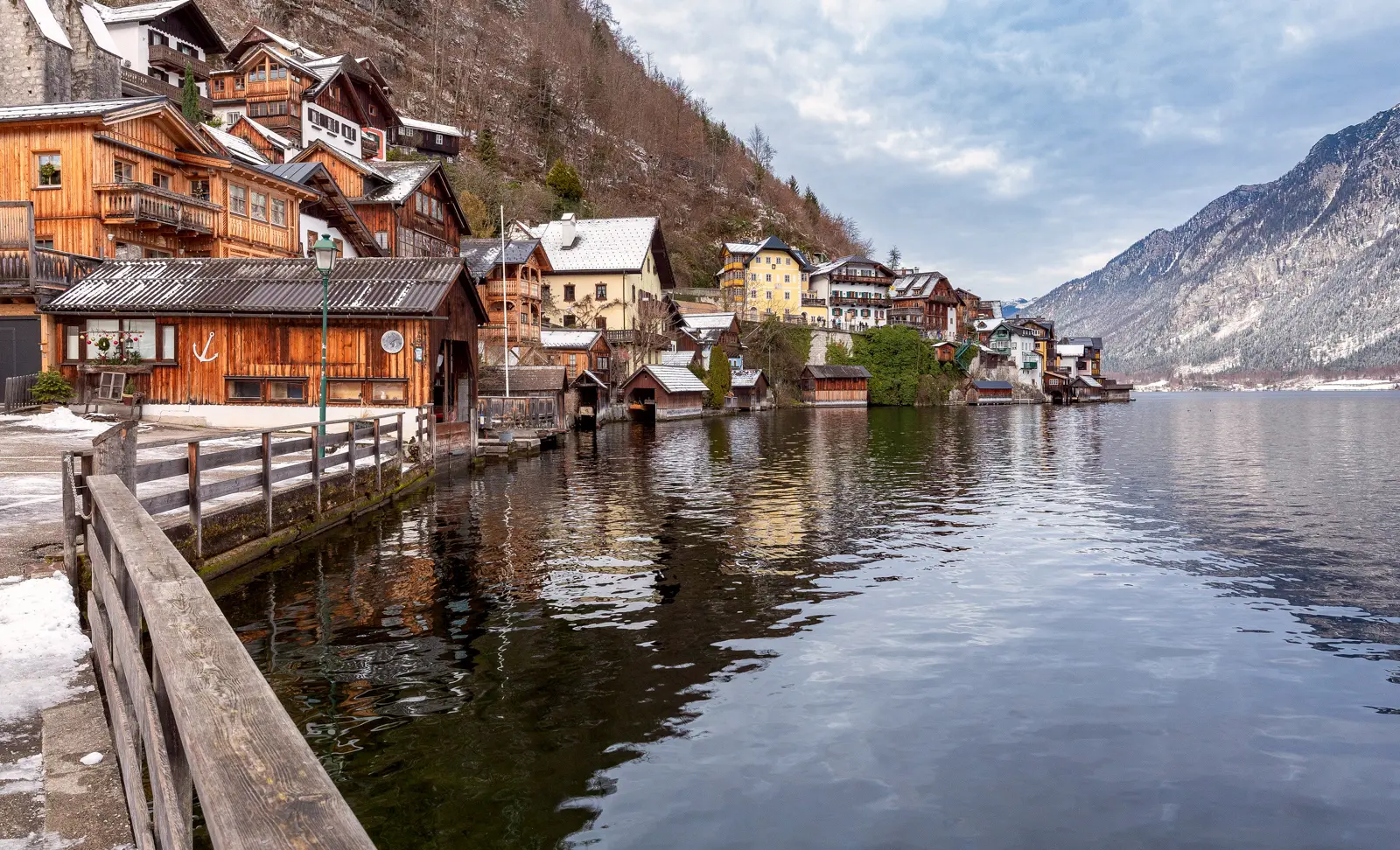
Some places in Hallstatt feel inherently cinematic, almost as though they were shaped with storytelling in mind. The hillside cemetery and the Pfarrkirche Mariä Himmelfahrt, overlooking the lake, create a setting that is both visually striking and emotionally layered. From this elevated perspective, the village unfolds below, framed by the stillness of the water and the presence of the surrounding mountains. There is a natural sense of composition here, where each element, the architecture, the landscape, the light, comes together in a way that feels deliberate yet effortless. It is the kind of setting that does more than support a story; it quietly amplifies it.
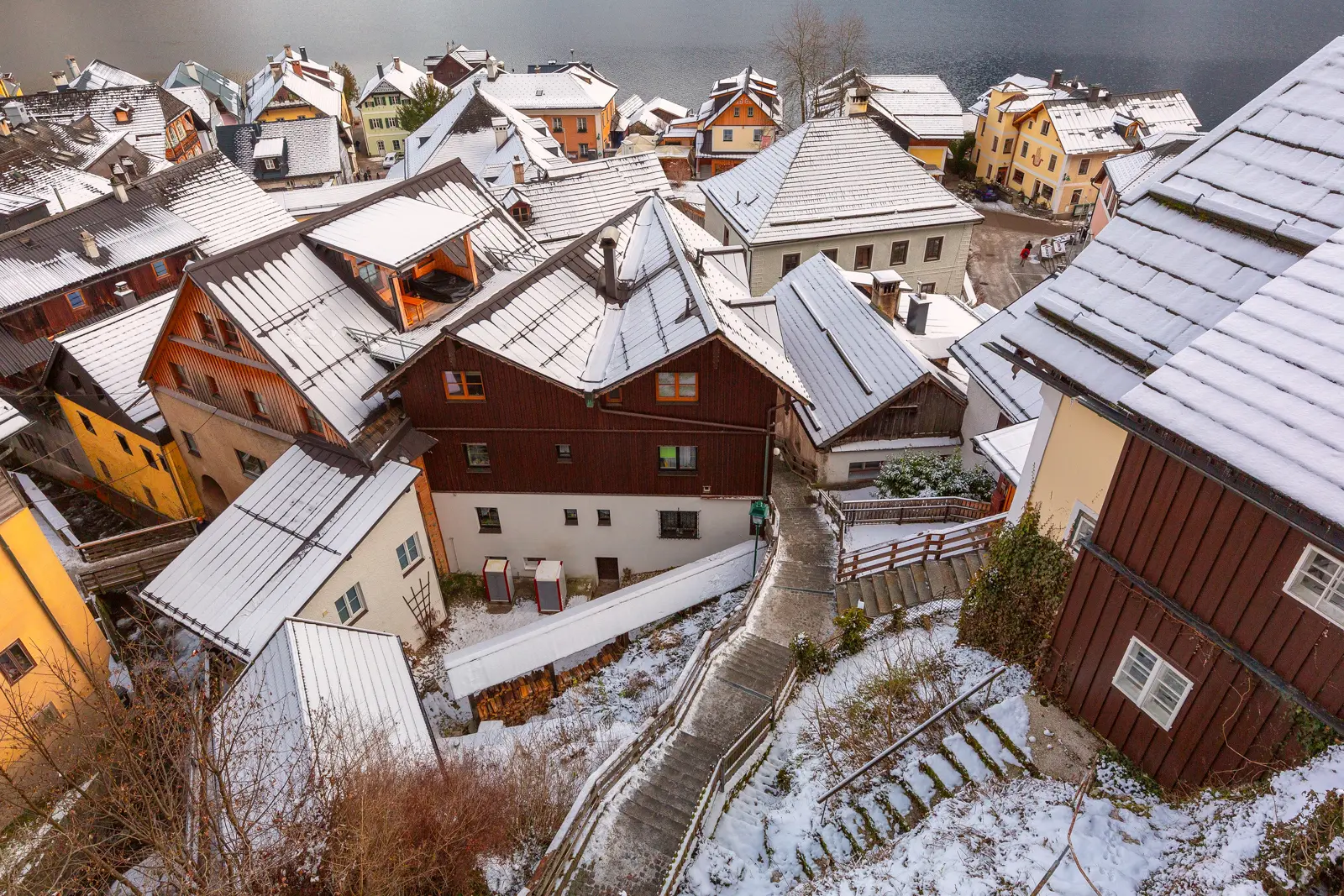
Elsewhere, the character of Hallstatt reveals itself through its narrow streets, winding passages, and steep stairways that connect different levels of the village. These spaces feel intimate and enclosed, yet full of movement and possibility, creating a natural contrast to the openness of the lake. It is easy to imagine how scenes in Ballerina unfold within these corridors, where action and tension can move through the village in a way that feels both dynamic and grounded in place. The beauty of Hallstatt’s backdrop only heightens this effect, the calm of the lake and the elegance of the surroundings making each moment feel more pronounced. Even in stillness, there is a sense of narrative here, where the smallest details, a staircase, a quiet alley, a turn in the path, carry the feeling that something could happen at any moment. It is a place where the ordinary becomes cinematic, not through spectacle, but through atmosphere.
The Contrast: Beauty and Intensity
One of the most compelling aspects of Hallstatt, especially when seen through a cinematic lens, is the contrast it holds. In Ballerina, the village is featured as a quiet, snow-covered setting, its stillness and isolation forming a striking backdrop for a story shaped by intensity and movement. There is something inherently powerful about this contrast, the softness of the landscape set against the tension of the narrative, the calm of the lake beside moments of action unfolding within the village. Rather than competing with the story, Hallstatt amplifies it, allowing each scene to feel more defined, more deliberate, and more emotionally resonant.
What makes this especially meaningful is how closely that cinematic interpretation aligns with the real experience of being there. Having walked through Hallstatt myself, I recognized the same duality that the film captures so effectively. The beauty is immediate and undeniable, but beneath it, there is a quieter depth, something less visible but deeply felt. The narrow streets, the shifting light, the layered perspectives of the village all create a sense of movement within stillness, a feeling that something could unfold at any moment, even in complete silence.
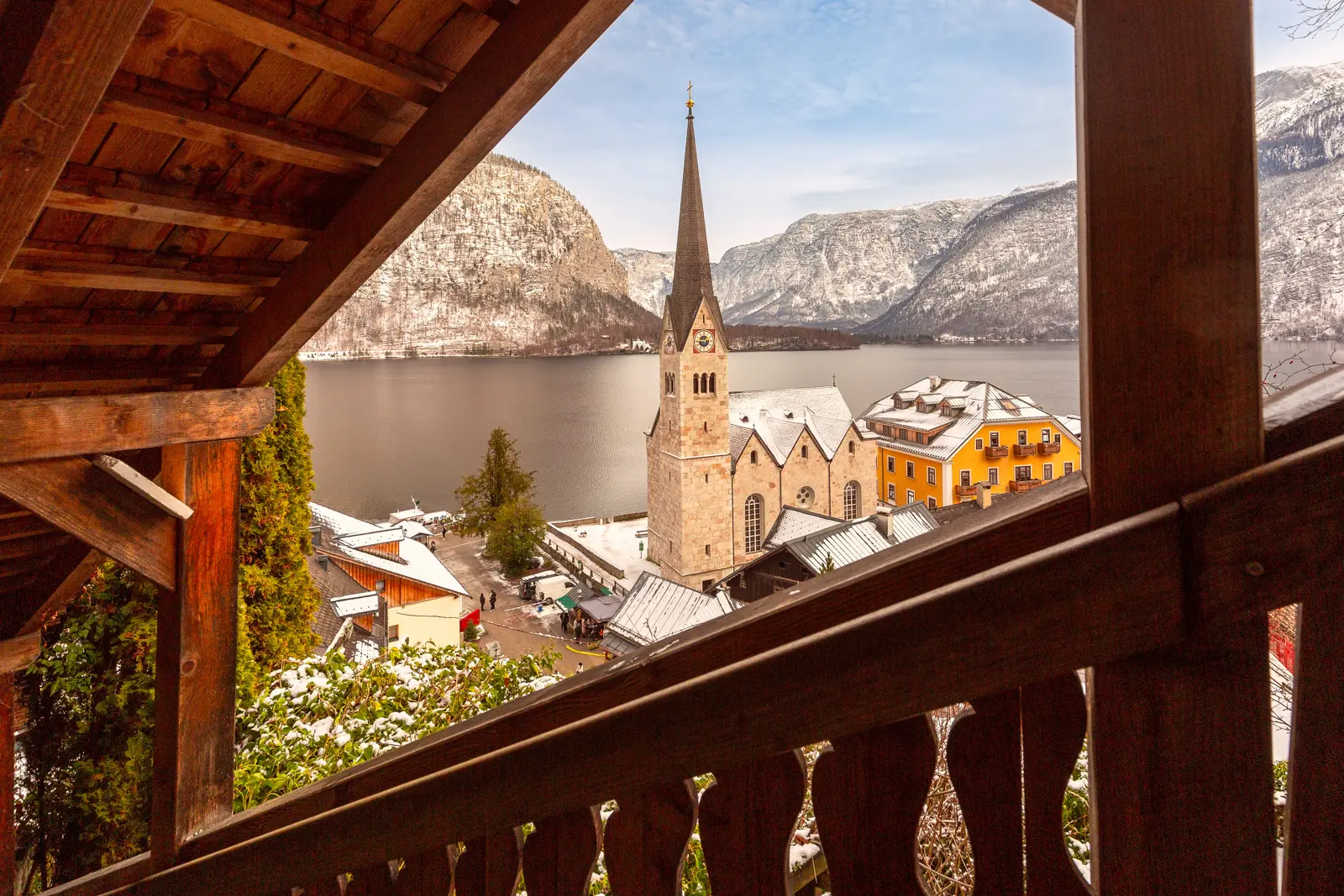
Watching Ballerina after visiting Hallstatt brought that connection into sharper focus. The scenes felt familiar, not just visually, but emotionally. I found myself recognizing the rhythm of the space, the way the village holds both calm and tension at once. It no longer felt like a distant setting, but a place I had moved through, paused within, and experienced in my own way. In that moment, the line between film and reality softened, and Hallstatt revealed itself not just as a location, but as a living, cinematic landscape, one that exists both on screen and beyond it.
Bubbly Tips for Experiencing Hallstatt’s Cinematic Side from Vienna
- Getting there from Vienna: Hallstatt is approximately 3 to 3.5 hours from Vienna by train or car, often including a scenic ferry crossing that already feels like the beginning of a film.
- Best time for atmosphere: Misty mornings, rainy afternoons, or winter visits create the most cinematic mood.
- Explore beyond the main viewpoint: Wander through the streets, climb toward the church and cemetery, and take time to observe the quieter corners.
- Slow down: Hallstatt is best experienced at a slower pace – allow time for stillness and reflection.
- Stay overnight if possible: The village feels entirely different once the daytime crowds leave, revealing its more intimate and atmospheric side.
Final Thoughts
Hallstatt is more than a destination, it is a feeling, a mood, a story waiting to unfold. Its appearance in Ballerina only reinforces what becomes clear the moment you arrive: this is a place that naturally belongs on screen.
And yet, what makes it truly special is not how it looks through a lens, but how it feels when you are there. The stillness, the beauty, the quiet layers of history and life, all of it comes together to create an experience that lingers long after you leave.
I’d love to hear your thoughts – does Hallstatt feel like a place made for film, or something even more?
Happy travels!

🌟 Everything You Need to Plan Your Dream Trip in 2026
- 🌟 Luxury Hotels - Find premium stays with Booking.com & Hotels.com
- 🏡 Vacation Rentals - Discover unique properties on VRBO
- 🏞️ Guided Tours - Explore with Viator or GetYourGuide
- 🎫 Attraction Tickets - Skip the lines with Tiqets
- 🚢 Ocean Cruises - Set sail with Cruise Direct
- 📱 International SIMs - Stay connected with Saily
- 🚗 Car Rentals - Budget-friendly options from Discover Cars
- 🌐 Secure VPNs - Browse safely with NordVPN
- 💶 Currency Exchange - Best rates with Wise
- 🗣️ Learn Languages - Master the local language with Babbel and Rosetta Stone