
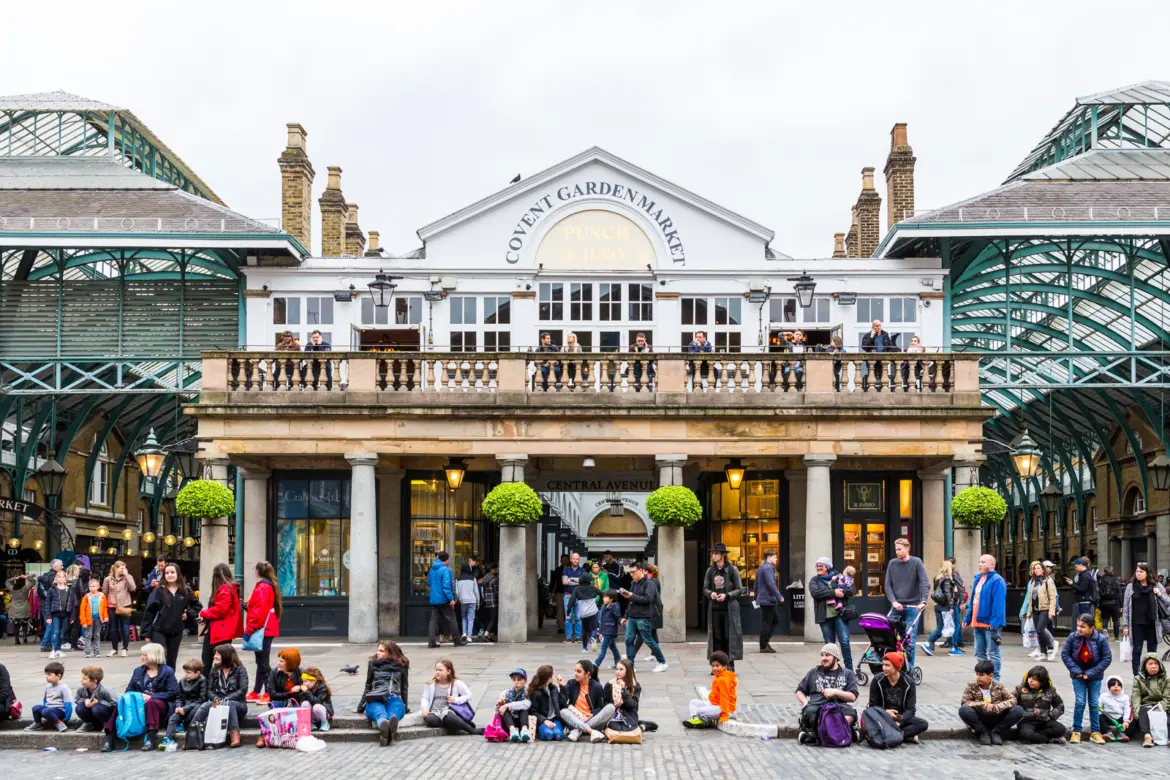
Few places in London capture the city’s energy, charm, and theatrical spirit quite like Covent Garden. Filled with historic market buildings, lively piazzas, elegant architecture, street performers, cafés, boutiques, and cultural institutions, Covent Garden feels like one of those rare parts of London where history and everyday life blend together almost effortlessly.
Walking through Covent Garden, there is a constant sense of movement and atmosphere. Musicians perform beneath the arches of the Market Building while visitors gather around entertainers in the piazza. Elegant storefronts sit beside historic façades, flower displays brighten the streets, and the surrounding lanes reveal hidden courtyards, theatres, and restaurants tucked between centuries-old buildings. Whether visited during the daytime rush, beneath festive evening lights, or during quieter early morning hours, Covent Garden always seems alive.
What makes the area especially fascinating is that beneath its lively modern atmosphere lies a remarkably rich history. Long before Covent Garden became associated with shopping, restaurants, and theatre culture, it functioned as one of London’s most important fruit, vegetable, and flower markets. For centuries, merchants, labourers, and traders filled the piazza with carts, produce, flowers, and crowds, transforming the district into one of the busiest commercial centres in the city.
Today, traces of that history still remain embedded within the architecture and atmosphere of the neighbourhood. Yet Covent Garden also feels unmistakably modern, a place where visitors gather to experience London’s creativity, culture, and energy in a setting that feels simultaneously historic and contemporary.
Covent Garden at a Glance
🏛️ Origin · The “Convent Garden” — kitchen garden of Westminster Abbey’s monks until the Dissolution in 1540.
🏗️ First planned square · The piazza was designed by Inigo Jones in the 1630s for the 4th Earl of Bedford, modelled on the piazza of Livorno in Italy.
🍎 Market era · One of London’s main fruit, vegetable, and flower markets from the 17th century until the wholesale trade moved to Nine Elms in 1974.
🏛️ Market Building · The neoclassical iron-and-glass arcades by Charles Fowler, opened in 1830 and reopened as a shopping centre in 1980.
🎭 Theatre district · Home to the Royal Ballet and Opera (the rebranded Royal Opera House since 2024), the Theatre Royal Drury Lane, and a dense cluster of West End venues.
🎄 Holiday season · The famous giant disco-ball Christmas decorations transform the Market Building into one of London’s most photographed seasonal sights.
🚇 Nearest stations · Covent Garden (Piccadilly line) or, for shorter walking, Leicester Square or Charing Cross.
The Origins of Covent Garden
The origins of Covent Garden stretch back centuries and are closely tied to the development of medieval and early modern London. The name “Covent Garden” derives from “Convent Garden”, referring to the garden lands once owned by the monks of Westminster Abbey during the Middle Ages. Throughout this period, the Abbey of St Peter, Westminster, maintained a large kitchen garden on the site to help provide its daily food supply.
As London gradually expanded, these lands evolved into a larger urban district. Following the Dissolution of the Monasteries under Henry VIII, the property eventually passed to the Earls of Bedford in 1552. In the early 17th century, the area underwent major transformation when Francis Russell, 4th Earl of Bedford commissioned Inigo Jones to design an elegant residential square intended to attract wealthy tenants. Jones drew inspiration from Italian Renaissance urban planning, particularly the piazza of Livorno, creating what became one of London’s first formally planned public squares.
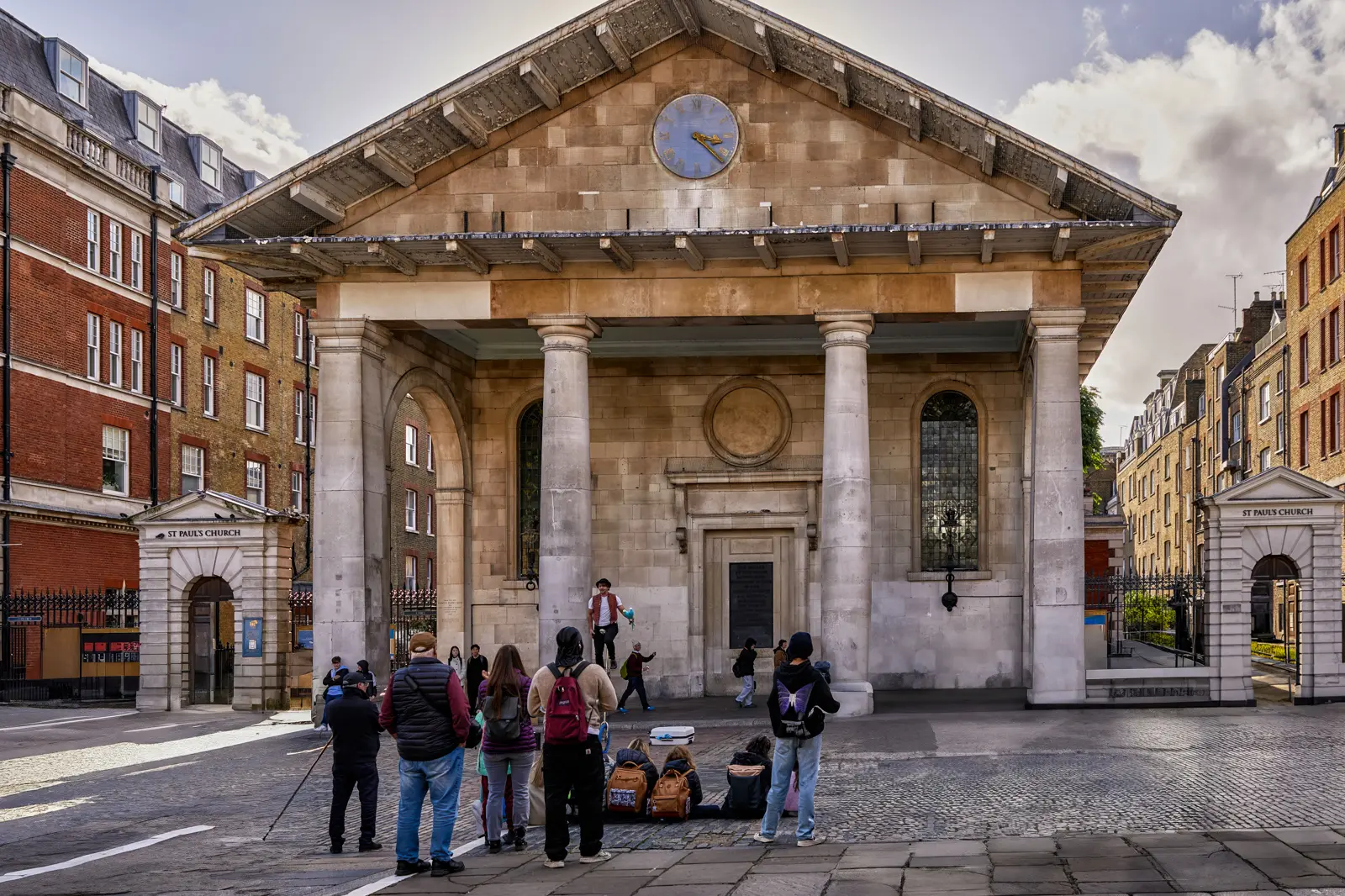
As part of the same project, Jones designed the St Paul’s Church, Covent Garden in 1630, often regarded as the first wholly and authentically classical church built in England. The church still stands on the western side of the piazza today and remains one of Covent Garden’s most enduring architectural landmarks. Over time, the market expanded dramatically, becoming one of London’s primary centres for the fruit, vegetable, and flower trade. By the 18th and 19th centuries, Covent Garden had become both commercially important and socially complex, filled not only with merchants and traders, but also theatres, taverns, coffee houses, and an increasingly vibrant urban culture.
The neo-classical market building designed by Charles Fowler was erected in 1830 to house the growing trade and remains the architectural centrepiece of the piazza today. The decision to relocate the wholesale market was made as early as 1961, when overcrowding and traffic congestion had made the site increasingly difficult to manage. The market finally moved to New Covent Garden Market at Nine Elms in 1974. Rather than disappearing, however, Covent Garden reinvented itself. The historic market buildings were preserved, and the central building reopened as a shopping centre in 1980, transforming into the cultural, shopping, dining, and entertainment destination visitors experience today.
The Covent Garden Piazza and Market Building
At the heart of Covent Garden lies the famous Piazza and the historic Market Building, whose iron-and-glass architecture continues to define the neighbourhood visually. Walking beneath the covered arcades, visitors encounter an atmosphere that feels both elegant and lively, where historic architecture frames modern boutiques, cafés, and artisanal shops.
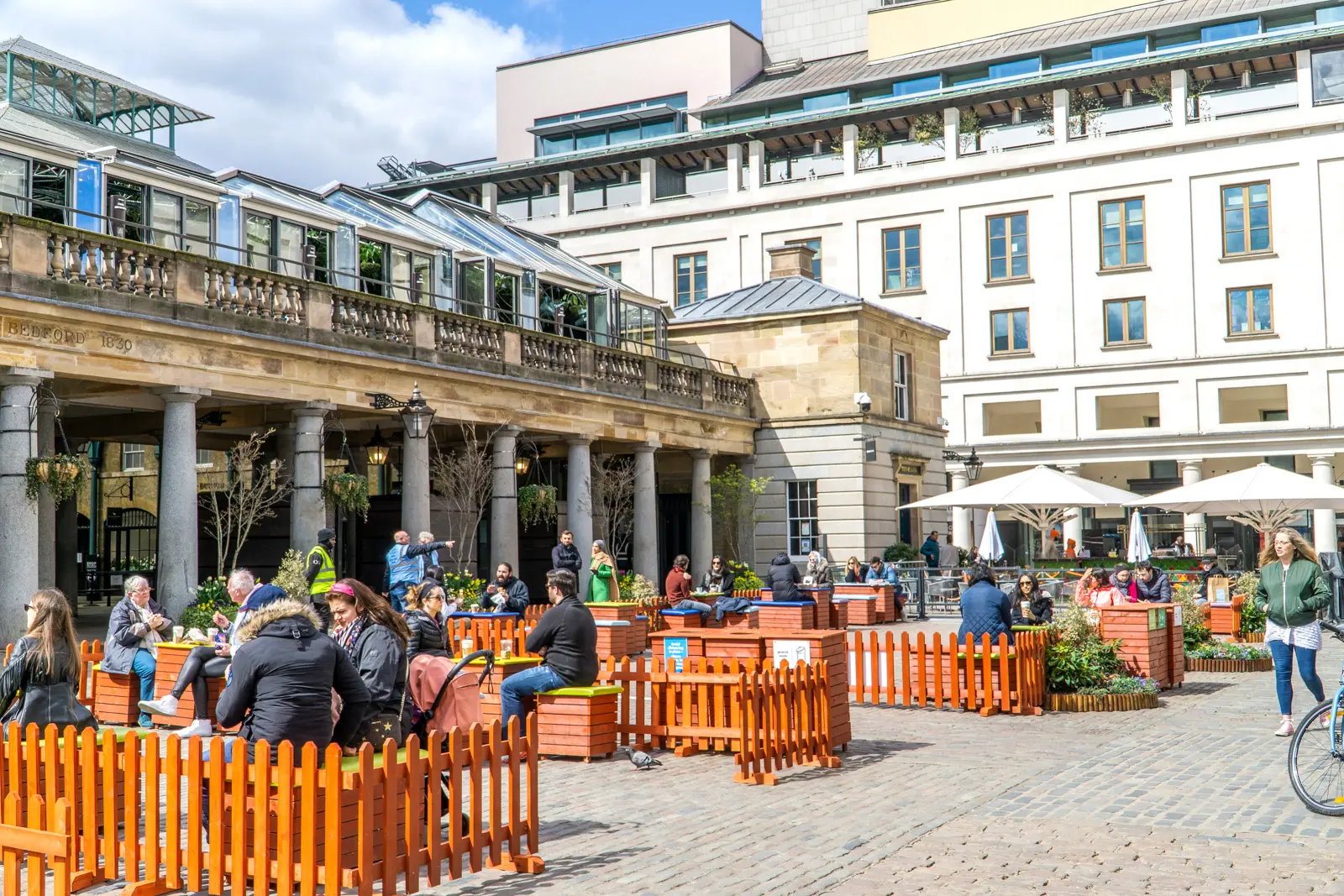
The Piazza itself remains one of London’s great public gathering spaces. People pause to watch performances, browse small market stalls, enjoy outdoor dining, or simply take in the atmosphere. Despite the crowds that often fill the area, Covent Garden rarely feels overwhelming. Instead, the movement and activity contribute to its character, creating an environment that feels dynamic rather than chaotic.
One of the most memorable aspects of Covent Garden is how naturally performance and public life blend into the space. Street musicians, magicians, acrobats, and entertainers perform throughout the piazza, continuing a tradition of public performance that has long been associated with the district. The performers transform the square into something that feels almost theatrical even outside the nearby formal theatres and opera house. Architecturally, the area also retains a strong sense of continuity with historic London. Decorative façades, archways, lanterns, and market structures preserve the district’s historic identity while allowing it to evolve into a modern cultural destination.
Theatre, Performance, and the Royal Opera House
Covent Garden has long been associated with London’s theatrical and artistic identity. The surrounding streets form part of the city’s famous West End theatre district, where productions ranging from Shakespearean drama to modern musicals attract audiences from around the world. At the centre of this cultural landscape stands the Royal Opera House, one of the most prestigious performing arts venues in Europe. Home to The Royal Opera and The Royal Ballet, the opera house contributes significantly to Covent Garden’s reputation as one of London’s artistic and cultural centres.
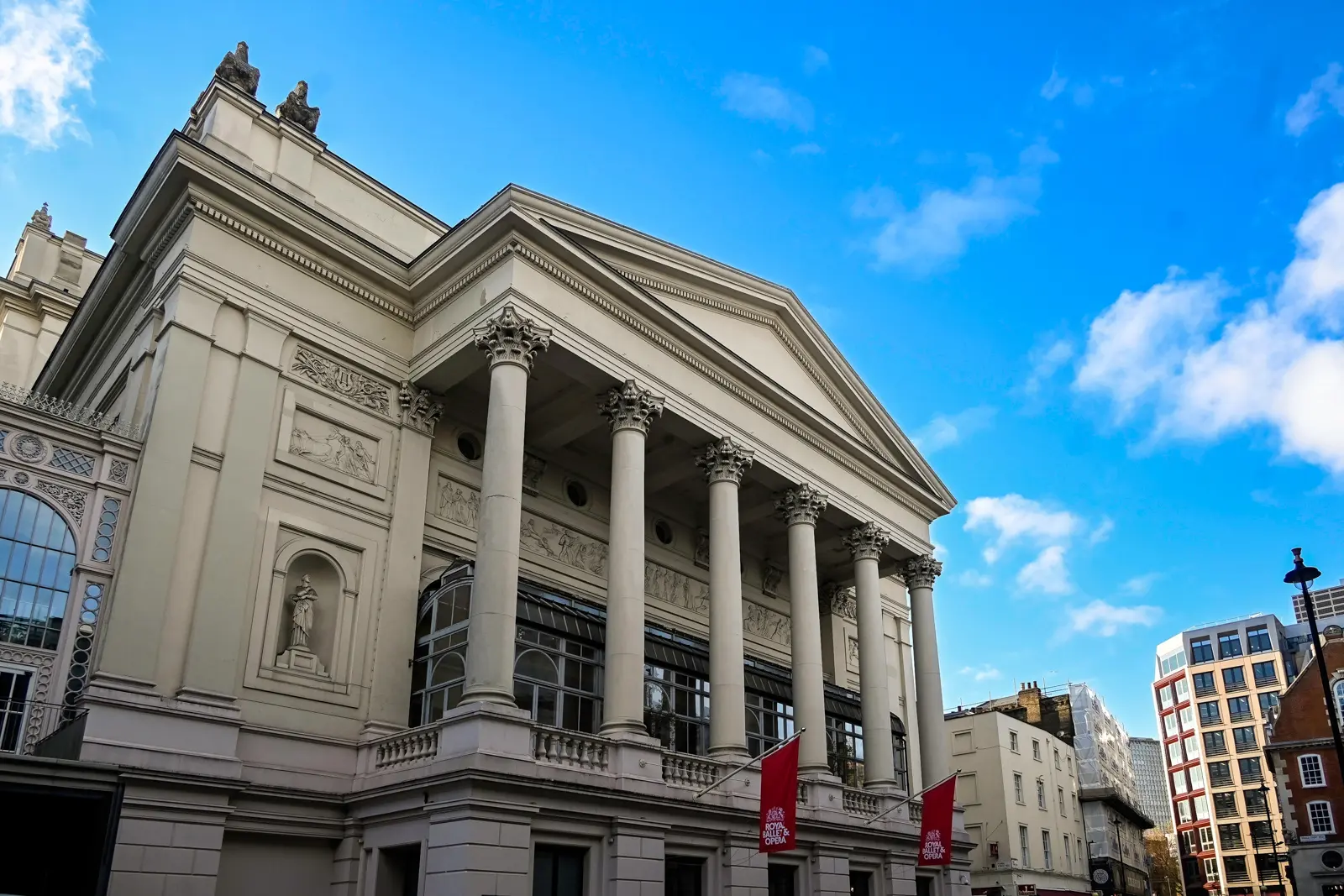
What makes Covent Garden especially unique is the way formal and informal performance coexist naturally. Within minutes, visitors can move from world-class opera and ballet performances to open-air street entertainment in the piazza below. This constant interplay between high culture and public performance gives the neighbourhood an atmosphere unlike almost anywhere else in London. Even for visitors not attending a show, the theatrical energy of Covent Garden remains deeply embedded in the streets themselves. Music, movement, conversation, and performance seem to flow naturally through the district at nearly every hour of the day.
Covent Garden During the Holiday Season
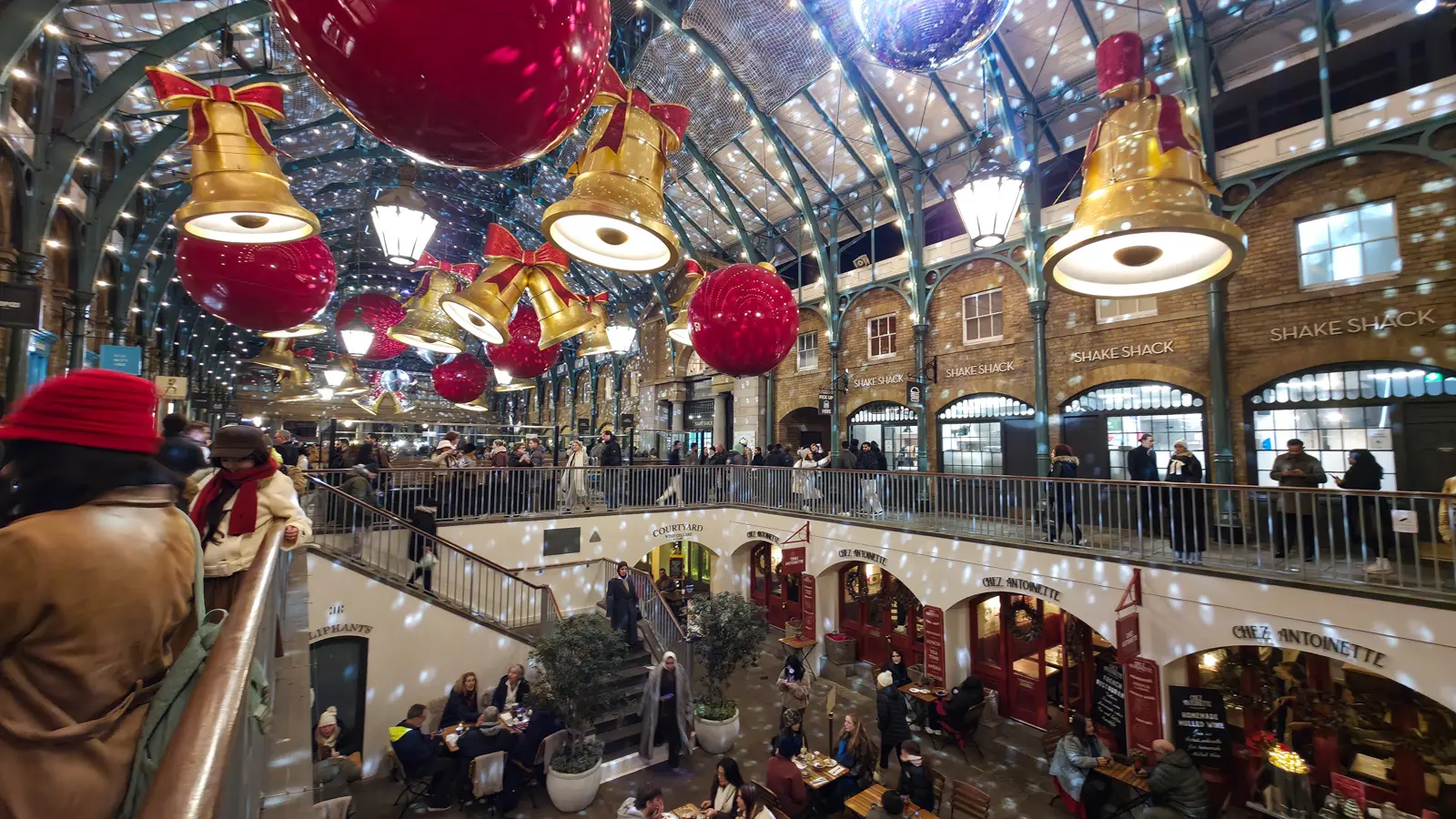
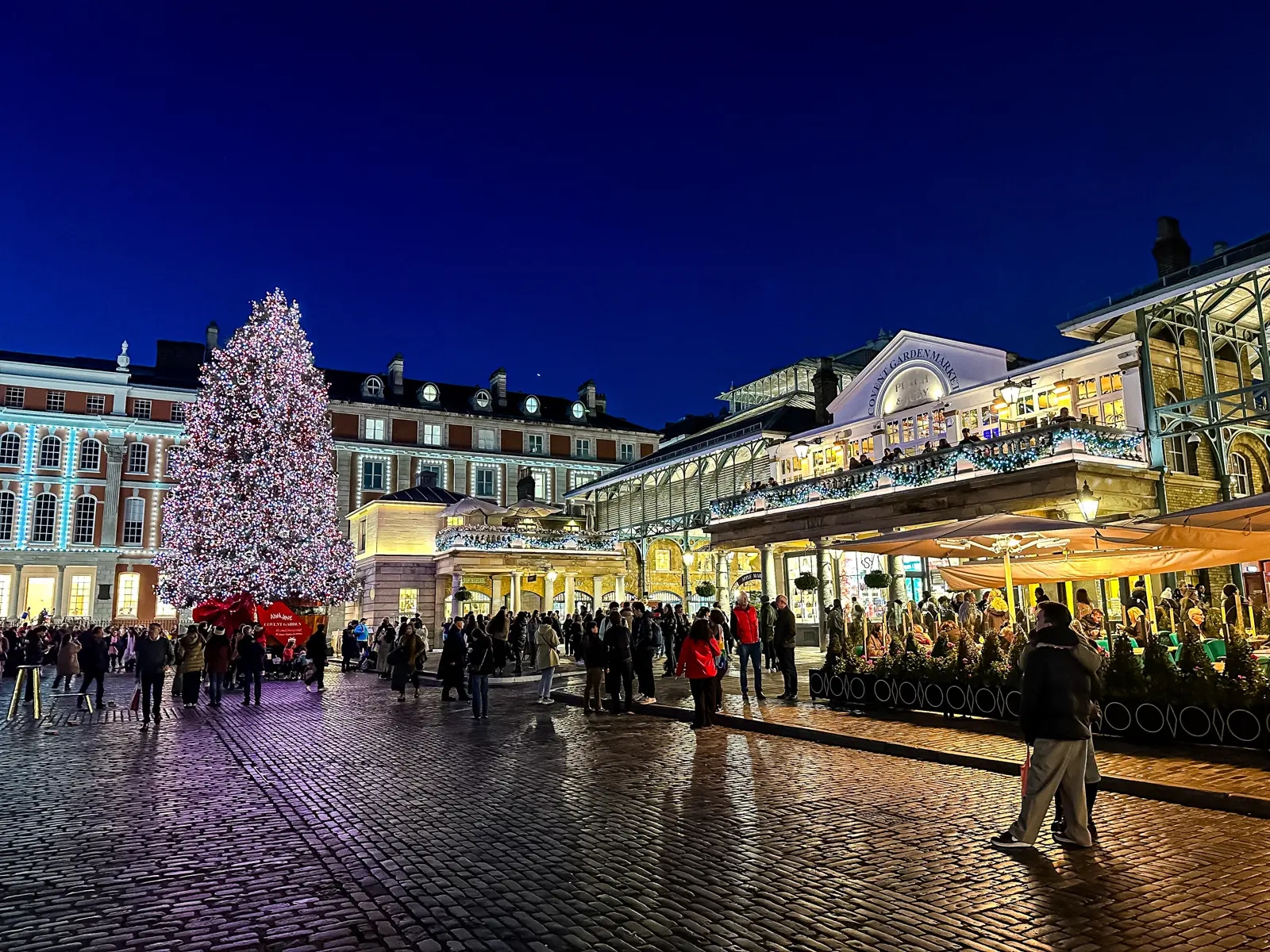
Although Covent Garden remains lively year-round, the neighbourhood becomes especially magical during the holiday season. The historic piazza and surrounding streets transform beneath elaborate decorations, illuminated garlands, oversized ornaments, golden bells, chandeliers, and festive lighting displays that create one of London’s most photographed seasonal atmospheres. Walking through Covent Garden during this period feels almost cinematic. The combination of historic architecture, warm lighting, decorated storefronts, and crowds moving through the illuminated piazza creates an atmosphere that feels festive without losing the district’s elegance.
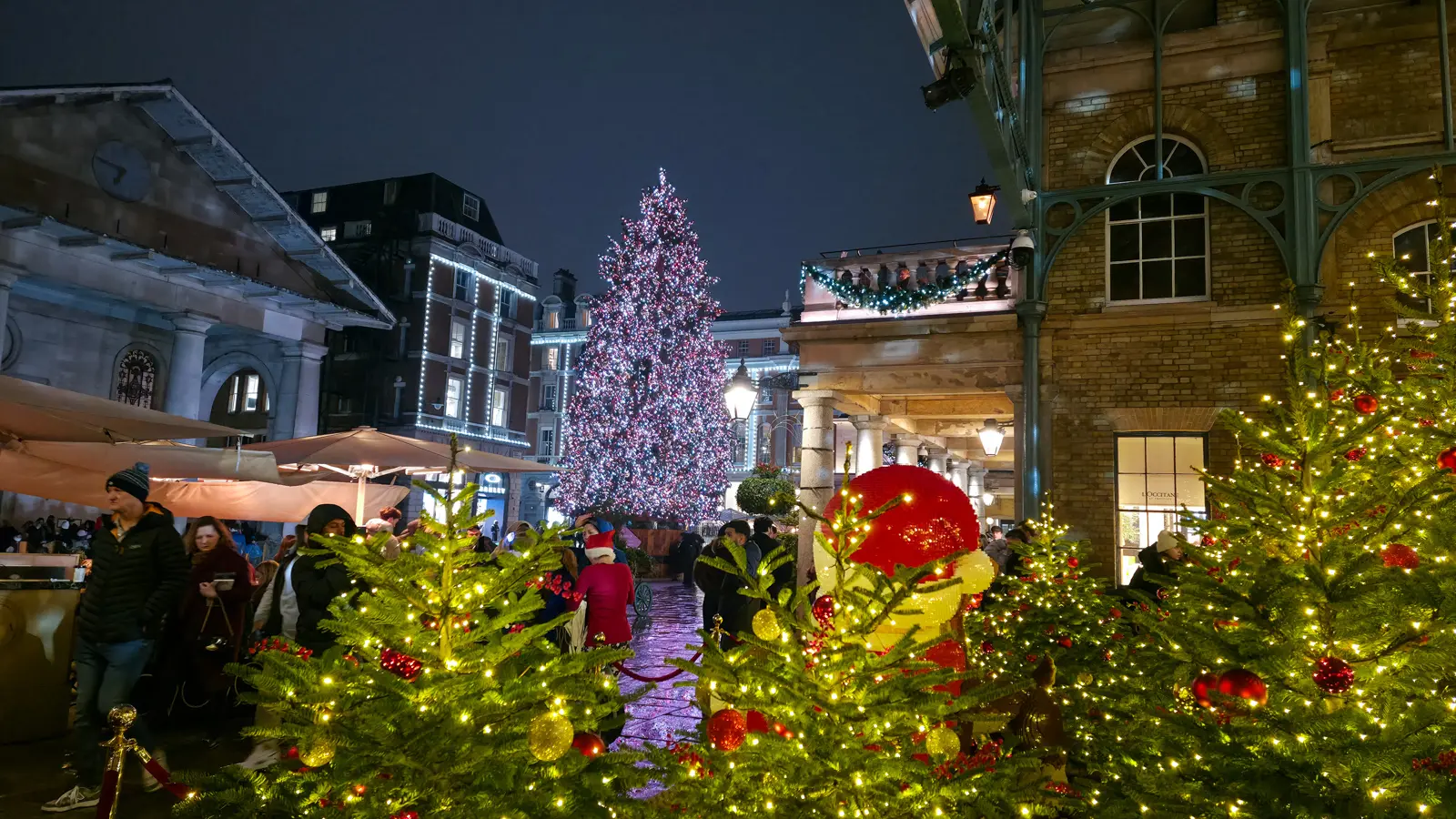
The decorations also reinforce Covent Garden’s theatrical identity. Rather than feeling purely commercial, the displays often resemble large-scale stage designs carefully integrated into the architecture and public spaces. The neighbourhood feels immersive, inviting visitors not only to observe the decorations, but to become part of the atmosphere itself.
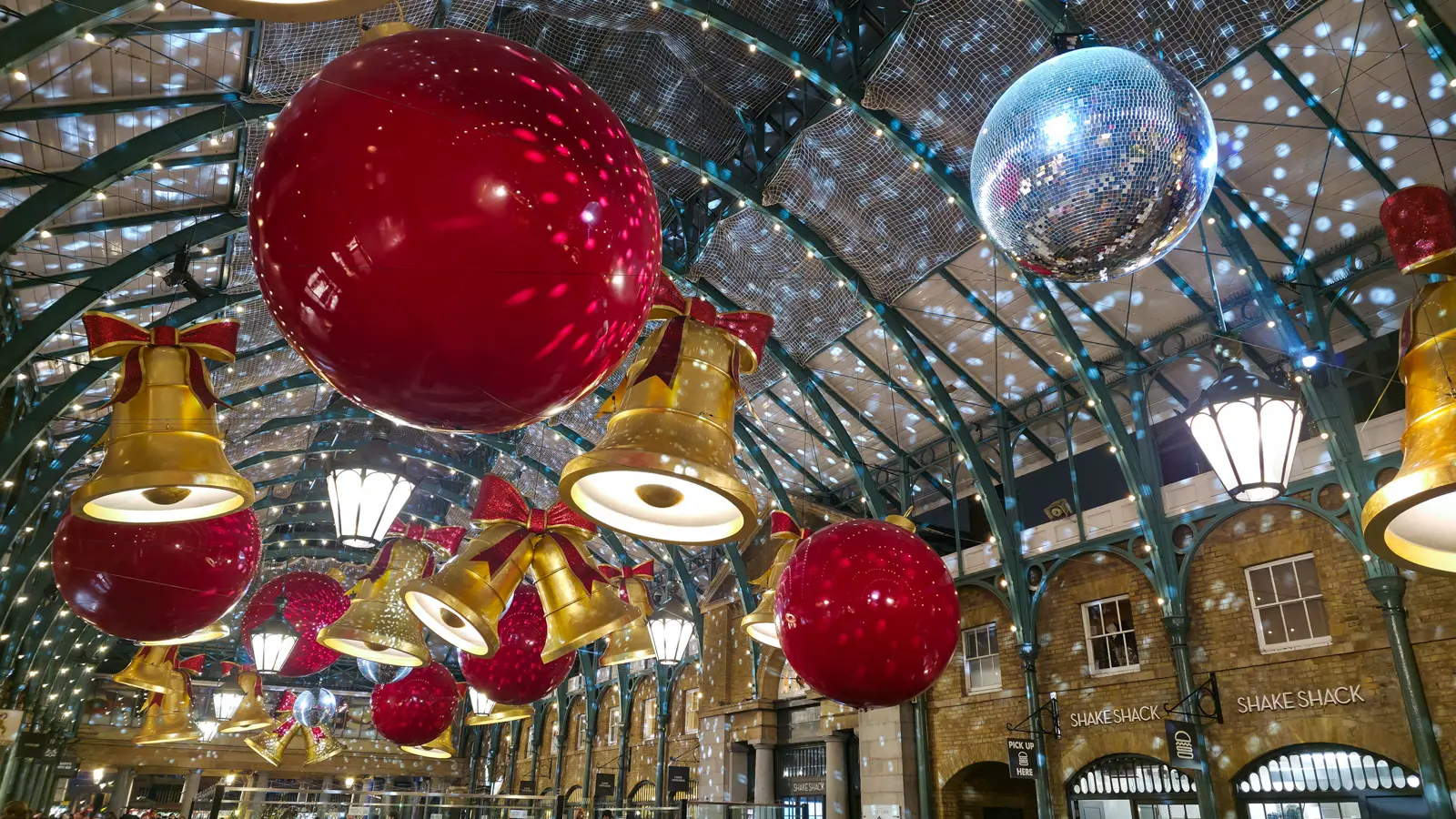
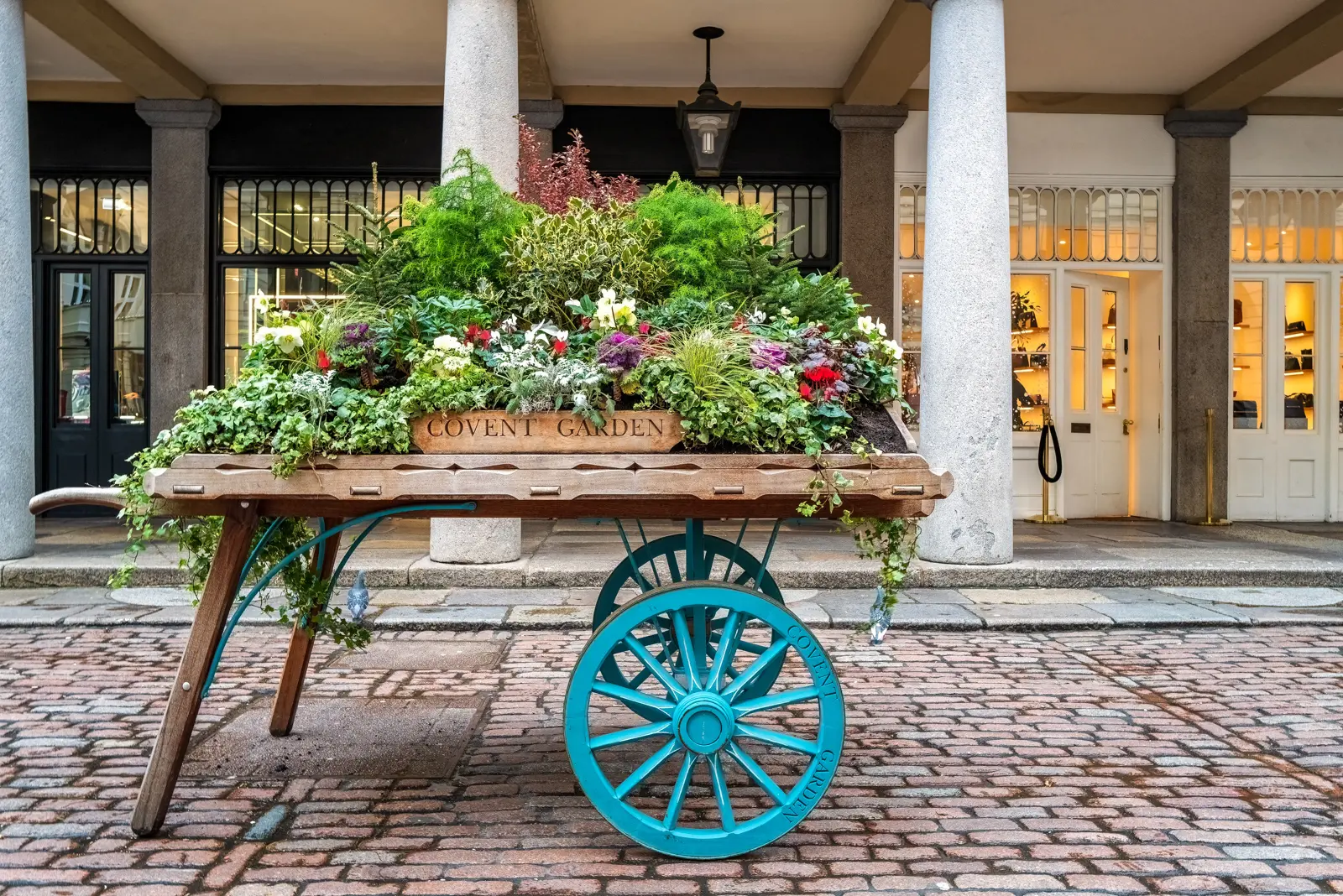
Even beyond the holiday season, however, Covent Garden retains a strong visual identity through floral installations, decorative façades, seasonal displays, and carefully preserved historic details that continue giving the area its distinctive charm.

Exploring the Streets Beyond the Piazza
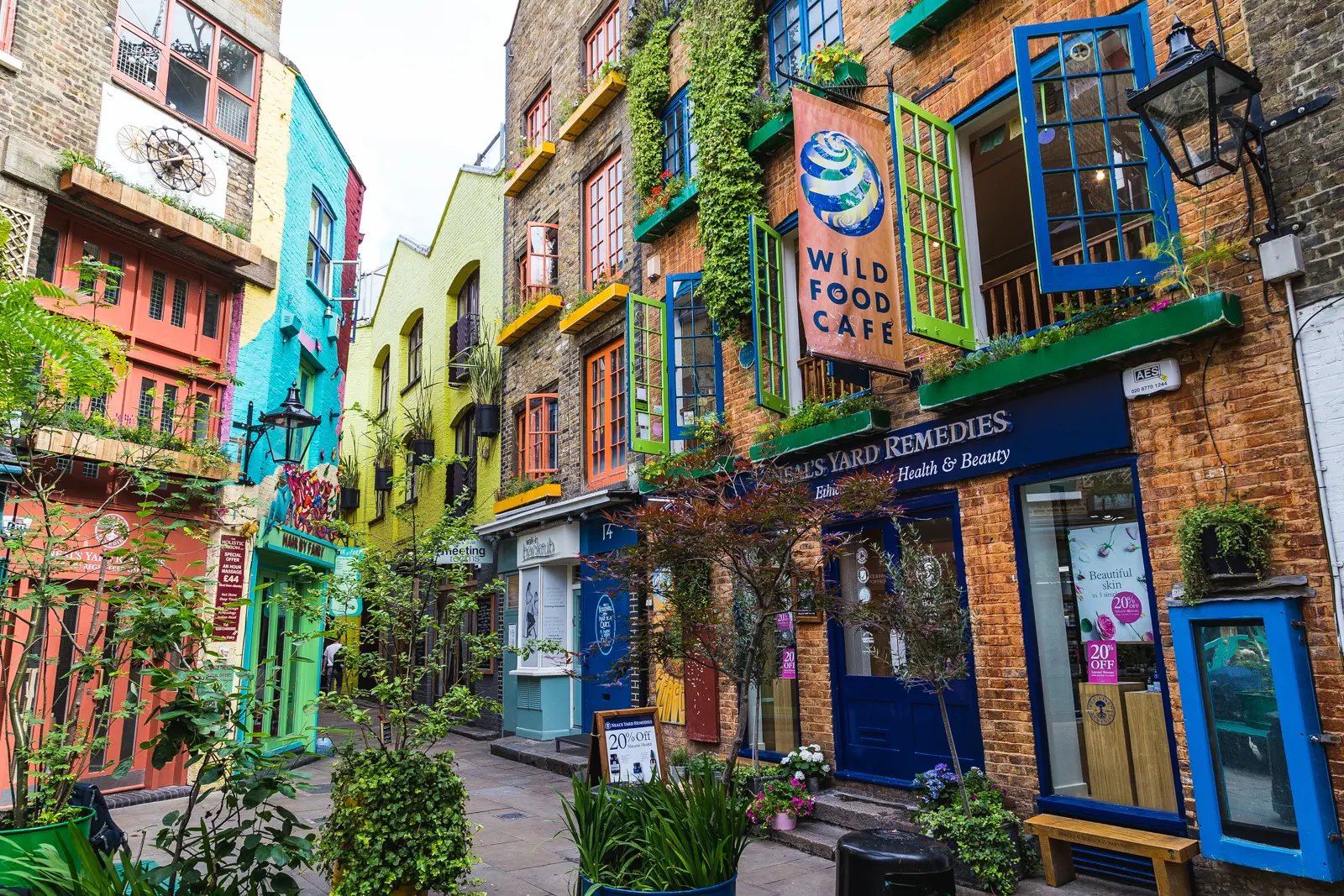
While the central piazza draws much of the attention, some of Covent Garden’s most memorable experiences emerge while wandering the surrounding streets and smaller lanes. Areas such as Seven Dials and Neal’s Yard reveal quieter corners filled with independent boutiques, cafés, hidden courtyards, colourful storefronts, and intimate pedestrian streets that contrast beautifully with the busier market area. Seven Dials, with its distinctive seven converging streets and central monument, offers one of London’s most charming urban layouts. Nearby, Neal’s Yard introduces a more colourful and eclectic atmosphere filled with brightly painted façades and independent businesses tucked within a hidden courtyard.
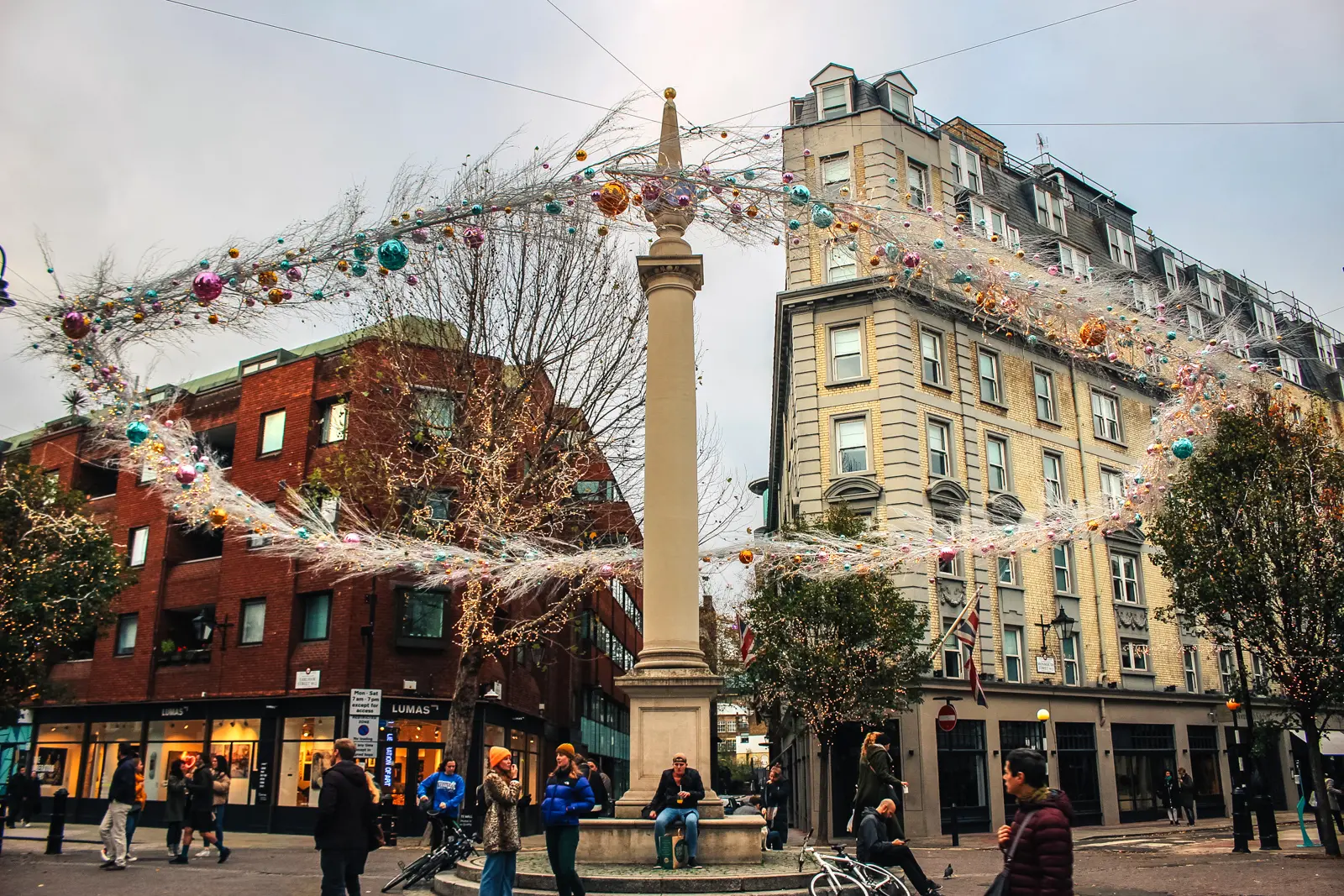
Exploring these surrounding areas reveals how layered Covent Garden truly is. The district functions not only as a tourist destination, but also as a living neighbourhood shaped by theatre culture, commerce, dining, creativity, and everyday London life. What makes wandering through Covent Garden especially enjoyable is that the atmosphere constantly shifts from one street to another. Some spaces feel grand and energetic while others feel intimate and tucked away, creating a sense of discovery that encourages visitors to slow down and explore beyond the main square itself.
Covent Garden at Night
As evening falls, Covent Garden takes on an entirely different atmosphere. The piazza and surrounding streets glow beneath lanterns and illuminated façades while restaurants, theatres, bars, and cafés fill with visitors enjoying London’s nightlife. The transition into evening feels especially theatrical. Crowds leaving theatres blend with diners and evening shoppers while musicians continue performing beneath the market arches. Reflections from lights and storefronts add warmth to the historic architecture, creating one of the most atmospheric nighttime environments in central London.
What makes Covent Garden particularly memorable at night is that it manages to remain lively while still feeling elegant and inviting. Unlike some nightlife districts that become overwhelming after dark, Covent Garden retains a balance between energy and sophistication that makes simply walking through the area enjoyable. The nighttime atmosphere also reinforces the district’s connection to performance and spectacle. Even after centuries of transformation, Covent Garden still feels like a stage where London life unfolds continuously around you.
Bubbly Tips for Visiting Covent Garden
- Take time to explore beyond the main piazza: Some of the most charming areas are hidden within nearby side streets and courtyards.
- Pause to watch the street performers: The live performances are part of what gives Covent Garden its distinctive atmosphere.
- Visit during both daytime and evening: The neighbourhood transforms beautifully after dark beneath illuminated façades and lanterns.
- Explore nearby Seven Dials and Neal’s Yard: These areas add another layer of charm and personality to the district.
- Look upward occasionally: Architectural details, balconies, lanterns, and decorative façades often reveal some of the area’s most beautiful features.
- Visit during the holiday season if possible: The festive decorations create one of London’s most magical seasonal atmospheres.
- Combine the visit with nearby theatres or the Royal Opera House: Covent Garden is deeply connected to London’s performing arts culture.
- Location: Covent Garden is located in London’s West End between Soho, Leicester Square, and the Strand in central London.
Final Thoughts
Covent Garden is far more than a shopping district or tourist destination. It is one of the places where London’s personality feels most visible – lively, theatrical, historic, elegant, and constantly evolving all at once. What makes the neighbourhood especially memorable is the way it balances movement and atmosphere. Historic market buildings stand beside modern boutiques while musicians perform beneath centuries-old arches and theatre crowds move through illuminated streets that continue carrying traces of London’s past.
Even after centuries of transformation, Covent Garden remains deeply connected to public life, creativity, and performance. Whether visiting for the architecture, the atmosphere, the shopping, the theatre culture, or simply the experience of wandering through its streets, Covent Garden captures something essential about London itself.
Have you explored Covent Garden during your time in London? I would love to hear which part of the neighbourhood left the strongest impression on you.
Happy travels!

🌟 Everything You Need to Plan Your Dream Trip in 2026
- 🌟 Luxury Hotels - Find premium stays with Booking.com & Hotels.com
- 🏡 Vacation Rentals - Discover unique properties on VRBO
- 🏞️ Guided Tours - Explore with Viator or GetYourGuide
- 🎫 Attraction Tickets - Skip the lines with Tiqets
- 🚢 Ocean Cruises - Set sail with Cruise Direct
- 📱 International SIMs - Stay connected with Saily
- 🚗 Car Rentals - Budget-friendly options from Discover Cars
- 🌐 Secure VPNs - Browse safely with NordVPN
- 💶 Currency Exchange - Best rates with Wise
- 🗣️ Learn Languages - Master the local language with Babbel and Rosetta Stone