
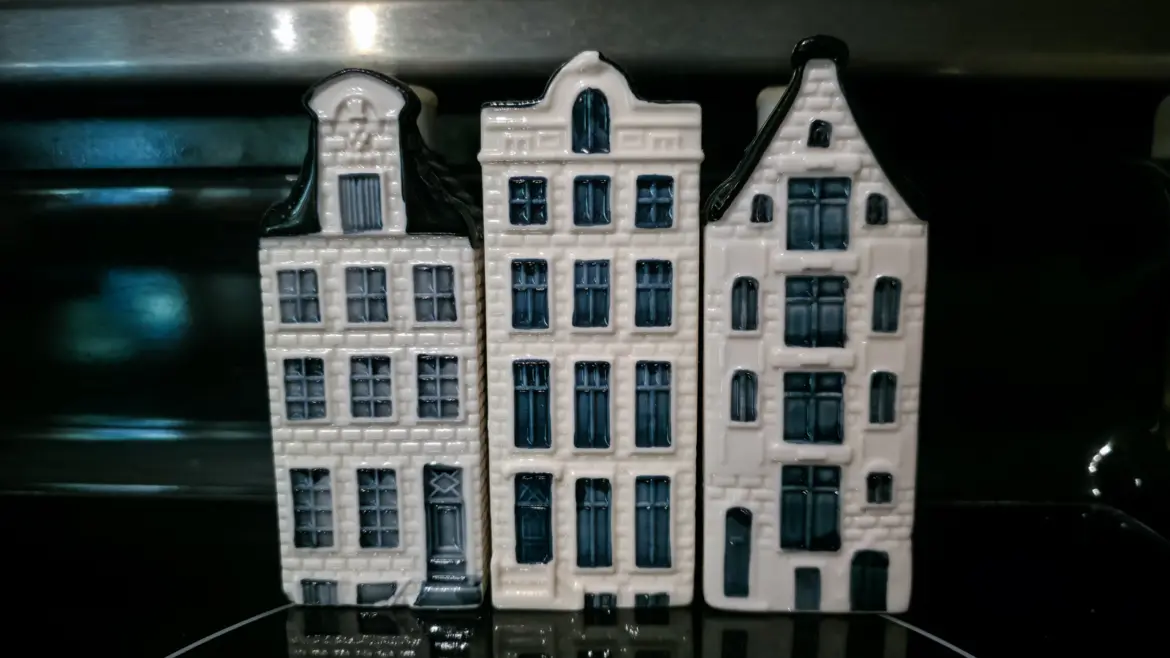
I have three of these on a shelf at home. They came from KLM flights, they are filled with Dutch gin, and each one is a scale model of a real building somewhere in the Netherlands. A new one is released every year on 7 October, the anniversary of the airline’s founding.
For years they were just a nice thing that arrived with a drink. Then I went to Lisbon and fell for the azulejos, and then I went to Amsterdam and found a museum case full of Chinese porcelain, and somewhere in between I realised that all three were the same story. This post is that story, and it starts in the wrong country.
Blue and White at a Glance
🔵 One pattern, many hands · Blue-on-white began in 9th-century Iraq (Basra), imitating Chinese white ware, and travelled for 900 years before a Dutch ship carried any of it.
🇨🇳 Chinese and Islamic at once · Mass-produced blue-and-white porcelain is Chinese (Jingdezhen), but only because cobalt came from Persia; the Chinese name for it means “Islamic blue.”
🇳🇱 Delft is an imitation · When Chinese imports stopped after the Ming fell, Delft potters faked porcelain in tin-glazed earthenware. It never was porcelain.
🇵🇹 Lisbon copied Delft · Portugal’s azulejos turned blue-and-white under Dutch influence, and “azulejo” comes from Arabic for “polished stone,” not from azul.
💡 Tip · Read the “medium” line on museum labels: porcelain and tin-glazed earthenware look identical and are the whole story.
It Started in Lisbon
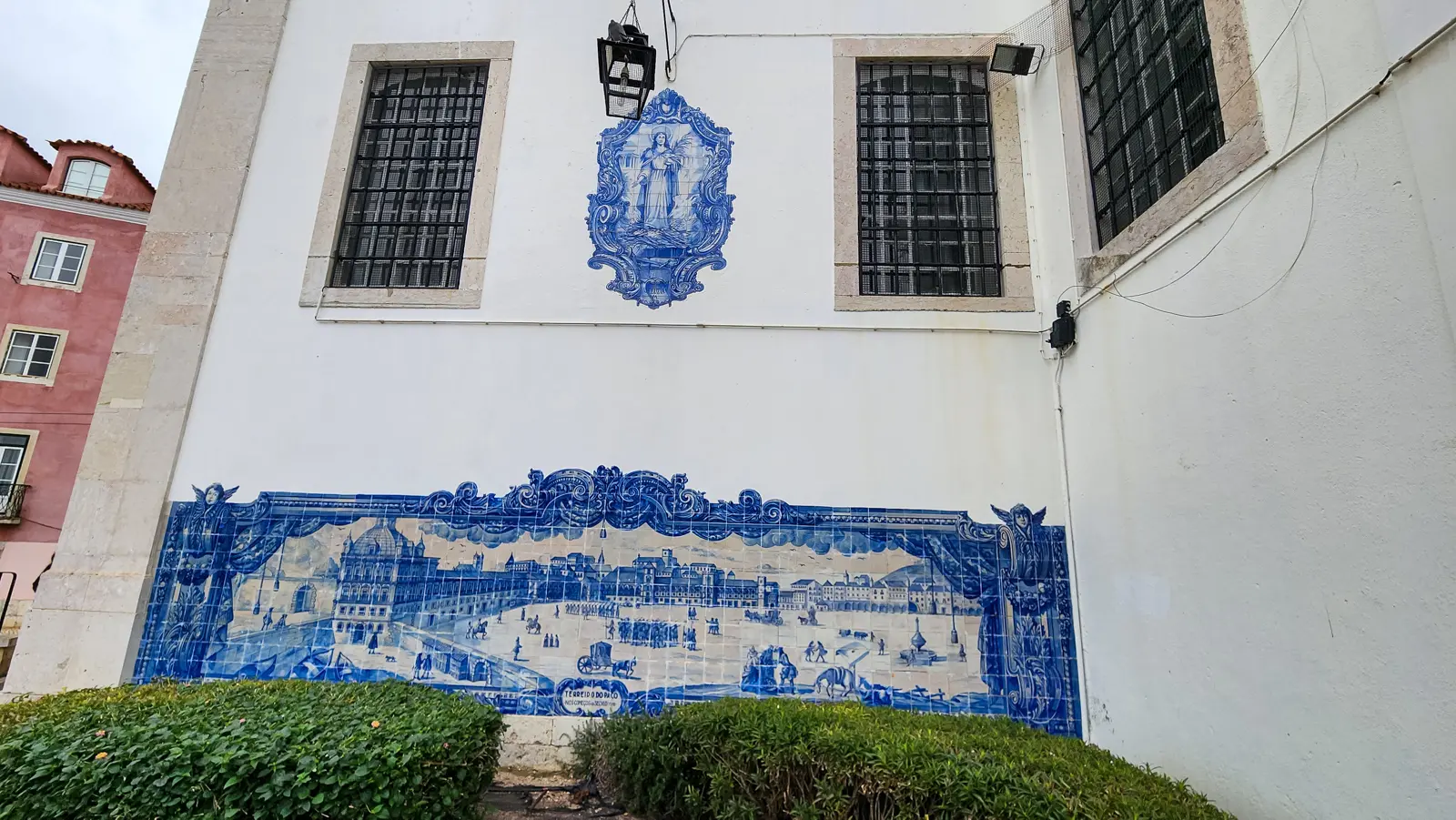
In Alfama, on the terrace at the Miradouro de Santa Luzia, the side wall of the church carries two panels of blue and white tiles. The one I stood in front of shows the Terreiro do Paço, the great riverside square now called the Praça do Comércio, as it looked before the earthquake of 1755 flattened it. Carriages, market stalls, a bullfight in progress, and a city that no longer exists.
I assumed, as most people do, that azulejo must come from azul, the Portuguese word for blue. It does not. The word comes from Arabic, al-zulayj, meaning a small polished stone, and it arrived in Iberia with the Moors centuries before anyone painted a picture on a tile. The first azulejos were cut geometric mosaic, in green and yellow and white as much as blue.
So the name is Arabic, the technique is North African, and the blue came later from somewhere else entirely. That was the first thing I got wrong.
A Case Full of China
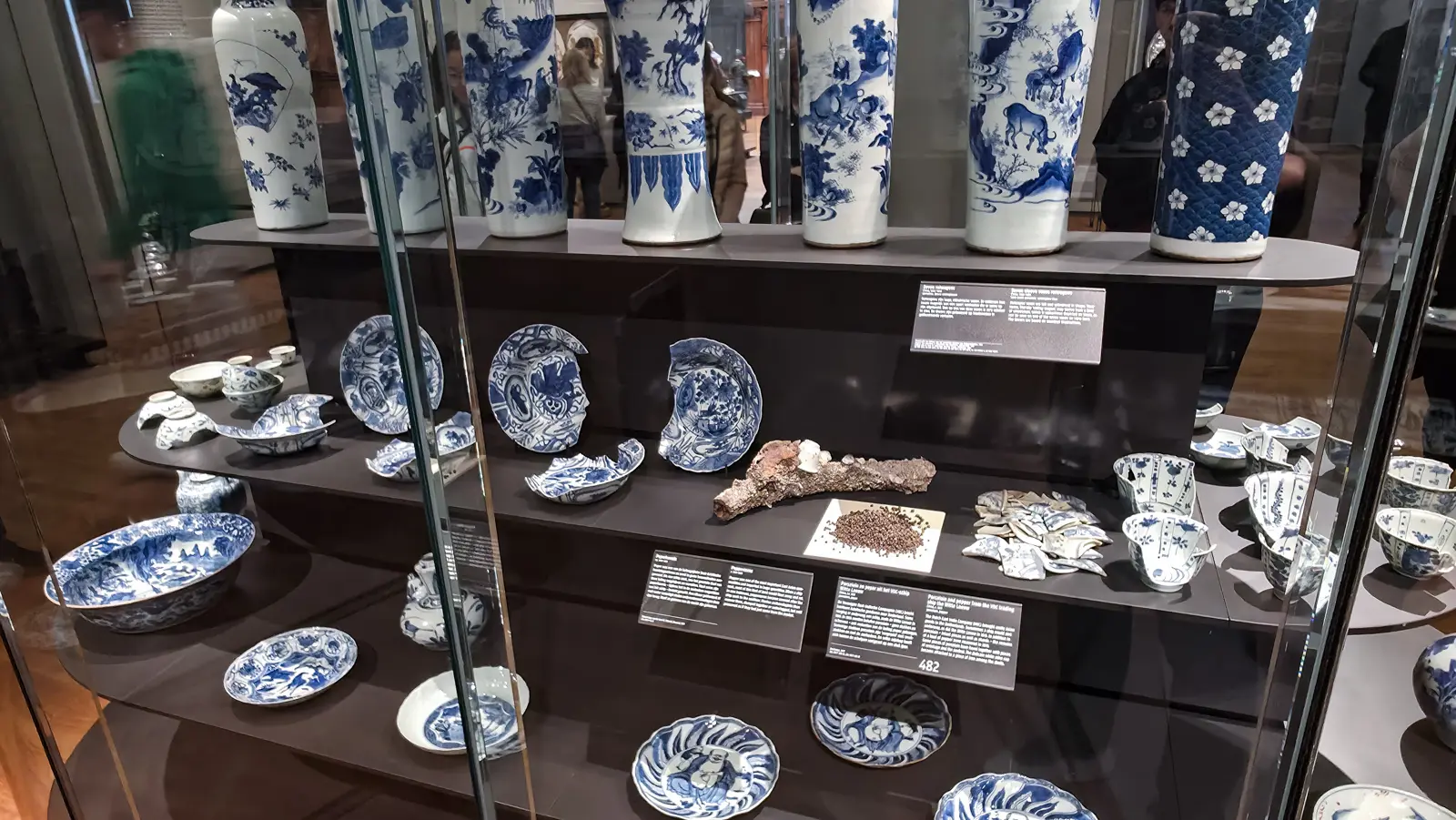
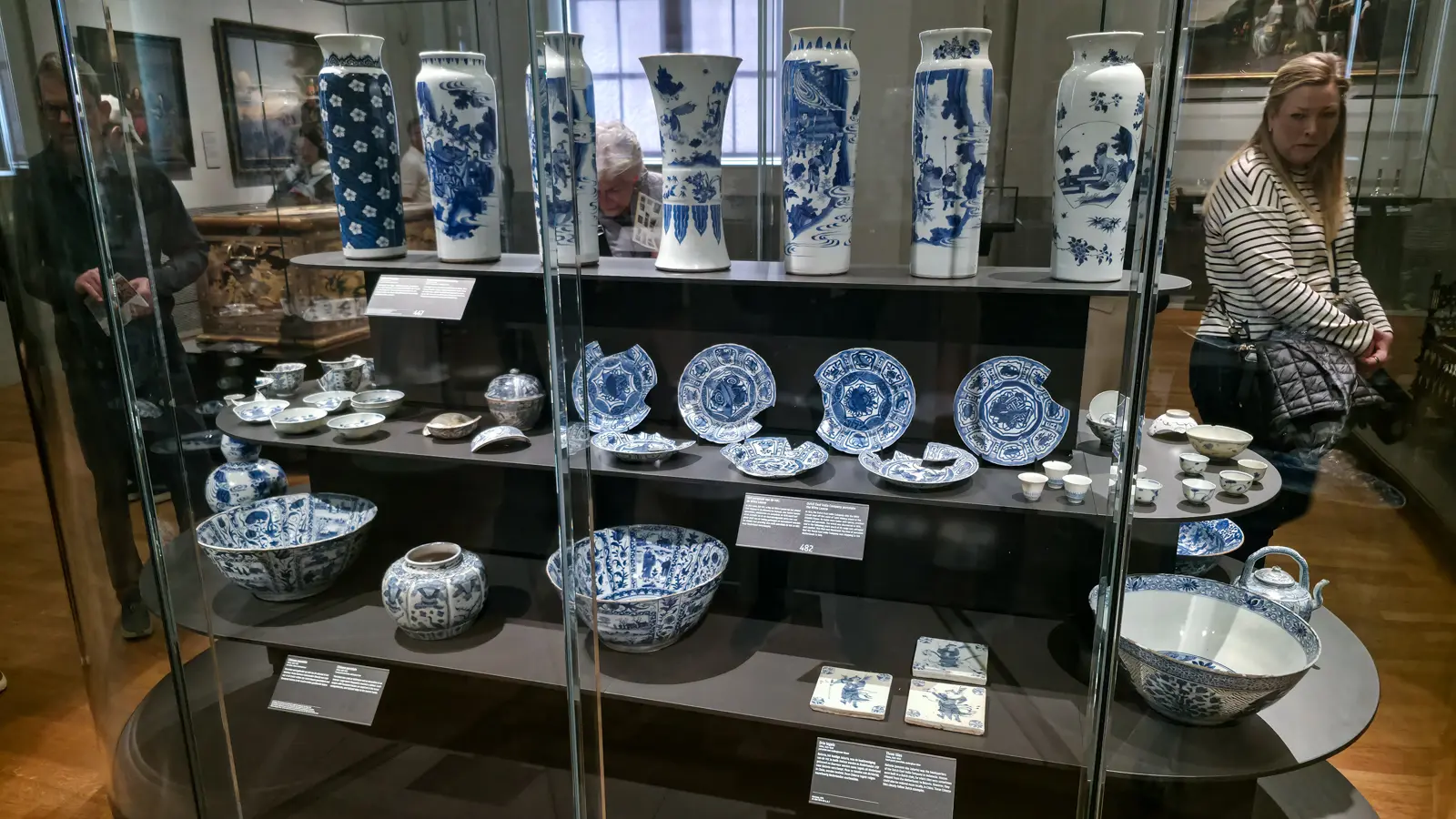
Months later I was standing in front of a display case at the Rijksmuseum holding several hundred pieces of blue and white, and none of it was Dutch.
Tall cylindrical vases on the top shelf. Bowls, cups, dishes and plates below, some whole and some broken clean in half. The pieces are Chinese, made mostly between 1600 and 1650, and they came to Amsterdam in the holds of ships belonging to the Dutch East India Company, known by its Dutch initials as the VOC.
This is where the assumption I had carried since Lisbon started to come apart. The Dutch did not invent this. They imported it by the shipload.
Pepper From a Wreck
The strangest object in the case is a lump of encrusted iron with a small white cup fused to it, lying beside a neat square of what looks like gravel.
The gravel is peppercorns. They came off the Witte Leeuw, a Dutch East India Company ship that sank in 1613 carrying porcelain and pepper. The wreck was found and salvaged in 1976, and the material in this case was given to the museum the following year.
Pepper does not normally survive a shipwreck. It floats free and rots. Only occasionally does a load get buried in the seabed fast enough to be preserved, and then it comes up looking, as the label puts it, as though it had come from the market yesterday. The white wine cup did not fare as well. It fused itself to a piece of iron among the shells and had to be lifted with it.
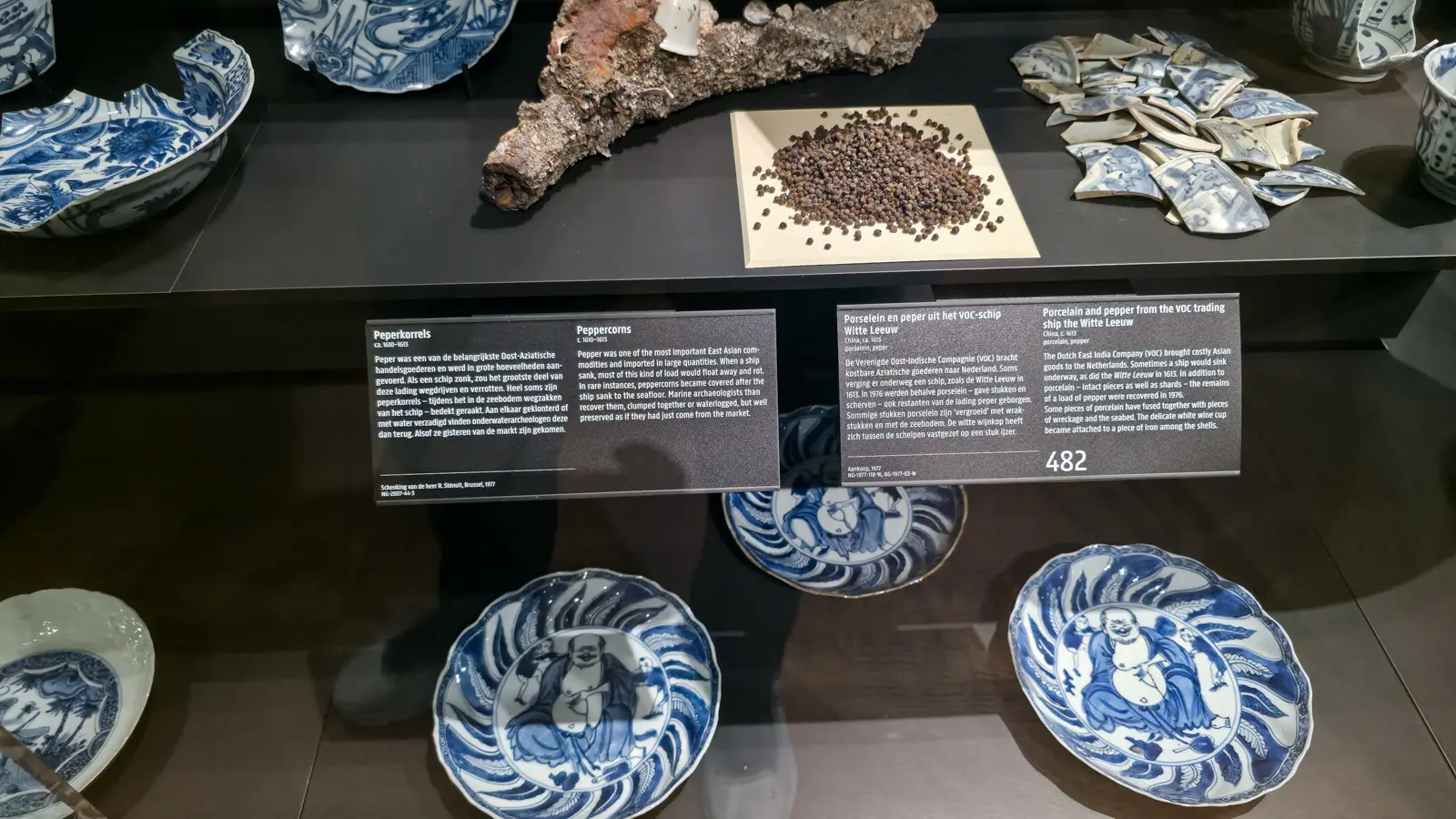
The two dishes further down stopped me for a different reason. They show a bare-bellied monk surrounded by swirling leaves, and the label explains that they were made for Japanese buyers, not Dutch ones. The smaller plates in the same case, with a horse and a grasshopper, were intended for European customers.
The same kilns, the same blue, the same year, painted differently depending on who was expected to buy. That is not an artistic tradition. That is a business with a catalogue.
Where the Blue Actually Came From
Here is the part I had entirely wrong, and it answers the question I had been carrying around since Lisbon.
Blue and white porcelain as a mass-produced object is Chinese. It comes from the kilns at Jingdezhen and became widespread in the fourteenth century, under the Yuan dynasty. So far, so expected.
But the Chinese could only make it because cobalt was being imported from Persia. The pigment was so associated with its source that the Chinese name for it translates as Islamic blue. And the decorative idea of painting in blue on a white ground is older still. In the ninth century, potters in Basra, in what is now Iraq, were trying to imitate white Chinese stoneware arriving by sea. They could not make porcelain, so they covered their earthenware in an opaque white tin glaze and painted it in blue.
Which means the answer to my question is all three of the things I had heard. It is Chinese. It is also, in its origins, Islamic. And it travelled by trade route in both directions for six hundred years before a Dutch ship ever carried any of it.
When the Supply Failed
Now the Dutch part, and it is not a story about taste. It is a story about a broken supply chain.
The Dutch East India Company imported Chinese porcelain steadily until the middle of the seventeenth century. Then the Ming dynasty fell, China went into a long civil war, and after about 1647 the shipments stopped. European households still wanted blue and white. Nobody in Europe could make porcelain, because nobody had worked out that it needed kaolin.
So the potters of Delft did exactly what Basra had done eight centuries earlier. They took ordinary clay, coated it in opaque white tin glaze, and painted it in blue. Seventeen new factories opened in Delft between 1653 and 1662.
This is why the labels in this room say tin-glazed earthenware rather than porcelain. Delftware is not porcelain and never was. It is a very good imitation of something the people making it could not reproduce.
Copies of Copies
What happened next is the part I find genuinely funny.
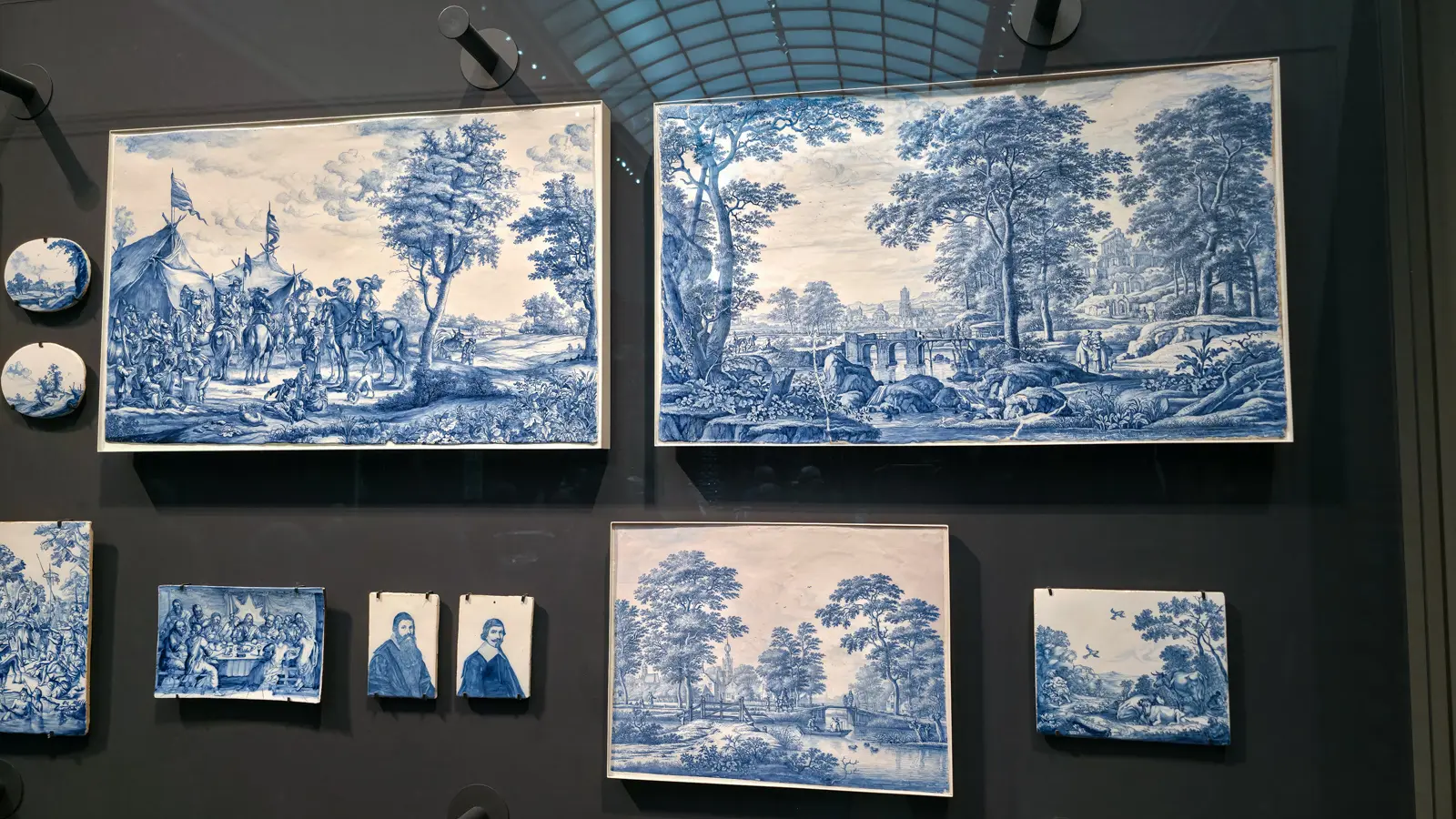
Having learned to imitate Chinese decoration, Delft painters started applying the same blue to entirely Dutch subjects. On one wall hangs a group of tin-glazed plaques painted like framed pictures: wooded landscapes, a cavalry encampment with tents and flags, a river with a bridge, two portraits of bearded men in dark robes, a Last Supper. They are copied from Dutch and Flemish prints, in a colour scheme borrowed from China, using a technique borrowed from the Islamic world.
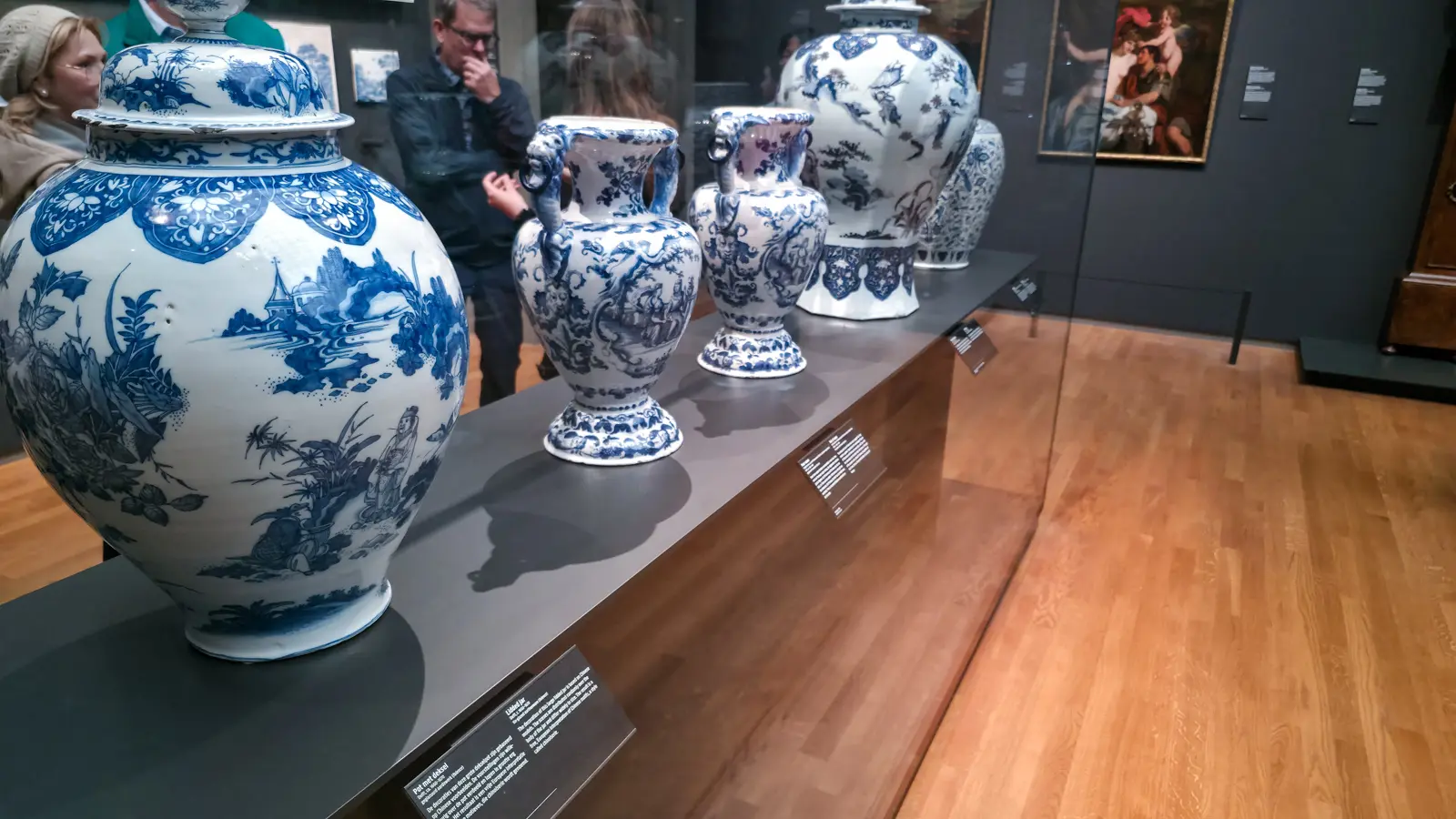
The museum’s own label for one of the jars calls this chinoiserie, and defines it as a free European interpretation of Chinese motifs. It is an interpretation of an interpretation.
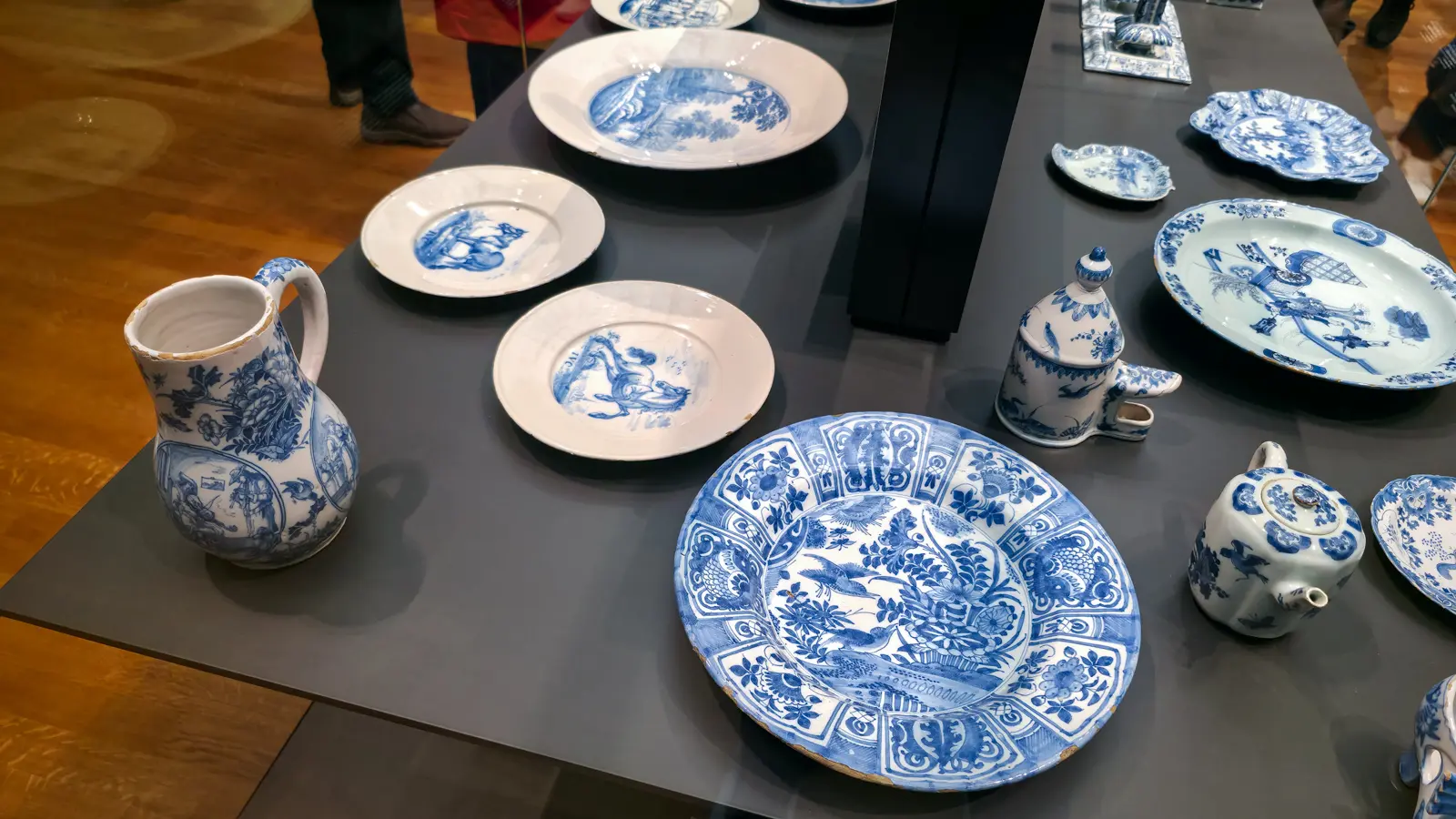
By the table of Delft tableware at the far end, the Chinese source has almost disappeared. A jug, plates painted with horsemen and hunting scenes, a teapot, a lidded jar, and one large dish still carrying the panelled border that came straight off a Chinese original. Dutch subjects, Dutch shapes, Chinese layout, Persian pigment.
Back to Lisbon
Which brings the whole thing round, because Portugal did the same, and slightly later.
Portuguese azulejos were polychrome until the 1620s or thereabouts. The shift to blue and white followed the arrival of Chinese porcelain and then, decisively, of Dutch tiles. Portugal imported Delft blue and white in such quantity that the government eventually banned the imports to protect its own workshops.
So the tiles I fell in love with in Alfama are blue because of Delft, and Delft is blue because of China, and China is blue because of Persia, and the idea of blue on white tin glaze started in Iraq. The wall at Santa Luzia and the case at the Rijksmuseum are two points on the same line.
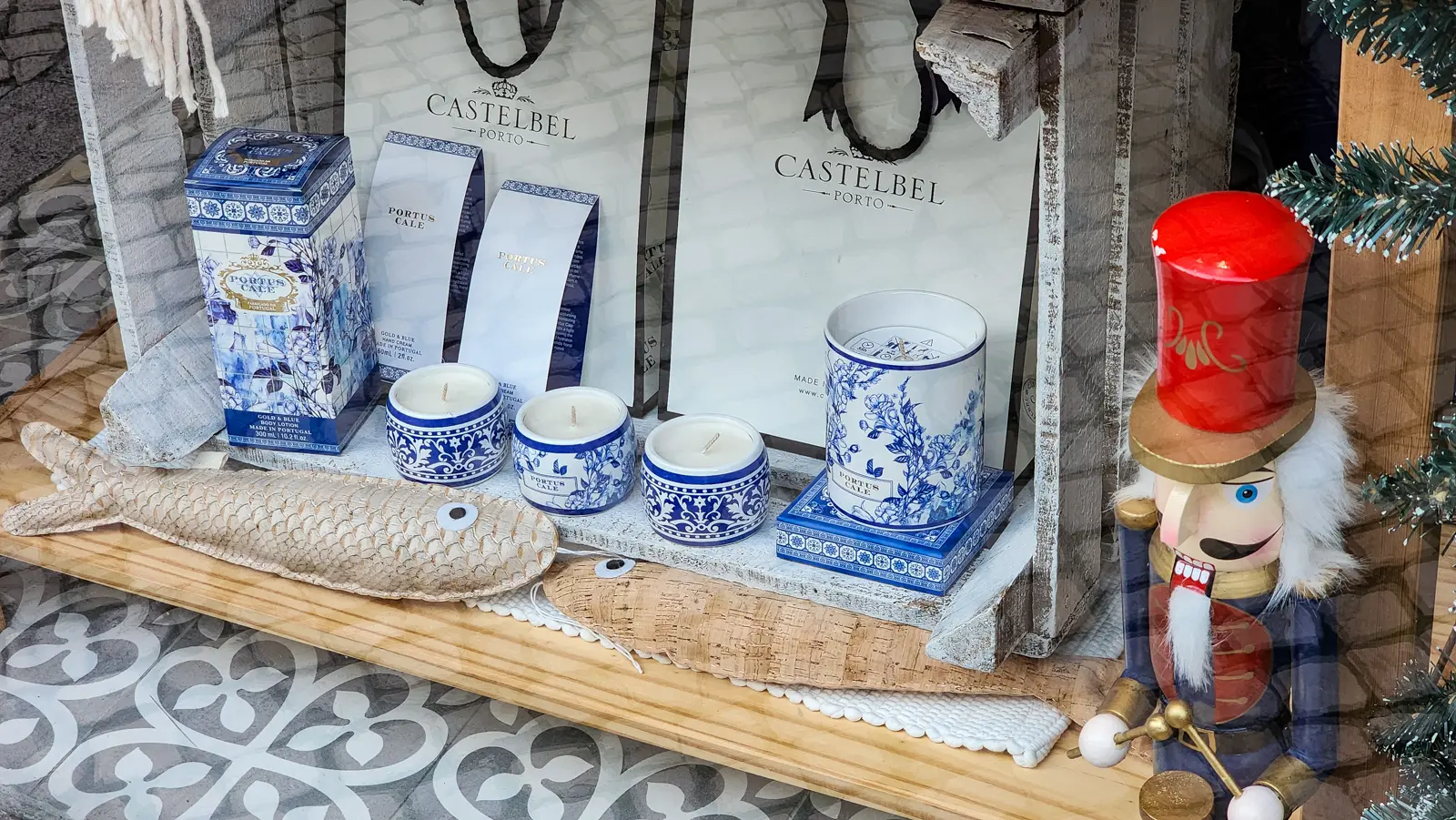
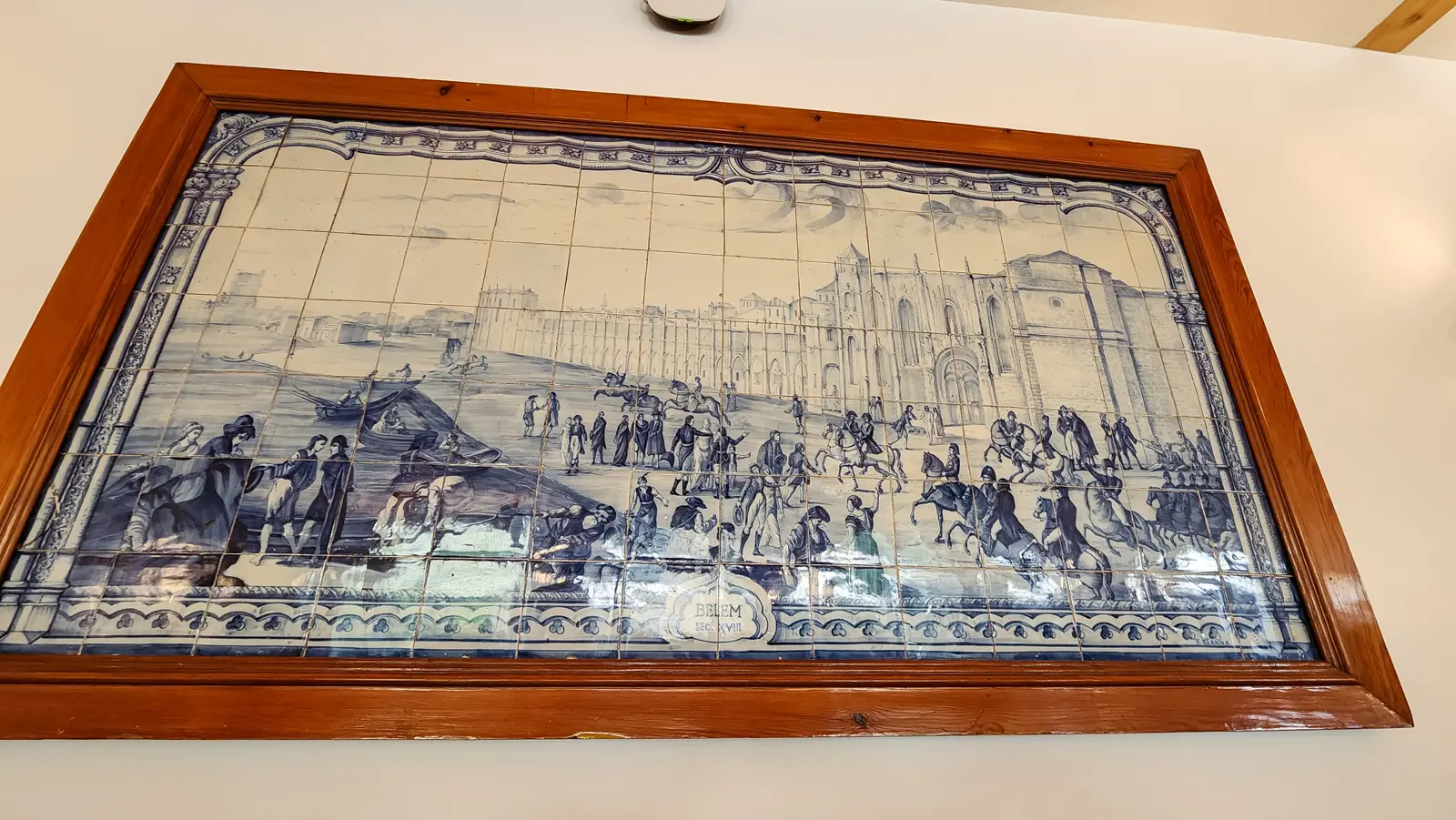
And the pattern has not stopped working. In a shop window in Príncipe Real I found soap boxes, hand cream and candle tins in the same blue on the same white, sold as something recognisably Portuguese. In Belém’s famous pastry shop there is a framed eighteenth-century panel on the wall showing the monastery and the riverfront, with people arriving by boat.
Nobody buying a candle in that window is thinking about Basra. That is rather the point. The pattern outlived every trade route that carried it.
Bubbly Tips
- Read the medium line on every label. Porcelain and tin-glazed earthenware look almost identical behind glass and are completely different things. The label tells you which you are looking at, and the difference is the whole history.
- Look for the broken pieces, not the perfect ones. The half plates and shards in the Chinese case came off a wreck. They carry more information than the intact vases beside them.
- Find the peppercorns. They are easy to walk past because they look like gravel on a white card. They are a cargo from 1613.
- Check who a piece was made for. Several labels in this room specify Japanese buyers or European ones. Once you start looking for it, the export catalogue becomes visible.
- Give yourself two rooms, not one. The Chinese porcelain and the Delft earthenware sit in different parts of the museum. Seeing them in that order is what makes the argument land.
- In Lisbon, go to Santa Luzia early. The terrace is small and gets crowded, and the panels are in a shaded alcove beside the church wall that most people walk straight past on the way to the railing.
- Photograph tiles on an overcast day. Direct sun blows out the white glaze and kills the blue. The flat light I had in Alfama in December was better for it than a bright afternoon would have been.
- Look at packaging as well as monuments. Some of the best blue and white in Lisbon is in shop windows, and it tells you the pattern is still alive rather than preserved.
If you fly KLM in Business Class, keep the house. It is a scale model of a real Dutch building, there is a new one every 7 October, and it is the cheapest piece of this entire story you will ever
Final Thoughts
I started this thinking blue and white was Dutch, then decided it was Chinese, then heard it might be Moorish, and assumed one of those had to be right. All three are, and the order matters: Iraqi potters imitating Chinese white ware, Persian cobalt reaching Chinese kilns, Chinese porcelain reaching Amsterdam, Dutch potters imitating it when the ships stopped coming, and Portuguese workshops imitating the Dutch.
Every stage of that is somebody copying something they admired and could not quite make. The Basra potters could not make porcelain. The Delft potters could not make porcelain. Neither failure produced anything less beautiful, and the thing I keep on a shelf at home is the end of that line: a Dutch house, in a Chinese colour scheme, mixed from a Persian pigment, handed to me on an airplane.
Until next time!

🌟 Everything You Need to Plan Your Dream Trip in 2026
- 🌟 Luxury Hotels - Find premium stays with Booking.com & Hotels.com
- 🏡 Vacation Rentals - Discover unique properties on VRBO
- 🏞️ Guided Tours - Explore with Viator or GetYourGuide
- 🎫 Attraction Tickets - Skip the lines with Tiqets
- 🚢 Ocean Cruises - Set sail with Cruise Direct
- 📱 International SIMs - Stay connected with Saily
- 🚗 Car Rentals - Budget-friendly options from Discover Cars
- 🌐 Secure VPNs - Browse safely with NordVPN
- 💶 Currency Exchange - Best rates with Wise
- 🗣️ Learn Languages - Master the local language with Babbel and Rosetta Stone