
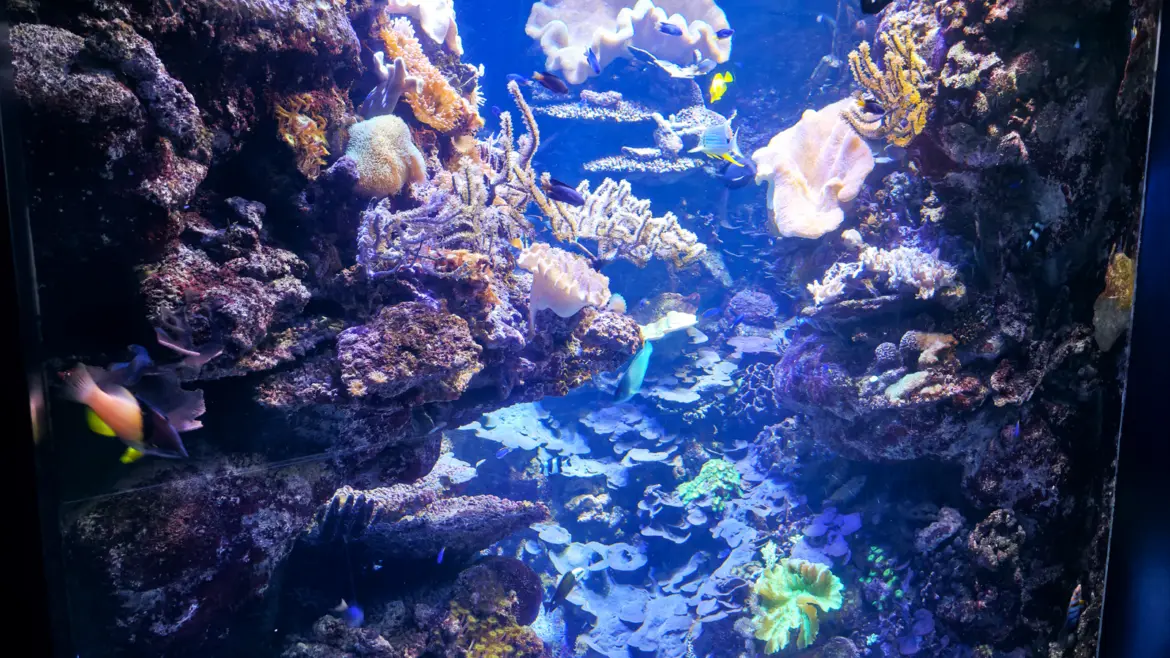
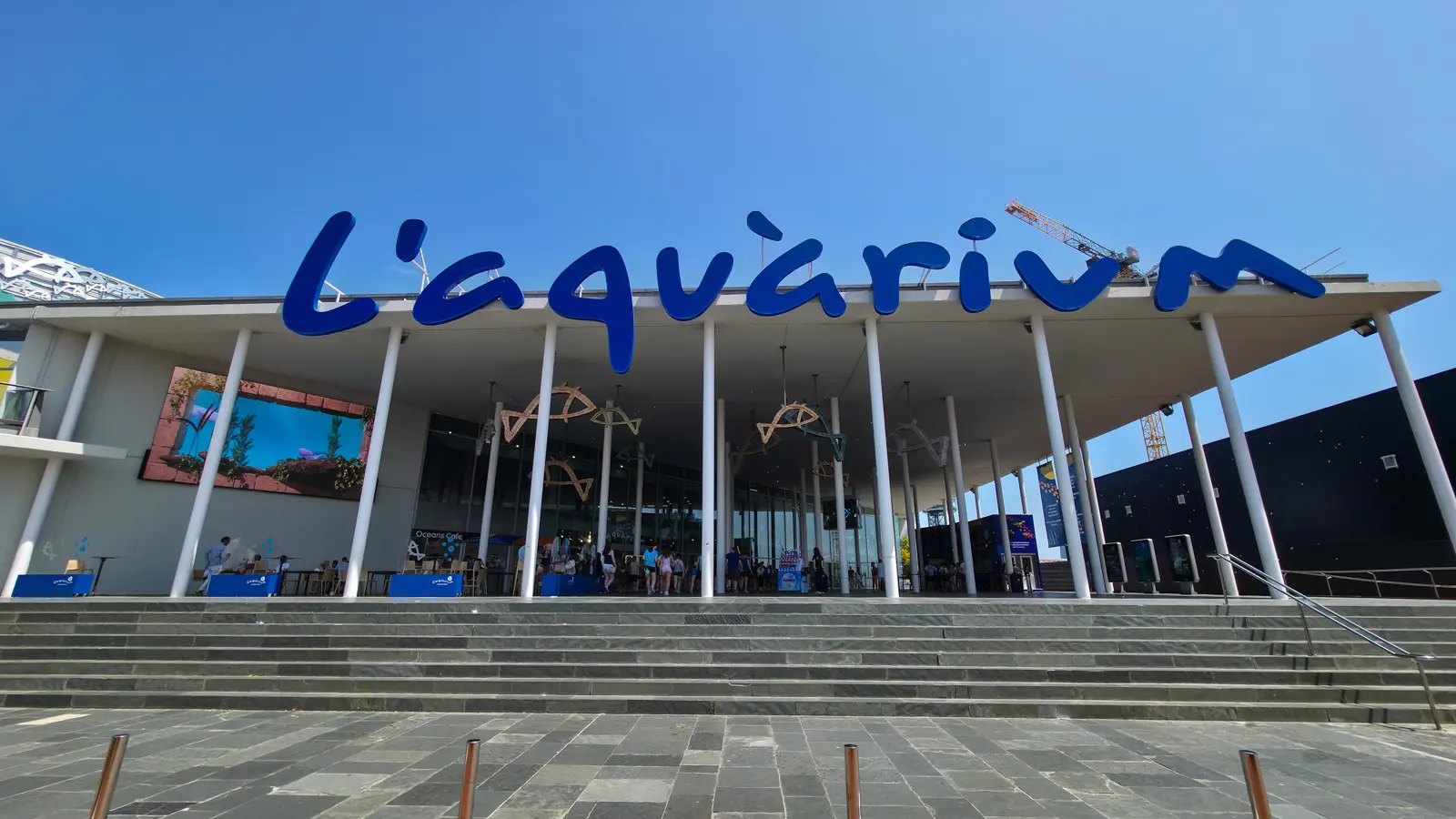
Hola, explorers! 🐠 After an afternoon wandering around Port Vell, where the sea shimmered like glass and the air smelled faintly of salt and espresso, I decided to follow the call of the water a little further. Just beside Maremagnum, hidden beneath its sleek glass façade, lies another world – quiet, blue, and full of wonder. Welcome to L’Aquàrium de Barcelona (The Aquarium of Barcelona), one of Europe’s largest marine centers and a magical dive into the heart of the Mediterranean. Whether you’re traveling solo, with friends, or with little explorers in tow, this is a place where time slows, light bends, and the sea tells its own story.
L’Aquàrium de Barcelona at a Glance
🐠 What it is: Europe’s largest Mediterranean-themed aquarium, built as part of the post-Olympic redevelopment of Barcelona’s Port Vell
📅 Opened: September 8, 1995 (as part of the urban renewal that followed the 1992 Barcelona Olympics)
🏛️ The numbers: 35 tanks · ~6 million litres of seawater · ~11,000 animals from ~450 species · 1.5+ million visitors per year (one of Barcelona’s 5 most-visited attractions)
🦈 The centerpiece: The Oceanarium — a cylindrical tank 36 metres in diameter and 5 metres deep containing 4 million litres of water, crossed by an 80-metre transparent underwater tunnel
📍 Location: Moll d’Espanya del Port Vell, 08039 Barcelona — right beside Maremagnum
🚇 Metro: L4 Barceloneta or L3 Drassanes (~10-minute walk, cross the Rambla de Mar bridge)
🕰️ Hours: Daily 10:00–20:00 (winter) / 10:00–21:30 (summer) — check aquariumbcn.com for exact seasonal times. Ticket office closes 1 hour before the Aquarium.
🎫 Admission: Adults €25–€29, discounts for children and online pre-booking
⏱️ Visit time: 1.5–2 hours for the full experience
💡 Best time: Early morning (right at opening) or the final hour before closing — avoid the 11:30–15:00 peak when cruise ship tours arrive
A Window Into the Deep
Opened in 1995, the Aquarium of Barcelona was part of the ambitious urban renewal that followed the 1992 Olympic Games, transforming Port Vell from an industrial dockyard into a cultural and leisure waterfront. Spanning several thousand square meters, it remains a global reference in the study and display of Mediterranean ecosystems.
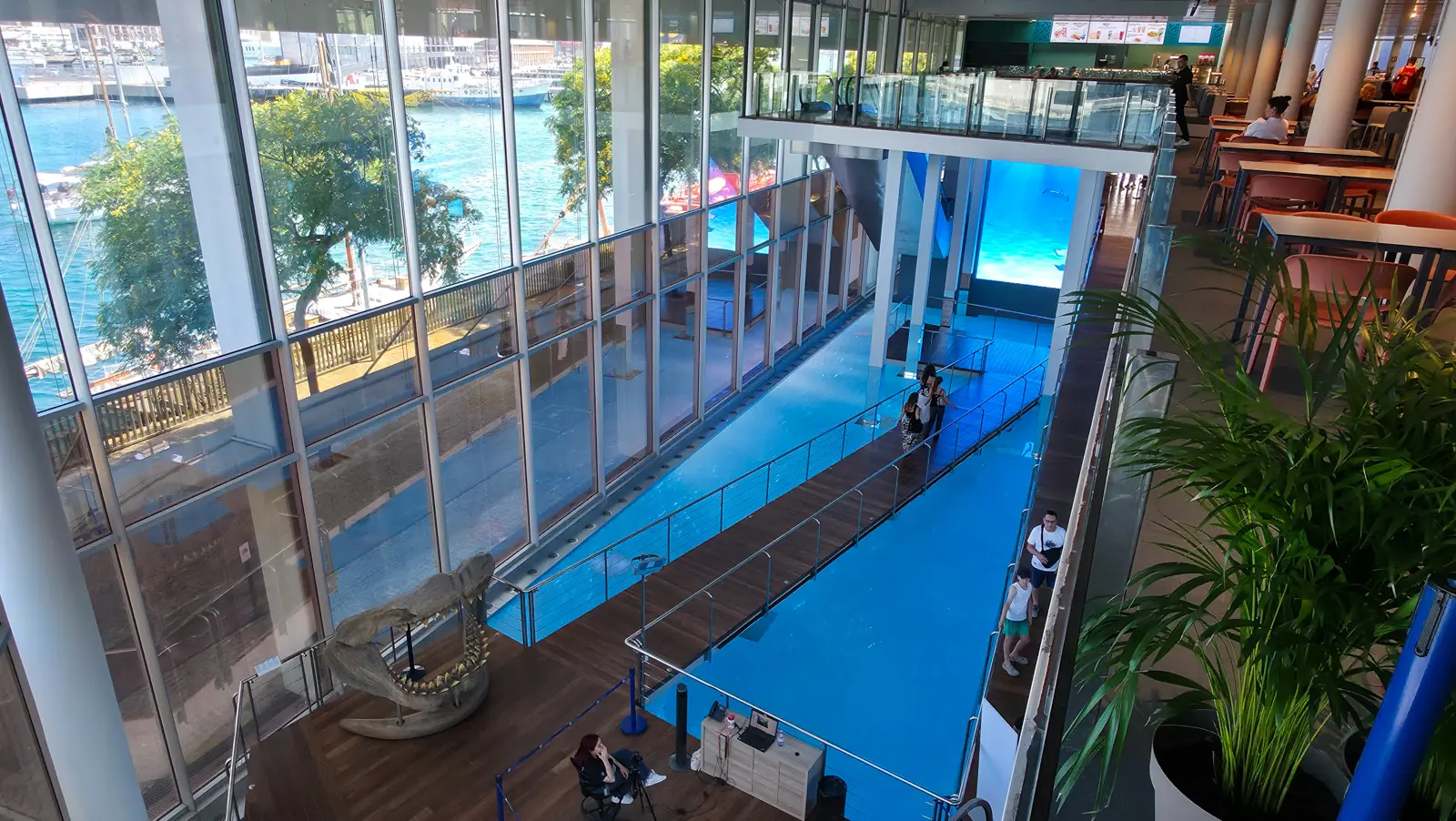
The Aquarium features 35 tanks holding more than five million litres of seawater, recreating habitats from the Catalan coast, tropical reefs, and polar regions. Together they house around 11,000 animals from 450 species, from delicate seahorses to sleek sand-tiger sharks. Many tanks are designed not only for viewing but for conservation and research; L’Aquàrium participates in European breeding and marine-life recovery programs, including the protection of the loggerhead sea turtle.
It’s an experience built on balance – part science, part serenity. Educational exhibits, quiet lighting, and the soft sound of flowing water invite you to pause and look more closely. From the surface, it’s a family attraction; beneath it, a living classroom about our shared ocean. And at its very heart lies the Oceanarium, where time itself seems to slow and the sea takes center stage.
What to See and Experience
Inside L’Aquàrium: What to See
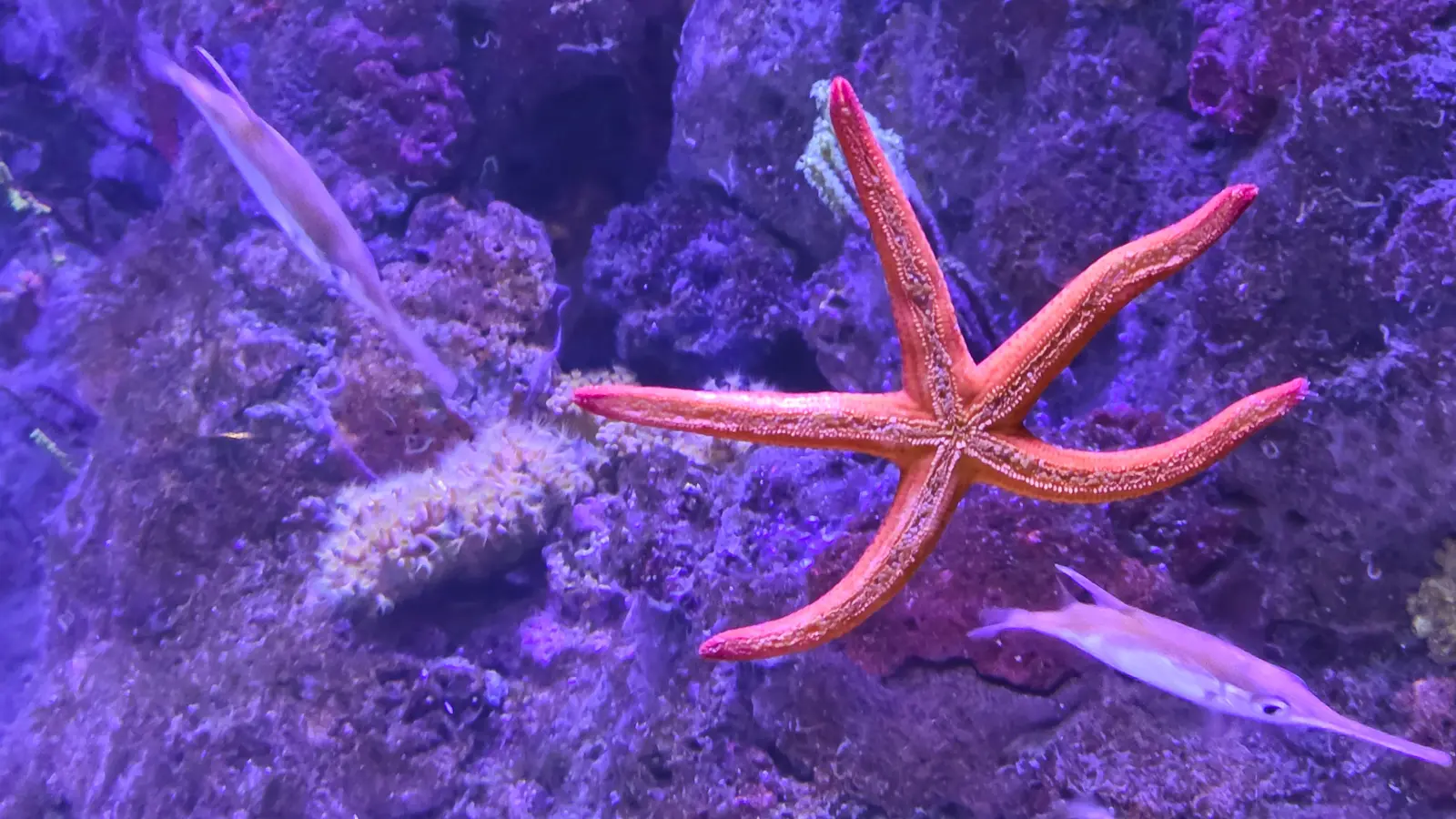
🌊 Mediterranean Habitats (15 tanks): Recreations of the Catalan coast, Balearic Islands, Ebro Delta, and Medas Islands — octopus, moray eels, red starfish, seahorses, posidonia meadows
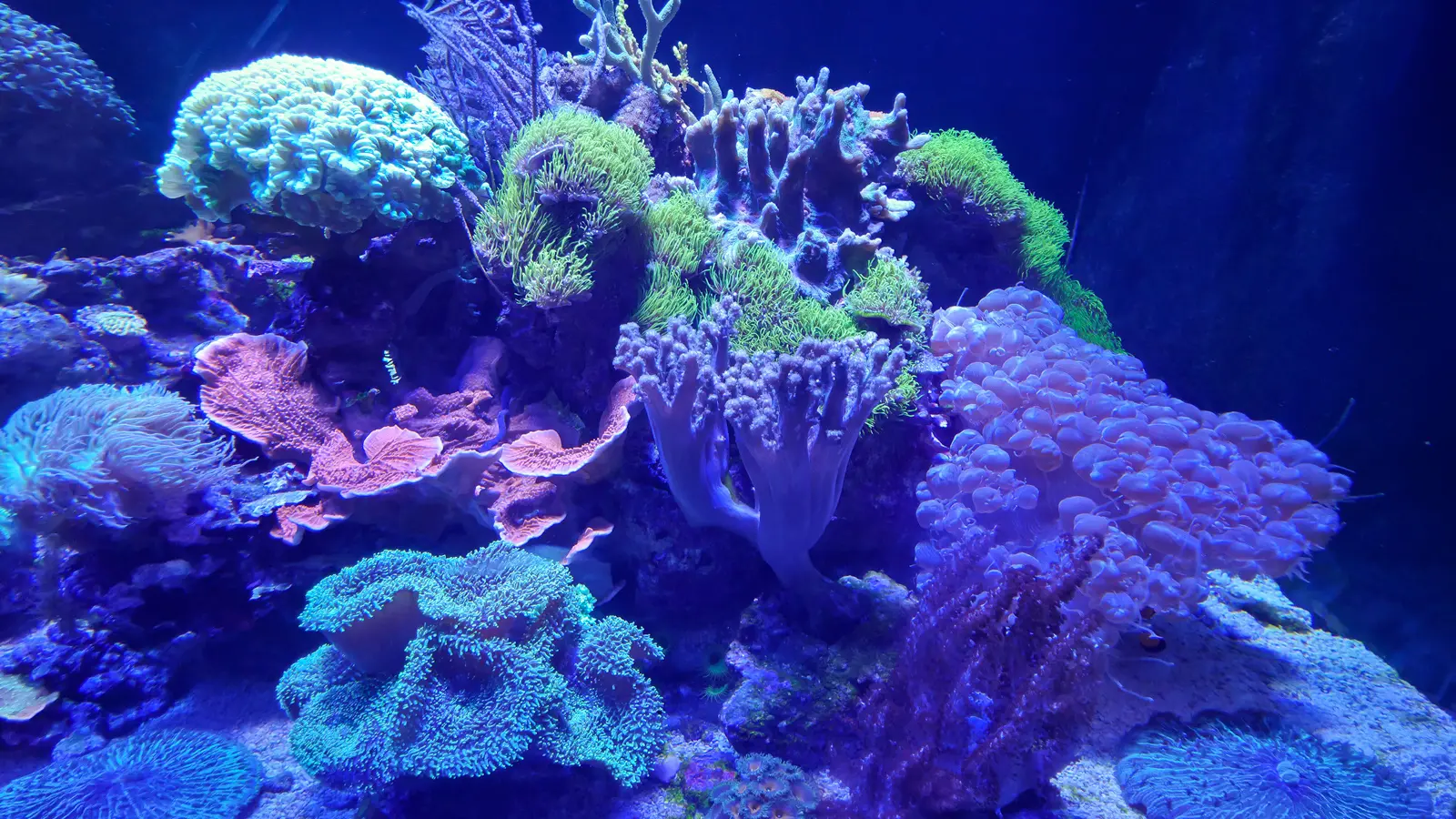
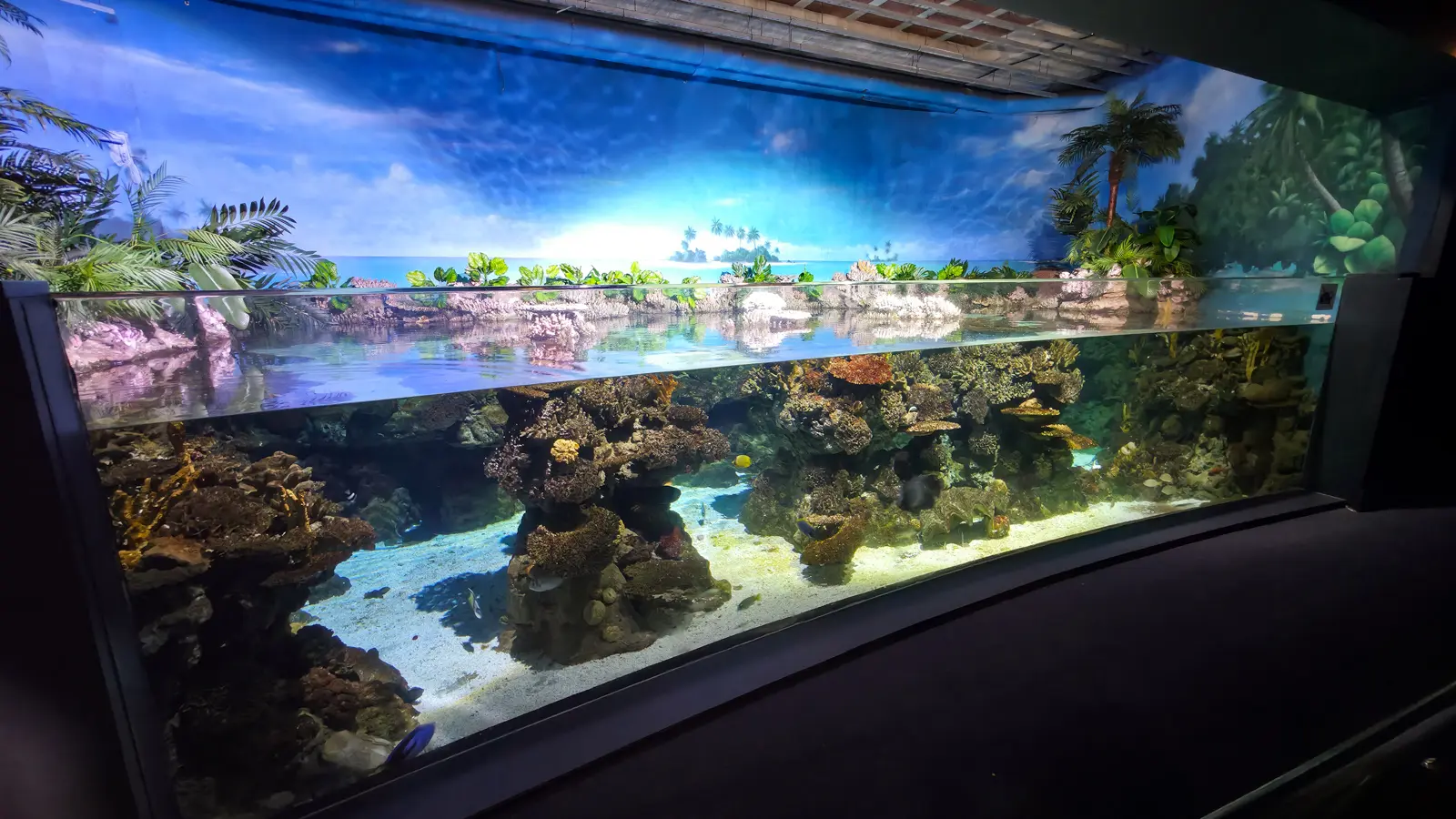
🏝️ Tropical Seas (9 tanks): Red Sea, Caribbean, Great Barrier Reef — clownfish, parrotfish, angelfish, bubble coral, leather coral, and fluorescent reef displays under actinic lighting
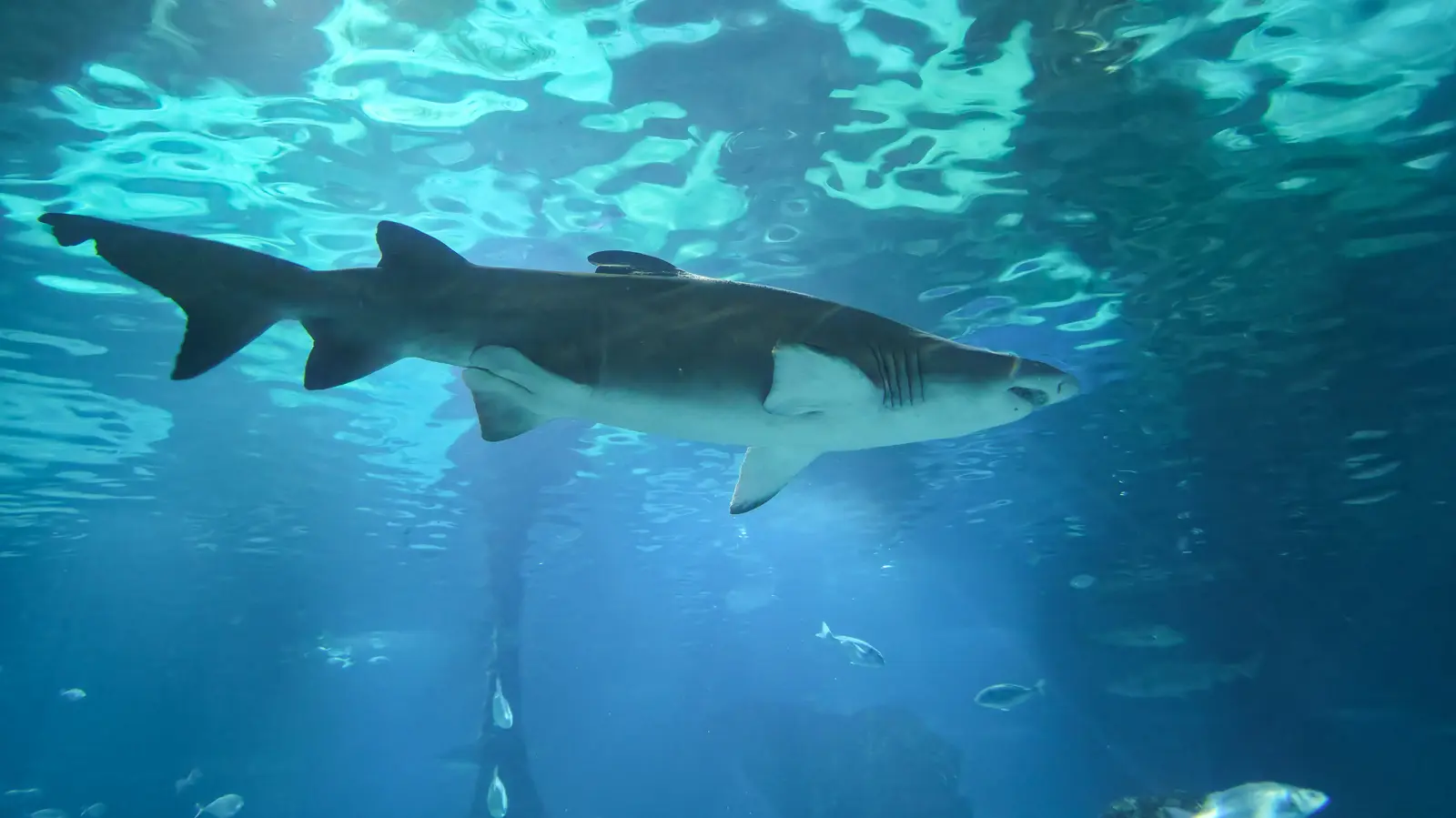
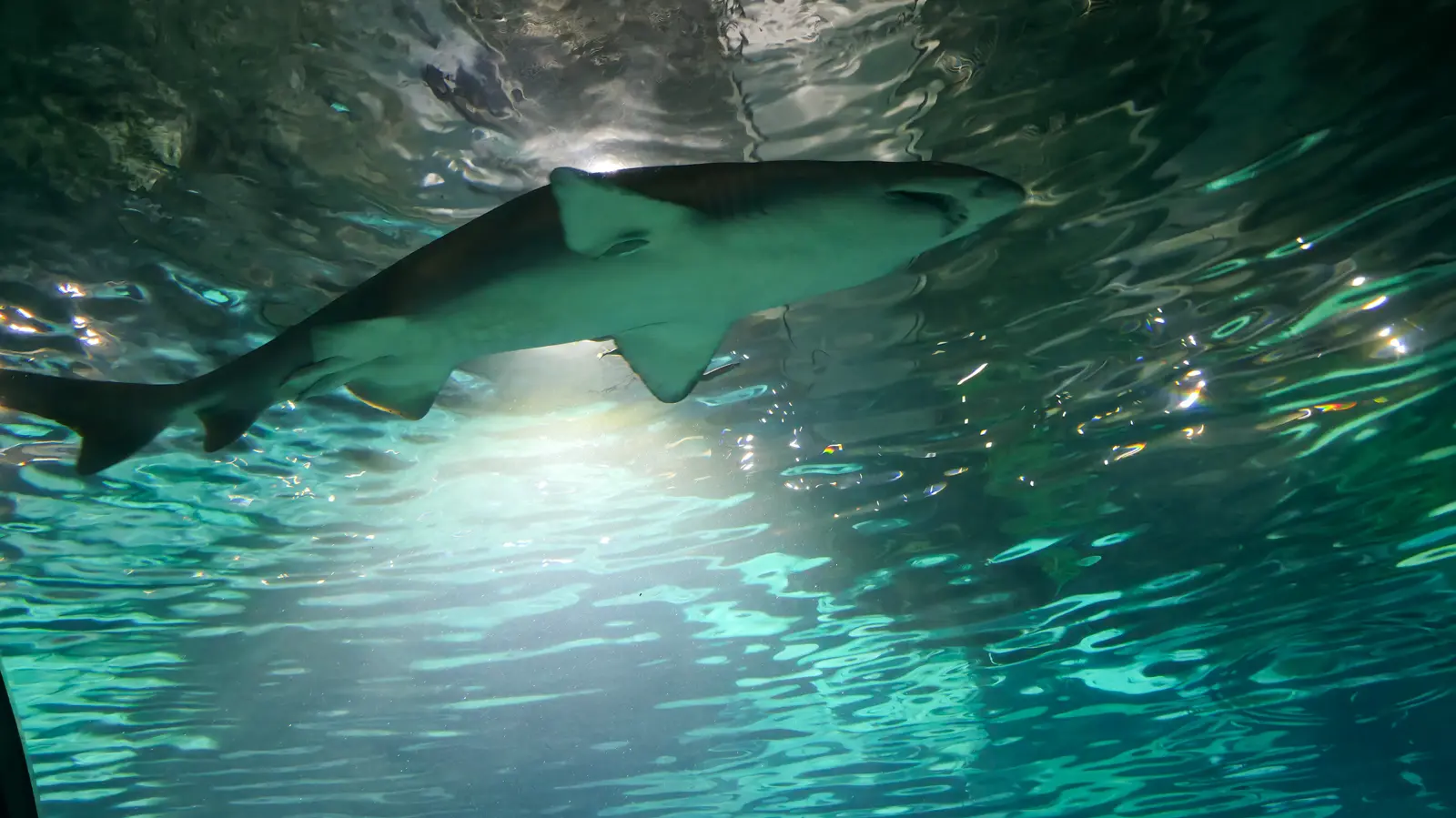
🦈 The Oceanarium (1 tank, 4 million litres): Europe’s only Mediterranean-dedicated walk-through oceanarium — watch sand tiger sharks (Carcharias taurus) and sandbar sharks (Carcharhinus plumbeus) glide overhead through the 80-metre transparent tunnel
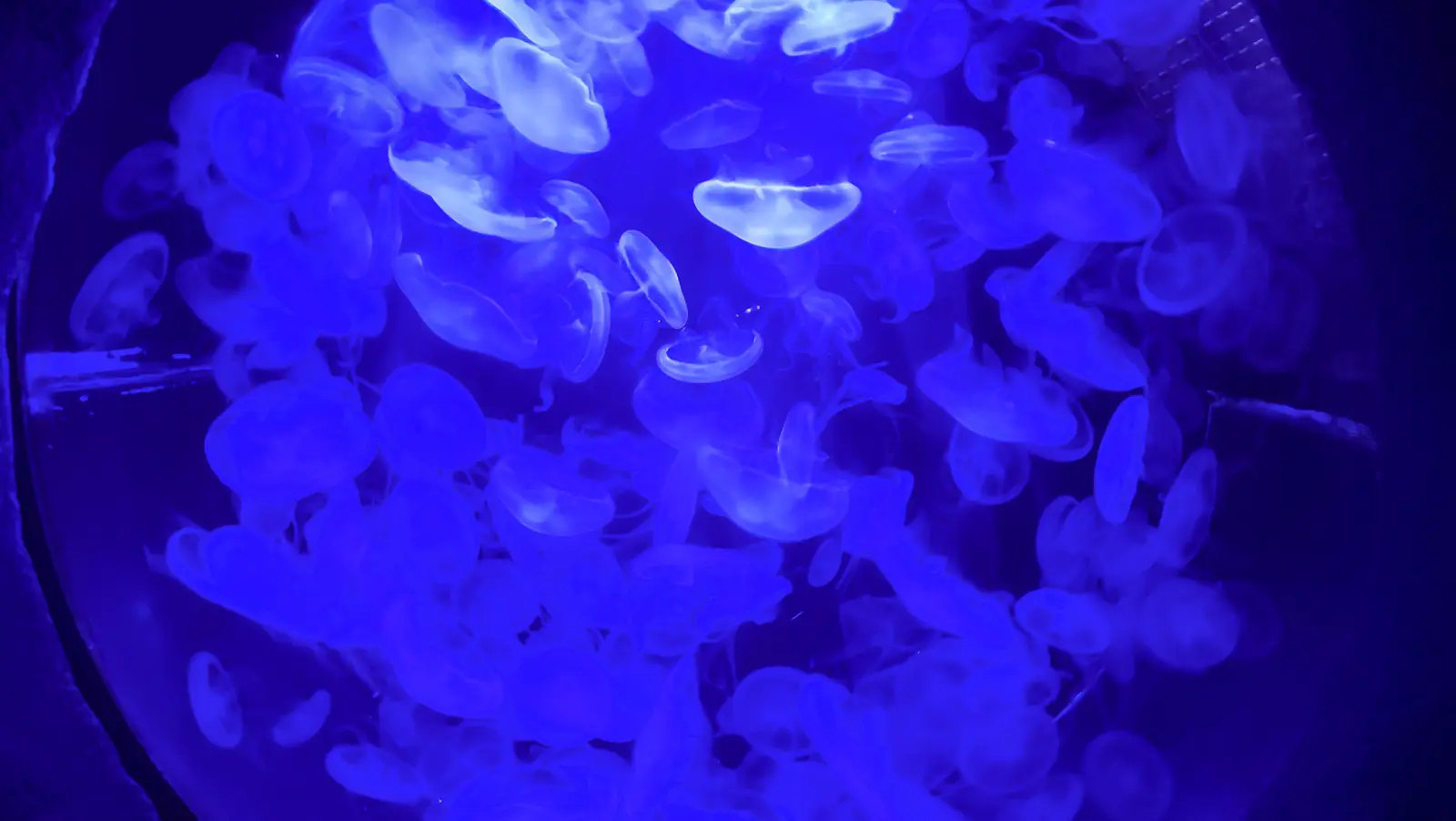
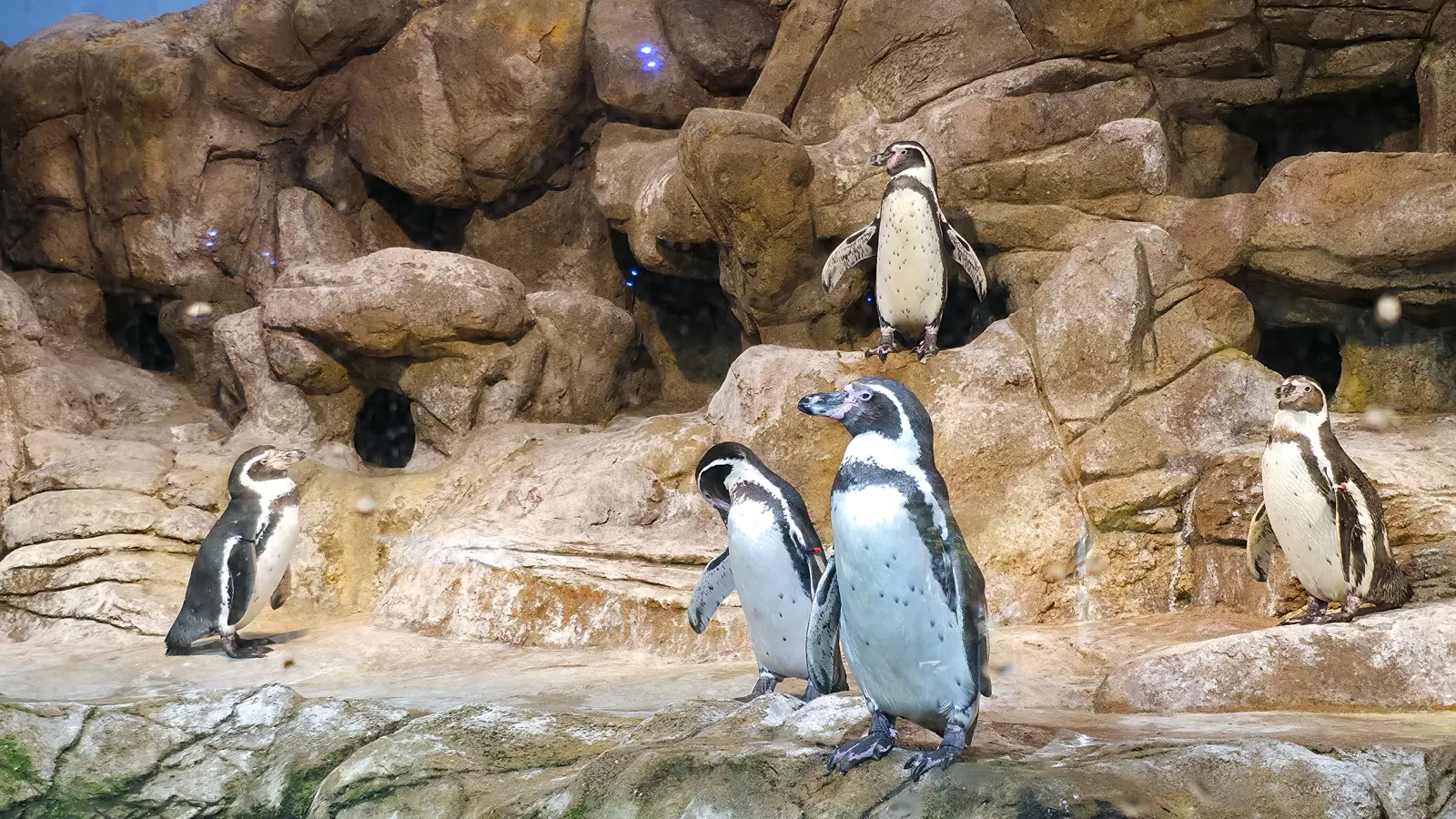
🌍 Planeta Aqua (upstairs): Moon jellyfish in kreisel tanks, Humboldt penguins from the coasts of Chile and Peru, rays, and interactive displays on currents, climate, and conservation
✋ Explora! (interactive space): 50+ hands-on activities designed for children — touch tanks, tidal pool exhibits, and sensory displays about how waves and tides shape the shore
🕐 Shark feeding time: Every day between 12:00 and 13:00 — the sharks are fed by hand. Rays fed at 12:45. Time your visit to catch it.
🐧 Penguin feeding: Twice daily at 11:30 and 16:30
🌙 Shark sleepovers: First Friday and third Saturday of each month, L’Aquàrium hosts overnight stays for children ages 8–12 — they sleep inside the Oceanarium tunnel under the sharks (unique in Europe)
1. The Oceanarium – Walking Beneath the Sea
The moment you step into the Oceanarium, the world slows to a whisper. Light filters through the water in waves of sapphire and jade, gliding across curved glass as if painting the tunnel itself. The 80-meter transparent walkway curves gently beneath the largest tank, where sand tiger sharks drift silently above you, eagle rays sweep their broad wings through the water, and schools of silver fish shimmer like liquid light.
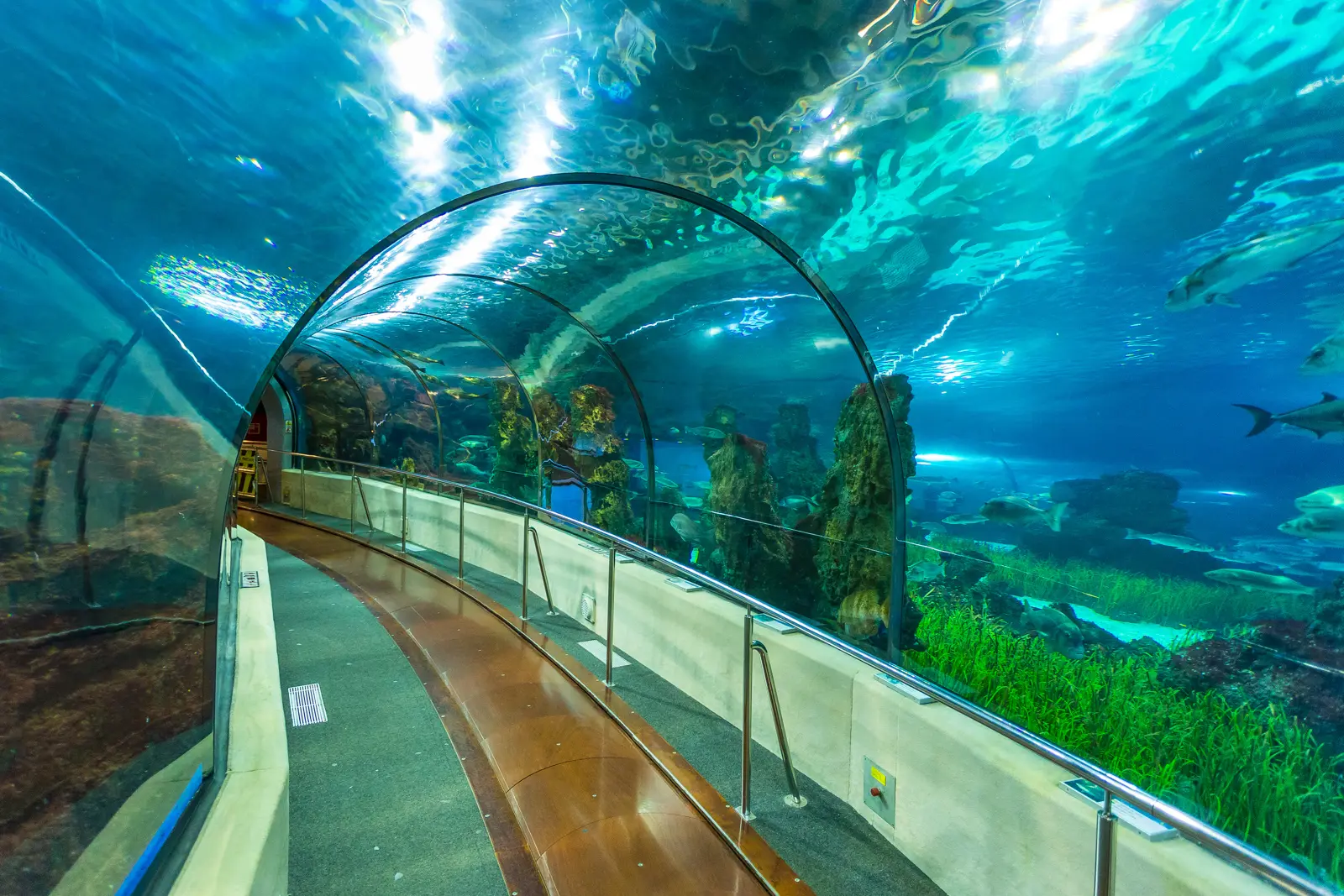
It’s Europe’s only underwater tunnel dedicated entirely to Mediterranean marine life, and it feels utterly surreal, as though you’re strolling through the heart of the ocean. Occasionally, a shark passes directly overhead, its shadow slicing across your face, while children press their palms to the glass in awe. The rhythm of footsteps softens, and all you hear is the hush of the sea.
2. The Mediterranean Habitats – A Love Letter to the Local Sea
This section celebrates the many moods of the Mediterranean, Barcelona’s lifelong companion. Spread across 14 tanks, it reveals an ecosystem as varied and poetic as the coastline itself. You’ll see octopus curling their arms around coral, sea bass gliding through meadows of Posidonia seagrass, and bright red starfish resting lazily on rocky ledges.
Each tank recreates a different corner of the Catalan coast, from the sunlit shallows of the Balearic Islands to the shadowy depths of the Costa Brava. The light changes subtly from one habitat to another: golden and dappled in shallow reefs, deep indigo in caves where moray eels weave like ribbons. It’s a space that feels alive with memory, a reminder that this sea has shaped Barcelona’s soul for centuries.
3. The Tropical Seas – A Symphony of Color and Life
Step into the tropical section, and the world explodes into color. The light warms, turning turquoise and coral-pink, and the air feels softer, almost humid – a gentle echo of warmer tides. Here, corals bloom like underwater gardens, while clownfish dart playfully through anemones and lionfish unfurl their elegant, striped fins like living fans.
Each tank hums with movement – parrotfish nibbling at coral, angelfish gliding through sunbeams, pufferfish drifting dreamily near the glass. The effect is hypnotic, a living kaleidoscope of motion and color. If the Mediterranean tanks feel like home, this section feels like a dream: wild, unpredictable, and impossibly beautiful!
4. Planeta Aqua – Where Science Meets Serenity
Upstairs, the tone shifts from color to calm. Planeta Aqua is where the museum becomes meditative, exploring the power and fragility of water through both spectacle and science. Here, jellyfish float like luminous lanterns, their translucent bells pulsing softly in dark tanks that glow with violet light. The silence feels sacred.
Nearby, Humboldt penguins — natives of the Pacific coasts of Chile and Peru — waddle playfully across the rocky terrain before diving with surprising grace into their chilled pool. Interactive displays explain currents, climate, and conservation, showing how water connects every living thing, from polar seas to the Mediterranean.
5. Explora! – Curiosity Without Age
Finally, don’t skip Explora!, the Aquarium’s interactive space. Designed for children but irresistible to everyone, it lets you touch starfish, peek into tidal pools, and learn how waves and tides shape the shore. It’s hands-on and joyful, full of the small discoveries that make travel so rewarding. I lingered there longer than I’d planned, watching little hands reach toward the water, faces lit with wonder. In that moment, I realized something simple yet profound – curiosity doesn’t fade with age; it deepens.
Moments That Stay With You
As I wandered through the tunnel, surrounded by blue light, I felt suspended between worlds. A ray drifted past like a shadowed angel, and a shark glided silently beside me, its movement powerful yet graceful. Every moment was meditative, like watching the sea breathe. I lingered near the jellyfish tank, where translucent bells pulsed rhythmically in the dark. It reminded me of the music of Barcelona itself: slow, luminous, and alive. The Aquarium may be full of creatures, but what it really offers is stillness, a rare quiet in a city that never stops moving.
Walking out into the sunlight afterward, the sky and the water seemed bluer than before. It’s funny how seeing the world beneath the waves changes the way you look at the one above.
Practical Tips
- Location: Moll d’Espanya del Port Vell, right beside Maremagnum.
- Metro: L4 – Barceloneta or L3 – Drassanes, then a short walk across the pedestrian bridge.
- Hours: Daily 10 a.m. – 7/8 p.m. (winter); 10 a.m. – 9/9:30 p.m. (summer). Check website for exact seasonal hours.
- Admission: €25-29 for adults (prices vary), discounts for children and online bookings.
- Recommended Visit: Allow 1.5-2 hours to fully enjoy all exhibits.
- Best Time to Visit: Early morning or late evening to avoid crowds; the lighting is most beautiful just before closing.
- Nearby: After your visit, stop at Time Out Market for tapas or a cold cava with a sea view.
Final Thoughts
The Aquarium of Barcelona is more than an attraction; it’s a reminder of our connection to the sea. Beneath the glass, life unfolds in patterns older than history: silent, patient, breathtakingly beautiful. Whether you’re watching a shark glide past, tracing the ripples of a jellyfish, or seeing a child’s eyes widen in wonder, you feel something universal – a quiet recognition that we’re all part of the same vast rhythm.
So next time you find yourself by Port Vell, take a moment to step below the surface. Let the sea tell its story.
Have you visited the Barcelona Aquarium or another aquarium that left you in awe? Share your thoughts and favorite marine memories in the comments. I’d love to read them!

🌟 Everything You Need to Plan Your Dream Trip in 2026
- 🌟 Luxury Hotels - Find premium stays with Booking.com & Hotels.com
- 🏡 Vacation Rentals - Discover unique properties on VRBO
- 🏞️ Guided Tours - Explore with Viator or GetYourGuide
- 🎫 Attraction Tickets - Skip the lines with Tiqets
- 🚢 Ocean Cruises - Set sail with Cruise Direct
- 📱 International SIMs - Stay connected with Saily
- 🚗 Car Rentals - Budget-friendly options from Discover Cars
- 🌐 Secure VPNs - Browse safely with NordVPN
- 💶 Currency Exchange - Best rates with Wise
- 🗣️ Learn Languages - Master the local language with Babbel and Rosetta Stone