
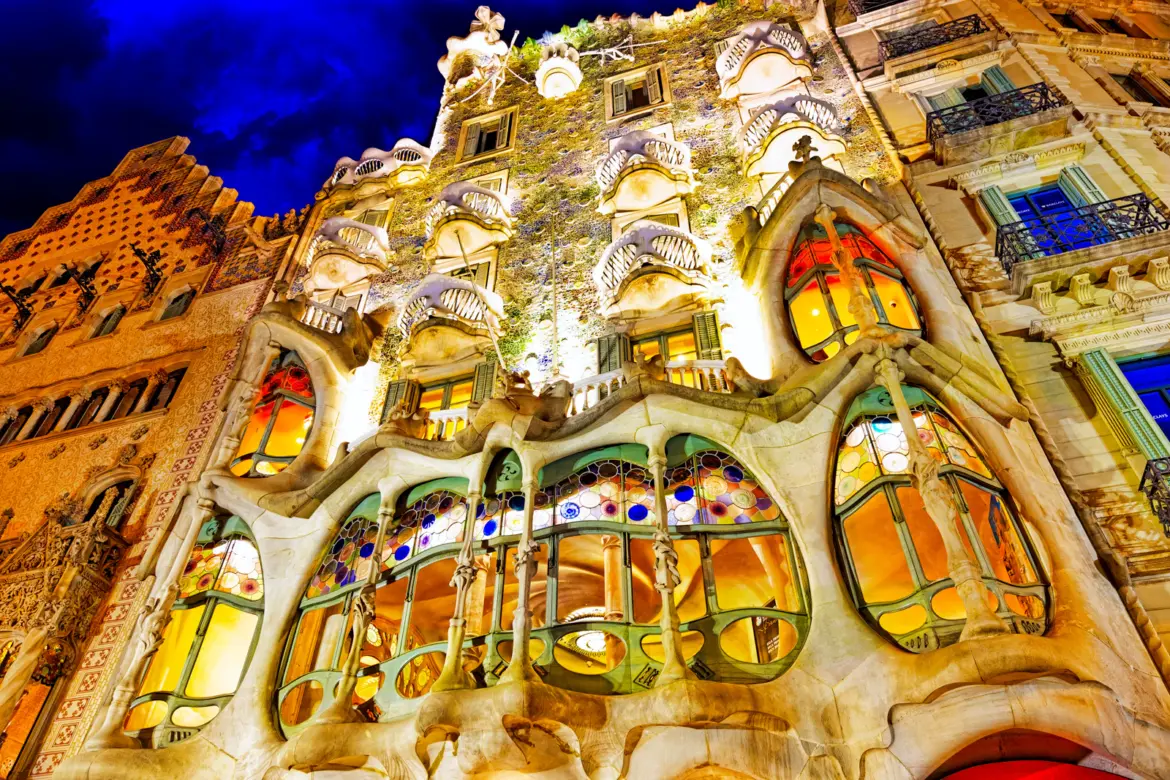
Hola, my friends! Barcelona isn’t just a destination, it’s a feeling! A mosaic of sun and sea, history and art, energy and ease. From Gaudí’s whimsical creations to the scent of salt drifting from Barceloneta Beach, every corner hums with color and life. I spent three unforgettable days exploring this radiant city – mornings wrapped in light, afternoons filled with art, and evenings that glowed with Mediterranean warmth. Whether you’re visiting for a long weekend or planning a romantic escape, this 72-hour itinerary captures the spirit of Barcelona: vibrant, soulful, and endlessly inspiring.
3 Days in Barcelona — At a Glance
📅 Day 1: Historic Heart — Gothic Quarter, Barcelona Cathedral + cloister geese, La Rambla, La Boqueria Market, Port Vell + Rambla de Mar bridge, Time Out Market Barcelona for sunset
🎨 Day 2: Gaudí’s Barcelona — Park Güell (early morning, book ahead), Passeig de Gràcia walk, Casa Batlló, Casa Milà (La Pedrera — consider the Night Experience), Magic Fountain of Montjuïc in the evening
🏖️ Day 3: Sea, Sky & Spirit — Montjuïc cable car, Montjuïc Castle, Jardí d’Aclimatació + AIDS Memorial, Barceloneta Beach + chiringuito lunch, W Barcelona Hotel sunset stroll
⏰ Best time to visit: April–June or September–October
🎫 Book in advance: Park Güell, Sagrada Família (if adding), Casa Batlló, La Pedrera Night Experience
🚇 Getting around: Metro + walking (compact city)
📸 Bring: Comfortable shoes, hat, water, light layers for evenings
Day 1: The Heart of the City – Gothic Quarter, Las Ramblas & Port Vell
Morning – Getting Lost in Time
Start your journey in the Gothic Quarter (Barri Gòtic), the medieval soul of Barcelona. Here, sunlight filters softly between narrow cobblestone alleys where centuries of stories linger. Balconies spill over with flowers, and the faint echo of footsteps blends with the distant strum of a guitar.
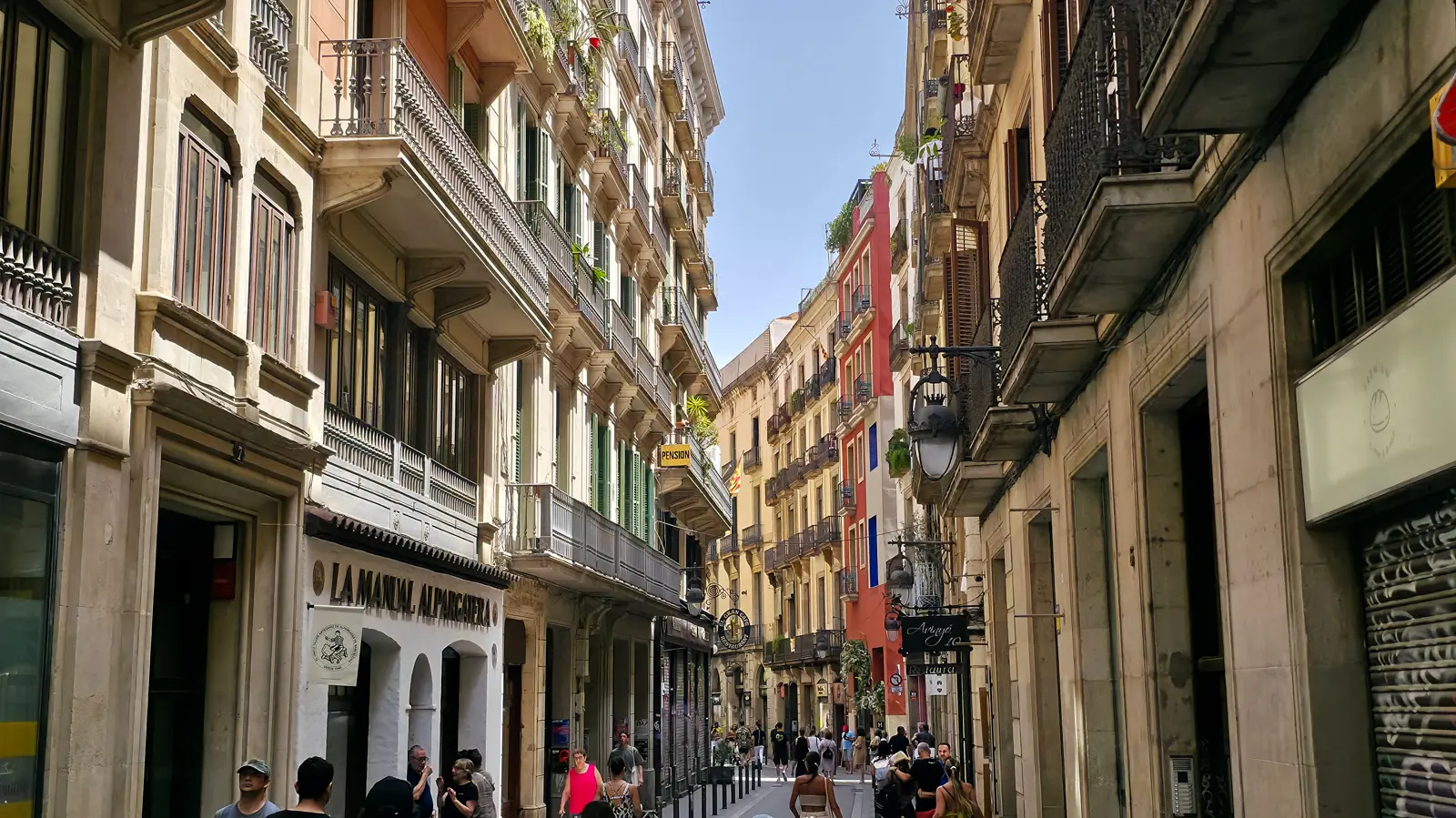
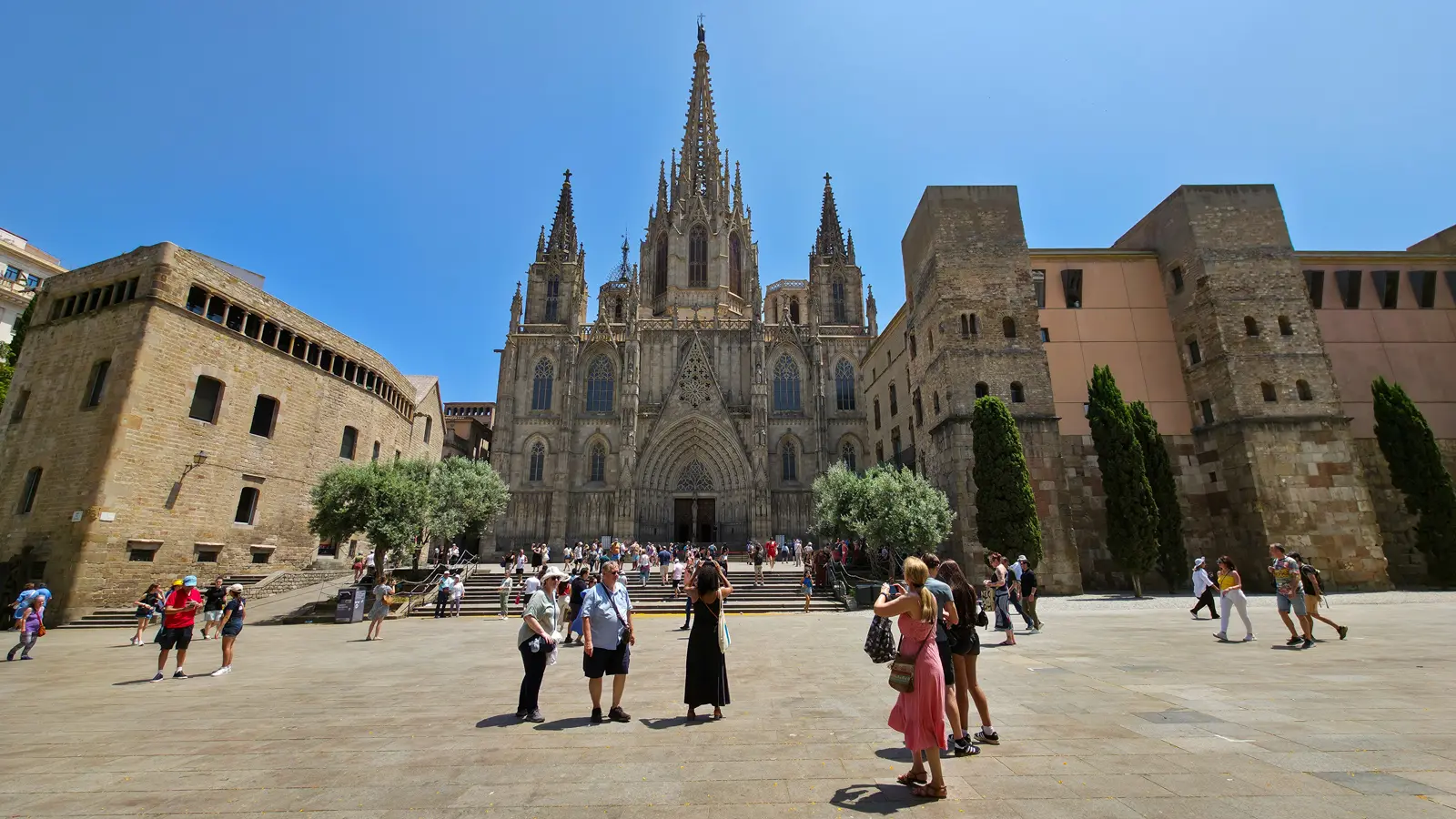
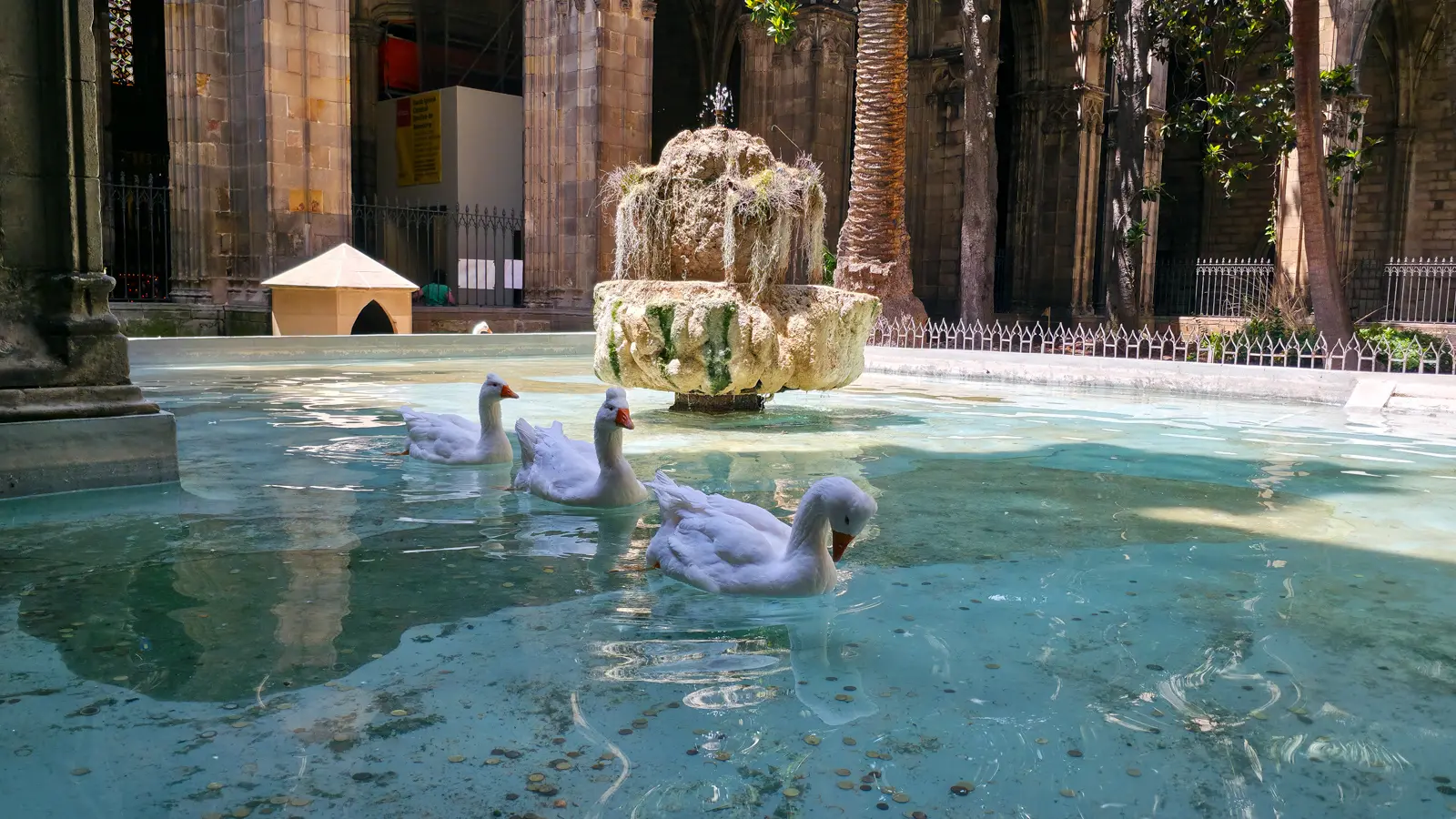
Stop at a café tucked inside a stone archway – maybe order a cortado and a buttery croissant – and watch the morning unfold. Visit the Barcelona Cathedral, its intricate spires reaching toward the sky, and take a quiet moment in the cloister, where palm trees rise beside a pool of geese.
Wander without a map. Each turn brings new surprises: a hidden courtyard, a shop selling hand-painted tiles, or a craftsman carving leather belts in the open doorway. That’s the magic of the Gothic Quarter, it invites you to slow down and simply be.
Afternoon – The City’s Pulse
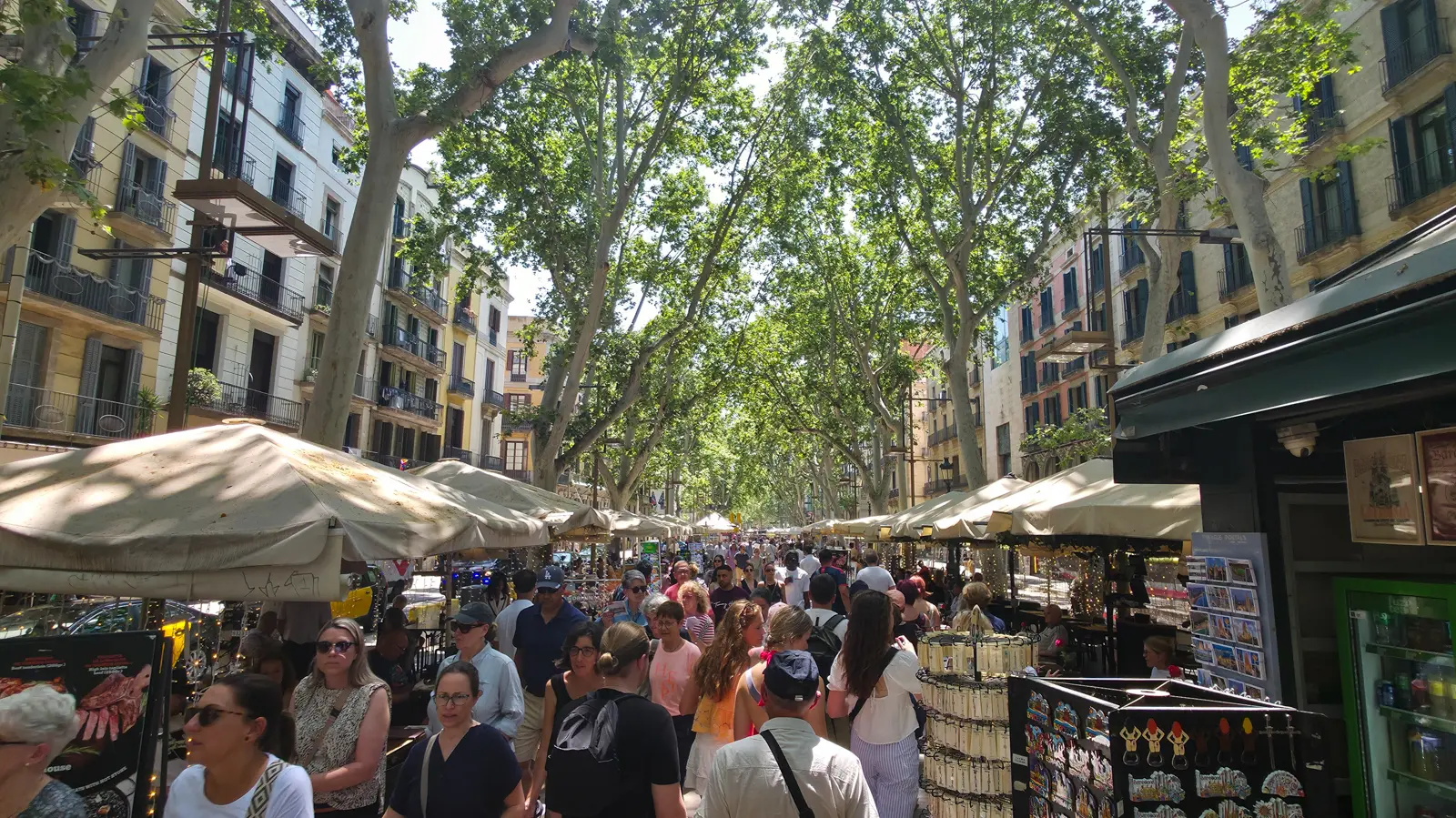
Step out into the sunlight of La Rambla, Barcelona’s famous boulevard where the rhythm quickens. Street performers, flower stalls, and the smell of roasted chestnuts fill the air. It’s crowded, yes, but alive in the best possible way.
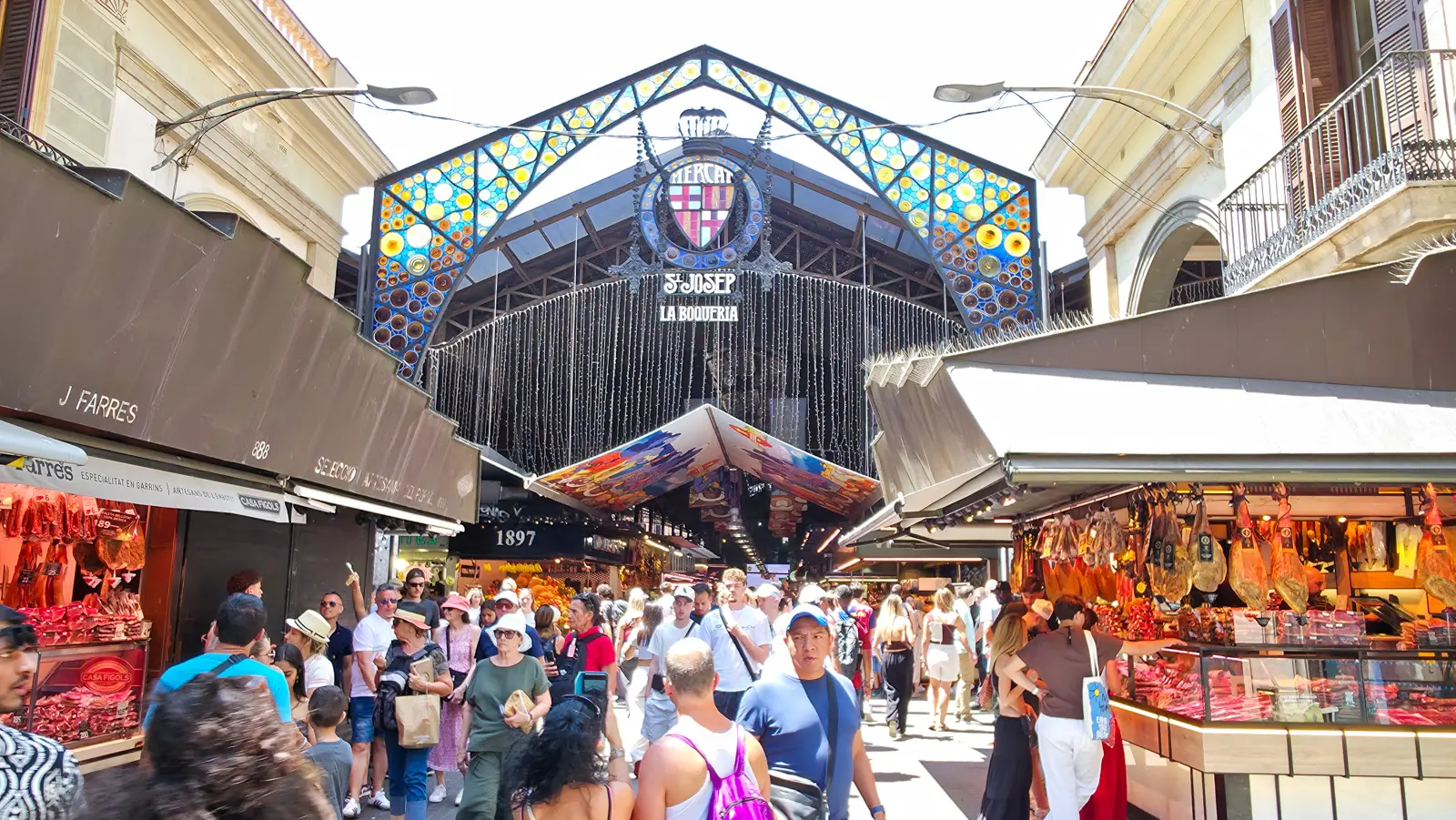
Midway down, stop at La Boqueria Market, a kaleidoscope of color and sound. Rows of vibrant fruit juices glisten like jewels, fishmongers call out the catch of the day, and the scent of jamón ibérico mingles with freshly baked empanadas. Grab a fruit cup or a cone of ham and stroll through the aisles, soaking in the buzz of local life.
Evening – Port Vell & Maremagnum
As the afternoon light turns golden, follow the boulevard toward Port Vell, where the city meets the sea. Cross the Rambla de Mar, a curved wooden bridge that sways gently with each step, and you’ll find yourself surrounded by water, yachts, and reflection.
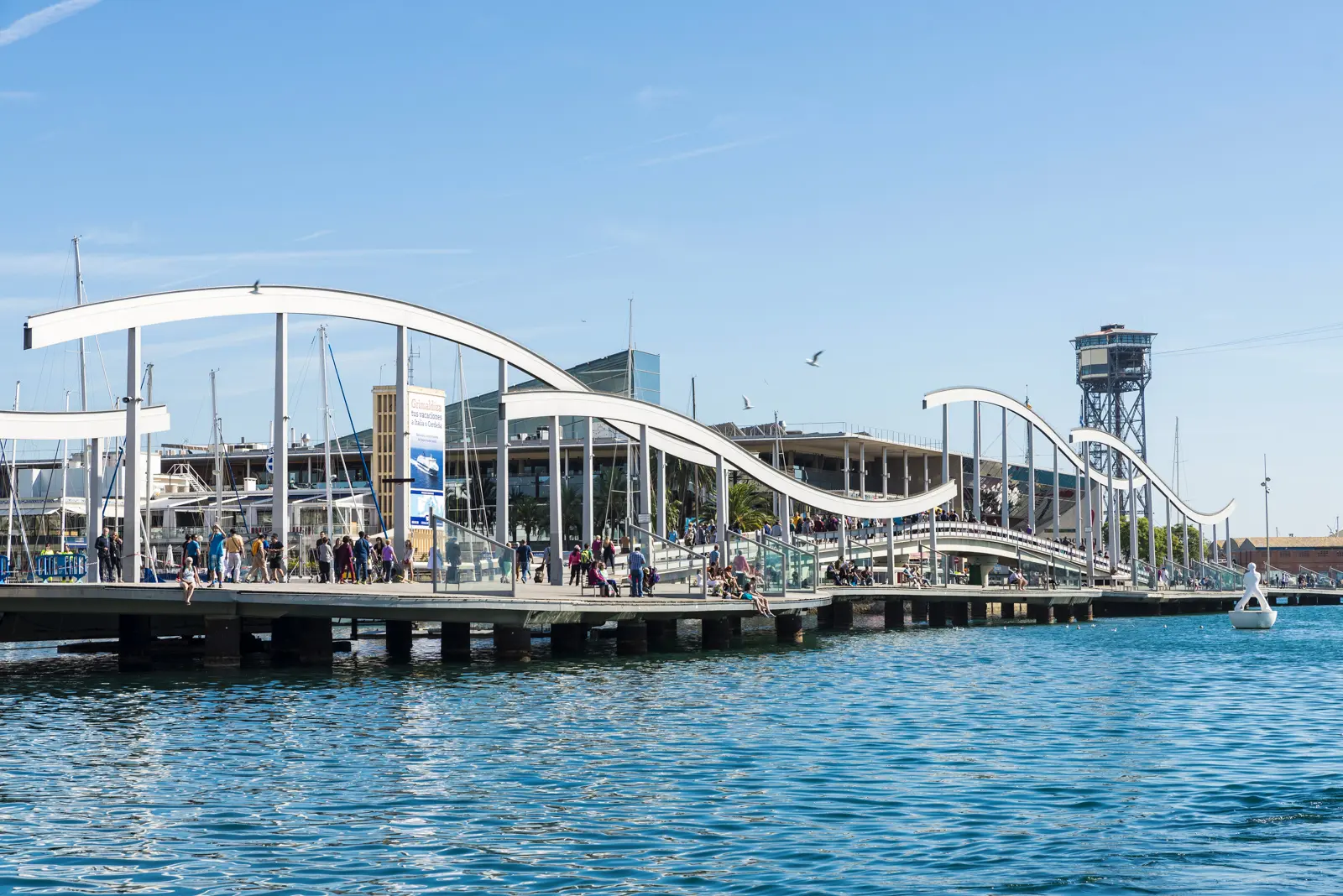
At the edge of the marina stands Maremagnum, a modern glass complex shimmering under the sun. Ride the escalator to the top and step into Time Out Market Barcelona, a curated food hall that gathers some of the city’s best chefs under one roof. I ordered a pizza from La Balmesina – thin, crispy, perfectly blistered – and paired it with a chilled Estrella beer.
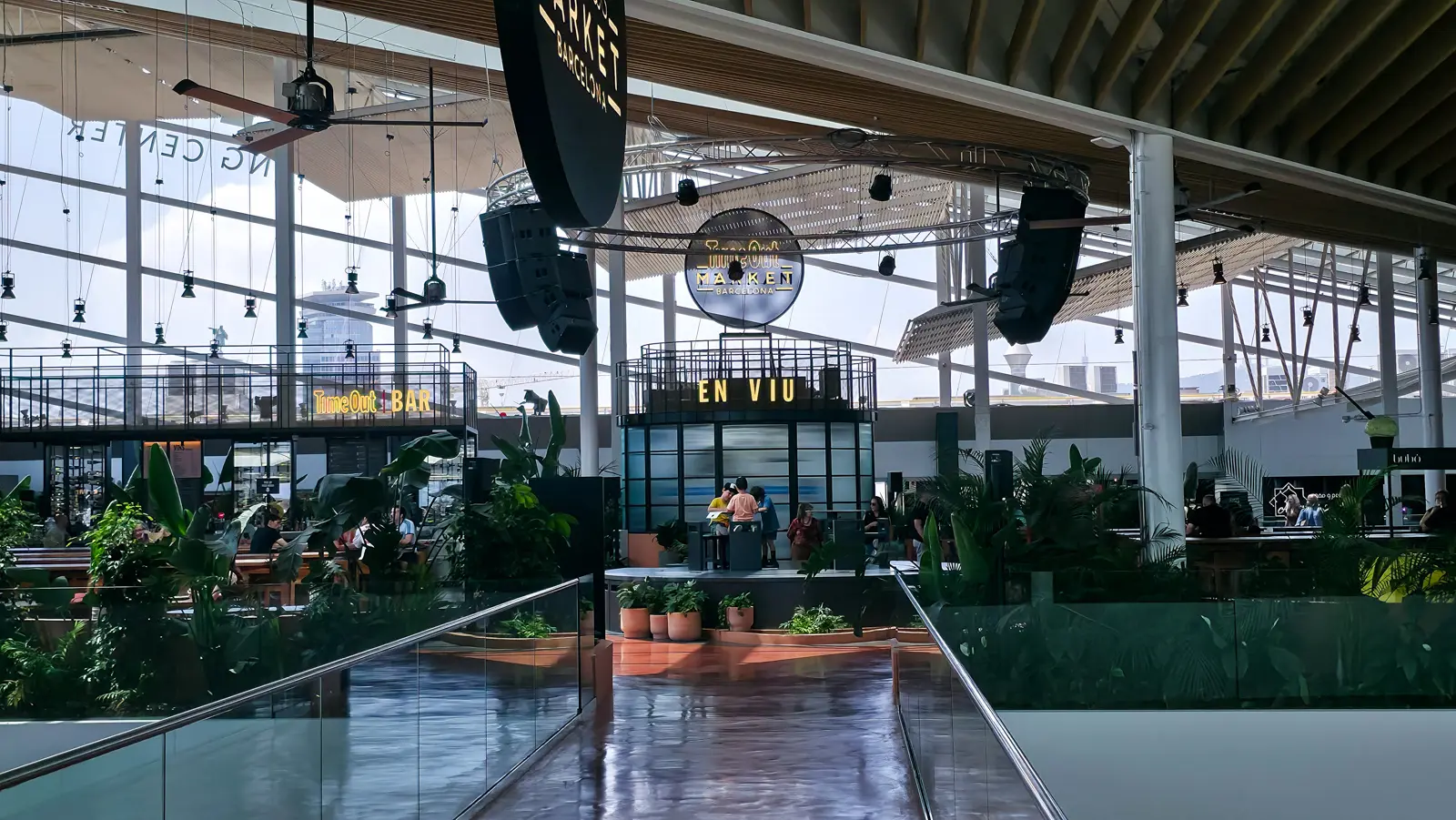
From the terrace, the view of Port Vell unfolds like a painting: the soft ripple of waves, the hum of conversation, and the warm afternoon light dancing on the water. It’s one of those moments you don’t rush, you simply breathe it in!
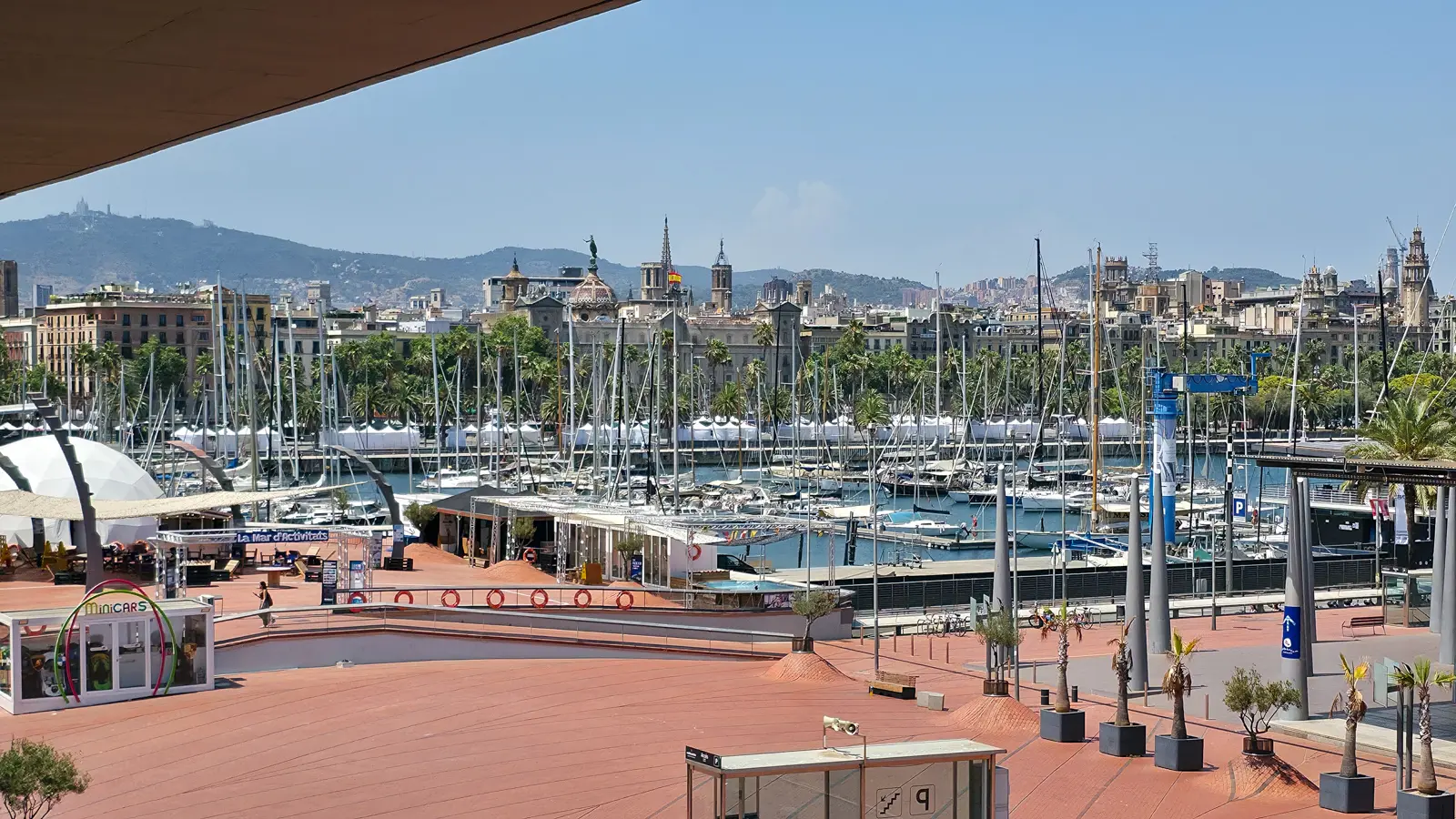
Bubbly Tip: Visit Port Vell around 5-6 p.m., the light is spectacular, and you’ll catch the marina at its most serene.
Day 2: The Art of Gaudí – Park Güell, Casa Batlló & La Pedrera
Morning – Park Güell’s Mosaic Dreamscape
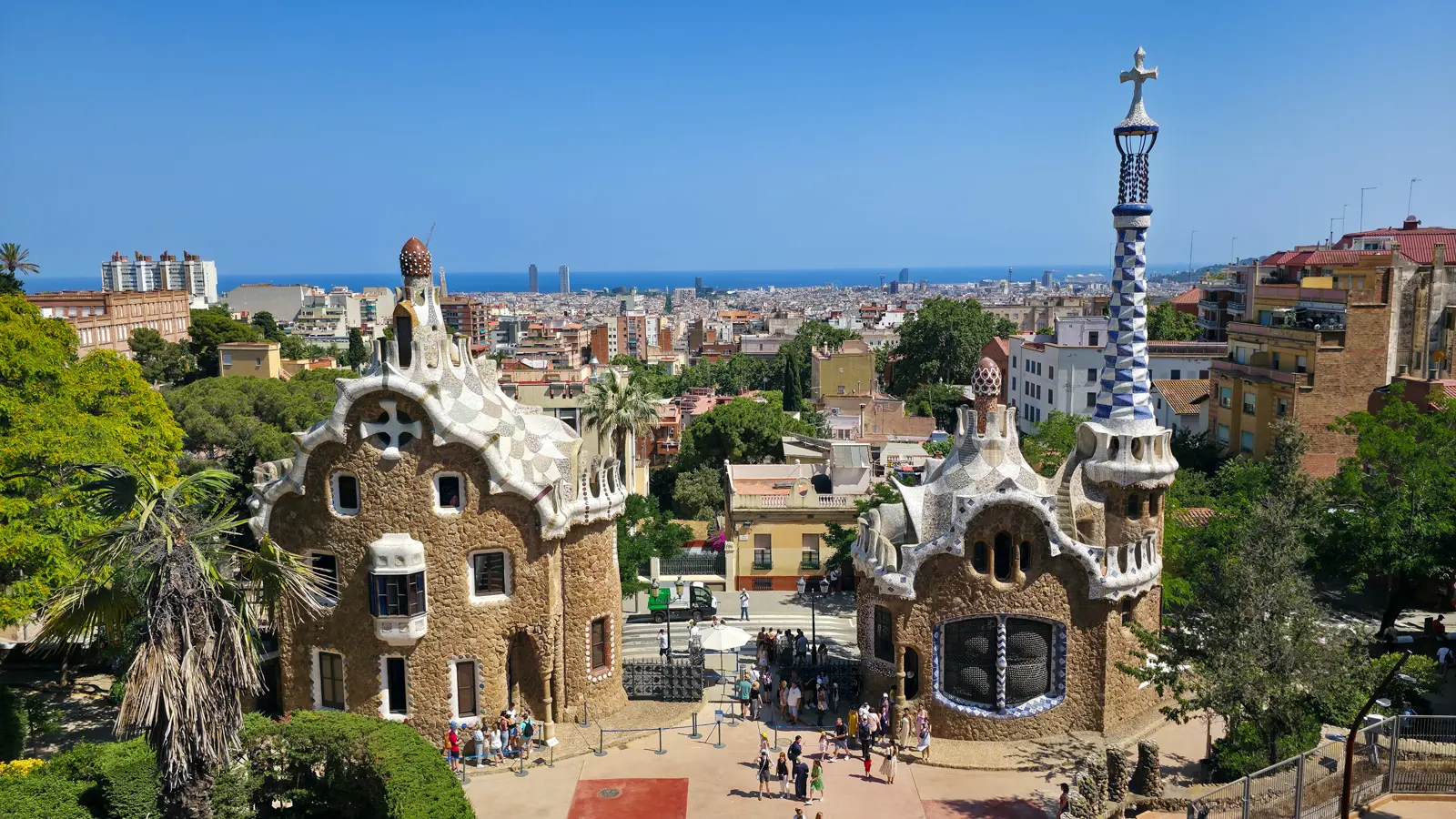
Begin your day in Park Güell, where Gaudí’s imagination takes physical form. Climb gently through pathways lined with Mediterranean pines until the first flash of color appears – the mosaic dragon, gleaming in sunlight.
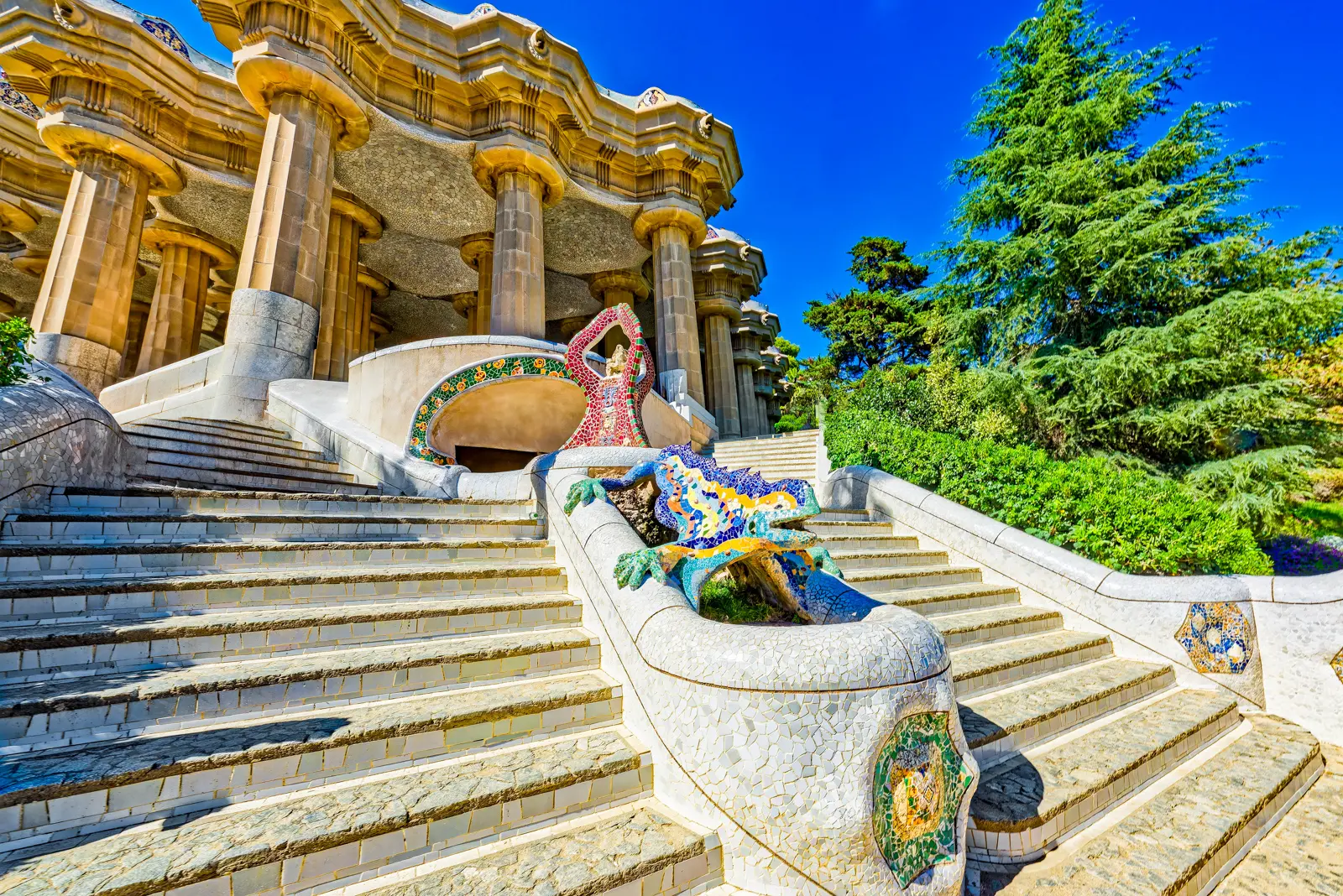
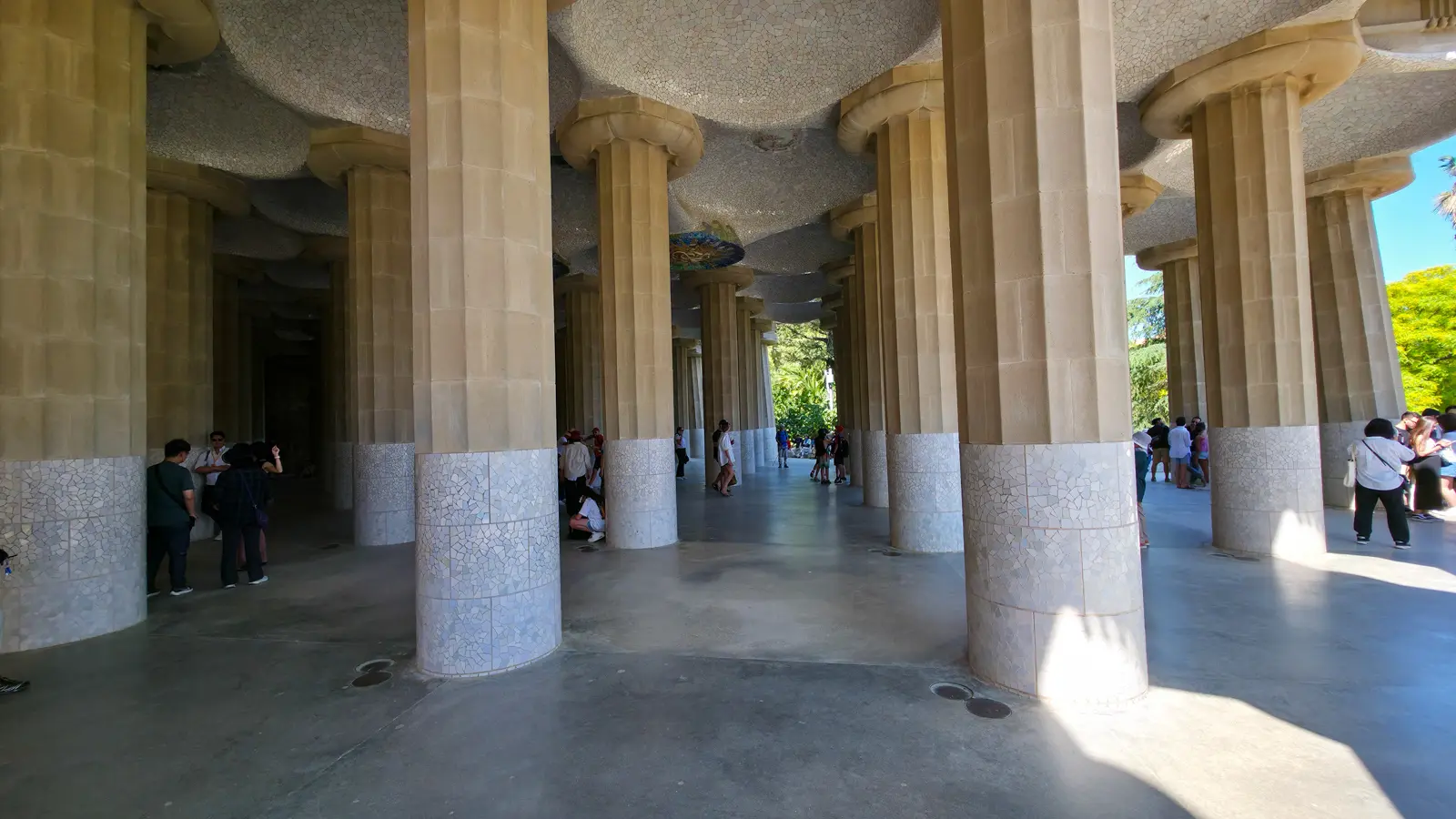
The park feels alive: lizards basking on sun-warmed stone, the scent of rosemary and thyme, and the faint hum of musicians playing guitars beneath tiled archways. Inside the Hypostyle Room, 86 columns rise like a marble forest, their surfaces glittering with tiny fragments of glass and ceramic.
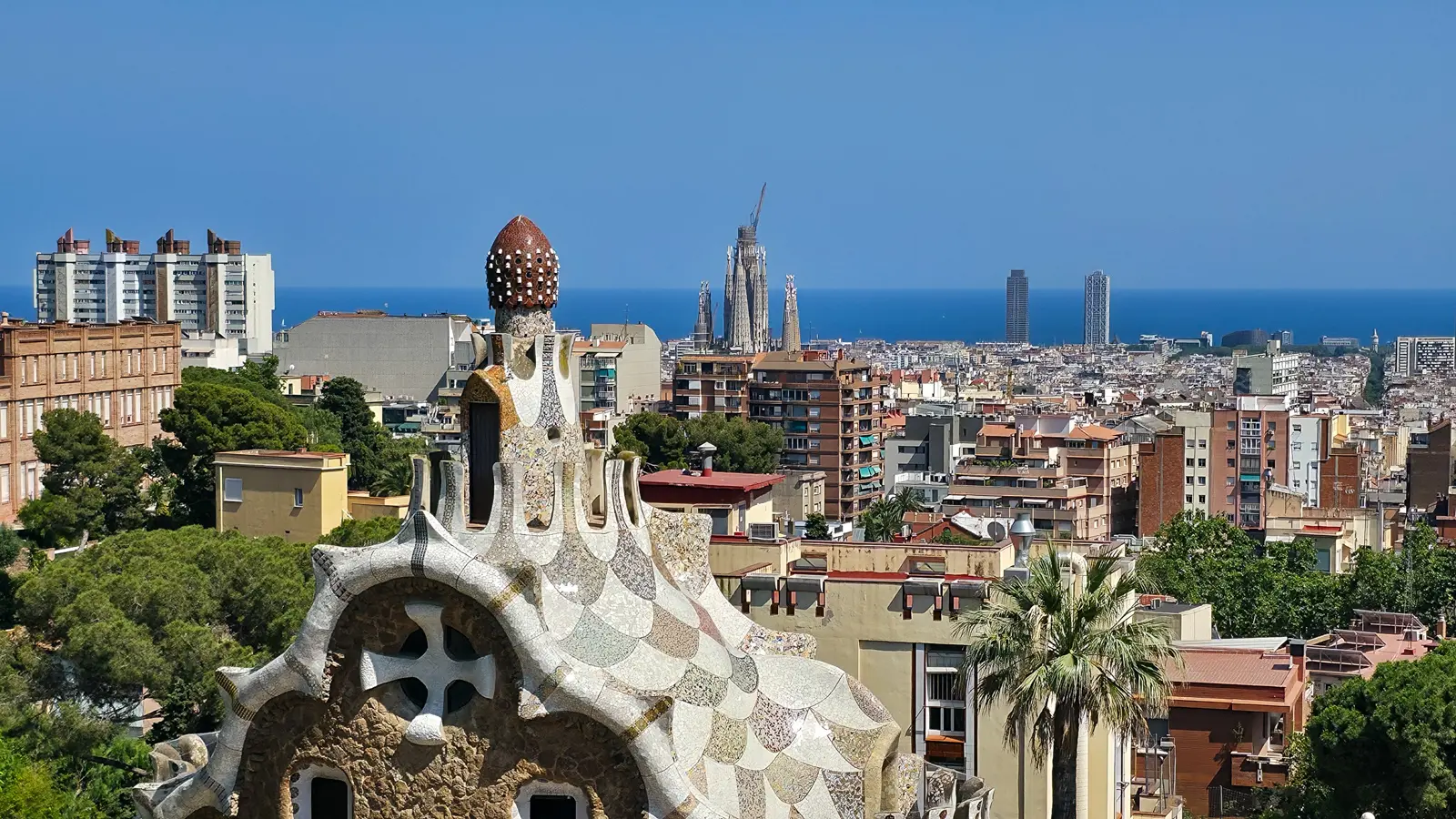
From the terrace, the whole city spreads before you – rooftops, the blue shimmer of the Mediterranean, and the distant spires of La Sagrada Família piercing the skyline.
Bubbly Tip: Arrive early to avoid the midday crowds and heat. Bring water and take your time, every corner of the park hides a detail worth noticing.
Afternoon – Passeig de Gràcia & Gaudí’s Urban Elegance
From nature’s whimsy to urban grandeur: Passeig de Gràcia awaits. Barcelona’s most elegant avenue is lined with designer boutiques, chic cafés, and two of Gaudí’s most celebrated buildings.
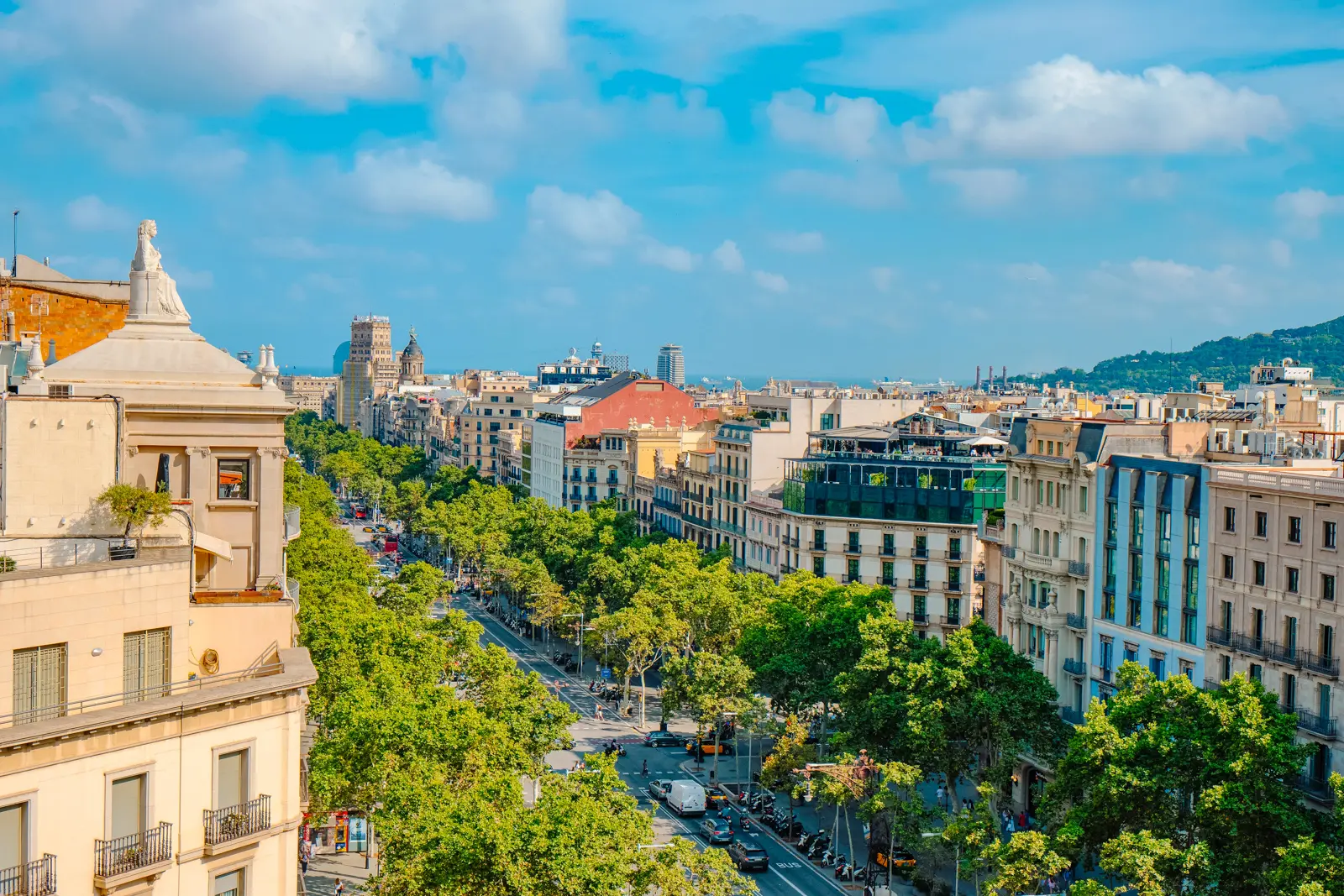
At Casa Batlló, the façade shimmers like fish scales – blues, greens, and golds that seem to shift as clouds pass. Inside, light floods through stained-glass windows, and the staircase curls upward like a spine. Every curve feels organic, every color deliberate.
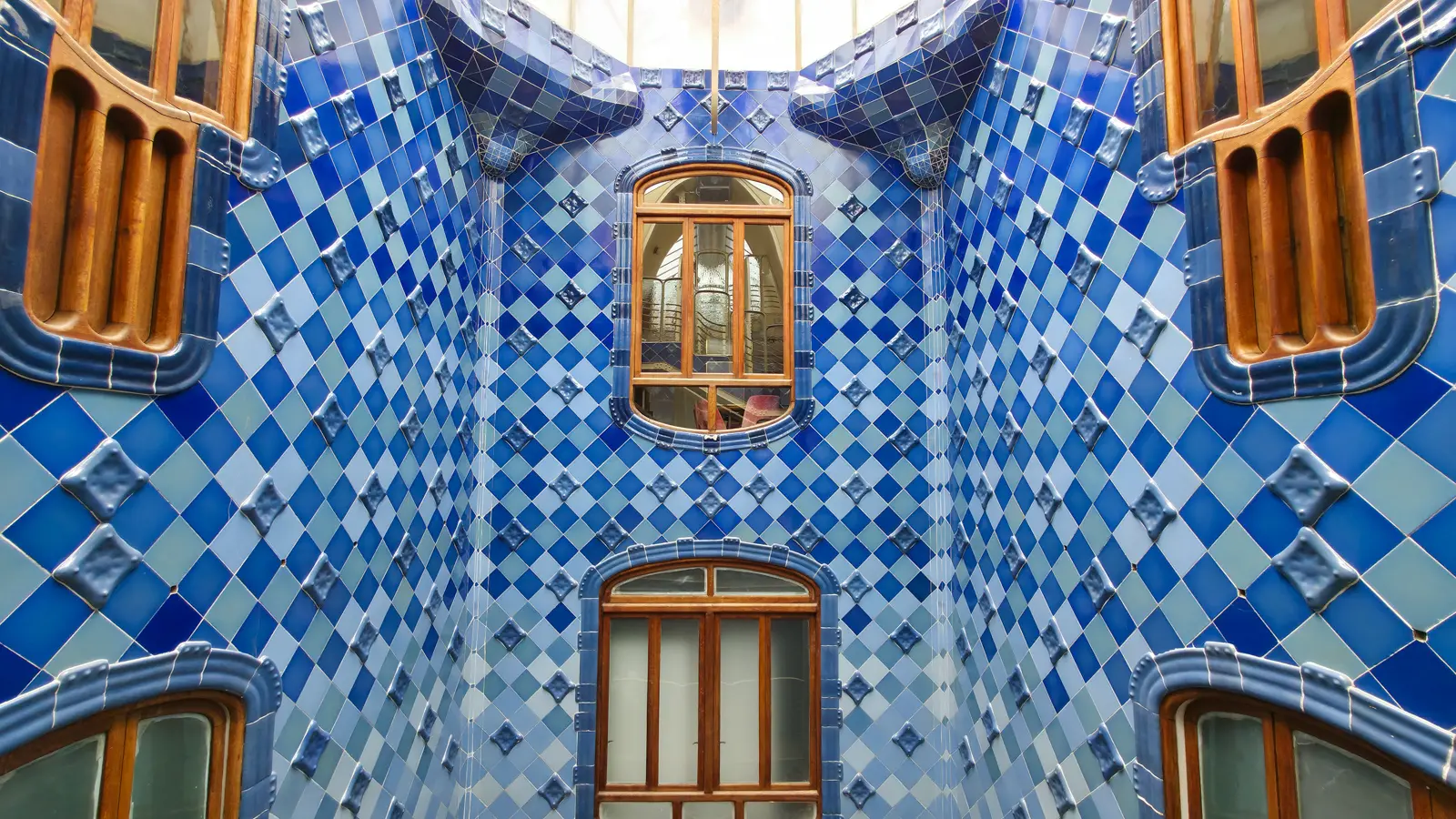
A few blocks away stands Casa Milà (La Pedrera), an undulating masterpiece of stone and wrought iron. On its rooftop, surreal chimneys rise like sentinels, offering panoramic views of the city. The wind brushes your face, and the sound of the traffic below becomes distant, almost musical.
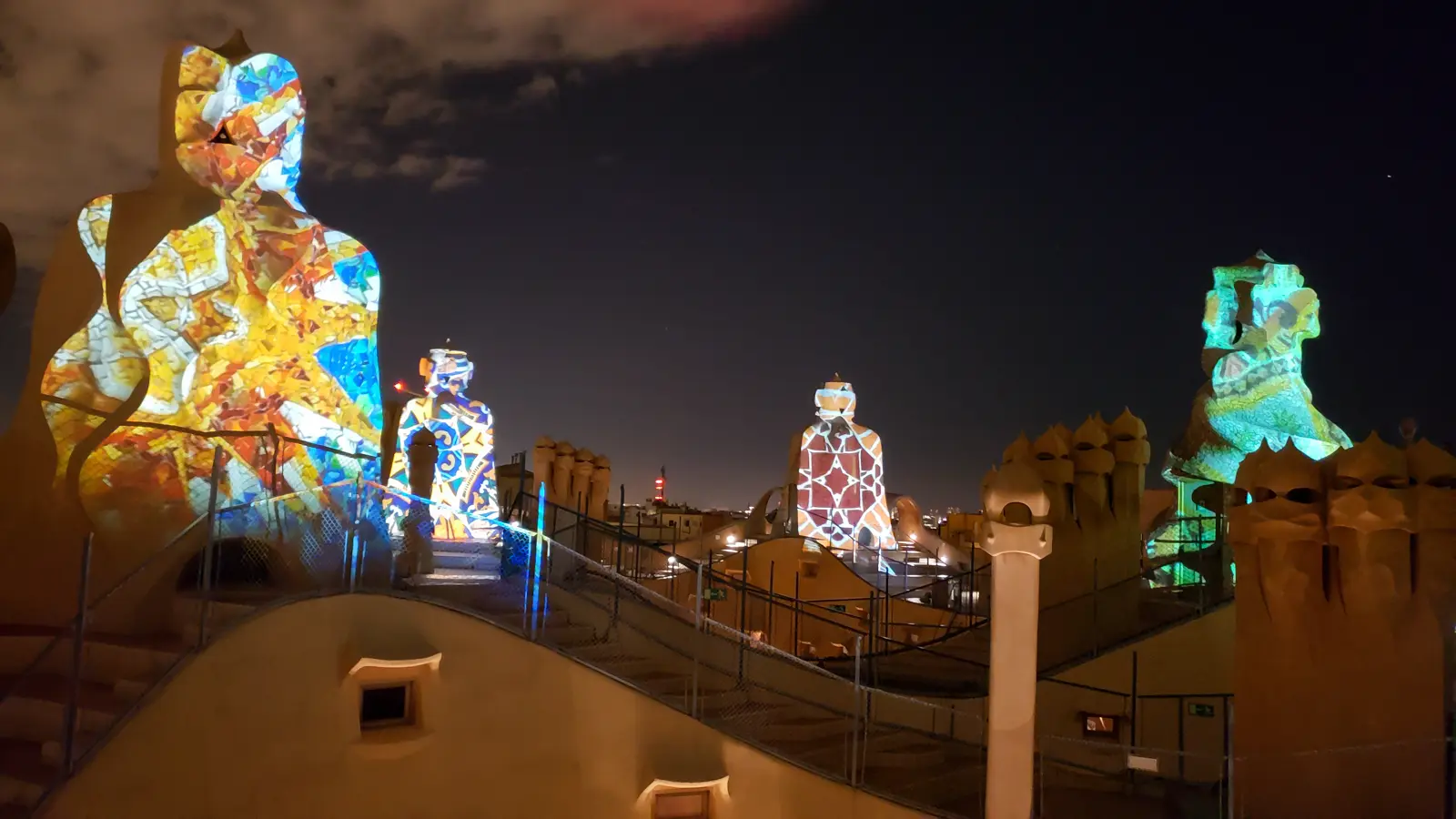
Bubbly Tip: If you can, visit Casa Milà near dusk, the city glows amber, and Gaudí’s curves catch the fading light beautifully.
Evening – The Magic Fountain of Montjuïc
As twilight settles, head to Montjuïc for the Magic Fountain Show. Built for the 1929 International Exposition, it still feels timeless – a choreography of water, light, and music that fills the night with wonder. Crowds gather on the museum steps as fountains leap into the air, turning from gold to pink to deep blue in rhythm with symphonic melodies. Children cheer, couples hold hands, and for a few minutes, everyone is united in pure joy.
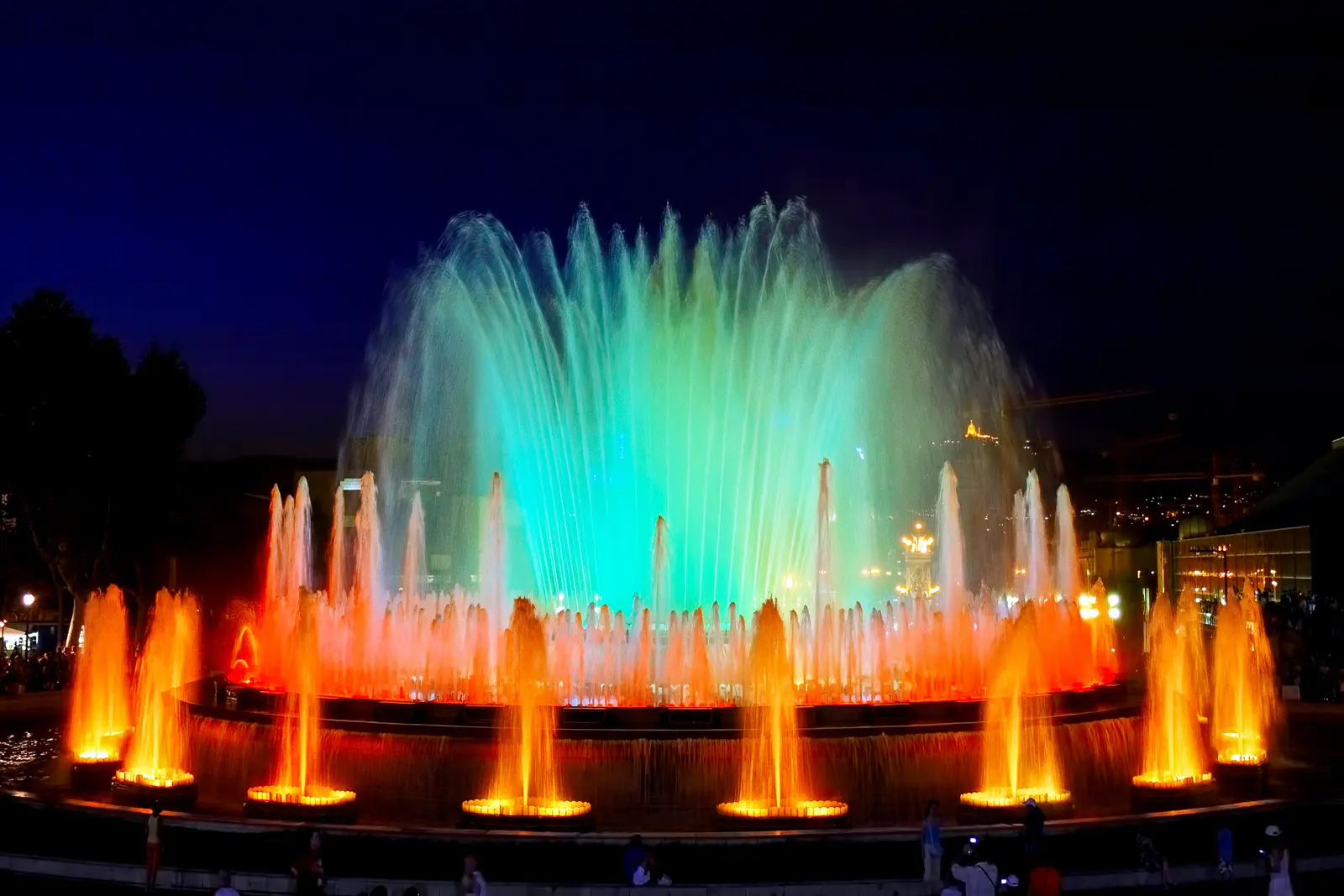
Bubbly Tip: Check the current schedule (it changes seasonally). Bring a light jacket and stay after the show, the view of the city at night is breathtaking!
Day 3: Sea, Sky & Spirit – Montjuïc & Barceloneta
Morning – Montjuïc’s Views & Gardens
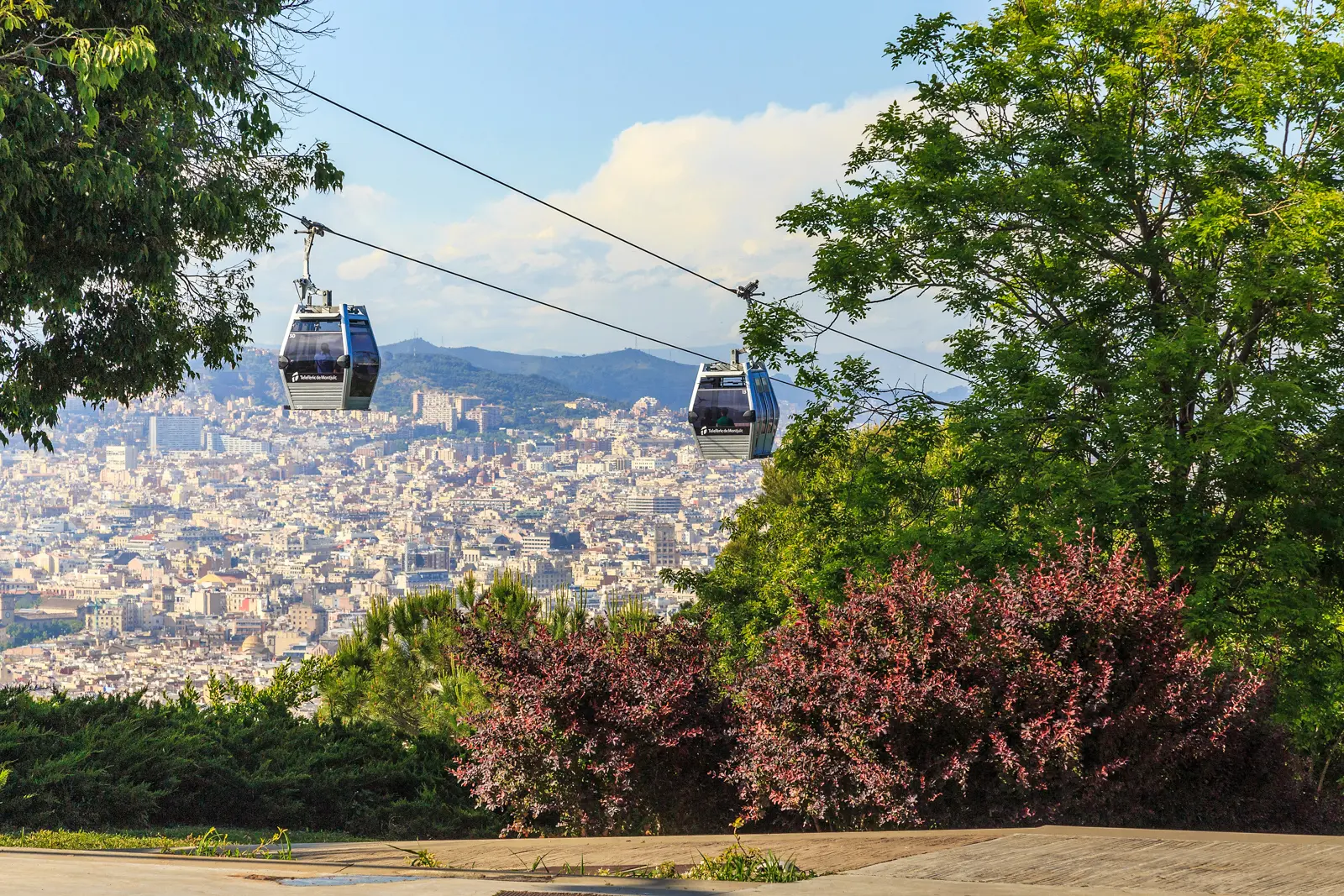
Start with the Montjuïc Cable Car, gliding above the harbor as Barcelona unfolds below – terracotta rooftops, the shimmer of the sea, and the distant curve of the W Hotel on the horizon. At the top, explore Montjuïc Castle, a 17th-century fortress surrounded by gardens and lookout points.
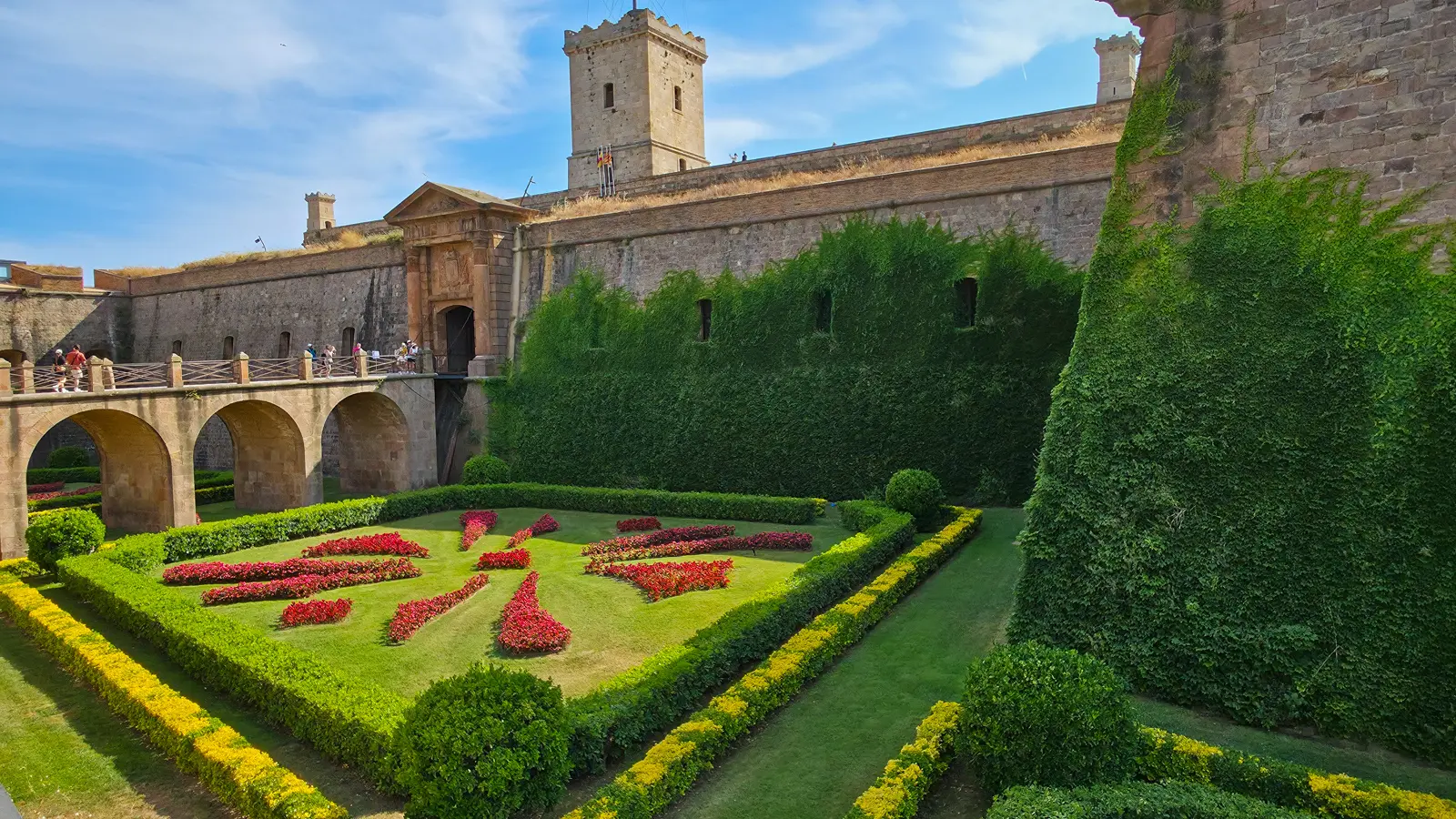
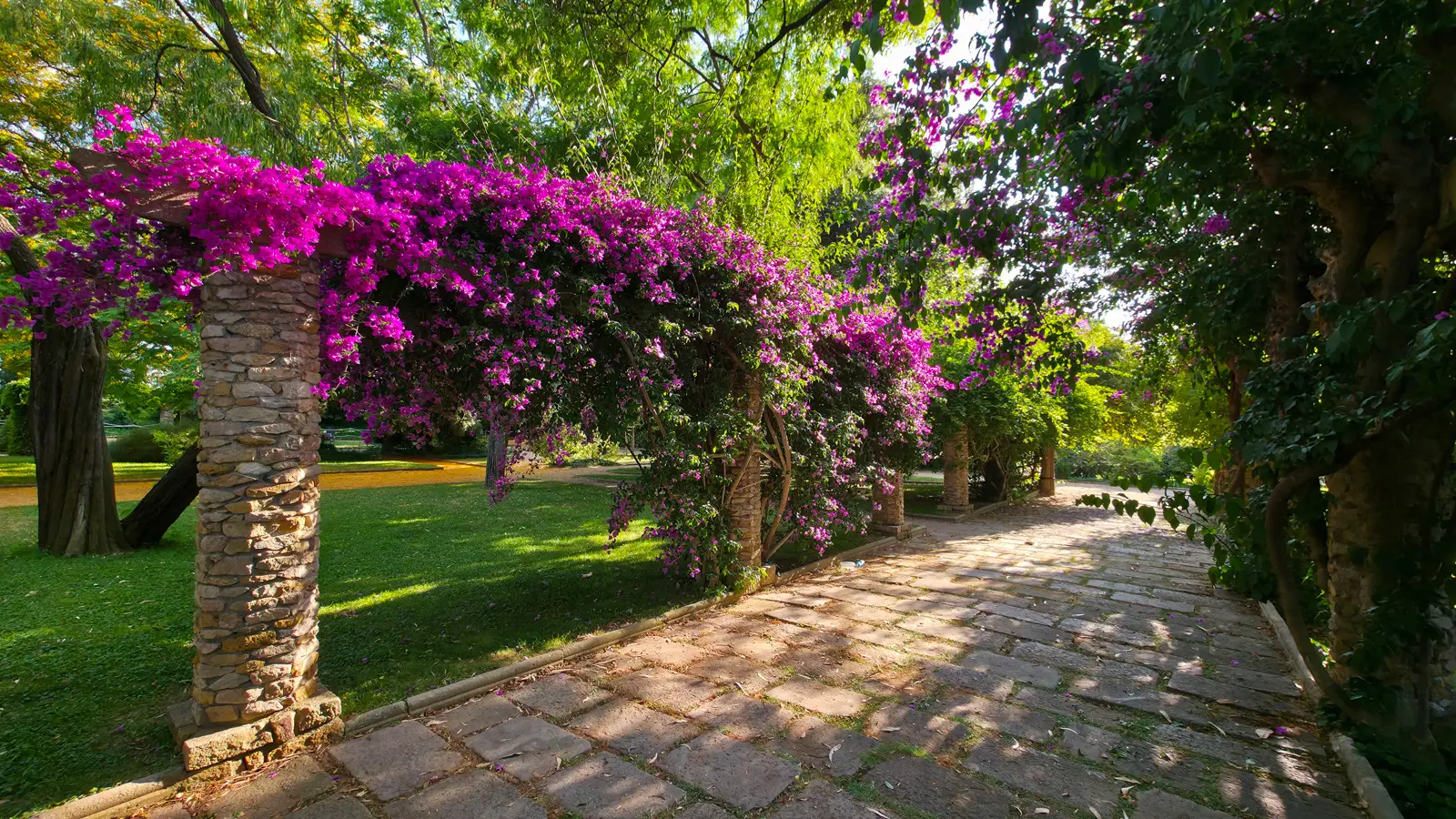
Afterwards, walk through the Jardí d’Aclimatació de Montjuïc, a tranquil garden filled with palms, hibiscus, and flowering shrubs – one of the hill’s quietest corners. Hidden among its winding paths is the AIDS Memorial, inaugurated in 2003 as a space for remembrance and reflection.
Bubbly Tip: Bring a hat and water. It’s sunny up here, and every view deserves a lingering gaze.
Afternoon – Barceloneta’s Sun & Sea
Descend to Barceloneta, the city’s seaside playground. The energy shifts the moment you step onto the promenade – laughter, rollerbladers, the beat of beach music, and the rhythm of waves.
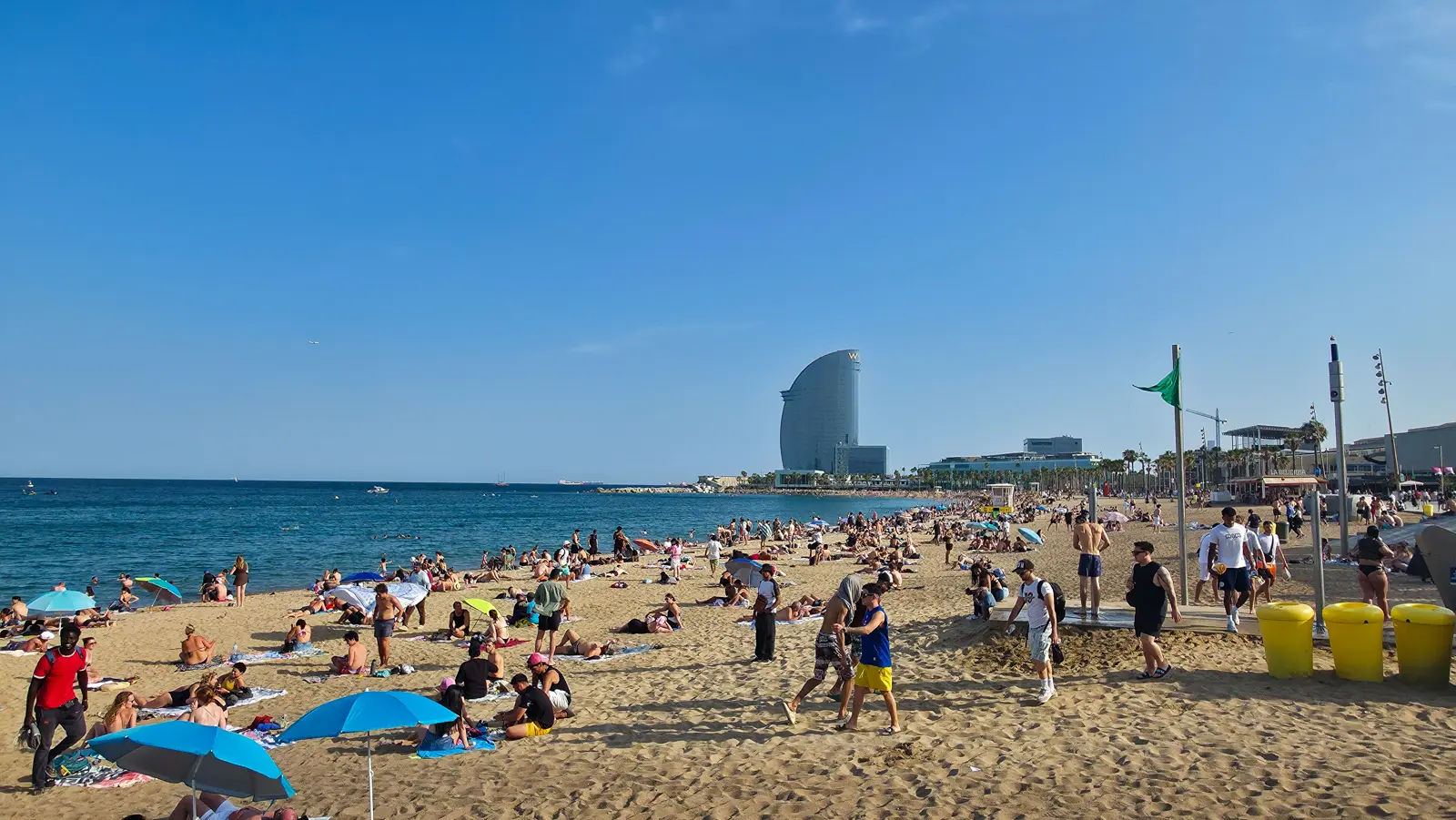
Find a terrace overlooking the sand and order fresh seafood or tapas – perhaps grilled prawns, patatas bravas, and a glass of sangría. The air smells of salt and sunscreen, and the sunlight sparkles on every surface.
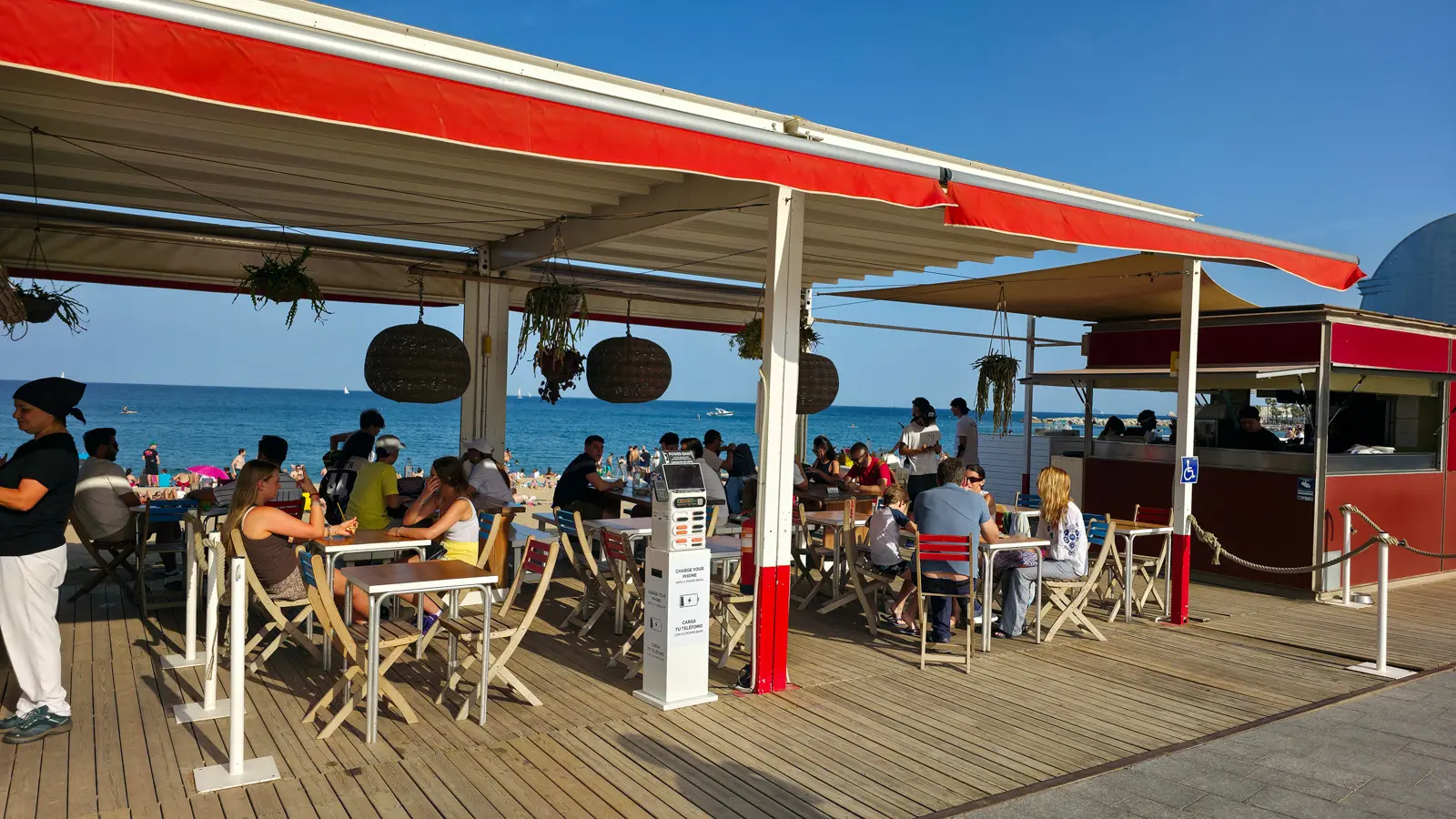
After lunch, kick off your shoes and walk barefoot along the shoreline. The Mediterranean laps softly at your feet, and the hum of the city fades behind you.
Evening – A Farewell by the Sea
As your last day draws to a close, stroll toward the W Barcelona Hotel, that sail-shaped silhouette at the edge of the water. The late afternoon light reflects off its glass façade, painting the sea in gold and rose. Sit by the breakwater, the sound of the waves mingling with distant laughter. It’s a quiet, golden kind of peace, the perfect Barcelona goodbye!
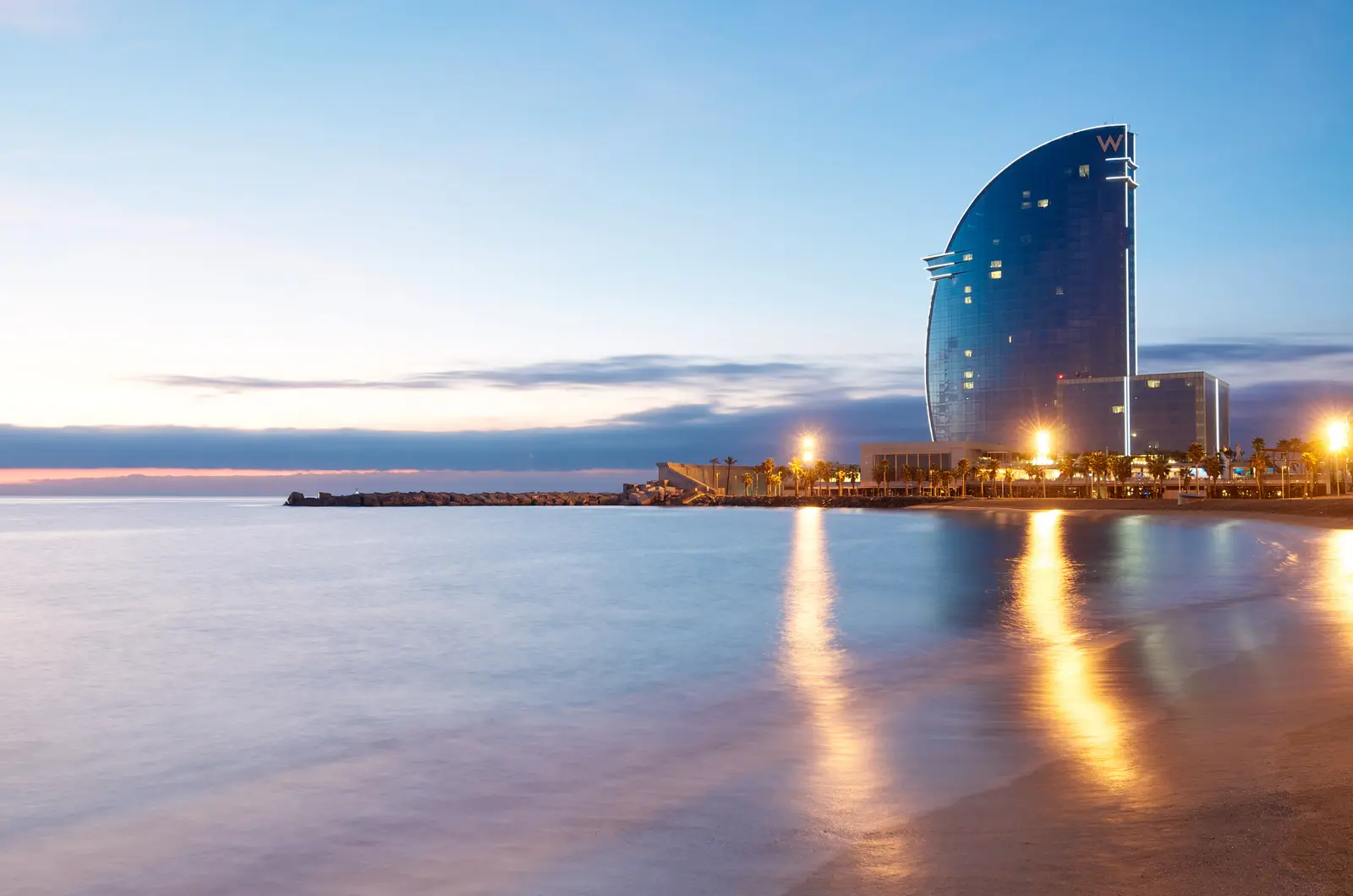
Bubbly Tip: Stay until twilight. When the city lights begin to shimmer across the bay, it feels like Barcelona is whispering one last “see you soon.”
Practical Tips
- Best time to visit: April-June or September-October for warm weather and fewer crowds.
- Getting around: Metro and walking are best. The city is compact and pedestrian friendly.
- Tickets: Reserve Sagrada Família and Park Güell in advance, both often sell out.
- Photo tip: For sweeping views, head to the Montjuïc viewpoints.
- Pace yourself: Barcelona isn’t meant to be rushed, let the city’s rhythm guide you!
Final Thoughts
Three days in Barcelona are enough to fall completely under its spell. You’ll marvel at Gaudí’s impossible creations, wander centuries-old streets, and feel the pulse of the Mediterranean in every moment.
What stays with you most isn’t just what you see, it’s what you feel: the sunlight on your skin, the taste of sangría on a terrace, the sound of waves mingling with laughter.
Barcelona doesn’t ask you to do much. It just asks you to look, listen, and feel alive!
What would you do first: explore Gaudí’s art, wander the Gothic alleys, or dip your toes in the sea? Share your Barcelona moment below, I’d love to hear your story!

🌟 Everything You Need to Plan Your Dream Trip in 2026
- 🌟 Luxury Hotels - Find premium stays with Booking.com & Hotels.com
- 🏡 Vacation Rentals - Discover unique properties on VRBO
- 🏞️ Guided Tours - Explore with Viator or GetYourGuide
- 🎫 Attraction Tickets - Skip the lines with Tiqets
- 🚢 Ocean Cruises - Set sail with Cruise Direct
- 📱 International SIMs - Stay connected with Saily
- 🚗 Car Rentals - Budget-friendly options from Discover Cars
- 🌐 Secure VPNs - Browse safely with NordVPN
- 💶 Currency Exchange - Best rates with Wise
- 🗣️ Learn Languages - Master the local language with Babbel and Rosetta Stone