
There are places in a city that invite you to pause, and then there are places that quietly redefine how you experience it. Mirabell Gardens in Salzburg is one of those spaces – not simply a garden, but a carefully composed environment where architecture, nature, and perspective come together in a way that feels both deliberate and effortless. From the moment you step into the gardens, there is a subtle shift in rhythm, as though the pace of the city softens and your attention begins to settle on the details.
What makes Mirabell Gardens so captivating is not just its beauty, but its structure. Every pathway, every sculptural element, and every alignment seems intentional, guiding your movement while allowing space for stillness. It is a place that reveals itself gradually, not through grand gestures, but through balance, proportion, and the quiet relationship between what is seen and what is felt.
Mirabell Gardens at a Glance
🌼 What · Salzburg’s Baroque Mirabell Gardens, laid out in 1687 by Fischer von Erlach. Opened to the public in 1854.
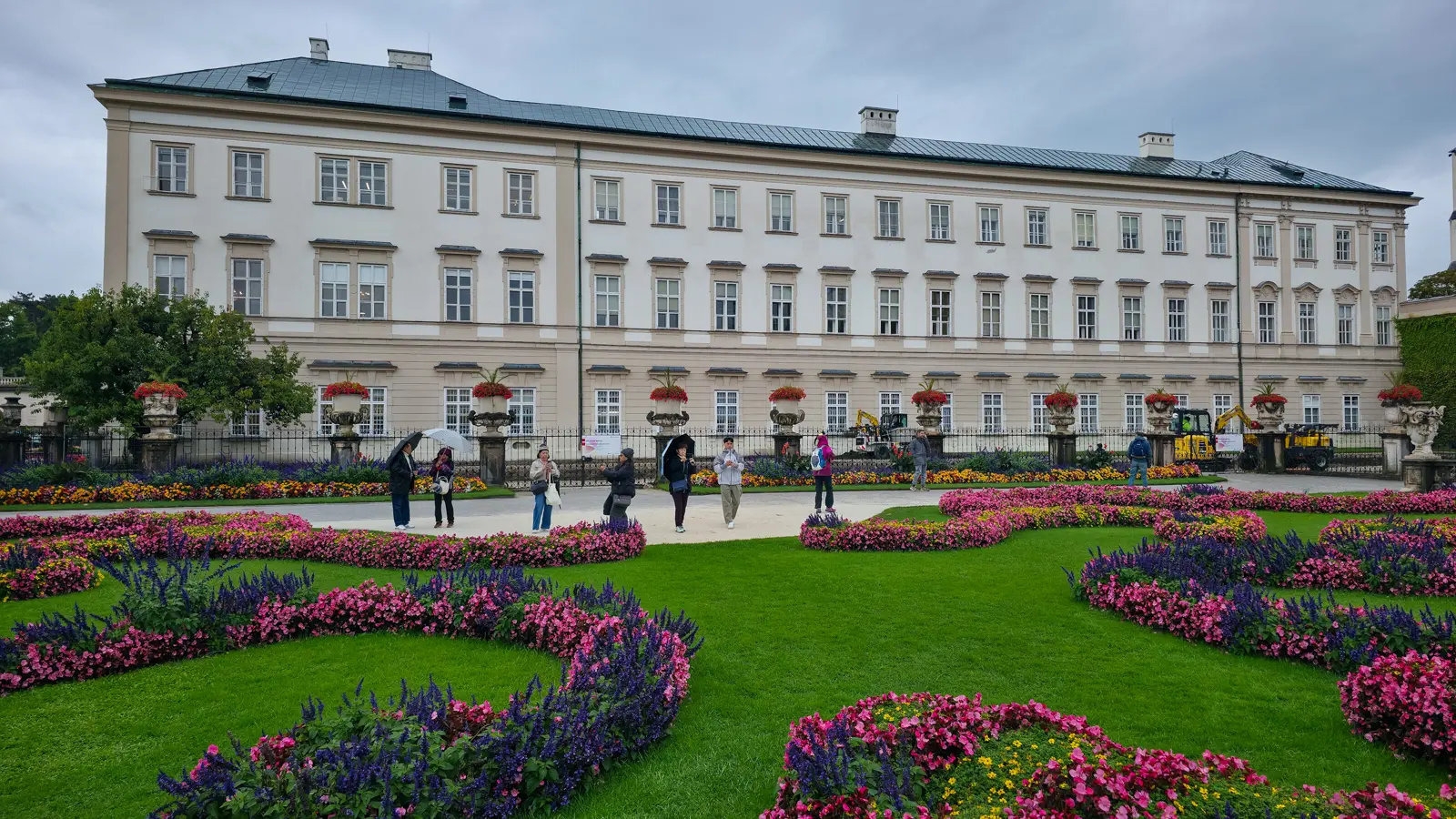
🏛️ Mirabell Palace · Commissioned 1606, rebuilt 1721–1727 by Johann Lukas von Hildebrandt. Now home to the mayor’s offices and the Marble Hall.
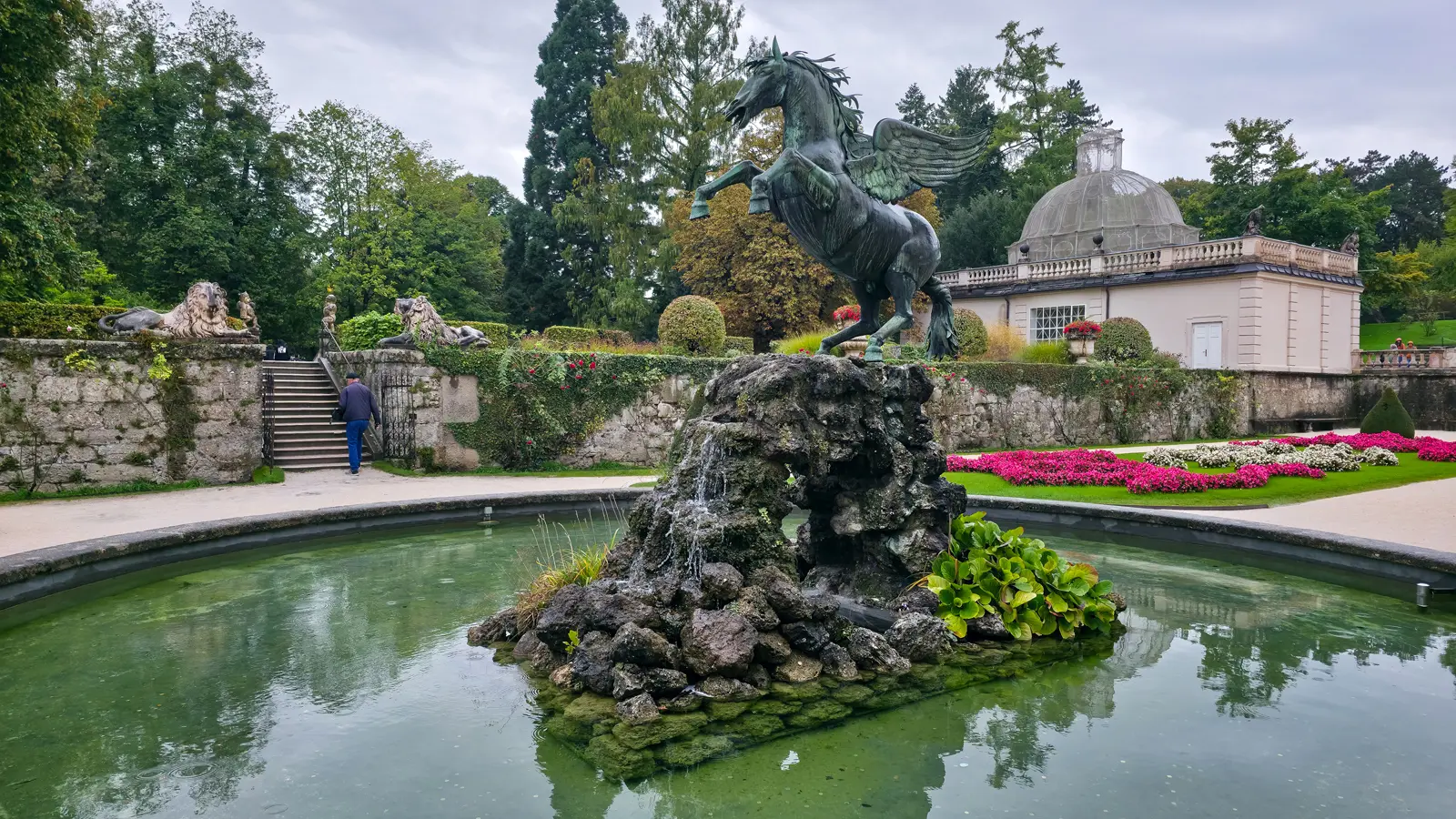
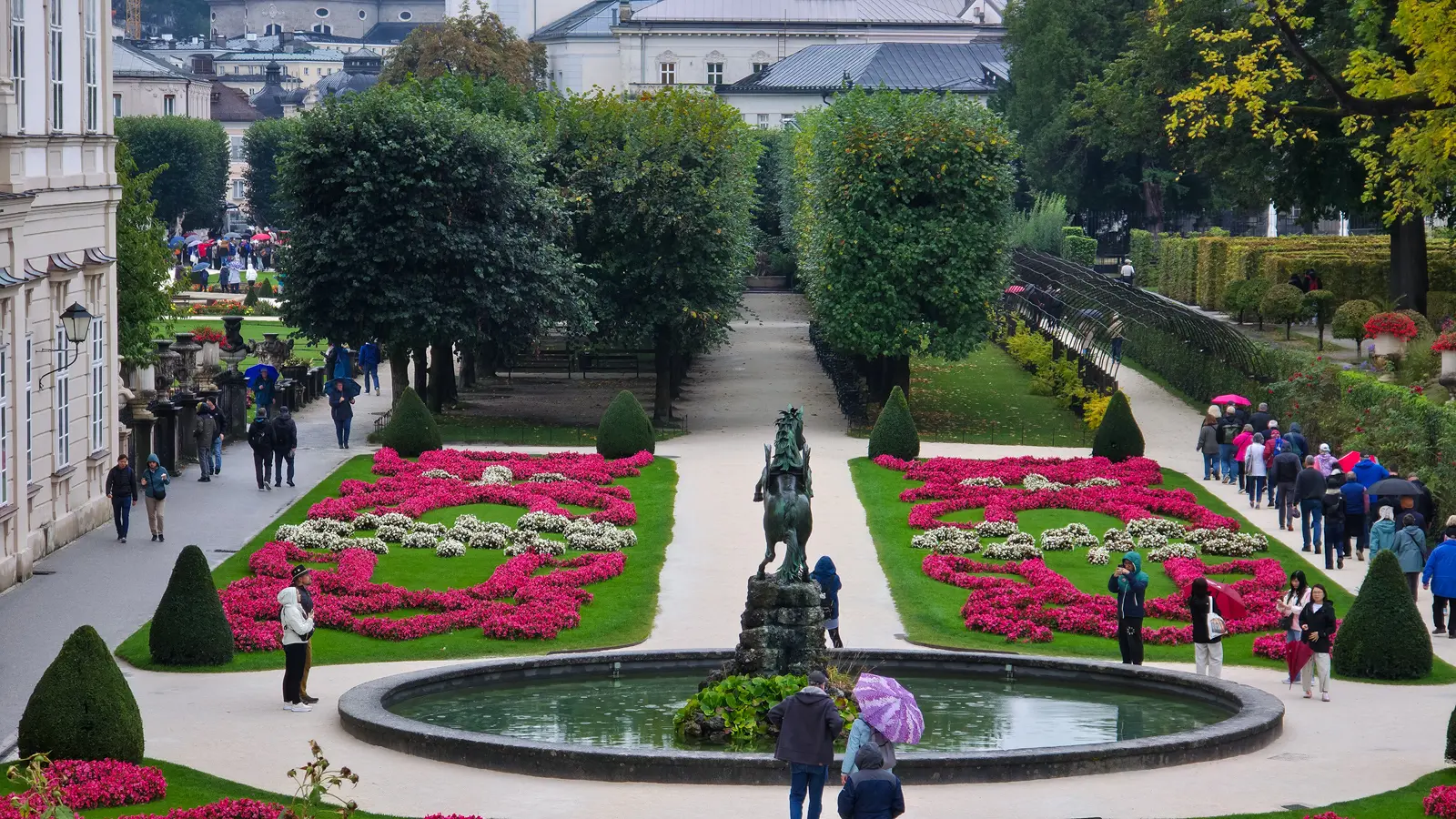
🐎 Pegasus Fountain · Copper winged horse forged in 1661 by Caspar Gras, placed in the Small Parterre in 1913. The Do-Re-Mi fountain from the film.
🎬 Sound of Music · Several “Do-Re-Mi” scenes were filmed here — the Pegasus Fountain, the Do-Re-Mi steps alongside the palace, and the hedge arcades.
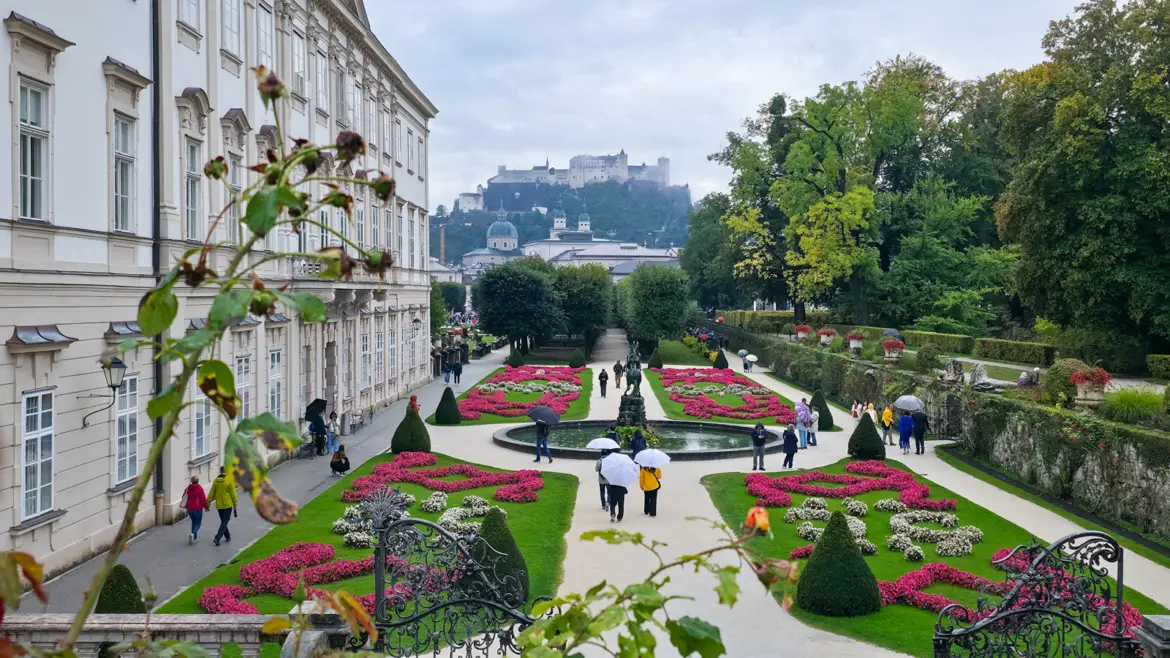
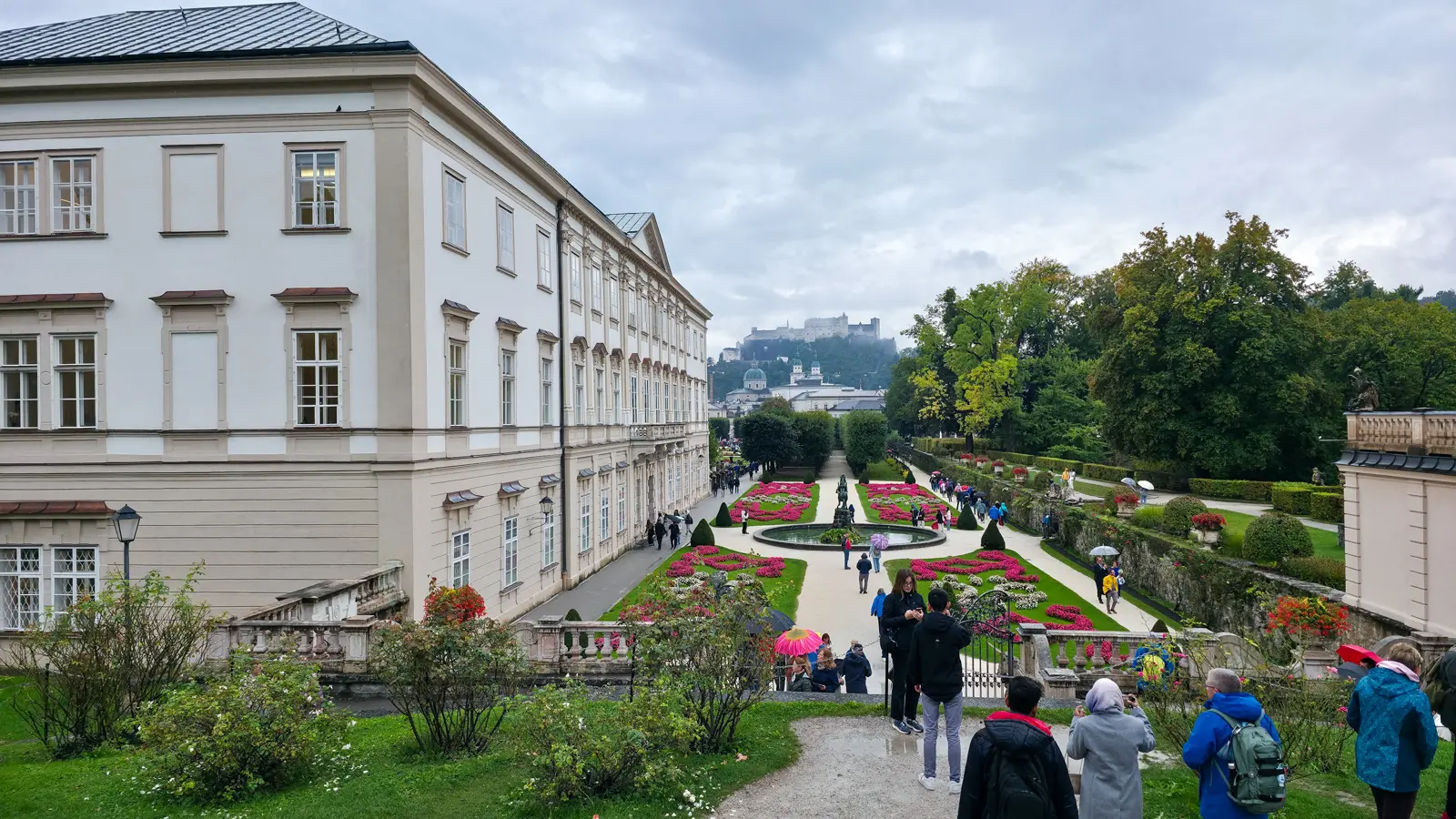
🏰 The axis view · Stand at the gardens’ north end and the Grand Parterre aligns perfectly with Hohensalzburg Fortress on the hill opposite.
📍 Location · Mirabellplatz 4, right bank of the Salzach, 10-minute walk from the Altstadt across the Makartsteg bridge.
💶 Entry · Free. Gardens open daily from around 6 AM until dusk. Hedge Theatre and Dwarf Garden close in winter.
⏰ Best time · Early morning for soft light and quiet. Late afternoon for warm light on the palace façade. Weekdays in spring or early autumn to avoid festival crowds.
A Garden with History: From Private Estate to Public Space
The origins of Mirabell Gardens date back to 1606, when Wolf Dietrich von Raitenau commissioned the palace and its surrounding grounds as a private residence for his mistress Salome Alt and their fifteen children. Originally known as Schloss Altenau, the estate passed through several hands following Wolf Dietrich’s fall from power in 1612. After his deposition in 1612, his successor Markus Sittikus renamed it Mirabell, from the Italian mirabile (“wonderful”) and bella (“beautiful”). The name has defined its identity ever since.
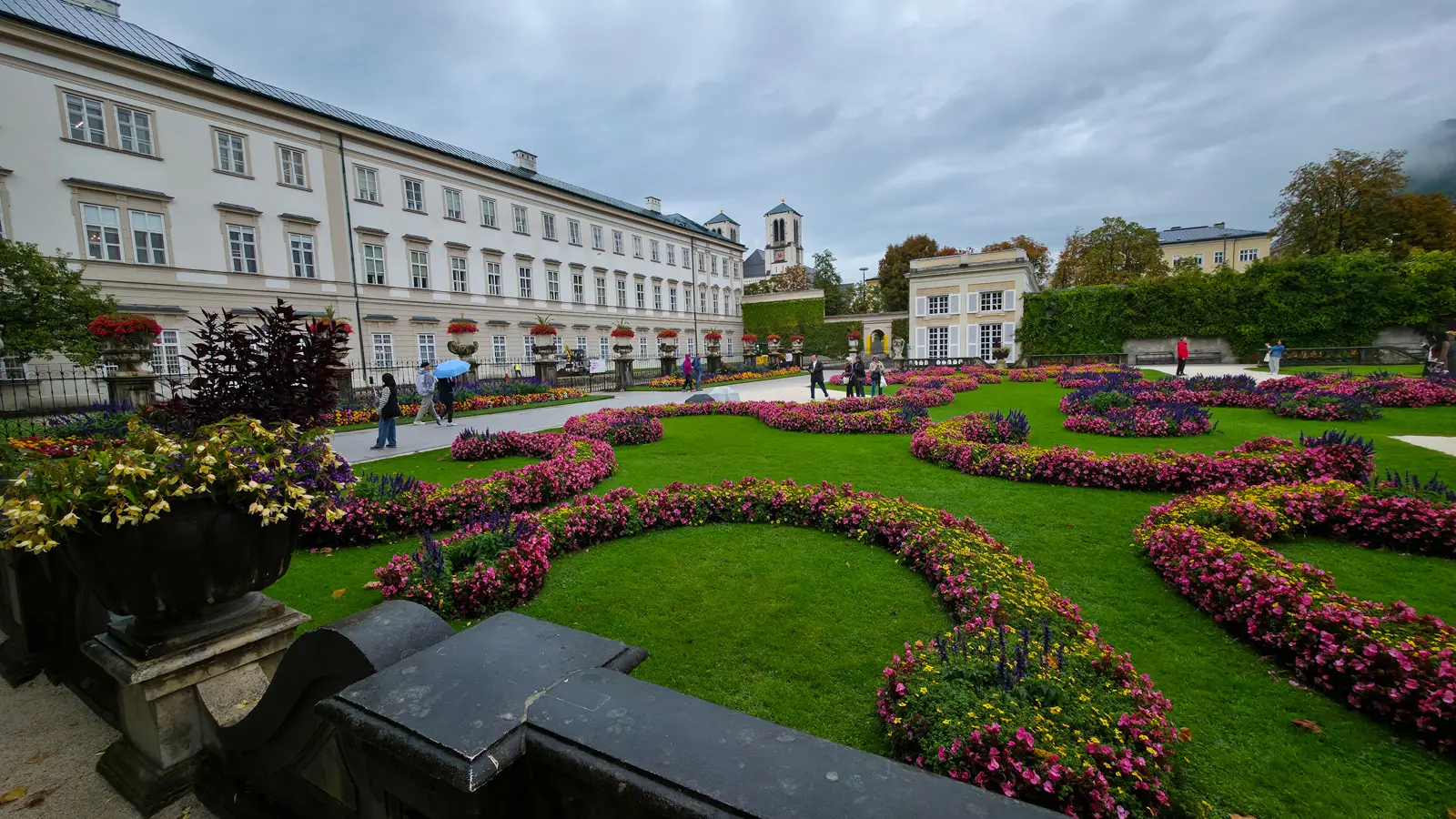
Over time, the site evolved through a series of significant transformations. The gardens were laid out in their Baroque form during the late 17th century, introducing the symmetry and structured composition that remain central to their character today. The palace itself was comprehensively rebuilt between 1721 and 1727 by the celebrated architect Johann Lukas von Hildebrandt, whose design reinforced the principles of order, proportion, and visual clarity that define the space. It was not until 1854, under the reign of Franz Joseph I, that the gardens were opened to the public, completing their transformation from an aristocratic private estate into one of Salzburg’s most cherished shared spaces.
This layered history is part of what gives the gardens their character. They are not static, but the result of centuries of adaptation and reinterpretation. Walking through them, you are not simply observing a designed landscape, but engaging with a space that has continuously shifted in purpose, meaning, and use. The gardens hold both their past and their present simultaneously, creating an experience that feels grounded yet alive.
Design and Symmetry: The Art of Composition
One of the most defining features of Mirabell Gardens is its precise and harmonious design. The layout follows classical Baroque principles, where geometry and symmetry create a sense of order that feels both structured and fluid. Pathways extend along clear axes, sculptures punctuate the space at carefully chosen intervals, and plantings are arranged to enhance perspective rather than overwhelm it.
At the heart of the Grand Parterre stands the central fountain, surrounded by four groups of mythological figures representing the elements: fire, air, earth, and water. Created by artists of the late 17th century, these sculptures anchor the composition, giving the space a focal point around which the Baroque geometry radiates outward. In the smaller parterre alongside the palace, the Pegasus Fountain offers a second, more intimate centerpiece, a copper sculpture of the winged horse, forged in 1661 by Caspar Gras, that has become one of the most recognizable images of the gardens.
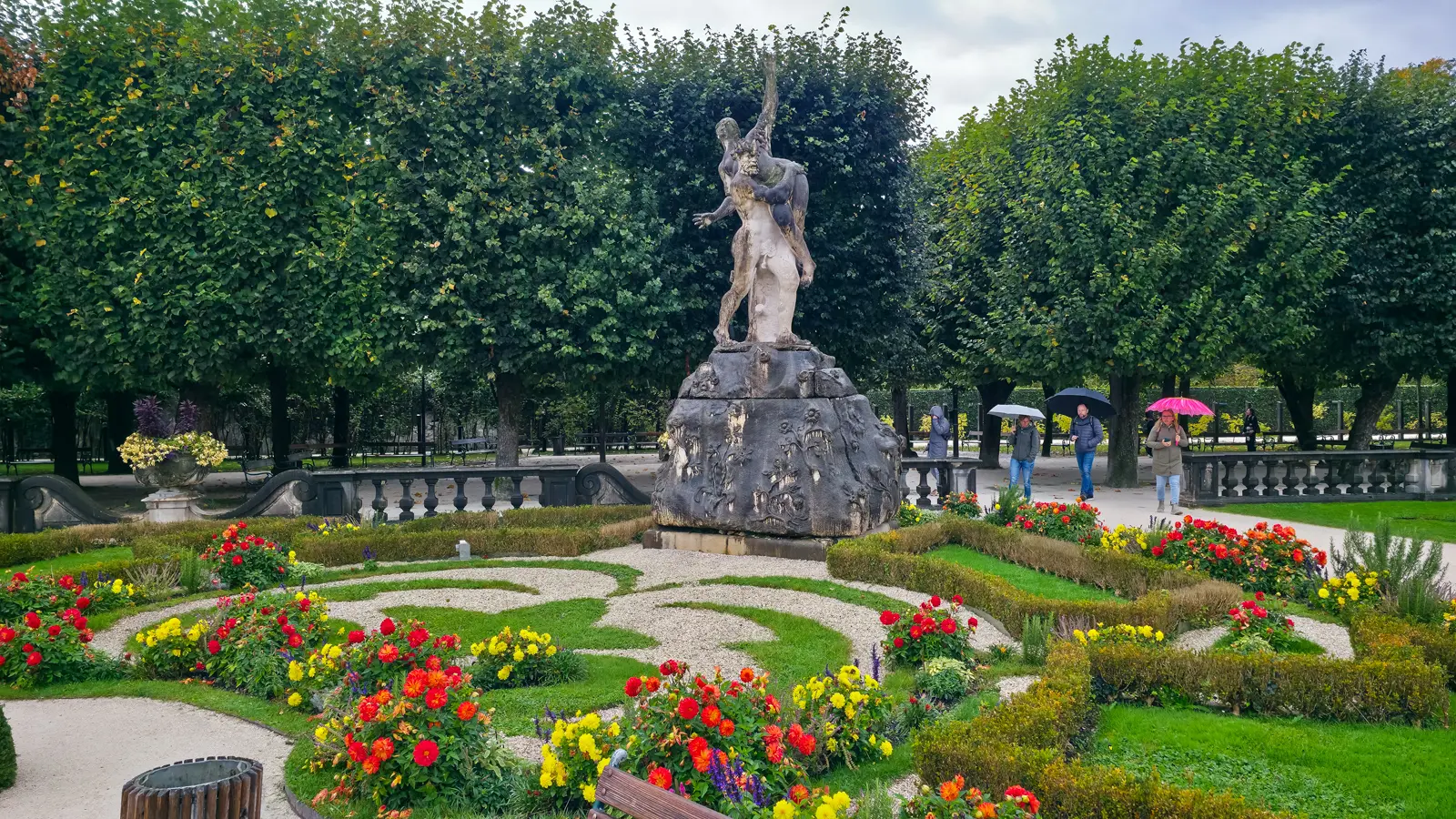
This attention to composition transforms the gardens into more than a collection of elements; it turns them into a visual experience that unfolds as you move through it. Each viewpoint feels intentional, each transition measured. There is a quiet rhythm to the space, where repetition and variation coexist, guiding your eye while allowing moments of discovery. It is this balance between control and openness that gives the gardens their distinctive character.
The View: A Perfect Alignment
Perhaps the most iconic moment within Mirabell Gardens is the view toward the Hohensalzburg Fortress. Framed by the symmetry of the gardens, the fortress rises in the distance, creating a composition that feels almost architectural in its precision. It is a perspective where nature and built form align seamlessly, each enhancing the presence of the other.
This view is not incidental; it is part of the design. The gardens guide you toward it, gradually revealing the fortress as a focal point that anchors the entire space. Standing here, there is a sense of clarity, of seeing the city not in fragments, but as a cohesive whole. It is one of those rare moments where perspective, design, and landscape converge to create something that feels complete.
A Cinematic Connection: The Sound of Music
For many visitors, Mirabell Gardens carries a sense of familiarity rooted in cinema. The gardens were featured in The Sound of Music, most notably as part of the iconic “Do-Re-Mi” sequence, where Maria and the von Trapp children sang and danced through a series of locations across Salzburg. Within Mirabell Gardens, the Pegasus Fountain, the staircase alongside the palace, now affectionately known as the Do-Re-Mi steps, and the surrounding hedge arcades all form part of this memorable cinematic moment, linking the space to a global cultural memory.
What makes this connection particularly compelling is how naturally it fits within the gardens themselves. The setting does not feel defined by the film, yet the association adds a subtle and meaningful layer to the experience. For some, it introduces a sense of nostalgia; for others, it offers a moment of recognition within an otherwise new environment. Walking through these spaces – past the Pegasus Fountain, along the Do-Re-Mi steps, and through the hedge arcades – the cinematic and the historical quietly coexist, each enriching the other without overwhelming the character of the place.
Mirabell Palace: An Elegant Presence
While the gardens are the focal point of the experience, the presence of Mirabell Palace adds an essential architectural dimension. The palace stands quietly alongside the gardens, its façade contributing to the sense of order and proportion that defines the space. It does not dominate the landscape, but rather complements it, reinforcing the balance between built form and nature. This relationship is subtle yet important, as the palace anchors the gardens within a broader historical and architectural context, giving structure to what might otherwise feel purely ornamental.
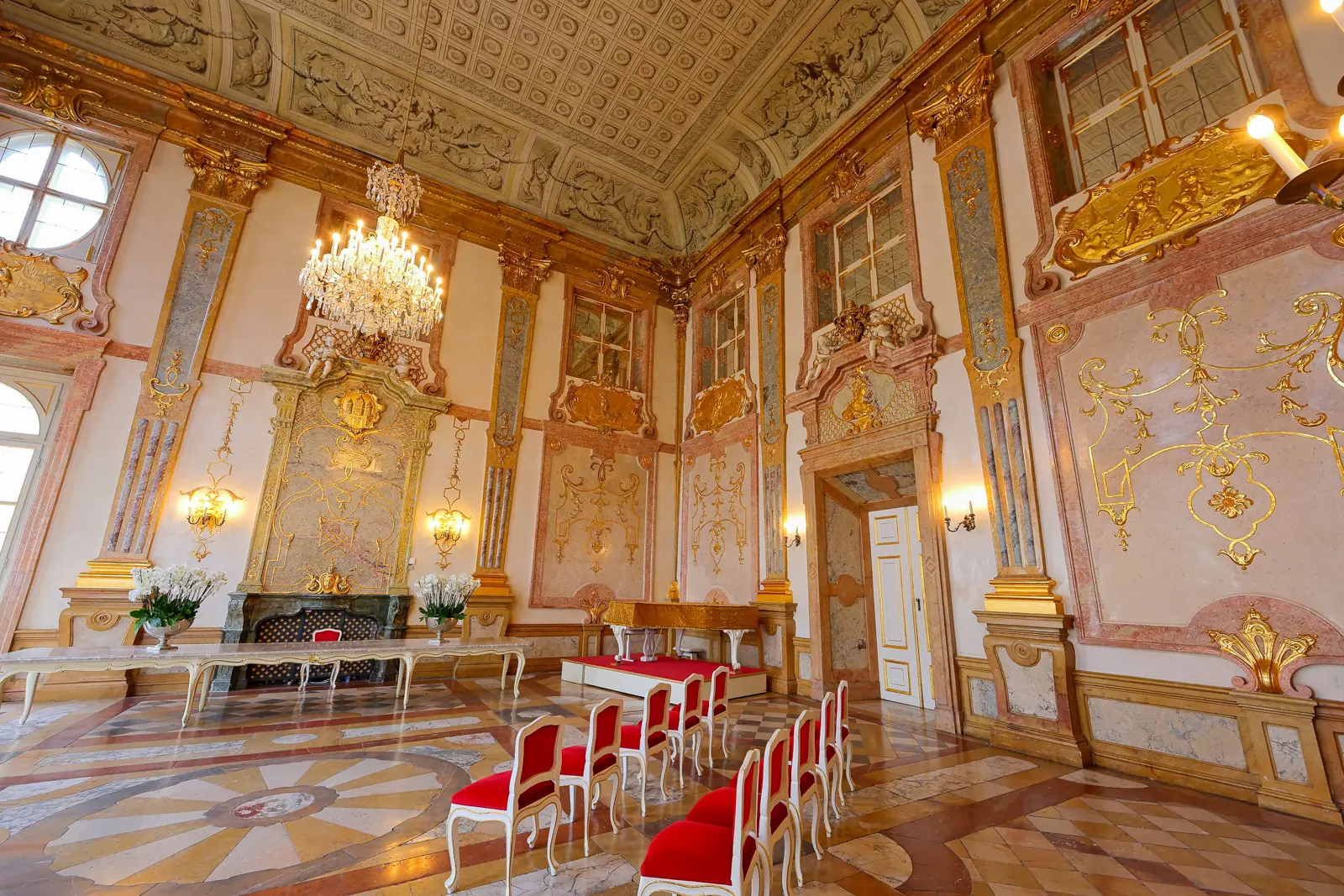
Inside, the Marble Hall is widely regarded as one of the finest Baroque interiors in Salzburg, known for its elegance, refined proportions, and intricate detailing. The space carries a strong musical resonance, reflecting Salzburg’s deep connection to classical music and its long-standing tradition of performance, and it continues to host concerts that bring this heritage into the present. Today, the palace serves a different yet equally meaningful role, housing the offices of the Salzburg mayor and city administration, a reminder that this is not simply a preserved monument, but a living civic space. Together, the palace and gardens form a unified composition, where history, function, and design exist in quiet harmony.
The Experience: Stillness and Presence
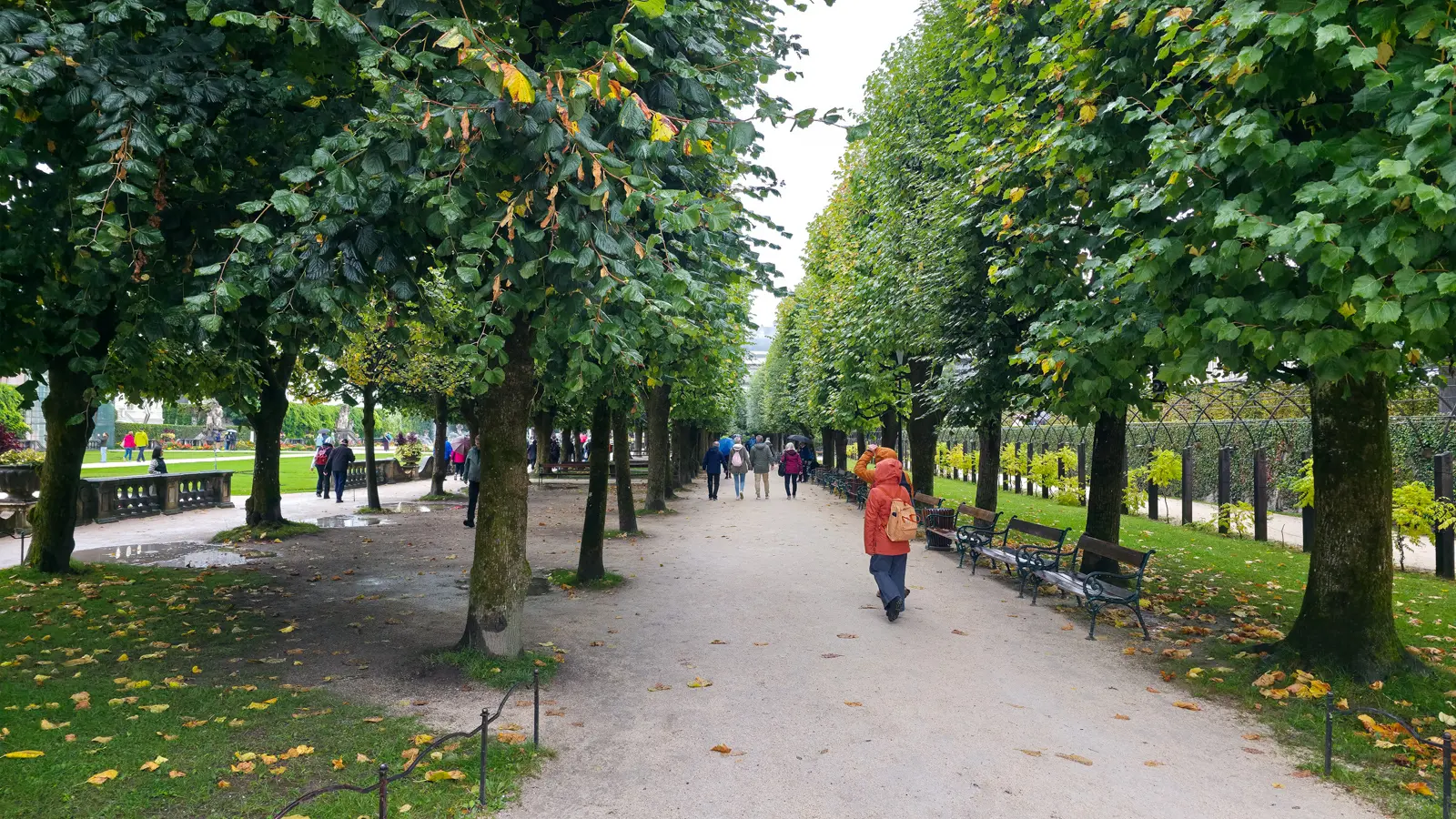
What makes Mirabell Gardens truly memorable is not just what you see, but how you experience the space. There is a noticeable shift in pace as you move through the gardens, a sense that time extends slightly and attention becomes more focused. People walk more slowly here, pause more often, and engage with the surroundings in a way that feels intentional.
The experience is defined by these quieter moments: sitting on a bench, watching the movement of light across the pathways, observing how the space changes as people move through it. It is not a place of constant activity, but of measured presence. In this way, the gardens become less about visual spectacle and more about atmosphere, offering a moment of pause within the broader rhythm of the city.
Bubbly Tips for Visiting Mirabell Gardens
- Location: Mirabell Gardens are located in central Salzburg, just across the Salzach River from the Old Town, making them easily accessible on foot.
- Distance from Vienna: Salzburg is located approximately 300 km west of Vienna. By train, the journey takes around 2.5 to 3 hours, making it an easy and scenic day trip or a perfect addition to a longer Austrian itinerary.
- Best time to visit Mirabell Gardens Salzburg: Early morning or late afternoon offers softer light and a quieter atmosphere, ideal for both photography and a more contemplative experience.
- Don’t miss: The Pegasus Fountain, the symmetrical garden layouts, the fortress view alignment, and the Marble Hall inside Mirabell Palace.
- Sound of Music locations in Salzburg: Look for recognizable spots from The Sound of Music, including the steps and fountain featured in the “Do-Re-Mi” scene.
- Photography tips: Position yourself along the central axis of the gardens to capture the iconic alignment with Hohensalzburg Fortress. Seasonal flowers add color and depth to your compositions.
- Take your time: Mirabell Gardens are best experienced slowly. Pause often, explore different viewpoints, and allow the space to reveal itself gradually.
Final Thoughts
Mirabell Gardens is a place where design and atmosphere come together in quiet harmony. It is not defined by a single feature, but by the relationship between its elements: symmetry and openness, architecture and nature, movement and stillness. The experience is subtle, yet deeply memorable, shaped by moments that feel both simple and complete.
What stays with you is not just the beauty of the gardens, but the sense of balance they create. It is a space that encourages you to slow down, to observe, and to be present within it. In a city already rich with history and character, Mirabell Gardens offers something slightly different, a moment of clarity, where everything feels aligned.
Would this be your first stop in Salzburg, or a place to return to and experience again? I’d love to hear your thoughts in the comments section below!
Happy travels!

🌟 Everything You Need to Plan Your Dream Trip in 2026
- 🌟 Luxury Hotels - Find premium stays with Booking.com & Hotels.com
- 🏡 Vacation Rentals - Discover unique properties on VRBO
- 🏞️ Guided Tours - Explore with Viator or GetYourGuide
- 🎫 Attraction Tickets - Skip the lines with Tiqets
- 🚢 Ocean Cruises - Set sail with Cruise Direct
- 📱 International SIMs - Stay connected with Saily
- 🚗 Car Rentals - Budget-friendly options from Discover Cars
- 🌐 Secure VPNs - Browse safely with NordVPN
- 💶 Currency Exchange - Best rates with Wise
- 🗣️ Learn Languages - Master the local language with Babbel and Rosetta Stone