
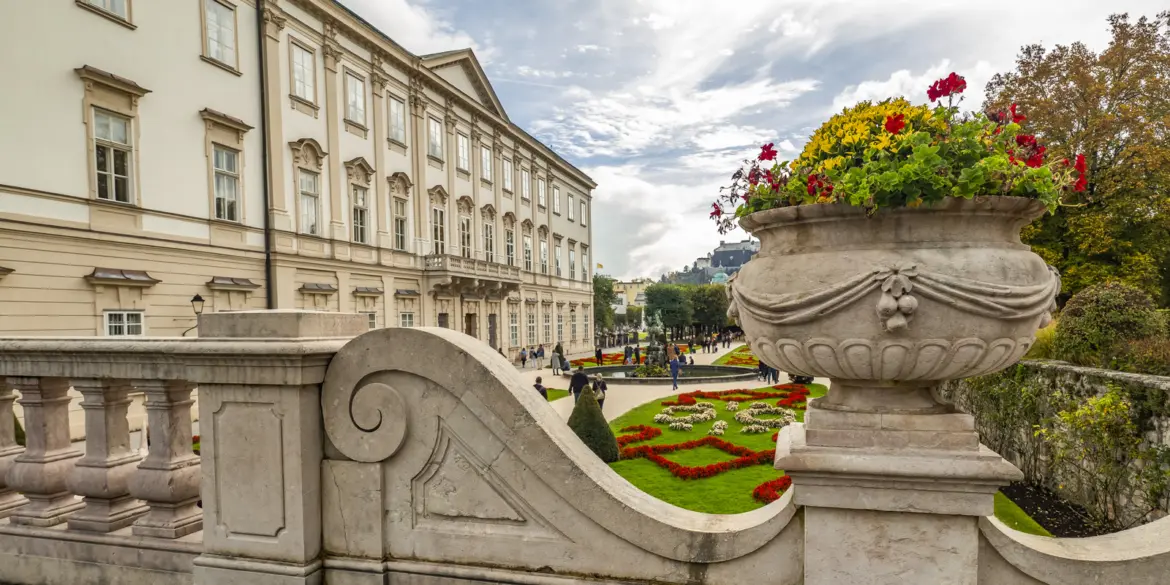
There are places that impress through scale, and others that reveal themselves through detail. Mirabell Palace in Salzburg belongs to the latter, a space where elegance is not imposed, but carefully composed. Set just beyond Salzburg’s Old Town, the palace does not overwhelm from the outside, but once inside, it unfolds into a world defined by proportion, light, and refined craftsmanship.
What makes Mirabell Palace so compelling is the way it balances restraint and richness. Its architecture does not seek to dominate the city, but to complement it, creating a quiet dialogue between built form and surrounding space. This sense of balance carries through the entire experience, where each interior reveals a new layer of detail, and where beauty is found not in excess, but in precision. As you move through the palace, there is a gradual shift in awareness — from observing a historic structure to experiencing a carefully orchestrated environment where space, light, and movement are in constant interplay.
Mirabell Palace at a Glance
🏛️ Originally a love house · Built in 1606 by Prince-Archbishop Wolf Dietrich von Raitenau for his mistress Salome Alt and their fifteen children. Originally called Schloss Altenau.
🔄 The renaming · After Wolf Dietrich’s fall in 1612, his successor Markus Sittikus expelled Salome and renamed the palace Mirabell — from the Italian mirabile (“wonderful”) and bella (“beautiful”).
🏗️ The Baroque redesign · Rebuilt between 1721 and 1727 by Johann Lukas von Hildebrandt, one of Austria’s most important Baroque architects.
🔥 The 1818 fire · On 30 April 1818, a great fire damaged much of the palace. The current Neoclassical exterior dates from the reconstruction by Peter de Nobile. The Marble Hall, Angel Staircase, and chapel survived.
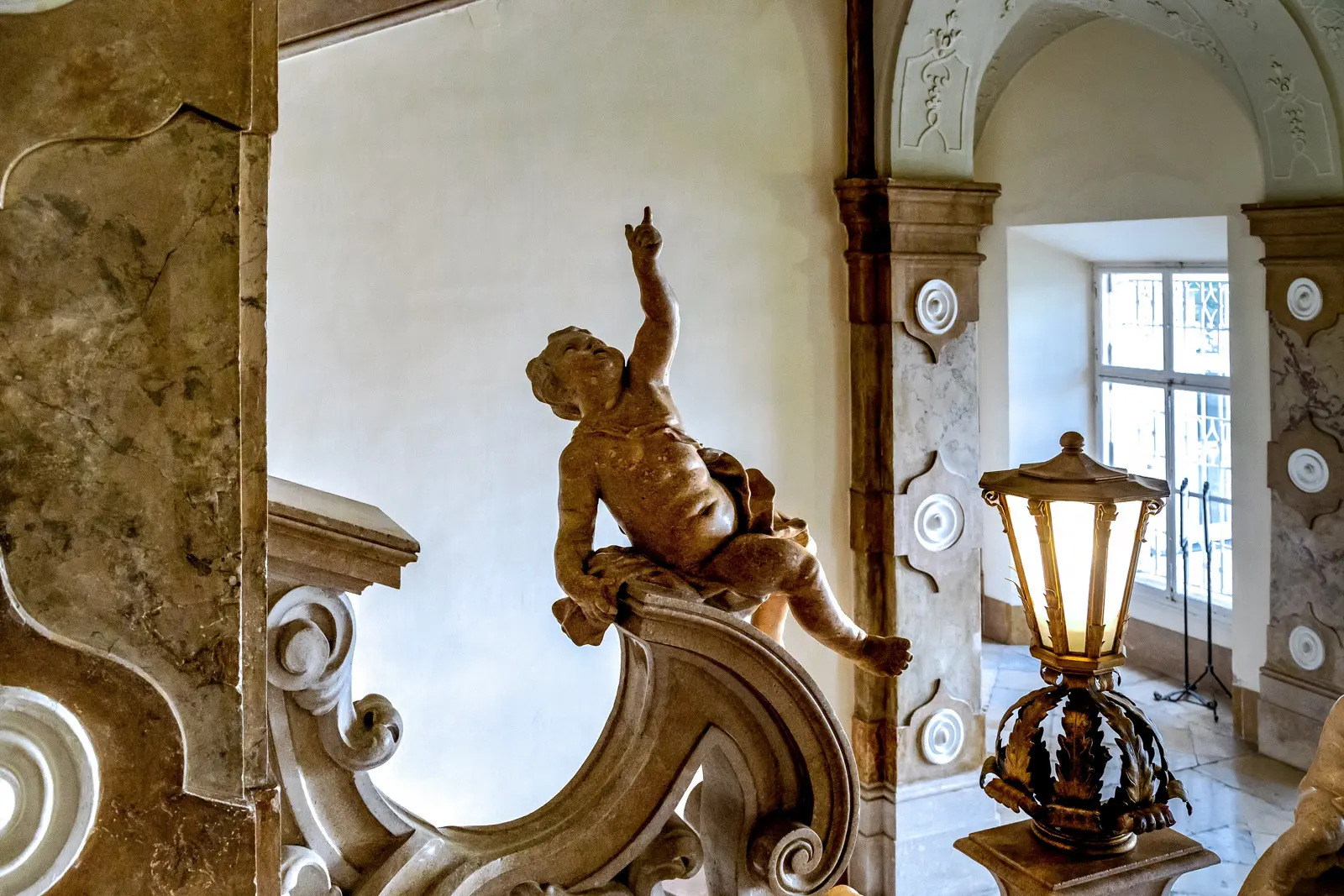
👼 The Angel Staircase · Architecture by Hildebrandt, 1726 putti and niche sculptures by Georg Raphael Donner. The name Donnerstiege is a pun — Donner means “thunder” in German, but the staircase is named after the sculptor.
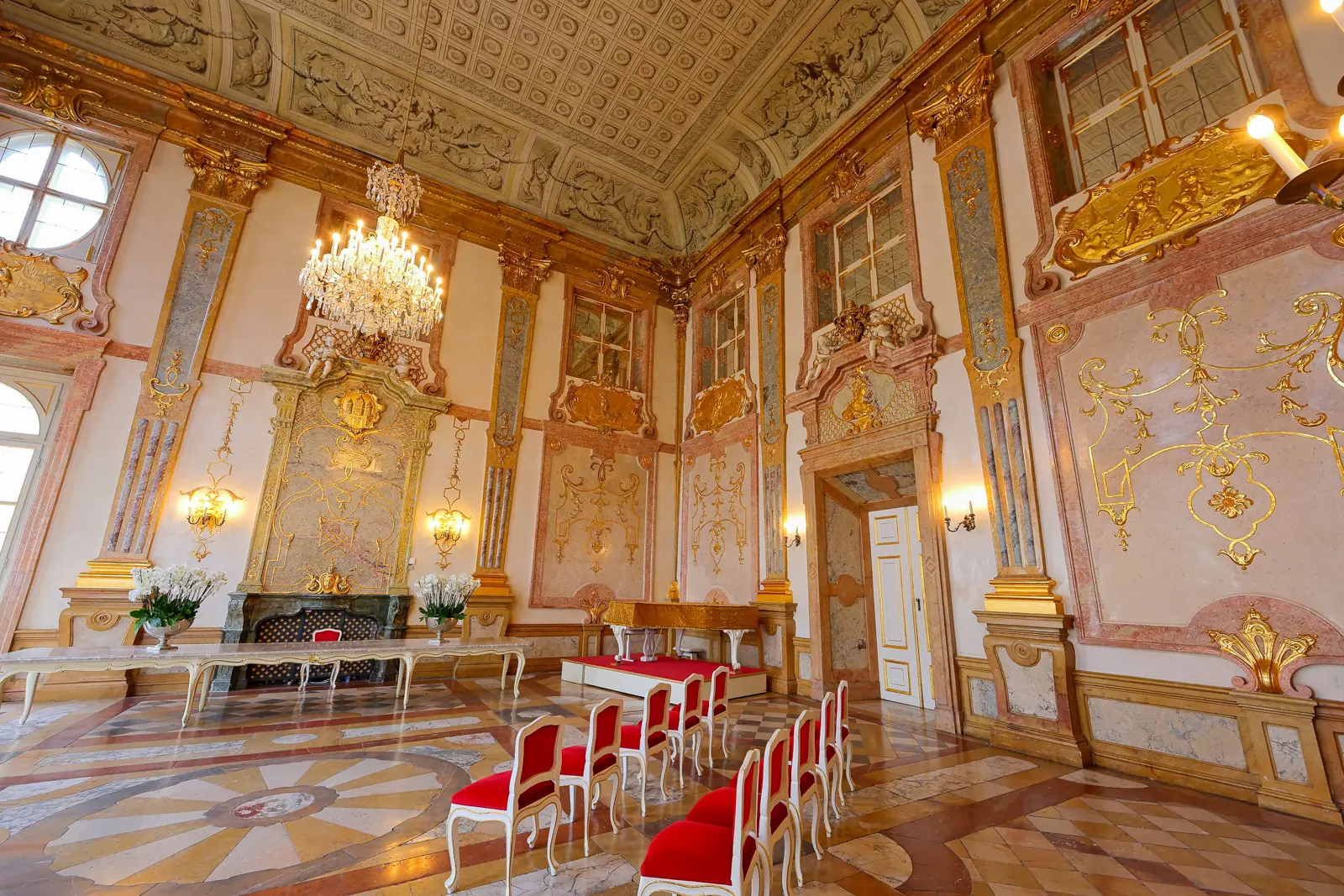
🎼 The Marble Hall · One of the finest Baroque interiors in Salzburg. Leopold Mozart and his children Wolfgang and Nannerl performed here. Today used for civil weddings and the Salzburg Palace Concerts.
🏛️ Current use · Seat of the Salzburg mayor and city administration since 1947. Free to visit. Most rooms are closed to the public, but the Angel Staircase and Marble Hall can be visited when not in ceremonial use.
A Palace with History: From Altenau to Mirabell
The origins of Mirabell Palace date back to 1606, when Prince-Archbishop Wolf Dietrich von Raitenau commissioned it as a private residence, built outside the city walls for his mistress Salome Alt and their fifteen children, and named Schloss Altenau after her. This origin story is central to understanding the palace’s character: it was conceived not as a seat of ecclesiastical authority, but as a more intimate and personal space, prioritising comfort, aesthetics, and proximity to nature.
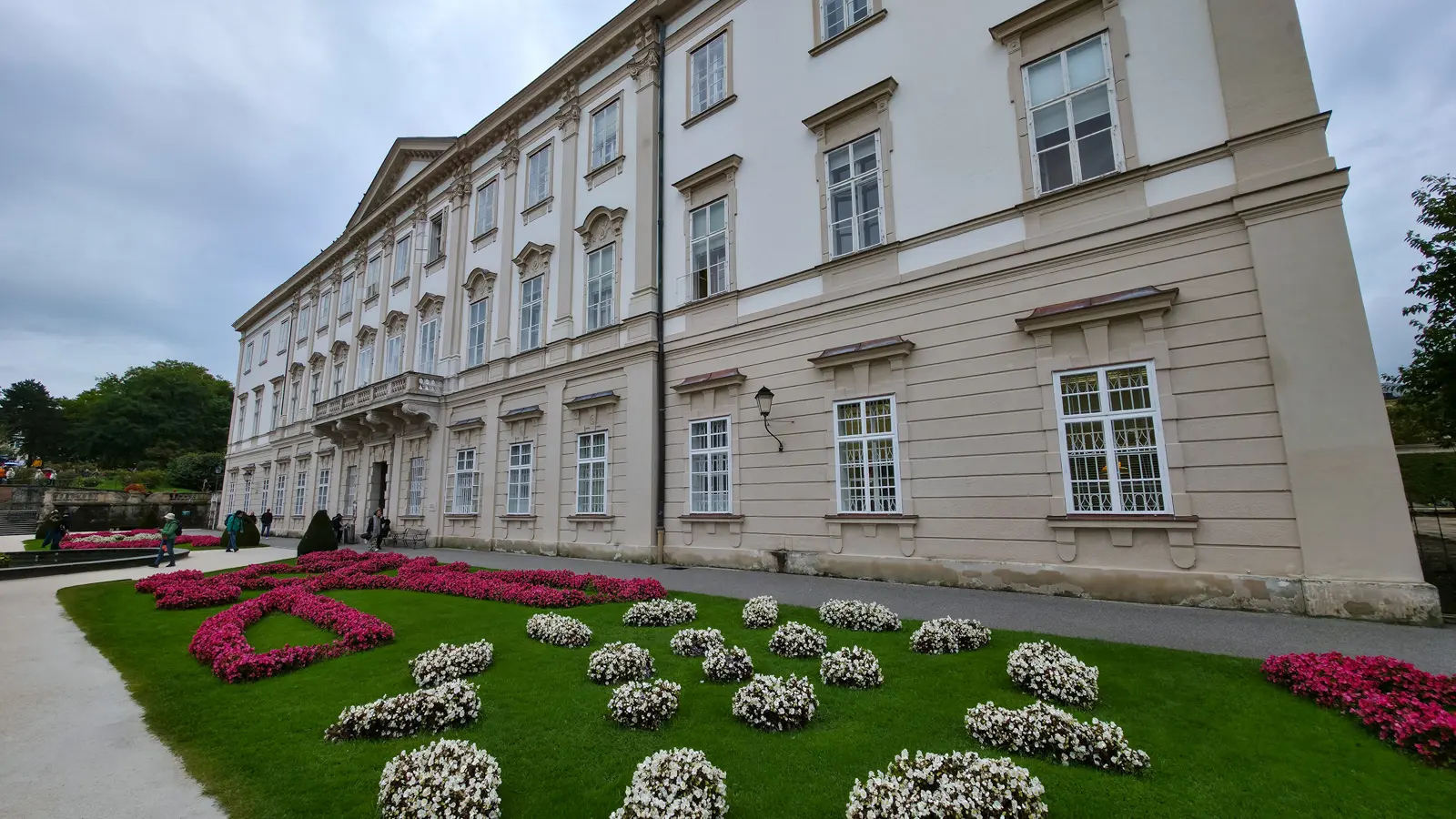
Following Wolf Dietrich’s fall from power in 1612 and his imprisonment at Hohensalzburg Fortress, his successor Markus Sittikus von Hohenems expelled Salome Alt and her family from the premises and renamed the palace Mirabell — a compound name drawn from the Italian mirabile (“wonderful”) and bella (“beautiful”). The renaming was both linguistic and symbolic: it distanced the building from its original personal associations and signalled a new chapter for the space. The Baroque transformation that followed was significant: between 1721 and 1727, Johann Lukas von Hildebrandt reworked the palace in a refined Baroque style, introducing symmetry, axial alignment, and a carefully balanced sense of proportion. Then, on 30 April 1818, a devastating fire caused severe damage to much of the palace. While key interior elements, including the Marble Hall and its celebrated staircase, were largely preserved, the restoration that followed gave the exterior its current Neoclassical appearance, meaning what visitors see today reflects not one period but several, each leaving its mark on the overall composition. This layered history forms part of the UNESCO World Heritage Site that encompasses Salzburg’s historic centre.
The Staircase: A Sculptural Entrance
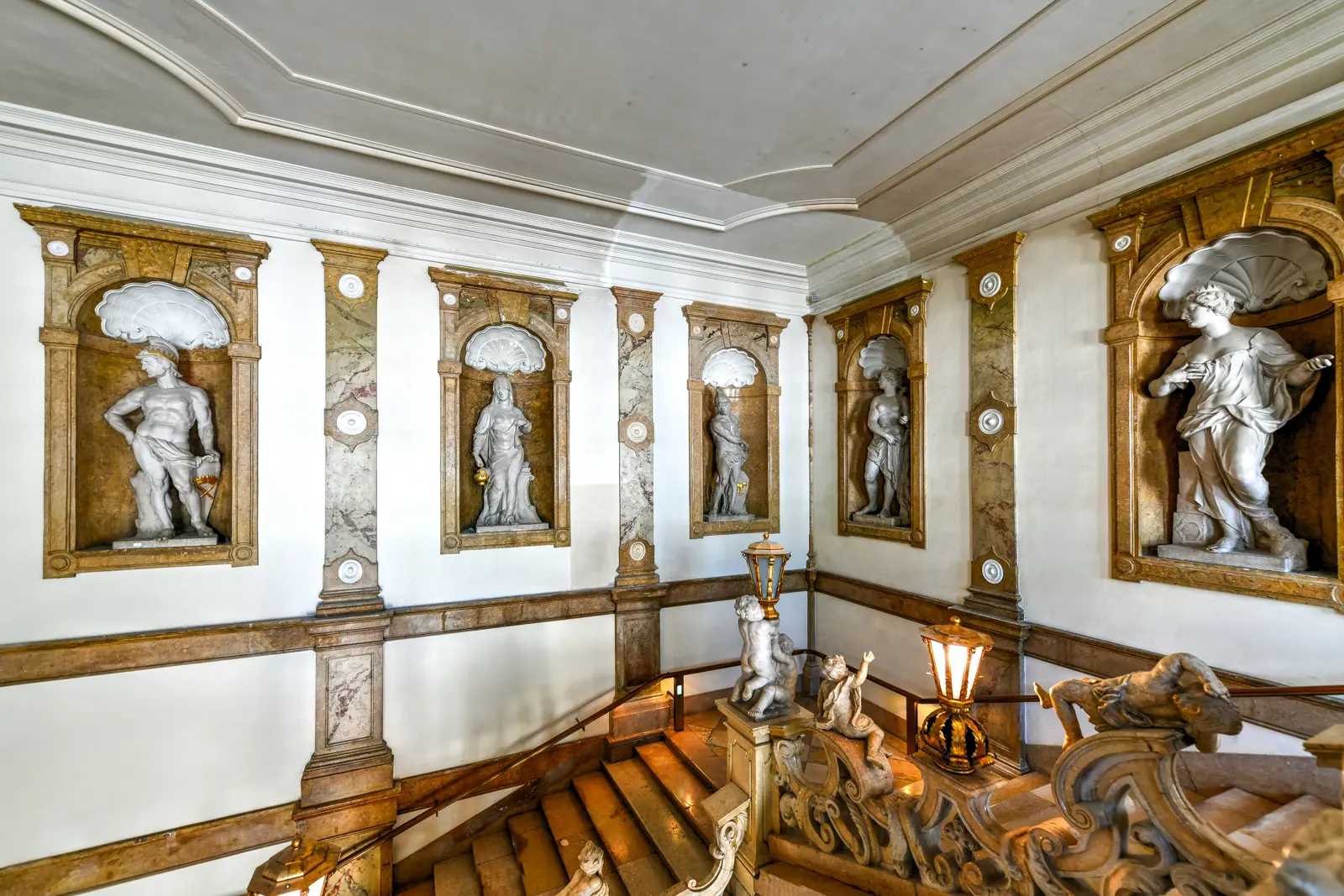
One of the most striking features of Mirabell Palace reveals itself almost immediately upon entering: the grand Baroque staircase, known as the Angel Staircase or Donnerstiege. The name is a pun. In German, Donner means “thunder,” but the staircase is actually named after the sculptor Georg Raphael Donner, whose 1726 putti give the balustrade its character. The architecture of the staircase itself is by Hildebrandt, integrated into his 1721–1727 palace redesign — so what visitors experience here is the work of two masters, the architect and the sculptor, working in dialogue. The sweeping form creates a sense of upward movement that feels both dynamic and controlled, drawing the eye naturally along its curves and lines.
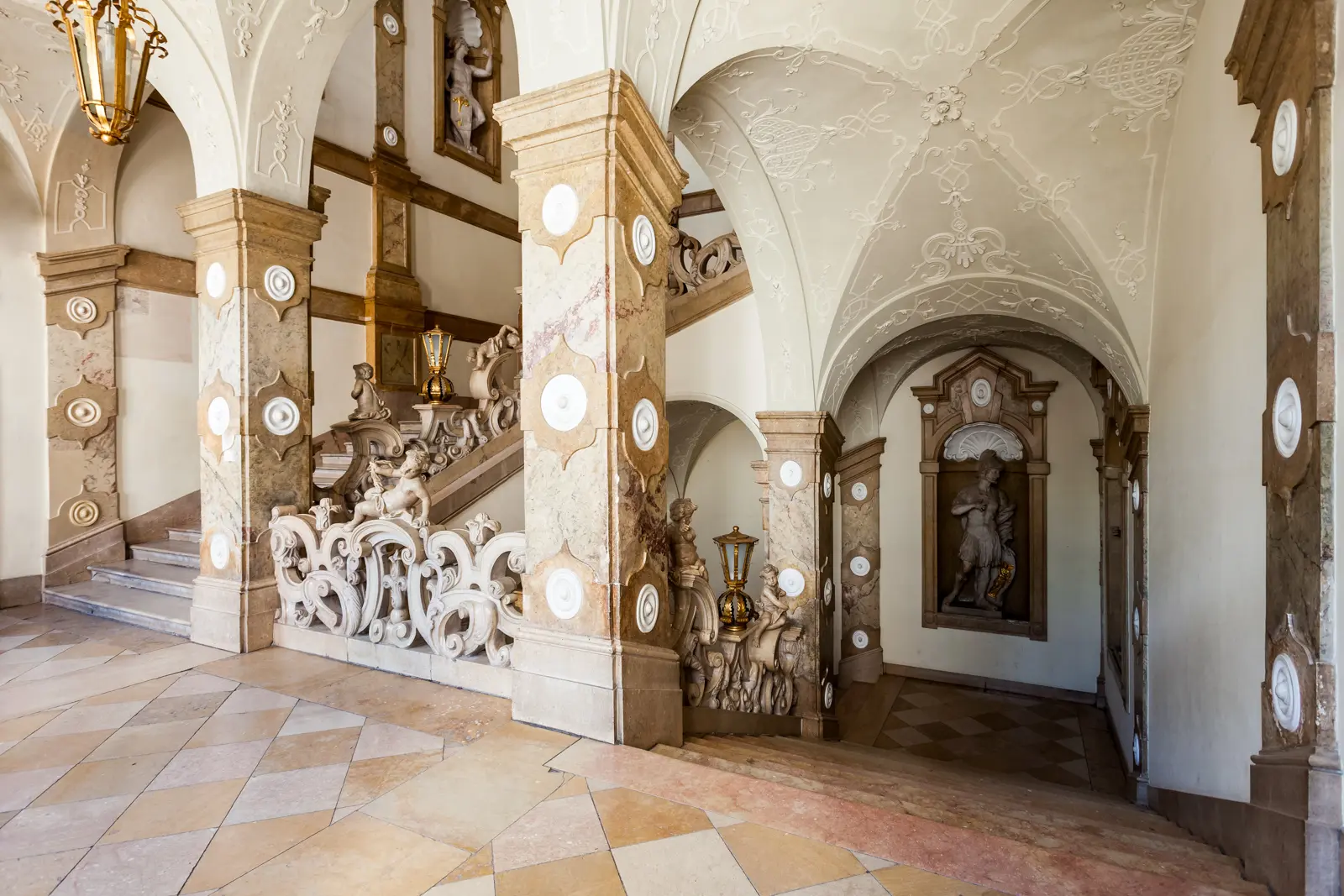
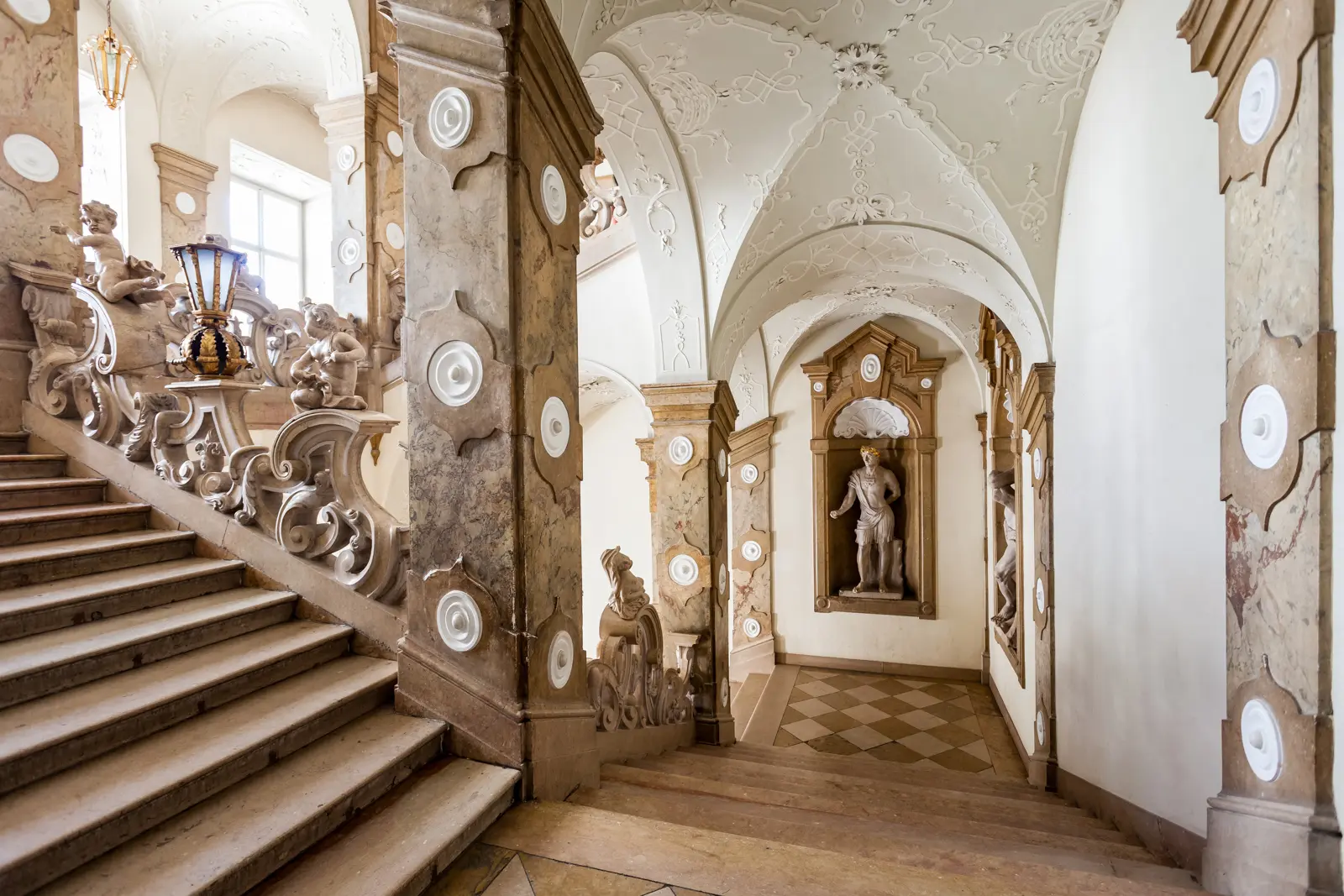
The staircase is characterised by a refined interplay between architecture and sculpture. The white marble balustrade is decorated with a host of putti, small angelic figures rendered with remarkable naturalism, while sculptures in the niches along the walls reflect the high level of craftsmanship associated with Baroque design. Marble surfaces reflect natural and ambient light, softening the structure while enhancing its visual depth. Every angle offers a new perspective, and as you ascend, the space unfolds gradually, revealing the careful choreography of movement and form. It is not simply a passage between levels, but an introduction to the language of the palace – one defined by balance, elegance, and precision.
The Marble Hall: Light, Music, and Ceremony
At the heart of Mirabell Palace lies the Marble Hall, widely regarded as one of the most refined Baroque interiors in Salzburg. The space is defined not only by its materials, but by its atmosphere, a combination of light, proportion, and acoustic presence that gives it a distinct sense of identity. Pale marble surfaces interact with natural light in subtle ways, creating variations in tone that shift throughout the day and enhance the architectural clarity of the room.
Historically, the hall served as a setting for music, gathering, and ceremony. Wolfgang Amadeus Mozart and his family performed here, linking the space directly to Salzburg’s musical heritage. The room’s proportions and acoustics contribute to its continued use as a concert venue today, where sound resonates with a clarity that reflects the precision of its design. The Marble Hall is also known as a wedding venue, where its elegance and historical significance create an atmosphere that feels both celebratory and timeless. This continuity of use reinforces the idea that the space is not preserved in isolation, but remains part of the cultural life of the city.
Architecture and Detail: The Art of Composition
Throughout Mirabell Palace, there is a consistent attention to composition that shapes the visitor’s experience. Baroque architecture is often associated with grandeur and ornamentation, yet here it is expressed through clarity and restraint. Lines are deliberate, proportions are carefully balanced, and decorative elements are used to enhance rather than dominate the space.
Doorways align with windows, ceilings guide the eye, and transitions between rooms feel fluid and intentional. Materials such as marble, stone, and plaster are not only structural, but expressive, contributing to the tactile and visual quality of the interiors. Light plays a central role, interacting with surfaces to create depth and variation. The result is an environment where every element feels connected, and where the overall experience is defined by harmony rather than contrast. It is this coherence that gives the palace its distinctive character, allowing it to feel both refined and accessible.
A Dialogue with the Gardens
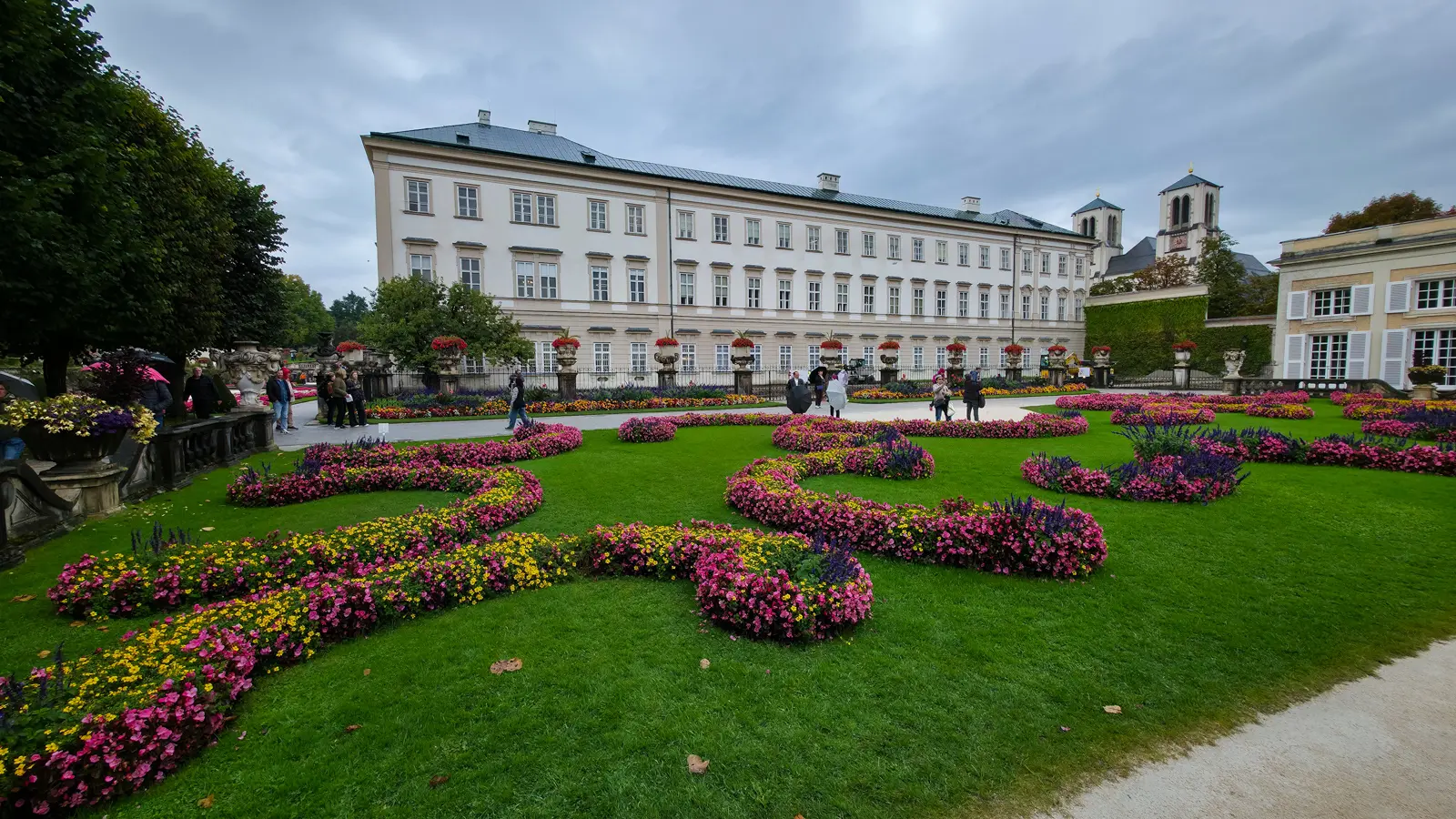
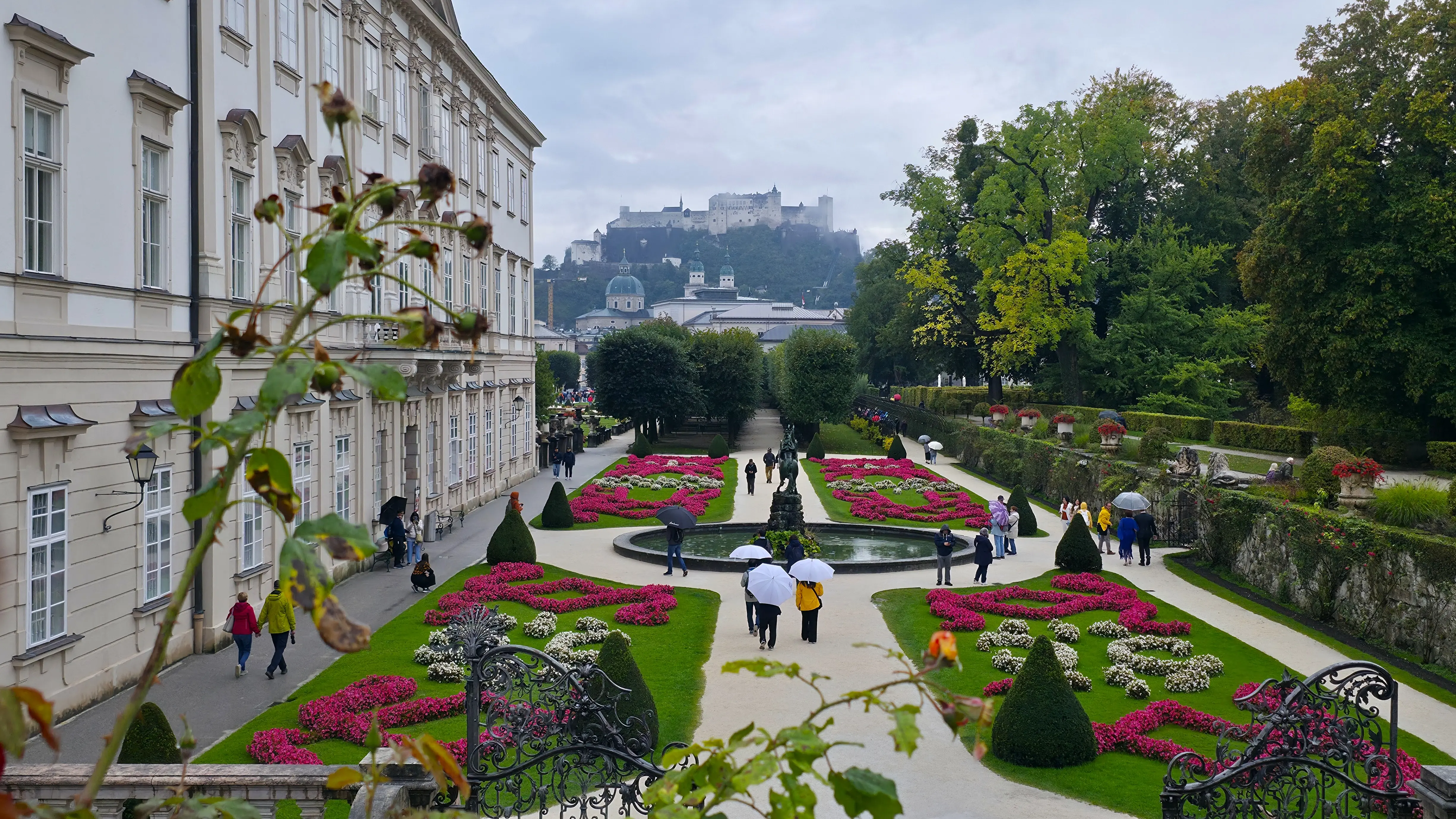
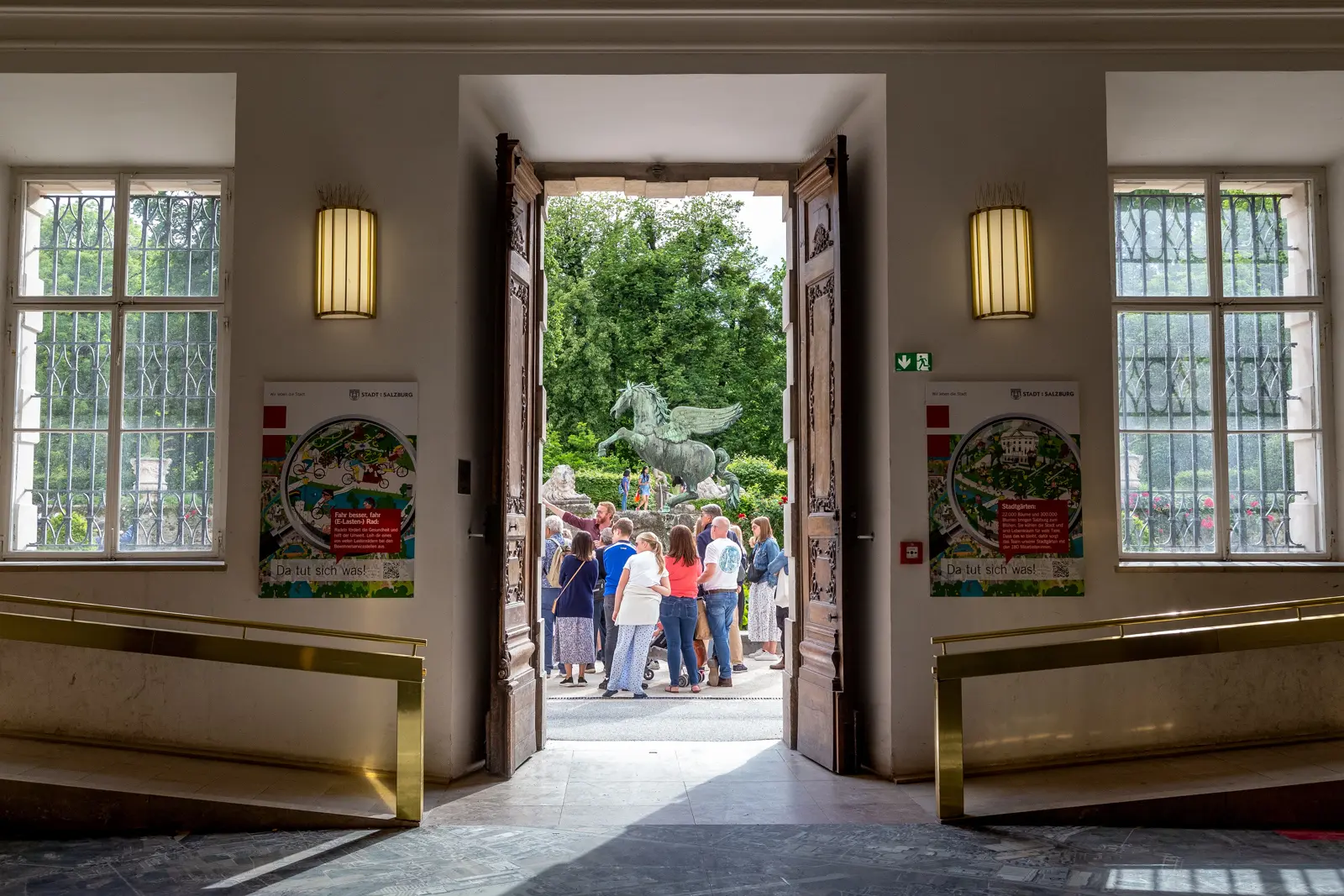
While Mirabell Palace stands as a complete architectural work in its own right, its relationship with the surrounding Mirabell Gardens adds another layer to the experience. The palace and gardens are not separate entities, but parts of a unified composition, where interior and exterior spaces are visually and spatially connected.
From within the palace, glimpses of the gardens create a sense of continuity, while from the gardens, the palace serves as a focal point that anchors the landscape. This reciprocal relationship enhances both spaces, creating a dialogue between structure and openness. Beyond this, the alignment between the palace, the gardens, and the distant Hohensalzburg Fortress establishes one of Salzburg’s most iconic visual axes. The experience becomes one of layered perspectives, where each viewpoint reveals a new relationship between architecture, landscape, and history.
The Experience: Calm, Refined, and Enduring
The experience of visiting Mirabell Palace is defined by a sense of calm and refinement that unfolds gradually. It is not a space that overwhelms with scale or spectacle, but one that invites a more attentive and measured form of engagement. Movement through the palace feels guided yet unforced, shaped by the architecture itself and by the natural rhythm of the spaces.
What remains with you is not a single defining moment, but a cumulative impression: of balance, clarity, and quiet elegance. The palace encourages observation at a slower pace, where details reveal themselves over time and where the experience becomes as much about perception as it is about place. This enduring quality is what distinguishes Mirabell Palace, allowing it to resonate beyond the visit itself and to remain present in memory as a space of composed beauty.
Bubbly Tips for Visiting Mirabell Palace
- Location: Situated near Mirabell Gardens, just across the Salzach River from Salzburg’s Old Town, making it easily accessible on foot.
- What to expect: Elegant Baroque interiors, including the grand staircase and the Marble Hall, within a historic palace that continues to serve civic and cultural functions.
- Best time to visit Mirabell Palace Salzburg: Early morning or late afternoon offers a quieter and more atmospheric experience, particularly for appreciating the interplay of light within the interiors.
- Don’t miss: The grand staircase, the Marble Hall, and the architectural details that define the palace’s refined character.
- Time to explore: Approximately 30 to 60 minutes for the interiors, with additional time recommended if combined with a visit to the gardens.
- Pair your visit: Combine with Mirabell Gardens and a walk through Salzburg’s Old Town to fully appreciate the spatial and cultural context.
- Distance from Vienna: Salzburg is approximately 300 km west of Vienna, with a scenic train journey of around 2.5 to 3 hours.
Final Thoughts
Mirabell Palace is a place where elegance is expressed through detail rather than scale, and where history is felt through continuity rather than contrast. It offers a refined and immersive experience, one that reveals itself gradually and rewards careful observation.
What stays with you is not only the beauty of its interiors, but the coherence of its design, a sense that every element has been considered, balanced, and integrated into a larger whole. In a city known for its cultural richness and architectural beauty, Mirabell Palace stands out for its quiet sophistication, offering a space where history, design, and experience come together in a way that feels both timeless and immediate.

🌟 Everything You Need to Plan Your Dream Trip in 2026
- 🌟 Luxury Hotels - Find premium stays with Booking.com & Hotels.com
- 🏡 Vacation Rentals - Discover unique properties on VRBO
- 🏞️ Guided Tours - Explore with Viator or GetYourGuide
- 🎫 Attraction Tickets - Skip the lines with Tiqets
- 🚢 Ocean Cruises - Set sail with Cruise Direct
- 📱 International SIMs - Stay connected with Saily
- 🚗 Car Rentals - Budget-friendly options from Discover Cars
- 🌐 Secure VPNs - Browse safely with NordVPN
- 💶 Currency Exchange - Best rates with Wise
- 🗣️ Learn Languages - Master the local language with Babbel and Rosetta Stone