
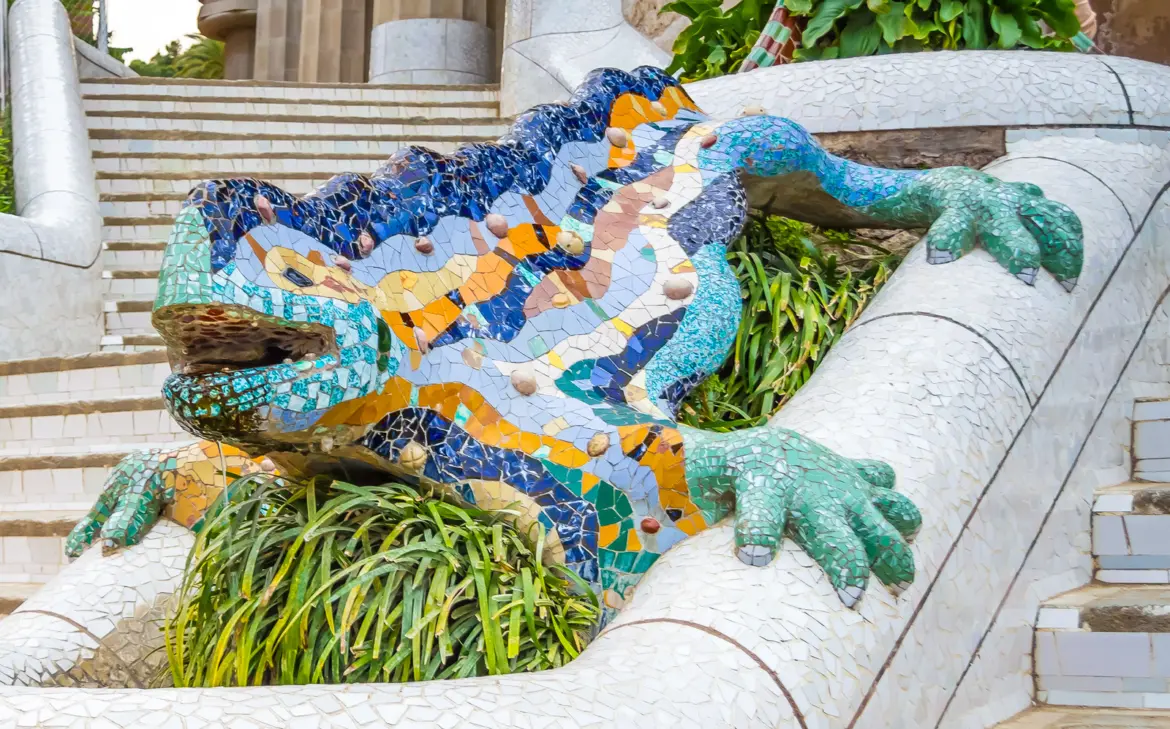
Hola, my friends! If you’ve wandered through Park Güell, you’ve already met Barcelona’s most famous guardian – the shimmering mosaic dragon known as El Drac (“the dragon”).But El Drac is only the beginning. Once you start noticing dragons in Barcelona, you’ll see them everywhere – perched on rooftops, carved into fountains, guarding façades, and curling across iron balconies. Some are fierce, others graceful; all of them tell stories about the city’s imagination, resilience, and soul.So, today, we’re following their trail, from legend to limestone, exploring how Barcelona became a city watched over by dragons.
The Dragons of Barcelona — Where to Find Them
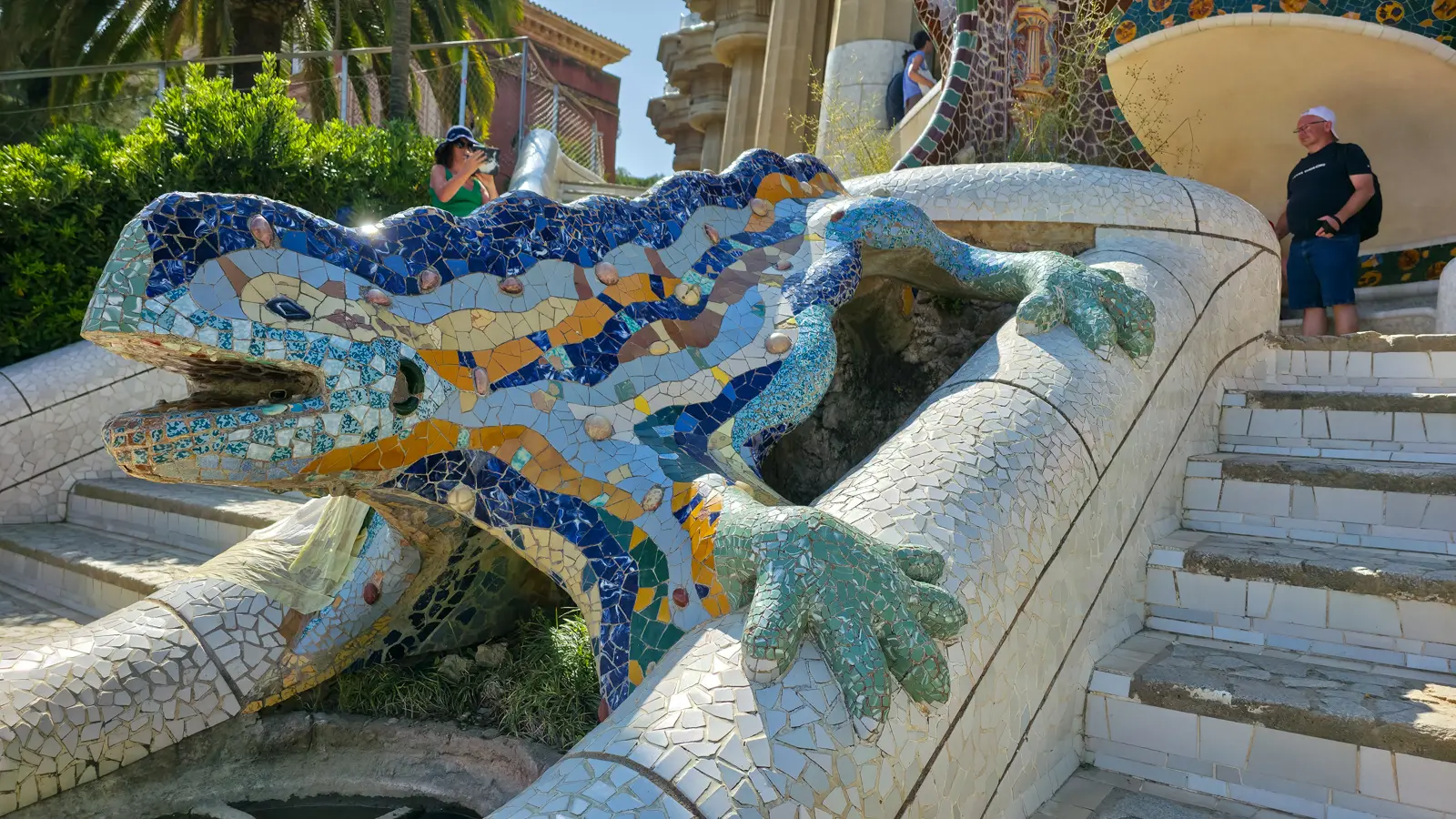
🦎 El Drac, Park Güell — Gaudí’s trencadís mosaic dragon on the grand staircase; arrive early for photos before tour groups
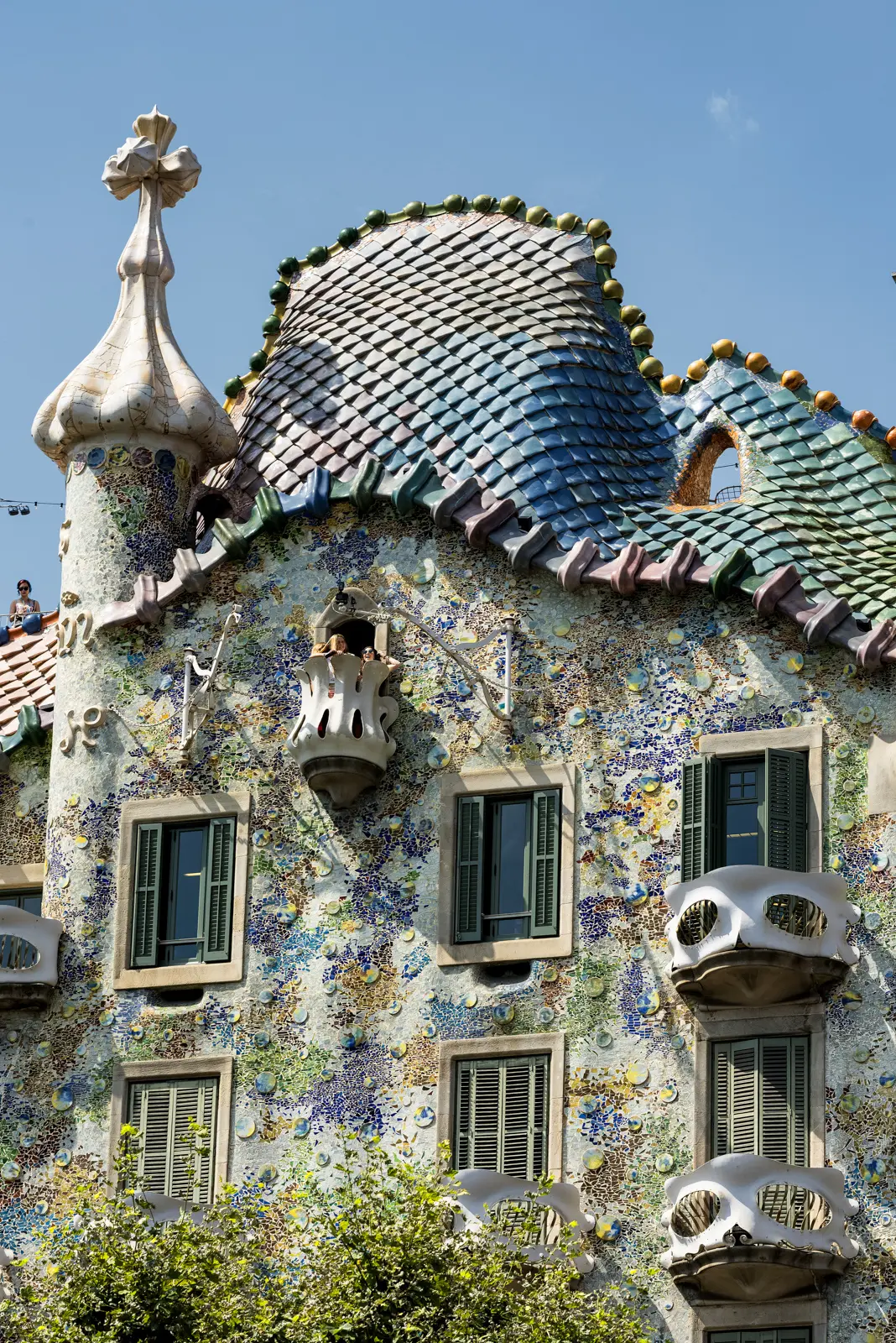
🏛️ Casa Batlló, Passeig de Gràcia 43 — scaled dragon-back rooftop and sword-turret; Magical Nights for the illuminated experience
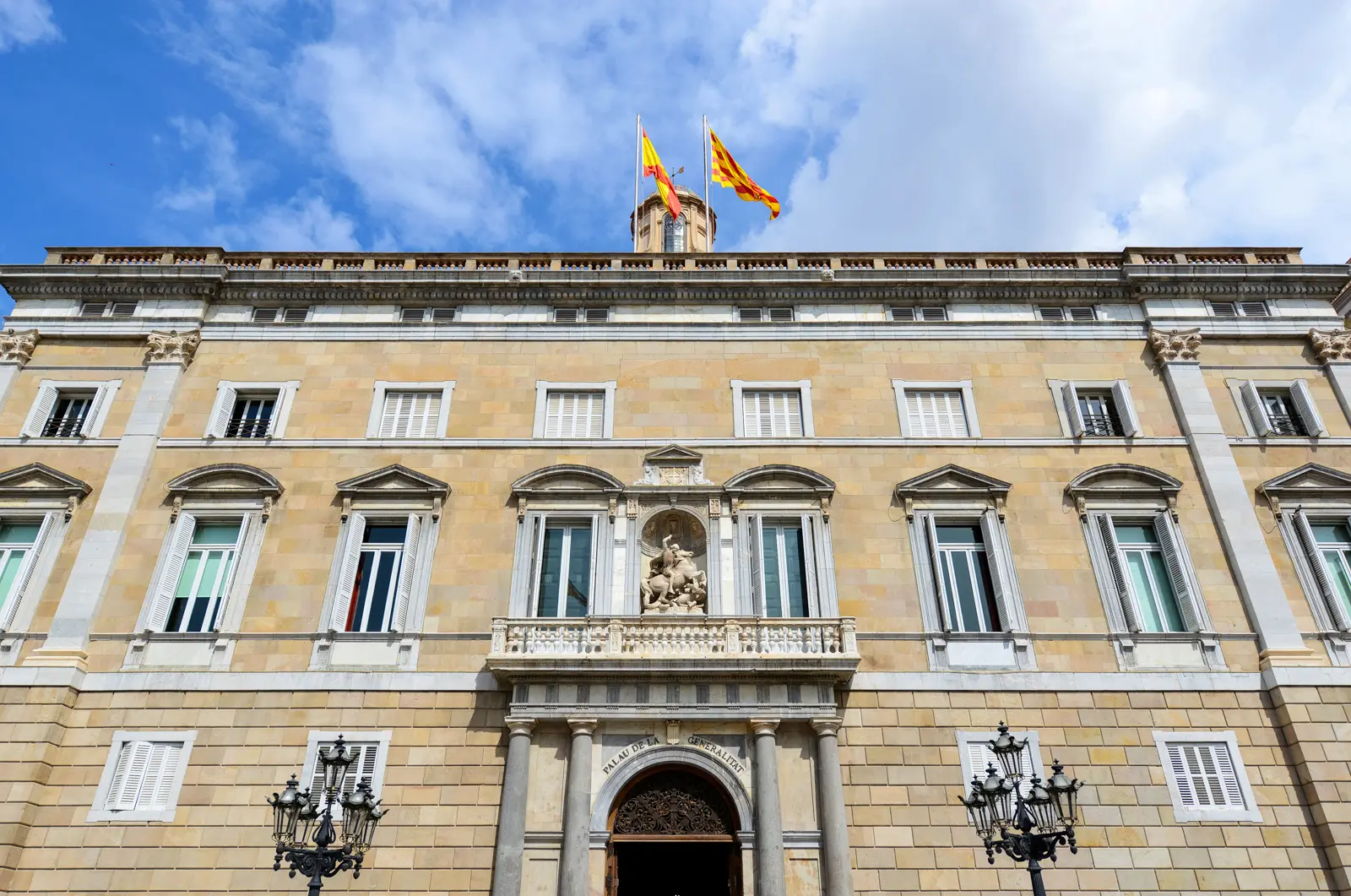
⚔️ Palau de la Generalitat, Plaça de Sant Jaume — two Sant Jordis: Andreu Aleu’s 1860 equestrian on the Renaissance façade AND Pere Joan’s 1418 Gothic medallion on the Carrer del Bisbe side
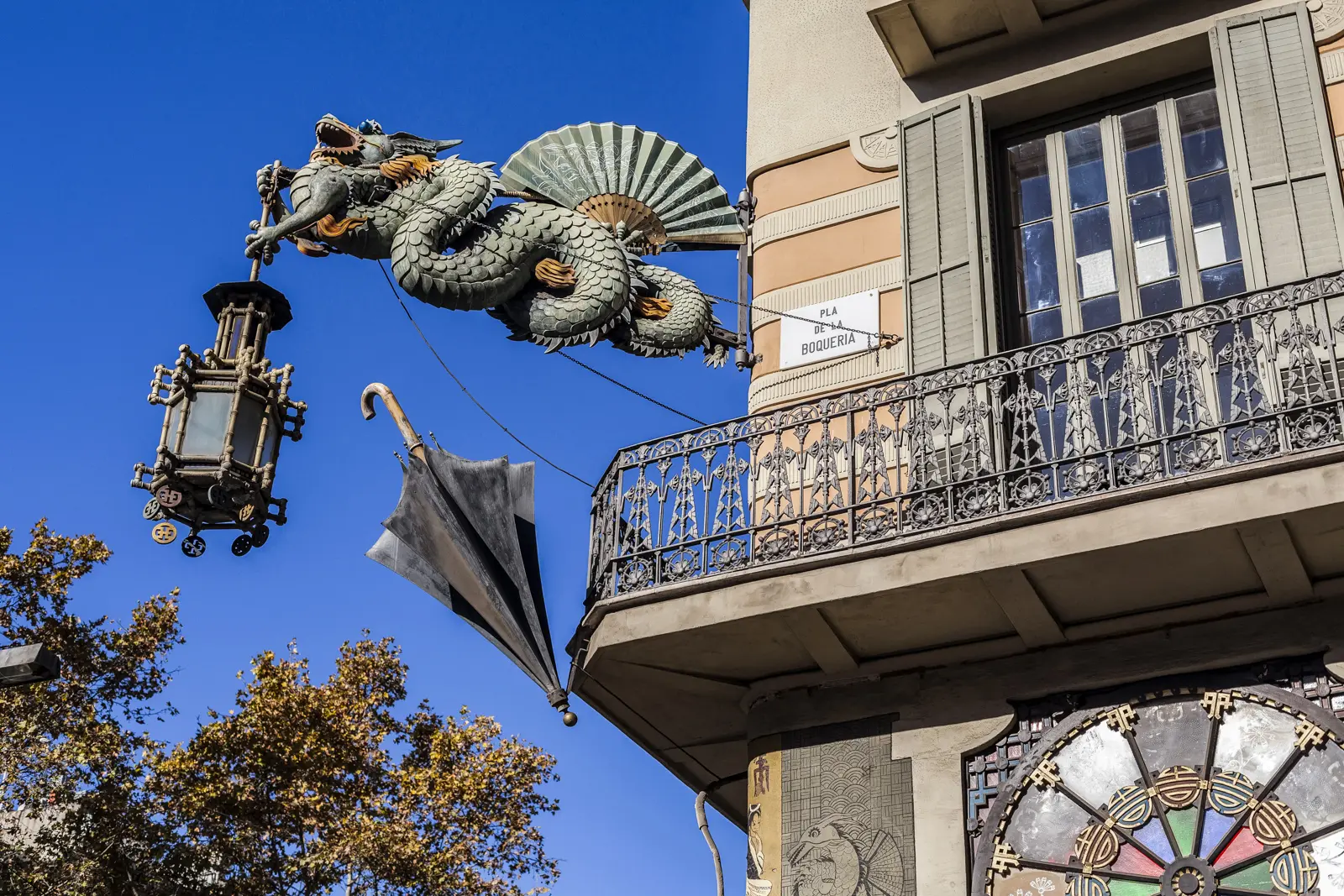
🌂 Casa Bruno Cuadros, La Rambla 82 — wrought-iron Chinese dragon gripping a lantern and umbrella; Josep Vilaseca, 1883
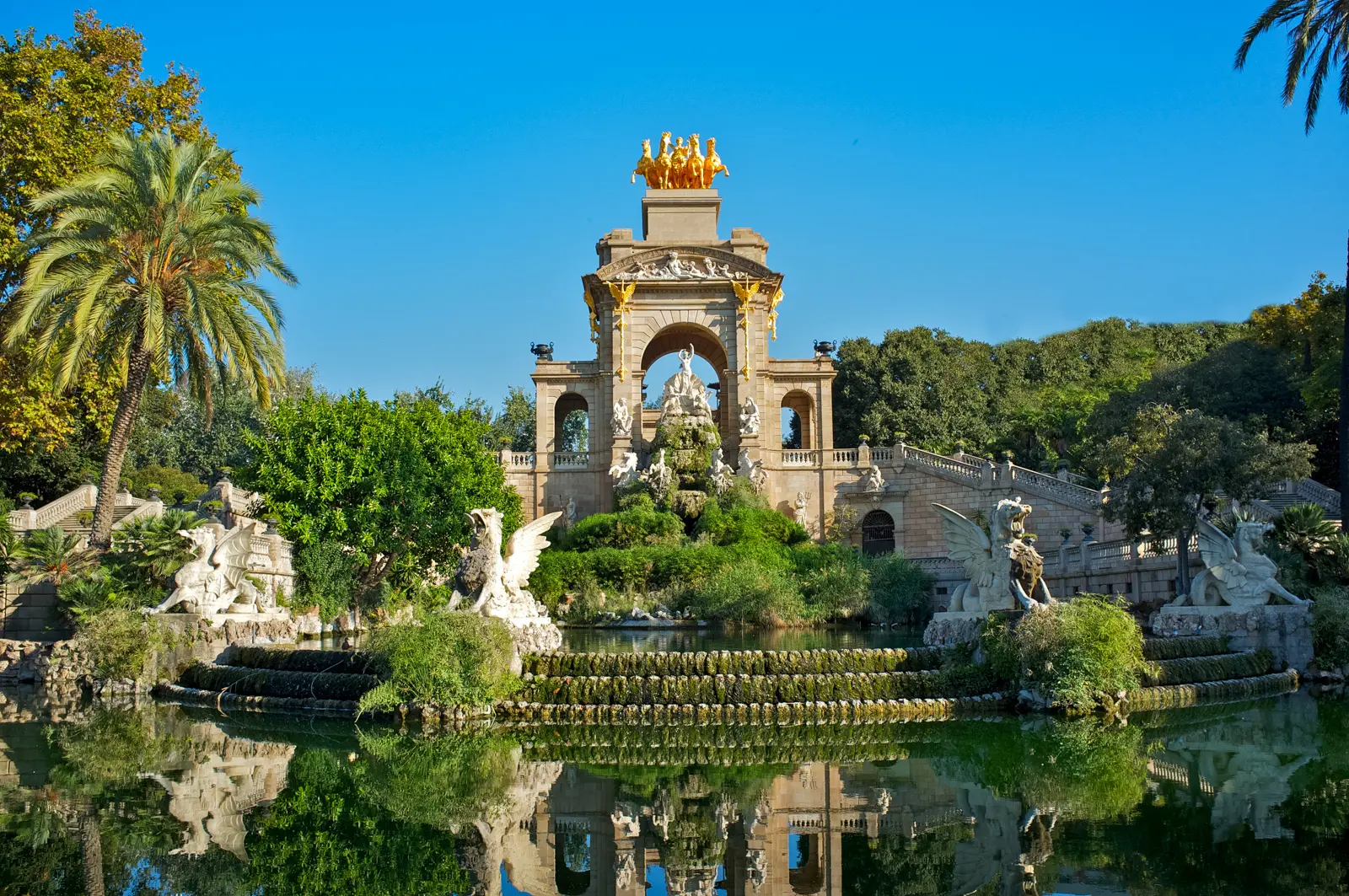
⛲ Cascada Monumental, Parc de la Ciutadella — Josep Fontserè’s fountain with dragons and griffins (young Gaudí assisted as apprentice)
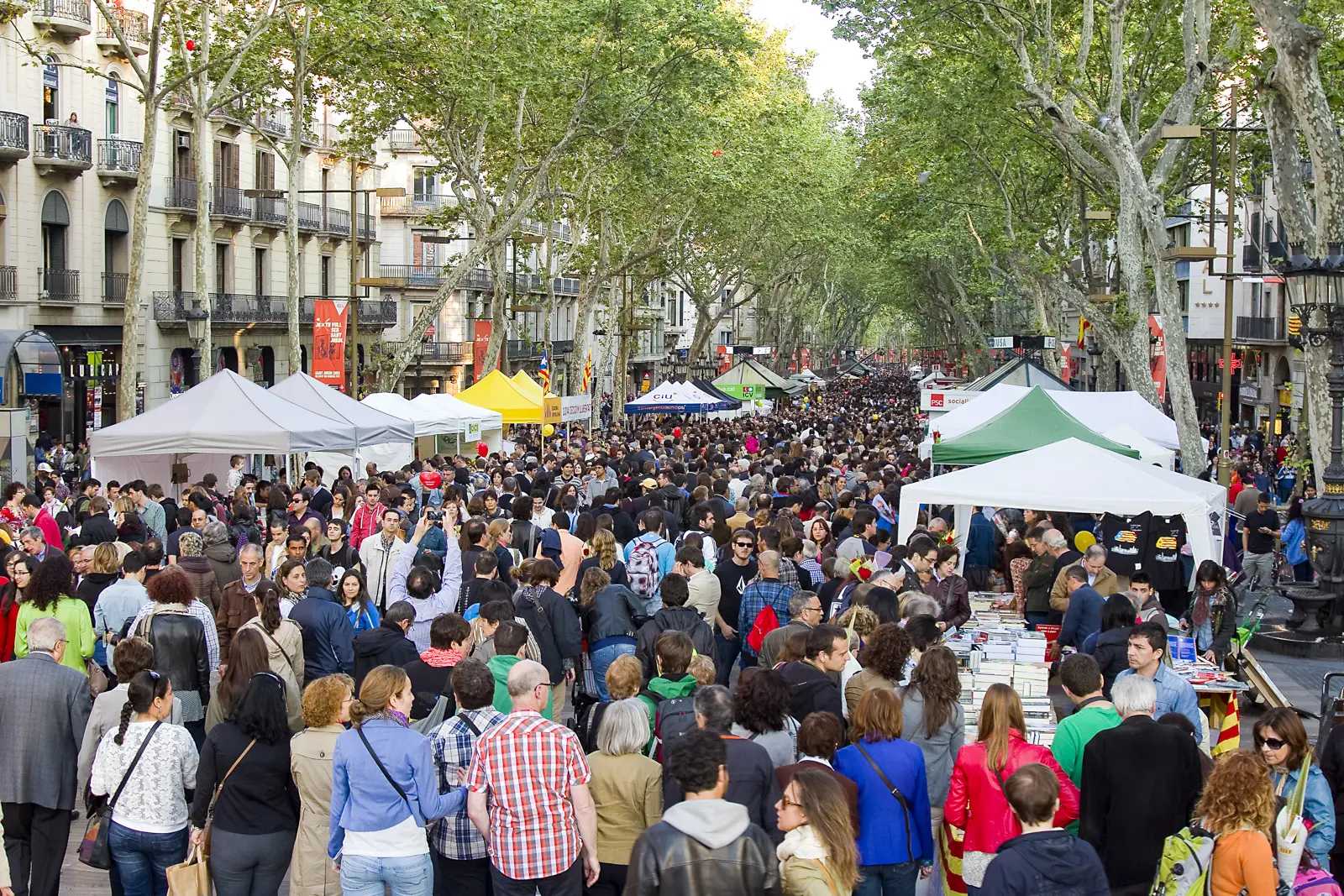
🌹 La Diada de Sant Jordi, April 23 — city-wide festival of books and roses; La Rambla and Passeig de Gràcia are the busiest stretches
The Legend of Saint George (Sant Jordi)
Every Catalan child grows up with the tale of Sant Jordi, the city’s patron saint. According to legend, a dragon once terrorized a kingdom, devouring animals and villagers until a princess was chosen as its next sacrifice. Just as the beast approached, Saint George rode forth, slayed the dragon, and from its spilled blood grew a single red rose.
In Catalonia, this story blossomed into a tradition of love and literature. On April 23 – La Diada de Sant Jordi (Saint George’s Day) – the streets fill with roses and books, as couples exchange gifts and celebrate creativity conquering fear. The dragon became more than a monster. It became a symbol of challenge and transformation, representing how courage and imagination can triumph over darkness, themes that resonate deeply in Catalan culture and art.
Gaudí’s Dragons: From Stone to Sky
No one captured the spirit of the dragon better than Antoni Gaudí. His architecture brims with mythic creatures, born from faith and nature alike.
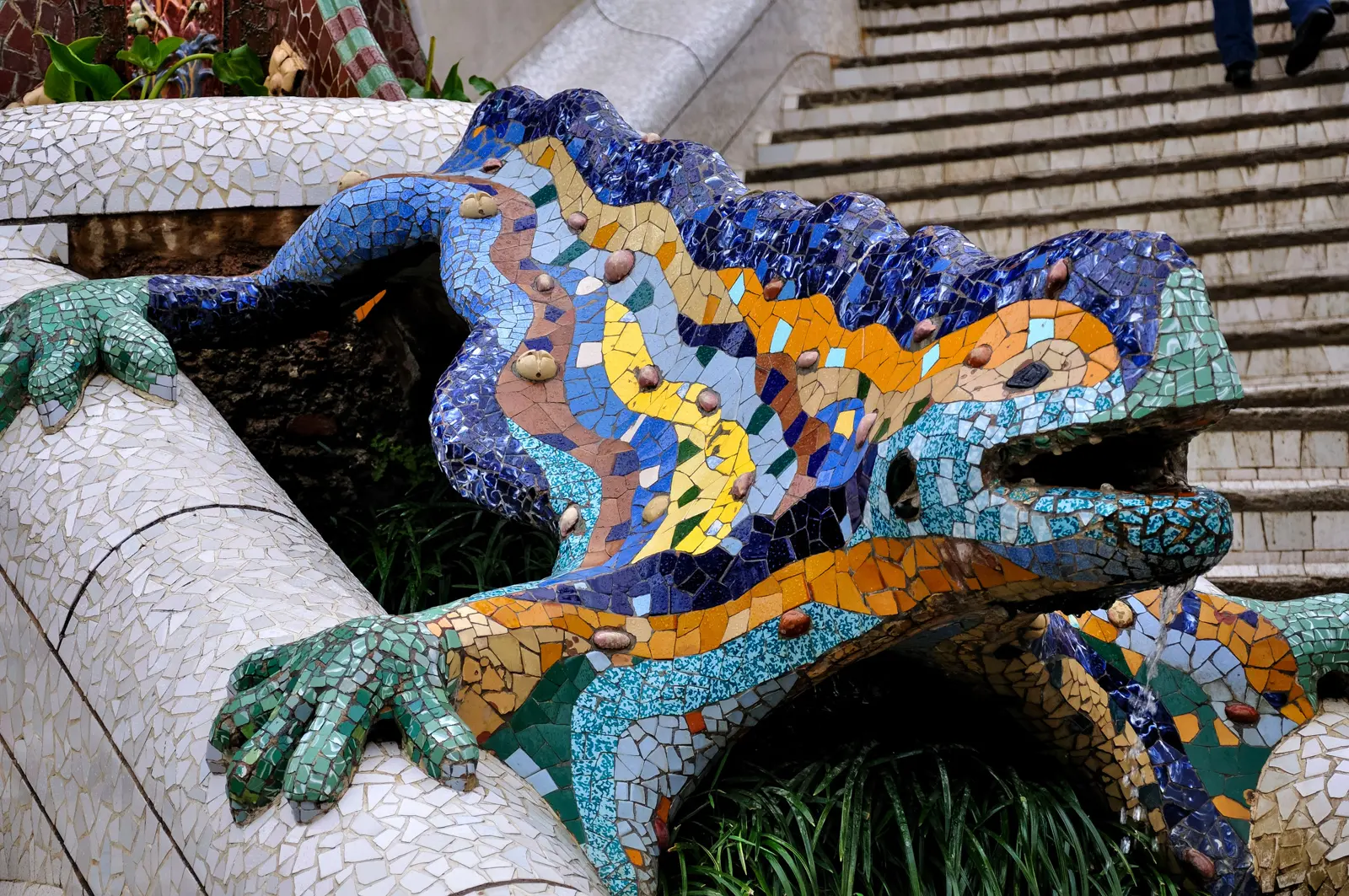
El Drac of Park Güell: At the park’s grand staircase, the mosaic dragon fountain greets visitors with a playful snarl. Crafted in trencadís (broken-tile mosaic), it sparkles in sunlight, symbolizing vitality, renewal, and guardianship. Some historians say it represents Ladon, the dragon from Greek mythology who guarded the Garden of the Hesperides – Gaudí often fused Christian and pagan imagery in his work. Others see El Drac as a protector of Catalonia itself. Whatever its meaning, it radiates joy, a guardian not of fear, but of wonder.
Casa Batlló – The Dragon’s Back: On Passeig de Gràcia, Casa Batlló is a legend come alive. Its rooftop ripples like a dragon’s spine, covered in shimmering scales of blue, green, and violet ceramic tiles. The turret crowned with a cross resembles the sword of Saint George, striking through the beast’s back. Seen in daylight, the façade ripples with colour — ceramic scales in cobalt, emerald and violet catching the sun, the cross-turret rising like the tip of Saint George’s sword. Return at night for the illuminated Magical Nights experience and the dragon glows softly under golden light, a second kind of magic entirely.
Dragons Beyond Gaudí
Barcelona’s fascination with dragons long predates Catalan Modernism. Wander through the Gothic Quarter or down La Rambla, and you’ll find them quietly watching:
Palau de la Generalitat: Two different Sant Jordis guard the Palau de la Generalitat, one on each of its façades. On the Renaissance main façade facing Plaça de Sant Jaume, an elegant equestrian Sant Jordi strikes down the dragon from a niche above the balcony — a Carrara marble sculpture carved by Andreu Aleu between 1864 and 1872 after a Diputació de Barcelona competition, and considered one of the defining works of the Catalan Renaixença. This is the Sant Jordi that greets you when you stand in the square. Then turn the corner onto Carrer del Bisbe, where the older Gothic side façade holds an extraordinary stone medallion of Sant Jordi killing the dragon, carved by a twenty-year-old Pere Joan between 1418 and 1419. Six centuries on, it’s still considered one of the finest pieces of Catalan Gothic sculpture — a saint frozen mid-victory, the dragon twisting below, all glowing softly in the Mediterranean light.
Casa Bruno Cuadros – The Umbrella House: On La Rambla 82, look up. A green wrought-iron Chinese dragon clings to the corner of the façade, gripping a lantern in one claw and an umbrella in the other. Created by Josep Vilaseca i Casanovas in 1883, it merges East Asian art with Catalan Modernism – proof that Barcelona’s imagination knows no borders.
Parc de la Ciutadella: At the heart of this lush park stands the Cascada Monumental, a grand fountain adorned with sculpted dragons and griffins. Designed by Josep Fontserè (with Gaudí’s assistance as a young apprentice), it marks one of the earliest appearances of dragon motifs in modern Barcelona’s public art.
The Meaning of Dragons in Catalan Culture
In Catalonia, dragons are not merely beasts to slay, they’re forces to understand. They embody the duality of chaos and creation, fear and freedom, earth and air. Throughout history, artists and architects have reimagined the dragon as a protector rather than destroyer, a guardian of creativity, courage, and transformation. It mirrors the Catalan spirit itself: bold, imaginative, and unafraid to reinvent tradition. In Gaudí’s hands, the dragon becomes part of nature’s language: alive, colorful, eternal.
Through My Eyes
As I wandered through Barcelona, I began to spot dragons everywhere – on rooftops, doors, fountains, even café signs. Some fierce, some smiling, some so subtle you might miss them if you weren’t looking. Standing before El Drac in Park Güell, I remembered how its tiles catch the morning sun, each fragment unique, yet together forming harmony. Later, at Casa Batlló, I looked up at the curved rooftop and felt that same pulse of creativity: how this city dares to turn myth into art, history into light.
For me, the dragons of Barcelona aren’t about fear at all. They’re about rebirth, resilience, and imagination, reminding us that what once threatened can become what protects, and that every scar can shimmer if we choose to make it beautiful.
Final Thoughts
Barcelona’s dragons are more than decoration; they’re guardians of imagination. They remind us that art can tame fear, that creativity can transform chaos, and that beauty often hides in the unexpected.
As I left Casa Batlló that evening, the sky glowed rose-gold above the dragon’s spine. I thought of El Drac in Park Güell, still smiling under the sun, and realized that Barcelona’s magic lies in this, a city unafraid to dream, to play, and to keep its dragons close.
Have you spotted a dragon in Barcelona before? Tell me your favorite one in the comments below.

🌟 Everything You Need to Plan Your Dream Trip in 2026
- 🌟 Luxury Hotels - Find premium stays with Booking.com & Hotels.com
- 🏡 Vacation Rentals - Discover unique properties on VRBO
- 🏞️ Guided Tours - Explore with Viator or GetYourGuide
- 🎫 Attraction Tickets - Skip the lines with Tiqets
- 🚢 Ocean Cruises - Set sail with Cruise Direct
- 📱 International SIMs - Stay connected with Saily
- 🚗 Car Rentals - Budget-friendly options from Discover Cars
- 🌐 Secure VPNs - Browse safely with NordVPN
- 💶 Currency Exchange - Best rates with Wise
- 🗣️ Learn Languages - Master the local language with Babbel and Rosetta Stone