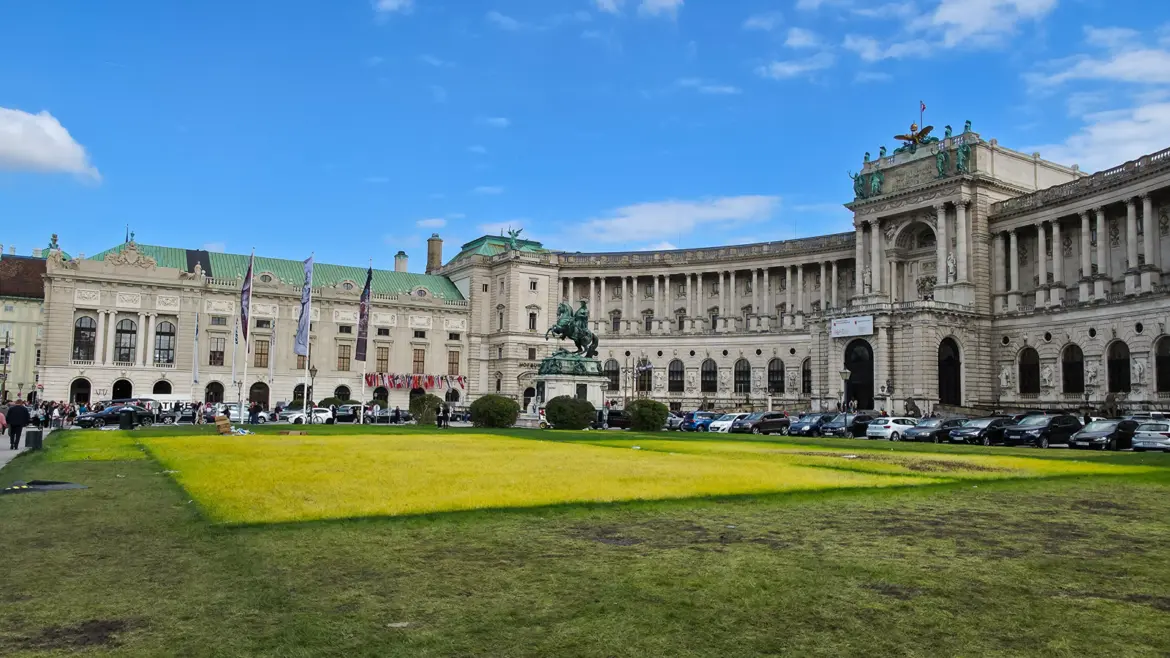
Hello world travelers! In the heart of Vienna, few places capture the scale and symbolism of imperial Austria as powerfully as Heldenplatz. This vast ceremonial square sits directly in front of the monumental Hofburg Palace, the historic residence of the Habsburg dynasty for more than six centuries. Standing here today, it is easy to feel the weight of history. Grand statues rise from the open plaza, palace façades stretch across the horizon, and sweeping views connect the square to Vienna’s elegant boulevards and gardens. Heldenplatz is not merely a public space – it is a stage where the political, cultural, and military story of Austria unfolded.
Today, the square is open and peaceful, filled with locals walking across its lawns and visitors pausing to admire the architecture. Yet beneath this calm surface lies a place deeply tied to imperial ambition, national pride, and some of the most consequential moments in Austrian history.
Heldenplatz at a Glance
📍 Location: Heldenplatz, 1010 Vienna — directly in front of the Hofburg Palace
🏛️ What It Is: Vienna’s monumental imperial square, conceived as the ceremonial heart of the expanded Hofburg complex
🗡️ The Heroes: Archduke Charles (defeated Napoleon, 1809) and Prince Eugene of Savoy (pushed back Ottoman forces) — both sculpted by Anton Dominik Fernkorn
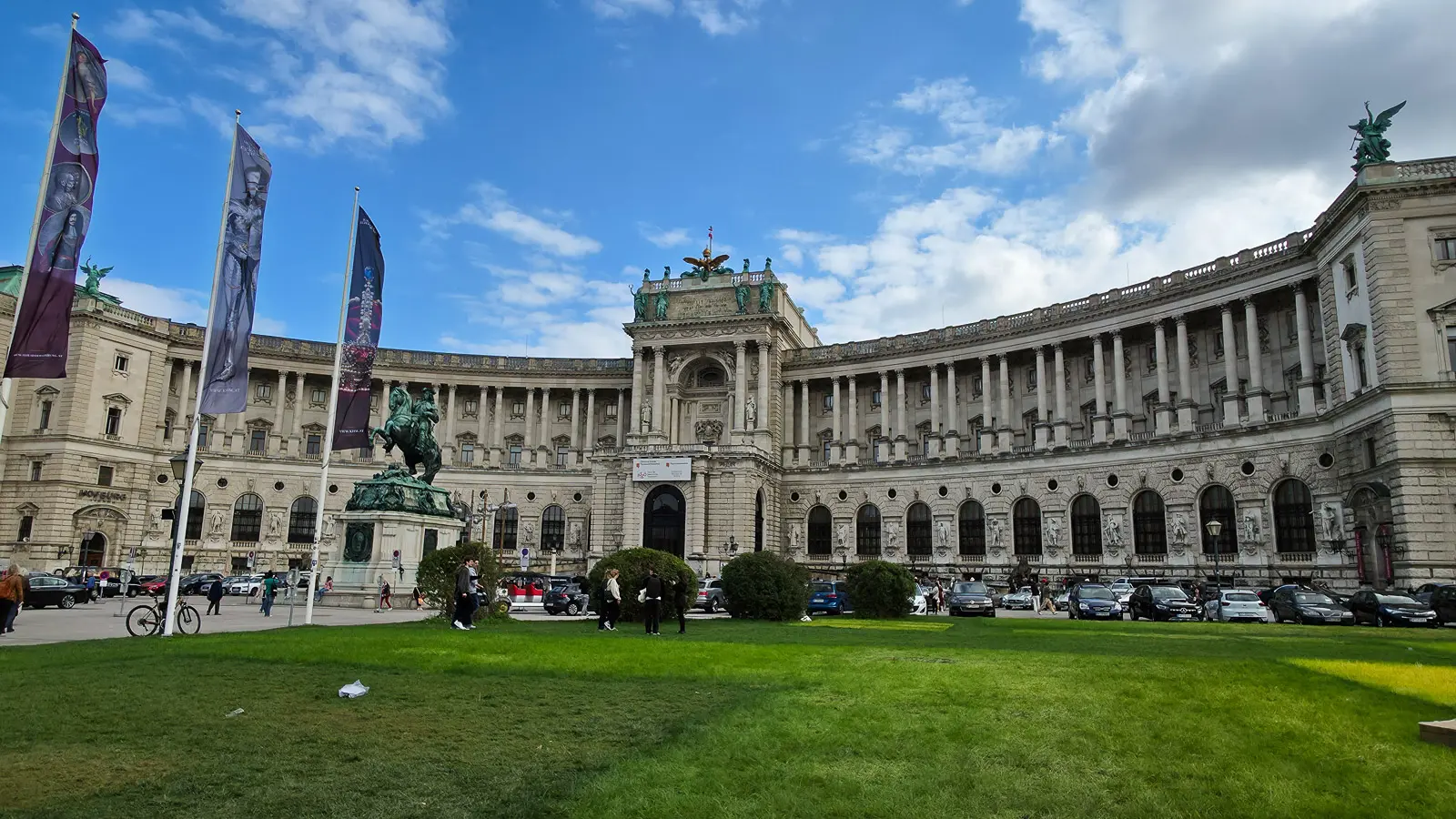
🏰 The Neue Burg: Monumental curved façade housing museums; its balcony is where the 1938 Anschluss was proclaimed
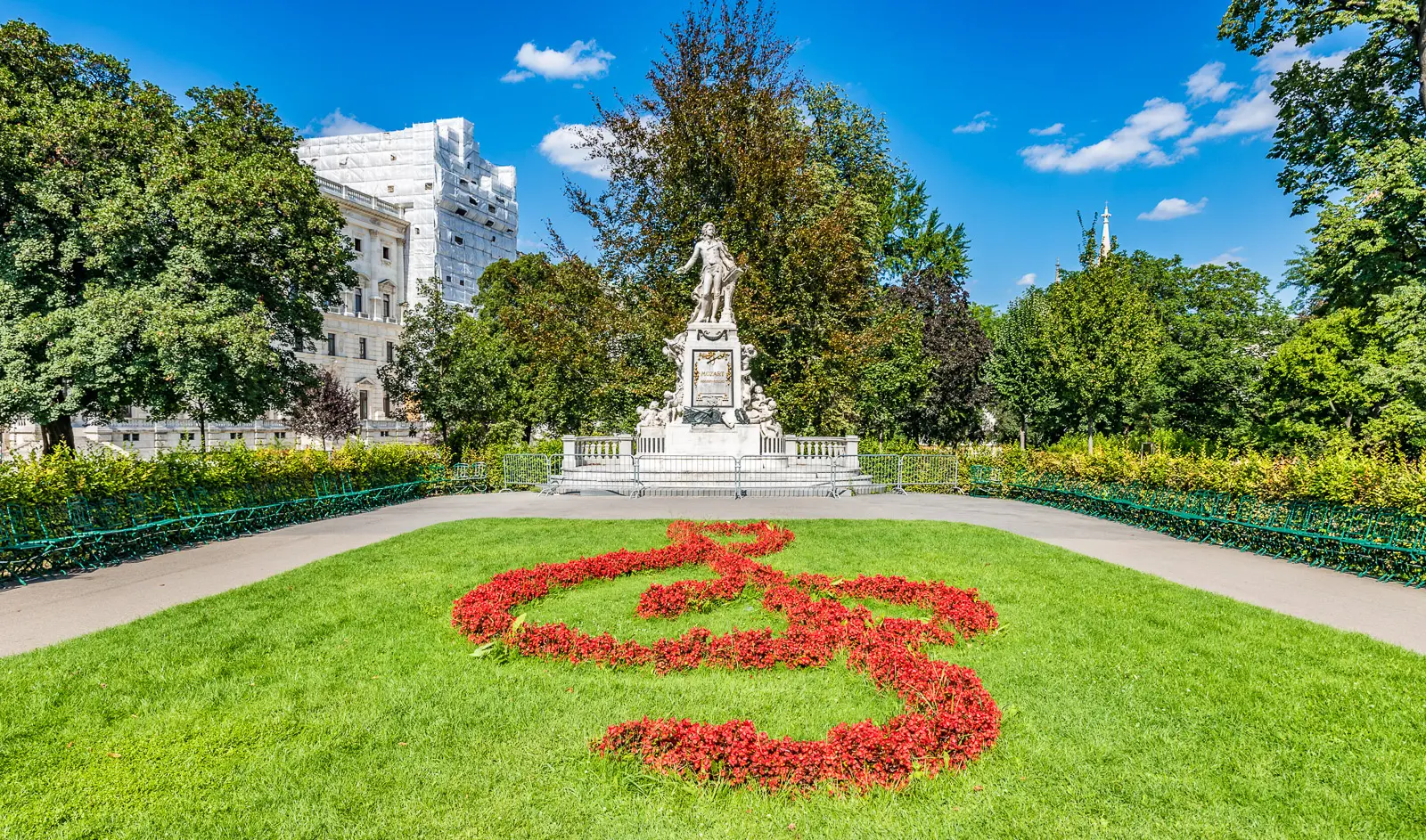
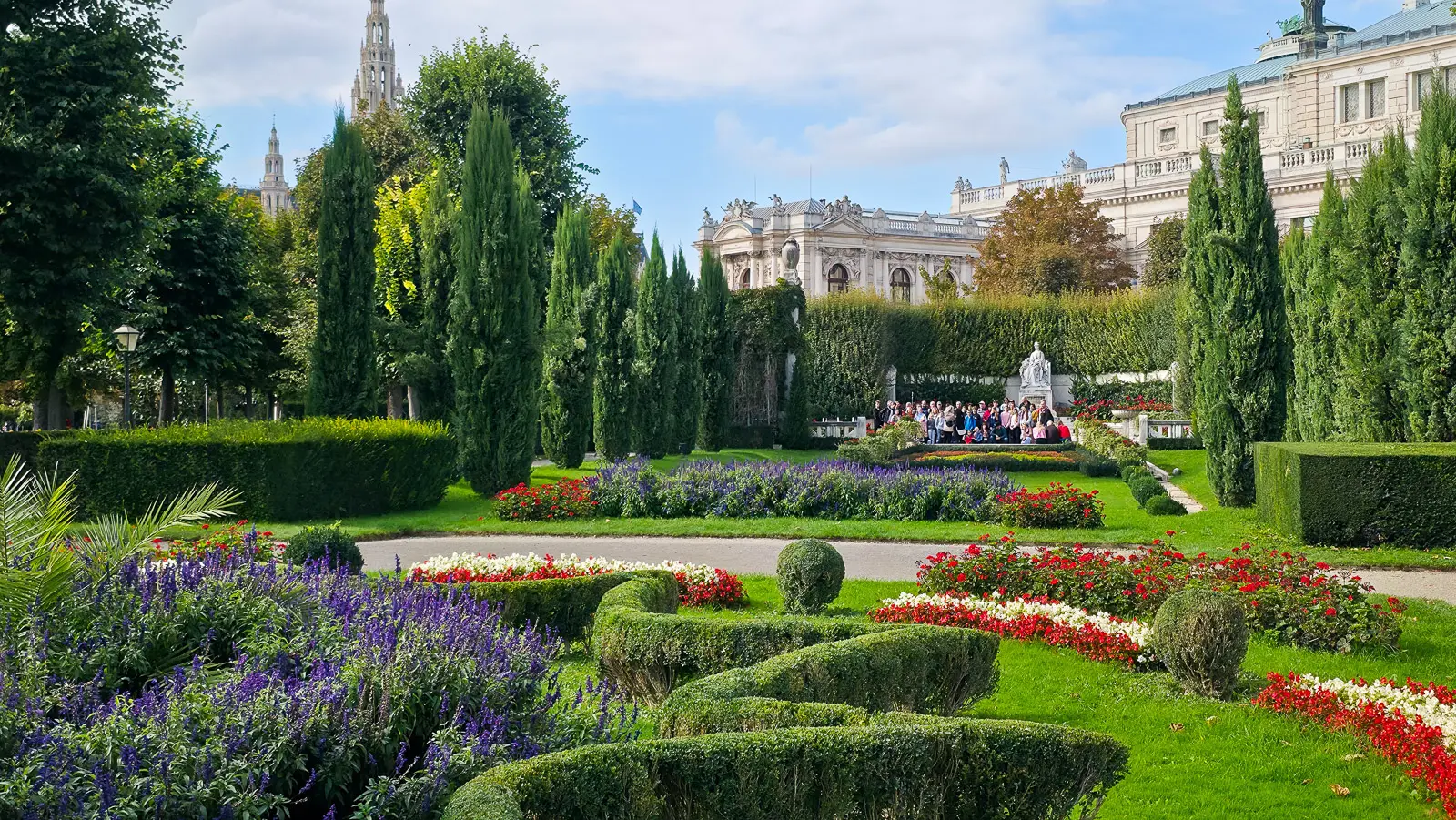
🌿 Nearby: Burggarten (Mozart statue) and Volksgarten (Sisi monument, rose gardens)
🎟️ Entrance: Free (open public square); Neue Burg museums require tickets
⏱️ Time Needed: 30–60 minutes (longer with gardens and museums)
💡 Tip: Visit early morning or sunset for the best light on the Neue Burg façade
The Imperial Vision Behind Heldenplatz
Heldenplatz, which translates to “Heroes’ Square”, was conceived during the 19th century as part of the Habsburg Empire’s ambitious plans to expand the Hofburg Palace in Vienna into one of the largest palace complexes in Europe. By the mid-1800s, the city had grown dramatically, and Emperor Franz Joseph I envisioned a monumental imperial forum that would rival the grand squares of Paris and Rome. The project formed part of the broader urban transformation that created Vienna’s famous Ringstrasse, a sweeping boulevard lined with museums, opera houses, and government buildings.
Heldenplatz was intended to serve as the ceremonial heart of this expanded imperial district, a space where military parades, imperial celebrations, and public gatherings could take place against the backdrop of the Hofburg. The enormous curved façade of the Neue Burg, which dominates the square today, was designed as the final architectural statement of the Habsburg court. Although construction began in the late 19th century, the building was only completed in the early 20th century, just as the empire itself was approaching its final years.
The Heroes of the Square
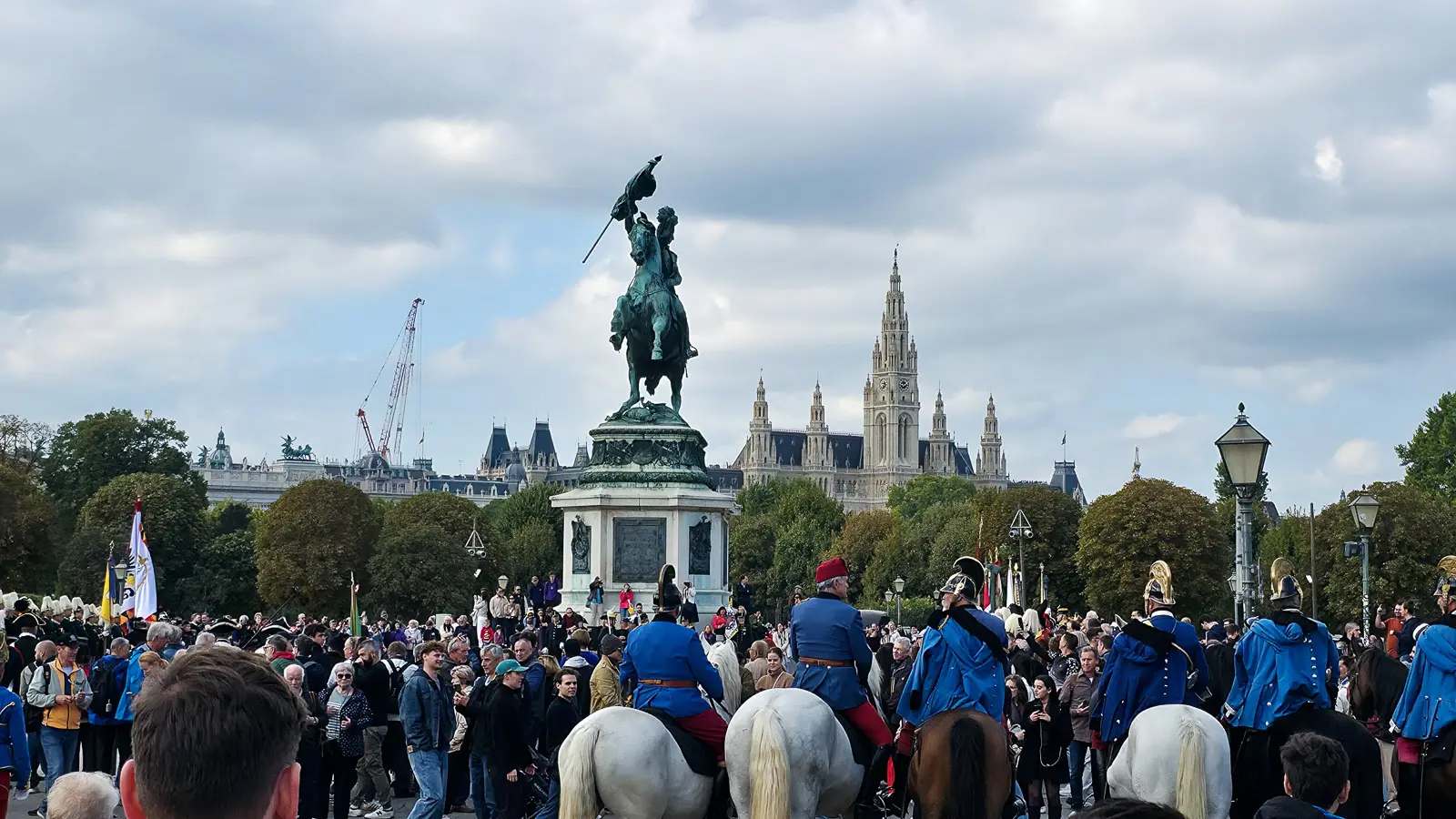
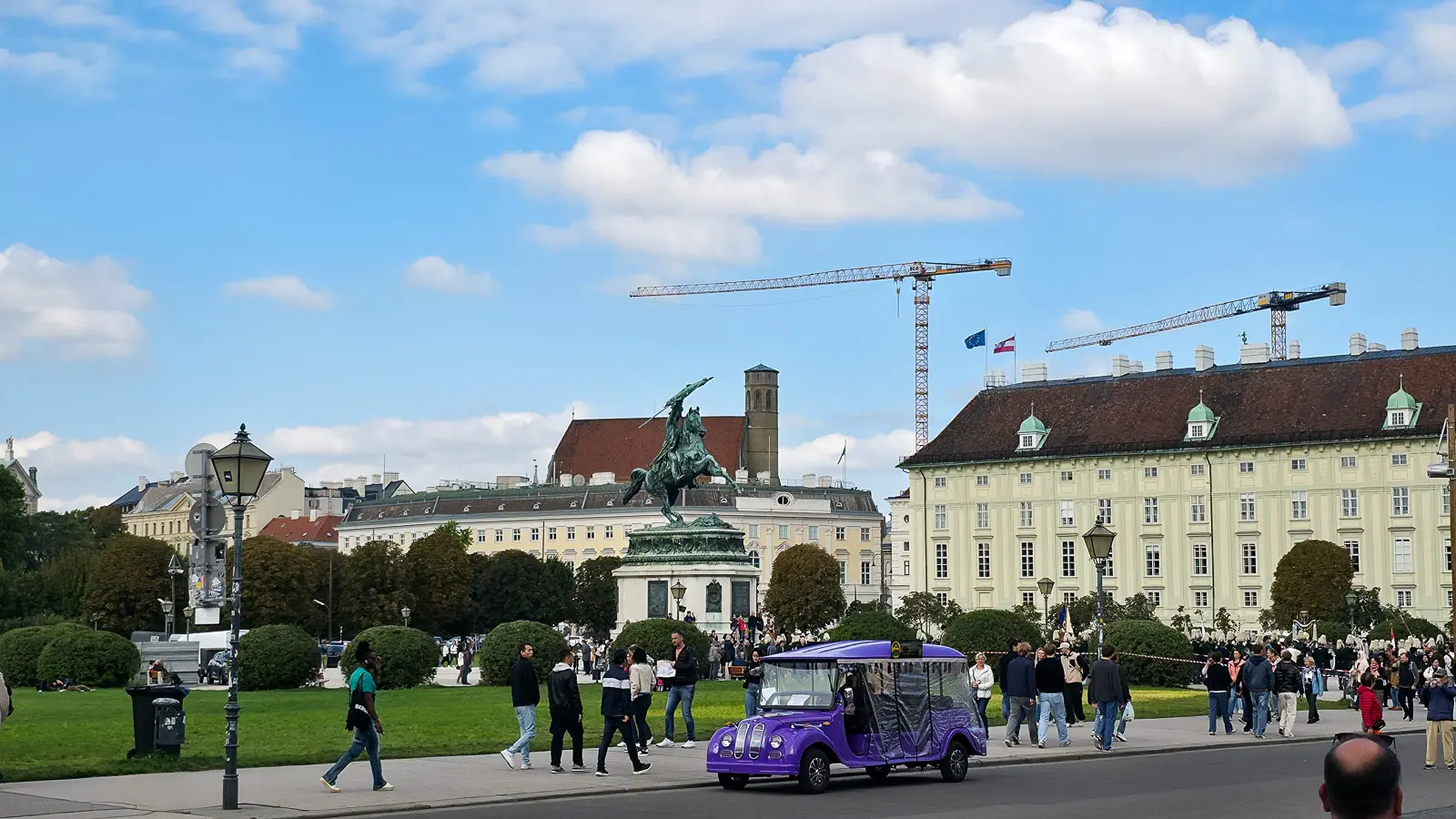
At the center of Heldenplatz stand two striking equestrian statues honoring military leaders who helped shape the Habsburg Empire. Both monuments were designed by the Austrian sculptor Anton Dominik Fernkorn, whose ambitious commission would become one of the most challenging artistic projects of his career.
The first monument commemorates Archduke Charles of Austria-Teschen, one of Austria’s most celebrated generals. His statue captures a dramatic moment: the archduke raises a battle flag high while his horse rears forward in motion, celebrating his victory over Napoleon at the Battle of Aspern-Essling – Napoleon’s first major defeat on land in many years and a turning point that shook the aura of invincibility surrounding the French army. What makes the statue even more remarkable is its engineering: the entire sculpture balances on the horse’s two hind legs alone, without additional support, a technical achievement that had never been realized at such scale before.
Opposite stands the monument to Prince Eugene of Savoy, another legendary Habsburg commander who played a decisive role in pushing back Ottoman forces from Central Europe during the late 17th and early 18th centuries, helping secure Habsburg influence across the region. Unlike the Archduke Charles statue, the horse here rests partially on its tail as an additional support point – a subtle but telling difference in the engineering of the sculpture. Fernkorn designed the monument, though it was ultimately completed by his students after illness prevented him from finishing the work himself.
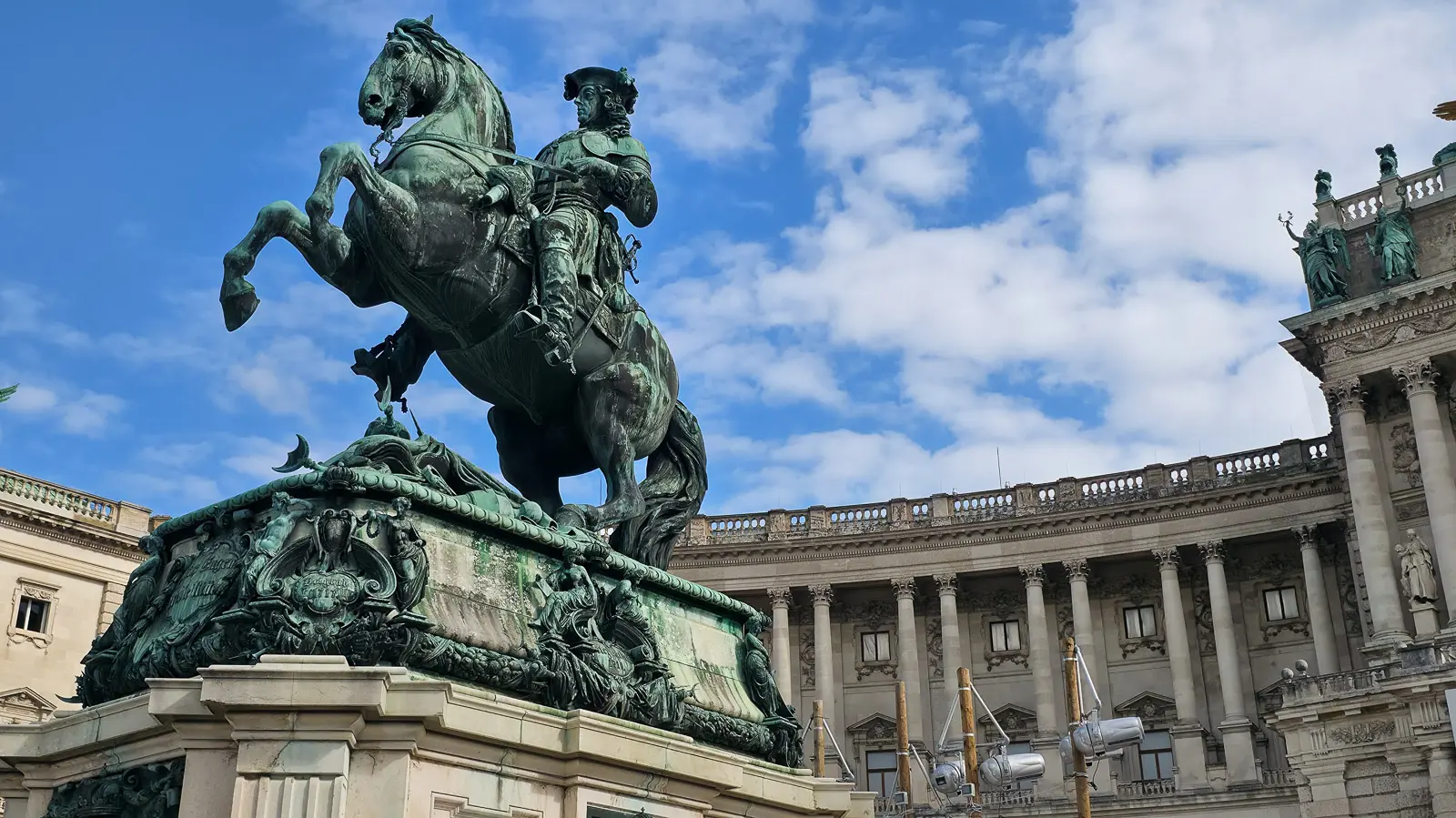
The immense scale and technical complexity of these monuments placed extraordinary pressure on the sculptor, and Fernkorn suffered a severe mental breakdown during the years surrounding their creation. Together, these statues give the square its name – Heroes’ Square – reminding visitors that behind every monument lies not only imperial history, but also the human stories of those who created them.
The Neue Burg and a Square Marked by History
The immense semicircular structure overlooking Heldenplatz is the Neue Burg, one of the newest additions to the sprawling Hofburg Palace complex. Originally intended as part of an even larger imperial forum that would have stretched across Vienna’s city center, the Neue Burg was designed to symbolize the strength and stability of the Habsburg monarchy. Yet history would take a very different course. The outbreak of World War I and the collapse of the Austro-Hungarian Empire in 1918 brought those grand imperial plans to an abrupt end.
Today the building houses several museums, including collections connected to the Kunsthistorisches Museum as well as exhibitions exploring Austrian history and culture. Its monumental curved façade still dominates the square, giving Heldenplatz a dramatic sense of scale rarely found in historic European capitals.
Heldenplatz is also associated with one of the most significant and troubling moments in Austria’s modern history. On March 12, 1938, German troops entered Austria, completing the Anschluss, the incorporation of Austria into Nazi Germany. Three days later, on March 15, Adolf Hitler stood on the terrace of the Neue Burg overlooking Heldenplatz and proclaimed before a crowd of over 200,000 people the entry of his homeland into the German Reich. Photographs of the event show the square filled to capacity, making Heldenplatz one of the most recognizable and sobering sites connected to this turning point in European history.
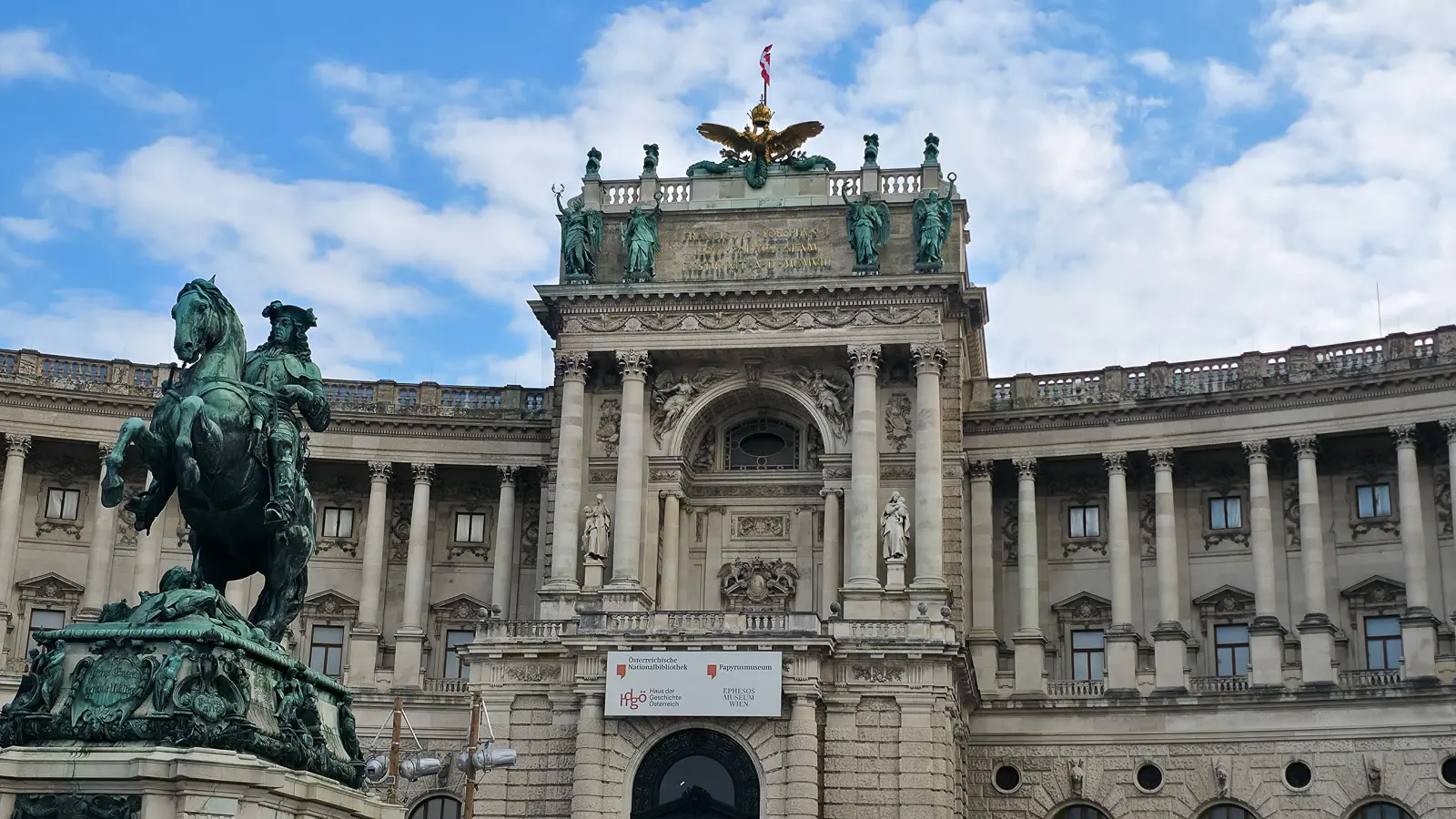
Today the square stands not only as a monument to imperial ambition, but also as a place of reflection, a reminder that the grand stages of history often carry both moments of pride and chapters of profound consequence and sadness.
Heldenplatz Today
Despite its dramatic history, Heldenplatz today feels calm and welcoming. Wide lawns and open spaces invite visitors to pause, take photographs, and admire the architecture that surrounds the square. The area also hosts public events throughout the year, including cultural festivals, national celebrations, and seasonal gatherings. Because of its central location, Heldenplatz is also a natural starting point for exploring the many historic landmarks nearby.
Just steps away you will find the elegant Burggarten, a peaceful imperial garden where visitors can relax beneath shady trees and admire the famous statue of Wolfgang Amadeus Mozart. On the opposite side lies the rose-filled Volksgarten, another beloved green space in the city. These gardens soften the monumental architecture of the Hofburg, creating a beautiful balance between imperial grandeur and everyday Viennese life.
Experiencing Heldenplatz
One of the most rewarding aspects of visiting Heldenplatz is simply taking time to absorb the atmosphere of the square. Walk slowly across the open lawns, admire the sculptural details of the statues, and look up at the sweeping façade of the Neue Burg rising above you. From this vantage point, it becomes clear how Heldenplatz was designed to impress – a carefully orchestrated space where architecture, sculpture, and open landscape combine to project power and prestige.
Yet the square also feels surprisingly human in scale today. Locals cross it on their way through the city, travelers pause for photographs, and the echoes of imperial history mingle quietly with the rhythms of modern Vienna.
Bubbly Tips for Visiting Heldenplatz
- Visit Heldenplatz early in the morning or near sunset, when the light beautifully illuminates the façades of the Hofburg Palace.
- Walk around the entire square to appreciate the equestrian statues and monumental architecture from multiple perspectives.
- Combine your visit with nearby attractions like the Burggarten and Volksgarten, two of Vienna’s most beautiful historic gardens.
- Take time to explore the museums inside the Neue Burg, part of the vast Hofburg Palace complex.
- Pause in the gardens nearby to enjoy one of the most peaceful corners of central Vienna.
Final Thoughts
Heldenplatz is one of those places where Vienna’s layered history becomes visible all at once. Imperial ambition, military triumph, political upheaval, and modern city life all intersect here within a single monumental square. Standing in the center of Heldenplatz, surrounded by statues, palaces, and sweeping views, visitors gain a powerful sense of the forces that shaped Austria’s past – and of the remarkable city that continues to evolve around it.
For travelers exploring Vienna, Heldenplatz is not just another landmark. It is a place where history speaks across centuries, inviting us to pause, reflect, and see the city through the lens of its extraordinary story.
Have you visited Heldenplatz during your time in Vienna? I’d love to hear what stood out most to you – the monumental architecture, the powerful history, or the peaceful gardens nearby.
xoxo,
Bubbly 🌿
🌟 Everything You Need to Plan Your Dream Trip in 2026
- 🌟 Luxury Hotels - Find premium stays with Booking.com & Hotels.com
- 🏡 Vacation Rentals - Discover unique properties on VRBO
- 🏞️ Guided Tours - Explore with Viator or GetYourGuide
- 🎫 Attraction Tickets - Skip the lines with Tiqets
- 🚢 Ocean Cruises - Set sail with Cruise Direct
- 📱 International SIMs - Stay connected with Saily
- 🚗 Car Rentals - Budget-friendly options from Discover Cars
- 🌐 Secure VPNs - Browse safely with NordVPN
- 💶 Currency Exchange - Best rates with Wise
- 🗣️ Learn Languages - Master the local language with Babbel and Rosetta Stone