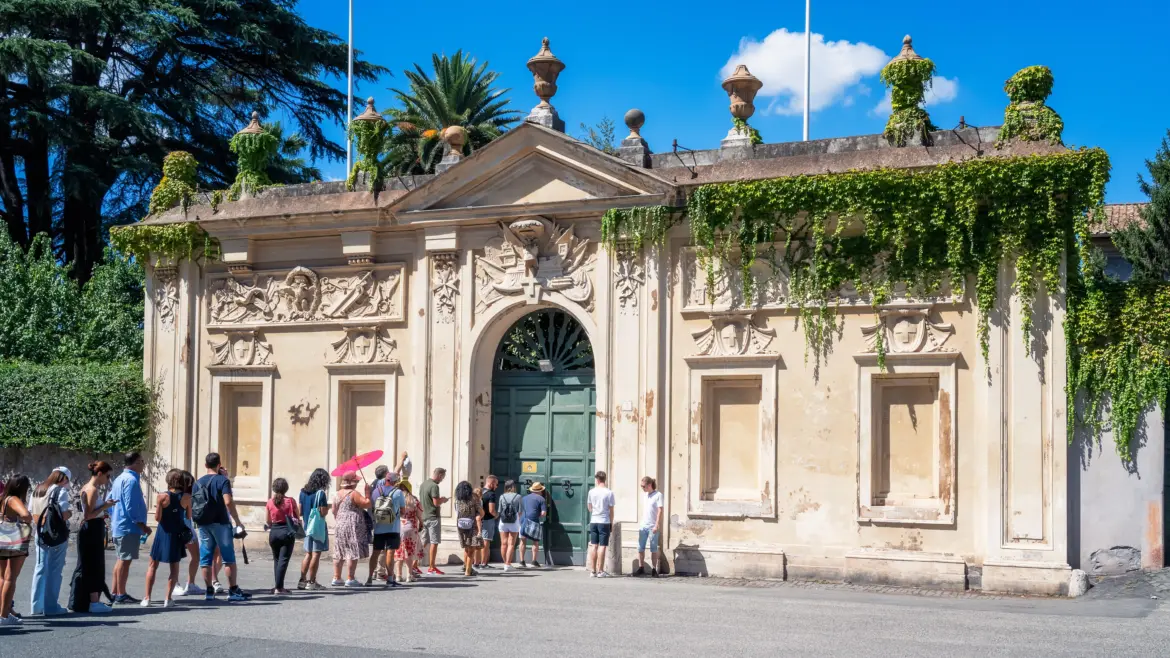
Hello, fellow adventurers! Some of Rome’s most unforgettable moments aren’t found in grand piazzas or towering monuments – they’re discovered quietly, almost accidentally. The Aventine Keyhole is one of those rare places. It doesn’t announce itself. It doesn’t overwhelm. Instead, it invites you to pause, lean in, and look closely. Tucked away on the peaceful Aventine Hill, this tiny keyhole offers one of Rome’s most extraordinary views, a perfectly aligned glimpse of three sovereign territories at once. And yet, it feels deeply intimate, almost private, like Rome is sharing a secret just with you.
A View Through Time and Power
The Aventine Keyhole sits within the gate of the Villa del Priorato di Malta, headquarters of the Sovereign Military Order of Malta, one of the world’s oldest chivalric orders, tracing its roots back to 11th-century Jerusalem. Though the space behind the door remains private, the keyhole itself has become one of Rome’s most legendary secrets.
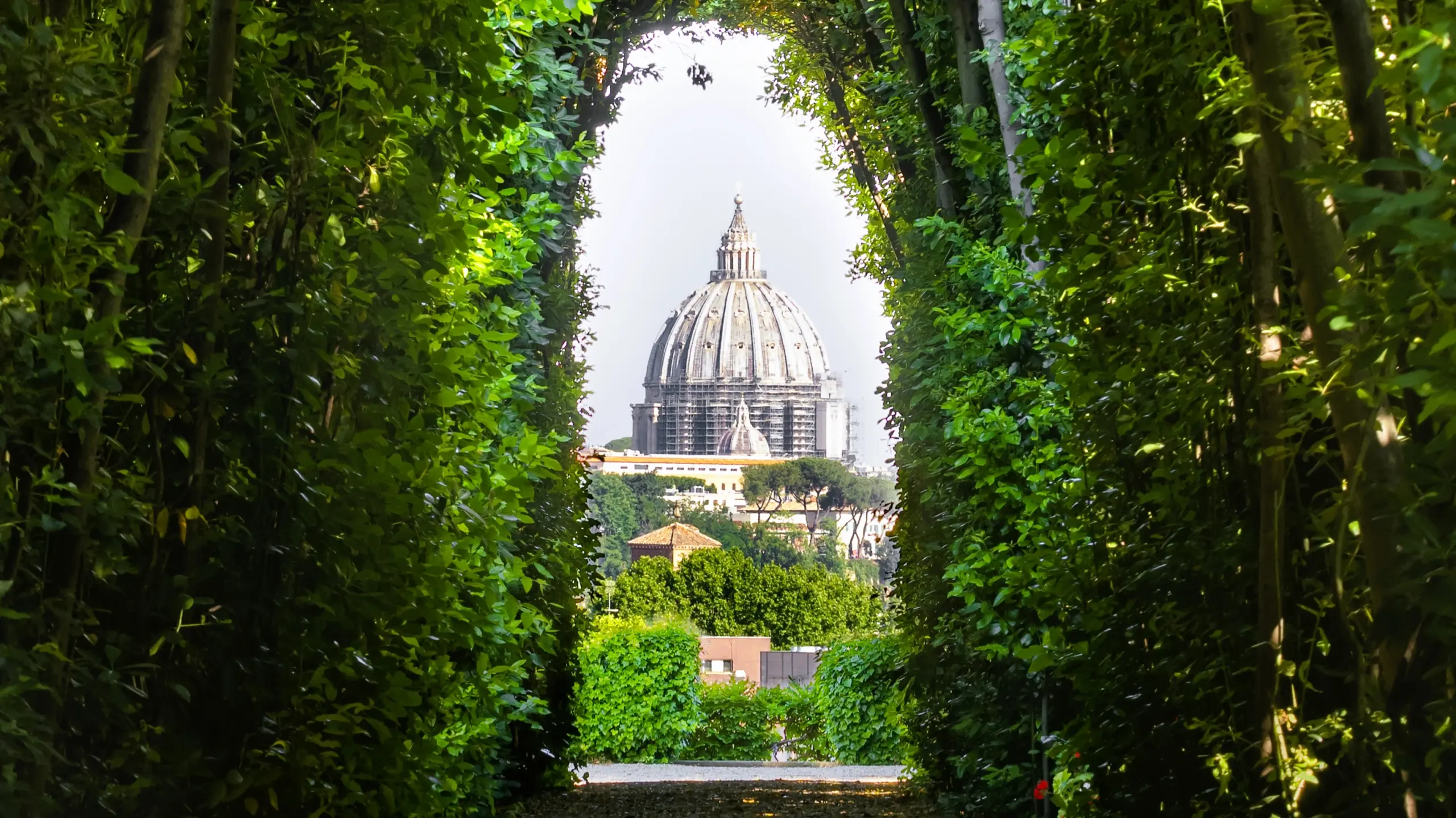
When you peer through it, you’ll see a perfectly framed view of St. Peter’s Basilica, its dome rising gracefully at the end of a hedge-lined corridor. But this isn’t an accident of nature or a lucky coincidence, it’s a masterpiece of intentional design. In 1765, the renowned architect Giovanni Battista Piranesi carefully engineered this alignment while redesigning the priory gardens for Cardinal Giovanni Battista Rezzonico. His vision created an optical bond between the Order and the Holy See it serves, transforming a simple keyhole into a symbolic passage.
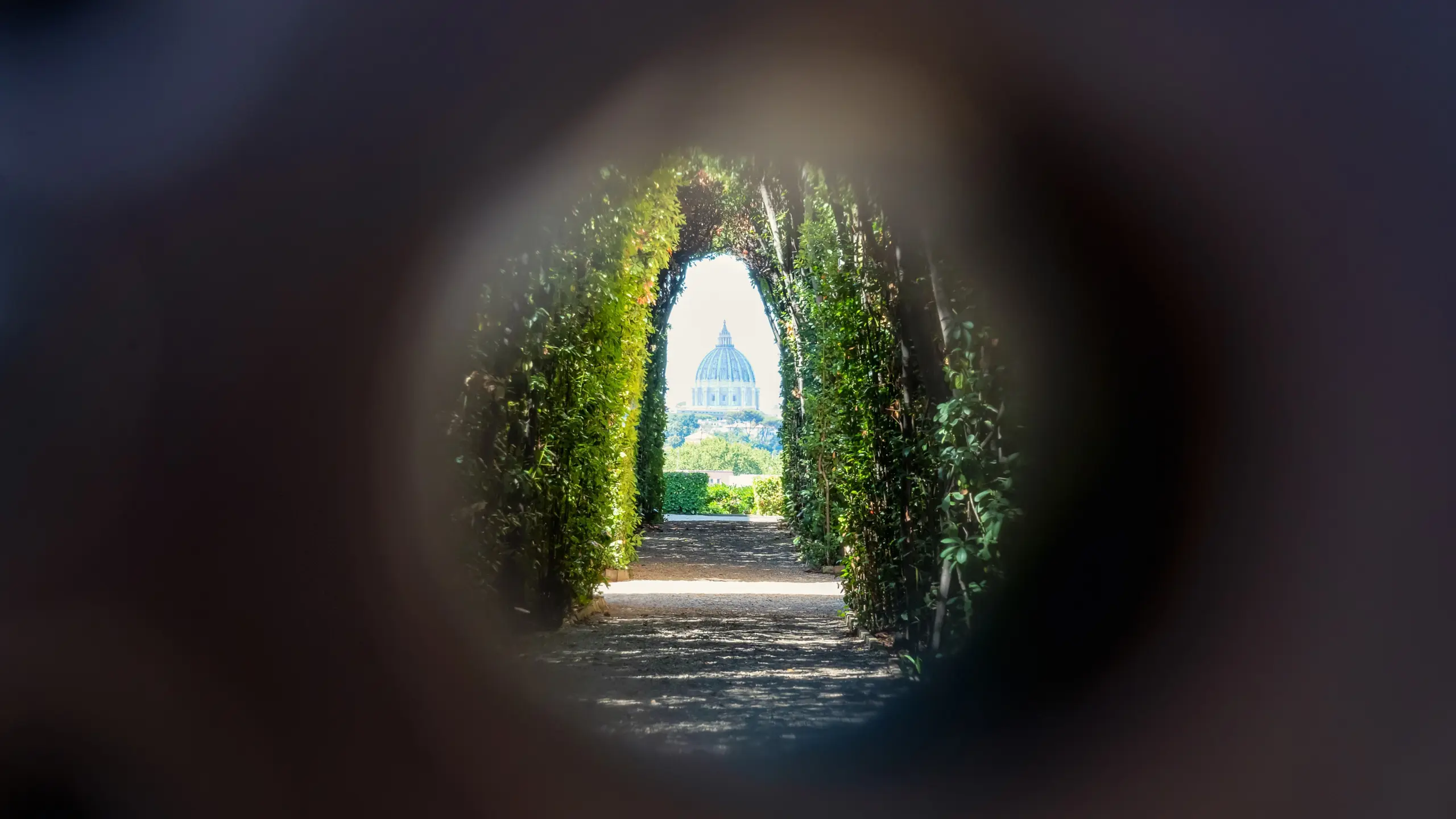
What makes this view so special is its layered symbolism: in one single glance, you’re looking through three sovereign entities: Italy (where you stand), the extraterritorial property of the Sovereign Military Order of Malta (through the keyhole), and Vatican City (where the basilica rises in the distance). Few places in the world offer such a concentrated moment of history, faith, architecture, and sovereignty, all revealed through something so small.
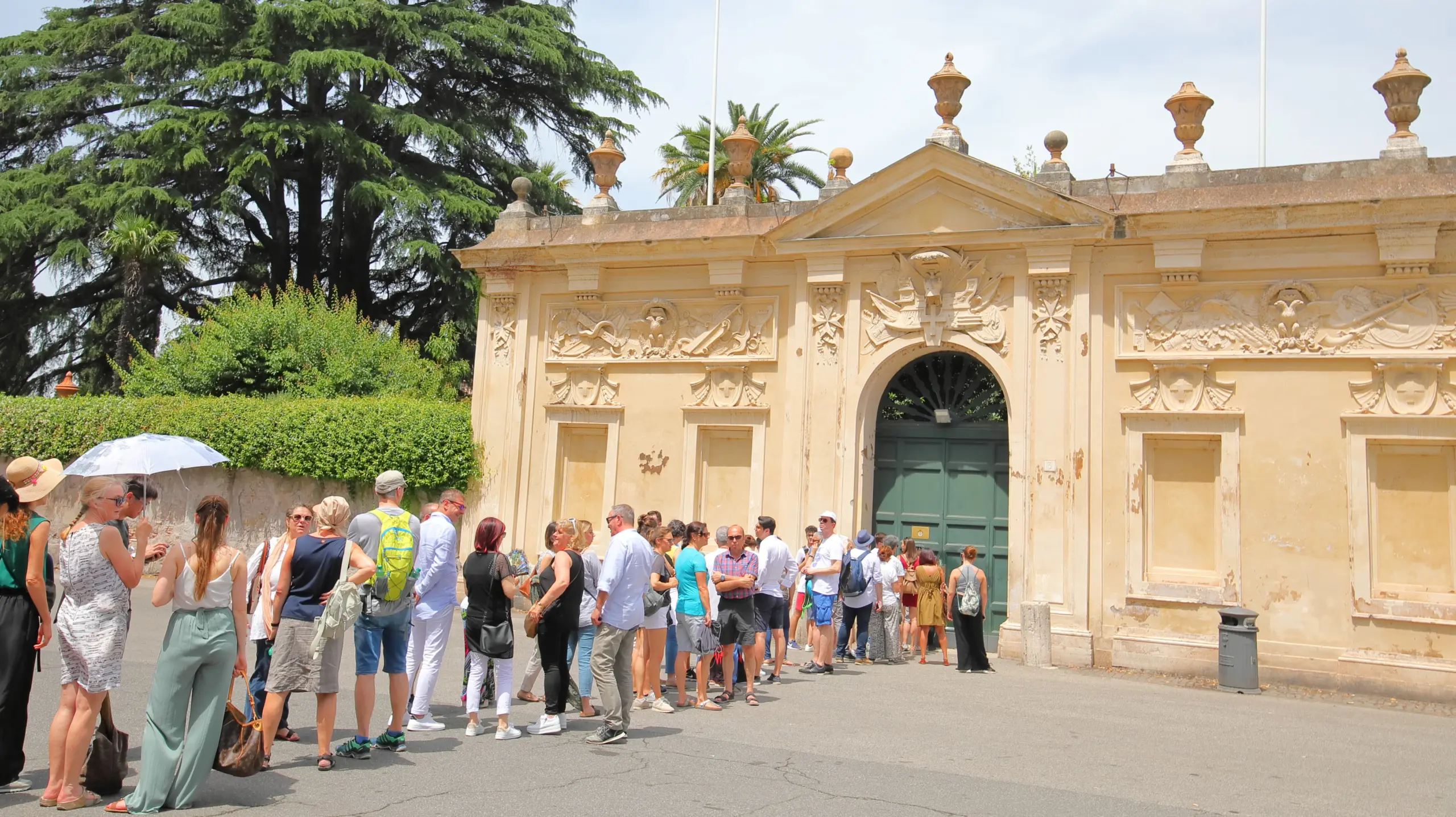
The experience is brief, intimate, and unforgettable. Visitors often line up along the quiet street, waiting their turn to press their eye to the keyhole and witness this remarkable convergence of art, design, and meaning.
Why the Aventine Hill Feels Different
The Aventine Hill has always felt like Rome’s quieter sibling, more contemplative than theatrical. Unlike the bustle of Trastevere or the constant motion of the historic center, this hill is defined by residential streets, monastery walls, hidden gardens, and long pauses of silence. You don’t come here to be entertained; you come here to breathe. The Aventine Keyhole fits perfectly into this atmosphere – subtle, intentional, and quietly extraordinary, revealing its magic only to those willing to slow down.
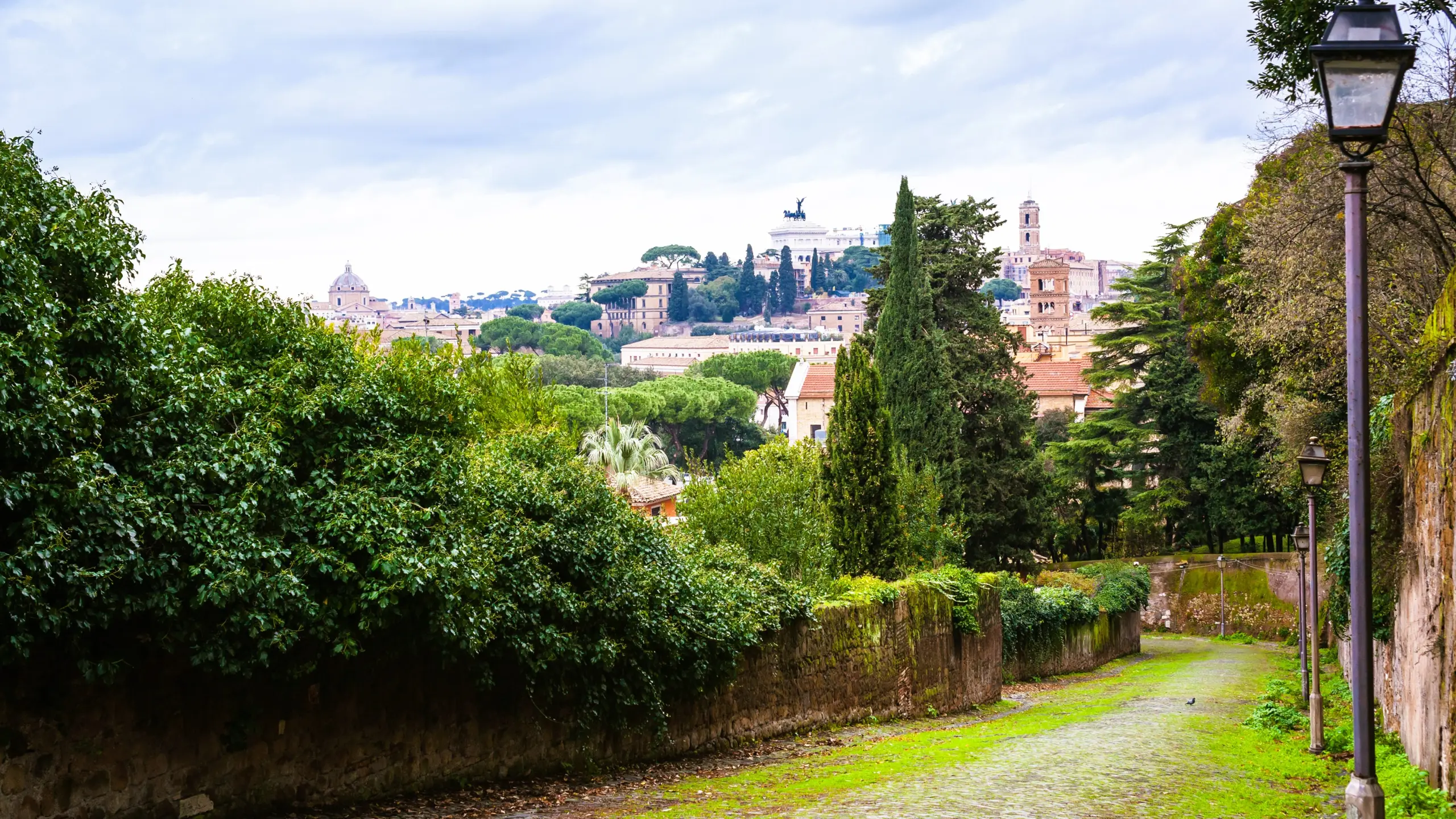
Just steps away, the Giardino degli Aranci (Orange Garden) opens the city in a completely different way. After peering through the keyhole’s tight, precise frame, entering the garden feels like a release – space expands, light softens, and Rome stretches outward. From the terrace, rooftops spill toward the horizon, the Tiber winds calmly below, and the city feels distant yet deeply present. It’s one of those places where you linger without realizing how much time has passed, a perfect balance to the intimacy of the keyhole moment.
When the View Becomes a Feeling
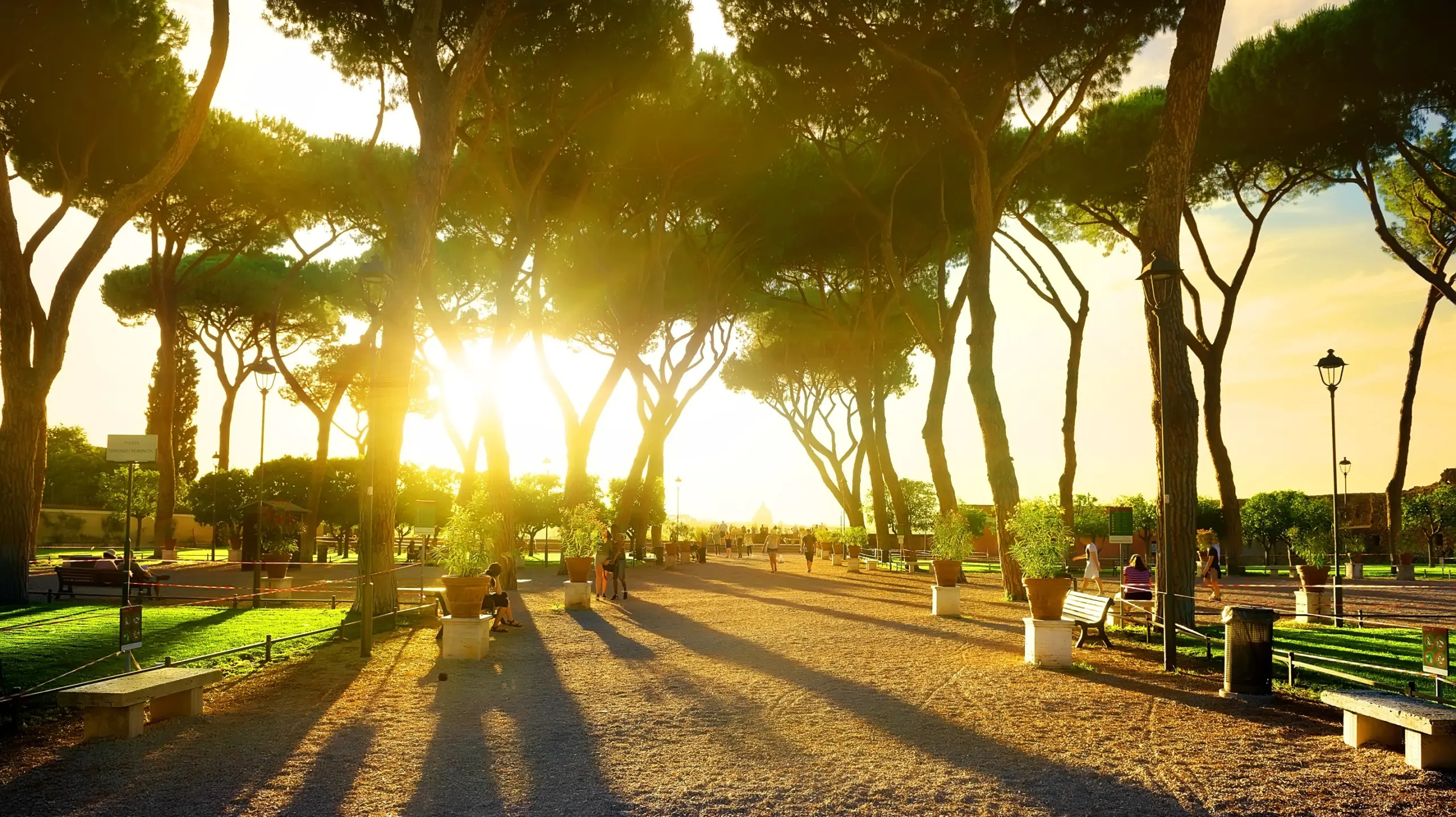
The Aventine Keyhole can be visited at any time of day, but certain moments make the experience feel especially enchanting. Early mornings are hushed and contemplative, when the city still feels half-asleep and the air carries a gentle stillness. Golden hour is equally magical – the light softens, the hedges glow in warm tones, and St. Peter’s dome seems to shimmer delicately in the distance, perfectly framed and almost unreal.
Even when a small line forms, the atmosphere never feels rushed or chaotic. People instinctively lower their voices. Smiles are exchanged. There’s a quiet understanding that something special is happening, a shared pause in a city known for grandeur. What stayed with me most wasn’t just the view through the keyhole, but the feeling it created. Rome reminding me that beauty doesn’t always announce itself loudly. Sometimes it hides behind an ordinary door, waiting for those curious enough to look closer.
The Aventine Keyhole isn’t a checklist stop or a photo race. It’s a moment of stillness. A breath. A gentle reminder that travel is often about perspective, and that the smallest frames can hold the most powerful views.
Bubbly Tips & Fun Fact
- Go early or near sunset for fewer crowds and softer light
- Pair it with a walk through the Orange Garden for the full experience
- Be patient, everyone deserves their moment at the keyhole
- Don’t rush – this is a pause, not a photo stop
- Fun Fact: the iconic Aventine Keyhole is prominently featured in Emily in Paris Season 5, where Emily’s new love interest, Marcello, takes her there for a romantic “Roman Holiday” moment, offering a stunning framed view of St. Peter’s Basilica through its tiny opening.
Final Thoughts
The Aventine Keyhole isn’t about spectacle, it’s about perspective. It reminds you that Rome isn’t only found in massive monuments and famous piazzas, but in tiny, thoughtful details that invite wonder. It’s a moment you don’t photograph for likes, you remember it because it made you slow down.
Have you experienced the Aventine Keyhole yet? Did it surprise you as much as it did me? I’d love to hear your thoughts in the comments.
Until next time, stay curious, stay gentle, and keep exploring.
Xoxo,
Bubbly💛
🌟 Everything You Need to Plan Your Dream Trip in 2026
- 🌟 Luxury Hotels - Find premium stays with Booking.com & Hotels.com
- 🏡 Vacation Rentals - Discover unique properties on VRBO
- 🏞️ Guided Tours - Explore with Viator or GetYourGuide
- 🎫 Attraction Tickets - Skip the lines with Tiqets
- 🚢 Ocean Cruises - Set sail with Cruise Direct
- 📱 International SIMs - Stay connected with Saily
- 🚗 Car Rentals - Budget-friendly options from Discover Cars
- 🌐 Secure VPNs - Browse safely with NordVPN
- 💶 Currency Exchange - Best rates with Wise
- 🗣️ Learn Languages - Master the local language with Babbel and Rosetta Stone