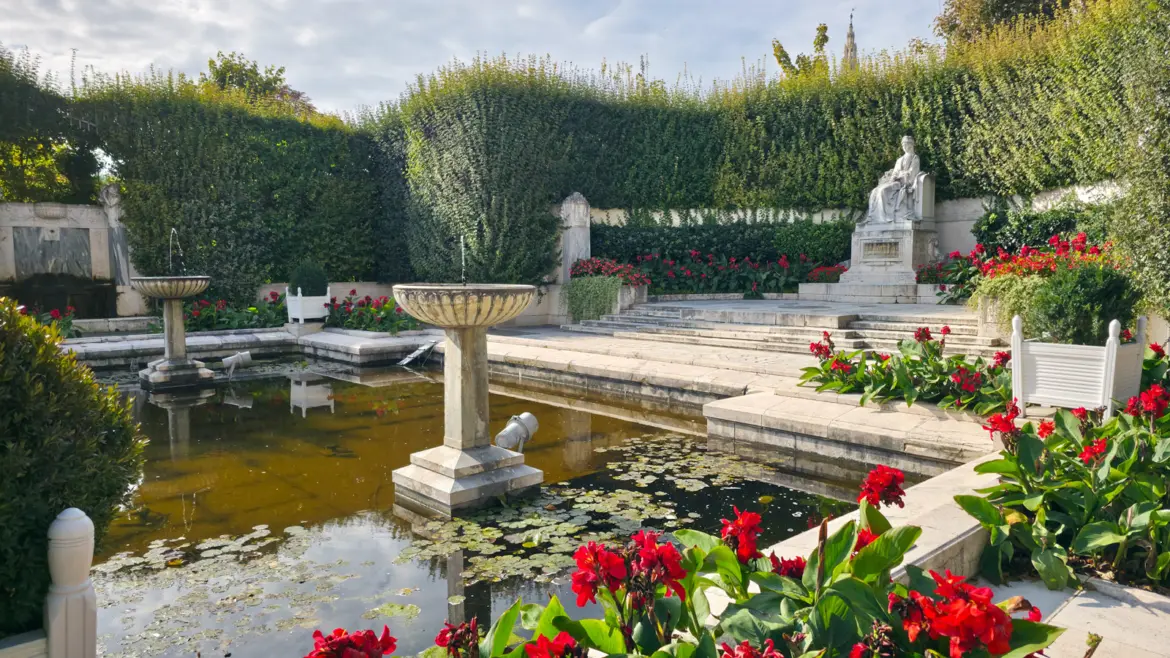
Hello lovely travelers! Vienna is filled with grand palaces, monumental squares, and extraordinary works of art, yet some of the city’s most meaningful places are far quieter. Tucked within the graceful paths of the Volksgarten lies a monument dedicated to one of Austria’s most fascinating and beloved historical figures: Empress Elisabeth of Austria.
Often known simply as Sisi, the empress captured the imagination of Europe with her beauty, independence, and restless spirit. Today, visitors walking through the gardens may unexpectedly encounter a serene marble statue of the empress seated beneath the trees. This is the Empress Elisabeth Monument, one of the most poetic memorials in the city. Unlike many imperial monuments that celebrate power and victory, this one tells a quieter story – a tribute not only to a historical figure, but to a woman whose life continues to intrigue and inspire more than a century later.
Sisi Monument at a Glance
📍 Location: Volksgarten, 1010 Vienna — steps from Hofburg Palace and Heldenplatz
👑 Who: Empress Elisabeth of Austria (1837–1898), known as Sisi
🎨 Artists: Sculptor Hans Bitterlich (statue in Laas marble, carved by Franz Grill), Architect Friedrich Ohmann (architectural setting)
📅 Unveiled: June 4, 1907
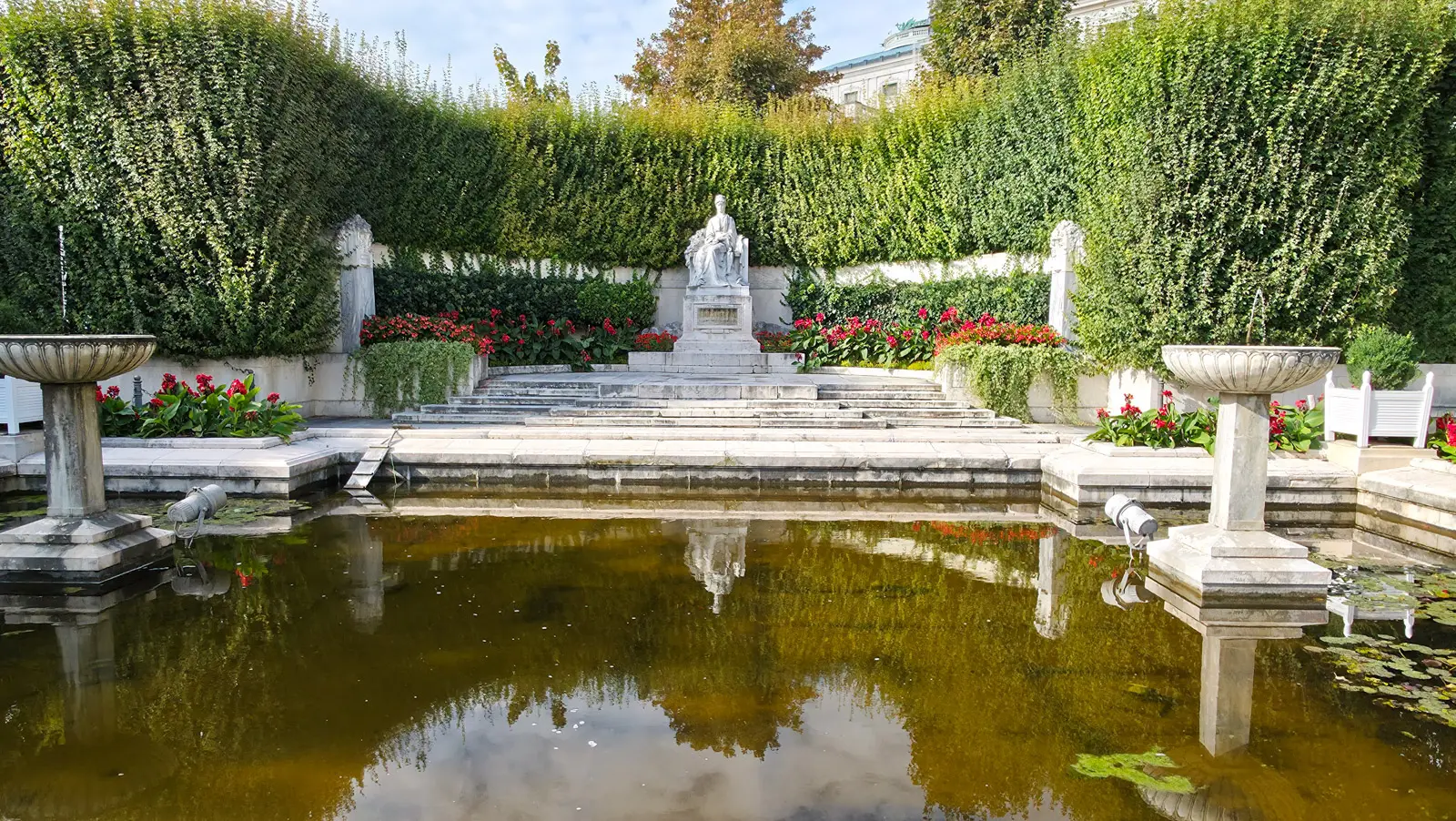
🏛️ Features: Seated marble statue, semicircular ivy-covered backdrop, reflecting basin with fountain, surrounded by seasonal flowers
🏛️ Nearby: Theseus Temple, rose gardens, Hofburg Palace, Heldenplatz
🎟️ Entrance: Free (open public park)
⏱️ Time Needed: 15–30 minutes (longer if exploring the Volksgarten)
💡 Tip: Visit early morning or late afternoon for the most peaceful atmosphere and beautiful light
A Monument Born from Tragedy
The story of the monument begins with a shocking event that deeply affected the Austrian Empire. In 1898, Empress Elisabeth of Austria was assassinated in Geneva by the Italian anarchist Luigi Lucheni. Her sudden death stunned Europe and plunged Vienna into mourning. Despite her complicated relationship with court life – she famously chafed against its rigid formalities and spent much of her life traveling – the empress had become a beloved figure among the public, admired for her beauty, independence, and unconventional spirit.
Work on a memorial began in 1904 after an extensive process involving dozens of competing proposals for both the monument’s design and its location. The resulting Empress Elisabeth Monument was unveiled on June 4, 1907, in the elegant surroundings of the Volksgarten, only steps away from the Hofburg Palace. The site was reportedly chosen by Emperor Franz Joseph I of Austria, who wished to honor his wife with a memorial set within one of Vienna’s most graceful gardens. The monument is often considered one of the final major Habsburg memorials erected in the imperial capital.
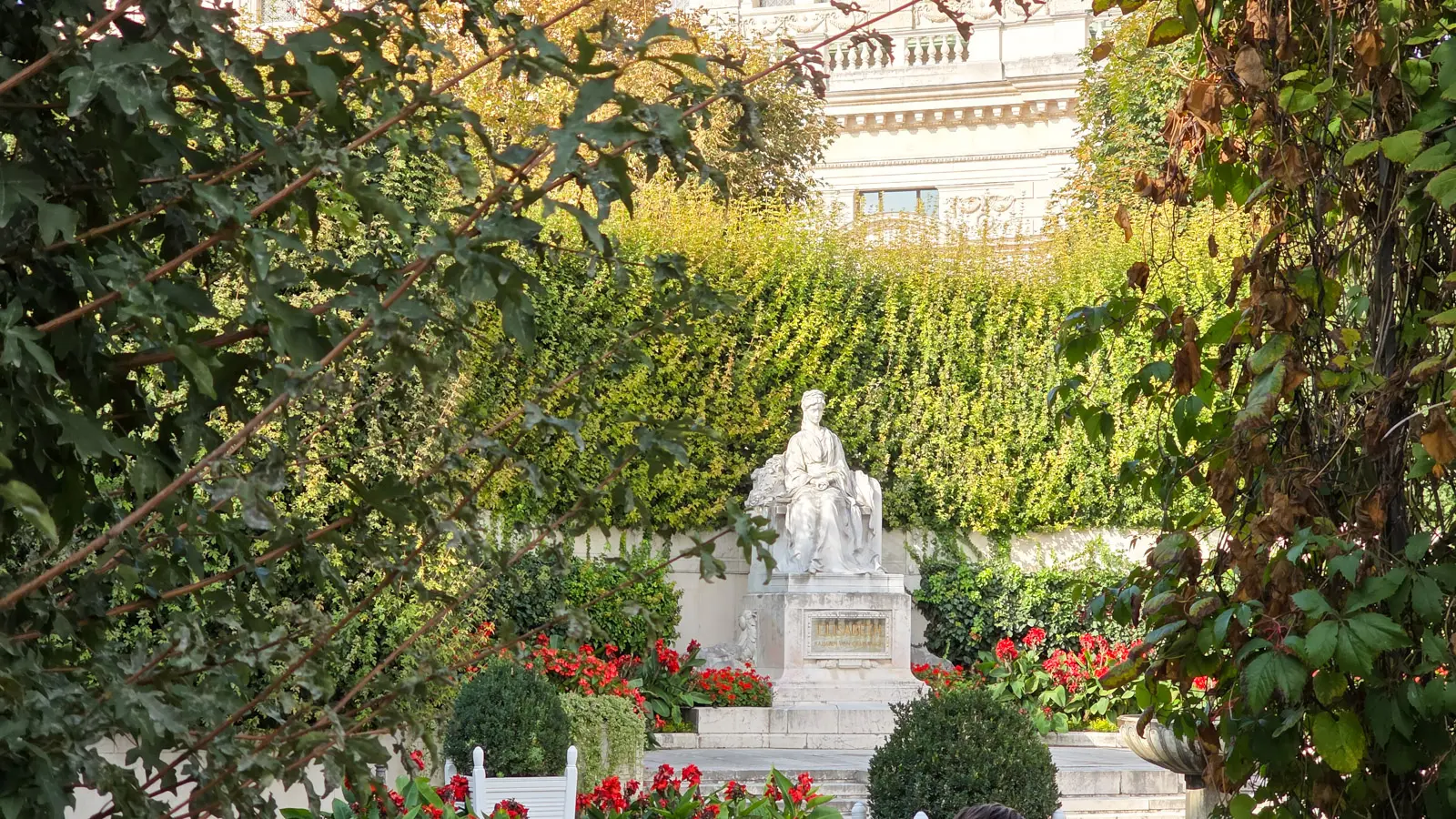
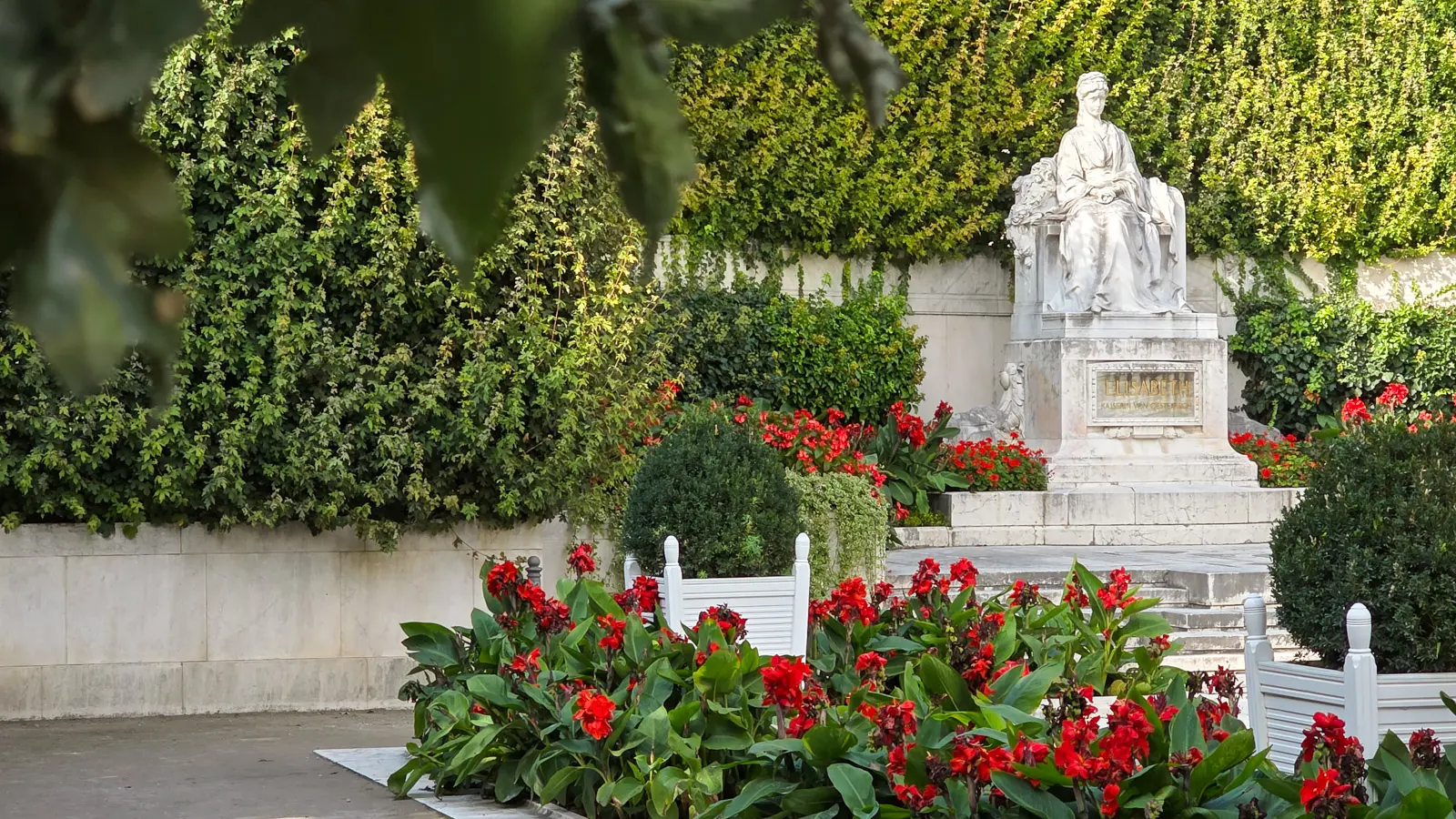
The statue itself was created by sculptor Hans Bitterlich, who modeled the seated empress in luminous Laas marble, executed by master stone carver Franz Grill. The surrounding architectural setting was designed by architect Friedrich Ohmann. Together they conceived a memorial that feels deeply personal rather than imperially triumphant. Elisabeth is portrayed seated in a calm, reflective pose, her expression quiet and introspective. There are no traditional symbols of royal authority – no crown, sceptre, or imperial regalia – only the serene figure of the empress framed by a graceful semicircular architectural backdrop that creates a peaceful memorial space within the garden. The simplicity of the design shifts the focus away from power and toward memory, inviting visitors to reflect on the woman behind the title.
A Different Kind of Imperial Statue
One of the most striking aspects of the monument is the way Empress Elisabeth of Austria is portrayed. Rather than standing proudly or mounted on horseback, the empress is depicted seated in a calm and introspective pose. Carved in luminous white marble, the statue captures a quiet elegance that feels remarkably human. Sisi sits gracefully with her head slightly inclined, her expression thoughtful and distant. The sculptor avoided dramatic gestures or symbols of power, choosing instead to emphasize serenity and introspection. This artistic choice reflects the personality often attributed to Elisabeth herself – a woman who preferred poetry, travel, and solitude to the rigid formalities of court life.
In front of the monument lies a shallow reflecting basin with gentle fountains whose water softly animates the space. The presence of water adds a quiet sense of movement and reflection, reinforcing the contemplative atmosphere of the memorial. Behind the statue rises a graceful semicircular architectural backdrop that frames the sculpture and creates a sense of intimacy within the surrounding garden. Together, the water, stone, and greenery form a peaceful setting that feels almost like an open-air sanctuary, encouraging visitors to pause and absorb the atmosphere.
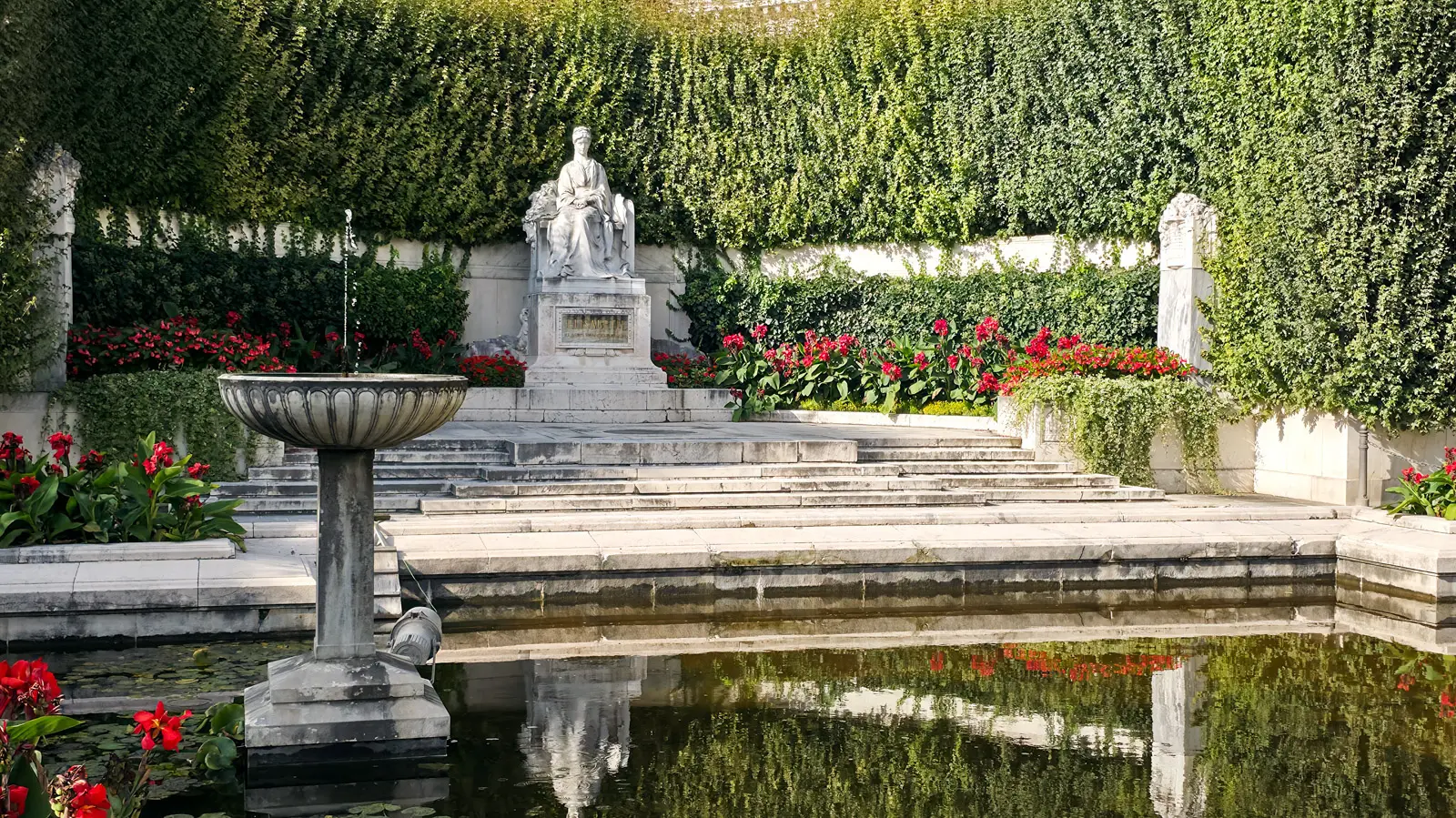
In many ways, the monument mirrors the paradox of Sisi’s life: an empress who lived within the grandeur of empire yet often felt most at peace far from its expectations.
The Setting: Vienna’s Elegant Volksgarten
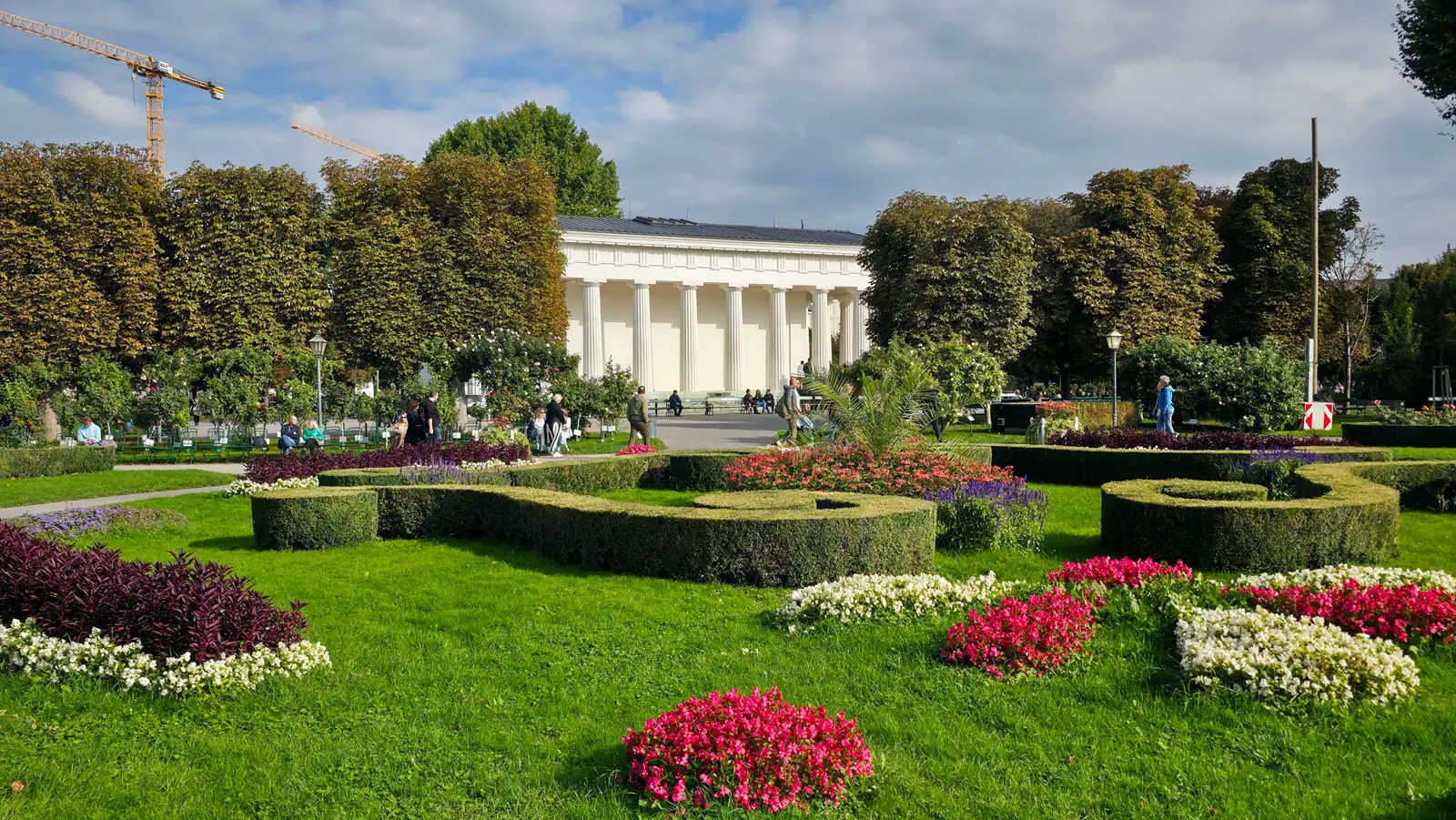
The monument’s location adds greatly to its charm. The Volksgarten, meaning “People’s Garden”, was created in the early 19th century on the site of Vienna’s former city fortifications. Today it remains one of the city’s most beloved parks, known for its rose gardens, elegant pathways, and tranquil atmosphere. In many ways, the setting feels especially fitting for Empress Elisabeth of Austria, who was known to prefer nature, long walks, and quiet moments away from the rigid formality of court life.
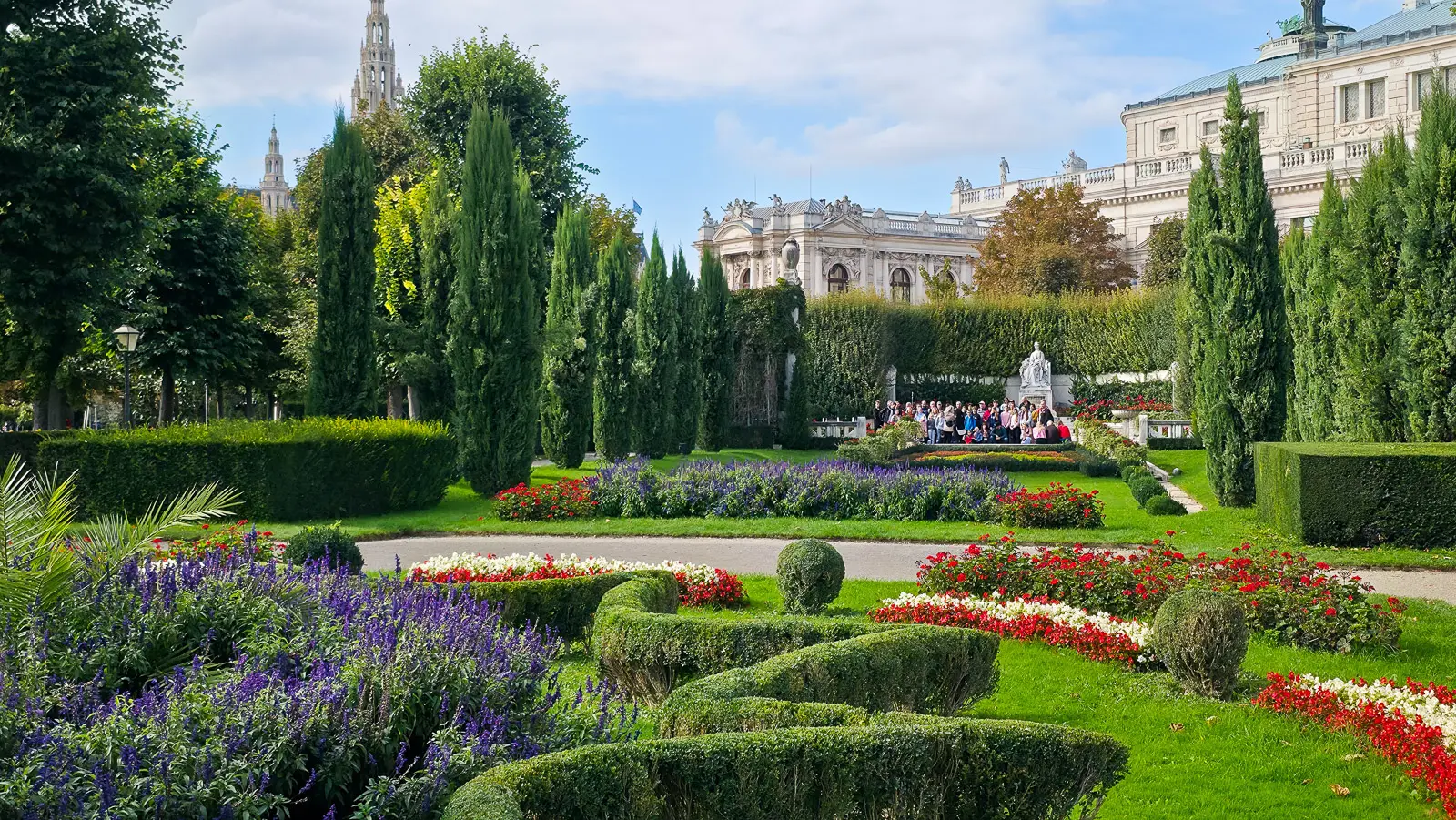
Within this peaceful landscape, the Sisi monument feels perfectly placed. Surrounded by greenery and seasonal flowers, it blends gently into the garden rather than dominating it. Visitors often encounter the memorial almost by chance while strolling through the park’s pathways, a discovery that feels intimate and personal, much like the empress herself, who often sought solitude beyond the ceremonial world of the Habsburg court.
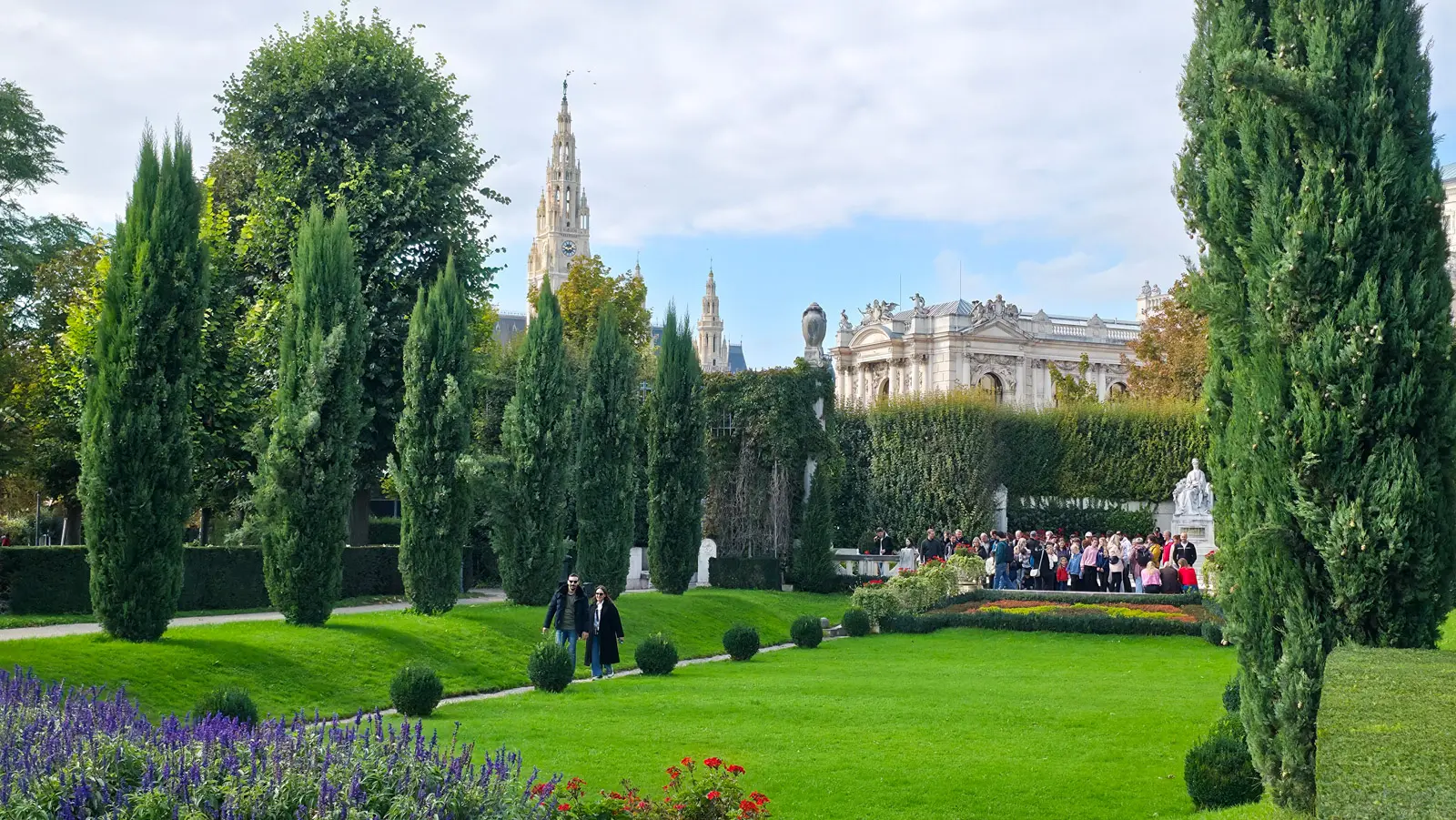
Nearby, the park also features the graceful Theseus Temple, a neoclassical structure inspired by ancient Greek architecture. Together, the garden, monument, and surrounding pathways create one of the most peaceful corners of central Vienna – a setting that quietly reflects the contemplative spirit of the empress it honors.
Experiencing the Monument Today
Standing before the statue today, it is easy to feel the quiet atmosphere that surrounds the memorial. The bustle of the city fades into the background as trees sway gently above the garden paths and visitors wander slowly through the park. Unlike the grand imperial squares nearby, the Sisi monument invites a more intimate moment. Travelers often sit on nearby benches, admire the sculpture, or simply enjoy the peaceful setting.
For those exploring Vienna’s imperial history, the monument offers a different perspective on the Habsburg era. It reminds visitors that behind the grandeur of palaces and ceremonies were individuals with complex lives and emotions. Sisi’s story – full of beauty, rebellion, melancholy, and mystery – continues to captivate those who encounter it.
Bubbly Tips for Visiting the Sisi Monument
- Best Time to Visit: Early morning or late afternoon offers the most peaceful atmosphere and beautiful light in the gardens.
- Combine with Nearby Landmarks: The monument is only a short walk from the Hofburg Palace and Heldenplatz, making it easy to include in a walking itinerary.
- Explore the Volksgarten: Take time to wander through the rose gardens and tree-lined paths surrounding the monument.
- Look for the Details: Notice the calm expression and elegant posture of the statue – the sculptor intentionally portrayed Sisi in a reflective mood.
- Bring Your Camera: The monument framed by greenery and flowers creates beautiful photo opportunities in every season.
Final Thoughts
The Empress Elisabeth Monument is one of those places in Vienna where history feels quietly present rather than loudly displayed. Here, beneath the trees of the Volksgarten, the story of Sisi unfolds in a different way – not through imperial grandeur, but through a moment of stillness and remembrance. The statue captures the essence of a woman who fascinated Europe in her lifetime and continues to intrigue visitors today.
For travelers exploring Vienna’s imperial past, this peaceful memorial offers a gentle reminder that history is often most powerful when experienced in quiet reflection.
Have you visited the Sisi Monument in Vienna, or is it now on your list for your next trip? I would love to hear your thoughts, feel free to share them in the comments below.
Until next time!
xoxo,
Bubbly 🎈
🌟 Everything You Need to Plan Your Dream Trip in 2026
- 🌟 Luxury Hotels - Find premium stays with Booking.com & Hotels.com
- 🏡 Vacation Rentals - Discover unique properties on VRBO
- 🏞️ Guided Tours - Explore with Viator or GetYourGuide
- 🎫 Attraction Tickets - Skip the lines with Tiqets
- 🚢 Ocean Cruises - Set sail with Cruise Direct
- 📱 International SIMs - Stay connected with Saily
- 🚗 Car Rentals - Budget-friendly options from Discover Cars
- 🌐 Secure VPNs - Browse safely with NordVPN
- 💶 Currency Exchange - Best rates with Wise
- 🗣️ Learn Languages - Master the local language with Babbel and Rosetta Stone