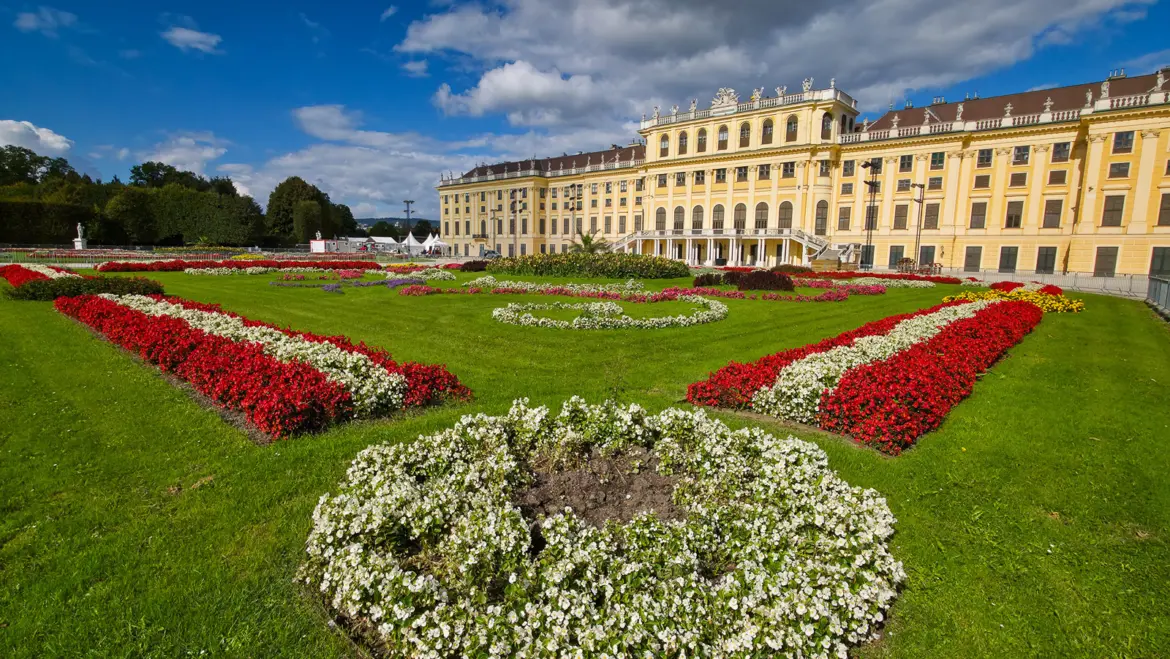
Hello lovely explorers! Few places in Vienna capture the harmony between architecture, nature, and imperial vision as beautifully as the gardens of Schönbrunn Palace. While the palace itself is magnificent, many visitors soon discover that the surrounding gardens hold a magic all their own. Vast, elegant, and remarkably peaceful, the grounds invite travelers to wander slowly through landscapes that were once designed to impress emperors, diplomats, and royal guests.
Covering more than 400 acres, the Schönbrunn Gardens form one of the most remarkable Baroque landscapes in Europe. Here, carefully planned avenues stretch toward the horizon, statues emerge from greenery like silent guardians of history, and fountains echo the theatrical elegance of imperial design. The gardens are not merely decorative grounds, they are an integral part of the palace’s identity and one of Vienna’s most treasured public spaces.
Walking through these gardens today offers a rare experience: the opportunity to step into a living work of art that has evolved for more than three centuries. From sweeping vistas and grand fountains to quiet pathways and hidden corners, Schönbrunn’s gardens reveal the refined vision of an empire that sought to express its power through beauty.
Schönbrunn Gardens at a Glance
📍 Location: Behind Schönbrunn Palace, Schönbrunner Schloßstraße 47, 1130 Vienna
🌿 Size: Over 400 acres of Baroque landscape
🌸 Key Features: Great Parterre (formal flowerbeds), Neptune Fountain (1776, mythological Baroque sculpture), Gloriette (1775, hilltop monument + café + panoramic view), Roman Ruin (1778, romantic folly)
👤 Designers: Jean Trehet (gardens, 1690s), Johann Ferdinand Hetzendorf von Hohenberg (Neptune Fountain + Gloriette, 1770s)
🎟️ Entrance: Free (gardens open year-round); Gloriette terrace, Palm House, and zoo require tickets
⏱️ Time Needed: 2–3 hours minimum
💡 Tip: Start at the palace terrace, walk the Great Parterre to the Neptune Fountain, then climb to the Gloriette for the view
A Garden Designed for Imperial Grandeur
The gardens behind Schönbrunn Palace were first laid out in the late 17th century by the landscape designer Jean Trehet, whose work drew inspiration from the great French Baroque gardens of Versailles created by the legendary architect André Le Nôtre. Designed during the reign of Leopold I, Holy Roman Emperor, the gardens followed the principles of French Baroque landscape architecture that shaped Europe’s most prestigious royal estates. The goal was not simply to create a pleasant garden, but to transform nature into a carefully ordered landscape that expressed symmetry, grandeur, and imperial authority.
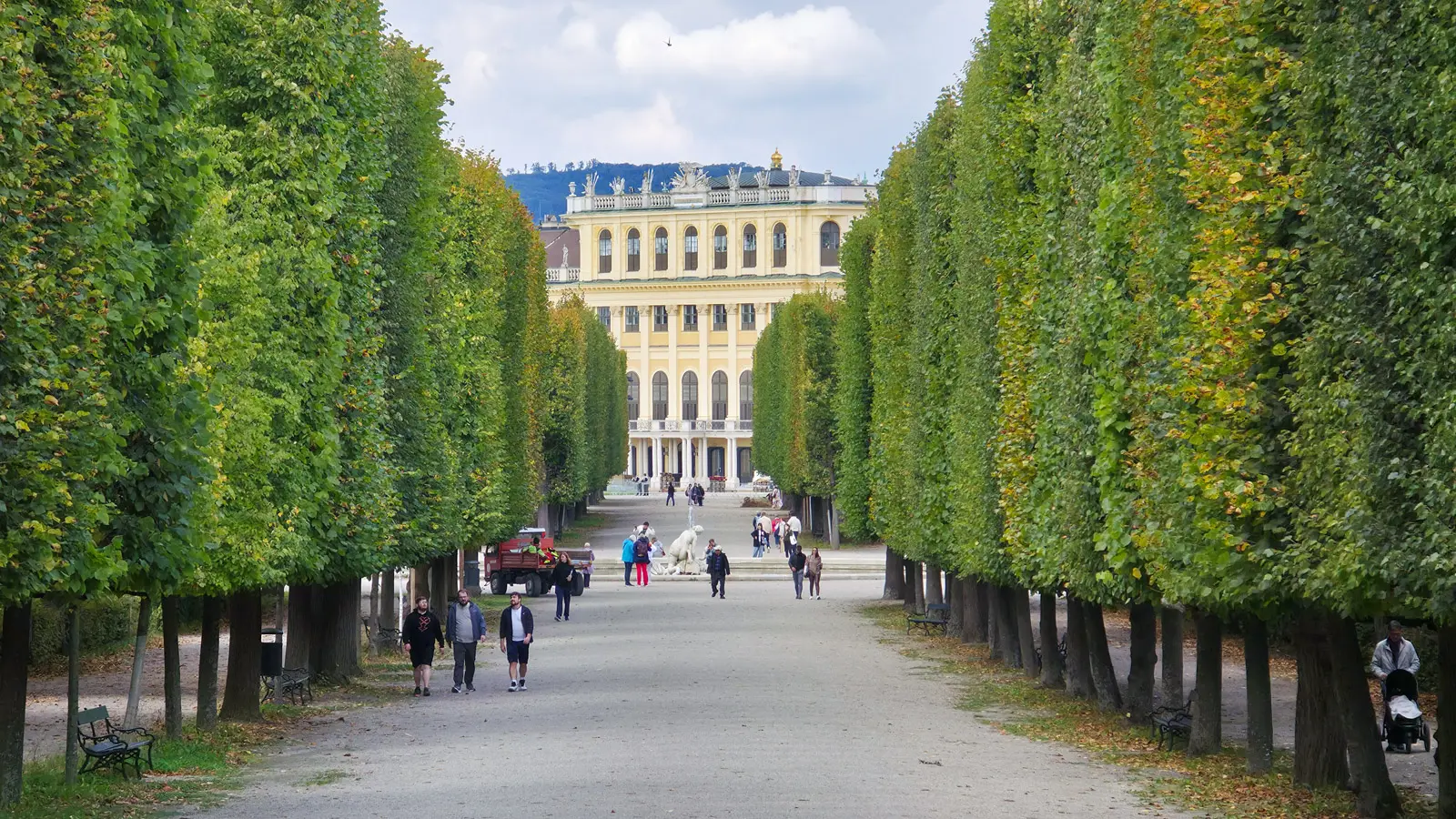
Seen from the palace terrace, the layout reveals its full dramatic impact. Long geometric pathways stretch outward in perfect alignment, drawing the eye toward the distant hill where the Gloriette stands like a crown above the landscape. This careful symmetry was intended to demonstrate humanity’s ability to impose order upon nature, an idea that perfectly reflected the political ambitions of the Habsburg court.
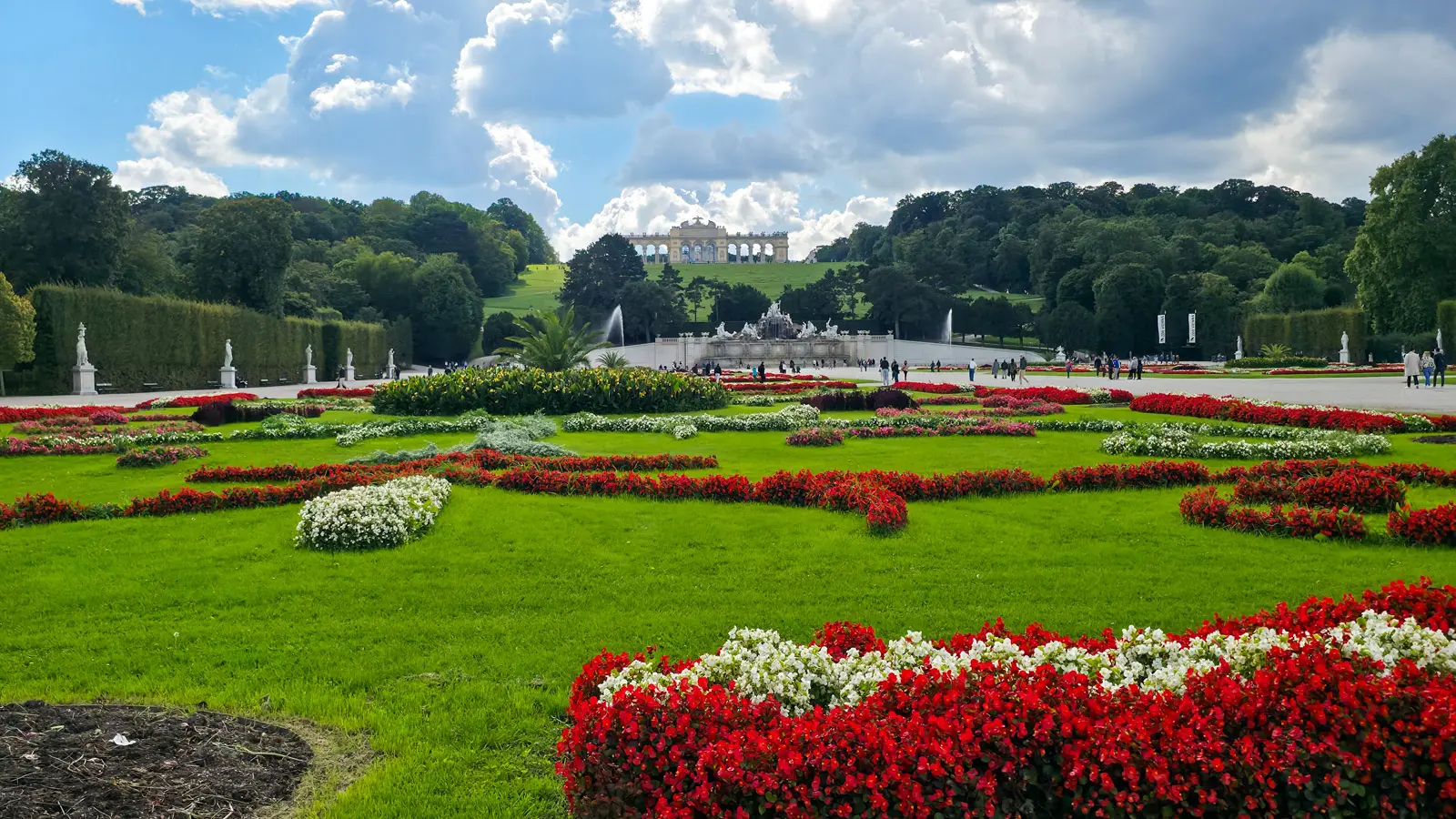
Yet despite its formal design, the gardens never feel rigid. As you wander deeper into the grounds, the experience becomes softer and more intimate. Flowerbeds, sculptures, and shaded avenues create moments of quiet beauty that contrast wonderfully with the grand scale of the palace itself.
The Great Parterre: The Heart of the Gardens
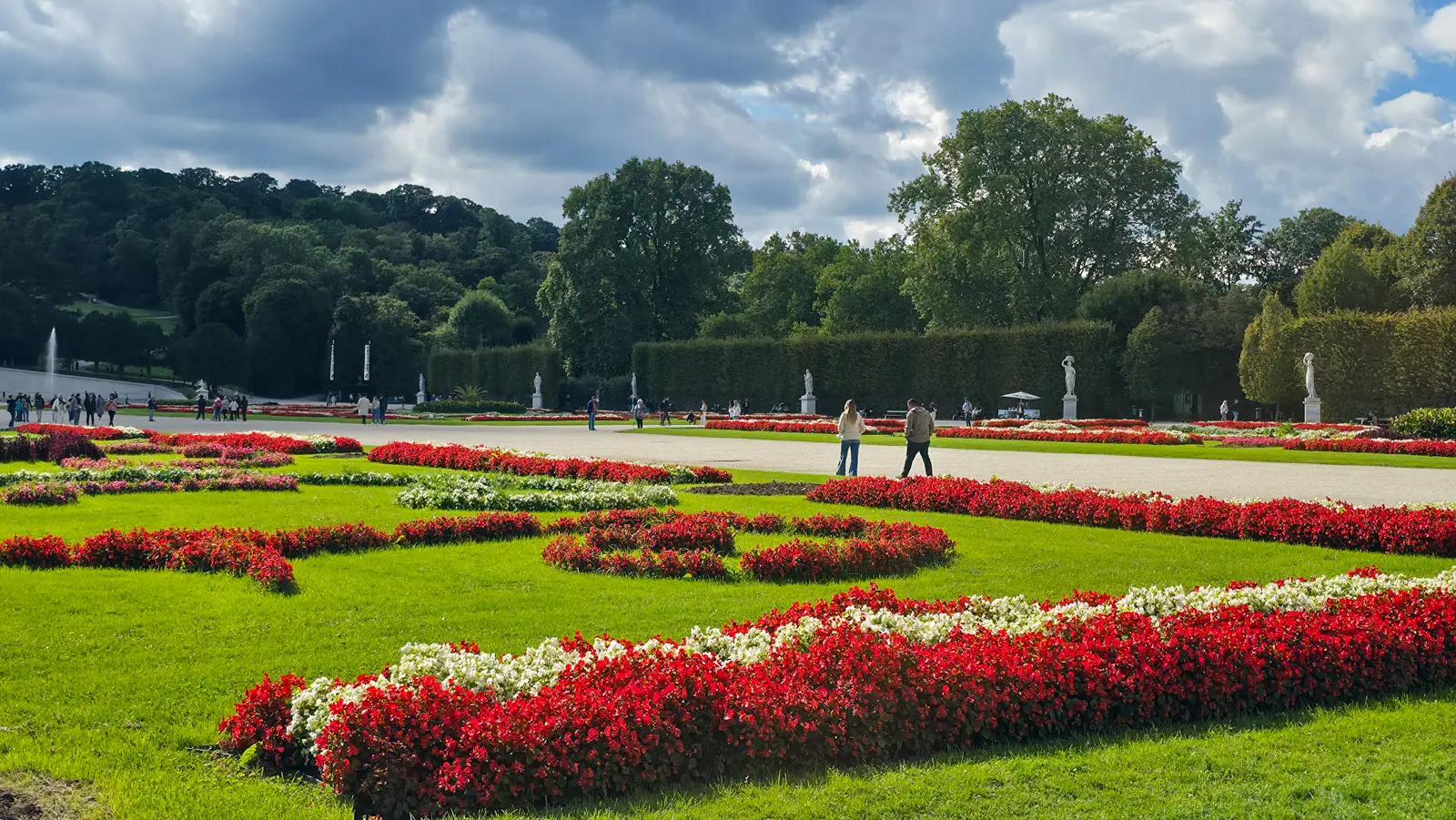
At the center of the Schönbrunn Gardens lies the magnificent Great Parterre, a vast ornamental garden that forms the visual axis of the entire estate. This area, with its perfectly maintained flowerbeds and symmetrical pathways, is perhaps the most iconic view associated with Schönbrunn.
Colorful floral patterns unfold like living tapestries across the landscape, framed by statues that represent mythological figures and classical virtues. Each detail was carefully planned to create harmony between architecture and nature, ensuring that every perspective reveals a balanced and carefully composed scene.
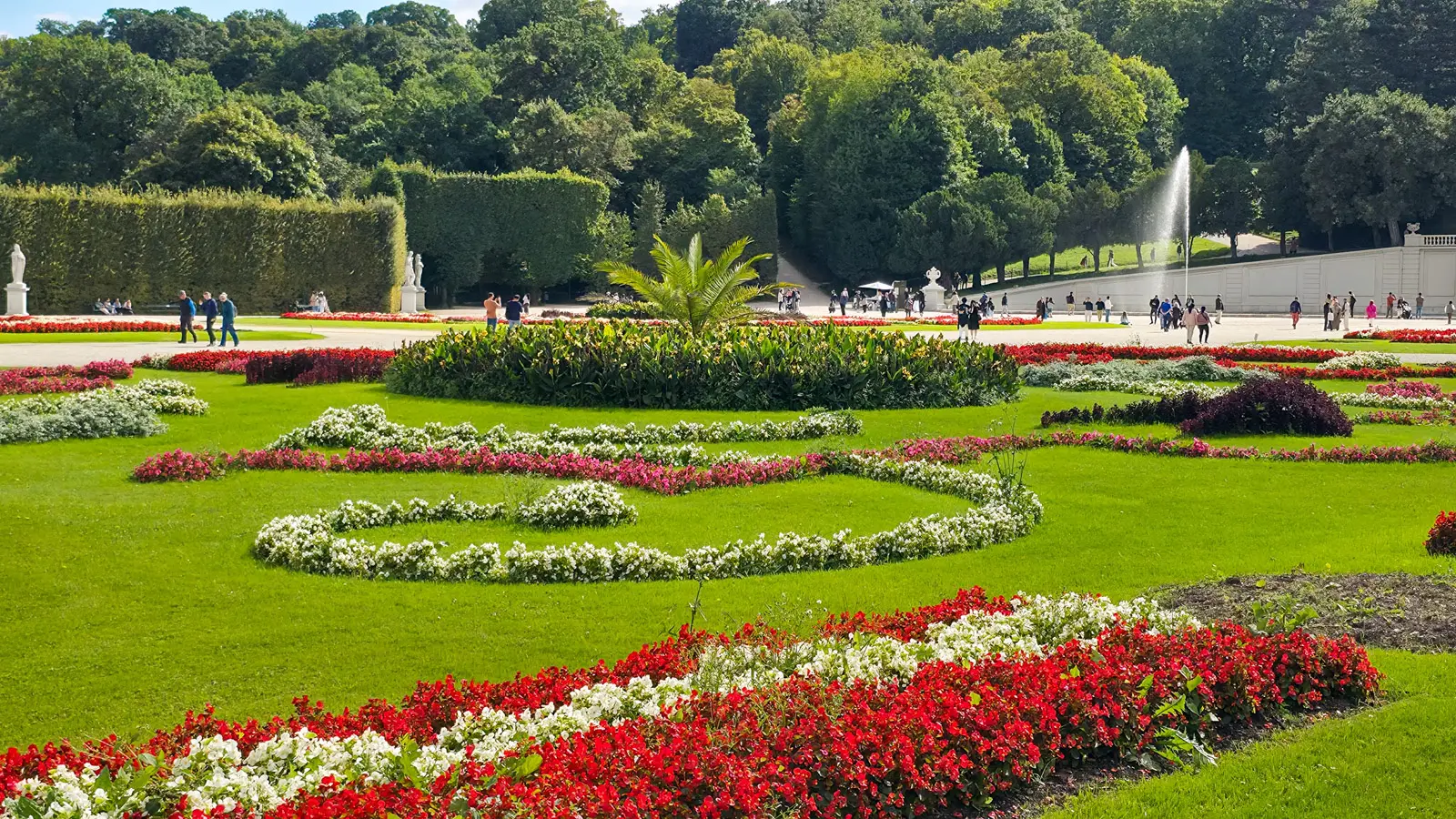
Standing here, it becomes easy to imagine the grandeur of imperial life in centuries past. Members of the Habsburg court would stroll along these pathways, enjoying leisurely walks through the gardens while musicians performed nearby and guests admired the extraordinary views. Today, visitors from around the world follow those same pathways, pausing to photograph the palace framed by flowers or simply to enjoy the peaceful rhythm of the gardens. The Great Parterre remains the symbolic center of Schönbrunn, a space where imperial elegance and modern appreciation meet.
The Neptune Fountain: Mythology in Motion
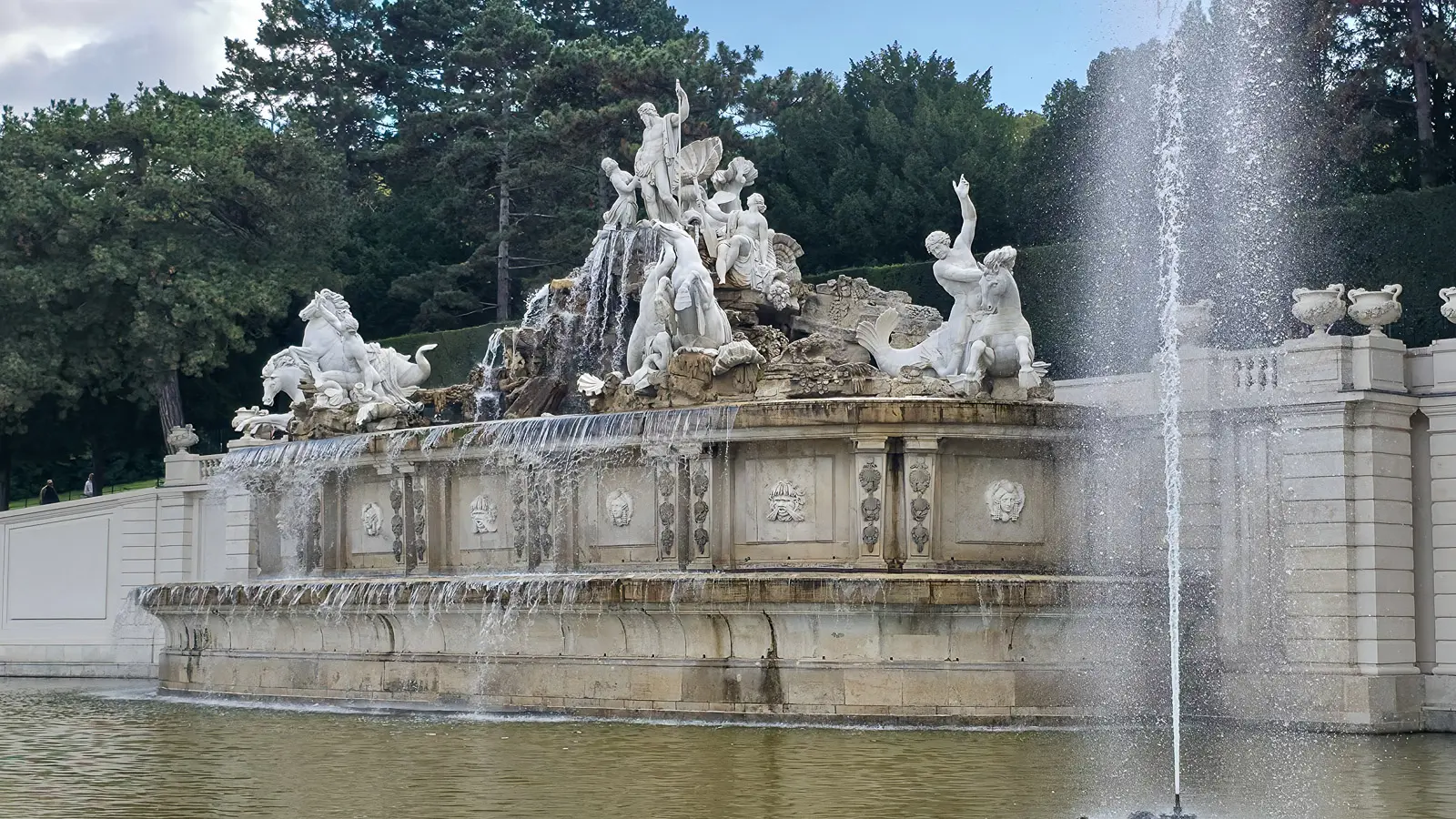
At the far end of the Great Parterre rises one of the garden’s most dramatic features: the magnificent Neptune Fountain. Construction began in 1776 and was completed within four years, shortly before the death of Maria Theresa. The fountain was designed by court architect Johann Ferdinand Hetzendorf von Hohenberg and sculpted by Wilhelm Beyer in Sterzing marble.
The composition is rich with mythological detail. Neptune stands in his shell-shaped chariot, trident in hand, while four Tritons – sea deities traditionally depicted as half-man, half-fish – hold conch-shell trumpets at the base of the grotto, restraining the sea horses that draw his chariot across the waves. To his right, the sea goddess Thetis kneels in appeal, imploring Neptune’s protection for her son Achilles as he prepares to depart for the Trojan War, while a nymph attends Neptune on his left. The scene captures a moment of divine negotiation frozen in stone – destiny, power, and divine intervention made visible.

For the Habsburg court, such mythological imagery carried deliberate symbolic weight, reinforcing the idea that imperial authority was supported by forces greater than ordinary human affairs. Beyond its symbolism, the Neptune Fountain serves as a visual anchor within the landscape. Its dramatic sculpture and cascading water create a sense of theatrical movement that contrasts beautifully with the orderly geometry of the surrounding gardens, a reminder that even the most rational imperial vision left room for the grandeur of myth.
Climbing to the Gloriette
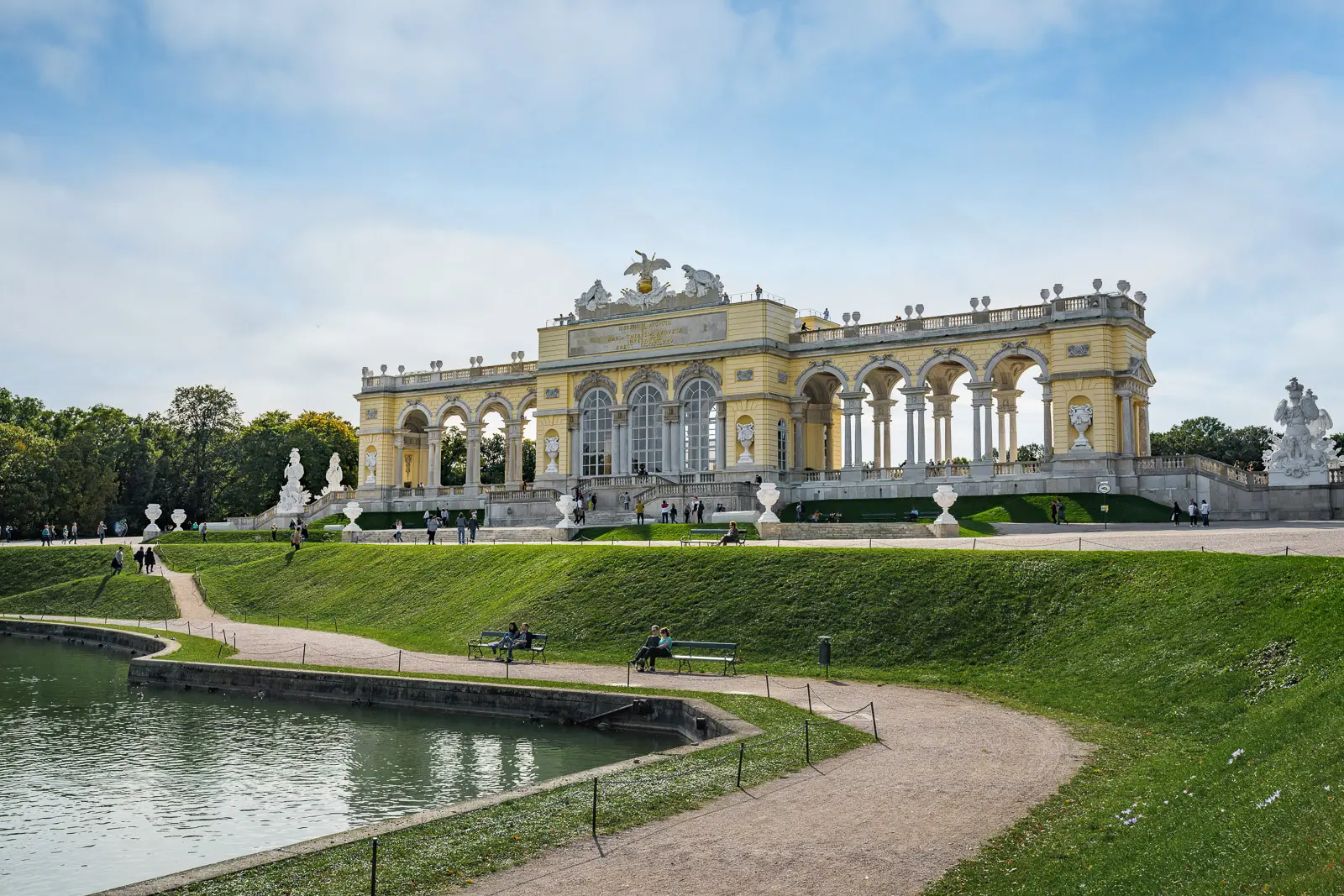
Perhaps the most rewarding experience in the Schönbrunn Gardens is the gentle climb toward the Gloriette, the elegant monument that crowns the hill above the palace grounds. Built in 1775 under the reign of Empress Maria Theresa and designed by court architect Johann Ferdinand Hetzendorf von Hohenberg, the Gloriette was conceived as a monumental structure celebrating Habsburg military victories. Its graceful colonnades and central arch create a neoclassical composition that appears almost like a crown resting above the gardens when viewed from below.
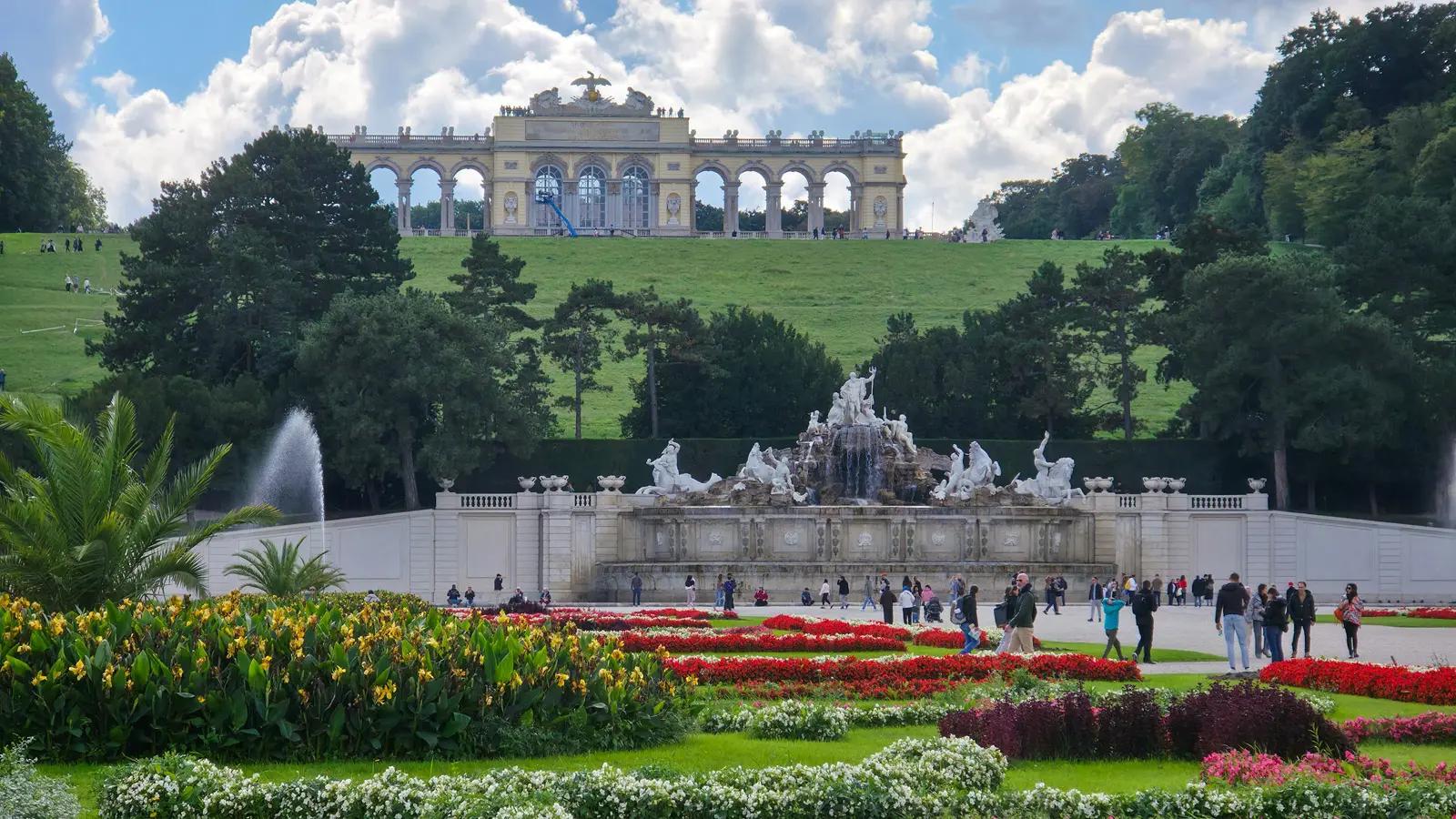
The walk toward the Gloriette gradually reveals one of Vienna’s most breathtaking views. As you climb the hill, the palace unfolds below you, framed by the perfectly aligned gardens that stretch toward the city in the distance. Few places capture the harmony between architecture and landscape as powerfully as this vantage point. Today the Gloriette also houses a charming café, allowing visitors to pause and enjoy the scenery while imagining the world that once unfolded beneath these same views.
The Roman Ruin: A Romantic Illusion
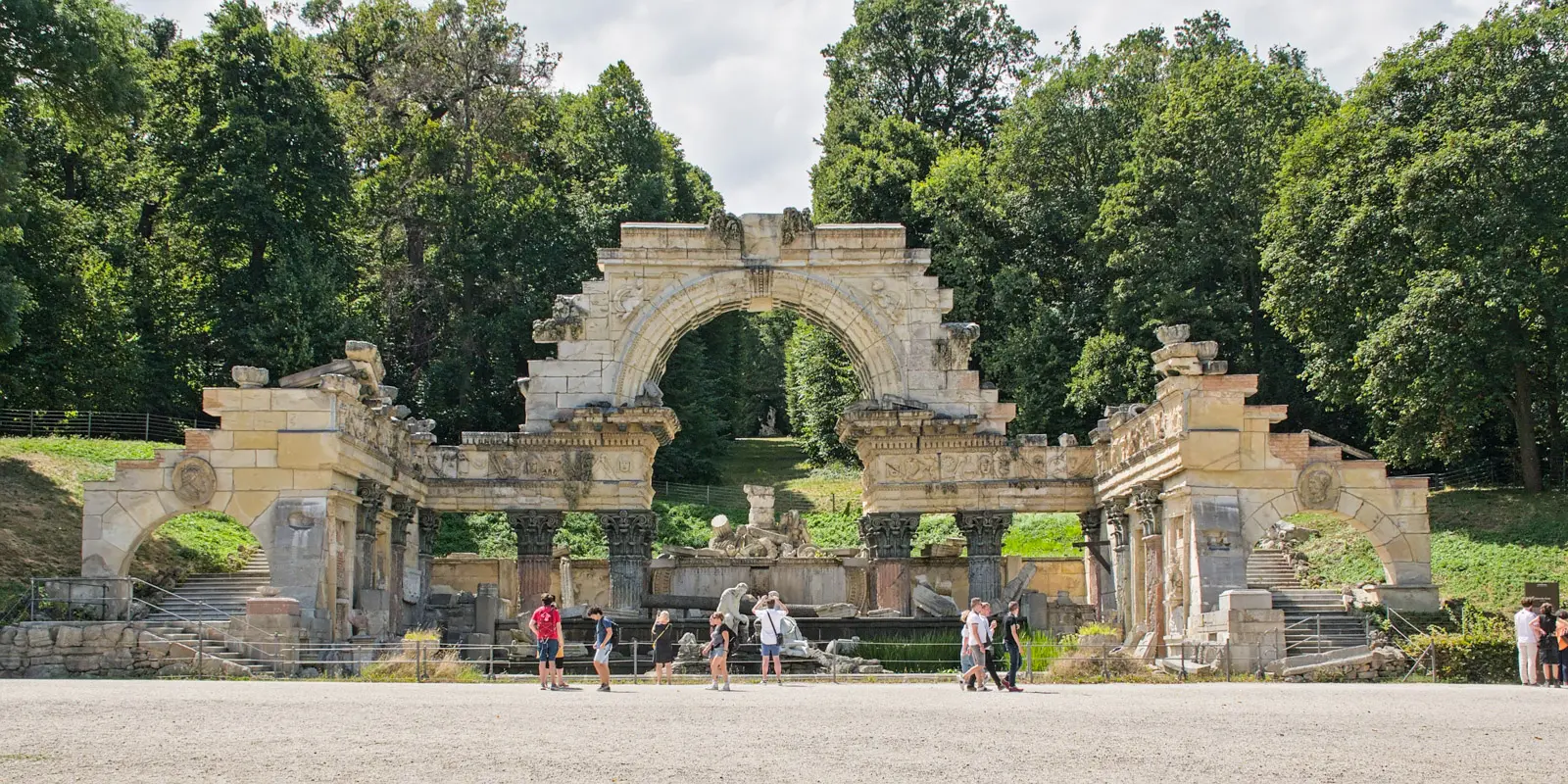
One of the most intriguing and unexpected features of the Schönbrunn Gardens is the Roman Ruin, a structure that appears at first glance to be the remains of an ancient Roman monument. With its broken arches, weathered columns, and sculptural fountain, the site looks like the fragment of a long-forgotten temple reclaimed by nature. Yet the ruin is not ancient at all. Built in 1778 by the court architect Johann Ferdinand Hetzendorf von Hohenberg, it was deliberately designed to resemble the crumbling remains of a classical building, inspired by the dramatic engravings of ancient Roman ruins created by the Italian artist Giovanni Battista Piranesi. Originally known as the “Ruin of Carthage”, the structure reflects the romantic fascination with antiquity and the passage of time that emerged in European landscape gardens during the 18th century.
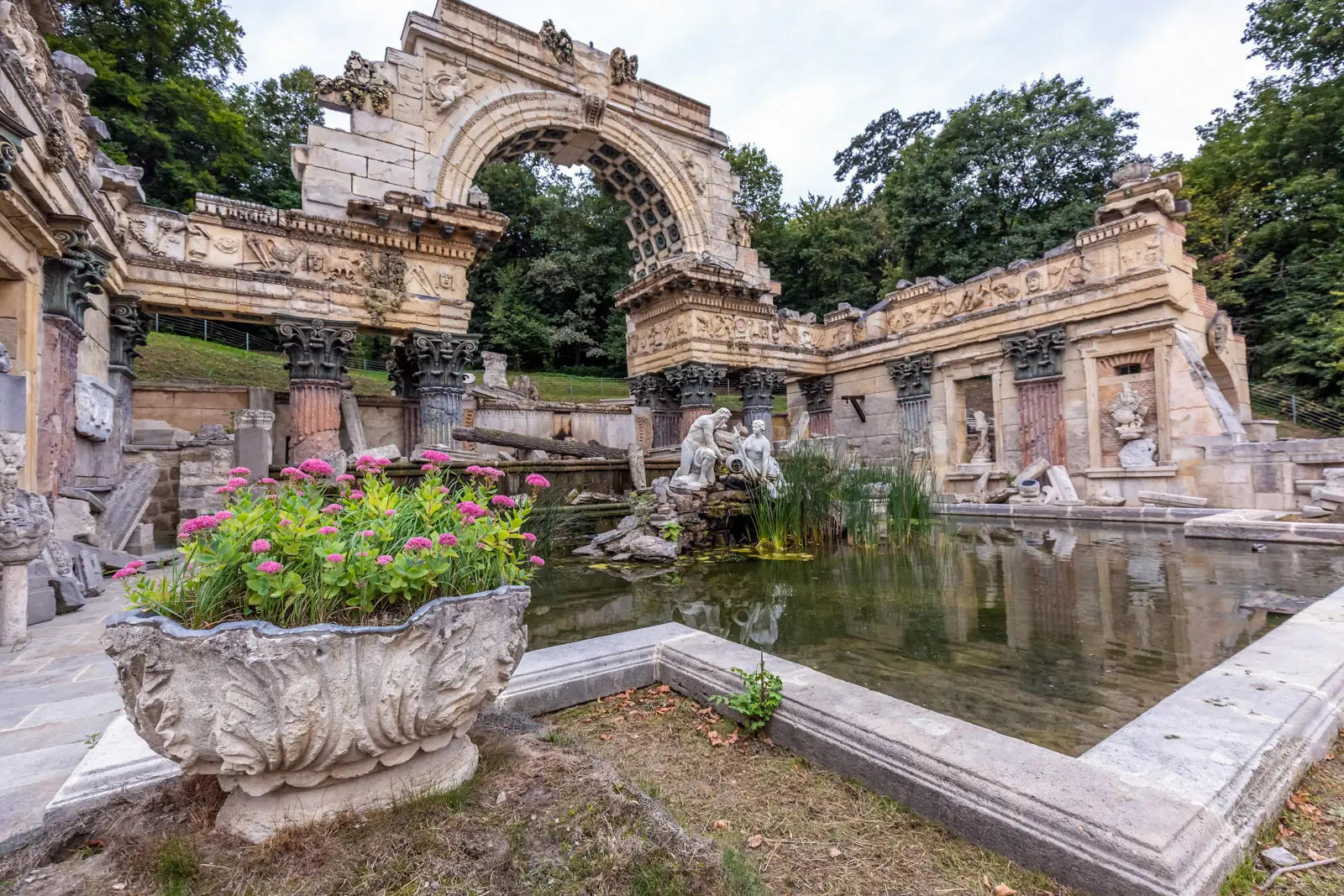
At the center of the composition sits a dramatic sculptural fountain whose allegorical figures represent the Danube and Enns rivers, a subtle patriotic reference linking the romantic illusion to the geography of the Habsburg lands. The result blends architecture, sculpture, and landscape into a theatrical composition that feels almost like a stage set.

Today the Roman Ruin remains one of the garden’s most atmospheric corners. Tucked slightly away from the main axis of the gardens, it rewards visitors who take the time to wander beyond the most famous viewpoints. Standing before its arches, it is easy to imagine how 18th-century visitors would have delighted in the illusion of discovering an ancient relic hidden within the imperial grounds.
Hidden Corners and Quiet Pathways
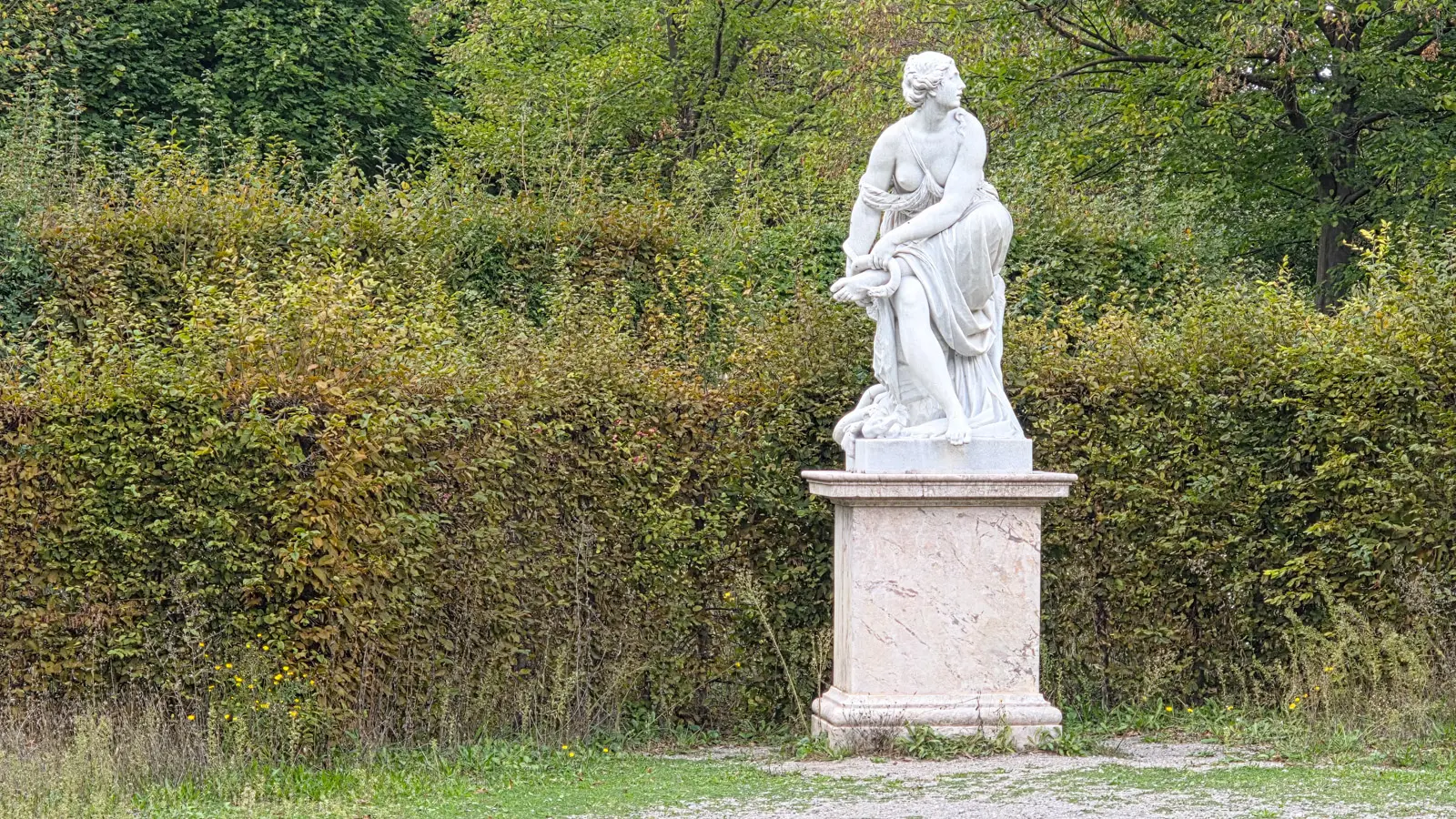
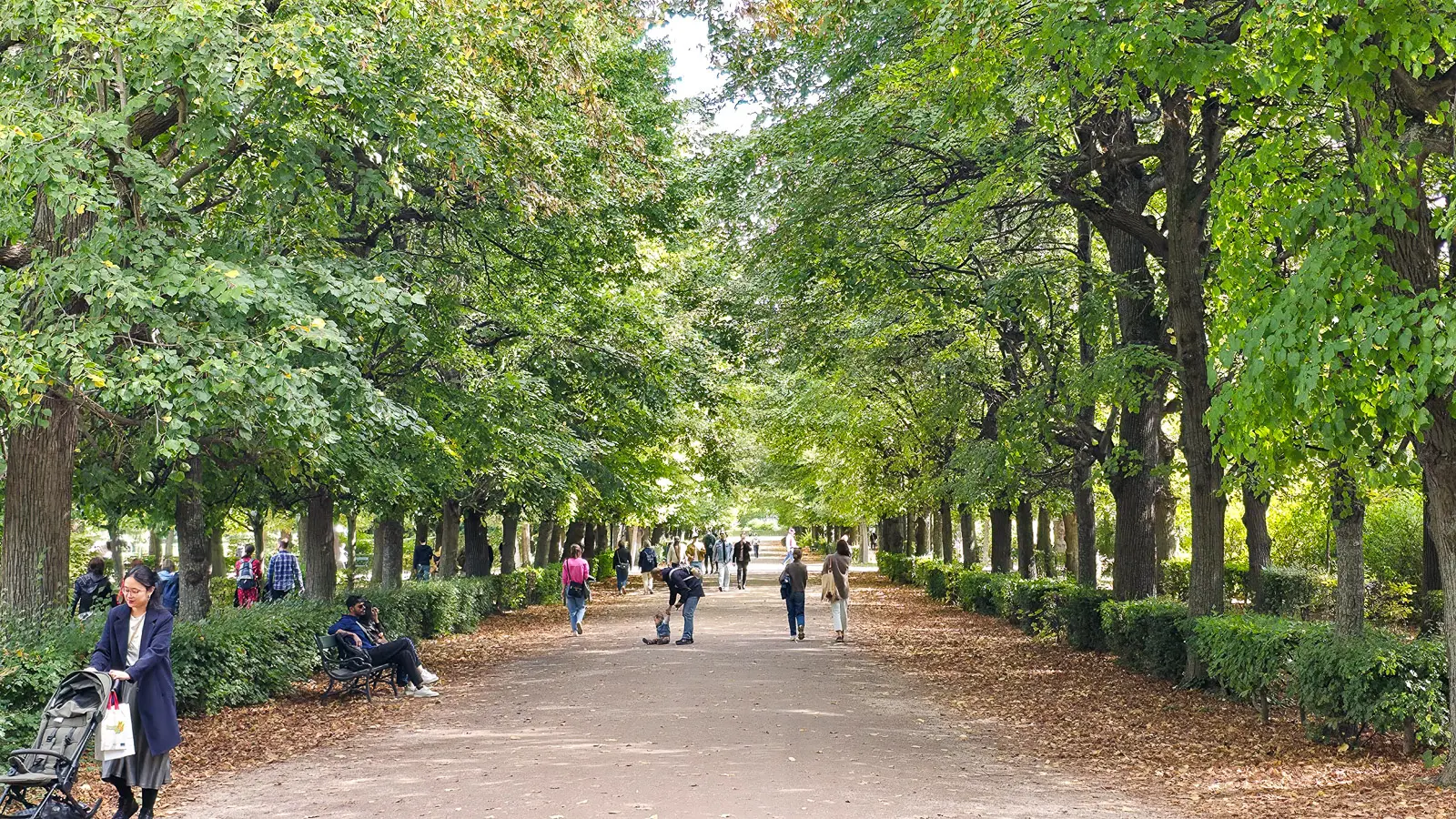
While the main avenues of the Schönbrunn Gardens impress with their grandeur, some of the most memorable moments often occur away from the central axis. Smaller pathways wind through shaded areas where statues, fountains, and quiet benches appear unexpectedly among the greenery. These quieter spaces reveal a more intimate side of the gardens. Tall trees create cool corridors of shade, while winding paths encourage visitors to wander without a strict destination. It is in these moments – away from the crowds and formal symmetry – that the gardens feel most alive. Exploring these hidden corners transforms a visit to Schönbrunn from a simple sightseeing stop into a more personal journey through landscape and history.
A Living Garden for the City of Vienna
One of the most remarkable aspects of the Schönbrunn Gardens is that they remain open to the public and free to enter throughout the year. What was once an exclusive imperial retreat has become one of Vienna’s most beloved public spaces. Locals come here to walk, jog, and enjoy peaceful afternoons among the trees. Families bring children to explore the wide pathways, while visitors from around the world pause to admire the extraordinary views of the palace and the city beyond. This blending of imperial heritage and modern daily life gives the gardens a special atmosphere. They are at once a historic monument and a living landscape, a place where Vienna’s past and present coexist beautifully.
Bubbly Tips for Visiting the Schönbrunn Gardens
- Start early in the day: The gardens are especially peaceful in the morning before larger tour groups arrive.
- Walk the central axis first: Begin at the palace terrace and follow the Great Parterre toward the Neptune Fountain for the most iconic view.
- Climb to the Gloriette: The panoramic view over the palace and gardens is one of the most beautiful in Vienna.
- Explore beyond the main paths: Some of the loveliest corners of the gardens appear when you wander into the quieter side avenues.
- Wear comfortable shoes: The Schönbrunn estate is vast, and exploring the gardens properly involves quite a bit of walking.
Final Thoughts
The Schönbrunn Gardens are far more than the decorative grounds of a palace. They represent centuries of artistic vision, political symbolism, and cultural tradition — all expressed through landscape design.
Walking these pathways today offers a rare opportunity to experience a place where imperial ambition and natural beauty exist in perfect harmony. Whether you come for the panoramic views, the historic fountains, or simply the peaceful atmosphere, the gardens invite you to slow down and appreciate the quiet elegance of Vienna.
Have you explored the Schönbrunn Gardens during your visit to Vienna? I would love to hear what part of the gardens captured your imagination the most.
xoxo,
Bubbly🌷
🌟 Everything You Need to Plan Your Dream Trip in 2026
- 🌟 Luxury Hotels - Find premium stays with Booking.com & Hotels.com
- 🏡 Vacation Rentals - Discover unique properties on VRBO
- 🏞️ Guided Tours - Explore with Viator or GetYourGuide
- 🎫 Attraction Tickets - Skip the lines with Tiqets
- 🚢 Ocean Cruises - Set sail with Cruise Direct
- 📱 International SIMs - Stay connected with Saily
- 🚗 Car Rentals - Budget-friendly options from Discover Cars
- 🌐 Secure VPNs - Browse safely with NordVPN
- 💶 Currency Exchange - Best rates with Wise
- 🗣️ Learn Languages - Master the local language with Babbel and Rosetta Stone