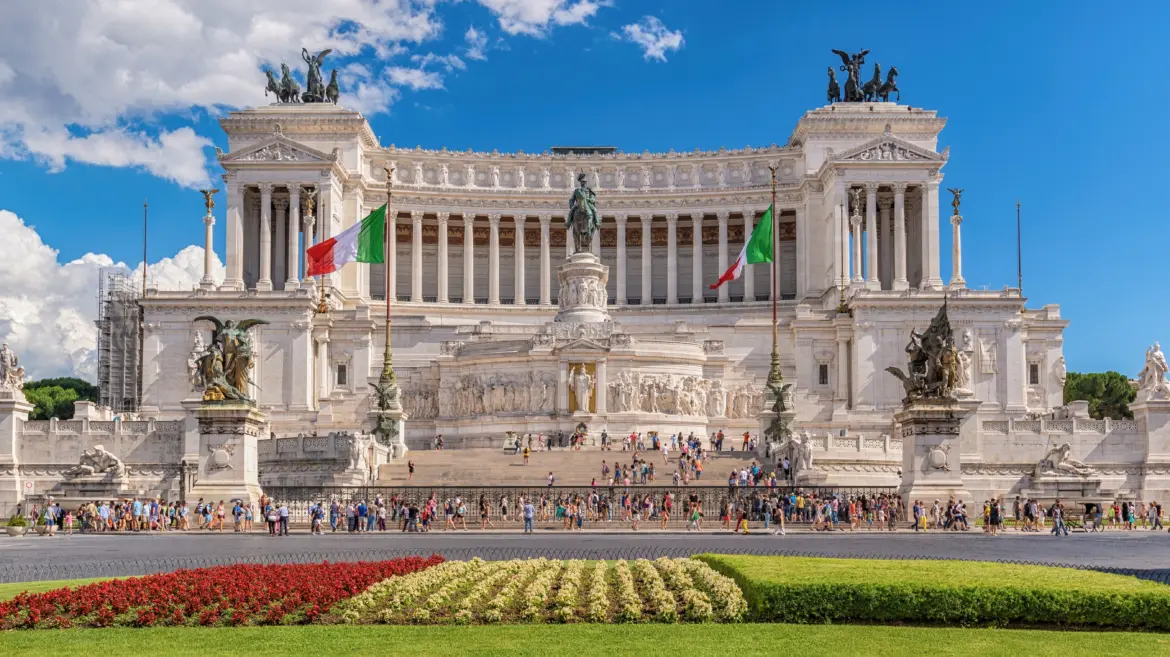
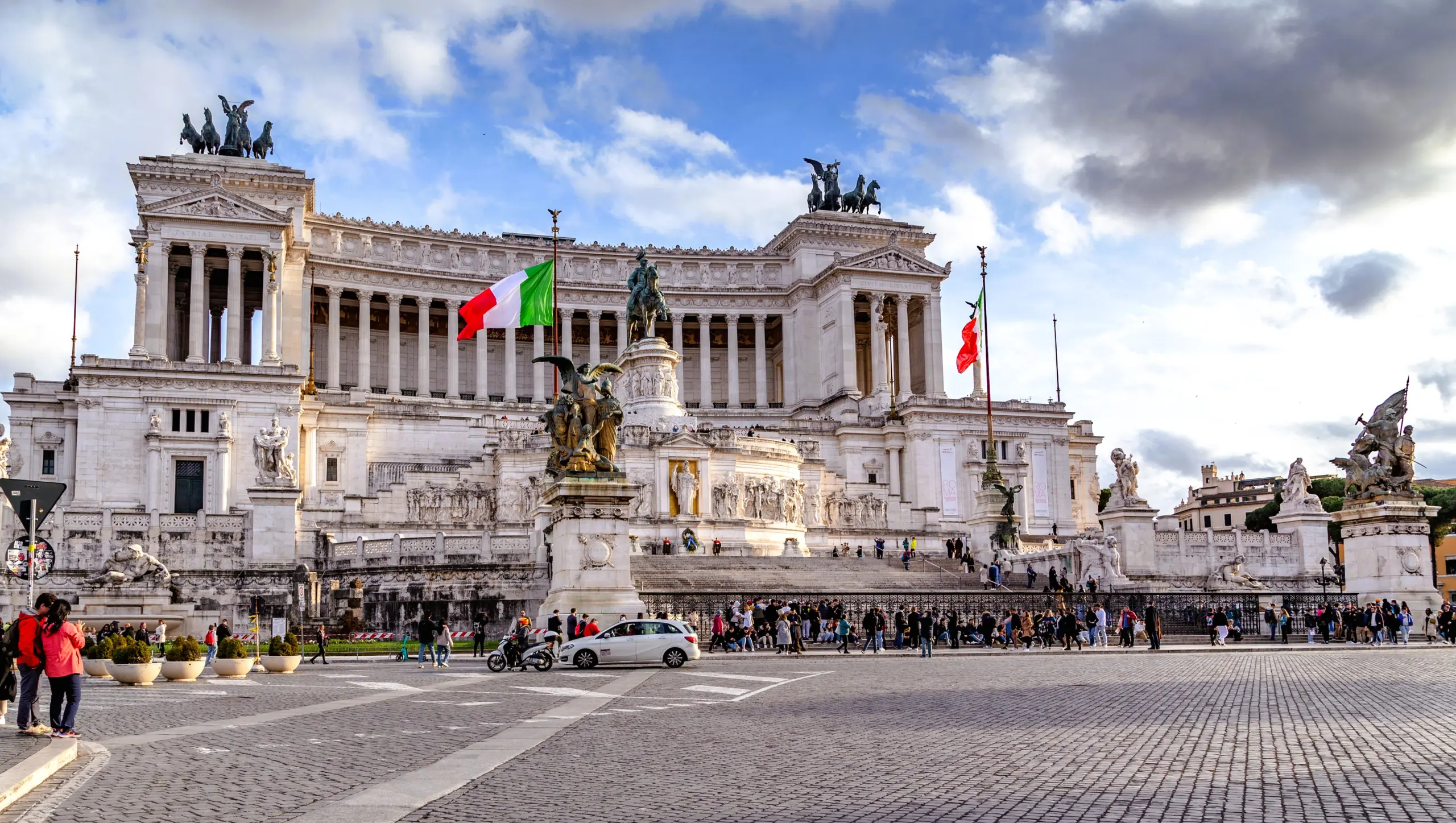
Hello, my friends! Some landmarks in Rome invite you in gently. Others demand your attention from the moment you see them. The Vittoriano (officially known as the Monumento Nazionale a Vittorio Emanuele II) belongs firmly to the second category. You don’t stumble upon it quietly. It rises suddenly from Piazza Venezia – bright, massive, unapologetically present. Against Rome’s warm palette of terracotta, ochre, and sun-worn stone, the Vittoriano almost feels like an interruption. Too white. Too grand. Too different. And yet, like so many things in Rome, the more time you spend near it, the more it asks you to reconsider your first impression.
This is not a monument that reveals itself instantly. It’s one you circle, question, observe from different angles and at different hours, until one day, unexpectedly, it clicks.
First Encounters – The Monument You Can’t Ignore
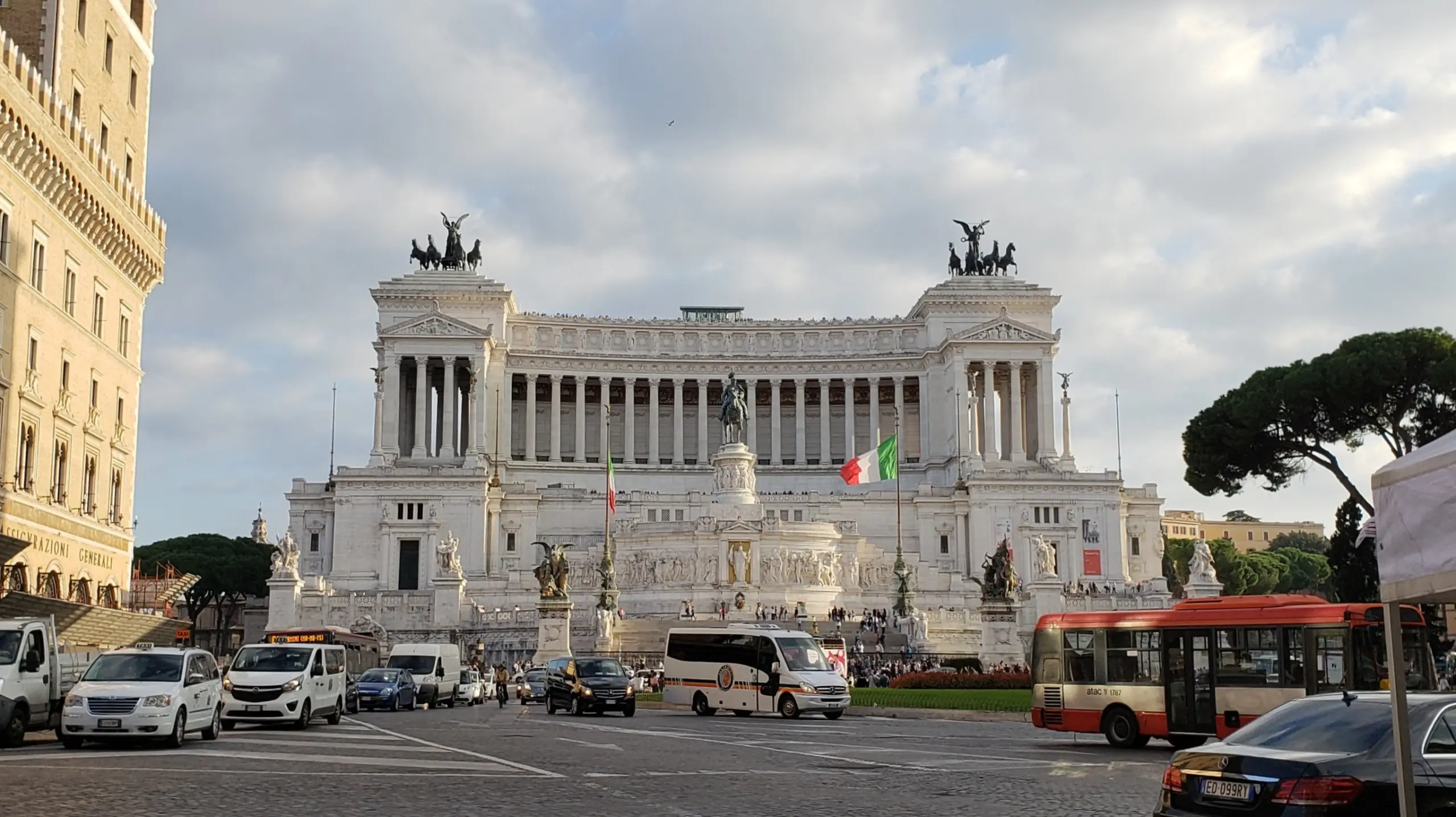
My first encounters with the Vittoriano were brief and slightly bewildering. I passed it while to Trajan’s Forum, weaving through traffic, glancing up almost reflexively. It felt theatrical, nearly cinematic, like a set piece rather than a part of everyday Rome. And maybe that’s why opinions about it are so divided. Some call it magnificent. Others call it intrusive. Locals have nicknames for it: the Wedding Cake, sometimes the Typewriter. But love it or question it, indifference isn’t an option. The Vittoriano insists on being seen. What struck me most wasn’t how it looked, but how it felt. There’s a sense of intention here. Purpose. This monument wasn’t built to blend in. It was built to say something.
A Monument to a Young Nation
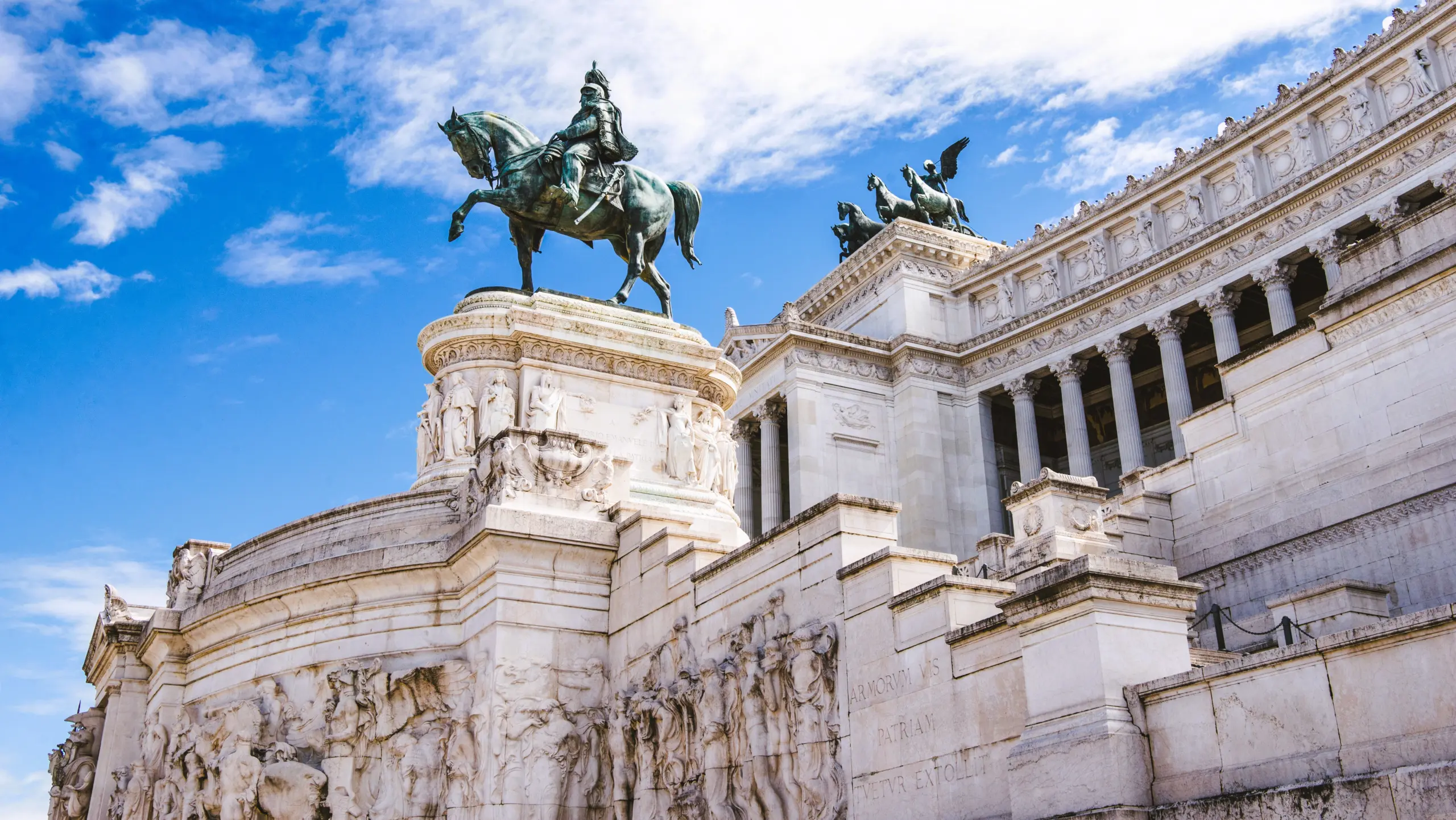
To understand the Vittoriano, you have to step back, not just physically, but historically. Italy, as a unified nation, is young compared to Rome itself. For centuries, the peninsula was a patchwork of kingdoms, city-states, and territories. The Vittoriano was conceived in the late 19th century to honor Victor Emmanuel II, the first king of a united Italy, and to celebrate the idea of national unity, something deeply important, and still fragile, at the time.
This explains its scale. Its brightness. Its ambition. Rome is ancient, layered, and often subtle. The Vittoriano is none of those things by accident. It is deliberately bold, classical in inspiration, and monumental in size, meant to stand as a visible symbol of a modern Italian identity rising from a deeply complex past.
The Heart of the Monument – The Tomb of the Unknown Soldier
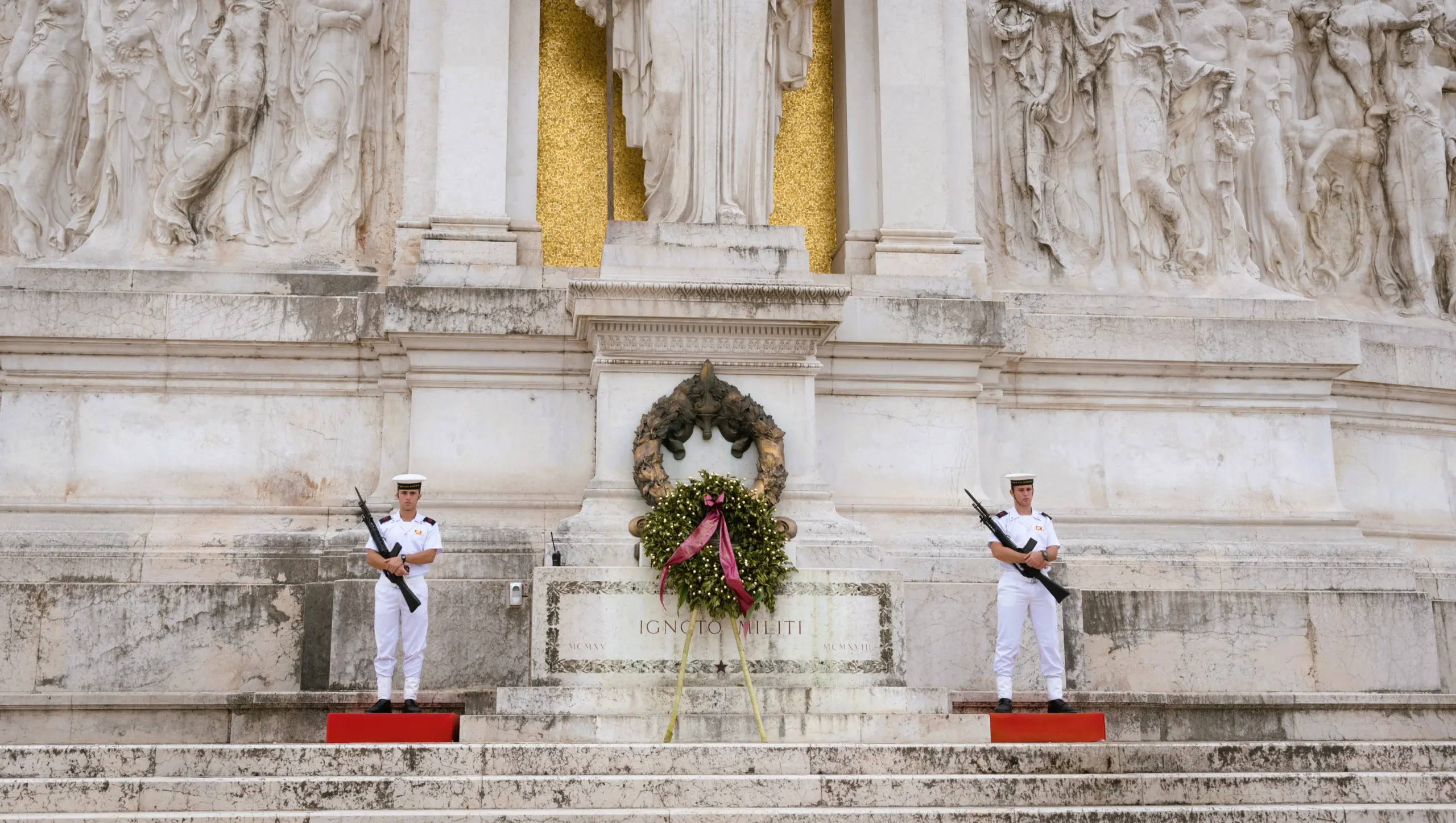
At the center of the Vittoriano lies its most moving element: the Tomb of the Unknown Soldier.
Here, the energy shifts. An eternal flame burns quietly, guarded by soldiers standing watch with solemn precision. This space honors the countless Italian soldiers who died in World War I without being identified – representing loss, sacrifice, and collective memory rather than individual glory.
What I found most powerful is the contrast. Surrounding you is marble, height, grandeur. But at the core is silence. Stillness. Respect. It’s a reminder that monuments are not just about scale, they’re about meaning. And here, the Vittoriano becomes less about architecture and more about remembrance.
Circling the Vittoriano – Perspective Changes Everything
The Vittoriano isn’t meant to be rushed. It’s a monument that rewards movement. From one angle, it feels imposing. From another, surprisingly elegant. As you walk around it, climb its steps, and rise above the city, the experience shifts. The chaos of Piazza Venezia fades below, and suddenly Rome opens up around you.
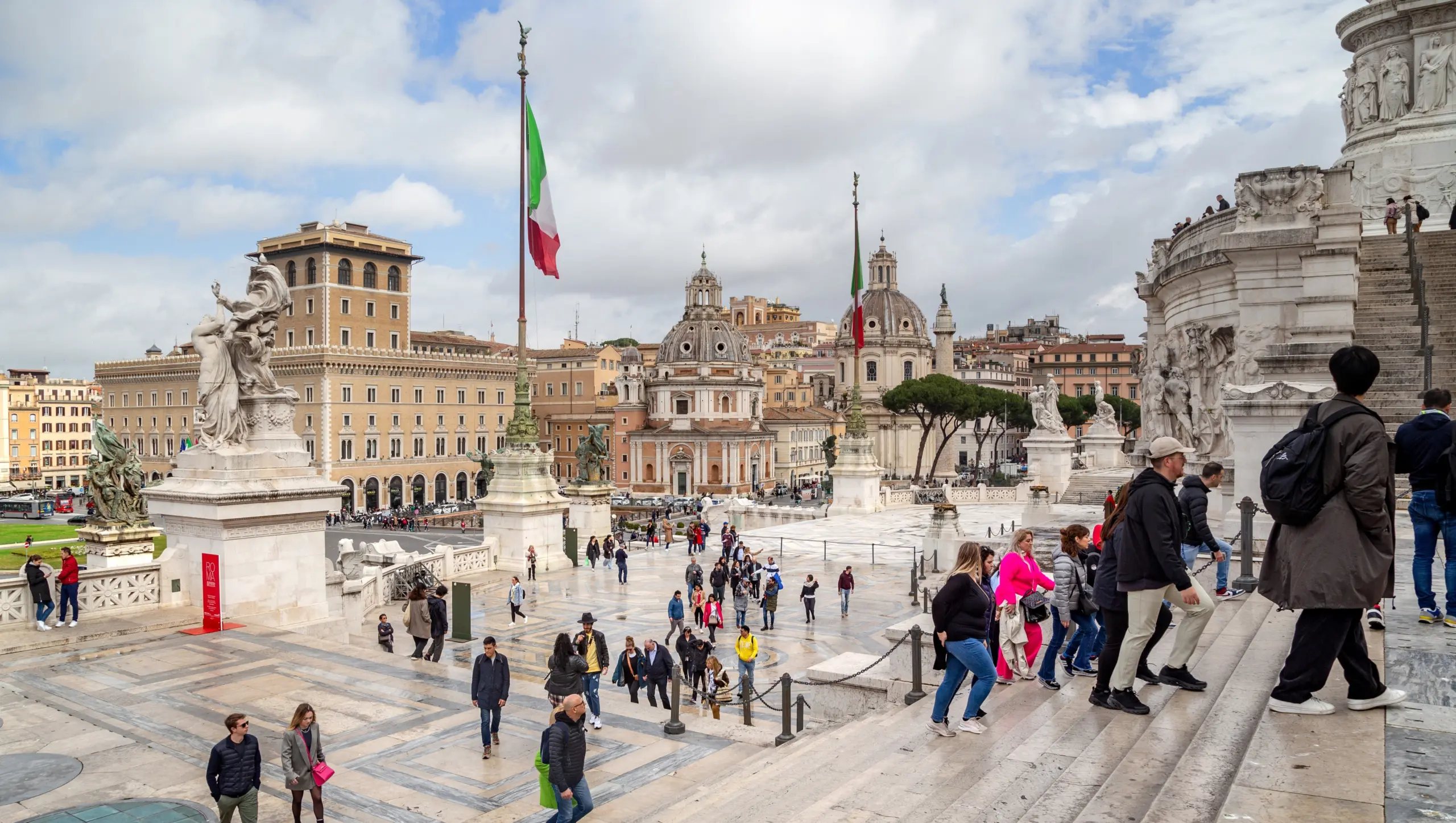
From the upper terraces, the city unfolds in a way that feels both expansive and intimate at once. The Roman Forum stretches out beneath you like an open-air archive of empires past, layers of history visible at a single glance. In the distance, the Colosseum stands timeless and unmistakable, a reminder of Rome’s enduring presence across centuries. Domes rise softly from the urban fabric, rooftops ripple outward in warm tones, and ancient ruins appear almost casually woven into the modern cityscape. Up here, the Vittoriano no longer feels like an interruption in Rome’s visual rhythm. Instead, it becomes a balcony, an intentional pause point, offering a rare opportunity to take in the city as a whole, to see how Rome’s past and present coexist not in neat chapters, but in one continuous, living panorama.
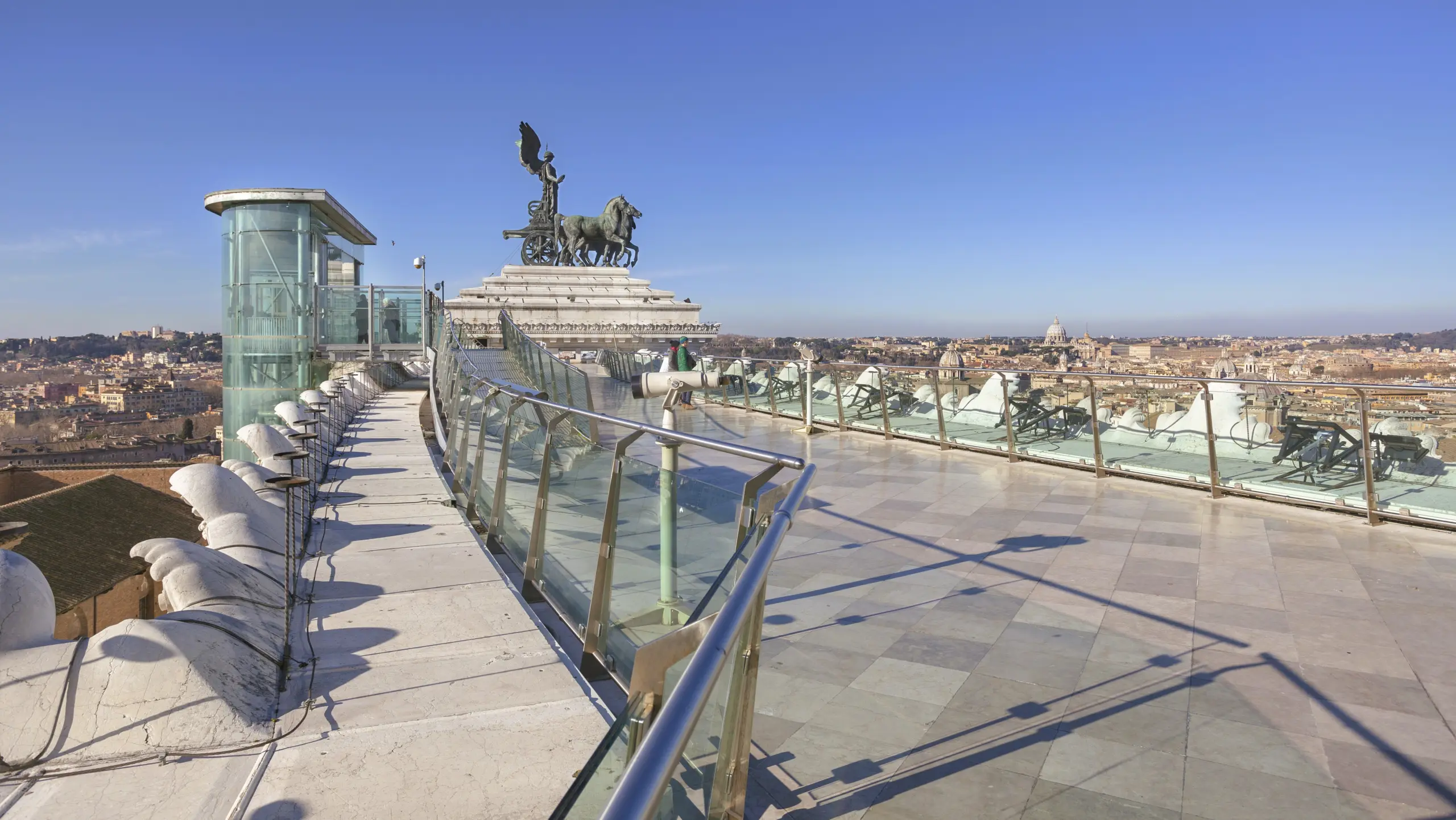
Bubbly Tip: Take the elevator to the panoramic terrace if you’re short on time or energy. The views are worth it, especially near golden hour.
Light, Time, and Transformation
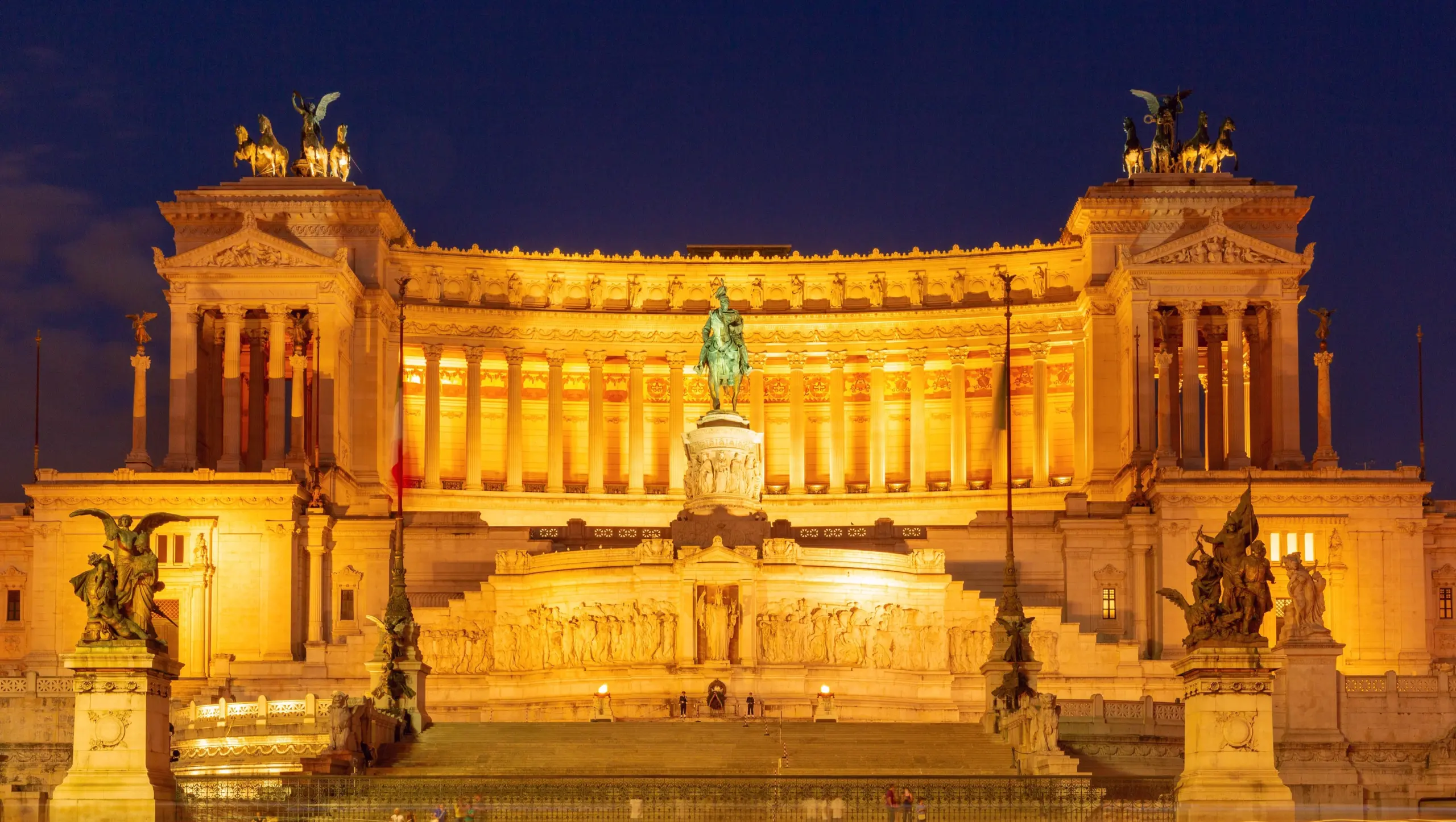
Like many places in Rome, the Vittoriano changes dramatically with the hour. In bright midday sun, it gleams – almost blinding, assertive, and commanding attention. At sunset, the marble softens, warmed by golden light. Shadows deepen. Details emerge. The monument feels calmer, more reflective.
At night, illuminated against the dark sky, it becomes almost ethereal. The crowds thin, the noise recedes, and the Vittoriano finally feels still, watching Rome rather than interrupting it. These transitions are subtle but meaningful. They mirror the monument’s purpose: to endure, to adapt, to remain present through changing times.
Why the Vittoriano Stays with You
The Vittoriano isn’t a monument you necessarily fall in love with at first sight. It’s one you grow into.
You notice it repeatedly – on your way to the Forum, after leaving Campo de’ Fiori, while tracing Rome’s cinematic routes, or simply crossing the city on foot. Each time, it feels slightly different. Less overwhelming. More familiar. And eventually, you realize that’s its quiet power.
The Vittoriano teaches an important lesson about Rome: not all beauty here is ancient or immediately charming. Some of it is complicated. Some of it reflects ambition, identity, and the difficult process of becoming something new while surrounded by the weight of history. It’s Rome reminding you that even in a city obsessed with the past, modern stories matter too.
Final Thoughts
The Vittoriano is bold, controversial, reflective, and deeply symbolic. It doesn’t whisper its story, it declares it. And yet, if you take the time to look again, to move around it, to see it in different light, it reveals a quieter side beneath the marble.
This is not just a monument to a king or a nation. It’s a monument to memory, unity, and the courage to define identity in a place where history is already overwhelming. If you let it, the Vittoriano will challenge your assumptions, and that, to me, is one of the most beautiful gifts Rome offers.
Did the Vittoriano surprise you too, or did it take time for its beauty to reveal itself? I’d love to hear how it made you feel.
Until next time, stay curious, stay open, and keep wandering!
xoxo,
Bubbly 🎈
🌟 Everything You Need to Plan Your Dream Trip in 2026
- 🌟 Luxury Hotels - Find premium stays with Booking.com & Hotels.com
- 🏡 Vacation Rentals - Discover unique properties on VRBO
- 🏞️ Guided Tours - Explore with Viator or GetYourGuide
- 🎫 Attraction Tickets - Skip the lines with Tiqets
- 🚢 Ocean Cruises - Set sail with Cruise Direct
- 📱 International SIMs - Stay connected with Saily
- 🚗 Car Rentals - Budget-friendly options from Discover Cars
- 🌐 Secure VPNs - Browse safely with NordVPN
- 💶 Currency Exchange - Best rates with Wise
- 🗣️ Learn Languages - Master the local language with Babbel and Rosetta Stone