

Hello fellow travelers! Few buildings capture the spirit of Vienna quite like the magnificent Vienna City Hall (Rathaus). Rising proudly along the grand Ringstrasse Boulevard, the Rathaus is far more than the administrative heart of the city. It is a symbol of Vienna’s civic pride, architectural beauty, and vibrant public life. From its soaring Neo-Gothic tower to the lively events that unfold on the square in front of it, Vienna City Hall is a place where history and everyday life come together. When I visited Rathausplatz, the square was buzzing with excitement during the Vienna Electric Days, a modern event celebrating innovation in mobility – a fascinating contrast to the historic architecture towering above.
Standing in front of the Rathaus, surrounded by crowds exploring new electric vehicles and enjoying the atmosphere of the square, I was reminded that Vienna is a city where tradition and progress coexist beautifully.
Vienna City Hall at a Glance
📍 Location: Friedrich-Schmidt-Platz 1, 1010 Vienna — on the Ringstrasse
🏛️ What It Is: Vienna’s Neo-Gothic city hall, designed by Friedrich von Schmidt, completed 1883
🗼 Tower: 98 metres, crowned by the Rathausmann copper knight (installed 1882)
🎨 Interior: 1,500+ rooms, Neo-Gothic grand staircase, Festsaal (Grand Ballroom), arcaded courtyards
🎬 Summer: Film Festival at Rathausplatz (since 1991) — opera, ballet, jazz on giant outdoor screen
🎄 Winter: Wiener Christkindlmarkt — Vienna’s Christmas Market (mid-November to Christmas Eve)
🎟️ Entrance: Rathausplatz is free; guided tours available for interior
💡 Tip: Visit at night when the Rathaus is illuminated, or time your visit around a Rathausplatz event
The Vision Behind Vienna’s Rathaus
The story of Vienna City Hall begins in the 19th century, during one of the most transformative periods in the city’s history. In 1857, Emperor Franz Joseph I of Austria issued a historic decree ordering the demolition of Vienna’s old defensive walls and the creation of a grand new boulevard that would encircle the historic city center. His instructions were characteristically direct – the decree began with the words “Es ist Mein Wille” (“It is My Will”). This ambitious urban project reshaped Vienna into a modern imperial capital. Along the new Ringstrasse rose some of the city’s most celebrated landmarks, including the Vienna State Opera, the Austrian Parliament Building, and the twin museums of Maria-Theresien-Platz, which would later open in 1891.
The city itself needed a monumental building to represent its municipal government. The result was Vienna City Hall, designed by architect Friedrich von Schmidt, who had previously worked on the restoration of Cologne Cathedral. Schmidt chose a Neo-Gothic architectural style inspired by the great town halls of Flanders – a deliberate choice evoking the medieval tradition of proud, self-governing cities. It was a powerful civic statement to embed in stone at the heart of an imperial capital.

Construction began in 1872 and continued for more than a decade before the Rathaus officially opened in 1883. The scale and elegance of the building reflected Vienna’s growing importance as a cultural and political center of Europe.
Neo-Gothic Grandeur: The Architecture of the Rathaus
Standing before Vienna City Hall, visitors quickly notice the extraordinary richness of its façade. Stretching nearly 150 meters across Rathausplatz, the building is animated by a dense program of statues, pointed arches, slender towers, and intricate stone carvings that give the structure its unmistakable Gothic character. Rather than relying on a single monumental surface, the façade unfolds like a carefully composed tapestry of sculptural and architectural elements.

Among the most fascinating details are the numerous stone figures that adorn the building. Many of these statues represent historical figures, while others act as heraldic supporters, bearing the coats of arms of the Austrian provinces and the City of Vienna itself. These sculptural coat-of-arms bearers reinforce the idea that the Rathaus belongs not only to the government, but to the broader civic identity of Austria and its regions.

Rising above this intricate façade is the building’s most recognizable feature: the central tower, which reaches approximately 98 meters into the Vienna skyline. At its summit stands the famous Rathausmann, a gleaming copper statue of a medieval knight holding a banner. Installed in 1882, the Rathausmann has become one of Vienna’s most beloved symbols, watching over the city from his lofty perch above Rathausplatz.

Seen from the square below, the tower creates a dramatic vertical focal point that draws the eye upward and anchors the entire composition. Whether illuminated at night or framed by blue summer skies, the Rathaus remains one of Vienna’s most photogenic landmarks.
Inside Vienna City Hall
While many visitors admire the Rathaus from the outside, the interior spaces are equally impressive. Vienna City Hall contains more than 1,500 rooms, including ceremonial halls, council chambers, offices, and arcaded courtyards that reflect the same Neo-Gothic elegance seen on the exterior. One of the most striking features visitors encounter inside is the series of grand staircases that rise through the building’s interior. Framed by Gothic arches, carved stone balustrades, and soaring ceilings, these staircases create a sense of theatrical movement through the building, guiding visitors upward toward the ceremonial halls. The architectural detailing, from the pointed arches to the decorative stonework, reinforces the building’s medieval inspiration while maintaining the grandeur expected of a major civic landmark.
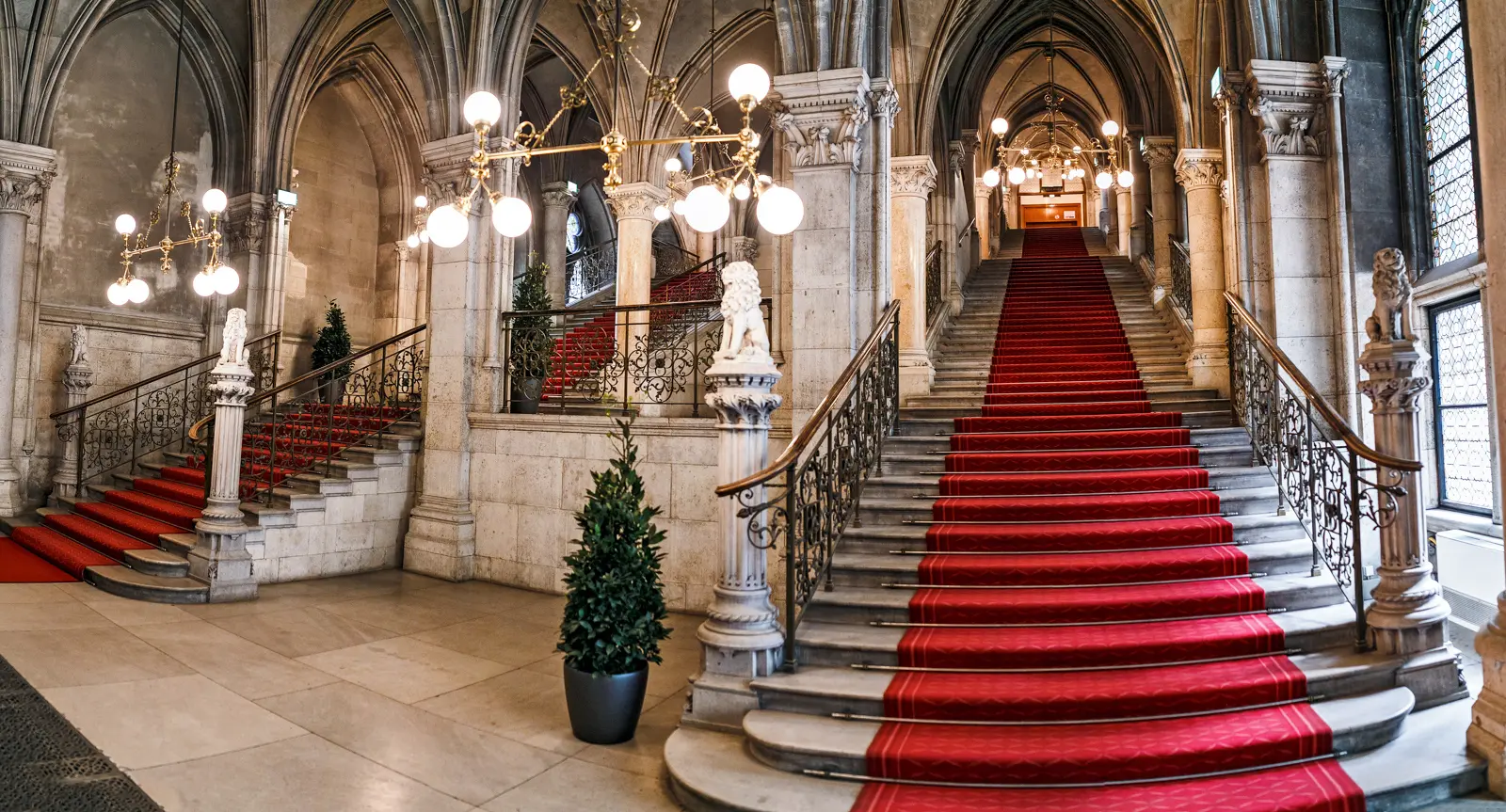
Among the most remarkable spaces is the Festsaal, or Grand Ballroom, one of the largest ceremonial halls in Austria. With its soaring ceilings, chandeliers, and richly decorated interiors, the hall hosts prestigious events ranging from official receptions to the famous Vienna Life Ball.
Walking through the building’s arcades and courtyards reveals another side of the Rathaus. Sunlight filters through Gothic arches, and the quiet elegance of the inner courtyards provides a calm contrast to the lively square outside. These spaces remind visitors that the building functions not only as an architectural monument but also as the working center of Vienna’s city government.

Rathausplatz: Vienna’s Great Public Square
Just as important as the building itself is the grand square that unfolds before it: Rathausplatz, one of Vienna’s most vibrant public spaces. Framed by the majestic façade of Vienna City Hall, the square has become a cultural stage where the life of the city plays out throughout the year. What might appear at first glance to be a simple open plaza is, in reality, one of Vienna’s most dynamic gathering places, hosting festivals, markets, and public events that draw both locals and visitors from around the world.
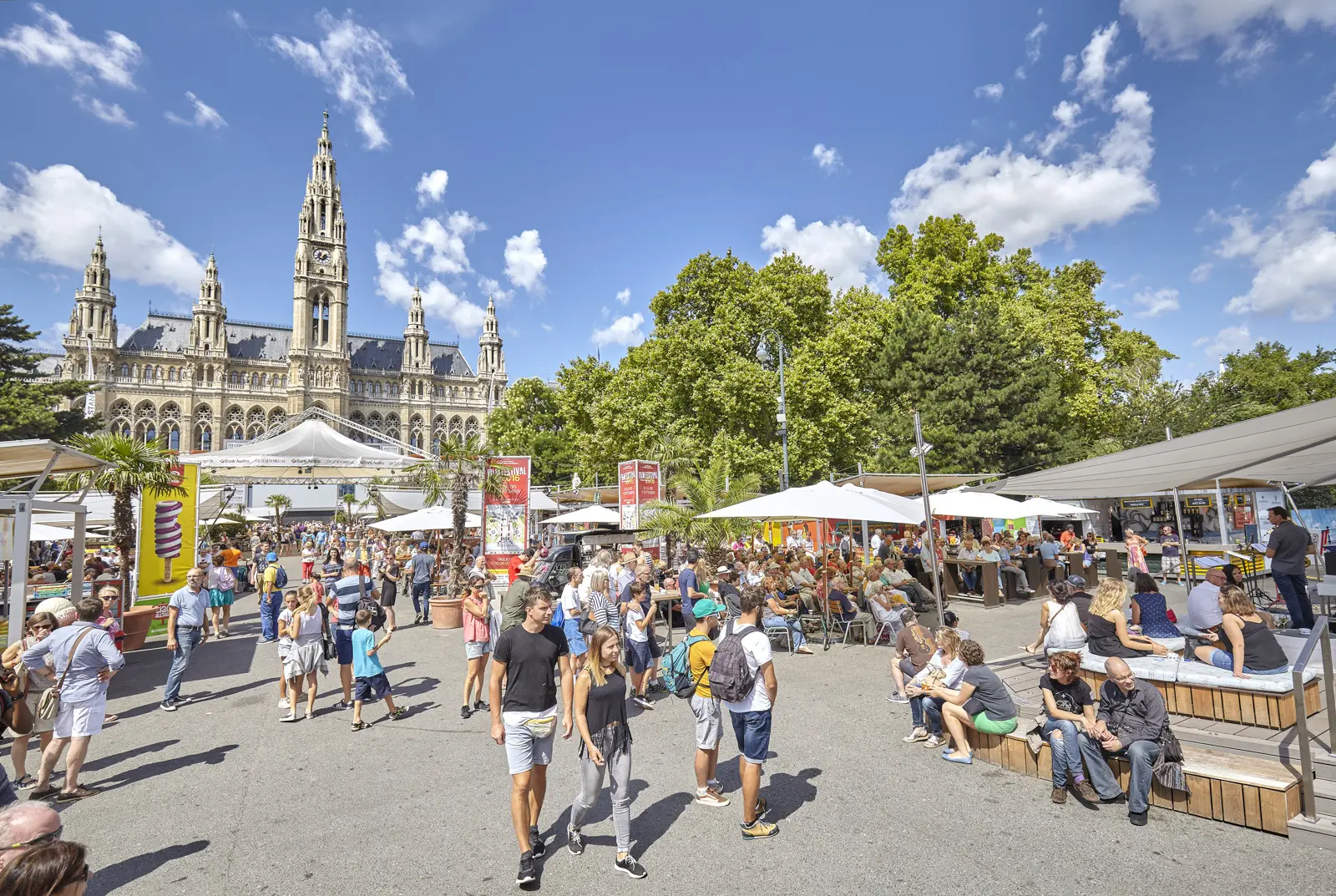
During the summer months, Rathausplatz transforms into the setting for the famous Film Festival at Rathausplatz. Founded in 1991, this beloved open-air festival screens opera, operetta, classical music concerts, jazz performances, ballet, and international music productions on a giant outdoor screen beneath the evening sky. Admission is completely free, and visitors can sit in the square while enjoying performances that might otherwise only be experienced inside grand concert halls. Food stalls from around the world line the plaza, creating a lively culinary atmosphere that accompanies the nightly screenings. With nearly 900,000 visitors each year, the event has grown into one of the largest and most popular free cultural festivals in Europe.

In winter, the square takes on a completely different personality as it becomes home to the enchanting Vienna Christmas Market, officially known as the Wiener Christkindlmarkt. From mid-November until Christmas Eve, Rathausplatz fills with wooden stalls glowing under thousands of lights. The scent of roasted chestnuts, gingerbread, and mulled wine drifts through the cold winter air while visitors browse handcrafted ornaments, seasonal treats, and traditional Austrian gifts. Towering Christmas trees, festive decorations, and a skating area add to the magical atmosphere, turning the square into one of the most iconic holiday markets in Europe.
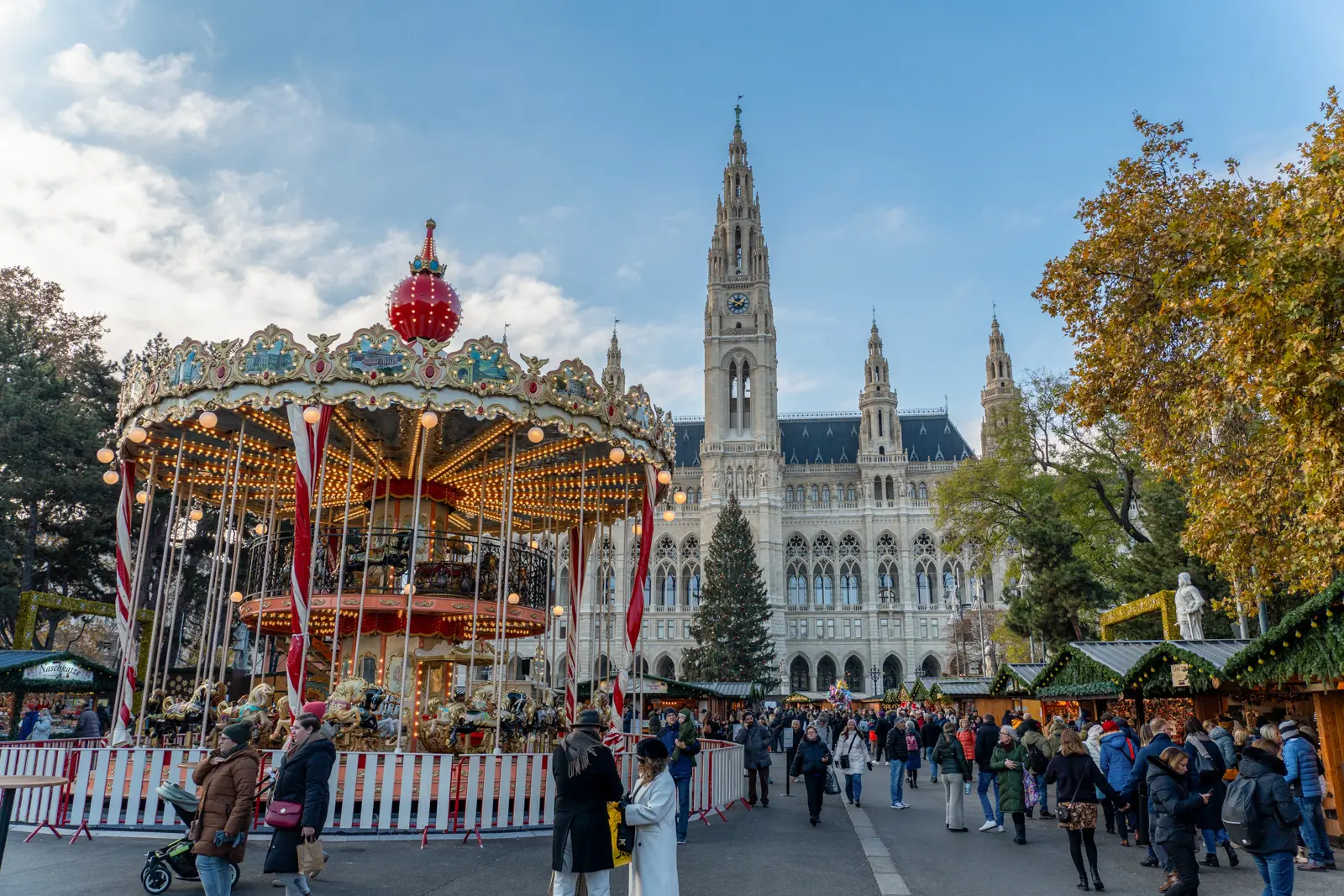
Together these seasonal events reveal the true spirit of Rathausplatz. More than just the forecourt of Vienna’s City Hall, the square functions as a living public space where culture, celebration, and everyday life intersect. Whether hosting summer concerts beneath the stars or winter markets filled with festive lights, Rathausplatz remains one of the most beloved gathering places in the Austrian capital.
Experiencing Wiener Elektrotage at Rathausplatz
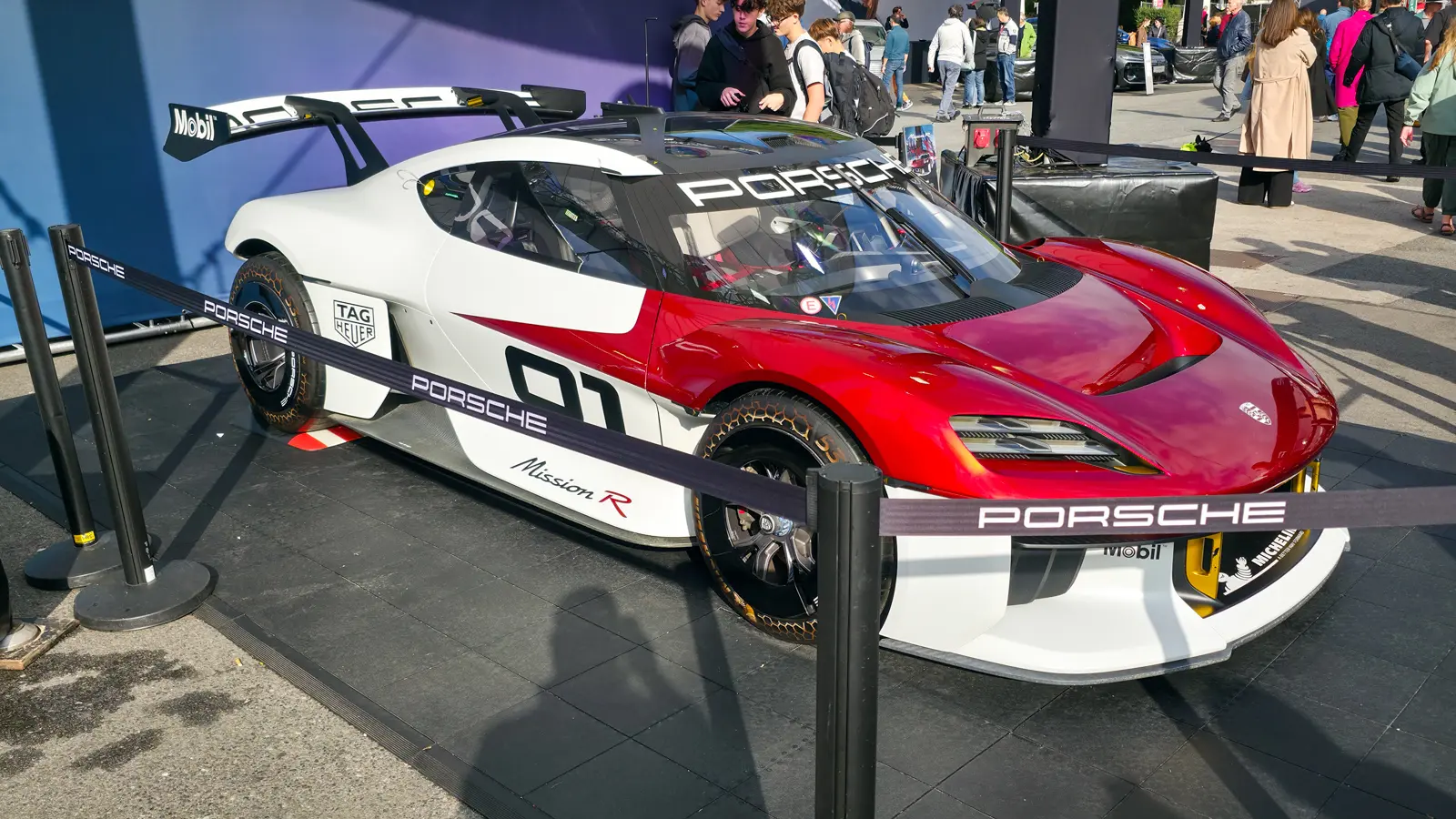
When I visited Rathausplatz, the square was hosting the Vienna Electric Days, an event dedicated to the future of sustainable mobility. The 2025 edition of the festival showcased more than fifty electric vehicles from over twenty manufacturers, offering visitors a glimpse into the rapidly evolving world of electric transportation. Rows of sleek vehicles were displayed across the square, while experts offered insights into emerging technologies and visitors explored the latest models. The event even included opportunities for test drives, making it both educational and interactive.
What struck me most was the contrast between the event and its setting. Surrounded by the soaring Gothic towers of Vienna City Hall, the displays of cutting-edge electric vehicles symbolized a city that honors its history while embracing innovation. It was a reminder that Vienna, despite its centuries-old architecture and imperial traditions, continues to look forward.
Bubbly Tips for Visiting Vienna City Hall
- Explore Rathausplatz: Even if you do not enter the building, the square itself is one of Vienna’s most lively and beautiful public spaces.
- Visit During an Event: Festivals, markets, and cultural events transform the square throughout the year.
- Look Up: Don’t miss the Rathausmann statue atop the tower – one of Vienna’s most recognizable symbols.
- Check for Guided Tours: Vienna City Hall offers guided tours that allow visitors to explore the interior halls and learn more about the building’s history.
- Visit at Night: When illuminated after dark, the Rathaus becomes even more spectacular.

Final Thoughts
Vienna City Hall is more than a municipal building, it is a living symbol of the city’s identity. Its Gothic towers tell the story of Vienna’s transformation in the 19th century, while the lively events at Rathausplatz show how the space continues to bring people together today.
Standing in the square, watching crowds gather beneath the towering façade, it becomes clear that the Rathaus is not simply a monument to the past. It is part of the city’s present and future, a place where Vienna celebrates culture, innovation, and community.
Have you visited Vienna City Hall or experienced an event at Rathausplatz? I would love to hear your thoughts in the comments below.
Until next time!

🌟 Everything You Need to Plan Your Dream Trip in 2026
- 🌟 Luxury Hotels - Find premium stays with Booking.com & Hotels.com
- 🏡 Vacation Rentals - Discover unique properties on VRBO
- 🏞️ Guided Tours - Explore with Viator or GetYourGuide
- 🎫 Attraction Tickets - Skip the lines with Tiqets
- 🚢 Ocean Cruises - Set sail with Cruise Direct
- 📱 International SIMs - Stay connected with Saily
- 🚗 Car Rentals - Budget-friendly options from Discover Cars
- 🌐 Secure VPNs - Browse safely with NordVPN
- 💶 Currency Exchange - Best rates with Wise
- 🗣️ Learn Languages - Master the local language with Babbel and Rosetta Stone