
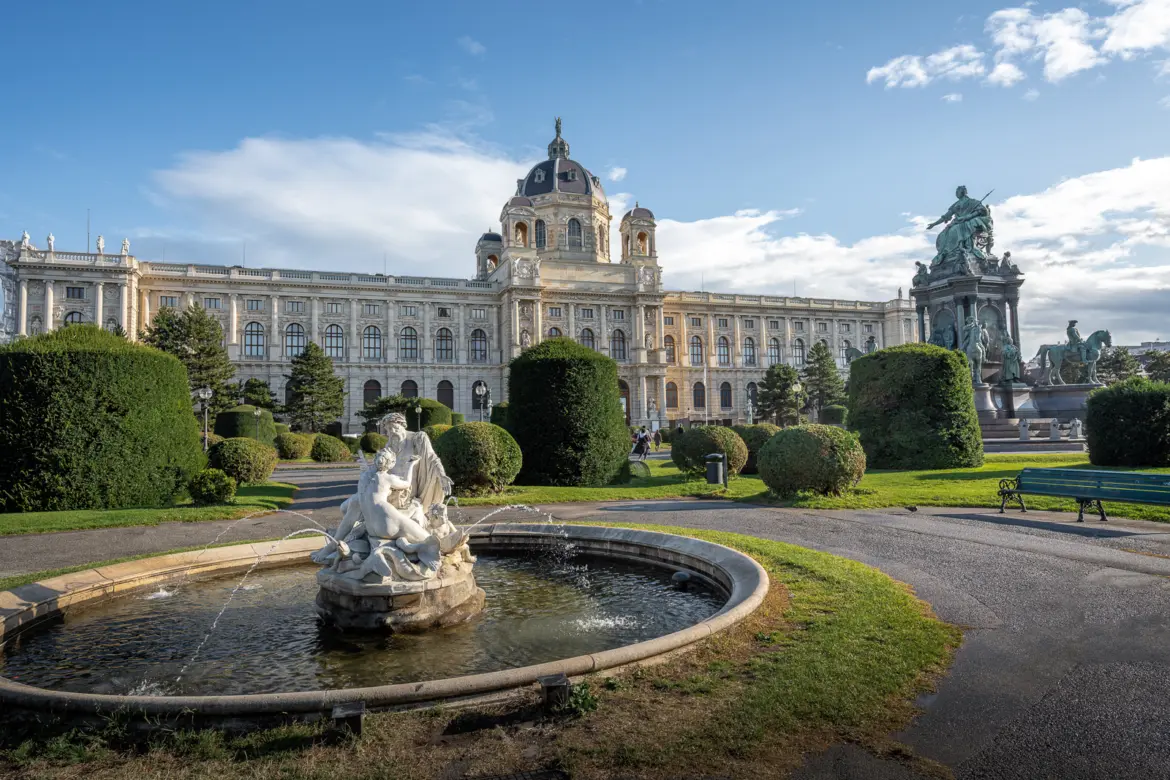
Hello travel friends! In the heart of Vienna lies one of the city’s most elegant and harmonious urban spaces: Maria-Theresien-Platz. Framed by two magnificent museums and crowned by a monumental statue honoring one of the most powerful women in European history, this grand square captures the spirit of Vienna’s imperial past while remaining a vibrant part of the city today.
Located between the historic Hofburg Palace and the bustling Ringstrasse, Maria-Theresien-Platz is more than just a beautiful public space. It is a carefully designed architectural composition where history, art, and imperial ambition come together in perfect balance. Walking through the square feels like stepping into a grand open-air gallery where every building, statue, and garden path contributes to the story of Vienna.
Maria-Theresien-Platz at a Glance
📍 Location: Between Hofburg Palace and Ringstrasse, 1010 Vienna — free, open 24/7
🏛️ Twin Museums: Kunsthistorisches Museum (art — Caravaggio, Rubens, Velázquez, Munkácsy ceiling) + Natural History Museum (science — Venus of Willendorf, meteorites, dinosaurs)
👑 Monument: Empress Maria Theresa, unveiled 13 May 1888. Sculptor: Caspar von Zumbusch. Architect: Karl von Hasenauer. 4 generals on horseback + 24 “props of the throne” figures including a hidden Mozart.
🏗️ History: Part of the unrealized Kaiserforum by Semper & Hasenauer. NHM opened 1889, KHM opened 1891.
⛲ Gardens: Tritons and Naiads fountains (Carrara marble), Rossebändiger horse tamer statues, landscaped pathways
🌅 Best time: Sunset — warm light illuminates both museums and the monument
The Vision Behind Maria-Theresien-Platz
The creation of Maria-Theresien-Platz is closely tied to one of the most transformative periods in Vienna’s history. For much of the city’s earlier history, this area formed part of the glacis, a wide ring of open ground kept deliberately clear in front of Vienna’s city fortifications to give defenders a clear line of sight against besieging enemies. When Emperor Franz Joseph I ordered the demolition of these fortifications in the mid-19th century, this vast open space became available for one of the most ambitious urban transformations in European history: the creation of the Ringstrasse.
As part of this grand vision, architect Gottfried Semper, working together with Karl von Hasenauer, conceived an extraordinary plan known as the Kaiserforum, an imperial forum that would link the Hofburg Palace to two magnificent new museums through a series of monumental triumphal arches spanning the Ringstrasse. While the museums were successfully realized, the connecting arches were never built, leaving the Kaiserforum only partially completed. The outbreak of the First World War eventually brought those remaining ambitions to a permanent end.
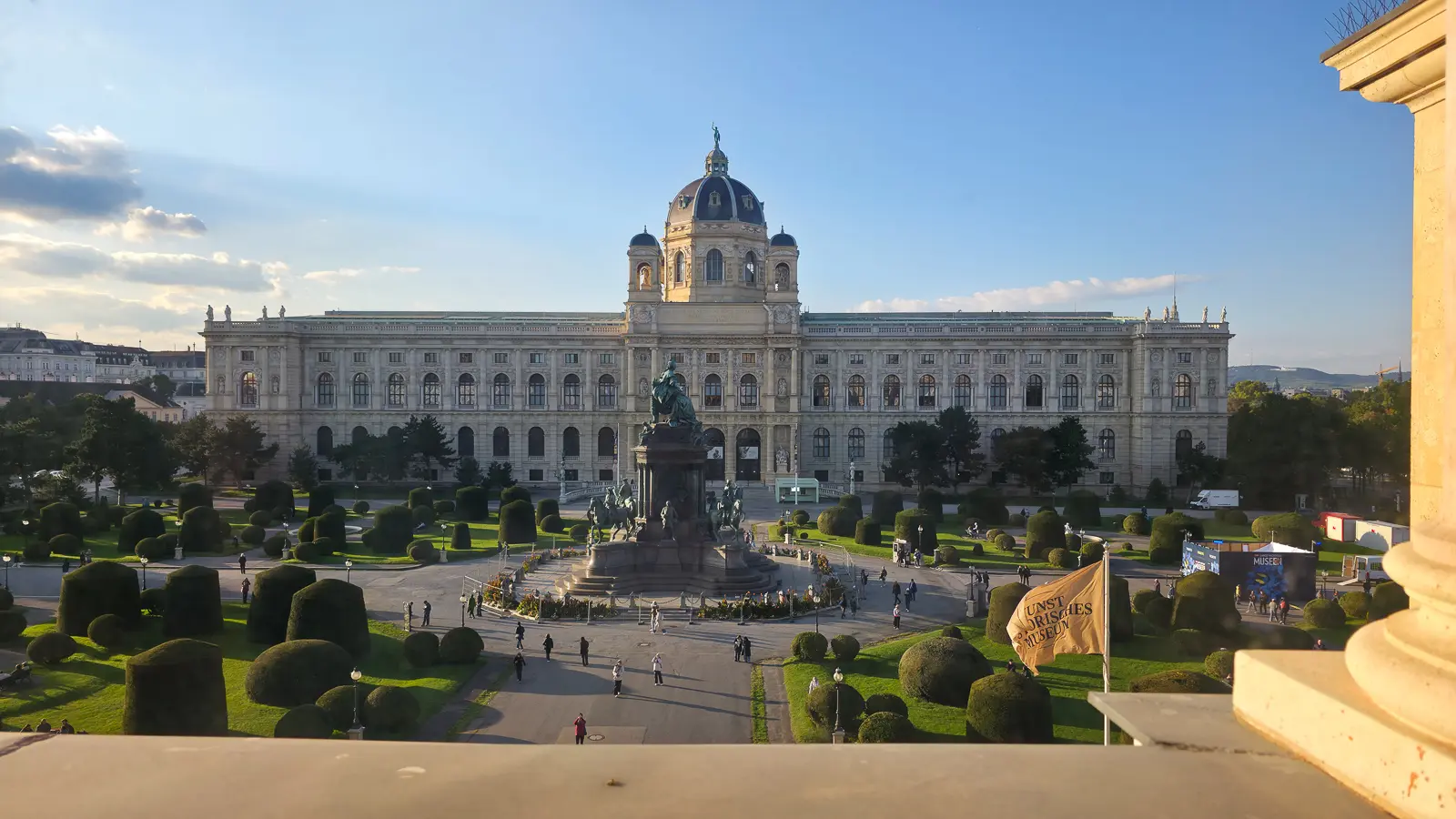
What was completed, however, was magnificent. Maria-Theresien-Platz took shape as a ceremonial square honoring the legacy of one of the Habsburg dynasty’s most influential rulers, Maria Theresa. The central monument was unveiled in 1888, the Natural History Museum Vienna opened in 1889, and the Kunsthistorisches Museum followed in 1891. The square was designed not merely as an empty plaza but as a carefully orchestrated architectural stage where culture, history, and imperial symbolism converge.
The Monument to Empress Maria Theresa
At the center of the square rises one of Vienna’s most impressive monuments: the statue of Maria Theresa, the only female ruler of the Habsburg dominions and one of the most formidable leaders of the 18th century.
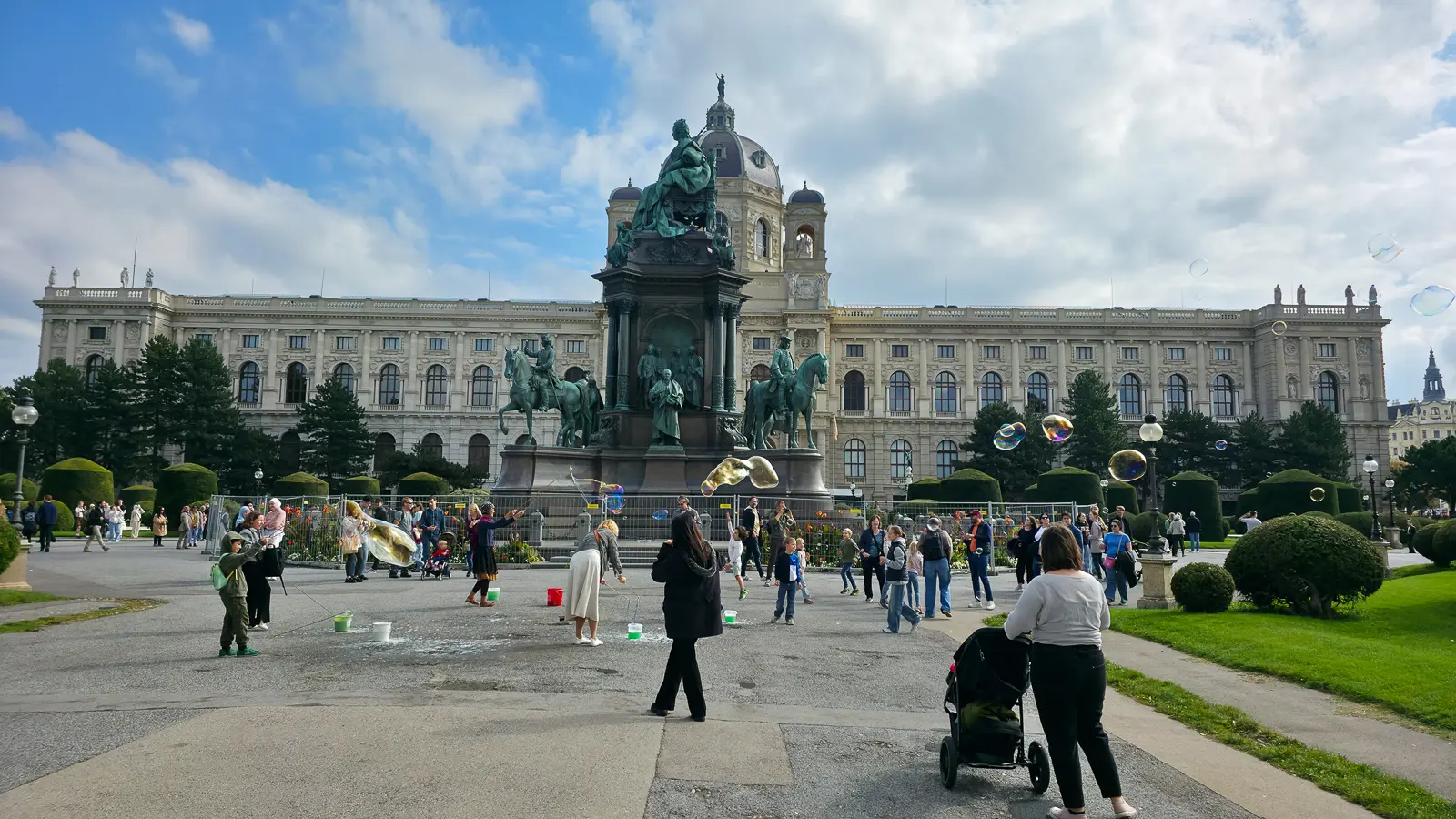
Unveiled on 13 May 1888 – Maria Theresa’s 171st birthday – the monument was a collaboration between sculptor Caspar von Zumbusch, who created the figures, and architect Karl von Hasenauer, who designed the architectural elements. It remains one of the largest sculptural ensembles in Vienna. Maria Theresa sits proudly on a monumental throne at the summit, holding a sceptre and the Pragmatic Sanction – the constitutional decree issued by her father that allowed her to inherit the Habsburg dominions and symbolized the dynasty’s indivisible claim to power. Her figure radiates confidence and authority, reflecting the extraordinary political role she played during her reign.
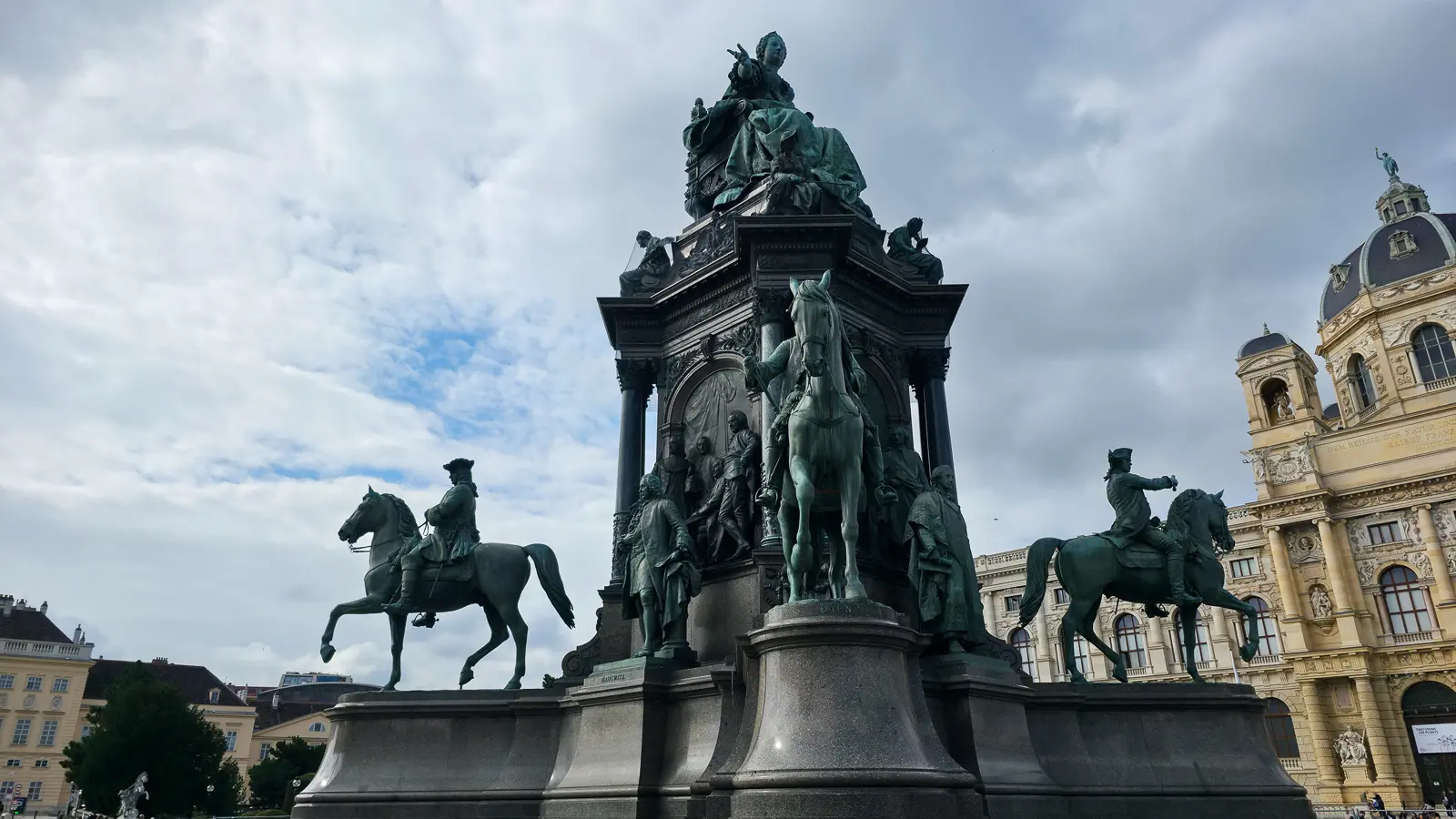
Surrounding the empress is a richly populated sculptural world. Four of her most celebrated generals – von Daun, von Khevenhüller, Traun, and von Laudon – are depicted on horseback at the corners of the monument. At her feet are clustered 24 figures representing the “props of the throne” – statesmen, advisors, artists, and scientists who shaped the Habsburg Empire across foreign policy, administration, the military, art, and science. Allegorical figures at the base symbolize the virtues of governance, wisdom, justice, and strength associated with her reign.
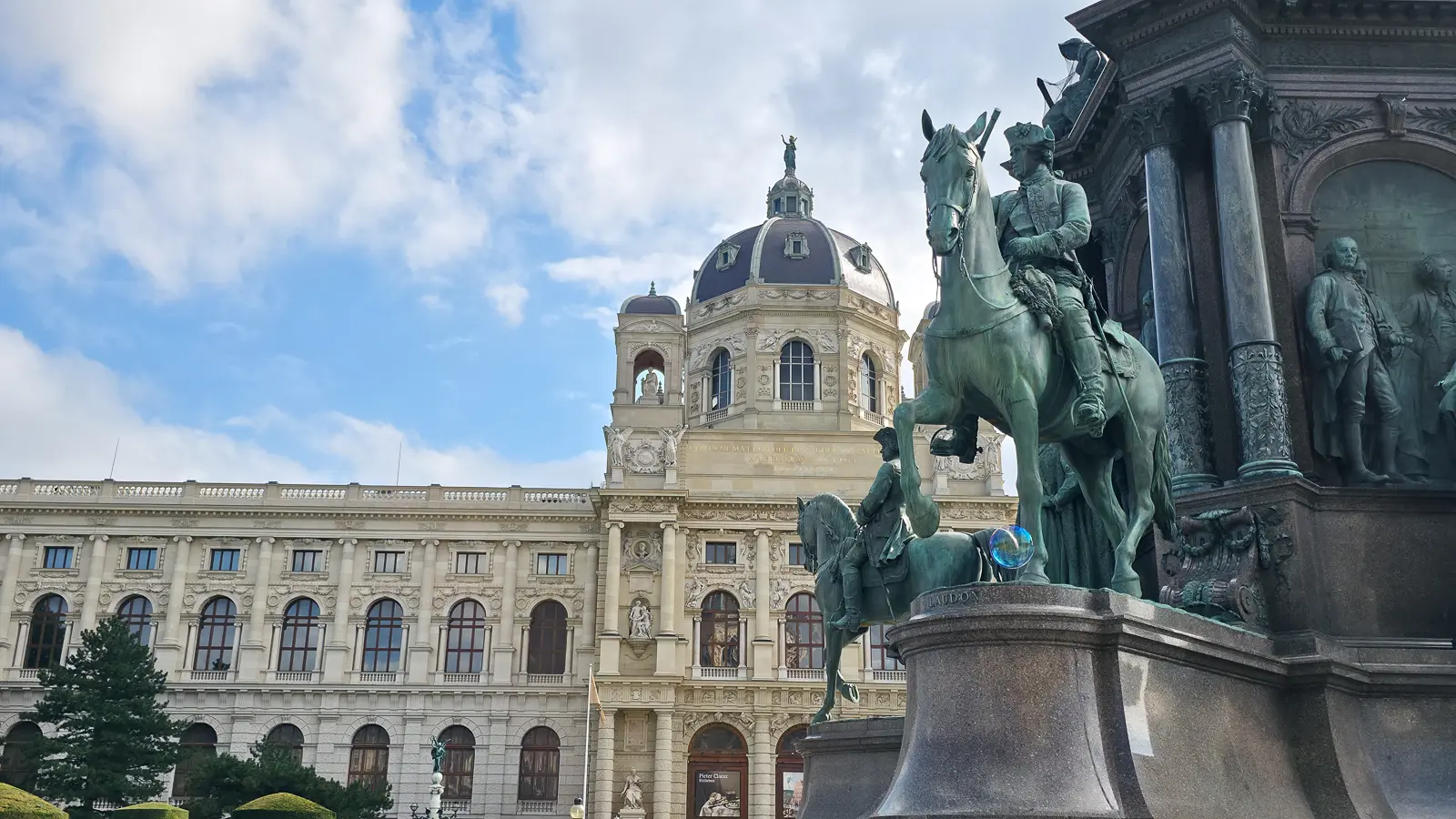
Look closely and the monument reveals a wonderful hidden detail: among the figures on the plinth appears a youthful figure widely believed to represent Wolfgang Amadeus Mozart, standing between Haydn and Gluck – a quiet tribute to the extraordinary cultural flowering that defined Maria Theresa’s era, and a discovery that rewards those who take the time to explore the monument carefully.
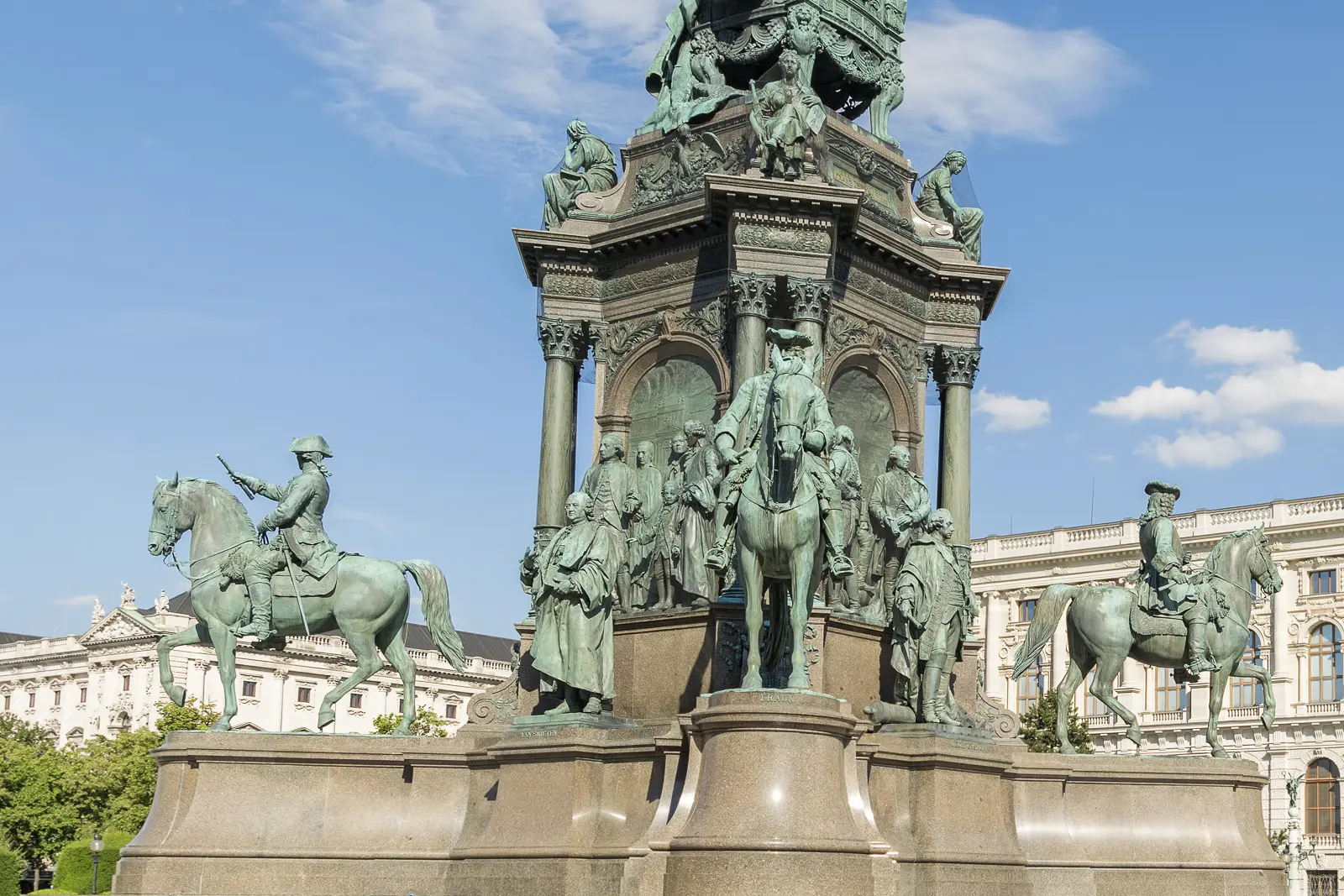
The monument does more than commemorate a ruler; it tells the story of an empire at its height. Standing before it, visitors cannot help but feel the scale of the historical forces that once shaped Central Europe.
The Twin Museums: Architectural Symmetry at Its Finest
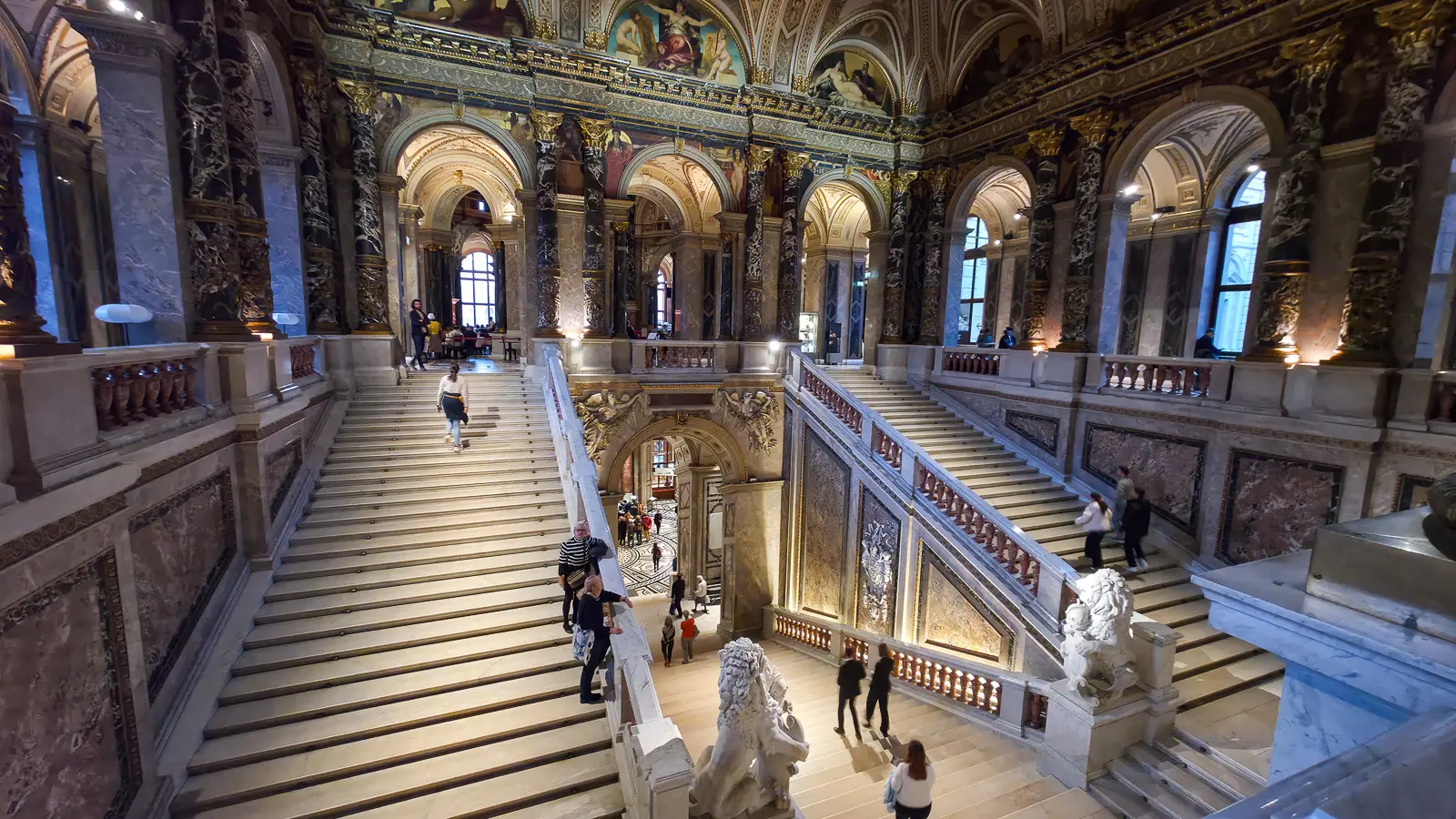
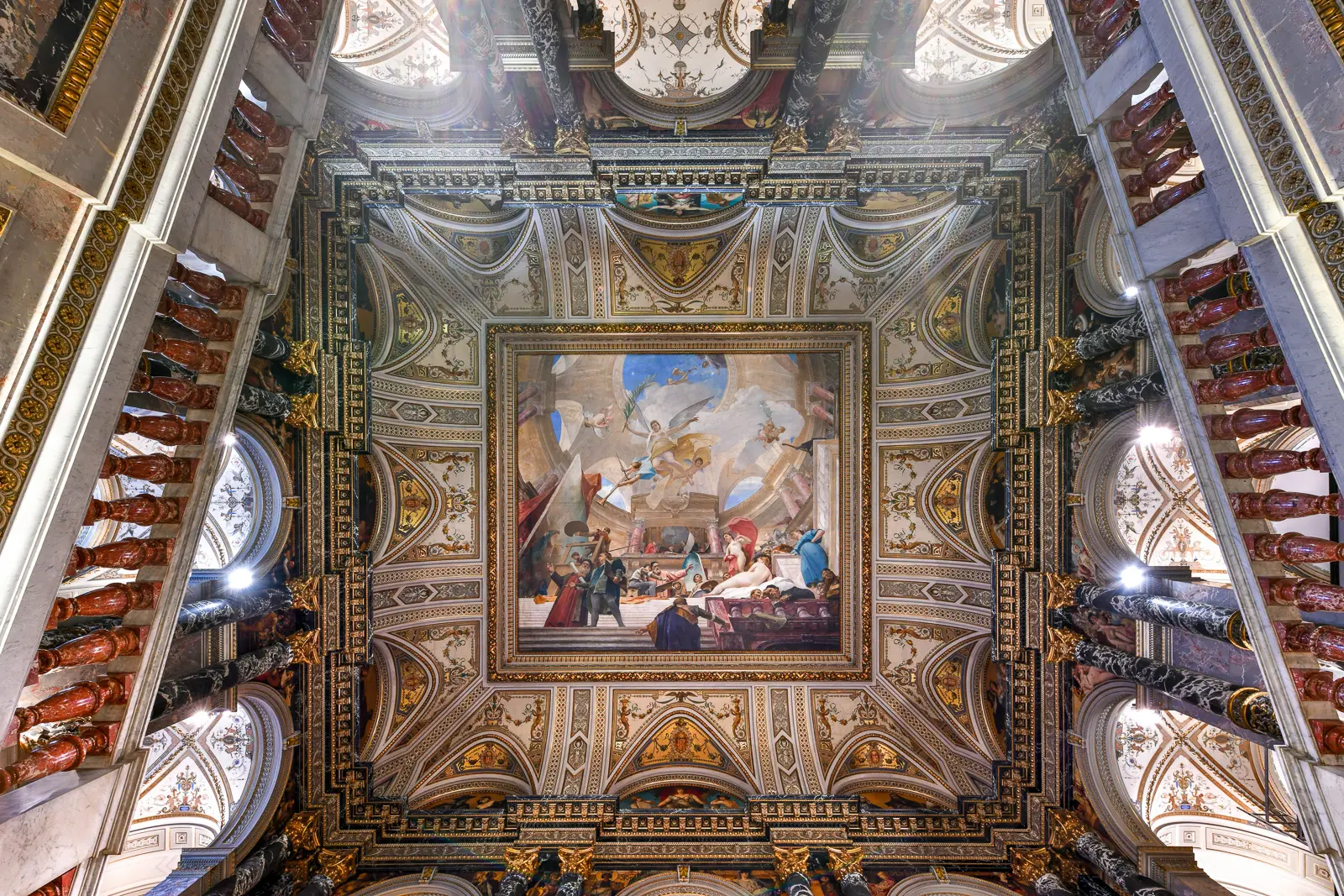
One of the most striking aspects of Maria-Theresien-Platz is the remarkable symmetry created by the two grand museums that frame the square. Designed by architects Gottfried Semper and Karl von Hasenauer and constructed between 1871 and 1891, the two buildings were intentionally conceived as nearly identical Renaissance Revival palaces – mirror images of each other that create a perfectly balanced composition around the central monument. On one side stands the magnificent Kunsthistorisches Museum, one of the world’s great art museums. Its vast collections include masterpieces by Caravaggio, Peter Paul Rubens, and Diego Velázquez, along with extraordinary artifacts from ancient Egypt, Greece, and Rome. Before heading upstairs, look up at the grand staircase – its spandrel and intercolumniation paintings were created by a young Gustav Klimt, his brother Ernst, and their collaborator Franz Matsch, depicting ancient Egypt and Greece as the foundations of European civilization, all before Gustav developed his celebrated gold period. The ceiling painting above is by Hungarian artist Mihály Munkácsy. It is a detail that surprises even seasoned
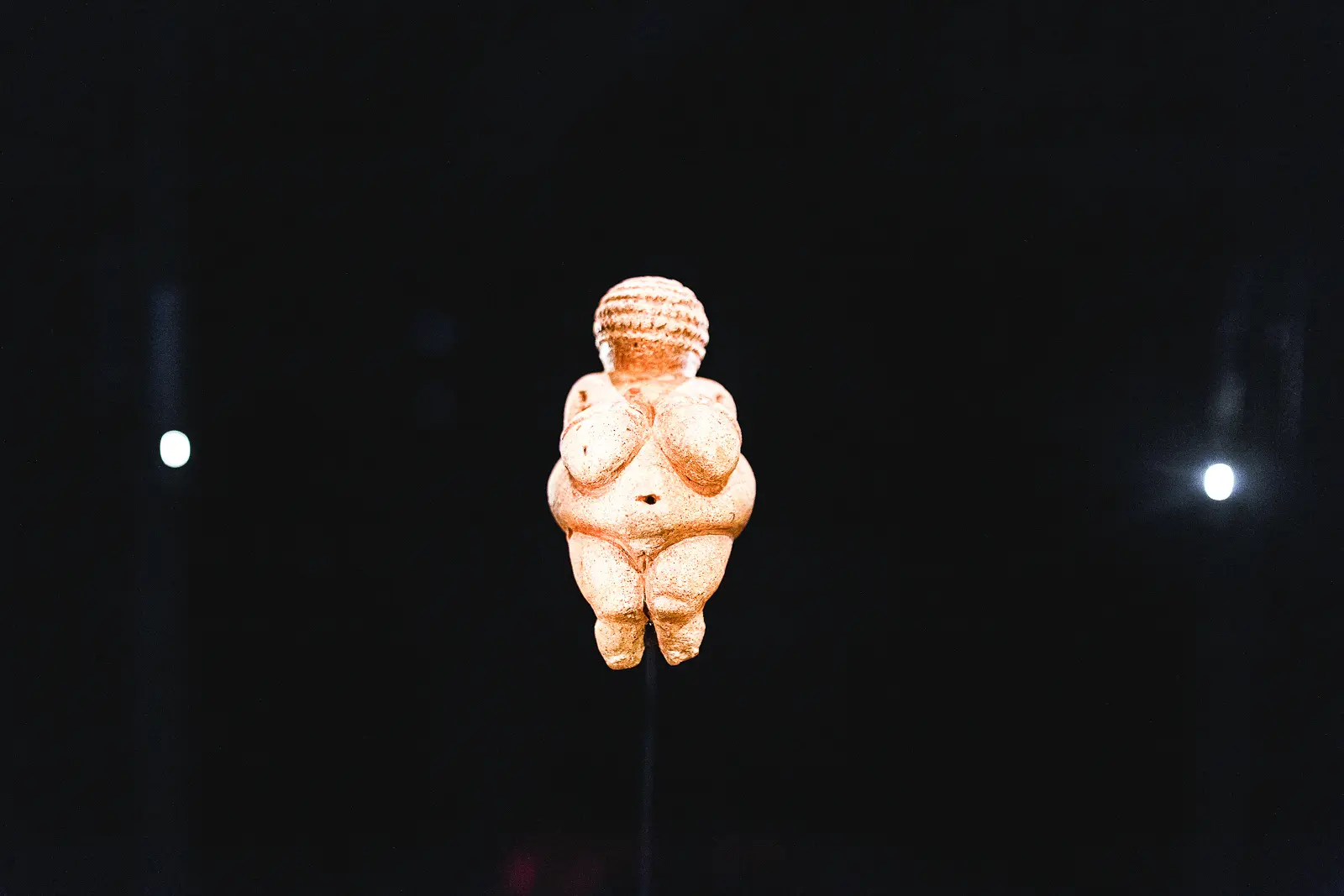
Facing it directly across the square is the equally impressive Natural History Museum Vienna (Naturhistorisches Museum Wien), home to one of Europe’s most extensive scientific collections. Inside, visitors can explore everything from meteorites and dinosaur skeletons to the famous Venus of Willendorf, one of the most important prehistoric artifacts ever discovered. Look upward as you approach – the museum’s cupola is crowned by a colossal bronze statue of Helios, the Greek sun god, while statues of renowned scientists adorn the façade below, a fitting tribute to the spirit of inquiry housed within.
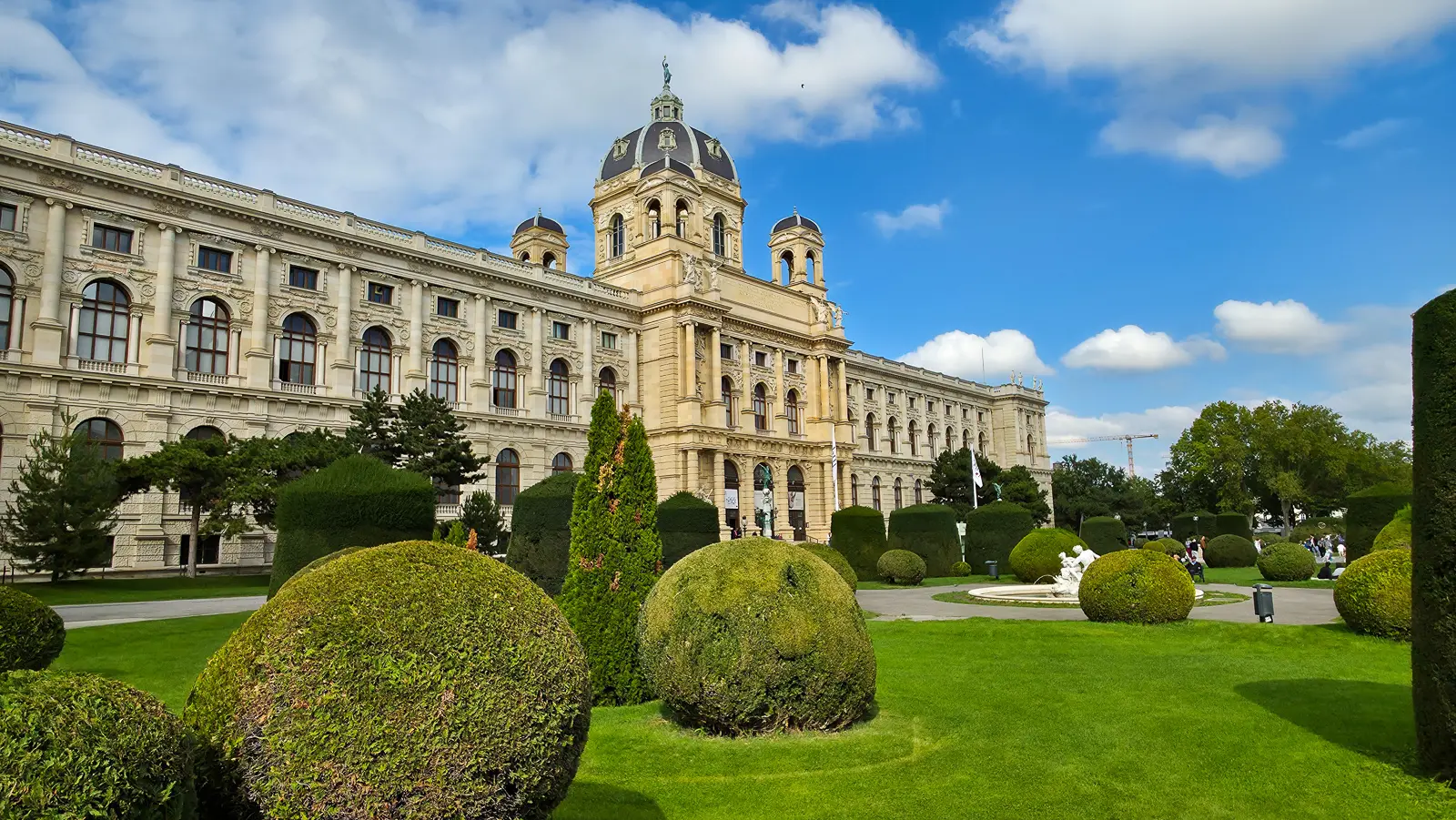
Together, their grand domes, ornate façades, and monumental staircases reflect the artistic and intellectual confidence of Vienna during the late Habsburg era – two palaces of knowledge facing each other across one of Europe’s most elegant squares.
A Square Designed for Grandeur
Maria-Theresien-Platz is remarkable not only for its buildings but also for the way the entire space was designed. Carefully landscaped gardens, curving pathways, and decorative fountains soften the monumental architecture and invite visitors to explore the square at a leisurely pace. Tree-lined walkways lead toward the museums while benches and lawns provide places to pause and enjoy the surroundings. The gardens offer beautiful views of the surrounding buildings, with the statue of Maria Theresa serving as the square’s powerful focal point.
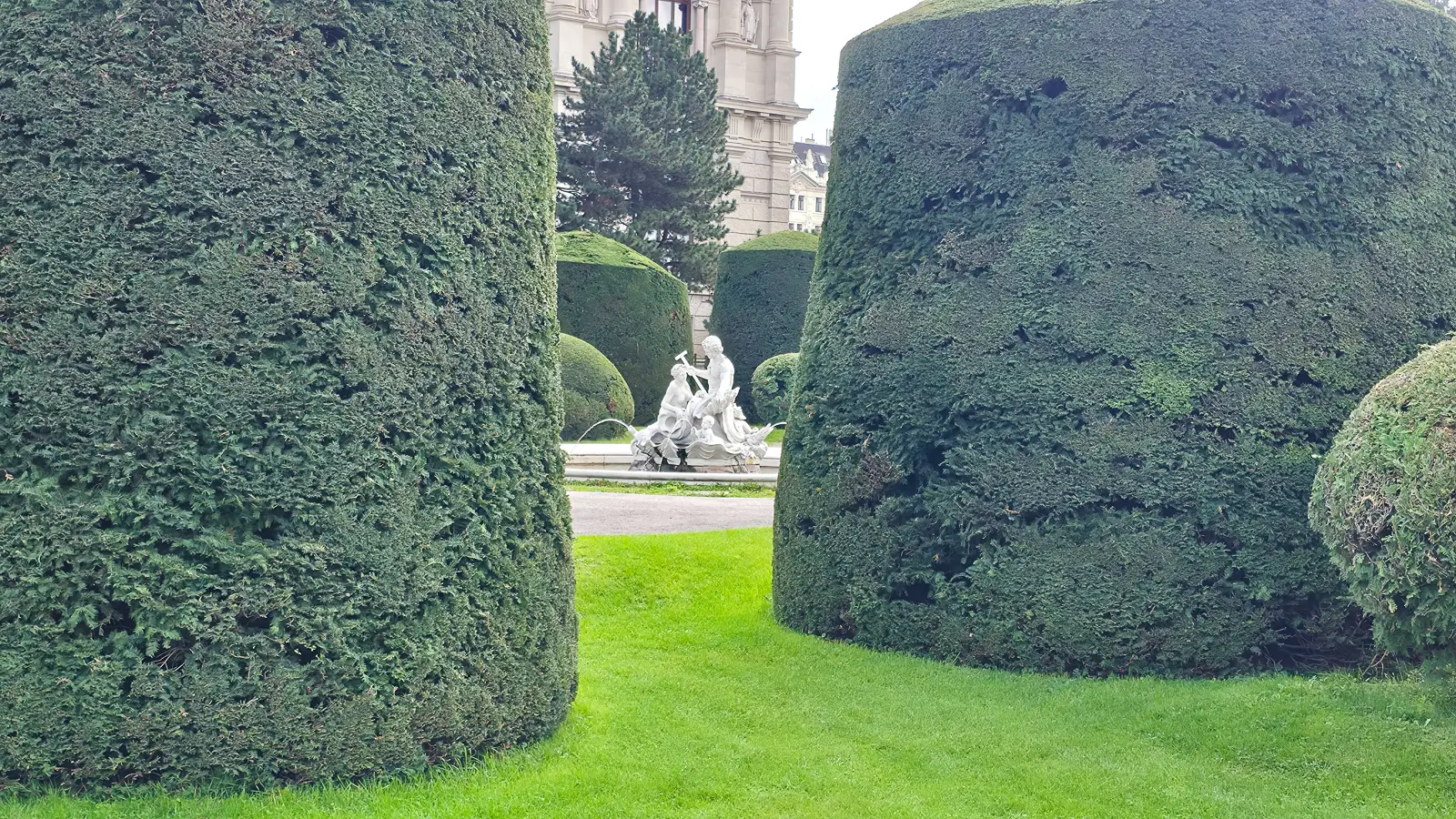
The square is also animated by several sculptural works that add movement and life to the landscape. Among them are the elegant Tritons and Naiads Fountains, created in Carrara marble by sculptors Hugo Haerdtl, Edmund Hofmann von Aspernburg, and Anton Schmidgruber, whose mythological figures introduce a playful sense of motion among the formal gardens. Nearby stand the Rossebändiger – dramatic marble sculpture groups depicting powerful horse tamers restraining rearing horses, one Roman and one Germanic in character. These dynamic works provide a striking contrast to the calm symmetry of the surrounding architecture.
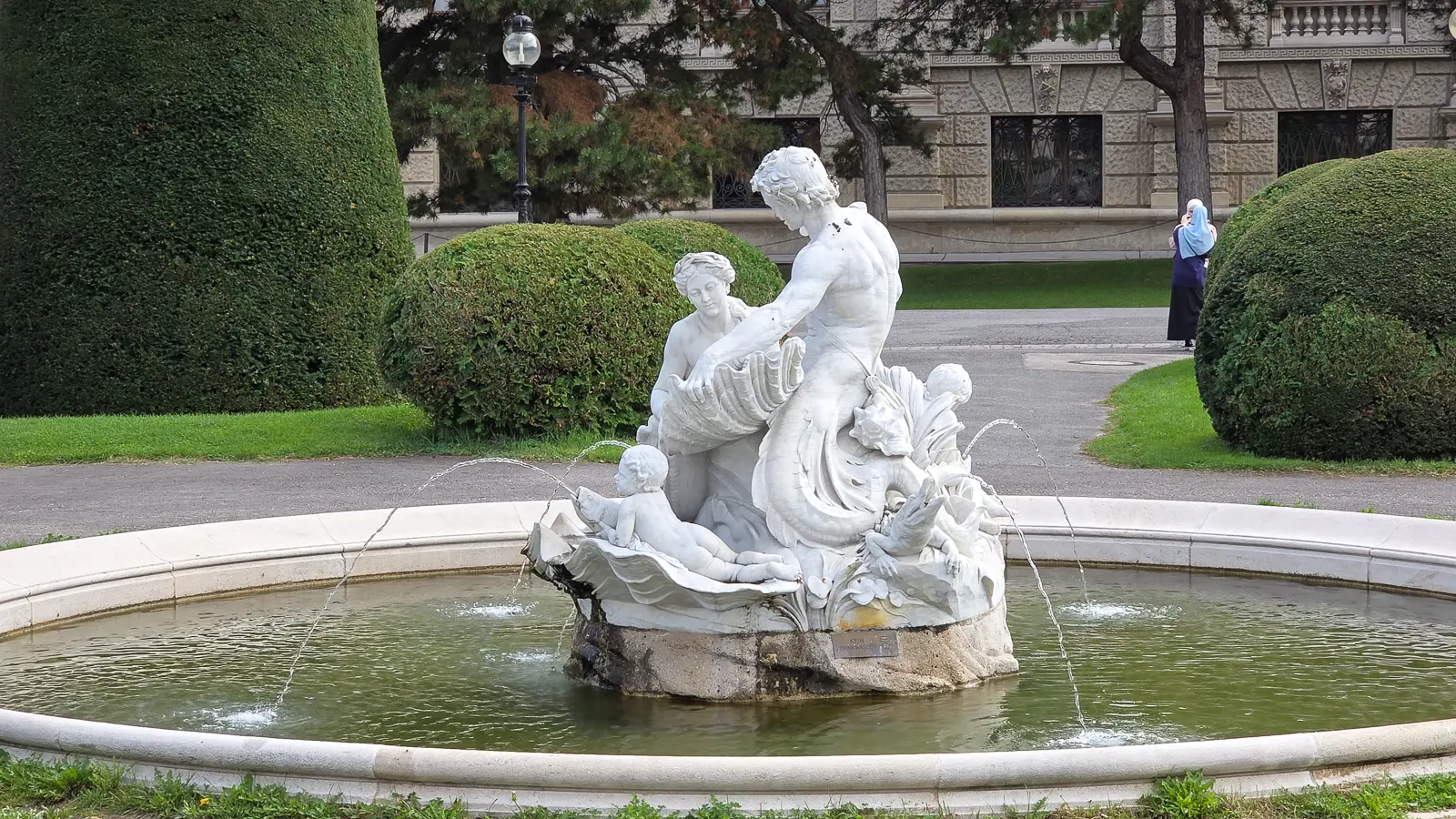
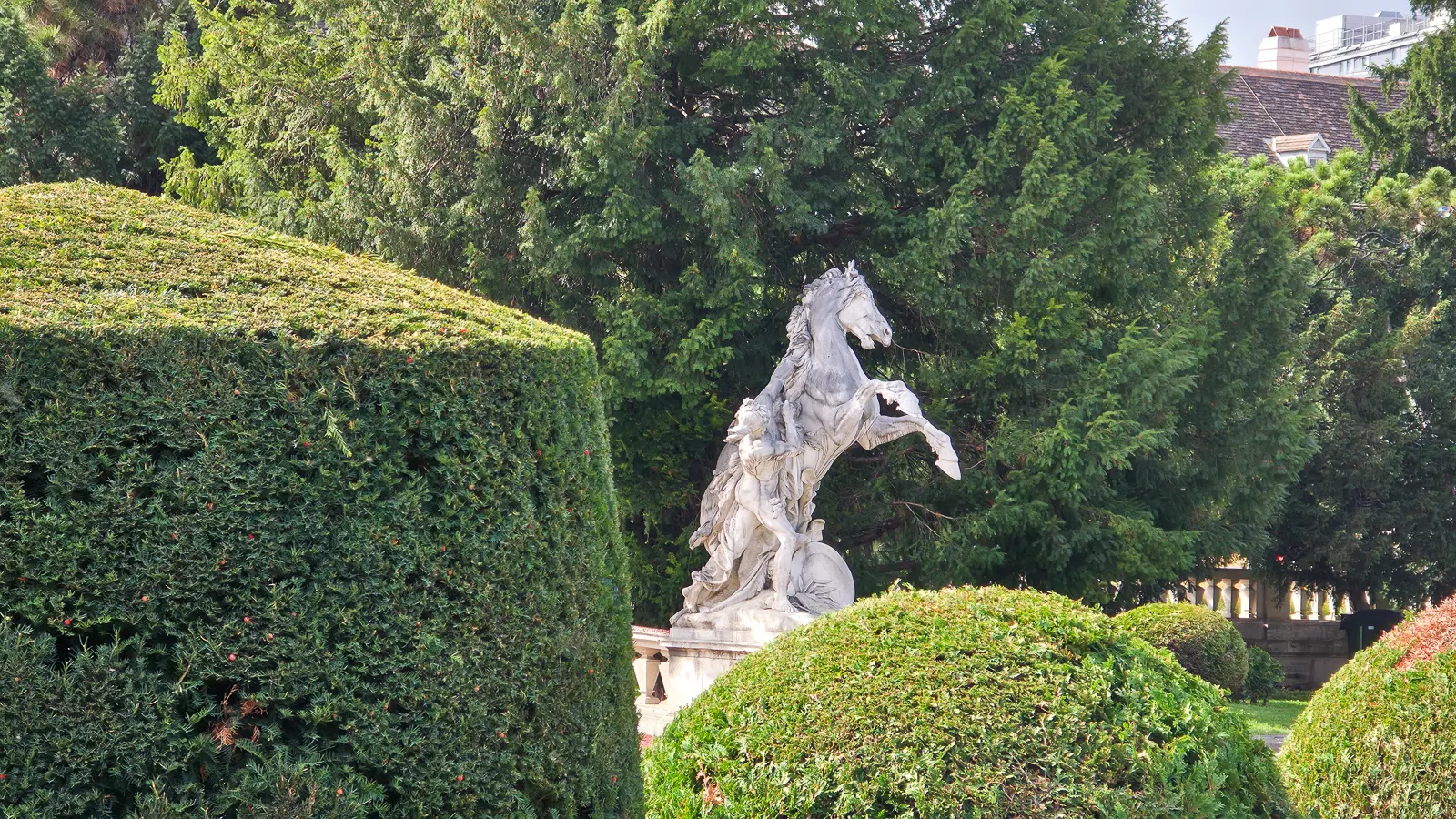
From many vantage points within the square, the massive dome of the Kunsthistorisches Museum rises dramatically above the skyline, while the symmetrical layout of the square creates a sense of calm order rarely found in urban spaces.
Maria-Theresien-Platz Today
Today, Maria-Theresien-Platz remains one of Vienna’s most beloved public spaces. Locals pass through the square on their way to museums or nearby parks, while visitors stop to admire the architecture or rest in the gardens after exploring the surrounding attractions. In the warmer months, the square fills with people enjoying the sunshine, reading on benches, or simply walking along the elegant pathways. The open lawns and quiet atmosphere make it a peaceful contrast to the busier streets of central Vienna.
Throughout the year, the square also hosts seasonal events and cultural gatherings that bring new life to the historic setting. Whether illuminated by summer sunlight or framed by autumn colors, Maria-Theresien-Platz remains one of the most photogenic locations in the Austrian capital.
Bubbly Tips for Visiting Maria-Theresien-Platz
- Visit both museums: The Kunsthistorisches Museum and Natural History Museum offer two completely different experiences but are equally impressive.
- Take time to explore the monument: Walk around the Maria Theresa statue to admire the remarkable sculptural details.
- Enjoy the gardens: The landscaped lawns and pathways make this one of Vienna’s most pleasant squares for a quiet stroll.
- Combine nearby landmarks: The square sits between the Hofburg complex and the Ringstrasse museums, making it easy to include in a walking route through Vienna’s historic center.
- Visit at sunset: The warm evening light beautifully illuminates the museums and the statue.
Final Thoughts
Maria-Theresien-Platz is one of those places where Vienna’s imperial past feels vividly present. The square tells a story not only through its architecture and monuments but through the vision that shaped it – a vision of culture, power, and artistic ambition. Standing before the statue of Empress Maria Theresa, surrounded by two magnificent museums and elegant gardens, visitors gain a powerful sense of the city’s historical identity. It is a space where art, science, and history meet in perfect harmony.
For anyone exploring Vienna, Maria-Theresien-Platz offers a moment to pause, admire the grandeur of the Habsburg legacy, and experience one of the most beautifully designed squares in Europe.
Have you visited Maria-Theresien-Platz or explored Vienna’s great museums? I’d love to hear about your experience in the comments!

🌟 Everything You Need to Plan Your Dream Trip in 2026
- 🌟 Luxury Hotels - Find premium stays with Booking.com & Hotels.com
- 🏡 Vacation Rentals - Discover unique properties on VRBO
- 🏞️ Guided Tours - Explore with Viator or GetYourGuide
- 🎫 Attraction Tickets - Skip the lines with Tiqets
- 🚢 Ocean Cruises - Set sail with Cruise Direct
- 📱 International SIMs - Stay connected with Saily
- 🚗 Car Rentals - Budget-friendly options from Discover Cars
- 🌐 Secure VPNs - Browse safely with NordVPN
- 💶 Currency Exchange - Best rates with Wise
- 🗣️ Learn Languages - Master the local language with Babbel and Rosetta Stone