
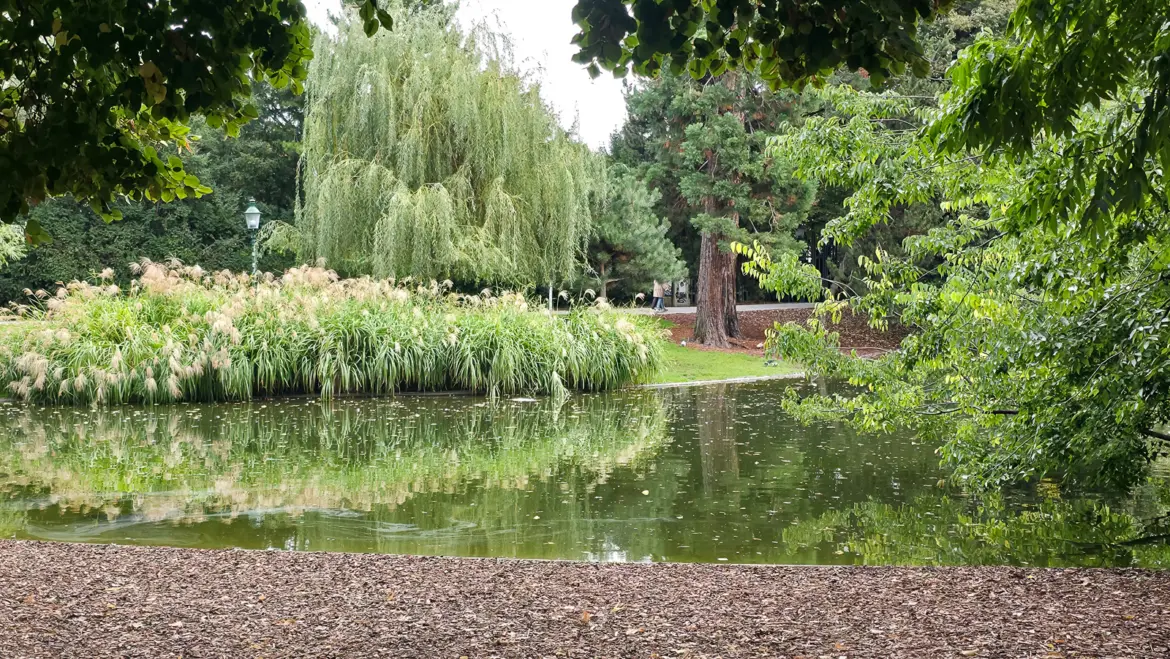
Hello travel friends! In a city celebrated for its imperial palaces, grand museums, and magnificent squares, Vienna also offers moments of quiet beauty tucked within its historic center. One of the most enchanting places to experience this softer side of the city is Stadtpark, a graceful urban park where music, nature, and history come together in perfect harmony.
Located along the banks of the Wien River, Stadtpark has long been a beloved retreat for locals and visitors alike. With its colorful flowerbeds, peaceful ponds, elegant walking paths, and statues honoring some of Austria’s greatest composers, the park offers a serene escape just steps away from Vienna’s bustling streets. Walking through Stadtpark feels like entering a living tribute to Vienna itself – a place where art, music, and nature coexist effortlessly.
Stadtpark Vienna at a Glance
📍 Location: Parkring 1, 1010 Vienna — free, open 24/7
🗓️ Opened: 21 August 1862 — Vienna’s first public park
📐 Size: ~65,000 square metres along the Wien River
🎻 Johann Strauss II monument: Unveiled 26 June 1921 by sculptor Edmund Hellmer. Gilded 1921, stripped 1935, restored 1991. Near the Kursalon, where Strauss performed on 15 October 1868.
🎵 Also honoured: Franz Schubert (monument moved to park 1872), Robert Stolz (operettas, film music)
🌿 Design: English landscape garden (curving paths, lawns) + French-inspired gardens (geometric flowerbeds near Ringstrasse)
🏅 Record: The park with the greatest number of monuments in Vienna
Vienna’s First Public Park
Stadtpark holds an important place in Vienna’s urban history. Opened on 21 August1862, it became the city’s first public park, laid out on the site of the former glacis – the wide open terrain that had long been kept clear in front of Vienna’s fortifications to provide defenders with an unobstructed line of sight. When the old city walls were demolished during the construction of the Ringstrasse, this space became available for one of Vienna’s most beloved civic projects. The park was designed by court painter Joseph Selleny and garden director Rudolf Siebeck, who created a landscape intentionally crafted to feel natural and inviting rather than rigidly formal.
The park’s two distinct characters reveal themselves as you explore. The main section follows the English landscape garden style, with curving pathways, flowing lawns, and clusters of trees that guide visitors gently through the space. Closer to the Ringstrasse, the atmosphere shifts toward a more formal French-inspired garden style, where geometric flowerbeds and neatly trimmed shrubs introduce a sense of structured elegance. Together these elements create a park that feels both relaxed and refined.
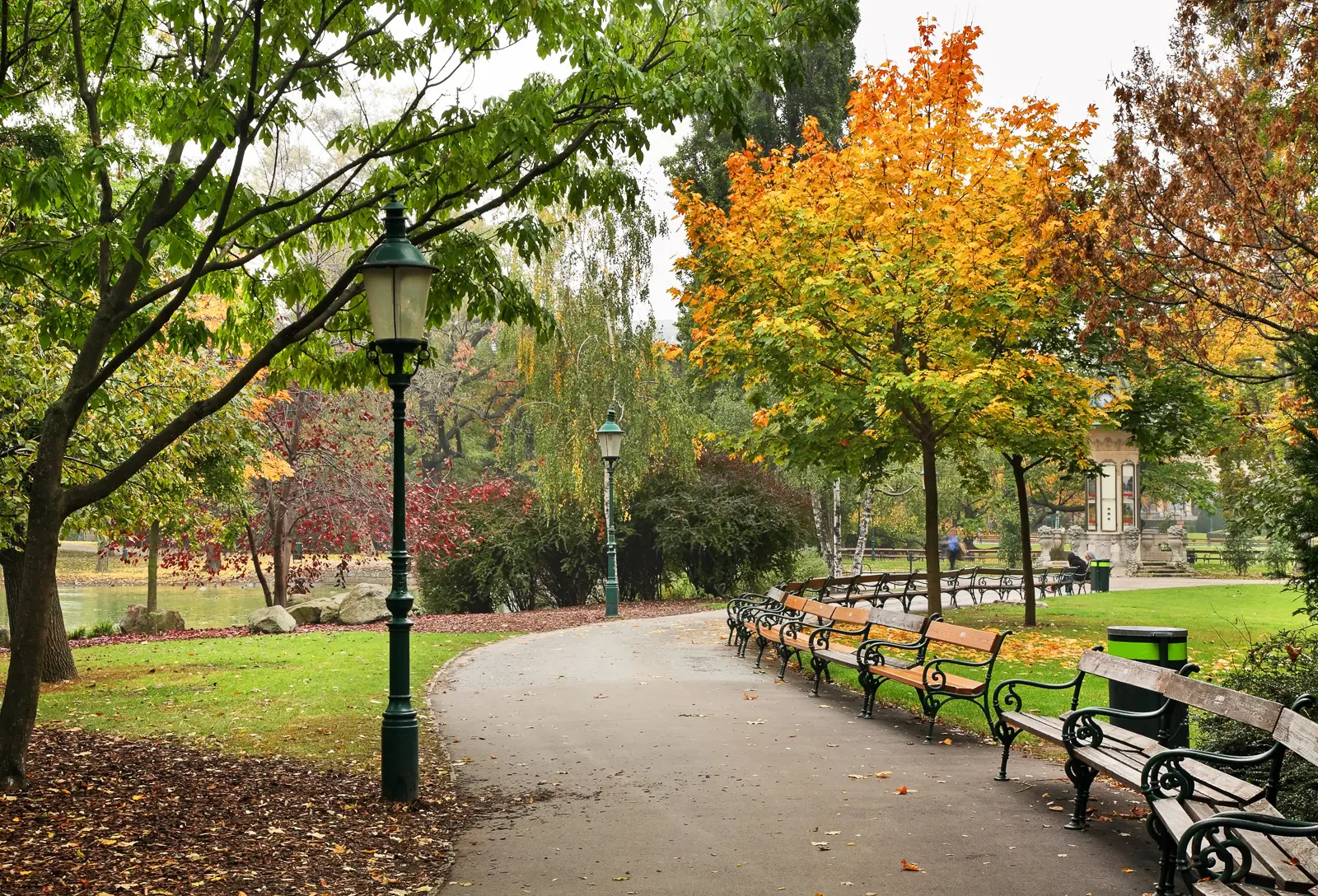
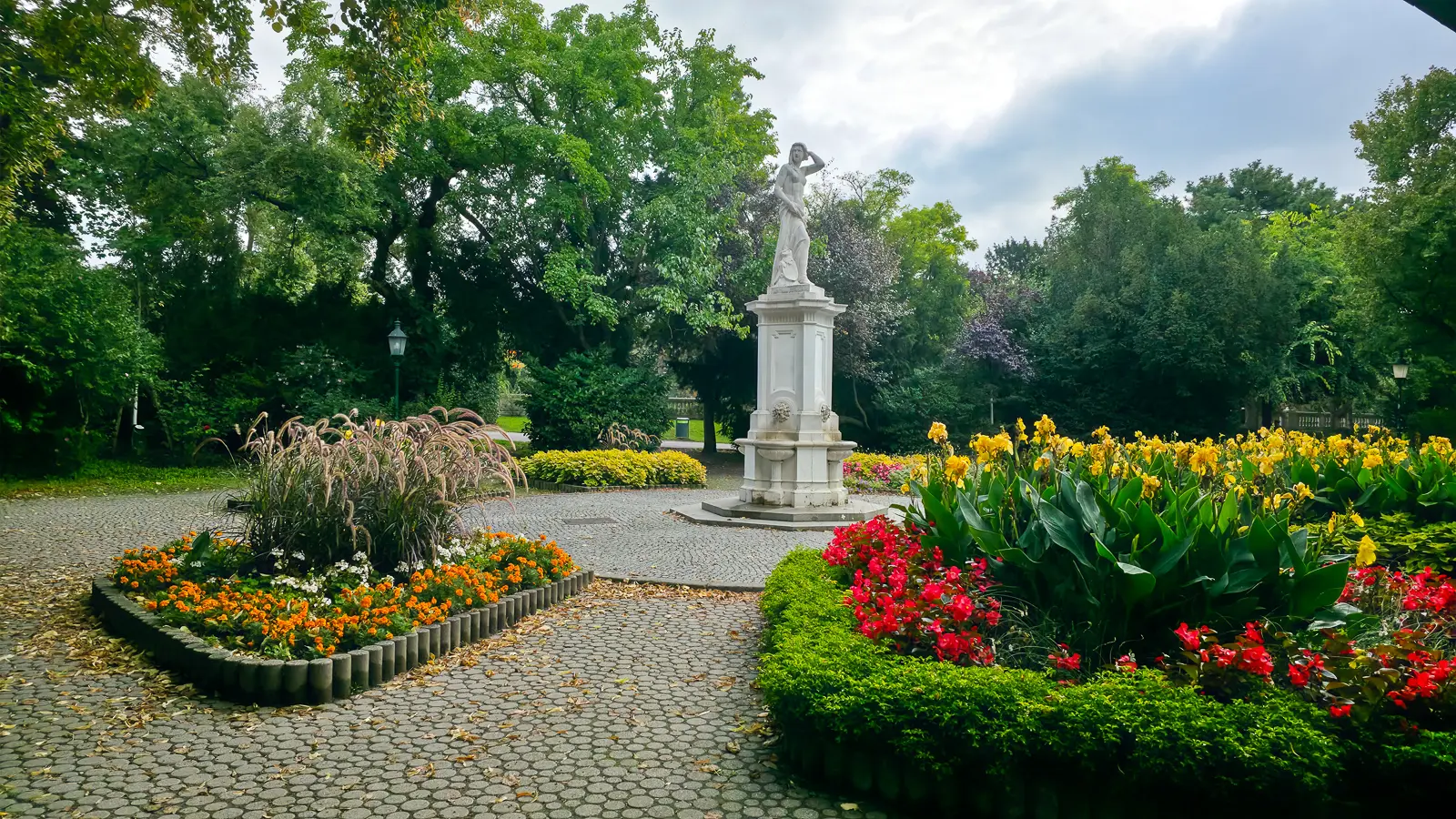
The park occupies both sides of the Wien River and covers roughly 65,000 square metres, making it one of the largest green spaces in central Vienna. It is also the park with the greatest number of monuments in the city – a detail that reveals itself gradually as you wander, with sculptures and memorials appearing around almost every corner. From the moment visitors enter, the atmosphere feels welcoming – a place where people stroll, read, feed the ducks, or simply sit quietly and enjoy the surroundings.
The Golden Statue of Johann Strauss
The most famous landmark in Stadtpark is undoubtedly the monument dedicated to Johann Strauss II, often called the “Waltz King“. Unveiled on 26 June 1921 and designed by sculptor Edmund Hellmer, the statue depicts Strauss playing his violin, captured in a moment of musical inspiration. The bronze figure is framed by an elegant white marble arch decorated with bas-reliefs of dancing couples and classical floral ornaments, symbolizing the joy and movement of the waltz.
The statue’s golden appearance makes it one of the most photographed monuments in Vienna, but the gilding has a fascinating history. The gold finish was removed in 1935, leaving the bronze exposed for more than half a century before being restored in 1991, returning the monument to the gleaming form visitors recognize today.
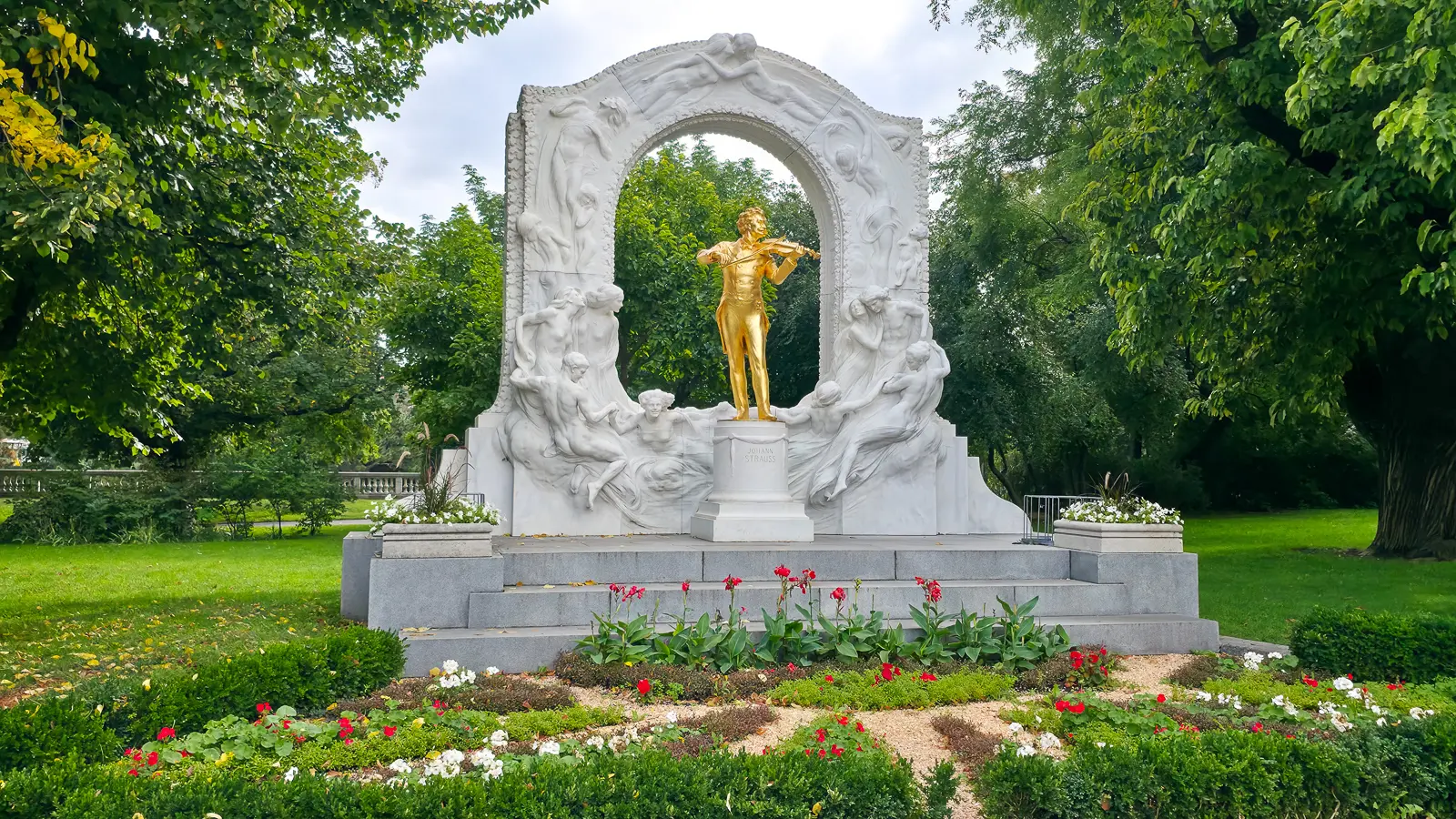
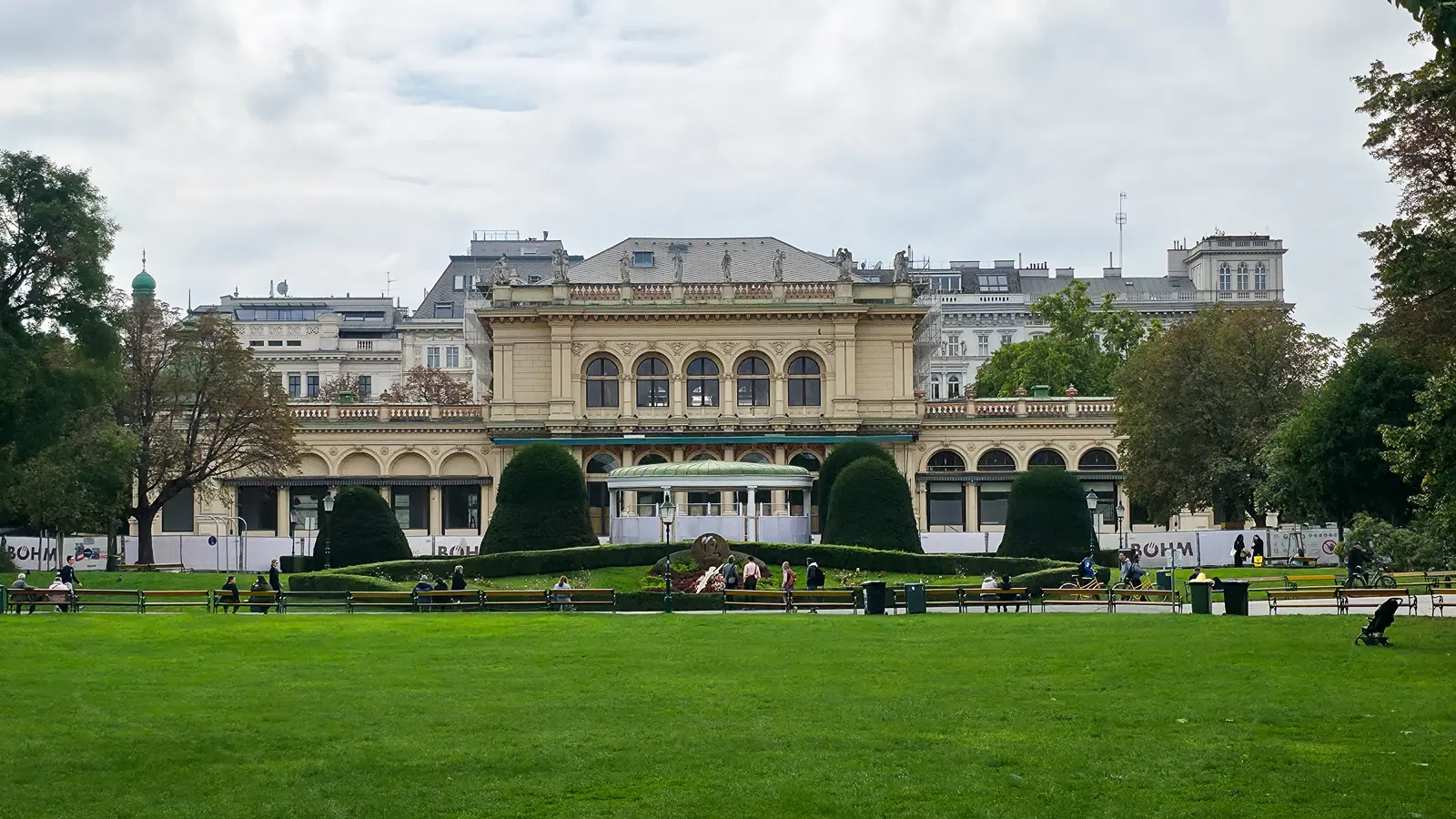
The statue stands just behind the Kursalon concert hall, where Strauss himself gave his first concert on 15 October 1868. This proximity gives the monument an added layer of historical resonance. Standing before it, it is easy to imagine the melodies of his famous waltzes drifting through the air – especially The Blue Danube, one of the most beloved pieces of music ever written.
A Garden of Composers
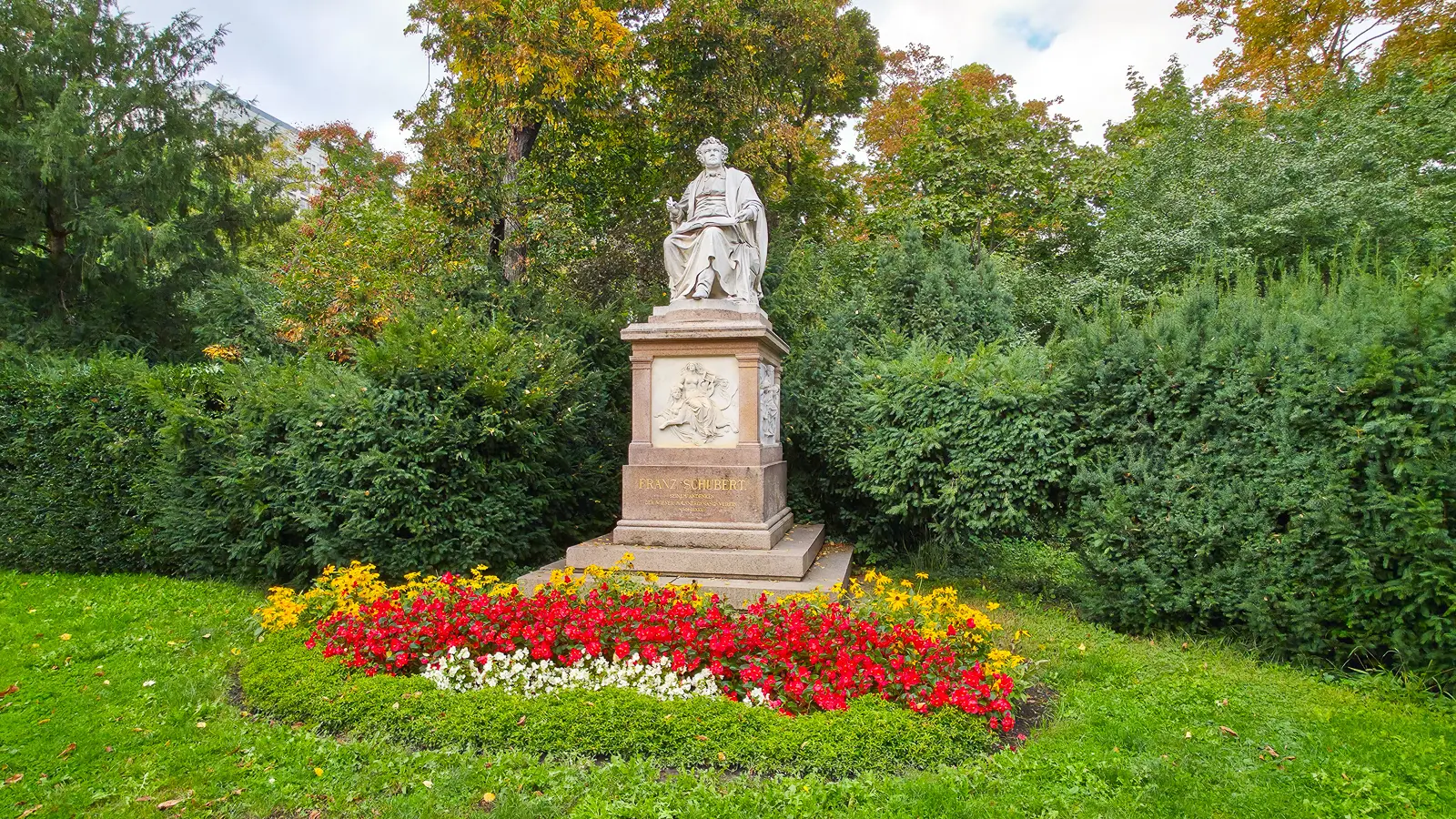
While Strauss may be the park’s most recognizable figure, Stadtpark also honors several other composers who helped shape Vienna’s extraordinary musical legacy. Among them is Franz Schubert, one of the most influential composers of the Romantic era. His monument, unveiled in 1872 and moved to Stadtpark shortly afterward, depicts Schubert seated in quiet contemplation. The statue was sculpted in Carrara marble by Carl Kundmann, with the pedestal designed by architect Theophil Hansen. The thoughtful composition reflects the introspective beauty often associated with Schubert’s music and remains one of the park’s most elegant sculptural works.
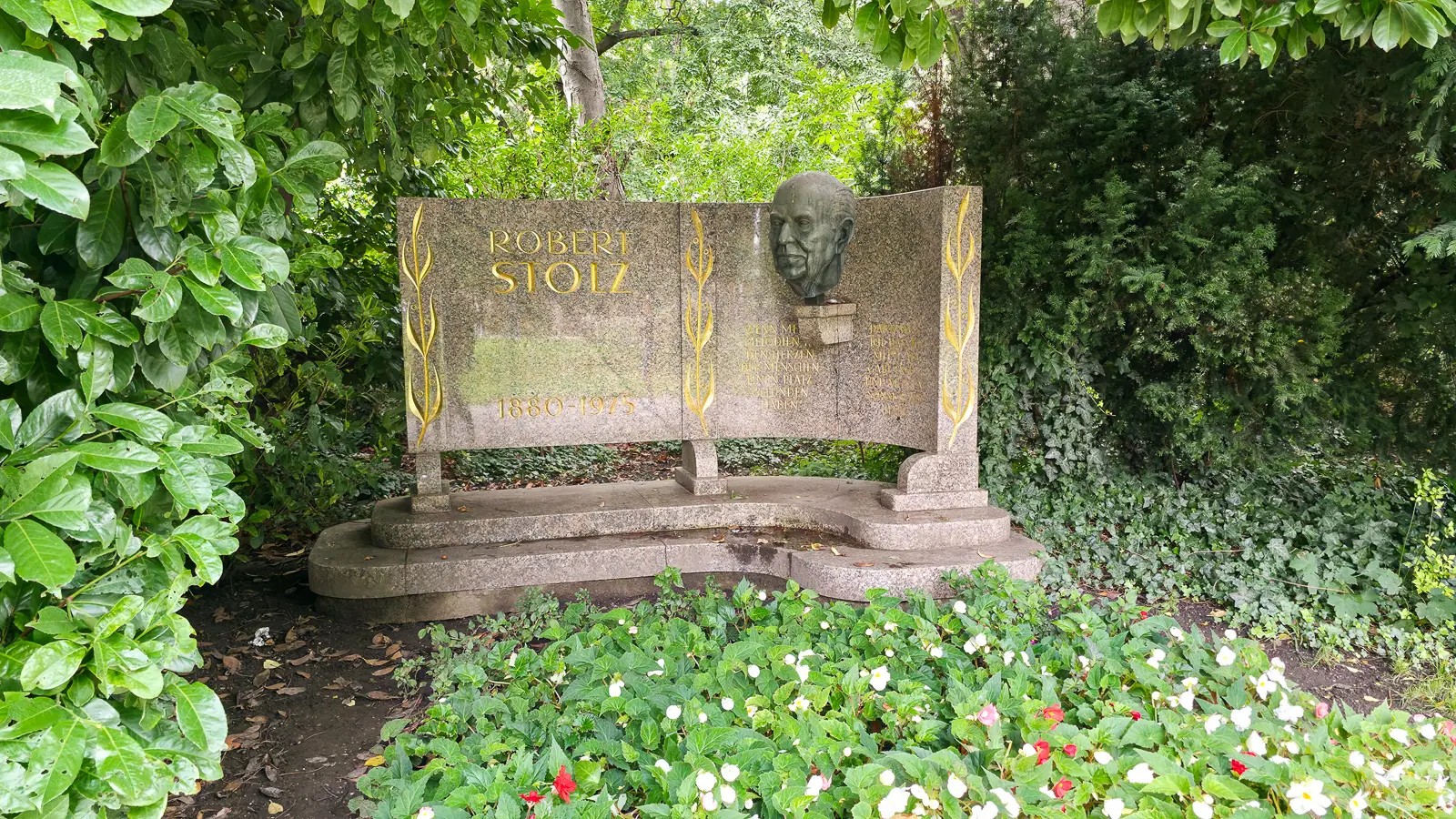
Another monument commemorates Robert Stolz, a composer celebrated for his operettas, film music, and orchestral works. Stolz maintained a lifelong connection to Vienna, and his monument in Stadtpark serves as a warm reminder of the city’s enduring musical culture – a tradition that extended well beyond the 19th century into the modern era.
Together with the golden Strauss monument, these memorials transform Stadtpark into a quiet open-air tribute to Vienna’s remarkable musical heritage – a city where great composers are honored not only in concert halls, but also in the parks where everyday life unfolds.
Ponds, Flowers, and Quiet Corners
Beyond its statues and musical history, Stadtpark is simply a beautiful place to wander. Colorful flowerbeds change with the seasons, bringing bursts of color to the lawns and pathways throughout the park. Elegant bridges cross the nearby Wien River, offering picturesque views of the surrounding greenery and the graceful architecture that borders the park.
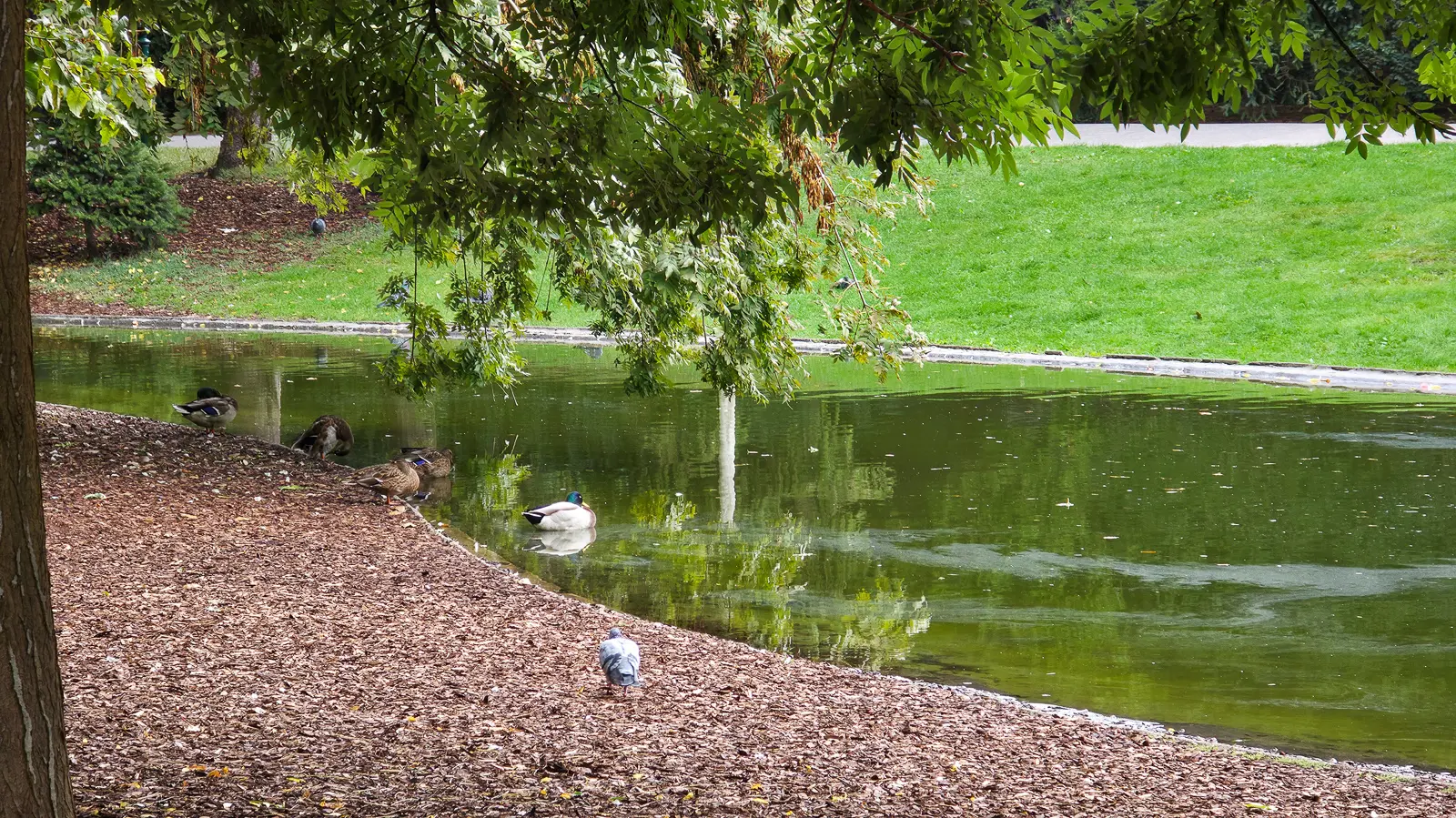
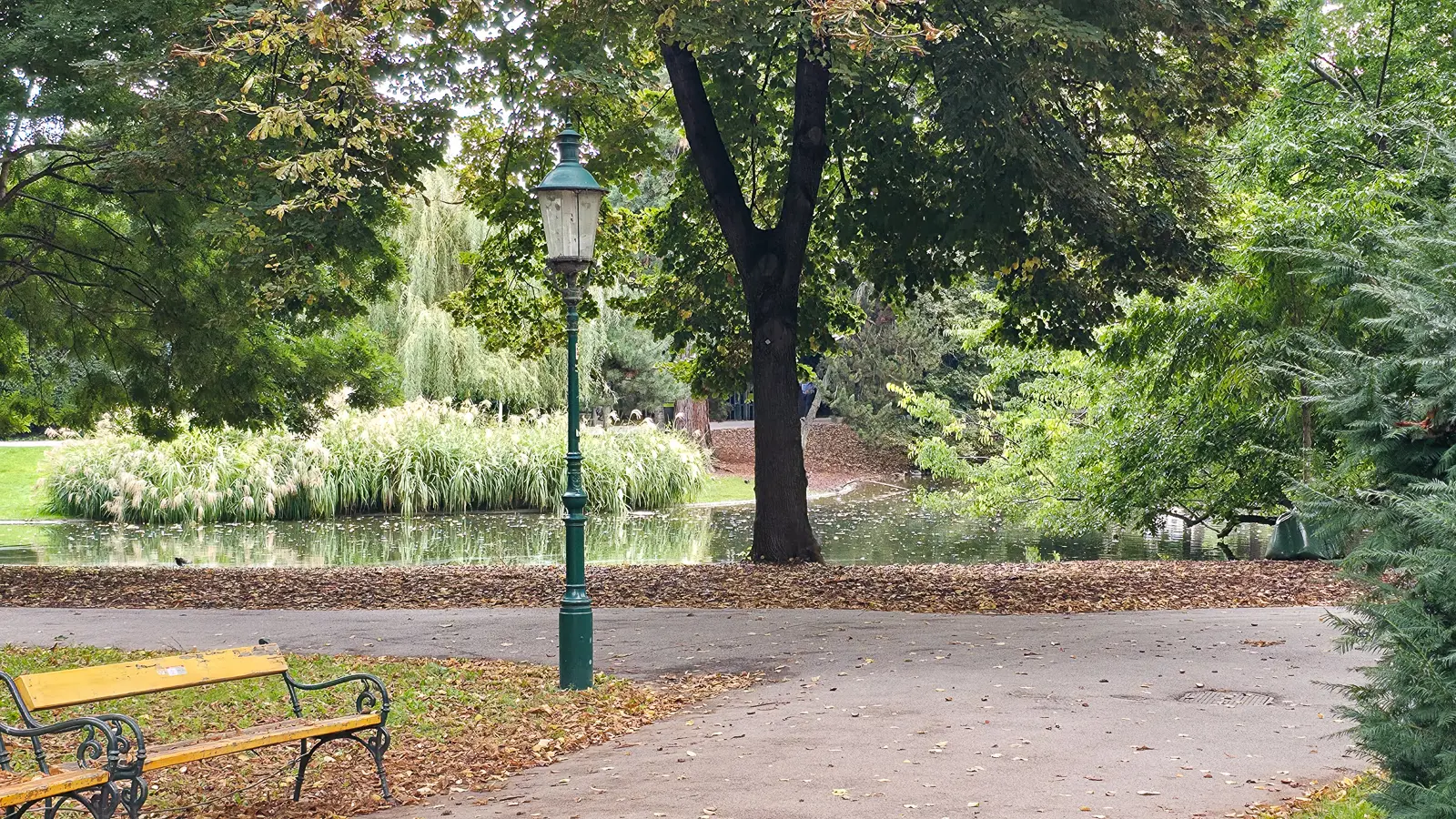
The park’s ponds are home to ducks and other water birds that glide peacefully across the water, adding to the tranquil atmosphere. Visitors often pause here to watch the gentle reflections of trees and sky ripple across the surface. In autumn, the park becomes especially magical as the leaves turn shades of gold, orange, and red – creating a warm, glowing landscape that feels perfect for a quiet afternoon stroll.
Experiencing Stadtpark Today
Today, Stadtpark remains one of Vienna’s most cherished public spaces. Locals come here to walk their dogs, jog along the winding pathways, or relax on benches beneath the shade of mature trees, while visitors arrive to photograph the famous golden monument of Johann Strauss II, discover the park’s many composer statues, or simply enjoy a peaceful moment between sightseeing stops. Despite its central location near the bustling Ringstrasse, the park retains an atmosphere of calm that makes it feel almost hidden from the city’s busiest streets. It is a place where Vienna seems to slow down – where music, nature, and everyday life blend together effortlessly in one of the city’s most beautiful green spaces.
Bubbly Tips for Visiting Stadtpark
- Best time to visit: Early morning is one of the most peaceful times to experience Stadtpark, before the park fills with visitors and the nearby streets become busy.
- Don’t miss: The famous golden statue of Johann Strauss II – one of the most photographed monuments in Vienna.
- Explore the composer monuments: Look for the memorials dedicated to Franz Schubert and Robert Stolz scattered throughout the park.
- Walk along the Wien River: Stroll across the bridges that span the Wien River for beautiful views of the park’s greenery and pathways.
- Visit in autumn: Stadtpark is especially beautiful in autumn, when the trees turn vibrant shades of gold, orange, and red.
Final Thoughts
Stadtpark is a beautiful reminder that Vienna’s charm is not found only in its palaces and museums. Sometimes it appears in the quiet spaces between them – in gardens filled with flowers, in statues honoring music, and in peaceful ponds where ducks glide across the water.
Whether you come for the golden Strauss monument or simply for a relaxing stroll, Stadtpark offers a gentle and elegant side of Vienna that visitors remember long after their journey ends.
Have you visited Stadtpark during your time in Vienna? I would love to hear your favorite memories in the comments!

🌟 Everything You Need to Plan Your Dream Trip in 2026
- 🌟 Luxury Hotels - Find premium stays with Booking.com & Hotels.com
- 🏡 Vacation Rentals - Discover unique properties on VRBO
- 🏞️ Guided Tours - Explore with Viator or GetYourGuide
- 🎫 Attraction Tickets - Skip the lines with Tiqets
- 🚢 Ocean Cruises - Set sail with Cruise Direct
- 📱 International SIMs - Stay connected with Saily
- 🚗 Car Rentals - Budget-friendly options from Discover Cars
- 🌐 Secure VPNs - Browse safely with NordVPN
- 💶 Currency Exchange - Best rates with Wise
- 🗣️ Learn Languages - Master the local language with Babbel and Rosetta Stone