
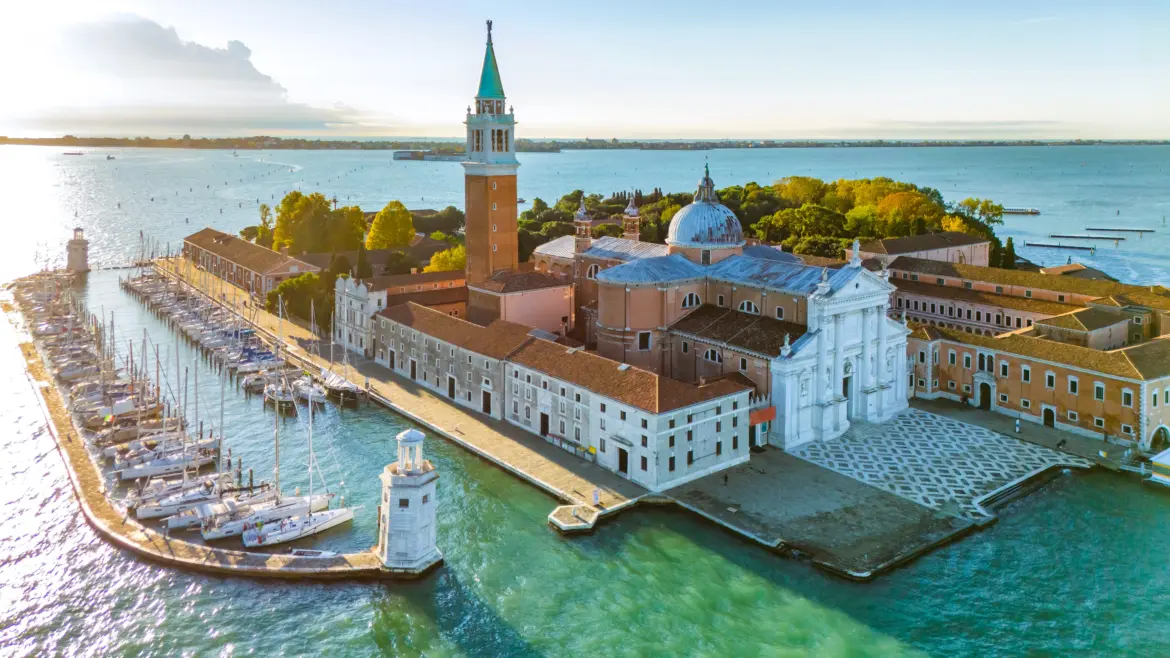
Hello, my friends! If Venice often feels like a city that overwhelms the senses – gold, marble, crowds, reflections, sound – then San Giorgio Maggiore offers something quietly radical: space. Space to breathe. Space to see. Space to understand Venice not from within its maze, but from just far enough away to make sense of it all.
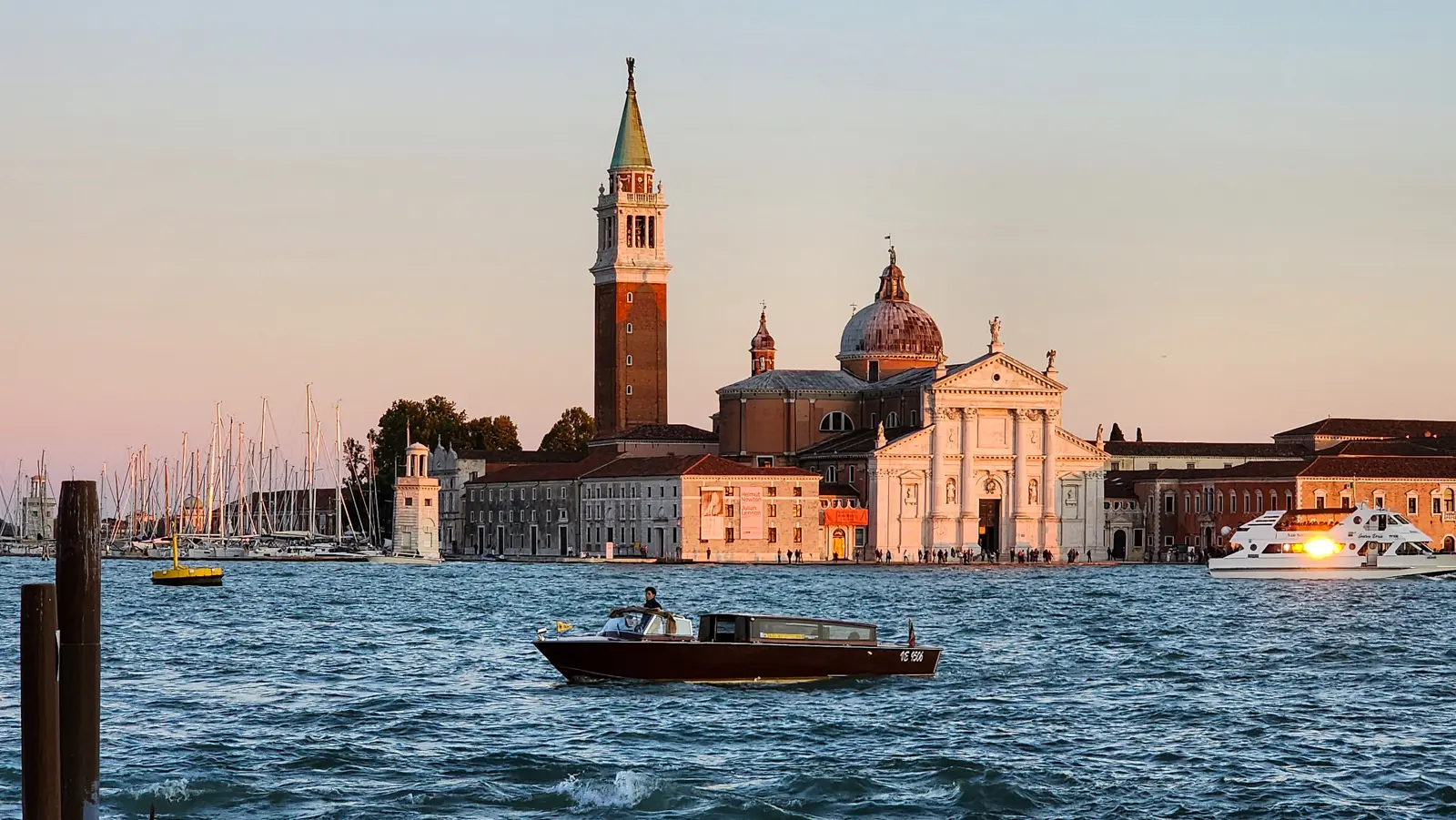
Rising across the lagoon from Piazza San Marco, the Church of San Giorgio Maggiore is one of Venice’s most composed and contemplative landmarks. Many visitors cross the water simply for the view from its bell tower. Fewer step inside expecting anything more than a pause. And yet, those who do often leave changed – not dazzled, but grounded. This is Venice in equilibrium.
San Giorgio Maggiore at a Glance
⛵ Architect: Andrea Palladio — construction began 1566
🏛️ Style: Classical restraint inspired by ancient Roman temples — harmony, proportion, clarity
🎨 Art: Tintoretto’s The Last Supper and The Israelites in the Desert at the high altar
🔔 Bell tower: Elevator access — panoramic views over St Mark’s Basin, the Doge’s Palace, and the lagoon
🏝️ Island: Part of a Benedictine monastery complex, founded in the 10th century
🚢 Getting there: Vaporetto from San Zaccaria or San Marco — the lagoon crossing is part of the experience
🕐 Best time: Morning or late afternoon for softer light and fewer visitors
💡 Tip: Allow 45–60 minutes for both the church interior and the campanile
A Church Built on Balance and Vision
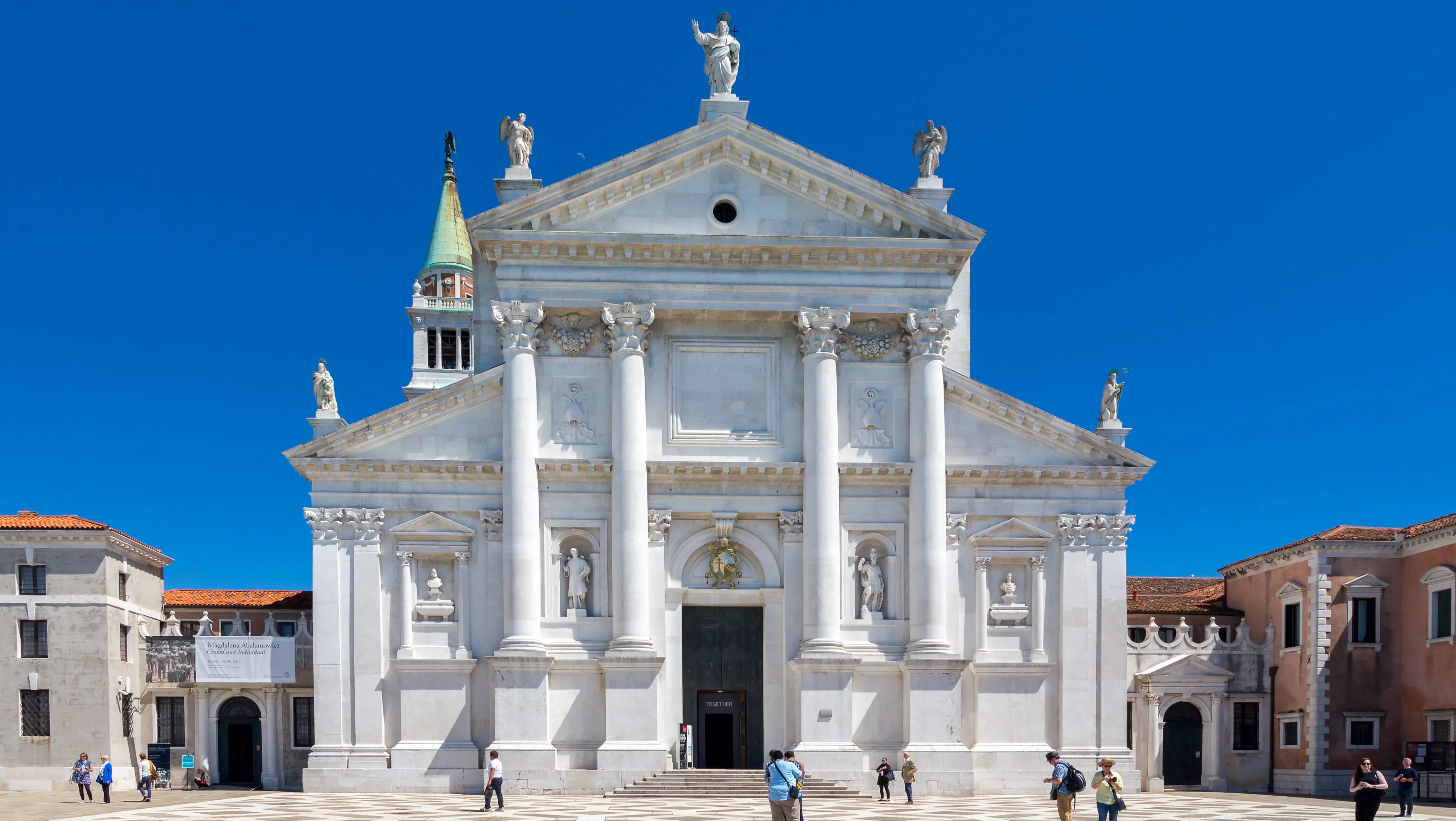
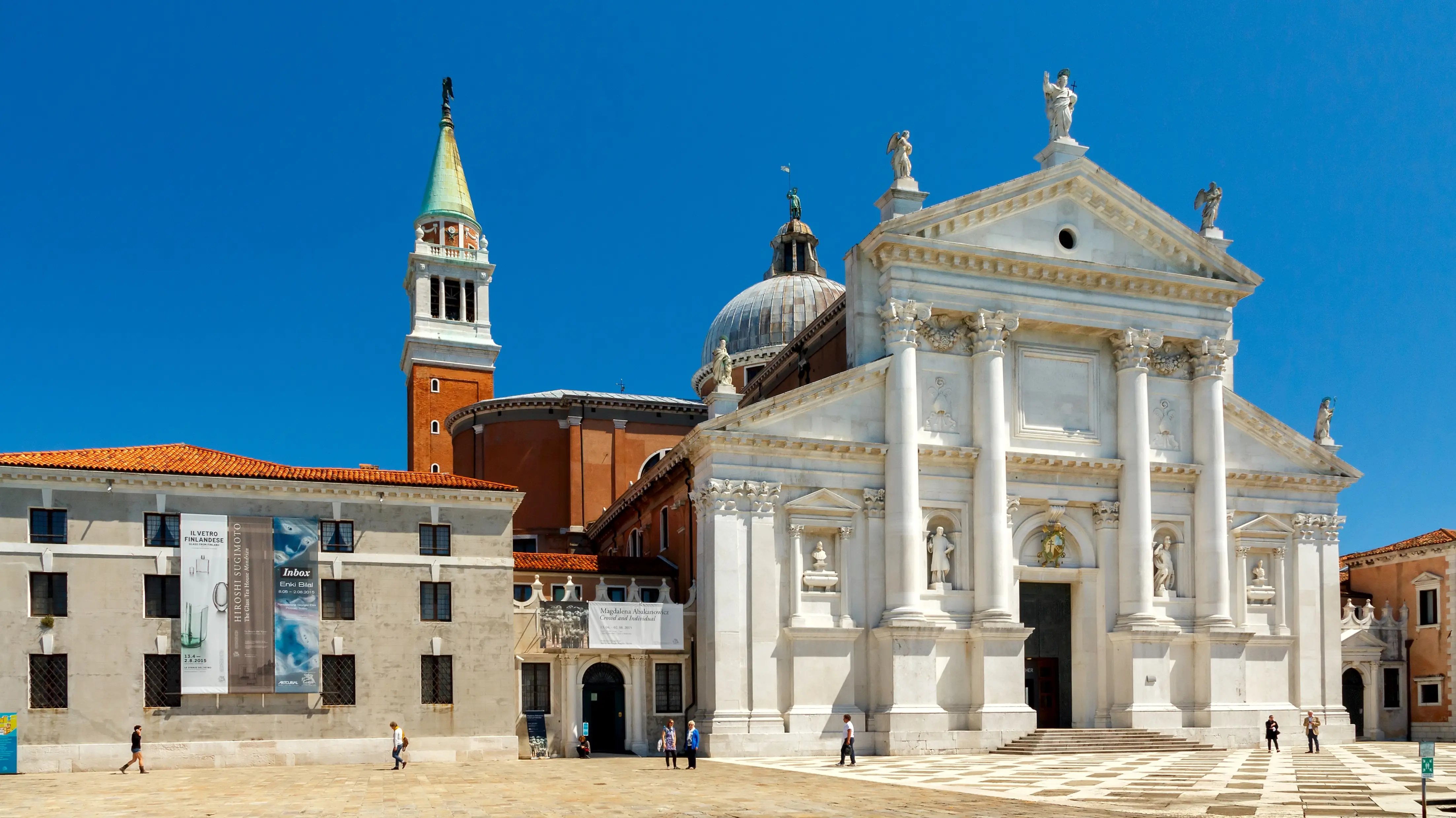
The Church of San Giorgio Maggiore was designed by Andrea Palladio, one of the most influential architects of the Renaissance. Construction began in 1566, toward the latter part of his career, and the church stands as a clear expression of his architectural philosophy: harmony, proportion, and clarity above all else.
Unlike many Venetian churches layered with ornament and narrative, Palladio’s vision here was architectural restraint. The façade – completed after his death – uses classical forms inspired by ancient Roman temples, layered carefully to accommodate the basilica’s interior structure. Columns, pediments, and geometry are not decorative flourishes; they are structural ideas made visible. Set against the water, the white stone exterior reflects light rather than absorbs it. From Piazza San Marco, the church feels calm and deliberate, almost modern in its simplicity. It does not compete with Venice’s grandeur, it counters it.
Stepping Inside: Light as Architecture
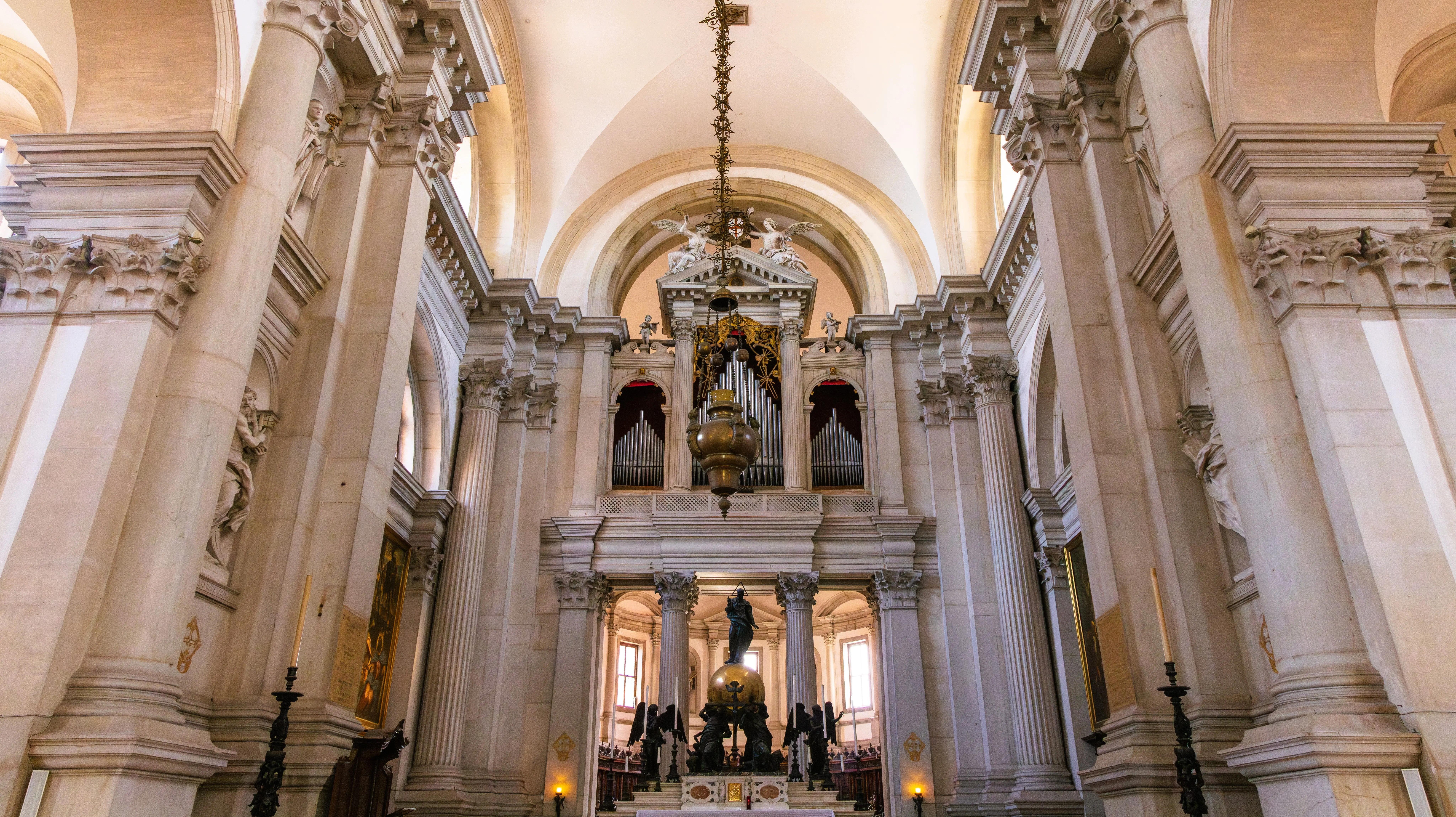
Walking into San Giorgio Maggiore feels like entering a different rhythm. The interior is luminous and orderly, shaped by clean lines, pale stone, and a disciplined use of space. Light enters deliberately, not theatrically. It settles across the floor, moves slowly along columns, and softens the scale of the church rather than exaggerating it. This is a space where silence feels natural. Where voices lower instinctively. Where the architecture itself seems to encourage stillness.
Palladio believed that beauty came from proportion – from the mathematical relationship between height, width, and depth. Inside San Giorgio Maggiore, those relationships are felt physically. The church does not overwhelm. It steadies you. In a city known for visual abundance, this restraint feels deeply intentional.
Art Without Excess: Tintoretto’s Presence
While the church’s architecture is restrained, it is not without artistic richness. The high altar is crowned by The Last Supper and The Israelites in the Desert, both by Tintoretto. Unlike the dramatic intensity found in some of his other works across Venice, these paintings feel integrated rather than dominant. They do not interrupt the space, they belong to it. Their placement reinforces the church’s sense of order and continuity, reminding visitors that art here serves the architecture, not the other way around. It is a subtle but powerful distinction, and one that shapes the entire experience of the interior.
The Benedictine Island: A Life Apart
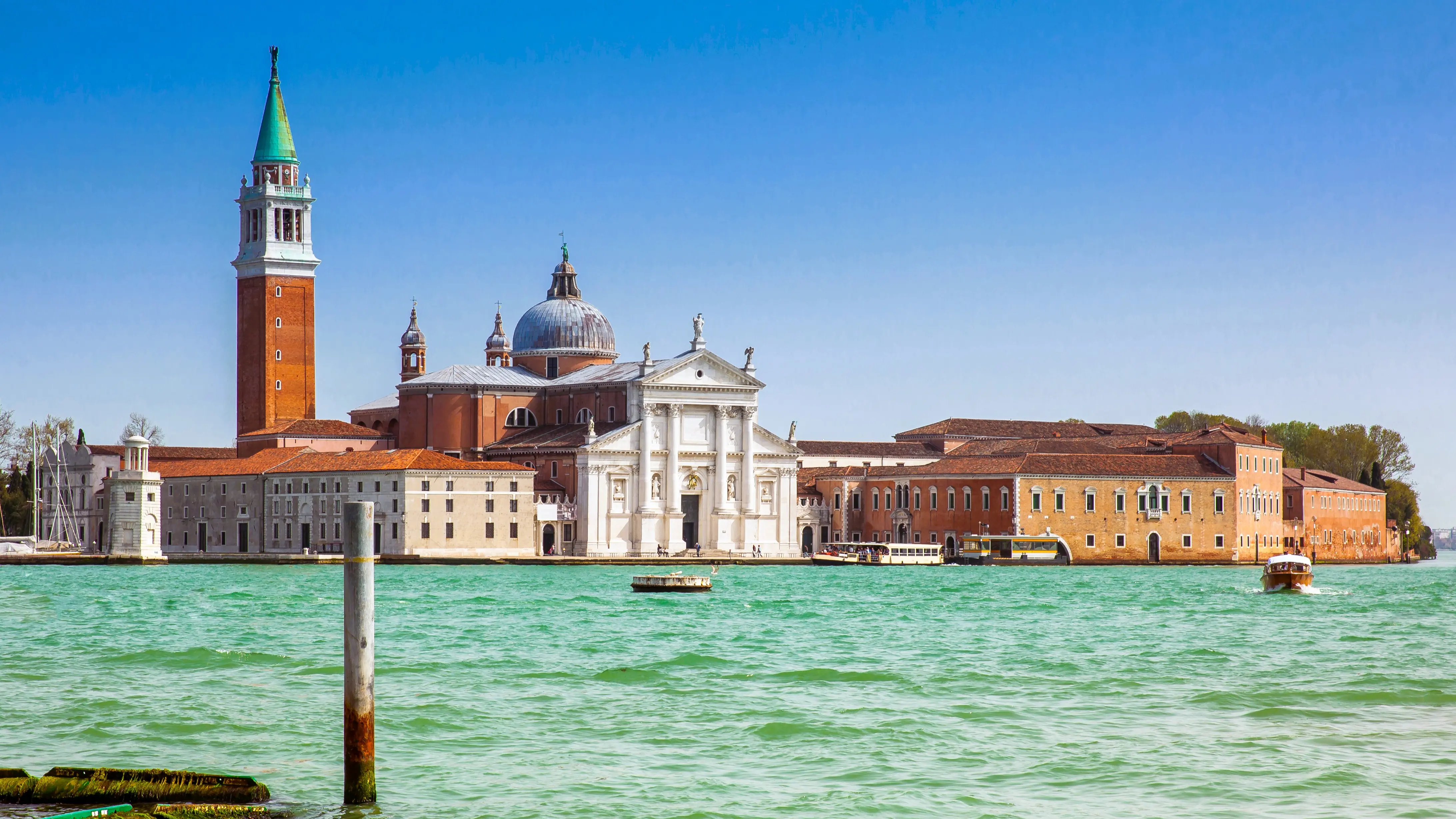
San Giorgio Maggiore is not only a church, but part of a Benedictine monastery complex that has shaped the island’s identity for centuries. Monastic life here was defined by rhythm, discipline, and separation – values echoed in the architecture itself. Standing on the island, you feel that distance immediately. The lagoon opens. The noise recedes. Venice feels less compressed, less performative. You are close enough to see its silhouette clearly, yet removed enough to understand its fragility. This physical separation gives San Giorgio Maggiore its emotional power. It allows Venice to be observed rather than consumed.
The Bell Tower: Venice Reframed
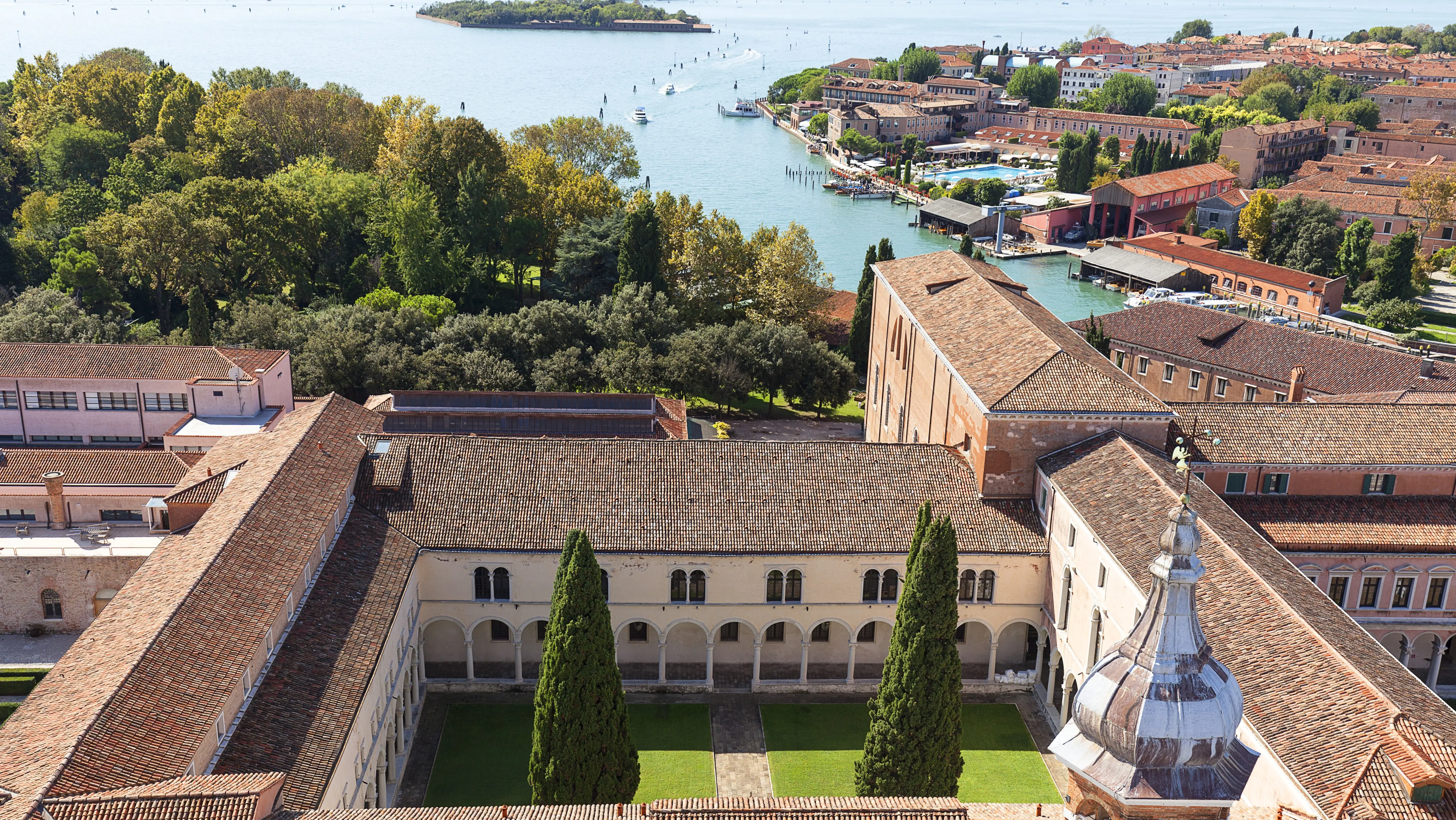
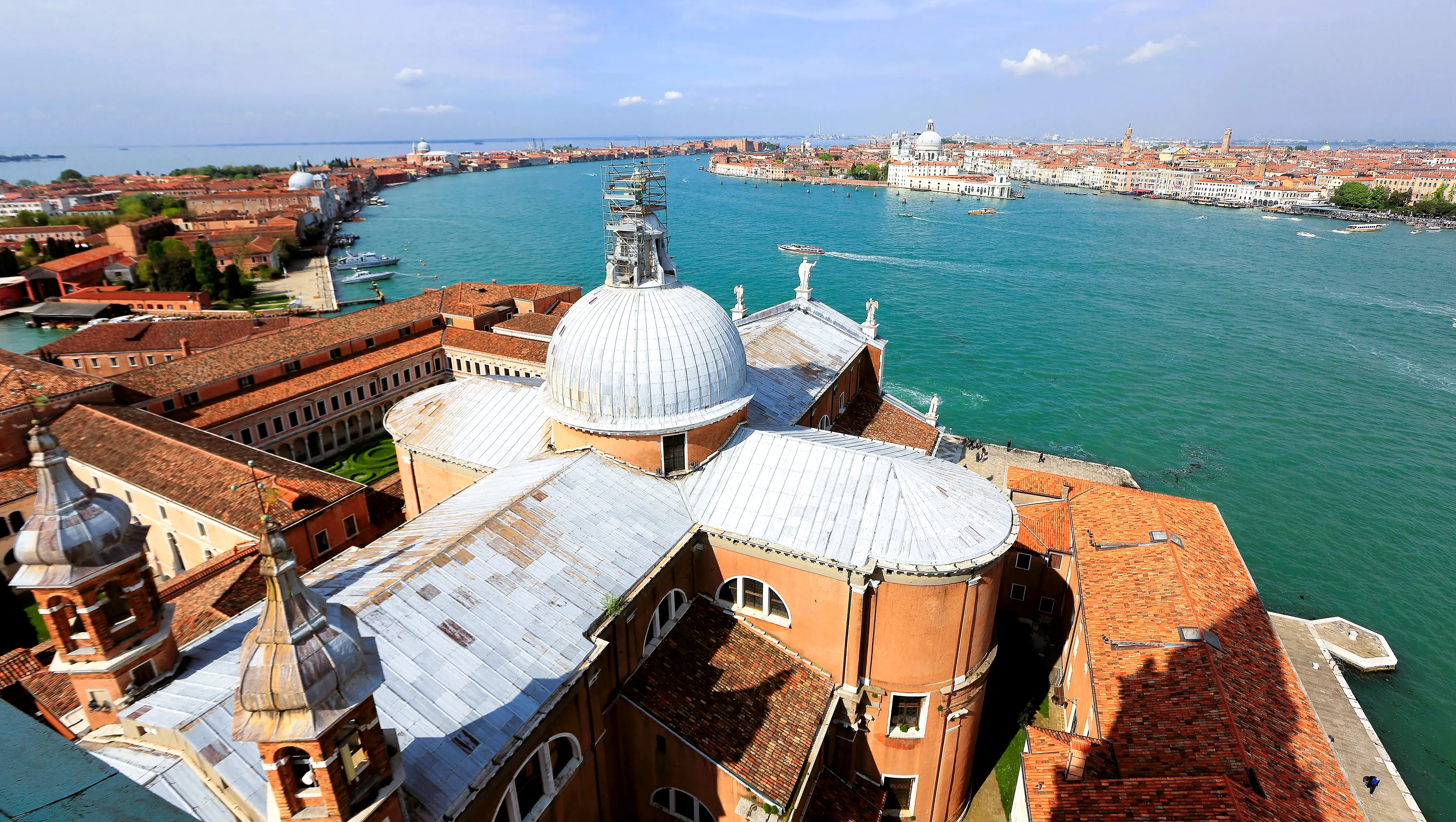
Climbing the campanile of San Giorgio Maggiore is one of Venice’s most quietly transformative experiences. Unlike the ascent at St Mark’s Campanile, this one feels almost private – fewer visitors, less noise, more time to linger. From the top, Venice unfolds as a composition rather than a maze. The Doge’s Palace, St Mark’s Basilica, the Grand Canal, and the lagoon align into something suddenly legible. You see how water shapes movement, how land fragments with intention, how the city survives through balance rather than dominance. This is Venice from the outside looking in – delicate, resilient, and profoundly human.
Why San Giorgio Maggiore Stays with You
San Giorgio Maggiore stays with you because it gently recalibrates how you understand Venice. Away from ornament and spectacle, it reveals the city’s underlying structure – a place shaped by intention, proportion, and quiet confidence rather than excess. Here, beauty is not layered through decoration but achieved through balance. The church, the island, and the lagoon work together to create a sense of clarity that feels rare in a city often defined by visual abundance.
Long after the glittering mosaics of St Mark’s fade from memory and the crowds dissolve into blur, you remember the quality of light inside San Giorgio Maggiore – soft, deliberate, and unhurried. You remember standing still as the lagoon widened your perspective, watching Venice from a distance that allowed its logic to emerge. From here, the city feels less theatrical and more human, less overwhelming and more composed.
San Giorgio Maggiore reminds you that Venice’s endurance is rooted not only in beauty, but in discipline, in vision carried out over centuries with restraint and purpose. It does not compete for attention. Instead, it invites reflection. And that quiet invitation is precisely why it lingers.
Bubbly Tips for Visiting San Giorgio Maggiore
- How to get there: Vaporetto from San Zaccaria or San Marco – the short lagoon crossing is part of the experience and offers beautiful views back toward Piazza San Marco
- Best time to visit: Morning or late afternoon, when light is softer, crowds are minimal, and the island feels especially calm
- Don’t skip the interior: Even if you come for the view, the church itself is the heart of the visit – notice the light, proportions, and Palladian restraint
- Bell tower tip: The elevator makes the ascent easy, and the panoramic view over St Mark’s Basin, the Doge’s Palace, and the lagoon is one of Venice’s most balanced perspectives
- Allow enough time: Plan at least 45-60 minutes to enjoy both the church and the campanile without rushing
- Pair it with: A stroll along the island’s waterfront or a return vaporetto at golden hour for especially memorable lagoon views
- Mindset: This is a place to slow down – let the space, light, and silence guide you
Final Thoughts
San Giorgio Maggiore offers something increasingly rare in Venice: clarity. It shows the city not as a spectacle to be consumed, but as an idea shaped carefully across centuries. A place where proportion matters. Where distance creates understanding. Where stepping away allows you to see more clearly.
If Venice is a city of reflections, then San Giorgio Maggiore is where those reflections settle.
Have you crossed the lagoon to San Giorgio Maggiore, or is it now calling your name? I’d love to hear your thoughts!
Until next time,

🌟 Everything You Need to Plan Your Dream Trip in 2026
- 🌟 Luxury Hotels - Find premium stays with Booking.com & Hotels.com
- 🏡 Vacation Rentals - Discover unique properties on VRBO
- 🏞️ Guided Tours - Explore with Viator or GetYourGuide
- 🎫 Attraction Tickets - Skip the lines with Tiqets
- 🚢 Ocean Cruises - Set sail with Cruise Direct
- 📱 International SIMs - Stay connected with Saily
- 🚗 Car Rentals - Budget-friendly options from Discover Cars
- 🌐 Secure VPNs - Browse safely with NordVPN
- 💶 Currency Exchange - Best rates with Wise
- 🗣️ Learn Languages - Master the local language with Babbel and Rosetta Stone