
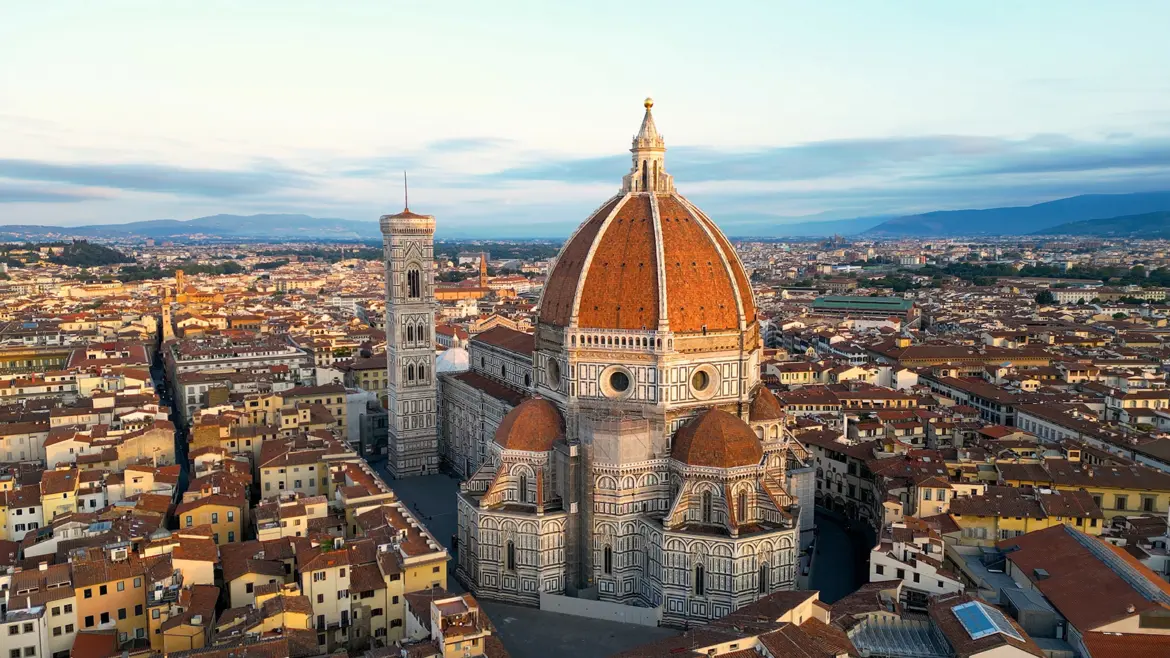
Hello world travelers! There are places in Europe that feel important, and then there are places that feel transformational – spaces where art, faith, ambition, and human genius meet in a way that reshapes how we see history. Piazza del Duomo in Florence is one of those places. Standing here, surrounded by marble façades, soaring towers, and centuries of craftsmanship, you quickly realize that this is not simply a square. It is the symbolic and spiritual heart of Florence, a place where the Renaissance announced itself to the world and where architecture became a statement of possibility.
What makes Piazza del Duomo so extraordinary is not just its beauty, but the way its monuments speak to one another. The Cathedral, the Dome, the Bell Tower, and the Baptistery form a conversation across centuries – each structure reflecting a different moment in Florence’s artistic and civic evolution. Walking through the piazza feels like stepping into a living masterpiece, where every angle reveals another layer of history waiting to be noticed.
Piazza del Duomo at a Glance
📍 Location: Piazza del Duomo, Florence, Tuscany, Italy
🏛️ Key Monuments: Cathedral of Santa Maria del Fiore, Brunelleschi’s Dome, Giotto’s Campanile, Baptistery of San Giovanni, Museo dell’Opera del Duomo
🎨 Known For: Renaissance architecture, Brunelleschi’s engineering, Ghiberti’s Gates of Paradise, Vasari’s Last Judgment fresco
🎟️ Tickets: Combined Duomo complex pass covers Dome climb, Bell Tower, Baptistery, Museum, and Crypt — book in advance
⏱️ Time Needed: 3–5 hours for the full complex (dome climb, bell tower, museum, baptistery)
💡 Tip: Book dome climb tickets early — time slots are limited and sell out fast, especially in high season
The Cathedral of Santa Maria del Fiore: Florence’s Icon
At the center of the piazza stands the magnificent Cathedral of Santa Maria del Fiore, known simply as the Duomo. Begun in 1296 and traditionally attributed to Arnolfo di Cambio, the cathedral was conceived to reflect Florence’s growing wealth and civic ambition. Its immense scale embodied the confidence of a republic that believed art, faith, and public identity were inseparable. After Arnolfo’s death around 1302, construction continued under several architects over more than a century, including Francesco Talenti, who helped expand and refine the original plan as the project evolved.
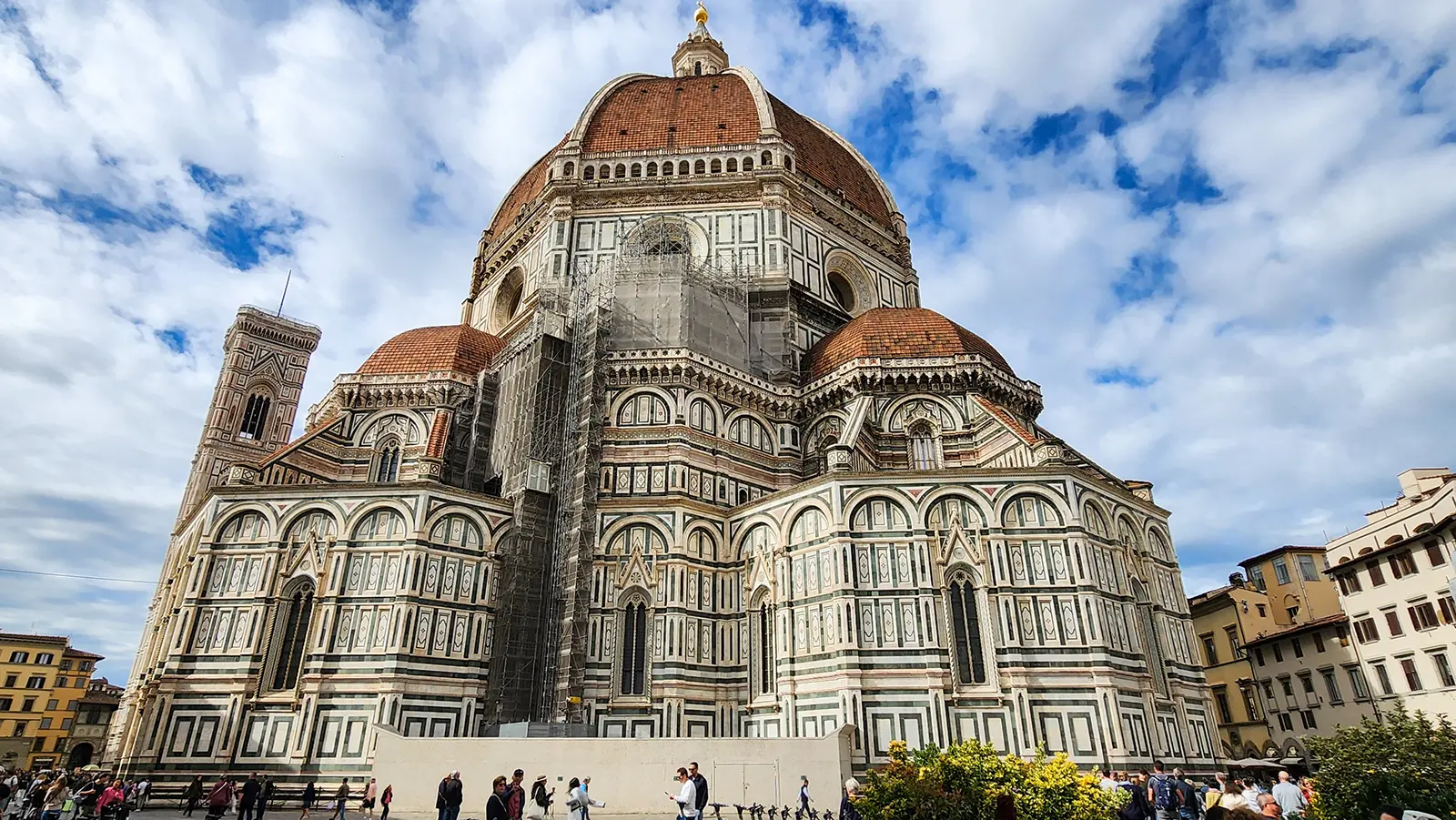
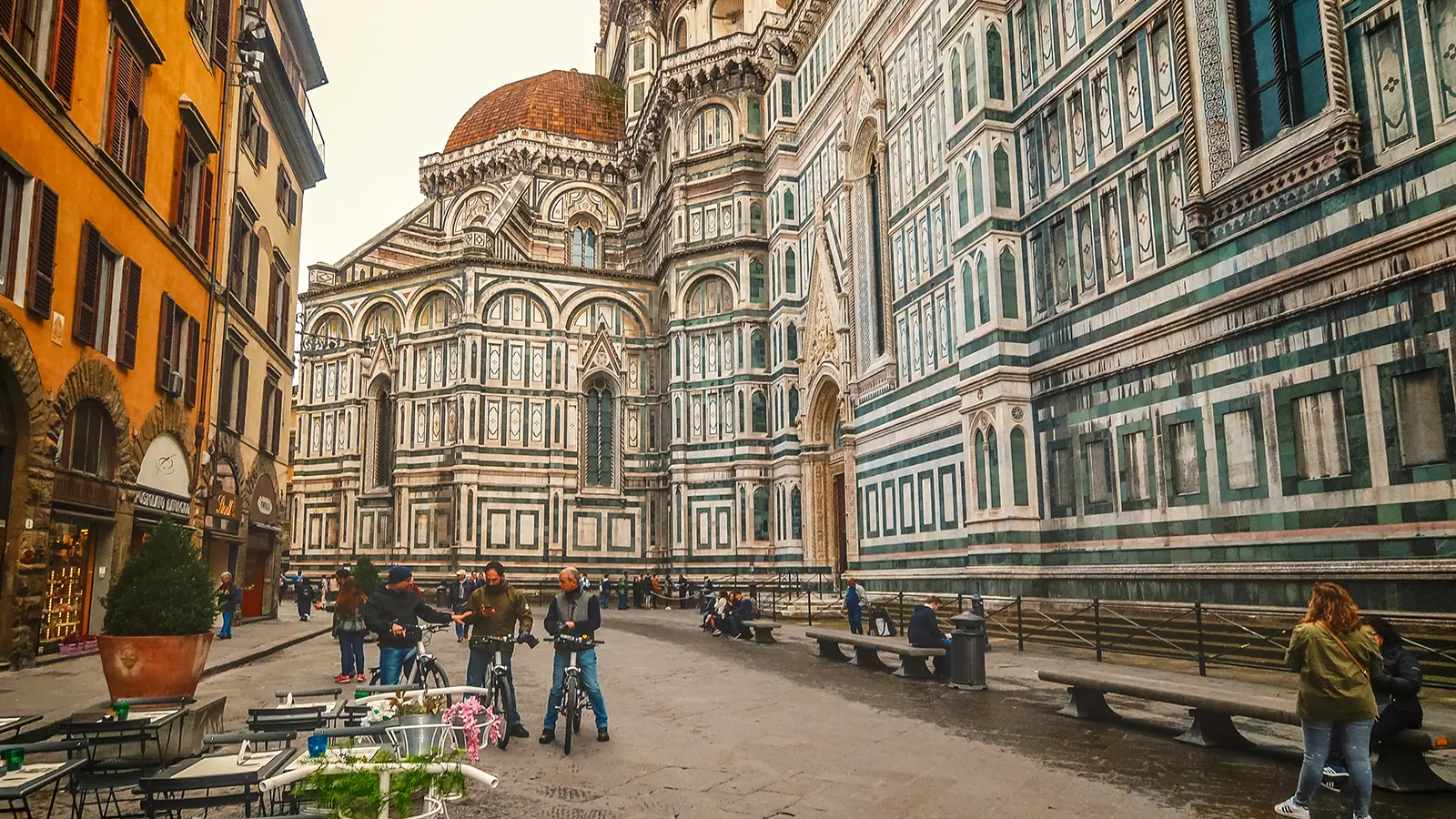
The cathedral’s façade, clad in green, white, and pink marble, creates a harmony that feels both monumental and delicate. The original medieval façade was never fully completed and was removed in 1587, leaving the cathedral with a bare brick front for nearly three centuries. The current Neo-Gothic façade, designed by Emilio De Fabris and completed in 1887, was a deliberate revival of Gothic sensibilities rather than a continuation of the medieval project. Yet it achieves remarkable coherence with the rest of the building, blending ornamentation with geometric precision. Standing before it, you cannot help but feel the weight of centuries – generations of artists, builders, and worshippers who shaped what we see today.
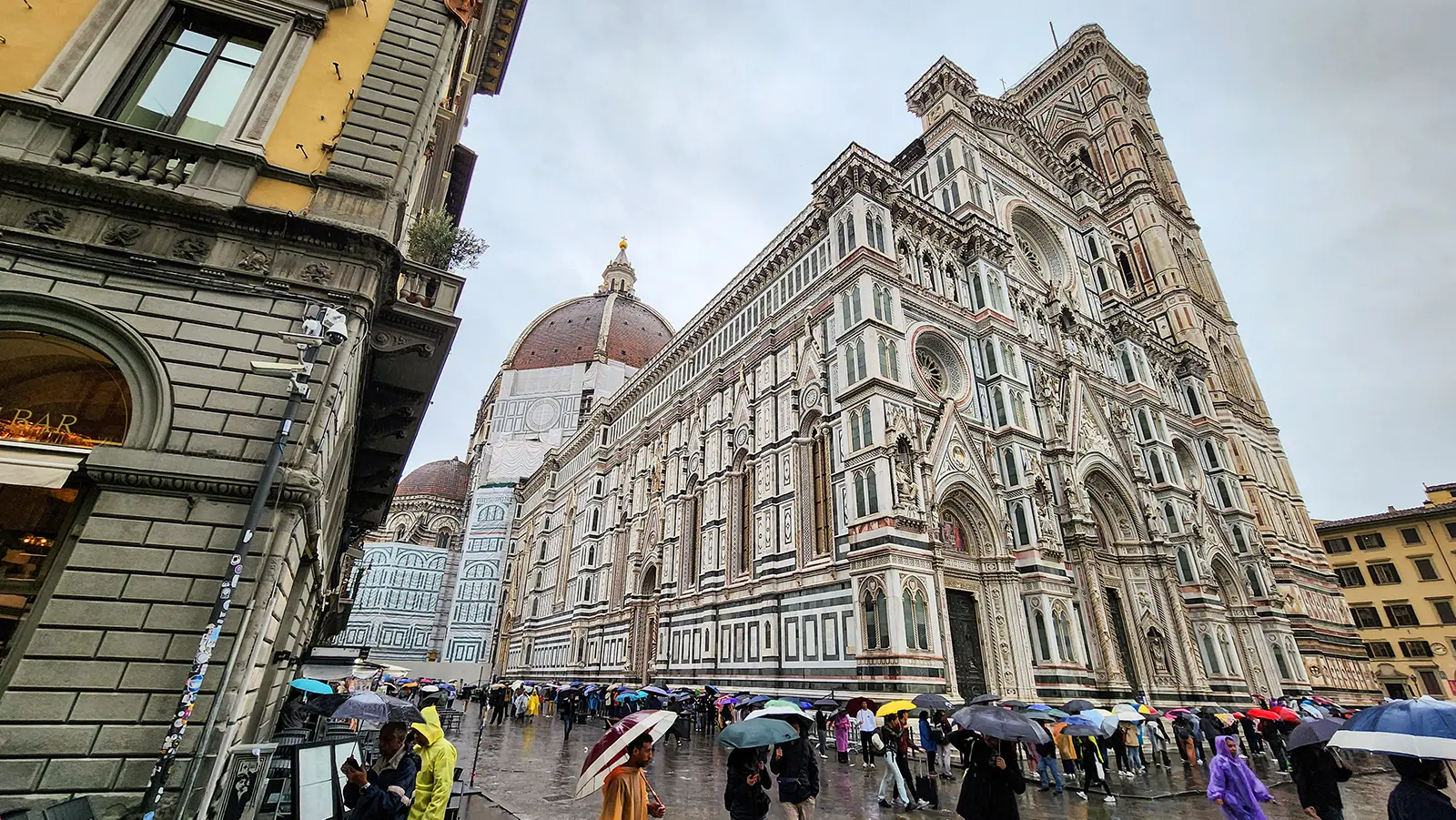
Inside, the atmosphere shifts dramatically. The vast interior feels restrained compared to the richly decorated exterior, emphasizing scale and spiritual contemplation rather than ornament. It is a reminder that Florence often balances grandeur with restraint, a duality that defines much of its art and architecture.
Brunelleschi’s Dome: A Revolution in Engineering
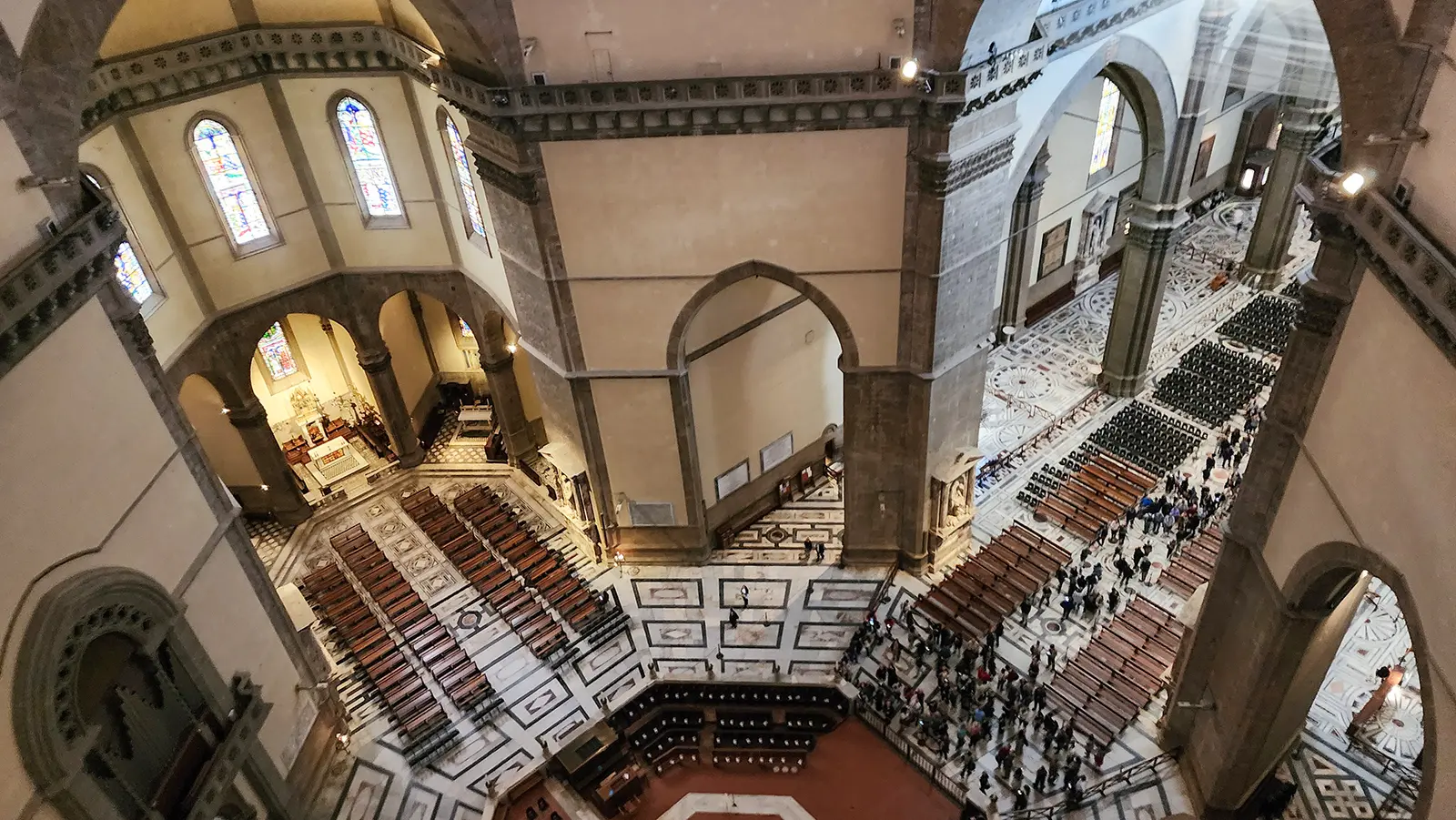
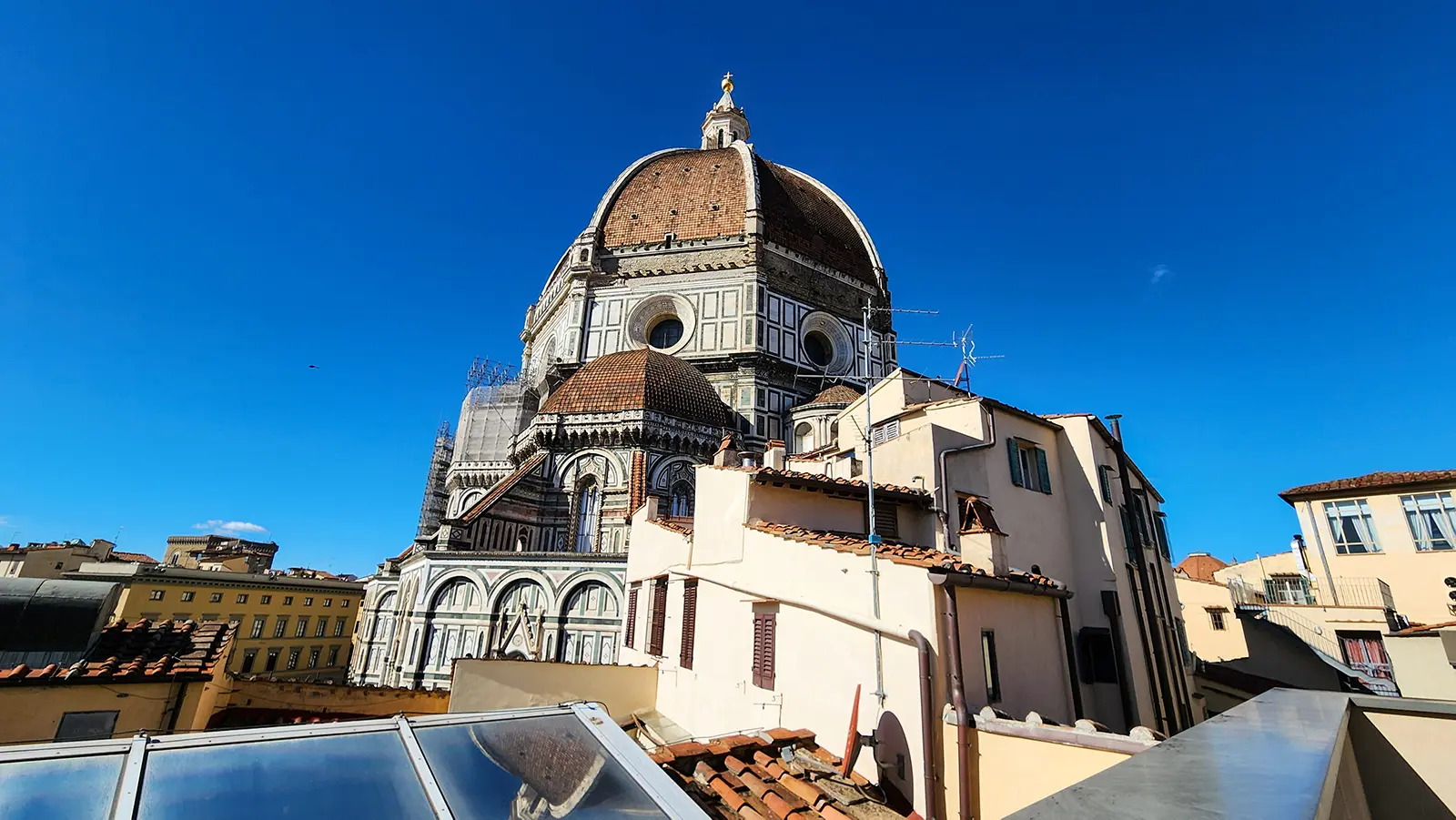
Rising above everything is the legendary dome designed by Filippo Brunelleschi, one of the greatest engineering achievements of the Renaissance. Completed in 1436, the dome solved a problem that had challenged builders for decades: the octagonal drum of the cathedral had already been constructed without a clear solution for how such an enormous space could be covered. Traditional wooden scaffolding on the required scale was considered impractical. Brunelleschi’s answer was revolutionary – a double-shell structure combined with innovative techniques such as a self-supporting herringbone brick pattern that allowed the dome to rise without collapsing under its own weight. The result changed architectural history and became a lasting symbol of human ingenuity.
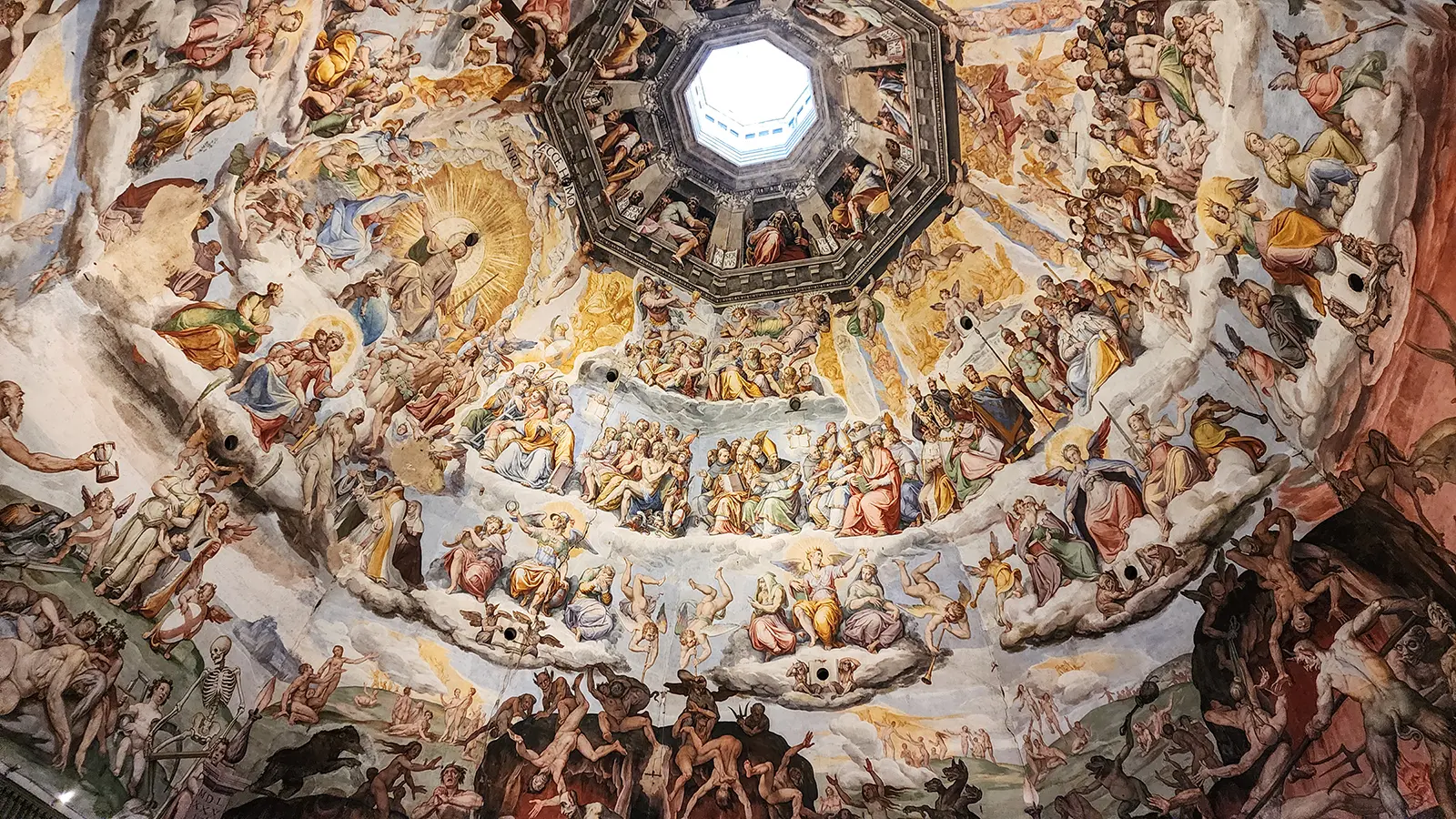
Climbing the dome is both physical and emotional. As you ascend the narrow stairways, you move closer to one of the most ambitious fresco cycles of the Italian Renaissance. Giorgio Vasari began the dramatic interior fresco in 1572 but died in 1574 before it could be completed. Federico Zuccari later finished the work in 1579, creating a sweeping depiction of the Last Judgment surrounded by scenes of Heaven, Hell, and the Apocalypse. The paintings seem to swirl around you, filling the vast interior with movement and color, and creating a moment where art, theology, and engineering meet in a truly breathtaking way.
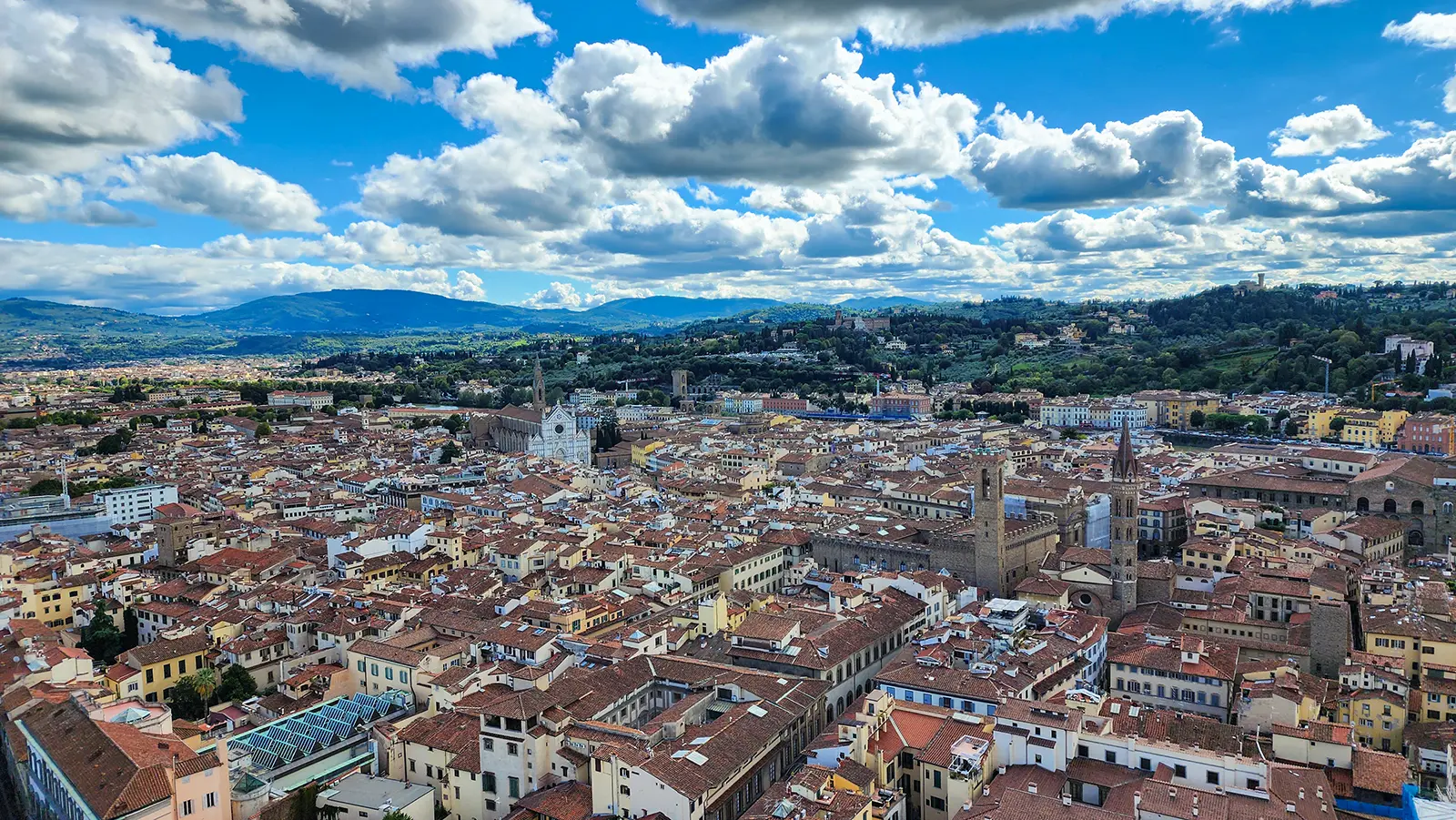
Reaching the top rewards you with one of Florence’s most unforgettable views. Terracotta rooftops stretch endlessly, Giotto’s Campanile rises elegantly beside you, and the city unfolds like a carefully composed painting. From here, you understand how deeply the Renaissance reshaped the urban landscape – not just building upward, but imagining the world differently.
Giotto’s Campanile: Vertical Elegance
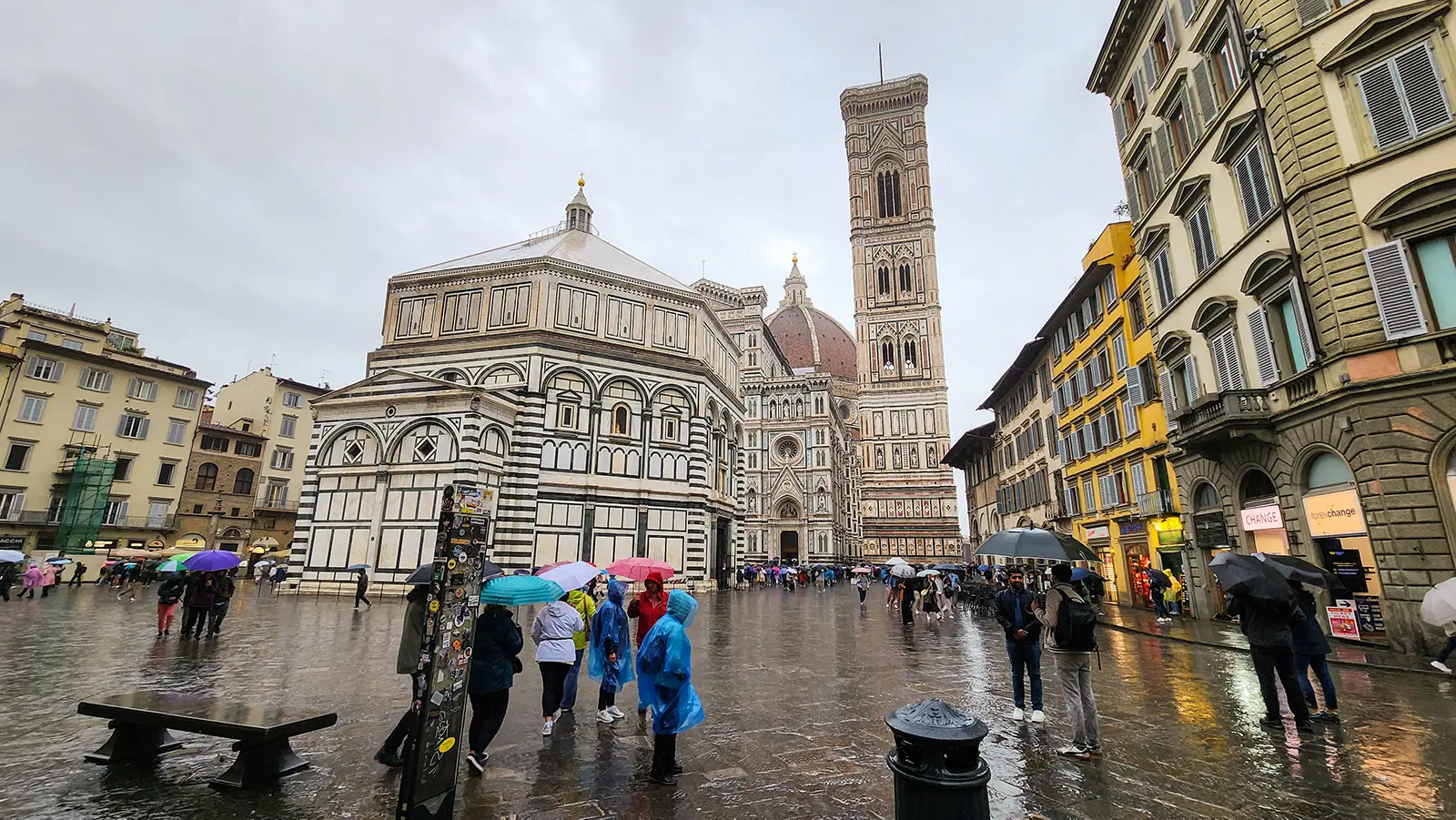
Standing beside the cathedral, Giotto’s Campanile offers a different kind of beauty. Begun in 1334 by the painter and architect Giotto di Bondone and completed by his successors, the bell tower reflects the elegance of Gothic design while maintaining the harmonious marble palette that defines the piazza.
Unlike the dome, which represents bold innovation, the campanile feels refined and rhythmic. Its decorative panels and sculptural details invite closer observation, rewarding those who slow down and look carefully. Climbing the tower provides another remarkable perspective of Florence, offering a slightly different relationship to the cathedral and revealing how carefully the piazza’s monuments were designed to complement one another.
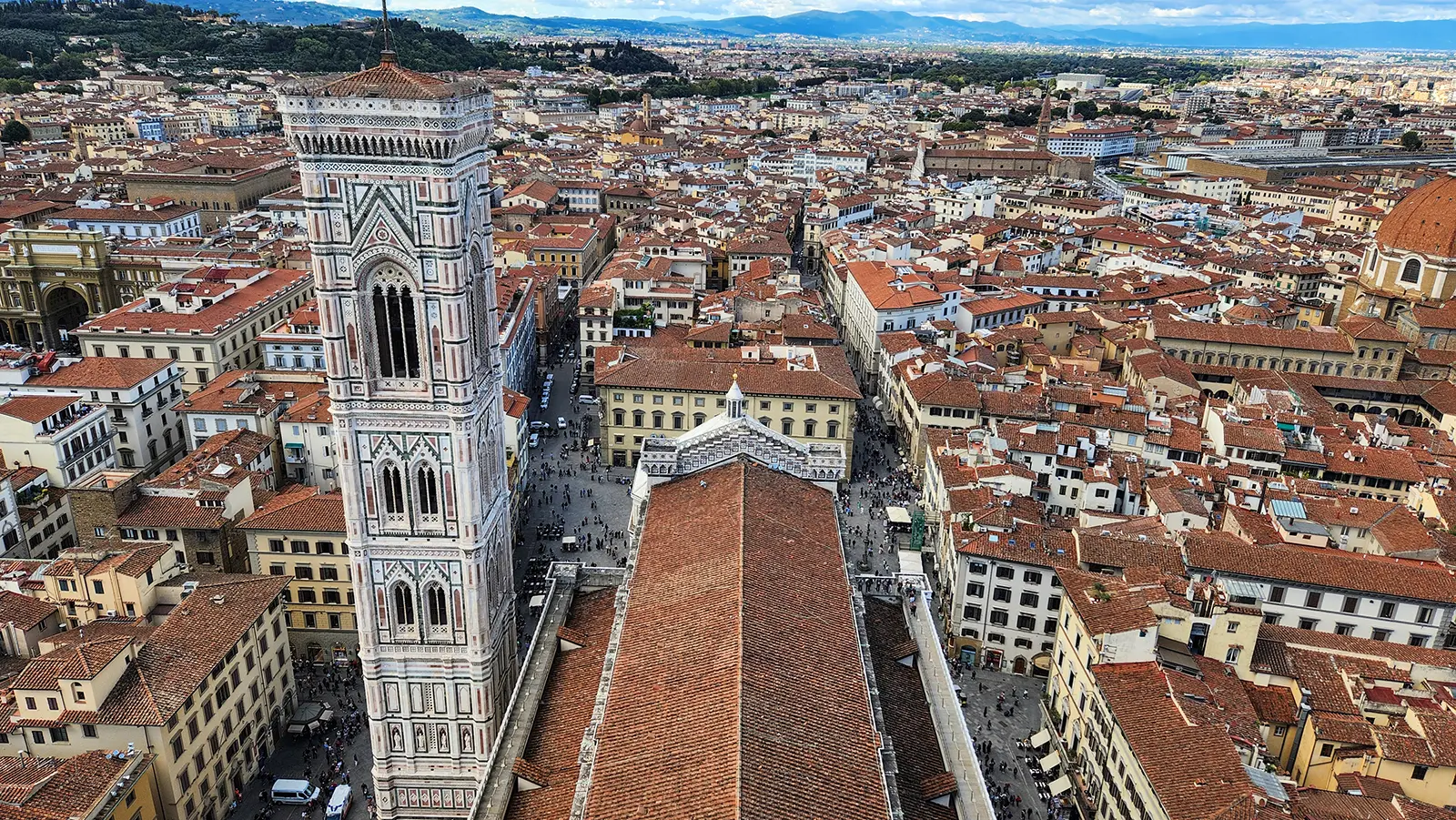
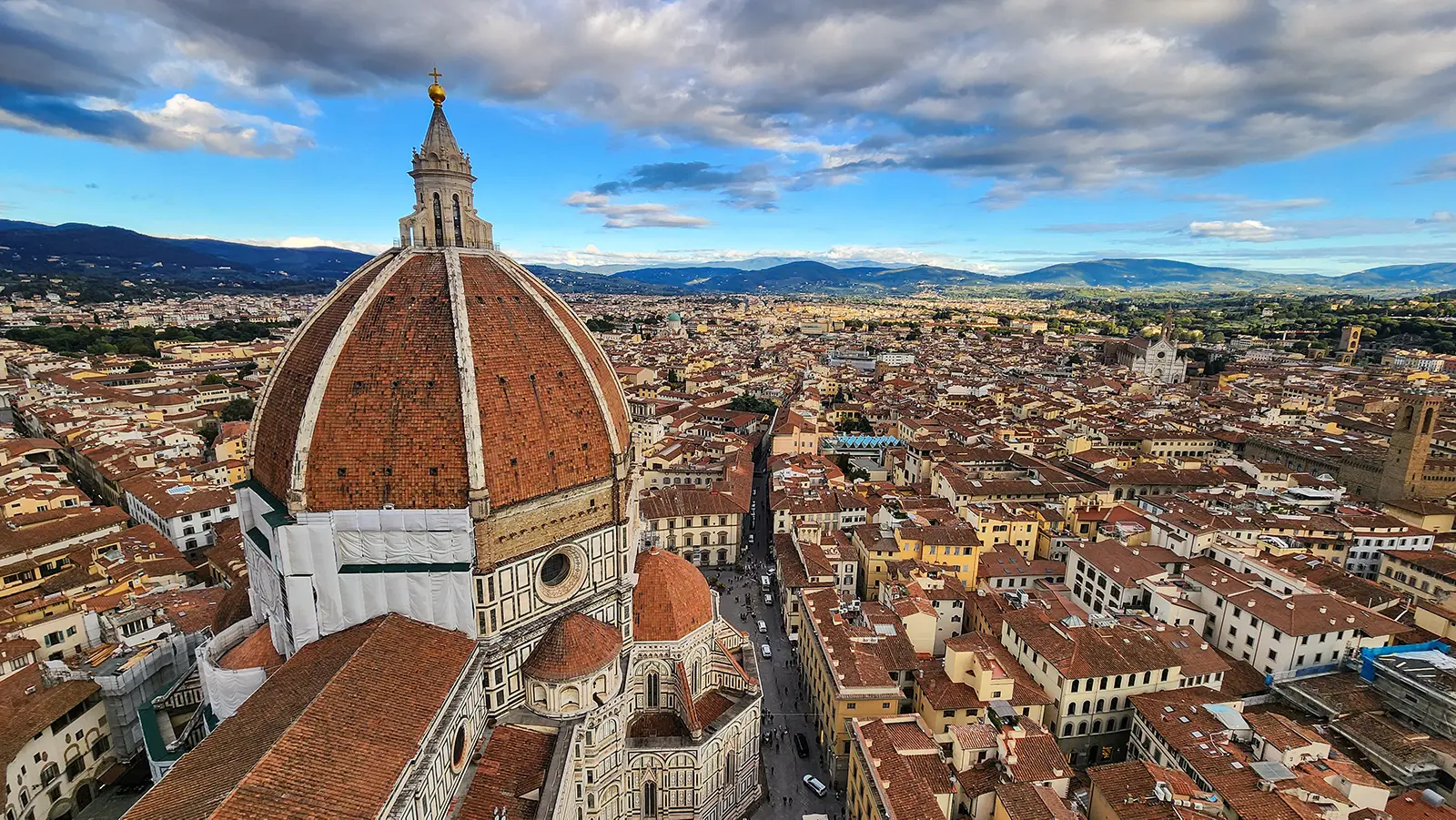
Together, the dome and the campanile create a visual dialogue – one bold and pioneering, the other graceful and precise – illustrating the artistic diversity of Florence’s golden age.
The Baptistery of San Giovanni & the Gates of Paradise
Facing the cathedral stands the Baptistery of San Giovanni, one of Florence’s oldest religious buildings, dating back to the 11th century. Its octagonal shape and Romanesque style remind visitors that Florence’s artistic roots extend far beyond the Renaissance. For centuries, Florentines – including Dante Alighieri – were baptized here, making the structure deeply woven into the city’s identity.
The Baptistery is perhaps best known for its bronze doors, especially Lorenzo Ghiberti’s famous Gates of Paradise. The richly detailed panels depict scenes from the Old Testament and demonstrate the artistic breakthroughs that defined early Renaissance sculpture, particularly in perspective and narrative depth. The doors visible today are replicas; the fragile originals have been moved to the Museo dell’Opera del Duomo to protect them from weathering and pollution. Even so, their impact remains profound. Michelangelo himself is said to have admired them deeply, a testament to their enduring influence on generations of artists.
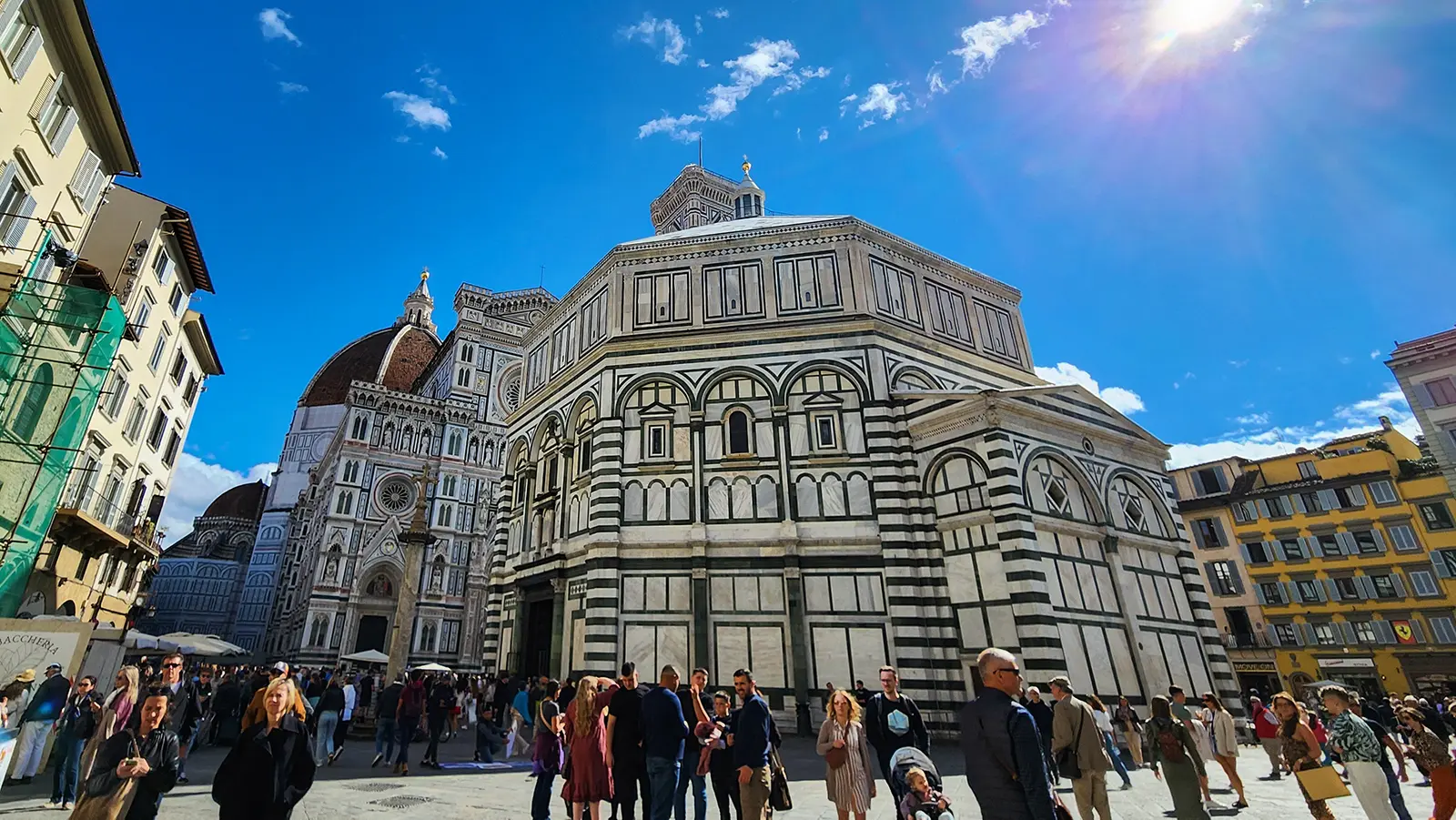
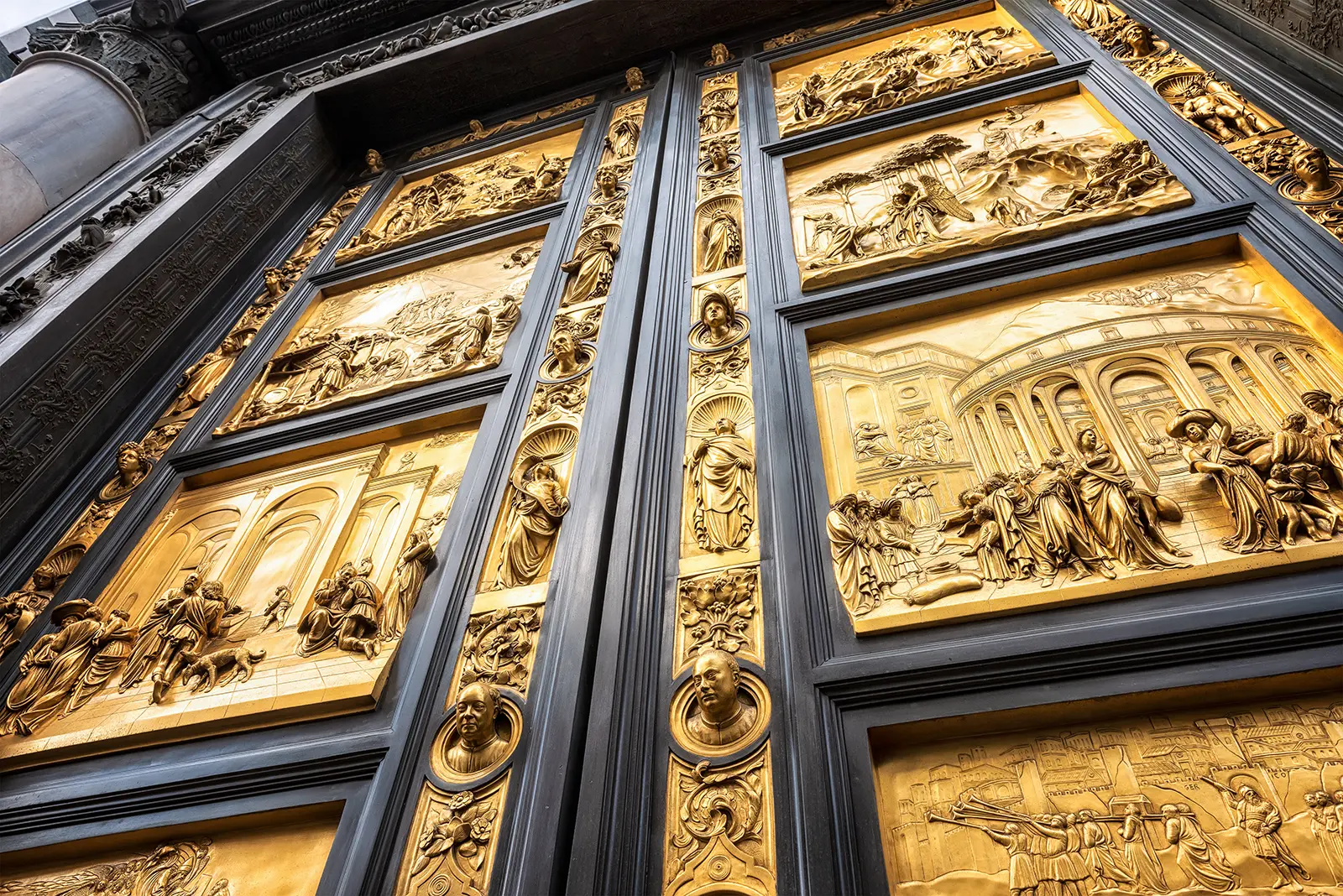
Standing before the Baptistery, you feel the continuity of history – a place where medieval spirituality meets Renaissance innovation, where artistic ambition grew from centuries of devotion.
The Museo dell’Opera del Duomo: The Hidden Treasure
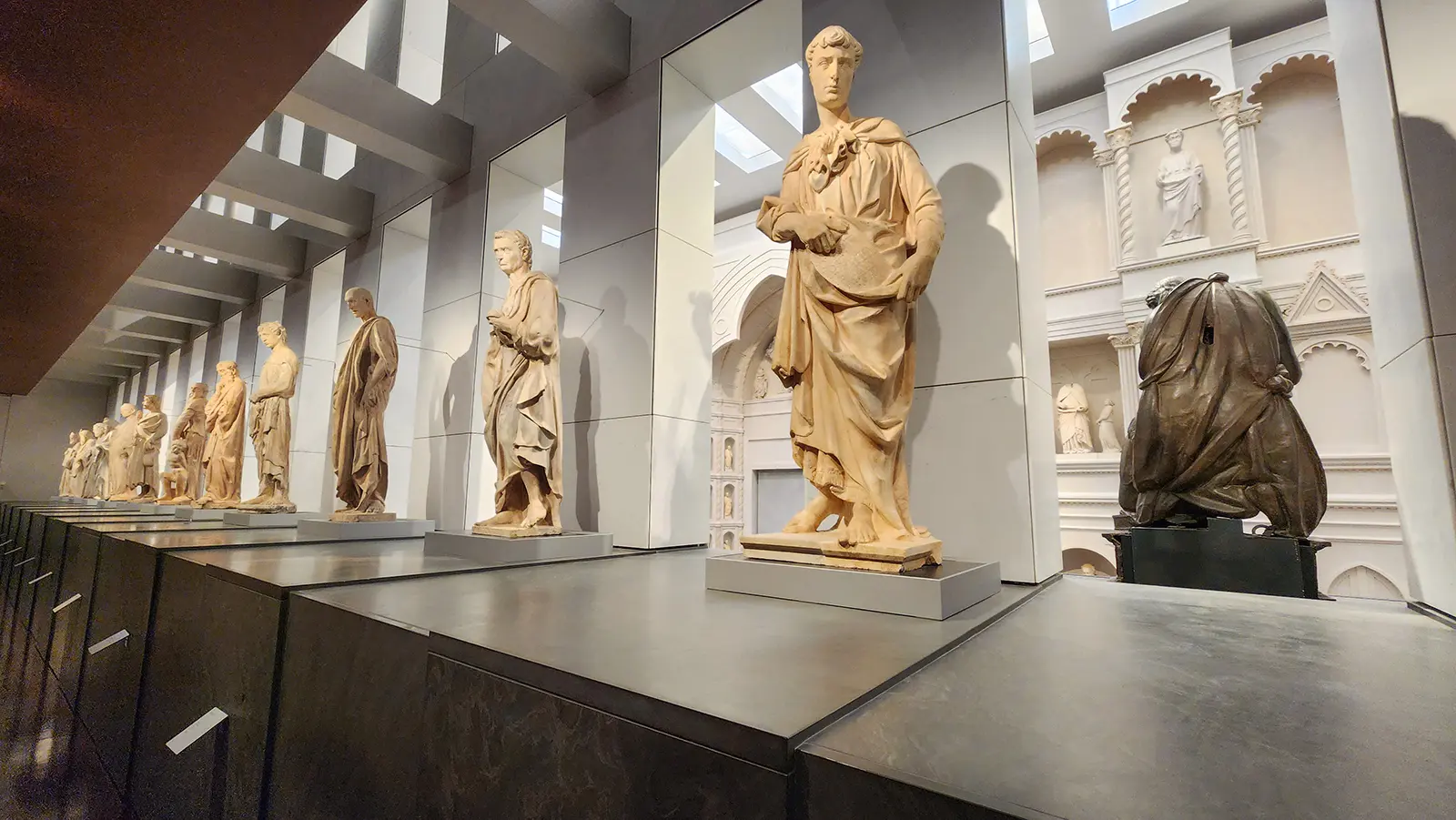
Many visitors overlook the Museo dell’Opera del Duomo, yet it offers one of the richest experiences connected to the piazza. This museum houses original sculptures and works created for the cathedral complex, allowing visitors to see masterpieces up close in a quieter, more reflective environment. Here you encounter works by Donatello, Michelangelo, and other Renaissance masters, along with original elements from the cathedral façade and the Baptistery doors. Seeing these pieces away from the crowds adds intimacy to the experience, revealing craftsmanship that can be difficult to appreciate outdoors. The museum helps complete the story of Piazza del Duomo, showing not only the finished monuments but also the artistic process behind them.
The Atmosphere of the Piazza Today
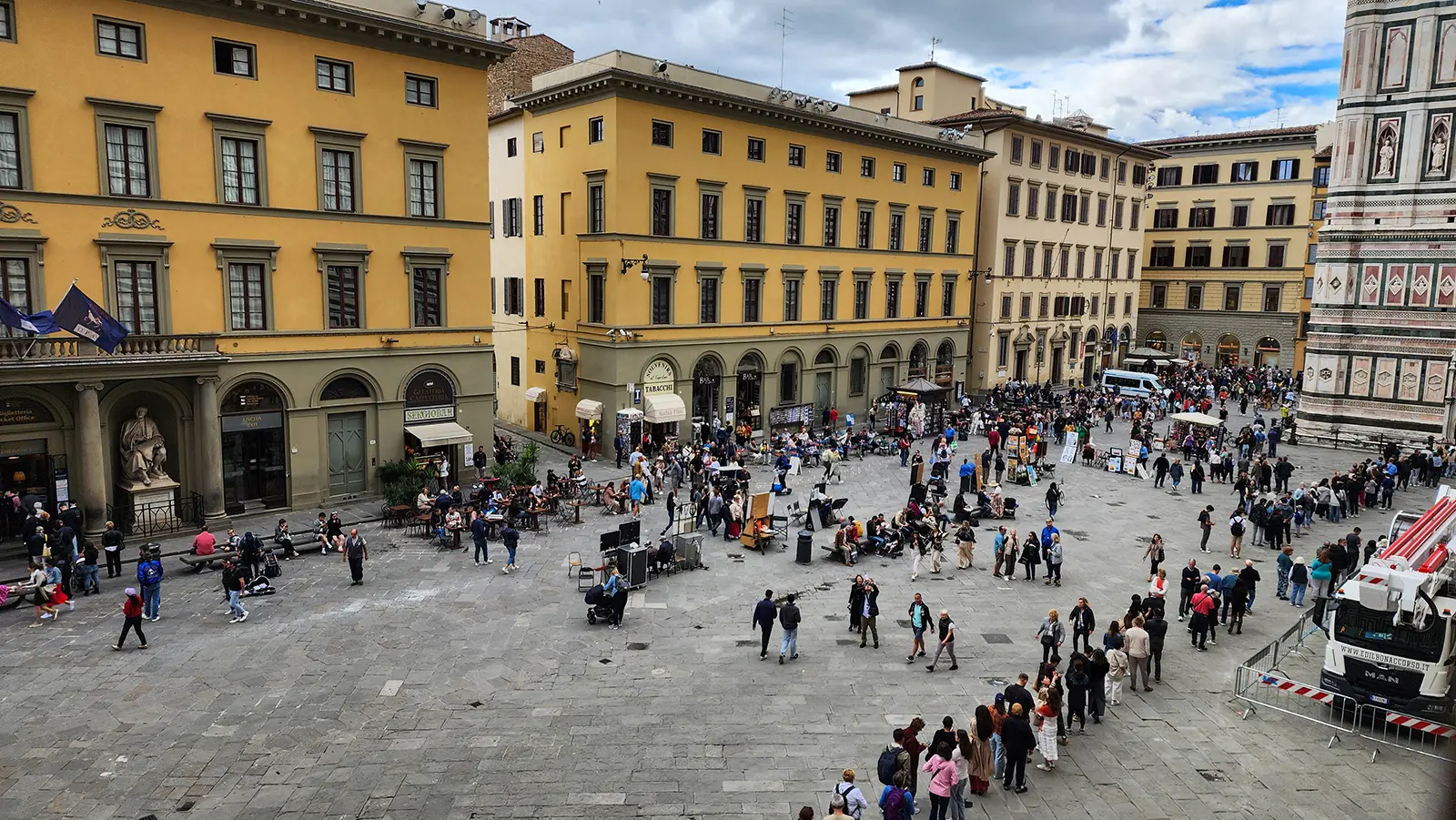
While the monuments dominate the skyline, the piazza itself pulses with life. Visitors gather with cameras, artists sketch architectural details, and the sound of footsteps echoes against stone. Despite the crowds, there are moments when the space feels surprisingly contemplative, especially early in the morning or later in the afternoon when the light softens and the marble begins to glow. Watching people interact with the space reminds you that Piazza del Duomo has always been a place of gathering. It is both sacred and civic, monumental and human. Even today, it remains the emotional center of Florence, where past and present coexist effortlessly.
Why Piazza del Duomo Still Matters
Piazza del Duomo matters because it represents more than architecture; it embodies a moment in human history when creativity and ambition transformed the way people understood possibility. The Renaissance was not simply an artistic movement – it was a shift in perspective, a belief that human ingenuity could reshape the world. Standing here, surrounded by structures built across centuries, you feel that spirit still alive. The piazza invites reflection on what people can create when art, faith, and civic pride come together with extraordinary vision.
Bubbly Tips for Visiting Piazza del Duomo
- Go early: The piazza feels more magical in the morning before peak crowds arrive
- Book climbs in advance: Access to the Dome and Campanile often sells out, especially in high season
- Look up often: Architectural details reveal themselves slowly – façades, sculptures, and marble patterns tell stories
- Visit the museum: The Museo dell’Opera del Duomo provides essential context and houses original masterpieces
- Check combined tickets: Many attractions around the piazza are included in one Duomo complex pass, which saves time and planning stress
- Pause and observe: Sometimes the most memorable moments come from simply standing still and watching the piazza come alive
Final Thoughts
Piazza del Duomo is more than a landmark, it is a living expression of Florence’s soul. Here, engineering meets art, faith meets civic pride, and history feels present rather than distant. The longer you stay, the more you begin to notice how every detail contributes to a larger story about human creativity and aspiration.
Have you experienced Piazza del Duomo, or is it still on your Florence dream list? I’d love to hear your thoughts and favorite moments, feel free to share them in the comments below!
Until the next adventure,

🌟 Everything You Need to Plan Your Dream Trip in 2026
- 🌟 Luxury Hotels - Find premium stays with Booking.com & Hotels.com
- 🏡 Vacation Rentals - Discover unique properties on VRBO
- 🏞️ Guided Tours - Explore with Viator or GetYourGuide
- 🎫 Attraction Tickets - Skip the lines with Tiqets
- 🚢 Ocean Cruises - Set sail with Cruise Direct
- 📱 International SIMs - Stay connected with Saily
- 🚗 Car Rentals - Budget-friendly options from Discover Cars
- 🌐 Secure VPNs - Browse safely with NordVPN
- 💶 Currency Exchange - Best rates with Wise
- 🗣️ Learn Languages - Master the local language with Babbel and Rosetta Stone