
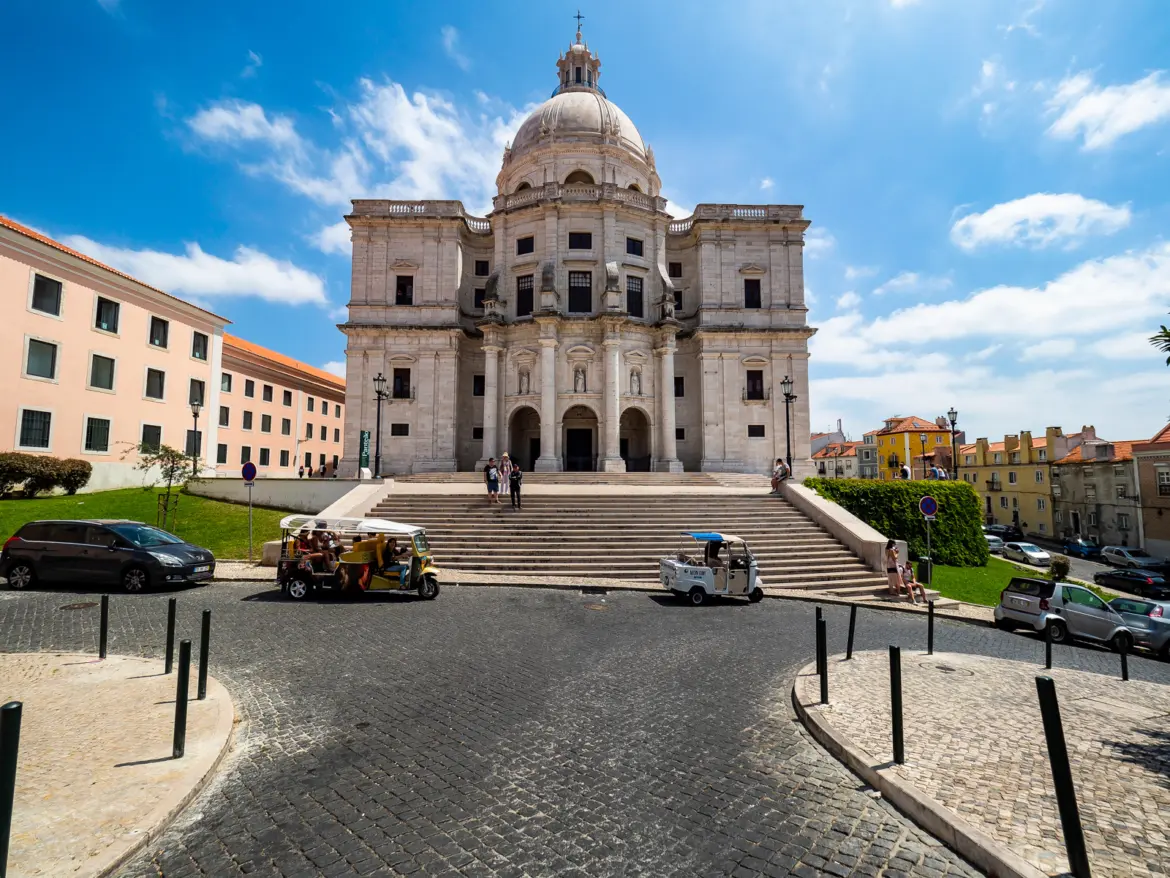
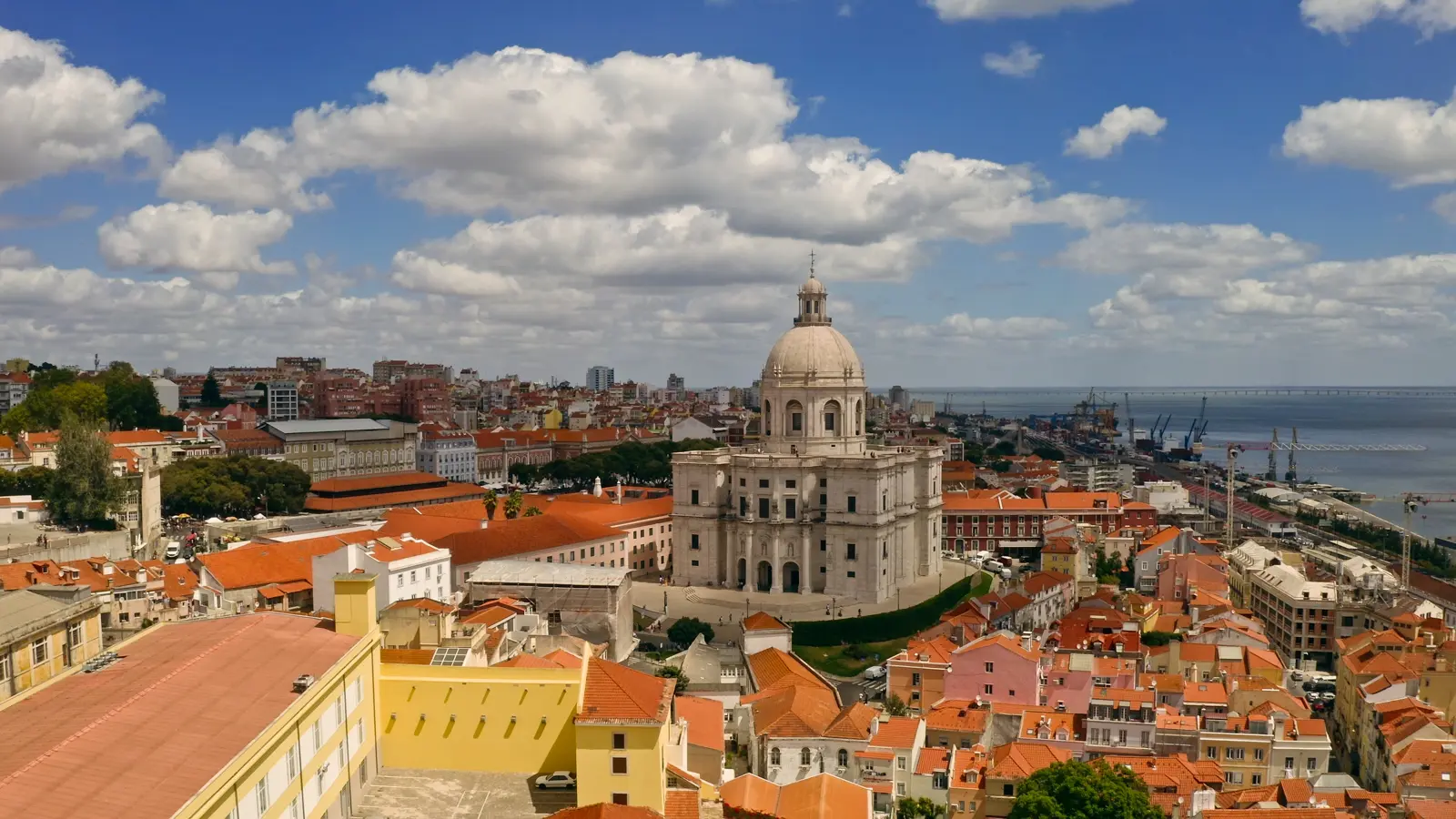
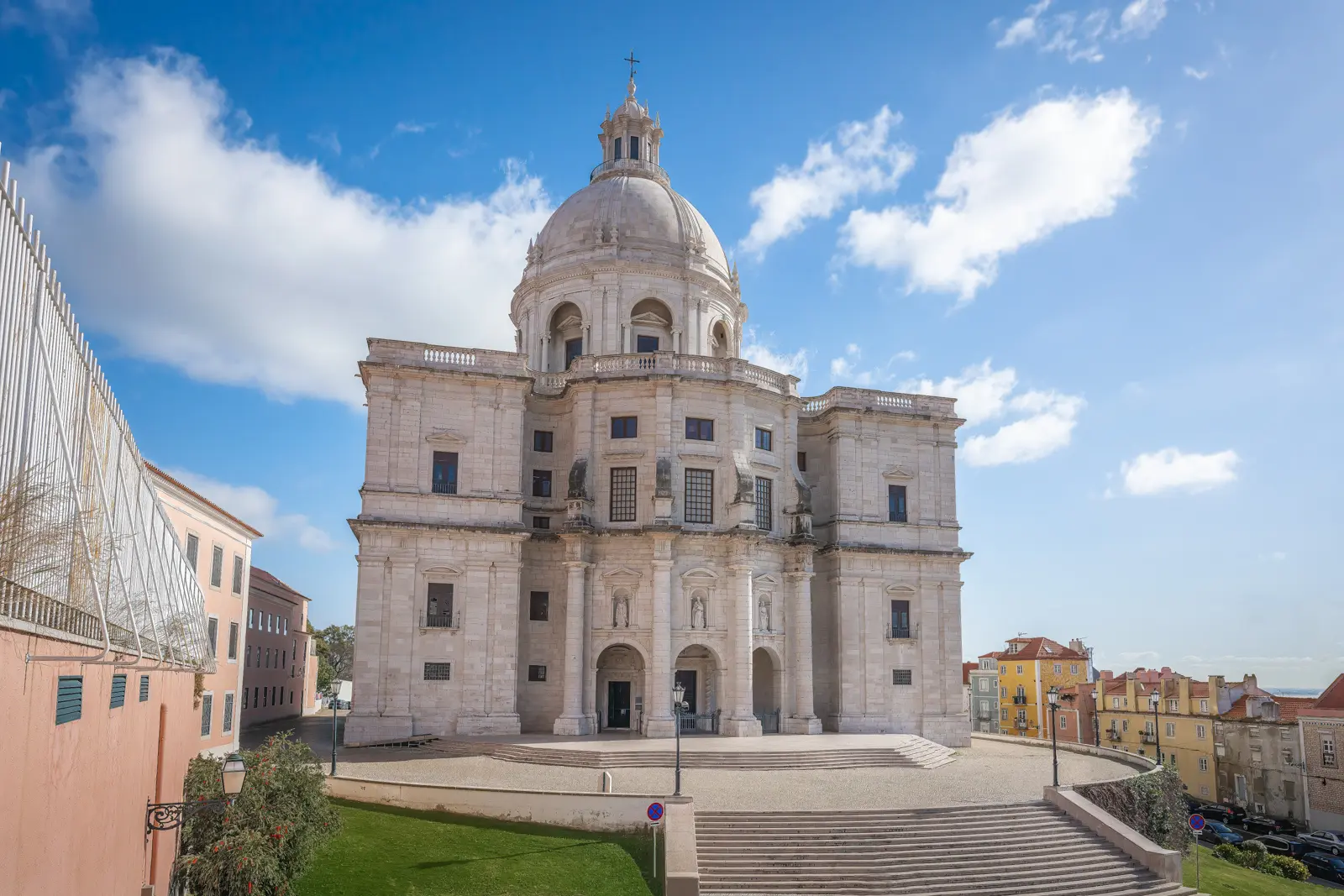
Olá, travelers! On one of my recent Lisbon wanderings, I stepped into a monument that feels both grand and deeply intimate: The National Pantheon (Panteão Nacional) in Alfama. Perched on a hill overlooking the Tagus River, this magnificent, white-domed structure is a place where Portugal honors its greatest heroes – artists, presidents, writers, and cultural icons who shaped the spirit of the nation. Visiting the Pantheon isn’t just stepping into a building. It’s stepping into Portugal’s memory, beautifully carved in marble and filled with light.
National Pantheon at a Glance
🏛️ Originally: Church of Santa Engrácia — begun in the 16th century, unfinished for ~300 years
💬 Expression: “Obras de Santa Engrácia” — Portuguese idiom for never-ending projects
🏗️ Completed: 20th century — transformed from church to National Pantheon
🪦 Who rests here: Amália Rodrigues (fado), Humberto Delgado (resistance hero), cenotaphs for Vasco da Gama and Henry the Navigator
🏛️ Interior: Greek cross layout, rose/cream/red/black marble mosaics, soaring dome
🌅 Rooftop: Panoramic terrace with views over Alfama, the Tagus River, and Feira da Ladra below
💰 Entry: €8 — free first Sunday of each month; Sundays & holidays until 2pm for Portuguese residents
📍 Location: Campo de Santa Clara, Alfama
💡 Tip: Visit late afternoon for magical rooftop light; stand beneath the dome for perfect symmetry
A Monument Reborn – From Church to Pantheon
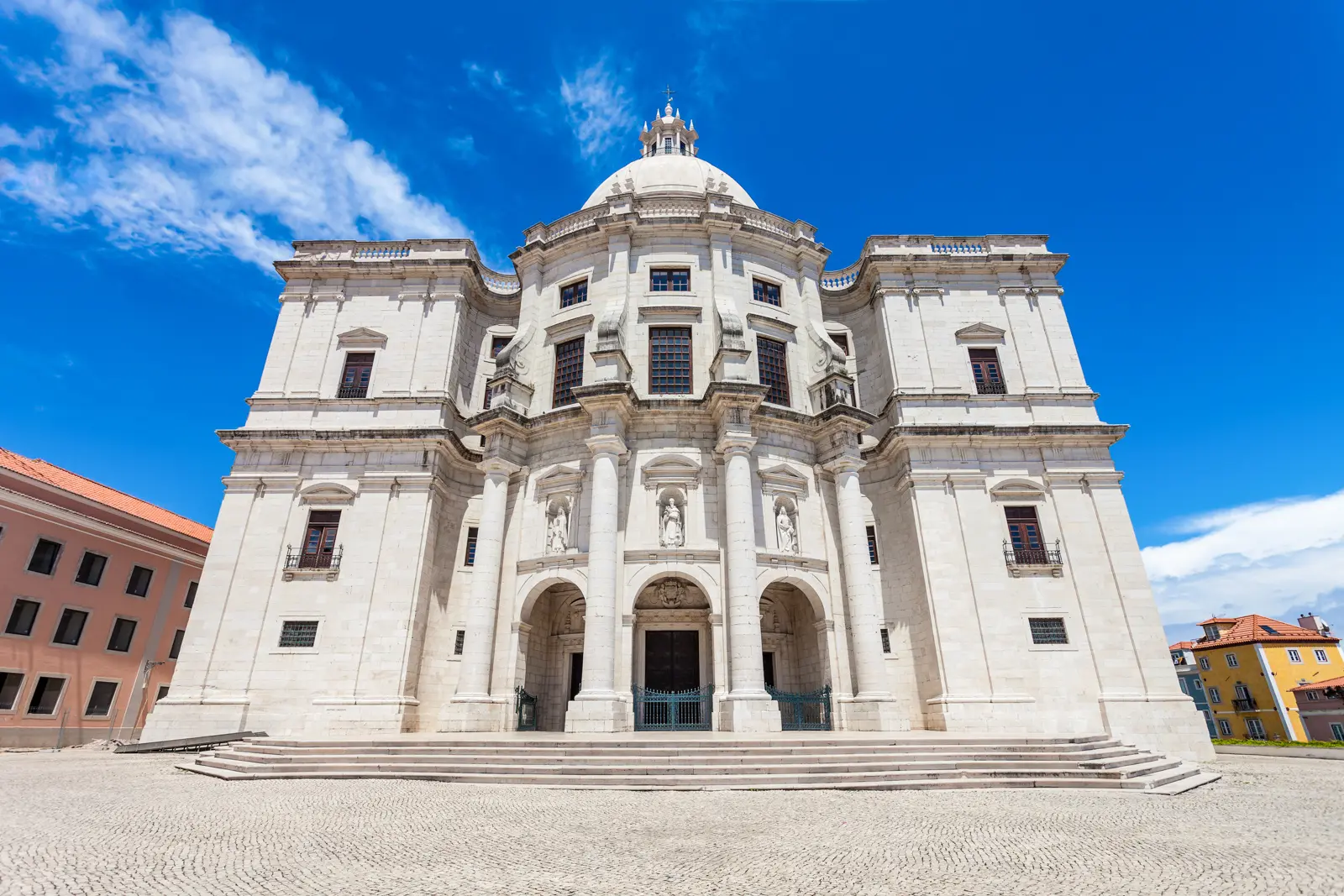
The Pantheon began its life in the 16th century as the Church of Santa Engrácia, but fate had other plans. Construction faced collapses, storms, and political delays so constant that the Portuguese coined an expression – “Obras de Santa Engrácia” – to describe any project that seems never-ending. For nearly 300 years, the church stood unfinished, its shell overlooking Alfama like a promise waiting for completion. When construction finally resumed in the 20th century, its purpose evolved. The building was transformed into Portugal’s National Pantheon, dedicated to preserving the memory of its most illustrious figures. The shift from sacred church to national monument feels seamless – the architecture still holds a quiet sense of reverence, but now its walls echo with the stories of an entire country.
Architecture – Marble, Light & Harmonious Grandeur
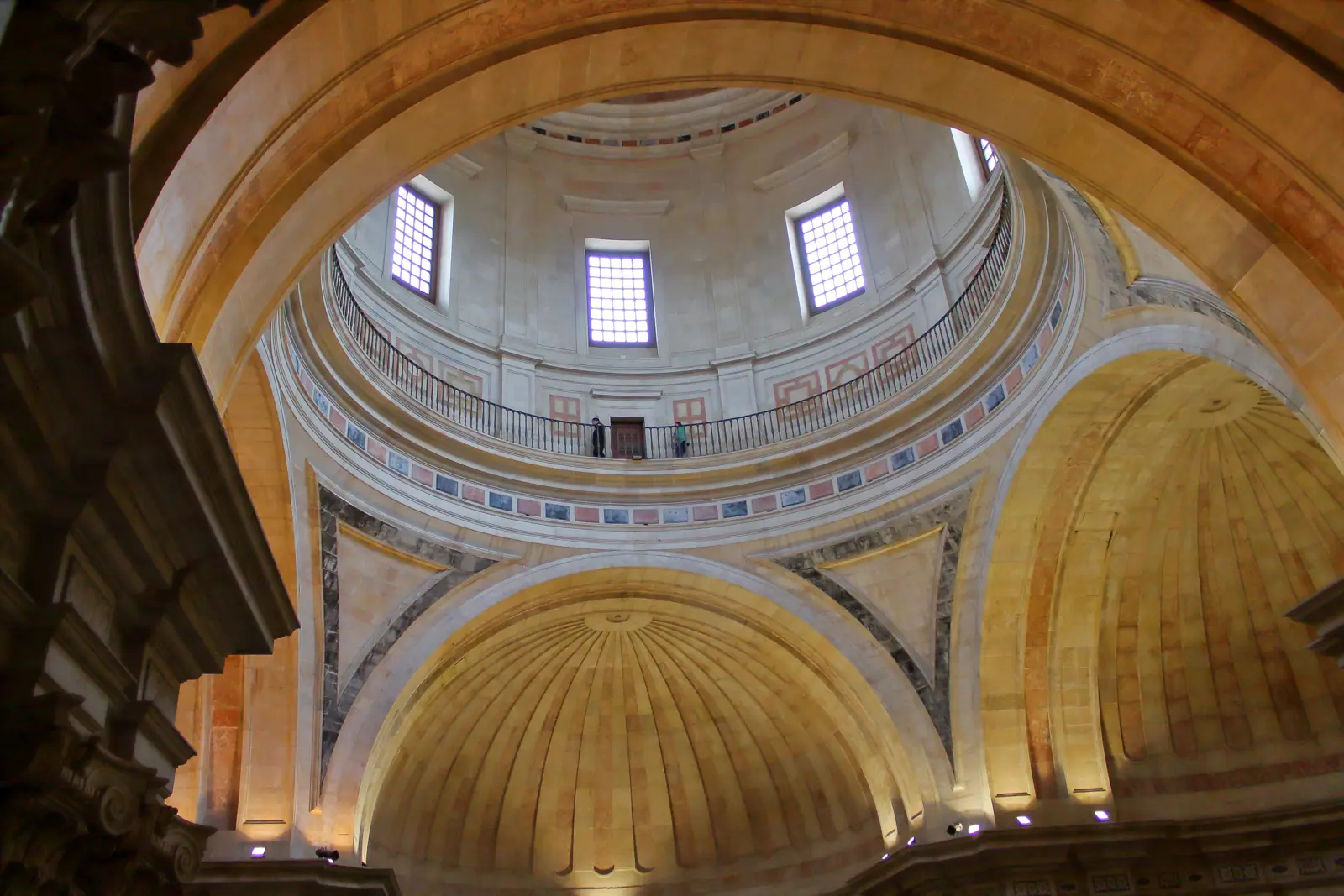
Inside the Pantheon, everything seems to radiate from the centre: the soaring dome, the patterned marble floor, and the soft golden light that glides across the interior. Originally begun in the 17th century but completed only in the 20th, its design blends Baroque ambition with modern simplicity. The result is a space that feels both monumental and serene. The vast interior is built on a perfect Greek cross layout, and each arm of the cross opens into elegant chapels framed by tall arches. The marble – rose, cream, red, and black – forms geometric mosaics that guide your eye through the structure like a visual story.
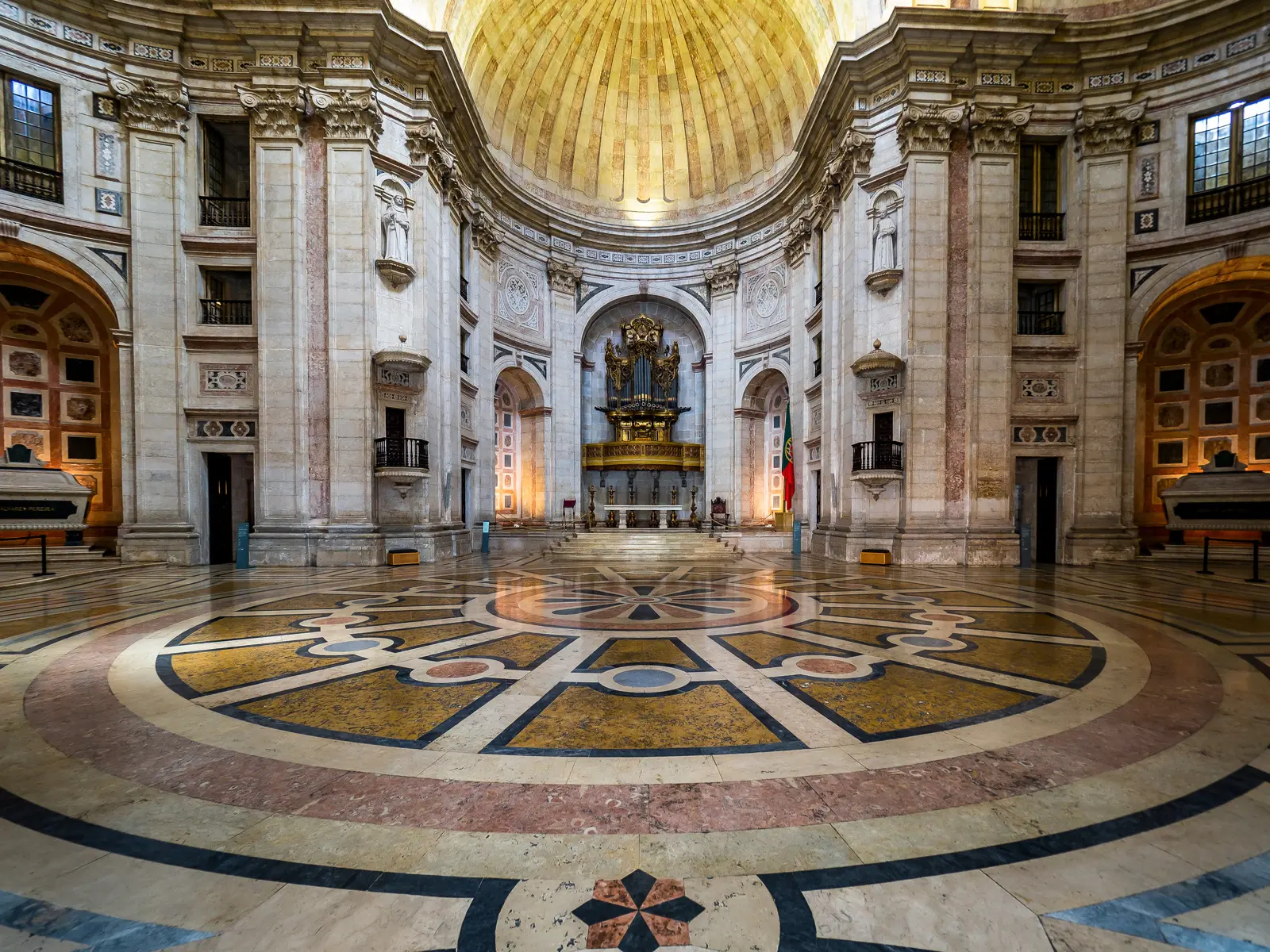
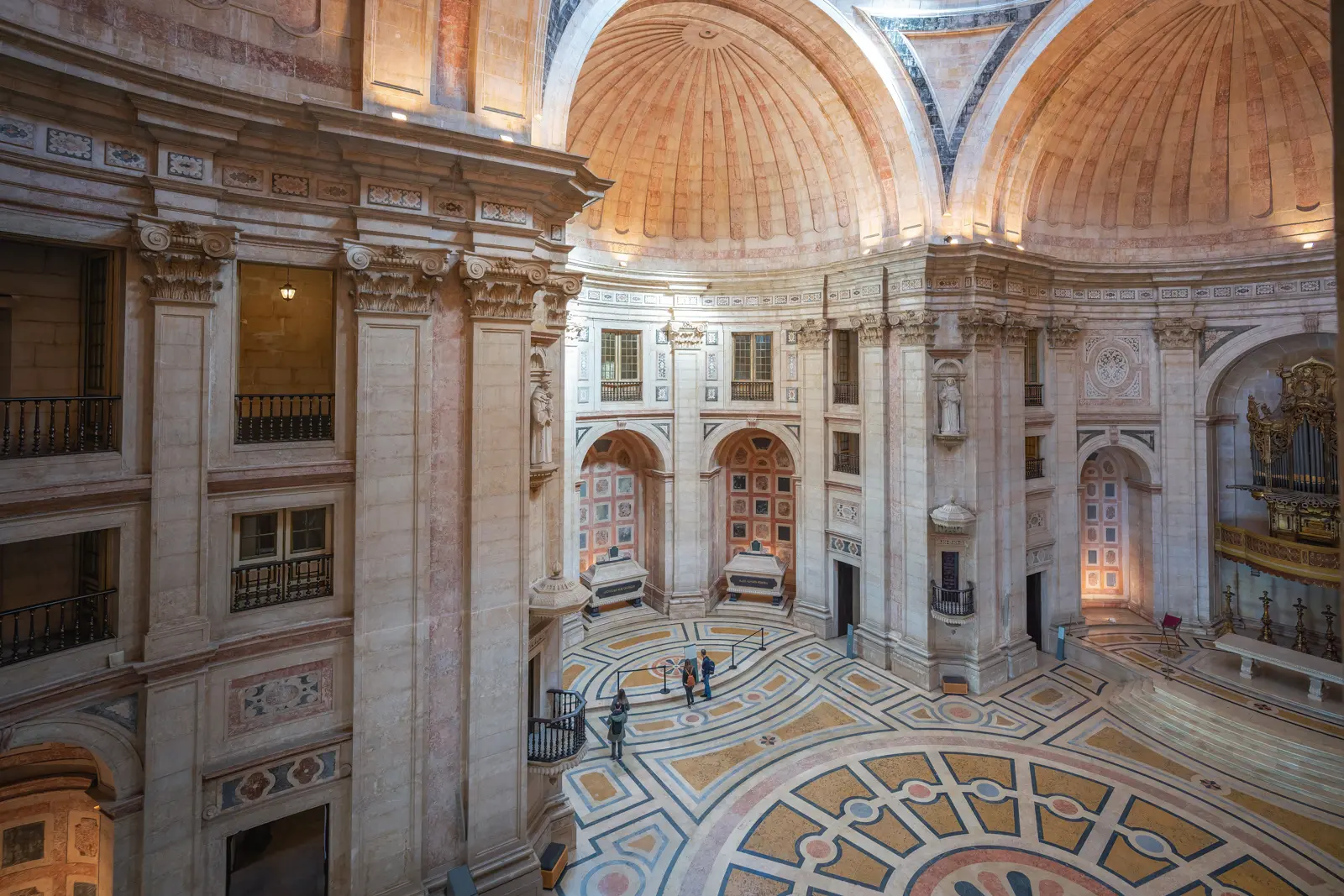
All paths in this temple of memory lead upward to the dome. Standing beneath it is breathtaking. The dome’s interior is ringed with delicate stonework and illuminated by a circular opening of windows that bathe the Pantheon in soft, celestial light. The harmony of curves and symmetry creates a sense of movement, almost as if the architecture itself is lifting you toward the sky. As I stepped slowly across the polished floor, hearing the gentle echo of my footsteps, I couldn’t help but admire how everything comes together: the interplay of light and shadow, the echoing acoustics, and the dignified beauty of the marble walls. It feels timeless – sacred even – a place built not just to honour heroes, but to make you pause and reflect.
Who Rests Here – Portugal’s Icons Remembered
Walking through the Pantheon means walking beside the names that shaped Portuguese history. This is where Portugal honours the men and women who shaped its cultural, political, and artistic identity. The Pantheon began as the final resting place for national heroes in the 20th century, and today the nave is lined with grand cenotaphs and tombs dedicated to Portugal’s greatest voices.
Among the most iconic is Amália Rodrigues, the queen of Fado, whose voice defined an entire genre and carried Portugal’s soul to the world. Nearby rests Humberto Delgado, the fearless general who challenged dictatorship and became a symbol of democratic resistance. You’ll also find monuments to early explorers like Vasco da Gama and Infante Dom Henrique (Henry the Navigator), though their actual remains lie elsewhere, the Pantheon honors them with beautifully sculpted cenotaphs that pay tribute to Portugal’s Age of Discoveries. As you wander, you see not just stone, but the stories of poets, presidents, navigators, and cultural pioneers displayed with reverence. It’s impossible not to feel the weight of history and the pride of a nation within these walls.
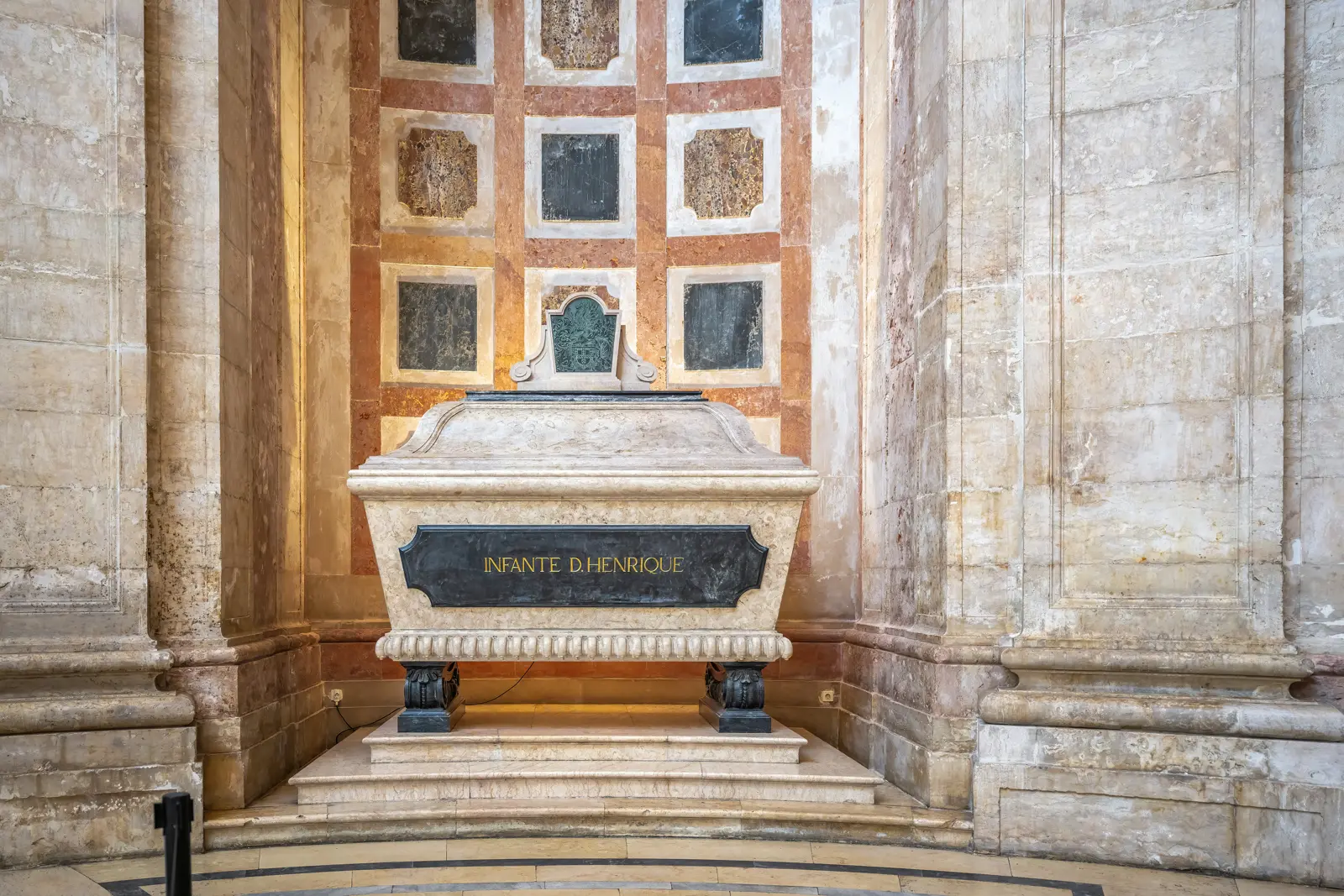
What touched me most was how peaceful the space feels despite its grandeur. Every tomb, every plaque, every sculpted detail reminds you that this monument isn’t just about the past, it’s about keeping the memory of these extraordinary people alive for future generations.
Rooftop Views That Take Your Breath Away
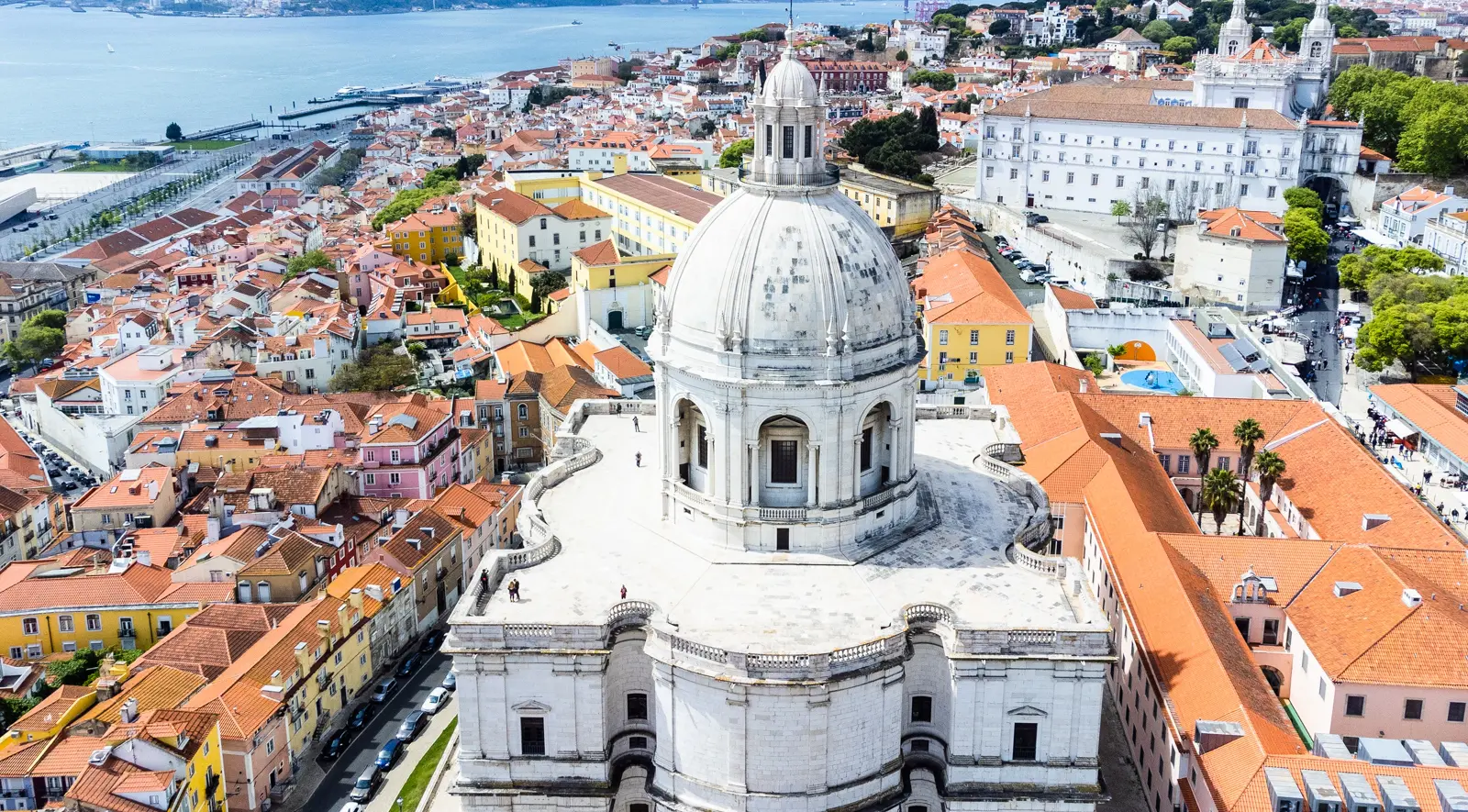
Not everyone knows that the Pantheon has a rooftop terrace, and it is spectacular. From up high, Alfama unfolds like a watercolor painting: terracotta rooftops cascading toward the river, sailboats gliding across the Tagus, and pastel buildings glowing in the afternoon sun. On Tuesdays and Saturdays, the Feira da Ladra flea market animates the streets below with vibrant colors and lively conversations. Watching it from above feels almost cinematic, a beautiful contrast to the solemn tranquility inside the monument. Whether you’re seeking photographs, panoramic views, or a moment of quiet reflection, the Pantheon rooftop is a Lisbon essential.
Moments That Stay with You
What moves me most about the Pantheon is its dual nature – grand yet intimate, monumental yet human. I remember standing at the center of the nave, listening to the soft echo of footsteps Against the marble and watching sunlight drift slowly across the floor. In that quiet moment, it felt as if the building were breathing with the city. Then comes the shift: stepping out onto the terrace, the solemn hush gives way to Lisbon’s heartbeat. The Tagus sparkles below. Alfama hums with life. A soft breeze wraps around you as you look out at the city’s rooftops and river horizons. The contrast is unforgettable, a place where remembrance and life coexist beautifully.
Bubbly Tips
- Location: Campo de Santa Clara, Alfama
- Best time to visit: Late afternoon for magical rooftop light
- Entry: €8; free on the first Sunday of each month (for all visitors) and on Sundays & holidays until 2pm (for Portuguese residents)
- Photo tip: Stand directly beneath the dome for perfect symmetry
- Make it special: Explore while listening to Amália Rodrigues
- Nearby: Feira da Ladra flea market (Tuesdays & Saturdays)
Final Thoughts
The National Pantheon is one of Lisbon’s most meaningful landmarks, a place where architecture, memory, beauty, and national pride all come together under one soaring dome. Whether you come for the marble artistry, the heroes who rest here, or the sweeping Tagus views from above, you’ll leave with a deeper connection to Portugal and its extraordinary stories.
Have you visited the Pantheon or wandered through Alfama’s historic streets? Share your favorite Lisbon moments in the comments below. I’d love to hear them!

🌟 Everything You Need to Plan Your Dream Trip in 2026
- 🌟 Luxury Hotels - Find premium stays with Booking.com & Hotels.com
- 🏡 Vacation Rentals - Discover unique properties on VRBO
- 🏞️ Guided Tours - Explore with Viator or GetYourGuide
- 🎫 Attraction Tickets - Skip the lines with Tiqets
- 🚢 Ocean Cruises - Set sail with Cruise Direct
- 📱 International SIMs - Stay connected with Saily
- 🚗 Car Rentals - Budget-friendly options from Discover Cars
- 🌐 Secure VPNs - Browse safely with NordVPN
- 💶 Currency Exchange - Best rates with Wise
- 🗣️ Learn Languages - Master the local language with Babbel and Rosetta Stone