Welcome back, world travelers! Florence is often celebrated for its great masterpieces – towering cathedrals, Renaissance sculptures, and museums filled with artistic treasures. Yet some of the city’s most meaningful stories unfold in places shaped not by artists or rulers alone, but by everyday life. Mercato Nuovo is one of those places. At first glance, it may seem like a charming market where visitors browse leather goods and souvenirs. But beneath its arches lies a history of commerce, superstition, and civic identity that reveals another side of Florence – one built on trade, exchange, and human connection.
Standing in Mercato Nuovo today, you are surrounded by centuries of movement. Merchants once negotiated prices here, fabrics changed hands, and ideas traveled along with goods. The market reminds us that Florence was not only a city of art but also a city of business, a place where economic ambition helped finance the cultural flowering we admire today.
Mercato Nuovo at a Glance
📍 Location: Via Calimala, Florence historic center (between Piazza della Signoria and Ponte Vecchio)
🏛️ What It Is: A Renaissance open-air market commissioned by Cosimo I de’ Medici, built 1547–1551
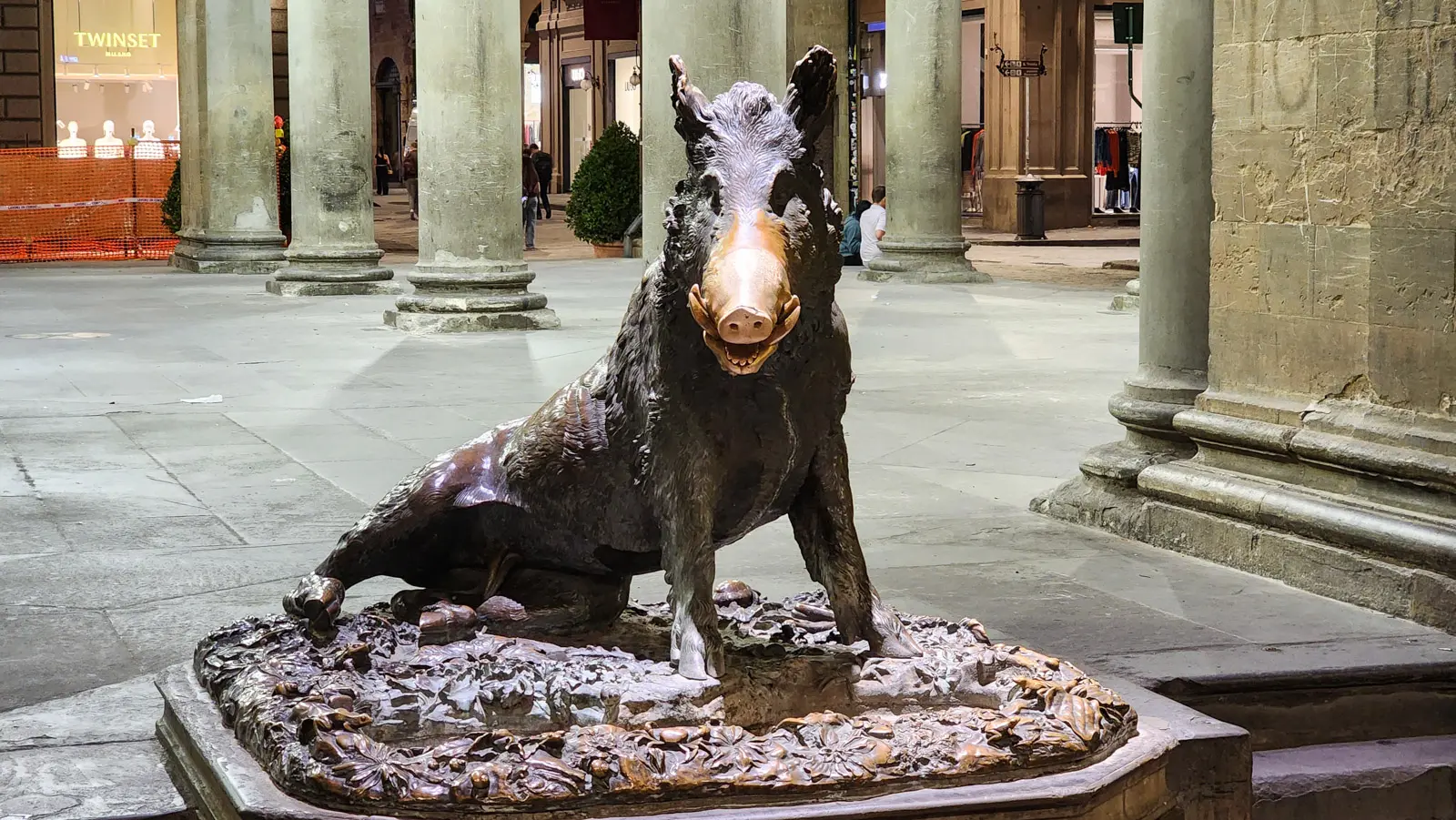
🐗 Highlight: Il Porcellino — the bronze wild boar fountain; rub its nose for good luck
🪙 Tradition: Place a coin in the boar’s mouth and hope it falls through the grate — a sign you’ll return to Florence
🔍 Hidden Detail: The Pietra dello Scandalo (Stone of Shame) embedded in the pavement
🎟️ Entrance: Free
⏱️ Time Needed: 15–30 minutes
💡 Tip: Visit early or late for a more atmospheric experience; pair with Piazza della Signoria, the Uffizi, or a walk to Ponte Vecchio
A Market Born in the Renaissance
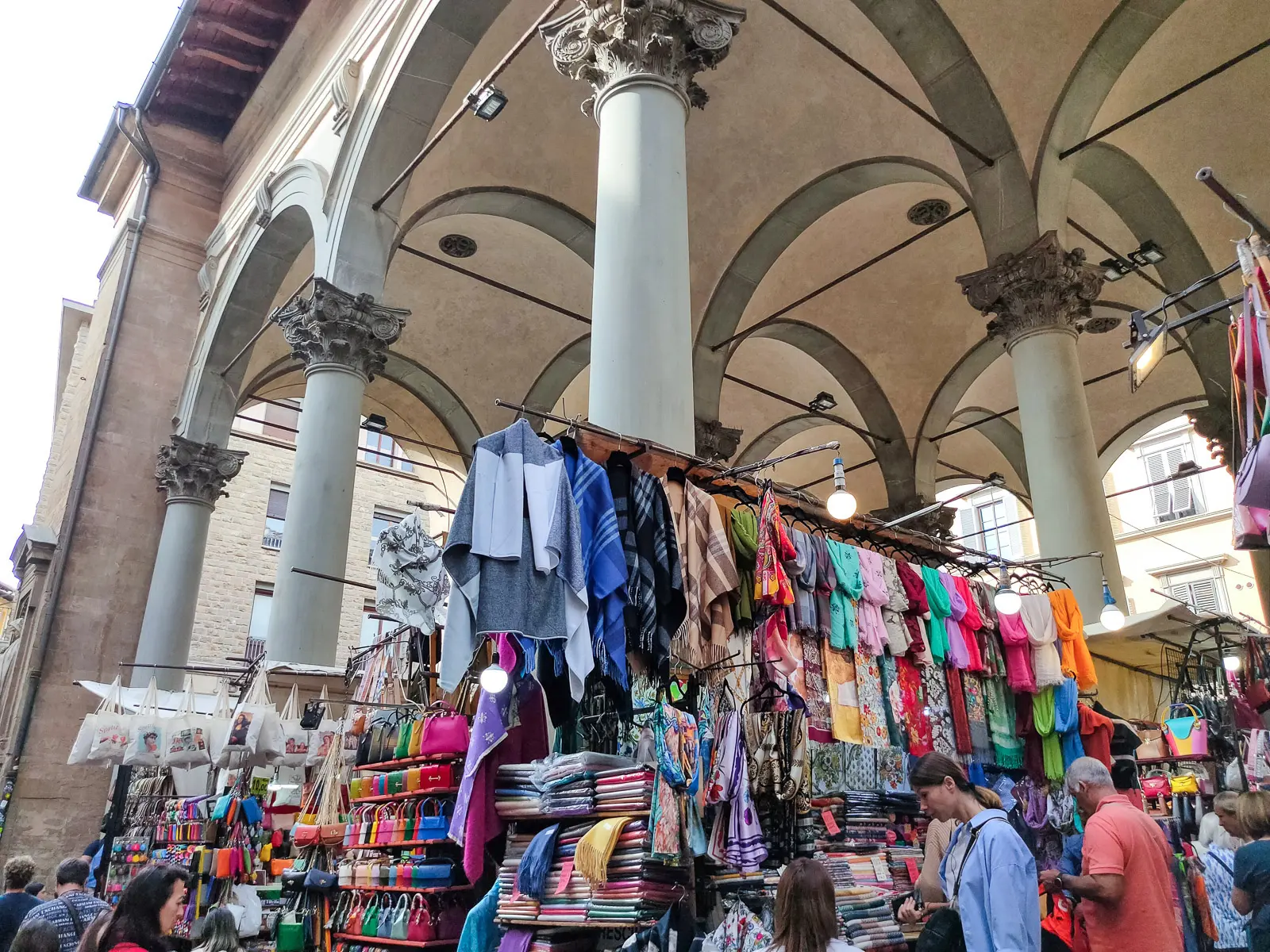
Mercato Nuovo – literally “New Market” – was commissioned in the mid-16th century during the rule of Cosimo I de’ Medici, a period when Florence was reshaping itself politically and economically. Built between 1547 and 1551, the structure was designed by sculptor and architect Giovanni Battista del Tasso as an elegant loggia intended to host the trade of luxury goods, especially silk and precious textiles. Unlike enclosed markets, the open-air design reflected Renaissance ideals of order and visibility. The graceful arches allowed light and air to circulate while providing shelter for merchants and buyers alike. It was a space designed for interaction, a public stage where commerce became part of the city’s daily theater.
Walking beneath the loggia today, it is easy to imagine the sounds of bargaining voices and the rustle of fabrics. Though the goods may have changed over time, the structure itself still carries the rhythm of exchange that once defined Florence’s prosperity.
Il Porcellino: Florence’s Most Beloved Symbol
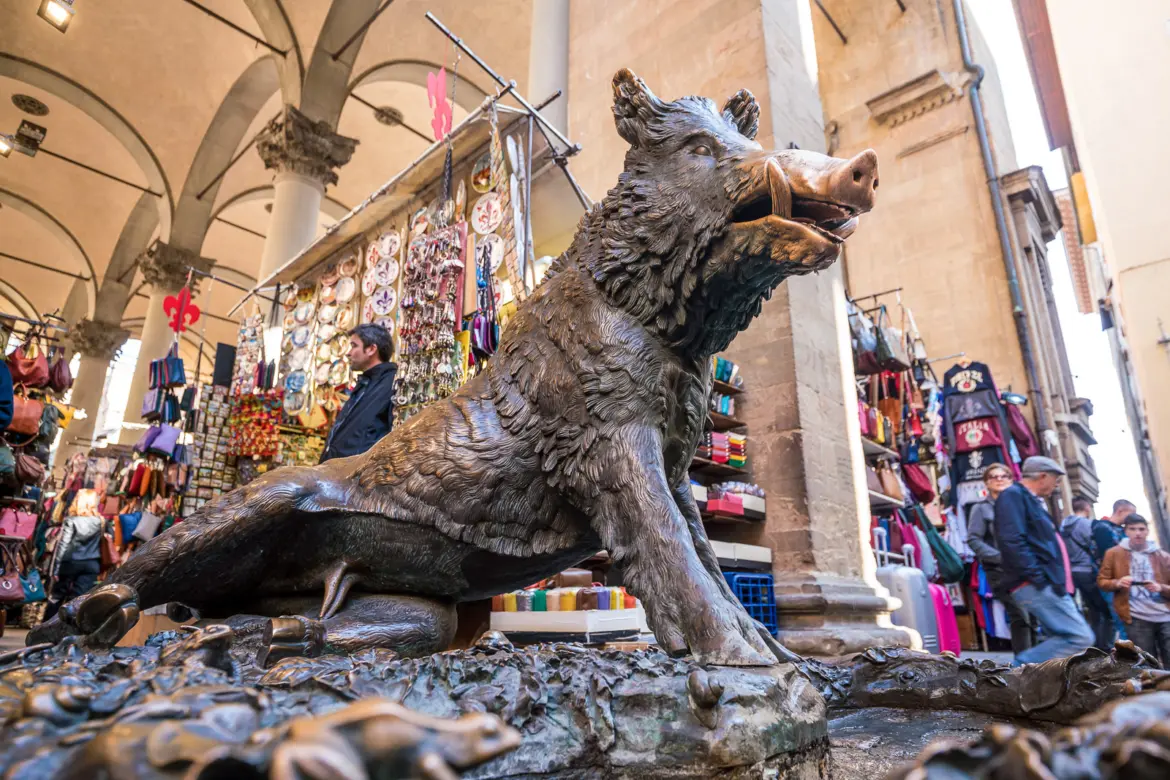
No visit to Mercato Nuovo is complete without meeting its most famous resident: Il Porcellino, the bronze wild boar that has become one of Florence’s most cherished icons. The statue’s origins trace back to a marble Hellenistic Greek work, later copied by Roman sculptors, which later entered the Medici collections and can today be seen in the Uffizi Gallery. In the 17th century, Pietro Tacca cast a bronze version inspired by that marble – originally intended for the Boboli Gardens before being moved to the Mercato Nuovo, where it became an instant fixture of Florentine life. Tacca’s original bronze is now carefully preserved in the Museo Stefano Bardini. What visitors see today is a faithful modern copy cast in 1998 and installed in 2008 – already worn by the same affectionate rituals that have polished every version before it.
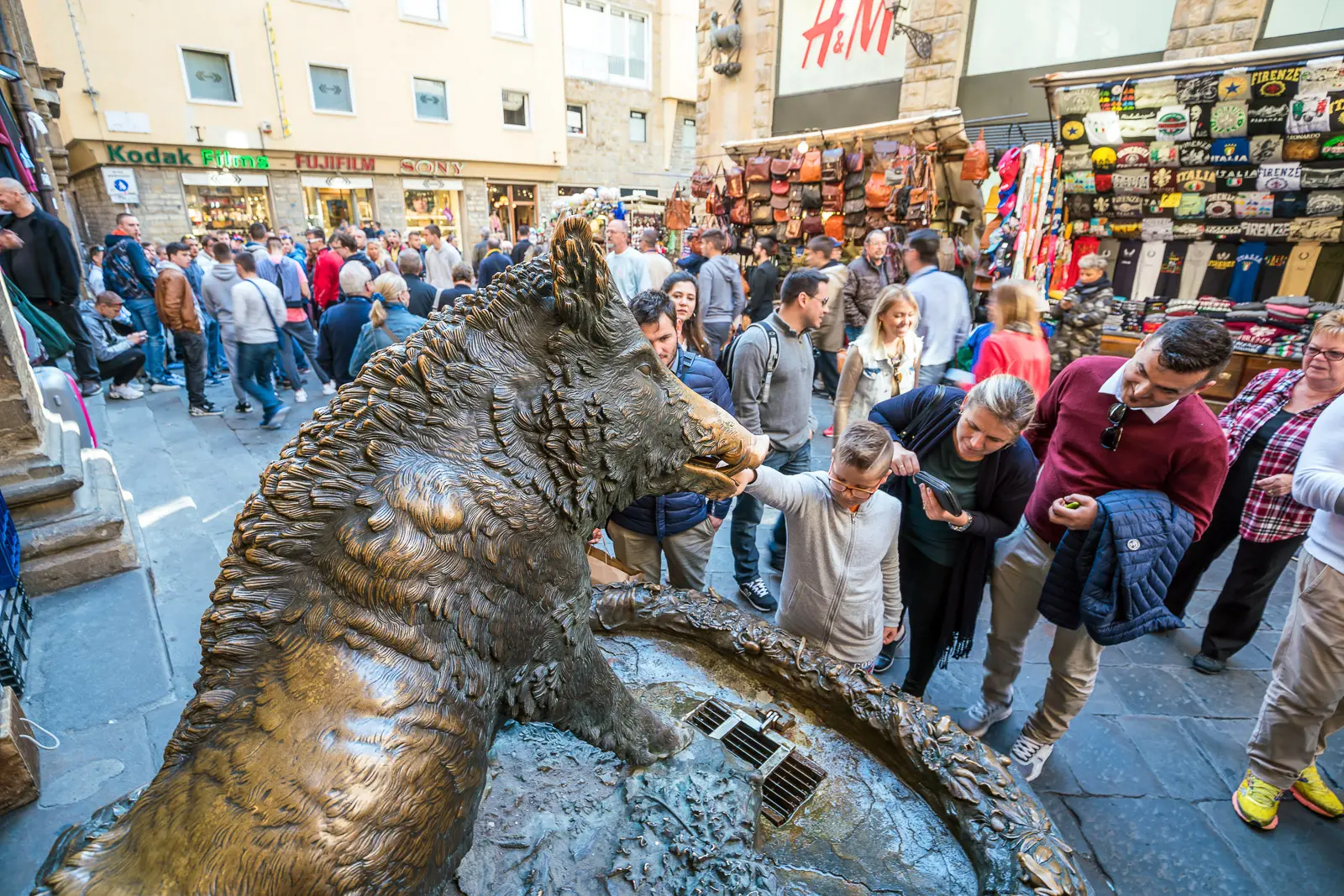
Over time, the sculpture evolved from decorative fountain into living tradition. Visitors rub the boar’s nose for good luck – a tradition already noted by the Scottish writer Tobias Smollett as far back as 1766 – and place a coin in its mouth, hoping it falls through the grate below as a sign of a guaranteed return to Florence. Beyond the playful ritual lies something deeper. Il Porcellino reflects Florence’s ability to blend art, mythology, and everyday life into one shared experience. Children laugh, travelers make wishes, locals pass by almost without noticing – and the boar remains, quietly witnessing generations come and go.
Commerce, Craftsmanship & Everyday Florence
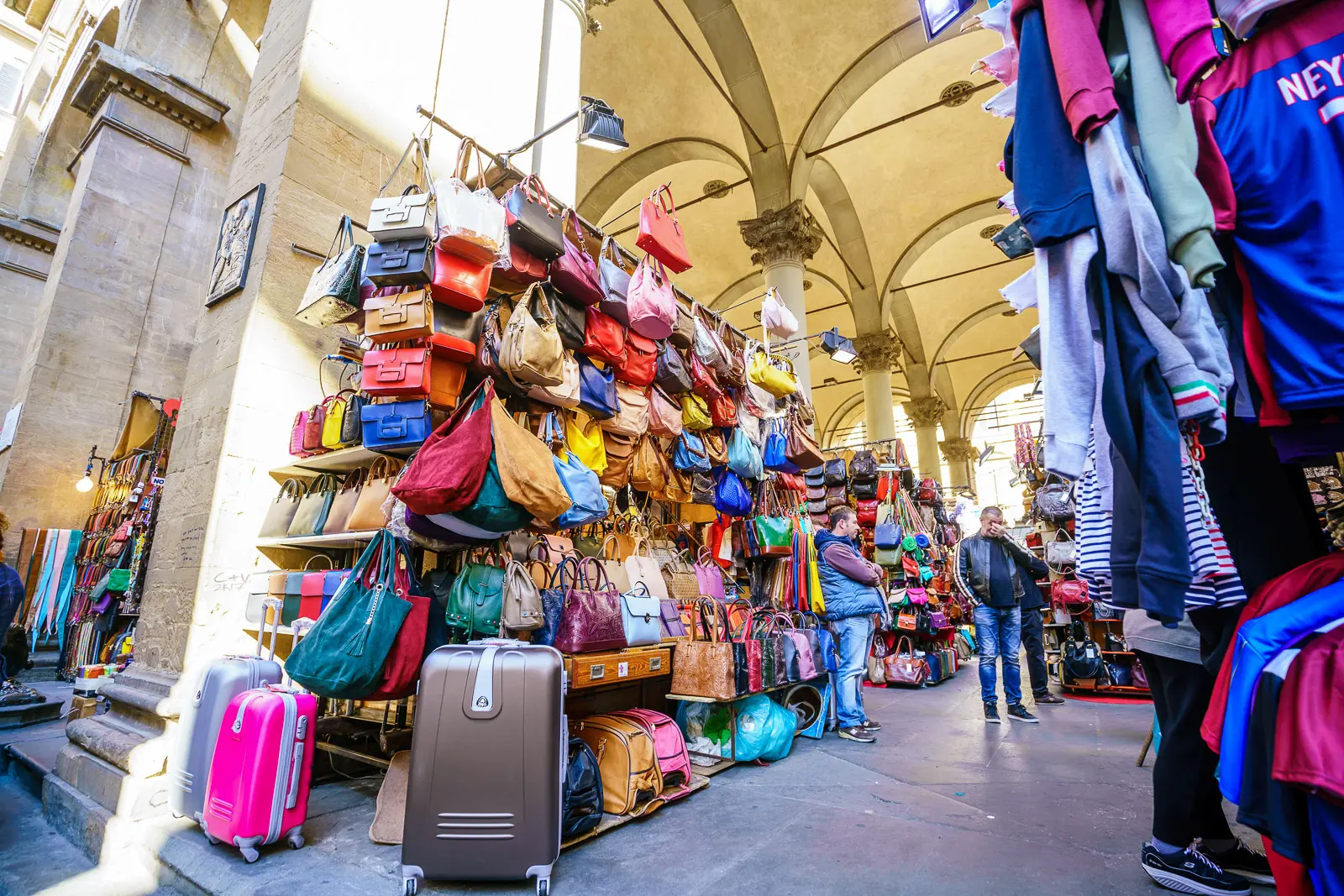
While many travelers associate Florence with grand museums, Mercato Nuovo reminds us that craftsmanship has always been central to the city’s identity. Historically, markets like this connected artisans, merchants, and customers in a vibrant network that extended far beyond Tuscany. Today, stalls selling leather goods, scarves, and handcrafted souvenirs continue that tradition in modern form. The market’s atmosphere feels lively yet intimate, a contrast to the monumental scale of nearby landmarks. Here, Florence feels approachable, human, and alive with small interactions.
Even if you are not shopping, wandering slowly through the stalls offers a glimpse into the everyday rhythm of the city. The textures, colors, and conversations create a sensory experience that complements the quieter contemplation found in churches and galleries.
The Hidden Detail Beneath Your Feet
Many visitors walk through Mercato Nuovo without noticing one of its most fascinating details: a circular marble marker set into the pavement known as the Pietra dello Scandalo, or Stone of Shame. Historically, this was the place where debtors were publicly punished, a reminder that commerce in Renaissance Florence carried not only opportunity but also responsibility and social consequences. The stone reveals how markets functioned as moral as well as economic spaces, where reputation and civic order mattered deeply. During the day, the marker is often hidden beneath stalls and crowds, easy to miss amid the energy of the market. But when Mercato Nuovo grows quiet, especially in the evening after vendors close, the stone becomes visible again, offering a subtle glimpse into the city’s more complex past. It is a small detail, yet one that reminds us how many layers of history lie beneath our feet in Florence.
The Atmosphere Today
Mercato Nuovo sits at the crossroads of Florence’s historic center, connecting major streets and landmarks. Tourists gather around Il Porcellino, photographers pause beneath the arches, and the constant flow of people gives the space an energy that feels timeless. What makes the atmosphere special is the balance between past and present. Renaissance architecture frames modern movement. Ancient traditions coexist with contemporary tourism. The market is neither frozen in time nor entirely transformed – it continues to evolve, just as it always has.
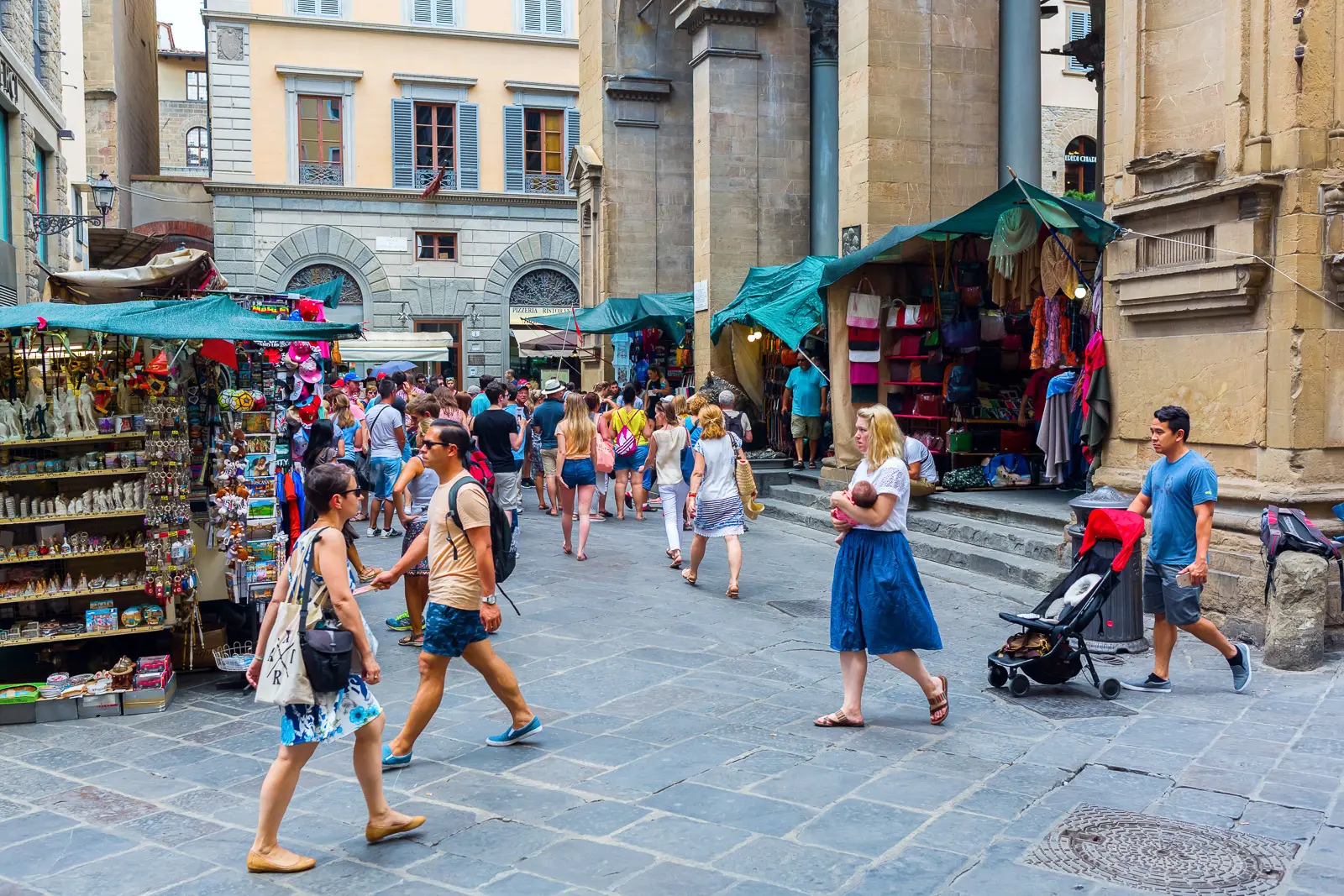
There is something comforting about this continuity. In a city known for preserving history, Mercato Nuovo reminds us that history also lives through daily use and shared rituals.
Bubbly Tips for Visiting Mercato Nuovo
- Visit early or late: The market feels more atmospheric when crowds are lighter and the arches stand out more clearly
- Don’t rush Il Porcellino: Take a moment to enjoy the tradition – it’s part of Florence’s cultural fabric
- Look down: Find the Pietra dello Scandalo to uncover a lesser-known layer of history
- Pair your visit: Combine Mercato Nuovo with Piazza della Signoria, the Uffizi Gallery, or a walk toward Ponte Vecchio
- Observe the details: The architecture itself tells a story – notice the symmetry, stonework, and open Renaissance design
Final Thoughts
Mercato Nuovo may not dominate Florence’s skyline, but it captures something equally important – the heartbeat of a city shaped by exchange, craftsmanship, and human connection. Here, history feels less like a distant story and more like a living conversation unfolding beneath the arches.
In a place where art often takes center stage, this market reminds us that everyday spaces can hold just as much meaning. Sometimes the most memorable moments come not from grand monuments, but from simple rituals – a touch of bronze, a shared laugh, the feeling of walking through a space that has welcomed people for centuries.
If you’ve visited Mercato Nuovo or met Il Porcellino, I’d love to hear about your experience. Feel free to share your thoughts in the comments below!
xoxo,
Bubbly 💛
🌟 Everything You Need to Plan Your Dream Trip in 2026
- 🌟 Luxury Hotels - Find premium stays with Booking.com & Hotels.com
- 🏡 Vacation Rentals - Discover unique properties on VRBO
- 🏞️ Guided Tours - Explore with Viator or GetYourGuide
- 🎫 Attraction Tickets - Skip the lines with Tiqets
- 🚢 Ocean Cruises - Set sail with Cruise Direct
- 📱 International SIMs - Stay connected with Saily
- 🚗 Car Rentals - Budget-friendly options from Discover Cars
- 🌐 Secure VPNs - Browse safely with NordVPN
- 💶 Currency Exchange - Best rates with Wise
- 🗣️ Learn Languages - Master the local language with Babbel and Rosetta Stone