
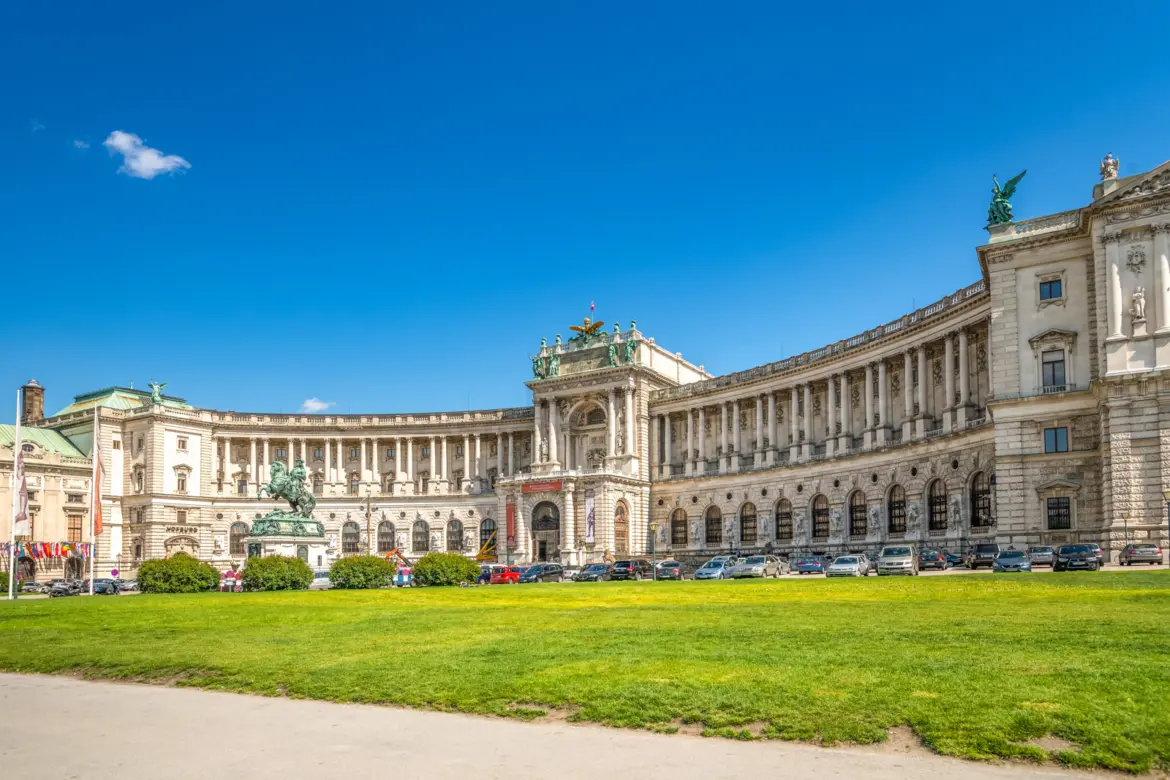
Hello my friends! Some places are impressive because of what they show you. Others stay with you because of how much they contain. The Hofburg belongs firmly to the latter. Walking through it does not feel like entering a single palace, but like stepping into a living record of Vienna itself – layered, adaptive, and quietly confident. For more than six centuries, the Hofburg served as the political, cultural, and symbolic heart of the Habsburg Empire. Yet despite its scale and significance, it never overwhelms. Instead, it unfolds gradually, revealing how power, daily life, art, and intellect coexisted within the same architectural fabric. The Hofburg is not frozen in time. It is accumulated time.
Hofburg Palace at a Glance
📍 Location: Vienna’s historic center, along the Ringstrasse
🏛️ What It Is: One of Europe’s largest imperial palace complexes, evolving from a 13th-century fortress to the center of Habsburg power
🚪 Key Spaces: Outer Castle Gate, Swiss Gate, Josefsplatz, Innerer Burghof, Amalienburg, St. Michael’s Wing, Neue Burg, Heldenplatz
🎭 Museums: Sisi Museum, Imperial Apartments, Spanish Riding School nearby
⏱️ Time Needed: 2–3 hours for courtyards and exteriors; add time for museums
💡 Tip: Walk the complex slowly — the Hofburg reveals itself through courtyards, gates, and transitions, not as a single destination
From Fortress to Imperial Complex
What began in the 13th century as a medieval fortress slowly evolved into one of Europe’s most expansive palace complexes. Rather than being rebuilt all at once, the Hofburg grew organically, shaped by successive rulers responding to the needs and values of their era. Gothic foundations gave way to Renaissance gateways, Baroque residences, and later neoclassical expansions.
This layered growth is what gives the Hofburg its distinctive character. There is no single architectural voice dominating the space. Instead, each wing speaks quietly of its moment in history. Walking through the complex feels less like touring a monument and more like reading a long, carefully annotated text – one written over generations.
Crossing the Threshold: The Outer Castle Gate and Swiss Gate
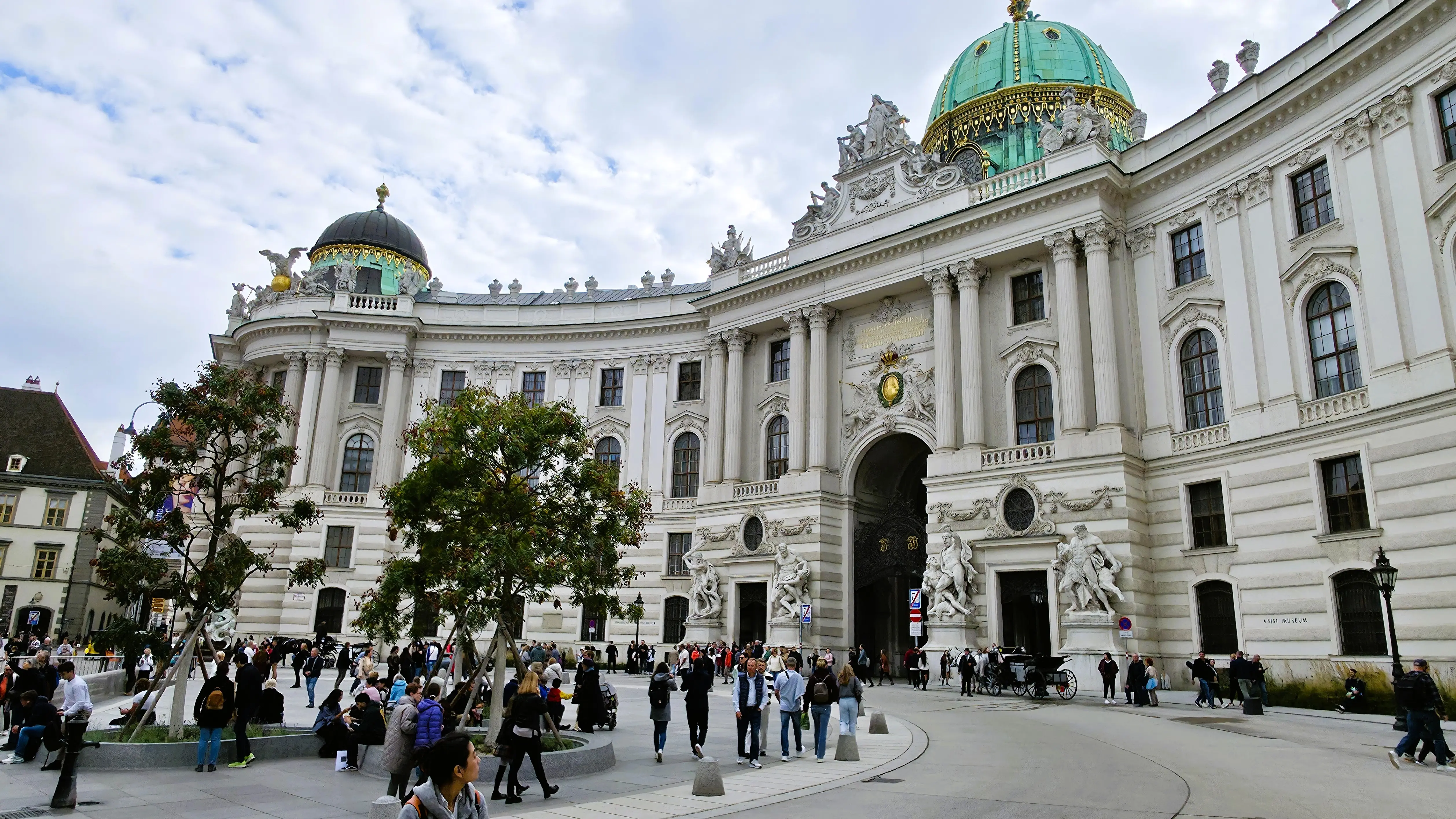
Approaching the Hofburg from the Ringstrasse, the Outer Castle Gate (Äußeres Burgtor) sets the tone. Monumental yet restrained, it signals entry into a space shaped by ceremony and authority, but not excess. Built between 1821 and 1824 as a memorial to Austria’s fallen soldiers in the Napoleonic Wars, the neoclassical arch was later redesigned in 1934 as Austria’s Heroes’ Monument (Heldendenkmal), housing a crypt that commemorates fallen soldiers from both World Wars. Its dual role – commemorative monument and ceremonial threshold – reflects Vienna’s characteristic blending of remembrance, reverence, and everyday passage.
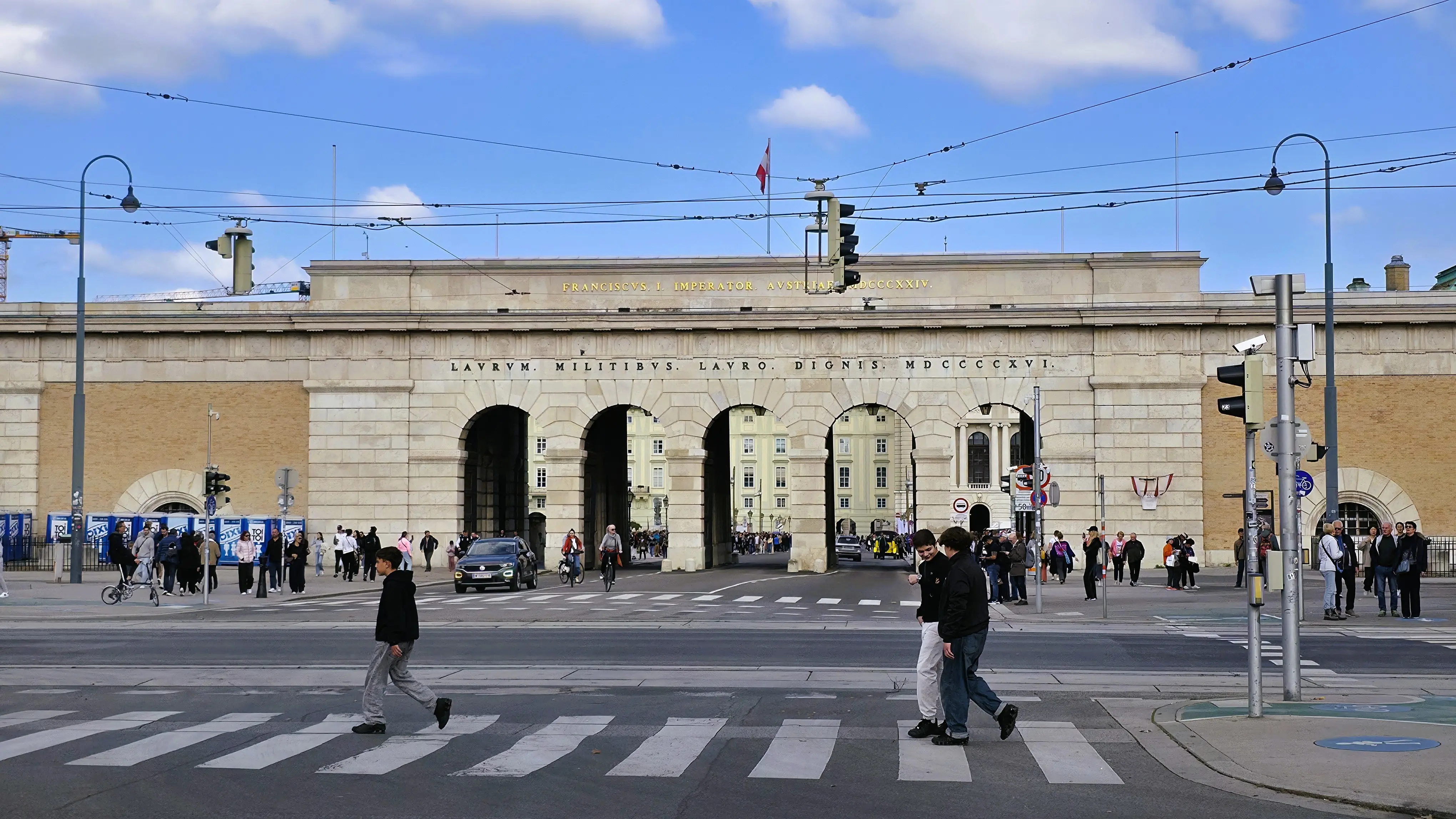
Beyond it, the Swiss Gate (Schweizertor) marks one of the oldest surviving entrances to the Hofburg and was once the primary access point to the imperial residence. With its Renaissance inscriptions and fortified presence, the Swiss Gate reminds visitors that the Hofburg was not merely symbolic power, it was once strategic and defensive. Passing through it feels deliberate, a transition from the city’s flow into a realm where governance and ritual once structured daily life.
Josefsplatz: Enlightenment in Stone
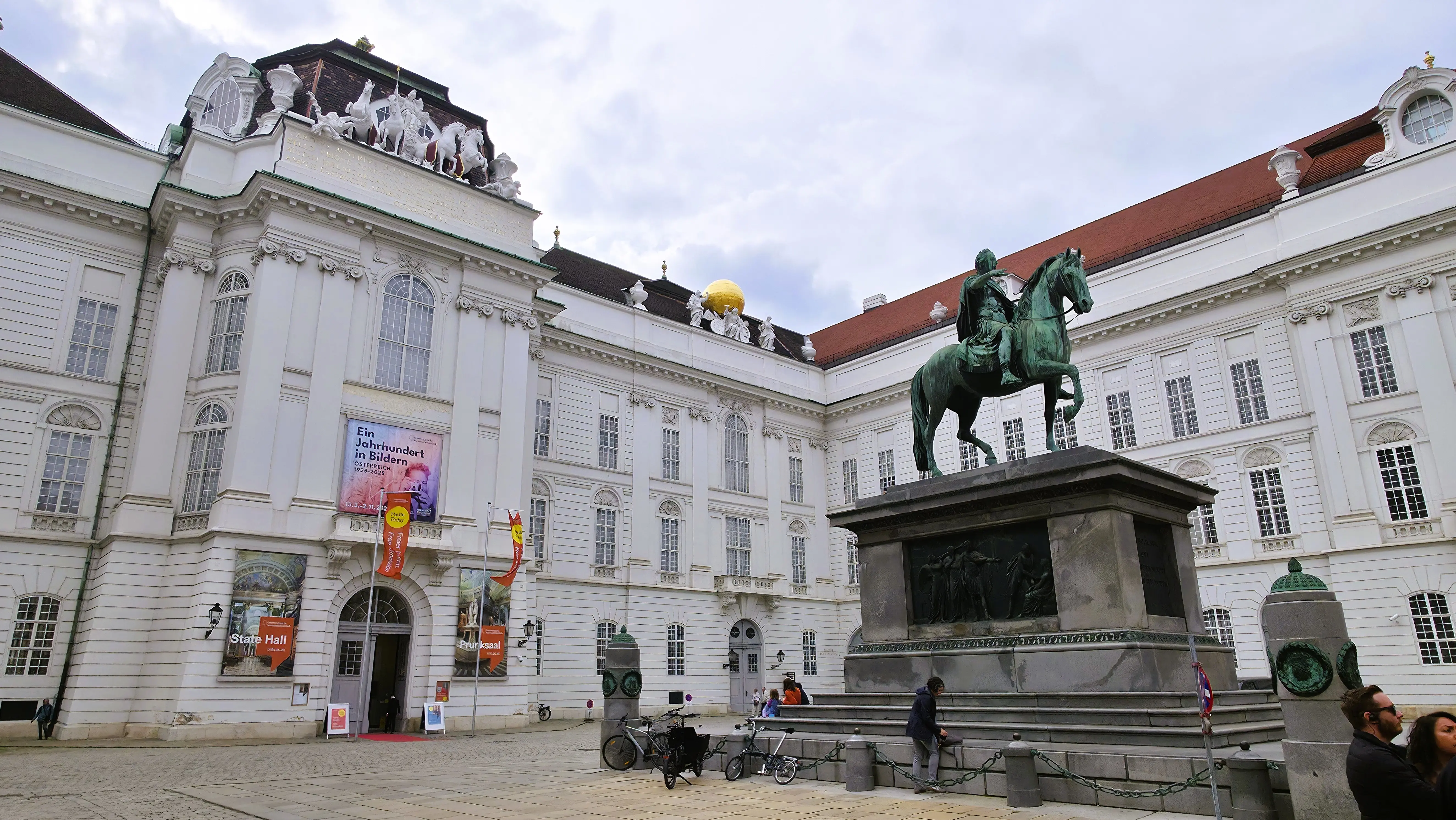
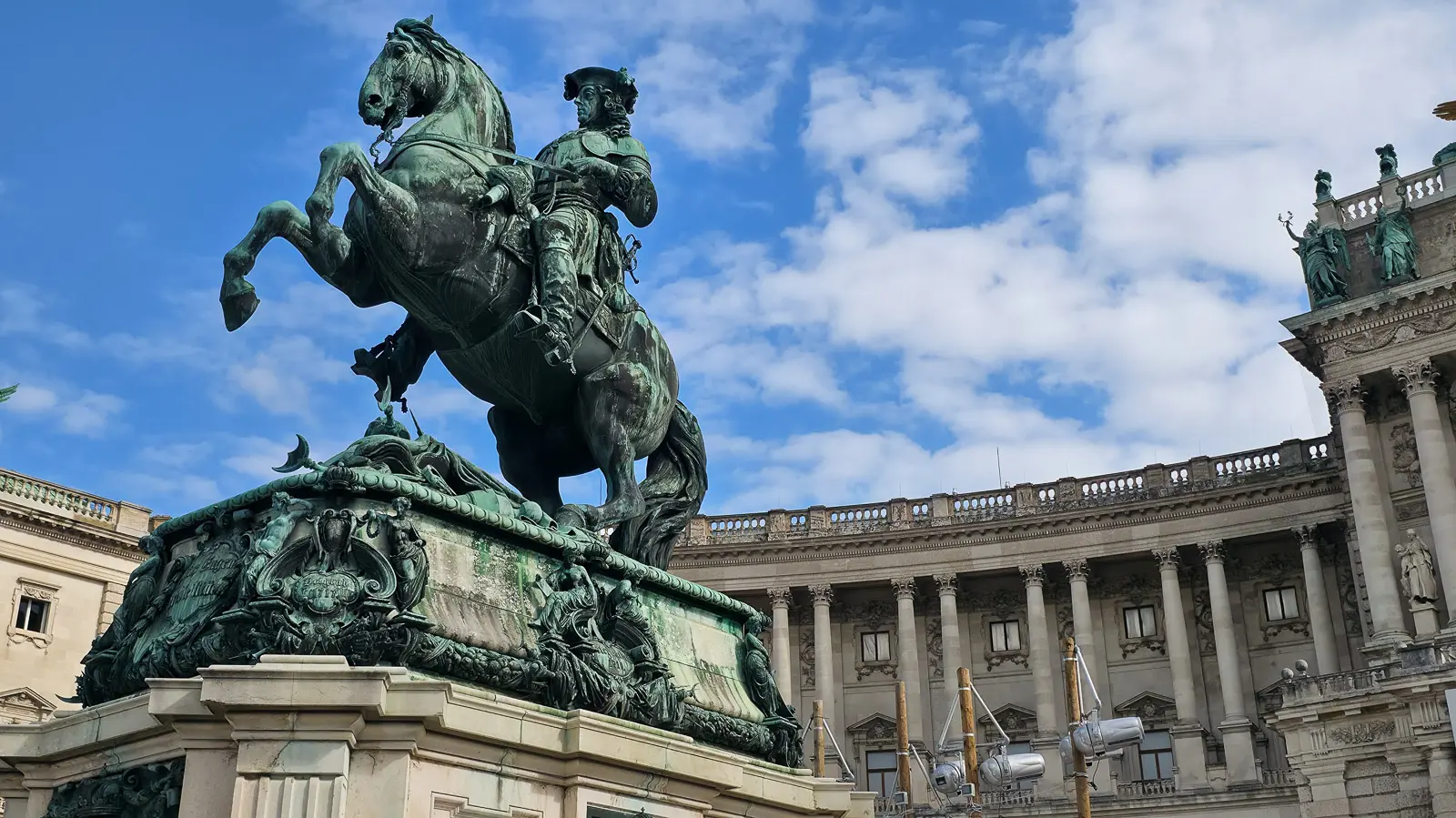
Few spaces within the Hofburg feel as composed as Josefsplatz. Centered by the equestrian statue of Emperor Joseph II, the square reflects the ideals of Enlightened absolutism – order, rationality, and reform. Joseph II was a ruler who believed in progress through reason, and his presence here feels measured rather than imposing. To one side stands the Court Library (Prunksaal), its Baroque grandeur expressing the idea that knowledge itself was a pillar of empire. Opposite lies the Redoute Wing, historically used for court events and cultural gatherings. Together, these buildings frame a square that prioritizes balance. Nothing shouts. Everything aligns.
Residences and Routine: Amalienburg and St. Michael’s Wing
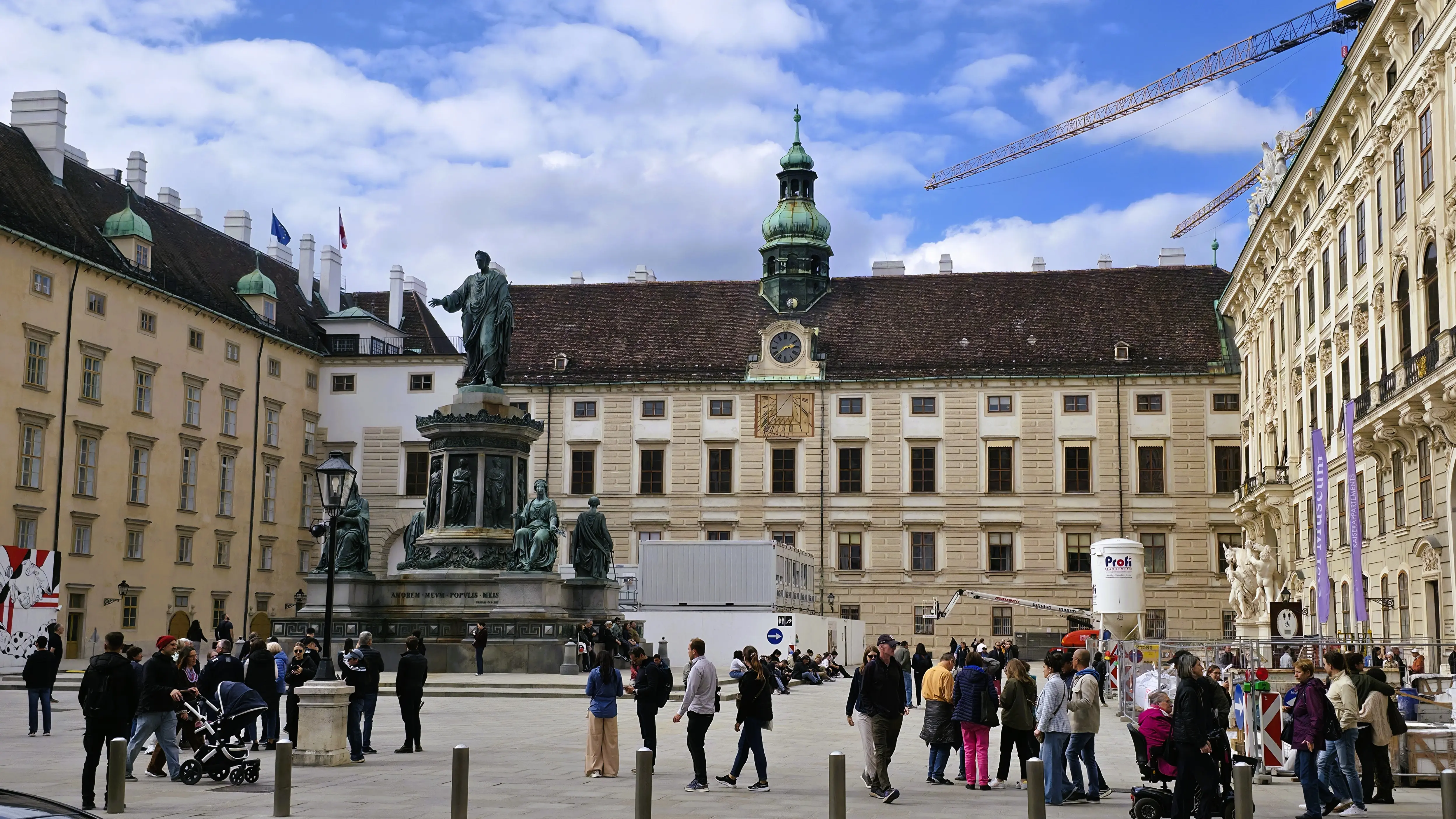
Beyond ceremony, the Hofburg was also a place of daily life. The Amalienburg, named after Empress Amalie Wilhelmine, reflects this quieter, more domestic dimension of imperial existence. Located within the Innerer Burghof (Inner Castle Courtyard), it occupies one of the most inward-facing spaces of the palace complex, a setting shaped for residence rather than display. Its restrained façade contrasts with the grandeur of more public wings, reminding visitors that behind governance and spectacle were routines, private conversations, and personal rhythms. Here, empire feels less performative and more human, shaped by continuity rather than display.
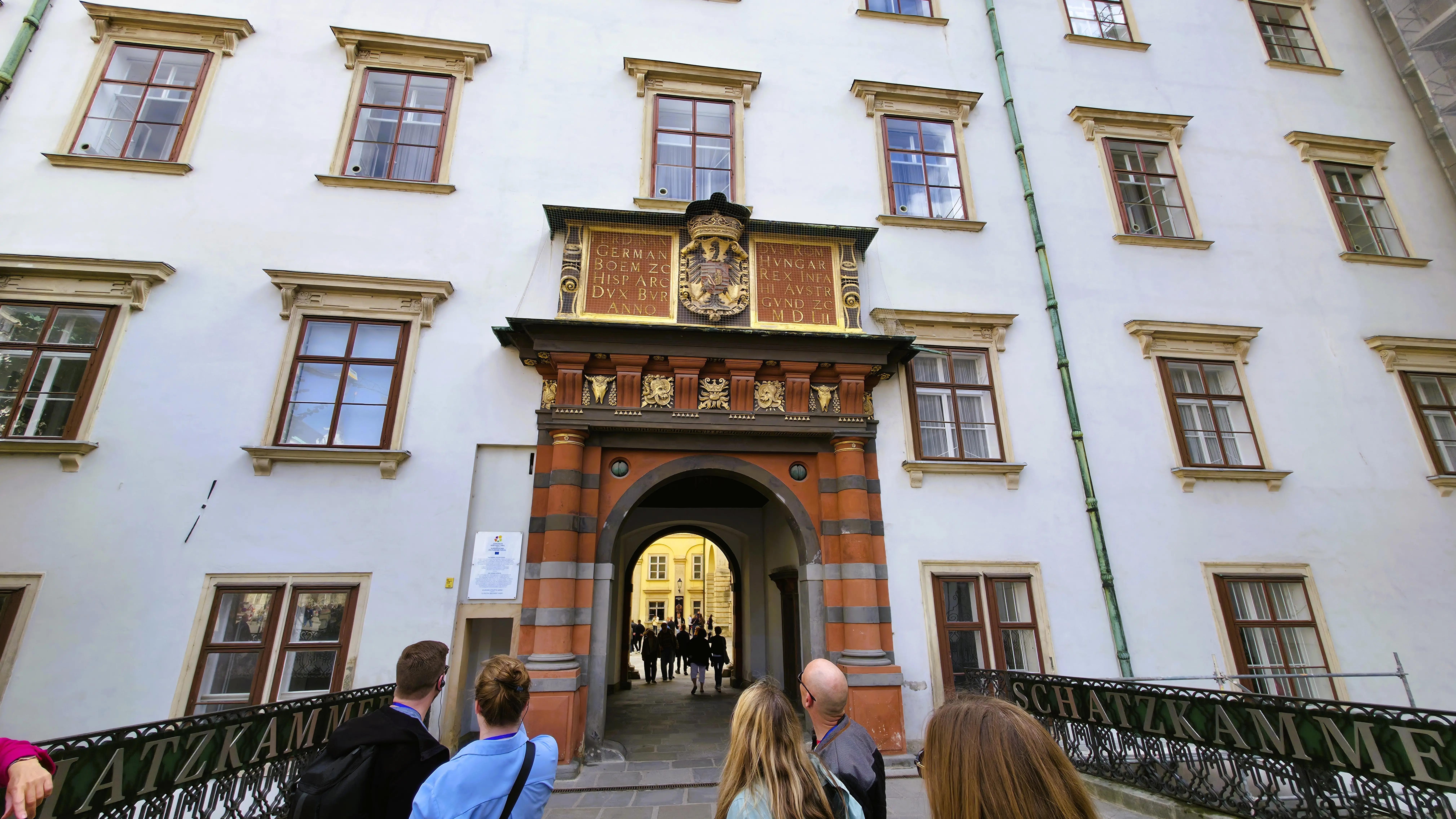
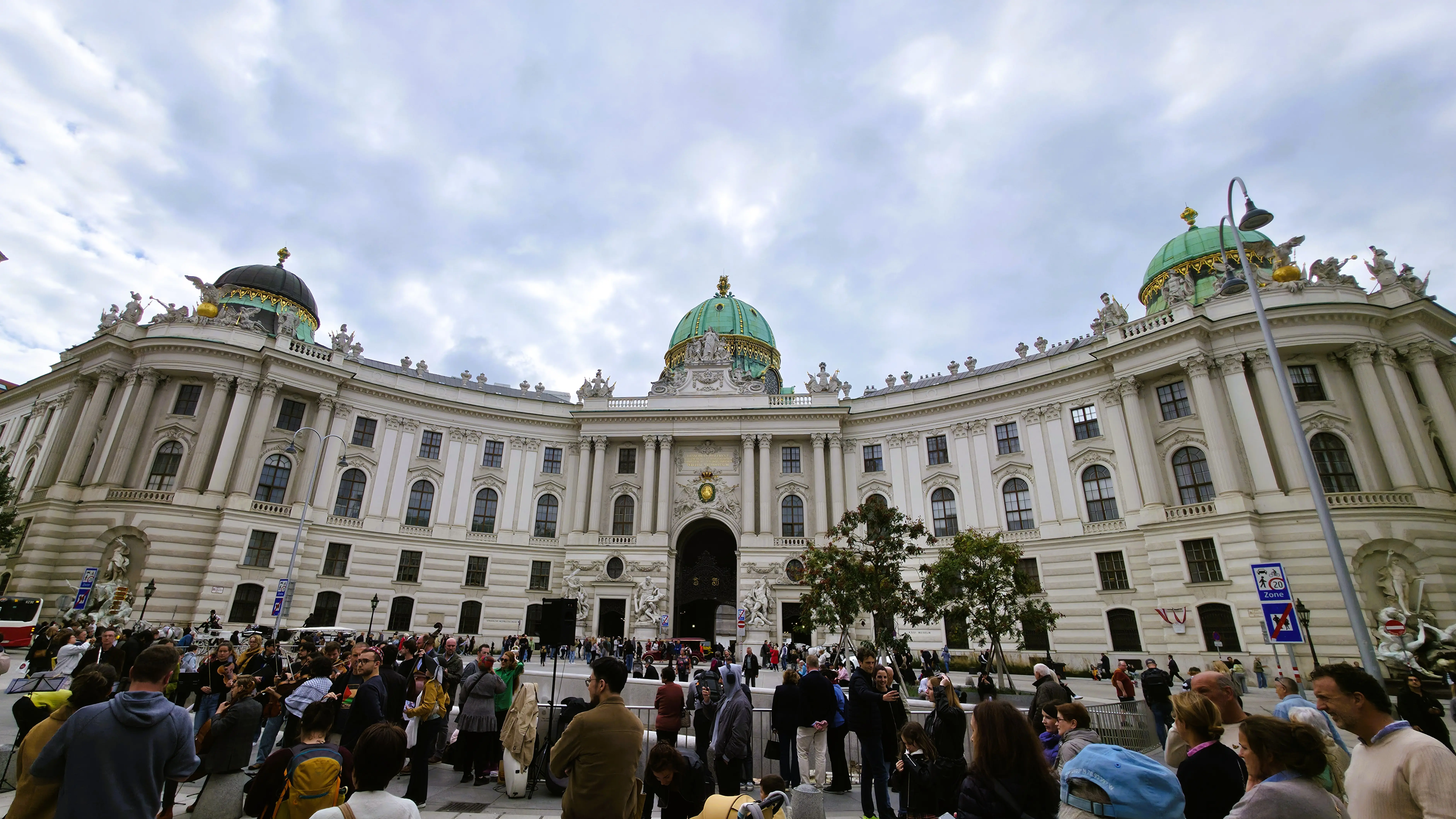
Nearby, St. Michael’s Wing bridges the Hofburg and the city beyond. Sitting at the edge of Michaelerplatz, it opens the imperial complex directly onto one of Vienna’s most animated public squares, where locals and visitors move freely. This threshold between residence and city encapsulates one of Vienna’s defining traits: history integrated into everyday movement, not isolated behind gates. The Hofburg does not retreat from the city here – it participates in it.
Empire on Display: Neue Burg and Its Contradictions
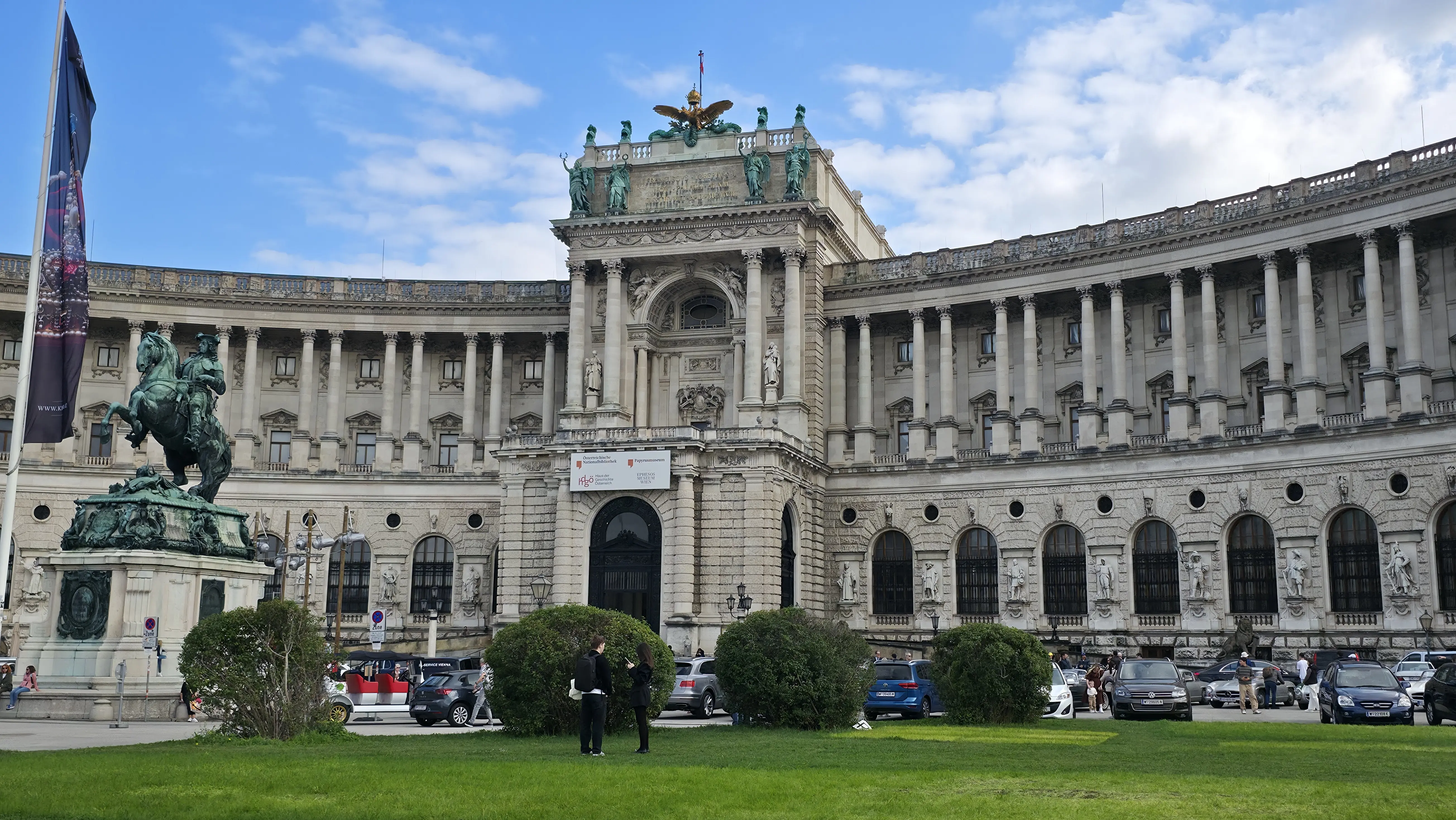
The Neue Burg represents one of the Hofburg’s final and most ambitious expansions. Conceived in the late 19th century, it was meant to project imperial stability and cultural supremacy. Its sweeping façade faces Heldenplatz, reinforcing the visual language of power. Yet this wing also carries more complex associations. The balcony overlooking the square became the backdrop for darker moments in 20th-century history. Vienna does not erase this chapter, nor does it allow it to eclipse everything else. The Hofburg absorbs this rupture as part of its layered truth – a reminder that power, once centralized, can be used for both continuity and harm.
Sisi and the Personal Dimension of Empire
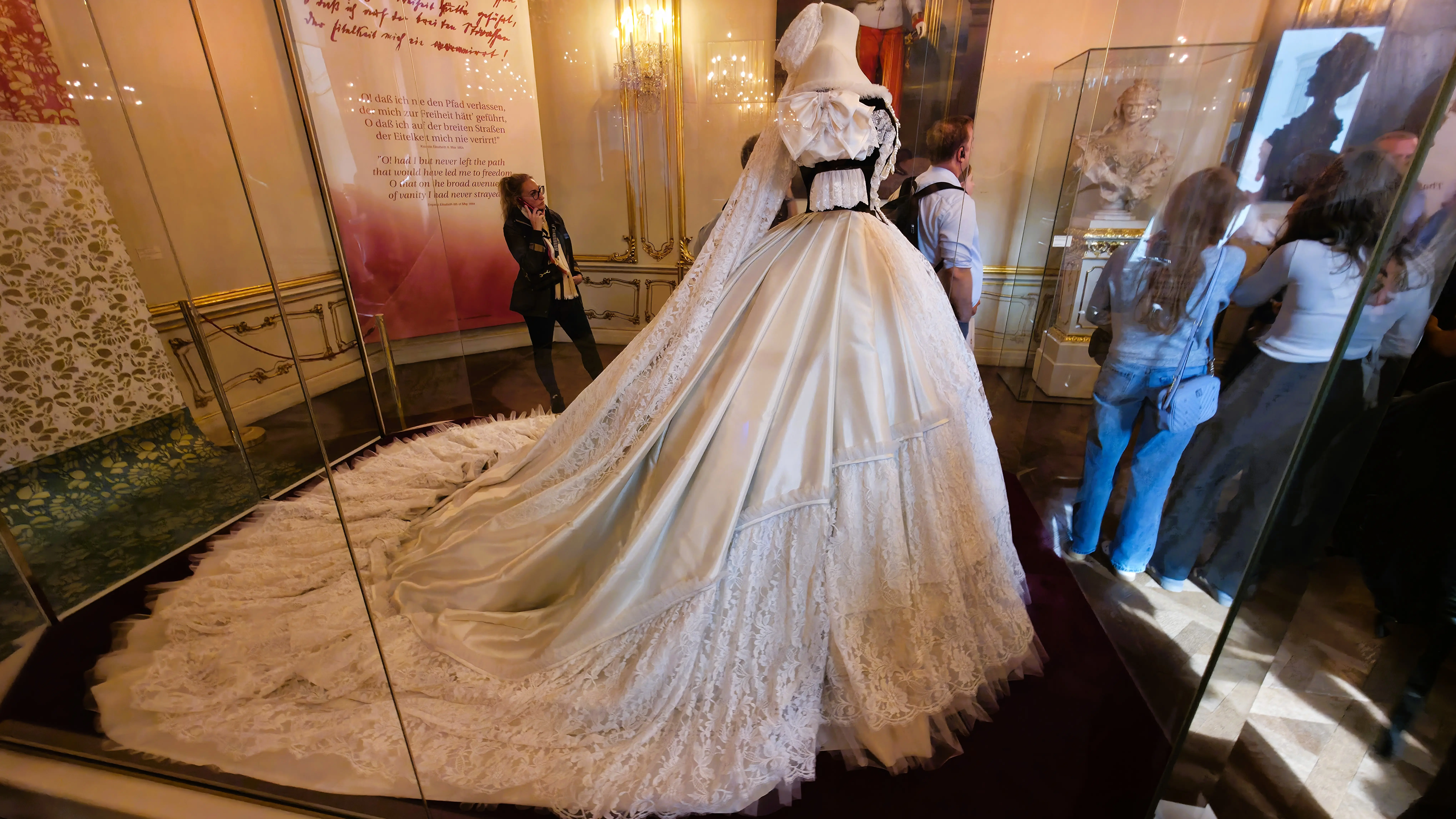
Within the Hofburg lies the Sisi Museum, dedicated to Empress Elisabeth of Austria. Her story introduces intimacy and contradiction into the imperial narrative – a reminder that even within vast systems of power, individuals can feel constrained, restless, and profoundly human. Elisabeth resisted many of the expectations placed upon her, seeking movement, solitude, and freedom in a world defined by ritual and visibility. Her presence within the Hofburg adds a quieter counterpoint to the palace’s grandeur. It reminds visitors that empire was not only administered here, but also lived – sometimes uneasily. This is a story that deserves its own space, one that unfolds beyond architecture and into the emotional landscape of Vienna’s past.
Why the Hofburg Still Matters
The Hofburg stays with you because it resists simplification. It does not present empire as spectacle, nor does it reduce history to a single narrative. Instead, it reveals how a city learned to live with its past – preserving, questioning, and integrating it into the present. Walking through the Hofburg is not about ticking off wings or museums. It is about understanding Vienna’s philosophy: that power should be tempered by culture, that history should be acknowledged without dominance, and that grandeur does not need urgency to endure.
Bubbly Tips for Visiting the Hofburg Palace
- Best time to visit: Morning or late afternoon, when courtyards feel calmer and architectural details are easier to appreciate.
- Location: The Hofburg Palace sits in Vienna’s historic center, directly along the Ringstrasse and within walking distance of Michaelerplatz, Heldenplatz, and the Spanish Riding School.
- How to explore: Walk the complex slowly rather than treating it as a single destination – the Hofburg reveals itself through courtyards, gates, and transitions.
- Don’t miss: Josefsplatz and the Innerer Burghof, where the palace’s intellectual and residential dimensions feel most present.
- Museum planning: If visiting the Sisi Museum, allow extra time; it adds an intimate human layer to the Hofburg’s grand narrative.
- Pair your visit: Combine the Hofburg with nearby cafés or gardens to experience how imperial history integrates seamlessly into everyday Vienna.
- Photography tip: Early morning light softens the stone façades and highlights the Hofburg’s architectural rhythm beautifully.
Final Thoughts
The Hofburg does not ask to be admired. It asks to be understood.
It is a place where empire, intellect, routine, and reflection coexisted – and where Vienna learned that history can be carried forward without being rehearsed. Long after leaving its courtyards and squares, the Hofburg lingers, not as a monument you visited, but as a city you briefly entered.
Have you walked through the Hofburg, or is it still on your Vienna list? I’d love to hear which spaces stayed with you most – or which part of its story you’re most curious to explore next. Feel free to share in the comments below.
Until our next adventure,

🌟 Everything You Need to Plan Your Dream Trip in 2026
- 🌟 Luxury Hotels - Find premium stays with Booking.com & Hotels.com
- 🏡 Vacation Rentals - Discover unique properties on VRBO
- 🏞️ Guided Tours - Explore with Viator or GetYourGuide
- 🎫 Attraction Tickets - Skip the lines with Tiqets
- 🚢 Ocean Cruises - Set sail with Cruise Direct
- 📱 International SIMs - Stay connected with Saily
- 🚗 Car Rentals - Budget-friendly options from Discover Cars
- 🌐 Secure VPNs - Browse safely with NordVPN
- 💶 Currency Exchange - Best rates with Wise
- 🗣️ Learn Languages - Master the local language with Babbel and Rosetta Stone