
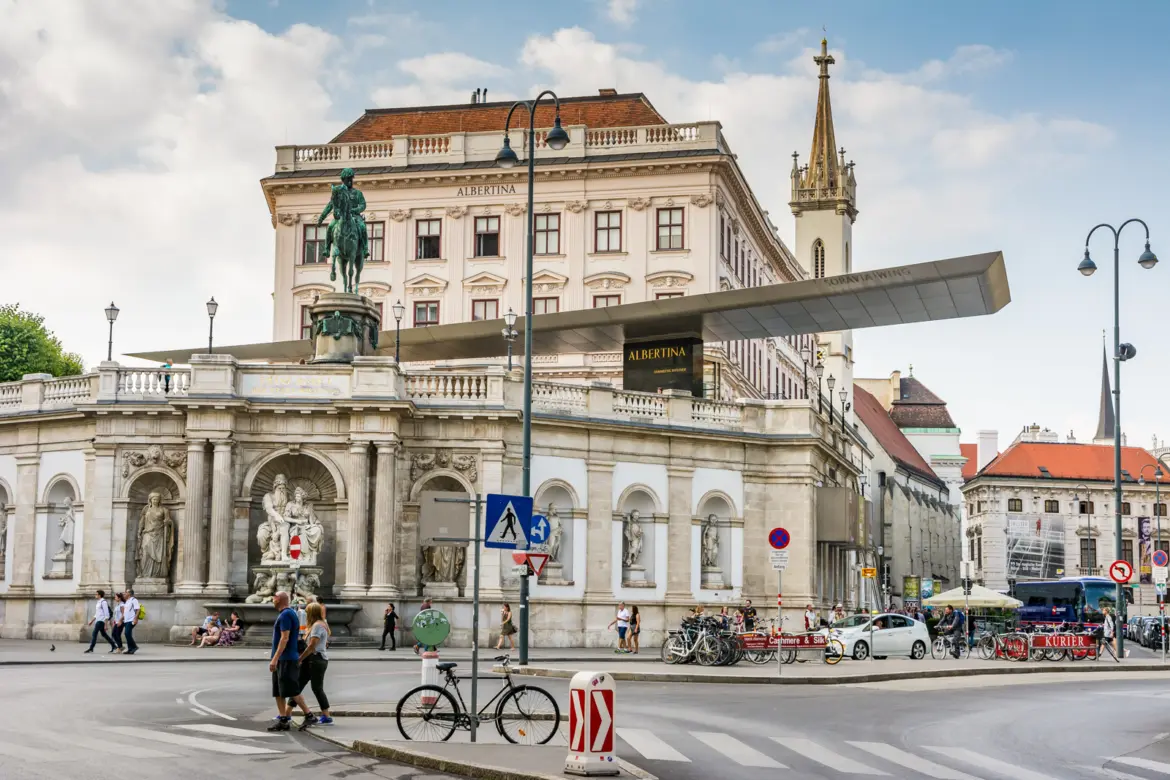
There are places in Vienna that reveal themselves slowly, not through a single monument, but through the way everything comes together. Albertinaplatz is one of those places. At first glance, it feels open and transitional, a space people move through on their way to somewhere else – between the Opera, the historic center, and the grand imperial axis of the city. But pause for a moment, and the layers begin to emerge. Imperial architecture rises around you, the rhythm of the city flows in every direction, and subtle reminders of history, both grand and painful, quietly shape the atmosphere.
Albertinaplatz, as we see it today, took shape largely in the 19th century during Vienna’s transformation along the Ringstrasse, when medieval walls were removed and the city opened outward. What was once a more enclosed and defensive urban fabric became a space of connection, culture, and movement. It is not a square defined by a single identity, but by the coexistence of many – a place where Vienna’s past and present meet in quiet conversation.
Albertinaplatz at a Glance
🏛️ Albertina museum: One of the world’s greatest graphic art collections — Dürer, Michelangelo, Monet — perched on the historic Augustinian Bastion above the square
⚔️ Monument Against War and Fascism: Alfred Hrdlicka’s confrontational 1988 memorial — Orpheus Enters Hades, the Stone of the Republic, placed in the middle of daily life, not behind a barrier
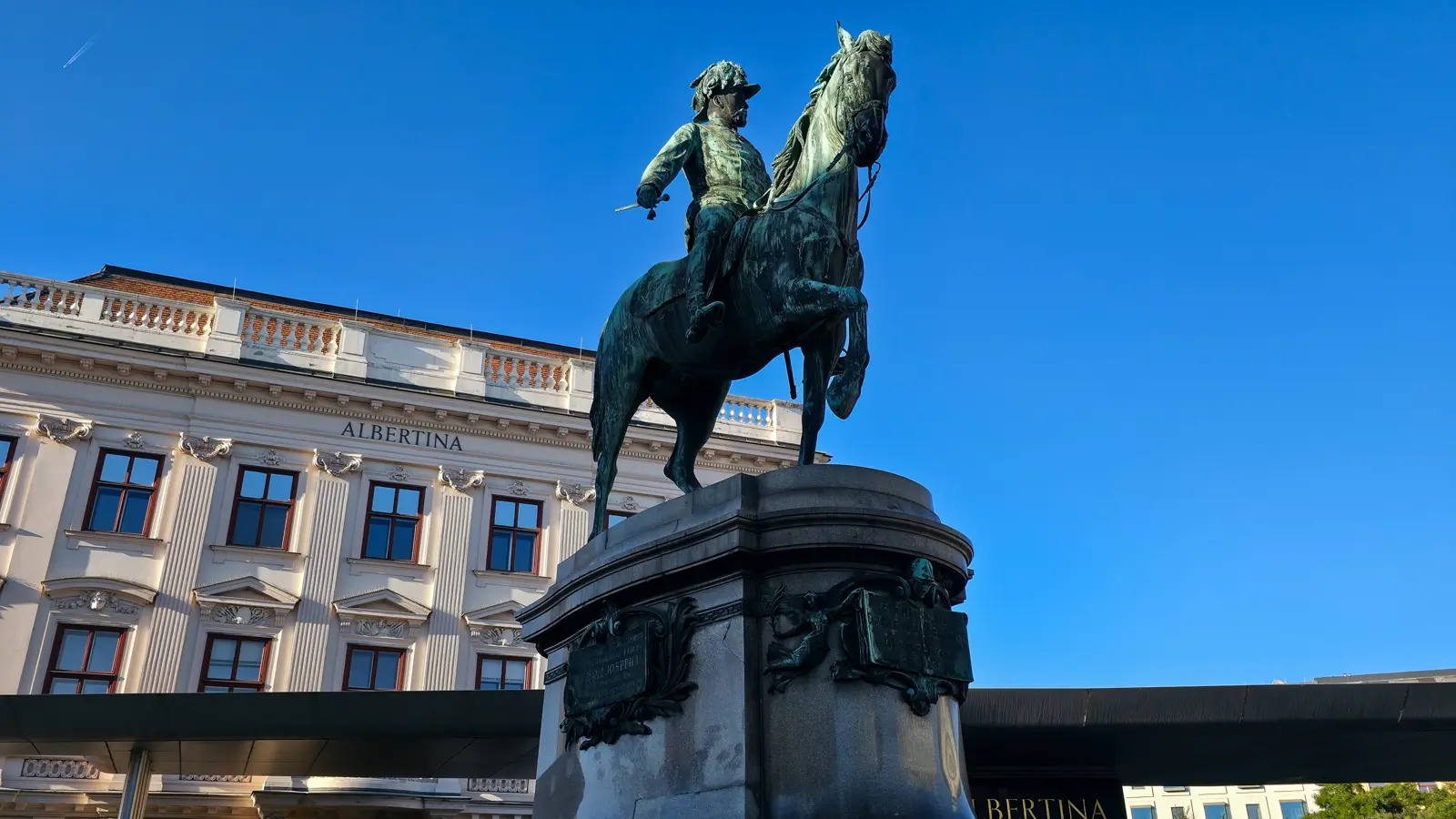
🐴 Archduke Albrecht statue: Equestrian statue on the Albrechtsrampe — military history sharing the pedestal with art
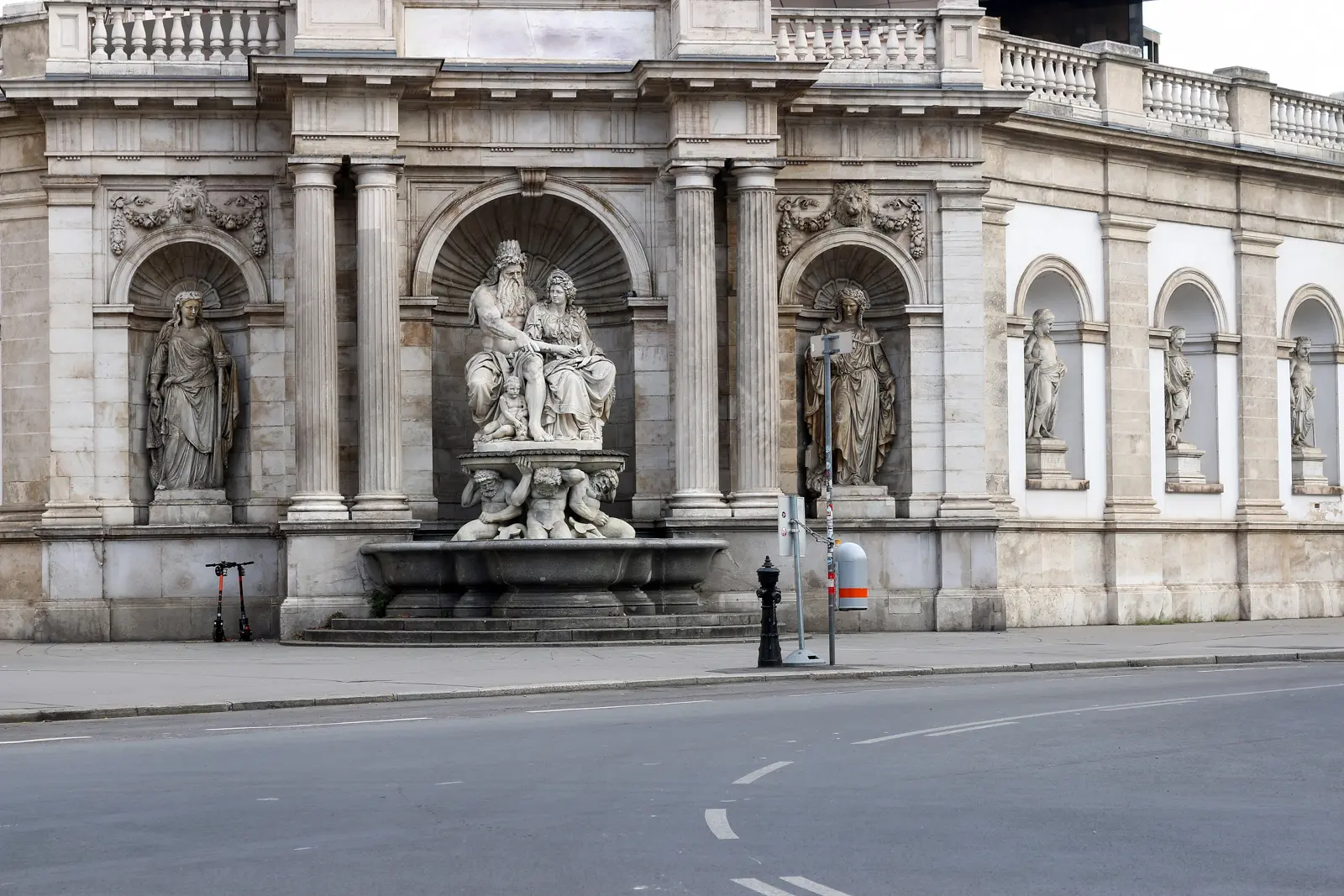
⛲ Neptune Fountain: Classical sculpture and water at the base of the bastion — easy to miss, worth pausing for
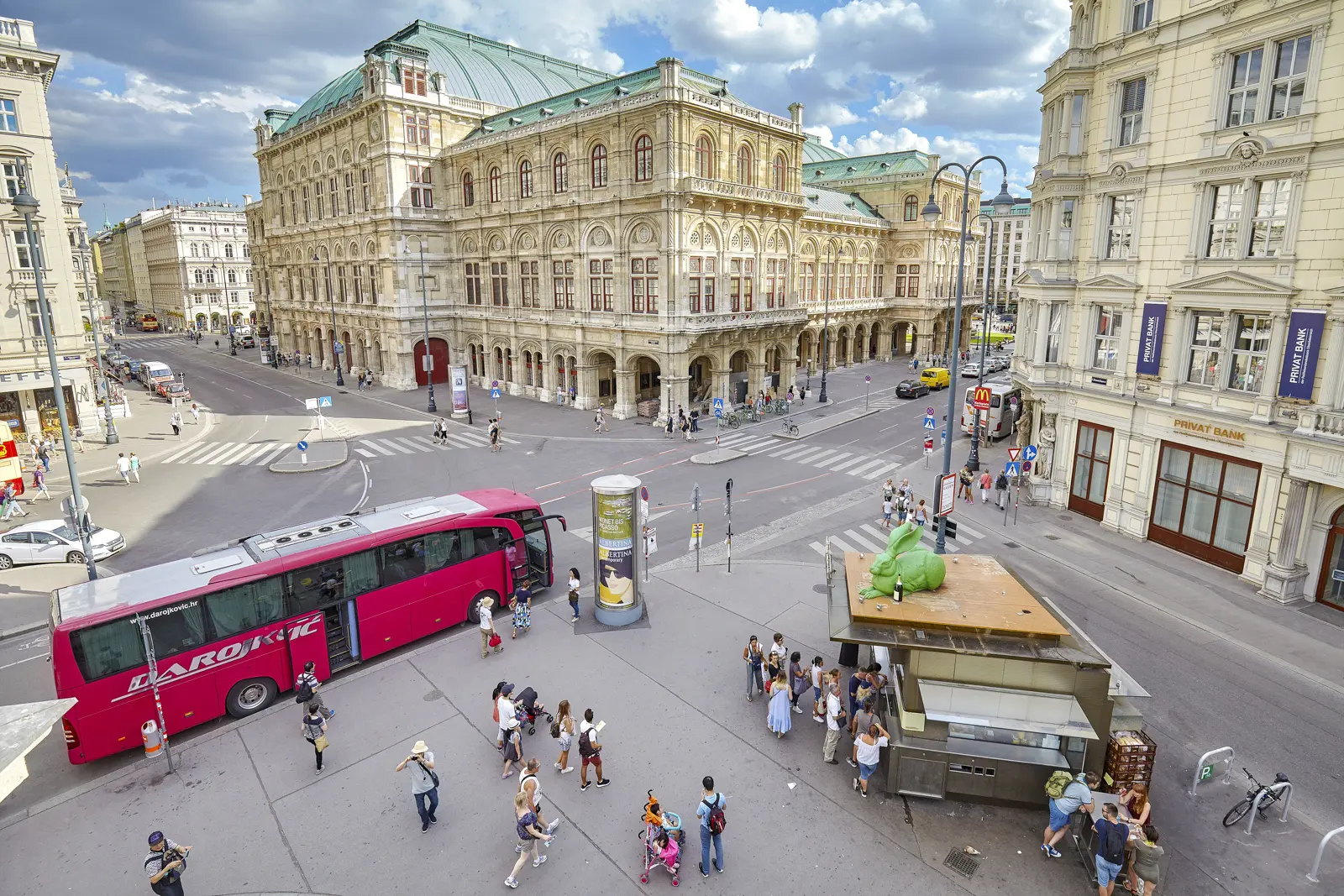
🌭 Bitzinger Würstelstand: Vienna’s most famous sausage stand — Käsekrainer and champagne beneath the Albertina terrace. Vienna’s most democratic indulgence.
🎭 Vienna State Opera: Steps away — opened 1869, rebuilt after the war, the cultural heartbeat of the area
🆓 Entry: The square, monument, fountain, and statue are all free and open. Albertina museum requires a ticket.
💡 Tip: Visit the square in the morning for the monument’s quiet power, stop at Bitzinger in the afternoon, and return at dusk when the architecture glows — three visits, three completely different Albertinaplatz experiences
The Albertina: Art Above the City
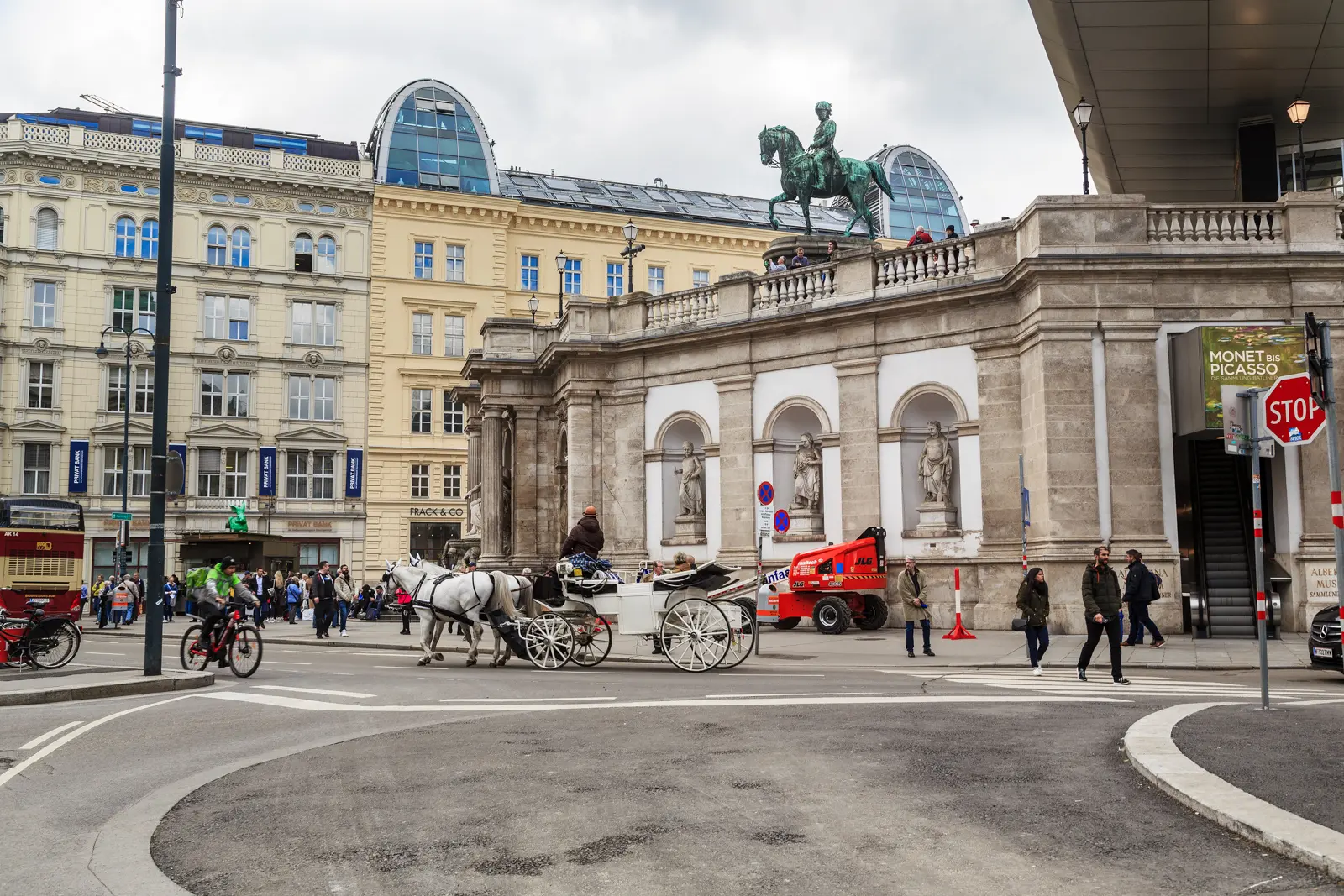
Dominating the square is the Albertina, perched slightly above street level on one of the last remaining sections of Vienna’s old city fortifications, the Augustinian Bastion. This elevated position explains both its commanding presence and the sweeping vantage point offered by its terrace.
Originally built as a Habsburg residence and later remodeled in the late 18th century for Duke Albert of Saxony-Teschen – son-in-law of Empress Maria Theresa, having married her favourite daughter Archduchess Marie Christine – the building reflects the refined elegance of imperial Vienna, long before it became one of the city’s most important art institutions and home to one of the world’s greatest collections of graphic art.
From below, the Albertina feels both imposing and inviting. The staircase draws you upward, creating a subtle transition from the busy rhythm of the square to something more elevated and contemplative. Today, inside, it houses one of the world’s most significant collections of graphic art – including works by Dürer, Michelangelo, and Picasso – but even from the outside, its presence is deeply felt.
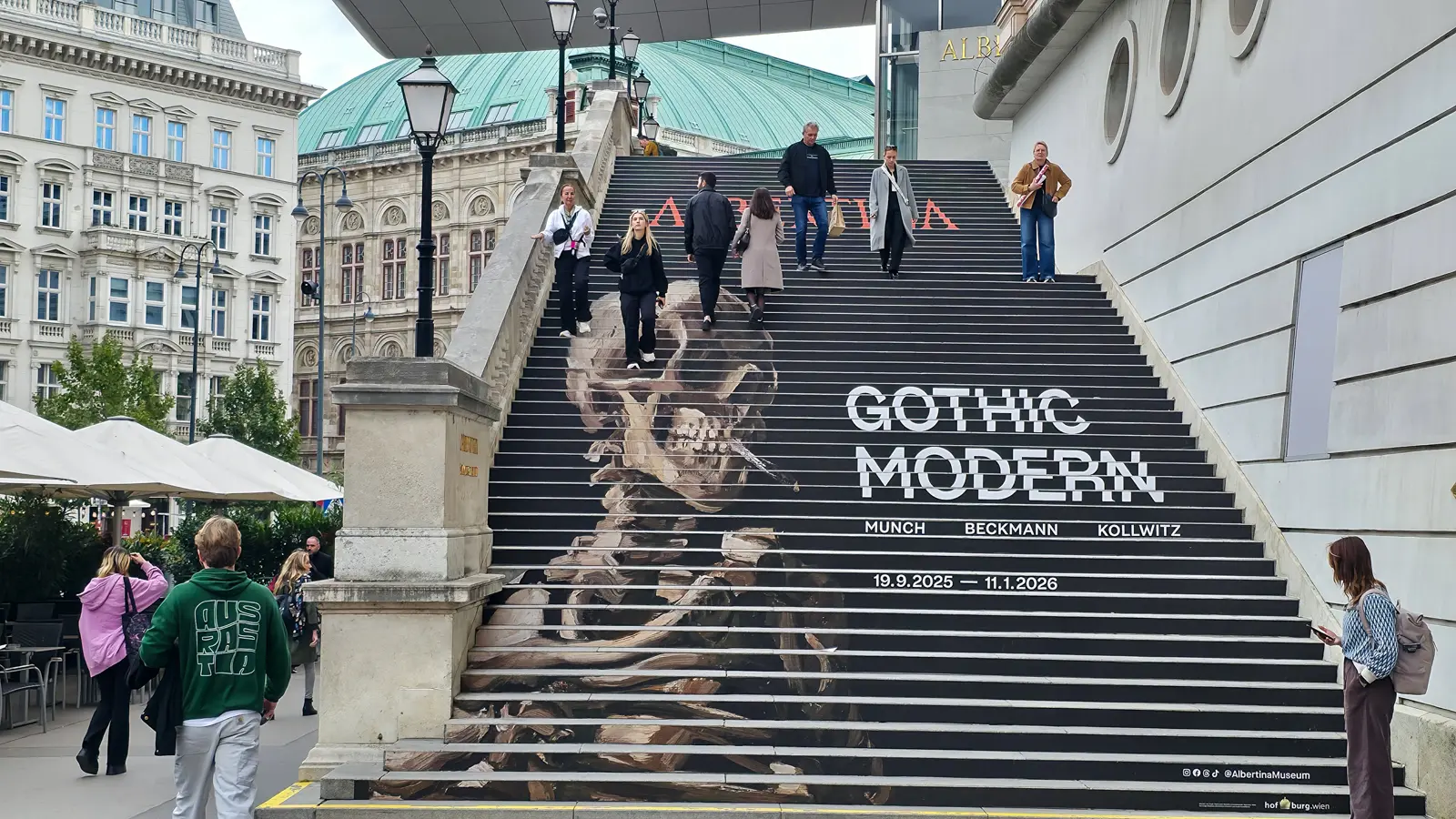
The terrace offers a moment of pause, a place to look out over Albertinaplatz and take in the interplay between architecture, people, and time. It is a vantage point that gently shifts your perspective, reminding you that this space is not only something you pass through, but something you can observe and experience more intentionally.
The Vienna State Opera: A Constant Pulse
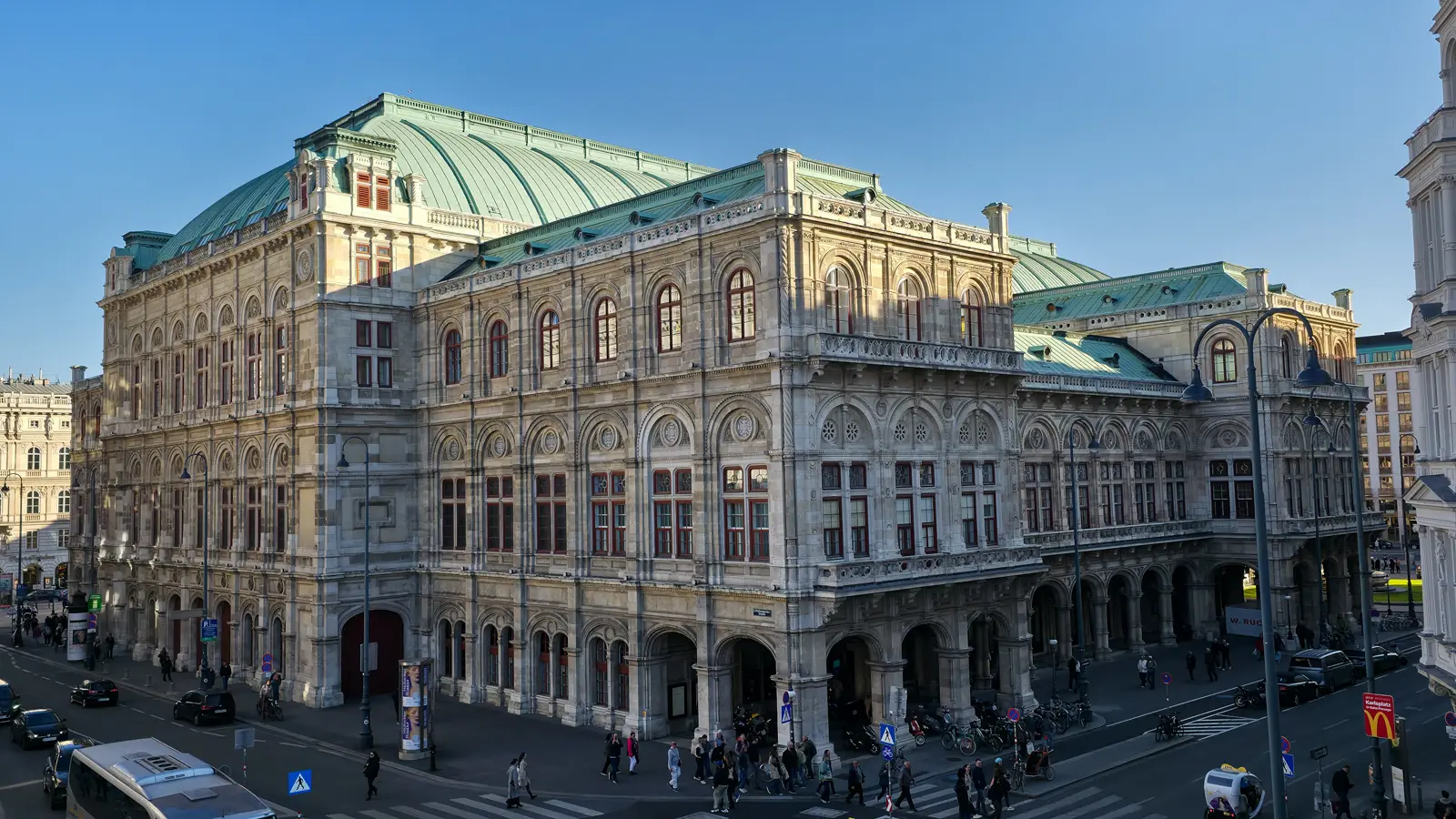
Just steps away, the Vienna State Opera anchors the cultural heartbeat of the area. Opened in 1869, the Opera House has long been one of the most important cultural institutions in the world, a symbol of Vienna’s deep connection to music and performance. Its history, however, is not without hardship.
During World War II, the building was devastated – only the main façade, the grand staircase, and the Schwind Foyer were spared, while the auditorium, stage, and almost the entire décor were destroyed, along with costumes for more than 120 operas. The reconstruction was painstaking, and the reopening on November 5, 1955, with a performance of Fidelio conducted by Karl Böhm, symbolized not only cultural renewal, but the city’s resilience. Today, that history feels quietly embedded in its presence.
Throughout the day, the space between the Opera and Albertinaplatz fills with movement. Elegant and casual, local and international, the crowd shifts constantly – concertgoers, tourists, commuters – creating a rhythm that feels distinctly Viennese. It is a place where high culture and everyday life meet seamlessly, without ever feeling staged.
Memory in the Square: A Moment of Reflection
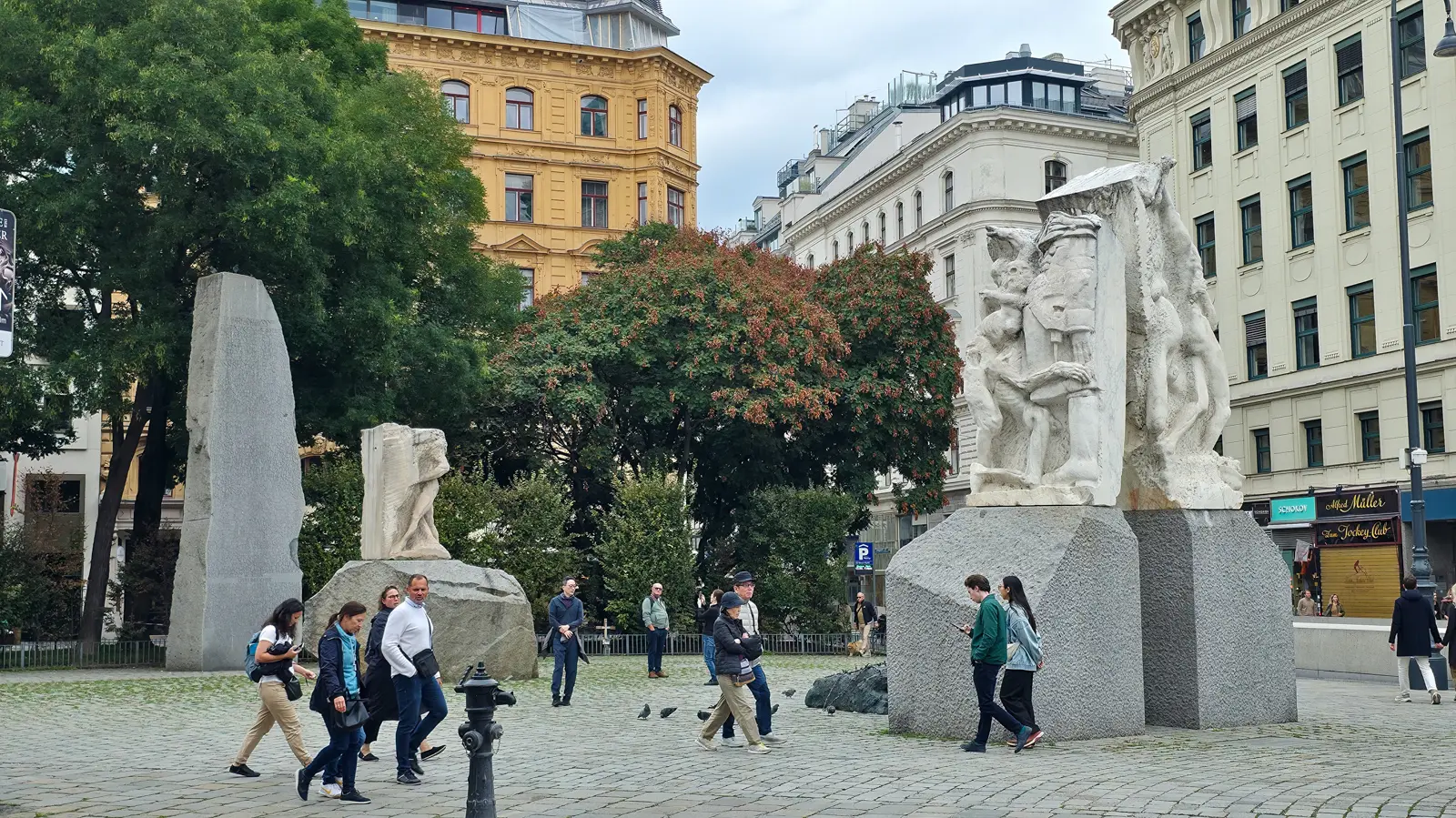
And then, almost unexpectedly, the atmosphere changes. Set within the square is the Monument Against War and Fascism, created by Alfred Hrdlicka and inaugurated in 1988, though only fully completed in 1991. It stands on the site of the Philipphof – a residential building destroyed in an air raid on March 12, 1945, where hundreds of people are believed to have lost their lives after seeking refuge in its cellars.
Unlike the grandeur that surrounds it, this monument does not elevate, it confronts. Its sculptural forms are raw, fragmented, and intentionally unsettling. Figures of suffering, resistance, and remembrance invite reflection rather than admiration. It is not a monument you simply look at, it is one you experience, often quietly.
Many visitors pass through Albertinaplatz without fully noticing it, but for those who pause, it becomes one of the most powerful elements of the space – grounding it in memory and reminding you that history here is not only imperial, but deeply human.
Imperial Echoes: The Equestrian Statue
Above the square, on the elevated terrace of the Albertina known as the Albrechtsrampe, stands the Archduke Albrecht Equestrian Statue – composed and commanding, looking out over the space below with a sense of permanence. Created by sculptor Kaspar von Zumbusch in 1899, the monumental bronze figure depicts Archduke Albrecht mounted on horseback atop a granite pedestal adorned with relief decorations, commemorating his role as a leading military figure and Inspector General of the Austro-Hungarian Army.
Though physically elevated above the square rather than within it, the statue’s presence is deeply felt from below. It belongs to a Vienna that once celebrated power, hierarchy, and empire – a Vienna that shaped much of the city’s architecture and identity. Seen in relation to the WWII memorial in the square below, it creates a quiet but powerful contrast, a dialogue between different eras of history. Empire and memory, triumph and reflection, occupying the same space at different levels. It is this juxtaposition that gives Albertinaplatz its depth and complexity.
The Neptune Fountain: Movement and Detail
Adding another layer to the square’s character is the Neptune Fountain, set at street level against the base of the Augustinian Bastion wall. At its center stands Neptune, the god of the sea, accompanied by a female figure and a child often interpreted as Triton. The sculptural group rises from a pedestal supported by marine figures, giving the composition a sense of movement and vitality. On either side, two female figures frame the scene – one holding an oar and a net, the other adorned with decorative elements that evoke natural abundance. Together, the figures suggest themes of water, life, and the quiet rhythms of nature – motifs that feel subtly at home in a square already rich with history and symbolism.
It is easy to overlook in the presence of larger monuments, but once noticed, it becomes an essential part of the experience – a moment of quiet beauty and fine craftsmanship that contrasts with both the intensity of history and the constant motion of Albertinaplatz.
Everyday Vienna: A Bitzinger Moment
And then, just as naturally, the experience shifts again – from history to something entirely present. Not far from the square, I grabbed a sausage at Bitzinger Würstelstand Albertina while exiting the Hofburg Palace, just before heading toward the Albertina. It was simple, quick, and exactly what the moment called for. No planning, no expectation – just one of those small, spontaneous pauses that somehow stay with you.
Standing there, eating, watching people pass by, it felt like stepping into the everyday rhythm of the city. No ceremony, no structure, just a moment of being there. And somehow, that experience fits perfectly within Albertinaplatz. Because this is not just a place of monuments and history, it is a place where life continues, where locals and visitors share the same space, where something as simple as a street food stop becomes part of the story.
Atmosphere: A Place in Motion
Albertinaplatz is never still, yet it never feels chaotic. The movement is constant but fluid, unfolding in a way that feels almost intuitive. People cross the square in every direction – some moving with purpose, others lingering, pausing, or changing course mid-step. Trams and traffic pass nearby, forming a quiet perimeter of motion, while conversations, footsteps, and the distant presence of the Vienna State Opera blend into a steady, almost rhythmic backdrop. There is a balance here, a kind of organized spontaneity that allows the space to feel alive without ever becoming overwhelming.
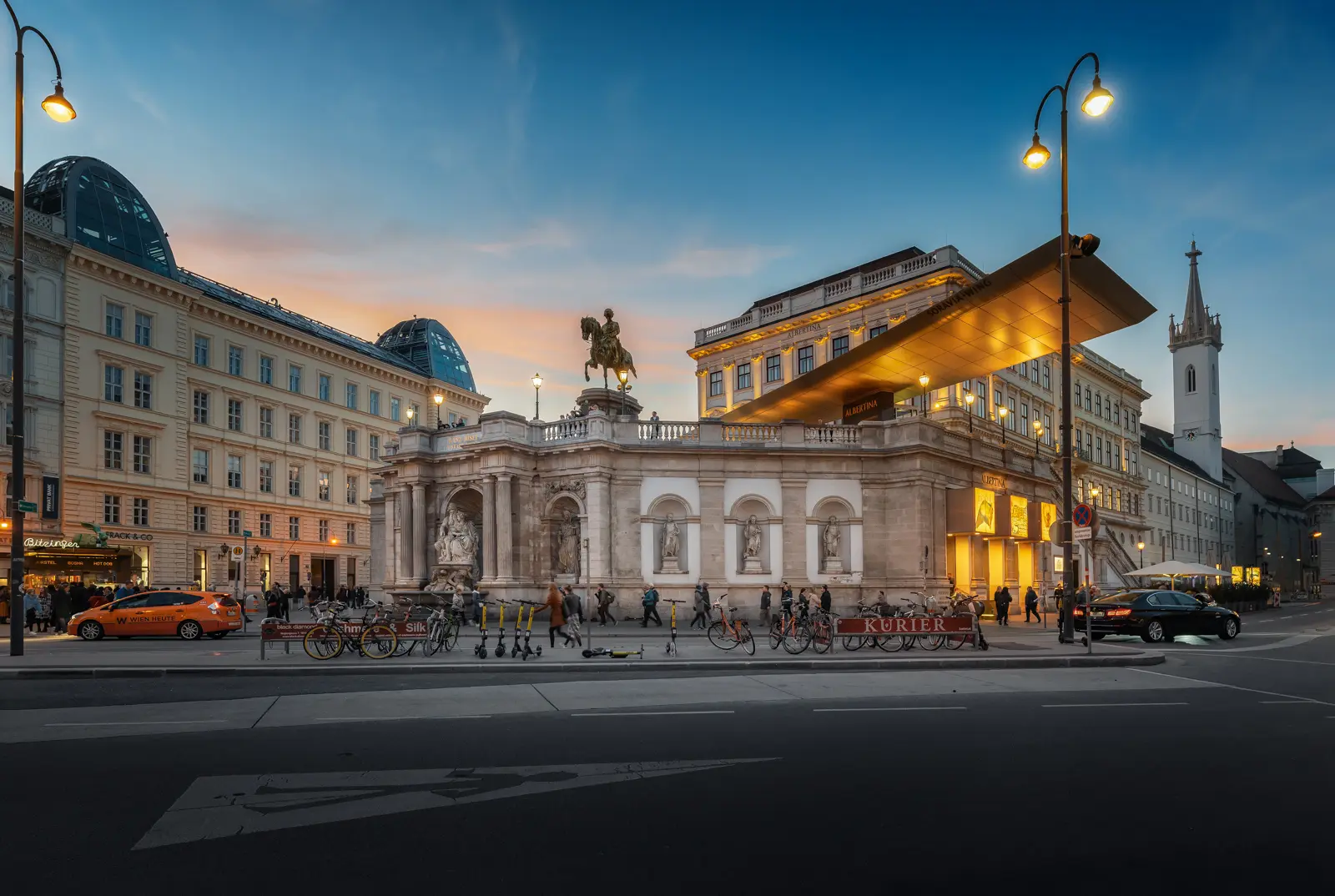
Light plays an equally important role in shaping the atmosphere. In the morning, the square feels softer and more reflective, as if the city is still settling into itself. By midday, it becomes brighter and more animated, with movement and energy filling every corner. As the day shifts toward evening, the pace begins to slow, and the architecture takes on a different presence – shadows deepen, details emerge, and the space feels more contemplative. These transitions are subtle, but they transform the experience entirely, giving the square a sense of continuity that evolves with time.
The Experience: Where Vienna Reveals Itself
What makes Albertinaplatz truly special is not any single monument or moment, but the way everything exists together. You are surrounded by centuries of history – imperial, artistic, and modern – yet nothing feels distant or preserved behind glass. The Albertina rises above, the Opera anchors the nearby streets, the memorial grounds the space in memory, and everyday life continues uninterrupted. Rather than competing, these elements coexist, creating a layered environment where each part contributes to the whole.
There is something quietly grounding about that experience. You are not simply observing history, you are moving through it, alongside others doing the same, each moment unfolding in real time. The square does not ask for attention, yet it rewards it. If you pause, even briefly, the layers become more visible, and the connections between past and present begin to take shape. In that way, Albertinaplatz is not just a place you pass through – it is a place that reveals itself, gradually and effortlessly, to those who take the time to notice.
Bubbly Tips: Visiting Albertinaplatz
To make the most of your time at Albertinaplatz:
- Pause, don’t just pass through – the richness of the square reveals itself when you slow down
- Step up to the Albertina terrace for one of the best perspectives over the area
- Take a moment at the Monument Against War and Fascism – it is one of the most meaningful stops in Vienna
- Walk between the Opera and the square to experience the flow of the city
- Grab a quick bite at Bitzinger for a simple and authentic Viennese moment
- Visit at different times of day to see how light and movement transform the space
- Combine your visit with nearby landmarks like the Hofburg, Burggarten, and Kärntner Strasse
Final Thoughts
Albertinaplatz is not a place you check off a list. It is a place you experience, sometimes without even realizing it at first.
It is where Vienna’s layers come together: art and history, memory and movement, quiet reflection and everyday life. A space that holds contrast without conflict, allowing each element to exist in its own way. And maybe that is what makes it so memorable. Not what it asks of you, but what it offers, if you choose to notice.
Have you spent time in Albertinaplatz, or is it on your Vienna list? I’d love to hear from you in the comments section below.
Happy travels!

🌟 Everything You Need to Plan Your Dream Trip in 2026
- 🌟 Luxury Hotels - Find premium stays with Booking.com & Hotels.com
- 🏡 Vacation Rentals - Discover unique properties on VRBO
- 🏞️ Guided Tours - Explore with Viator or GetYourGuide
- 🎫 Attraction Tickets - Skip the lines with Tiqets
- 🚢 Ocean Cruises - Set sail with Cruise Direct
- 📱 International SIMs - Stay connected with Saily
- 🚗 Car Rentals - Budget-friendly options from Discover Cars
- 🌐 Secure VPNs - Browse safely with NordVPN
- 💶 Currency Exchange - Best rates with Wise
- 🗣️ Learn Languages - Master the local language with Babbel and Rosetta Stone