
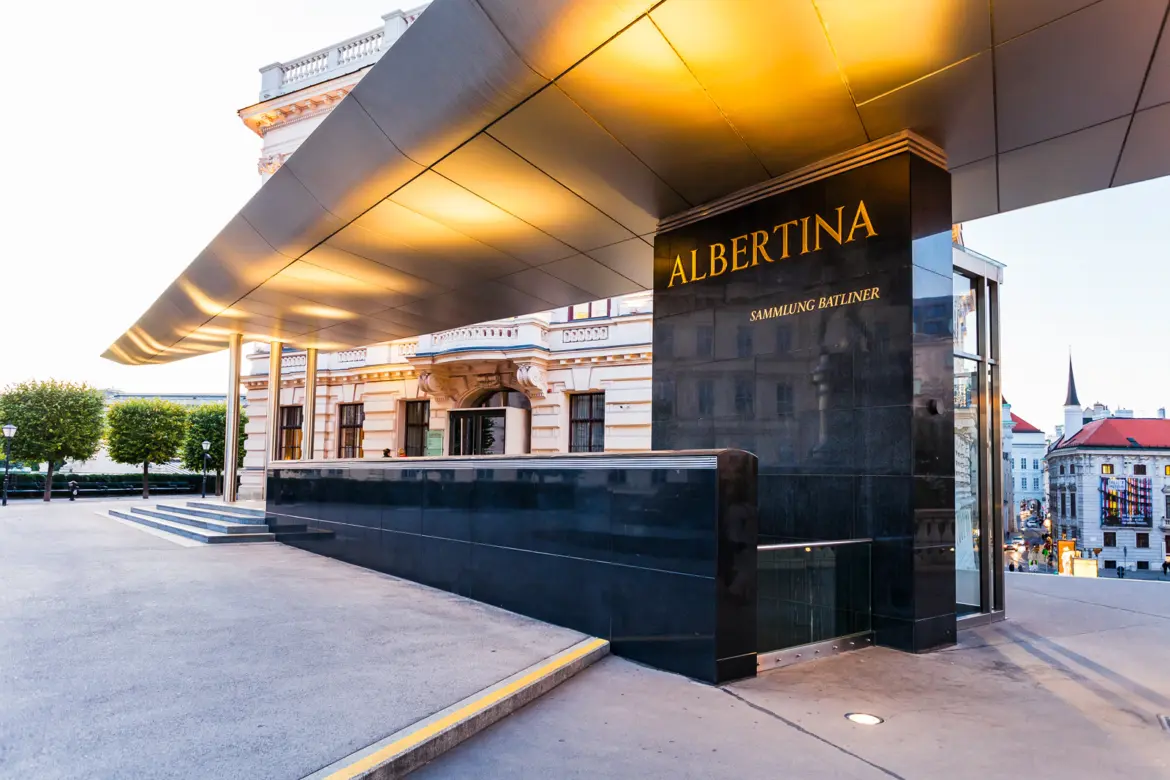
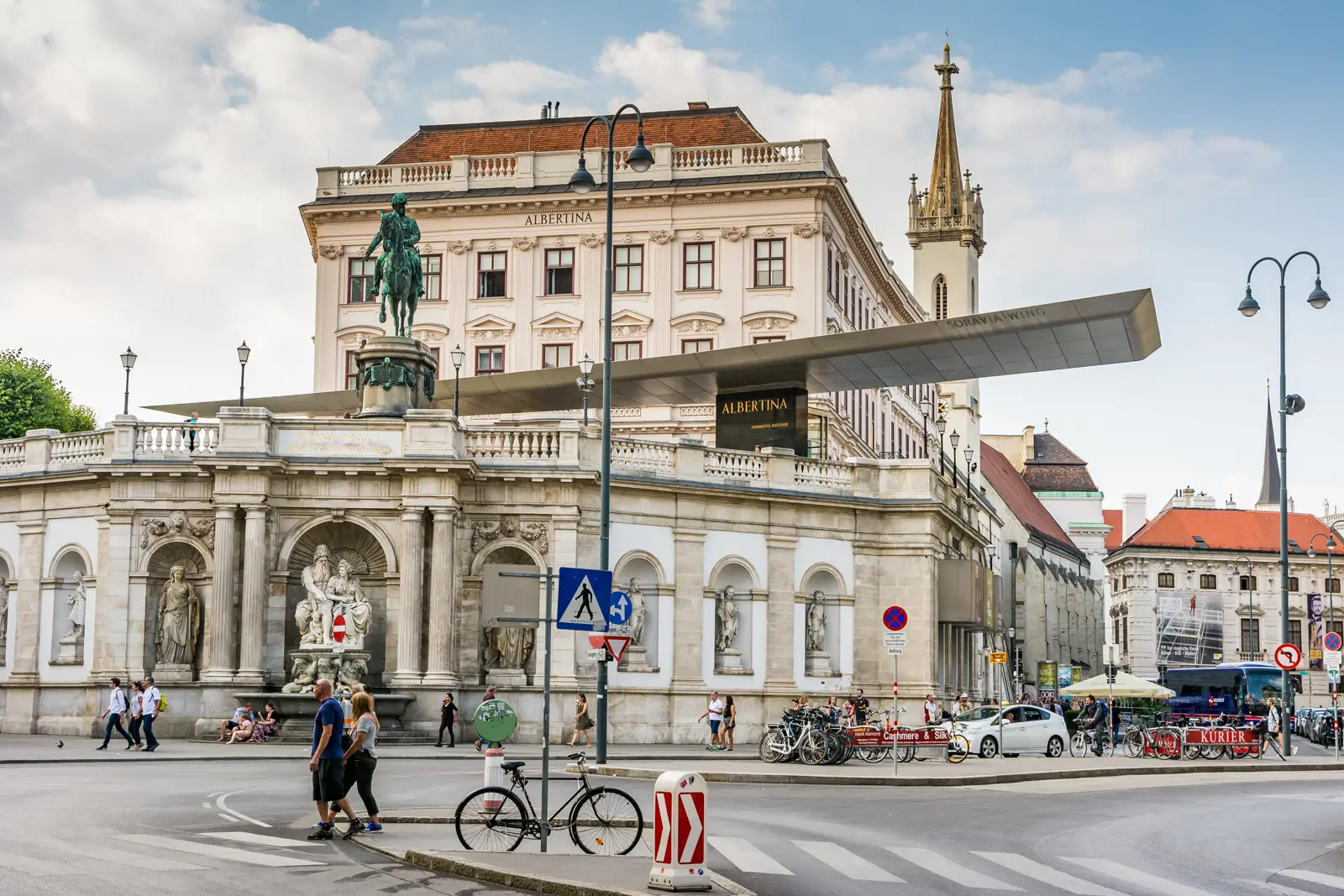
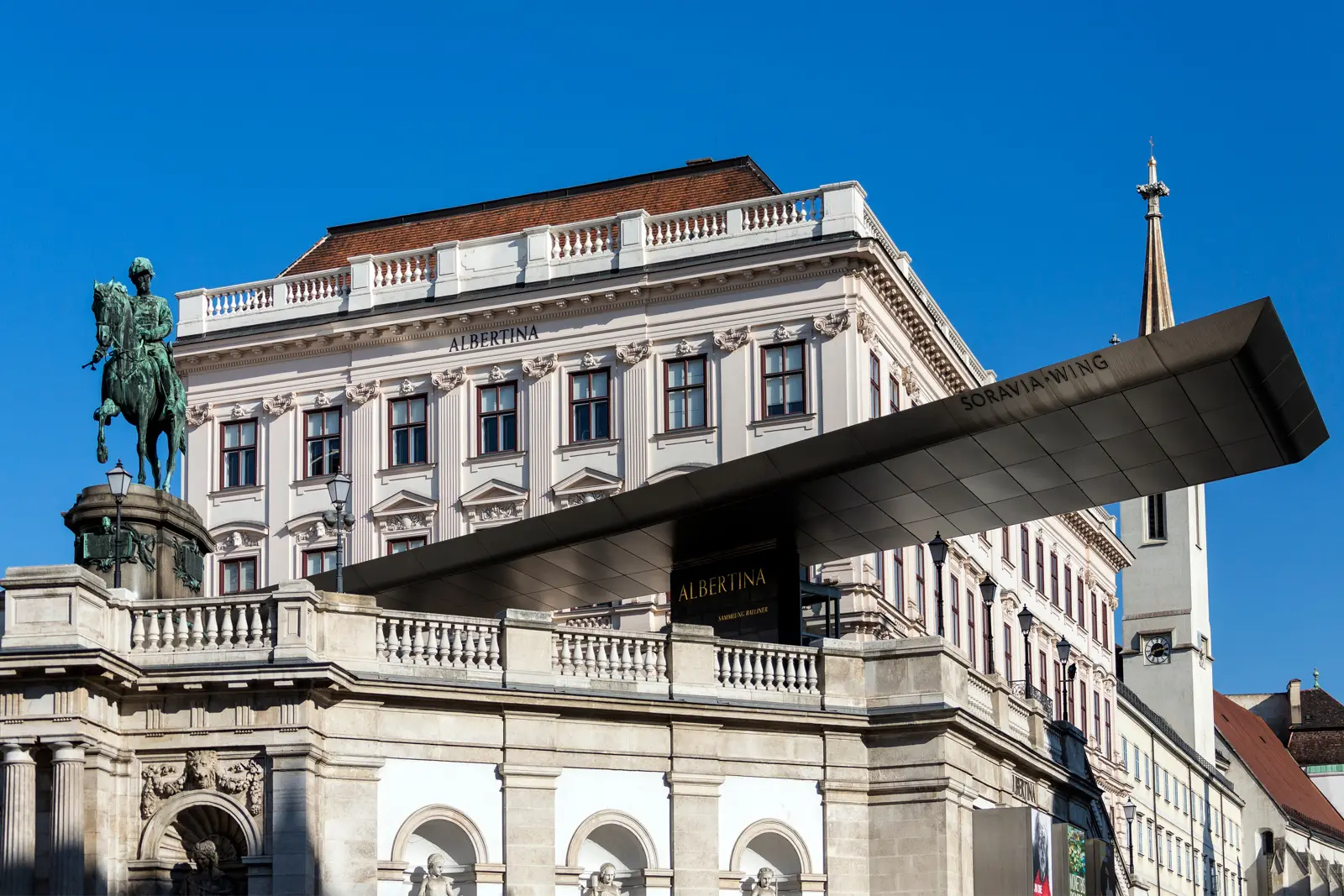
There are places in Vienna where history and beauty feel inseparable, and then there are those where they unfold together in a way that feels almost effortless. The Albertina Museum is unmistakably one of them. Perched above Albertinaplatz, just steps from the Hofburg Palace, the Albertina occupies a space where architecture, art, and everyday life converge. From the outside, it presents itself with quiet confidence, a historic façade elevated by its iconic terrace. Inside, it reveals something far more expansive: a journey through centuries of artistic expression, set within rooms that still carry the elegance of their imperial past.
What makes the Albertina so compelling is not just what it contains, but how it is experienced. It is not simply a museum, it is a space that invites you to move between worlds: past and present, structure and creativity, stillness and movement.
Albertina Museum at a Glance
🏛️ Founded by: Duke Albert of Saxe-Teschen — collection begun in Brussels
👑 Named: Officially renamed Albertina in 1921 (previously Palais Erzherzog Albrecht)
🎨 Collection: Over one million graphic works — drawings, prints, photographs spanning centuries
🚪 State Rooms: 20 restored imperial rooms — silk wall coverings, parquet floors, chandeliers
🏛️ Hall of the Muses: Apollo and the Nine Muses — the museum’s most prominent room
🖼️ Highlights: Monet’s Water Lily Pond, Picasso’s Woman in a Green Hat, rotating contemporary exhibitions
🌉 Sphinx Staircase: Sculptural entrance framing the ascent to the State Rooms
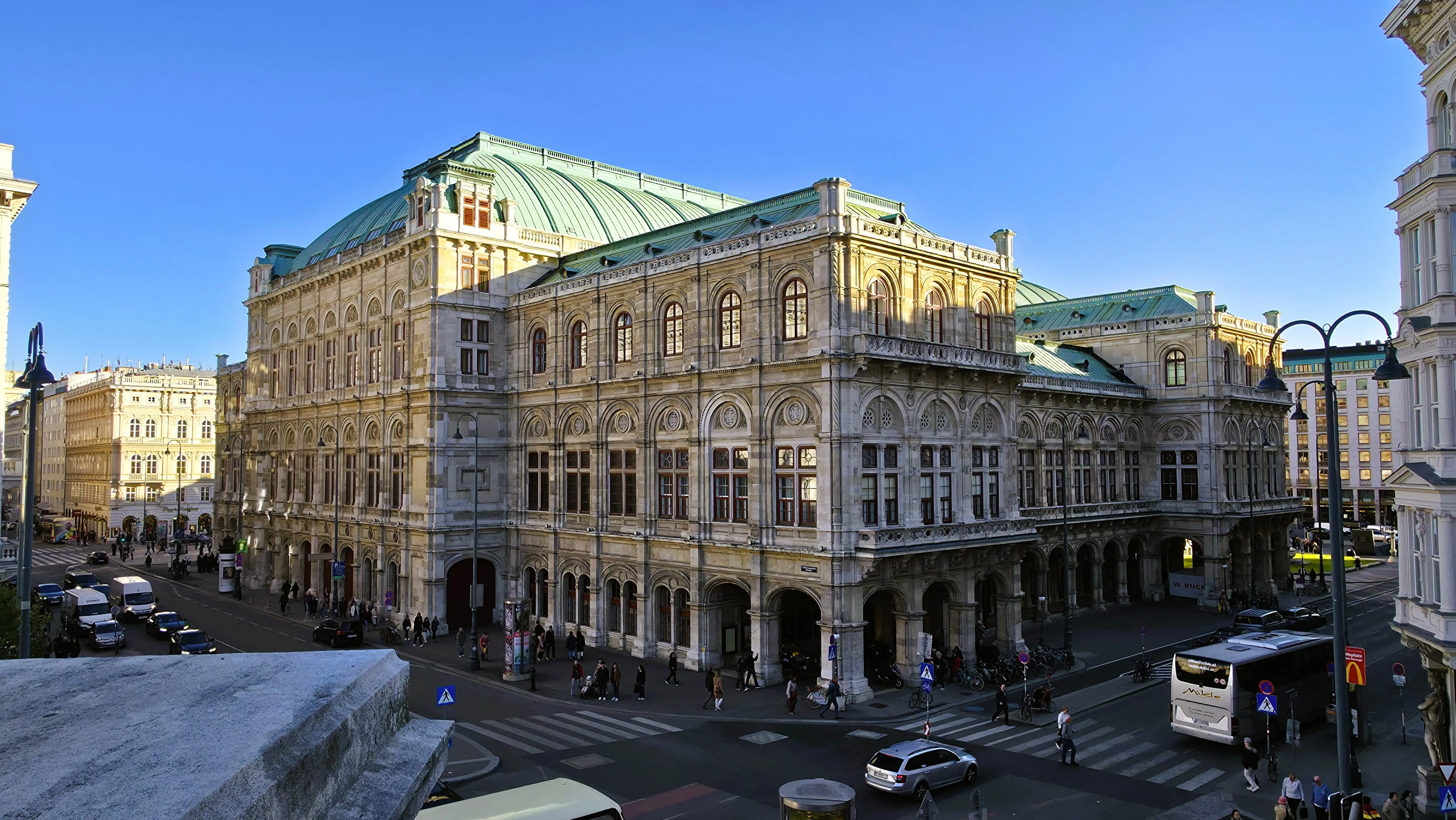
☕ Nearby: Bitzinger Würstelstand, Memorial Against War and Fascism, Vienna State Opera
📍 Location: Albertinaplatz 1, 1010 Vienna — steps from the Hofburg
💡 Tip: Visit early or later in the day for a quieter experience; allow time for both State Rooms and exhibitions
A Palace Transformed: From Habsburg Residence to Cultural Landmark
Long before it became the Albertina Museum, the building was a residence- one shaped by power, lineage, and imperial identity. Named after Duke Albert of Saxe-Teschen, the palace’s collection has its origins not in Vienna but in Brussels, where Albert began assembling his extraordinary holdings while serving as Governor of the Habsburg Netherlands. When the French Revolutionary forces advanced following the Battle of Jemappes in 1792, he was forced to retreat, bringing the collection with him to Vienna, a move that would ultimately give the city one of the most significant private art collections in Europe.
Behind the collection’s creation stood two figures, not one. Archduchess Marie Christine, Maria Theresa’s favourite daughter and Albert’s wife, contributed significantly to the resources that made the collection possible and was deeply engaged in the arts, playing an influential role in shaping its direction. Her presence is often understated in historical accounts, yet the Albertina’s collection reflects not only Albert’s vision, but a shared cultural and intellectual pursuit.
Over the centuries, the building itself evolved, witnessing the full arc of Habsburg history. It was only officially renamed the Albertina in 1921 – before that, it was known as the Palais Erzherzog Albrecht. Walking through it today, you are not entering a neutral exhibition space, you are moving through rooms that were once lived in, shaped by the same cultural and historical forces that defined the empire itself. The art is not isolated from its surroundings; it exists within them.
Inside the Albertina: Rooms of Elegance and Light
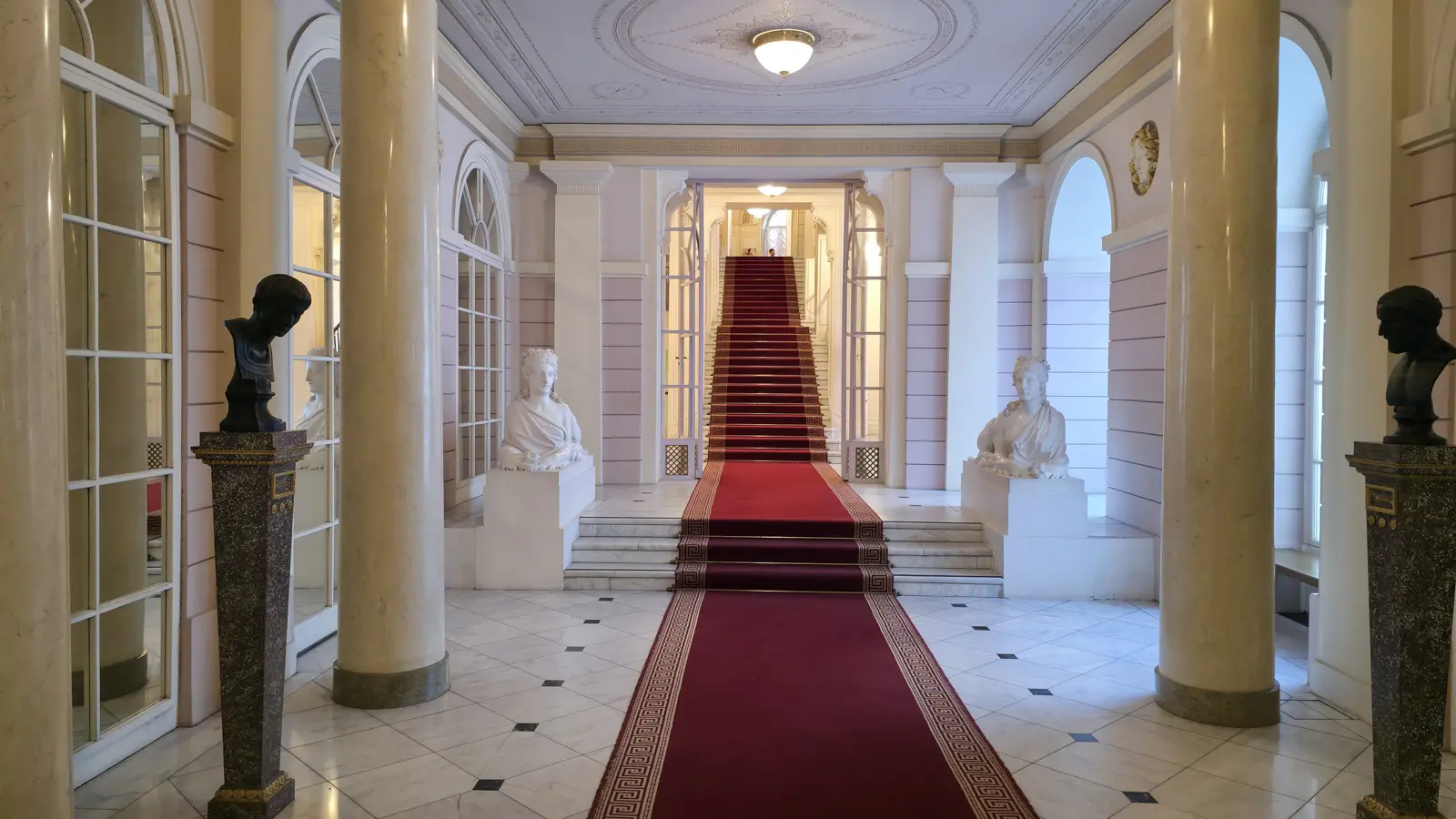
Stepping inside the Albertina Museum is an experience in itself. The transition from the openness of Albertinaplatz into the interior spaces feels immediate yet subtle, as the atmosphere shifts toward something quieter and more composed. A pillared hallway lined with Roman busts introduces the visitor to the museum’s classical sensibility, creating a sense of progression that feels both grounded and anticipatory. From there, the ascent through the Sphinx Staircase marks a clear turning point – sculptural figures framing the space as you move upward, guiding you toward the State Rooms beyond. At the top, the State Rooms unfold – twenty rooms carefully restored to reflect the refined elegance of imperial life.
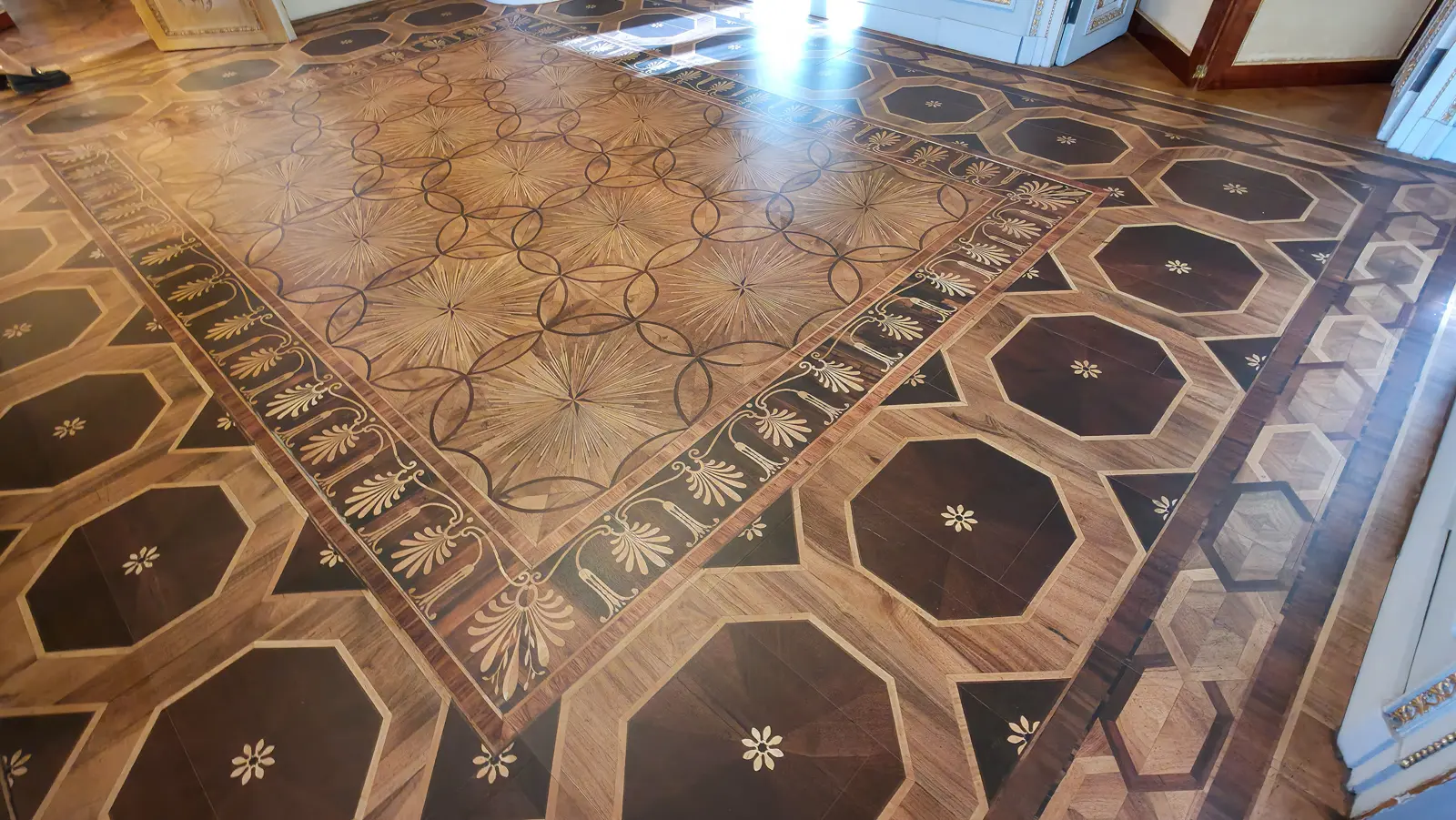
The State Rooms are defined by layers of craftsmanship and detail. Silk wall coverings shift in colour as you move through the rooms, from green to red to yellow, creating a subtle progression that gives each space its own distinct character. Gilded details, parquet floors, chandeliers, fireplaces, and richly decorated walls come together in quiet harmony. It is worth noting that parts of the State Rooms were destroyed during World War II bombing, meaning what visitors experience today is a thoughtful combination of original surviving elements and historically accurate restoration, a distinction that adds yet another layer to the palace’s already complex history.
Among these spaces, the Hall of the Muses stands out as one of the most prominent rooms, a grand yet intimate space featuring statues of Apollo and the Nine Muses, originally serving as a dining room before taking on its current role. Classical references and artistic symbolism come together in a setting that invites you to pause, not only to observe, but to absorb the balance of architecture, light, and history.
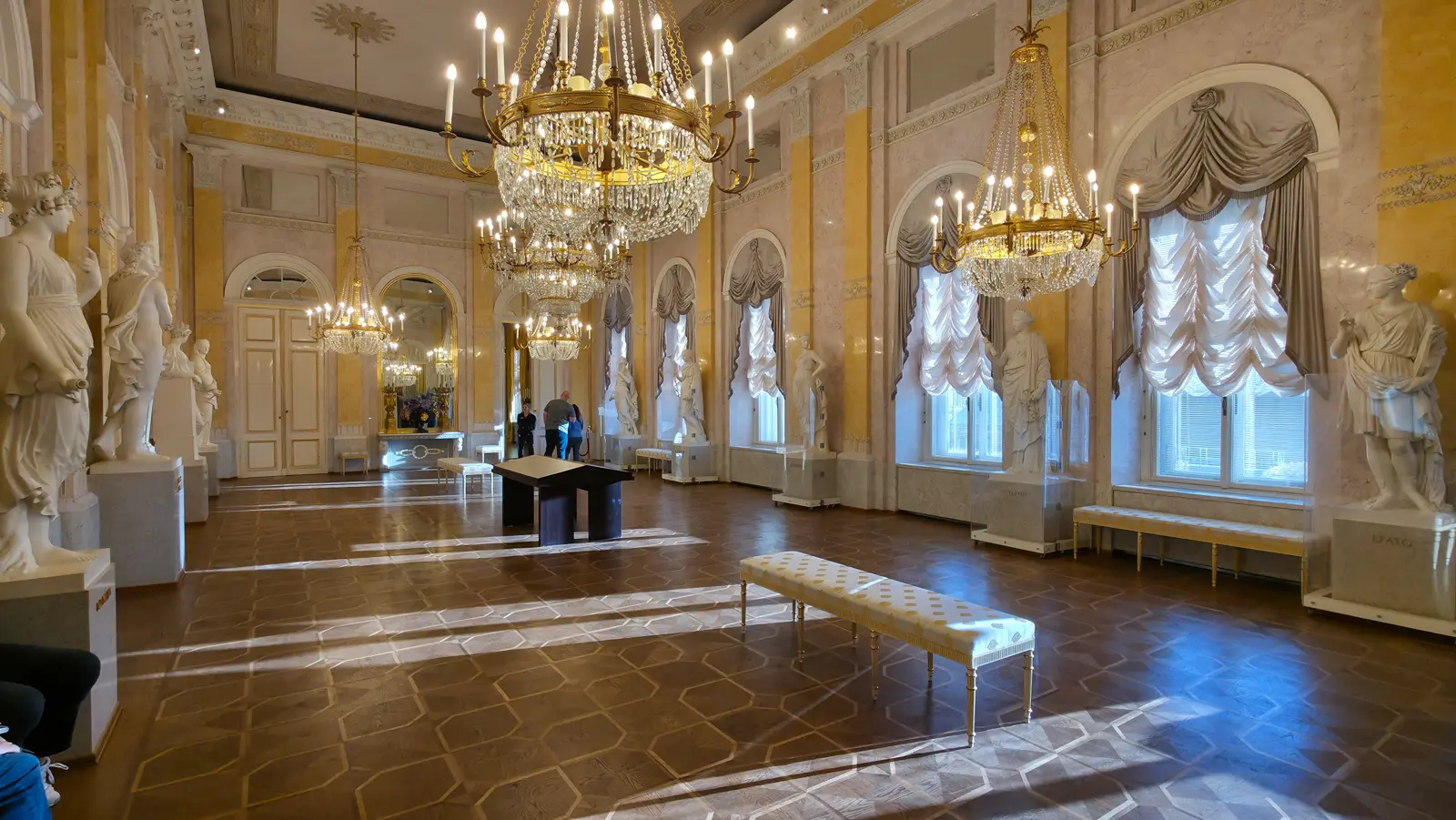
Throughout the rooms, there is a strong sense of continuity. Light filters through tall windows, shifting gently across surfaces and subtly changing the way each space is perceived throughout the day. Details reveal themselves gradually – textures, reflections, and small decorative elements that might otherwise go unnoticed. The Albertina does not separate art from its surroundings; instead, it allows each to enhance the other, creating a space that feels layered, immersive, and quietly memorable.
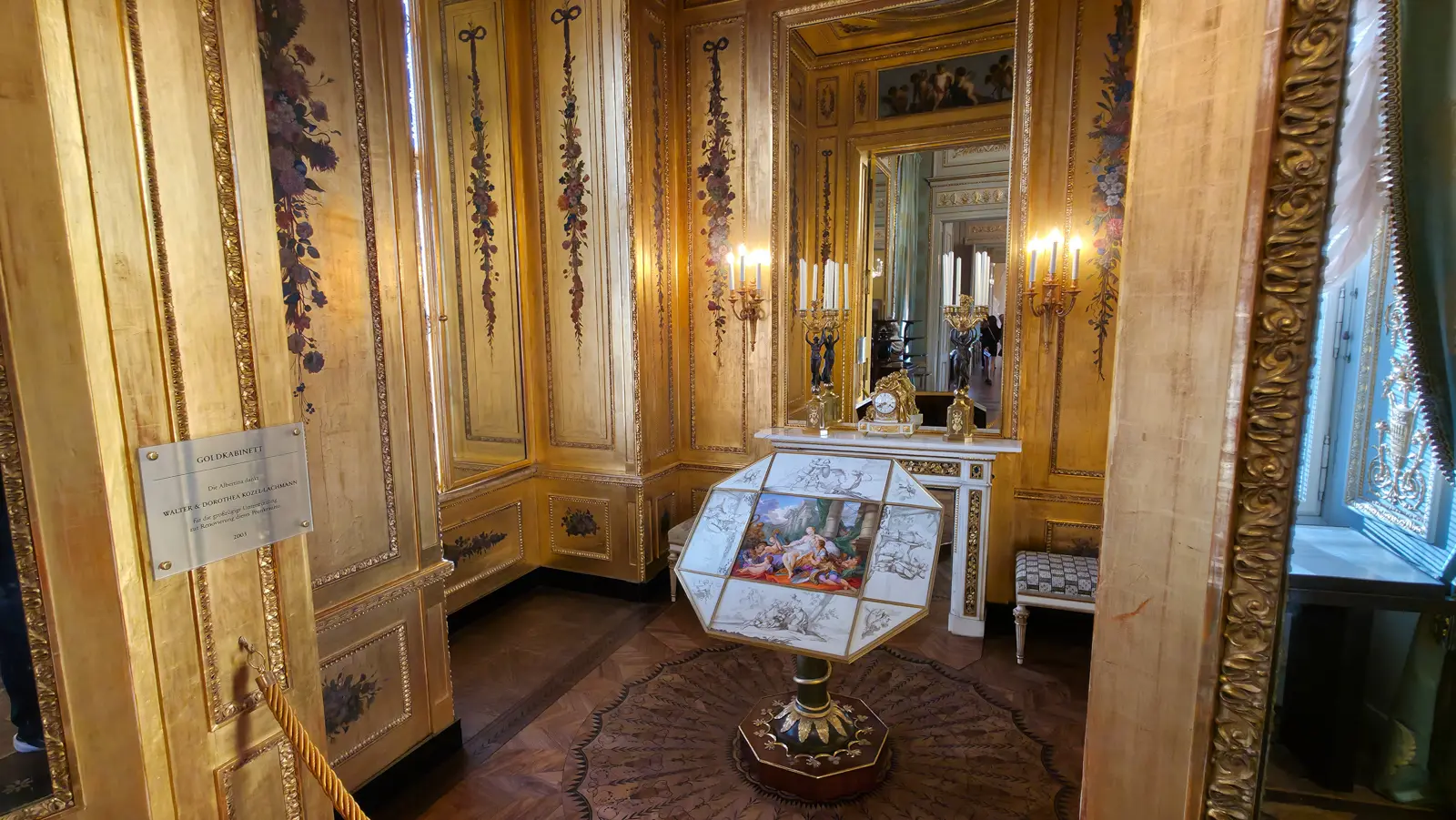
The Collections: From Master Drawings to Modern Icons
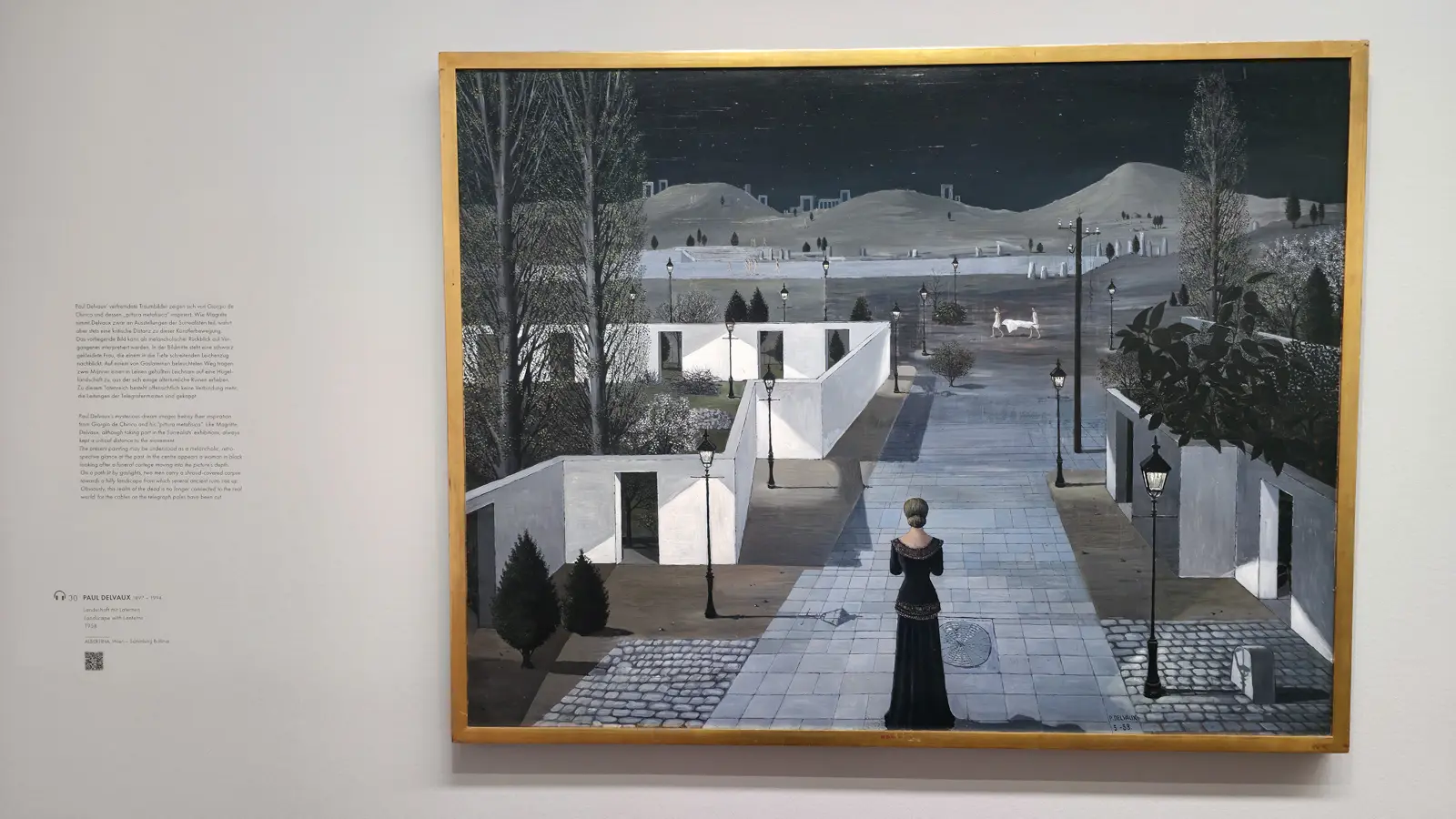
The Albertina Museum is home to one of the most important graphic art collections in the world, with works that span centuries, movements, and artistic approaches. From finely detailed drawings to bold modern compositions, the range is both extensive and thoughtfully curated. What makes the collection particularly compelling is not just its scale, but its coherence, each piece contributing to a broader narrative that traces the evolution of artistic expression over time.
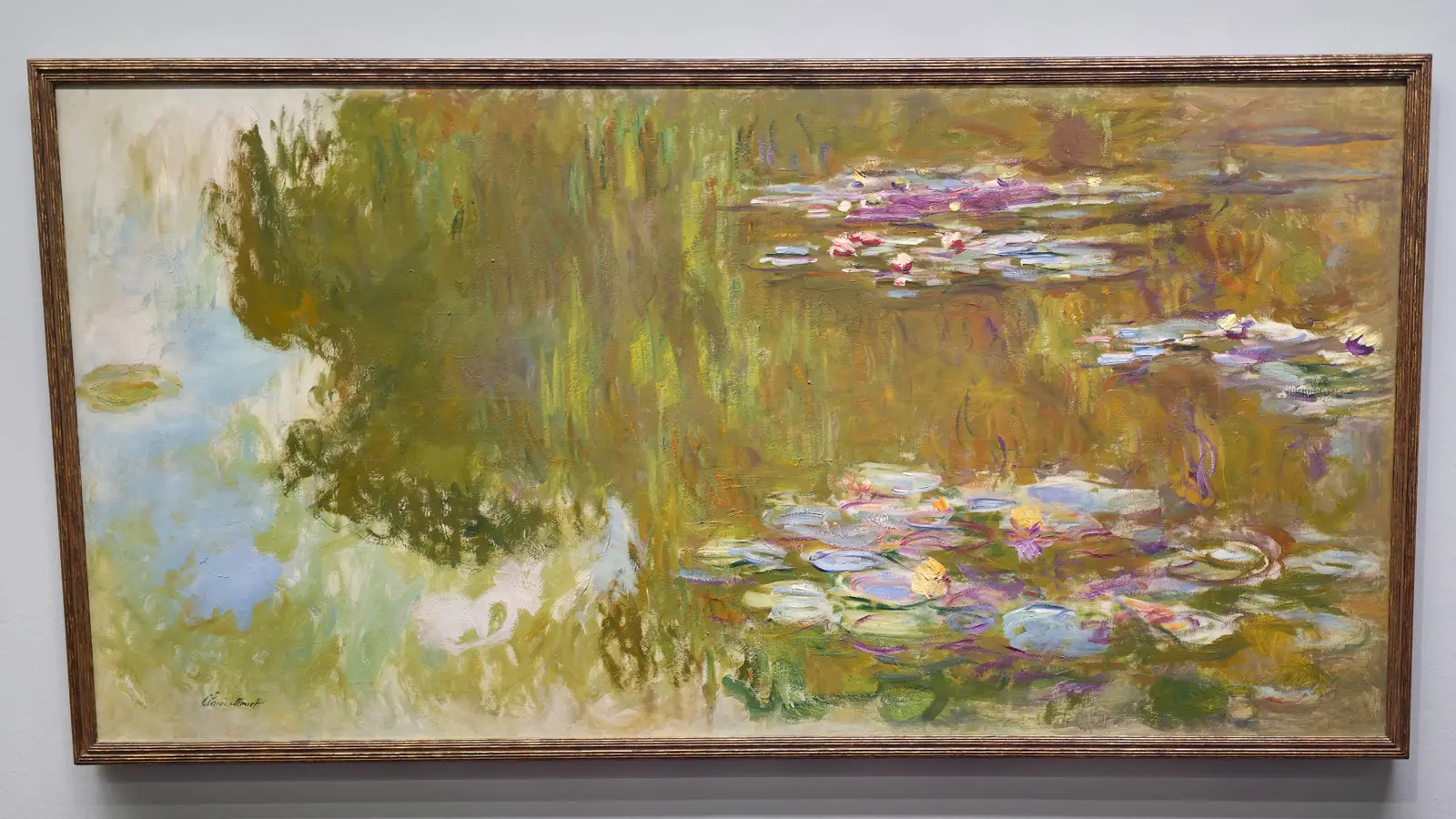
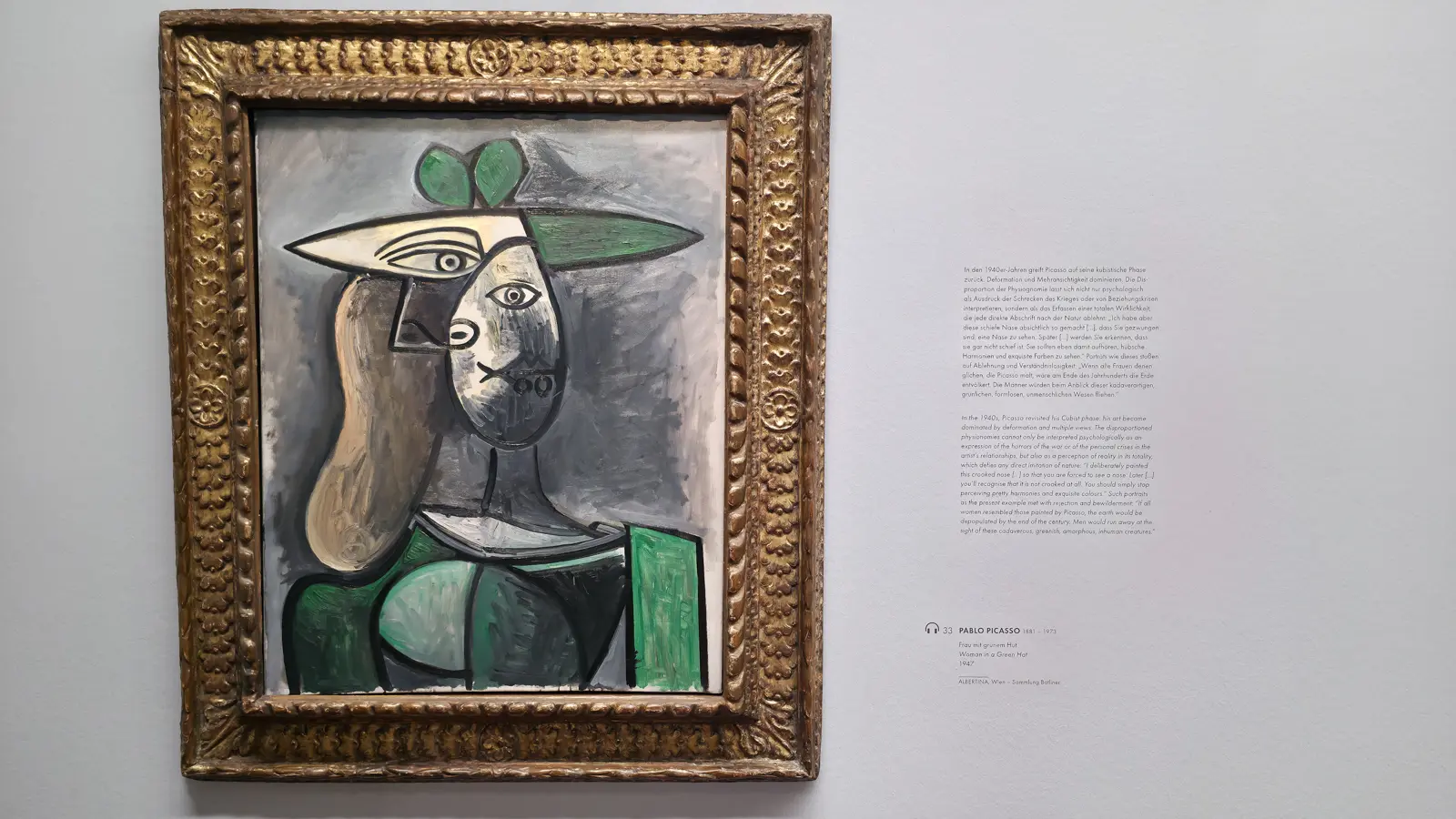
Among the highlights are works by artists such as Claude Monet and Pablo Picasso, whose presence adds both color and emotional depth to the collection. Monet’s The Water Lily Pond (1917–1919) offers a moment of quiet reflection, where light and nature dissolve into one another in soft, immersive tones. In contrast, Picasso’s Woman in a Green Hat (1947) introduces a more expressive and modern energy, with bold forms and a sense of immediacy that feels distinctly different. Seen together, these works highlight not only the diversity of the collection, but the dialogue between different artistic visions and periods.
Temporary exhibitions add another dynamic layer to the museum’s appeal, ensuring that each visit can offer something new. These rotating shows often bring fresh perspectives, placing familiar artists in new contexts or introducing lesser-known works that invite deeper exploration. Whether you are deeply familiar with art history or simply curious, the Albertina creates a space where discovery feels natural – where you can move between centuries, styles, and ideas without ever feeling disconnected from the experience.
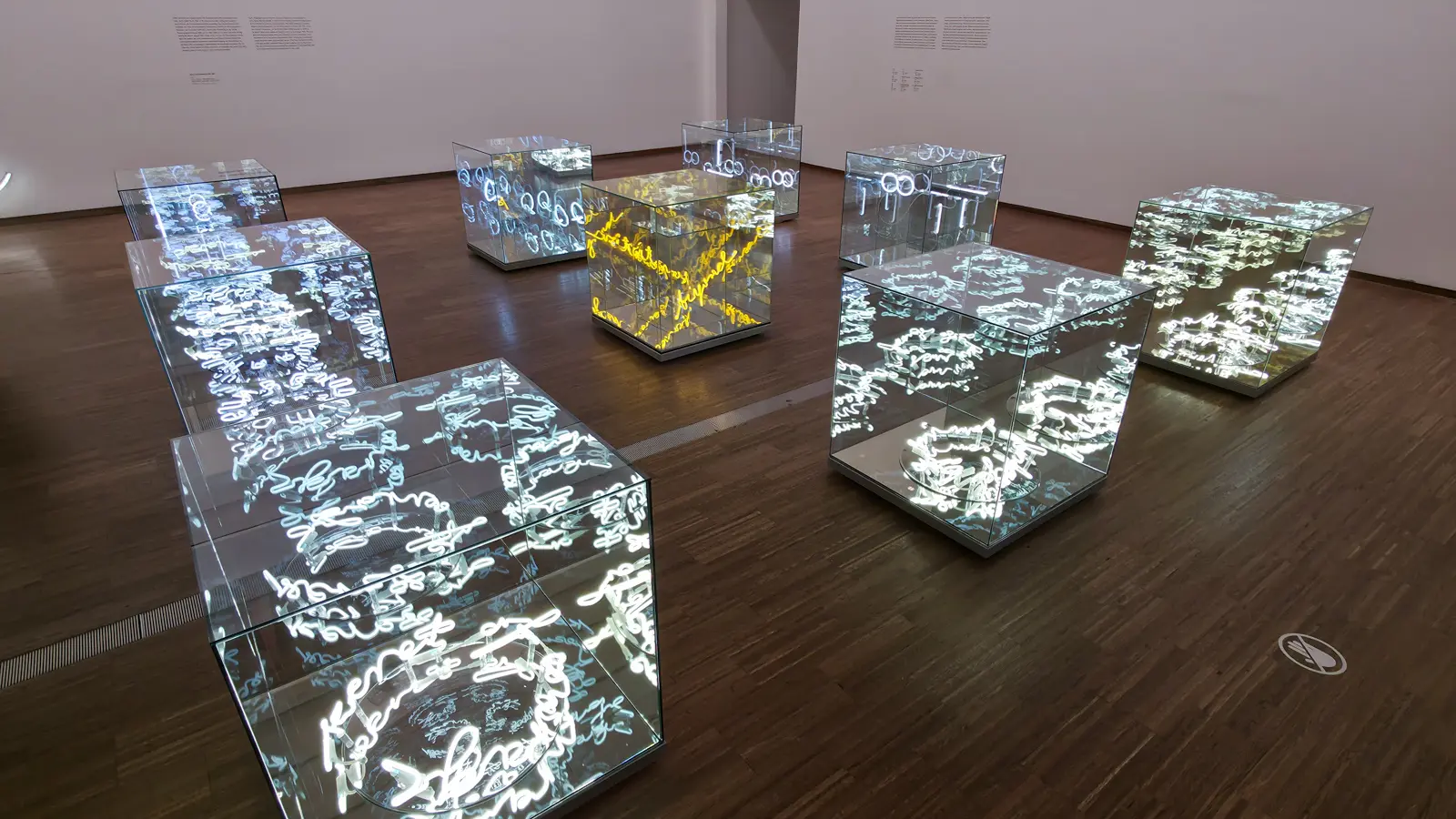
The Experience: Movement, Perspective, and Pause
What sets the Albertina Museum apart is not only its collection, but the way it is experienced. Movement through the museum feels intuitive, a gradual unfolding rather than a prescribed path. Some rooms encourage stillness, others invite you to move more freely, and the transition between them feels seamless. There is a natural rhythm to the experience, shaped as much by the architecture as by the artworks themselves, allowing each space to reveal itself without urgency. You are not guided so much as gently led, with each room offering a slightly different atmosphere.
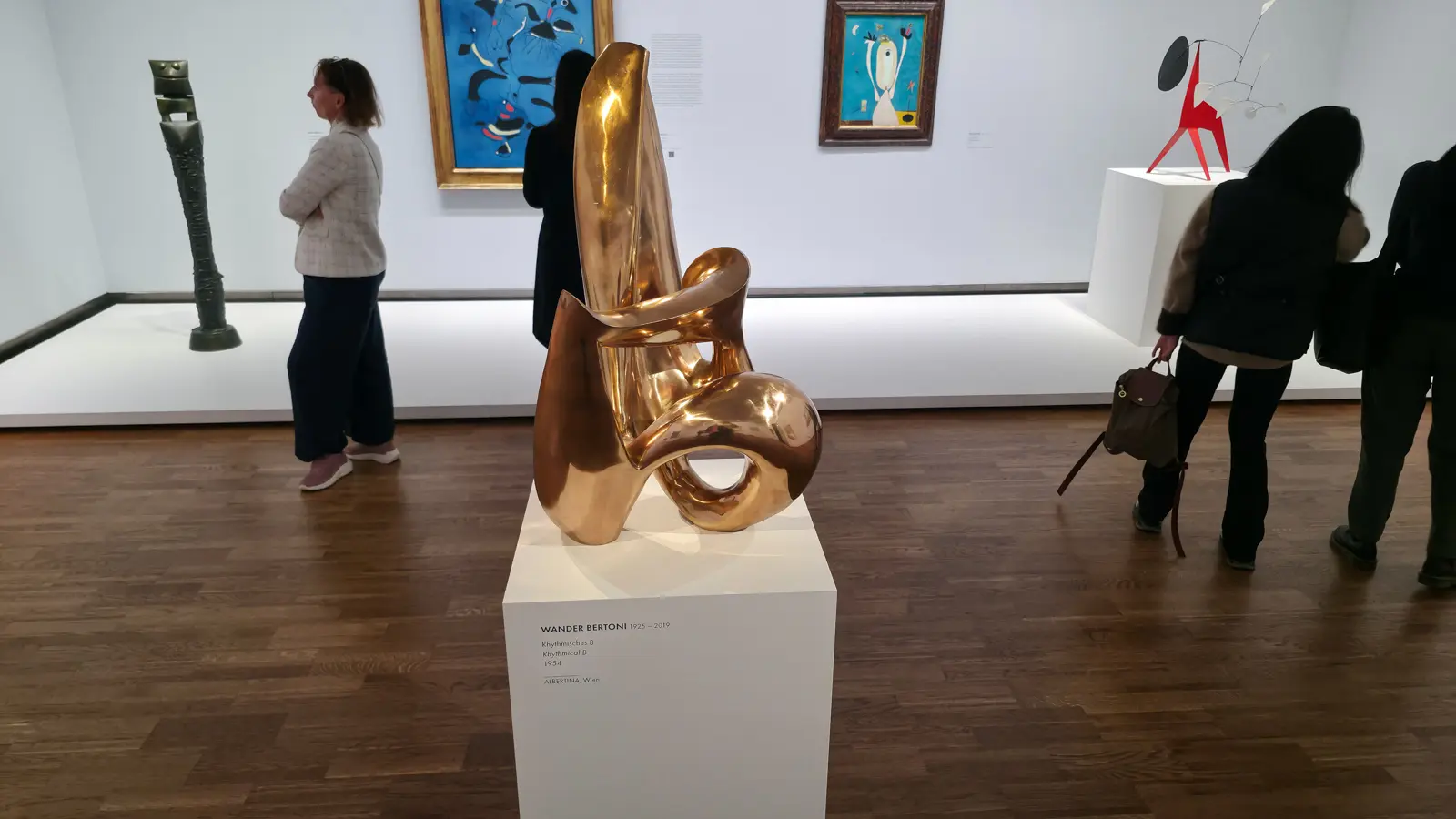
At moments, the experience extends beyond the interior. From the Albertina terrace, the view opens onto Vienna – a reminder that the museum is not separate from the city, but part of it. The contrast between the quiet of the galleries and the energy of the streets below adds a subtle dimension to the visit. Looking out, you reconnect with the movement of the city – the flow of people, the surrounding architecture, the layered history that continues just beyond the walls. It creates a pause that is both visual and reflective, bridging the interior experience with the life of Vienna outside.
It is a place that allows for both observation and reflection. You can engage deeply with the art, or simply allow the atmosphere to guide your experience. There is no single way to move through it, and that is part of its appeal. Whether you linger in a single room or move steadily from one to the next, the experience remains personal and fluid. It adapts to your pace, inviting you to slow down, to notice more, and to carry a sense of quiet continuity with you as you leave.
Albertinaplatz and Beyond: Where Culture Meets Everyday Life
Stepping out of the Albertina Museum, you return to the rhythm of Albertinaplatz, a space where Vienna’s layers become visible all at once. The openness of the square contrasts with the refined interiors you’ve just left behind, yet the transition feels natural. Movement resumes almost immediately: people crossing the square, pausing on the steps, gathering in small groups, the city quietly reasserting itself around you.
Nearby, the Memorial Against War and Fascism introduces a moment of reflection, standing in deliberate contrast to the elegance of the surrounding architecture. Just steps away, the iconic Bitzinger Würstelstand offers a completely different experience – simple, local, and unmistakably Viennese. The scent of grilled sausages, the casual exchanges at the counter, and the steady flow of locals and visitors alike create a scene that feels immediate and unfiltered.
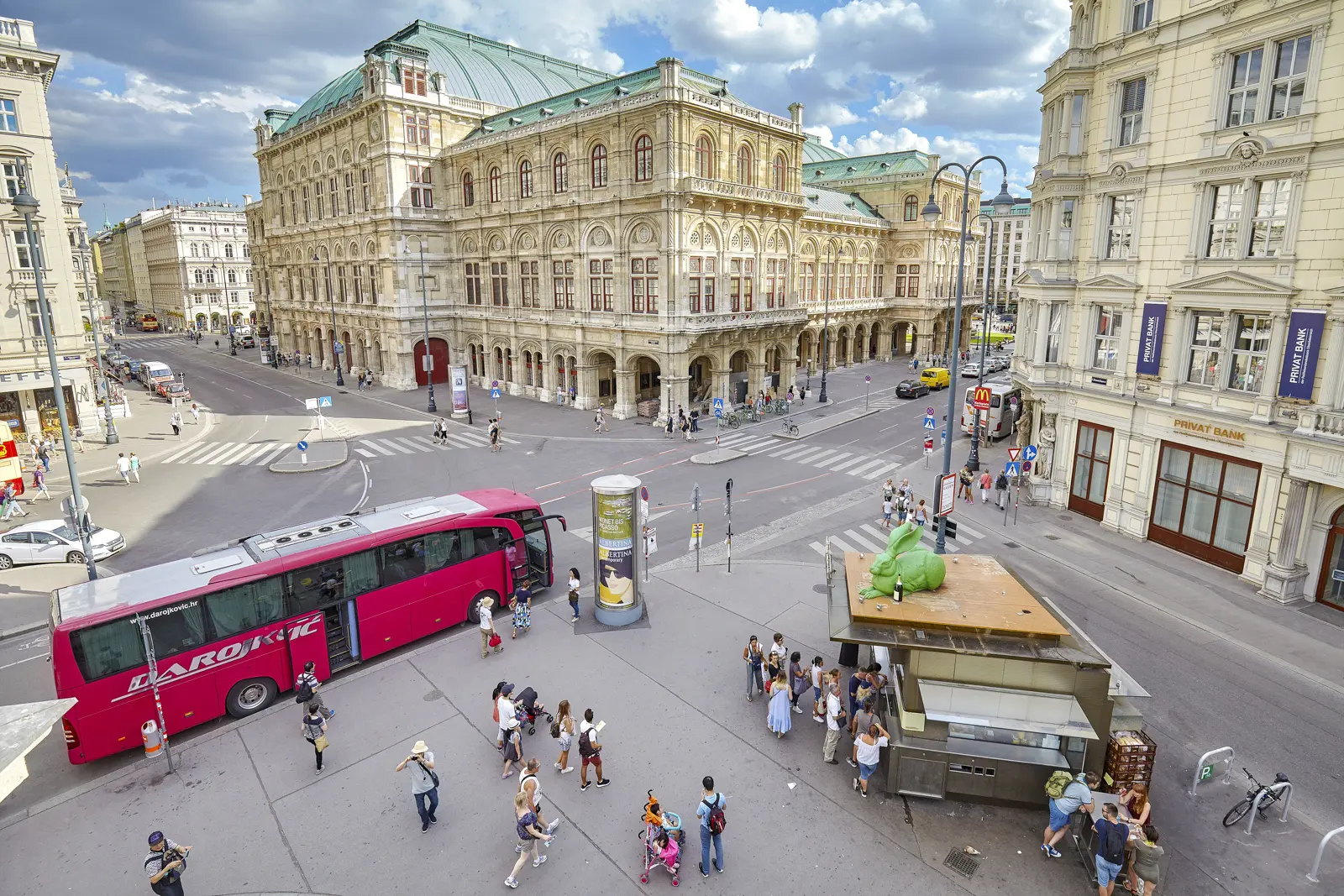
This juxtaposition is what makes the area so compelling. High culture, history, and everyday life coexist without friction. You can move from viewing masterworks to standing at a street-side counter, from quiet observation to casual conversation – all within a few minutes. It is this fluidity, this ease of transition between worlds, that defines not only Albertinaplatz, but Vienna itself – a city where refinement and everyday life are not separate, but deeply intertwined.
Bubbly Tips: Visiting the Albertina Museum
To make the most of your visit to the Albertina Museum:
- Visit early or later in the day to enjoy a quieter experience
- Allow time for both the State Rooms and exhibitions – each offers a different perspective
- Check current exhibitions in advance to tailor your visit
- Take a moment on the terrace for views over Vienna
- Move slowly through the galleries – the experience unfolds best without rushing
- Combine your visit with Albertinaplatz and nearby landmarks for a fuller experience
- Pause between rooms – transitions are part of the experience
Final Thoughts
The Albertina Museum is, at its core, a place of balance. Between past and present. Between structure and creativity. Between stillness and movement.
It is a museum that does not overwhelm, but invites – offering space to explore, to observe, and to reflect at your own pace. Whether you are drawn by the art, the architecture, or simply the experience of being there, the Albertina leaves an impression that is both subtle and lasting.
Is the Albertina on your Vienna itinerary, or have you already experienced it? I’d love to hear your thoughts in the comments section below.
Happy travels!

🌟 Everything You Need to Plan Your Dream Trip in 2026
- 🌟 Luxury Hotels - Find premium stays with Booking.com & Hotels.com
- 🏡 Vacation Rentals - Discover unique properties on VRBO
- 🏞️ Guided Tours - Explore with Viator or GetYourGuide
- 🎫 Attraction Tickets - Skip the lines with Tiqets
- 🚢 Ocean Cruises - Set sail with Cruise Direct
- 📱 International SIMs - Stay connected with Saily
- 🚗 Car Rentals - Budget-friendly options from Discover Cars
- 🌐 Secure VPNs - Browse safely with NordVPN
- 💶 Currency Exchange - Best rates with Wise
- 🗣️ Learn Languages - Master the local language with Babbel and Rosetta Stone