
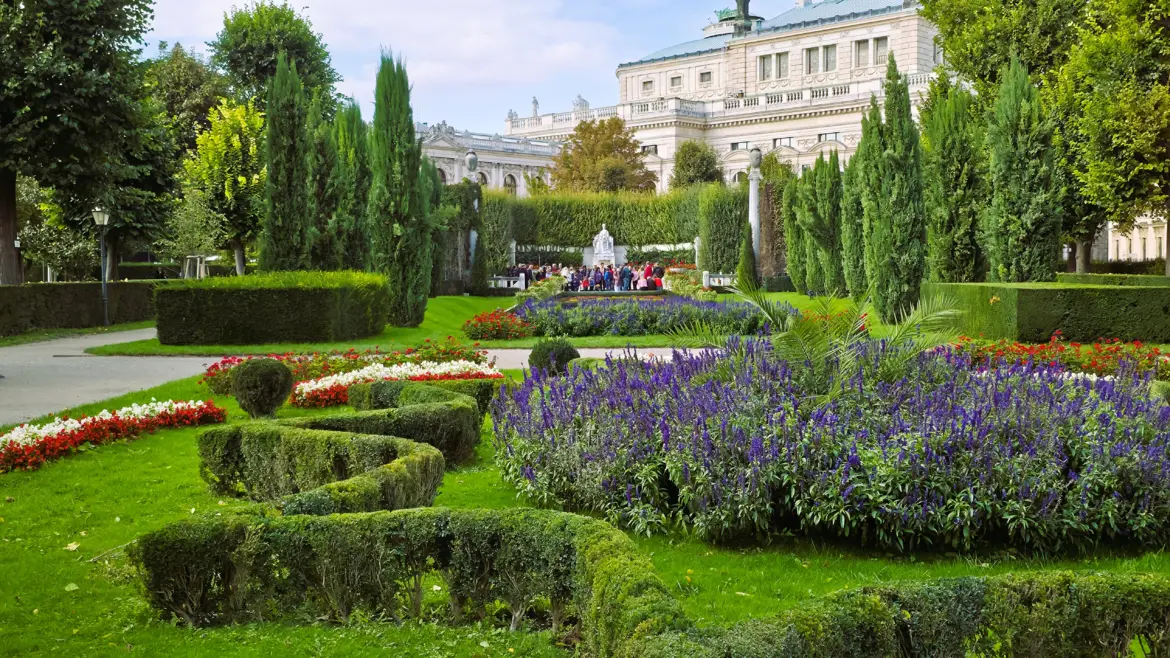
Hello, adventurers! Some places don’t announce themselves. They simply wait for you to slow down enough to notice them. Volksgarten is one of those places. Located just off Vienna’s grand Ringstrasse, Volksgarten offers a gentle pause from the city’s monumental rhythm. Step inside, and the noise softens almost immediately. The traffic fades, the air feels lighter, and suddenly Vienna’s imperial past seems less imposing and more human. This is not a garden designed to impress at first glance. It’s a garden designed to be lived in.
Volksgarten at a Glance
🌹 Opened: 1823 — one of the first imperial gardens opened to the public in Vienna
📍 Location: Between the Hofburg Palace, Heldenplatz, and the Ringstrasse — Vienna’s historic inner core
🌷 Rose garden: Over 3,000 rose bushes across more than 200 varieties — Vienna’s most celebrated rose collection
👑 Empress Elisabeth memorial: Marble statue of Sisi set among the roses, one of the garden’s most visited landmarks
🏛️ Theseustempel: A neoclassical pavilion modeled after the Temple of Hephaestus in Athens, built 1819–1823
🎭 Neighbours: Burgtheater, Hofburg, Kunsthistorisches Museum, and Heldenplatz all visible from within the garden
🕐 Best time to visit: Late spring through early autumn for roses in bloom; morning or late afternoon for soft light
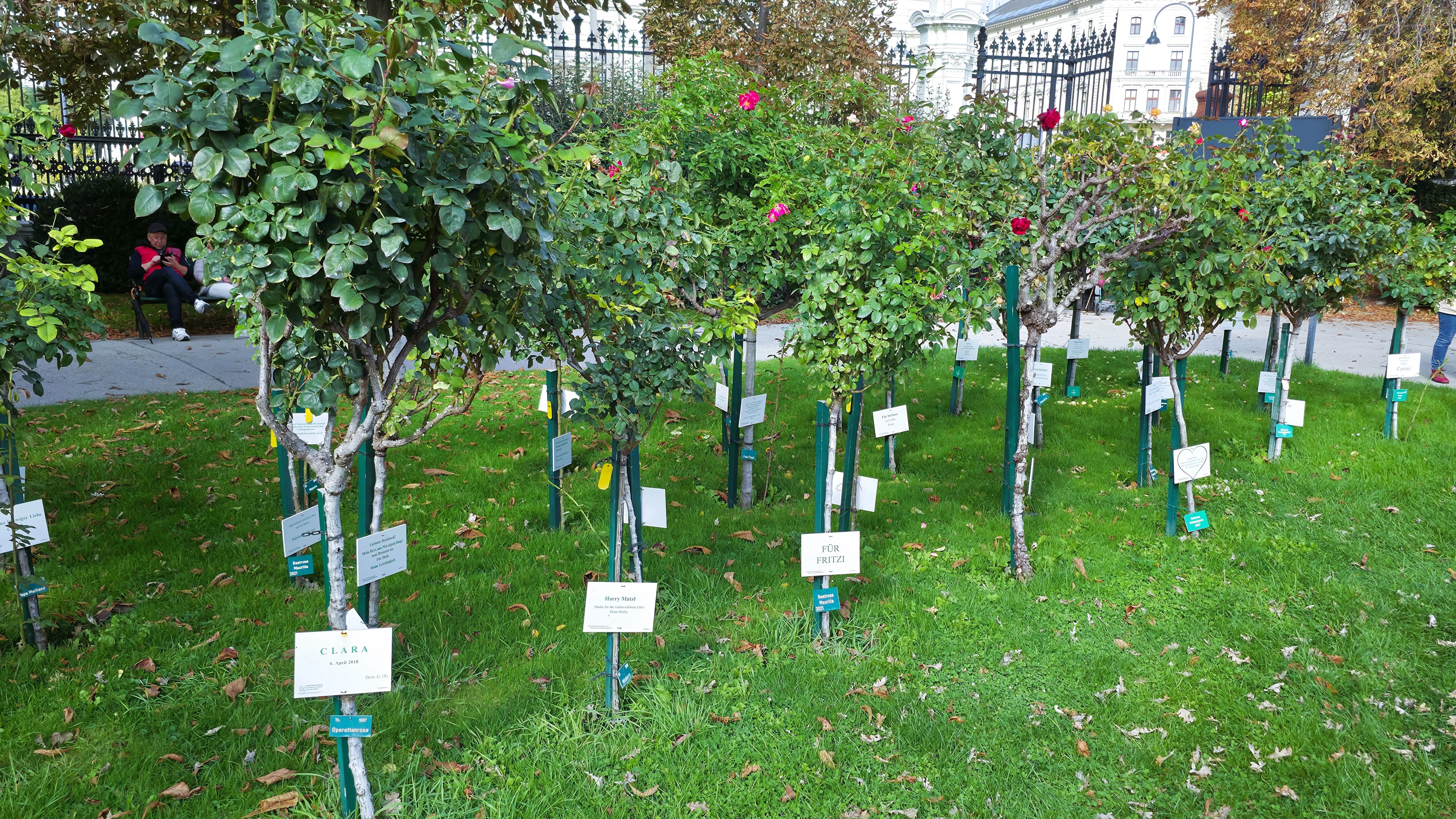
🪻 Sponsored roses: Individual rose bushes carry name labels — a Viennese tradition of personal patronage within a public garden
💡 Tip: Combine with a walk through Heldenplatz and the Hofburg courtyards — the Volksgarten connects seamlessly to Vienna’s imperial centre
Vienna’s First Public Garden
Opened in 1823, Volksgarten holds a special place in the city’s history as Vienna’s first public park. Created in the early 19th century, it marked a meaningful shift in how imperial spaces were conceived – no longer reserved exclusively for the court, but opened to the public as places of leisure, reflection, and shared enjoyment. Set adjacent to the Hofburg (and later, after 1857, bordered by the Ringstrasse), Volksgarten exists at a crossroads of power and everyday life. What once bordered the seat of empire now serves as a calm, democratic space where anyone can walk, sit, read, or simply lie in the grass. That quiet accessibility is part of what makes Volksgarten feel so distinctly Viennese.
Order Softened by Nature
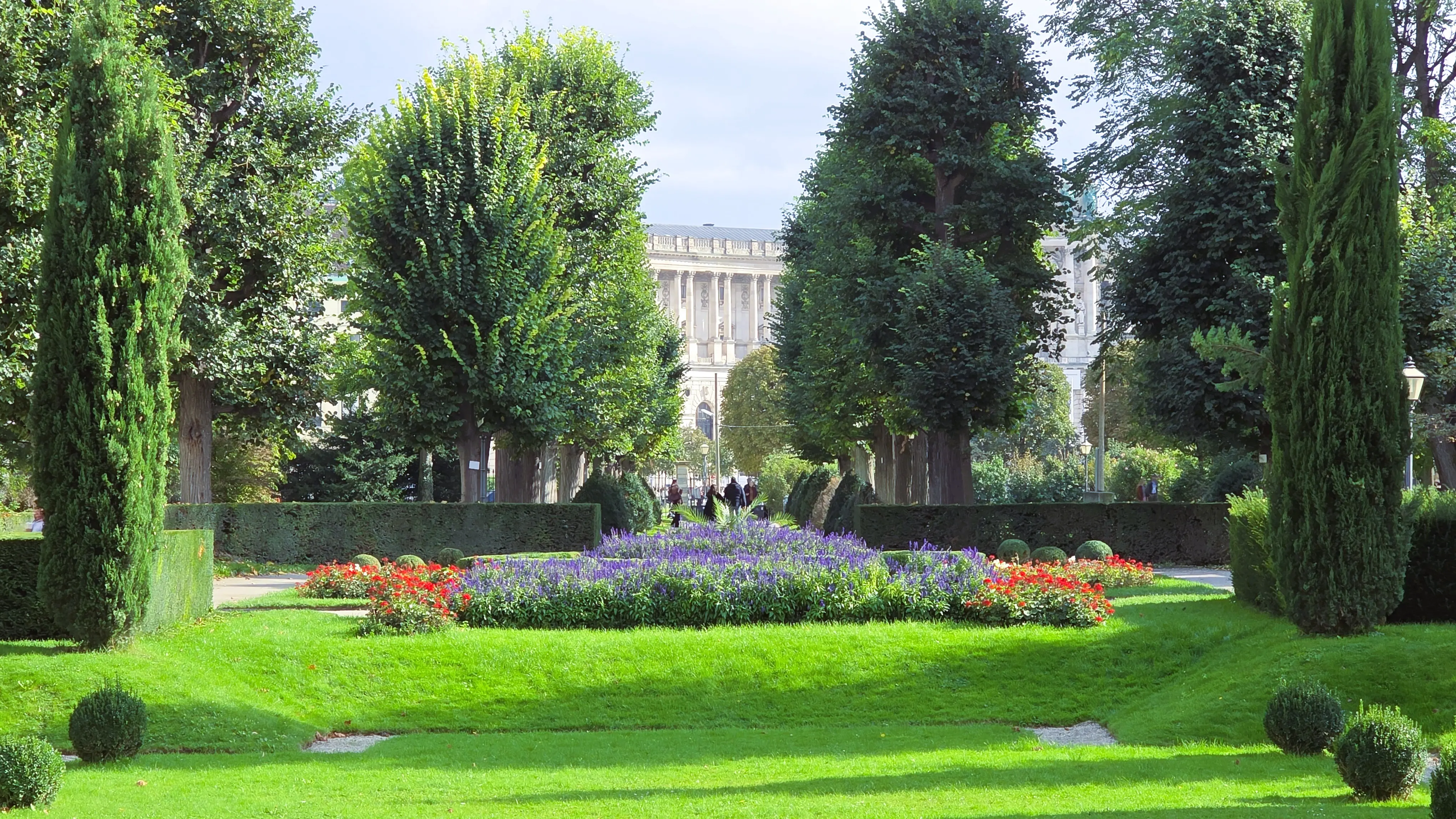
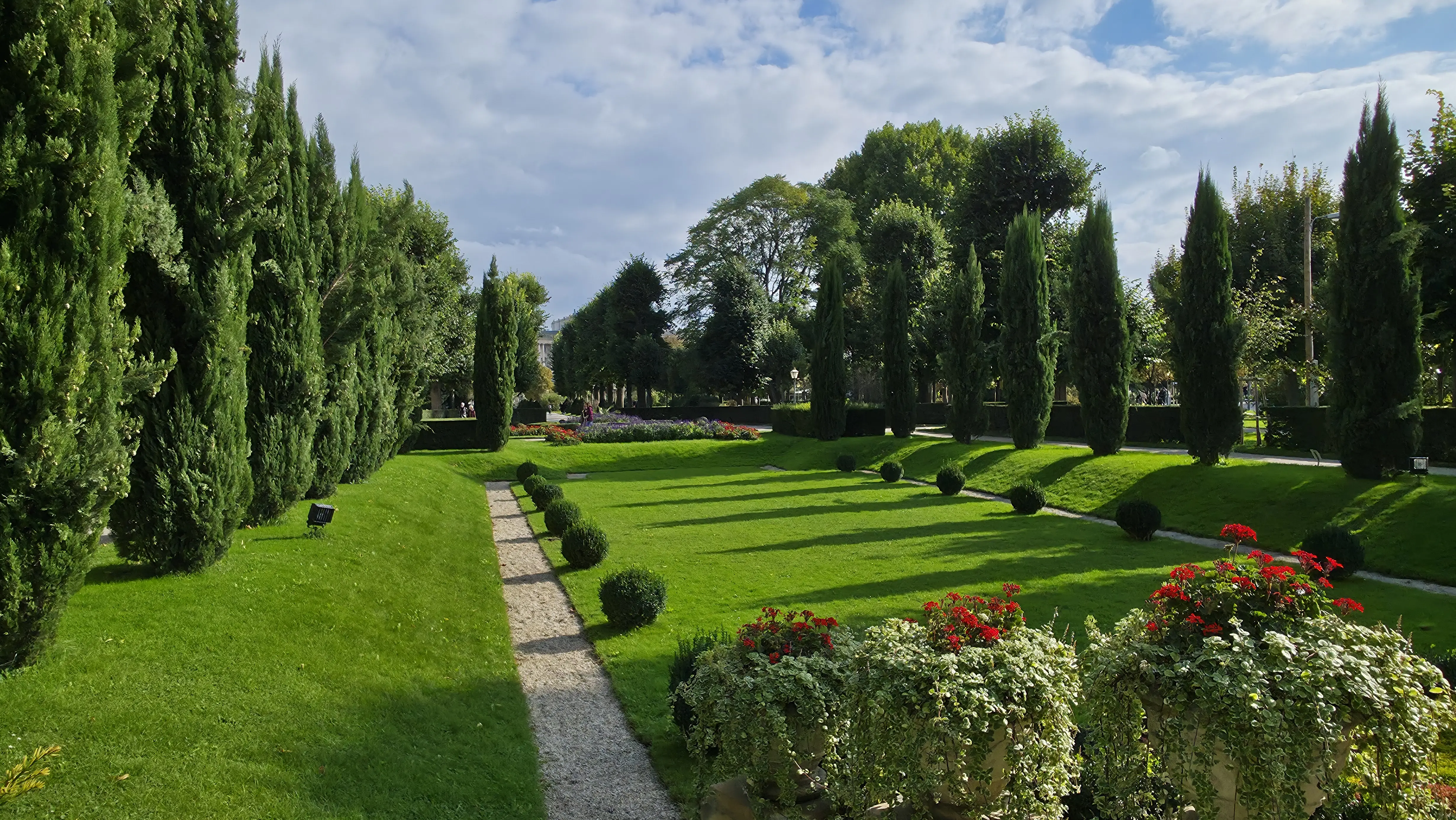
Volksgarten’s design reflects Vienna’s instinctive sense of balance. Symmetry is present, but never rigid; paths are clear, but never severe. Flowerbeds are carefully composed, yet they feel welcoming rather than ornamental. At the heart of this harmony are the garden’s celebrated rose beds, which stretch across the space with quiet confidence. In late spring and summer, thousands of roses bloom in soft layers of color and scent, transforming formal geometry into something gently alive and sensory, and easing the grandeur of the surrounding imperial architecture.
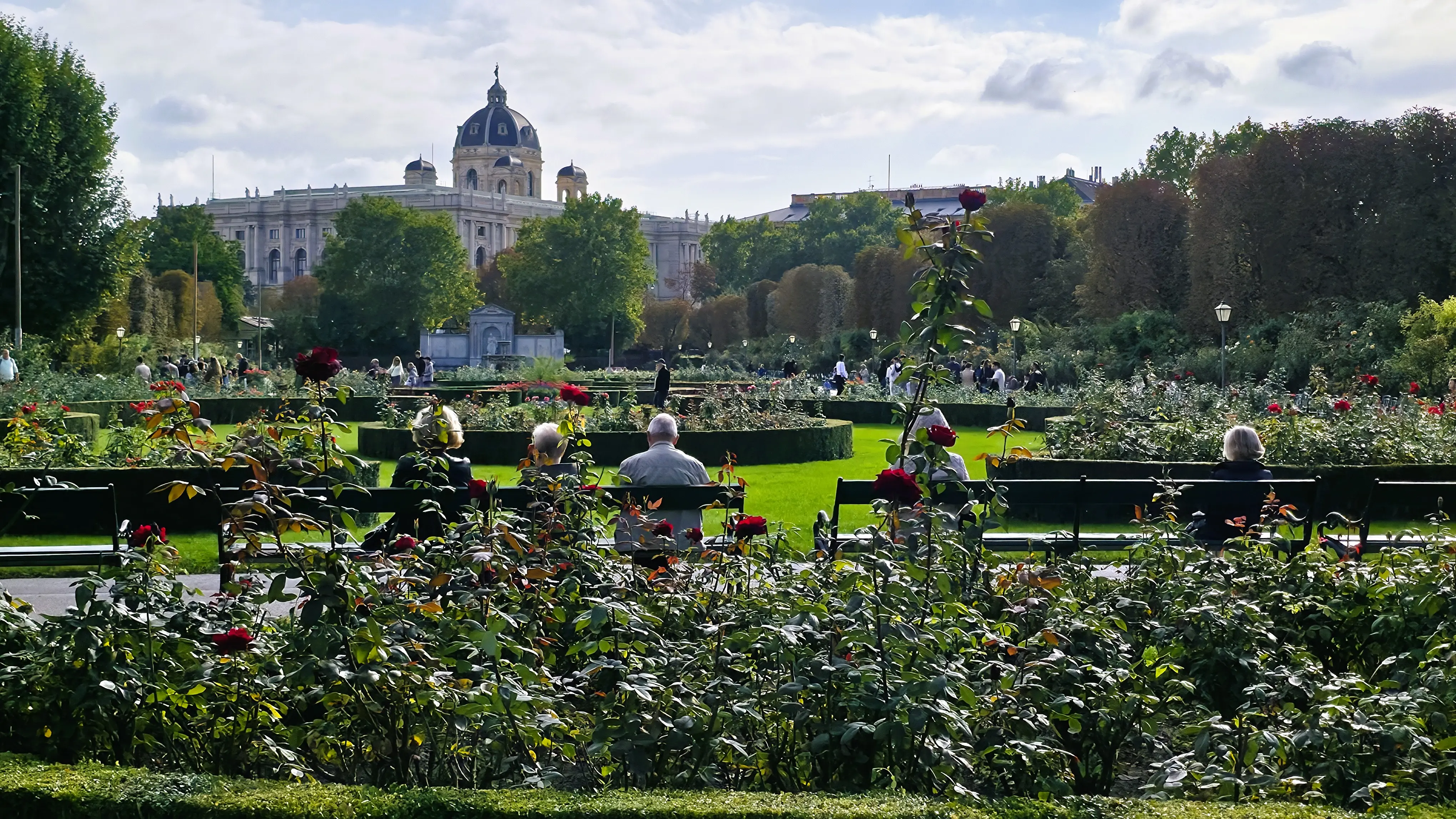
This is a garden that respects structure without being dominated by it. Benches are placed with intention, offering moments of rest rather than spectacle, while gravel paths encourage slow wandering instead of direct passage. Everything about Volksgarten seems designed to invite pause, as if the garden itself understands that beauty is most meaningful when it allows space for stillness – and that rest, here, is not an indulgence, but a necessity.
The Quiet Presence of Empress Elisabeth
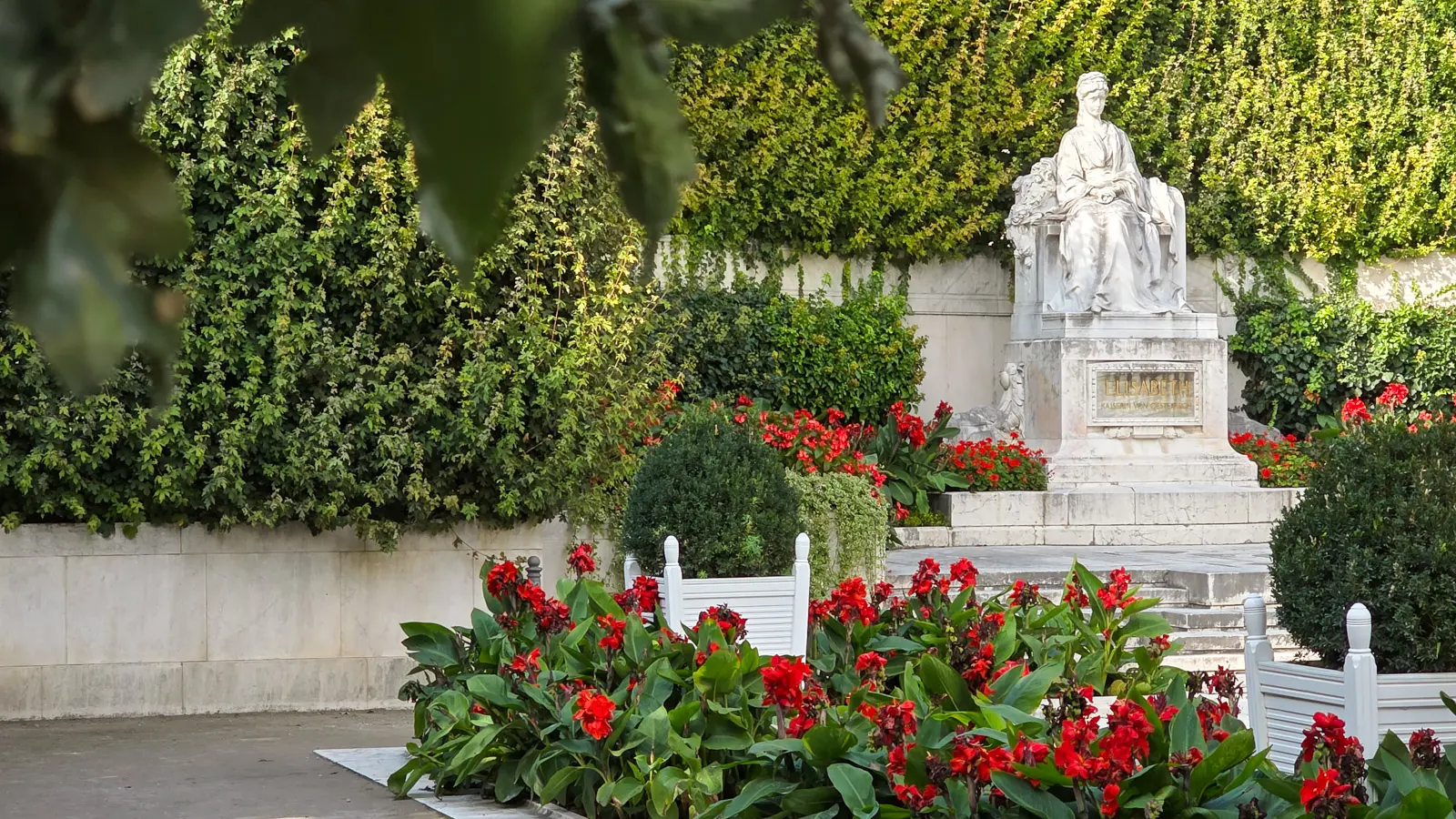
One of the most contemplative corners of Volksgarten is the monument dedicated to Empress Elisabeth of Austria, affectionately known as Sisi. Empress of Austria and Queen of Hungary in the 19th century, Elisabeth was a figure both admired and misunderstood, celebrated for her beauty yet deeply uncomfortable with court life and its rigid expectations. Unlike grand statues meant to command attention, this memorial feels introspective by design. Partially enclosed by greenery, it encourages quiet reflection rather than admiration from afar, allowing visitors to encounter her presence gently and without ceremony.
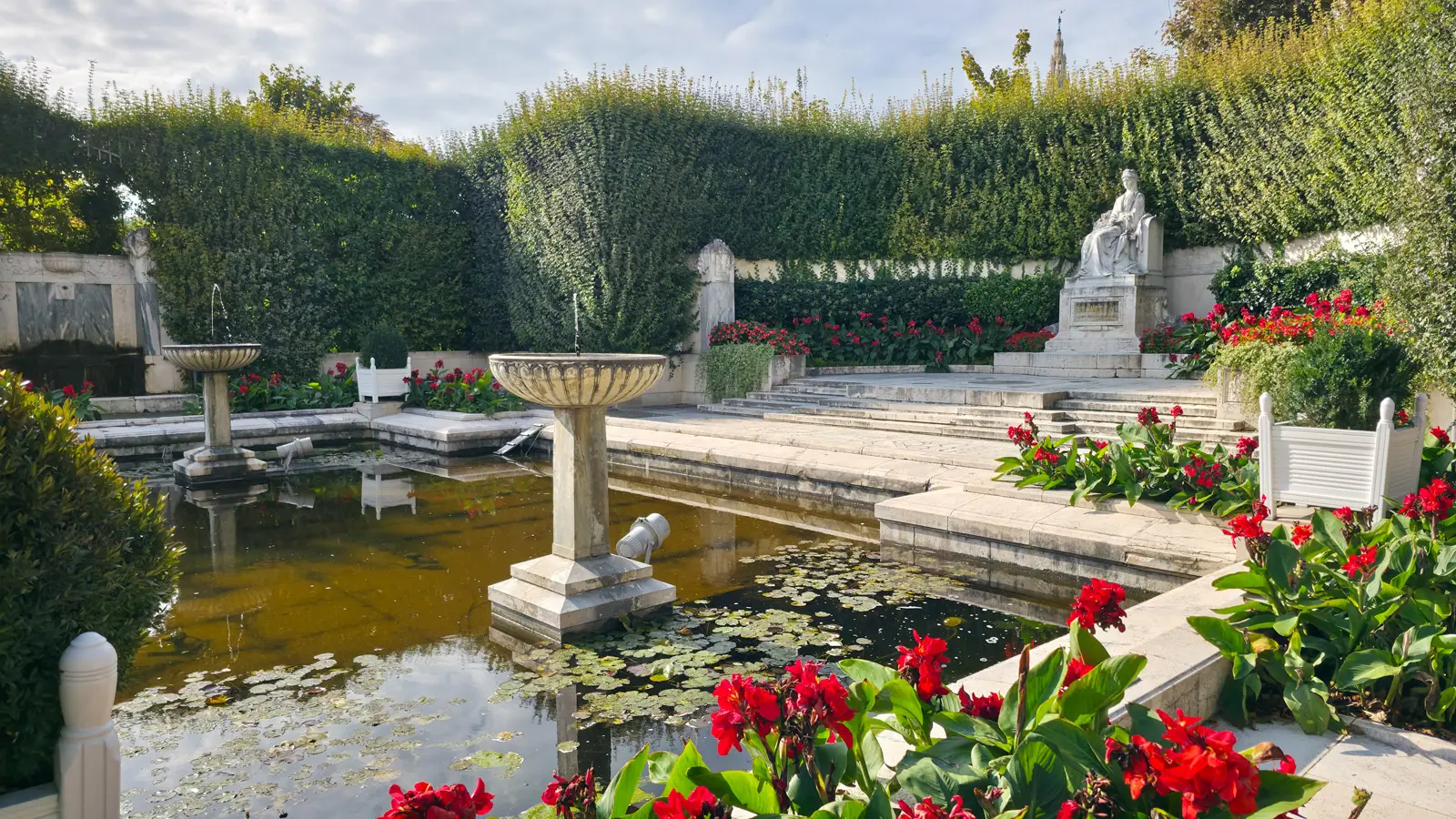
Sisi’s life was marked by restlessness, sensitivity, and a persistent longing for personal freedom. She famously resisted the formality of the Viennese court, spent much of her life traveling, and sought solace in nature, physical movement, and solitude. That complexity makes Volksgarten an especially fitting setting for her monument. It does not dominate the space or assert authority. Instead, it blends into its surroundings, mirroring both Elisabeth’s inward nature and Volksgarten’s own character – graceful, reserved, and deeply human.
A Garden Meant to Be Used
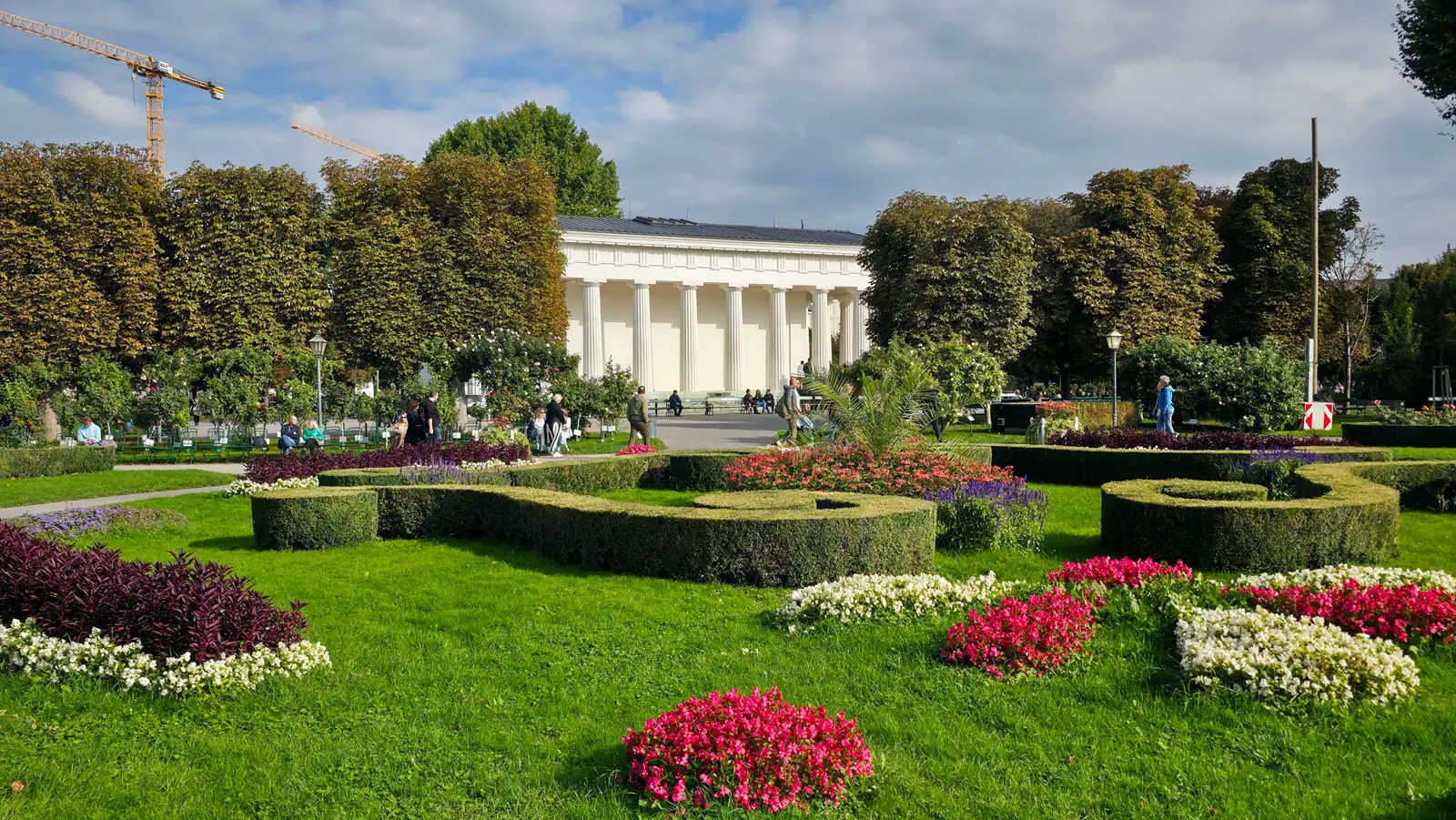
What makes Volksgarten especially memorable is how it is used. On sunny days, people stretch out on the grass with books or closed eyes, while couples sit quietly, sharing space without performance. Locals pass through slowly, unhurried, as if the garden grants permission to exist without agenda. This is not a space curated for spectacle, but one designed for everyday life. Nearby, the Theseustempel – a small classical pavilion built in the early 19th century – stands calmly among the greenery, no longer commanding attention but simply sharing space with it. Volksgarten doesn’t ask you to do anything. It simply gives you room to be.
Planning a Visit to Volksgarten Vienna
Is Volksgarten free to visit?
Yes. Volksgarten is a public park and free to enter, making it one of the most accessible green spaces in central Vienna.
When is the best time to visit Volksgarten?
Volksgarten is beautiful year-round, but spring and early summer are especially rewarding when the rose gardens are in bloom. Autumn brings a quieter, more reflective atmosphere, while winter offers a peaceful stillness that feels uniquely Viennese.
How long should you spend in Volksgarten?
Volksgarten doesn’t demand a set amount of time. Some visitors pass through in fifteen minutes, while others stay for an hour or more. Its beauty lies in flexibility, it adapts to your pace rather than dictating one.
Is Volksgarten close to major sights?
Yes. Volksgarten sits beside the Hofburg and along the Ringstrasse, making it an easy and restorative stop between museums, historic buildings, or a long walk around the city center.
Why Volksgarten Stays With You
Volksgarten stays with you not because it overwhelms, but because it reassures. It shows how a city shaped by empire learned to make room for softness, rest, and everyday beauty, transforming former symbols of power into spaces meant to be shared. Here, history doesn’t press down on you or demand attention. It simply surrounds you – present, gentle, and woven quietly into the rhythm of daily life.
In a city celebrated for its grandeur, Volksgarten offers something quieter and perhaps more lasting: permission to slow down, to sit without purpose, and to experience beauty without urgency. It’s the kind of place that lingers not because of what you do there, but because of how it makes you feel.
Have you visited Volksgarten during your time in Vienna, or is it a place you’d like to experience one day? I’d love to hear how you enjoy finding moments of calm while traveling – feel free to share your thoughts below!
Until our next adventure,

🌟 Everything You Need to Plan Your Dream Trip in 2026
- 🌟 Luxury Hotels - Find premium stays with Booking.com & Hotels.com
- 🏡 Vacation Rentals - Discover unique properties on VRBO
- 🏞️ Guided Tours - Explore with Viator or GetYourGuide
- 🎫 Attraction Tickets - Skip the lines with Tiqets
- 🚢 Ocean Cruises - Set sail with Cruise Direct
- 📱 International SIMs - Stay connected with Saily
- 🚗 Car Rentals - Budget-friendly options from Discover Cars
- 🌐 Secure VPNs - Browse safely with NordVPN
- 💶 Currency Exchange - Best rates with Wise
- 🗣️ Learn Languages - Master the local language with Babbel and Rosetta Stone