
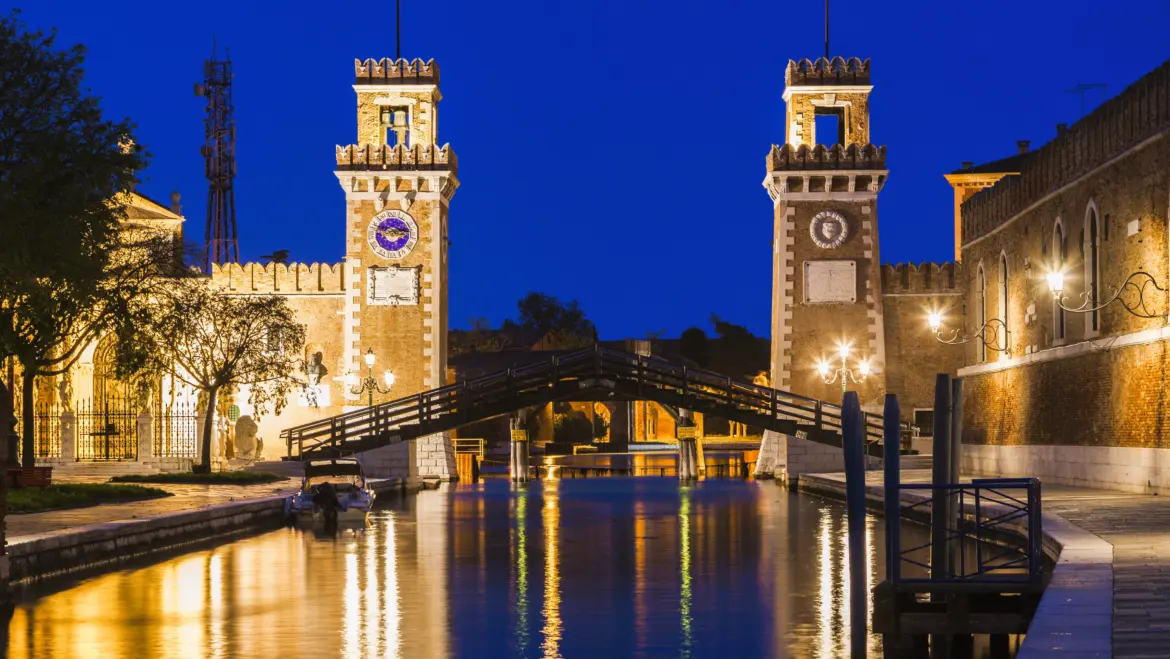
Hello, fellow adventurers! Some places in Venice dazzle immediately – grand squares, shimmering basilicas, postcard-perfect canals. The Venetian Arsenal (Arsenale di Venezia) works differently. It doesn’t sparkle. It doesn’t perform. It stands quietly, solid and assured, carrying centuries of purpose within its walls.
Located in the Castello district, the Arsenal is one of the most important sites in Venice, and one of the least fully understood. Long before Venice was admired for beauty, it was respected for precision, organization, and power. The Arsenal was the engine behind that reputation. To walk past it today is to brush against the industrial heart that once sustained an empire.
What Is the Venetian Arsenal?
The Venetian Arsenal (Arsenale di Venezia) was the Venetian Republic’s state-owned shipyard complex, founded in the early 12th century in Castello. At its height, it was Europe’s largest industrial complex, employing thousands of specialized workers (arsenalotti) who perfected an early assembly-line system to produce warships and merchant vessels with astonishing efficiency. The Arsenal could produce a fully-equipped galley in a single day, making Venice the dominant Mediterranean naval power for centuries. Today, parts host Venice Biennale exhibitions while preserving this historic site’s monumental architecture.
Arsenale di Venezia: The Backbone of a Maritime Republic
Founded in the early 12th century, the Venetian Arsenal became the beating heart of the Venetian Republic’s naval and commercial dominance. At its height, it was the largest industrial complex in Europe – a vast, self-contained shipbuilding center where warships, merchant vessels, ropes, sails, weapons, and supplies were produced with astonishing efficiency.
What made the Arsenal extraordinary was not just its scale, but its organization. Long before the Industrial Revolution, Venice had perfected a system of specialized labor and sequential production. Ships moved through the Arsenal almost like products on an early assembly line, passing from one workshop to the next. At times of urgency, the Republic could produce a fully equipped galley in a single day, a feat that astonished visiting dignitaries and terrified rival powers. This was not romantic Venice. This was disciplined, methodical, strategic Venice.
A City Within a City: The Arsenalotti and Their Craft
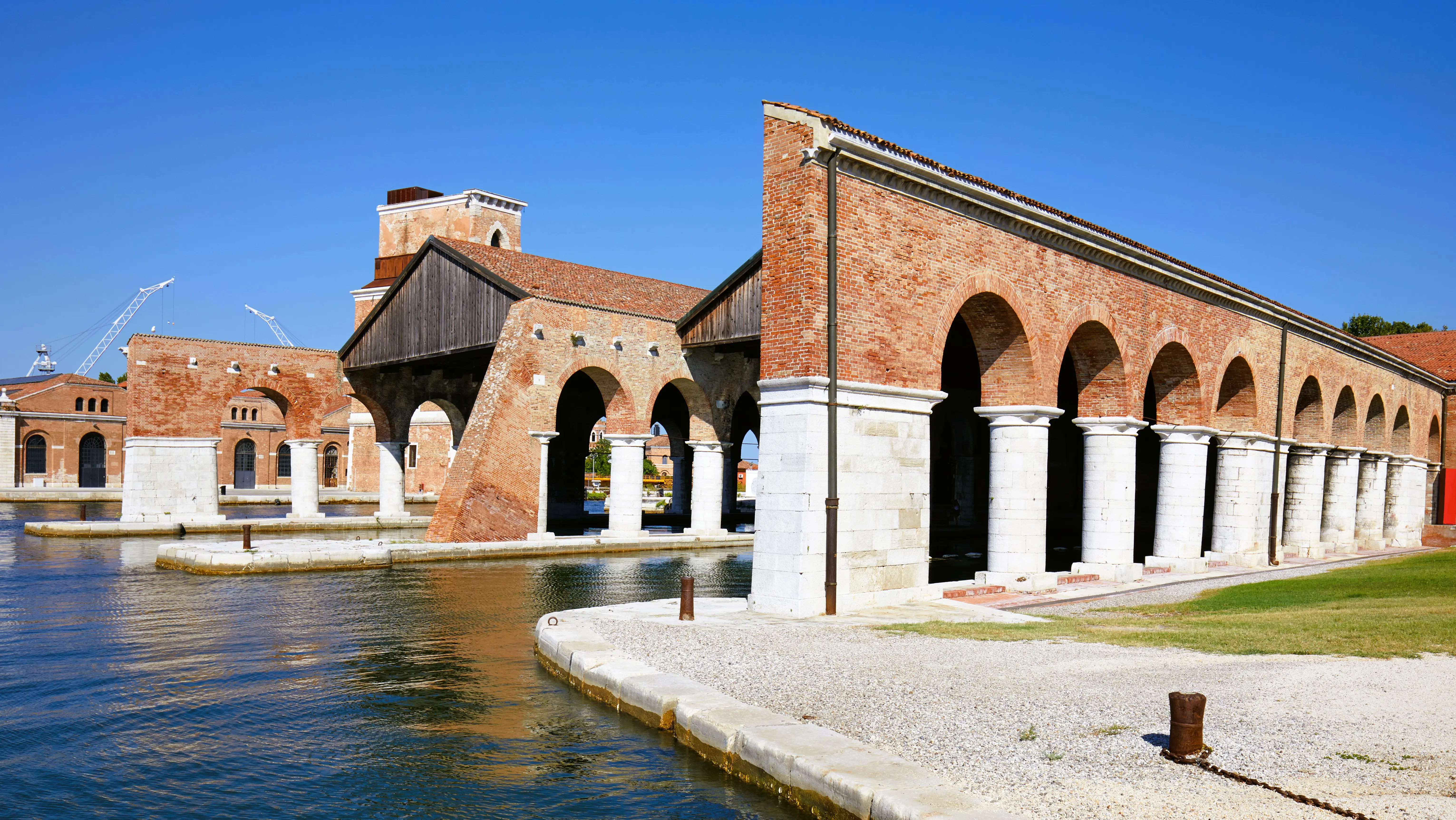
At its peak, the Arsenal employed thousands of workers, the arsenalotti, who formed a distinct and respected social class. Their skills were guarded carefully, their loyalty prized. Knowledge here was power, and secrecy was essential. Foreigners were rarely admitted, and information about shipbuilding techniques was tightly controlled.
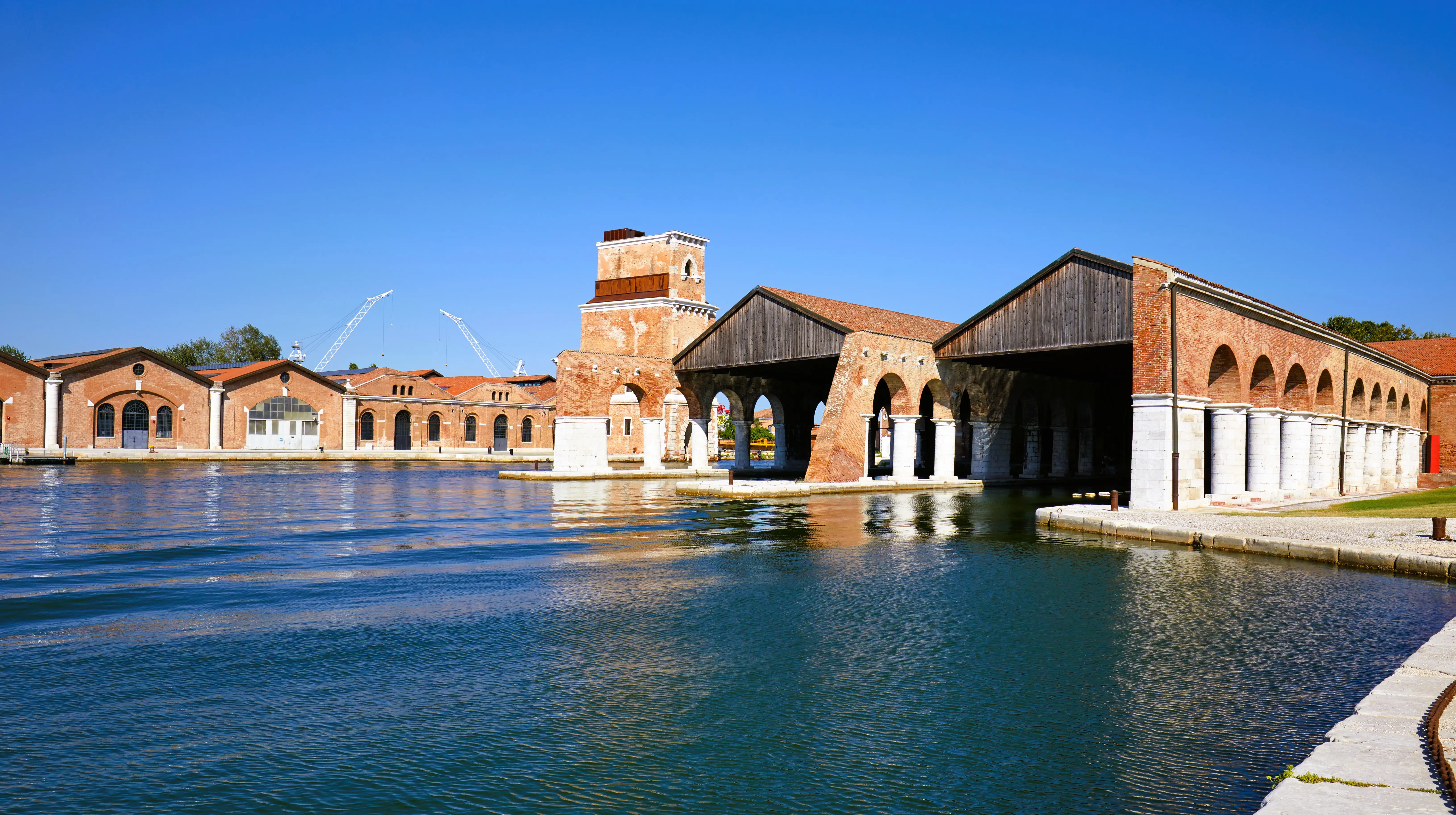
Inside the Arsenal’s walls, everything served a purpose. Timber was seasoned and shaped. Metals were forged. Sails were cut. Ropes were twisted in long, specialized buildings. The Republic understood that control of the sea meant control of trade, security, and influence – and the Arsenal made that control possible. Venice’s elegance, wealth, and global reach were built here, plank by plank.
The Monumental Entrance and Its Silent Symbols
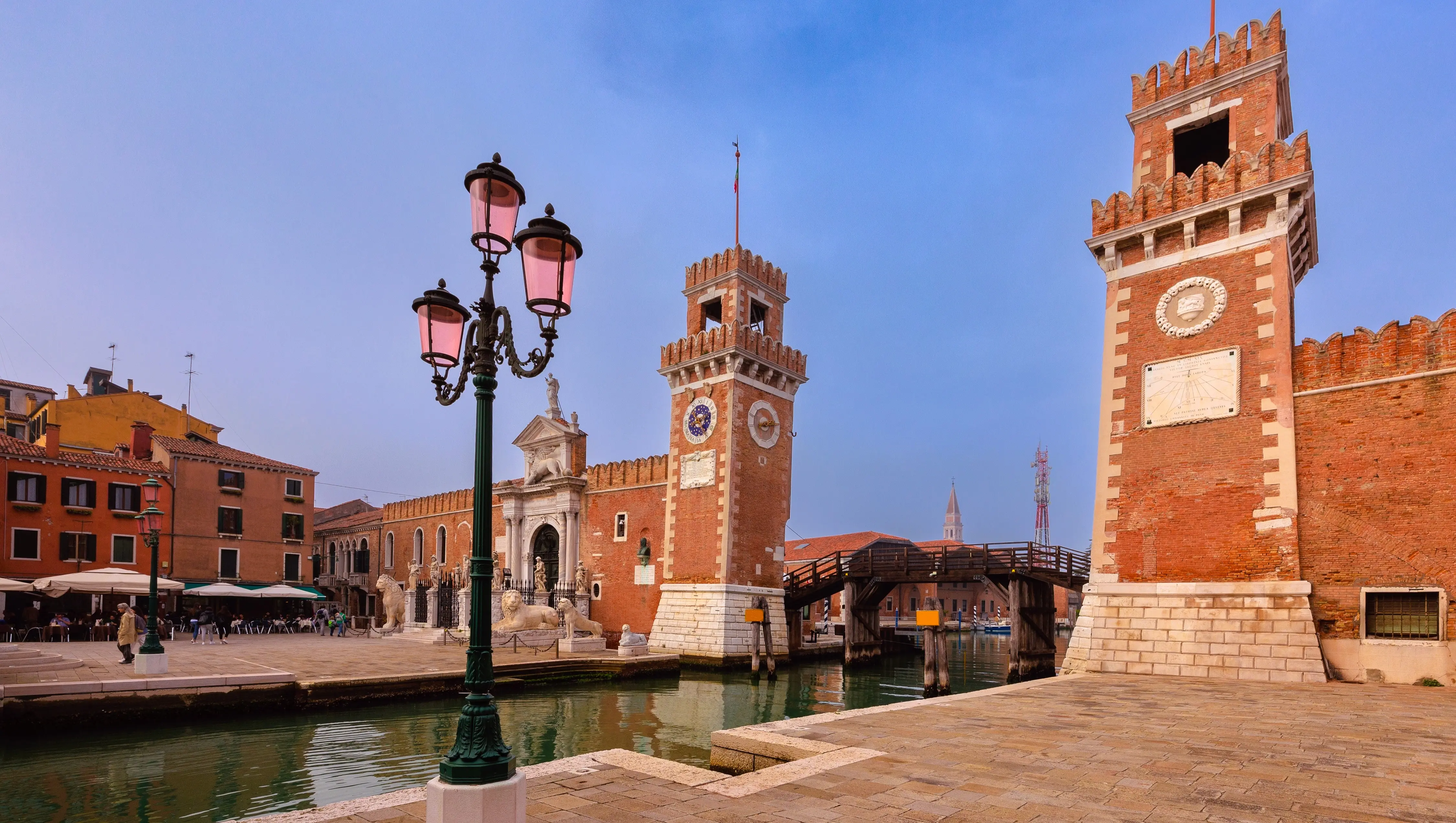
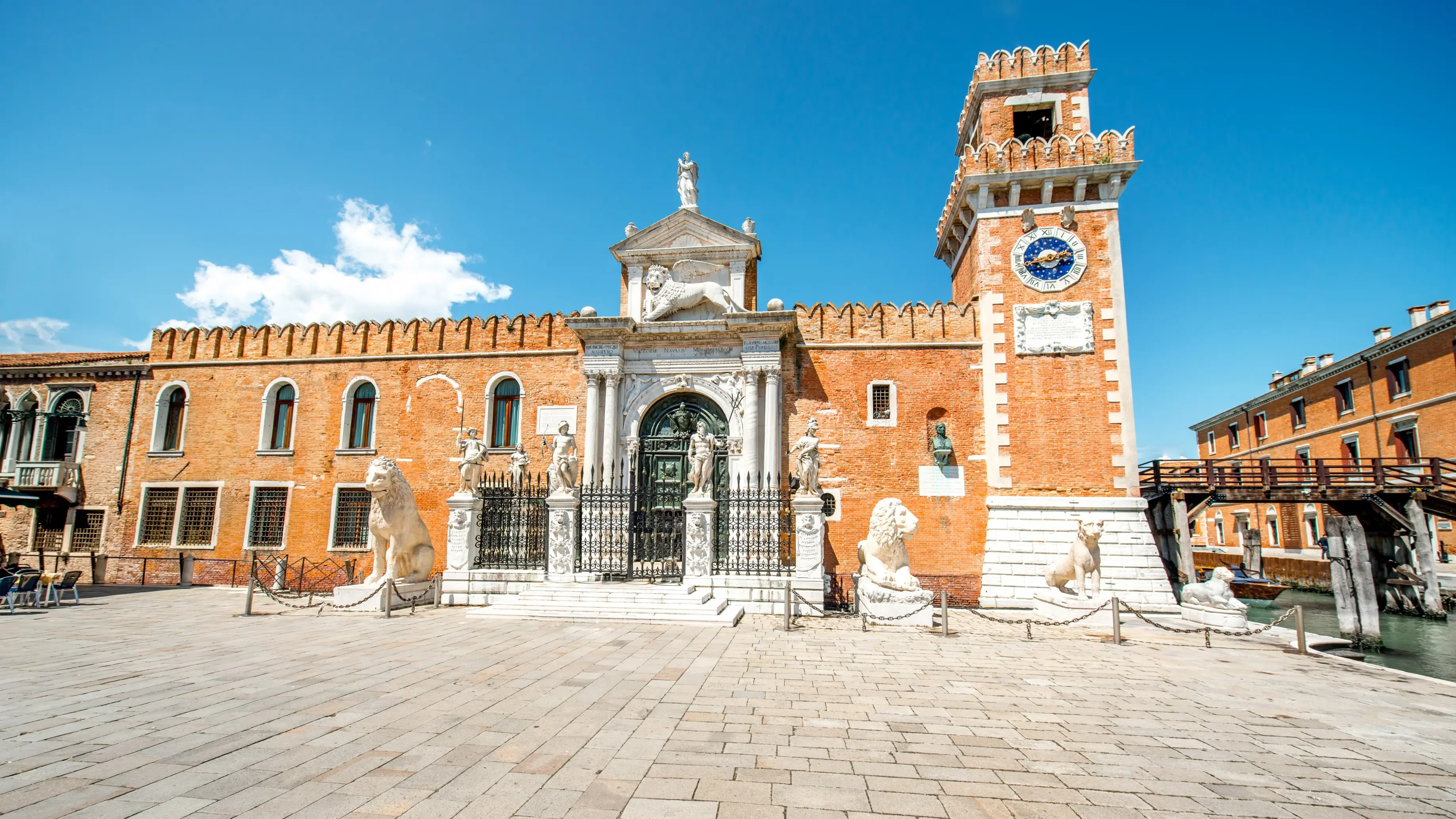
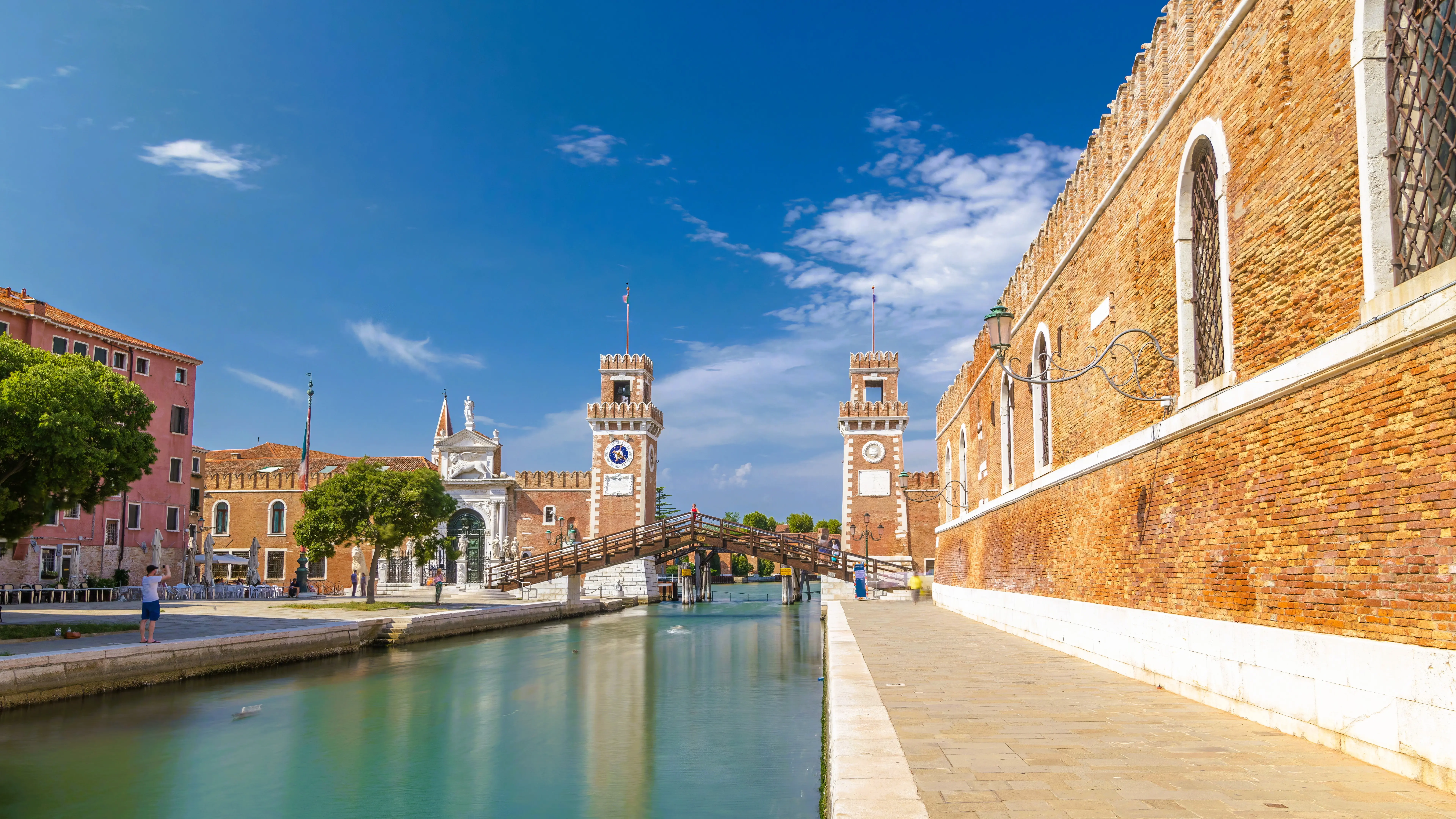
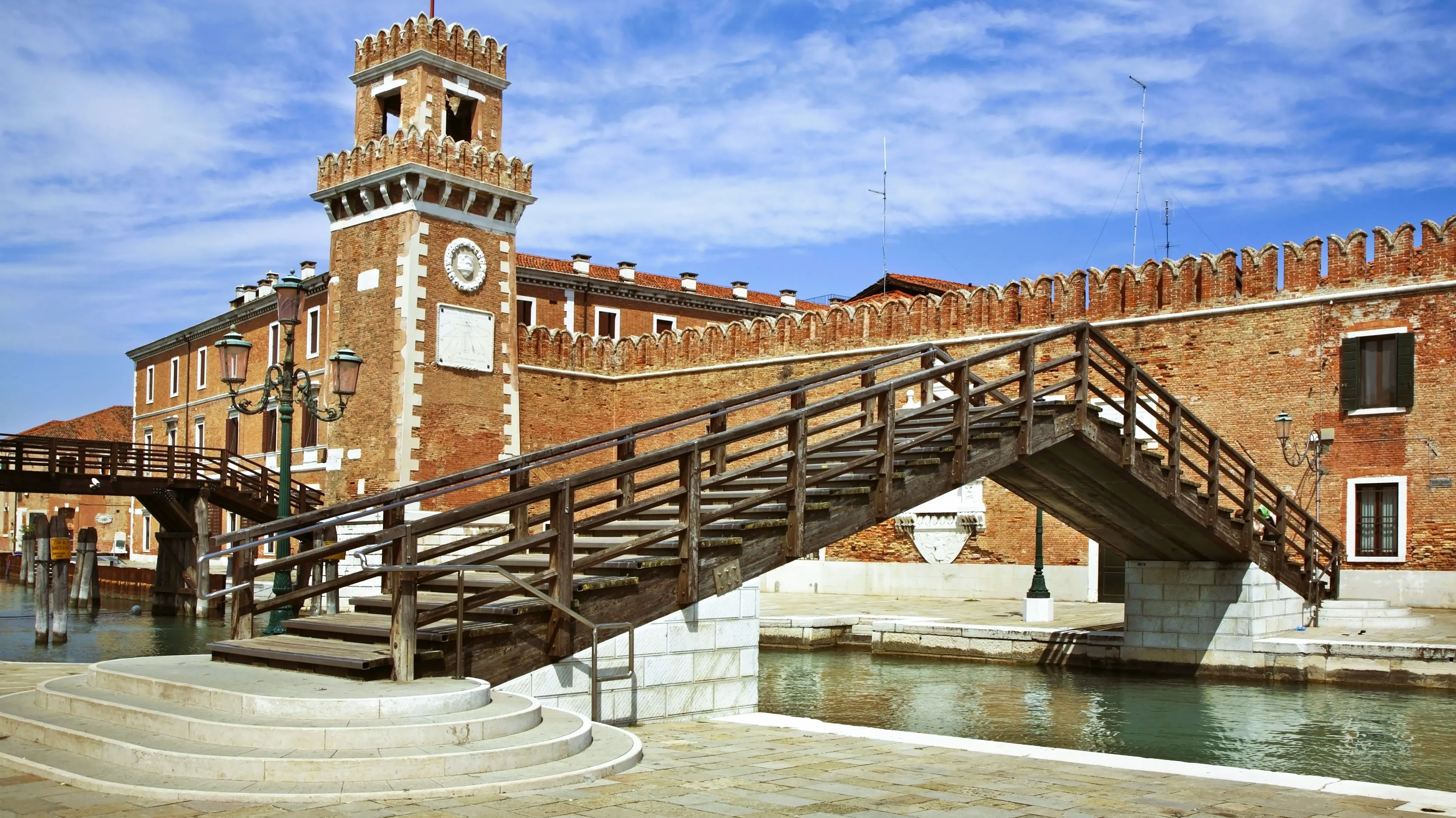
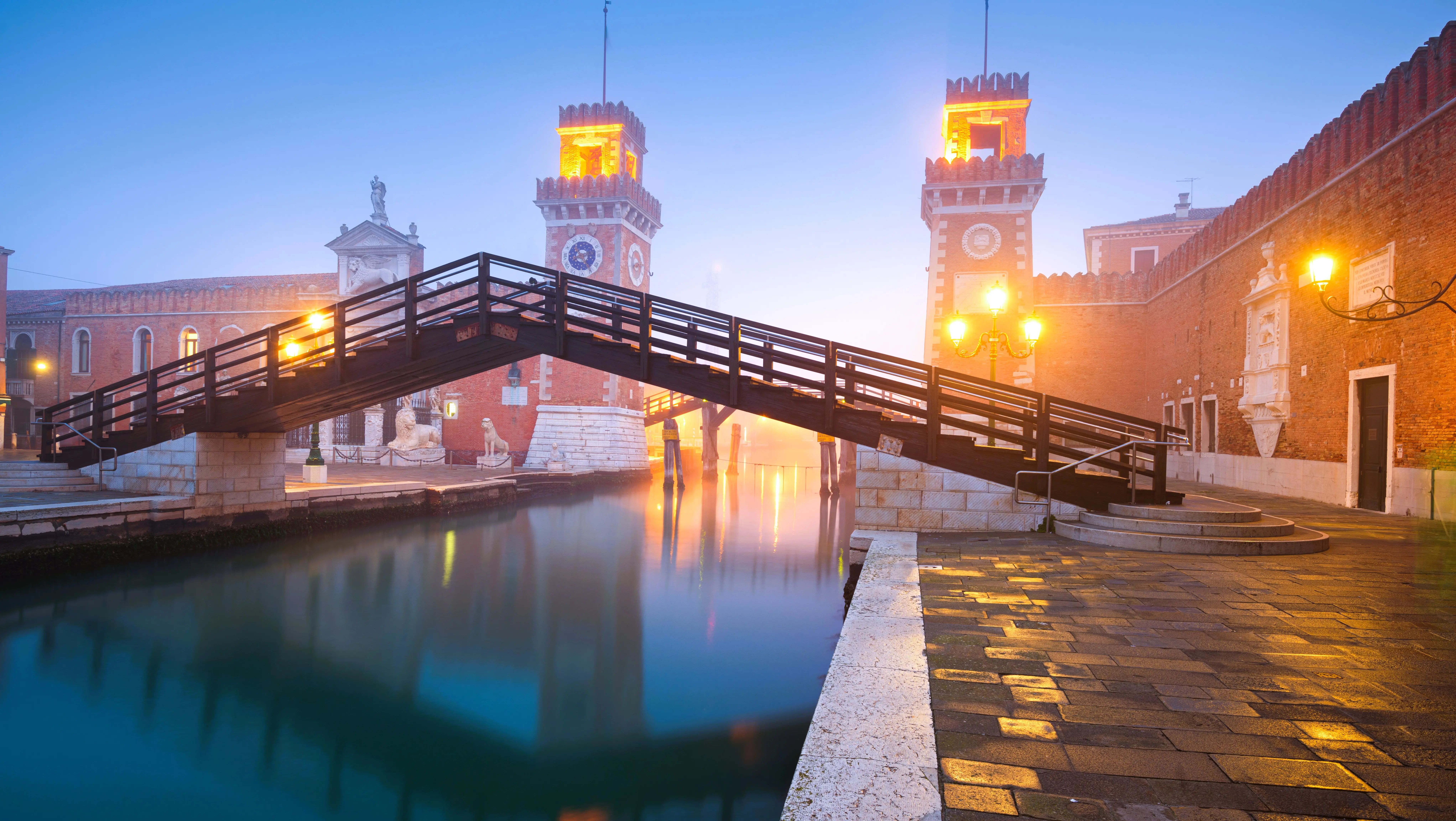
Approaching the Arsenal today, you’re greeted by one of its most striking features: the monumental gate flanked by towers and guarded by ancient stone lions. This entrance, built in 1460, was intentionally imposing – not decorative, but declarative.
The lions are more than symbols of Venice. They are war trophies seized from conquered Greek territories, some dating back to antiquity – statements of authority, vigilance, and reach made tangible. Positioned here, at the threshold of production and power, they reminded all who passed that the Republic’s strength was not abstract. It was engineered, maintained, and defended. Even now, standing before the gate, there’s a sense of restraint rather than grandeur. The Arsenal does not announce itself loudly. It simply exists, confident in what it once was – and what it made possible.
From Secrecy to Adaptation: The Arsenal Today
With the fall of the Venetian Republic in 1797, the Arsenal’s central role slowly diminished. Control passed through various regimes, and large portions of the complex fell into partial disuse. Yet unlike many former industrial sites, the Arsenal was never erased.
Today, parts of the Arsenale have been thoughtfully repurposed. Sections host exhibitions for the Venice Biennale, blending contemporary art and architecture with historic space. Other areas remain closed, quiet, or administrative – reinforcing the sense that this place still resists full exposure. Walking around the Arsenal now, you feel continuity rather than nostalgia. The scale remains humbling. The silence feels intentional. This is not a site frozen in time, but one adapting carefully, just as Venice itself has always done.
Why the Arsenal Changes How You Understand Venice
The Venetian Arsenal forces a recalibration. It reminds you that Venice is not only a city of beauty and reflection, but one of logistics, labor, and foresight. It reveals a republic built as much on discipline as on artistry, on systems as much as symbols. In Castello, surrounded by lived-in streets, quiet canals, and daily routines, the Arsenal feels especially grounded. It anchors the neighborhood historically and emotionally. This is where Venice prepared itself for the world – not with spectacle, but with structure. Understanding the Arsenal means understanding that Venice’s survival was never accidental. It was planned, engineered, and defended – quietly, efficiently, and relentlessly.
Why the Venetian Arsenal Stays with You
The Arsenal stays with you because it doesn’t ask to be admired. It asks to be understood. Long after the glittering façades blur together, you remember the solidity of its walls, the restraint of its design, and the awareness that thousands of hands once worked here toward a shared purpose. This was not a place of individual genius, but of collective intelligence – where innovation was systematic, labor was coordinated, and progress was measured in precision rather than display.
Standing here, you sense a different kind of Venetian pride: practical, disciplined, and forward-looking. The Arsenal teaches you that Venice’s resilience lies not only in its ability to enchant, but in its capacity to organize, adapt, and endure over centuries. It reminds you that beneath the city’s beauty lies structure – and beneath its romance, resolve. The Arsenal is not romantic, and that is precisely its power.
Bubbly Tips
- Where: Castello district, east of central Venice, near the Venice Biennale exhibition spaces
- Best time to visit: Morning or late afternoon, when the light softens and the area feels calm and contemplative
- How to approach it: Walk slowly around the perimeter; the Arsenal’s immense scale and symmetry reveal themselves gradually
- Pair it with: A stroll through Castello’s residential streets, Campo Santi Giovanni e Paolo, or a walk toward San Zaccaria
- Cultural note: Parts of the Arsenale are used during the Venice Biennale, blending historic architecture with contemporary art
- Photography tip: Brick textures, towers, and reflections photograph beautifully in low-angle light
- Crowd level: Far quieter than Venice’s central landmarks – ideal for reflective exploration
- Mindset: This is a place to absorb, not rush – let history speak quietly
Final Thoughts
The Venetian Arsenal reveals a side of Venice that often remains unseen – a city built not just on beauty, but on intention. It shows how power can be quiet, how innovation can be disciplined, and how endurance is often the result of careful design rather than chance.
Have you explored the Arsenale, or would you add it to your Venice itinerary? I’d love to hear your thoughts!

🌟 Everything You Need to Plan Your Dream Trip in 2026
- 🌟 Luxury Hotels - Find premium stays with Booking.com & Hotels.com
- 🏡 Vacation Rentals - Discover unique properties on VRBO
- 🏞️ Guided Tours - Explore with Viator or GetYourGuide
- 🎫 Attraction Tickets - Skip the lines with Tiqets
- 🚢 Ocean Cruises - Set sail with Cruise Direct
- 📱 International SIMs - Stay connected with Saily
- 🚗 Car Rentals - Budget-friendly options from Discover Cars
- 🌐 Secure VPNs - Browse safely with NordVPN
- 💶 Currency Exchange - Best rates with Wise
- 🗣️ Learn Languages - Master the local language with Babbel and Rosetta Stone