
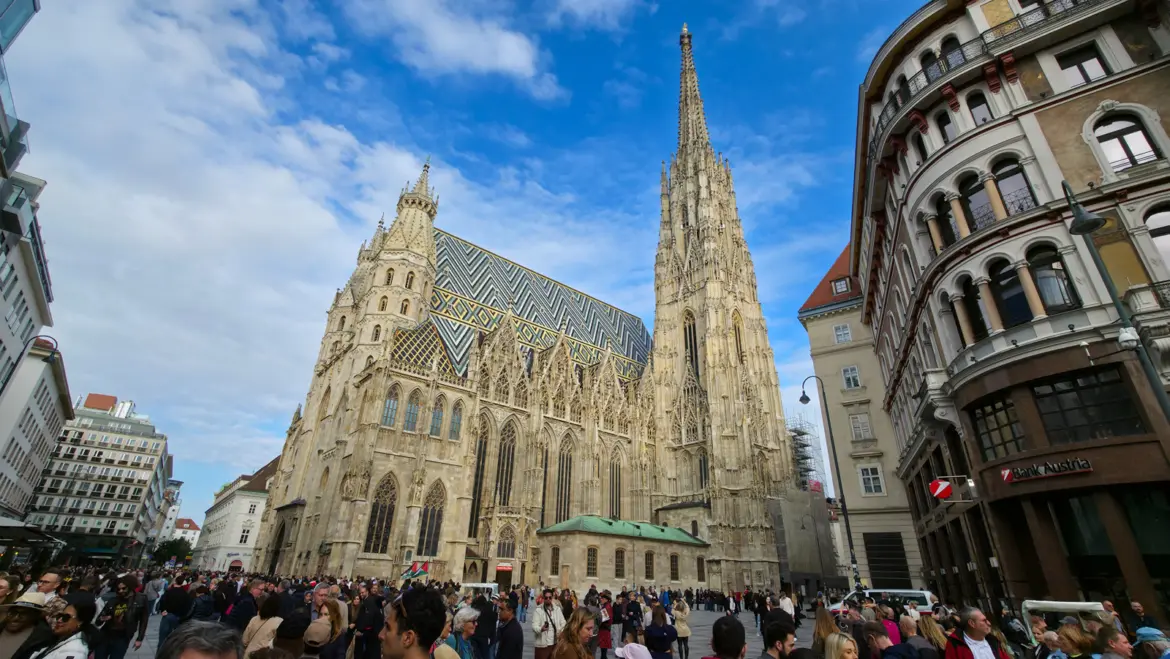
Hello my wonderful readers! During my visit to beautiful Vienna, there was one landmark that seemed to rise above everything else, both literally and symbolically. Standing proudly in the very heart of the city is the magnificent St. Stephen’s Cathedral, known locally as Stephansdom. With its soaring Gothic tower, dazzling tiled roof, and centuries of history etched into its stone walls, this extraordinary cathedral has watched over Vienna for more than 800 years.
Walking through the lively square of Stephansplatz and approaching the cathedral for the first time is an unforgettable experience. The scale, the intricate architecture, and the sense of history surrounding the building immediately transport visitors into Vienna’s rich past. Today, I’m excited to share the story of this remarkable cathedral – a place where architecture, history, music, and faith come together in one of Europe’s most iconic landmarks.
St. Stephen’s Cathedral at a Glance
📍 Location: Stephansplatz 3, 1010 Vienna
⛪ Founded: 1137 (Treaty of Mautern)
🔥 Major events: Fire 1258, Gothic rebuild from 1359 (Rudolf IV), roof destroyed April 1945, rebuilt postwar
🗼 Steffl (south tower): 136 metres — Austria’s tallest church tower, built 1368–1433, 343 steps to viewing platform
🏰 Heathen Towers (Heidentürme): Romanesque, 13th century — oldest surviving parts of the cathedral
🎨 Roof: ~230,000 glazed tiles — white, yellow, green, brown — featuring Habsburg double-headed eagle
🎻 Mozart connection: Married Constanze Weber here 4 August 1782; funeral rites 5 December 1791
🎭 Interior highlights: Gothic nave with ribbed vaults, late Gothic pulpit with “window-gazer” self-portrait, Baroque altars and chapels
💰 Entry: Free (main nave). Separate tickets for tower, catacombs, guided tours.
⏱️ Best time: Early morning or late afternoon for quiet atmosphere
The Origins of Stephansdom
The history of St. Stephen’s Cathedral stretches back to the 12th century, when Vienna was still a growing medieval settlement rather than the imperial capital it would later become. Construction of the first church began in 1137 following the Treaty of Mautern, an agreement between the Babenberg rulers of Austria and the Bishop of Passau that helped shape Vienna’s early religious landscape. The completed structure was consecrated in 1147, notably in the presence of Conrad III of Germany and other nobles preparing to depart on the Second Crusade. Built in the Romanesque style that dominated European architecture at the time, this early church laid the foundation for the monumental cathedral that would eventually rise on the site.
The building’s early history was not without drama. A great fire in 1258 destroyed much of the original structure, prompting a major rebuilding effort that expanded and strengthened the Romanesque church. The renewed building was consecrated in 1263, and traces of this period can still be seen today in the cathedral’s western façade. Here stand the famous Heathen Towers – Heidentürme – massive Romanesque towers constructed partly with stone reused from earlier structures beneath the city. These towers remain among the oldest surviving elements of the cathedral and offer a glimpse into Vienna’s medieval past.
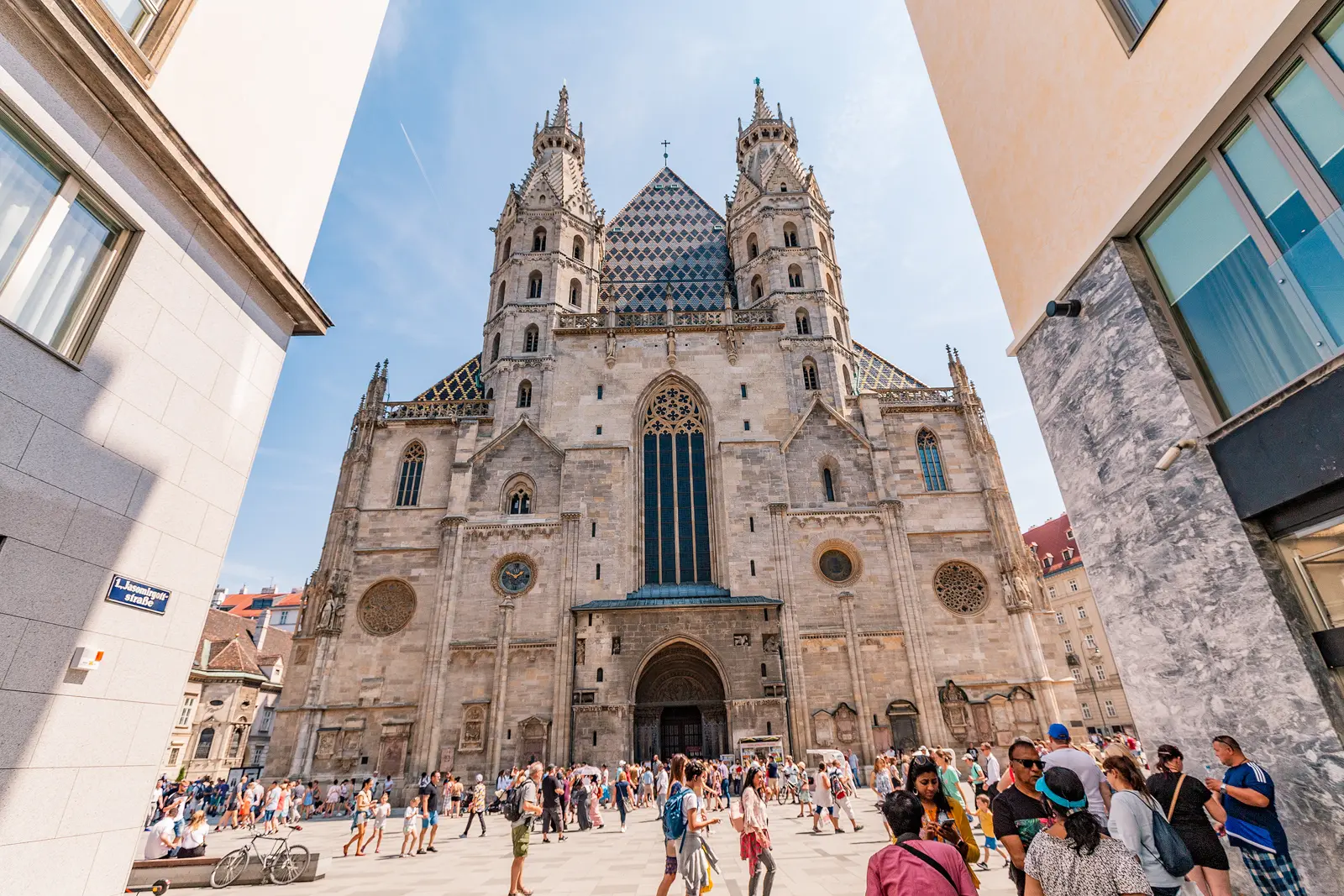
The most transformative moment in the cathedral’s development came in 1359, when Rudolf IV Duke of Austria launched an ambitious Gothic reconstruction that would shape the cathedral’s character for centuries. Rudolf’s vision was not purely architectural. By creating a grand Gothic cathedral, he sought to elevate Vienna’s prestige within the Holy Roman Empire and lay the groundwork for the city to become an independent bishopric, rather than remaining under the authority of Passau. The Gothic style he championed allowed architects to build upward with unprecedented ambition, creating soaring arches, tall windows, and dramatic vertical lines that draw the eye toward the heavens. The result was a magnificent three-aisled hall church stretching more than 100 metres in length, a structure that reflected both religious devotion and political aspiration.
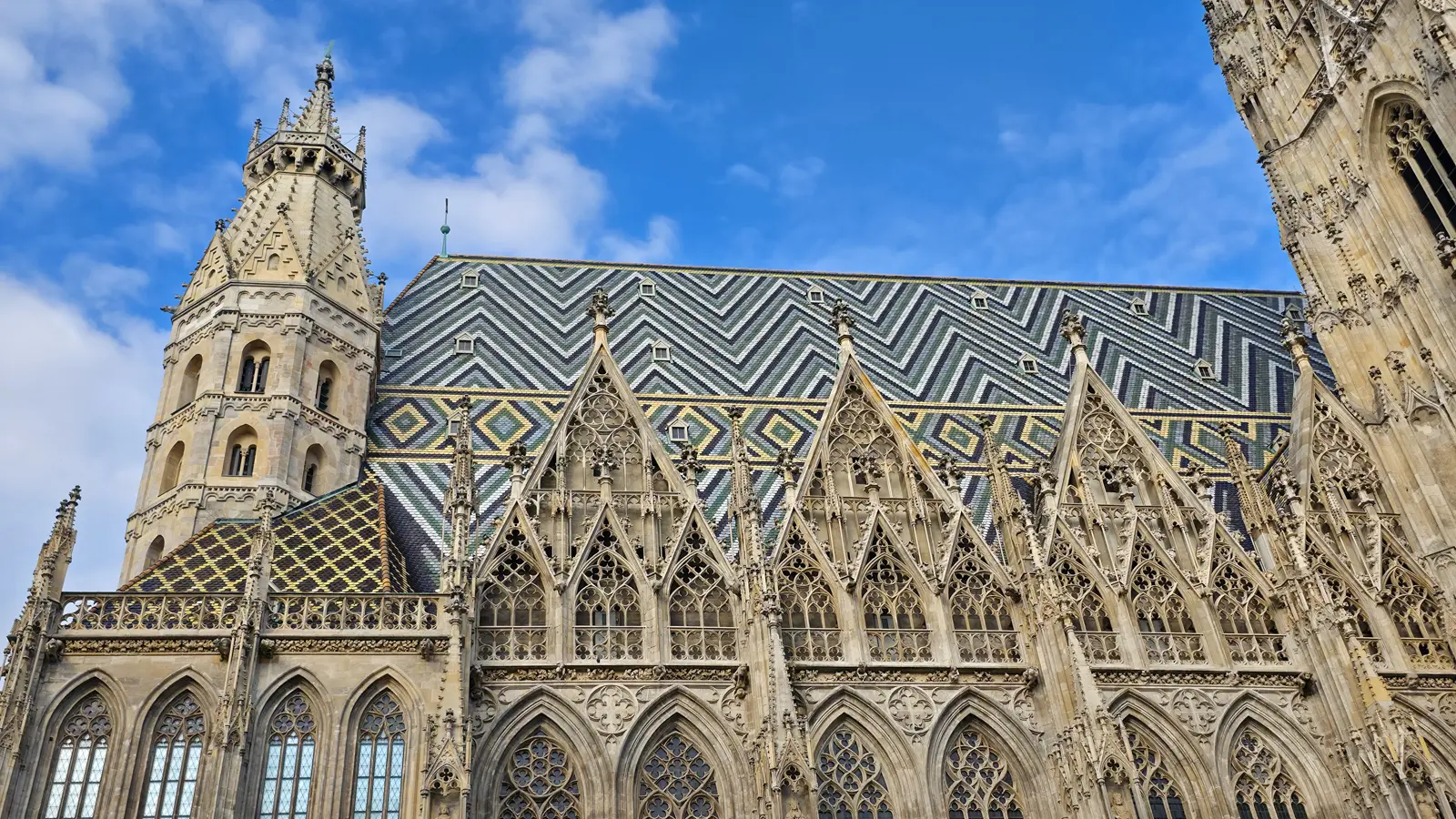
Over the centuries, successive generations of builders, artists, and craftsmen contributed to the cathedral’s evolution, each addition reflecting the changing artistic tastes and ambitions of the time. By the late Middle Ages, Stephansdom had become not only Vienna’s principal church but also a powerful symbol of the city’s growing importance within the Holy Roman Empire.
The Tower of Vienna: The “Steffl”
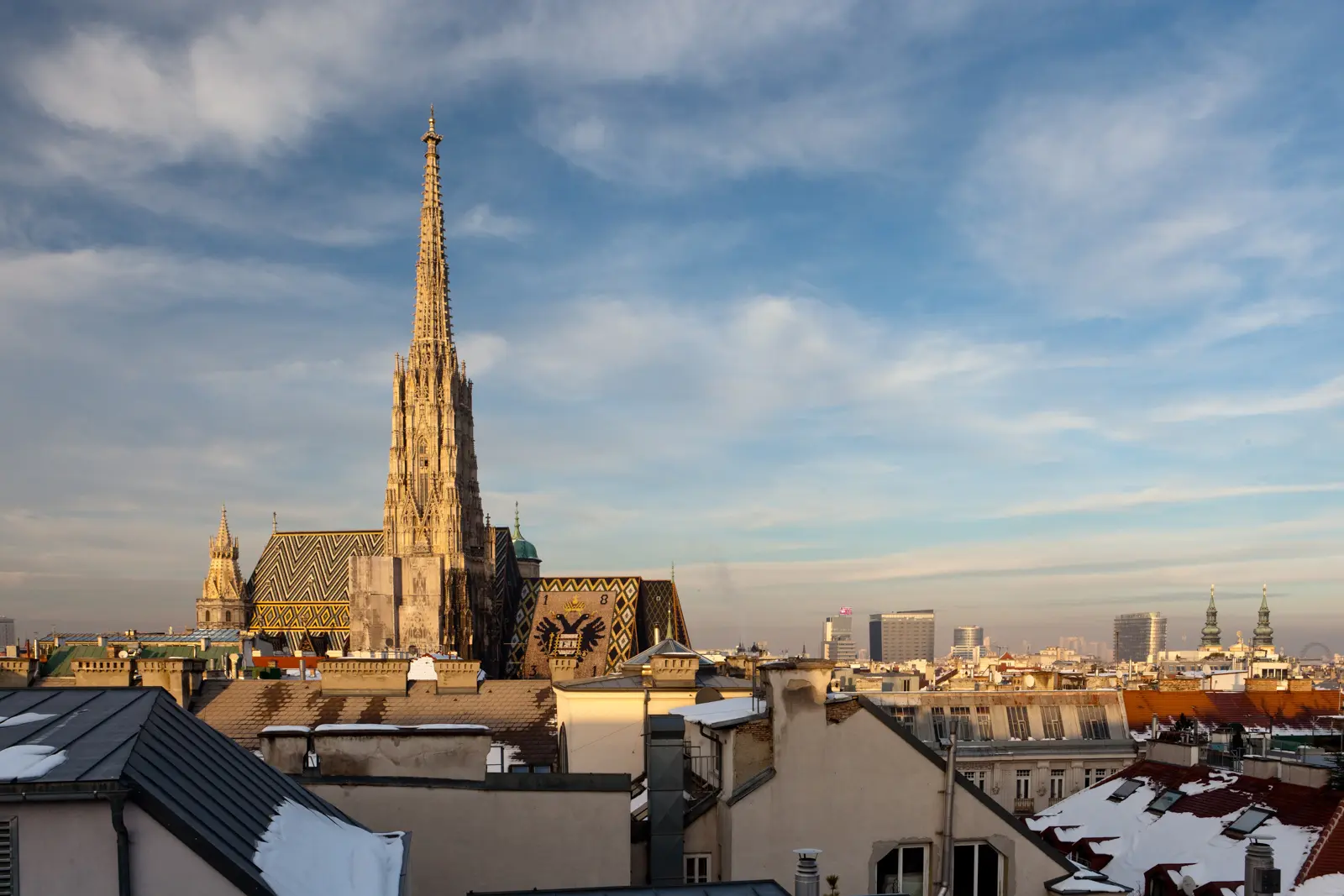
The most iconic feature of St. Stephen’s Cathedral is its towering south spire, affectionately known by locals as Der Steffl. Rising approximately 136 metres into the sky, it dominated Vienna’s skyline for centuries and remains the tallest church tower in Austria. For generations of Viennese citizens, the Steffl has served as both a landmark and a symbol of the city itself, visible from far beyond the historic center.
Construction of the tower began in 1368 and required more than six decades of painstaking work by master masons and stone carvers before it was completed in 1433. The finished structure stands as one of the great masterpieces of Gothic engineering. Intricate stone tracery, delicate pinnacles, and an elegant tapering silhouette create a remarkable impression of lightness despite the immense weight of the stone structure. Many of the decorative sculptures visible on the tower today are carefully crafted replicas, while the fragile originals have been preserved in museums to protect them from centuries of weather and pollution.
For much of its history, the tower served an important practical function. Watchmen stationed at the summit scanned the city and surrounding countryside for signs of fire or approaching enemies. During critical moments in Vienna’s past – including the Ottoman sieges of 1529 and 1683 – the tower offered a strategic vantage point over the city’s defenses. This watchman tradition continued remarkably late, remaining in place until December 31, 1955.
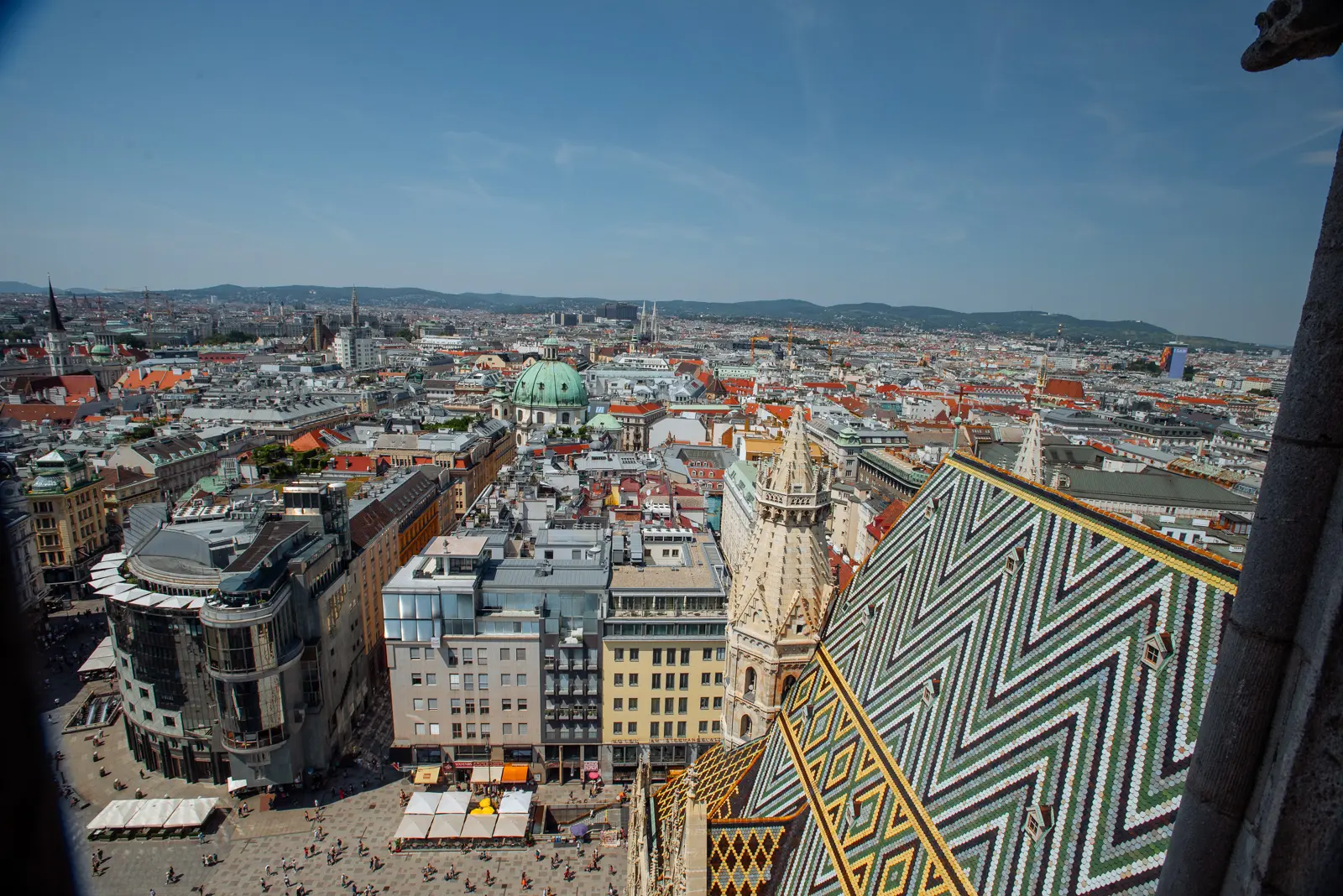
Today visitors can climb the tower’s 343 steps to reach a viewing platform that offers spectacular panoramic views of Vienna. From this height the city’s historic center unfolds below: the rooftops of the Innere Stadt, the sweeping curve of the Ringstrasse, and the distant hills that frame the Austrian capital. Standing atop the Steffl provides a powerful reminder of how St. Stephen’s Cathedral has watched over Vienna for more than six centuries.
The Remarkable Roof of Stephansdom
One of the most distinctive features of St. Stephen’s Cathedral is its extraordinary roof. Covered in approximately 230,000 glazed tiles in shades of white, yellow, green, and brown, the steeply sloping surface forms vibrant geometric patterns that shimmer in the changing light. These colorful tiles create large heraldic designs that reflect Austria’s imperial history. On the northern side of the roof appears the magnificent double-headed eagle of the Habsburg Empire, while the southern side displays the coats of arms of the city of Vienna and the Republic of Austria. Seen from nearby rooftops or from the cathedral towers, the roof becomes a vast mosaic that transforms the building into a monumental work of art.
Some visitors enjoy searching for a small curiosity hidden among the patterns. Guides often point out that one of the Austrian coats of arms appears to face the “wrong” direction, a detail that has become part of the cathedral’s folklore. Whether an intentional design choice or a simple construction oversight, the story adds a charming human touch to an otherwise perfectly ordered pattern of tiles.
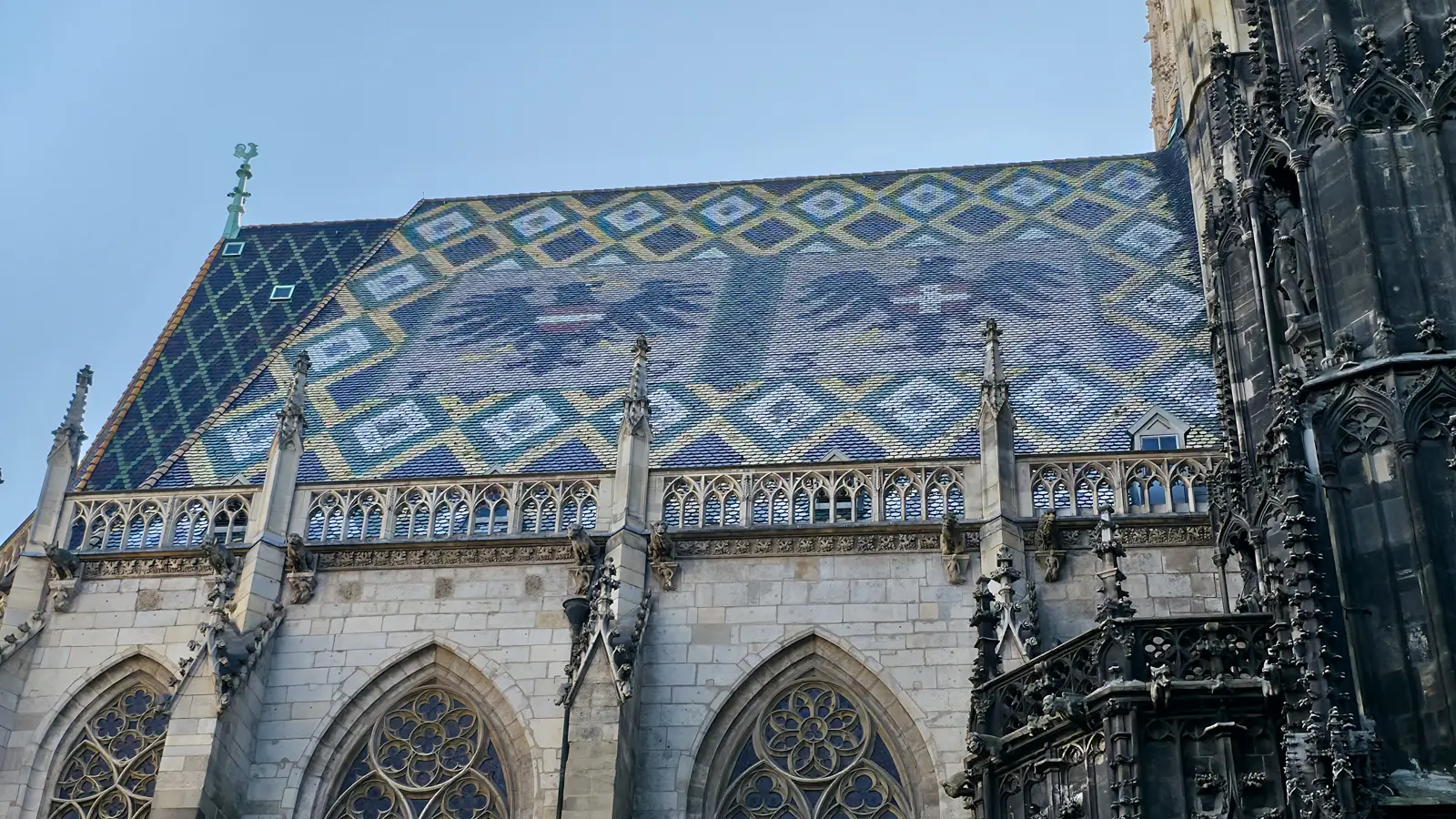
What many visitors do not realize is that the roof they are admiring is not medieval at all. The original roof was destroyed in a devastating fire in April 1945 near the end of the Second World War, when flames spreading from nearby buildings ignited the cathedral’s wooden framework and caused the entire structure to collapse. The reconstructed roof, completed in 1950, rests on an internal framework of roughly 600 metric tons of steel – a hidden feat of modern engineering beneath a surface that appears centuries old.
The roof’s steep angle also serves a practical purpose. Designed to shed snow and rain efficiently during Vienna’s cold winters, the dramatic slope protects the cathedral’s structure while contributing to its striking silhouette. The combination of beauty and functionality – whether medieval or modern – perfectly reflects the craftsmanship and ingenuity that have defined Stephansdom throughout its long history.
Inside the Cathedral
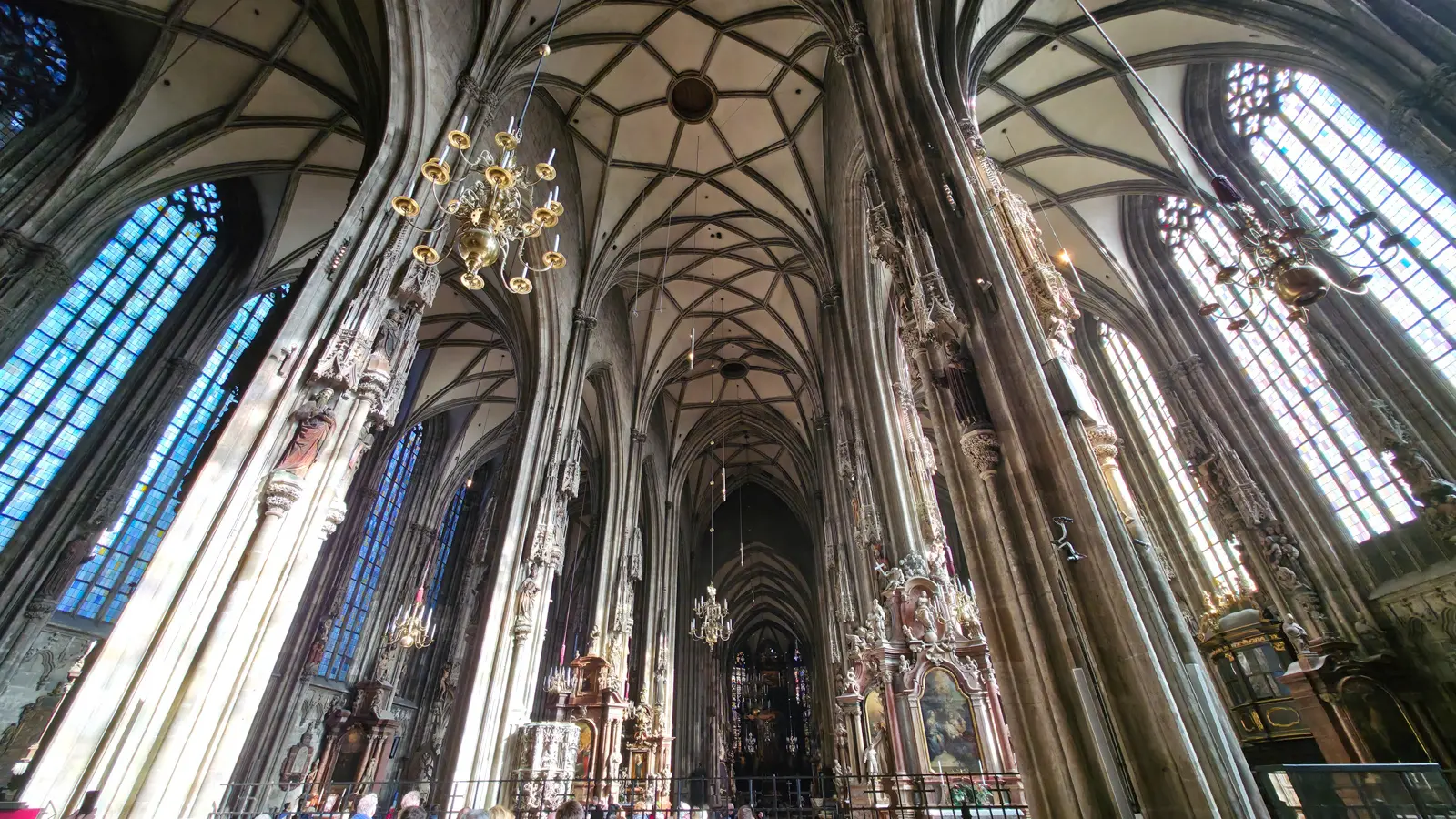
Stepping inside St. Stephen’s Cathedral feels like entering a completely different world from the lively square outside. The bustling energy of Stephansplatz fades quickly, replaced by a quiet, almost reverent atmosphere shaped by centuries of history and devotion. Massive stone columns rise toward the vaulted ceiling like a forest of pillars, their vertical lines emphasizing the Gothic ambition to lift the eye – and the spirit – upward.
The interior of the cathedral is a masterpiece of Gothic design. Soaring pointed arches stretch across the nave, supporting ribbed vaults that create a sense of both height and rhythm within the space. Light filters through tall stained-glass windows, casting subtle colors across the stone walls and adding to the cathedral’s solemn beauty. The scale of the structure is immediately striking: the nave stretches 107 metres in length and 34 metres in width, creating a monumental interior that feels both grand and deeply contemplative, flanked by 18 altars and numerous side chapels each decorated with works of art from different eras.
One of the finest works of art in the nave is the late Gothic pulpit – a masterpiece of sculptural detail featuring the Four Fathers of the Church. Look carefully beneath the staircase and you will find one of the cathedral’s most charming hidden details: a small self-portrait believed to represent the sculptor Anton Pilgram, known as the “Fenstergucker”, peering out from a trompe l’oeil window as if quietly observing the visitors who pass by.
Throughout the cathedral, richly decorated altars, sculptures, and chapels reveal the artistic heritage accumulated over centuries. Baroque elements introduced in later periods blend with the original Gothic architecture, reflecting the evolving tastes and spiritual life of Vienna across generations. Marble columns, gilded decorations, and intricate carvings add layers of detail that reward visitors who take the time to explore slowly.
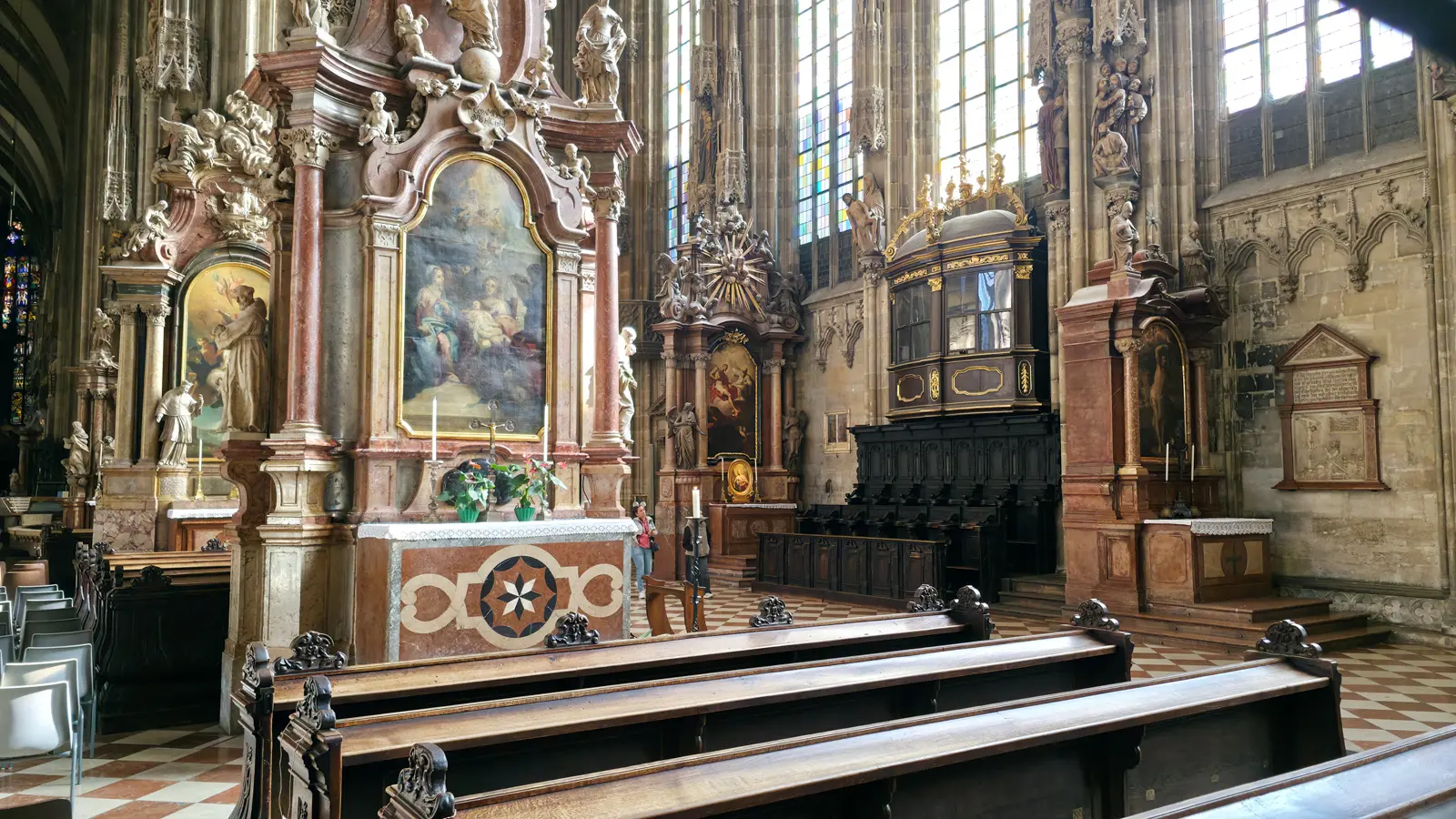
Despite the cathedral’s immense size and artistic richness, the atmosphere remains surprisingly intimate. Visitors often find quiet corners where candles flicker beside devotional statues and soft footsteps echo across the stone floor. Standing within the cathedral, it becomes clear that Stephansdom is not only a monument of architecture but also a living place of worship that continues to shape the cultural and spiritual identity of Vienna today.

Mozart and St. Stephen’s Cathedral
Few places in Vienna are as closely connected to Wolfgang Amadeus Mozart as St. Stephen’s Cathedral. On August 4, 1782, Mozart married Constanze Weber here, beginning a marriage that would accompany some of the most productive years of his career. Nearly a decade later, the cathedral would again play a role in Mozart’s story under very different circumstances. Following his death on December 5, 1791, a simple blessing ceremony took place the following day in the Crucifix Chapel of St. Stephen’s Cathedral. After the brief rite, his body was taken to St. Marx Cemetery for burial. A memorial plaque now marks the chapel with the inscription: “At this place the immortal W. A. Mozart’s body was blessed on December 6, 1791”. It is a quietly moving detail that many visitors pass without noticing.
Although Mozart’s grave itself was modest and its exact location later lost, St. Stephen’s Cathedral remains one of the most meaningful places of remembrance for the composer whose music helped shape Vienna’s cultural identity. This connection reinforces the cathedral’s place not only in religious history but also in the artistic heritage of the city.
Experiencing Stephansdom Today
Today, Stephansdom remains the spiritual heart of Vienna and one of the most visited landmarks in Austria. Mass is still celebrated regularly, concerts fill the cathedral with music, and visitors from around the world come to admire its extraordinary architecture.
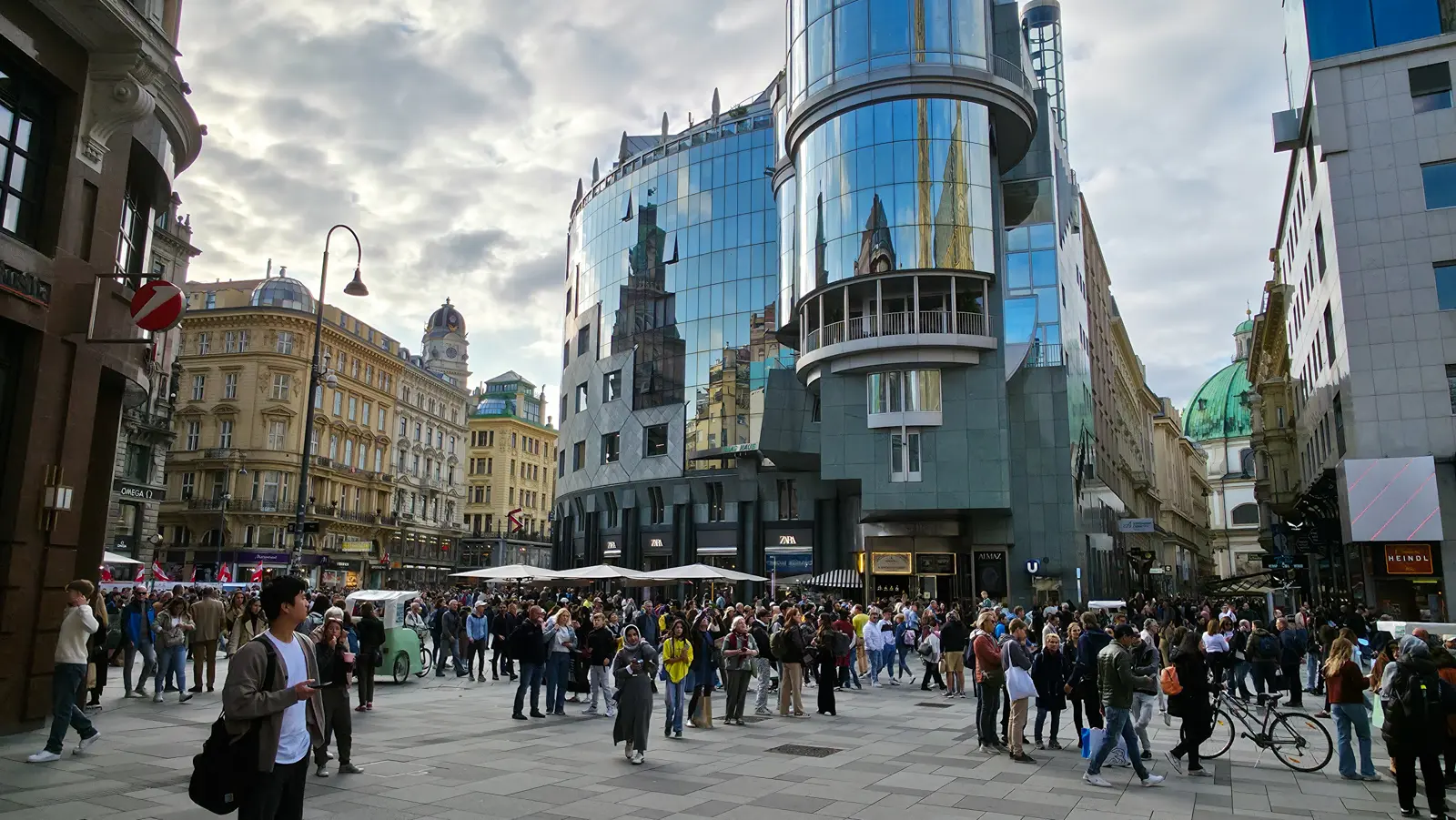
Outside the cathedral, the lively square known as Stephansplatz pulses with life. Street performers, cafés, and horse-drawn carriages create a vibrant atmosphere that contrasts beautifully with the quiet solemnity of the cathedral interior. Despite the constant activity surrounding it, St. Stephen’s Cathedral retains an aura of timelessness. Standing before its towering spire or walking through its shadowed interior, visitors cannot help but feel connected to the centuries of history that unfolded here.
Bubbly Tips for Visiting St. Stephen’s Cathedral
- Free entrance: Entry to the main nave of St. Stephen’s Cathedral is free, making it easy to step inside and admire the breathtaking Gothic interior during a walk through the historic center of Vienna.
- Best time to visit: Early morning or late afternoon offers the most peaceful atmosphere inside the cathedral before the largest crowds arrive at Stephansplatz.
- Climb the South Tower: The famous Steffl tower requires climbing 343 steps, but the reward is a spectacular panoramic view over Vienna’s historic rooftops and the Ringstrasse.
- Look closely at the roof: The colorful glazed tile patterns covering the roof of St. Stephen’s Cathedral are best appreciated from nearby elevated viewpoints or from the cathedral towers.
- Explore the interior chapels: Many visitors rush through the nave, but the smaller chapels reveal remarkable sculptures, altars, and centuries of artistic detail.
- Stay for the atmosphere: Stephansplatz is one of Vienna’s most vibrant squares, making it a wonderful place to pause, observe the city’s rhythm, and admire the cathedral’s towering Gothic spire.

Final Thoughts
Vienna is a city where history seems to live around every corner, and St. Stephen’s Cathedral stands at the very center of that story. Whether admired from the lively streets of Stephansplatz, explored from within its soaring Gothic interior, or viewed from the heights of its tower, the cathedral remains one of the most unforgettable landmarks in Austria.
If you ever visit Vienna, Stephansdom is truly a place to experience slowly – to look closely at the details, feel the centuries of history within its walls, and appreciate how this remarkable monument continues to shape the identity of the city today.
Have you visited St. Stephen’s Cathedral in Vienna? I would love to hear about your experience or favorite moments in the comments below!
Until next time!

🌟 Everything You Need to Plan Your Dream Trip in 2026
- 🌟 Luxury Hotels - Find premium stays with Booking.com & Hotels.com
- 🏡 Vacation Rentals - Discover unique properties on VRBO
- 🏞️ Guided Tours - Explore with Viator or GetYourGuide
- 🎫 Attraction Tickets - Skip the lines with Tiqets
- 🚢 Ocean Cruises - Set sail with Cruise Direct
- 📱 International SIMs - Stay connected with Saily
- 🚗 Car Rentals - Budget-friendly options from Discover Cars
- 🌐 Secure VPNs - Browse safely with NordVPN
- 💶 Currency Exchange - Best rates with Wise
- 🗣️ Learn Languages - Master the local language with Babbel and Rosetta Stone