
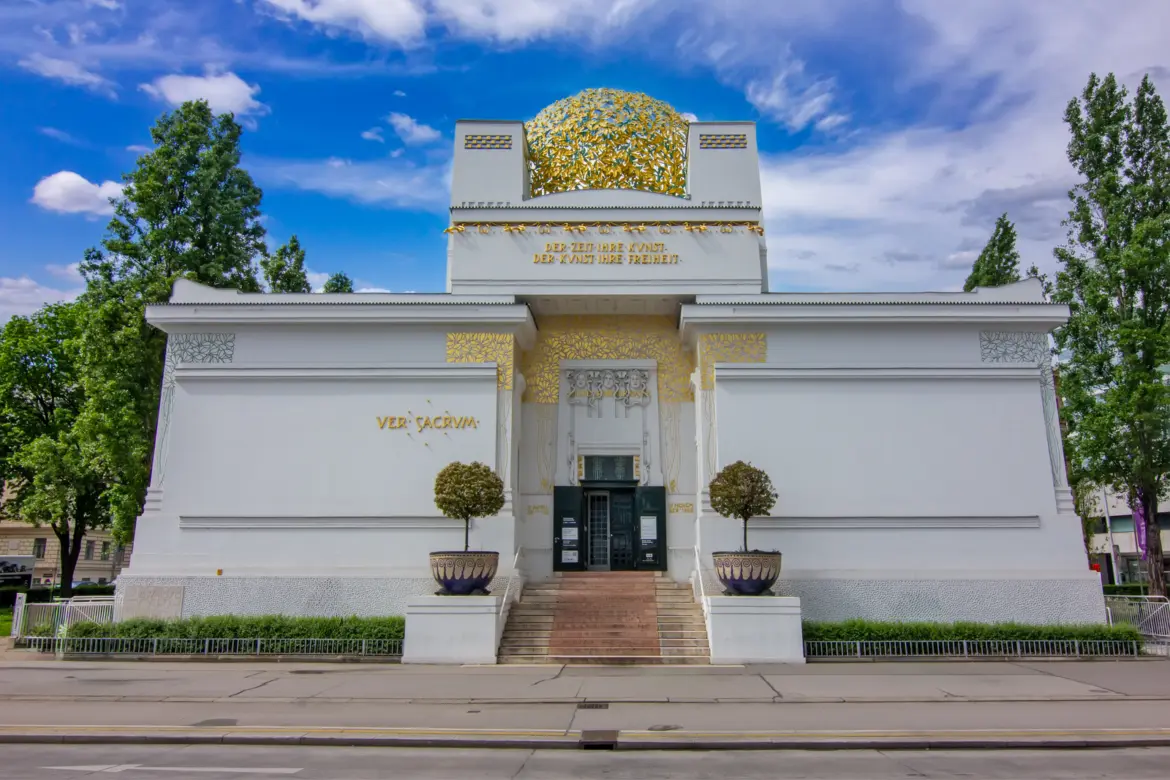
There are places in Vienna that feel rooted in history, and then there are places that feel like they changed it. Standing quietly yet unmistakably along Friedrichstrasse, the Secession Building is one of those places. It does not simply reflect the city’s past – it marks a moment when Vienna chose to redefine it, embracing a new vision of art, identity, and creative freedom.
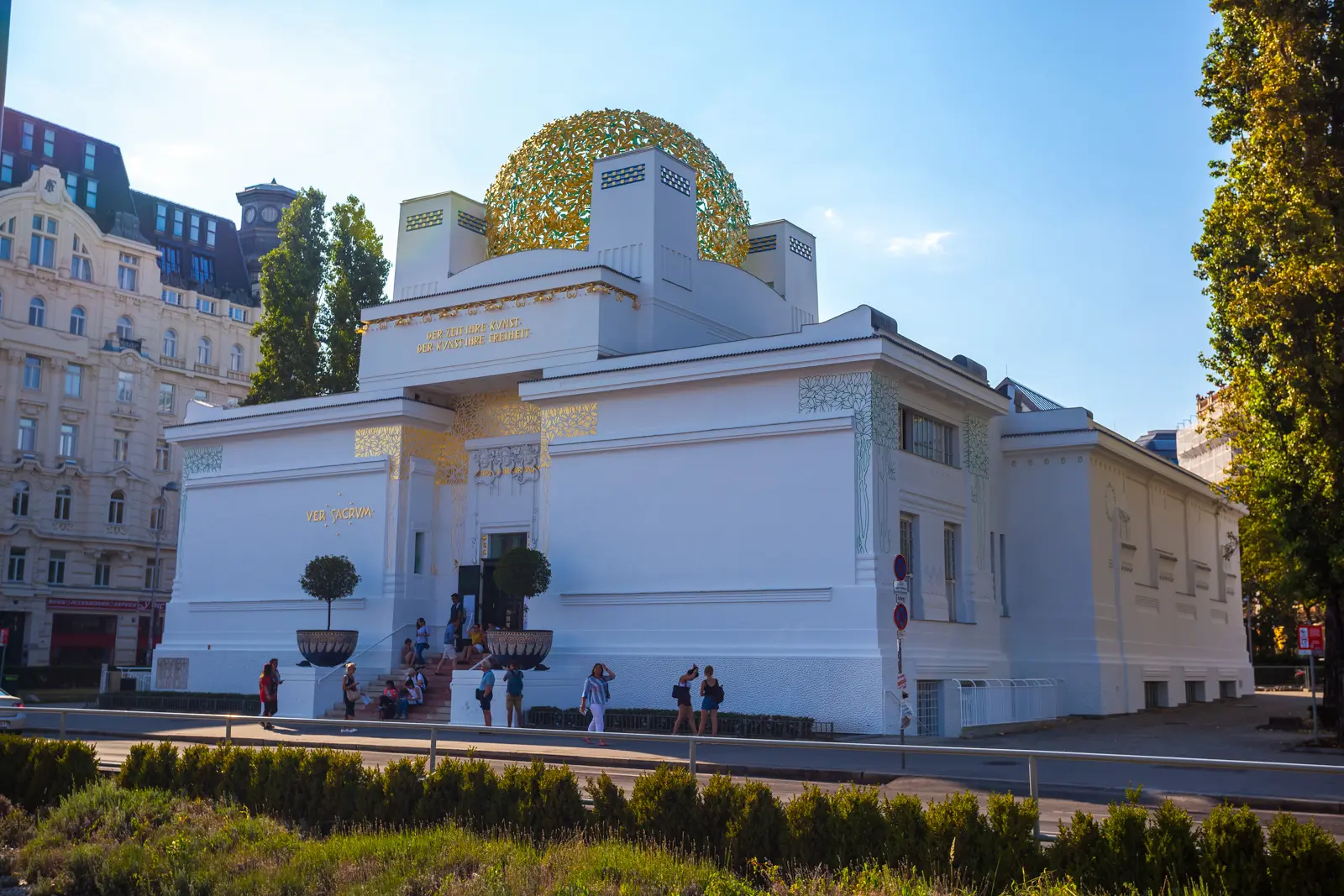
At first glance, it feels almost unexpected. Surrounded by the grandeur and tradition that define much of Vienna, the building stands apart – clean, white, geometric, and crowned with something extraordinary. And then your eyes are drawn upward, almost instinctively, to the shimmering golden dome that seems to float above it all. It catches the light in a way that feels alive, shifting with the sky and the hour, impossible to ignore. There is a quiet confidence to it – not loud, not imposing, but undeniably present.
Secession Building at a Glance
🏛️ Architect: Joseph Maria Olbrich — just 30 years old, completed in 1898
🎨 Movement: Vienna Secession — Gustav Klimt, Koloman Moser, Josef Hoffmann broke from academic tradition
🌿 Golden dome: Thousands of gilded laurel leaves — affectionately called the “golden cabbage”
✍️ Inscription: “To every age its art, to every art its freedom”
🖼️ Beethoven Frieze: Gustav Klimt’s celebrated Symbolist work, permanently housed inside
🐝 Fun fact: Bees have made a home beneath the dome, producing Secession honey
🎭 Critics: Called it “temple for bullfrogs,” “Pharaoh’s tomb,” and “crematorium” upon opening
🕐 Hours: Tue–Sun, 10 am – 6 pm | €13 admission | Free first Wednesday of the month
🚇 Getting there: U1/U2/U4 to Karlsplatz, near Karlskirche
💡 Tip: Visit at different times of day — the golden dome transforms beautifully with changing light
A Break from Tradition: The Birth of the Secession Movement
The Secession Building is more than a work of architecture, it is a statement. Designed by Joseph Maria Olbrich, who was just 30 years old at the time and working as an associate in Otto Wagner’s studio, it was one of his first major independent commissions and one of the most daring architectural debuts in Vienna’s history. Completed within a remarkably short period in 1898, it became the home of the Vienna Secession – a group of artists, including Gustav Klimt, Koloman Moser, and Josef Hoffmann, who sought to break away from the rigid traditions of academic art.
The building caused an immediate sensation, though not always a positive one. Critics heaped ridicule on the structure, describing it variously as a “temple for bullfrogs”, a “Pharaoh’s tomb”, and a “crematorium”, while the distinctive golden dome was mockingly dismissed as a “golden cabbage”. Over a century later, that same dome has become one of Vienna’s most beloved landmarks, a reminder that the most radical ideas often need time to be understood.
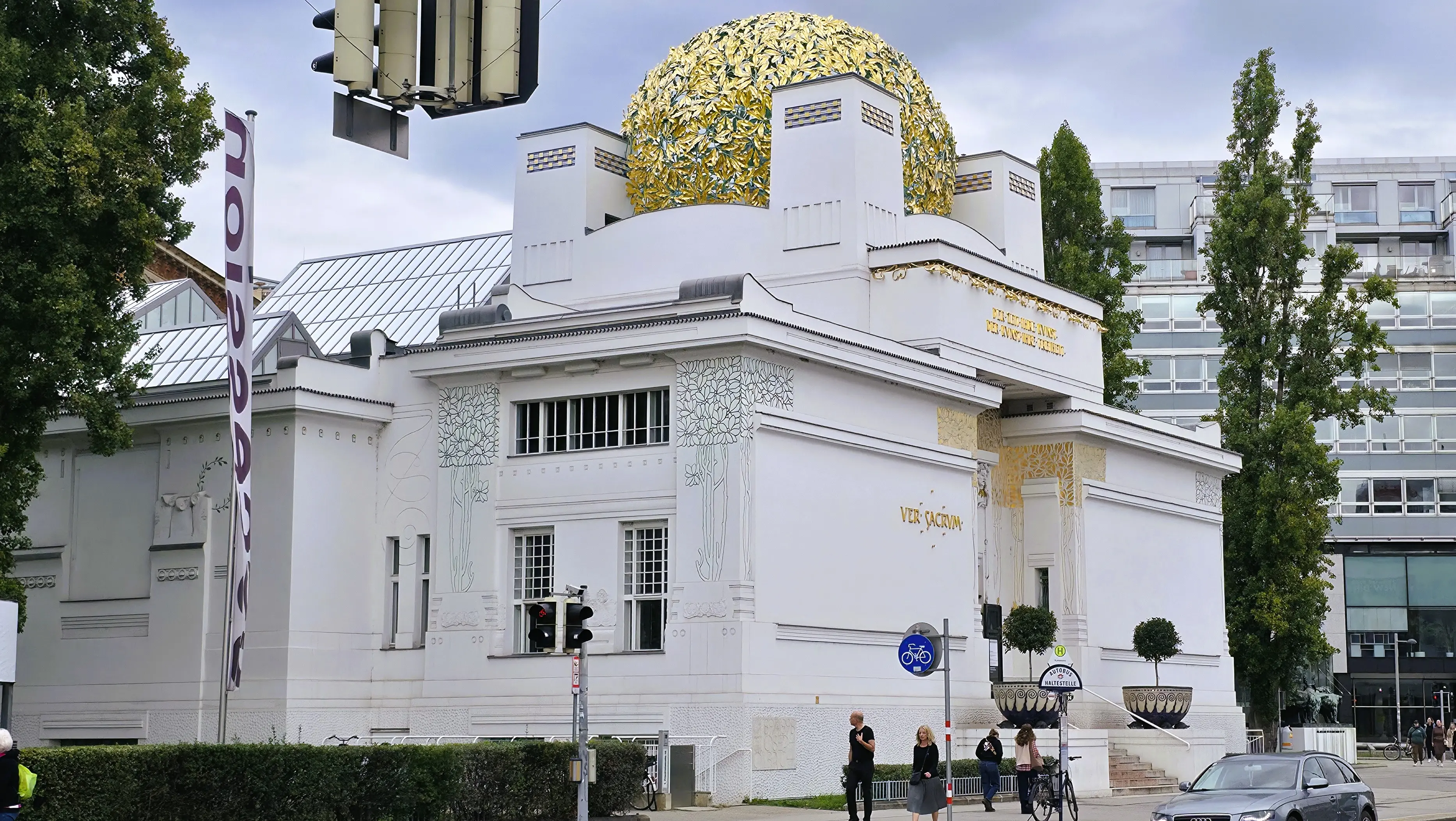
This was not simply about style; it was about freedom – artistic, intellectual, and cultural. These artists believed that each era should have its own voice, its own expression, its own identity. That philosophy is captured in the building’s most famous inscription, displayed above the entrance: “To every age its art, to every art its freedom”. It is a phrase that feels just as powerful today as it did over a century ago – defining not only the movement, but the spirit of the building itself, shaping how you experience it even before stepping inside.
The Golden Dome: Vienna’s Most Unforgettable Detail
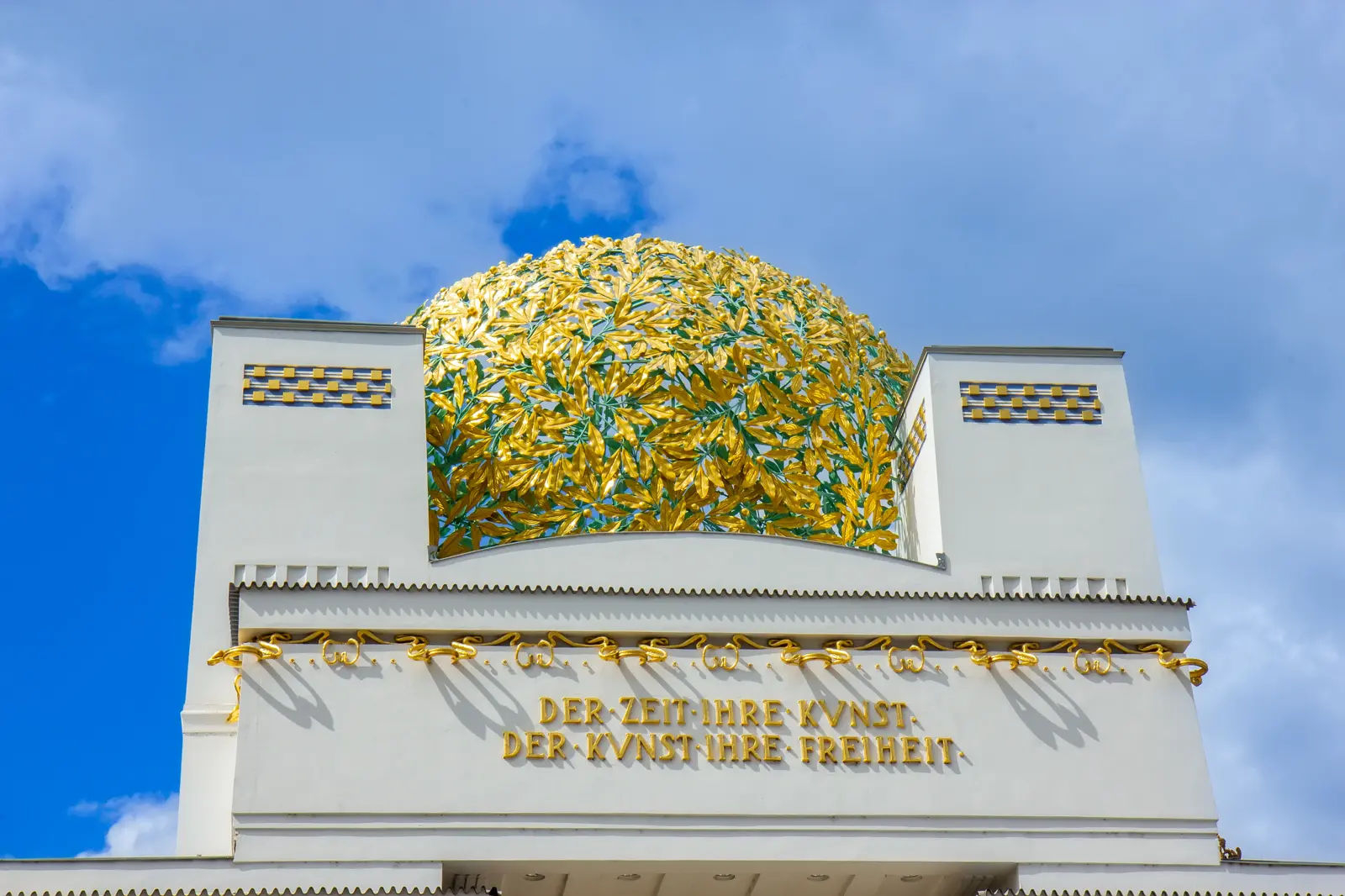
It is impossible to speak about the Secession Building without pausing at its most iconic feature: the golden dome. Often affectionately referred to as the “golden cabbage”, the dome is composed of thousands of gilded laurel leaves and delicate ornamental berries, forming an intricate, openwork sphere that sits in striking contrast to the simplicity of the white structure below. Both ornamental and symbolic, it evokes ideas of victory, creativity, and artistic achievement – a crown not of power, but of ideas.
The dome has not been without its share of stories. Over the years, elements of its gilded decoration have even been targeted by thieves, drawn to both their craftsmanship and material value. And in a more unexpected and distinctly Viennese detail, bees have made a home beneath the dome, producing what is now known as Secession honey, a small but memorable connection between the building and the living city around it.
Beyond its symbolism and its stories, there is something more immediate about the dome – something visual, almost emotional. The way it reflects sunlight. The way it glows softly against a cloudy sky. The way it shifts in tone from bright gold to something warmer and more subdued depending on the time of day. It is one of those details that stays with you, quietly shaping your memory of the place long after you leave.
The Façade: Simplicity with Meaning
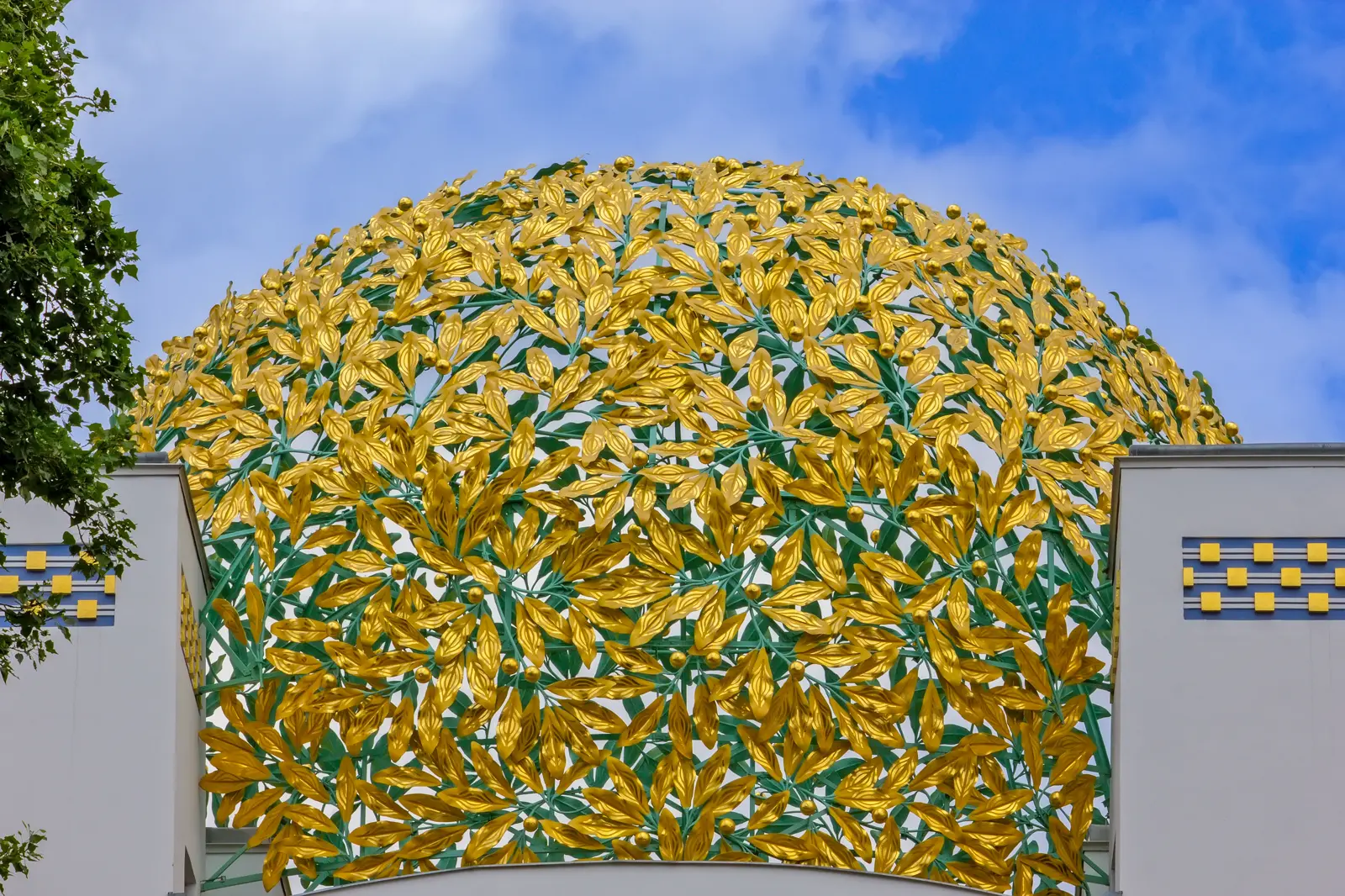
While the dome draws the eye, the rest of the building invites a slower, more deliberate kind of observation. The façade is intentionally restrained – a white, geometric composition that feels strikingly modern even today. But look closer, and subtle details begin to emerge. Decorative elements, sculptural motifs, and carefully placed symbols soften the structure, adding layers of meaning without disrupting its clarity.
Above the entrance, the sculptural group of three Gorgons quietly holds its place – representing painting, sculpture, and architecture – a symbolic reminder of the unity of artistic disciplines at the heart of the Secession movement. On either side, elegant ornamental planters anchor the composition, adding balance and a touch of softness to the otherwise structured façade. Golden accents frame the entrance, catching the light just enough to draw your attention without overwhelming the overall simplicity.
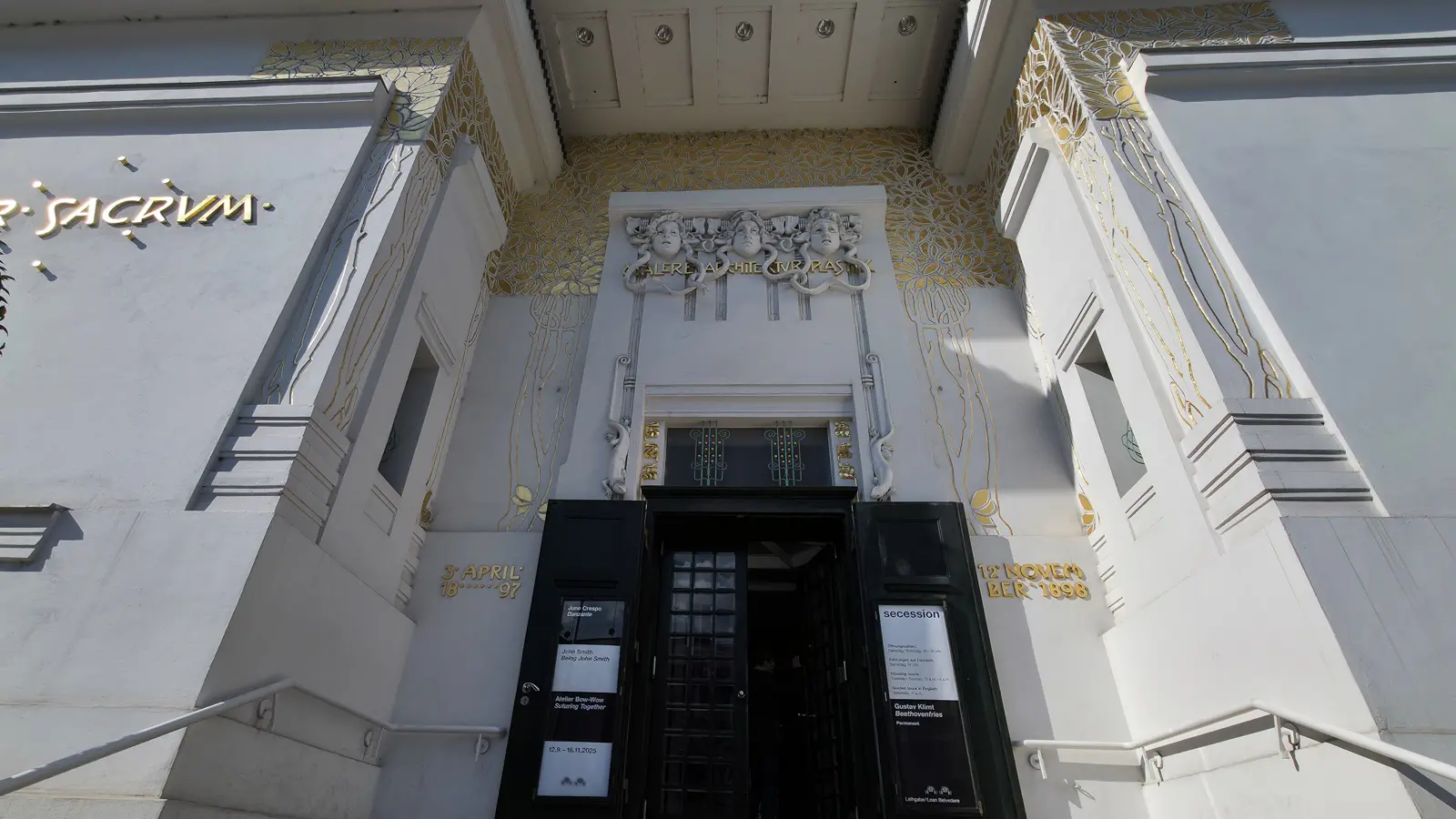
There is a quiet precision to it all. Nothing feels excessive, yet nothing feels plain. The balance between minimalism and ornamentation creates a visual language that feels both refined and expressive, a reflection of the Secession movement itself. It is a façade that reveals itself gradually, rewarding those who take the time to truly look.
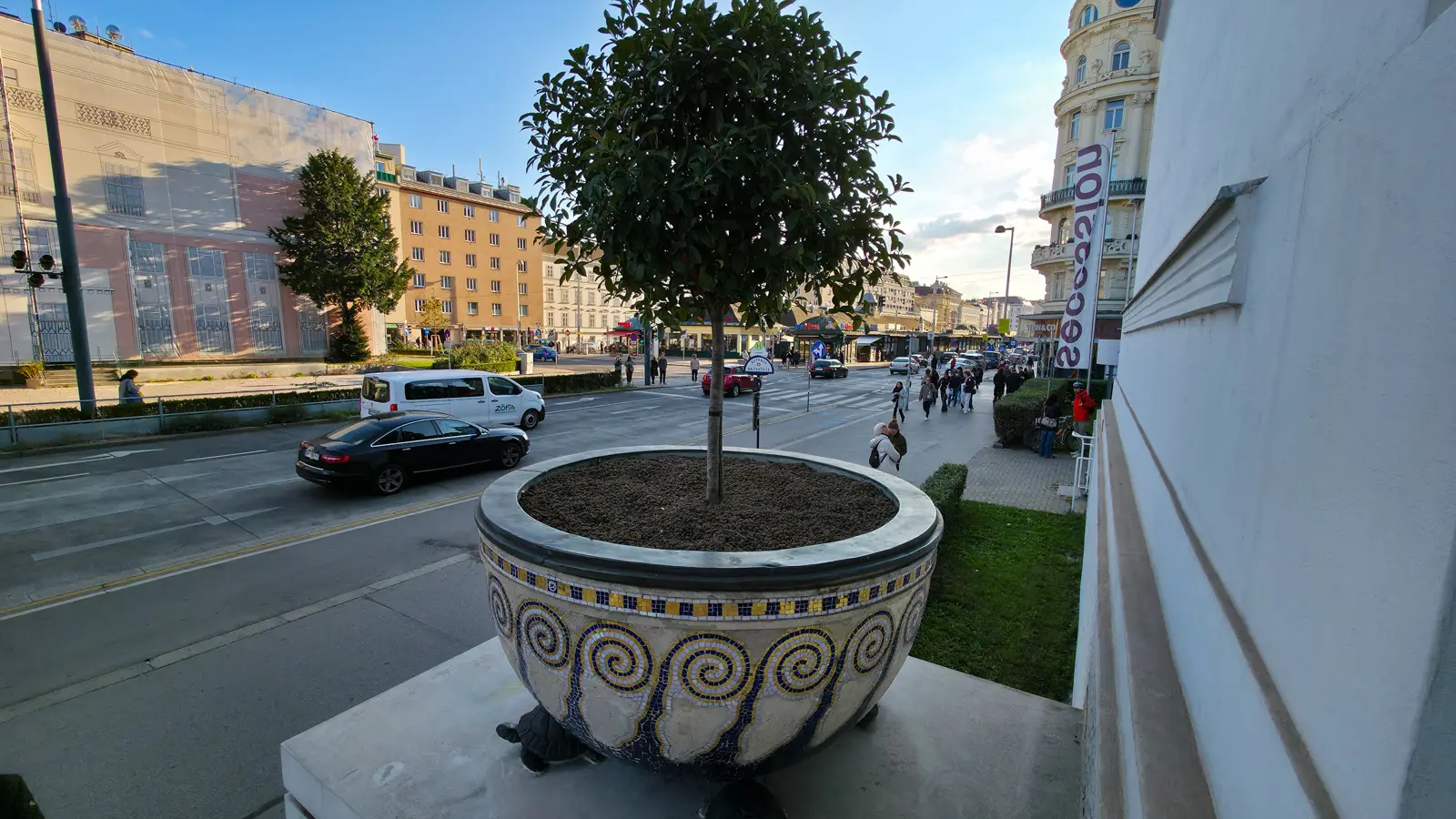
Inside the Secession: Art, Klimt, and Contemporary Expression
Step inside the Secession Building, and the experience shifts once again. The architecture remains present, but it becomes a backdrop to what the building was always meant to house: art that challenges, evolves, and reflects its time.
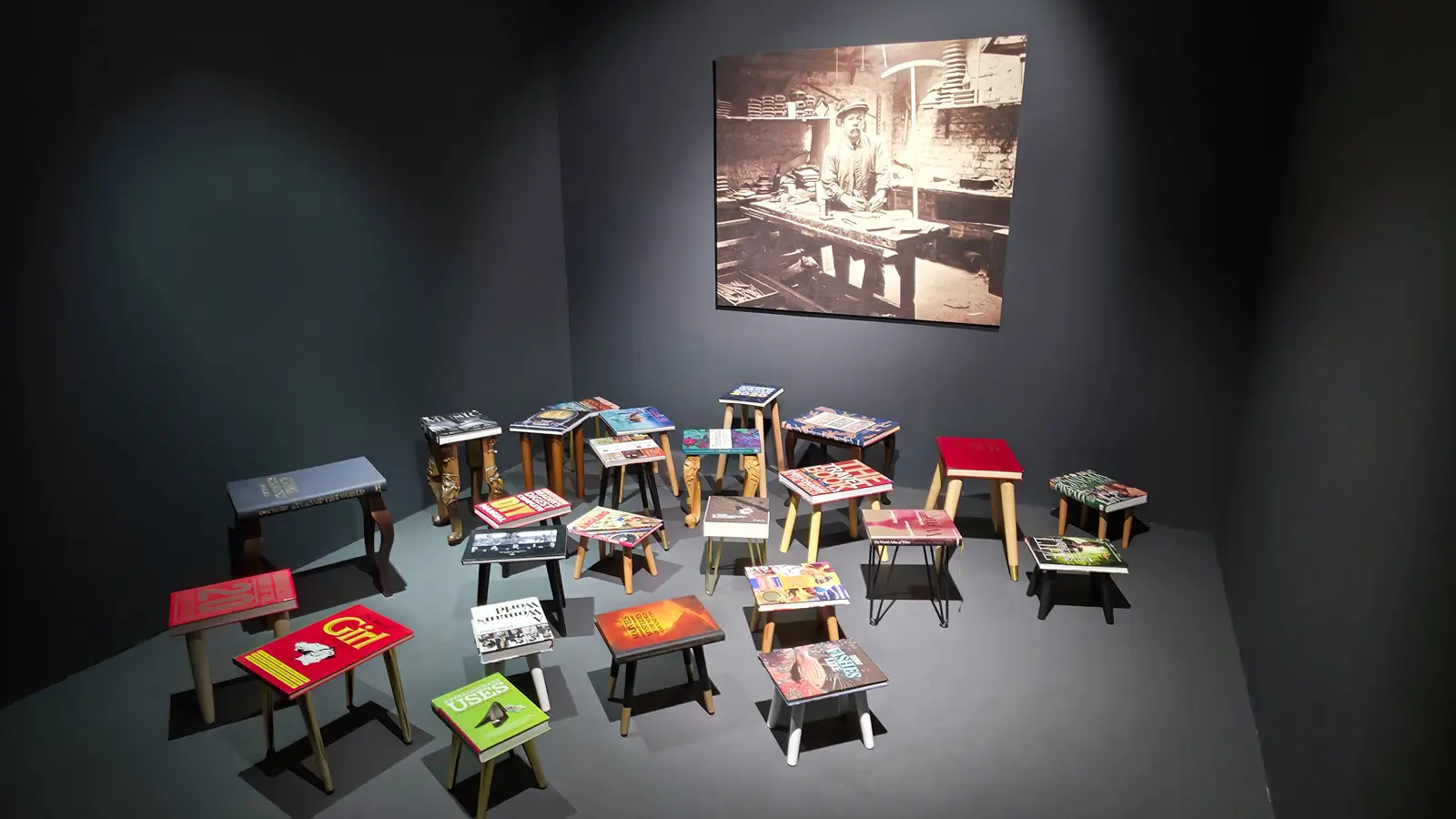
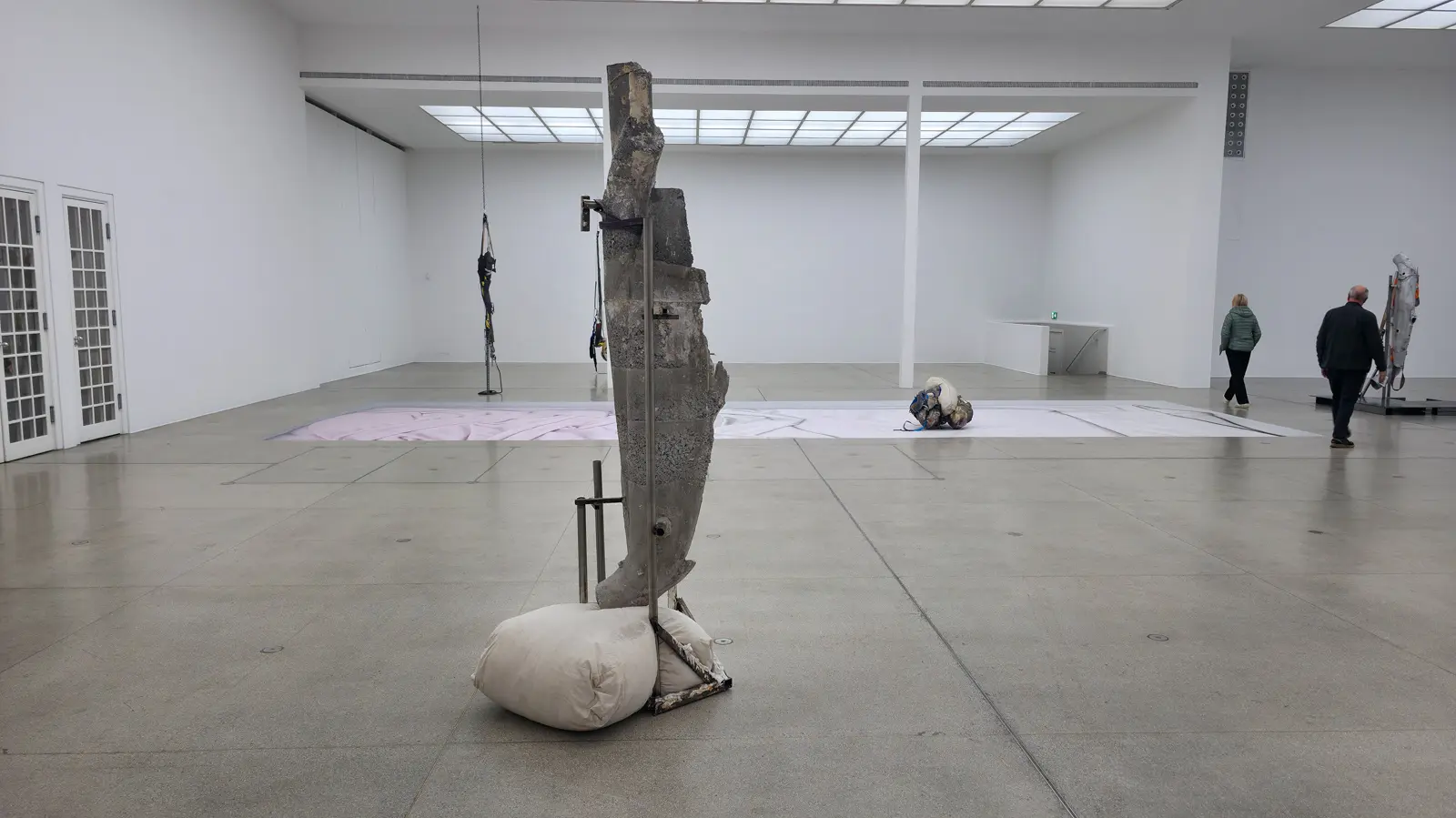
The Secession continues to function as an active exhibition space, hosting contemporary art installations that change regularly. This creates a fascinating contrast – a historic building rooted in the ideals of artistic freedom, continually reinterpreted through modern creative expression. Each visit can feel entirely different, shaped by the exhibitions currently on display.
At the heart of the interior experience is the presence of Gustav Klimt, one of the most influential figures associated with the Secession movement. His celebrated Beethoven Frieze, housed within the building, is a powerful and deeply symbolic work that explores themes of longing, struggle, and redemption through art. It is not simply something to view, but something to experience – a narrative unfolding across walls, rich with meaning and emotion.
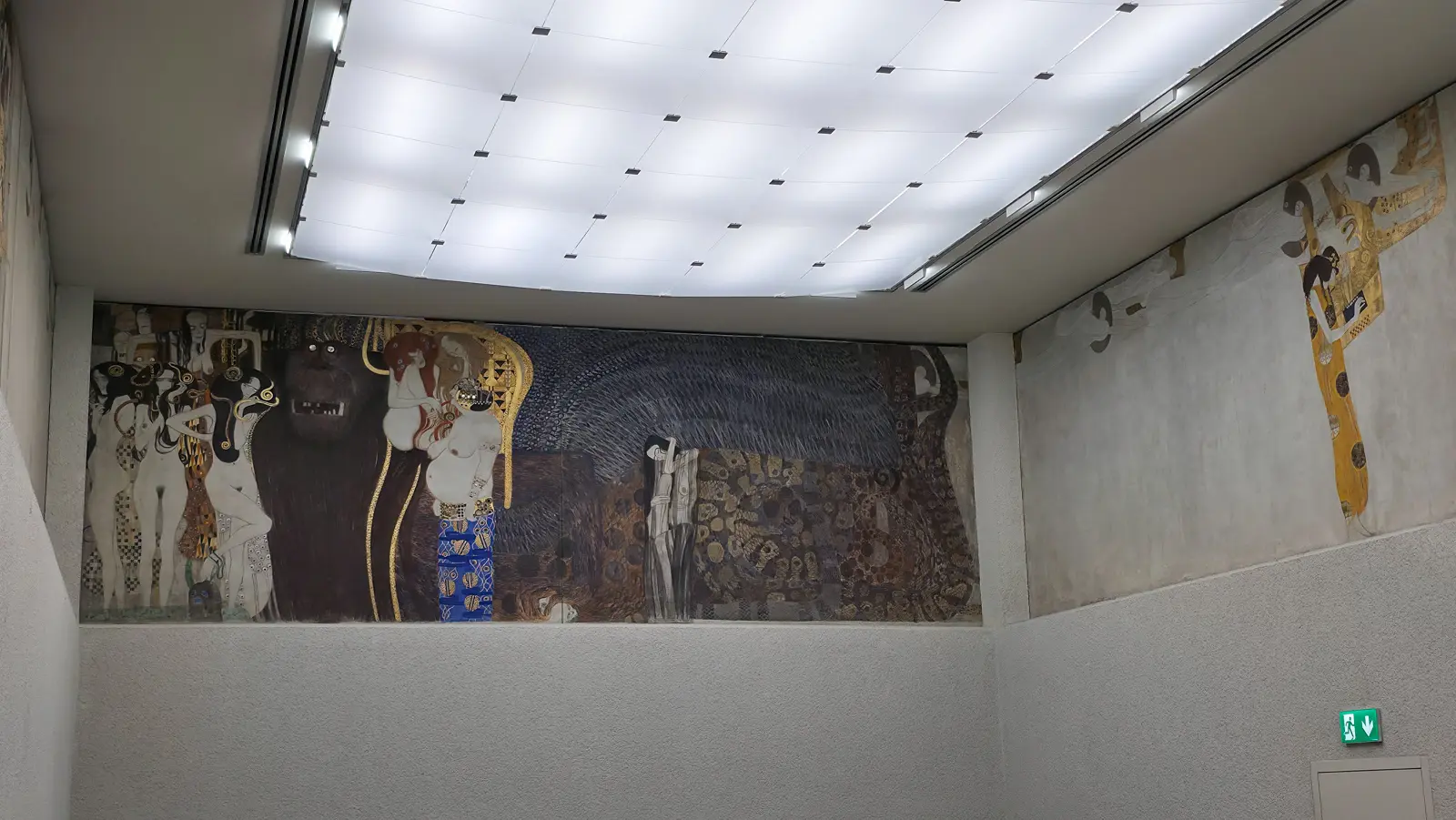
The interior of the Secession does not overwhelm, it invites reflection. It encourages you to slow down, to engage, and to consider not only what you are seeing, but how art continues to evolve over time.
A Different Kind of Presence
Unlike many of Vienna’s grand landmarks, the Secession Building does not dominate its surroundings, it coexists with them. It feels almost contemplative, set slightly apart from the movement of the city, inviting you to slow down and take it in. There is space around it. Air. Light. A sense of openness that allows the building to breathe and be experienced from multiple angles. From one perspective, the dome catches the light; from another, the clean geometry of the façade becomes more apparent, revealing a different kind of beauty with each step.
People approach it differently. Some stop immediately, drawn upward by the gold. Others walk around it slowly, noticing details with each pass – the symmetry, the ornamentation, the quiet balance between form and expression. And some simply stand still for a moment, taking in the contrast between this building and everything around it. It does not demand attention in the way other landmarks might, but it rewards it – offering a more subtle, more thoughtful kind of presence.
The Experience: Art, Freedom, and Perspective
What makes the Secession Building truly memorable is not just how it looks, but how it feels – both outside and within. Step inside, and the experience shifts. The architecture becomes quieter, allowing the art to take the lead, and the space transforms into something more introspective, more reflective. Contemporary exhibitions bring new perspectives into a historic setting, reinforcing the very idea the building was founded on: that each era should have its own voice.
Within this evolving space, the presence of Gustav Klimt and his Beethoven Frieze adds another layer, one that is deeply emotional and symbolic. It connects the building’s origins to its present, bridging time through art that continues to resonate. The experience becomes less about observation and more about reflection – about how art, in all its forms, shapes the way we see the world.
It is a reminder that cities are not only shaped by tradition, but by moments of change – by people who choose to question, to reimagine, and to create something new. Standing there, you feel that shift. Not in a dramatic or overwhelming way, but in something quieter – a change in perspective, a recognition that beauty can take many forms. That innovation and tradition can coexist. That sometimes, the most meaningful places are the ones that dare to be different.
Bubbly Tips: Visiting the Secession Building Vienna
To make the most of your visit to the Secession Building in Vienna, here are a few helpful tips:
- Visit at different times of day – the golden dome transforms beautifully with changing light, from soft morning tones to a warmer late-afternoon glow.
- Walk around the entire building to appreciate its symmetry, sculptural details, and the contrast between the white façade and gilded elements.
- Look closely at the inscription above the entrance – it captures the philosophy of the Secession movement in just a few words.
- Step inside if you can – the mix of contemporary exhibitions and Gustav Klimt’s Beethoven Frieze adds another dimension to the experience.
- Allow extra time for the Beethoven Frieze – it is one of Vienna’s most significant works of Symbolist art and deserves more than a quick glance.
- Check current opening hours and admission before your visit – the Secession is currently open Tuesday to Sunday from 10 am to 6 pm, with regular admission at €13 and free entry on the first Wednesday of each month. During installation periods, only the Beethoven Frieze may be accessible.
- Pair your visit with nearby landmarks like Karlsplatz and Karlskirche for a richer experience of Vienna’s architectural diversity.
- Take your time – this is not a rushed visit, but one best experienced slowly and thoughtfully.
Final Thoughts
The Secession Building is not just something to see, it is something to reflect on. A place where architecture, art, and philosophy come together in a way that feels both simple and profound. In a city known for its grandeur and tradition, it offers something different: a quiet confidence, a sense of possibility, and a reminder that creativity often begins with the courage to step away from what is expected.
I’d love to hear from you: have you seen the Secession Building, or is it on your Vienna list?
Happy travels!

🌟 Everything You Need to Plan Your Dream Trip in 2026
- 🌟 Luxury Hotels - Find premium stays with Booking.com & Hotels.com
- 🏡 Vacation Rentals - Discover unique properties on VRBO
- 🏞️ Guided Tours - Explore with Viator or GetYourGuide
- 🎫 Attraction Tickets - Skip the lines with Tiqets
- 🚢 Ocean Cruises - Set sail with Cruise Direct
- 📱 International SIMs - Stay connected with Saily
- 🚗 Car Rentals - Budget-friendly options from Discover Cars
- 🌐 Secure VPNs - Browse safely with NordVPN
- 💶 Currency Exchange - Best rates with Wise
- 🗣️ Learn Languages - Master the local language with Babbel and Rosetta Stone