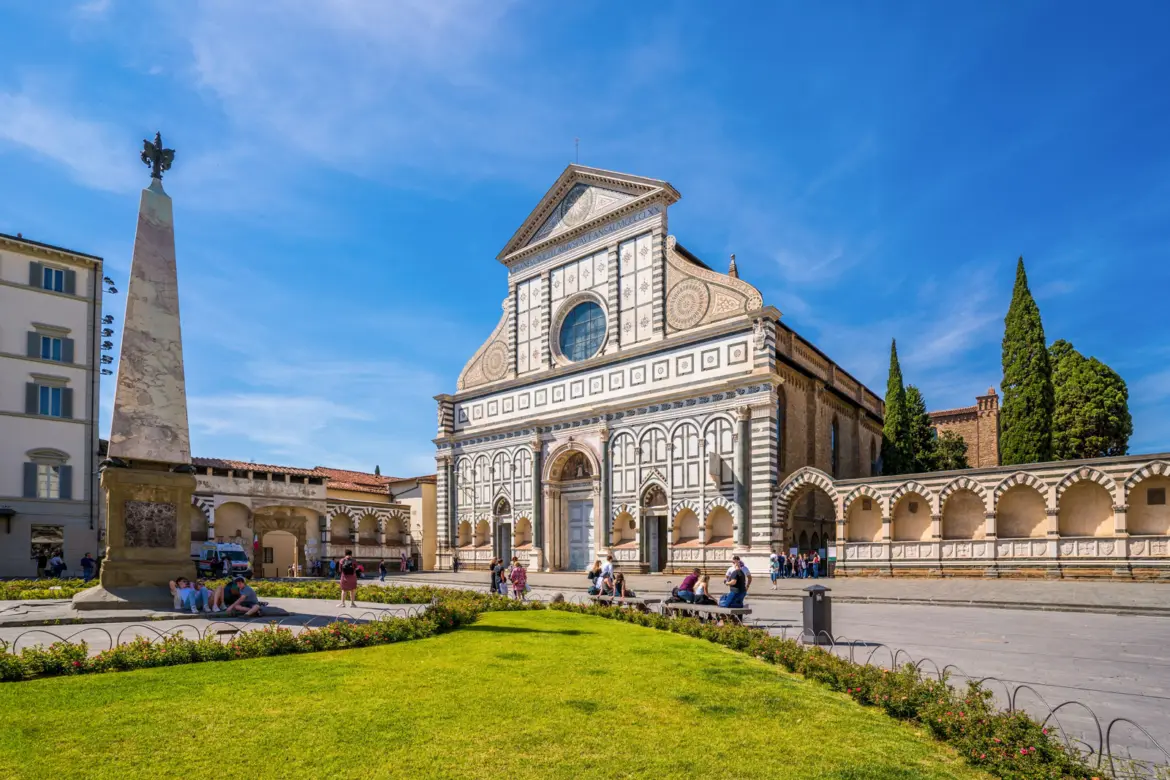
Ciao, world travelers! Florence is filled with churches that command attention, but Santa Maria Novella offers something subtly different. Standing near the city’s main railway station, it is often the first major monument visitors encounter, and yet many walk past without realizing they are looking at one of the most important architectural turning points in European history.
Here, Gothic devotion meets Renaissance mathematics. Art, theology, science, and beauty coexist quietly behind a façade so perfectly balanced that it feels almost effortless. Unlike the dramatic vertical ambition of the Duomo or the memorial grandeur of Santa Croce, Santa Maria Novella invites a slower, more contemplative experience – one that reveals itself gradually through proportion, light, and silence. Stepping into this space feels like entering a dialogue between centuries, a place where Florence’s intellectual spirit becomes visible in stone.
Santa Maria Novella at a Glance
📍 Location: Piazza di Santa Maria Novella, 18 — steps from Florence’s main train station
🏛️ What It Is: A Dominican basilica begun in 1279, with a celebrated Renaissance façade by Leon Battista Alberti (1456–1470)
🎨 Highlights: Giotto’s painted crucifix, false-perspective nave, Filippino Lippi frescoes in the Strozzi Chapel, armillary sphere and sundial on the façade
🌿 Don’t Miss: The peaceful cloisters behind the main church
🎟️ Entrance: Ticketed (supports conservation)
⏱️ Time Needed: 45–90 minutes (including cloisters)
💡 Tip: Visit early morning or late afternoon for softer light and fewer crowds; slow down and sit — this space was designed for contemplation
A Dominican Beginning: The History of Santa Maria Novella
The story of Santa Maria Novella begins long before the Dominicans arrived. A small oratory stood on this site as early as the ninth century, later replaced by a larger church in the late eleventh century, consecrated in 1094. In 1221, the complex was entrusted to the Dominican friars, who quickly recognized its potential for their mission of preaching, scholarship, and engagement with the growing city around them. At the time, the area lay just outside Florence’s medieval walls, surrounded by vineyards and open land – but as the city expanded, the church gradually became integrated into urban life.
Construction of the new basilica began on 18 October 1279. Unusually, the design was entrusted not to external architects but to two Dominican friars, Fra Sisto Fiorentino and Fra Ristoro da Campi, reflecting the order’s direct involvement in shaping a space aligned with its spiritual and intellectual ideals. The project unfolded slowly over nearly two centuries, evolving alongside Florence itself. The church was consecrated in 1420 by Pope Martin V, while the celebrated upper façade – designed by Leon Battista Alberti – was completed around 1470, giving the basilica its distinctive Renaissance identity.
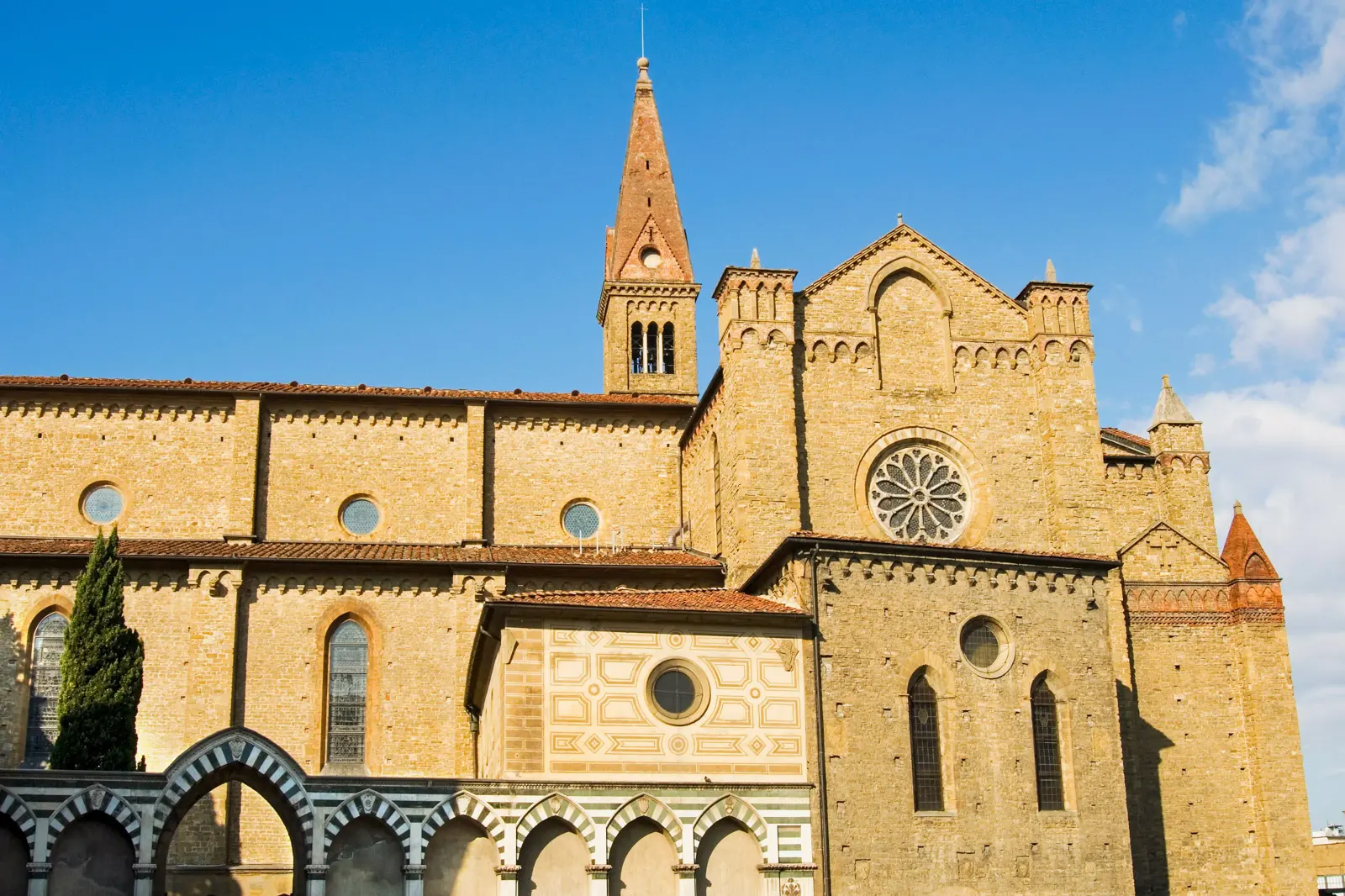
Unlike monastic communities that sought isolation, the Dominicans placed themselves firmly within the social and intellectual fabric of Florence. Santa Maria Novella was conceived not only as a place of worship but also as a center for teaching, debate, and public engagement. Over the centuries, artists, theologians, and patrons shaped its spaces, transforming the basilica into a living record of Florentine artistic evolution.
What visitors experience today is the result of centuries of layering – Gothic foundations enriched by Renaissance innovation and later additions that respect rather than overshadow the original vision.
The Façade: A Renaissance Masterpiece of Proportion
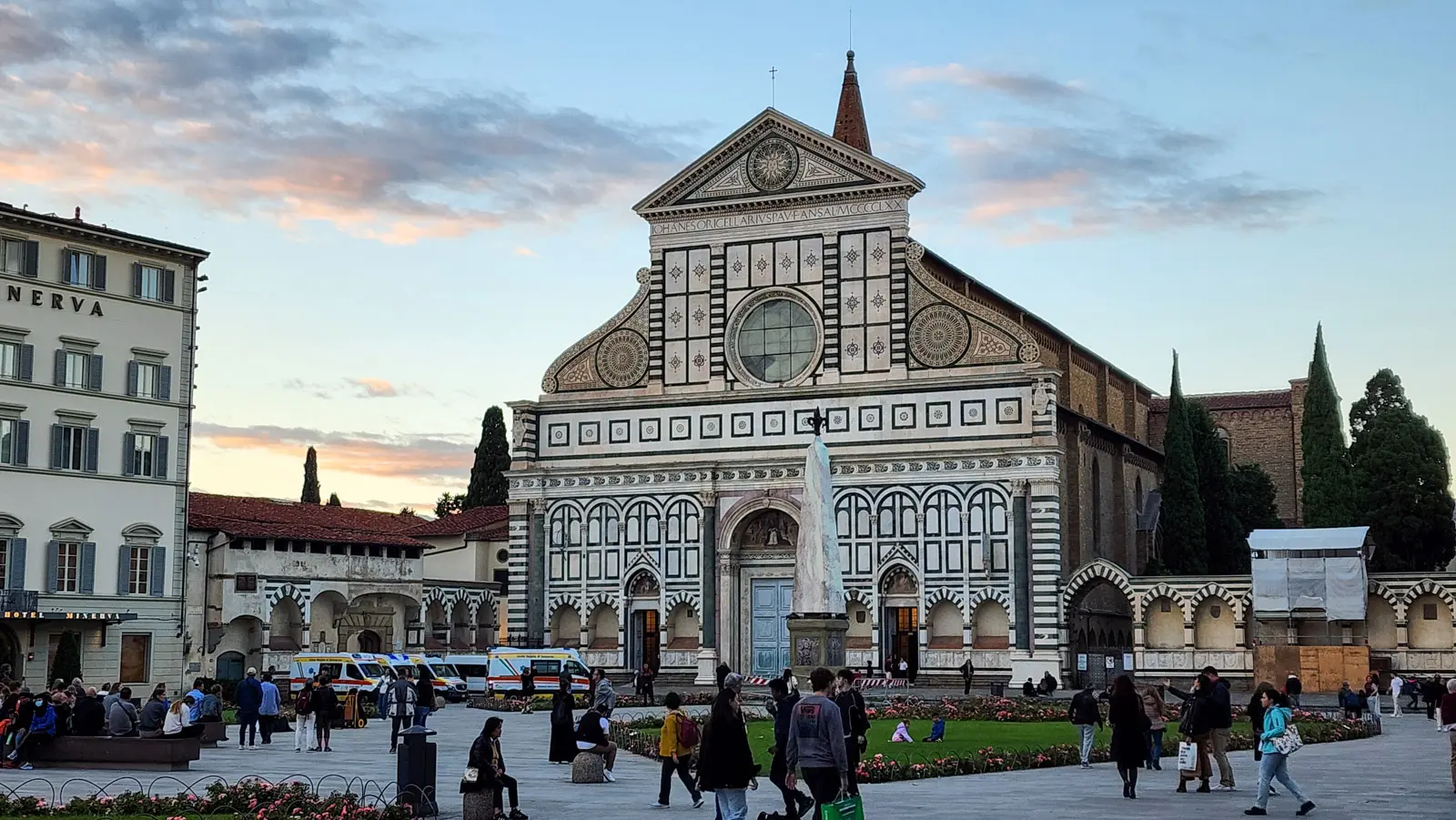
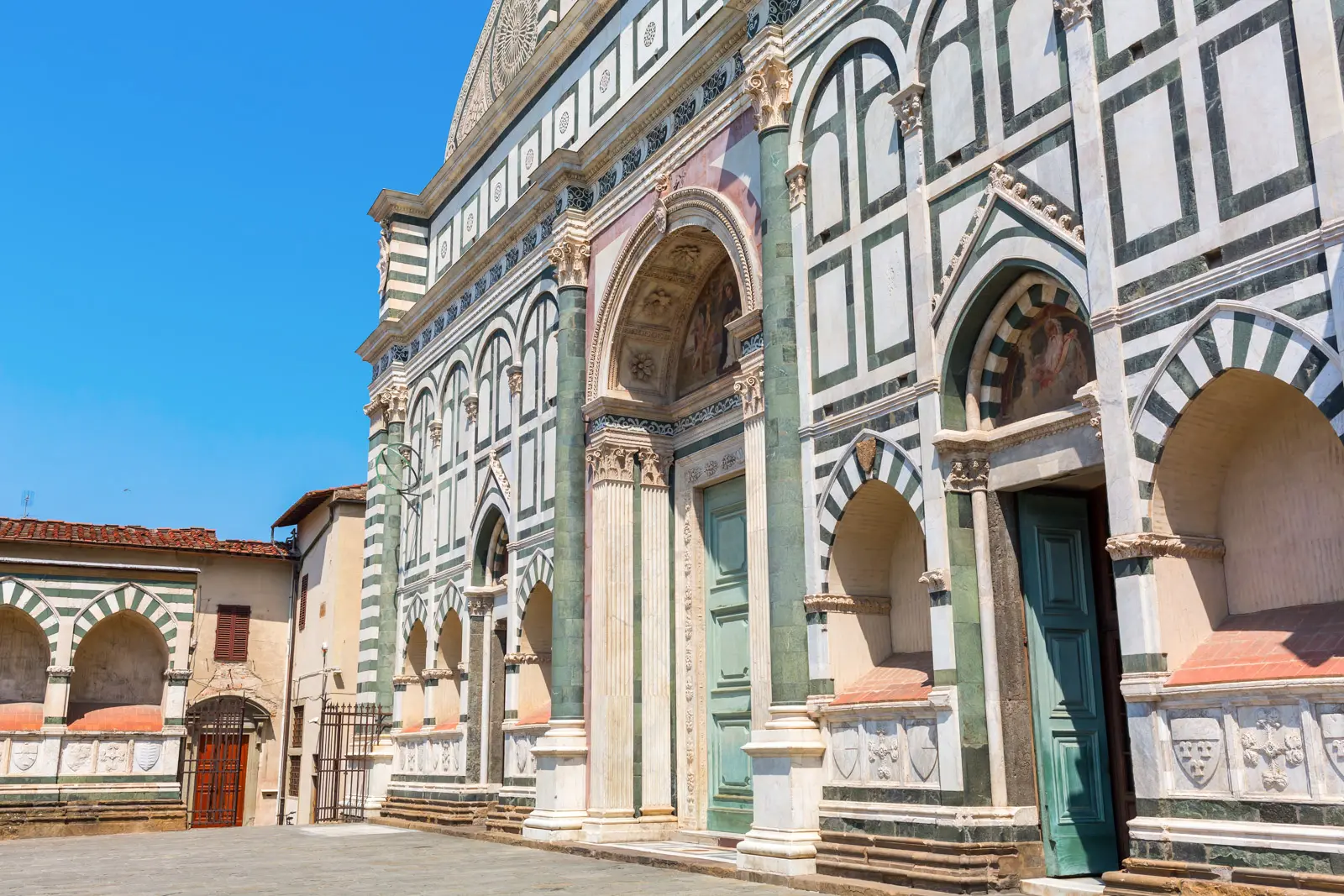
One of the most striking aspects of Santa Maria Novella is its façade, completed between 1456 and 1470 by Leon Battista Alberti – Renaissance polymath, humanist, and one of the most influential architectural thinkers of his era. Commissioned by the wealthy Florentine merchant Giovanni Rucellai, Alberti was tasked with completing an unfinished medieval front, integrating the existing Gothic lower section into a unified Renaissance design – a challenge that required both creativity and restraint.
His solution was revolutionary. Rather than erasing what already existed, Alberti embraced the earlier structure and introduced classical harmony through geometry and proportion. The green and white marble patterns create a sense of balance that feels almost musical, while scroll-like volutes elegantly connect the wider lower level to the narrower upper section, solving a design problem that many churches of the period faced. Giovanni Rucellai ensured his patronage would not go unnoticed, his name is inscribed in Latin on the upper architrave: “Giovanni Rucellai, son of Paul, year 1470.” A discreet yet enduring assertion of Renaissance patronage.
Look closely and the façade reveals another layer of intelligence: an armillary sphere and a sundial are embedded in the marble, reflecting the Renaissance fascination with astronomy, proportion, and the measurement of time. It is a detail that perfectly embodies the era’s belief that mathematics, science, and beauty were not separate pursuits but deeply interconnected.
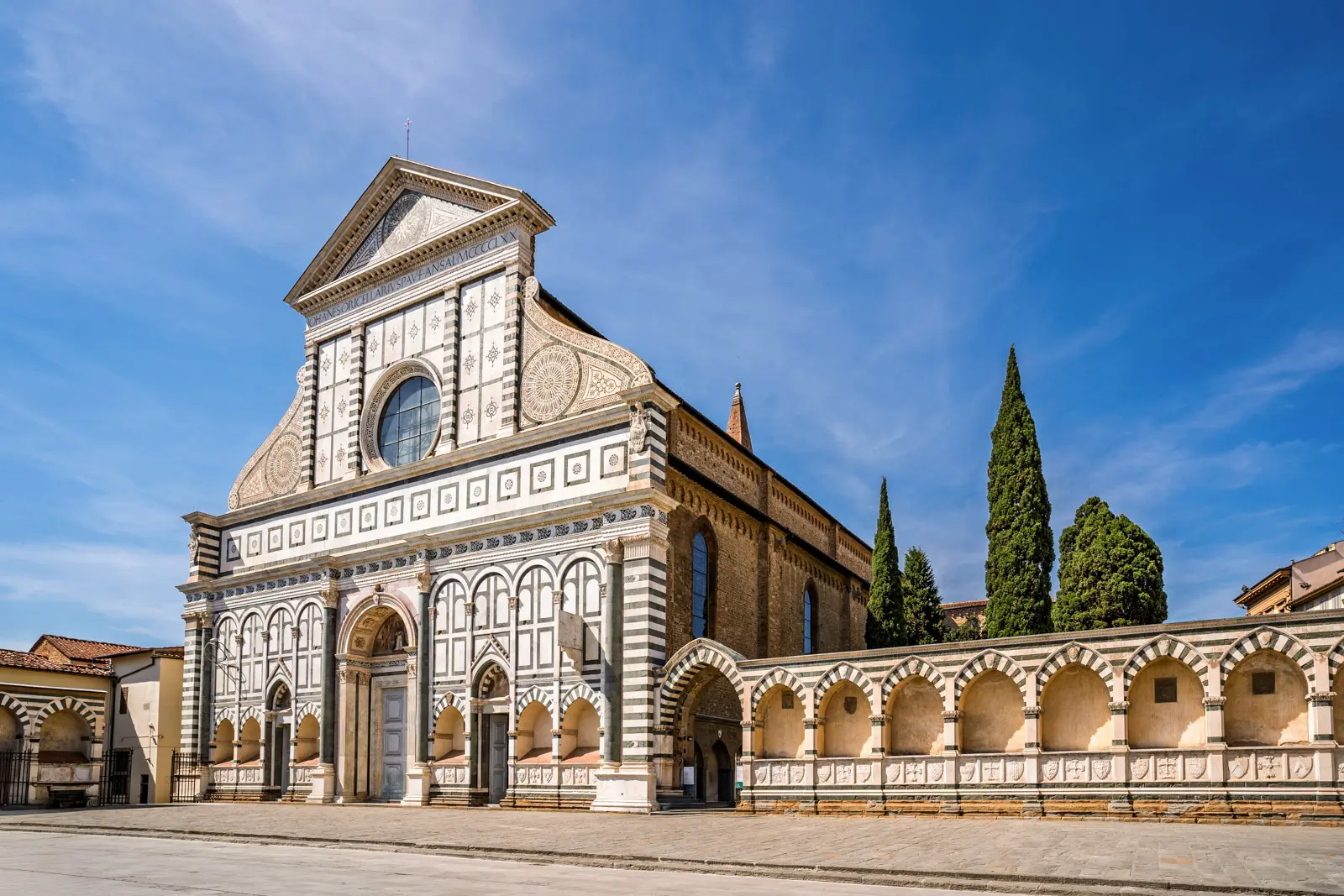
Standing before the façade, you sense why it is considered a milestone in Renaissance architecture. It is not loud or theatrical. Its beauty comes from order, clarity, and intelligence – and from a mind that saw no boundary between art and thought.
Inside the Basilica: Space, Light, and Quiet Grandeur
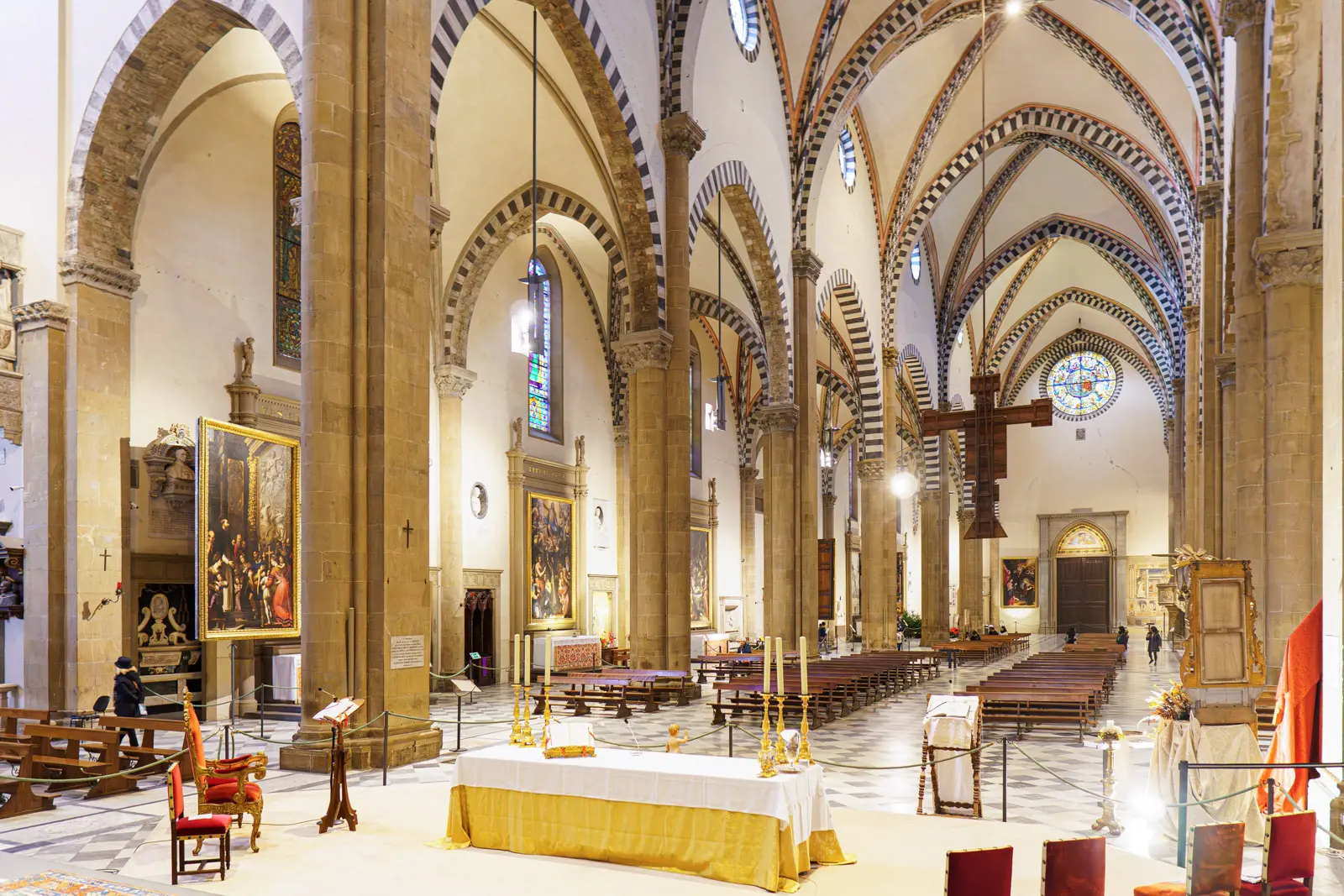
Crossing the threshold into Santa Maria Novella is a shift in atmosphere. The interior feels vast yet calm, defined by long lines, pointed Gothic arches, and a rhythm of alternating light and shadow. Unlike heavily ornamented Baroque churches, the space breathes. The architecture guides your eye forward while allowing moments of pause along the way.
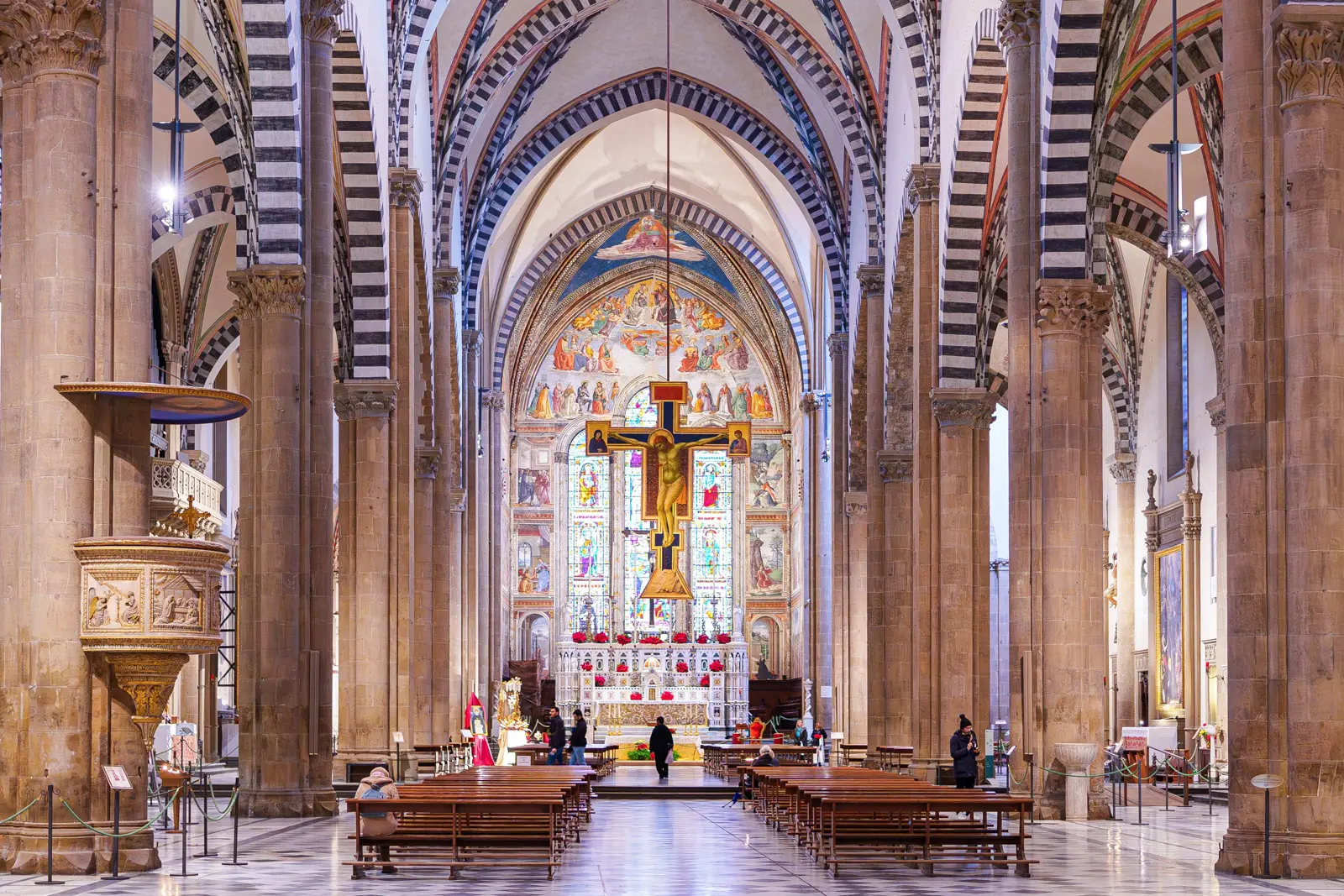
The nave stretches elegantly toward the high altar, though not quite as far as it appears. The columns become progressively closer together as they approach the altar, creating a deliberate false perspective that makes the nave seem even longer than it is. It is a remarkably sophisticated optical illusion for a 13th-century building, and once you notice it, it becomes impossible to unsee. The green and white marble of the columns echoes the exterior façade, creating a visual continuity that makes the transition from outside to inside feel seamless and intentional.
Light filters softly through stained glass, illuminating frescoes and chapels that reveal layers of artistic history accumulated over centuries. Visitors often notice how the church encourages quiet observation – conversations soften, footsteps slow, and the experience becomes almost meditative. It is a space that balances spirituality with human presence, reminding us that architecture can shape emotion as much as belief.
Giotto’s Crucifix and the Visual Heart of the Nave
At the center of the nave hangs one of Santa Maria Novella’s most moving works: the monumental painted crucifix traditionally attributed to Giotto, created around the late 13th century. Suspended above the space rather than confined to a side chapel, it immediately draws the eye upward, anchoring the church visually and spiritually.
Unlike earlier medieval representations that emphasized symbolic formality, Giotto’s approach introduces a striking sense of humanity. The body of Christ carries weight and emotion, marking an important shift toward realism that would later define the Renaissance. Seen against the vast Gothic interior, the crucifix creates a powerful dialogue between architecture and devotion – an artwork meant not only to be admired but experienced as part of the living space.
Beyond it, the high altar becomes a focal point where light, frescoes, and painted decoration converge. The layering of artworks around the sanctuary reflects centuries of artistic contribution, reminding visitors that Santa Maria Novella evolved gradually, shaped by generations of faith, patronage, and artistic innovation. Standing in the nave, you do not encounter a single masterpiece, you encounter an entire visual ecosystem designed to guide the eye and the spirit forward.
Chapels, Frescoes, and Layers of Devotion
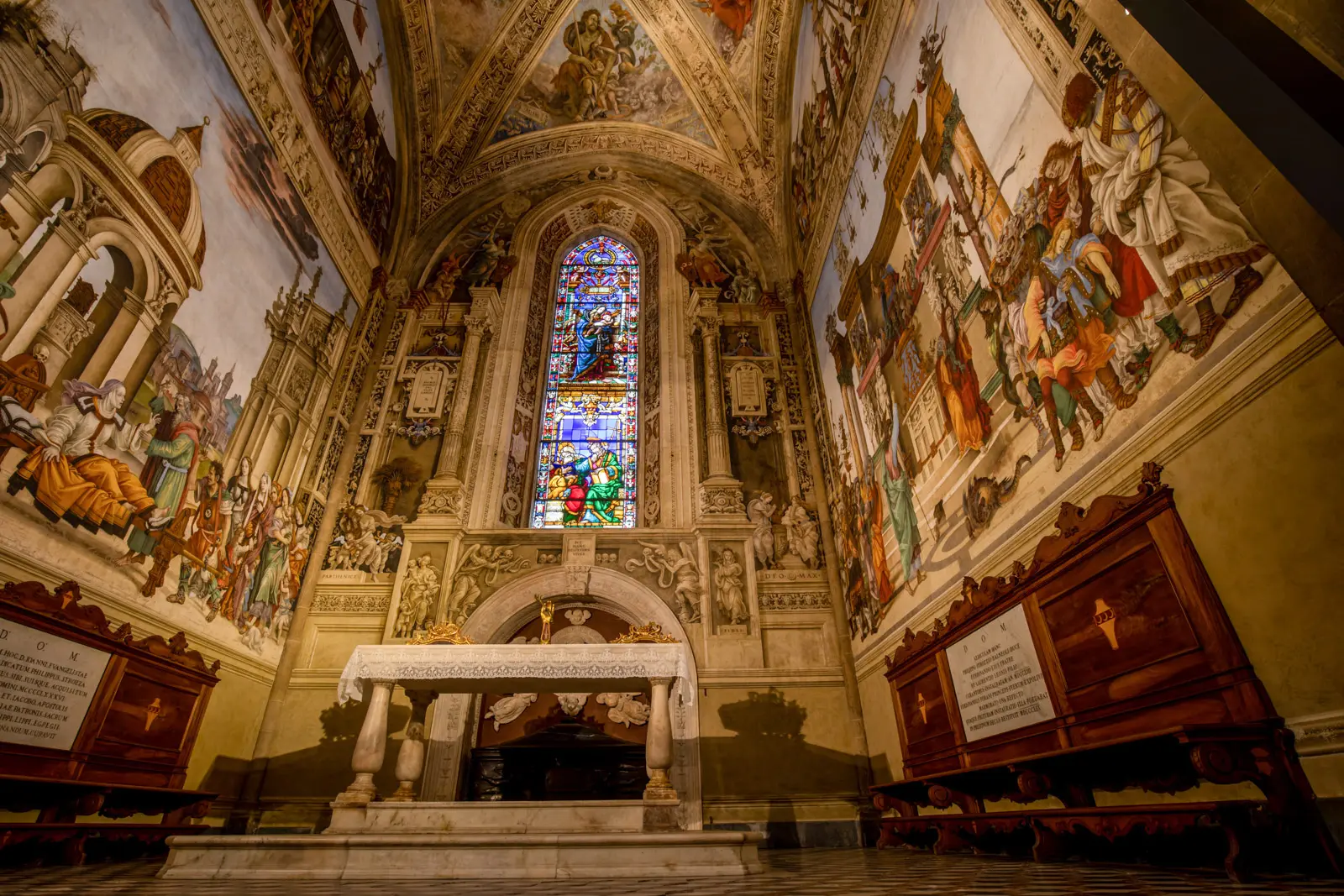
Beyond the central axis of the nave, Santa Maria Novella rewards slow exploration through its side chapels, where fresco cycles and altarpieces reveal the evolving language of Florentine art. Each chapel reflects the priorities of its time – devotional spaces commissioned by families, guilds, or religious communities seeking both spiritual meaning and artistic excellence.
Works influenced by Giotto’s legacy introduce a new emotional depth, where gestures feel more human and narratives more accessible. Later Renaissance interventions add clarity, harmony, and refinement, creating a layered conversation across centuries. Rather than competing with one another, these artworks coexist, showing how Florence continuously reinterpreted faith through artistic innovation.
Moving quietly from chapel to chapel feels like traveling through time. The details reveal themselves slowly: the softness of a painted expression, the rhythm of repeated arches, the glow of color catching the light. These are not works designed to overwhelm at first glance, but to reward attention and contemplation, deepening the experience the longer you remain.
The Cloisters: Silence Behind the City
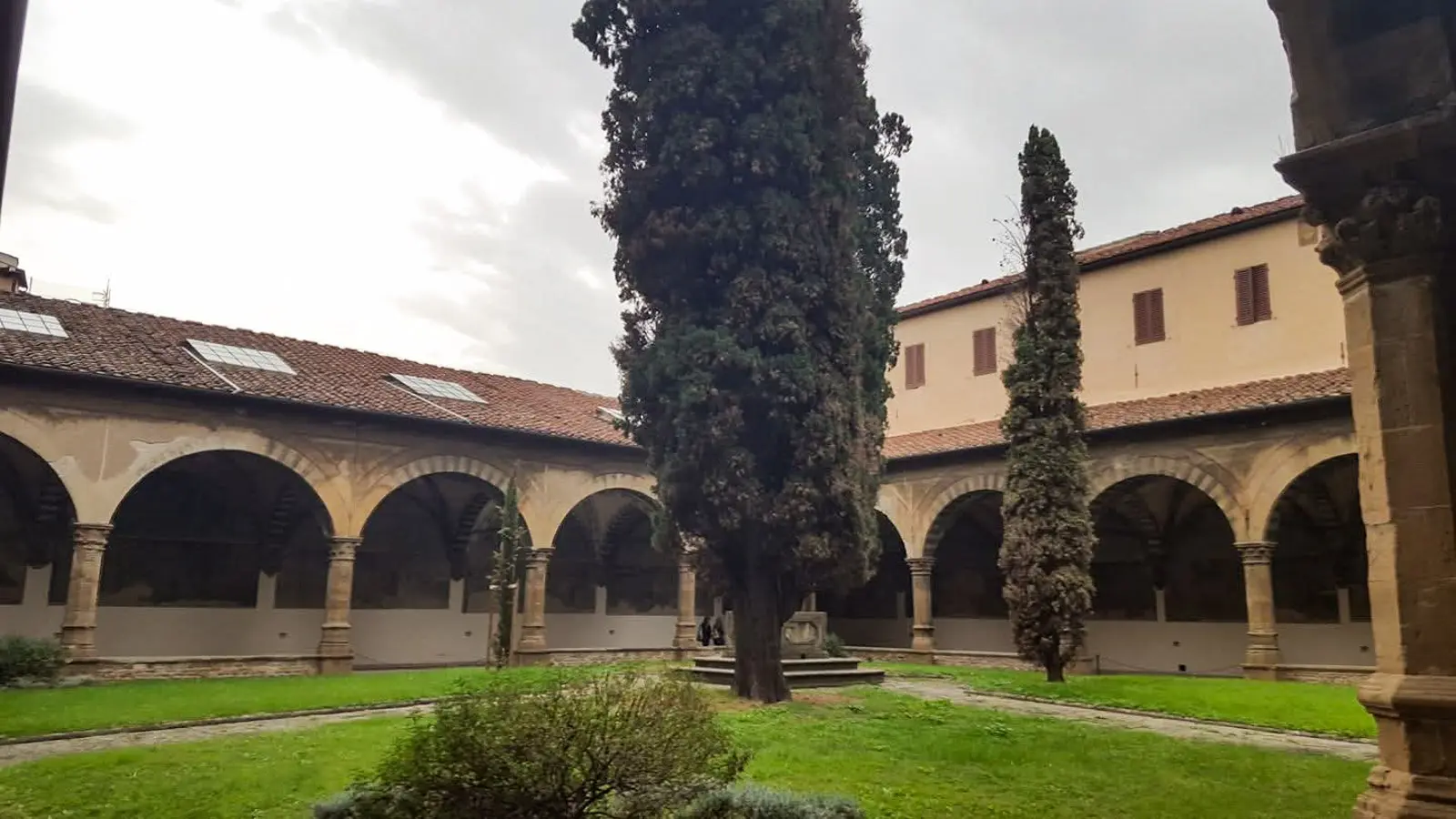
One of Santa Maria Novella’s most beautiful surprises lies beyond the main church – its cloisters and convent spaces. Here, the atmosphere changes again. The noise of Florence fades, replaced by the gentle rhythm of footsteps on stone and the soft rustle of air moving through arcades. The cloisters were designed for reflection and study, offering Dominican friars a space for intellectual and spiritual life. Frescoed walls, geometric courtyards, and carefully framed perspectives create an environment that feels both ordered and peaceful.
Many visitors describe this area as one of the most calming places in Florence. It is easy to forget the bustling city just beyond the walls, as if time slows in respect for the quiet history held within.
The Atmosphere Today
Today, Santa Maria Novella continues to balance past and present. Travelers arrive with cameras, art lovers pause before famous frescoes, and worshippers still find moments of prayer beneath centuries-old arches. The church remains alive – not a museum frozen in time, but a living part of Florence’s cultural rhythm. Outside, the piazza opens into one of the city’s most elegant urban spaces, where locals pass by on bicycles and visitors rest on benches facing the façade. This coexistence of daily life and historic grandeur is part of what makes Florence so special. Santa Maria Novella does not demand attention loudly; instead, it quietly rewards those who choose to linger.
Bubbly Tips for Visiting Santa Maria Novella
- When to visit: Early morning or late afternoon offers softer light and fewer crowds, allowing you to experience the basilica more peacefully.
- Location: The church sits directly on Piazza Santa Maria Novella, just a short walk from Florence’s main train station – easy to include in any walking itinerary.
- Opening hours & tickets: Check current hours before visiting, as schedules may vary due to services; entrance typically requires a ticket, which helps support conservation of the site.
- What to look for: Spend time observing the geometric harmony of Alberti’s façade – one of the clearest expressions of Renaissance proportion in Florence.
- Don’t miss: Giotto’s painted crucifix and the richly decorated high altar area, where art, faith, and architecture converge.
- Explore beyond the nave: The cloisters provide a peaceful contrast to the main church and reveal the quieter rhythm of Dominican life.
- Slow down: Sit for a few minutes and simply absorb the atmosphere – this is a space meant to be experienced, not rushed.
Final Thoughts
Santa Maria Novella reminds us that Florence’s greatness lies not only in spectacle but in balance. Here, faith meets intellect, Gothic spirituality meets Renaissance reason, and art becomes a quiet conversation across centuries.
It is a place that rewards attention – the more you look, the more you notice. The harmony of the façade, the serenity of the interior, the hidden calm of the cloisters – together they reveal a city that has always believed beauty could elevate everyday life.
Have you visited Santa Maria Novella, or do you have a favorite quiet church in Florence? I’d love to hear your thoughts in the comments.
With love,
Bubbly 💛
🌟 Everything You Need to Plan Your Dream Trip in 2026
- 🌟 Luxury Hotels - Find premium stays with Booking.com & Hotels.com
- 🏡 Vacation Rentals - Discover unique properties on VRBO
- 🏞️ Guided Tours - Explore with Viator or GetYourGuide
- 🎫 Attraction Tickets - Skip the lines with Tiqets
- 🚢 Ocean Cruises - Set sail with Cruise Direct
- 📱 International SIMs - Stay connected with Saily
- 🚗 Car Rentals - Budget-friendly options from Discover Cars
- 🌐 Secure VPNs - Browse safely with NordVPN
- 💶 Currency Exchange - Best rates with Wise
- 🗣️ Learn Languages - Master the local language with Babbel and Rosetta Stone