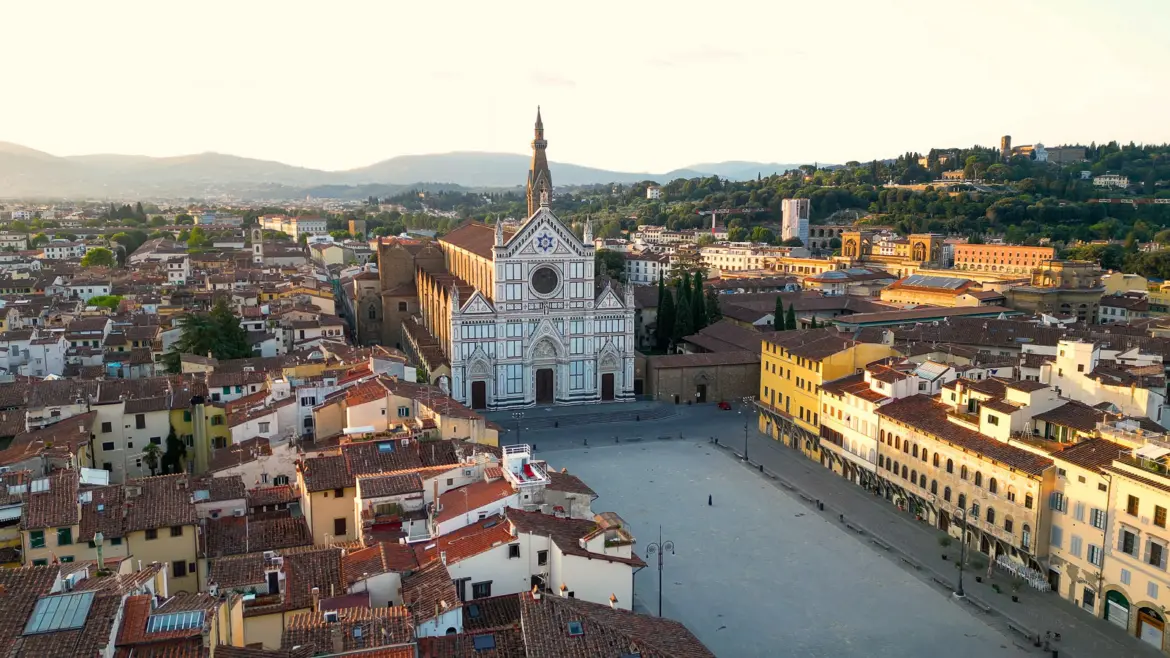
Hello world travelers! Florence is often described as an open-air museum, a city where beauty appears effortlessly at every corner. Yet among its many churches and palaces, Santa Croce Basilica holds a presence that feels different. It is not simply a place of worship or an architectural masterpiece – it is a space where the stories of artists, scientists, writers, and thinkers converge. Walking into Santa Croce feels like stepping into a conversation across centuries, where faith, creativity, and memory exist side by side.
Located on the eastern edge of Florence’s historic center, the basilica rises quietly above the lively Piazza Santa Croce. The square buzzes with everyday life – cafés, conversations, festivals – but once you cross the threshold of the church, the atmosphere shifts. The noise fades. Light filters through high Gothic arches. The scale feels both grand and deeply human. This is a place built not only to inspire devotion but also to honor the enduring impact of human achievement.
Santa Croce at a Glance
📍 Location: Piazza di Santa Croce 16, Florence, Italy
🏛️ Known For: Tombs of Michelangelo, Galileo, and Machiavelli, Giotto frescoes, Pazzi Chapel, Franciscan architecture
🎨 Key Artists: Giotto, Taddeo Gaddi, Arnolfo di Cambio, Brunelleschi, Donatello, Cimabue
🎟️ Tickets: Ticketed entry — combined pass includes basilica, museum, cloisters, and chapels
🕐 Hours: Mon–Sat 9:30 AM – 5:30 PM (check official site for Sunday/holiday schedule)
⏱️ Time Needed: 1.5–2 hours for the full complex
💡 Tip: Go early morning for a quieter atmosphere — don’t skip the cloisters and Pazzi Chapel behind the basilica
The History: A Franciscan Vision in the Heart of Florence
Santa Croce was founded in the late 13th century – construction began in 1294 – and is traditionally attributed to Arnolfo di Cambio, the same architect associated with Florence’s Duomo. As with the Duomo, however, Arnolfo di Cambio died shortly after construction began, and the church was largely completed by others over the following century, with the building substantially finished by around 1385. Built for the Franciscan order, the basilica reflects the ideals of simplicity and humility that defined Franciscan spirituality, yet it also mirrors Florence’s growing ambition as a powerful republic. Over time, the church expanded and evolved, absorbing artistic influences and becoming one of the most important religious and cultural centres in the city.
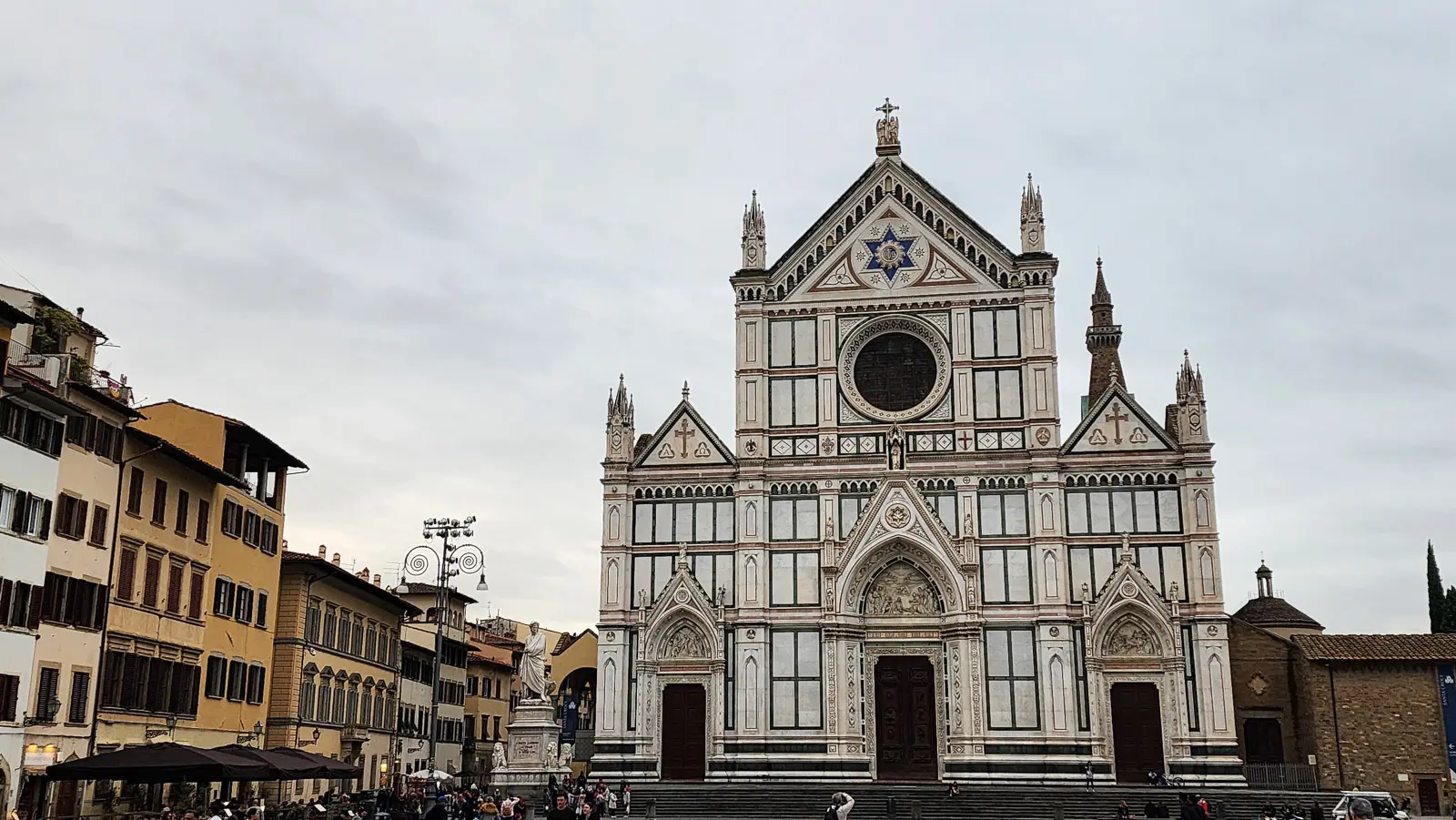
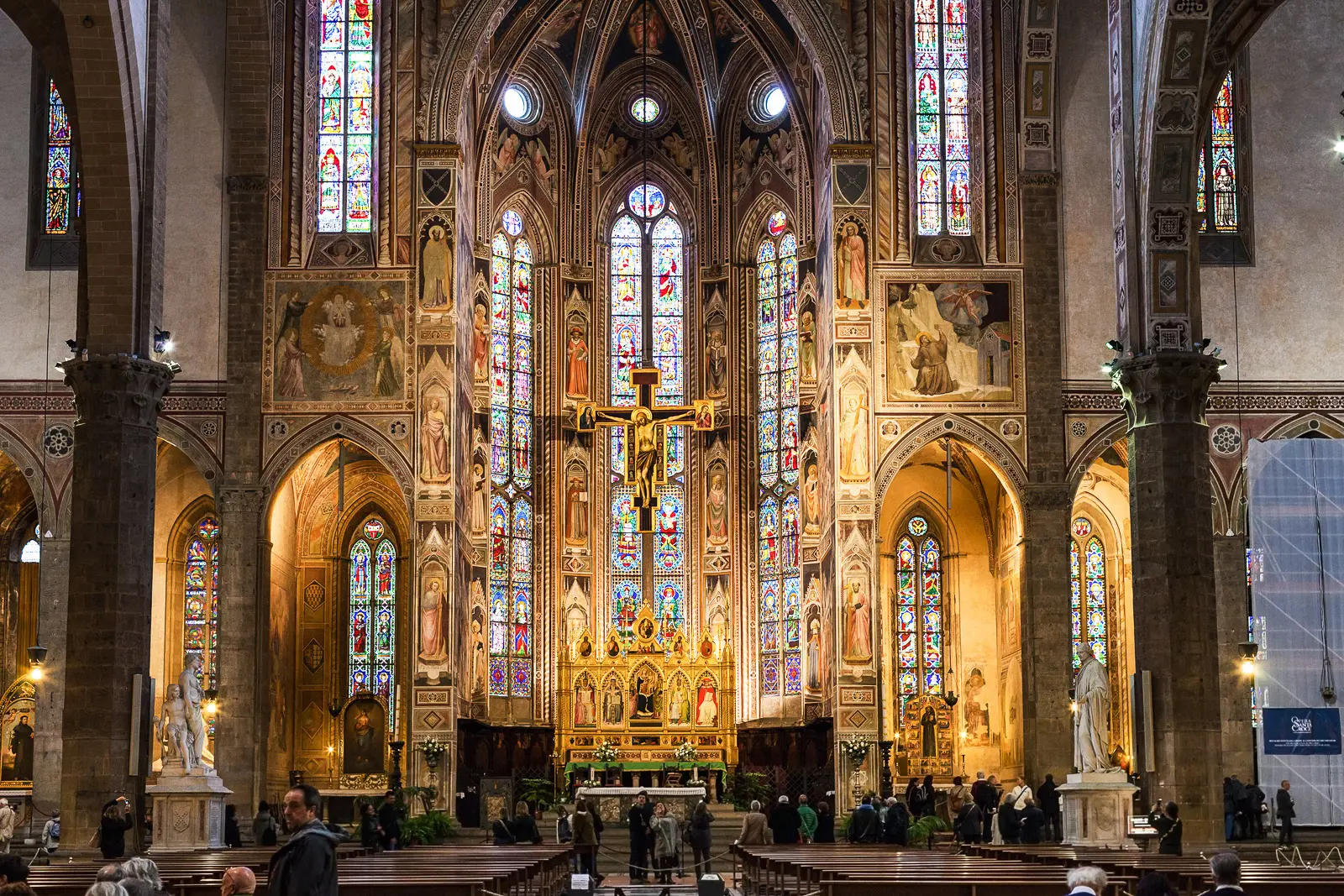
Unlike some churches designed primarily to impress through opulence, Santa Croce’s grandeur comes from scale and clarity. The vast nave is supported by elegant octagonal stone piers, a distinctly Gothic feature that contributes to the church’s sense of openness and forward movement. Above, an open timber roof rather than stone vaulting reflects a deliberate Franciscan choice, emphasizing simplicity over architectural showmanship and making Santa Croce one of the largest Franciscan churches in the world. Light moves softly across stone surfaces, creating an atmosphere that feels contemplative rather than theatrical. Even centuries later, the space retains a sense of purpose, a reminder that this church was built not just as a monument, but as a living place of gathering and reflection.
The Façade: A Gothic Revival Masterpiece
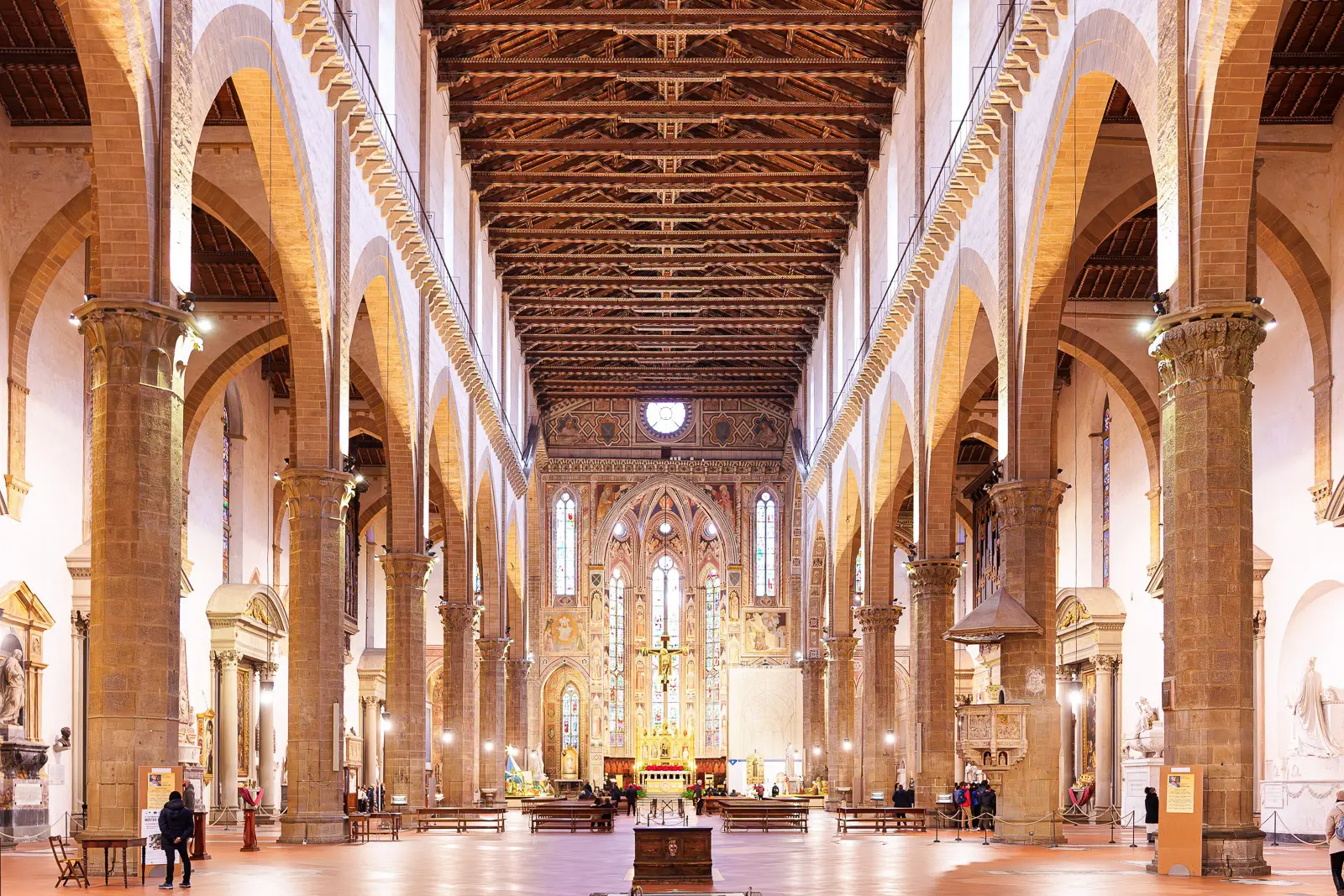
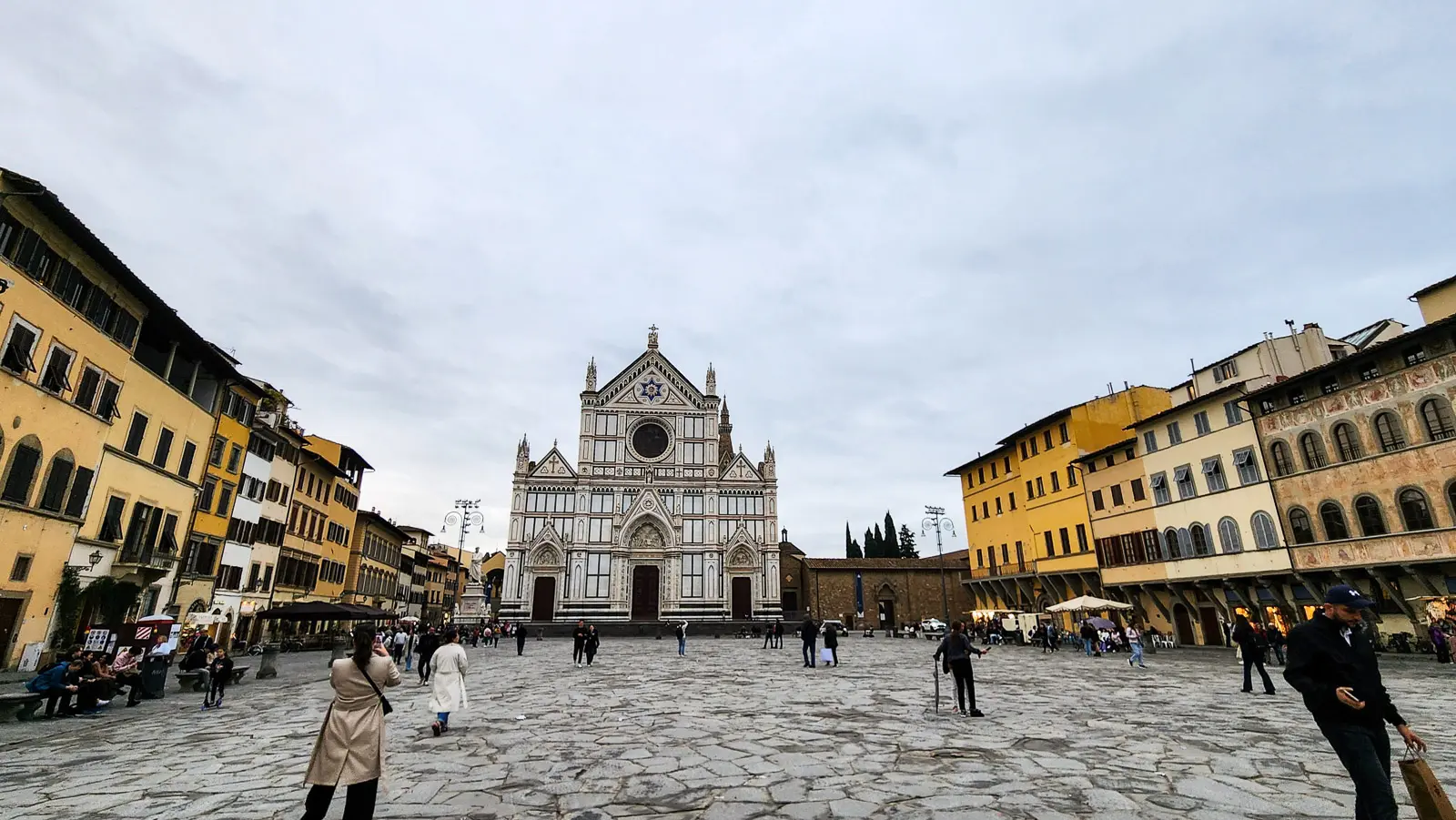
The striking marble façade visitors see today is not medieval but 19th-century Neo-Gothic, completed in 1863 and designed by Niccolò Matas. The project was largely funded by Francis Joseph Sloane, an English expatriate living in Florence, a reminder that Santa Croce’s story has always been shaped by outside influences as much as local ones. Clad in white, green, and pink marble – colors that echo Florence’s cathedral – the façade brings harmony to the piazza while paying homage to the city’s Gothic heritage. Geometric patterns, pointed arches, and delicate ornamentation create a sense of balance that feels both refined and monumental.
Standing before the basilica, you immediately notice how the façade frames the square. It does not dominate aggressively; instead, it anchors the space with quiet confidence. At the top, a hexagram – often interpreted as a Star of David and widely associated with the Jewish heritage of architect Niccolò Matas – adds a subtle layer of symbolism that rewards those who look carefully. A British benefactor, a Jewish architect, and a Franciscan basilica together embody the layered and cosmopolitan character that has long defined Florence at its best.
The Interior: Vast, Calm, and Deeply Human
Stepping inside Santa Croce is an experience of scale and stillness. The high timber ceiling stretches above a wide nave, while rows of side chapels line the walls, each containing works of art that reveal the evolving tastes and spirituality of different eras. Light filters through stained glass and softly illuminates frescoes, creating an atmosphere that feels almost suspended in time. Unlike more heavily decorated Baroque interiors, Santa Croce’s Gothic structure allows space to breathe. The simplicity of the architecture directs attention toward the stories embedded within the church – stories told through sculpture, painting, and funerary monuments. Visitors often find themselves slowing down naturally, moving from chapel to chapel in quiet contemplation.
The Temple of Italian Glories: Tombs and Memorials
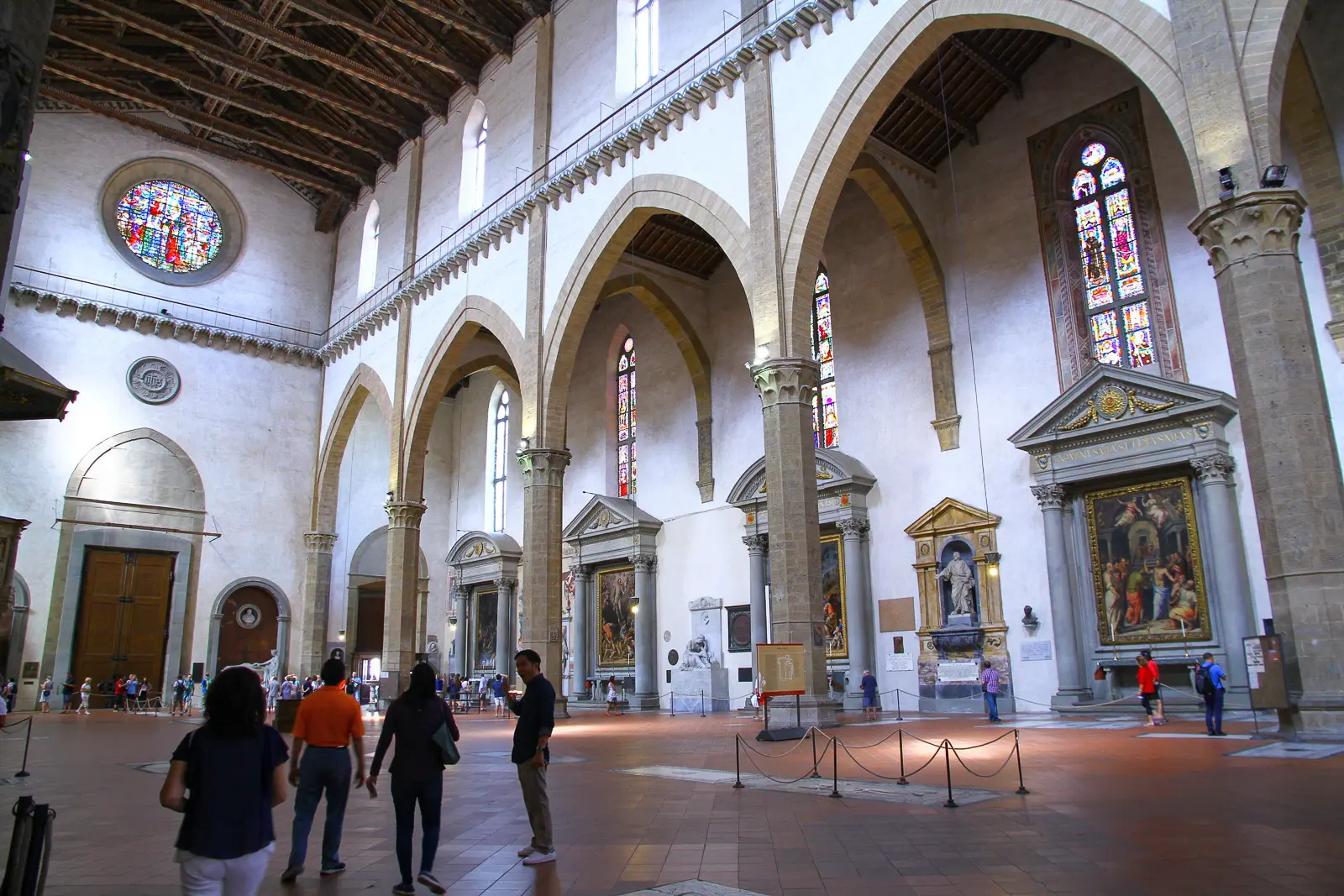
Santa Croce is often called the “Temple of Italian Glories”, and for good reason. Here lie or are commemorated some of the most influential figures in Italian history. The tomb of Michelangelo Buonarroti, designed by Giorgio Vasari, honors the artist whose genius shaped the Renaissance. Nearby, the monumental tomb of Galileo Galilei reflects the eventual, and long delayed, recognition of a scientist once condemned by the Church. Galileo died in 1642 but was only moved to Santa Croce in 1737, nearly a century later, in a belated act of cultural redemption.
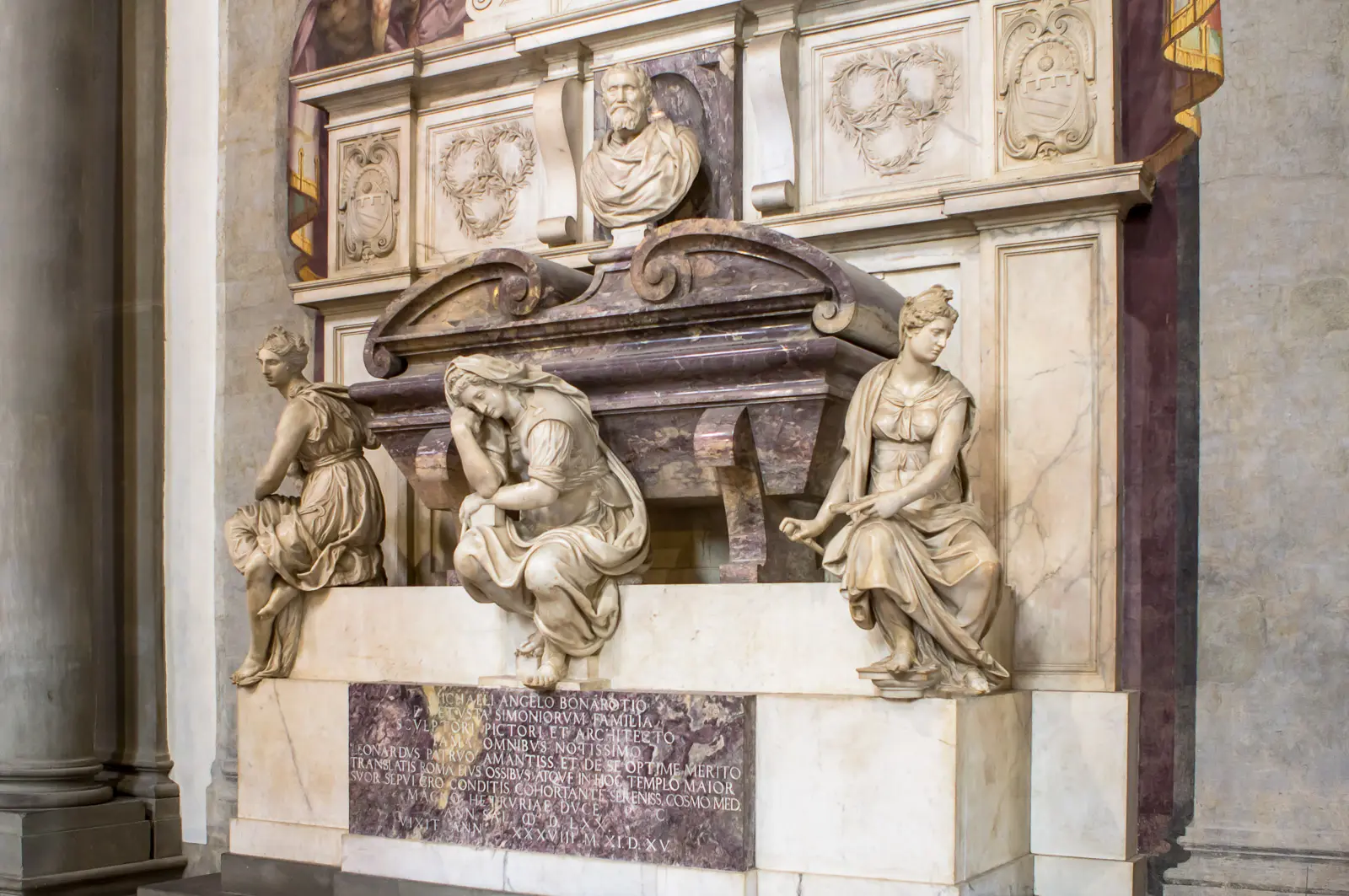
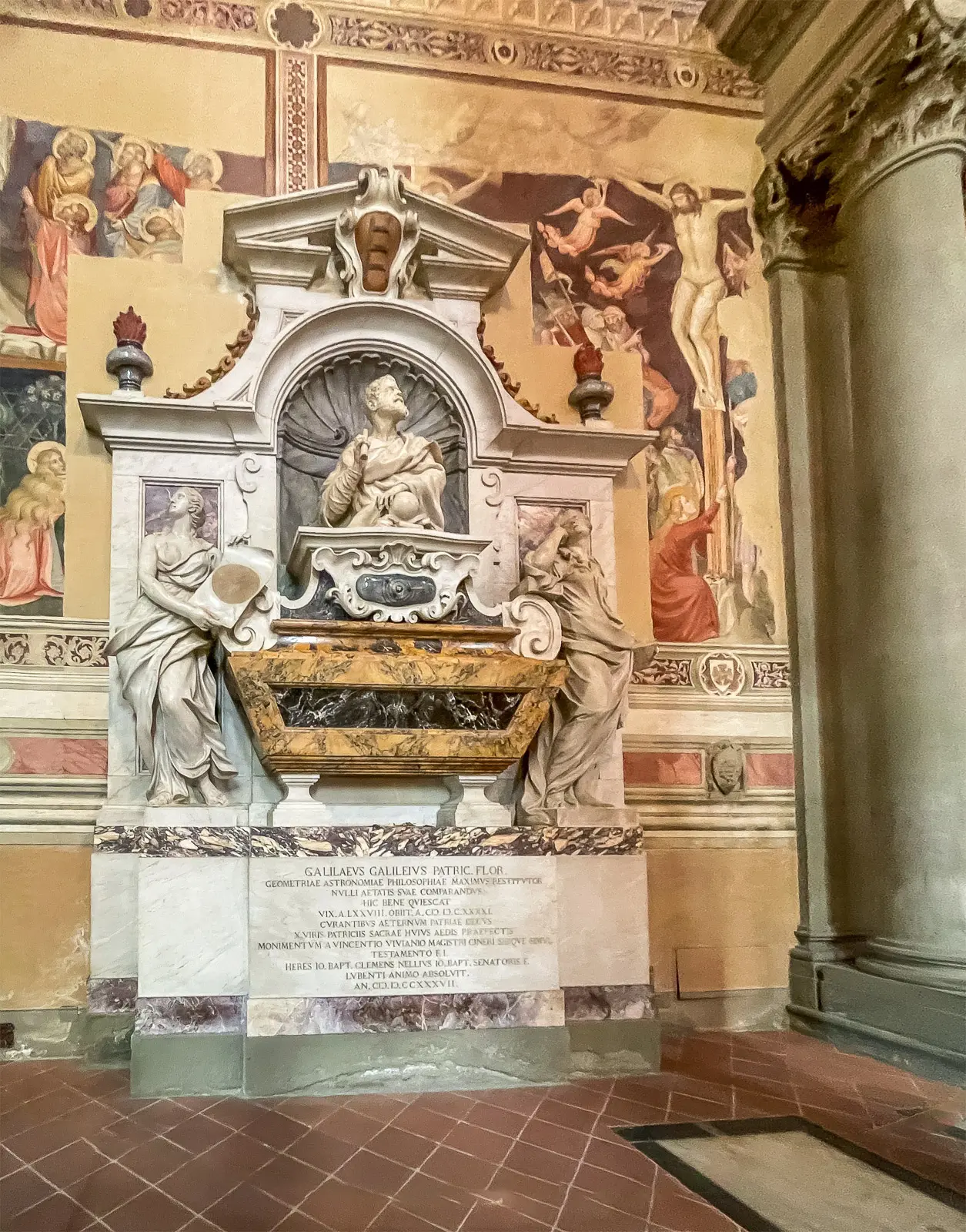
Machiavelli‘s tomb bears one of the most celebrated epitaphs in Florence: “Tanto nomini nullum par elogium” – “No eulogy could match so great a name.” It is a fitting tribute to one of history’s most influential and controversial political thinkers. The tomb of Gioachino Rossini, one of the 19th century’s most celebrated opera composers and the creator of The Barber of Seville, completes the ensemble – though Rossini died in Paris in 1868 and was only transferred to Santa Croce in 1887, nearly two decades after his death. And presiding over it all is the elaborate cenotaph of Dante Alighieri – a monument to Florence’s greatest poet, who despite the city’s repeated attempts to reclaim him, remains buried in Ravenna to this day.
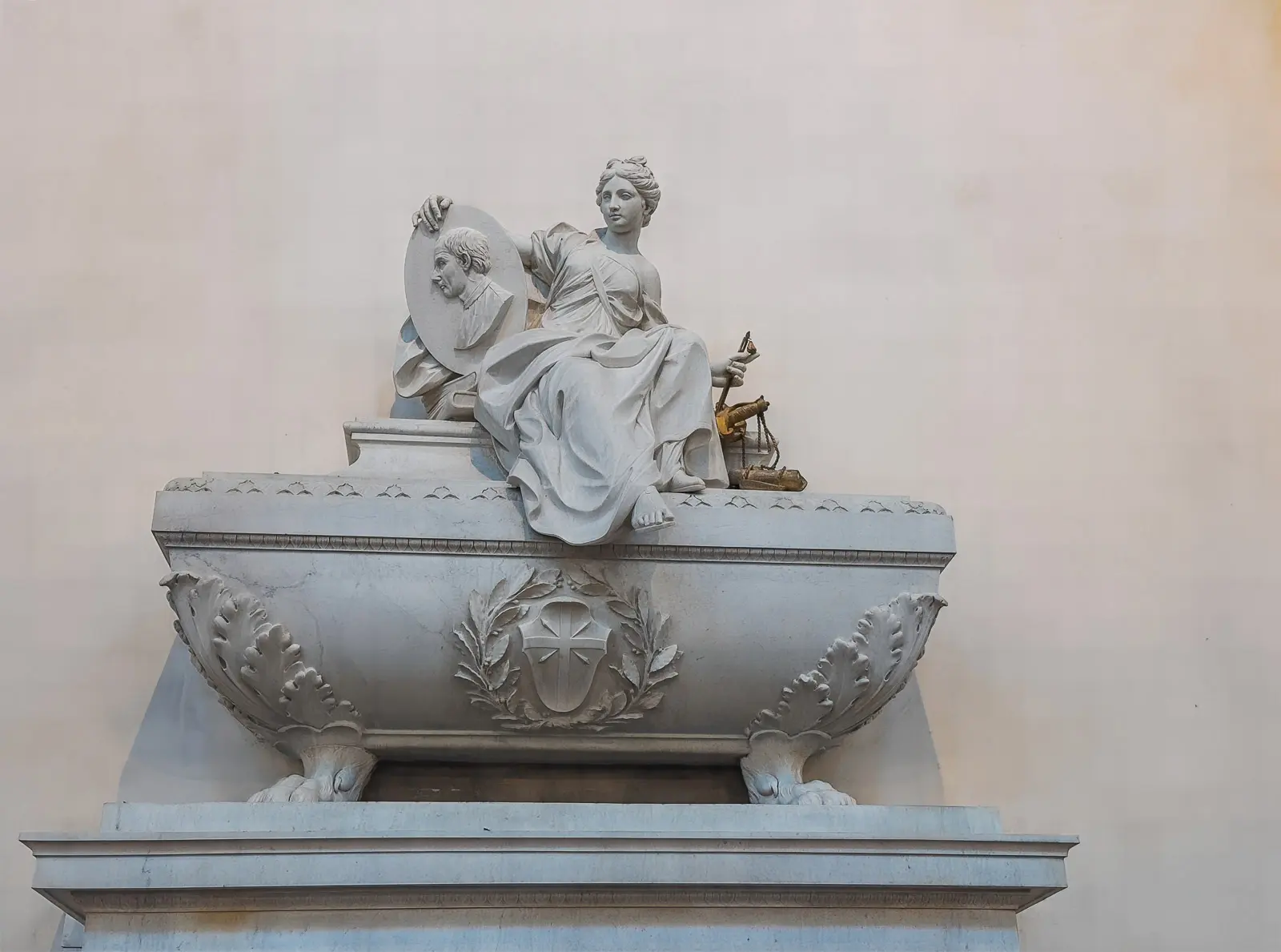
Walking among these monuments feels profoundly moving. This is not simply a gallery of famous names; it is a reflection on how societies choose to remember those who shaped their culture. Sculpture becomes storytelling, and marble becomes memory. Each tomb invites visitors to consider not only the accomplishments of these individuals but also the human stories behind them – ambition, struggle, innovation, and legacy.
Frescoes and Artistic Treasures
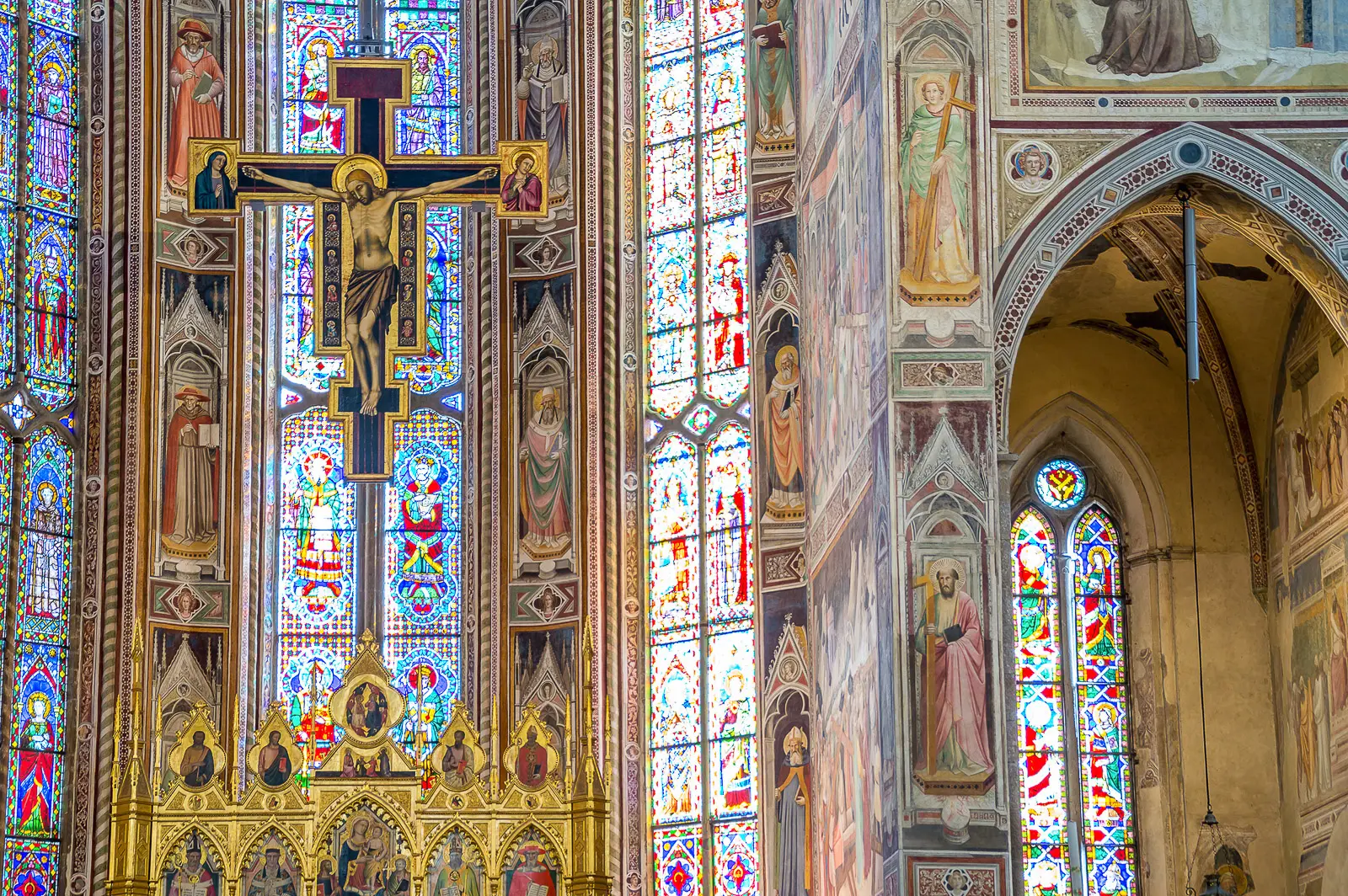
Santa Croce contains some of the most important fresco cycles in Florence, including works by Giotto and his workshop, which transformed the visual language of Western art in the 14th century. These frescoes mark a turning point between medieval symbolism and early Renaissance realism, introducing greater emotional expression, natural gestures, and a new sense of human presence. Scenes from the lives of saints unfold across the chapels with remarkable narrative clarity, drawing visitors into stories that once served both spiritual devotion and public education. Even today, the figures feel unexpectedly alive, their expressions and movements revealing an artistic shift toward empathy and observation.
Among the artists who helped shape this legacy was Taddeo Gaddi, one of Giotto’s most talented pupils. Gaddi continued his master’s exploration of light, space, and storytelling, contributing works that demonstrate how Florentine painters were gradually learning to create depth and atmosphere long before the full flowering of the Renaissance. His presence within Santa Croce reinforces the basilica’s role as an artistic laboratory, where experimentation unfolded quietly within sacred walls rather than in royal courts.
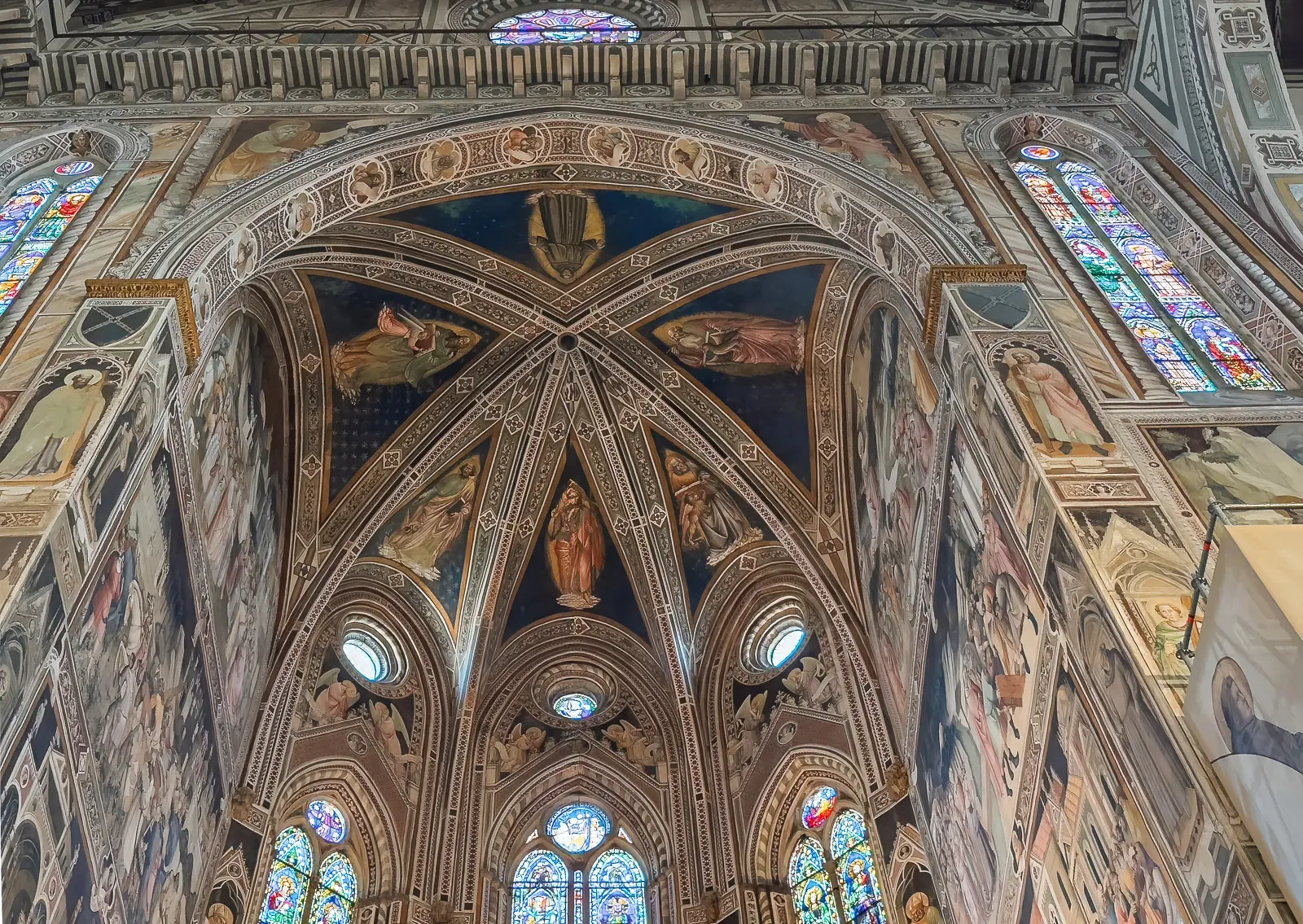
Equally captivating are the basilica’s stained glass windows, which transform natural light into an ever-changing element of the interior. Created by artists working within Giotto’s artistic circle, these windows were designed not only to beautify the space but to guide contemplation. As sunlight filters through the colored glass, it washes the stone and frescoed surfaces in shifting tones, creating a living dialogue between architecture and art. Although centuries of time and restoration have altered some details, the overall effect remains powerful. Santa Croce reveals itself not simply as a church filled with masterpieces, but as a place where painting, light, and spirituality merge into a single immersive experience.
The Cloisters and Peaceful Corners
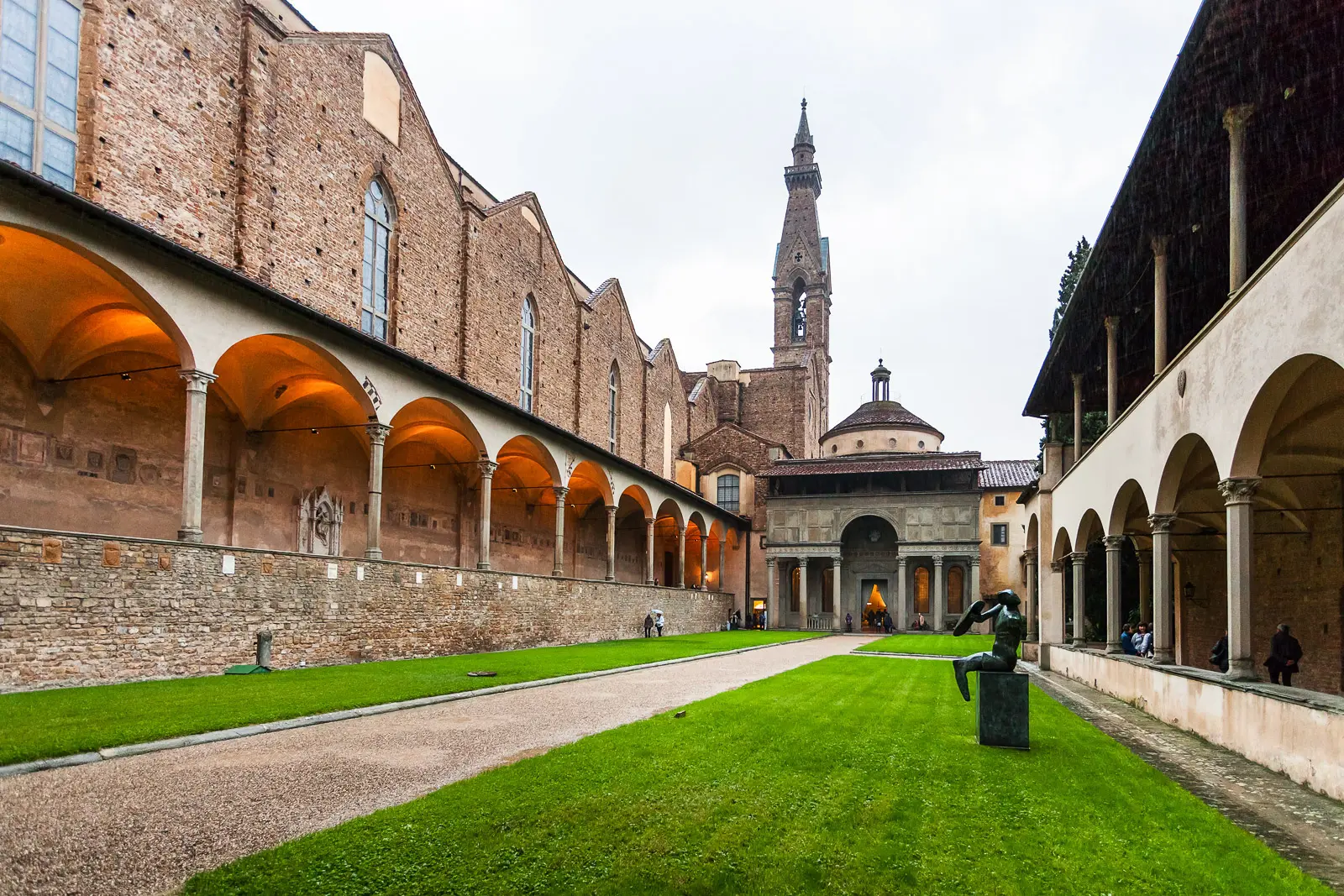
Beyond the main church lies another world entirely. The cloisters of Santa Croce offer a quiet escape from the busy city outside. Surrounded by arcades and gardens, these spaces invite slow walking and reflection. Sunlight filters gently through the arches, creating patterns that change throughout the day. The cloisters reveal a different side of the basilica – one connected to daily monastic life rather than grand ceremonies. Here, the pace feels slower, almost meditative. Visitors often find that these quieter areas linger in memory just as much as the famous tombs and artworks.
The Atmosphere Today
Santa Croce remains a living space where past and present coexist in quiet harmony. Tourists move through the basilica with cameras in hand, students pause to sketch architectural details, and worshippers sit silently in prayer, continuing traditions that have unfolded here for centuries. The soundscape shifts constantly – soft footsteps on stone, hushed conversations, the distant echo of voices rising toward the high timber ceiling – reminding you that this is not merely a monument but a place still woven into daily life.
Outside, Piazza Santa Croce fills with energy. Markets, festivals, and everyday Florentine rhythms unfold against the backdrop of centuries-old stone, creating a striking contrast between movement and permanence. This tension is part of the basilica’s enduring magic. Santa Croce is not frozen in time; it continues to evolve, absorbing each new generation while preserving the memory of those who came before. Standing here, you feel how history in Florence is never distant – it lives alongside the present, shaping the city’s identity moment by moment.
Bubbly Tips for Visiting Santa Croce
- When to visit: Go early in the morning for a quieter, more contemplative atmosphere before larger tour groups arrive.
- Read the stories: Take time to read the tomb inscriptions – understanding who is buried here adds emotional and historical depth to your visit.
- Explore beyond the nave: Don’t skip the cloisters and the Pazzi Chapel, which offer a peaceful Renaissance contrast to the grandeur of the main church.
- Look upward: Frescoes, stained glass, and architectural details reveal themselves slowly – the beauty of Santa Croce is often above eye level.
- Slow your pace: Allow time to sit quietly and absorb the space rather than rushing through; this basilica rewards stillness.
- Practical tip: Entry is ticketed, and combined access often includes the museum, cloisters, and chapels – worth it for the full experience.
Final Thoughts
Santa Croce is more than a church. It is a place where Florence reflects on itself – on the artists, thinkers, and visionaries who shaped not only the city but the course of human culture. Walking through its nave and cloisters, you feel the quiet weight of history balanced by a sense of continuity. The past is not distant here; it feels present, alive, and deeply human.
Florence is a city that celebrates beauty, but Santa Croce reminds us that beauty often carries memory within it. It asks us to slow down, to look closely, and to consider the legacies we leave behind.
Have you visited Santa Croce, or is it on your Florence list? I’d love to hear what moved you most, share your thoughts below.
With love and curiosity,
Bubbly🌍
🌟 Everything You Need to Plan Your Dream Trip in 2026
- 🌟 Luxury Hotels - Find premium stays with Booking.com & Hotels.com
- 🏡 Vacation Rentals - Discover unique properties on VRBO
- 🏞️ Guided Tours - Explore with Viator or GetYourGuide
- 🎫 Attraction Tickets - Skip the lines with Tiqets
- 🚢 Ocean Cruises - Set sail with Cruise Direct
- 📱 International SIMs - Stay connected with Saily
- 🚗 Car Rentals - Budget-friendly options from Discover Cars
- 🌐 Secure VPNs - Browse safely with NordVPN
- 💶 Currency Exchange - Best rates with Wise
- 🗣️ Learn Languages - Master the local language with Babbel and Rosetta Stone