
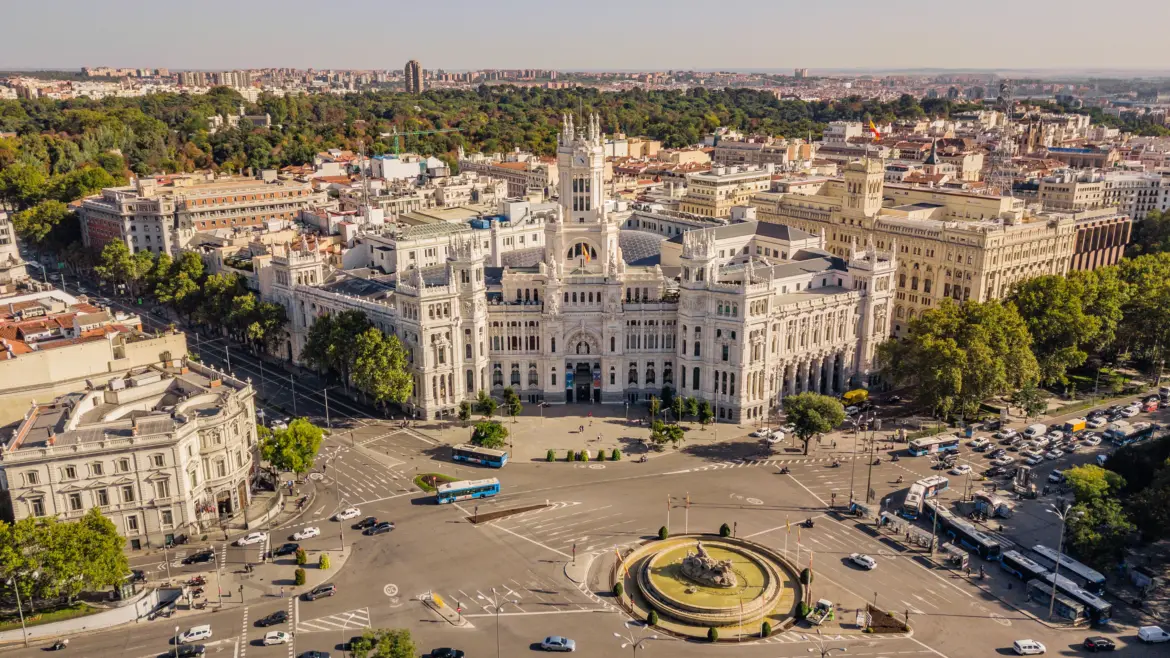
Hola, my travel lovers! If there is one place in Madrid that feels instantly majestic – where history, architecture, and city life all meet in a breathtaking scene – it’s Plaza de Cibeles. Whether you’ve seen it in films, travel guides, or football celebrations, nothing compares to seeing it in person. The gleaming white architecture, the iconic fountain, the sweeping boulevards converging at its center… it is Madrid at its most regal and cinematic.
This plaza isn’t just a roundabout, it’s a symbol. A meeting point of Madrid’s past and present, a showcase of its beauty, and one of the city’s most photogenic spots. Let’s dive in together and explore what makes Plaza de Cibeles such an unforgettable landmark.
A Plaza Carved in Marble & History
Plaza de Cibeles has been one of Madrid’s most important intersections since the late 18th century, when the city began expanding beyond the older Habsburg quarter. The centerpiece, the Fuente de Cibeles (Fountain of Cybele), was designed in 1782 during the reign of Charles III as part of a beautification project to modernize Madrid. The goddess Cybele atop her chariot represented prosperity and the nurturing spirit of the city, driving lions that symbolize power and protection.
Over time, three grand boulevards grew around it – Calle de Alcalá, Paseo del Prado, Paseo de Recoletos – transforming the plaza into the city’s ceremonial heart. Today, it’s one of the most recognizable spaces in Madrid, standing proudly between elegant neighborhoods, cultural institutions, and political landmarks.
The Majestic Fountain – Symbol of a City
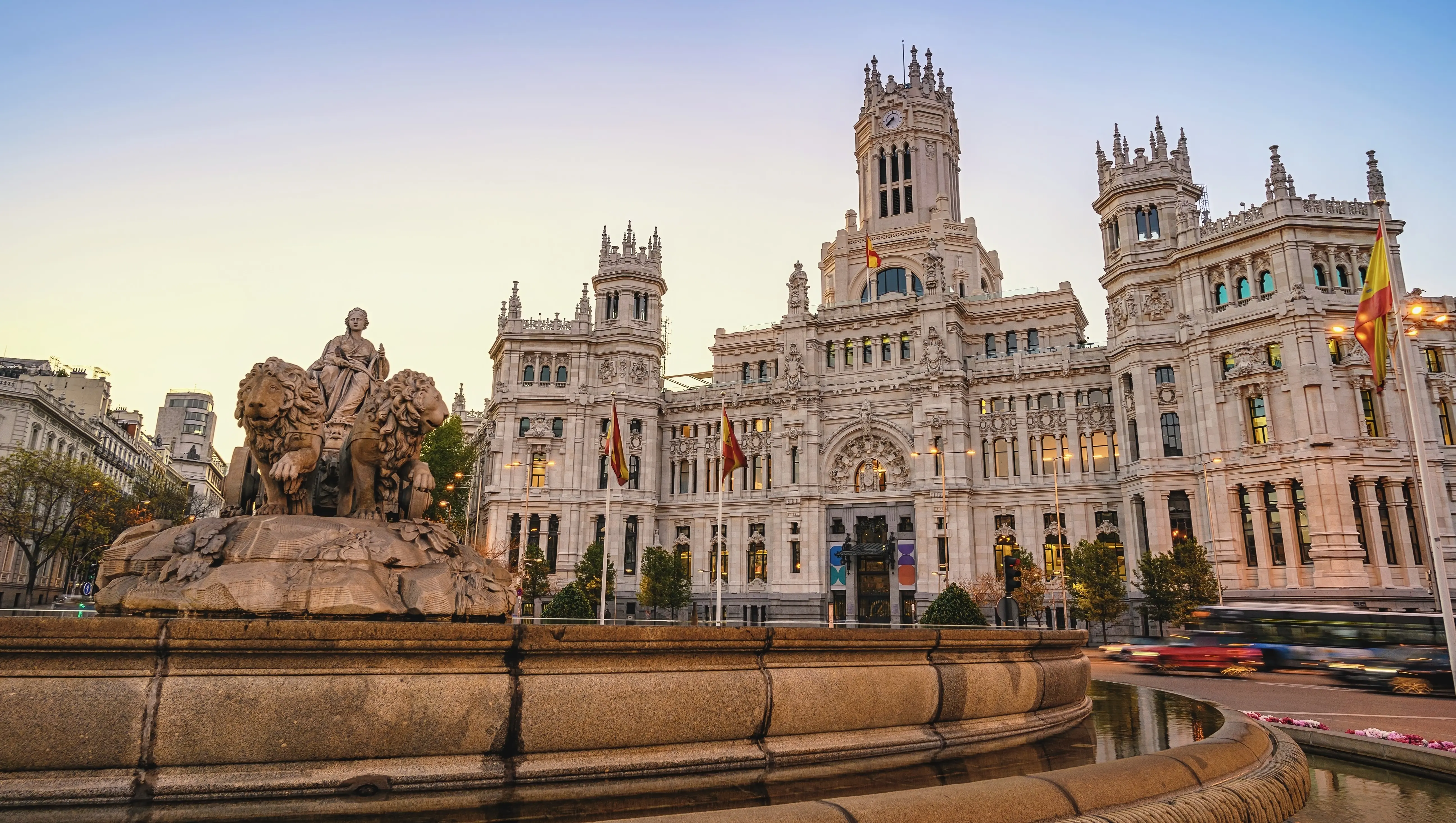
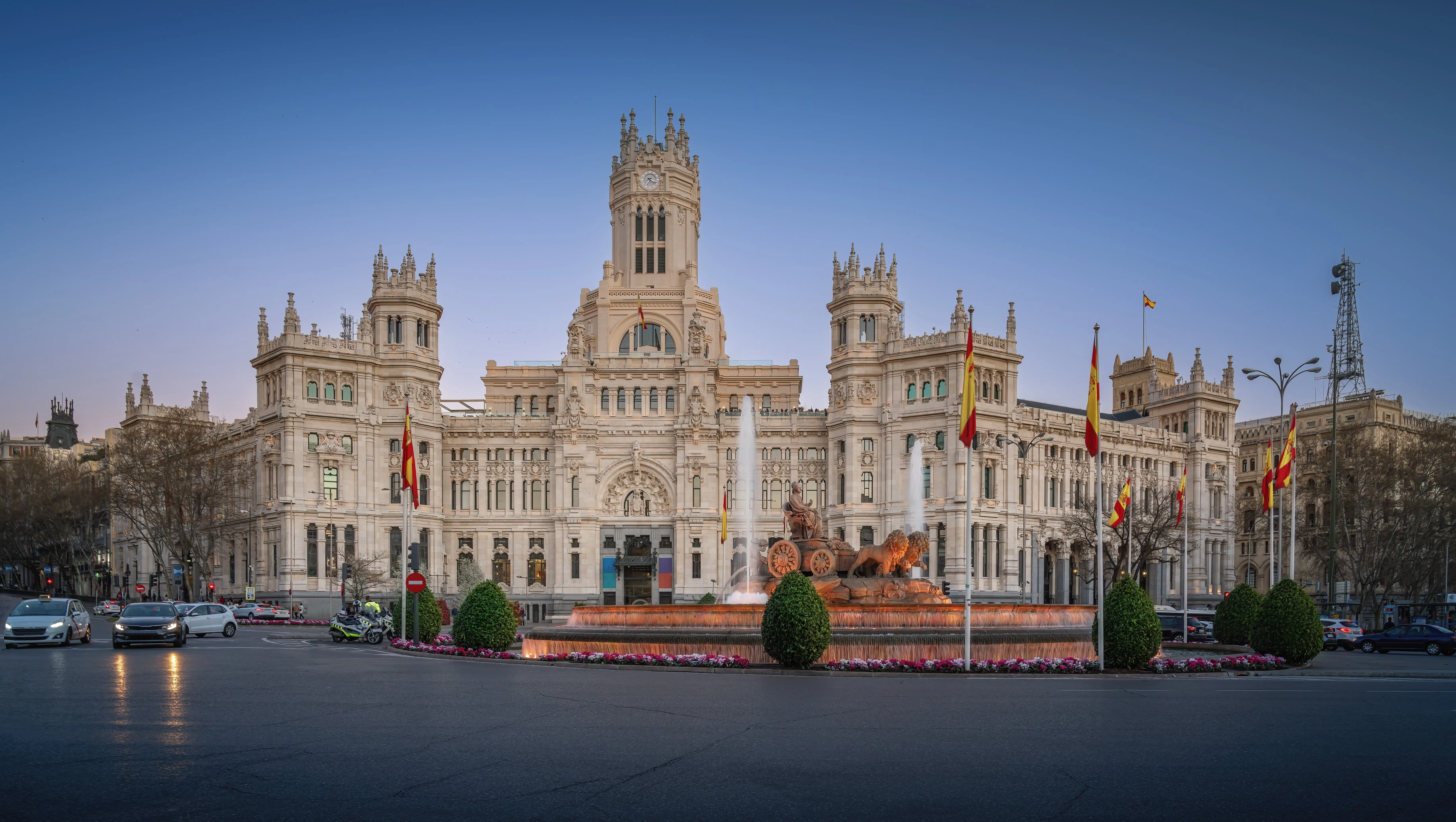
The star of the plaza is undoubtedly the Fuente de Cibeles (Fountain of Cybele), one of Spain’s most beloved monuments. Sculpted in luminous marble from Montesclaros with subtle purple-tinged veining, it depicts the goddess Cybele, protectress of cities, riding a chariot pulled by two powerful lions. The scale, detail, and beauty of the fountain are mesmerizing up close: the flowing drapery, the expressive lions, and the harmonious curves all showcase 18th-century craftsmanship at its finest.
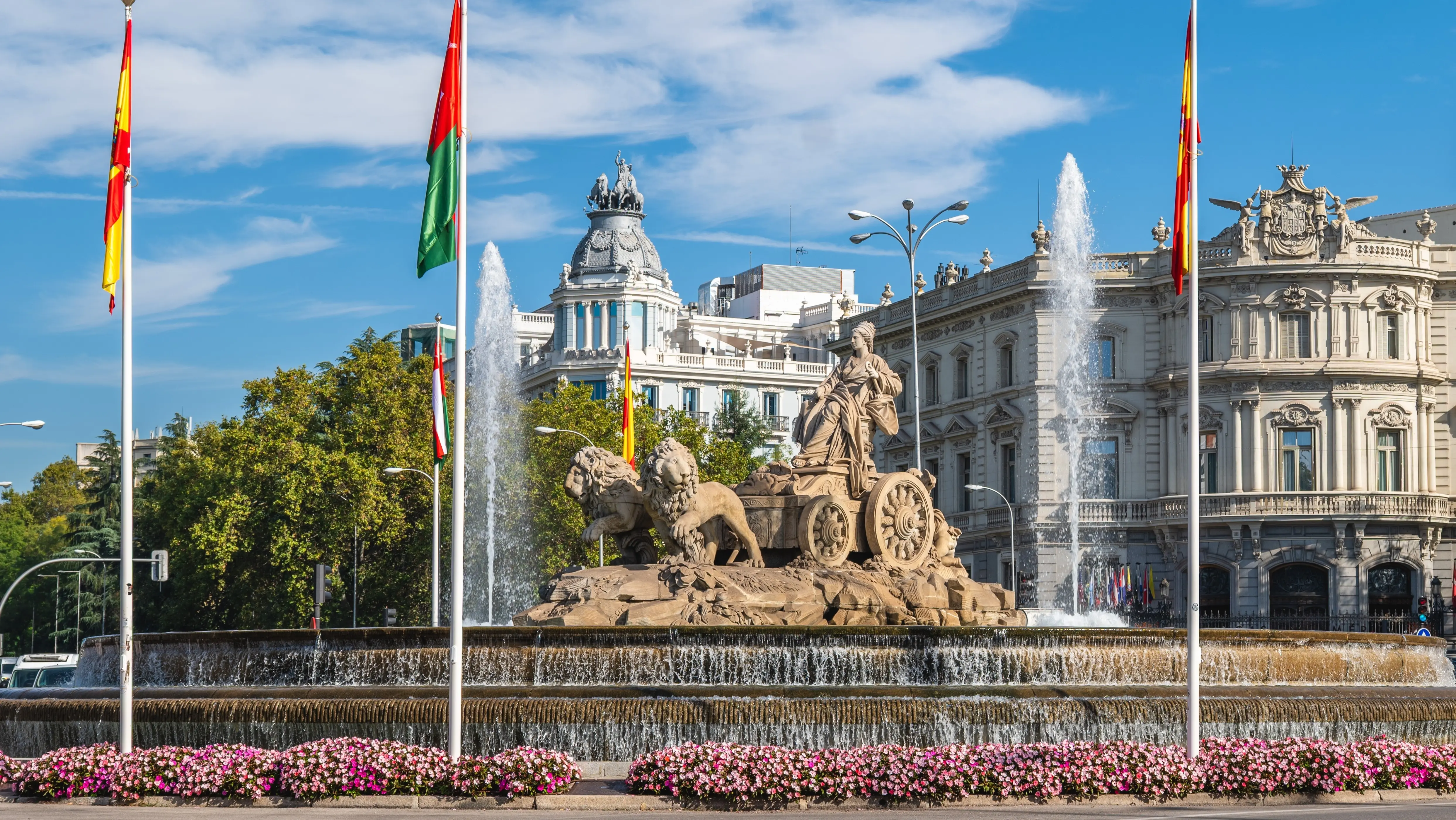
For locals, the fountain also carries a modern layer of meaning: it is the celebration site of Real Madrid. Whenever the team wins a major title, thousands gather here in a sea of white, the club’s signature color. The captain traditionally places a Real Madrid scarf around the statue, and jubilant fans flood the plaza. Even if you’re not a football fan, the energy and cultural significance are unforgettable.

A Surrounding Frame of Palaces
One of the most striking features of Plaza de Cibeles is that it is surrounded by monumental buildings on every side, forming a perfect architectural “crown” around the fountain. Each building has its own history and role in Madrid’s identity.
Palacio de Cibeles (Cybele Palace)
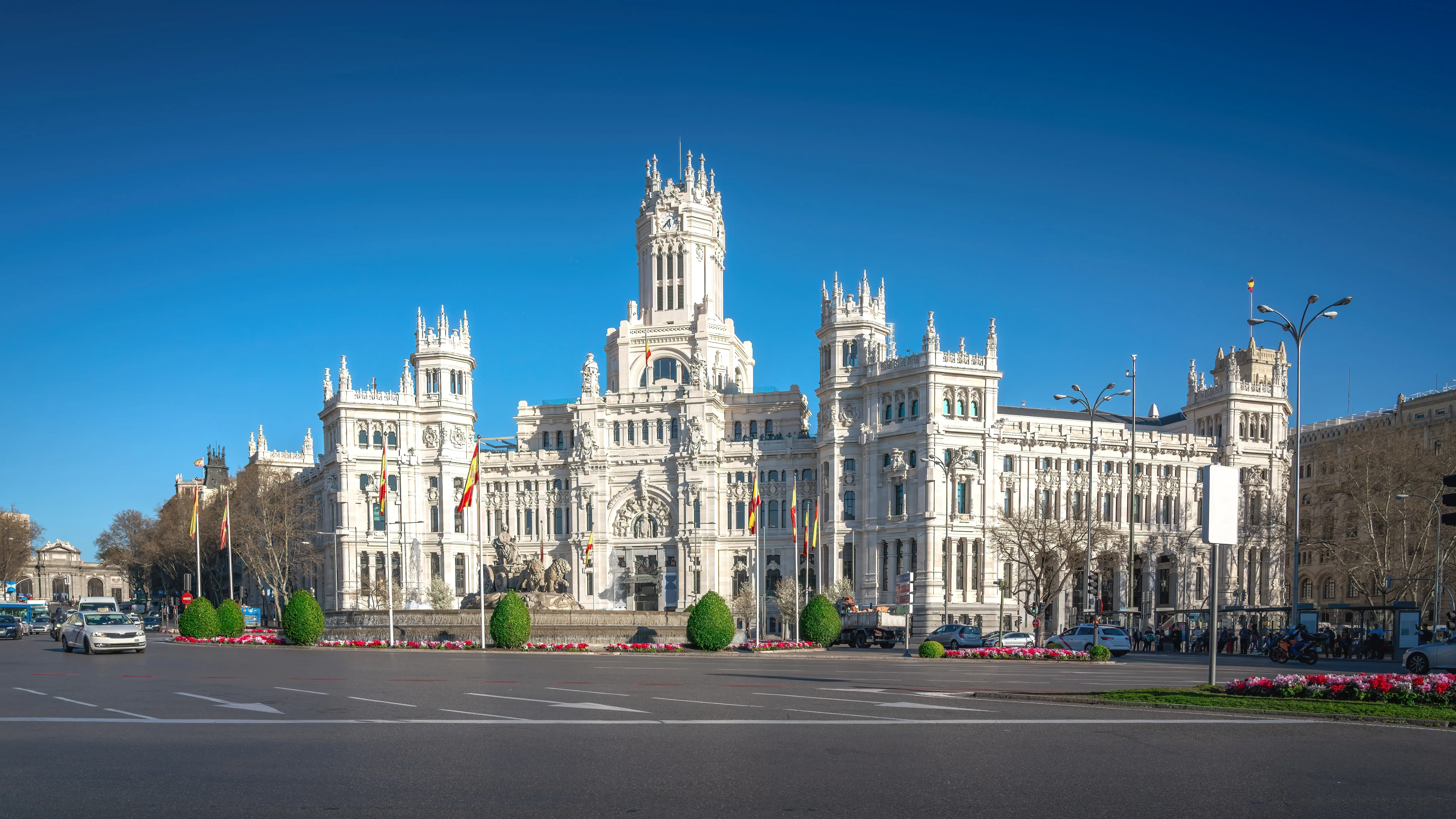
Formerly the headquarters of the postal and telecommunications service, this dazzling white palace now houses Madrid’s City Hall. Its dramatic towers, neo-Plateresque façade, and intricate stonework make it look like a fairytale castle. Inside, you’ll find cultural exhibitions, a glass-roofed atrium, and the famous Mirador Madrid, a rooftop viewpoint overlooking the fountain.
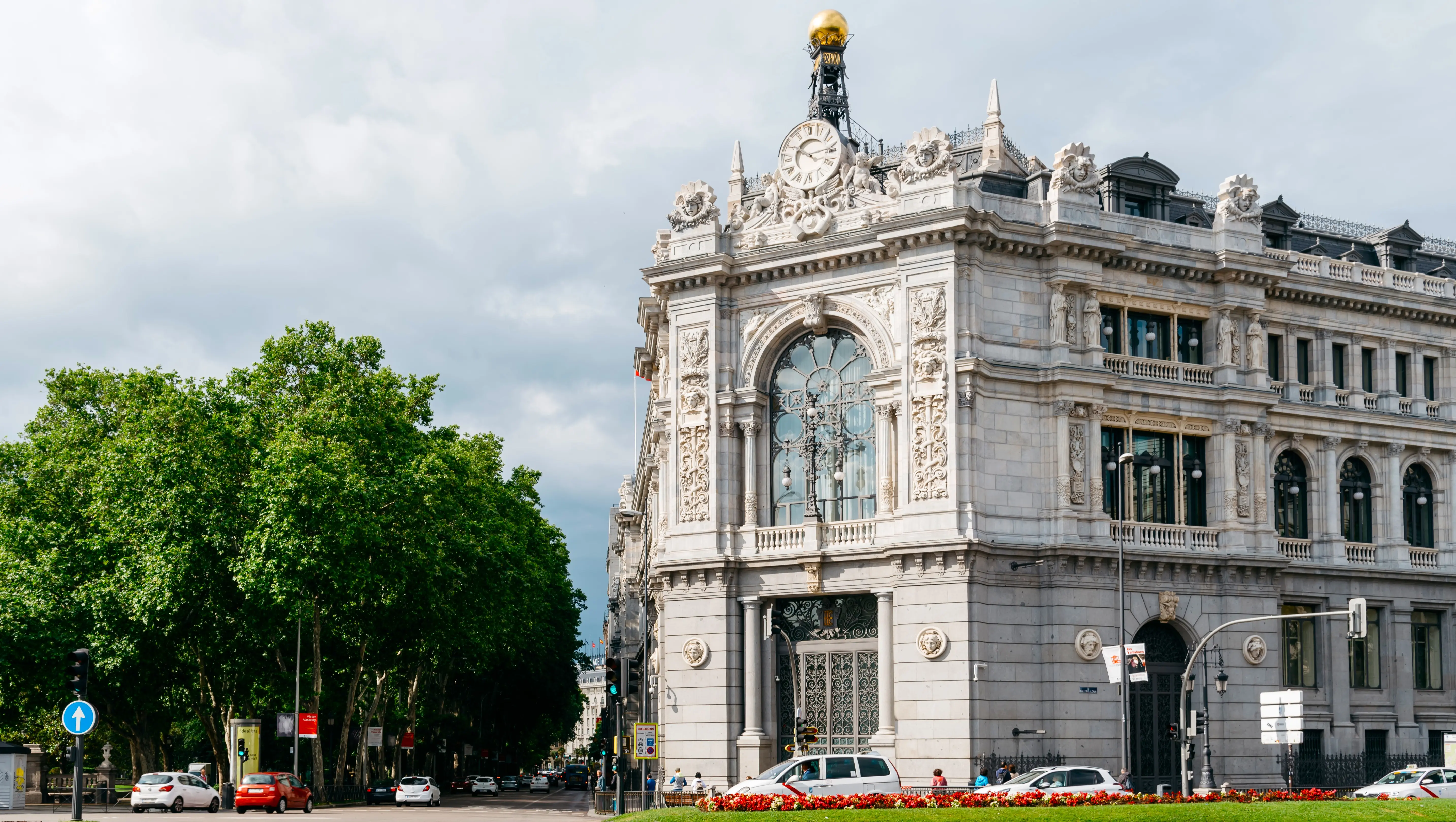
Banco de España (Bank of Spain)
This imposing building dates to 1891 and is one of Spain’s most powerful financial institutions. Its richly decorated façade, wrought-iron details, and grand corner presence make it a key piece of the plaza’s character.
Palacio de Linares
An exquisite late 19th-century mansion known for its legends and beautiful French-style interiors. Today it hosts Casa de América, promoting cultural ties between Spain and Latin America.
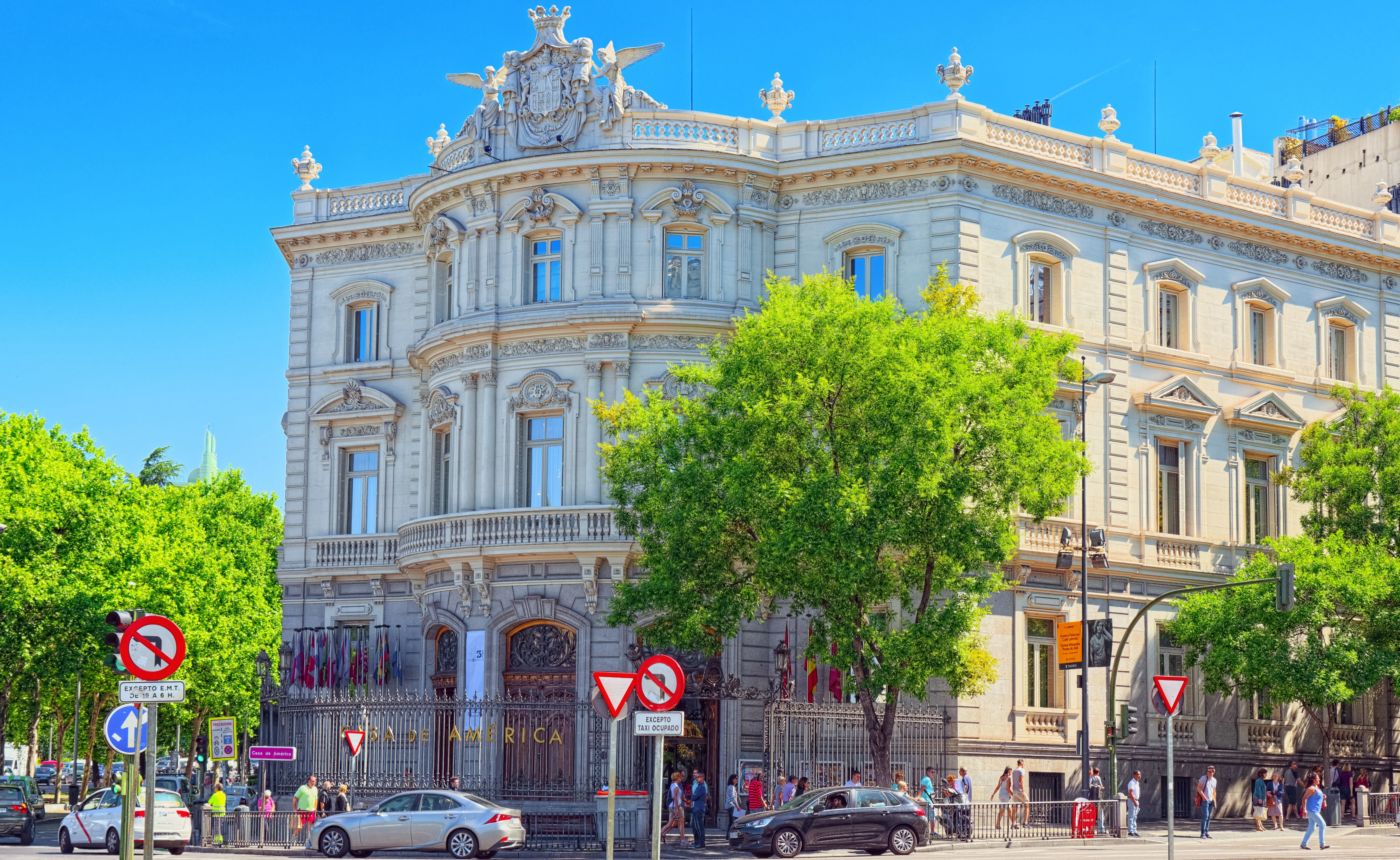
Together, these four buildings create one of the most harmonious urban ensembles in Europe – refined, balanced, and photogenic from every angle.
What It’s Like to Visit
Standing at Plaza de Cibeles is a sensory experience. You’ll hear the soft rush of cars gliding by, the splash of the fountain, and the echo of footsteps around the palace steps. The white marble seems to glow in the sunlight, while the surrounding boulevards stretch out like grand pathways inviting you to explore Madrid.
One of my favorite moments was watching the plaza at golden hour. The buildings seemed to blush slightly, turning from white to pale honey, while the sky behind the towers shifted from blue to rose. People from all walks of life pass here: locals heading to Retiro Park after work, visitors taking photos, cyclists weaving through the roundabout, and friends sitting on nearby benches sharing a moment. It’s a place where you naturally slow down and take it all in.
Bubbly Tips
- Best Time to Visit: Golden hour for magical light; nighttime for stunning illumination
- Closest Metro: Banco de España (Line 2)
- Combine With: Retiro Park, Puerta de Alcalá, Gran Vía, Paseo del Prado
- Photo Tip: Stand on the corner leading to Calle de Alcalá for the best symmetrical shots
- Extra Treat: Visit the rooftop of Palacio de Cibeles for one of Madrid’s most beautiful viewpoints
Final Thoughts
Plaza de Cibeles is one of Madrid’s most elegant and iconic places – a harmonious blend of artistry, history, and urban life. Whether you stop here for a quick photo, linger on a bench, explore the palace, or pass by at night when everything glows, this plaza captures the spirit of the city beautifully. It’s regal without being distant, grand yet welcoming, and full of the charm that makes Madrid unforgettable.
If you’re exploring the Spanish capital, don’t skip this dazzling white landmark, it’s a moment of pure Madrid magic waiting for you.
Have you visited Plaza de Cibeles? Tell me your favorite moment below!

🌟 Everything You Need to Plan Your Dream Trip in 2026
- 🌟 Luxury Hotels - Find premium stays with Booking.com & Hotels.com
- 🏡 Vacation Rentals - Discover unique properties on VRBO
- 🏞️ Guided Tours - Explore with Viator or GetYourGuide
- 🎫 Attraction Tickets - Skip the lines with Tiqets
- 🚢 Ocean Cruises - Set sail with Cruise Direct
- 📱 International SIMs - Stay connected with Saily
- 🚗 Car Rentals - Budget-friendly options from Discover Cars
- 🌐 Secure VPNs - Browse safely with NordVPN
- 💶 Currency Exchange - Best rates with Wise
- 🗣️ Learn Languages - Master the local language with Babbel and Rosetta Stone