
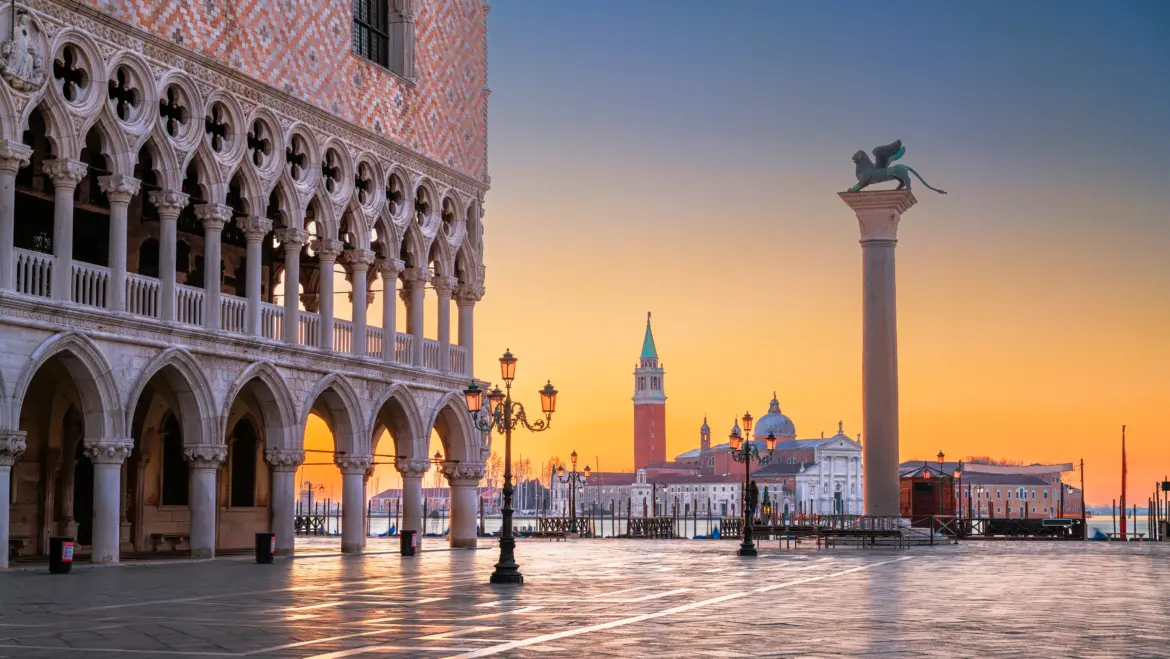
Hello, fellow adventurers! Venice does not reveal itself all at once. It unfolds gradually – through winding alleyways, shadowed passages, quiet bridges, and sudden moments of light. And then, unexpectedly, it opens. Piazzetta San Marco is that opening.
Smaller and more restrained than its famous neighbor, Piazza San Marco, the Piazzetta carries a different emotional weight. This is not a space designed to enclose or impress through symmetry. It is a space that releases you outward, toward water and horizon. Here, Venice steps back slightly and allows the lagoon to take center stage. Standing in the Piazzetta, you feel the city shift from interior to exterior, from density to openness. It’s a moment of recalibration, where Venice stops whispering through alleys and begins speaking through water, light, and space.
What Is Piazzetta San Marco?
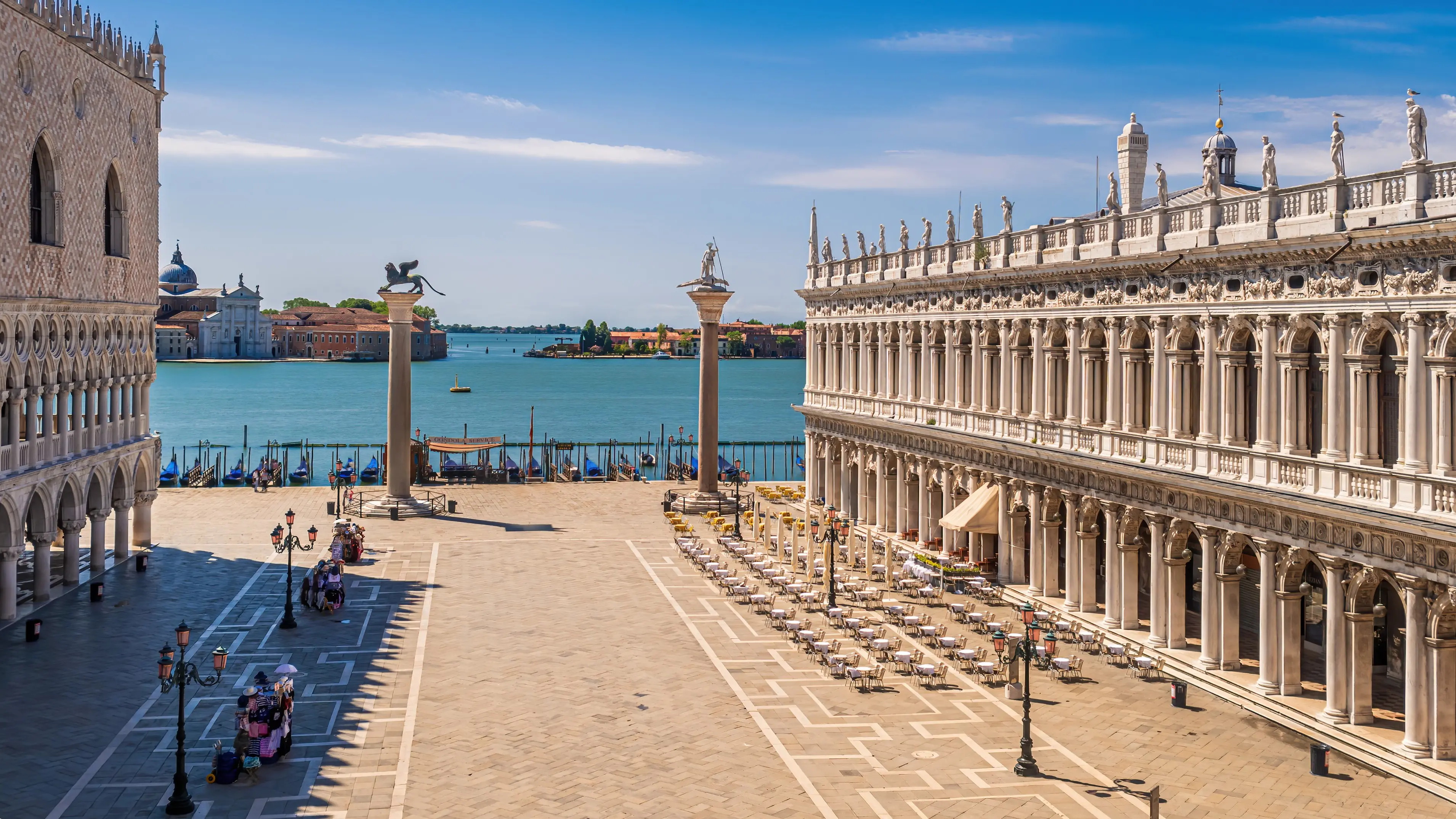
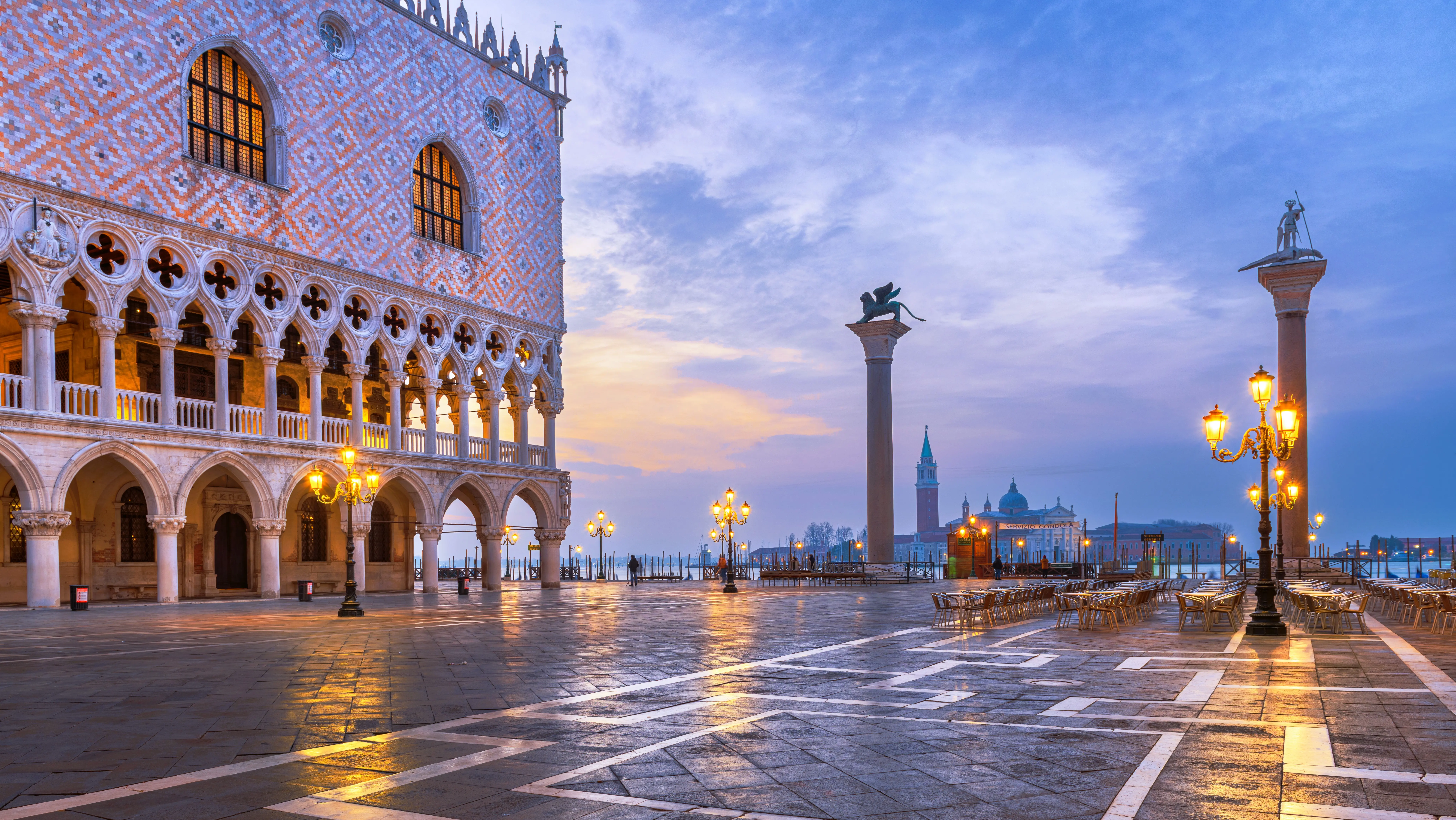
Piazzetta San Marco (Little St Mark’s Square) is the smaller waterfront extension of Venice’s famous Piazza San Marco, opening directly onto the Venetian Lagoon. Flanked by the Doge’s Palace and Biblioteca Marciana, it features the iconic Columns of St Mark and St Theodore marking Venice’s historic entrance from the sea. For centuries, this space served as the formal arrival point for foreign dignitaries and ambassadors, functioning as Venice’s ceremonial gateway and threshold between city and lagoon.
Venice’s Historic Front Door: Arrival from the Lagoon
For centuries, Piazzetta San Marco functioned as Venice’s formal point of arrival. This was where foreign dignitaries, ambassadors, merchants, and heads of state disembarked after long journeys across the lagoon. Their first steps onto Venetian soil happened here, under careful architectural framing meant to communicate power, stability, and confidence.
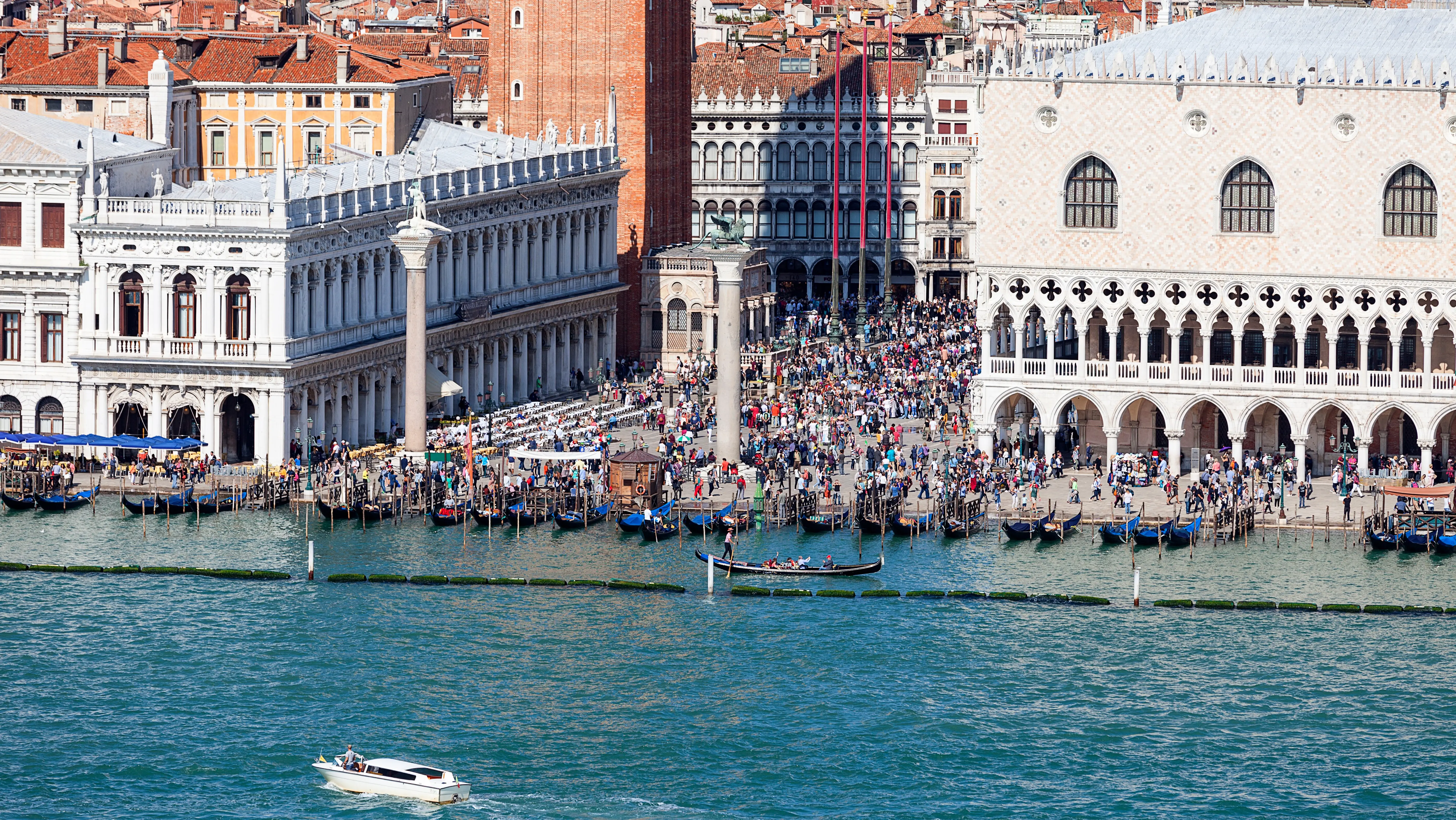
Unlike most Venetian squares, which feel enclosed and inward-looking, the Piazzetta opens directly onto the Lagoon of Venice. This openness was deliberate. Venice wanted visitors to understand immediately that the sea was not a boundary, but a source of strength – a conduit for trade, diplomacy, and influence. Even today, that sense of arrival lingers. Standing here, you feel as though you’re not just visiting Venice, but being received by it.
A Stage of Power, Knowledge, and Justice
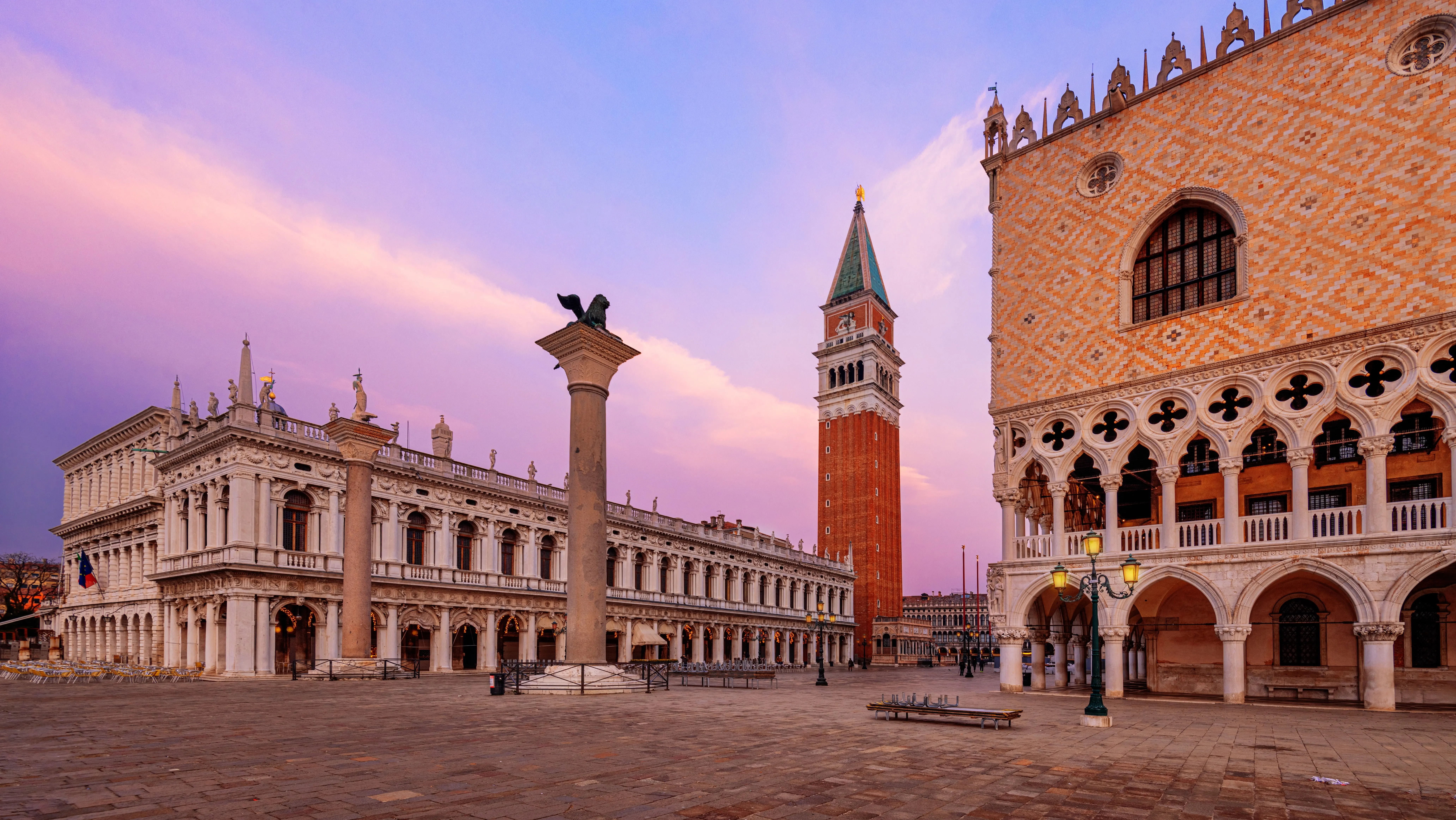
The Piazzetta is framed with remarkable intention, surrounded by institutions that once defined the Venetian Republic. On one side rises the Doge’s Palace, whose delicate Gothic façade conceals the immense authority once exercised within. This was the seat of government, justice, and political strategy, a reminder that Venice’s elegance was always underpinned by discipline and control. Opposite stands the Biblioteca Marciana, one of Renaissance Europe’s great repositories of knowledge. Its presence here was no accident. Venice positioned learning, culture, and intellectual capital as equal partners to political power.
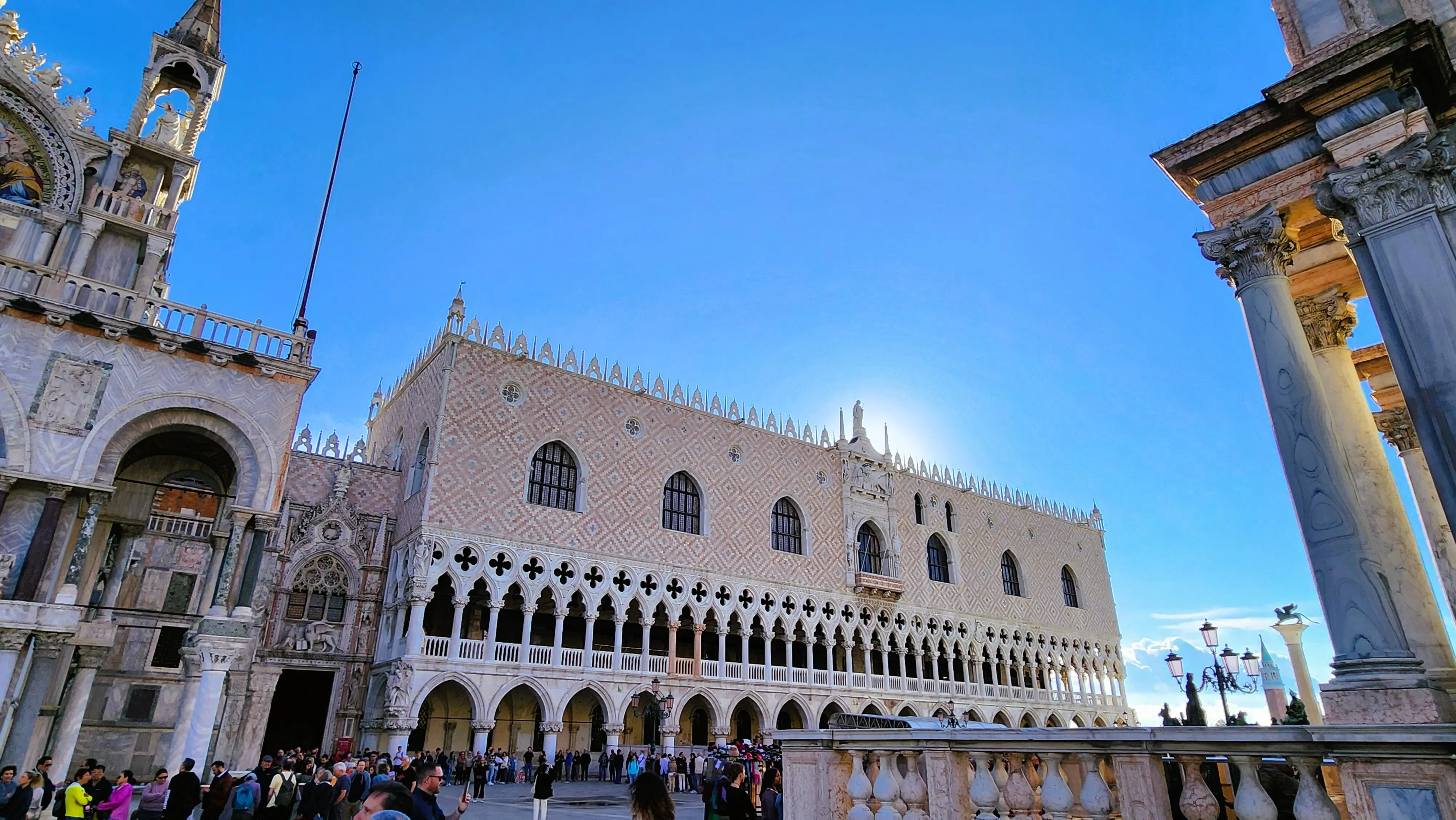
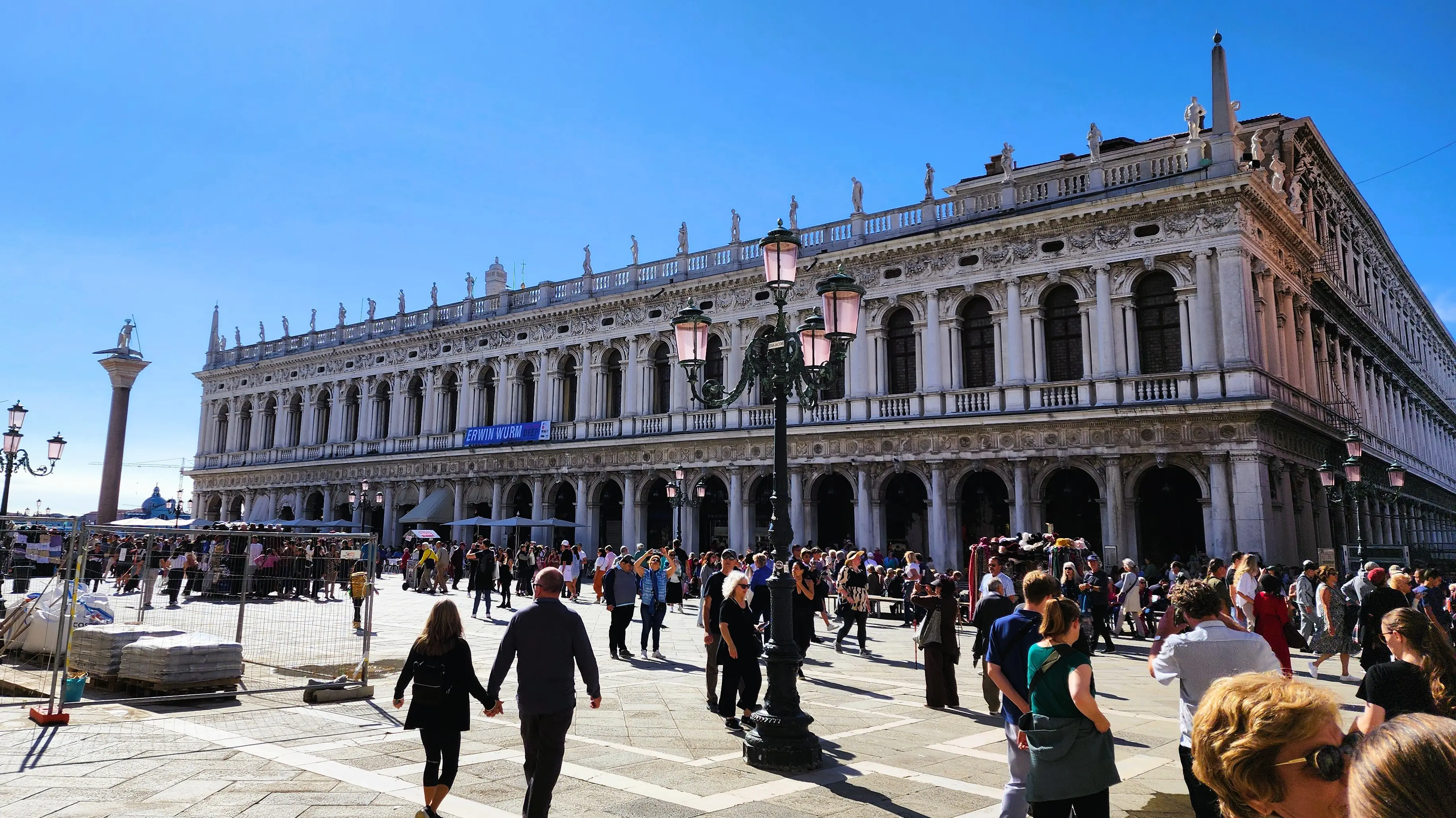
Between these two buildings, the Piazzetta becomes a corridor of balance – governance on one side, wisdom on the other, and the open lagoon beyond. Its architecture used not merely for beauty, but for messaging.
The Columns That Marked the Edge of the World
At the water’s edge stand the iconic Columns of St Mark and St Theodore, marking the symbolic threshold between city and sea. One column bears the winged lion of St. Mark, emblem of Venice’s patron saint and its far-reaching ambitions. The other carries St. Theodore, an earlier protector of the city, depicted standing over a subdued creature, a reminder of order imposed over chaos.
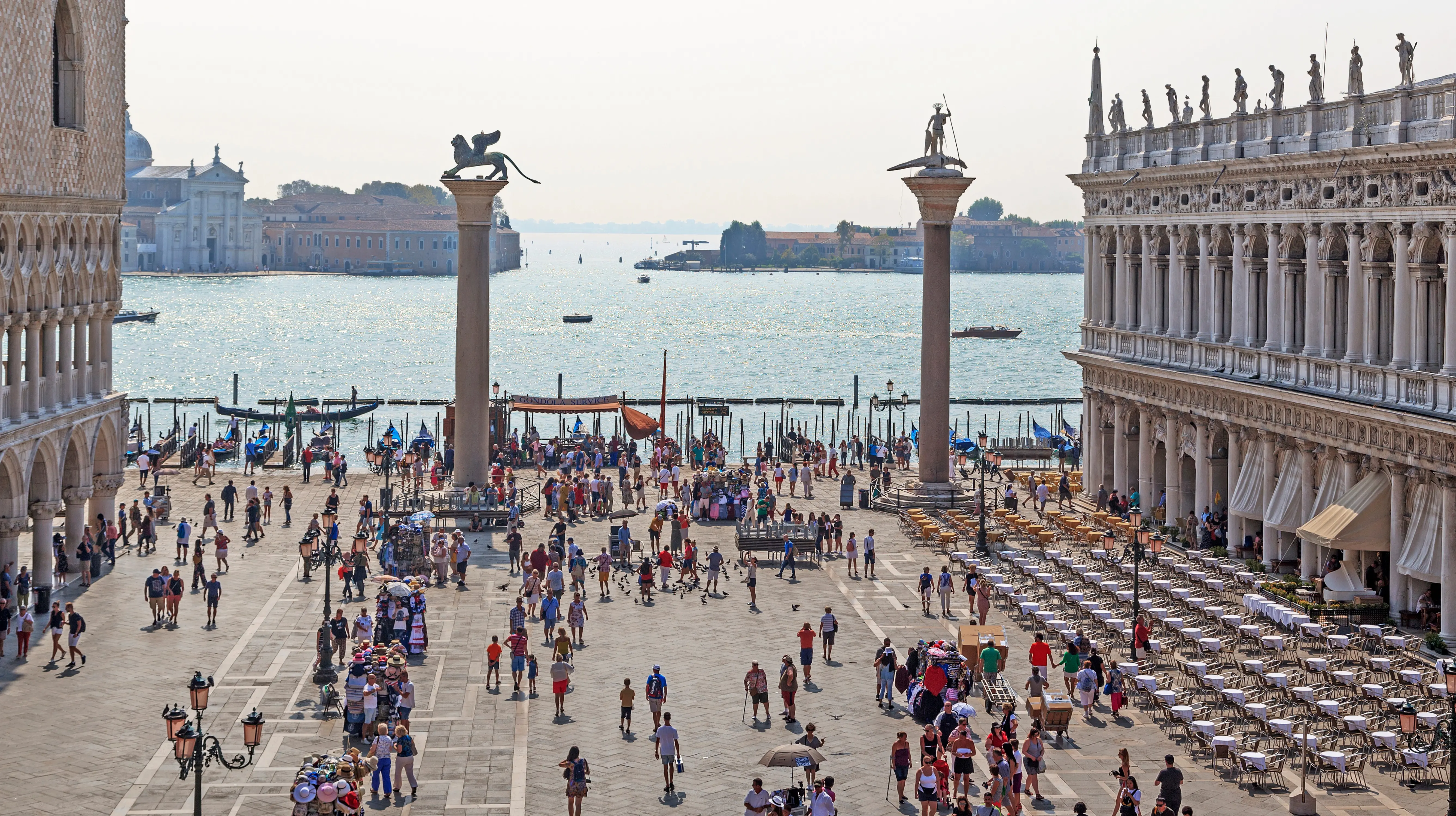
Historically, the space between these columns carried a darker function. Public executions were carried out here, in full view of both the city and the lagoon. Justice was meant to be seen, unquestioned, and remembered. Today, visitors walk casually between them, often unaware of the gravity once attached to this ground. Venice rarely separates beauty from consequence. The Piazzetta holds both.
How Light Transforms Piazzetta San Marco
During the day, Piazzetta San Marco feels expansive and alert. Boats arrive and depart rhythmically. Vaporetto stops hum with movement. The lagoon reflects pale blues and shifting silvers, and the city feels outward-facing, connected to the wider world beyond its canals. As afternoon deepens, the atmosphere softens. Stone warms under the sun. Shadows stretch across the paving. The Piazzetta begins to slow, inviting observation rather than movement.
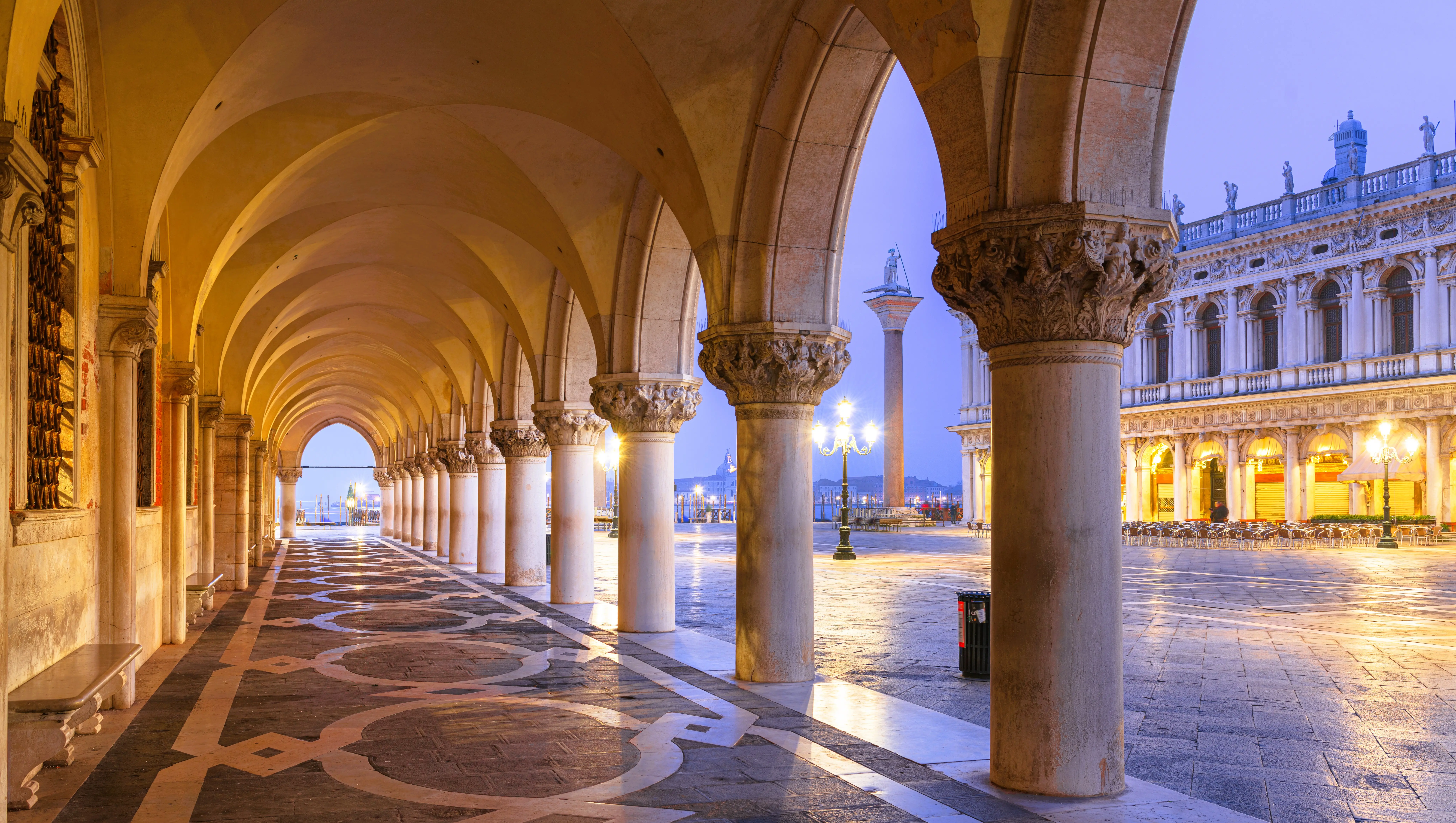
At sunset, the transformation is unmistakable. The lagoon glows. Boats become silhouettes. The light lingers just long enough to make the moment feel suspended. It’s one of Venice’s most quietly cinematic scenes – never theatrical, always composed. After dark, the Piazzetta turns inward again. Lights shimmer across the water. Footsteps echo gently. The space becomes intimate, reflective, and hushed.
More Than a Square: A Moment of Transition
Piazzetta San Marco is not a destination meant for long stays. It is a place of passage, and its meaning lies in movement itself. Here, arrival and departure coexist – ceremony and release, power and openness held in quiet balance. As you cross through it, you feel the city subtly recalibrate, reminding you that Venice is not only experienced through what you see, but through how you move, pause, and progress. This is a space that teaches you to slow between moments, to stand briefly at the threshold, and to recognize transition not as interruption, but as part of the experience.
Why Piazzetta San Marco Stays with You
Piazzetta San Marco stays with you because it offers perspective rather than spectacle. You remember the openness – the rare sense of horizon in a city built on density – and the feeling of standing at the edge of land, facing water, where Venice first meets the lagoon. In that moment, the city reveals itself not only as a collection of monuments, but as a former maritime republic shaped by movement, trade, and intention. Ships once arrived here. Power once departed from here. In a city often experienced through detail and ornament, the Piazzetta offers space instead – space to breathe, to think, to orient yourself. It doesn’t ask for your attention. It earns your understanding.
Bubbly Tips
- Best time to visit: Late afternoon into sunset, when light softens and the lagoon glows
- Photography note: Wide angles work beautifully here – especially facing the water
- Slow moment: Stand near the columns and watch arrivals and departures unfold
- Nearby pairing: Combine with a quiet stroll along the waterfront or a return through Piazza San Marco
- Mindset: Treat this space as Venice’s threshold – pause before moving on
- Crowd note: Early mornings offer the calmest experience and the clearest views of the lagoon
- Cultural detail: The space between the two columns was once used for public ceremonies and executions – a reminder of the piazzetta’s historic gravity
- Seasonal note: Winter mornings and spring evenings offer softer light and fewer cruise-ship crowds
Final Thoughts
Piazzetta San Marco is Venice at its most open – not performing, not impressing, simply revealing itself. If Piazza San Marco represents the heart of Venice’s power, the Piazzetta represents its relationship with the world beyond its shores. It is a place of beginnings and endings, of first impressions and quiet farewells.
And often, it’s those in-between spaces – the thresholds – that stay with us the longest.
Have you stood here as the light changed over the lagoon? I’d love to hear what the Piazzetta revealed to you.

🌟 Everything You Need to Plan Your Dream Trip in 2026
- 🌟 Luxury Hotels - Find premium stays with Booking.com & Hotels.com
- 🏡 Vacation Rentals - Discover unique properties on VRBO
- 🏞️ Guided Tours - Explore with Viator or GetYourGuide
- 🎫 Attraction Tickets - Skip the lines with Tiqets
- 🚢 Ocean Cruises - Set sail with Cruise Direct
- 📱 International SIMs - Stay connected with Saily
- 🚗 Car Rentals - Budget-friendly options from Discover Cars
- 🌐 Secure VPNs - Browse safely with NordVPN
- 💶 Currency Exchange - Best rates with Wise
- 🗣️ Learn Languages - Master the local language with Babbel and Rosetta Stone