
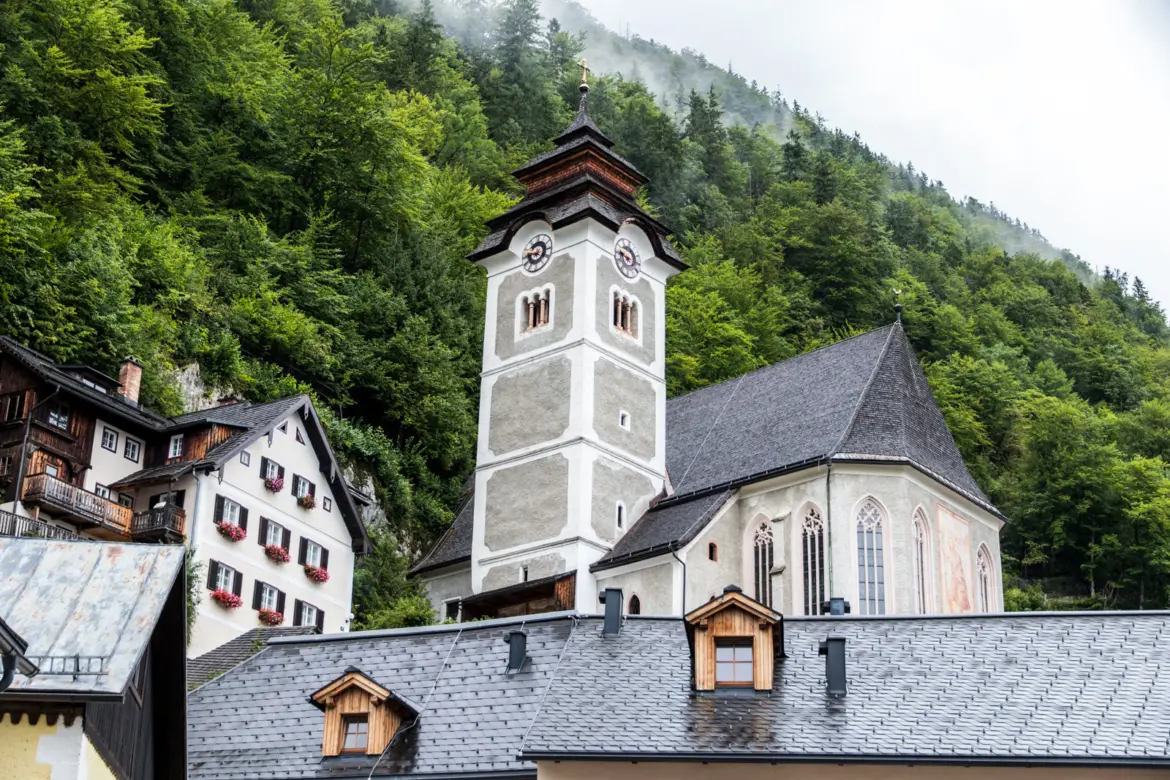
Perched high above the postcard-perfect village of Hallstatt, there is a place where the atmosphere shifts almost instantly. The movement of the village below softens, the sounds become quieter, and the pace of the day begins to slow. It is here, on the mountainside overlooking the lake, that the Pfarrkirche Mariä Himmelfahrt stands – not only as a place of worship, but as a space where history, memory, and landscape come together in a deeply meaningful way.
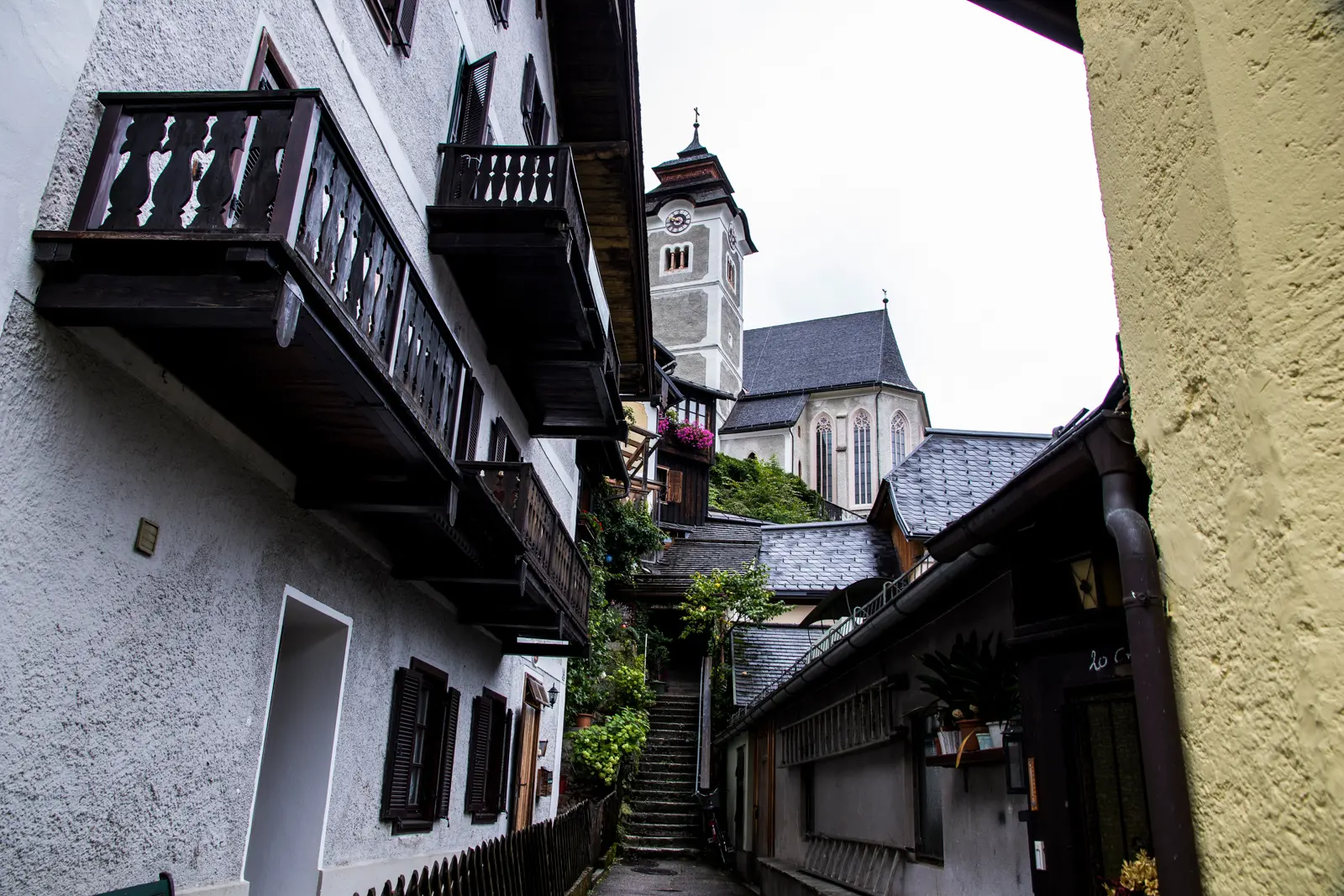
This is not a place you simply pass by. Reaching it requires a quiet transition, a gradual ascent through the village, where each step subtly shifts your perspective, both visually and emotionally. As the views begin to open and the village recedes behind you, the experience becomes less about movement and more about arrival. By the time you reach the church, there is a sense that you have stepped into a different rhythm, one that invites stillness, reflection, and a deeper connection to the place itself.
Pfarrkirche Mariä Himmelfahrt at a Glance
⛪ Also known as: Maria am Berg (“Mary on the Mountain”)
📅 Current church completed: 1505 (late Gothic)
🏛️ Earlier churches on site: since at least 1150 — the Romanesque tower is the only surviving element
🎨 Highlight: Hallstätter Marienaltar — a late Gothic pentaptych winged altar by master carver Leonhard Astl of Gmunden, created 1510–1520
✍️ Trivia: It is the only work Astl ever signed in his lifetime — his signature was confirmed by infrared imaging during 1985 restoration
🙏 Saints in the main shrine: Mary with Child (center), St. Catherine (left), St. Barbara — patron of miners (right)
⛪ Layout: Two-aisled hall church with a double choir
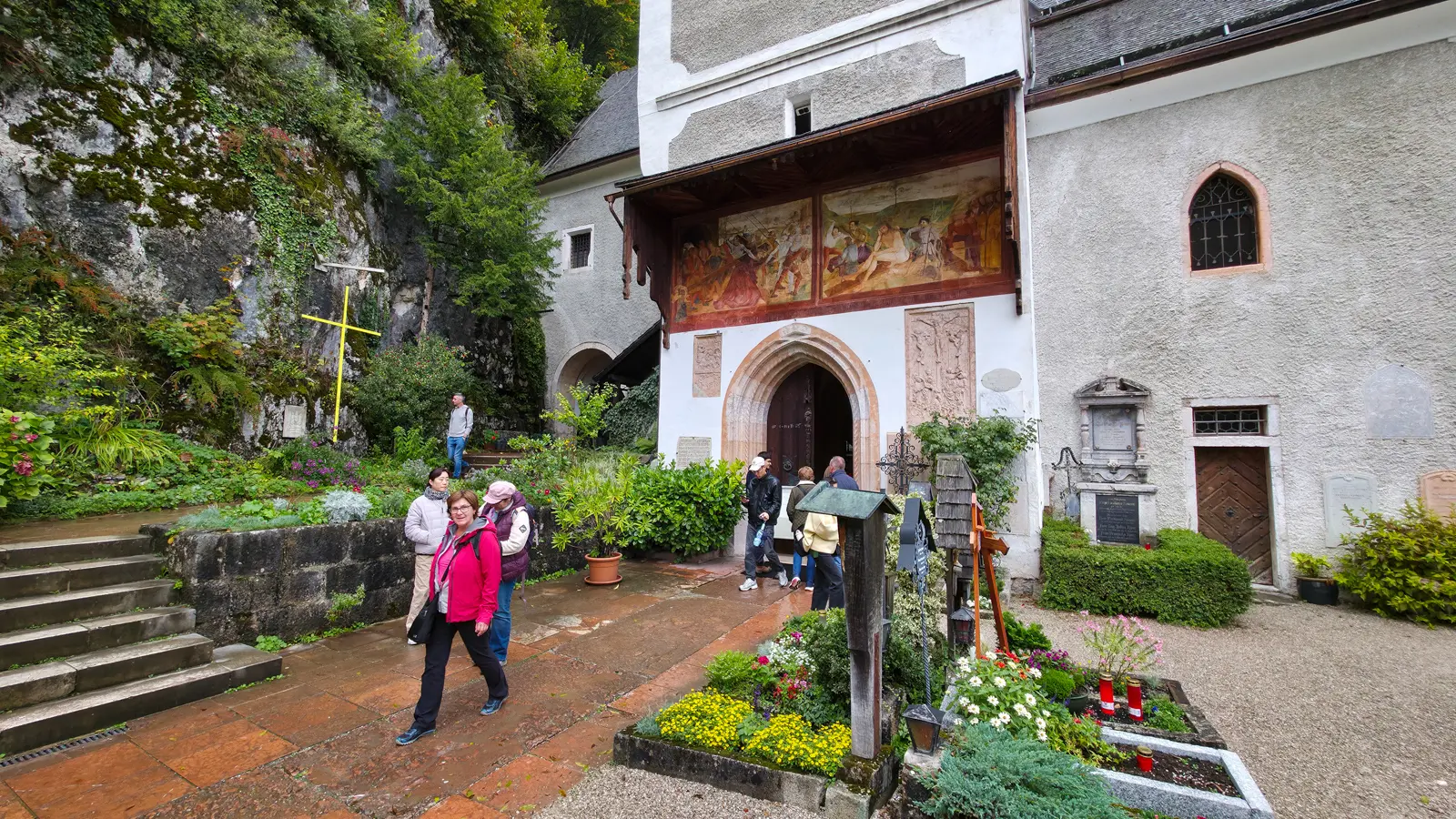
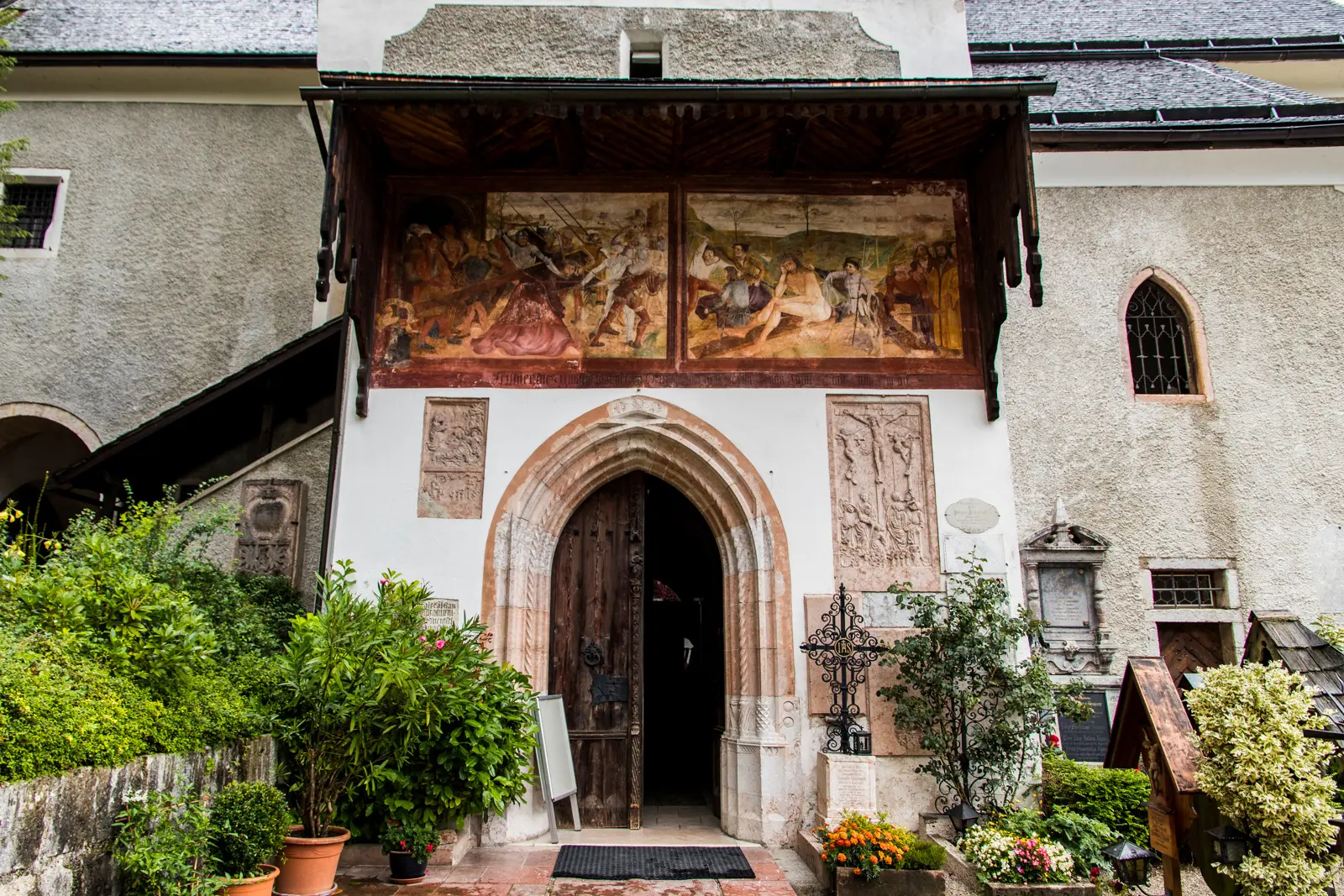
🚪 South Portal: 1519, with Danube School frescoes above the doorway
💶 Entry: Free (church and cemetery) · Ossuary €2 separately
🚆 From Vienna: ~3–3.5 hrs (train + ferry crossing to the village)
💡 Tip: Visit early morning or late afternoon for a quieter, more contemplative atmosphere
The Setting: Above the Village
Set on a quiet ledge above the village, the Pfarrkirche Mariä Himmelfahrt occupies a space that feels both defined and open, shaped by the natural contours of the mountainside. From here, the perspective shifts – not through movement, but through stillness. The rooftops of Hallstatt fall gently below, the lake stretches outward in calm reflection, and the surrounding landscape frames the church in a way that feels both protective and expansive.
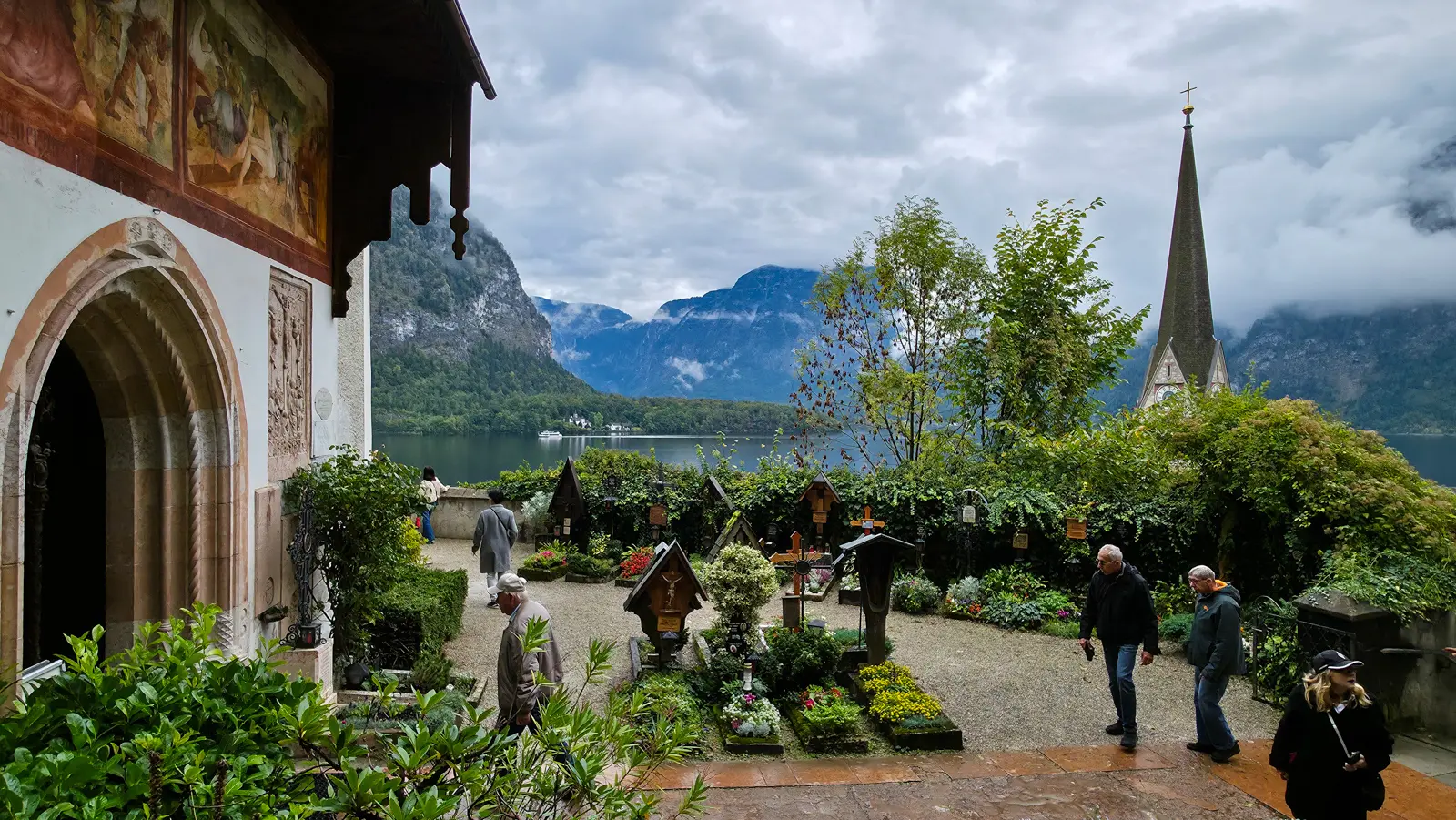
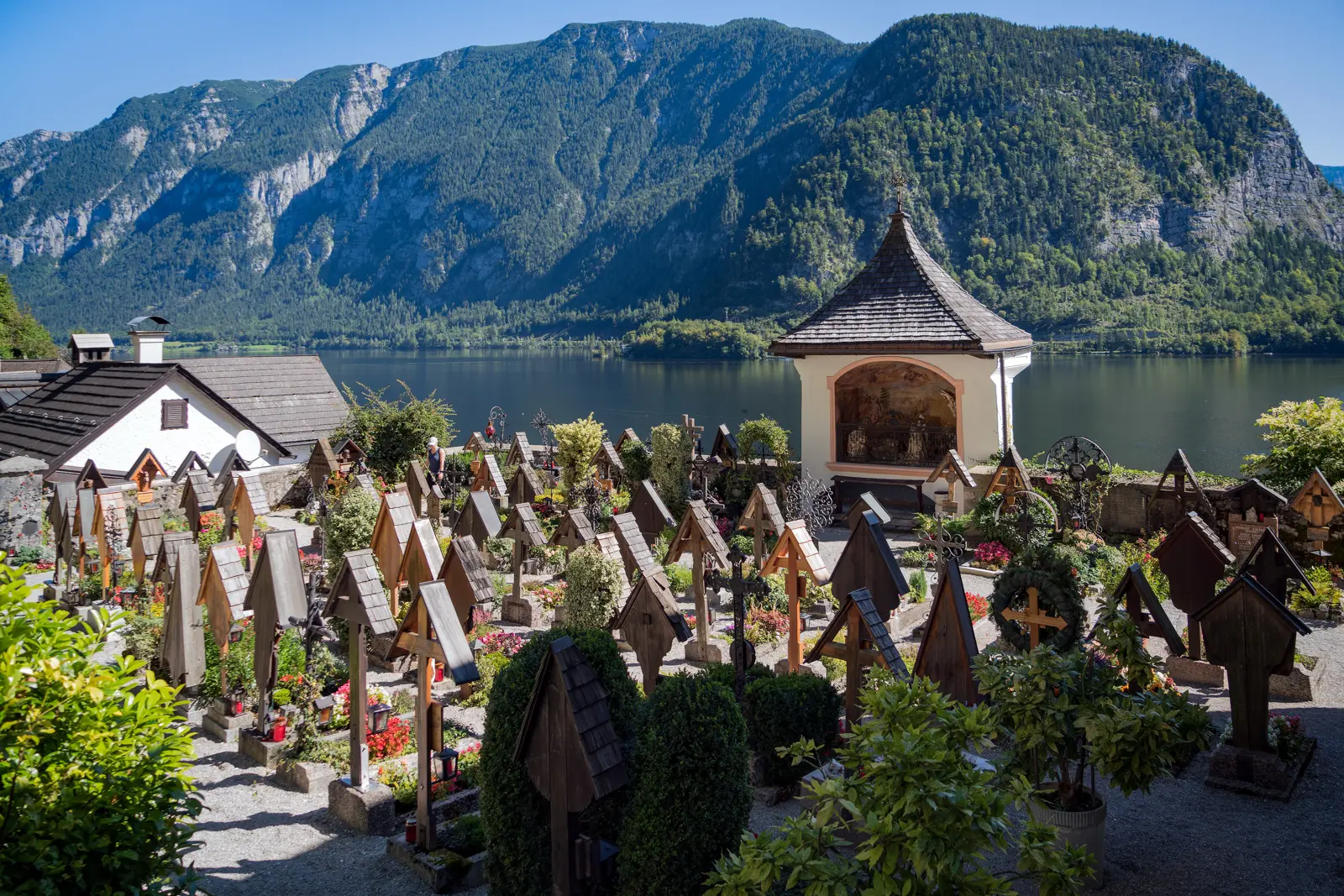
The church and its cemetery share this elevated plateau, forming a space that is quietly cohesive. The cemetery does not feel separate from the church, but rather an extension of it, a continuation of presence and memory woven into the same ground. Surrounded by wrought iron crosses, flowers, and carefully tended graves, the setting carries a sense of care and continuity that is immediately felt, even before it is fully understood.
There is a particular quality to this place that is difficult to define but easy to experience. It is not simply the view, nor the architecture, nor the history on its own, but the way all of these elements come together to create a sense of quiet grounding. It feels removed from the movement of the village, yet deeply connected to it, offering a perspective where time, landscape, and human presence exist in quiet harmony.
A Brief History: Faith in a Remote Landscape
The Pfarrkirche Mariä Himmelfahrt has long stood as a spiritual anchor for the community, its origins reaching back to the 12th century, when a place of worship is believed to have first been established on this site. The present church is a late Gothic structure, with construction completed around 1505, built directly into the steep rocky terrain that defines Hallstatt’s mountainside setting, a reflection of both the ambition and the pragmatism of those who built it. In a place as geographically isolated as Hallstatt, the church was not only a place of worship, but a central part of daily life, a space where the rhythms of the community were marked through gatherings, celebrations, and remembrance.
Its history has not always been straightforward. During the Reformation, the church temporarily changed hands between Catholic and Protestant use, reflecting the wider religious shifts that shaped the region during that period. That it ultimately endured as a Catholic parish church speaks to the resilience of the community and the depth of its traditions. Over time, it has remained a constant within a changing world, quietly witnessing generations come and go, while continuing to serve as a place of meaning and quiet continuity for those who live here.
The Interior: Simplicity and Presence
Stepping inside the church, the atmosphere shifts once again. The exterior setting gives way to an interior that is modest in scale, yet rich in presence. The two-aisled structure gives the space an unusual intimacy. Rather than the single broad sweep of a conventional nave, the layout feels more layered, drawing you gently inward. Light filters through the windows, illuminating carved wooden pews and the textures of stone in a way that feels soft and unforced. There is no overwhelming grandeur here. Instead, there is a sense of calm, of balance, of quiet reverence.
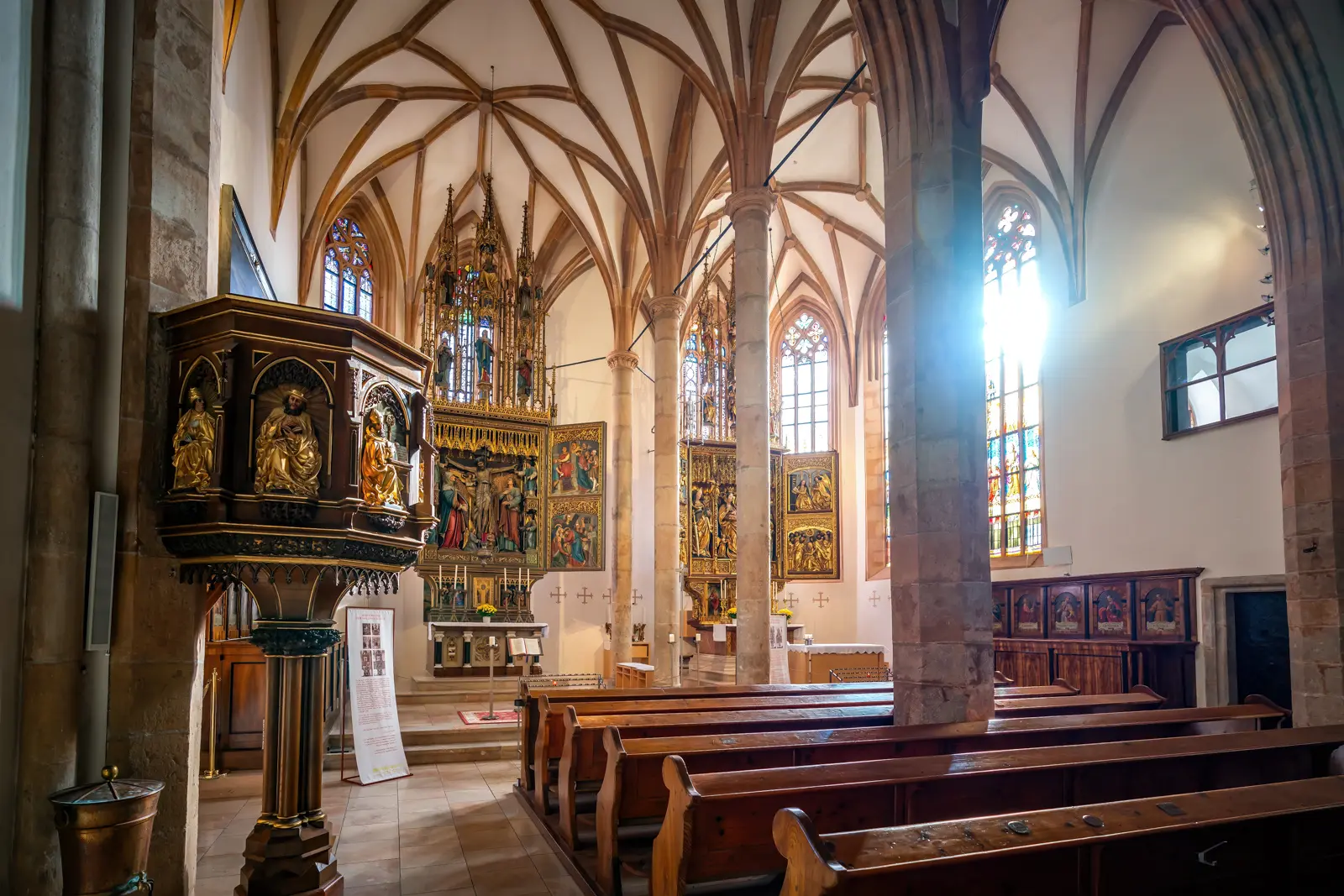
The details reveal themselves gradually. Along the walls, frescoes add depth and colour to the space, including scenes of the Passion that carry a quiet solemnity. But the interior’s most significant feature is undoubtedly the late Gothic winged altar by master craftsman Leonhard Astl, a work of remarkable detail and artistry, widely considered one of the finest of its kind in the region. It draws the eye without demanding it, its craftsmanship speaking in a language that feels entirely at home in this setting.
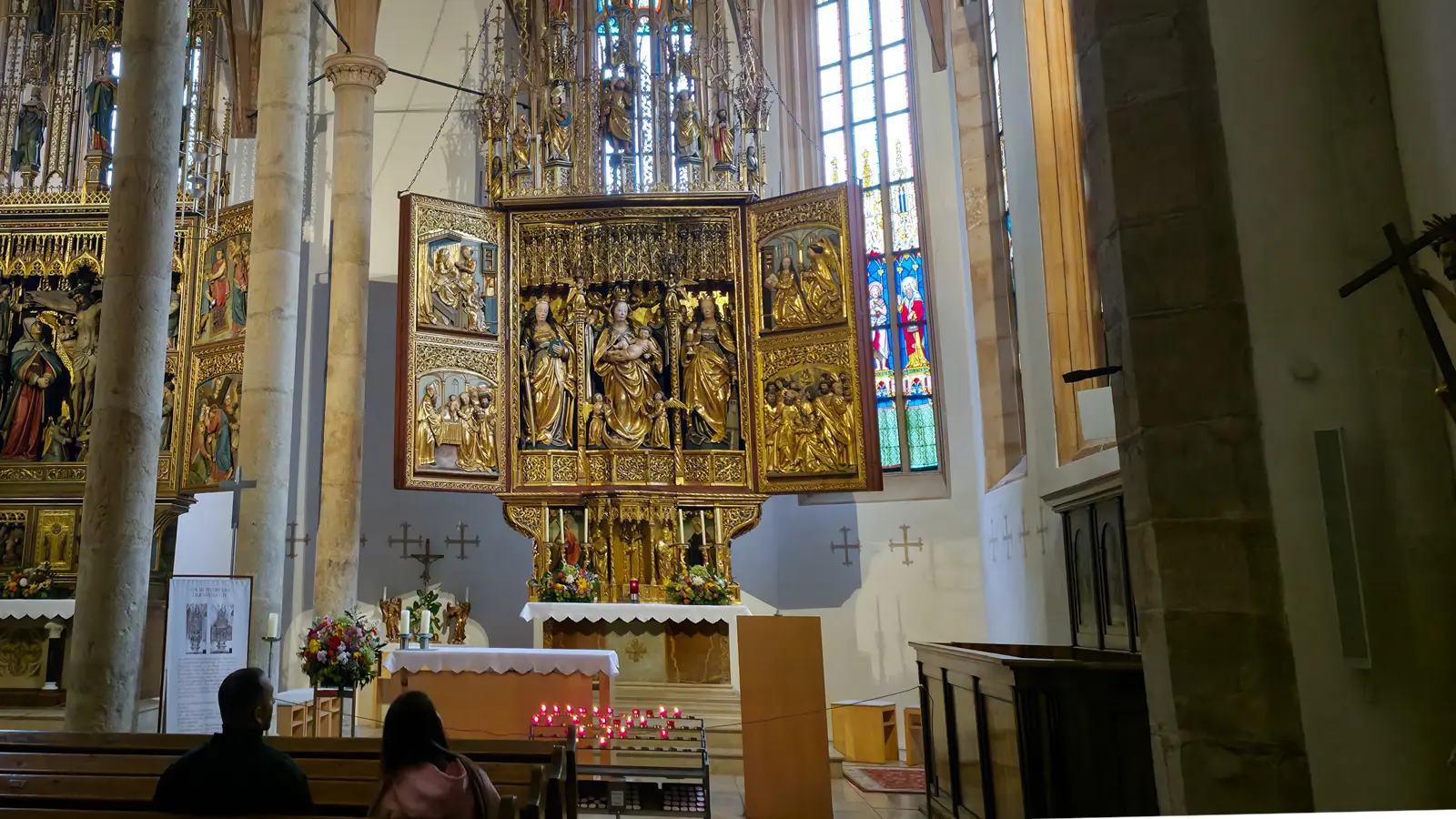
Everything feels intentional yet understated, allowing the space to be experienced rather than simply observed. It is the kind of interior that invites stillness. You don’t feel the need to move quickly or to take everything in at once. Instead, you pause, you sit, you allow the space to unfold around you – and in doing so, you become part of its rhythm.
The Cemetery: Craftsmanship and Continuity
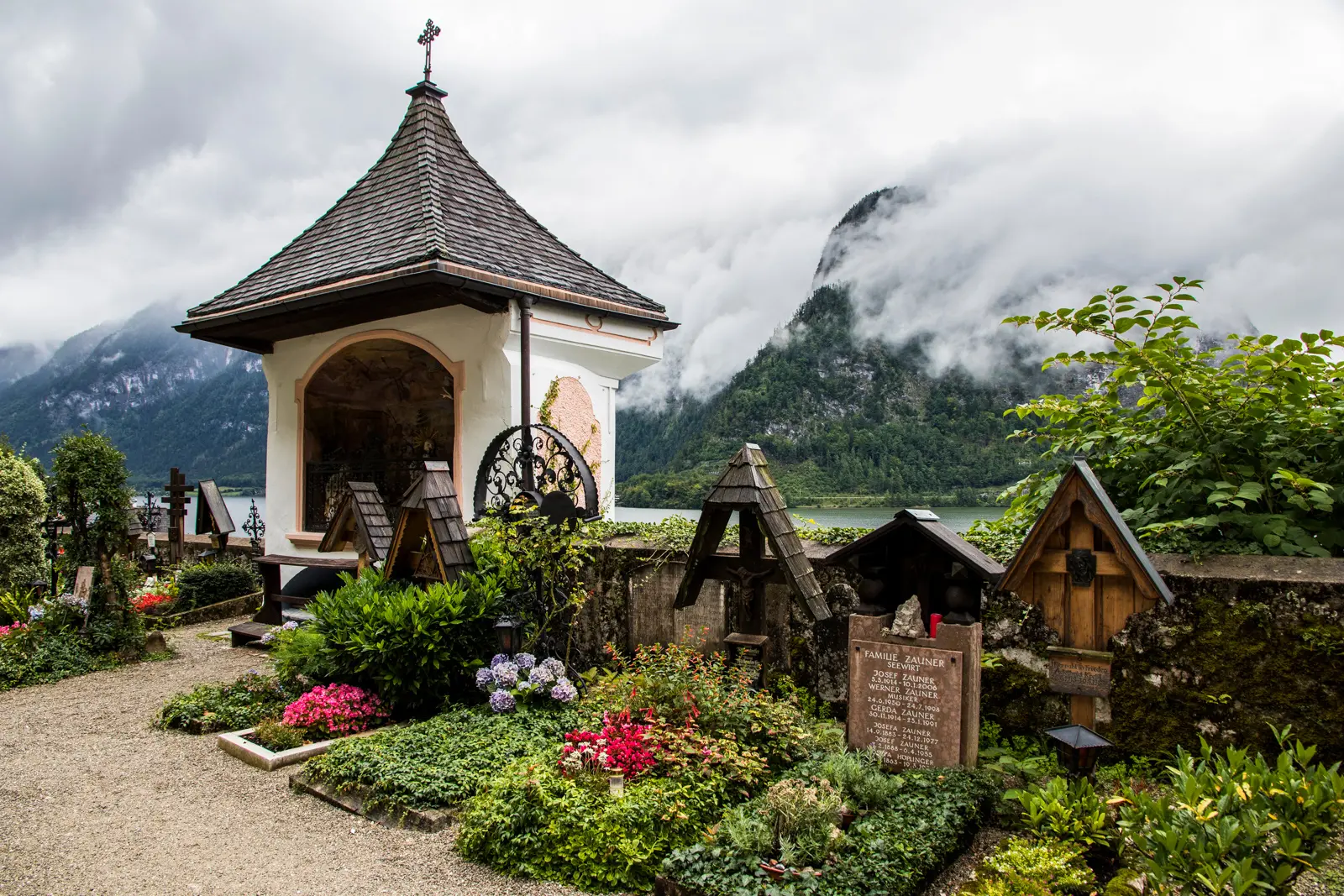
Surrounding the church is one of Hallstatt’s most distinctive and meaningful spaces: its hillside cemetery. Small in size but rich in detail, it reflects a tradition of remembrance that is both personal and deeply rooted in the region’s cultural identity. The graves are arranged closely together, each one adorned with flowers, inscriptions, and beautifully crafted wrought iron crosses. These crosses are particularly striking, showcasing the intricate metalwork traditions of the region and adding a layer of artistry to the space. No two are exactly alike, each carrying its own design, its own expression, its own quiet story.
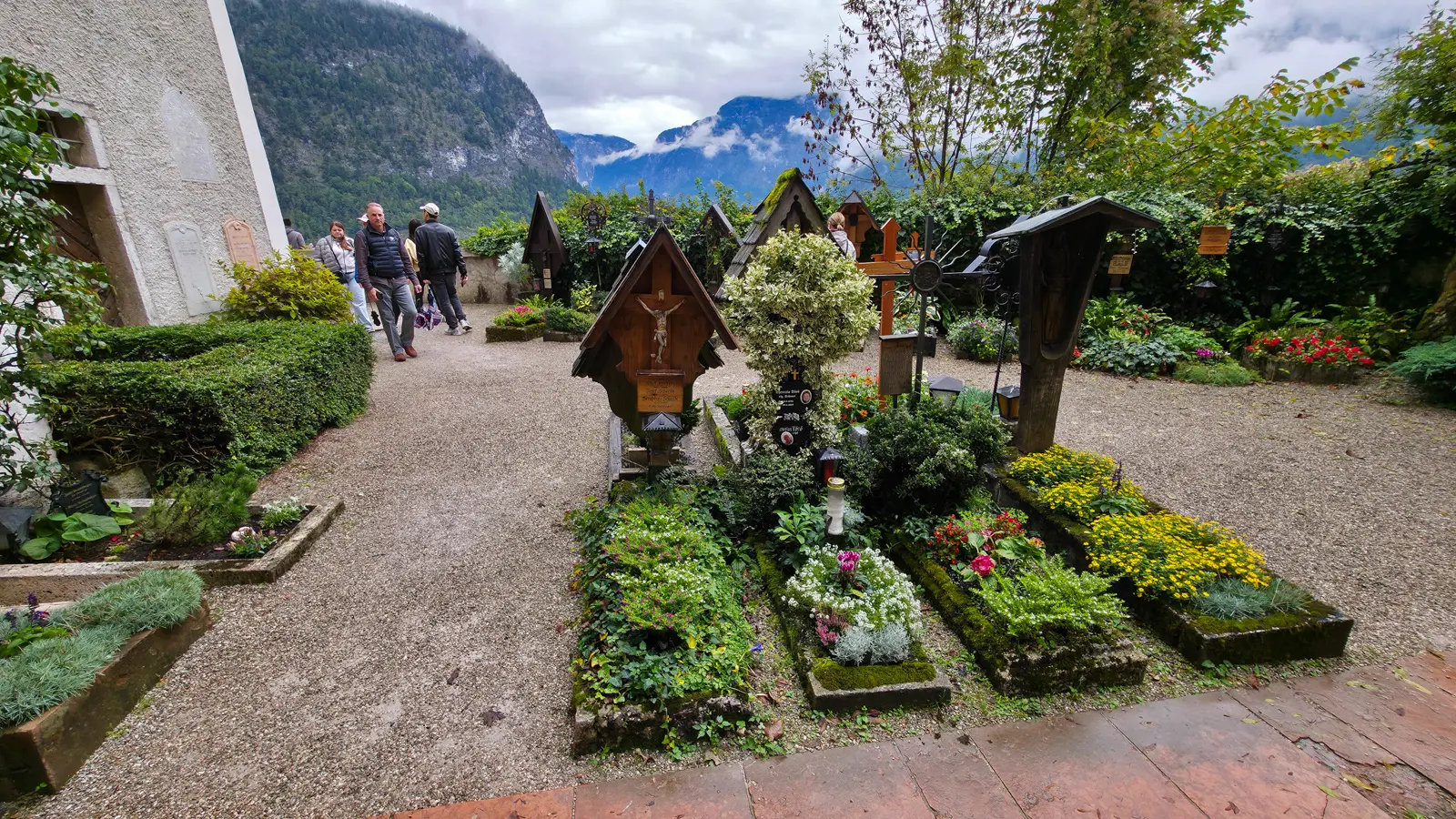
There is a sense of care here that is immediately visible. This is not simply a place of burial, but a place of ongoing connection, where memory is maintained, honored, and integrated into the landscape. Surrounded by the beauty of the lake and mountains, the cemetery becomes a space where life, loss, and nature exist in quiet harmony.
A Natural Connection: The Ossuary
Just beside the church, within the same grounds, lies one of Hallstatt’s most unique and thought-provoking sites: its ossuary, or Beinhaus. While the church and cemetery offer a more familiar expression of remembrance, the ossuary reveals a different, deeply rooted tradition – one shaped not only by practical necessity, but by a cultural approach to memory that feels both intimate and enduring. Its presence here is not separate from the church, but intrinsically connected to it, forming part of a shared space where life, death, and remembrance coexist.
Due to the limited space of the hillside cemetery, it became customary to exhume remains after a number of years, preserving the bones, particularly the skulls, within the ossuary. Many of these skulls are carefully cleaned, arranged, and decorated with names, dates, and delicate floral motifs, ensuring that identity is not lost over time. What might initially feel unfamiliar gradually reveals itself as something deeply considered: a way of maintaining connection, of honoring individuals beyond a single lifetime, and of integrating memory into the physical fabric of the place.
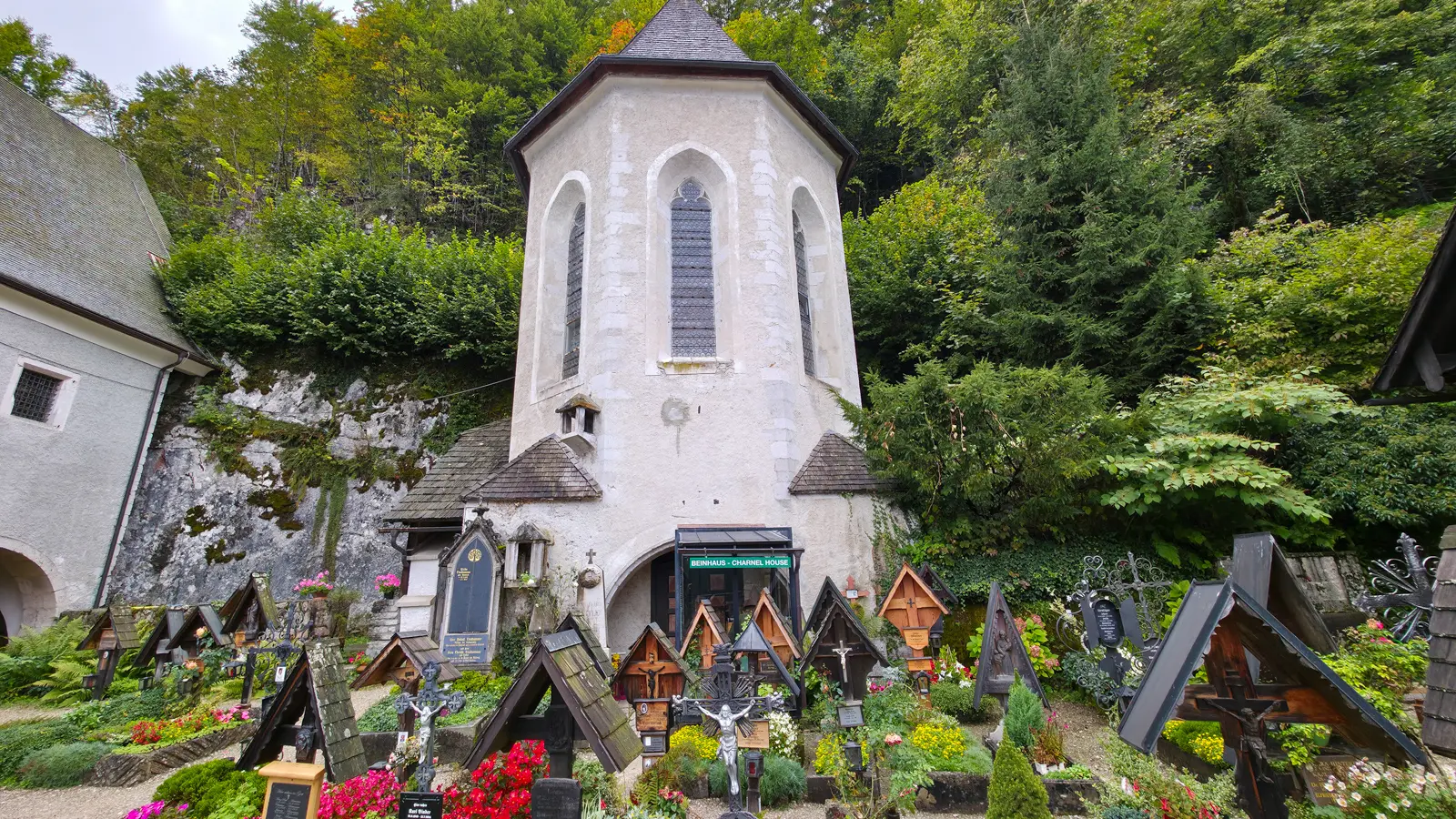
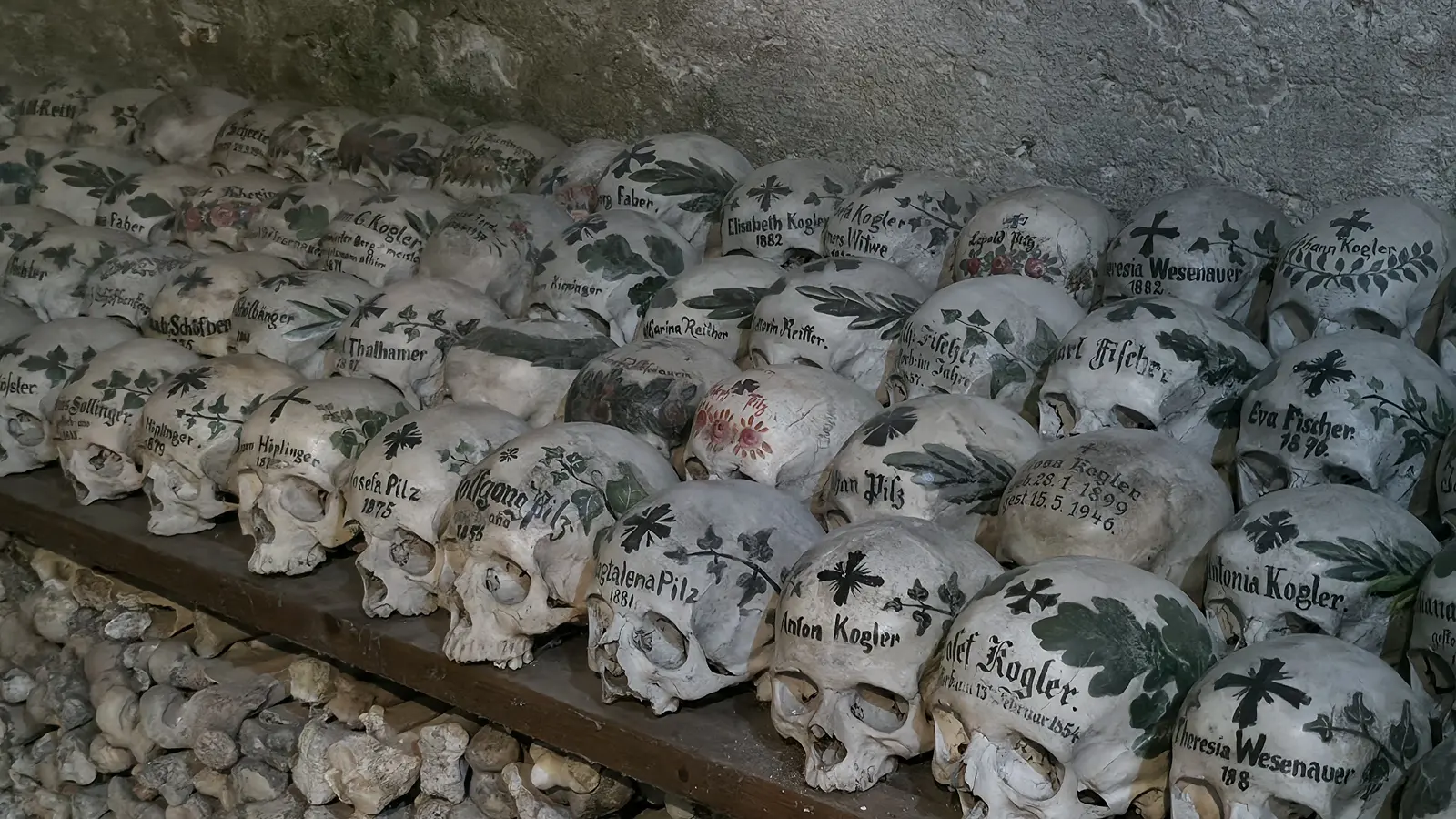
Seen within the context of the church and cemetery, the ossuary adds another layer of meaning to the experience. It transforms the site from a place of quiet beauty into one of continuity, where traditions are not only preserved, but lived and understood. Together, these elements form a cohesive narrative, offering a deeper perspective on how this community has engaged with memory, space, and the passage of time.
The Views: A Moment of Stillness
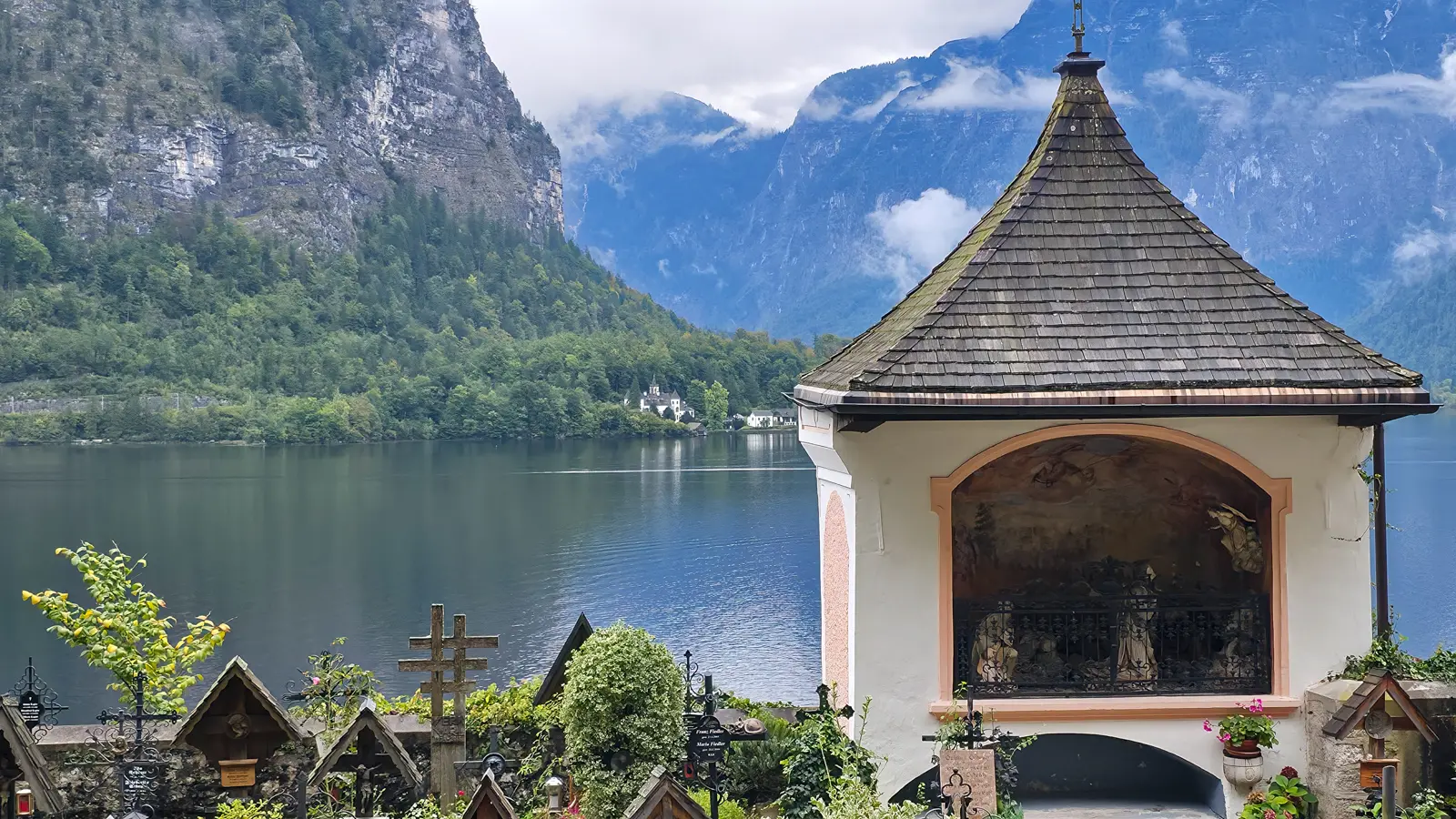
One of the most striking aspects of this place is what surrounds it. From the edge of the cemetery at Pfarrkirche Mariä Himmelfahrt, the view opens onto Lake Hallstatt, with the village resting quietly below and the mountains rising beyond. It is a perspective that feels both expansive and grounding at once, a balance between openness and stillness that is difficult to put into words. After experiencing the quiet intensity of the ossuary and the calm presence of the church, stepping into this view feels like a gentle return to light. The landscape remains as beautiful as ever, but your perception of it has shifted. There is a deeper awareness now, a quieter appreciation, a sense that you are seeing not just the surface, but the layers beneath: the lives, the traditions, the continuity that shape this place. It becomes less about the view itself and more about the feeling it leaves behind, inviting you to pause not for a photograph, but for reflection.
The Experience: Stillness and Reflection
What makes this place so special is not just its individual elements, but the way they come together to create a cohesive and deeply felt experience. Standing there, between the church, the cemetery, and the quiet presence of the ossuary, I found myself slowing down in a way that felt almost instinctive. There was no need to rush, no urge to move on, just a quiet awareness of the space and everything it holds.
Time seemed to soften here. The movement and energy of the village below faded into the background, replaced by something much more subtle: the sound of the wind, the stillness between footsteps, the quiet rhythm of a place that has existed long before and will continue long after. It felt less like visiting a landmark and more like stepping into a moment that invites you to pause, to observe, and simply to be present.
What stayed with me most was not a single detail, but the feeling that lingered as I stood there – a sense of calm, of perspective, of connection. It is not an experience that demands attention or tries to impress. Instead, it reveals itself gradually, through atmosphere and quiet reflection, becoming one of the most meaningful and unexpected moments of my time in Hallstatt.
Bubbly Tips for Visiting from Vienna
- Location: The church is located above the village within the cemetery grounds of Pfarrkirche Mariä Himmelfahrt, easily reached by a short uphill walk.
- Getting there from Vienna: Hallstatt is approximately 3 to 3.5 hours from Vienna by train or car, often including a scenic ferry crossing from Hallstatt station.
- Cost: Entry to the church and cemetery is free; the nearby ossuary requires a small entrance fee.
- Best time to visit: Early morning or late afternoon offers a quieter, more contemplative atmosphere.
- Combine your visit: Explore the church, cemetery, and ossuary together for a fuller understanding of the site’s significance.
Final Thoughts
The Pfarrkirche Mariä Himmelfahrt is more than a landmark, it is a place where Hallstatt reveals its depth. Beyond the postcard views and the beauty that draws visitors from around the world, it offers something quieter, more enduring, and more human.
It is a place where memory is preserved, where tradition continues, and where the relationship between people and place becomes visible in the most subtle and meaningful ways. Standing there, above the village, you begin to understand that Hallstatt is not only a destination – it is a story, layered over time, shaped by generations, and still unfolding.
Would this be a place you’d include in your Hallstatt visit? I’d love to hear your thoughts.
Happy travels!

🌟 Everything You Need to Plan Your Dream Trip in 2026
- 🌟 Luxury Hotels - Find premium stays with Booking.com & Hotels.com
- 🏡 Vacation Rentals - Discover unique properties on VRBO
- 🏞️ Guided Tours - Explore with Viator or GetYourGuide
- 🎫 Attraction Tickets - Skip the lines with Tiqets
- 🚢 Ocean Cruises - Set sail with Cruise Direct
- 📱 International SIMs - Stay connected with Saily
- 🚗 Car Rentals - Budget-friendly options from Discover Cars
- 🌐 Secure VPNs - Browse safely with NordVPN
- 💶 Currency Exchange - Best rates with Wise
- 🗣️ Learn Languages - Master the local language with Babbel and Rosetta Stone