
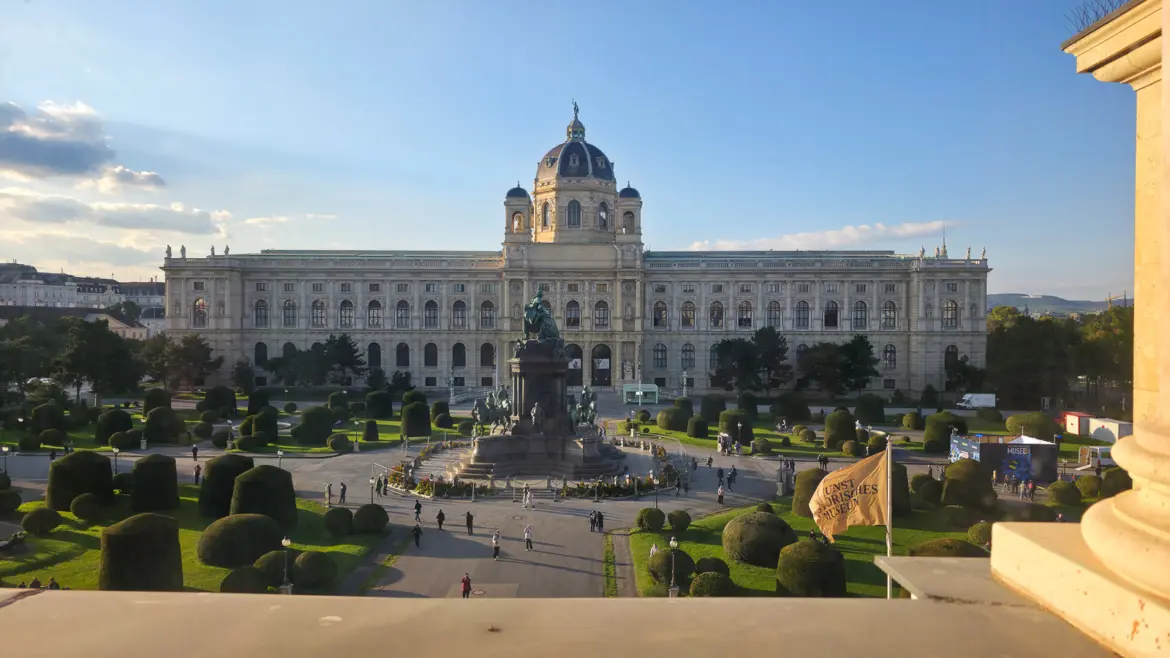
Vienna is a city that knows how to preserve beauty – not only in its palaces and gardens, but in the way it tells the story of the world itself. Standing proudly along the grand Ringstrasse, Vienna’s Natural History Museum (Naturhistorisches Museum) is far more than a museum. It is a place where science, art, history, and architecture come together in a way that feels both monumental and deeply human.
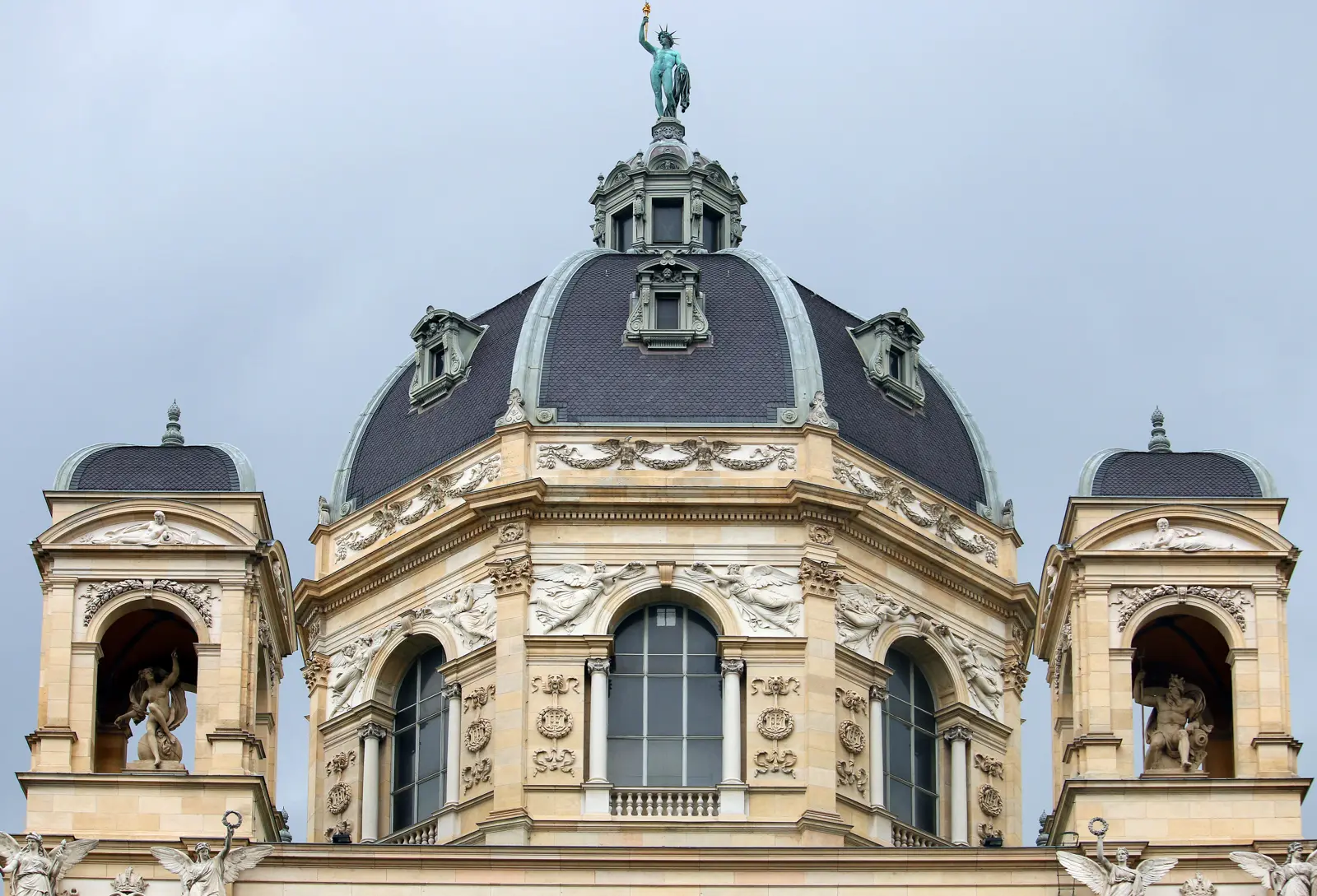
From the moment you approach the building, there is a sense of quiet anticipation. The museum’s domed silhouette rises above the city with elegance and authority, its richly detailed façade hinting at the treasures within. Built in the late 19th century under Emperor Franz Joseph I, the museum was designed not only to house vast scientific collections, but to reflect the intellectual ambition of an empire deeply invested in knowledge, exploration, and discovery. Even before stepping inside, you begin to feel that this is a place where the story of the natural world is told with intention and reverence.
Natural History Museum Vienna at a Glance
🏛️ What it is: One of the world’s most important natural history museums — built under Emperor Franz Joseph I, designed by Semper & Hasenauer
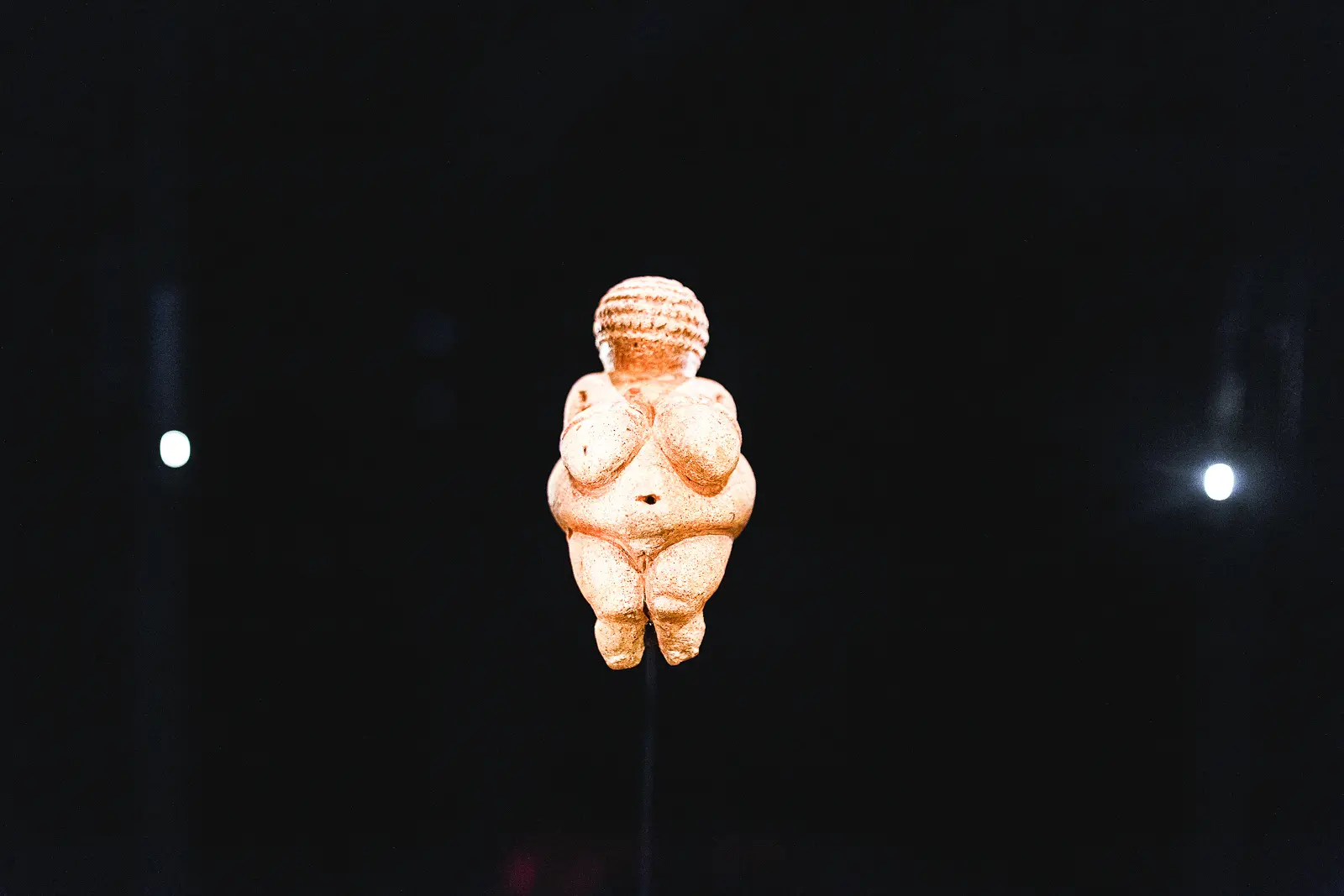
🪨 Venus of Willendorf: Over 25,000 years old, discovered in Austria in 1908 — one of the most famous prehistoric artifacts in the world
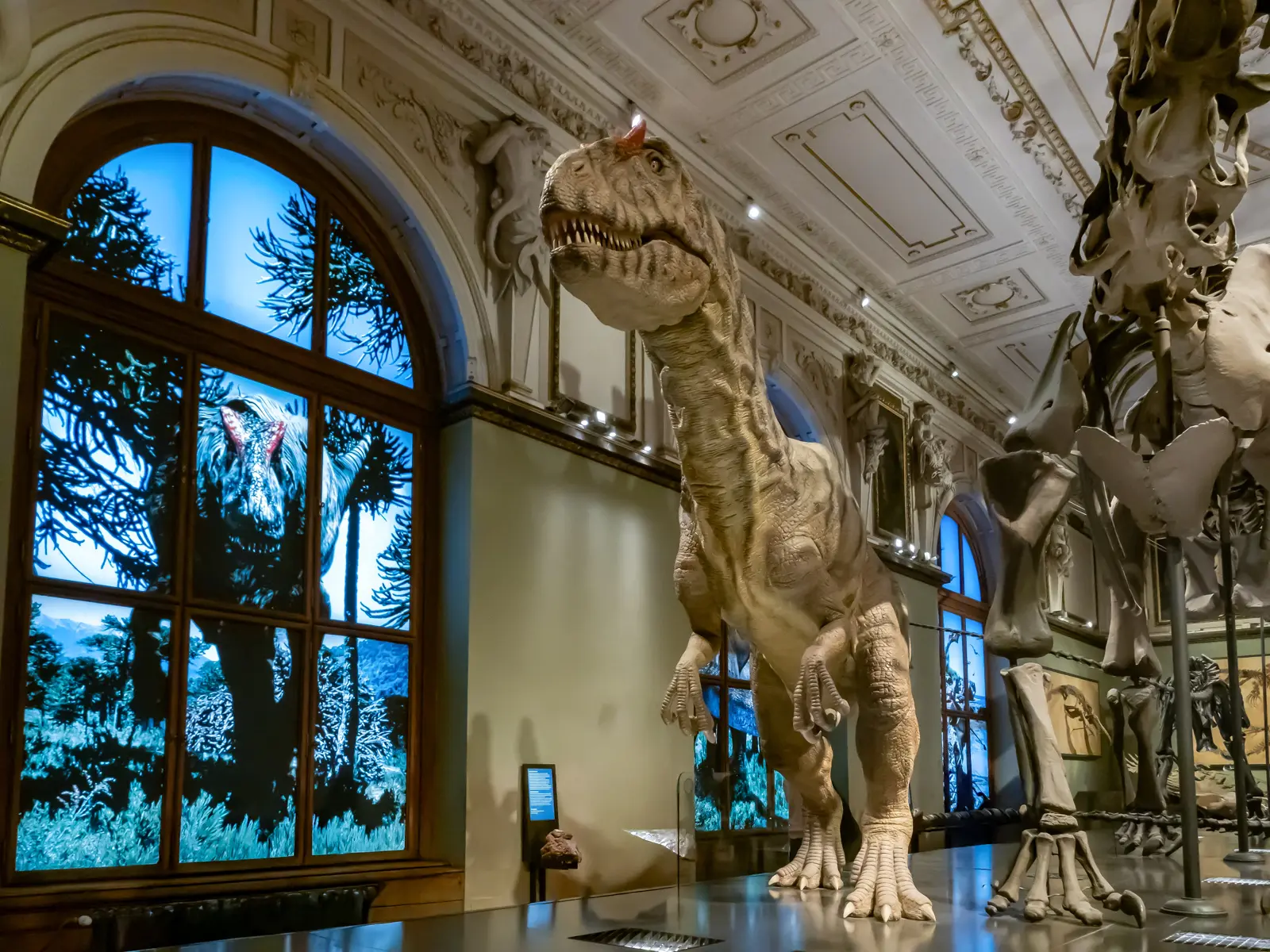
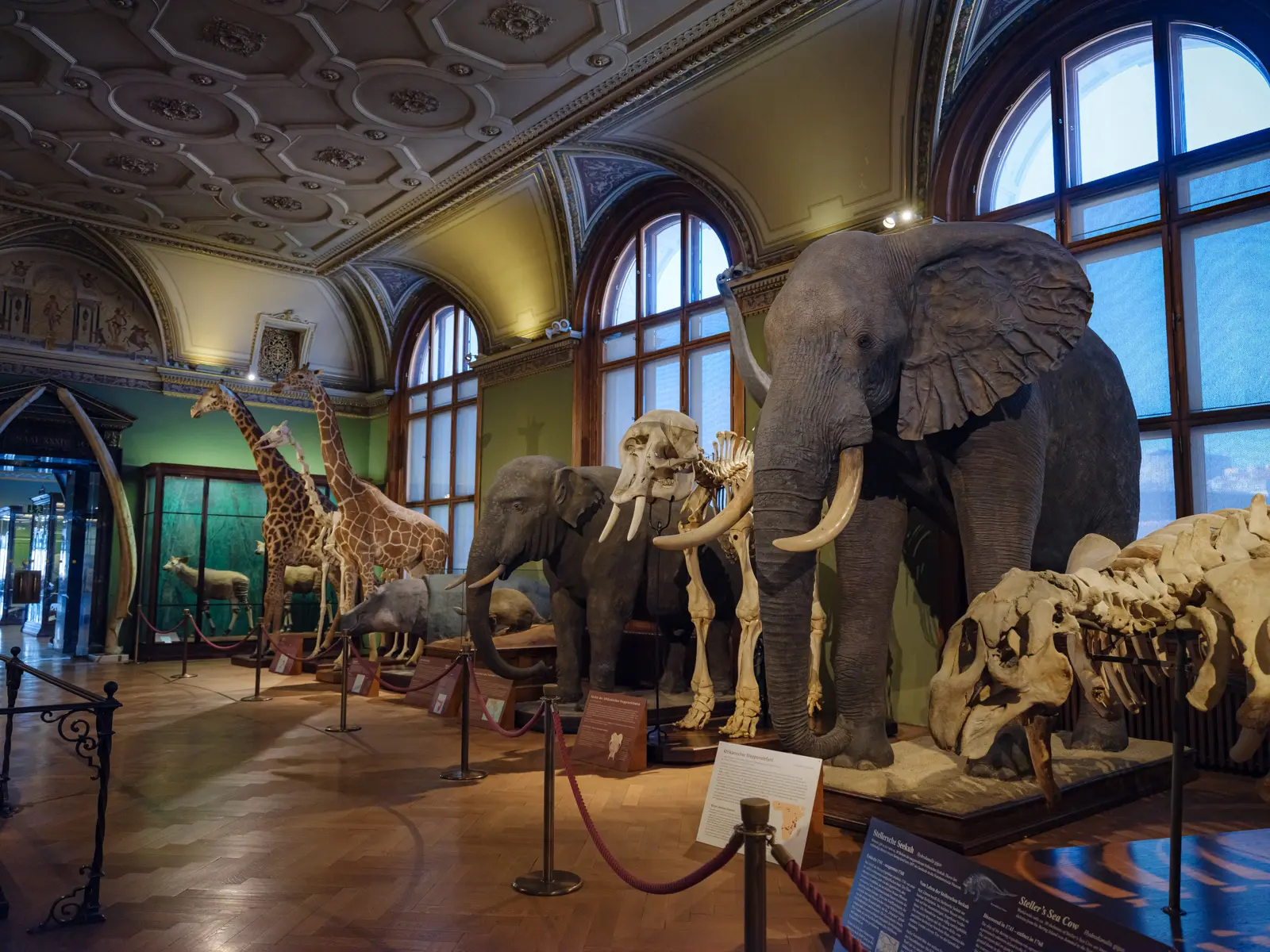
🦕 Dinosaurs: Towering skeletons in one of the museum’s most popular exhibit halls
🎨 Hans Canon’s fresco: The Circle of Life — a monumental ceiling painting with Chronos at the center, presiding over time and knowledge
☀️ Helios: Bronze statue of the Greek sun god crowning the museum’s dome — symbolizing light and knowledge
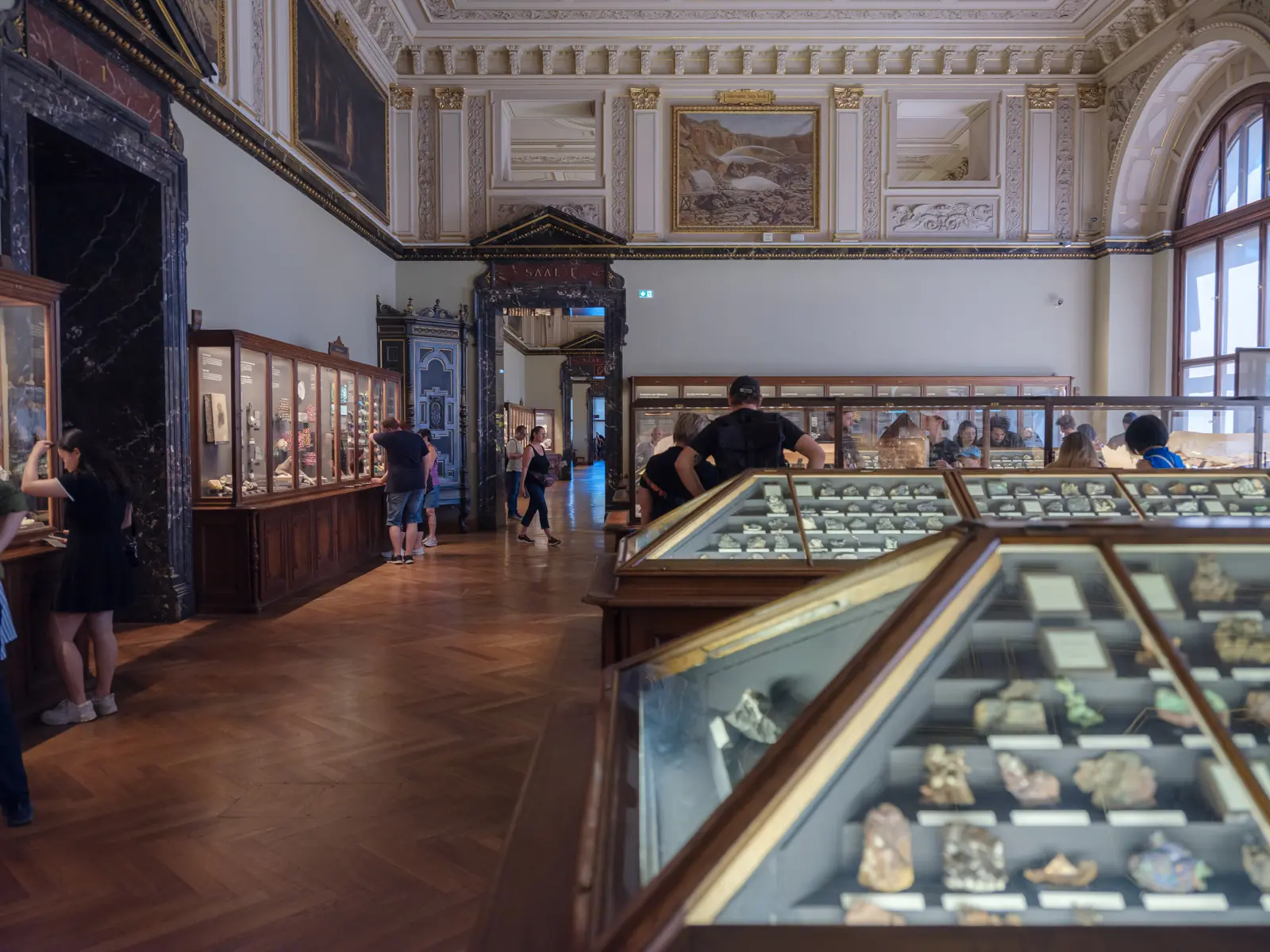
💎 Mineral hall: Raw and polished specimens in stunning display — earth science as visual spectacle
🏛️ Twin museums: Mirrors the Kunsthistorisches Museum across Maria-Theresien-Platz — science and art as equal pillars of civilization
📍 Location: Burgring 7, on the Ringstrasse — easily combined with a Ringstrasse walk
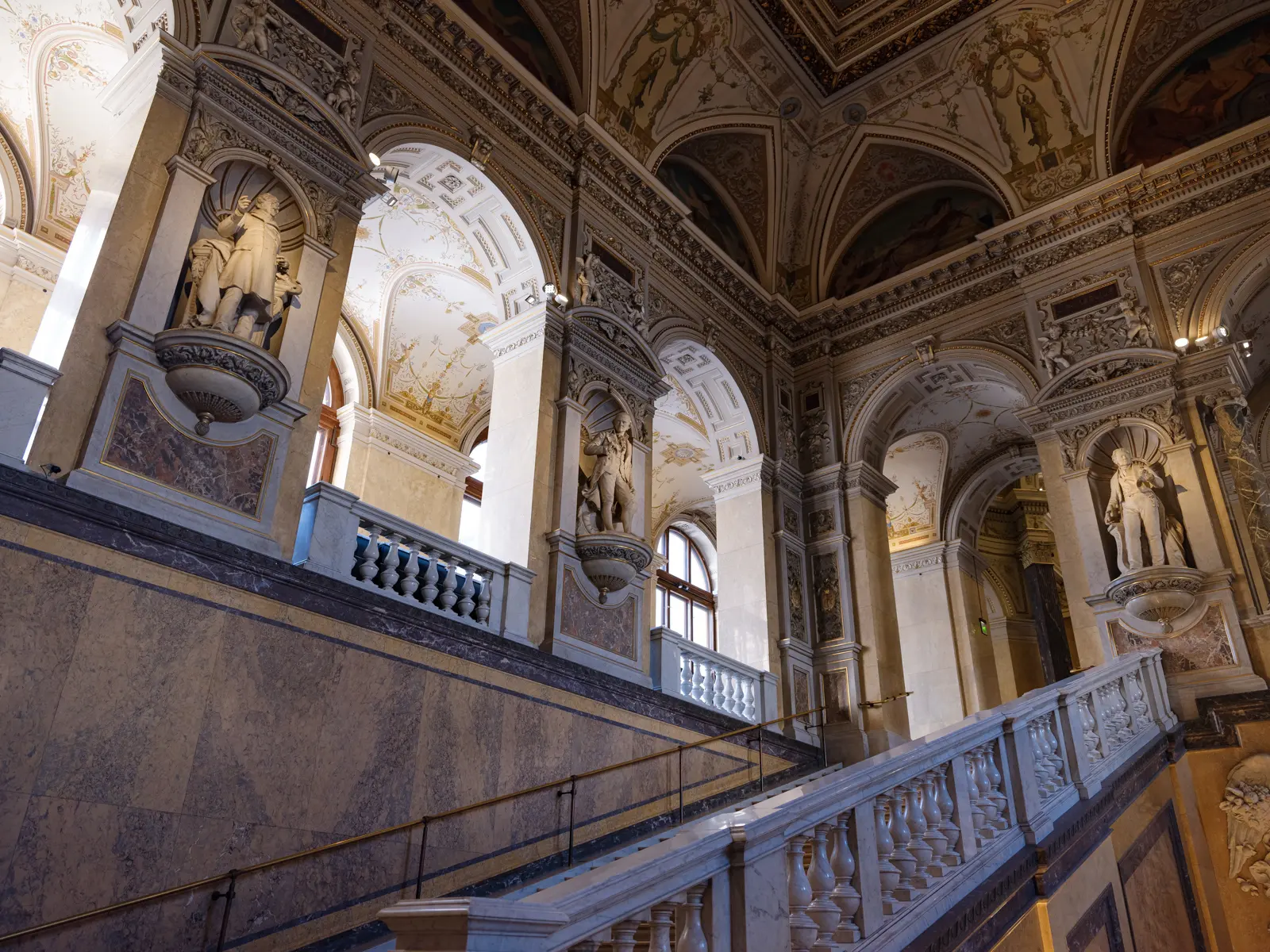
💡 Tip: Start with the grand staircase and Canon’s fresco before heading to the exhibits — the architecture deserves its own moment
The Building Itself: A Palace of Knowledge
The architecture of the Naturhistorisches Museum is an experience in itself. Designed in a grand Neo-Renaissance style by Gottfried Semper and Carl von Hasenauer, the building mirrors the Kunsthistorisches Museum directly across Maria-Theresien-Platz, creating a striking visual symmetry that defines this part of Vienna. Together, the two institutions form a cultural axis that reflects the imperial vision of art and science as twin pillars of society.
Above the entrance, inscriptions and decorative elements reference the museum’s dedication to the study and exploration of the natural world, reinforcing its role as a place of knowledge and discovery. Even before stepping inside, there is a sense that this is more than a museum, it is an institution shaped by intellectual ambition and cultural pride.
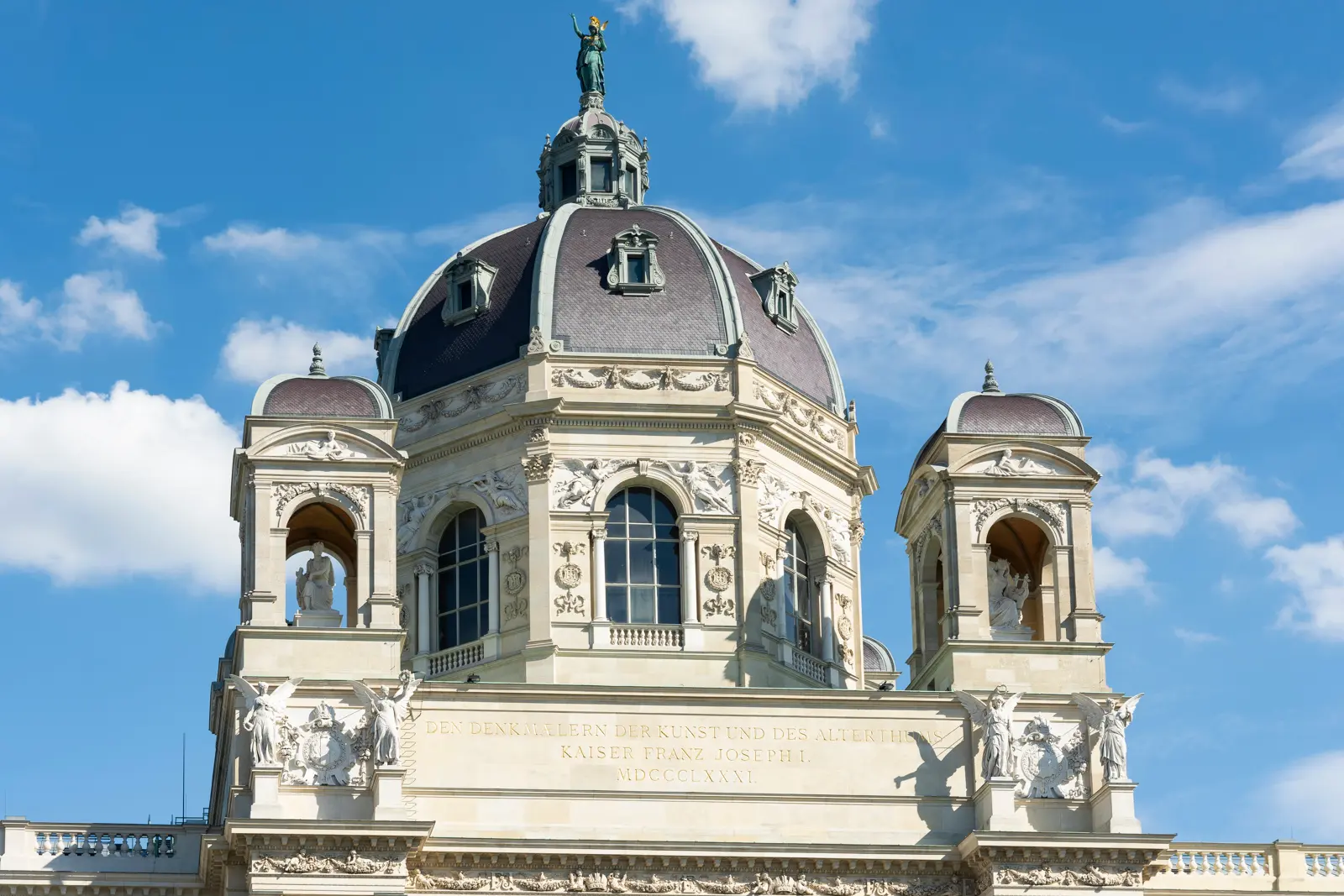
As you ascend the steps and pass through the entrance, the scale of the interior begins to unfold. Marble floors, sweeping staircases, and ornate detailing create an atmosphere that feels both regal and welcoming. The building was conceived not simply as a container for objects, but as a space that elevates the act of learning. Natural light filters through high windows and domes, enhancing the textures and materials that surround you. Every corridor, every arch, and every decorative element contributes to a sense of continuity, as though the architecture itself is guiding you through layers of time and knowledge.
The Ceilings and Interiors: Where Science Meets Art
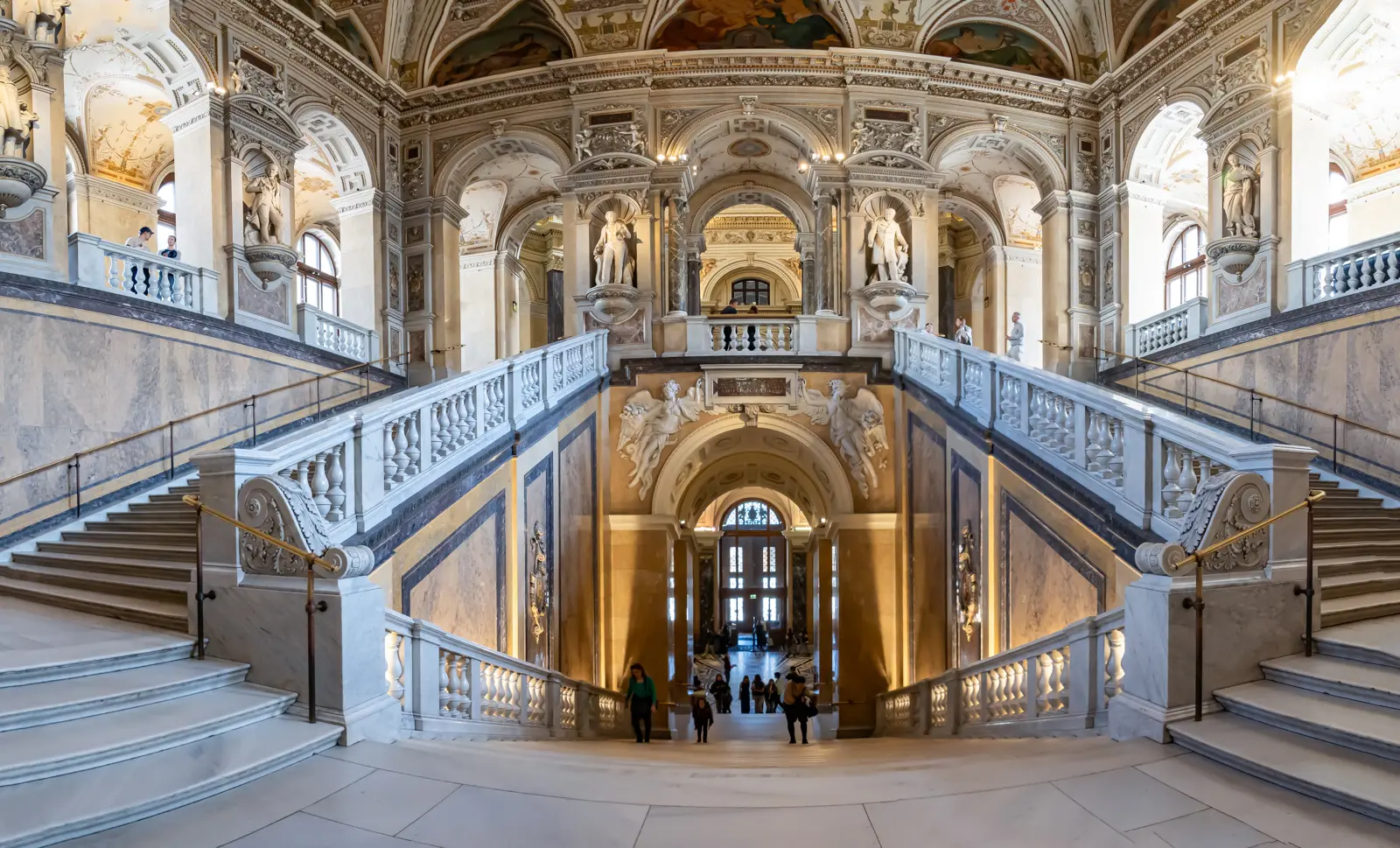
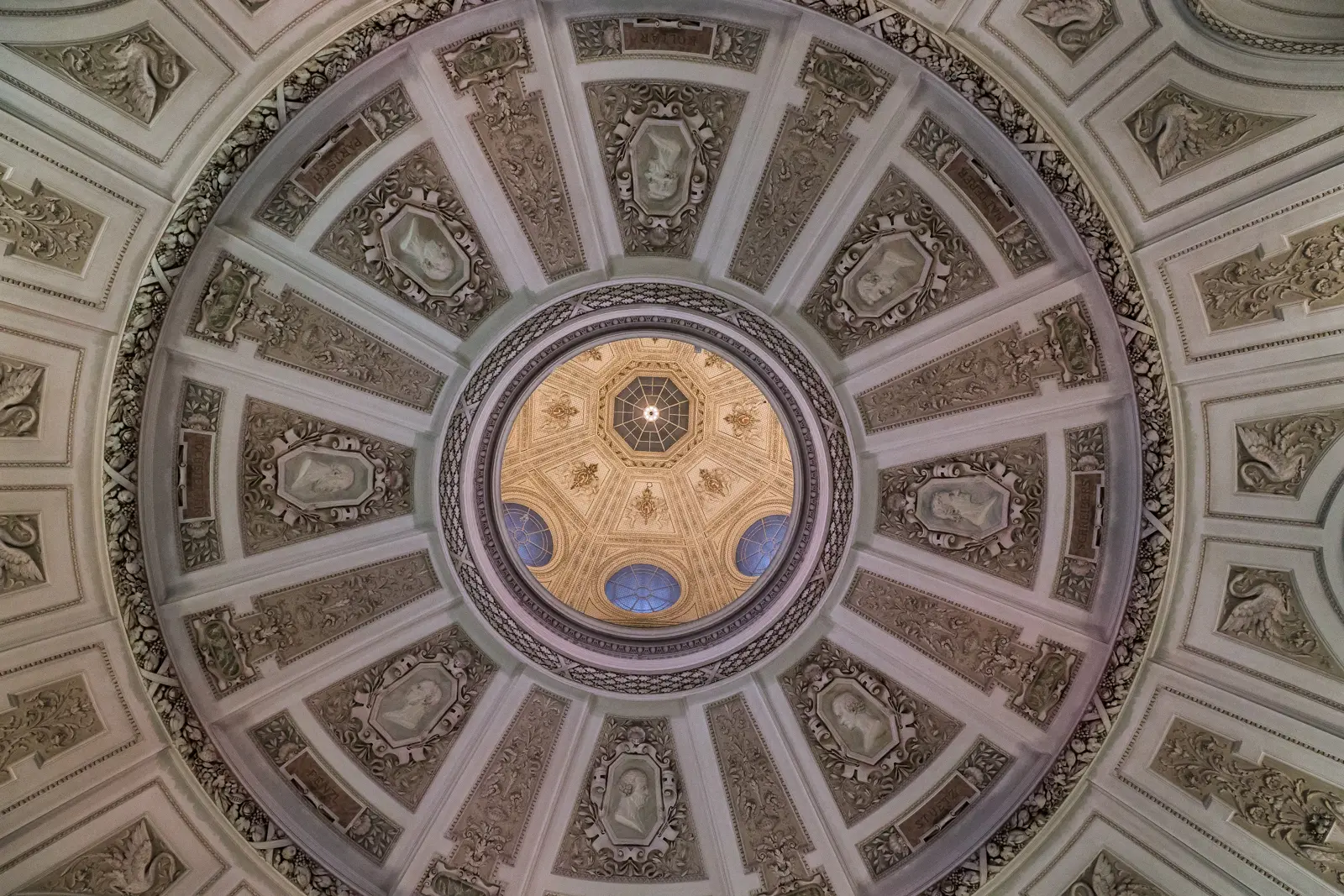
What sets this museum apart from many others is the way it presents science through the lens of art. As you move through the interior spaces, your attention is inevitably drawn upward. The ceilings, domes, and painted surfaces are richly adorned with frescoes and symbolic imagery, transforming the museum into a visual narrative that extends beyond the exhibits themselves.
The grand staircase is particularly striking. One of its highlights is a monumental allegorical ceiling fresco by Hans Canon, often referred to as The Circle of Life. At its center stands Chronos, the god of time, holding an hourglass, surrounded by scenes that reflect humanity’s relationship with nature and the passage of time. It is a work that rewards careful observation, yet one that many visitors walk past without fully realizing what they are seeing.
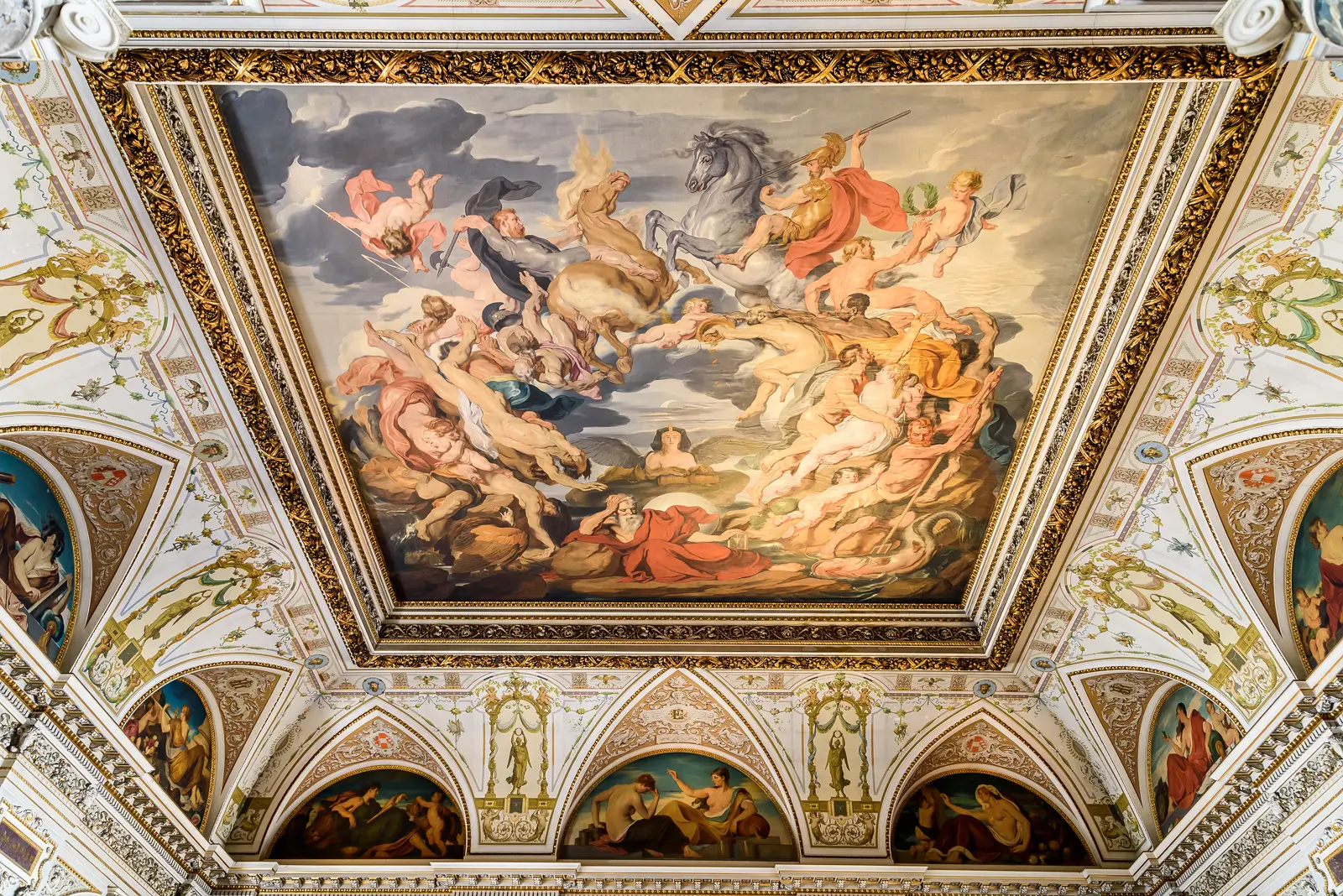
Above the central hall, the dome rises gracefully, crowned on the exterior by a striking statue of Helios, the Greek sun god. Inside, the dome and surrounding ceilings are decorated with richly detailed allegorical frescoes that celebrate the natural world, scientific discovery, and the intellectual ambitions of the imperial era. Light filters softly into the space, illuminating the artwork and creating a sense of openness and elevation that gives the interior a near-temple-like grandeur.
There is a sense of harmony throughout, a deliberate blending of disciplines that reflects Vienna’s cultural identity. Science is not presented in isolation, but as part of a broader intellectual and artistic tradition. The result is an environment that feels immersive and inspiring, where even the act of looking around becomes part of the experience.
The Exhibitions: From Prehistory to the Cosmos
The true heart of the museum lies in its collections, which span millions of years and countless dimensions of the natural world. Moving through the galleries feels like stepping into a carefully curated journey through time, where each room reveals a different chapter in the story of Earth and humanity.
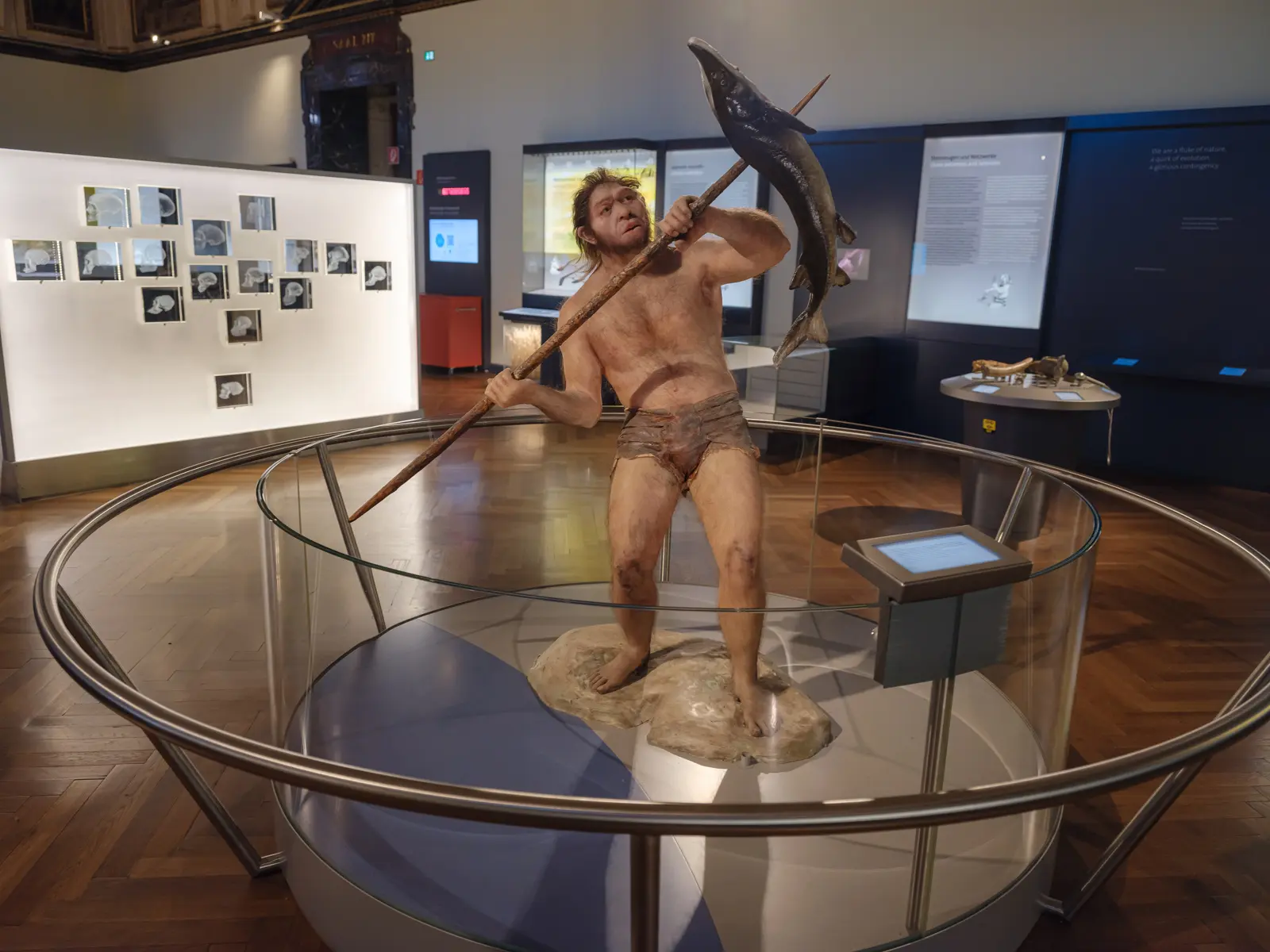
Towering dinosaur skeletons greet you with their sheer scale, creating moments of awe that are both humbling and exhilarating. Nearby, detailed exhibits trace the evolution of life, offering insights into the forces that have shaped our planet. The mineral and gemstone halls provide a different kind of wonder – one defined by color, texture, and the hidden beauty found beneath the Earth’s surface. Carefully lit displays allow each specimen to reveal its unique character, transforming geology into something almost artistic.
Among the museum’s most iconic pieces is the Venus of Willendorf, a small yet profoundly significant artifact that connects visitors to a moment over 25,000 years in the past. Standing before it, you feel a quiet sense of continuity – a reminder of how long humanity has been creating, expressing, and existing within the world.
What makes these exhibitions so compelling is not just their scale, but their pacing. The museum allows you to move at your own rhythm, to linger where something captures your attention, and to absorb the experience without feeling rushed. Each gallery unfolds naturally into the next, creating a sense of flow that mirrors the passage of time itself.
The Experience: Walking Through Time
Beyond its architecture and collections, what makes the Naturhistorisches Museum truly unforgettable is the feeling it creates as you move through it. There is a quiet, almost meditative rhythm to the experience – a balance between grandeur and stillness, between discovery and reflection.
At times, you may find yourself alone in a gallery, surrounded by artifacts that have existed for thousands or even millions of years. In those moments, the museum feels timeless, as though the boundaries between past and present begin to blur. At other times, the presence of other visitors adds a subtle energy, reminding you that this journey through history is shared across cultures and perspectives.
The space encourages a slower pace. You begin to notice details you might otherwise overlook – the way light shifts across a display, the quiet echo of footsteps in a high-ceilinged hall, the contrast between the permanence of the objects and the fleeting nature of your own presence. It is an experience that invites not only learning, but contemplation.
Bubbly Tips: Visiting the Naturhistorisches Museum Wien
To make the most of your visit to the Naturhistorisches Museum Wien, here are a few helpful tips to enhance your experience:
- Visit early in the day or on weekdays to avoid crowds and enjoy a more peaceful, immersive atmosphere
- Look up often – the ceilings, domes, and frescoes are just as impressive as the exhibitions themselves
- Plan at least 2-3 hours to explore the museum comfortably without rushing through the galleries
- Don’t miss the Venus of Willendorf, one of the museum’s most famous and historically significant artifacts
- Take your time in the mineral and gemstone halls, where lighting and presentation create a truly unique visual experience
- Pair your visit with the nearby Kunsthistorisches Museum to experience Vienna’s artistic and scientific heritage side by side
- Wear comfortable shoes, as the museum is expansive and involves a fair amount of walking
Final Thoughts
The Naturhistorisches Museum Wien is not just a place to learn – it is a place to feel, to reflect, and to be inspired. It captures something uniquely Viennese: the ability to elevate knowledge into something beautiful, to present science with elegance, and to create spaces that are as meaningful as they are memorable.
Whether you are drawn by history, architecture, or simple curiosity, this is one of those places that stays with you long after you leave. It is a reminder that the world is vast, layered, and endlessly fascinating – and that sometimes, the best way to understand it is simply to step inside and begin exploring.
Have you visited Vienna’s museums or discovered a favorite along the way? Share your experience, I’d love to hear.
Happy travels!

🌟 Everything You Need to Plan Your Dream Trip in 2026
- 🌟 Luxury Hotels - Find premium stays with Booking.com & Hotels.com
- 🏡 Vacation Rentals - Discover unique properties on VRBO
- 🏞️ Guided Tours - Explore with Viator or GetYourGuide
- 🎫 Attraction Tickets - Skip the lines with Tiqets
- 🚢 Ocean Cruises - Set sail with Cruise Direct
- 📱 International SIMs - Stay connected with Saily
- 🚗 Car Rentals - Budget-friendly options from Discover Cars
- 🌐 Secure VPNs - Browse safely with NordVPN
- 💶 Currency Exchange - Best rates with Wise
- 🗣️ Learn Languages - Master the local language with Babbel and Rosetta Stone