
Hello my fellow readers! Vienna is a city that reveals itself not only through its grand palaces and museums, but through its squares – those open, breathing spaces where history, architecture, and everyday life come together. Each square tells a story. Some are majestic and ceremonial, others quiet and reflective, and many are filled with the gentle rhythm of daily Viennese life.
As you wander through Vienna, you begin to notice how naturally the city flows from one square to another, each one offering a different perspective, a different atmosphere, and a different connection to the past. Exploring these spaces is like stepping through chapters of a living story – one that continues to unfold with every step. Here are some of the most beautiful squares in Vienna, each one unforgettable in its own way.
Vienna’s Most Beautiful Squares at a Glance
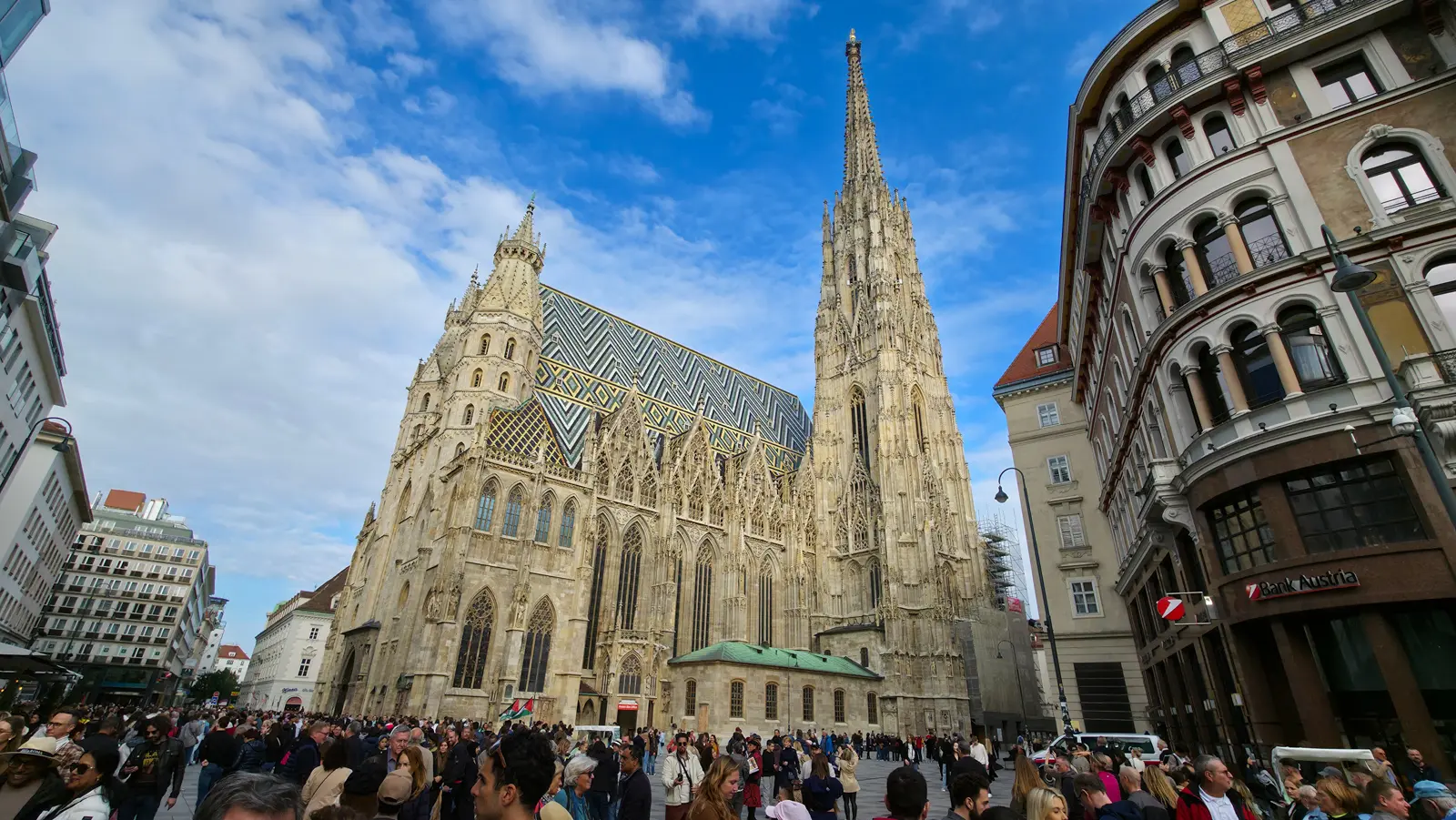
⛪ Stephansplatz — The beating heart of Vienna, dominated by St. Stephen’s Cathedral
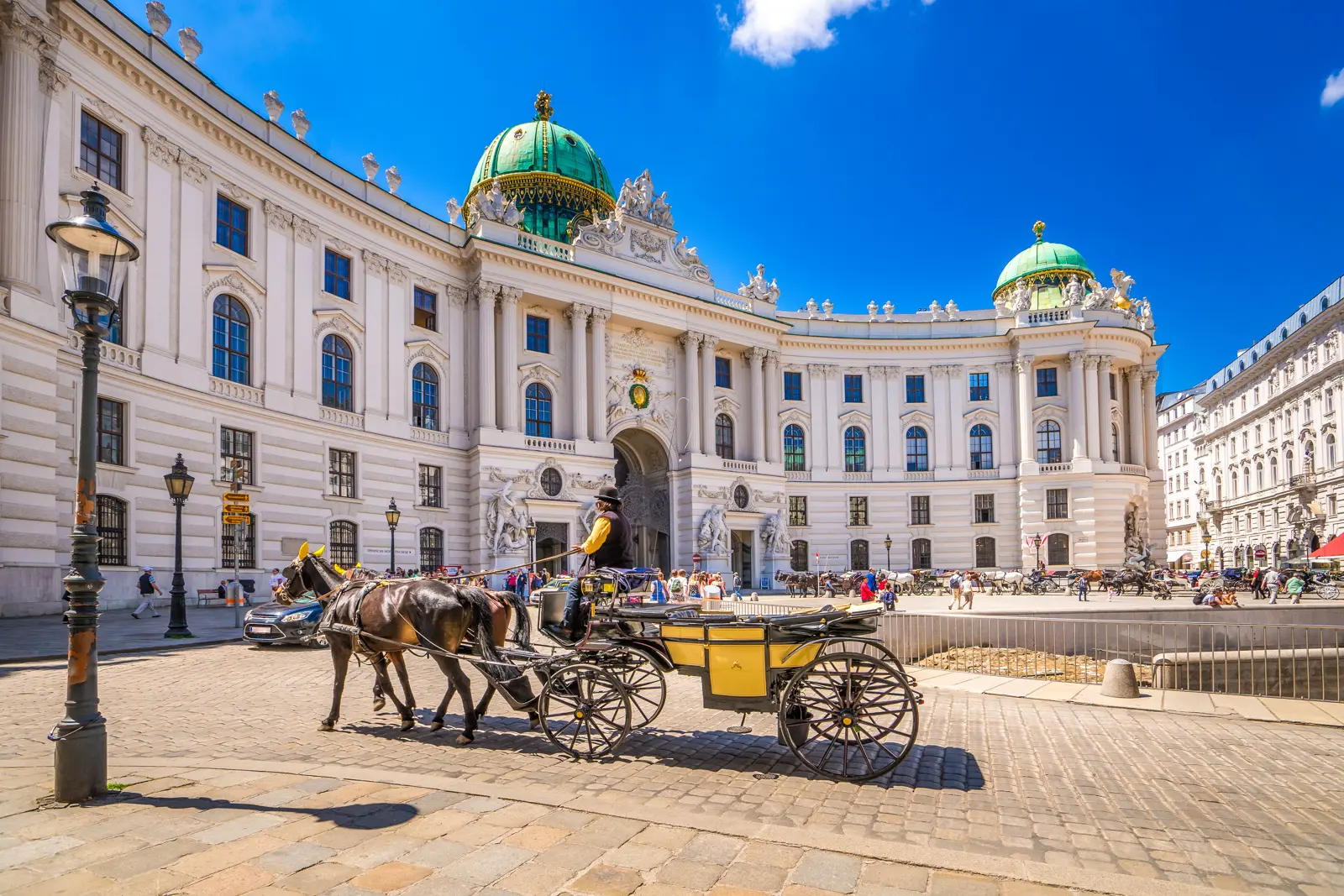
🏛️ Michaelerplatz — Gateway to the Hofburg with Roman ruins beneath your feet
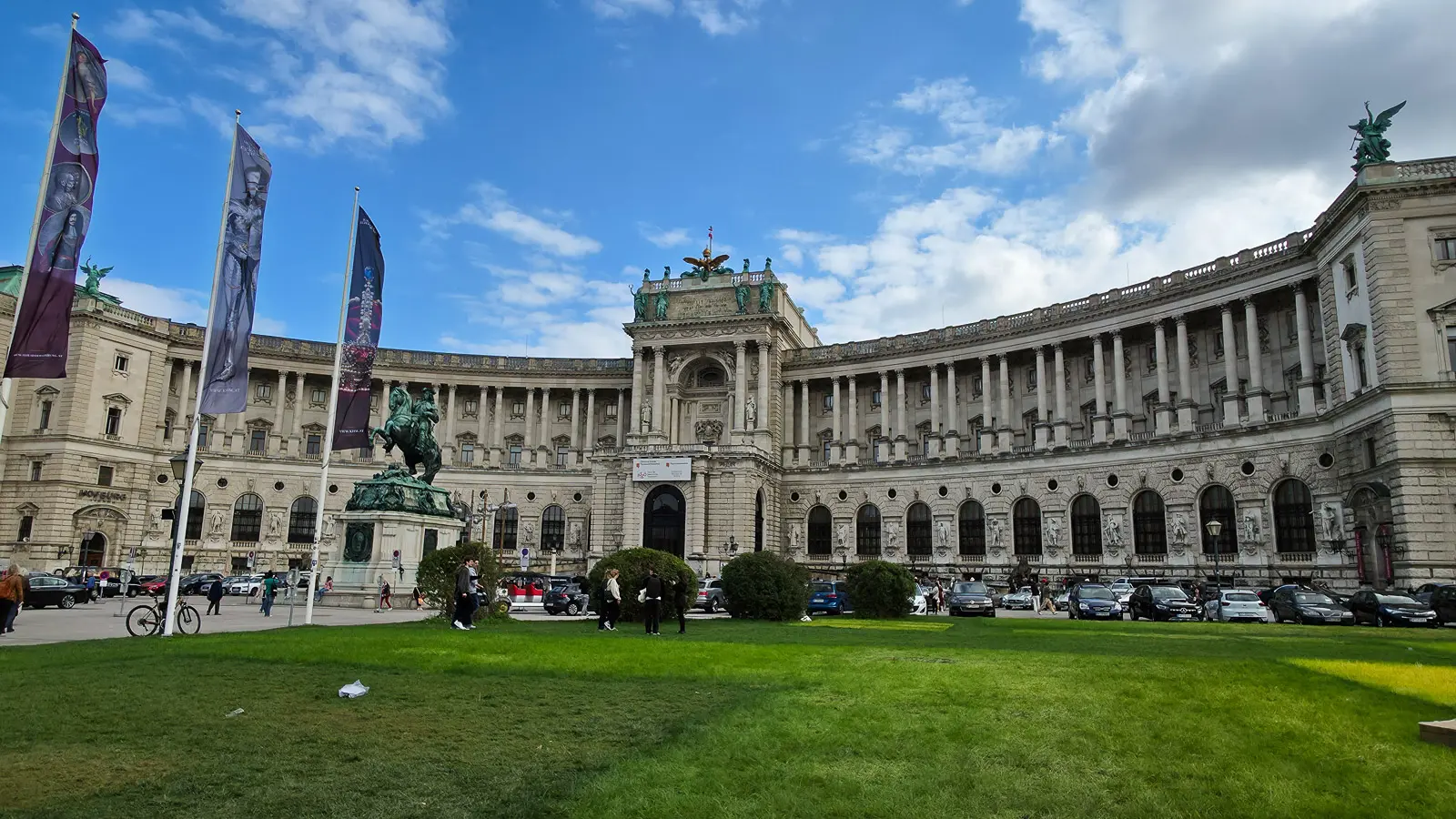
⚔️ Heldenplatz — Grand ceremonial square with equestrian statues of Archduke Charles and Prince Eugene
🎨 Maria-Theresien-Platz — Perfect symmetry between the Kunsthistorisches and Natural History museums
🌭 Albertinaplatz — Where the Albertina meets Vienna’s beloved Bitzinger Würstelstand
⛪ Karlsplatz — Baroque Karlskirche, reflecting pool, and Henry Moore’s Hill Arches
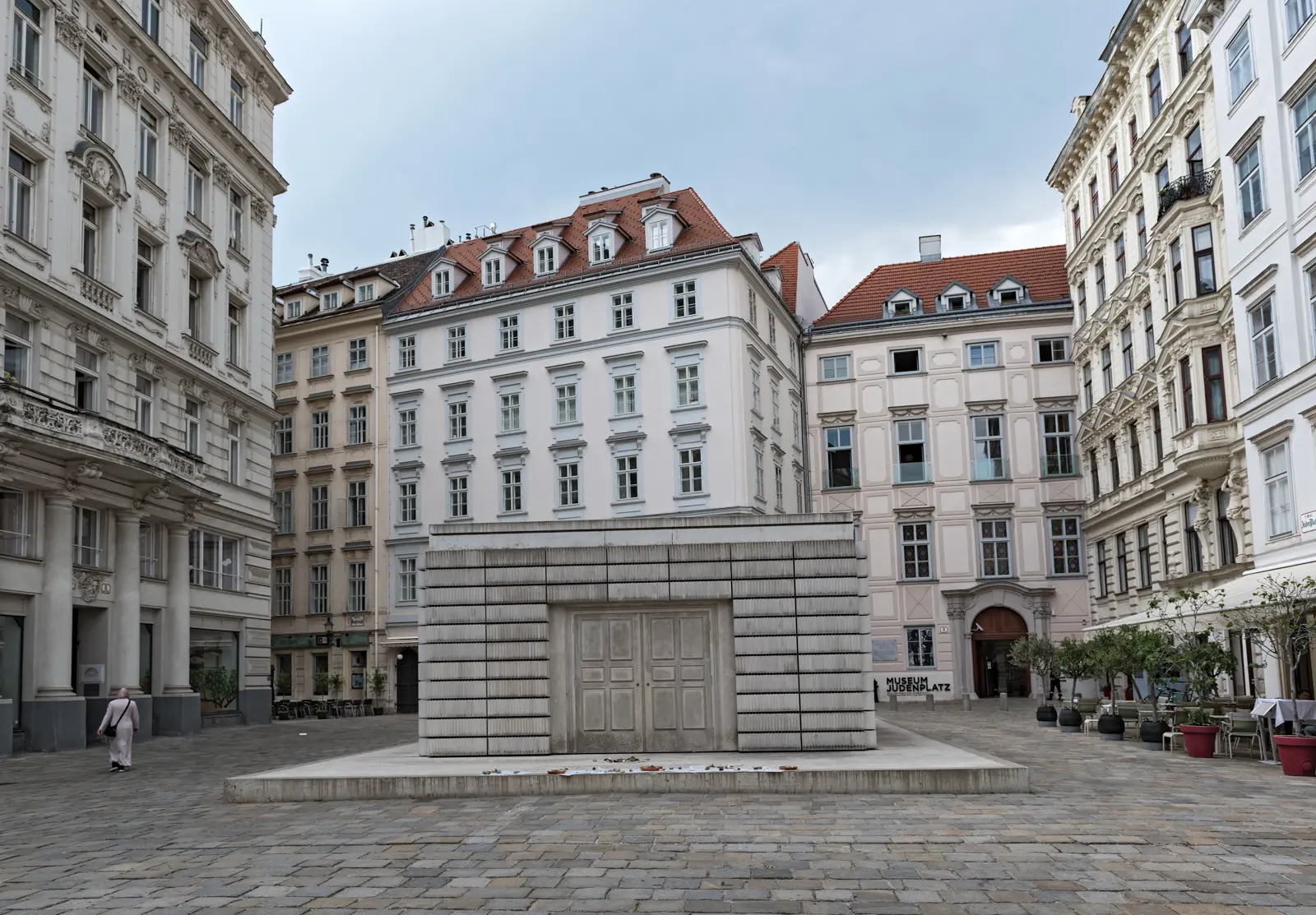
✡️ Judenplatz — Rachel Whiteread’s Holocaust Memorial — stillness and remembrance
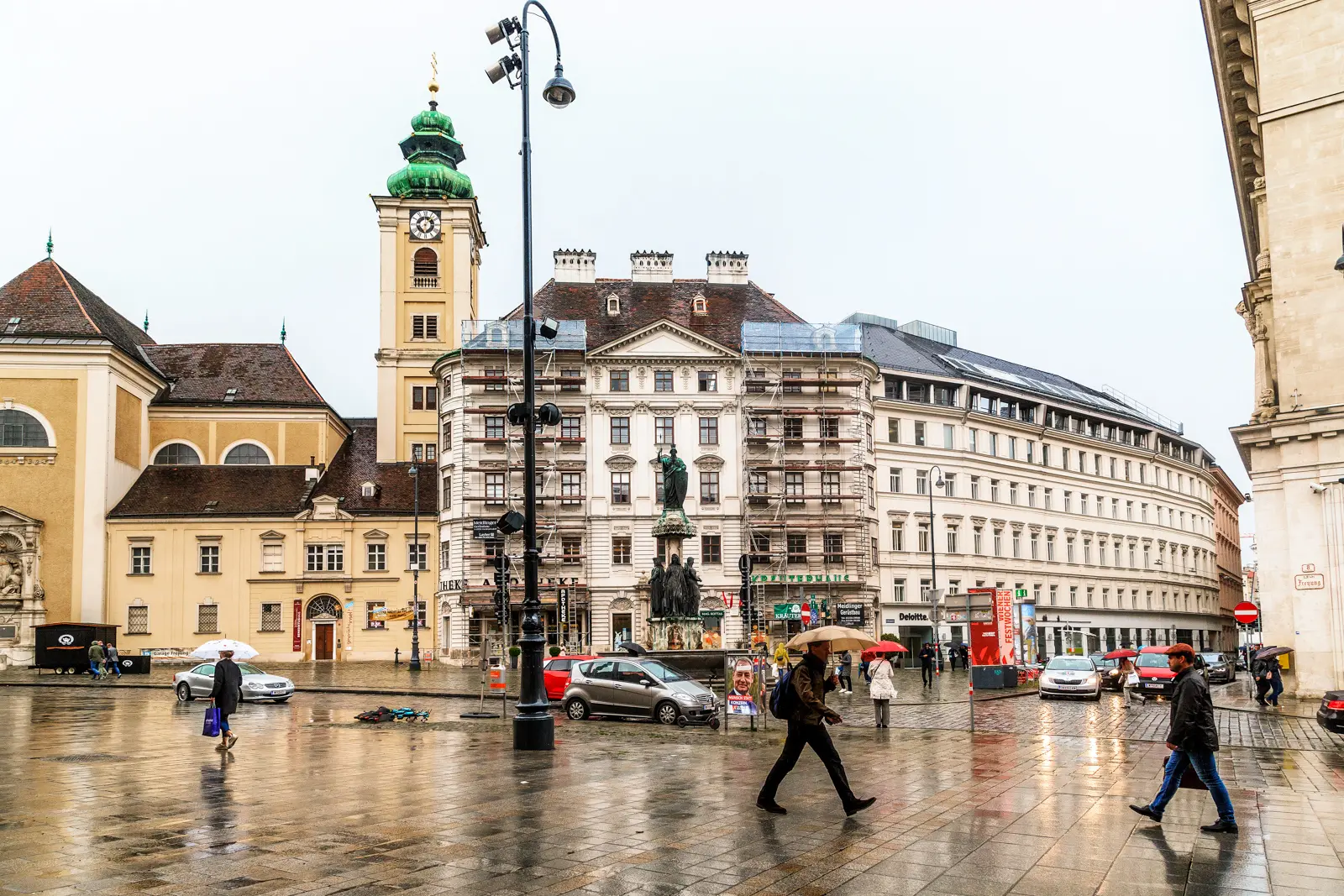
🏰 Freyung — Hidden gem with the Schottenkirche and Palais Ferstel
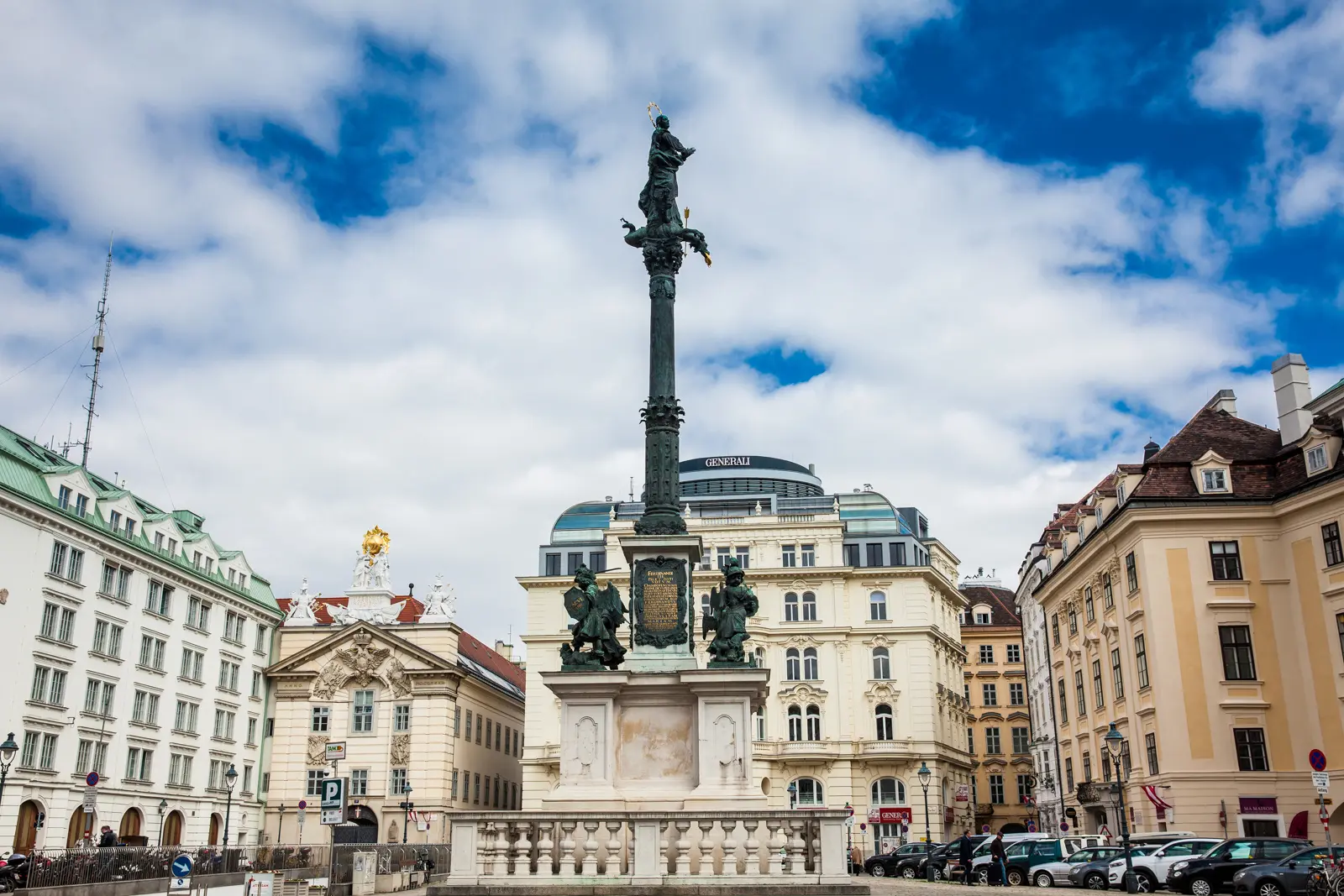
📜 Am Hof — One of Vienna’s oldest squares, anchored by the Mariensäule
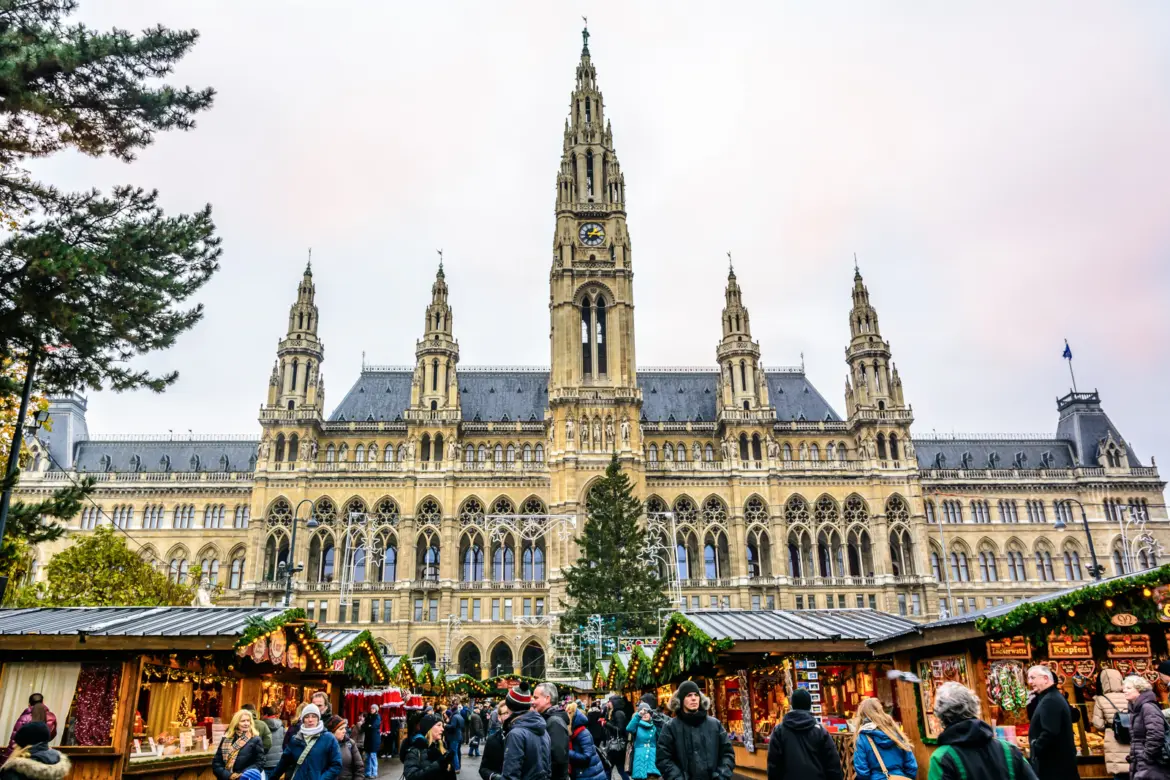
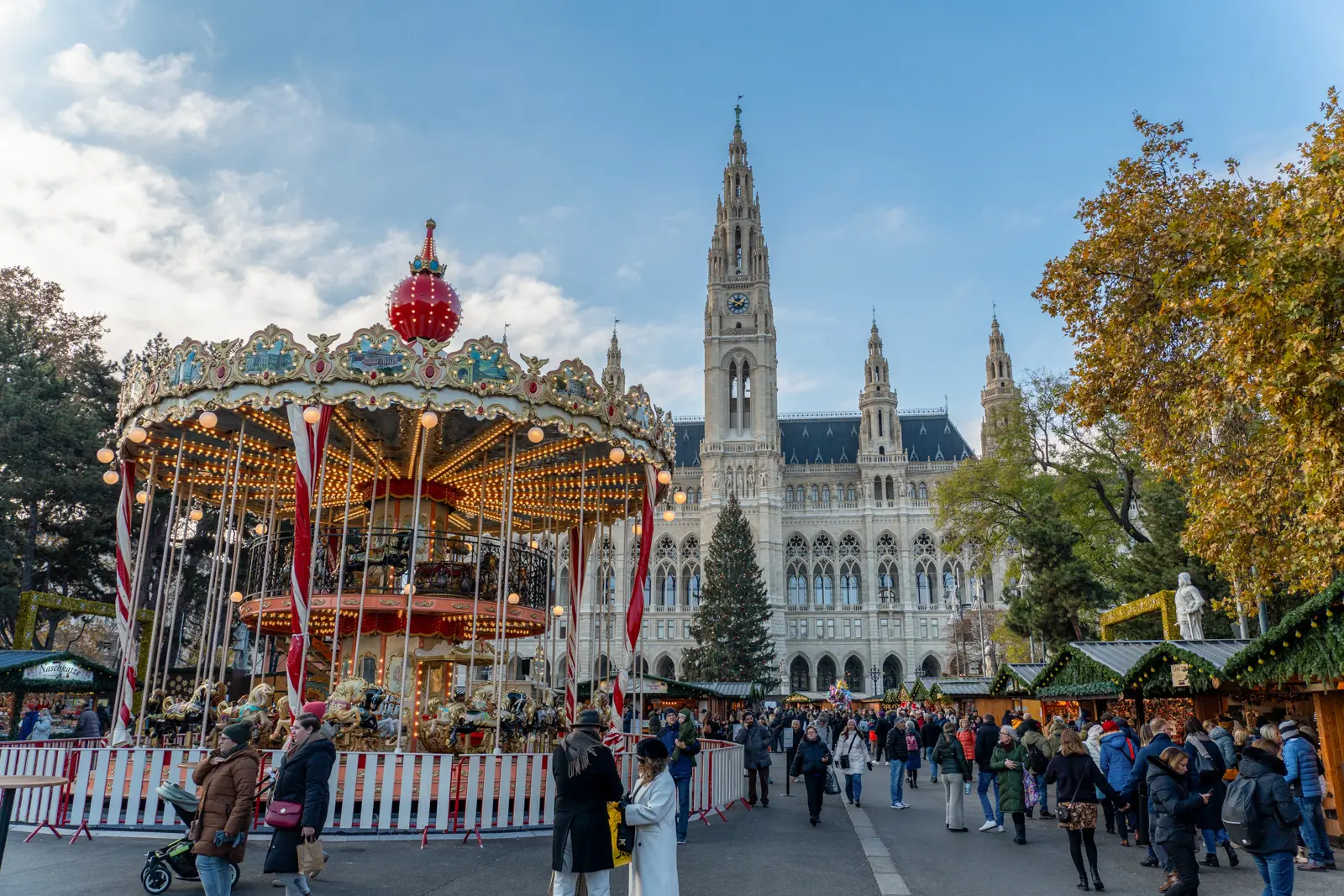
🎄 Rathausplatz — Christmas market magic in front of the neo-Gothic City Hall
1. Stephansplatz: The Beating Heart of Vienna
At the very center of the city lies Stephansplatz, a place where Vienna’s energy feels most alive. Dominated by the magnificent St. Stephen’s Cathedral, this square is both a historical landmark and a vibrant meeting point. St. Stephen’s Cathedral rises dramatically above the surrounding streets, its intricate Gothic details and colorful tiled roof drawing your eyes upward again and again. Yet Stephansplatz is not only about grandeur; it is also about movement – locals rushing through their day, visitors pausing in awe, and street performers bringing a lively rhythm to the space. Beneath this constant motion lies a deep historical continuity, as the square has been the heart of Vienna for centuries, connecting medieval streets with the modern city. It is this blend of history, architecture, and everyday life that creates an atmosphere both timeless and dynamic.
2. Michaelerplatz: Where Imperial Vienna Begins
Approaching Michaelerplatz feels like stepping into the imperial world of Vienna, where history unfolds in layers at every glance. Located at the grand entrance to the Hofburg Palace, this square offers a striking blend of architectural elegance and historical depth. The sweeping curve of the Michaeler Wing frames the space with quiet authority, creating a sense of enclosure that feels both imposing and refined. What makes Michaelerplatz particularly fascinating is the contrast it reveals: beneath your feet lie the visible remains of Roman ruins, while above ground, horse-drawn carriages pass by, historic façades rise with understated grandeur, and the renowned Spanish Riding School sits just steps away. The square is also anchored by the striking Looshaus, whose modern simplicity once shocked imperial Vienna, adding yet another layer to its story. It is a place where ancient history, imperial power, and evolving architectural tastes coexist effortlessly, inviting you to slow down, observe, and take it all in.
3. Heldenplatz: A Grand Stage of History
Just beyond the Hofburg lies Heldenplatz, one of Vienna’s most expansive and historically significant squares, where scale and symbolism come together in a striking way. Framed by monumental architecture and anchored by equestrian statues of Archduke Charles and Prince Eugene of Savoy, the square carries a powerful presence that reflects Austria’s imperial past. Walking across Heldenplatz, you feel the weight of history beneath your steps – this is a place that has witnessed moments of triumph, tension, and profound transformation, including pivotal events of the twentieth century. Today, its vast open space offers visitors room to reflect, wander, and take in sweeping views of the surrounding Hofburg complex and the Ringstrasse, while still sensing the echoes of history that define this remarkable setting.
4. Maria-Theresien-Platz: Perfect Symmetry and Cultural Elegance
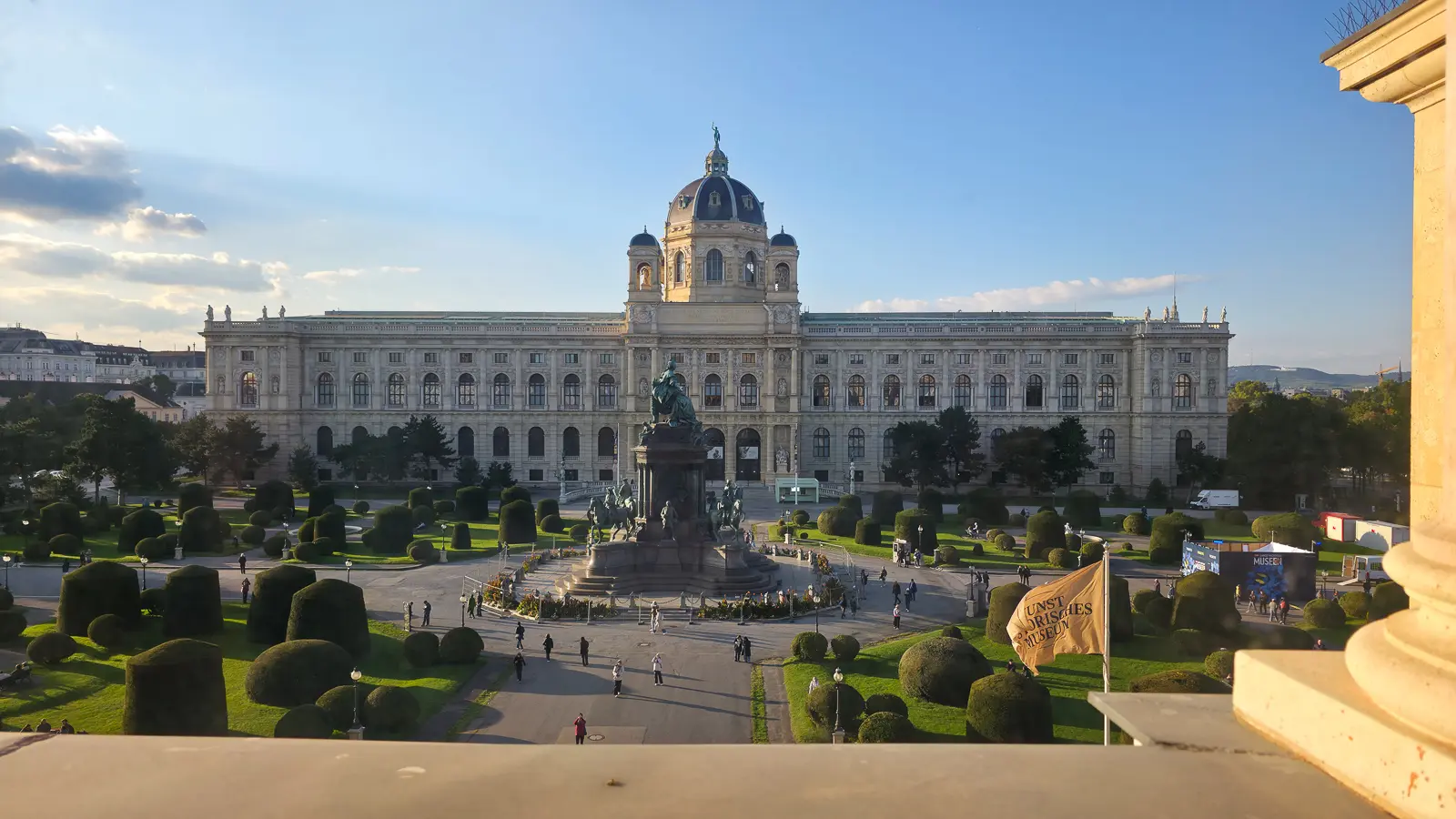
Few places in Vienna capture architectural harmony as beautifully as Maria-Theresien-Platz, where symmetry and grandeur create a truly unforgettable setting. Flanked by the Kunsthistorisches Museum and the Natural History Museum, the square is a masterpiece of design, with two nearly identical buildings facing each other in perfect balance across landscaped gardens. At its center stands the imposing statue of Empress Maria Theresa, surrounded by figures representing her advisors and the intellectual legacy of her reign. The carefully designed green spaces soften the monumentality of the architecture, offering a peaceful atmosphere where visitors can sit, pause, and take in the scene from every angle. Whether bathed in sunlight or gently illuminated in the evening, the square feels both majestic and serene, a place where culture, history, and beauty come together effortlessly in one of Vienna’s most refined urban spaces.
5. Albertinaplatz: Where Art Meets Everyday Life
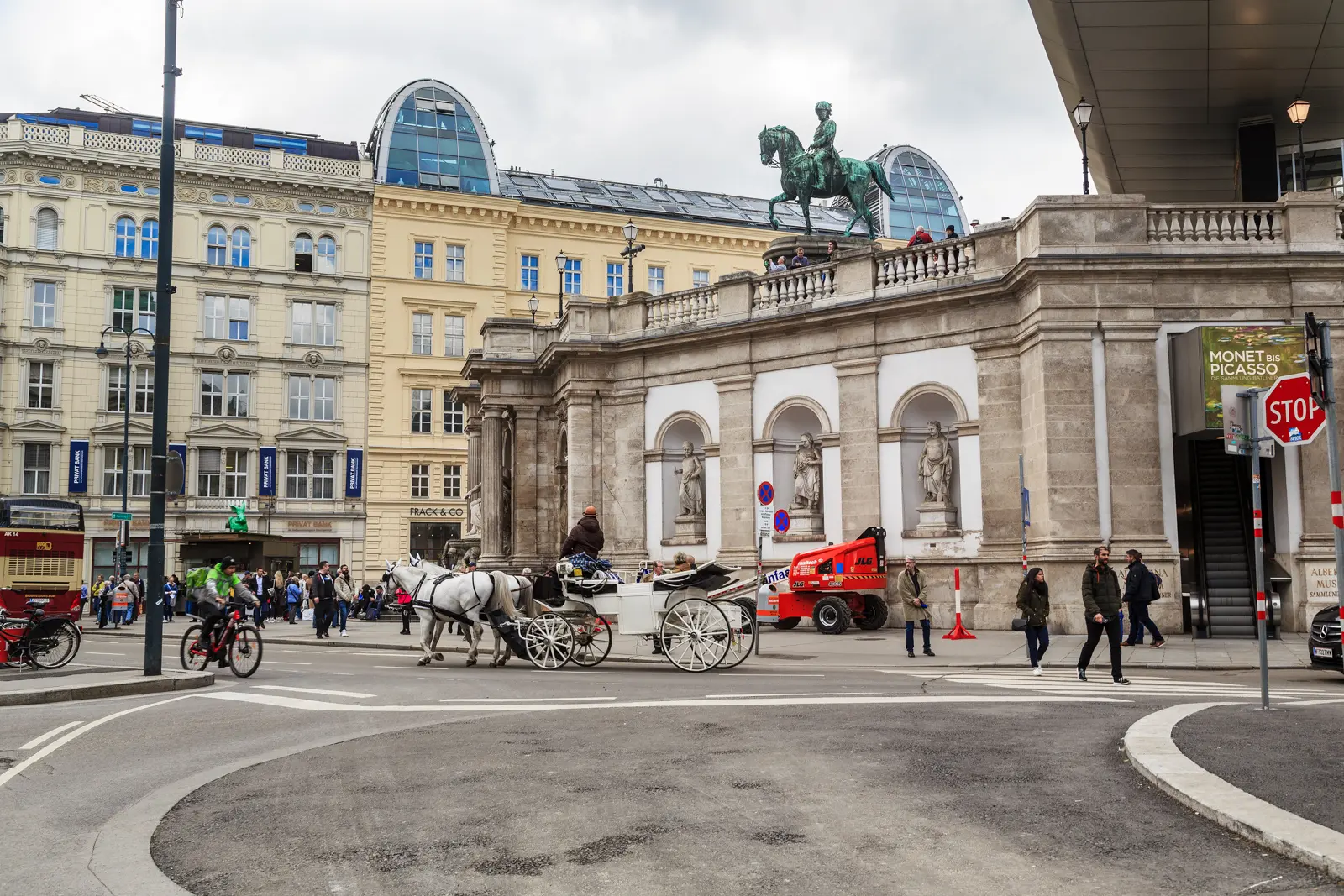
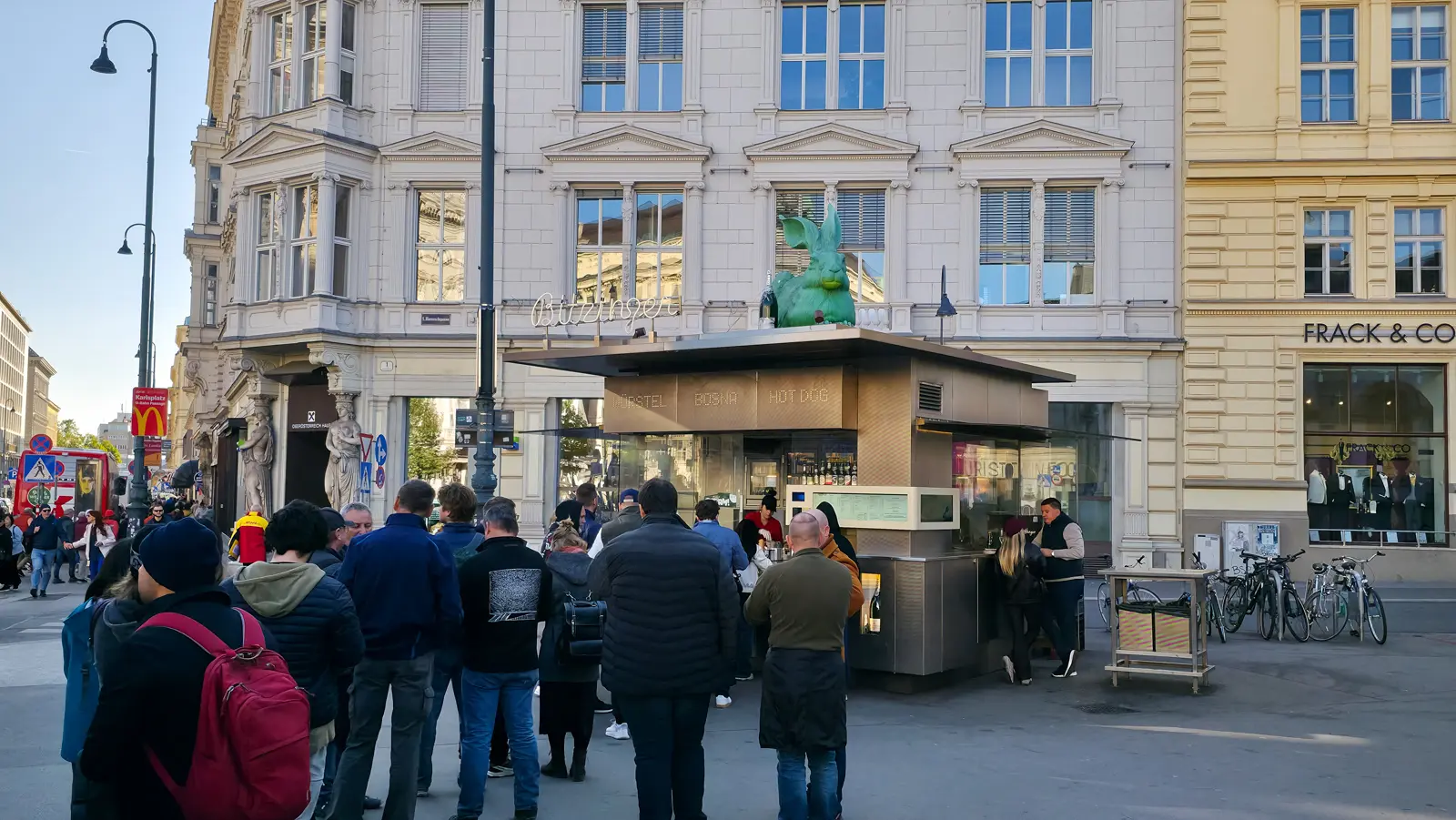
Albertinaplatz offers one of the most captivating contrasts in Vienna, where refined culture and everyday life exist side by side in perfect balance. With the elegant Albertina Museum overlooking the square and the Vienna State Opera just steps away, the setting is framed by some of the city’s most prestigious landmarks. Yet, it is here that you also encounter one of Vienna’s most beloved traditions: the Würstelstand. Just outside, the iconic Bitzinger sausage stand draws both locals and visitors, its steady line a testament to its popularity. Standing at the counter with a freshly grilled sausage in hand, surrounded by imperial architecture and the rhythm of the city, you experience a side of Vienna that feels authentic, approachable, and wonderfully human. It is this effortless blend of elegance, culture, and simple pleasures that makes Albertinaplatz, and Vienna itself, so unforgettable.
6. Karlsplatz: A Dialogue Between Past and Present
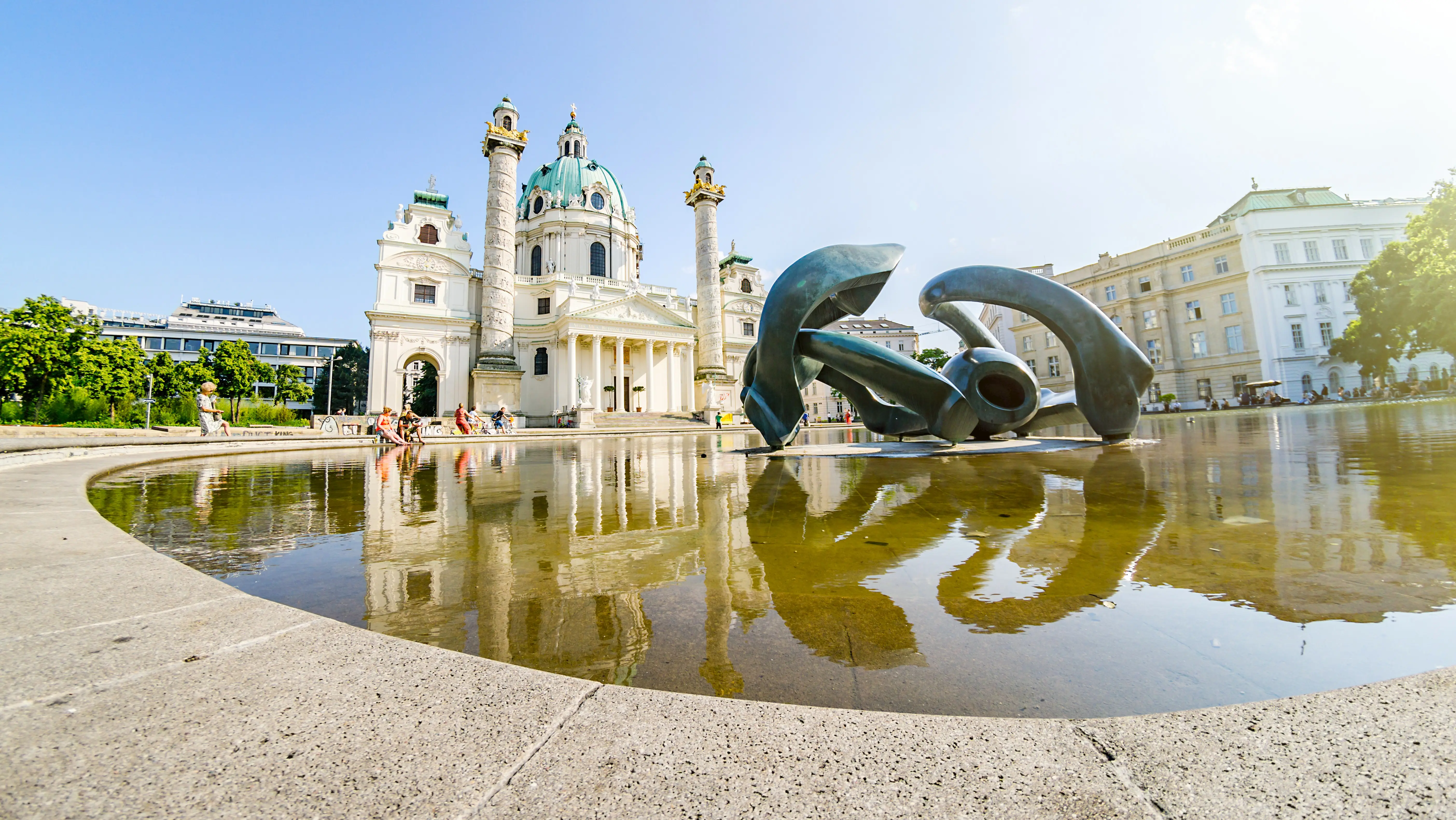
Karlsplatz is a place of striking contrasts, where history and modern life exist side by side in a dynamic and ever-evolving setting. The magnificent Karlskirche, with its grand dome and twin columns inspired by ancient Rome, anchors the square with baroque elegance, while the reflecting pool in front of it creates one of the most photogenic scenes in Vienna. In the soft light of morning or at sunset, the church takes on an almost cinematic quality, its reflection shimmering gently in the water. Yet just beyond this serene composition, the rhythm of the modern city unfolds – transit lines, contemporary buildings, and the steady movement of everyday life passing through the square. This interplay between stillness and motion, past and present, gives Karlsplatz a unique energy, making it a space that feels both deeply rooted in history and vividly connected to the present moment.
7. Judenplatz: Quiet Reflection in the Heart of the City
Tucked away from Vienna’s busier streets, Judenplatz offers a more intimate and contemplative experience, where the atmosphere shifts from grandeur to quiet reflection. The square is simple and understated, yet deeply meaningful, anchored by the Holocaust Memorial designed by Rachel Whiteread – a stark, library-like structure whose sealed form symbolizes the countless untold stories of Jewish lives lost. Surrounding the square are historic buildings that echo centuries of Jewish presence in Vienna, adding layers of memory to the space. Unlike the city’s more expansive and ornate squares, Judenplatz invites stillness; it is a place to slow down, to observe in silence, and to connect with a more introspective dimension of Vienna’s past. The absence of movement here feels intentional, allowing the weight of history to be felt in a way that is both powerful and deeply human.
8. Freyung: A Hidden Gem with Timeless Charm
Freyung feels like a secret waiting to be discovered, a quiet square where Vienna reveals a more refined and intimate side of itself. Surrounded by elegant historic buildings, including the Schottenkirche (Scottish Monastery) and the Palais Ferstel, the square carries a sense of understated grandeur paired with a serene atmosphere that sets it apart from more crowded areas of the city. Markets are often held here, adding a gentle liveliness without overwhelming the space, whether seasonal stands or traditional Viennese offerings that bring a touch of local life to the square. The architecture, soft light, and relative calm invite you to slow your pace, observe the details, and simply linger for a moment. It is the kind of place where time seems to move differently, offering a quiet reminder that Vienna’s beauty is often found not only in its grand landmarks, but in its most peaceful and hidden corners.
9. Am Hof: Layers of Vienna’s History
Am Hof is one of Vienna’s oldest squares, and that long history is visible in every corner, unfolding through its architecture and monuments. Once the site of a Roman military camp and later a center of medieval life, the square has evolved over centuries while retaining a strong sense of identity. At its center stands the Mariensäule, or Column of Mary, an elegant Baroque monument erected in the seventeenth century, where the Virgin Mary is depicted triumphing over a dragon, a powerful symbol of faith and protection. Surrounding the square are buildings that reflect different eras, from medieval foundations to grander façades shaped by imperial influence, including the historic Am Hof complex and the nearby church of St. Peter. Today, the square often hosts markets and local events, bringing a gentle liveliness that contrasts beautifully with its historic depth. Standing here, you feel how Vienna’s past is not preserved behind glass, but woven into everyday life – a space where history remains present, tangible, and quietly enduring.
10. Rathausplatz: A Square That Celebrates Life
Rathausplatz is a place of celebration, where Vienna’s sense of community and culture comes fully to life. Set against the striking neo-Gothic façade of Vienna’s City Hall, the square hosts events throughout the year, from open-air film festivals in the summer to seasonal markets that draw both locals and visitors. During the holidays, it transforms into one of the most magical Christmas markets in Europe, filled with twinkling lights, music, and the comforting aromas of traditional treats. In the winter months, the square often features an ice-skating experience that adds to its festive charm, while in warmer seasons, the surrounding park offers a pleasant space to relax and take in the atmosphere. Even outside of special events, Rathausplatz carries a sense of openness and possibility – a place where people gather, celebrate, and create lasting memories together.
Final Thoughts
Vienna’s squares are more than just open spaces between buildings – they are places where the city’s soul becomes visible. Each one offers a different experience, a different perspective, and a different connection to Vienna’s rich history and vibrant present.
As you move from one square to another, you begin to understand the rhythm of the city. You see how elegance and simplicity coexist, how history is woven into everyday life, and how even the smallest moments – a pause, a view, a quiet observation – can become unforgettable.
If you find yourself in Vienna, take the time to wander without rushing. Let the city guide you from one square to the next, and you may discover that these spaces, more than anything else, capture the true essence of Vienna.
Have you explored Vienna’s beautiful squares, or is there one that caught your eye the most? I would love to hear your thoughts.
Until next time!

🌟 Everything You Need to Plan Your Dream Trip in 2026
- 🌟 Luxury Hotels - Find premium stays with Booking.com & Hotels.com
- 🏡 Vacation Rentals - Discover unique properties on VRBO
- 🏞️ Guided Tours - Explore with Viator or GetYourGuide
- 🎫 Attraction Tickets - Skip the lines with Tiqets
- 🚢 Ocean Cruises - Set sail with Cruise Direct
- 📱 International SIMs - Stay connected with Saily
- 🚗 Car Rentals - Budget-friendly options from Discover Cars
- 🌐 Secure VPNs - Browse safely with NordVPN
- 💶 Currency Exchange - Best rates with Wise
- 🗣️ Learn Languages - Master the local language with Babbel and Rosetta Stone