
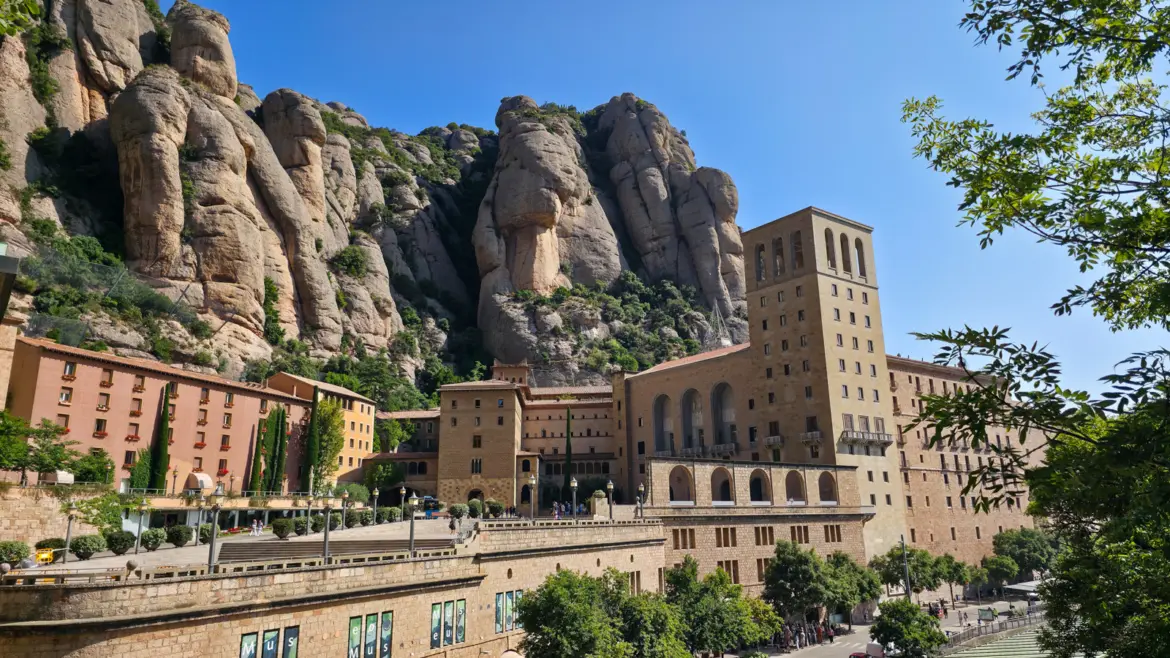
Hola, travelers! There are places that take your breath away the moment you arrive – and then there are places like Montserrat, where you don’t just lose your breath… you lose your sense of time. Everything slows. Everything softens. Everything rises.
I visited Montserrat on a sunny afternoon, leaving behind the pulse of Barcelona for a mountain that feels almost suspended between earth and sky. With its jagged cliffs, ancient monastery, sweeping viewpoints, and spiritual energy that lingers long after you leave, Montserrat is one of those rare destinations that touches the soul before you even realize it’s happening. Come with me. Let’s go up the mountain together.
Montserrat at a Glance
⛰️ The mountain: “Sawed mountain” — serrated peaks carved by millions of years of wind and rain, rising like a natural fortress above Catalonia
🏛️ The abbey: Benedictine monastery since the 11th century (hermits from the 9th century), home to ~70 monks who continue the tradition of prayer, study, and hospitality
🕊️ The Black Madonna: La Moreneta — 12th-century Romanesque carving, patroness of Catalonia since 1881. Touch the orb in her right hand.
🎵 Escolania: One of Europe’s oldest boys’ choirs (documented since 1307). Daily at 1 PM (Mon–Fri), noon (Sun)
🚡 Sant Joan funicular: Climbs 248m to Pla de les Taràntules at ~1,000m altitude. Steepest in Spain (65% gradient).
🥾 Hiking: Marked trails along the upper ridge — moderate difficulty, 2+ hours, spectacular views
🚂 Getting there: R5 train from Barcelona Plaça Espanya → cable car (Aeri, 5 min) or rack railway (Cremallera, 15 min)
⏰ Time needed: Full day recommended for abbey + Black Madonna + funicular + hiking
First Look: The Mountain That Floats Above Catalonia
Nothing prepares you for the sight of Montserrat. As the train approaches the base of the mountain, that famous serrated silhouette suddenly fills the sky – a natural fortress carved by wind, rain, and millions of years. The name Montserrat literally means “sawed mountain,” and from every angle, the peaks look like something from a dream or a myth.
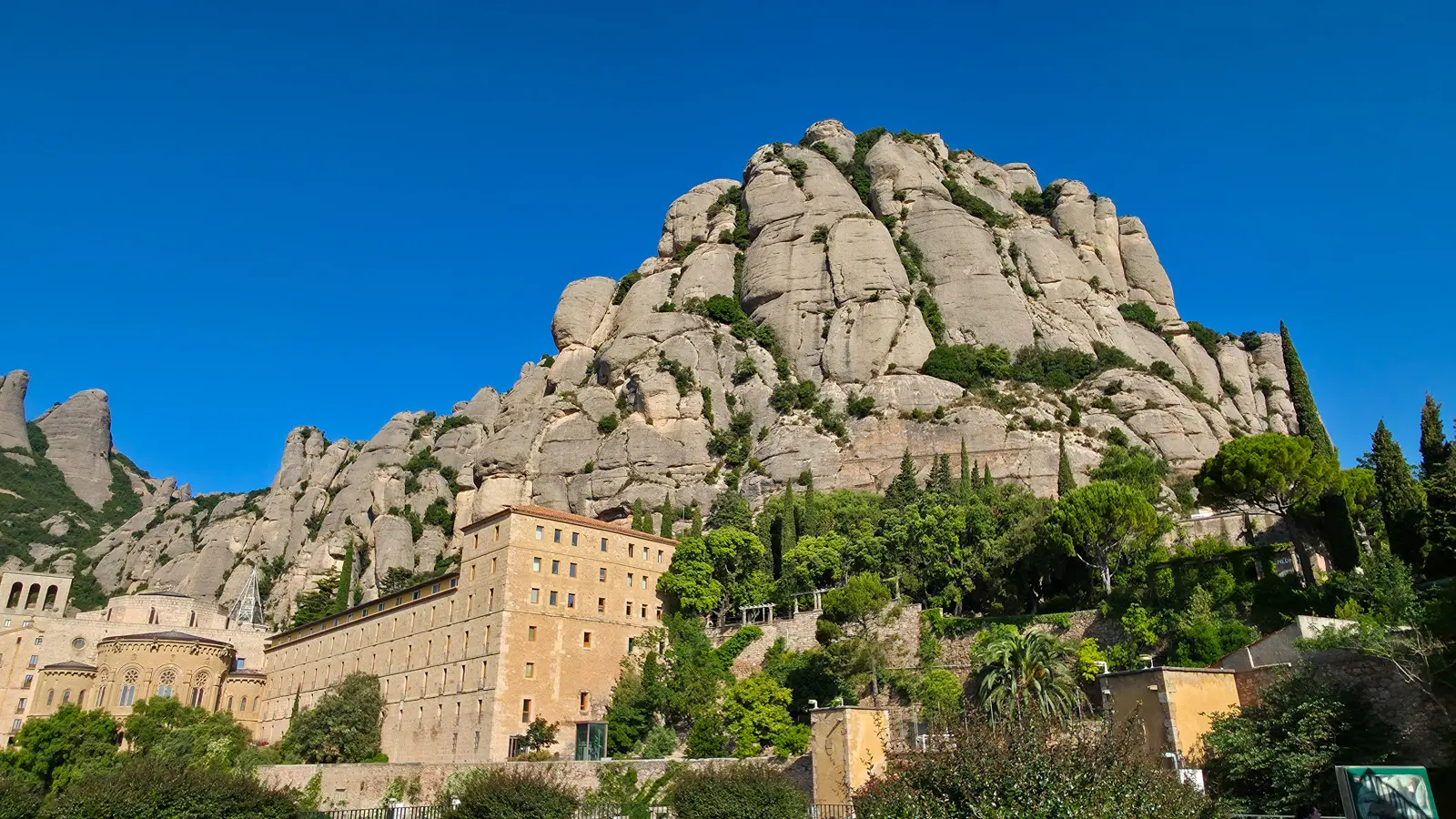
When I stepped off the cable car platform, the warm sun, the crisp mountain air, and the scent of pines made me instantly inhale deeper. The world below felt miles away. The sky felt impossibly close. Up here, the city noise disappears. All you hear is wind, bells, and your own thoughts.
The Abbey & Basilica – Faith Held in Stone
The Benedictine Monastery of Santa Maria de Montserrat has been a spiritual heartbeat of Catalonia for nearly a thousand years. The first hermits settled these cliffs as early as the 9th century, drawn by the mountain’s otherworldly shapes and natural caves. By the 11th century, the monastery was formally founded, growing into one of Spain’s most important pilgrimage sites. It survived wars, fires, and political upheaval, was rebuilt and expanded in the 19th century, and today remains home to about seventy monks who continue the Benedictine tradition of prayer, study, and hospitality. Even before you enter the basilica, you feel the weight of centuries in the stone under your feet.
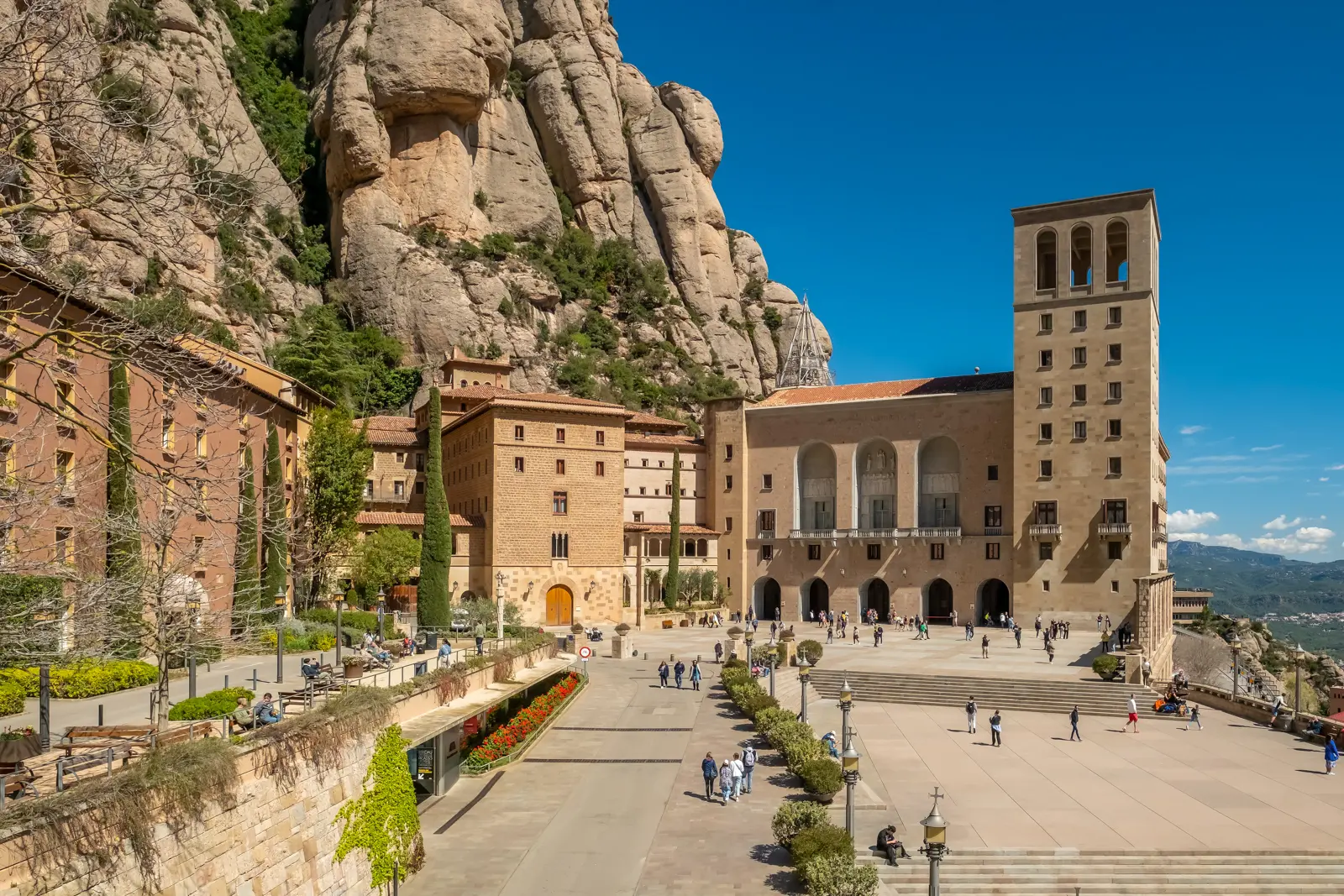
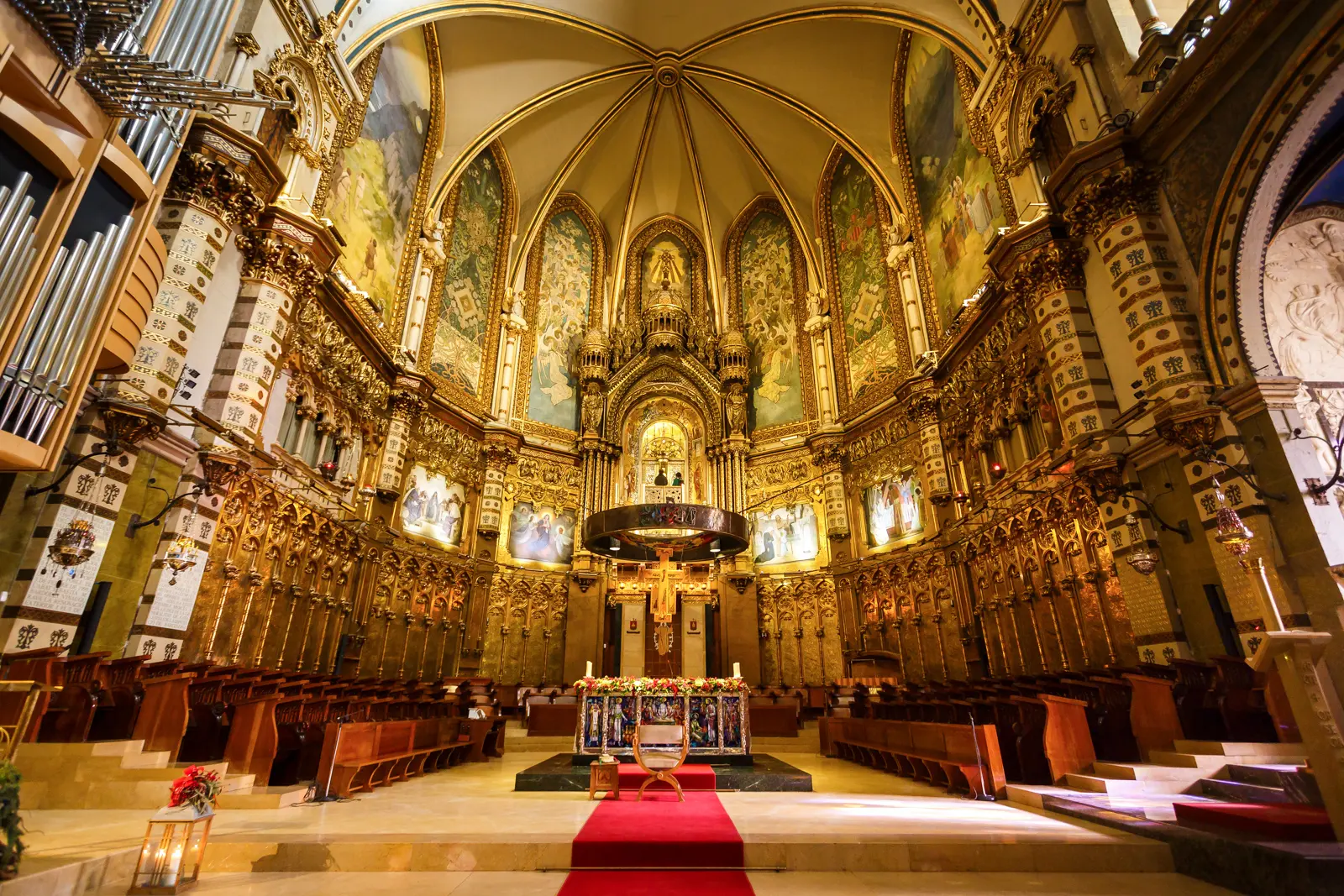
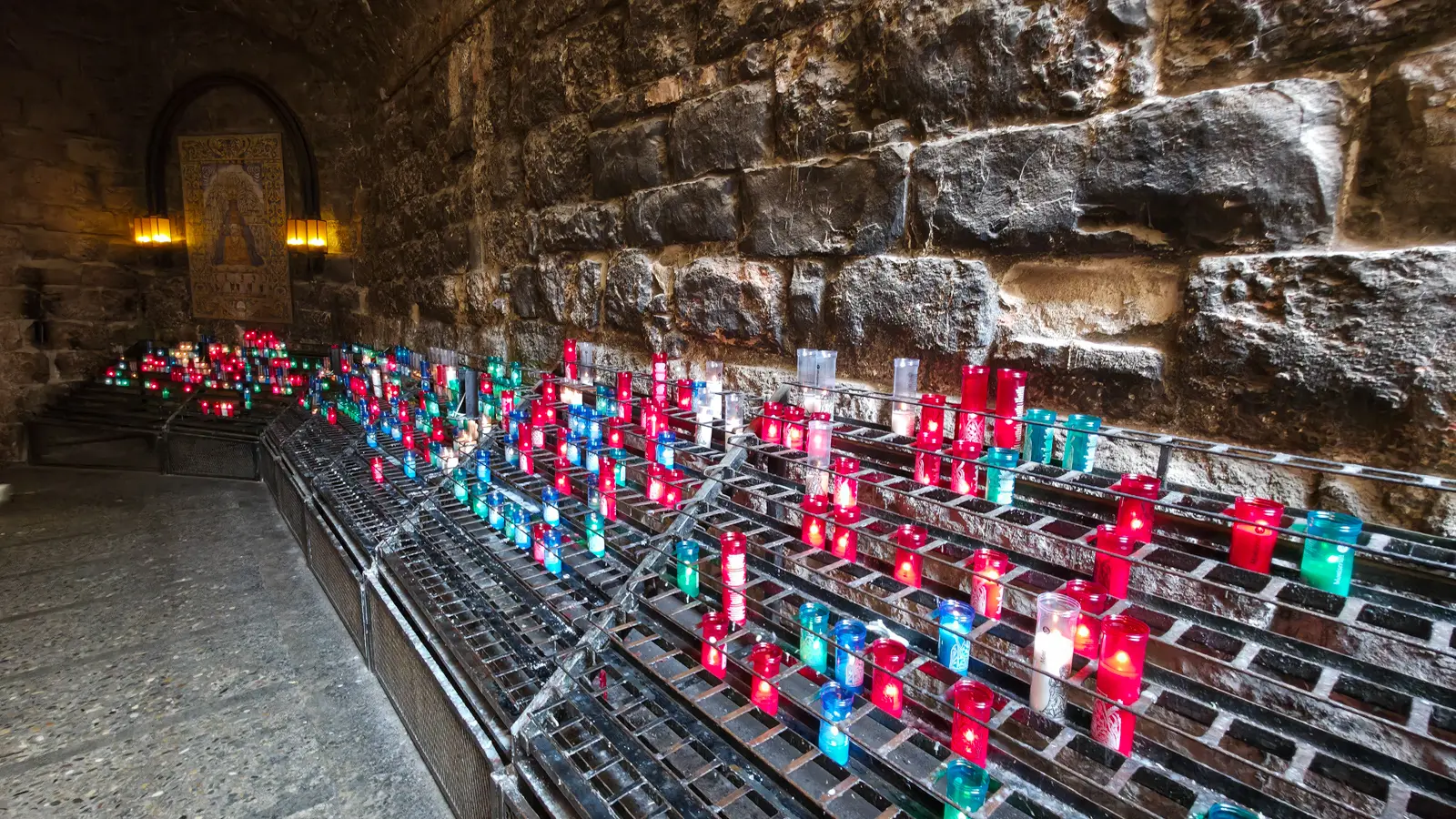
Walking into the Basilica of Montserrat feels like entering a whispered prayer. Sunlight filters through the tall arched windows, gilding the marble and casting a soft, honeyed glow over the carved altars. Gold accents shimmer on the apse, and flickering candles illuminate the faces of pilgrims who have come from every corner of the world. A hush settles over the visitors – an instinctive, collective stillness – and I felt something quiet unlock inside me, a calm I didn’t know I needed until that moment.
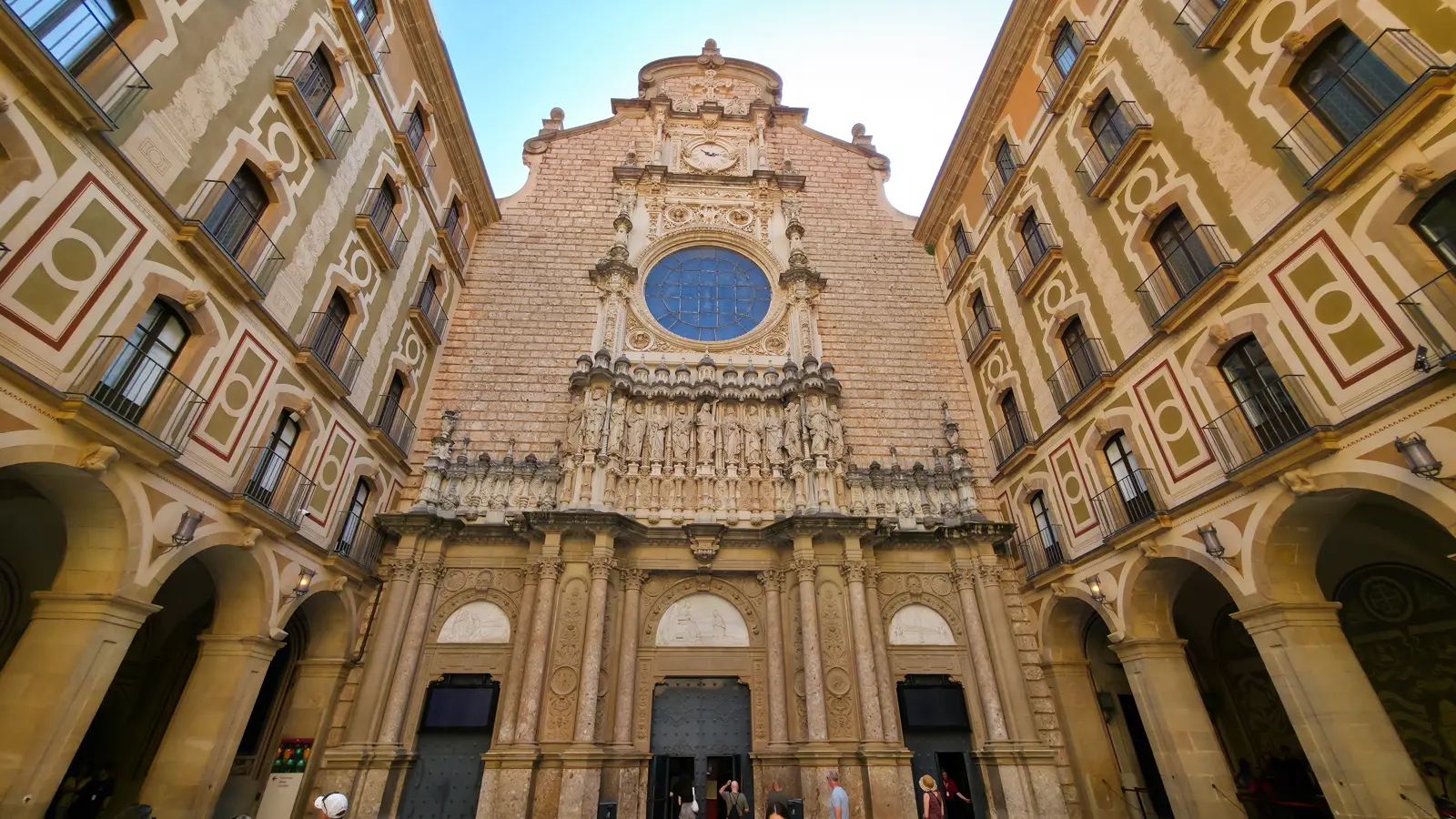
What moved me most was the sense of life here. Monks in their black-and-white habits crossing the courtyard. The distant hum of the Escolania, one of Europe’s oldest boys’ choirs, practicing somewhere behind the walls. Pilgrims quietly making their way toward the Black Madonna’s shrine. Footsteps echoing softly against centuries-old stone. It’s easy to see why people have climbed these mountains for generations – seeking answers, solace, gratitude, or simply a moment of peace. You don’t have to be religious to feel it. Montserrat wraps you in something gentle and human, a reminder of how sacred stillness can feel when the world finally goes quiet.
The Funicular & The Walk – Views You’ll Never Forget
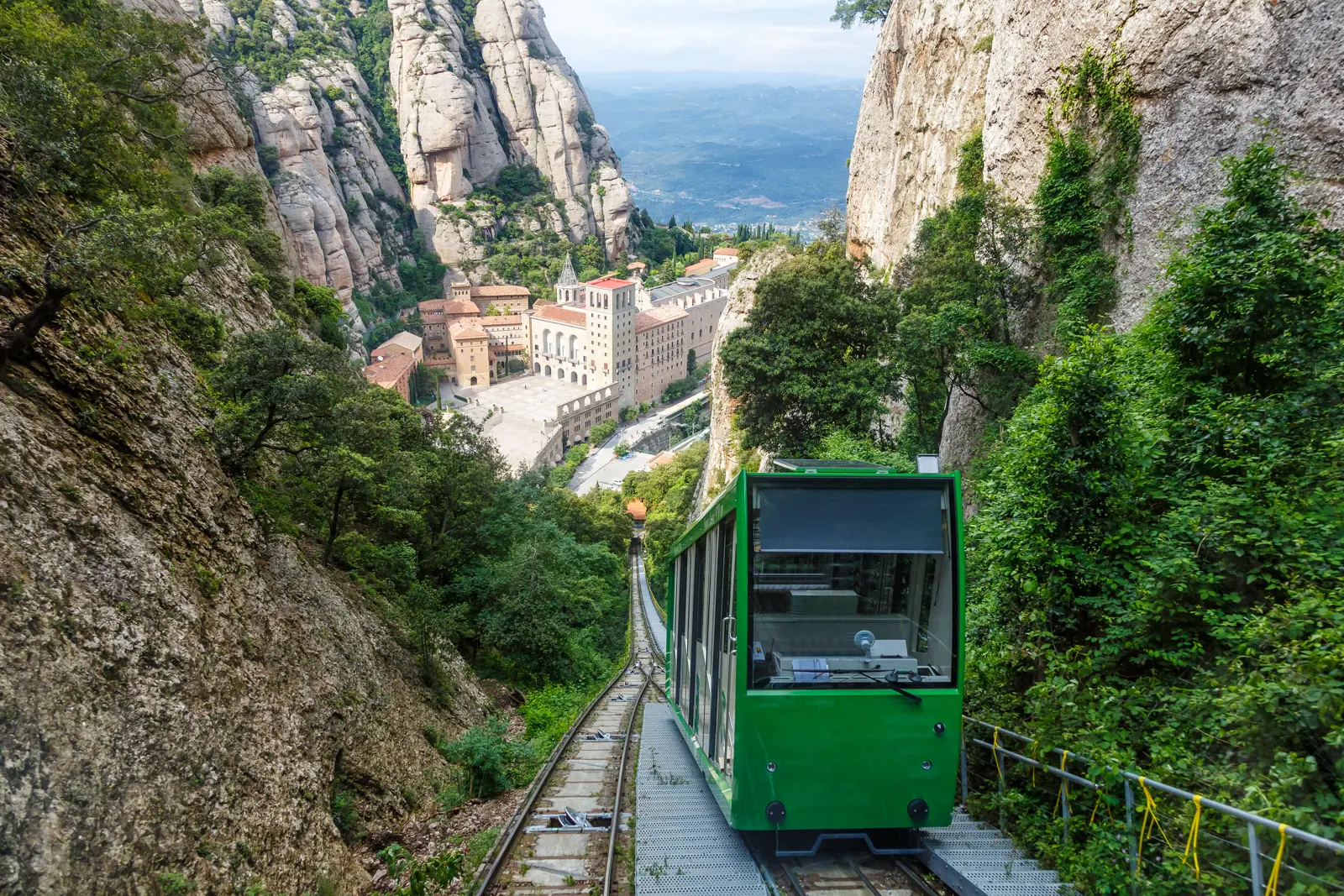
Taking the Funicular de Sant Joan felt like slipping into another world. The tiny glass cabin tilted upward, climbing the mountain in a slow, dramatic sweep, and with every meter the landscape unfurled beneath me like a painted tapestry. The monastery soon became a small cluster of stone far below, and the cliffs rose around the funicular car like ancient guardians of the mountain.
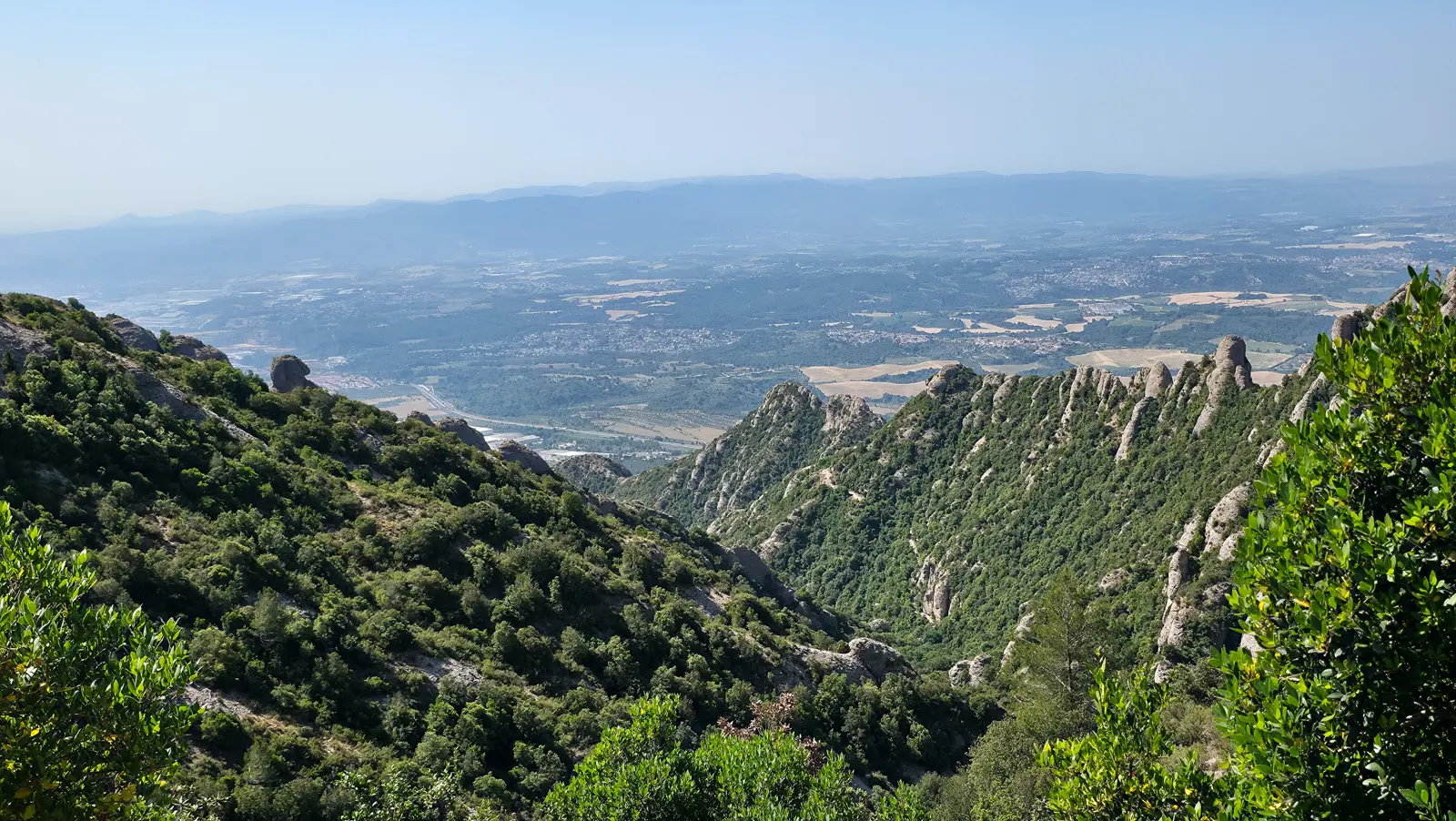
When I stepped out at the top, the air felt clearer, cooler, almost charged with stillness. The views opened in every direction – ridges, valleys, tiny towns scattered like confetti, and the blue haze of the horizon stretching endlessly. I followed one of the walking paths that hug the cliffs, winding past wild shrubs and limestone formations carved by centuries of sun and wind. At every turn, the view shifted: dramatic peaks cutting into the sky, the quiet folds of the valley below, the occasional hermitage tucked into rock. It’s the kind of walk that calms your thoughts without you even trying – made of sunlight, silence, and the soft crunch of gravel beneath your feet.
Moments That Stay With You
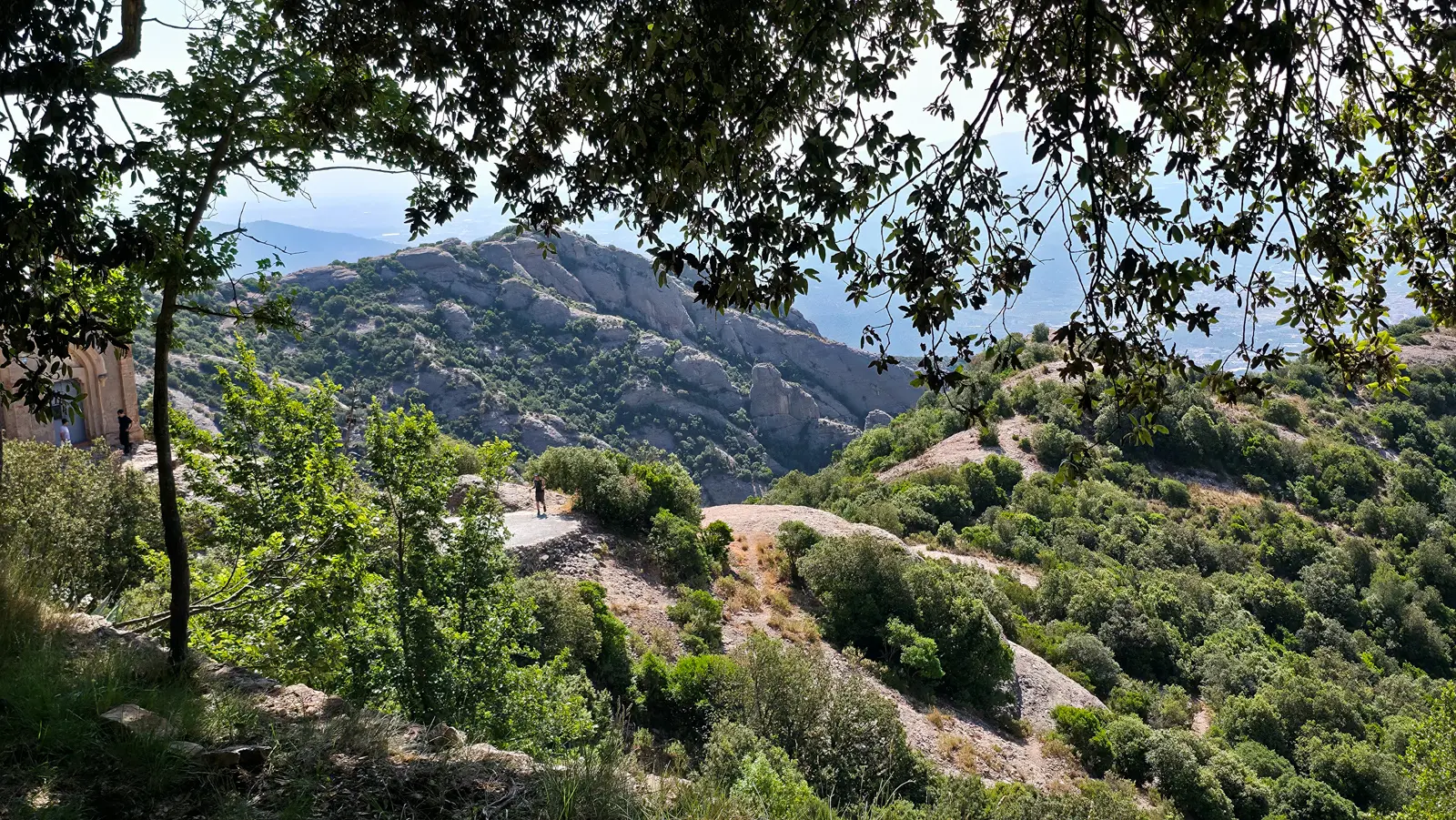
There was a moment – a small, quiet one – when I stopped along the path and simply stood still. The sun warmed my shoulders, a breeze curled around me, and the valley stretched out in a patchwork of greens and golds far below. Everything felt both impossibly wide and deeply intimate. I could hear nothing but the wind and distant ringing from the monastery bells, and for a few seconds, the world felt suspended. That view, that silence, that feeling of being held between sky and stone… it’s the kind of moment you carry with you long after you’ve left. Montserrat has that effect: it gives you clarity without asking for anything in return. It reminds you how beautiful stillness can be, how vast the world truly is, and how lucky we are to stand in places that invite us to look inward as much as outward.
Bubbly Tips
- How to Get There: Take the R5 train from Plaça Espanya, then choose either the cable car (Aeri) or the rack railway (Cremallera). Both are scenic, but the cable car is breathtaking.
- For the Best Views: Ride the Funicular de Sant Joan to the upper viewpoints.
- Best Time to Visit: Late morning or early afternoon for warm light and quieter trails.
- What to Wear: Comfortable shoes. You’ll want to wander, trust me.
- Inside the Basilica: Go slowly. Sit for a moment. Let the atmosphere settle in.
- Photo Spots: Just outside the funicular station, the terrace near the monastery entrance, and any viewpoint along the marked trails.
Final Thoughts
Montserrat isn’t just a day trip. It’s a pause, a breath, a reminder that beauty and peace sometimes live just above the clouds. Whether you’re traveling for culture, for nature, or for those quiet moments that make you feel something, Montserrat offers all of it… wrapped in sunlight, stone, and stillness.
And here’s the best part: once you’ve visited once, a part of you will always want to go back!
Have you visited Montserrat? What moved you the most: the views, the monastery, the walk, or the Black Madonna? Share your thoughts below 💛

🌟 Everything You Need to Plan Your Dream Trip in 2026
- 🌟 Luxury Hotels - Find premium stays with Booking.com & Hotels.com
- 🏡 Vacation Rentals - Discover unique properties on VRBO
- 🏞️ Guided Tours - Explore with Viator or GetYourGuide
- 🎫 Attraction Tickets - Skip the lines with Tiqets
- 🚢 Ocean Cruises - Set sail with Cruise Direct
- 📱 International SIMs - Stay connected with Saily
- 🚗 Car Rentals - Budget-friendly options from Discover Cars
- 🌐 Secure VPNs - Browse safely with NordVPN
- 💶 Currency Exchange - Best rates with Wise
- 🗣️ Learn Languages - Master the local language with Babbel and Rosetta Stone