
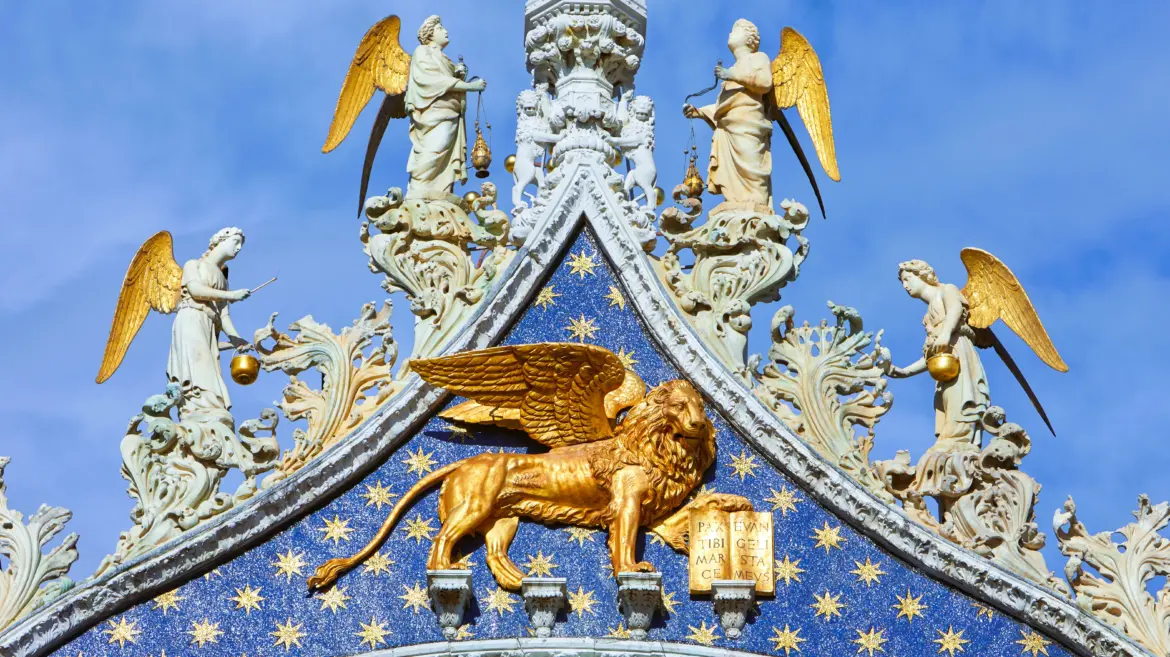
Ciao, lovely travelers! In Venice, beauty is never accidental, and symbolism is never decorative. As you wander through narrow alleyways, cross bridges, and pause along the lagoon, one figure quietly repeats itself: a winged lion, carved in stone, lifted on columns, etched into façades, and weathered by centuries of wind and salt. At first glance, the lion feels emblematic. With time, it becomes instructive. And eventually, it becomes essential.
The Lion of Venice is not a motif chosen for aesthetics alone. It is the visual language of the Venetian Republic – a symbol that communicates faith, authority, law, resilience, and continuity. To truly understand Venice, you must understand why the lion is everywhere, and what it was meant to say.
What Is the Lion of Venice?
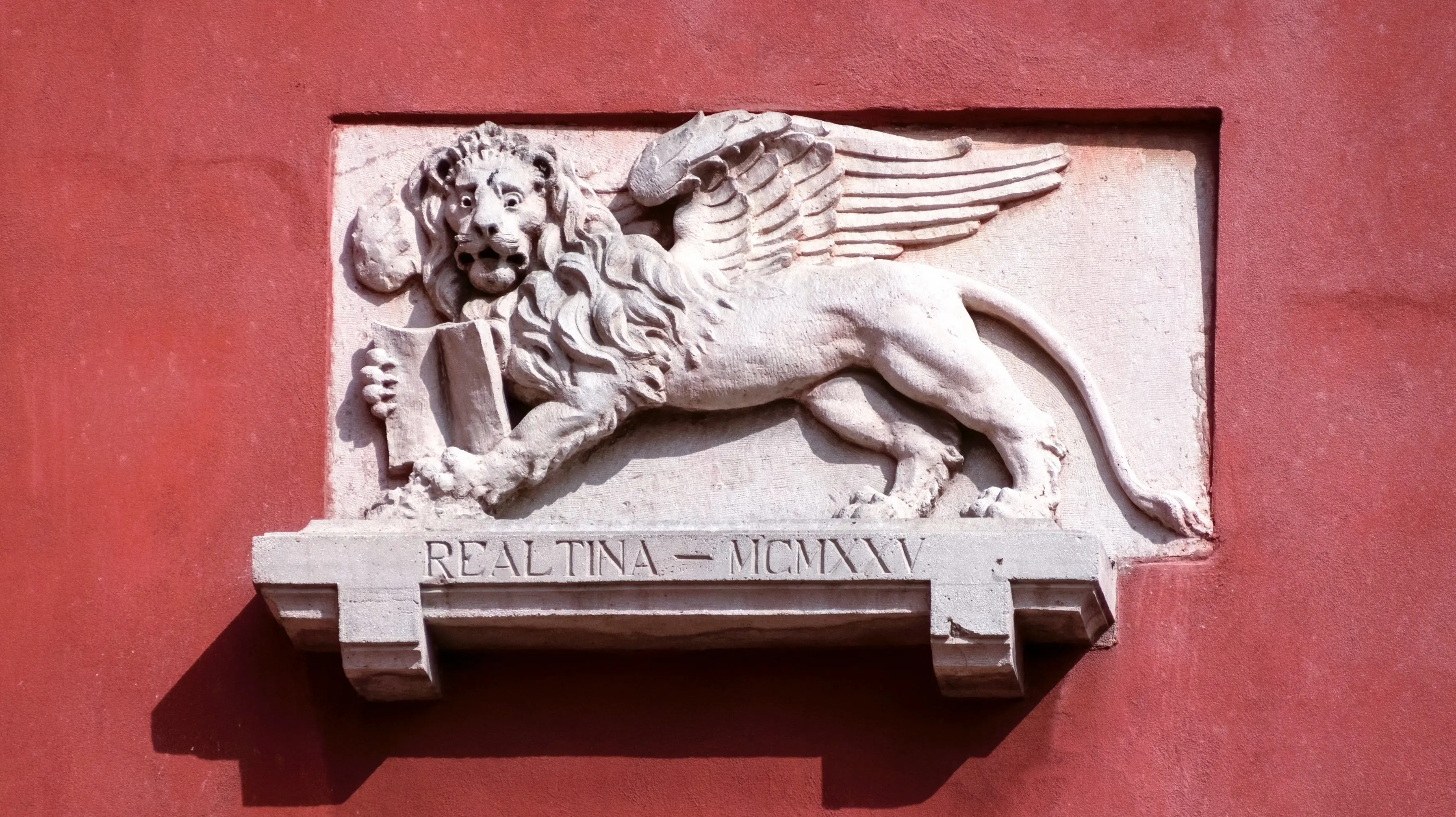
The Lion of Venice is the winged lion symbol of Saint Mark the Evangelist, patron saint of Venice and emblem of the Venetian Republic. Appearing throughout the city on columns, façades, flags, and sculptures, the lion typically holds a book inscribed “Pax tibi Marce, evangelista meus” (“Peace be with you, Mark, my evangelist”). An open book signifies peace and lawful governance; a closed book indicates wartime vigilance. The wings represent the divine nature of Saint Mark’s Gospel and Venice’s far-reaching maritime power.
The Lion of Saint Mark: A Symbol Rooted in Faith and Politics
The Venetian lion represents Saint Mark, the patron saint of Venice and one of the four Evangelists. In Christian iconography, each Evangelist is associated with a symbolic creature, and Saint Mark’s is the lion – a reference to strength, vigilance, and the “voice crying out in the wilderness” at the beginning of his Gospel.
According to Venetian tradition, Saint Mark’s relics were smuggled from Alexandria to Venice in 828 AD by Venetian merchants. This act was both spiritual and strategic. By claiming Saint Mark as its patron, Venice aligned itself with apostolic authority, elevating its status among Christian powers and reinforcing its independence from both the Byzantine Empire and the Holy Roman Empire. From that moment forward, the lion of Saint Mark became inseparable from Venice itself. It appeared on flags, coins, seals, ships, public buildings, and fortifications. The lion was no longer only a religious symbol, it was the emblem of the state.
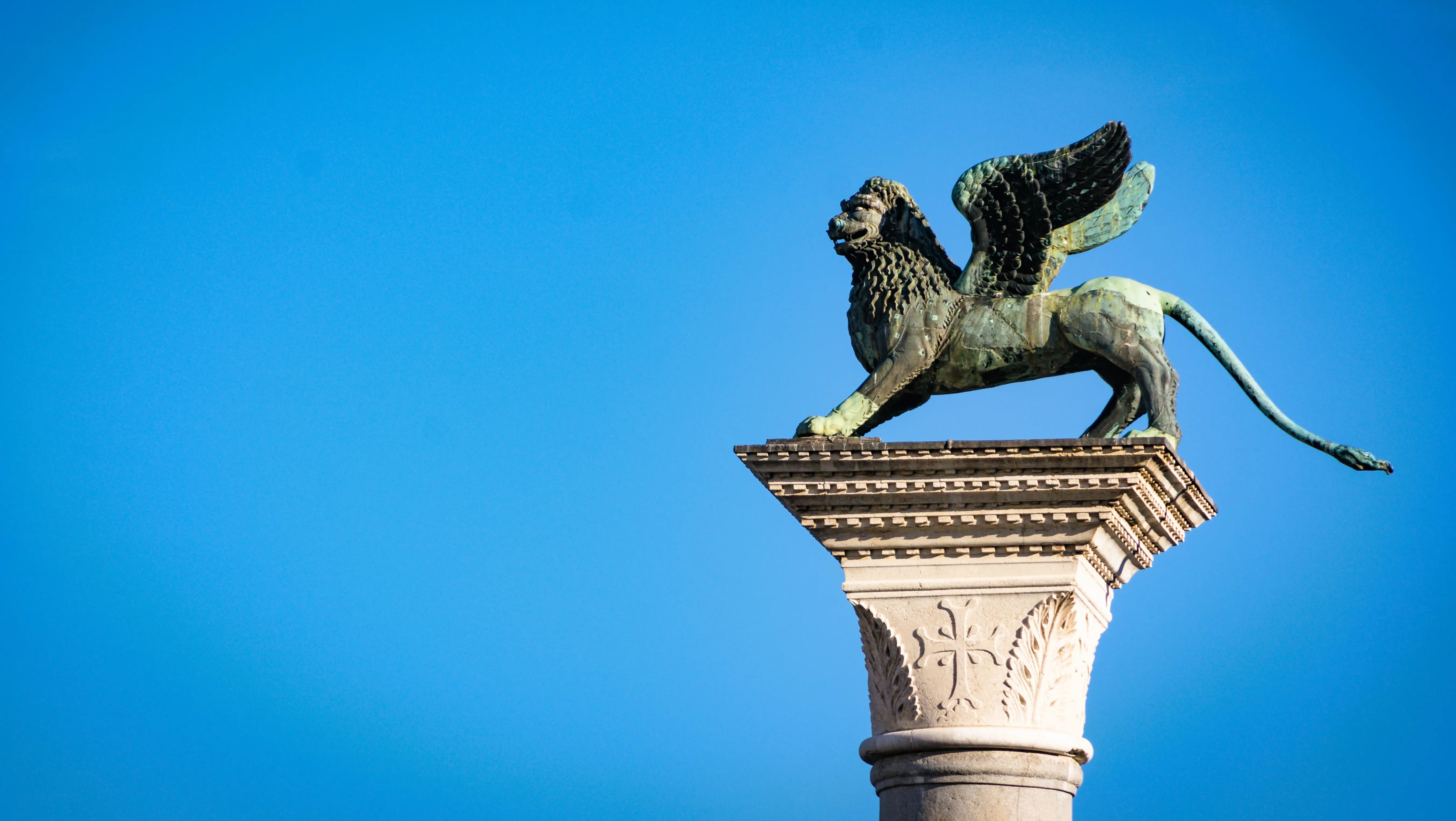
Why the Lion Has Wings – And Why That Matters
The wings of the Venetian lion are not decorative embellishments. They signify the divine nature of the Gospel of Saint Mark, truth carried across land and sea. In a maritime republic built on trade, diplomacy, and navigation, this symbolism was especially powerful. The winged lion communicates movement and reach. It suggests that Venice’s influence extends beyond its physical borders – across the Adriatic, into the Mediterranean, and toward distant ports and cultures. Importantly, the lion is almost always depicted calm and controlled, not mid-roar or in attack. This restraint reflects how Venice saw itself: powerful, disciplined, and governed by order rather than impulse.
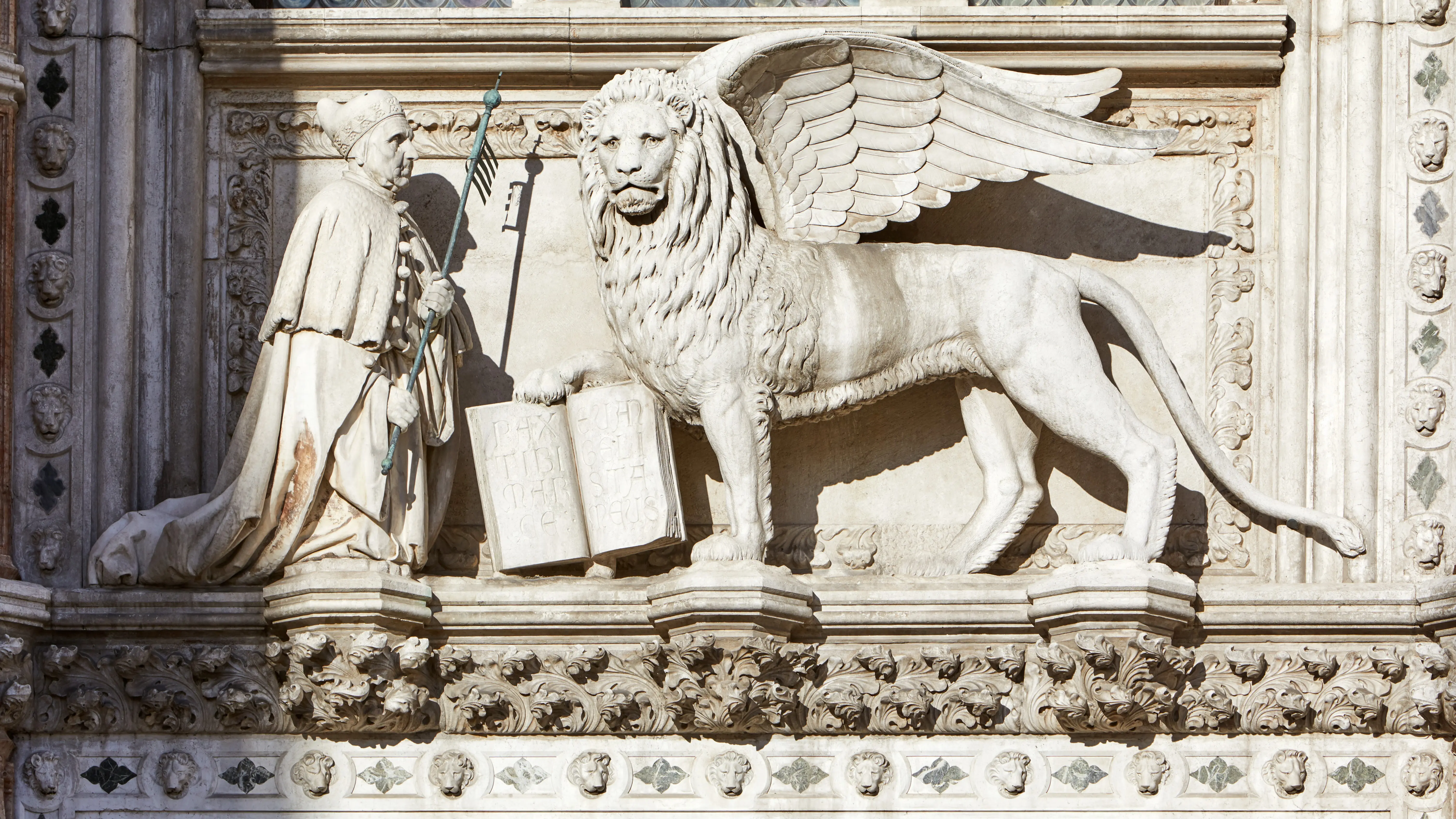
The Book and the Sword: Peace, Law, and Authority
One of the most important details to notice when observing a Venetian lion is what it holds.
- An open book usually signifies peace, justice, and lawful governance. The inscription “Pax tibi Marce, evangelista meus” (“Peace be with you, Mark, my evangelist”) reinforces Venice’s claim to legitimacy and moral authority.
- A closed book signals vigilance and readiness, often appearing during times of war or on military fortifications. Sometimes accompanied by a sword, it indicates that while Venice preferred diplomacy and law, it would defend itself when necessary.
This dual imagery reflects the republic’s political philosophy. Venice governed itself through councils, statutes, and legal frameworks long before many European states. The lion symbolized not unchecked power, but power restrained by law.
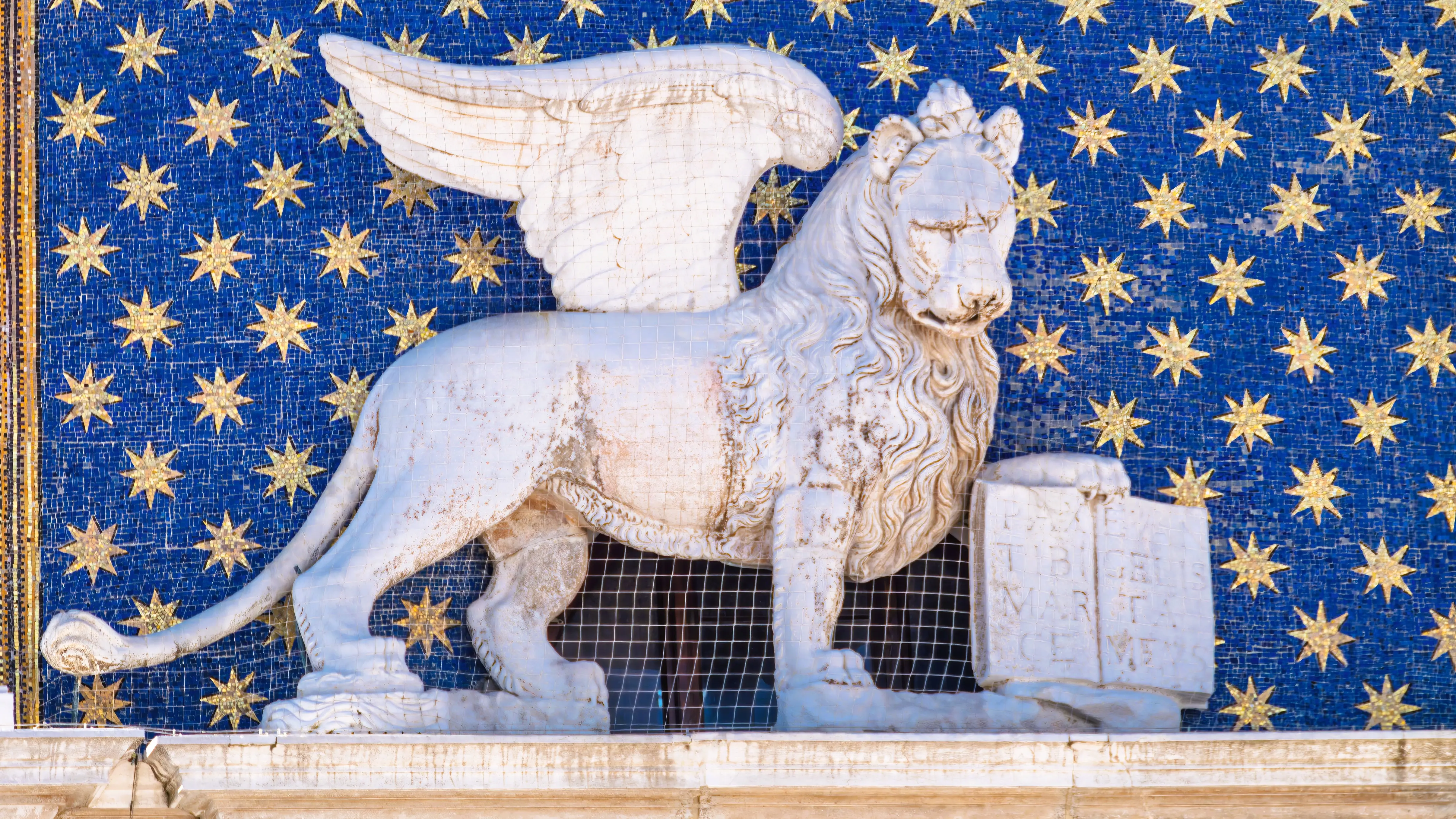
The Lion in the Cityscape: Reading Venice Through Stone
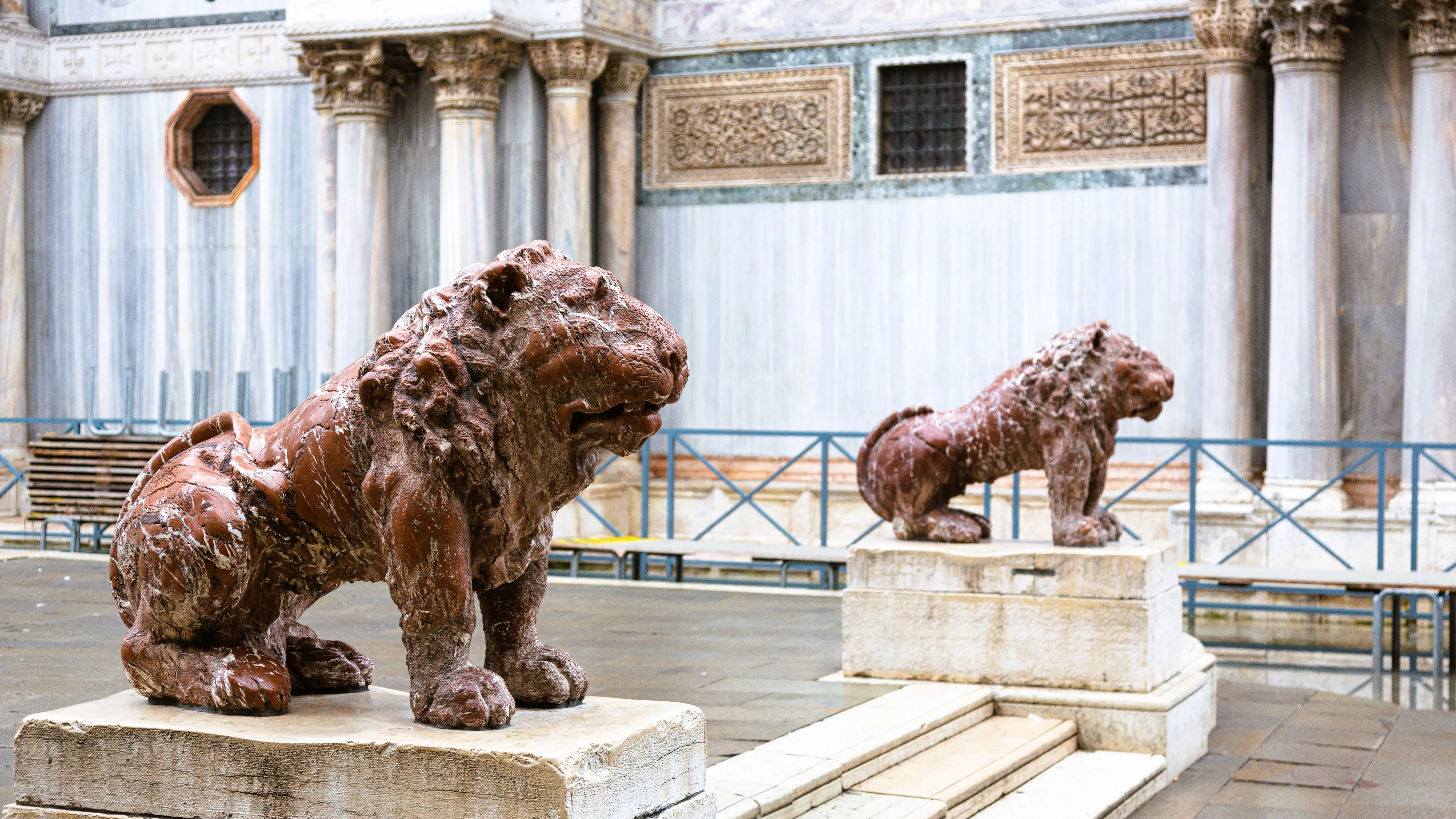
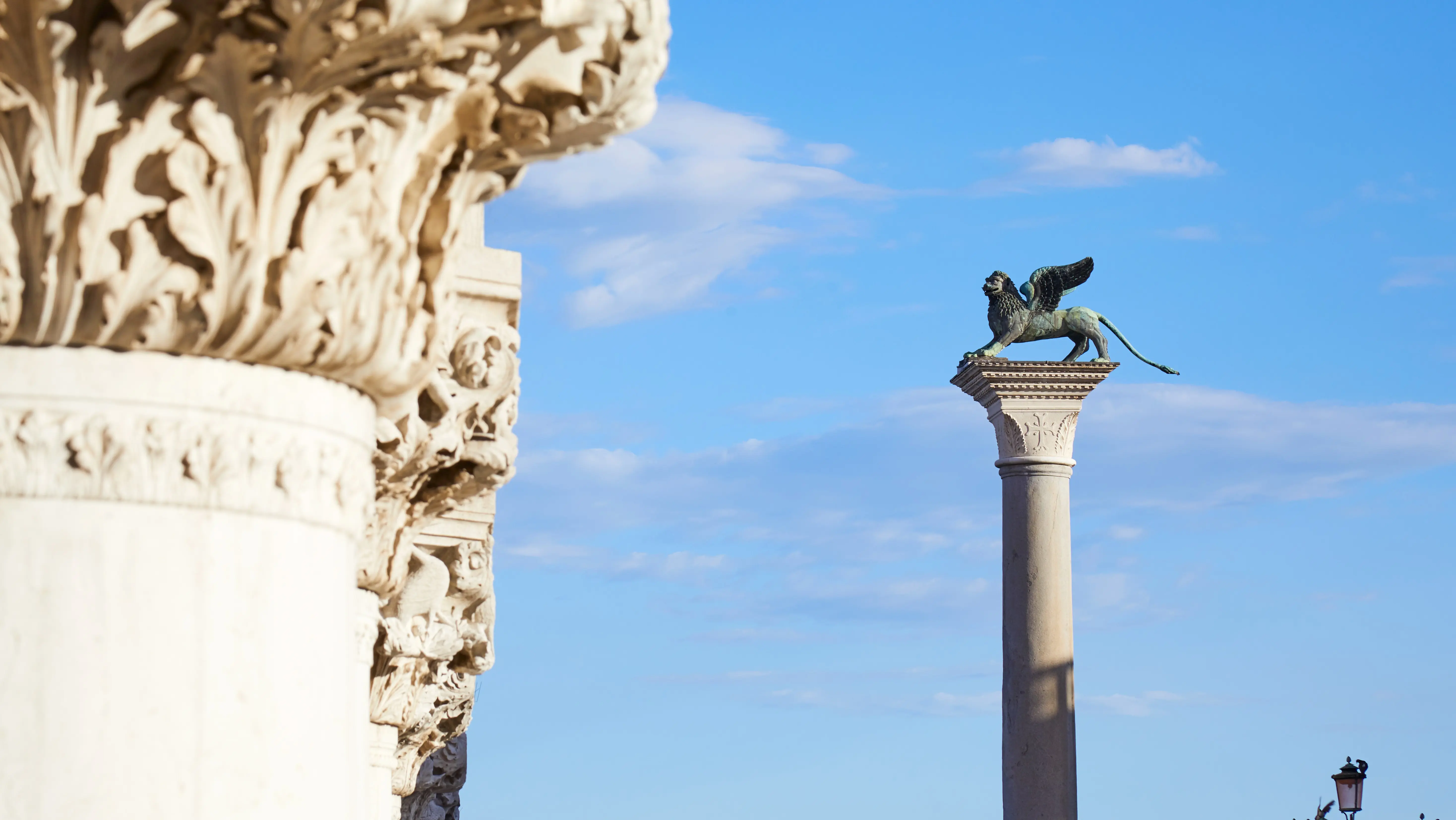
In Venice, lions appear at every scale. Some are monumental – crowning columns in Piazzetta San Marco or guarding major civic buildings. Others are intimate and almost hidden: small reliefs embedded in façades, worn carvings above doorways, fragments softened by centuries of exposure to salt air and time. Each lion tells a story. Subtle differences in posture, facial expression, wing placement, and the objects held – a closed book, an open Gospel, a sword – reflect the era in which the image was created and the message it was meant to convey. Learning to notice these lions becomes a way of reading Venice itself: its political shifts, its moments of confidence and crisis, and its enduring sense of identity carved directly into stone.
After the Fall of the Republic: Why the Lion Endures
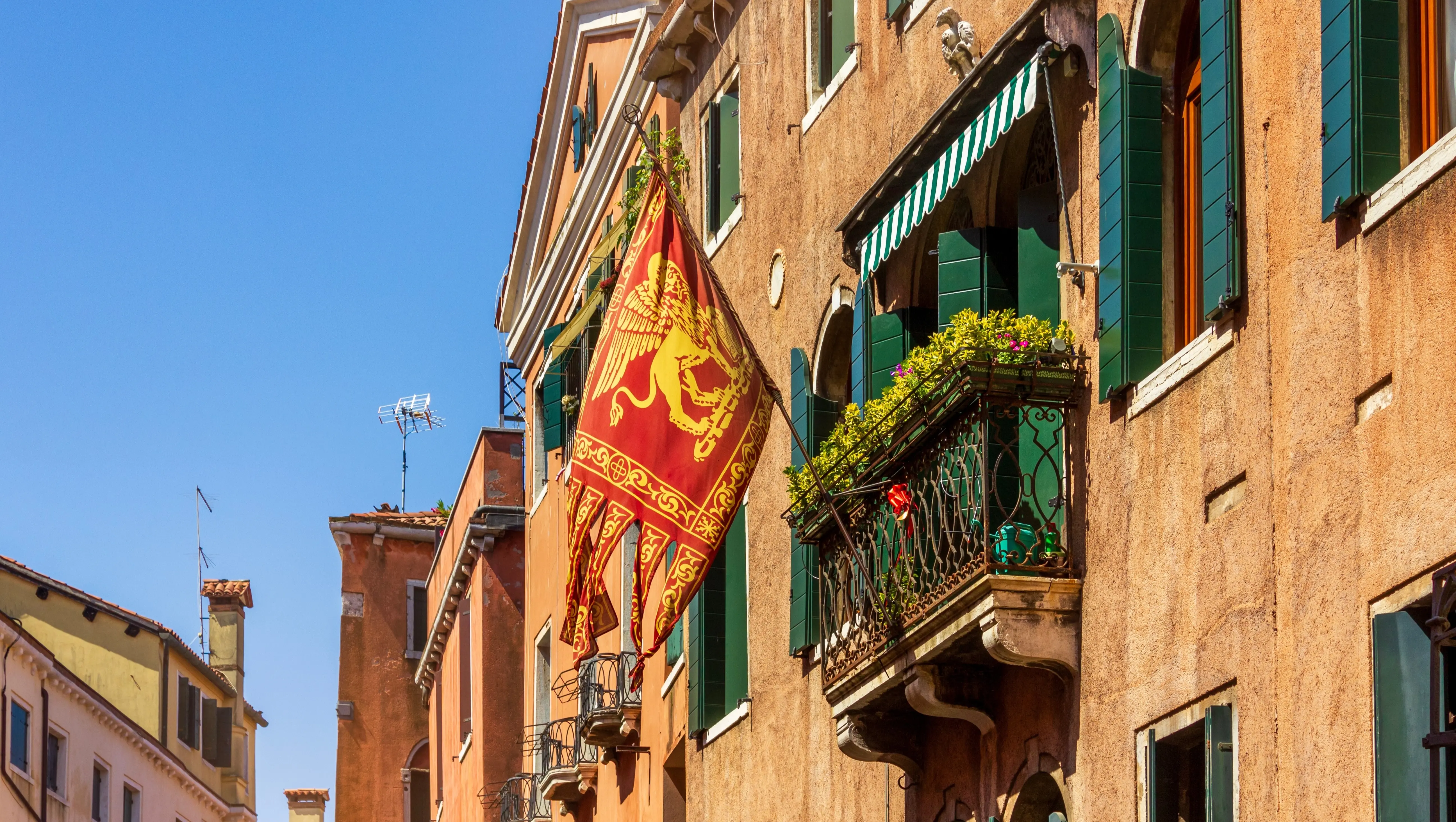
When the Venetian Republic fell in 1797, ending more than a thousand years of independence, the political entity of Venice disappeared almost overnight. Napoleon entered the city. Power shifted. Borders were redrawn, and the republic that had once commanded trade routes and diplomacy across the Mediterranean ceased to exist. Yet the Lion of Saint Mark remained. Over centuries of occupation, change, and reinvention, the lion endured not as a symbol of empire, but as a marker of identity. Today, it appears on Venice’s flag, in careful restoration projects, carved into public buildings, and quietly embedded in the city’s collective memory. In a place constantly balancing preservation, tourism, and modern life, the lion stands for continuity, a reminder that Venice adapts without erasing itself, and endures without becoming frozen in time.
Why the Lion of Venice Stays with You
The Lion of Venice stays with you because it reveals itself slowly, through repetition rather than spectacle. It does not demand attention; it rewards observation. Long after palaces, canals, and façades begin to blur together, you remember the lion carved above a quiet doorway, etched into weathered stone, or standing silhouetted against the sky near the lagoon. Over time, these encounters shift your understanding of the city. You begin to see that Venice is defined not only by beauty, but by intention – by a careful, centuries-long awareness of how symbols communicate power, faith, continuity, and memory. The lion becomes a guide, teaching you to read Venice as a narrative written across time rather than a collection of isolated sights. It reminds you that cities, like people, are shaped as much by what they choose to represent as by what they build – and that meaning, once noticed, tends to stay.
Bubbly Tips: Spotting the Lion of Venice Like a Local
- Look closely at the book: An open book typically signals peace and justice; a closed book often reflects wartime authority or political tension
- Scan above eye level: Many lions are positioned high on façades, columns, and corners – symbols meant to watch over the city
- Notice variation: No two lions are exactly alike; differences in wings, posture, and expression reflect the era, purpose, and location of their creation
- Follow the geography: Lions frequently appear near former administrative buildings, maritime gateways, and trade routes tied to the Venetian Republic
- Check the material: Lions carved in stone, cast in bronze, or rendered in mosaic each signal different periods and civic intentions
- Observe condition: Weathered or partially erased lions often mark moments of political upheaval, including occupations after 1797
- Slow your pace: The most meaningful lions are often the quietest – embedded in residential streets rather than grand squares
Final Thoughts
In Venice, symbolism is architecture. History is visual. And the lion is the key that unlocks both. Once you understand the Lion of Venice, the city speaks differently – with more clarity, more depth, and more purpose. You stop seeing repetition and start seeing continuity.
Have you noticed the lions as you wandered Venice? Or will you start looking for them now? I’d love to hear what caught your eye in the comments section below!

🌟 Everything You Need to Plan Your Dream Trip in 2026
- 🌟 Luxury Hotels - Find premium stays with Booking.com & Hotels.com
- 🏡 Vacation Rentals - Discover unique properties on VRBO
- 🏞️ Guided Tours - Explore with Viator or GetYourGuide
- 🎫 Attraction Tickets - Skip the lines with Tiqets
- 🚢 Ocean Cruises - Set sail with Cruise Direct
- 📱 International SIMs - Stay connected with Saily
- 🚗 Car Rentals - Budget-friendly options from Discover Cars
- 🌐 Secure VPNs - Browse safely with NordVPN
- 💶 Currency Exchange - Best rates with Wise
- 🗣️ Learn Languages - Master the local language with Babbel and Rosetta Stone