
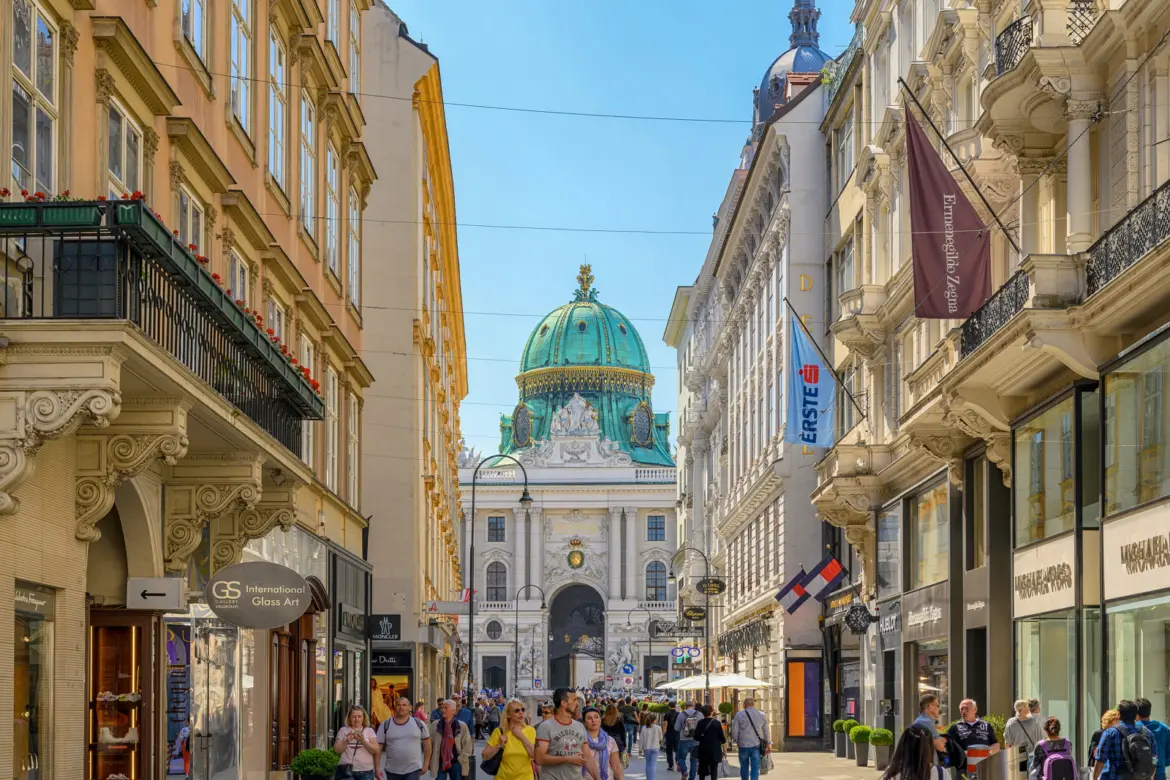
There are streets you walk through, and others you experience. Kohlmarkt in Vienna is unmistakably the latter. From the very first steps, there is a sense of polish and quiet sophistication that defines the space. The façades are immaculate, the storefronts carefully curated, and the rhythm of the street feels measured rather than hurried, creating an atmosphere that is both refined and inviting. It is a place where every detail appears intentional, where elegance is not imposed but naturally present.
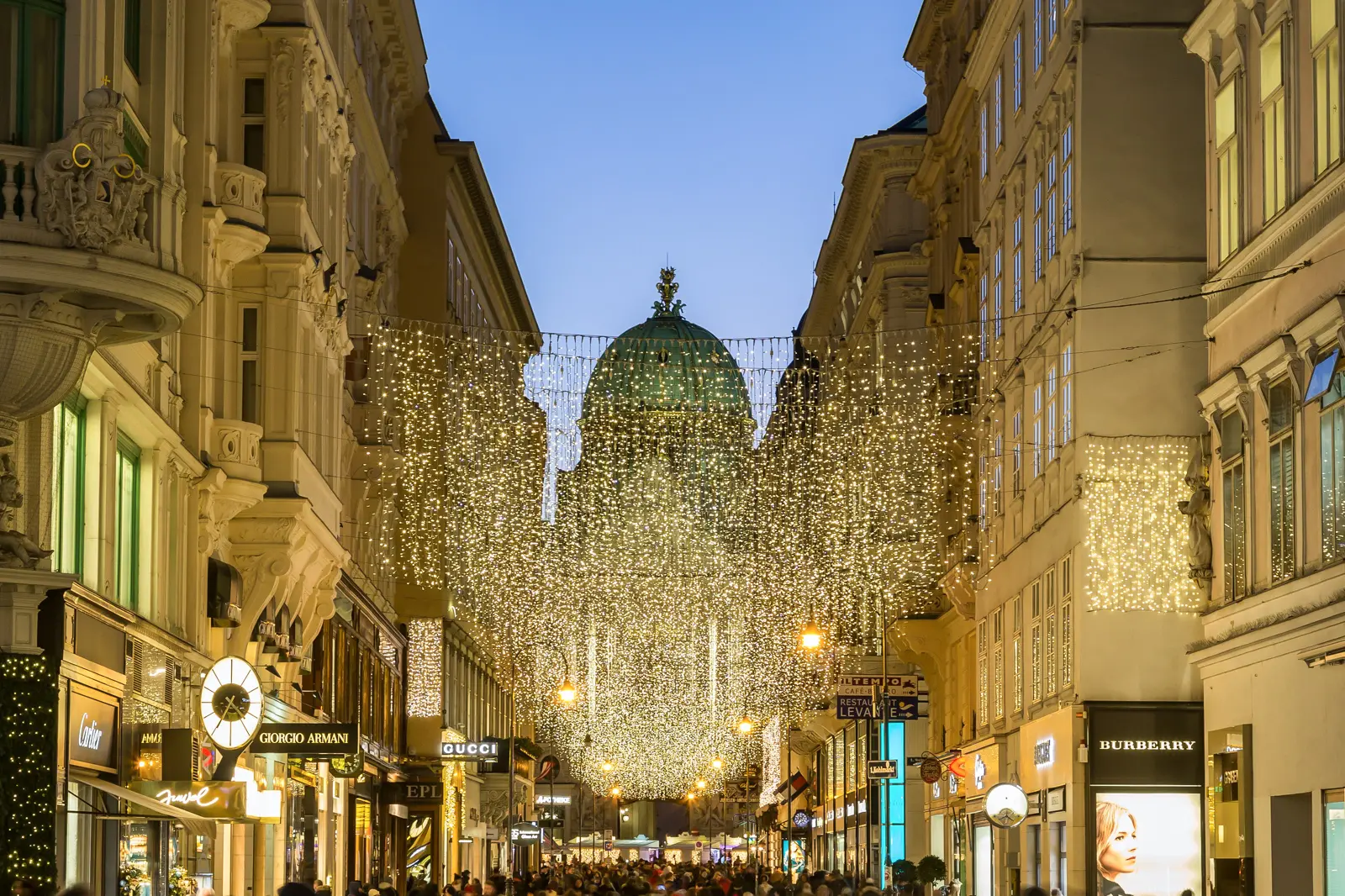
As you move forward, the perspective gradually reveals itself. The street unfolds in a clean, linear composition, drawing the eye toward the domed façade of the Hofburg Palace at Michaelerplatz – a powerful architectural presence that anchors the entire axis. This visual endpoint does more than complete the view; it quietly connects the present to Vienna’s imperial past. What appears at first as a modern expression of luxury becomes something more layered: a space shaped by centuries of history, where imperial legacy and contemporary refinement exist in seamless continuity.
Kohlmarkt at a Glance
🏛️ Origins: Rooted in the area of Roman Vindobona — evolved from charcoal market to luxury address
👑 Axis: Leads directly to the Hofburg Palace dome at Michaelerplatz
🍰 Demel: Imperial confectioner since 1786 — pastries, cakes, and Viennese sweet heritage
🛍️ Character: International luxury houses in harmony with historic Habsburg architecture
🔗 Connects to: Graben, Hofburg Palace, Michaelerplatz, Albertina Museum
✨ Holiday season: Delicate festive lights stretching the full length of the street
💡 Tip: Visit morning for quiet detail, evening for warm light and storefront reflections
A Street Shaped by Imperial History
Kohlmarkt is one of Vienna’s oldest and most historically significant streets, with roots that can be traced back to the early development of the city around Vindobona, the Roman military settlement that once stood here. While the street itself evolved over time rather than remaining a direct continuation of a Roman route, its location reflects the layered growth of Vienna from antiquity into a major imperial capital. Over the centuries, it became an important commercial artery, gradually shifting from a place of everyday trade to one of increasing refinement and prestige.
Its proximity to the Hofburg Palace ultimately defined its character. As the residence of the Habsburgs, the Hofburg attracted nobility, skilled artisans, and merchants whose work catered to the tastes of the imperial court. Kohlmarkt, leading directly toward the palace, became a natural setting for luxury goods, fine craftsmanship, and a culture of elegance that still defines it today. Even the name “Kohlmarkt”, originally referring to a charcoal market, reflects this transformation – a shift from practical commerce to one of Vienna’s most prestigious and refined addresses.
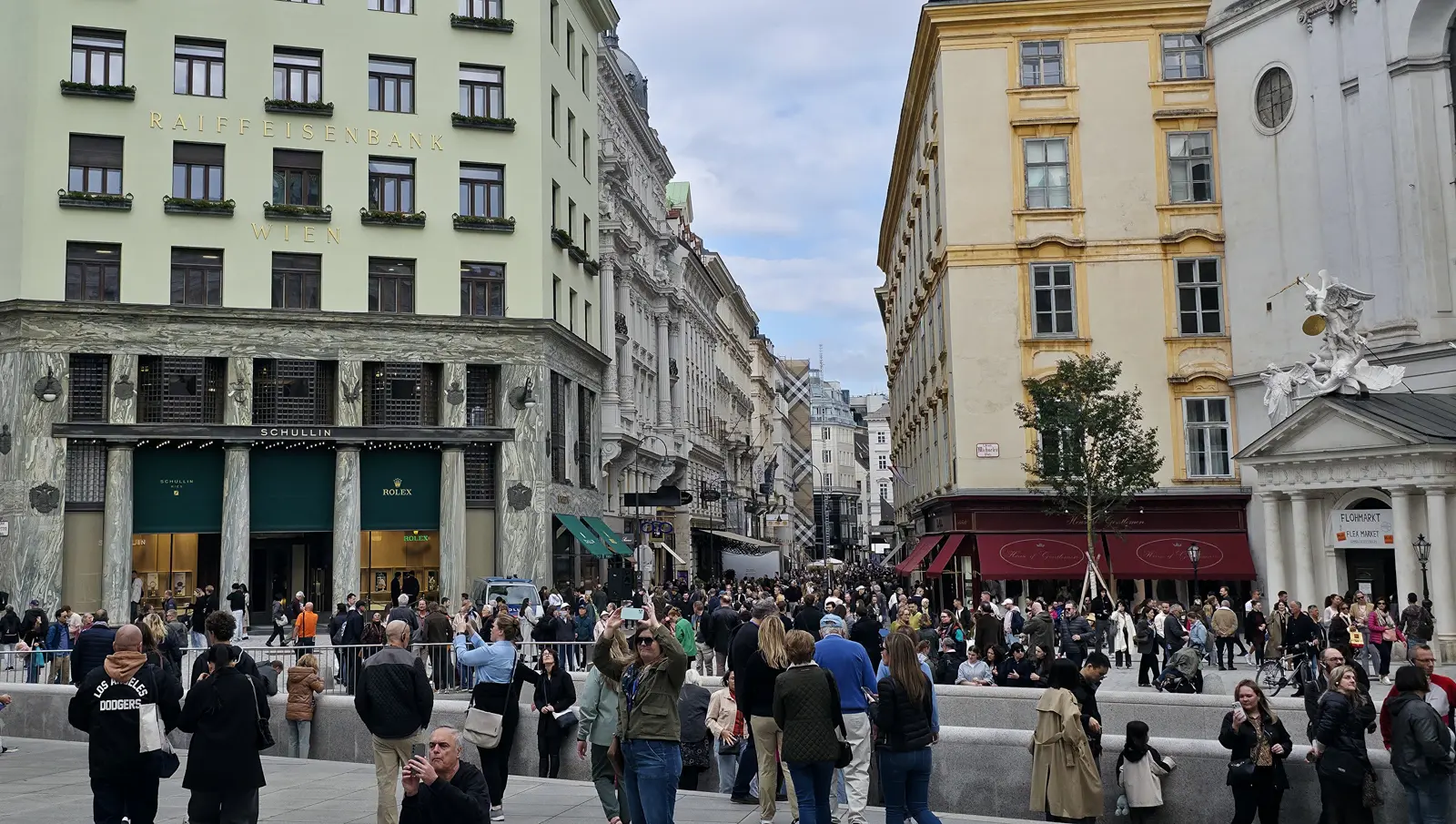
Modern Elegance: Vienna at Its Most Refined
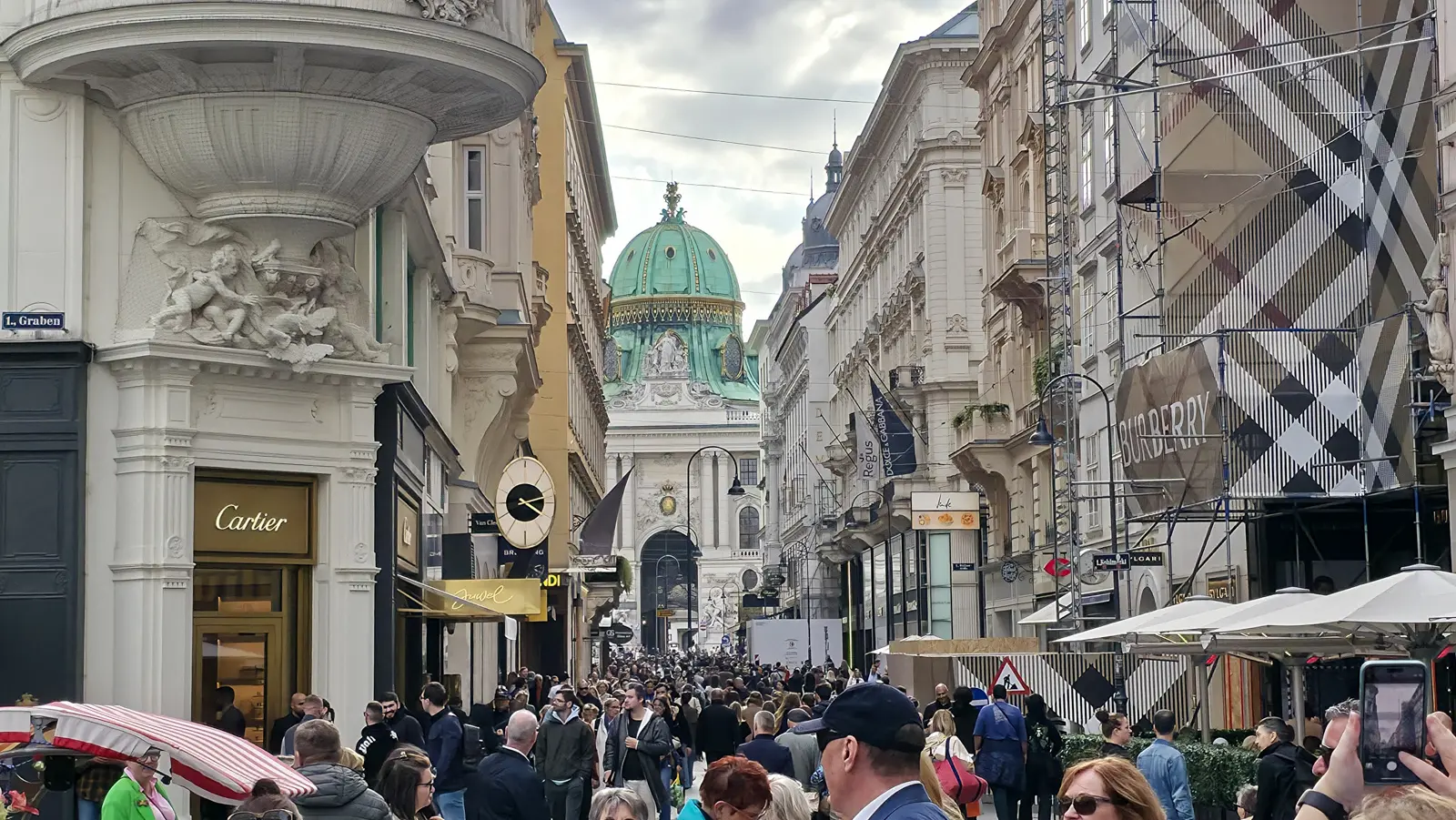
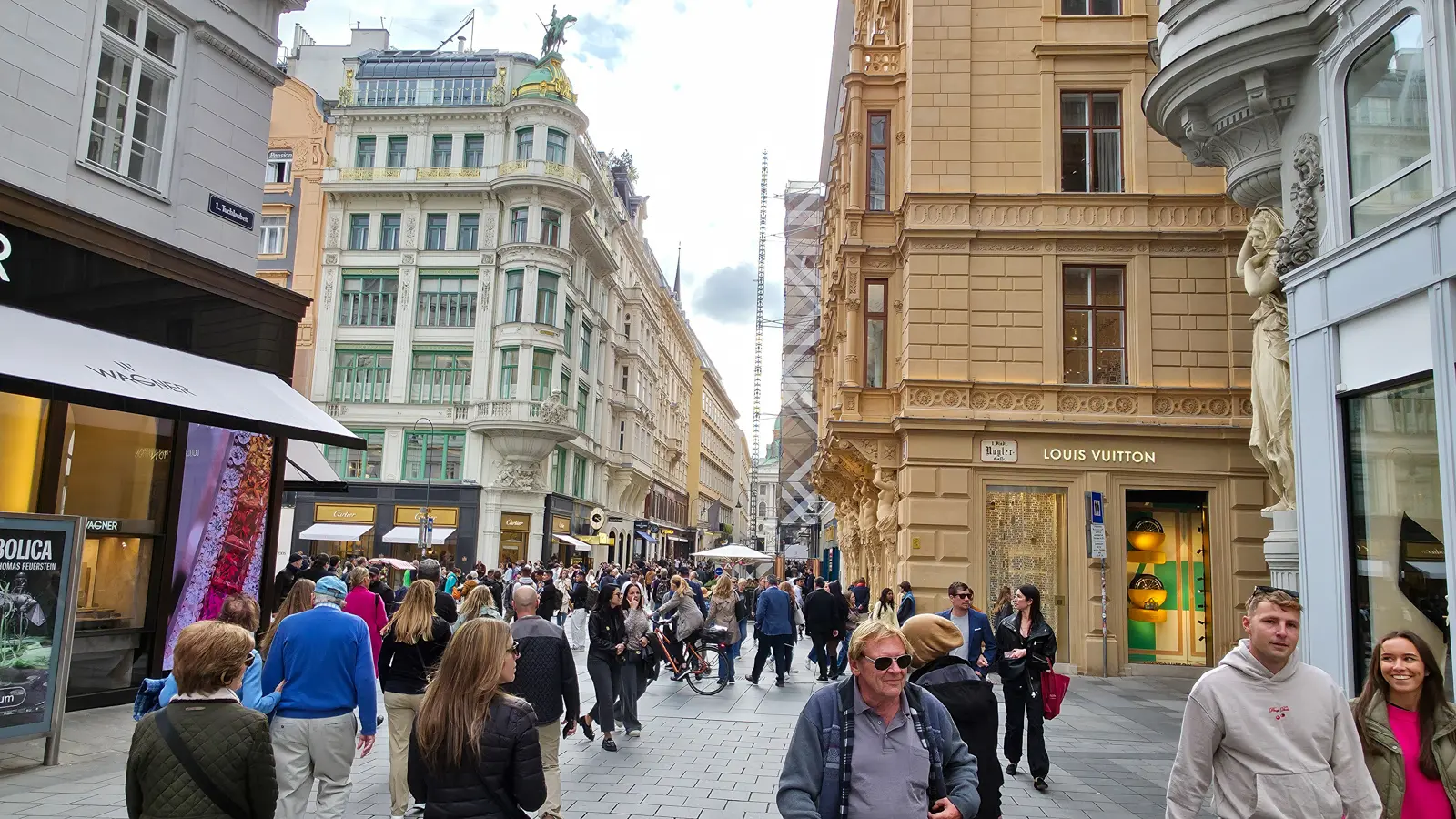
Today, Kohlmarkt represents Vienna at its most polished. International luxury houses line the street – names long associated with craftsmanship, heritage, and design – yet their presence feels remarkably in harmony with the historic architecture that frames them. There is no sense of visual competition here, only continuity, where ornate façades, clean glass storefronts, and carefully composed displays coexist in quiet balance. What defines the street is not simply luxury, but the way it is expressed: with restraint, precision, and a clear sense of intention. Every detail feels considered, from the symmetry of the buildings to the reflections in the windows, creating an atmosphere that is refined without ever becoming overwhelming. Walking along Kohlmarkt becomes less about shopping and more about observation – about noticing textures, light, movement, and the subtle dialogue between imperial heritage and contemporary design that unfolds along its length.
Demel: A Glimpse Into Vienna’s Sweet Heritage
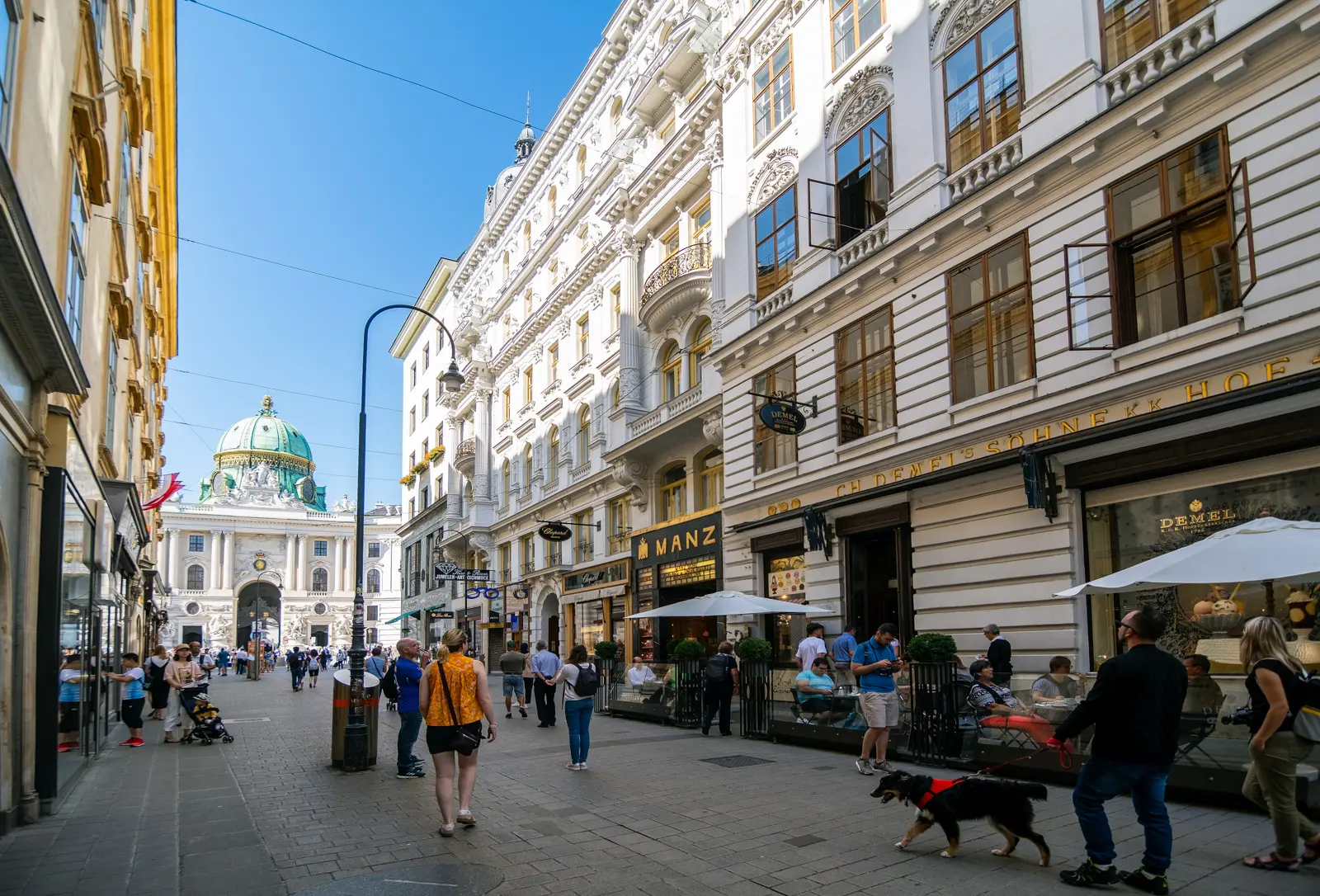
Among the refined façades of Kohlmarkt, one name stands out with particular charm: Demel. Founded in 1786, Demel served as the imperial confectioner to the Habsburg court, creating pastries that became part of Vienna’s culinary identity. Its reputation extends far beyond desserts, it represents a tradition of craftsmanship, precision, and aesthetic beauty that mirrors the city itself.
Even from the outside, Demel draws attention. Its windows offer glimpses into a world of delicate pastries, layered cakes, and artisanal creations that feel almost too refined to disturb. Whether or not you step inside, its presence adds a sensory dimension to the street – a reminder that Vienna’s elegance is not only visual, but also deeply experiential.
The Experience: Perspective, Detail, and Atmosphere
Experiencing Kohlmarkt is as much about perspective as it is about place. Its linear form naturally draws the eye forward, creating a visual corridor that feels both structured and inviting. As you move along the street, the composition gradually unfolds, guiding your gaze toward the domed façade of the Hofburg Palace at Michaelerplatz – a powerful architectural presence that anchors the entire axis. This sense of direction gives the experience a quiet coherence, where movement through the street feels intentional, almost guided, connecting each step to a broader historical and spatial narrative.
There is a rhythm here that reveals itself over time – people strolling, pausing, observing, some moving with purpose while others linger to take in the details. The atmosphere shifts subtly throughout the day, from the soft clarity of morning to the warmer tones of late afternoon, when light reflects gently across façades and glass storefronts. During the holiday season, the street takes on an entirely different character, illuminated with delicate lights that stretch across its length, adding a layer of warmth and quiet magic to its already refined presence. It is not a space that demands attention, but one that rewards it. The more you look, the more you notice: textures, reflections, and the subtle dialogue between imperial heritage and contemporary life that continues to define it.
Connections: At the Heart of Vienna
Kohlmarkt sits at a natural intersection of Vienna’s most significant landmarks, functioning less as a standalone destination and more as a connective thread within the city’s historic core. At one end, the street leads directly toward the domed entrance of the Hofburg Palace at Michaelerplatz, reinforcing its long-standing relationship with imperial power and courtly life. In the opposite direction, it opens seamlessly into Graben, where the rhythm of the city shifts subtly, from curated elegance to a more open, bustling urban flow.
Beyond this linear connection, the surrounding area reveals an even denser network of cultural and architectural landmarks. Just a short walk away, the Albertina Museum introduces a quieter, more contemplative dimension, while nearby streets lead toward spaces like Michaelerplatz, where Roman remains, imperial façades, and modern life intersect. What makes Kohlmarkt particularly compelling is this sense of continuity, the way each space unfolds into the next without interruption. Moving through it, you are not simply visiting a street, but navigating a sequence of interconnected places that together form a cohesive and deeply layered experience of Vienna.
Bubbly Tips: Experiencing Kohlmarkt
To fully enjoy Kohlmarkt in Vienna, take the time to experience it at different moments of the day and from multiple perspectives:
- For a quieter, more reflective atmosphere: Visit in the morning, when the street is calmer and architectural details are easier to appreciate
- For the most beautiful lighting and ambiance: Return in the evening, when Kohlmarkt is bathed in softer, warmer light and storefront reflections become more pronounced
- For the iconic perspective: Take time to look down the full axis toward the domed façade of the Hofburg Palace at Michaelerplatz
- For the visual experience (even without shopping): Pause at the luxury storefronts – their displays are carefully curated and part of the street’s overall aesthetic
- For a taste of Viennese tradition: Stop by Demel – even from the outside, its terrace and windows offer a glimpse into Vienna’s historic café culture
- For a seamless city walk: Continue toward Graben and explore nearby landmarks like the Hofburg Palace to experience Vienna’s historic center as a connected whole
Final Thoughts
Kohlmarkt is more than a luxury street. It is a reflection of Vienna itself – a place where history, design, and everyday life coexist in quiet balance.
It does not overwhelm or demand attention. Instead, it invites you to slow down, to observe, and to appreciate the details that define it. From imperial heritage to modern elegance, every element contributes to a space that feels both timeless and present.
I’d love to hear your thoughts: would you stroll down Kohlmarkt on your next visit to Vienna?
Happy travels!

🌟 Everything You Need to Plan Your Dream Trip in 2026
- 🌟 Luxury Hotels - Find premium stays with Booking.com & Hotels.com
- 🏡 Vacation Rentals - Discover unique properties on VRBO
- 🏞️ Guided Tours - Explore with Viator or GetYourGuide
- 🎫 Attraction Tickets - Skip the lines with Tiqets
- 🚢 Ocean Cruises - Set sail with Cruise Direct
- 📱 International SIMs - Stay connected with Saily
- 🚗 Car Rentals - Budget-friendly options from Discover Cars
- 🌐 Secure VPNs - Browse safely with NordVPN
- 💶 Currency Exchange - Best rates with Wise
- 🗣️ Learn Languages - Master the local language with Babbel and Rosetta Stone