
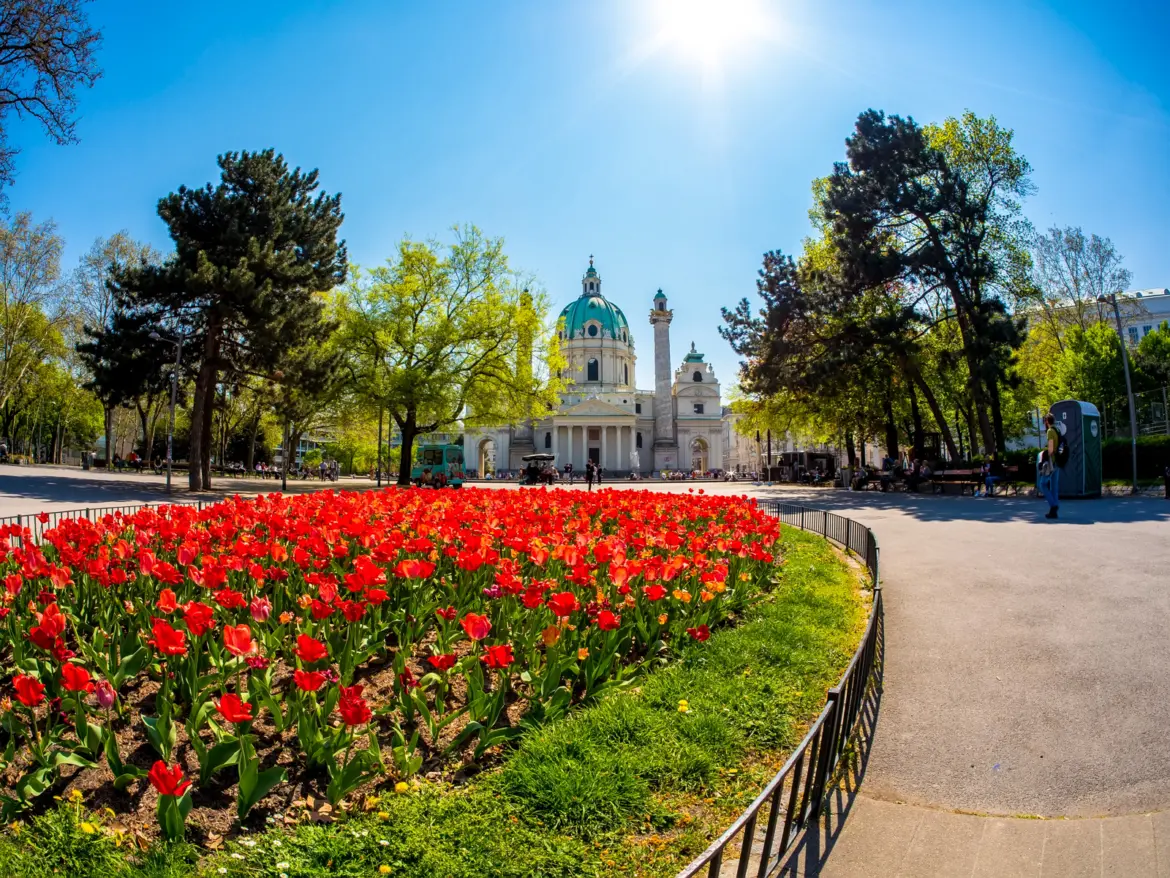
Hello, fellow travelers! Some places in Vienna announce themselves with grandeur. Karlsplatz does something quieter – it creates space. Set just beyond the Inner City, Karlsplatz feels less like a destination you arrive at and more like a place you gradually enter, noticing only afterward how much lighter everything feels. The square opens wide, the sky stretches, water reflects the architecture, and the pace of the city softens almost instinctively. Karlsplatz is not designed to impress in a single glance. It reveals itself through movement – through walking, pausing, sitting, and watching Vienna live around you.
Karlsplatz at a Glance
📍 Location: Between the 1st and 4th districts, central Vienna, Austria
🏛️ Key Landmarks: Karlskirche, Secession Building, Musikverein, Henry Moore’s Hill Arches
💧 Defining Feature: Reflecting pool stretching toward Karlskirche
🎨 Architectural Layers: Baroque, Art Nouveau, and modern design coexisting in one square
🌿 Atmosphere: Open, unhurried, lived-in — a space for sitting, walking, and observing
💡 Tip: Cross it once, then come back and sit — Karlsplatz rewards the second visit
A Square Shaped by Change
Karlsplatz occupies ground that once served as defensive space outside Vienna’s old fortifications. When the city dismantled its walls and reimagined itself in the 19th century, this area became part of a broader vision: openness instead of enclosure, access instead of separation. That history matters. Karlsplatz was never meant to be monumental in the traditional sense. It was conceived as a civic threshold, a place where the city could breathe. Even today, the square resists being overly programmed. It remains open, flexible, and human-scaled – a rare quality in major European capitals.
Water, Light, and Breathing Room
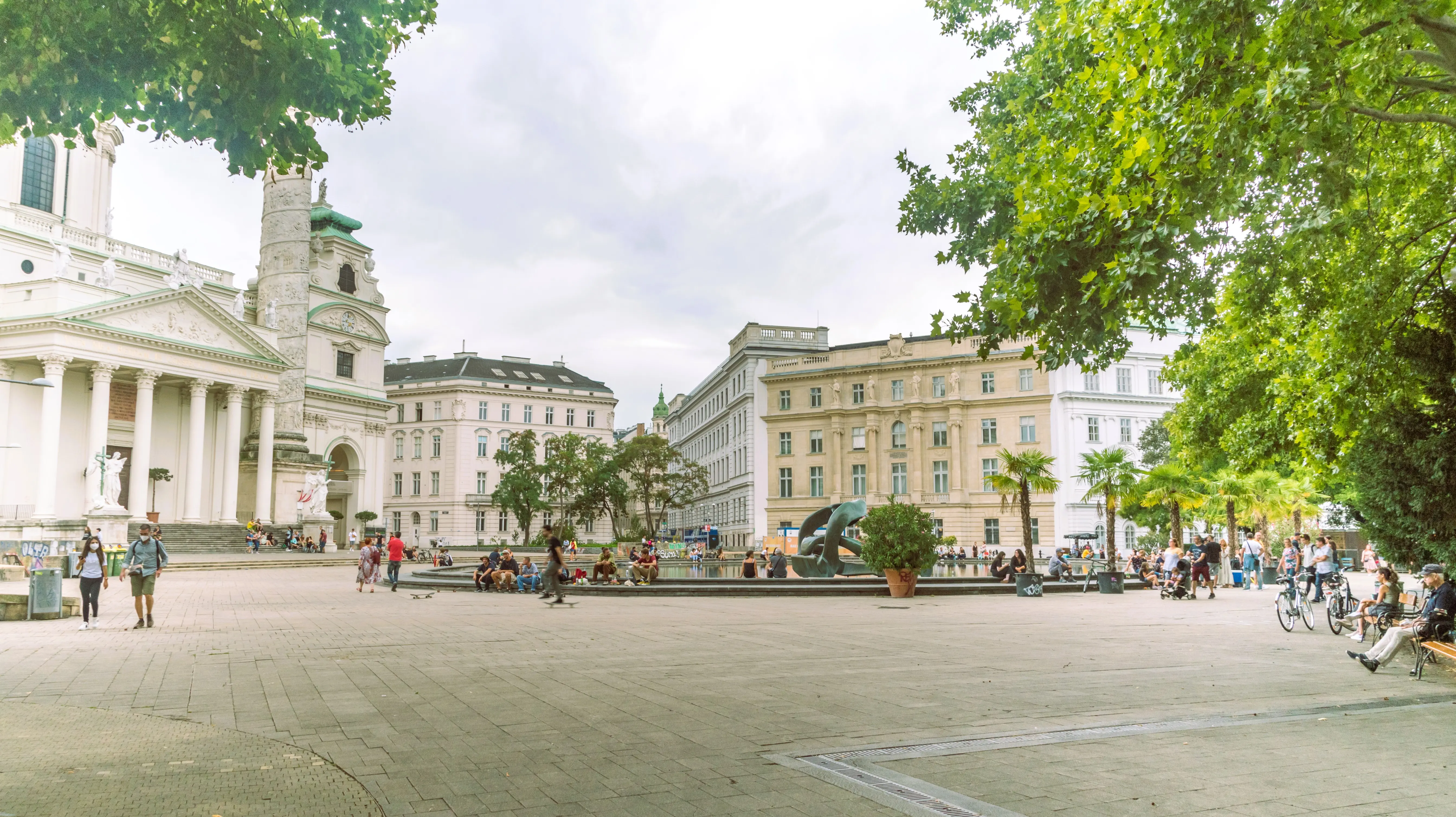
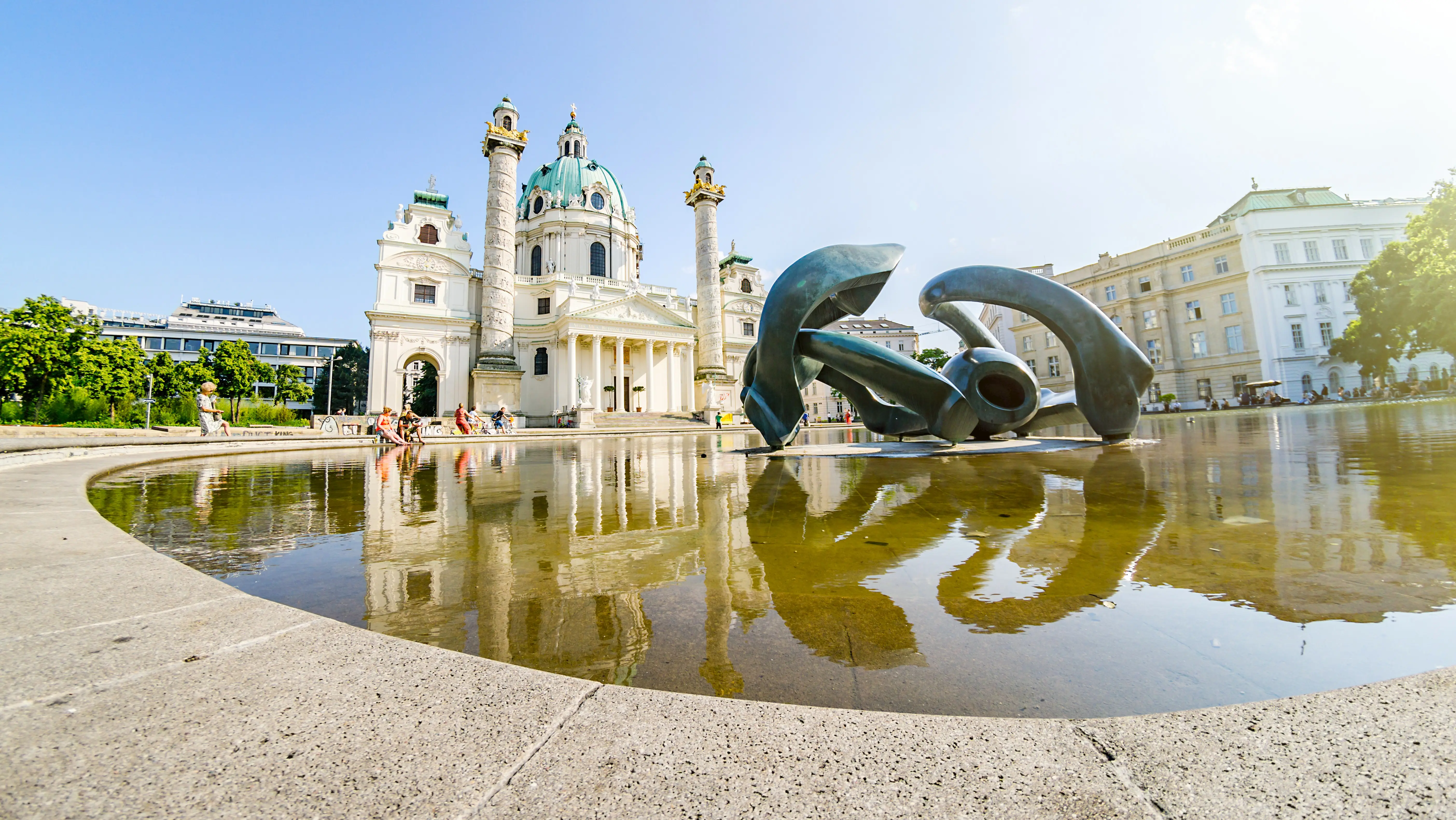
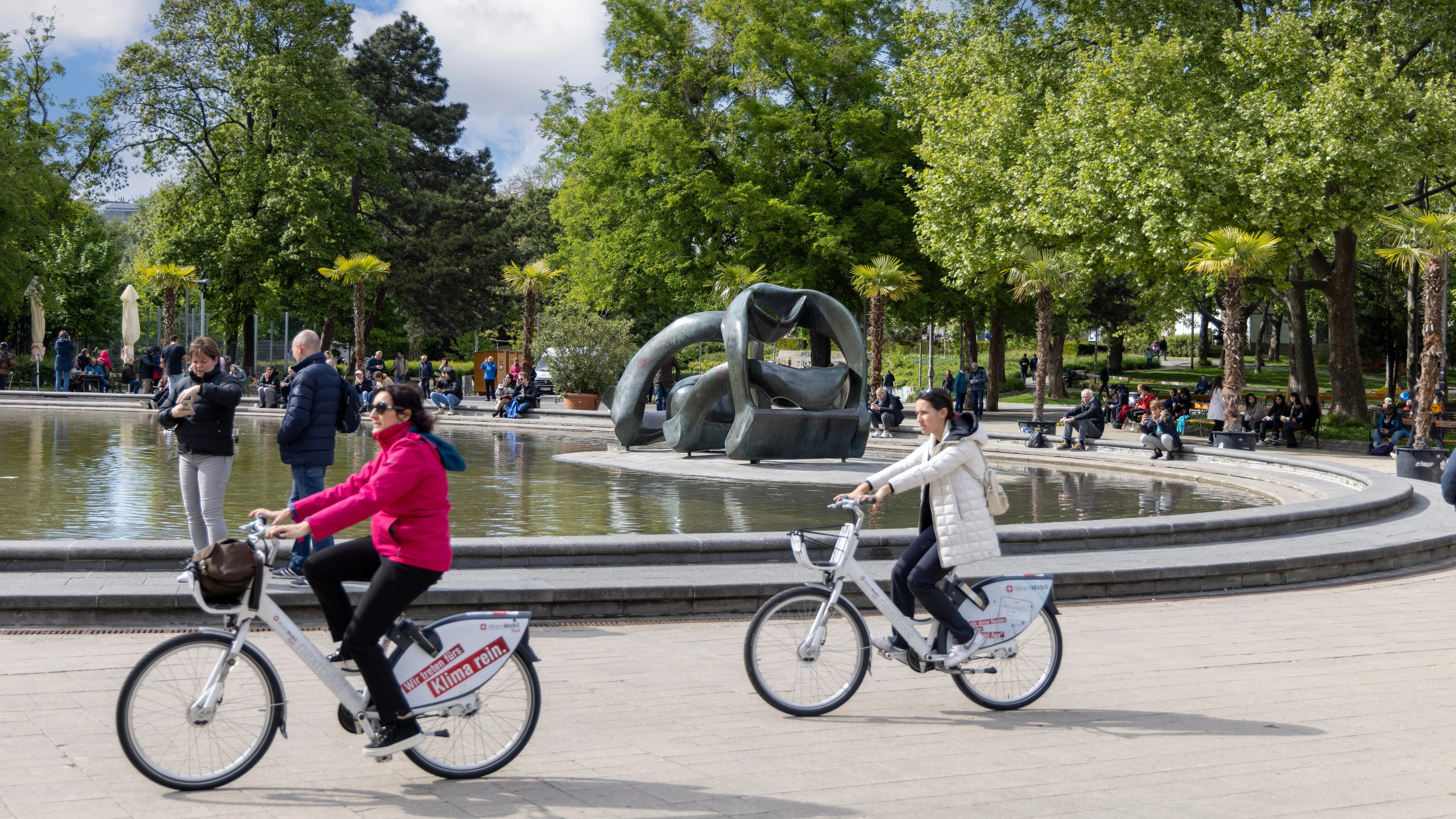
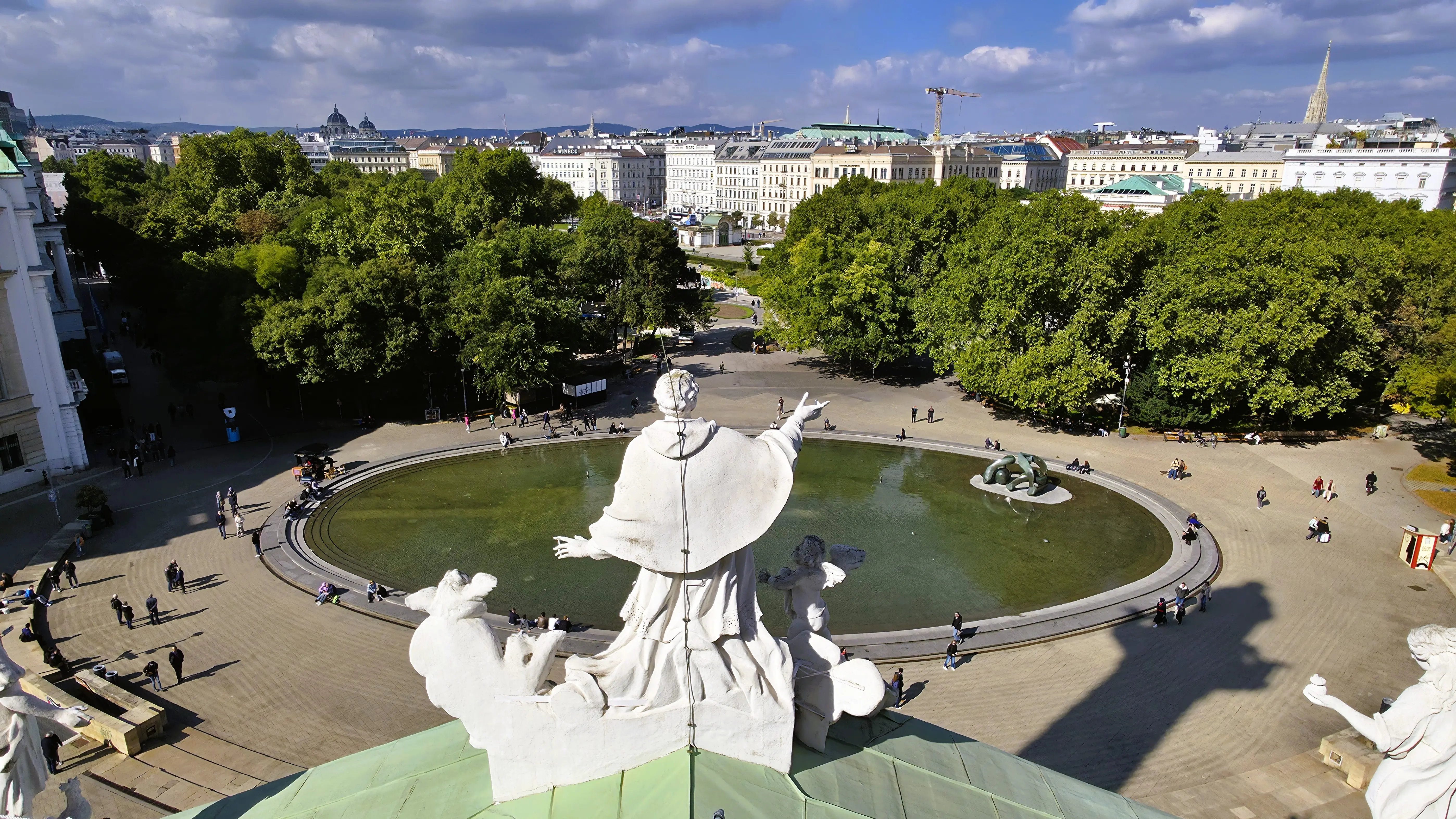
One of Karlsplatz’s defining features is the long reflecting pool that stretches toward Karlskirche. The water doesn’t dramatize the church; it steadies it. Reflections shift with the light, weather, and movement of people nearby, reminding you that the square is alive, not staged. Rising quietly from the pool, Henry Moore’s bronze sculpture Hill Arches introduces a modern counterpoint – abstract, grounded, and deliberately open to interpretation. On sunny days, people sit along the edges with books, coffee cups, or nothing at all. Children move freely. Visitors linger without needing an agenda. The openness encourages stillness without asking for silence. Karlsplatz feels generous – architecturally and emotionally.
Architecture That Coexists, Not Competes
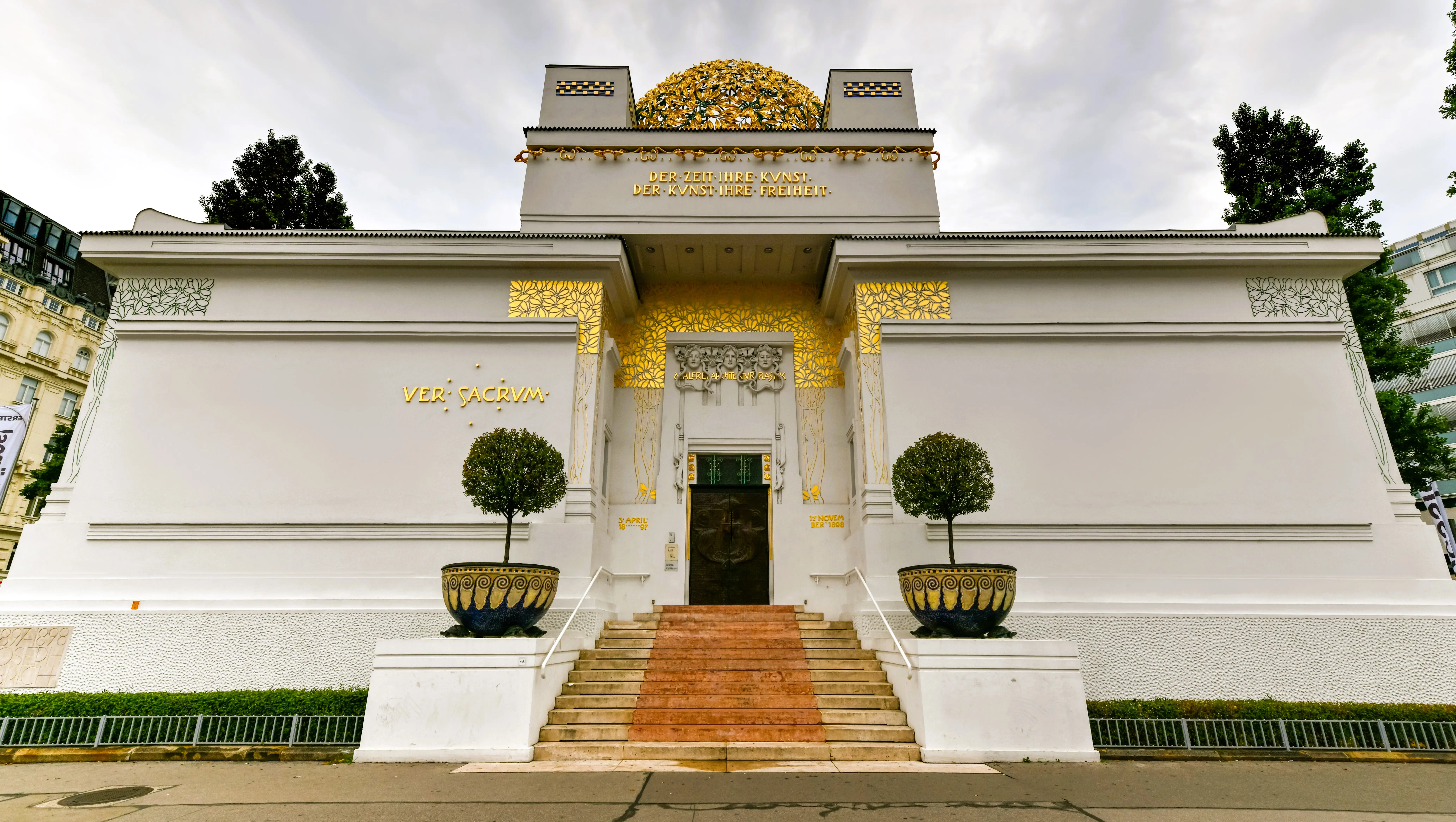
What makes Karlsplatz particularly compelling is how different architectural eras share the space without tension. Baroque curves meet modern lines. Ornamentation gives way to restraint. Just beyond the western edge of the square, the Vienna Secession Building introduces a radically different philosophy from imperial Vienna – one rooted in artistic freedom, clarity of form, and the belief that each age should define its own beauty. Its proximity to Karlsplatz reinforces the idea that this is not a space frozen in time, but one that evolves thoughtfully.
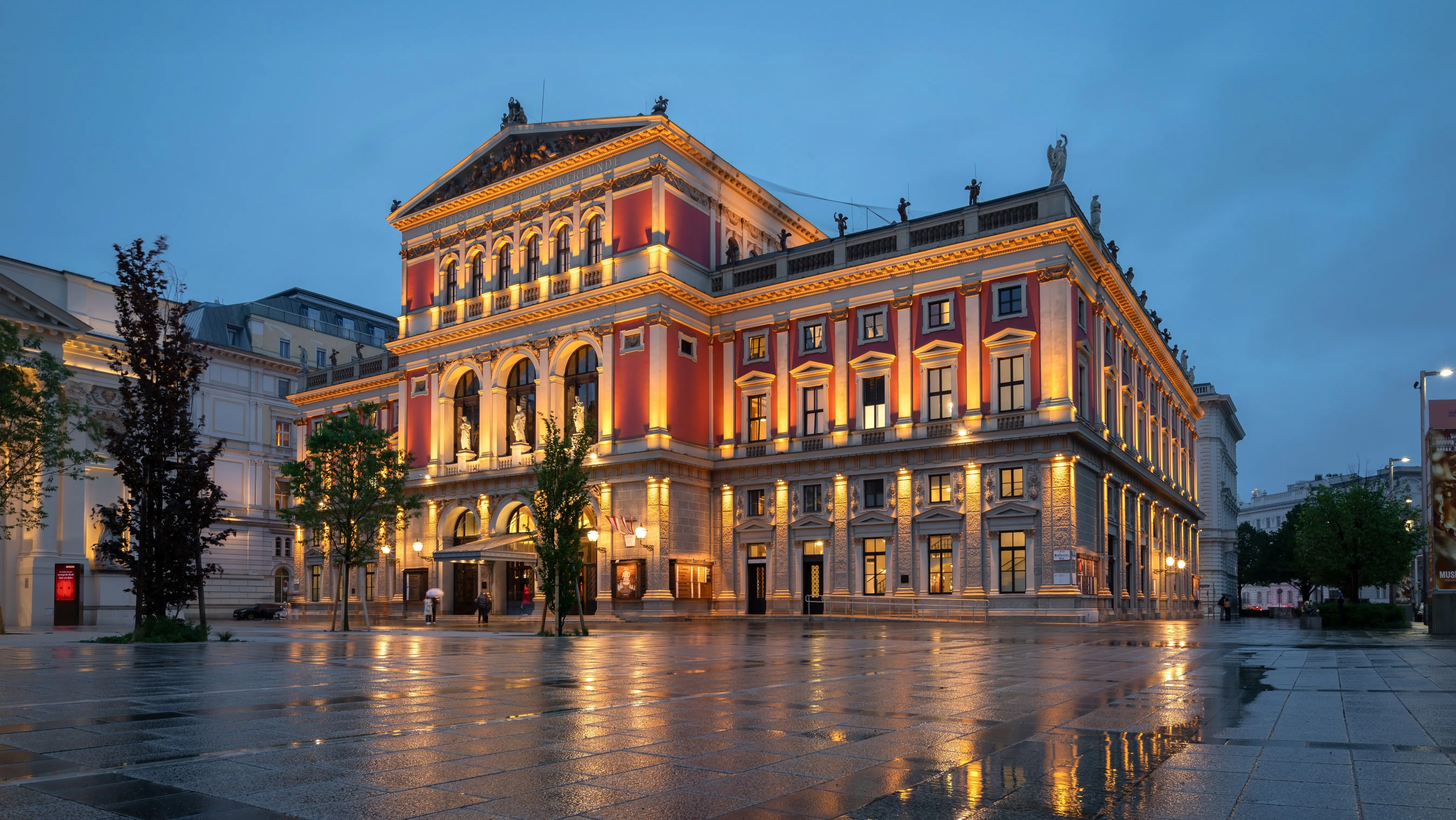
Nearby, the Musikverein adds another layer, anchoring the square in Vienna’s enduring musical identity. Together, these buildings frame Karlsplatz rather than dominate it. No single structure demands attention at the expense of the others. The result is a sense of balance – architectural, cultural, and emotional. Karlsplatz feels composed, not crowded: an urban conversation rather than a competition.
The Presence of Karlskirche – Without Explanation
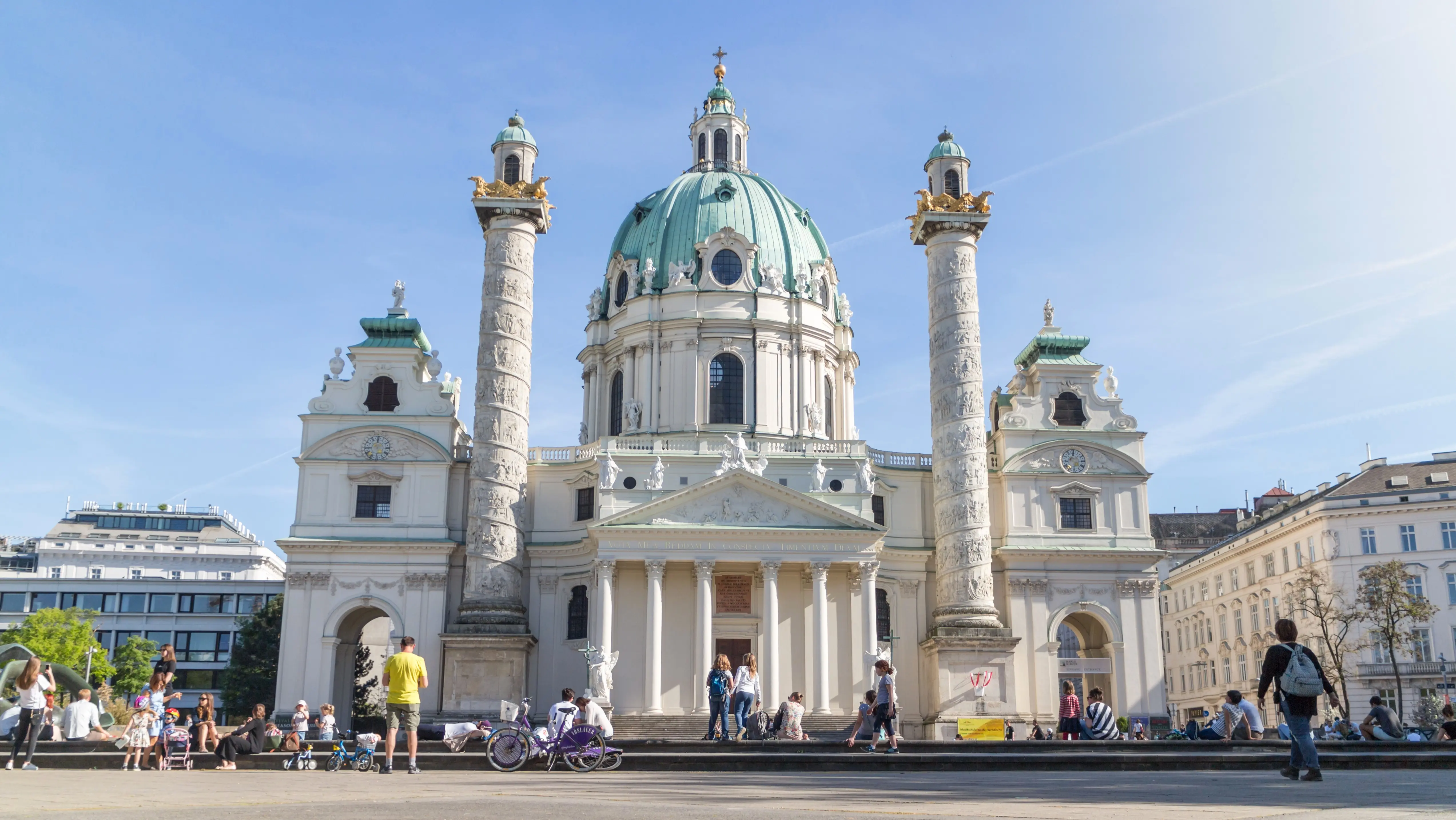
The Karlskirche is always there, anchoring Karlsplatz, but it does not insist on interpretation in this setting. You don’t need to know its history, symbolism, or origin story to feel its presence. From the square, the church reads less as a monument and more as a constant – steady, open, and quietly reassuring. Its dome and columns offer orientation without spectacle, a visual rhythm that grounds the space rather than commands it.
What’s striking is how naturally Karlskirche belongs here. The square does not isolate it as an object to be admired from a distance, nor does it elevate it above daily life. Instead, people pass by, sit nearby, gather, pause, and move on – all with the church gently in view. It becomes part of the square’s atmosphere rather than its headline. In this way, Karlskirche feels lived with, not looked at, a presence that stabilizes Karlsplatz without ever demanding attention.
Everyday Vienna, Unfiltered
Karlsplatz is not a space people move through reluctantly. It’s where students meet before class, locals cross paths on their way home, and visitors pause longer than they intended. Daily life unfolds here without choreography or spectacle. The square absorbs movement, conversation, and stillness with equal ease, allowing Vienna’s rhythm to surface naturally rather than being staged.
What’s striking is how unforced it all feels. No one performs for the space. No one is rushed along. Karlsplatz doesn’t impose expectations – it offers options. You can sit, walk, think, cross, observe, or simply stand still. In a city celebrated for precision and structure, this freedom is intentional. Karlsplatz gives permission to pause, to linger without obligation, and to experience culture as something integrated into life rather than placed on a pedestal.
Bubbly Tips for Visiting Karlsplatz
- Best time to visit: Early morning for quiet reflection or late afternoon when the light softens across the water
- Where to sit: Along the reflecting pool for views of Karlskirche without crowds
- What to notice: How architecture changes as you turn – Baroque, Secession, modern – without visual conflict
- How to experience it: Don’t rush through; cross it once, then come back and sit
- Combine it with: A visit to Karlskirche, the Secession Building, or a nearby café for a slow afternoon
Why Karlsplatz Stays With You
Karlsplatz stays with you because it doesn’t ask for attention, it earns trust. It shows how a city can hold history, culture, movement, and stillness all at once, without forcing any of it forward.
Here, Vienna feels open rather than curated, lived-in rather than preserved. Karlsplatz reminds you that the most meaningful urban spaces are often the ones that allow you to be, not perform.
Have you spent time in Karlsplatz, or noticed how certain city squares change the way you move and feel? I’d love to hear your thoughts below.
Until our next adventure,

🌟 Everything You Need to Plan Your Dream Trip in 2026
- 🌟 Luxury Hotels - Find premium stays with Booking.com & Hotels.com
- 🏡 Vacation Rentals - Discover unique properties on VRBO
- 🏞️ Guided Tours - Explore with Viator or GetYourGuide
- 🎫 Attraction Tickets - Skip the lines with Tiqets
- 🚢 Ocean Cruises - Set sail with Cruise Direct
- 📱 International SIMs - Stay connected with Saily
- 🚗 Car Rentals - Budget-friendly options from Discover Cars
- 🌐 Secure VPNs - Browse safely with NordVPN
- 💶 Currency Exchange - Best rates with Wise
- 🗣️ Learn Languages - Master the local language with Babbel and Rosetta Stone