
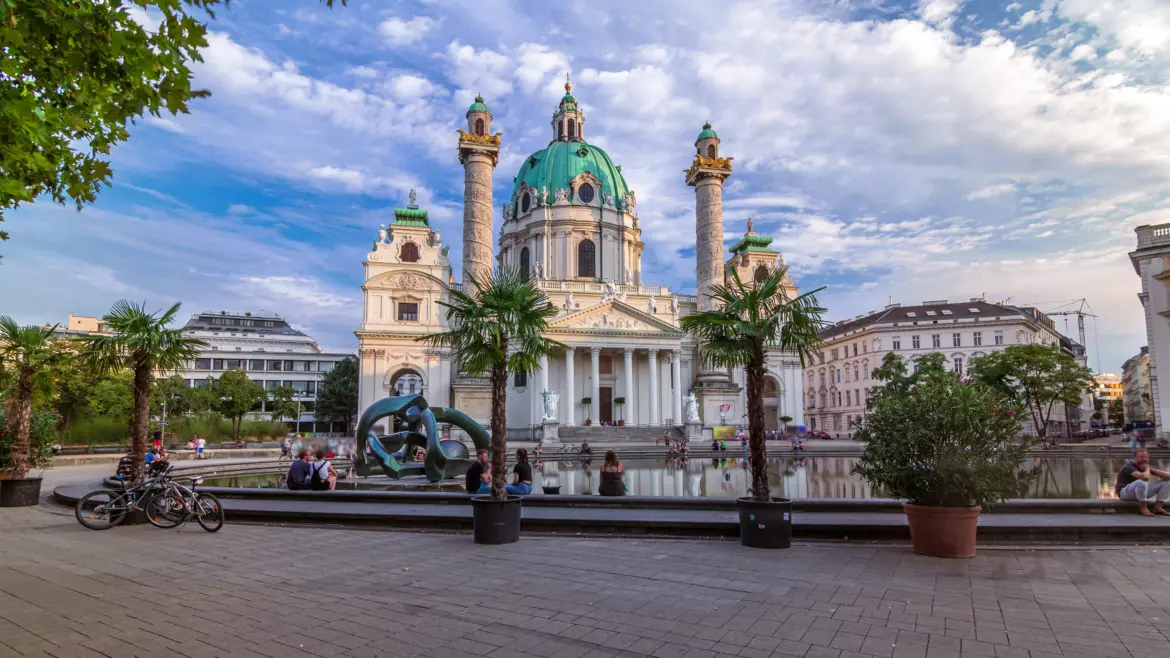
Hello, my friends! Some buildings impress you with grandeur. Others stay with you because of the reason they exist. The Karlskirche (Charles Church) in Vienna belongs firmly to the latter. Standing calmly at the edge of Karlsplatz, it feels open, measured, and quietly reassuring – a church not built to dominate the city, but to thank it.
From the very beginning, Karlskirche was conceived as an expression of gratitude and hope, shaped by a moment of vulnerability rather than triumph. That intention still lingers today. Karlskirche does not overwhelm on arrival. It invites you to pause. To look twice. To understand why it was built before admiring how.
Karlskirche at a Glance
📍 Location: Karlsplatz, 1040 Vienna, Austria
⛪ Known For: Baroque dome, Trajan-inspired columns, Rottmayr frescoes, rooftop views
📖 Built: Early 18th century by Emperor Charles VI after the 1713 plague
🎨 Architect: Johann Bernhard Fischer von Erlach (completed by his son)
🙏 Dedicated To: Saint Charles Borromeo, patron of plague relief
⏱️ Time Needed: 45 minutes – 1.5 hours (including dome/rooftop)
💡 Tip: Visit in morning or late afternoon for the best light on the reflecting pool and inside the church
A Church Born from Gratitude
Karlskirche was commissioned in the early 18th century by Emperor Charles VI during one of Vienna’s darkest periods: the devastating plague outbreak of 1713, the last major epidemic to strike the city. In the midst of widespread illness and loss, the emperor made a public vow to commission a great church dedicated to Charles Borromeo, a saint closely associated with caring for the sick and organizing relief during earlier plague outbreaks in Europe, should Vienna be spared further devastation.
Construction began shortly thereafter, transforming the vow into stone. This origin matters. Karlskirche was never intended as a monument to conquest or imperial dominance. Instead, it stands as an architectural expression of gratitude, humility, and hope, a promise fulfilled rather than power displayed. That intention still shapes how the church feels today. Even in its scale, there is restraint. Even in its beauty, there is calm, as if the building itself remembers why it was created.
Architecture That Tells a Story
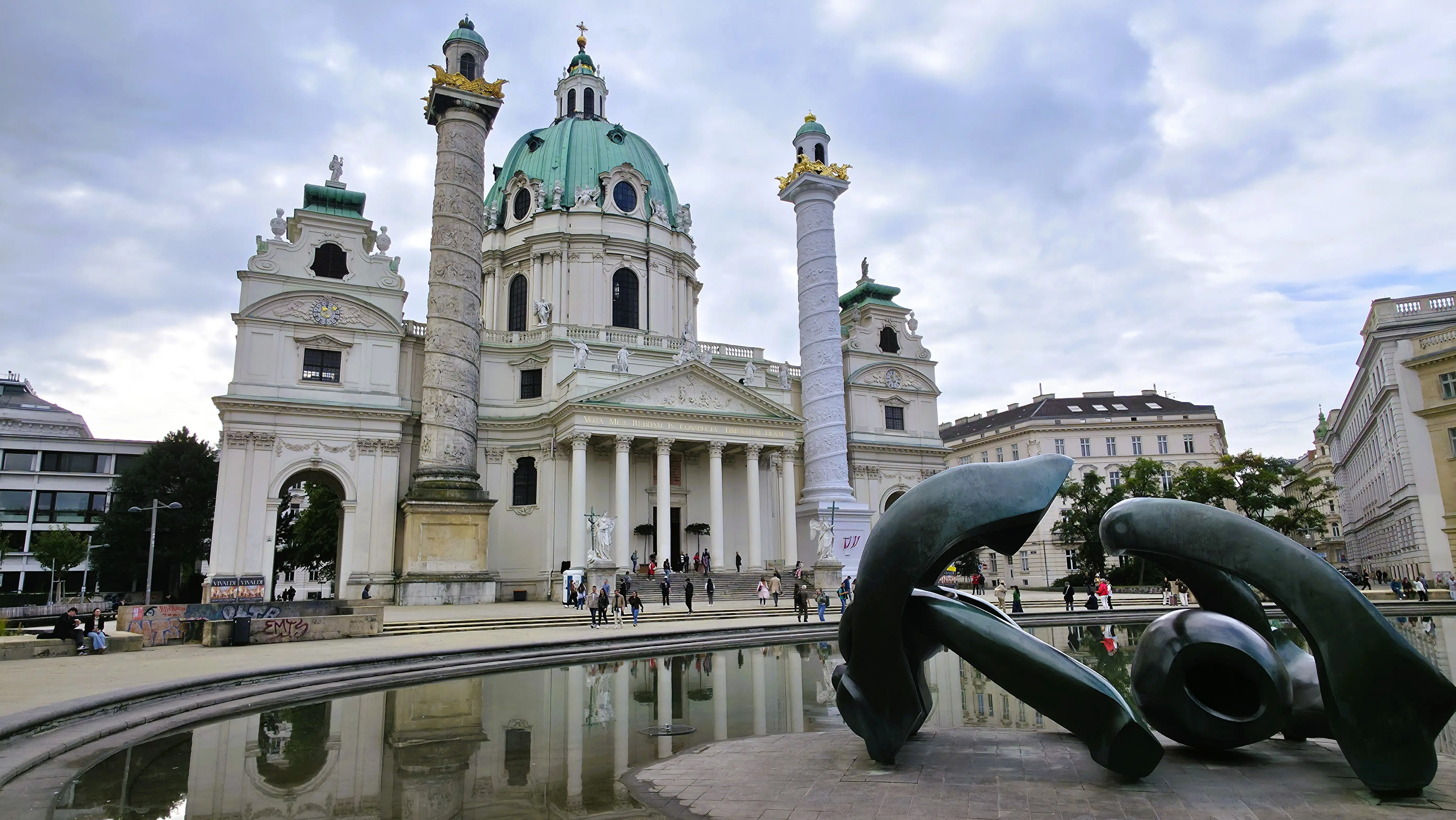
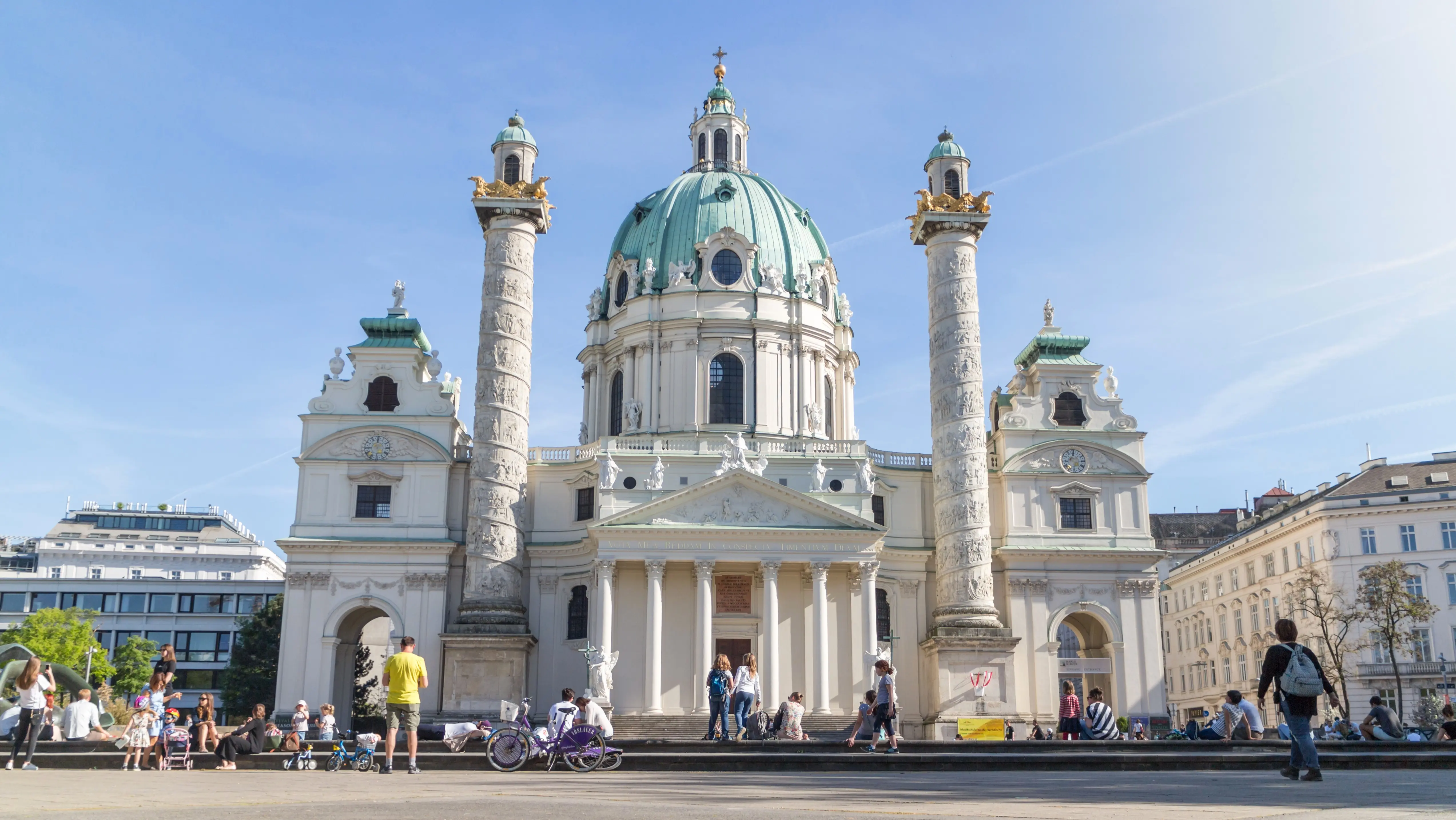
Designed by architect Johann Bernhard Fischer von Erlach and completed by his son after his death, Karlskirche blends Baroque grandeur with carefully chosen classical symbolism. The large central dome draws the eye upward, emphasizing transcendence and spiritual ascent, while the broad façade opens outward toward Karlsplatz, creating a sense of welcome rather than enclosure. This openness was deliberate – the church was meant to be approached, entered, and shared, not set apart.
Most striking are the two monumental columns flanking the entrance. Inspired by Trajan’s Column in Rome, they are carved with spiral reliefs depicting scenes from the life of Saint Charles Borromeo, visually narrating his acts of compassion, leadership, and care during times of plague. These columns are not decorative flourishes; they function as architectural storytelling, turning stone into narrative. Through them, Karlskirche links Vienna to Rome, faith to history, and architecture to moral purpose.
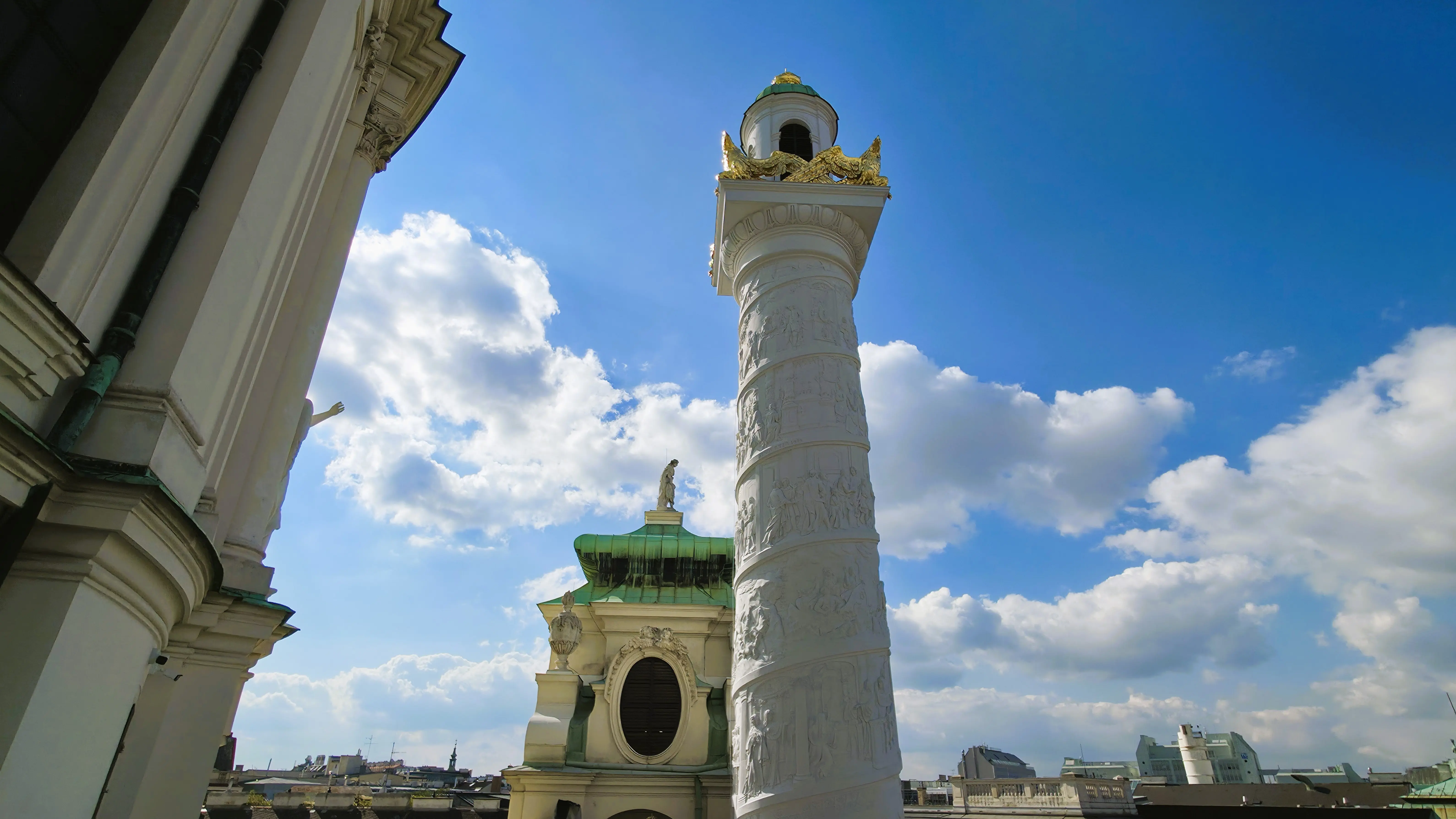
The result is a church that feels both universal and deeply specific – Roman in reference, Viennese in spirit, and unmistakably shaped by the circumstances that gave rise to it.
Light, Space, and Stillness Inside
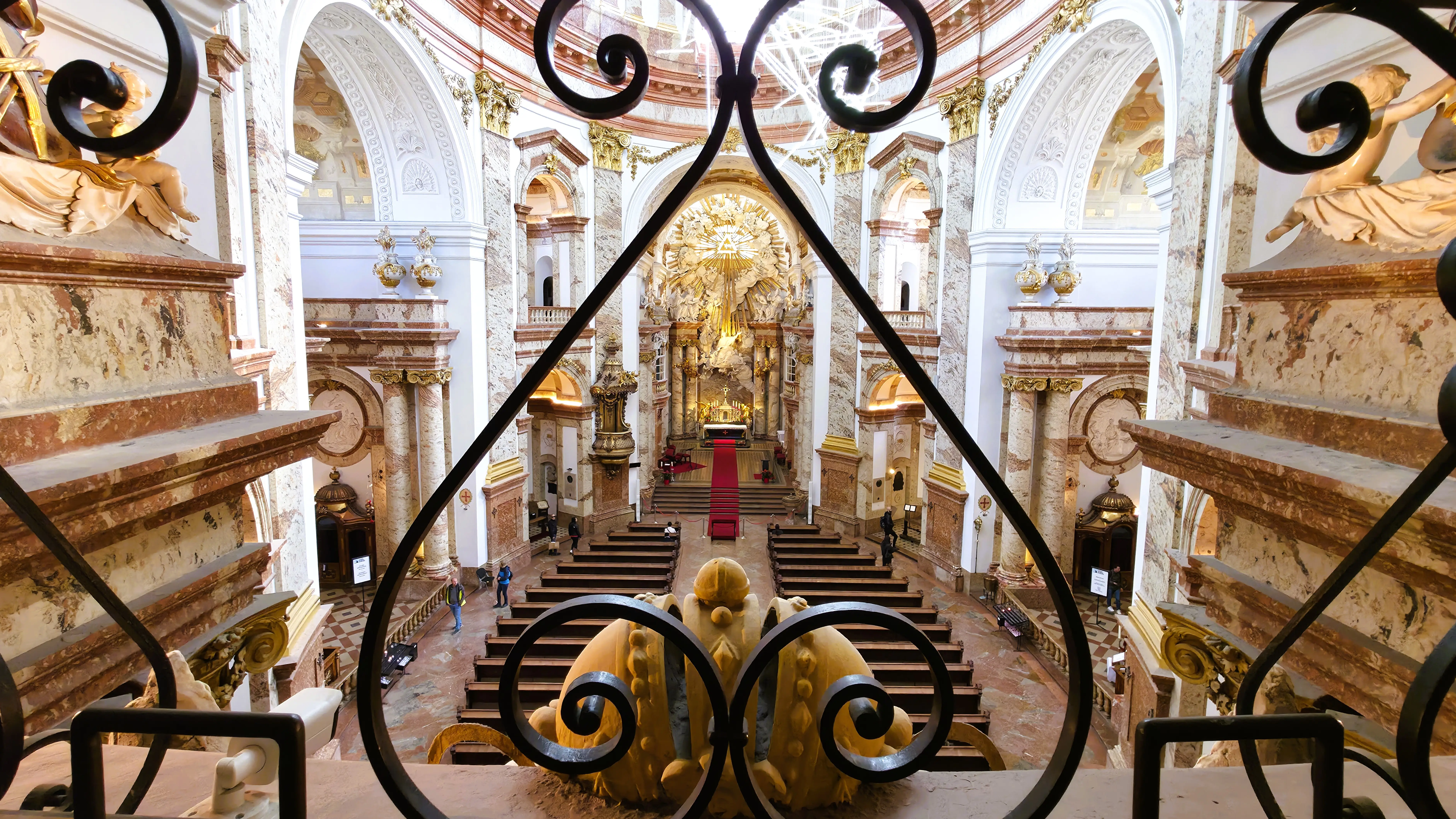
Stepping inside the Karlskirche, the atmosphere shifts immediately. The space is expansive yet gentle, filled with light that moves across frescoes, columns, and architectural curves rather than pressing down from above. The Baroque interior encourages upward movement, but without excess. Instead of overwhelming the senses, it guides them slowly, drawing you into reflection rather than spectacle.
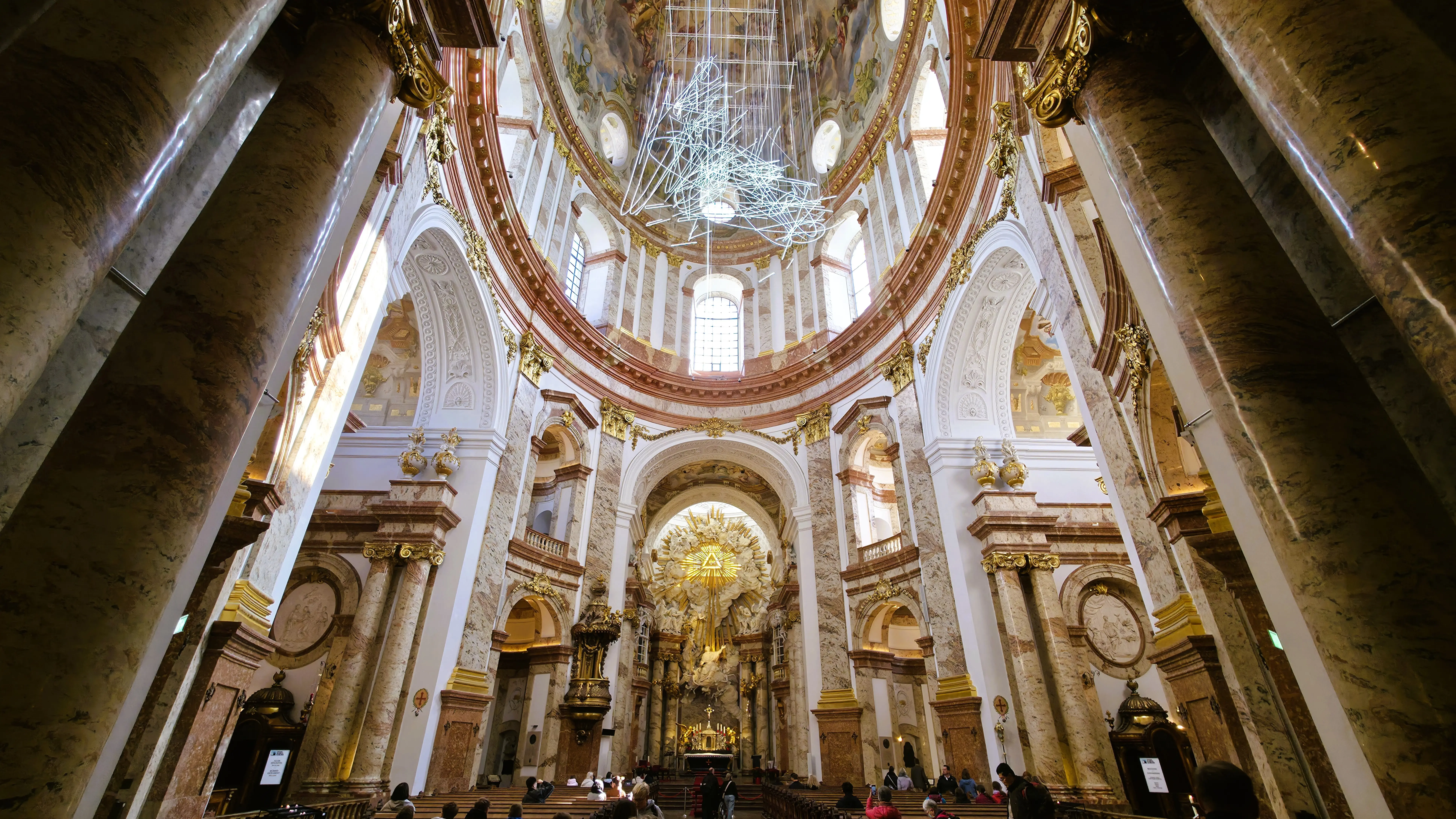
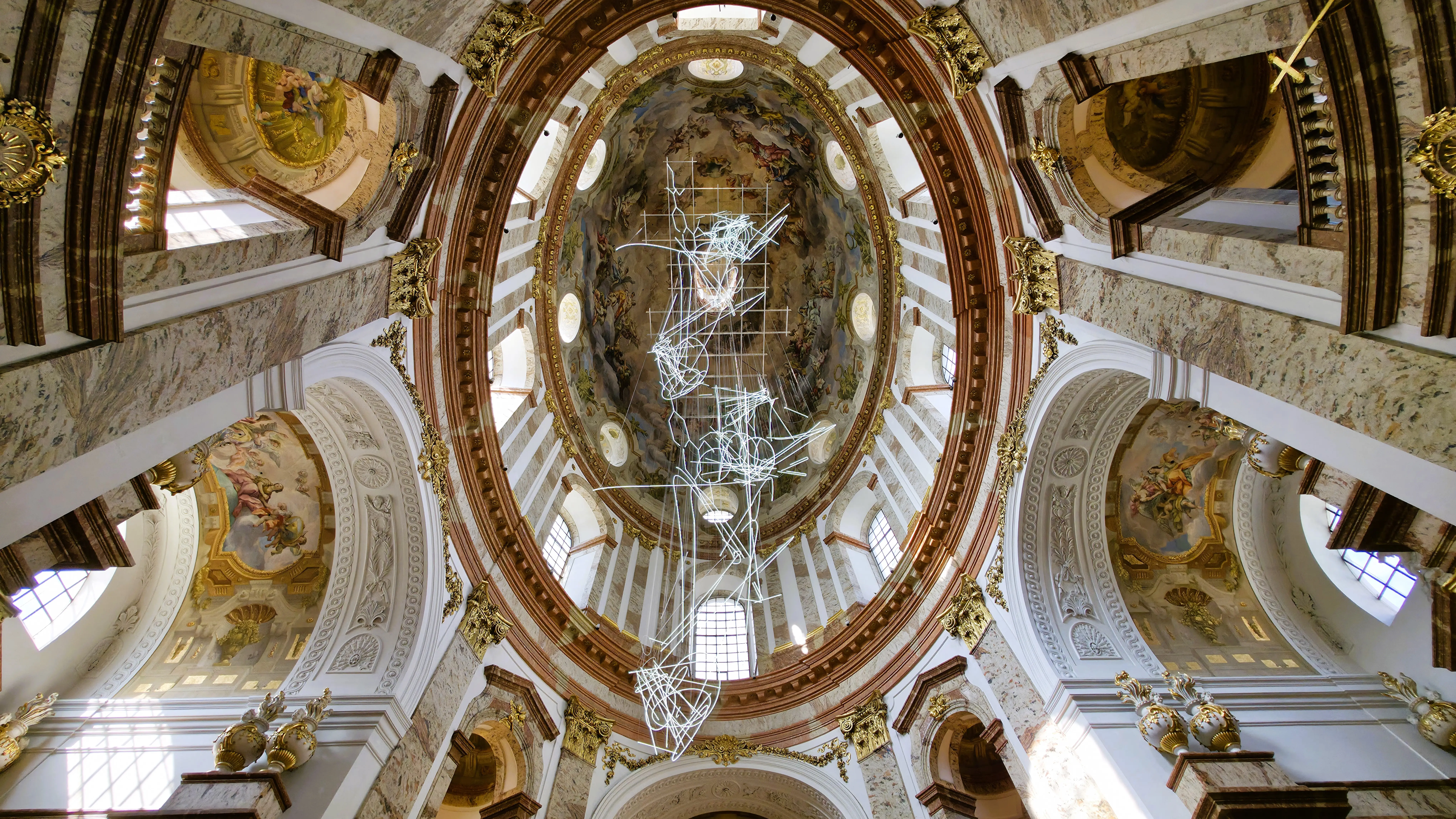
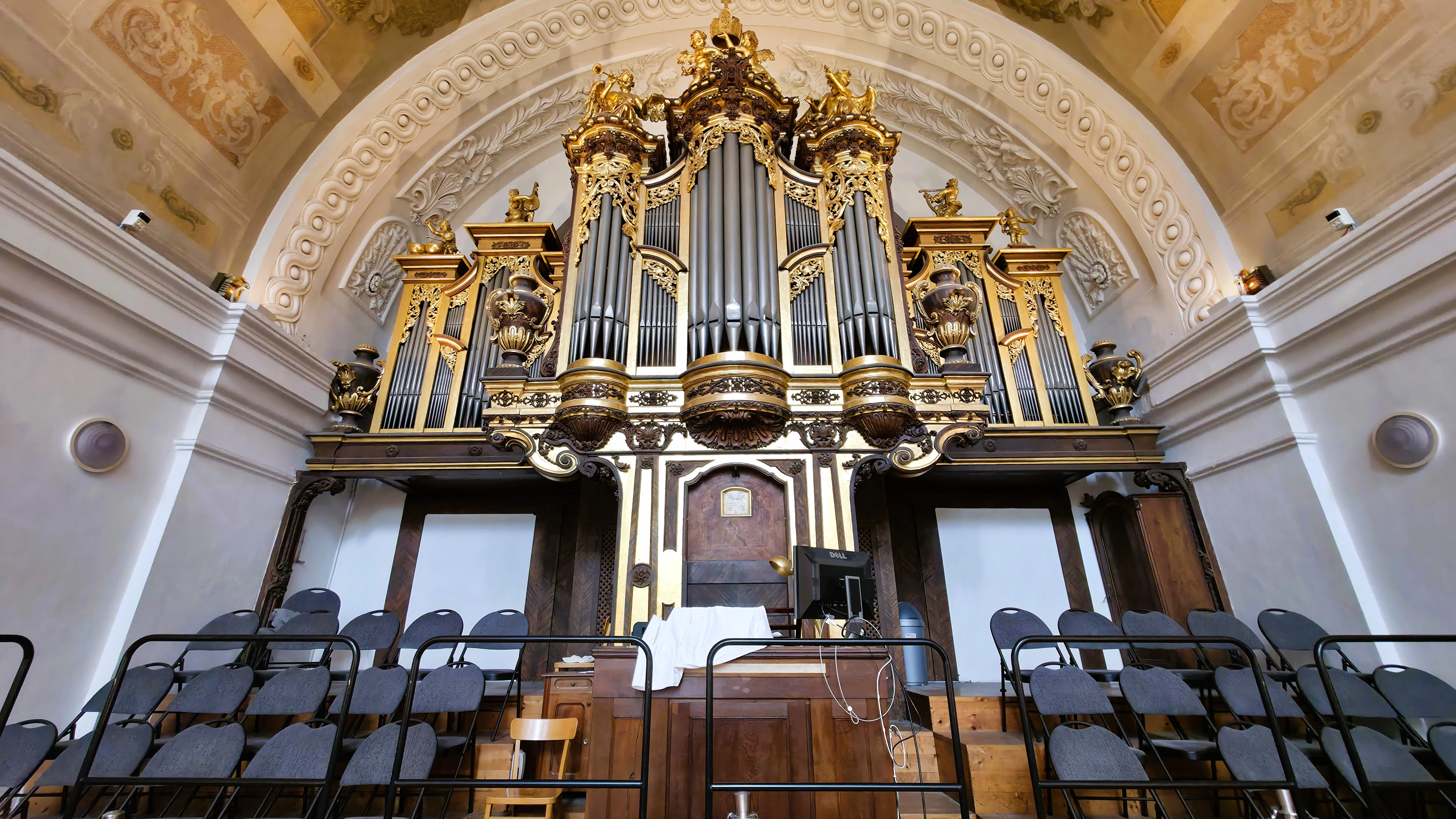
The vast dome above is adorned with frescoes by Johann Michael Rottmayr, rich in symbolism and color yet composed in a way that feels contemplative rather than theatrical. Below, the high altar anchors the space with quiet dignity, depicting Saint Charles Borromeo as an intercessor for the suffering city – a visual reminder of the church’s origins in gratitude and hope. The presence of the organ, poised to fill the church with sound during services and concerts, adds another layer to the experience, even in silence. Sound softens. Movement slows. Even when visitors are present, Karlskirche maintains a stillness that feels intentional. This is a space designed not only for worship, but for quiet presence – a place where light, art, and architecture work together to invite calm.
Seeing Karlskirche from Above: Rooftop Views
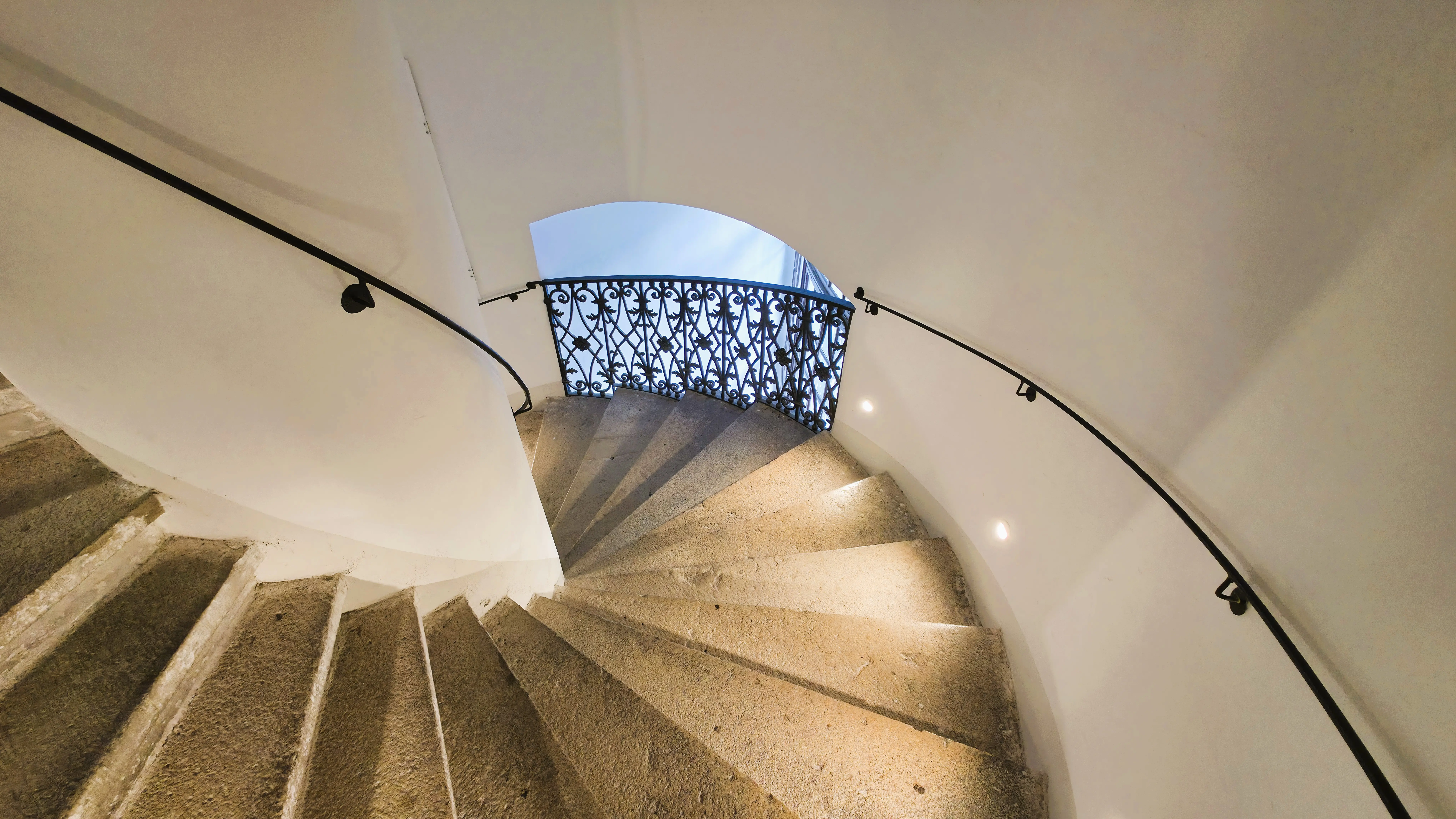
One of Karlskirche’s most memorable experiences is the opportunity to ascend toward the dome and view the church, and Vienna, from above. Visitors make their way upward via interior staircases and elevated walkways, gradually rising through the space and coming remarkably close to the frescoes. This ascent offers an intimate perspective rarely possible in historic churches, allowing you to engage with the artwork and architecture at eye level rather than from afar.
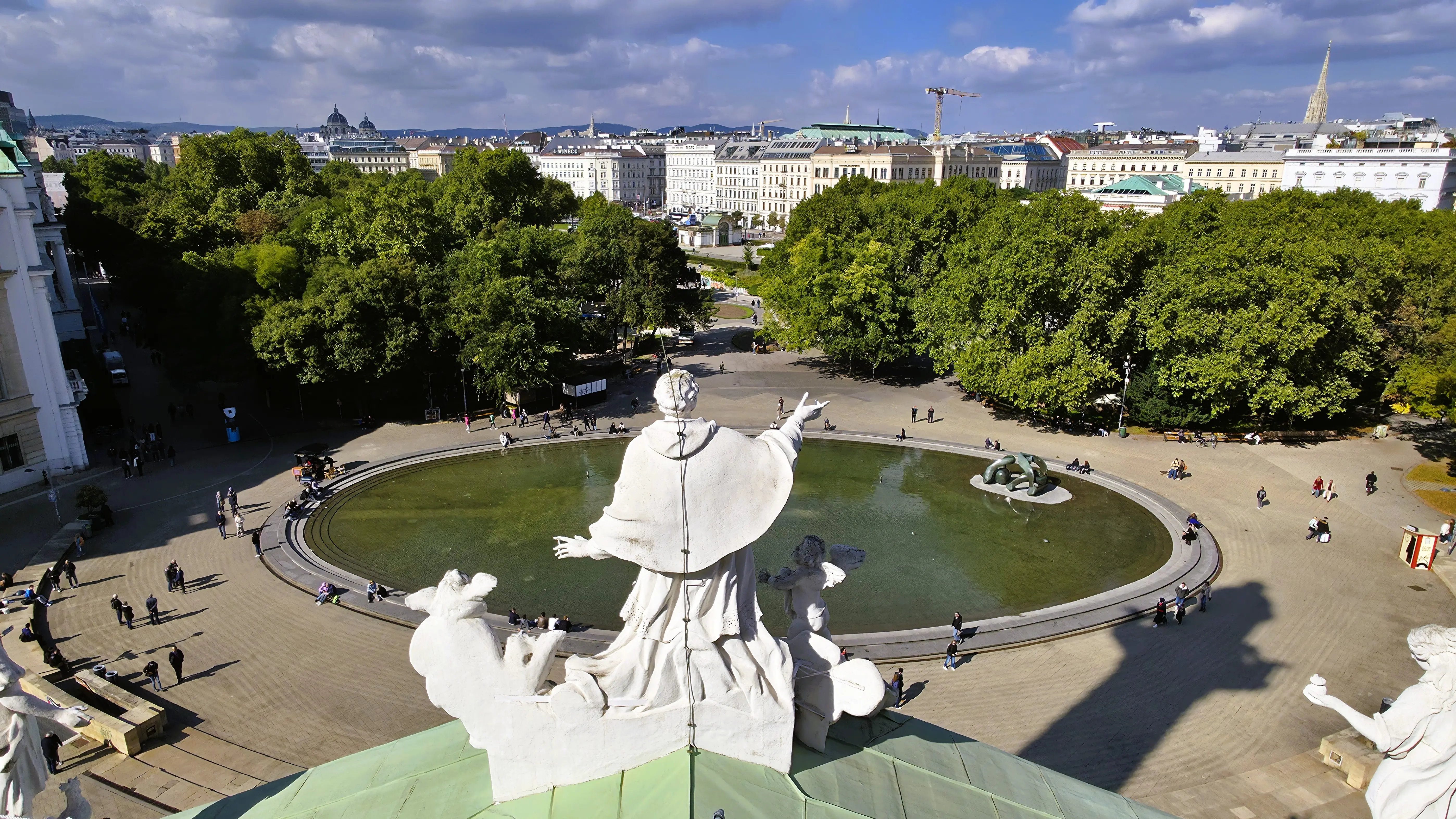
From the rooftop terrace, the city opens outward. Karlsplatz stretches below, framed by streets, greenery, and movement. The view provides context – Karlskirche not as an isolated monument, but as a living part of Vienna’s urban rhythm. It’s a moment that connects interior reflection with exterior understanding, reinforcing how seamlessly the church exists within everyday life.
Karlskirche in Everyday Vienna
Despite its significance, Karlskirche never feels distant or removed from daily life. Locals cross Karlsplatz on their way to work or class. Students sit nearby with books or headphones. Visitors gather quietly by the reflecting pool that mirrors the church’s façade, lingering without ceremony. There is no sense of boundary between sacred space and civic space – the church exists as part of the city’s natural rhythm rather than apart from it. This accessibility is central to Karlskirche’s enduring appeal. It does not demand reverence through scale or spectacle alone; it earns it through intention, openness, and a presence that feels calm, humane, and quietly generous.
Planning Your Visit to Karlskirche
Is Karlskirche worth visiting?
Absolutely. Whether you step inside, admire it from Karlsplatz, or explore the rooftop views, Karlskirche offers insight into Vienna’s relationship with faith, resilience, and architecture.
Do you need to go inside to appreciate it?
The exterior alone tells a powerful story, but entering the church and viewing the dome up close adds depth and perspective that is well worth the visit.
When is the best time to visit?
Morning and late afternoon offer softer light, both inside and outside. The reflecting pool in front of the church is especially beautiful during these hours.
Where is it located?
Karlskirche sits prominently at Karlsplatz in Vienna, Austria, within easy reach of the city center and well connected to public transportation.
Why Karlskirche Stays With You
Karlskirche stays with you not because of grandeur alone, but because of intention. It reminds you that architecture can be an act of gratitude, that beauty can emerge from vulnerability, and that even monumental buildings can feel deeply human.
In a city shaped by empire, Karlskirche offers something quieter and more enduring: a space built to give thanks, to reassure, and to invite reflection, long after the crisis that inspired it has passed.
Have you visited Karlskirche during your time in Vienna, or is it now on your list? And if you’ve been, did the rooftop views change how you saw the city? I’d love to hear your thoughts!
Until our next adventure,

🌟 Everything You Need to Plan Your Dream Trip in 2026
- 🌟 Luxury Hotels - Find premium stays with Booking.com & Hotels.com
- 🏡 Vacation Rentals - Discover unique properties on VRBO
- 🏞️ Guided Tours - Explore with Viator or GetYourGuide
- 🎫 Attraction Tickets - Skip the lines with Tiqets
- 🚢 Ocean Cruises - Set sail with Cruise Direct
- 📱 International SIMs - Stay connected with Saily
- 🚗 Car Rentals - Budget-friendly options from Discover Cars
- 🌐 Secure VPNs - Browse safely with NordVPN
- 💶 Currency Exchange - Best rates with Wise
- 🗣️ Learn Languages - Master the local language with Babbel and Rosetta Stone