
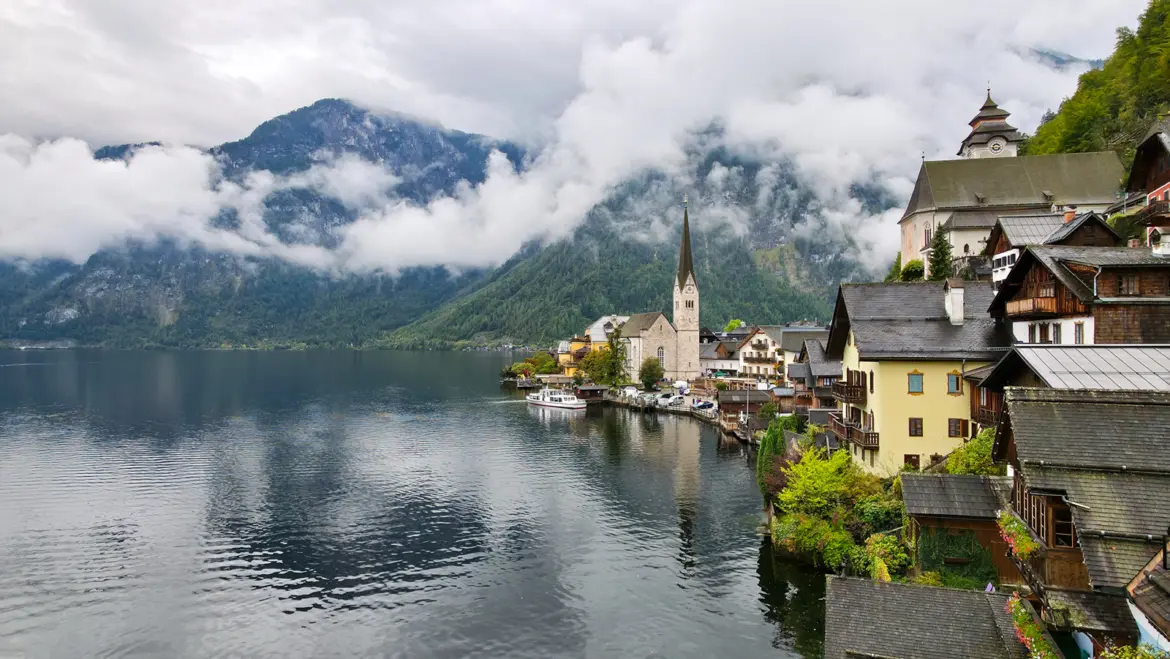
There are places that feel almost unreal, as though they belong to a painting rather than the world we move through. Hallstatt is one of those places, and one that can be experienced as a truly memorable day trip from Vienna. Nestled between towering Alpine mountains and the still waters of Lake Hallstatt, this small Austrian village reveals itself slowly, like a scene unfolding in perfect balance. The reflections on the water, the pastel houses clinging to the mountainside, the church spire rising gently above it all – it is undeniably beautiful.
But what makes Hallstatt truly extraordinary is not only what you see. It is what lies beneath the surface: layers of history, culture, and human resilience that stretch back thousands of years. This is not simply a picturesque destination; it is a place shaped by time, by salt, by belief, and by the people who lived, worked, and built their lives in one of the most dramatic landscapes in Europe.
Hallstatt at a Glance
⛏️ Salt mining: 7,000+ years — the world’s oldest known salt mines, source of the village’s wealth and identity
🏛️ Hallstatt Culture: Early Iron Age (800–450 BC) — over 1,300 burials excavated since 1846, considered one of the earliest phases of Celtic civilization
💀 Ossuary (Beinhaus): Over 1,200 skulls, ~600 hand-painted with names, dates, and floral motifs — last skull added in 1995
⛪ Churches: Evangelische Pfarrkirche (iconic lake-reflected spire) and Pfarrkirche Mariä Himmelfahrt (Catholic, medieval origins, home to the ossuary)
🏔️ UNESCO: Hallstatt-Dachstein/Salzkammergut Cultural Landscape — World Heritage since 1997
🚂 From Vienna: ~3–3.5 hours by train (change at Attnang-Puchheim) or car (A1 toward Salzburg)
⏰ Best time: Early morning or late afternoon for fewer crowds; dawn for perfect lake reflections; autumn for mist and golden foliage
🏨 Tip: Stay overnight to experience Hallstatt without day-trip crowds — the village transforms in the evening
📸 Photo tip: The classic lake reflection shot is best before 9 AM when the water is still and boat traffic hasn’t started
A Village Built on Salt
Long before Hallstatt became one of Austria’s most photographed destinations, it was already one of the most significant prehistoric settlements in Europe, thanks to salt. Often referred to as “white gold,” salt was a highly valuable resource in the ancient world, essential for preserving food and sustaining communities. Hallstatt’s salt mines are among the oldest known in the world, with evidence of mining activity dating back over 7,000 years, a history that played a central role in shaping the region’s identity and prosperity.
The wealth generated by salt transformed Hallstatt into a thriving centre of trade and influence over many centuries. This long history of prosperity reached a particularly significant peak during the early Iron Age, roughly 800 to 450 BC, giving rise to what is now known as the “Hallstatt Culture”, a prehistoric culture whose influence extended across much of Central Europe and which takes its very name from this village. Even today, the legacy of this period can be felt, not only in archaeological discoveries, but in the very character of the place itself.
Standing in Hallstatt, it is fascinating to think that beneath the beauty of the landscape lies a history of labour, industry, and innovation stretching back millennia. The mountains that surround the village are not just a backdrop, they are part of the story.
From Celts to Romans
Hallstatt’s story did not end with its prehistoric beginnings. Over time, the region became part of the wider network of ancient Europe, connecting cultures and civilisations across the continent. The proto-Celtic and Celtic peoples who inhabited the area left behind a rich cultural and spiritual legacy, one that would shape early Celtic civilisation across Europe. Indeed, the Hallstatt Culture is considered one of the earliest phases in the development of Celtic society, laying important foundations for what would follow.
Later, the region became integrated into the Noricum, linking Hallstatt to the vast infrastructure and influence of the Roman Empire. Noricum was absorbed into Rome around 15 BC, bringing with it new trade networks, administrative structures, and cultural exchange. While Hallstatt itself remained relatively small, its resources, particularly salt, continued to hold value within this broader context.
What makes this continuity so remarkable is how seamlessly it blends into the present. Hallstatt is not a place that feels frozen in time; rather, it feels like a place where time has accumulated. Each era leaves its mark, quietly layering over the one before it.
The Churches and Spiritual Presence
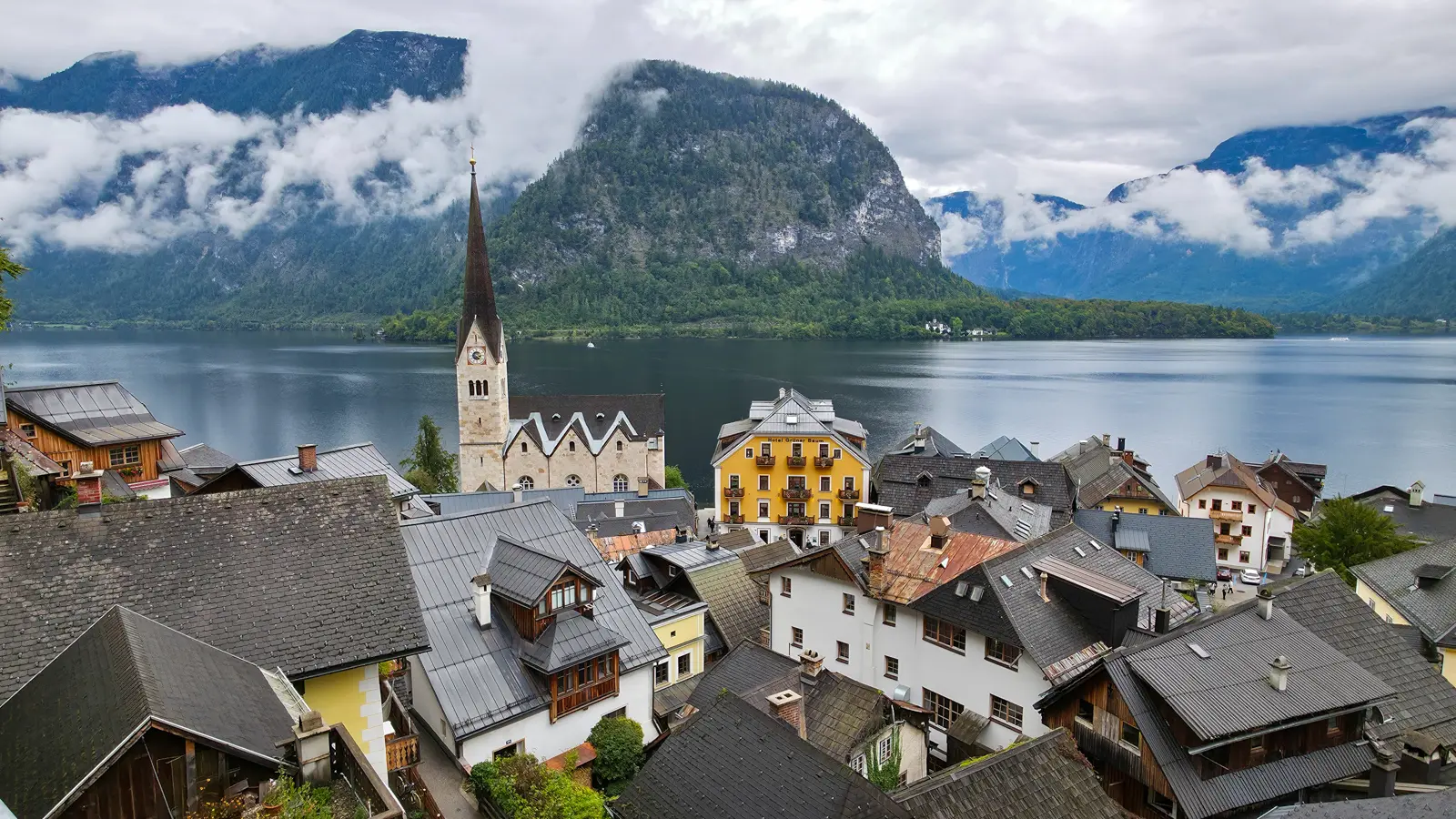
At the heart of Hallstatt’s visual identity stands the iconic Evangelische Pfarrkirche Hallstatt, its slender spire rising gracefully above the village and reflected almost perfectly in the still waters of Lake Hallstatt. It is a scene that has become synonymous with the village itself: serene, balanced, and deeply atmospheric. Whether seen through morning light or beneath low, misty clouds, the church anchors the landscape, offering a sense of harmony between nature and human presence.
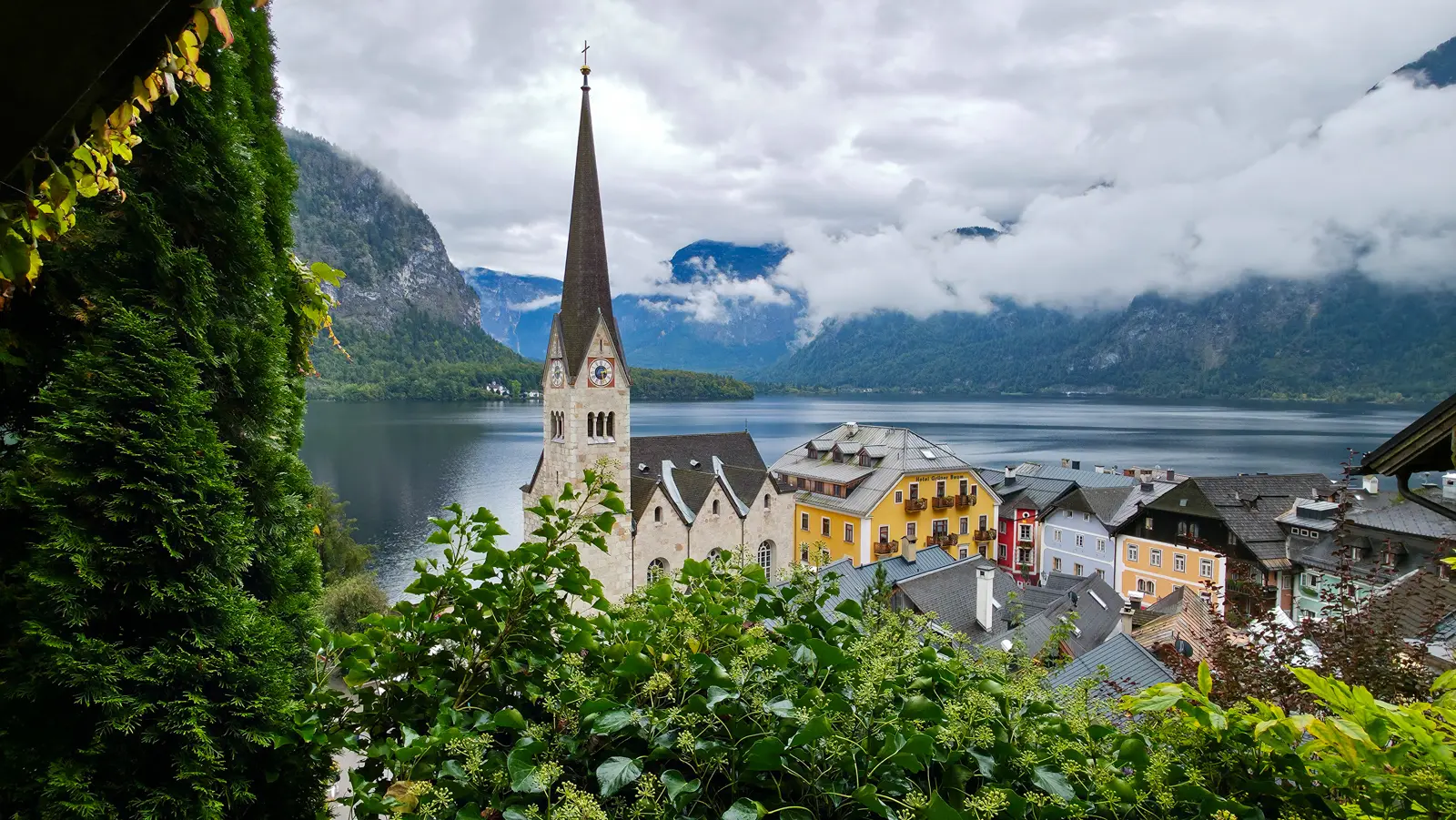
But beyond its beauty, the church represents something more enduring: a spiritual anchor for the community. For centuries, life in Hallstatt has been shaped not only by its geography and its reliance on salt, but by faith and tradition. Higher up, nestled against the mountainside, the Catholic Pfarrkirche Mariä Himmelfahrt adds another layer to this story, with medieval origins, quieter in its presence, and home to the cemetery and ossuary that speak to Hallstatt’s long relationship with memory and loss. These churches may not be grand in scale, but they carry a deep sense of continuity, spaces where generations have gathered, marking moments of life, loss, and remembrance.
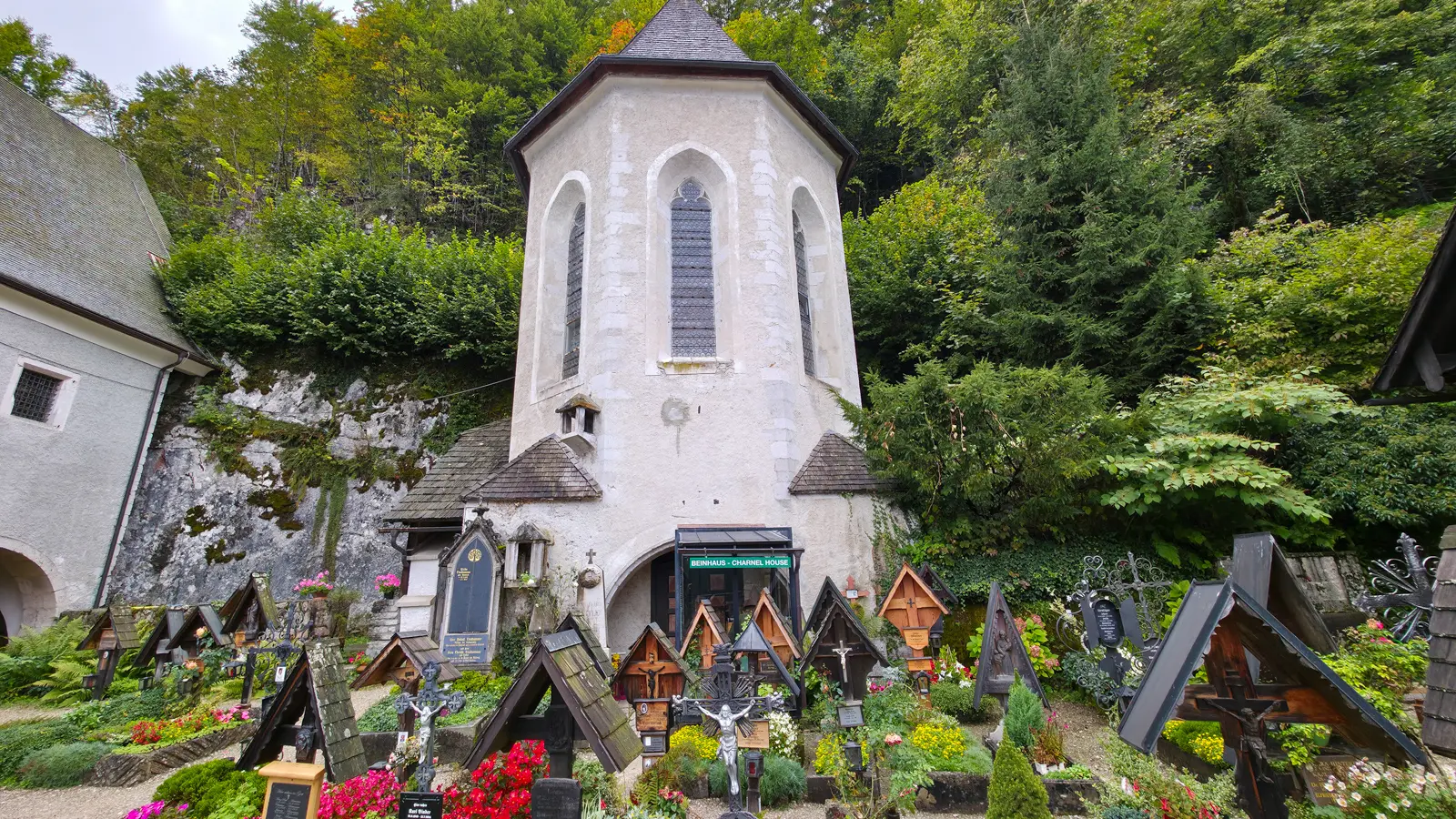
Walking through the village, you can feel this presence in subtle ways. It lives in the stillness of the narrow streets, in the soft echo of footsteps, and in the way the landscape seems to quiet around you. Set against such a dramatic natural backdrop, this sense of calm feels even more profound. It is gentle, grounding, and deeply human, a reminder that Hallstatt is not only a place of extraordinary beauty, but also one of enduring spirit and quiet reflection.
The Ossuary: Memory and Meaning
One of Hallstatt’s most unique and thought-provoking sites is its ossuary, located within the grounds of the Pfarrkirche Mariä Himmelfahrt and often referred to as the Bone House (Beinhaus). At first glance, the idea may seem unusual – a small chapel where human skulls are carefully arranged and displayed. But as you step inside and begin to understand its origins, what unfolds is something far more meaningful and deeply human.
Due to the limited space in Hallstatt’s hillside cemetery, it became customary to exhume remains after a number of years, making room for new burials. Rather than being discarded, the skulls were carefully cleaned, sun-bleached, and preserved – often hand-painted with names, dates, and delicate floral motifs. Each one becomes a quiet testament to a life once lived, transforming what could be anonymous into something personal and enduring. What makes this tradition all the more remarkable is that it continued into living memory. The last skull was added to the collection in 1995, a detail that shifts the ossuary from historical curiosity to living tradition.
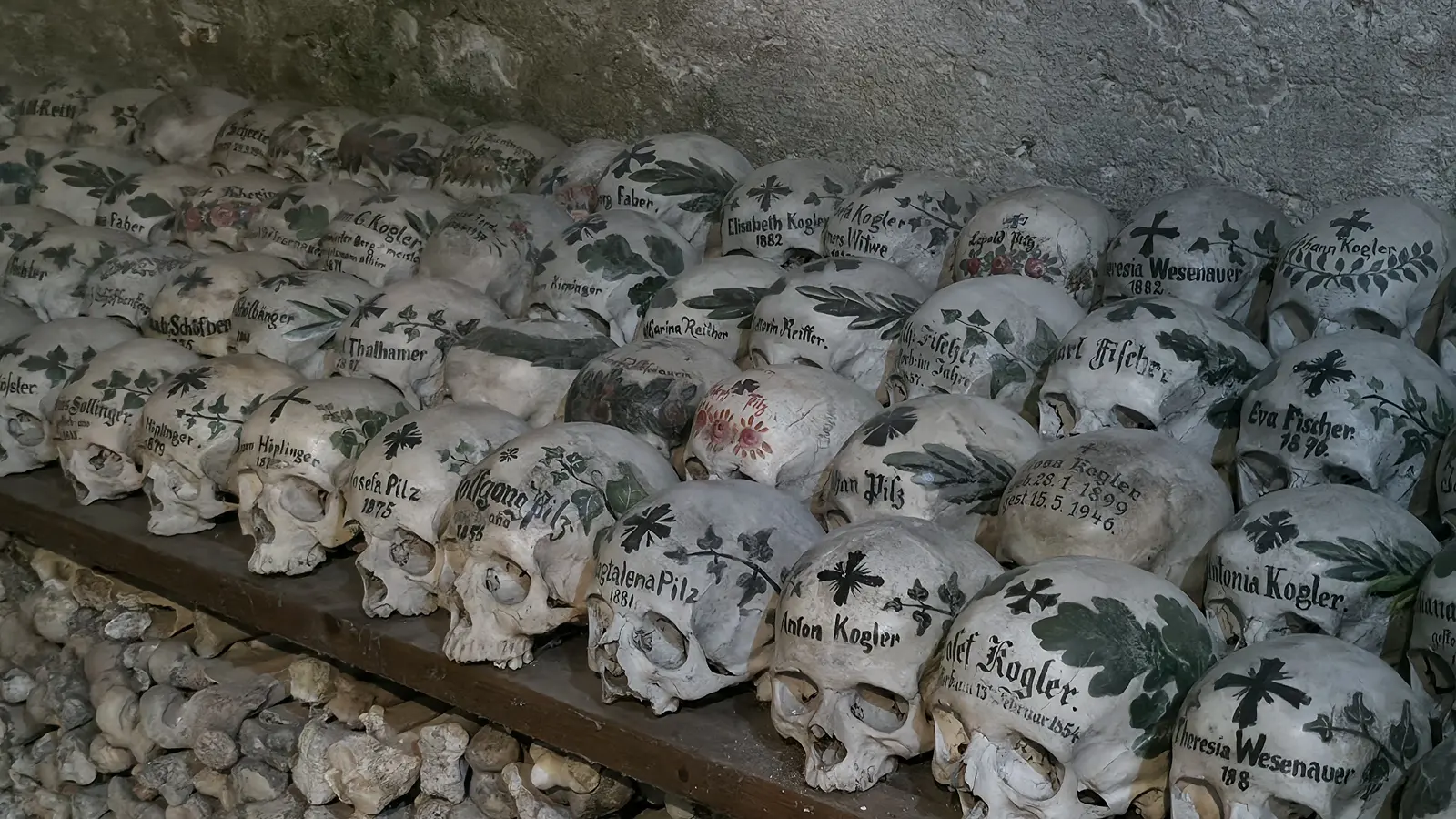
is about remembrance and continuity. It reflects a different relationship with mortality, one that acknowledges the passage of time while honoring identity, memory, and the place each individual holds within the community.
Standing there, surrounded by these carefully preserved fragments of the past, you begin to understand Hallstatt in a deeper way. It is not just a place of extraordinary beauty, but one shaped by generations of life, loss, and resilience – where even memory itself becomes part of the landscape.
The Views: Beauty Beyond Words
And then, there are the views!
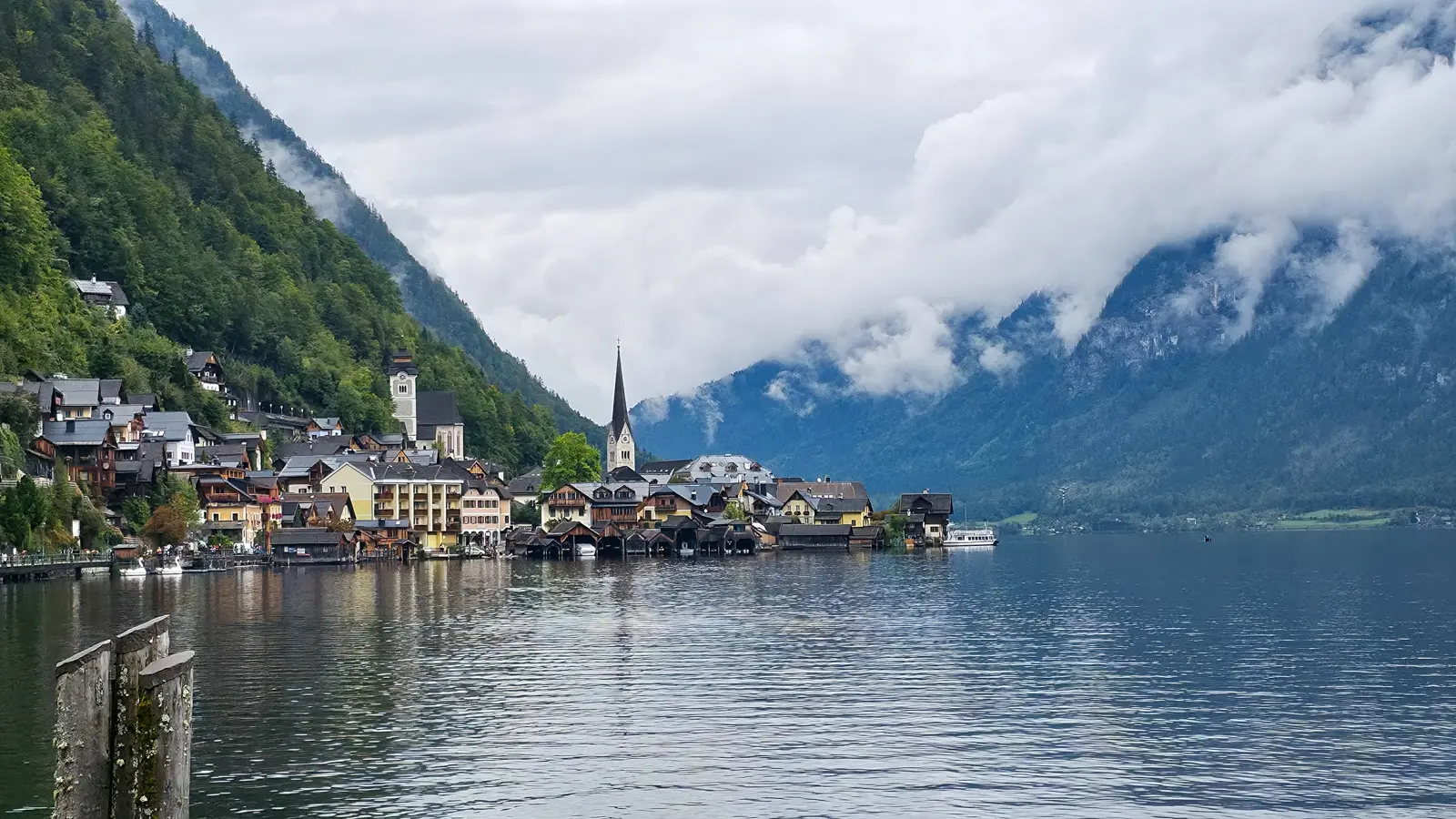
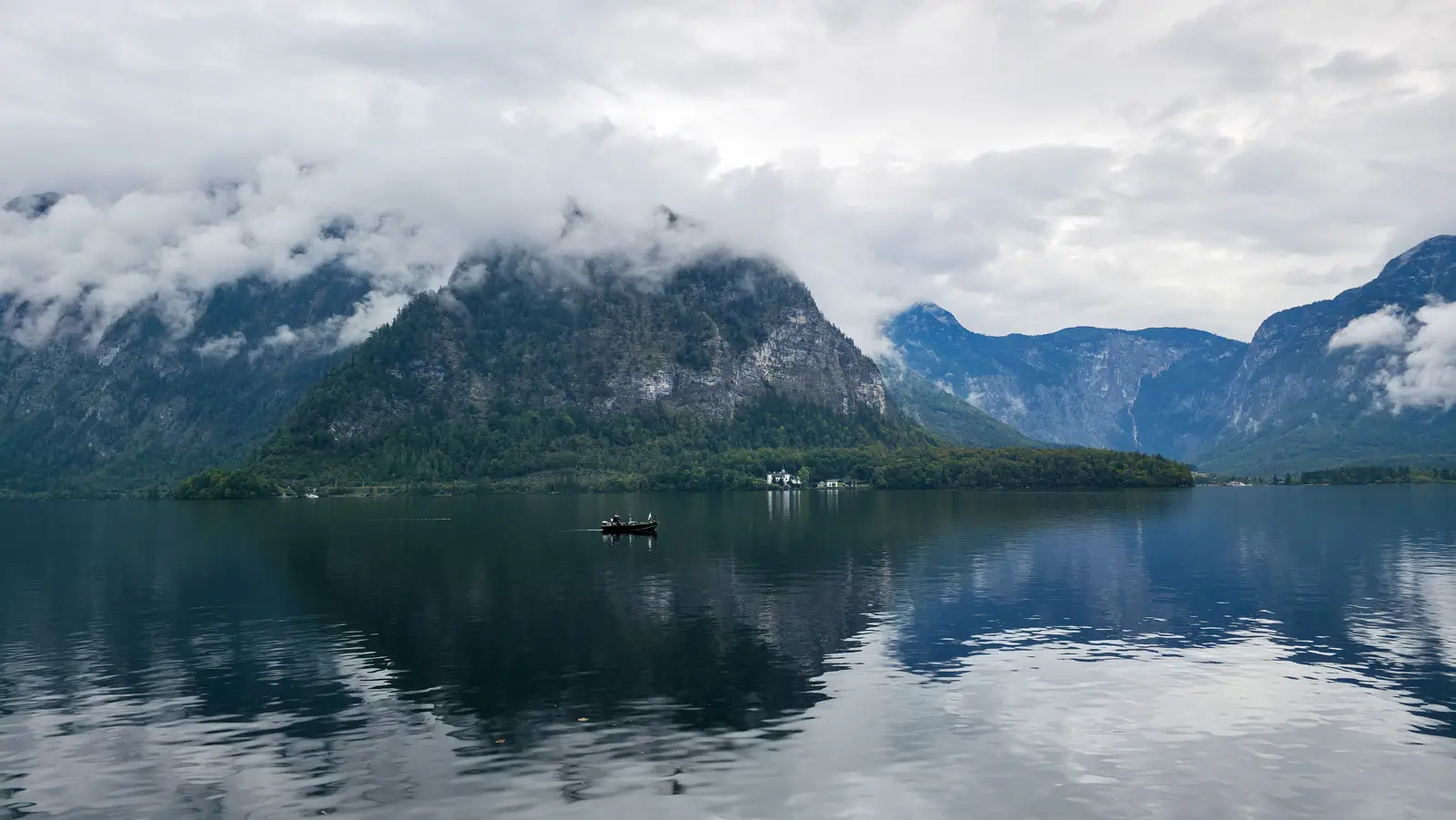
Hallstatt’s landscape is nothing short of breathtaking, not in an overwhelming way, but in a quiet, almost poetic manner. The lake mirrors the village with near-perfect symmetry, reflecting pastel houses, church spires, and the surrounding mountains as though the entire scene were suspended between reality and reflection. The steep alpine slopes rise dramatically behind it, creating a natural frame that feels both protective and awe-inspiring, as if the village is gently held within the landscape itself.
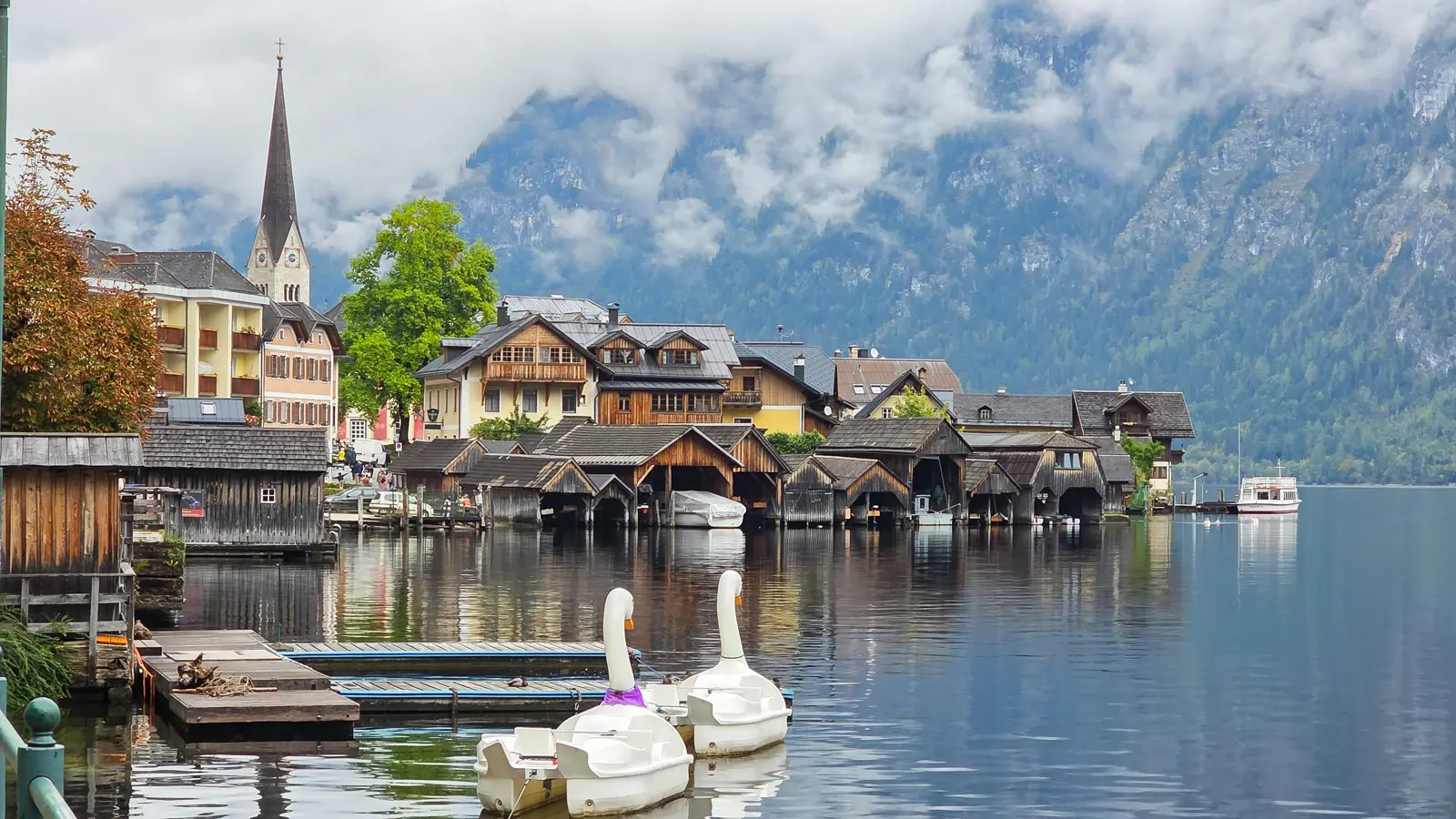
What makes the experience so special is how it evolves throughout the day. In the early morning, Hallstatt feels calm and almost untouched – the water still, the air crisp, and the atmosphere soft and hushed. As the day unfolds, light shifts across the mountains, casting shadows and highlights that transform the scenery moment by moment. And in the evening, as the crowds begin to fade, the village settles into a quieter rhythm, revealing a more intimate and authentic side of itself. It is not just a place to photograph – it is a place to pause, to observe, and to feel, where beauty is not only seen, but deeply experienced.
The Experience: Beyond the Postcard
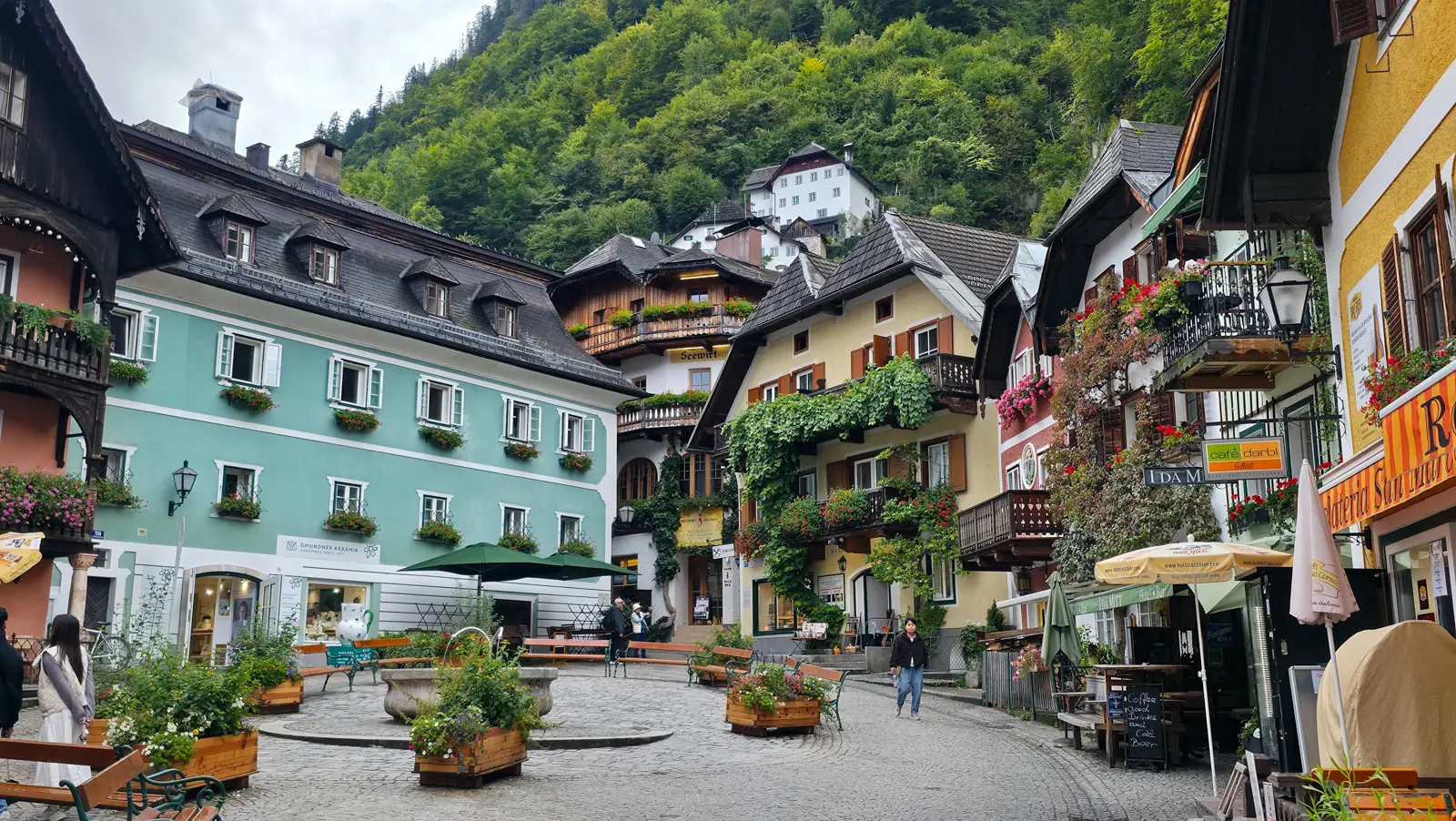
Hallstatt is often described as one of the most beautiful villages in the world. And while that may be true, the experience goes far beyond its postcard-perfect appearance. There is a subtle tension here between image and reality, between the Hallstatt that is photographed and the Hallstatt that is lived. As you move through the village, you begin to notice the details that exist beyond the iconic views: the quiet corners, the rhythm of daily life, the sense that this is not simply a destination, but a place where people continue to live, work, and belong. It is this contrast that gives Hallstatt its depth, transforming it from something visually stunning into something more meaningful.
There is a duality that defines the experience. On one hand, it is a global destination, drawing visitors from around the world who come to witness its beauty. On the other, it remains a village shaped by tradition, routine, and a slower, more grounded way of life. Finding the balance between these two realities is part of what makes a visit here so memorable. The most meaningful moments often unfold in the quieter hours, in the softness of early morning or the gentle slowing of the late afternoon. This is when the village begins to feel more intimate, more personal. It is in these moments that you move beyond observation and into connection, discovering a Hallstatt that is not just seen, but truly experienced.
Bubbly Tips for Visiting Hallstatt
- Visit early in the morning or later in the afternoon to experience Hallstatt at its most peaceful, before or after peak day-trip crowds.
- Plan your journey from Vienna in advance – Hallstatt is about 3 to 3.5 hours away, whether by train or car, making it a beautiful but full-day excursion.
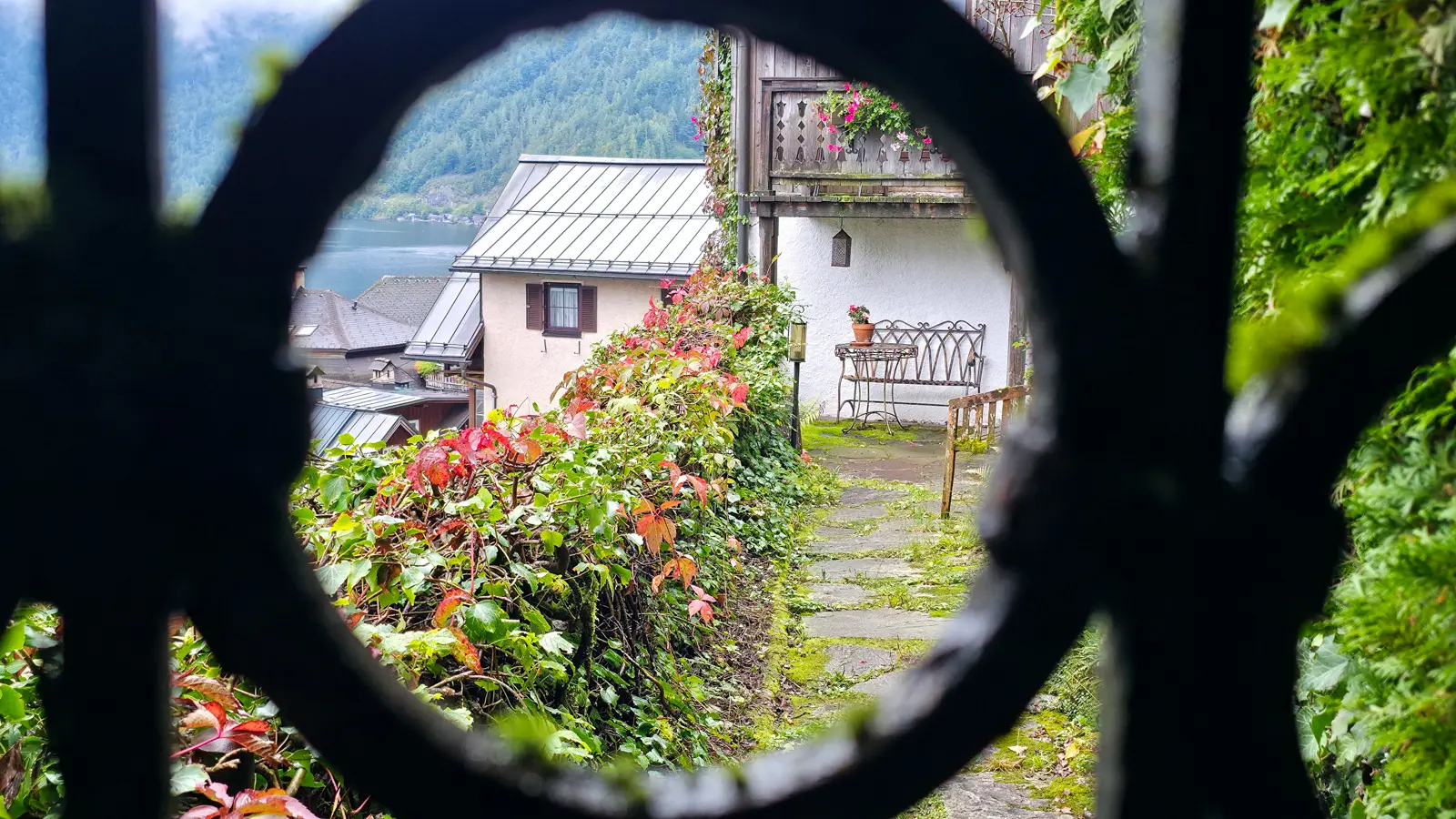
- Take time to explore beyond the main viewpoint – the village has many quiet corners and hidden perspectives worth discovering.
- Visit the salt mine (Salzwelten Hallstatt) to better understand the village’s history as one of the oldest salt-producing regions in the world.
- Don’t miss the ossuary (Bone House) – it offers a unique and meaningful perspective on local traditions and remembrance.
- Stop for a quick bite at a local kebab stand like “Karmez Kebap” – perfect for a simple, delicious snack between exploring.
- Stay overnight if possible to experience Hallstatt without the daytime crowds and enjoy a more intimate atmosphere.
- Check seasonal conditions and costs in advance – ticket prices, opening hours, and transport schedules can vary throughout the year.
Final Thoughts
Hallstatt is more than a destination, it is a place where beauty and history exist side by side, where nature and culture are deeply intertwined. It invites you to look beyond the surface, to explore not just what is visible, but what has shaped it over time.
From ancient salt mines to quiet churches, from breathtaking landscapes to deeply human traditions, Hallstatt offers an experience that lingers, not just in memory, but in feeling.
Is Hallstatt already on your list, or would you add it to your next Austrian adventure? I’d love to hear your thoughts in the comments section below.
Until next time!

🌟 Everything You Need to Plan Your Dream Trip in 2026
- 🌟 Luxury Hotels - Find premium stays with Booking.com & Hotels.com
- 🏡 Vacation Rentals - Discover unique properties on VRBO
- 🏞️ Guided Tours - Explore with Viator or GetYourGuide
- 🎫 Attraction Tickets - Skip the lines with Tiqets
- 🚢 Ocean Cruises - Set sail with Cruise Direct
- 📱 International SIMs - Stay connected with Saily
- 🚗 Car Rentals - Budget-friendly options from Discover Cars
- 🌐 Secure VPNs - Browse safely with NordVPN
- 💶 Currency Exchange - Best rates with Wise
- 🗣️ Learn Languages - Master the local language with Babbel and Rosetta Stone