
Hello my friends! There are certain cities where art does not simply exist in museums – it becomes part of the atmosphere, something you feel as you walk through the streets. Vienna is one of those cities. Its architecture, its cafés, its music, and its history all seem to echo a particular kind of elegance, one that feels timeless yet deeply human. And within that world, few artists capture the spirit of Vienna more powerfully than Gustav Klimt.
To experience Klimt in Vienna is not just to see paintings on a wall. It is to step into a universe of gold, symbolism, and emotion, where beauty is layered with meaning and every detail invites you to look a little closer. It is an experience that stays with you long after you leave the gallery, quietly reshaping how you see both art and the city itself.
Gustav Klimt in Vienna at a Glance
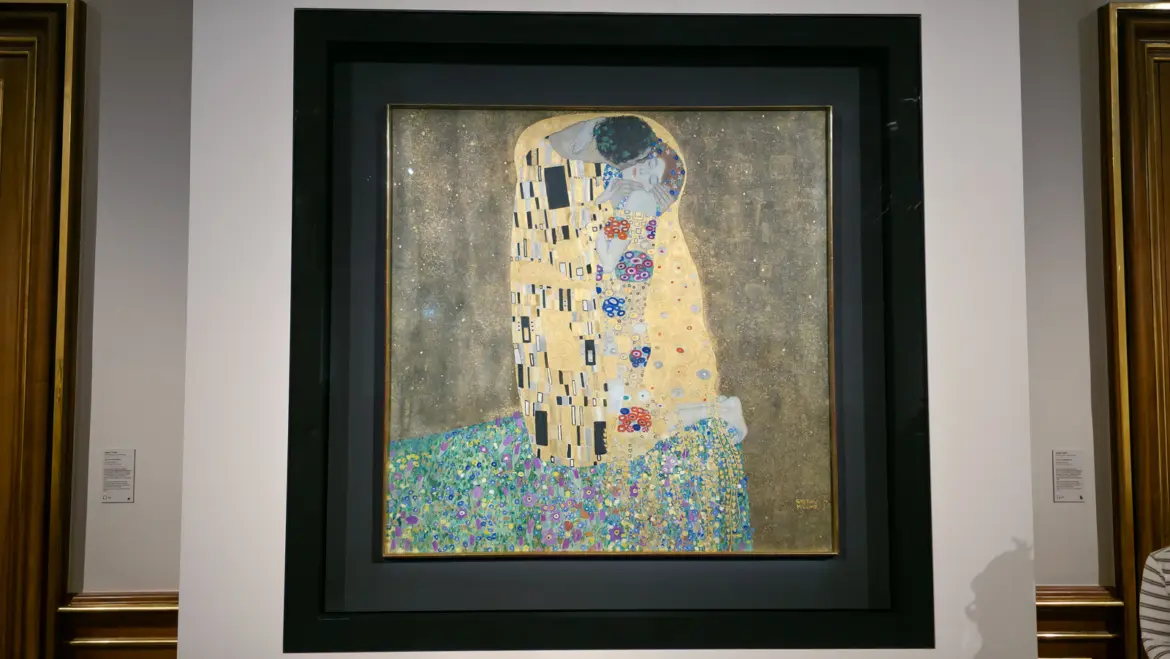
🎨 The Kiss: Painted 1907–1908, 180×180 cm, first shown as Liebespaar — purchased by Austria for 25,000 Kronen. Upper Belvedere.
✨ Golden Phase: Inspired by Byzantine mosaics in Ravenna (1903) and his father Ernst, a Bohemian gold engraver
🏛️ Vienna Secession: Co-founded by Klimt in 1897 — “To every age its art, to every art its freedom”
🖼️ Beethoven Frieze: ~34m wide × 2m high across three walls, permanently at the Secession Building
🏛️ Where to see Klimt: Upper Belvedere (largest collection), Secession Building (Beethoven Frieze), Kunsthistorisches Museum (early decorative work)
🇯🇵 Japanese influence: Flatness, decorative quality, and compositional boldness — a key source for Klimt’s distinctive style
💡 Tip: Visit early or late to see The Kiss without crowds. Book Belvedere tickets in advance.
Who Was Gustav Klimt?
Born on 14 July 1862 in Vienna, Gustav Klimt became one of the most influential figures in European art at the turn of the 20th century. His origins shaped his art in ways that are easy to overlook – his father Ernst was a gold engraver from Bohemia, and the lifelong love of gold leaf that defines Klimt’s most celebrated works can be traced directly to this childhood familiarity with the material.
Early in his career, Klimt was a successful painter of architectural decorations in a thoroughly conventional manner, working within the academic tradition that dominated Viennese art. But his vision gradually evolved, and in 1897 he took a decisive step – co-founding the Vienna Secession and becoming its first president. The Secession was a direct rejection of academic artistic rules, embracing instead a more modern, expressive, and symbolic approach to art that would reshape the cultural life of the city.
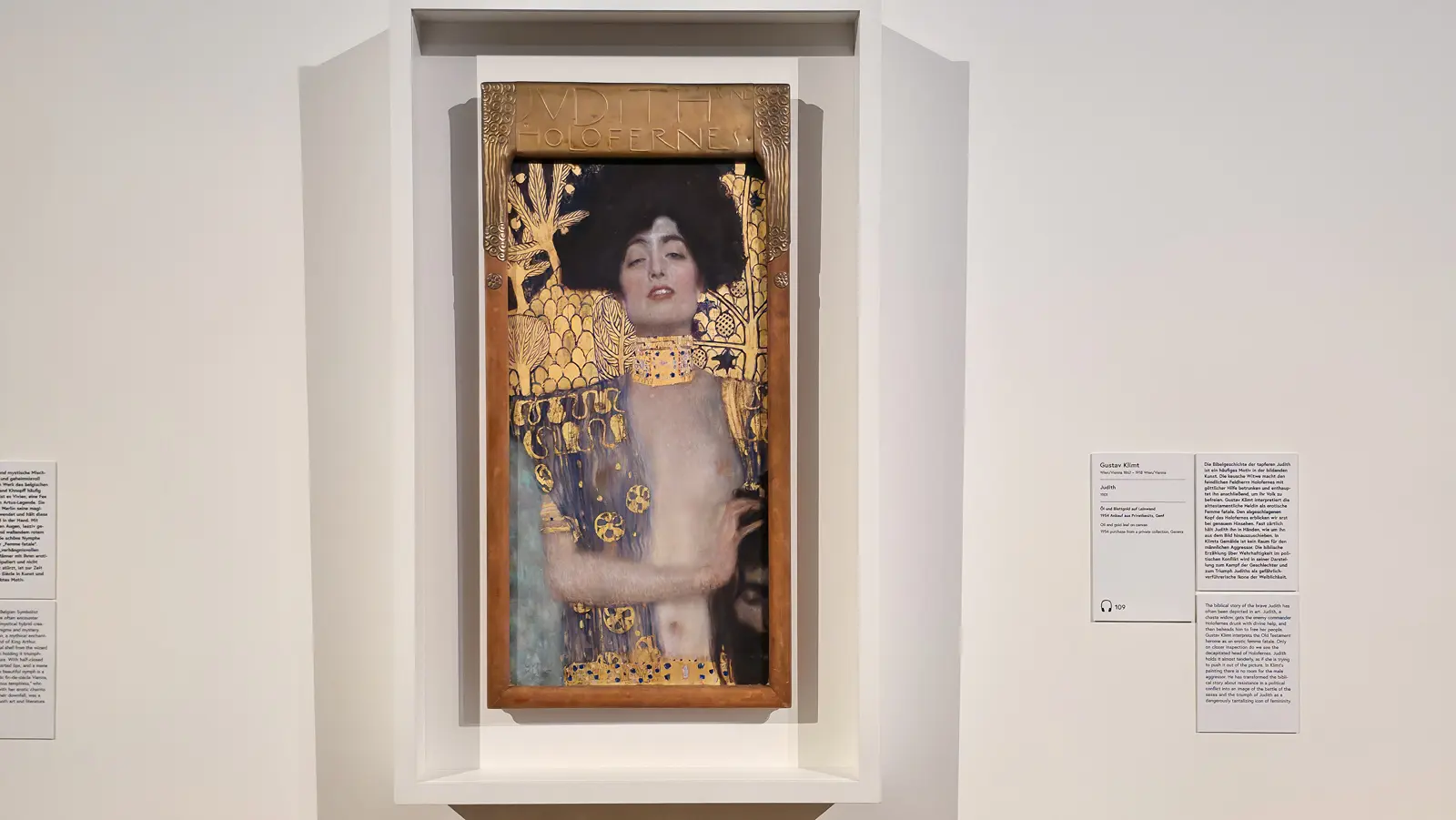
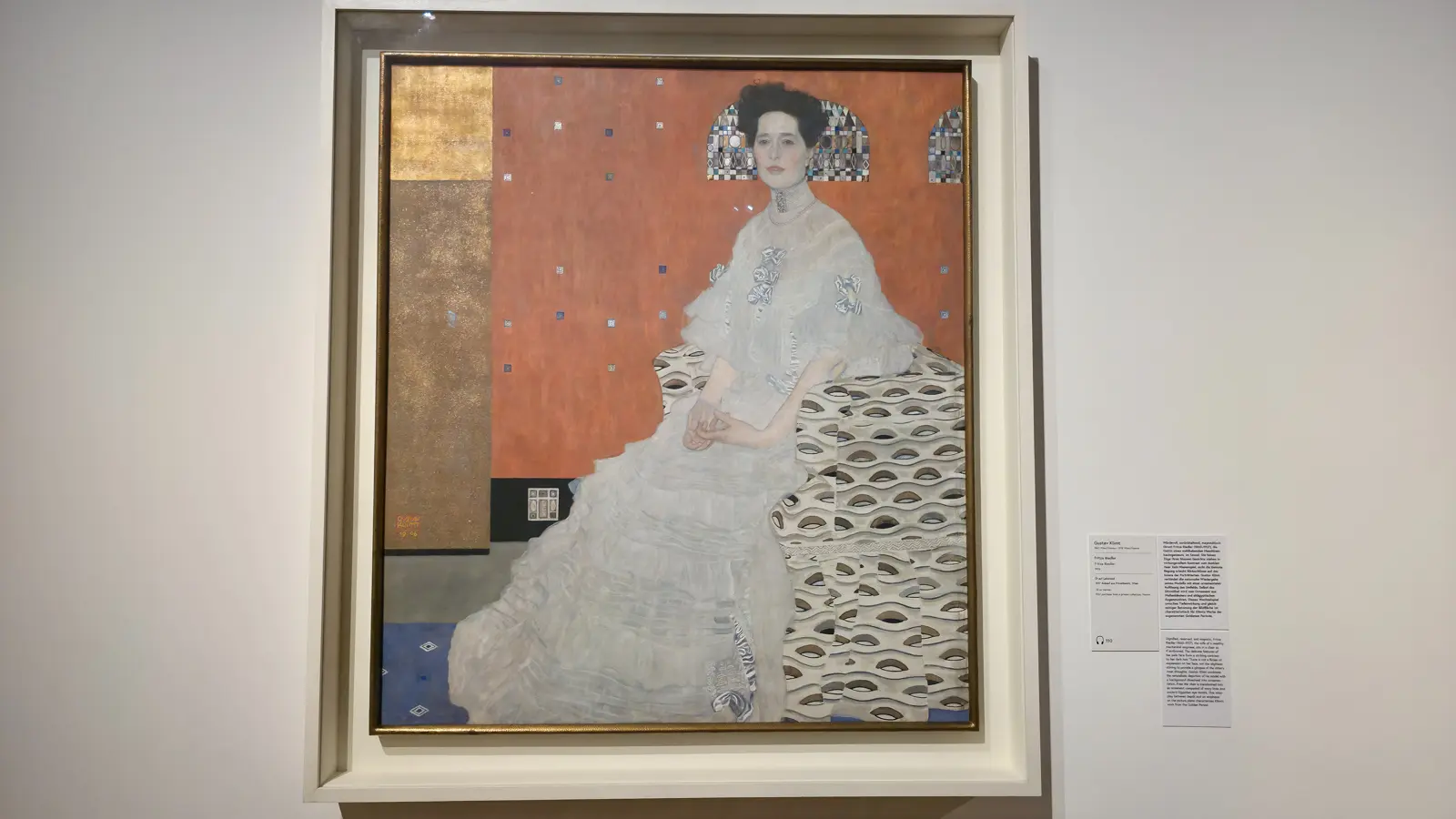
His work is instantly recognizable. Gold leaf, intricate patterns, and richly decorative surfaces create compositions that feel both intimate and monumental. Among the influences that shaped his distinctive style, Japanese art played a particularly important role – its flatness, decorative quality, and compositional boldness all left a deep mark on his approach. His subjects, often female figures, are portrayed with a striking blend of strength, sensuality, and vulnerability. Klimt’s art does not simply depict beauty; it explores it, questions it, and transforms it into something almost dreamlike.
Yet Klimt was not working in isolation. His art was deeply connected to the Vienna around him – a city experiencing cultural transformation, intellectual debate, and artistic innovation. Understanding Klimt means understanding Vienna itself.
The Golden Phase and The Kiss
Among Klimt’s many works, one stands above all others in both fame and emotional impact: The Kiss. Painted between 1907 and 1908 at the height of what art historians call his Golden Phase, the work was first exhibited under the title Liebespaar – meaning “the lovers” – and was purchased by the Austrian government for 25,000 Kronen shortly before its completion, an extraordinary act of institutional recognition that secured the painting for the nation. Today it is housed in the Upper Belvedere, where it has become one of the most iconic images in the world of art.
The golden brilliance that defines the painting has a specific origin. In 1903, Klimt travelled to Ravenna, where he encountered the Byzantine mosaics in the Church of San Vitale – their flatness, luminosity, and golden intensity having a profound influence on his use of gold and richly decorative surfaces. Standing before The Kiss, what strikes you first is the richness of that gold. It does not simply reflect light; it seems to radiate warmth, drawing you into the scene. The figures, wrapped in shimmering patterns on a square canvas measuring 180 by 180 centimetres, exist somewhere between reality and abstraction, between the physical and the symbolic. There is an intimacy to the composition, a quiet moment suspended in time, yet it carries a universal emotional resonance that feels instantly familiar.
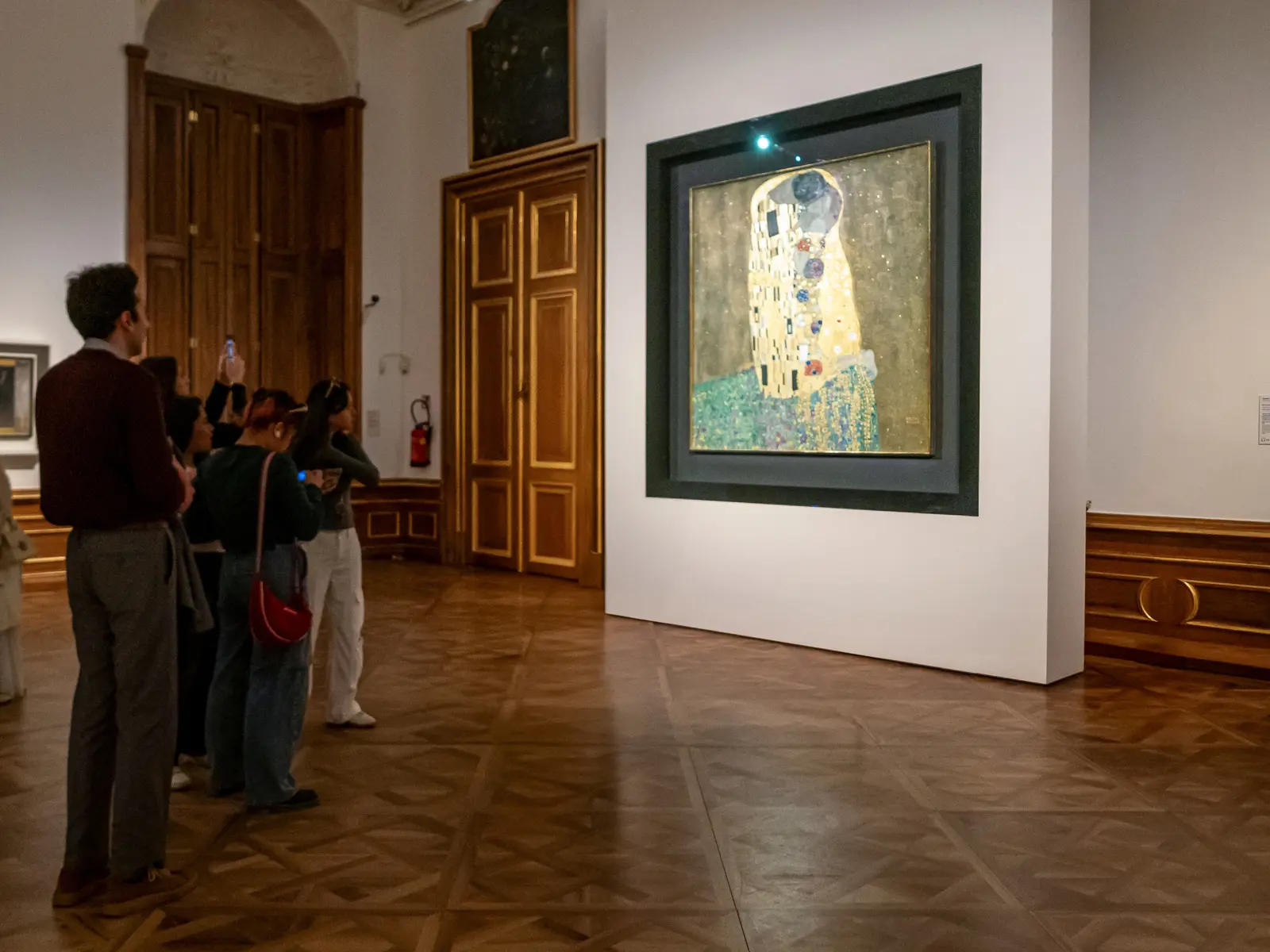
What makes the experience even more powerful is its setting. Seeing The Kiss within the context of Vienna, surrounded by the architecture and cultural history that shaped Klimt’s world, gives the painting a deeper meaning. It is no longer just a masterpiece – it becomes part of a larger story, one that connects art, place, and emotion.
Where to See Klimt in Vienna
One of the most remarkable aspects of visiting Vienna is that Klimt’s work is not confined to a single location. Instead, it is woven throughout the city, inviting you to explore different spaces and perspectives. At the Belvedere Palace, you encounter not only The Kiss but also the largest collection of Klimt paintings in the world, offering a rare opportunity to trace his artistic evolution across different periods and styles. The setting itself – a Baroque palace surrounded by formal gardens – adds an additional layer of beauty to the experience, creating a dialogue between art and architecture.
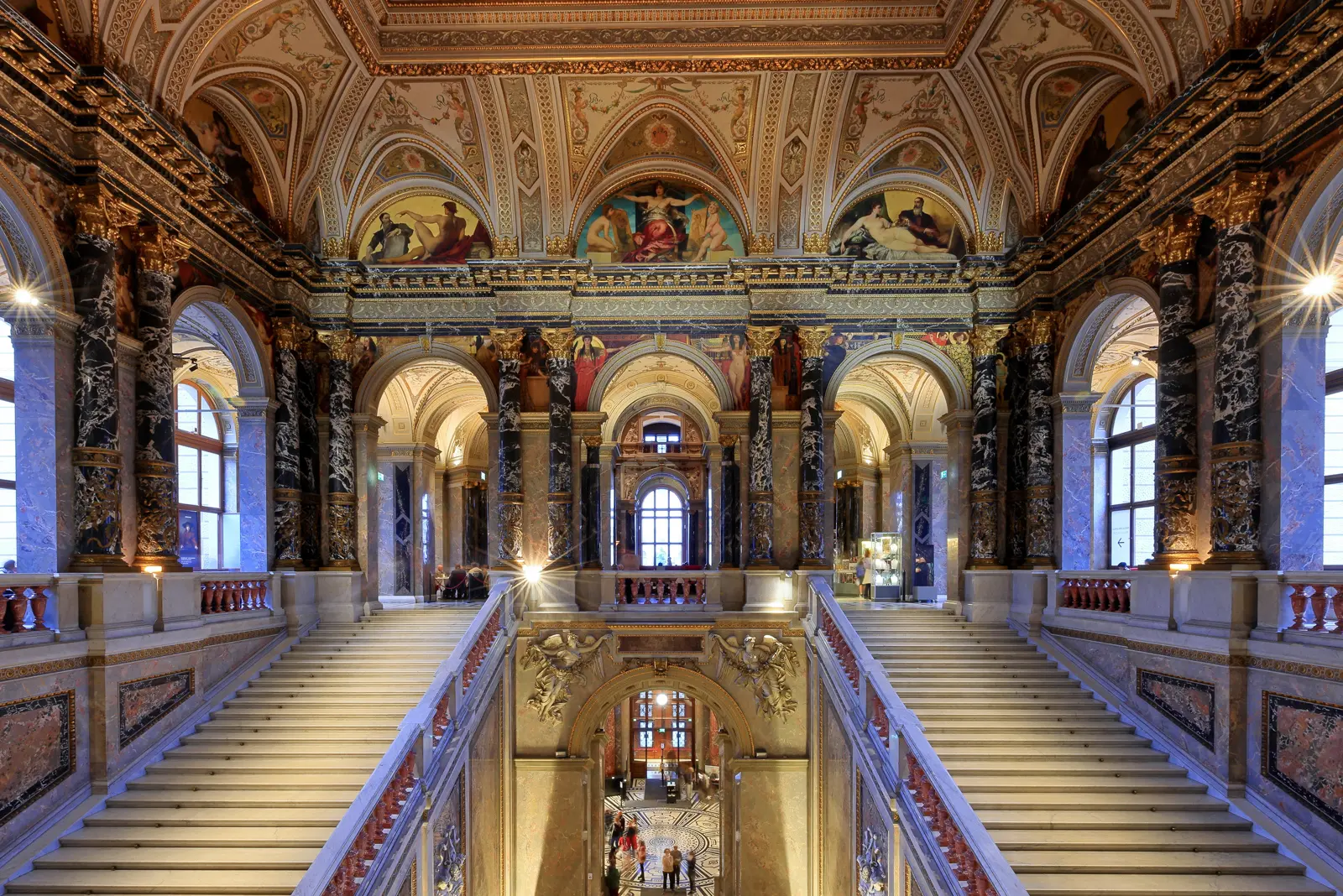
At the Kunsthistorisches Museum, you can discover Klimt’s earlier work, including decorative paintings integrated into the arches and architectural elements of the grand staircase, revealing his mastery of technique and his deep connection to classical traditions before his transition into more modern expression.
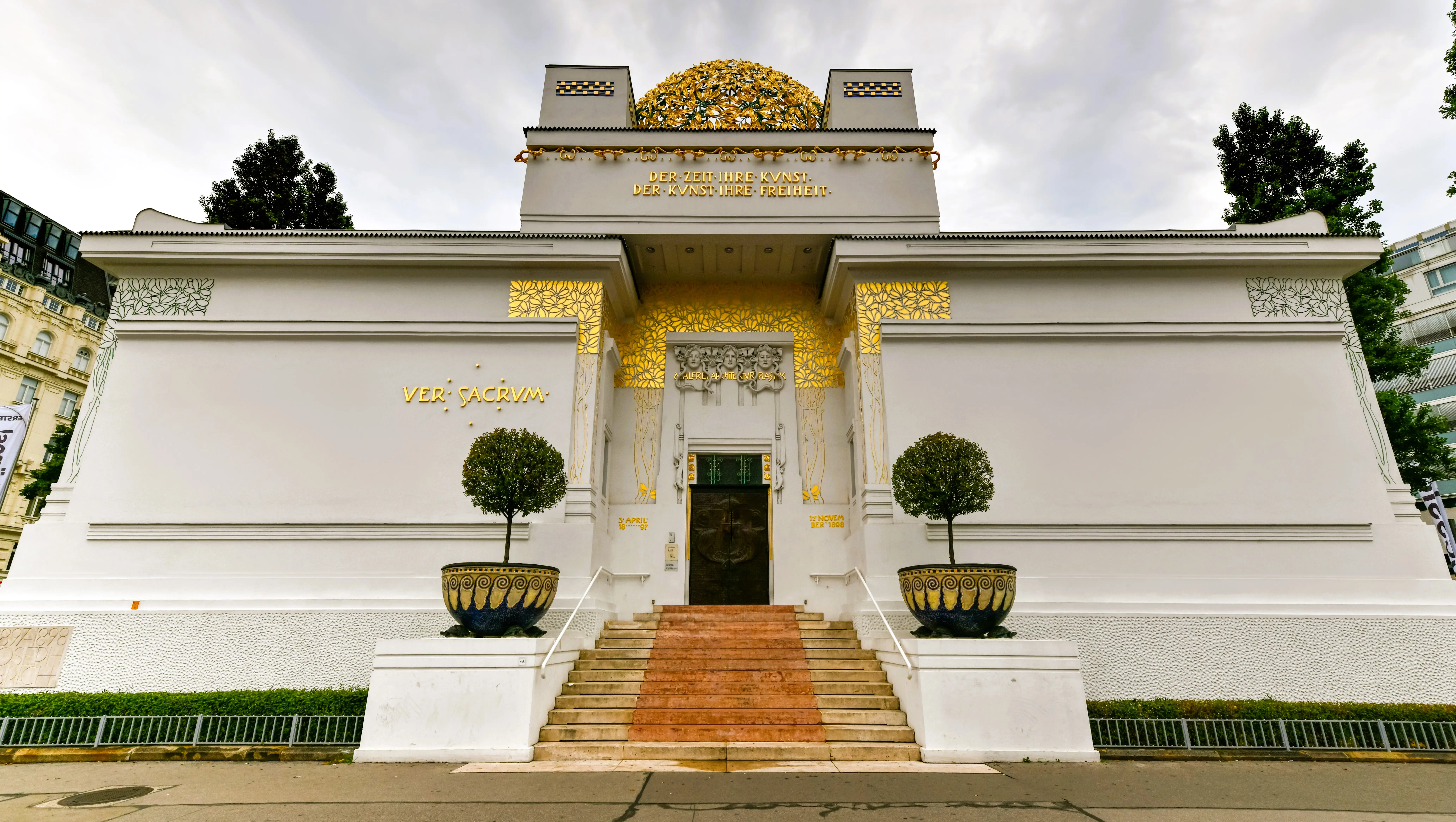
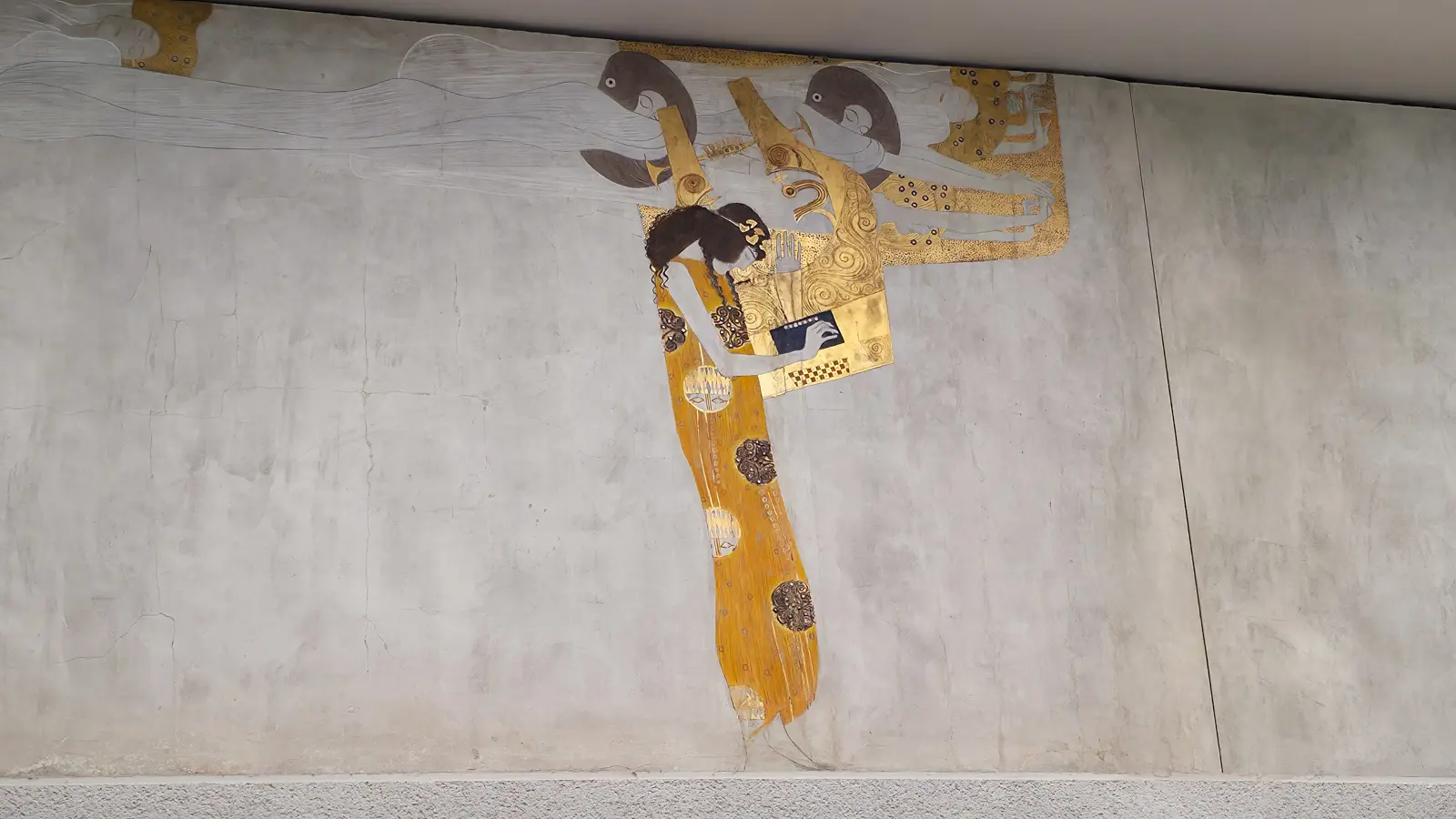
At the Secession Building – whose façade bears the defining motto of the movement, “Der Zeit ihre Kunst, der Kunst ihre Freiheit” (“To every age its art, to every art its freedom”) – you will find the famous Beethoven Frieze. Stretching approximately 34 metres wide and 2 metres high across three walls and now permanently housed within the building, this monumental work embodies the ideals of the Vienna Secession, surrounding the viewer with symbolism, movement, and emotion in an experience that feels almost immersive.
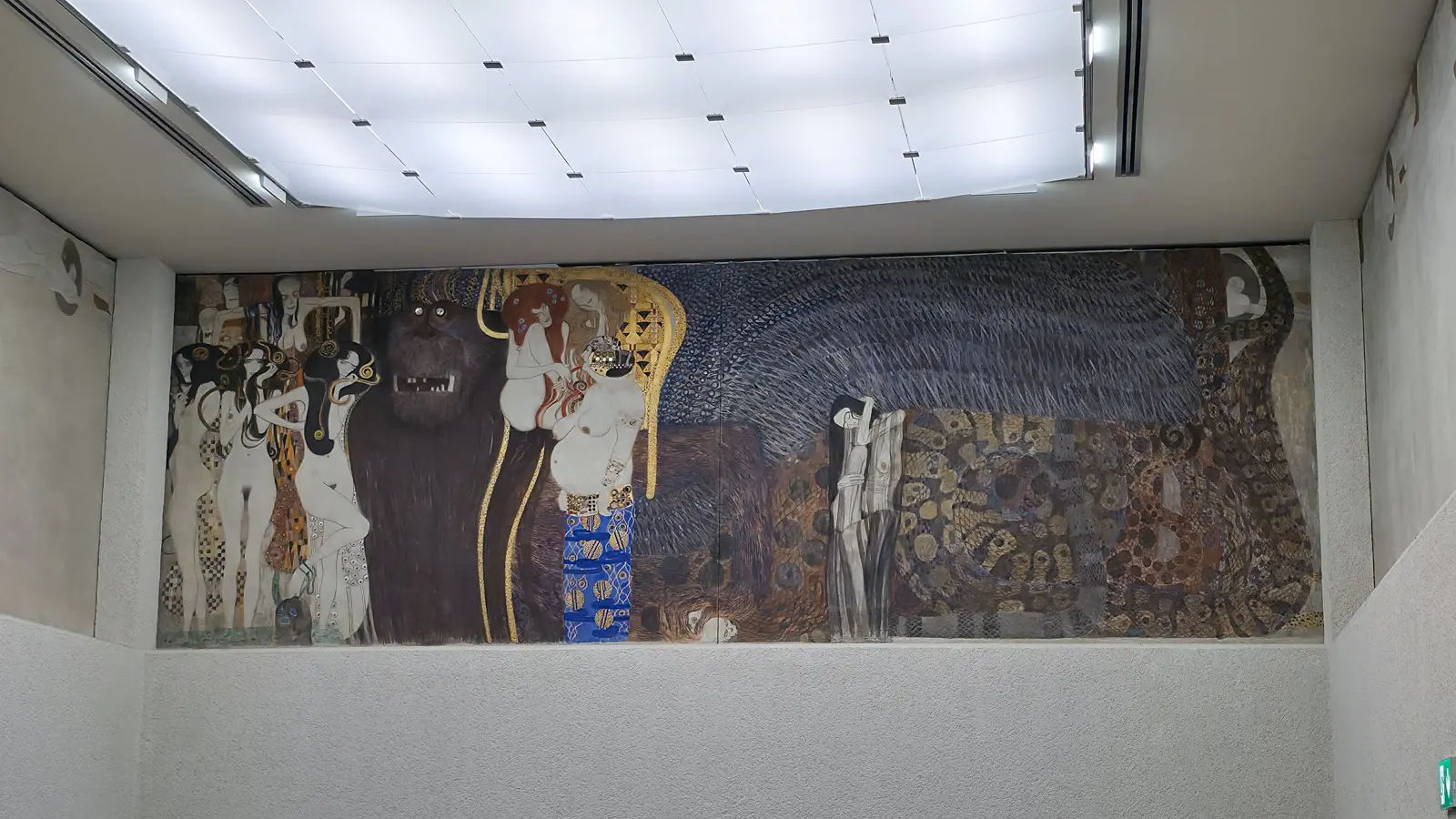
Exploring these locations is not just about seeing different artworks, it is about understanding the many dimensions of Klimt’s creativity and how it evolved over time.
Klimt and Vienna: A Perfect Match
There is something about Vienna that feels inherently aligned with Klimt’s aesthetic. The city’s ornate architecture, its appreciation for beauty and detail, and its deep cultural history all mirror the qualities found in his work. Walking through Vienna, you begin to notice connections everywhere – in the richly decorated façades along the Ringstrasse, in the elegance of historic interiors, and even in the atmosphere of traditional cafés where time seems to slow. These spaces reflect the same artistic language Klimt embraced: one that values refinement, emotion, and depth. The cultural energy of fin-de-siècle Vienna, marked by innovation, intellectual exchange, and artistic transformation, shaped his vision in profound ways. Klimt did not just paint Vienna; in many ways, he embodied it. His art reflects the city’s identity, capturing both its grandeur and its introspective, almost poetic character.
The Experience: Seeing Klimt in Person
There is a difference between knowing a painting and truly experiencing it. Images of Klimt’s work are everywhere – in books, online, and in reproductions – but nothing compares to standing in front of the original. In person, the scale, texture, and detail reveal themselves slowly, inviting you to take your time. The gold shimmers differently depending on the light, while the intricate patterns grow more complex the longer you look. What might appear purely decorative at first begins to feel deeply expressive, almost emotional. Standing there, in a quiet gallery in Vienna, the experience becomes immersive and personal. It encourages you to slow down, to look more closely, and to move beyond the surface. It is not just about seeing art; it is about feeling it, absorbing it, and allowing it to linger long after you leave.
Bubbly Tips for Experiencing Klimt in Vienna
- Visit early or late in the day: Klimt’s most famous works, especially The Kiss, attract significant crowds. Arriving early or later in the afternoon allows for a more intimate and enjoyable experience.
- Book tickets in advance: The Upper Belvedere is one of Vienna’s most visited cultural sites. Reserving your ticket ahead of time helps you avoid long lines and ensures entry.
- Take your time with each piece: Klimt’s work rewards slow viewing. Step closer, notice the details, then step back again to appreciate the full composition.
- Combine art with surroundings: Visiting Klimt at the Belvedere is even more meaningful when paired with a walk through the gardens or a moment at the café. The experience becomes holistic rather than purely visual.
- Explore multiple locations: Don’t limit yourself to one museum. Seeing Klimt across different venues provides a richer understanding of his artistic journey.
Final Thoughts
Experiencing Gustav Klimt in Vienna is more than a cultural activity, it is a moment of connection. Between art and place, between history and emotion, between what you see and what you feel.
Vienna offers many beautiful experiences, but this is one that stays with you in a quieter, more lasting way. Long after you leave the gallery, the gold, the patterns, and the emotion remain – a gentle reminder of the beauty that exists when art and life come together.
Have you experienced Klimt in Vienna, or is it on your travel list? I would love to hear your thoughts, impressions, or favorite moments, feel free to share in the comments below.
Happy travels!

🌟 Everything You Need to Plan Your Dream Trip in 2026
- 🌟 Luxury Hotels - Find premium stays with Booking.com & Hotels.com
- 🏡 Vacation Rentals - Discover unique properties on VRBO
- 🏞️ Guided Tours - Explore with Viator or GetYourGuide
- 🎫 Attraction Tickets - Skip the lines with Tiqets
- 🚢 Ocean Cruises - Set sail with Cruise Direct
- 📱 International SIMs - Stay connected with Saily
- 🚗 Car Rentals - Budget-friendly options from Discover Cars
- 🌐 Secure VPNs - Browse safely with NordVPN
- 💶 Currency Exchange - Best rates with Wise
- 🗣️ Learn Languages - Master the local language with Babbel and Rosetta Stone