
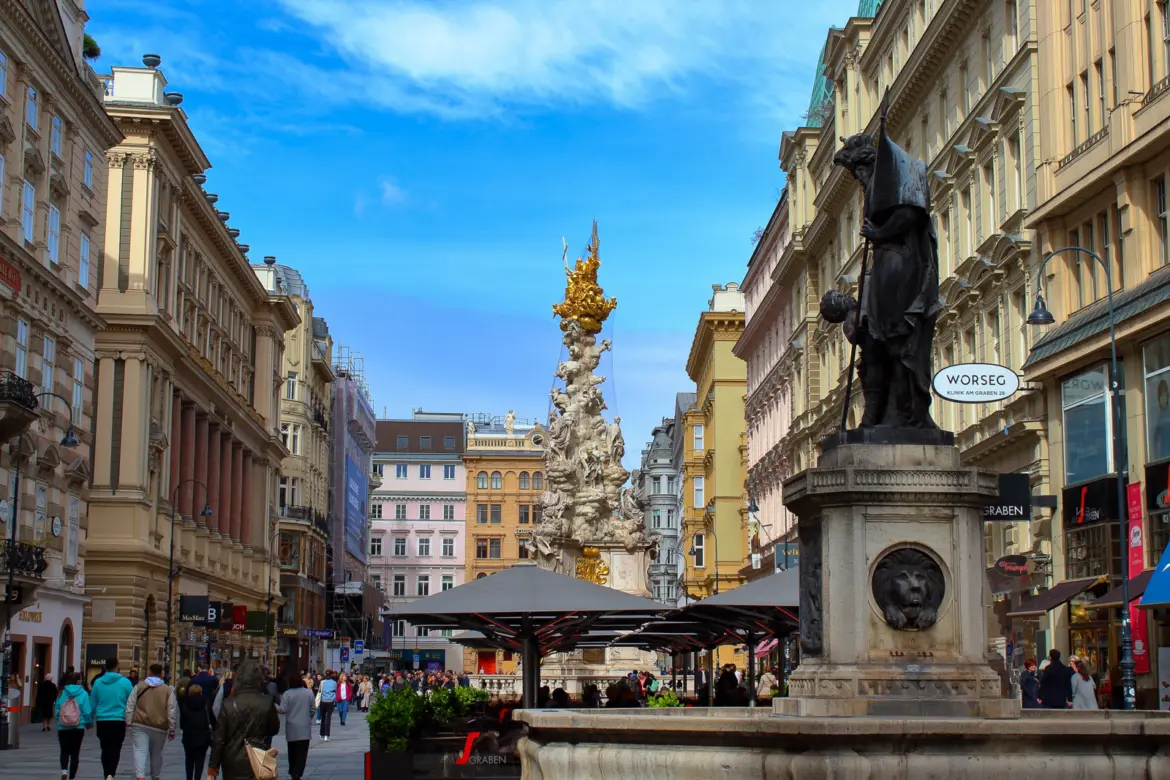
There are streets in Vienna that you walk through, and then there are streets that you experience. Graben is unmistakably the latter. Stretching gracefully through the heart of the historic center, it feels less like a simple pedestrian street and more like an open-air stage where architecture, history, and daily life unfold together in quiet harmony.
At first glance, it is refined and composed: elegant storefronts, carefully restored façades, and a wide, open space that invites movement without ever feeling crowded. But as you begin to walk along it, the experience deepens in subtle ways. The rhythm of footsteps, the shifting reflections in glass windows, the gentle flow of people moving in different directions – all of it creates a sense of continuity that feels almost effortless. Graben does not overwhelm with spectacle; instead, it reveals itself gradually, offering layers of beauty and detail that become more apparent the longer you stay.
Graben at a Glance
🏛️ What it is: One of Vienna’s most elegant streets — a Roman ditch turned Baroque boulevard turned pedestrian promenade since 1974
📜 The name: “Graben” means “trench” — this was the defensive ditch of the Roman camp Vindobona, filled in during the medieval period with ransom money from Richard the Lionheart
⛪ Plague Column (Pestsäule): Ornate Baroque monument commemorating the 1679 plague — commissioned by Leopold I, designed by Fischer von Erlach and Burnacini
🏗️ Architecture: Baroque, Historicist, and Jugendstil façades — each building a different century, all in conversation
🛍️ Shopping: Luxury designer boutiques alongside traditional Viennese shops — modern retail behind historic façades
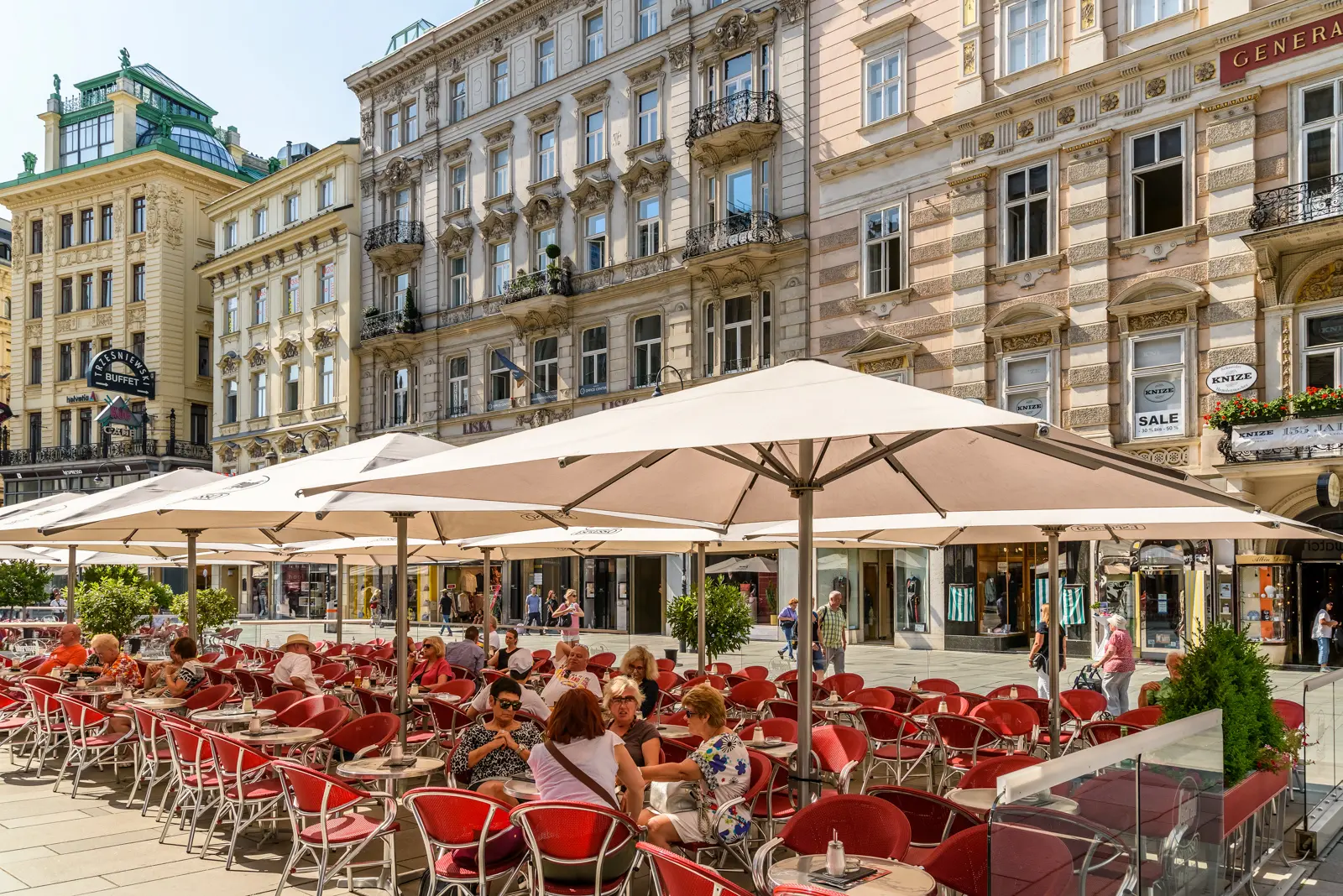
☕ Café culture: Outdoor seating, unhurried coffee, and the Viennese art of watching the world pass by
✨ Holiday chandeliers: During Advent, giant crystal chandeliers illuminate the entire street — one of the most magical sights in Vienna
🆓 Entry: Free and open — a public pedestrian boulevard connecting Stephansplatz to Kohlmarkt
💡 Tip: Walk Graben twice — once during the day for the architecture and café culture, and once at night (especially during the holidays) when the chandeliers turn the street into a ballroom
A Street Shaped by History
The story of Graben stretches back to Roman times, when this space formed part of the defensive ditch – the graben – of the ancient settlement of Vindobona. What was once a boundary designed for protection gradually evolved over centuries into one of Vienna’s most important urban spaces, a transformation shaped by a surprisingly specific moment in history. At the end of the 12th century, the Babenberg Dukes enlarged the city and filled in the trench, funded, remarkably, by the ransom money collected from the captivity of Richard the Lionheart. What had been a Roman ditch became the foundation of one of Vienna’s most celebrated streets.
By the Middle Ages, Graben had become a center of commerce and daily life, lined with market stalls and activity that brought energy to the heart of the city. Later, during the Baroque period, it took on a more ceremonial role, shaped by architectural ambition and a growing sense of civic identity. In 1781, a young Wolfgang Amadeus Mozart moved into a flat at what is today Graben 17, now the Boutique Hotel Nossek, adding yet another layer to the street’s remarkable history. In 1974, Graben became Vienna’s first pedestrian zone, a decision that redefined the space and transformed it into the elegant, unhurried promenade visitors experience today.
What you encounter here is not the result of a single moment in time, but the accumulation of centuries, each era contributing something lasting, even if only in subtle ways.
The Plague Column: A Monument of Memory and Gratitude
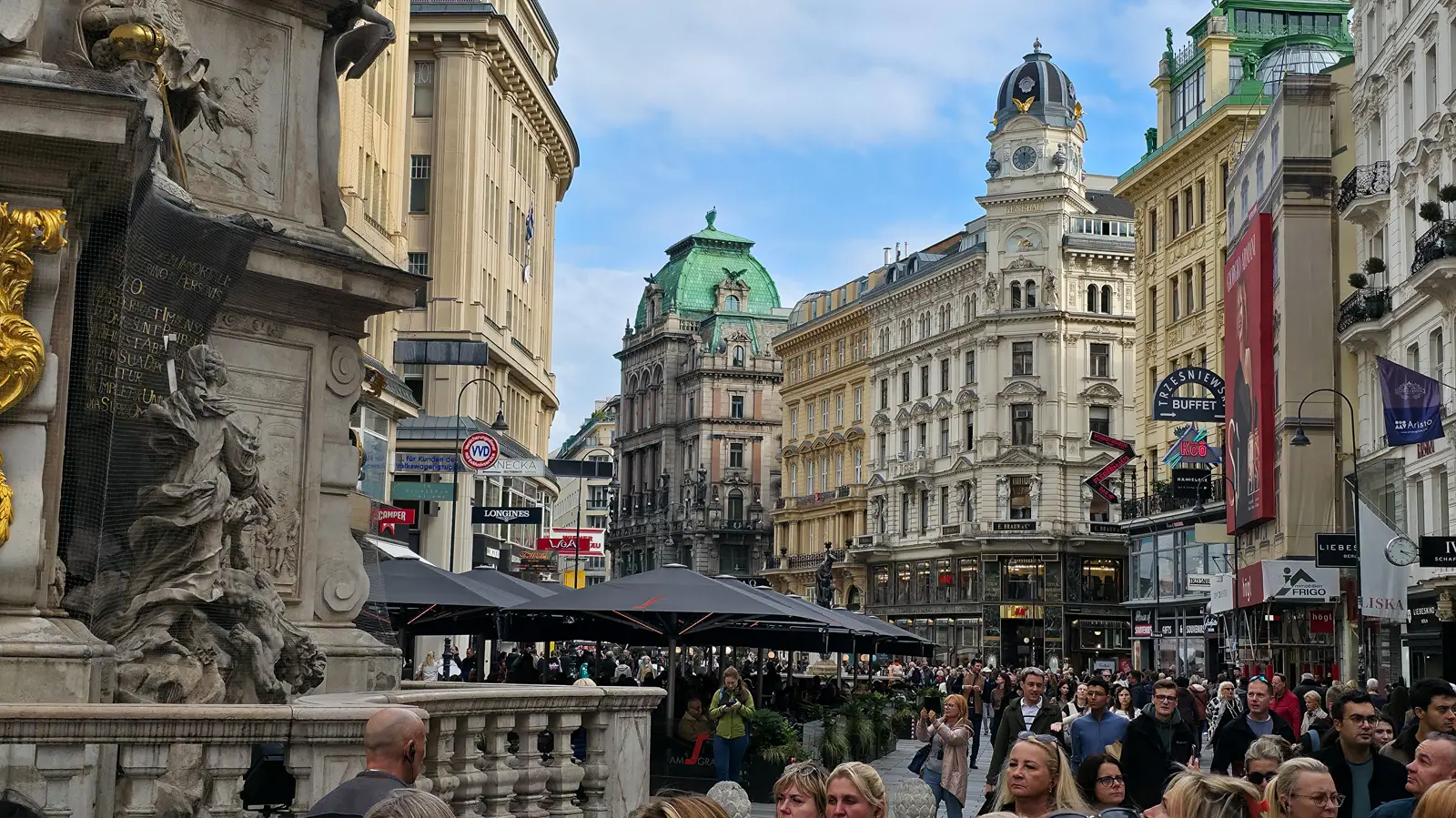
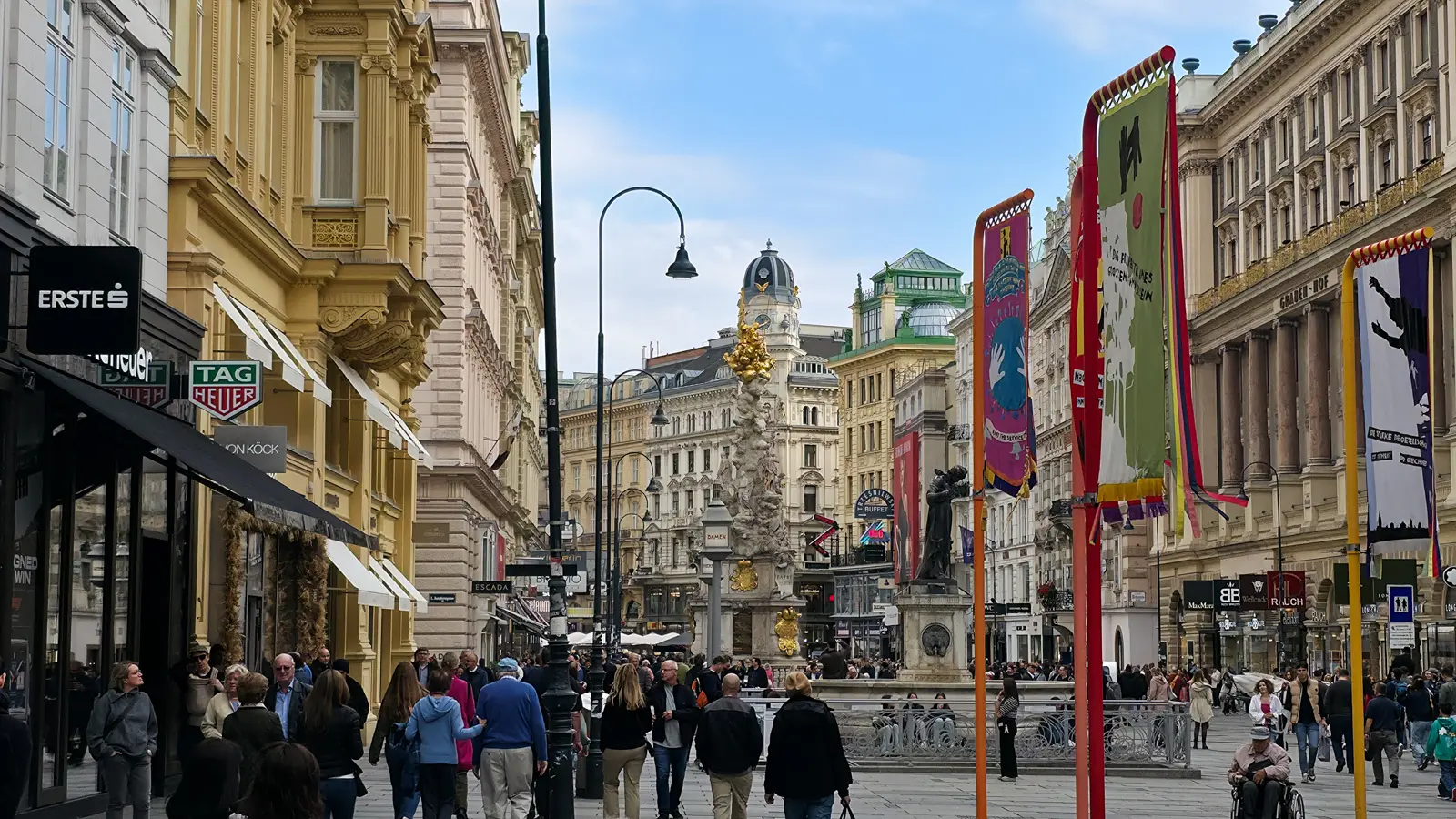
At the heart of Graben rises one of Vienna’s most striking and intricate monuments: the Plague Column Vienna, also known as the Trinity Column – Dreifaltigkeitssäule – in dedication to the Holy Trinity. Its origins lie in a personal vow. In the aftermath of the devastating plague of 1679, Leopold I pledged to commission a mercy column in gratitude for the city’s survival. True to his word, he set the project in motion, and over the following years, it evolved through the work of several artists and architects, including Johann Frühwirth, Matthias Rauchmiller, Johann Bernhard Fischer von Erlach, Lodovico Burnacini, and Paul Strudel. The final monument was inaugurated in 1694, nearly fifteen years after the plague, standing as both a memorial to those who suffered and a powerful expression of civic faith and gratitude.
The column unfolds upward in a dynamic composition of sculptural detail. Figures emerge from clouds, angels ascend, and symbolic elements intertwine in a way that feels almost theatrical. There is movement in the stone, a sense of tension and release that reflects both the tragedy and the hope embedded in its history. And yet, despite its emotional weight, it does not feel separate from the street. People gather around it, pause beside it, and move past it as part of their daily rhythm. It exists not as a distant monument, but as a living presence woven into the flow of Graben.
Architecture and Façades: A Dialogue Across Time
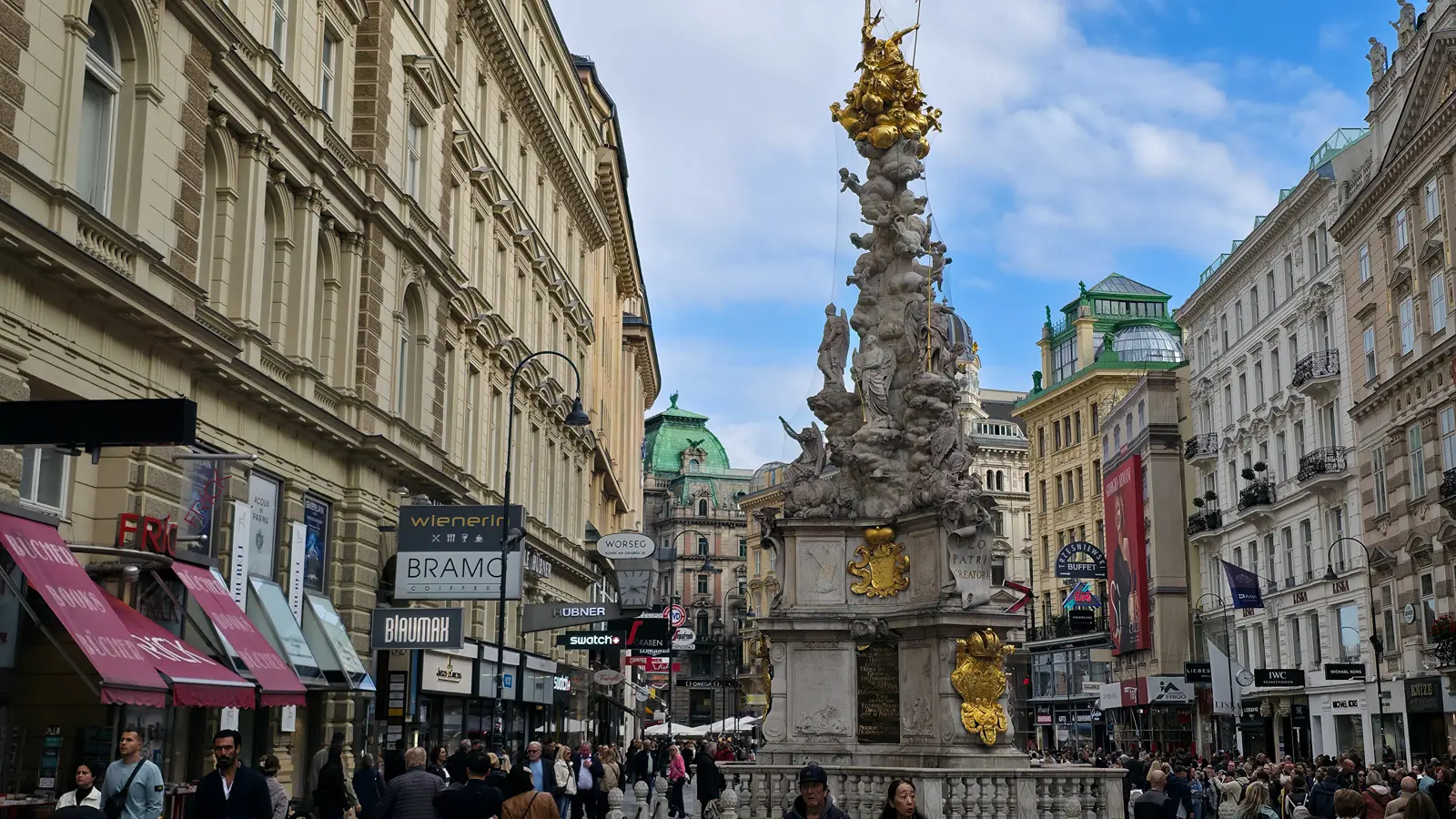
One of the most captivating aspects of Graben is the architecture that lines it, forming a continuous yet varied streetscape that reflects Vienna’s layered history. Rather than drawing attention to a single building, the street invites you to take in the whole, a sequence of façades that unfold gradually as you move. There is a quiet harmony in the way they align, creating a sense of rhythm and proportion that feels intentional, yet never rigid. It is this collective presence that defines Graben, more than any individual landmark.
Look closer, and the details begin to reveal themselves. Baroque elements sit alongside more restrained classical designs, while subtle ornamentation adds depth without overwhelming the eye – sculpted figures, intricate window frames, and finely crafted cornices that catch the light in different ways throughout the day. Some buildings feel expressive and ornate, others more understated and composed, but together they create a cohesive visual language. There is a balance here between preservation and evolution, where history is not isolated, but integrated into a living urban fabric that continues to adapt while maintaining its identity.
Modern Life on a Historic Street
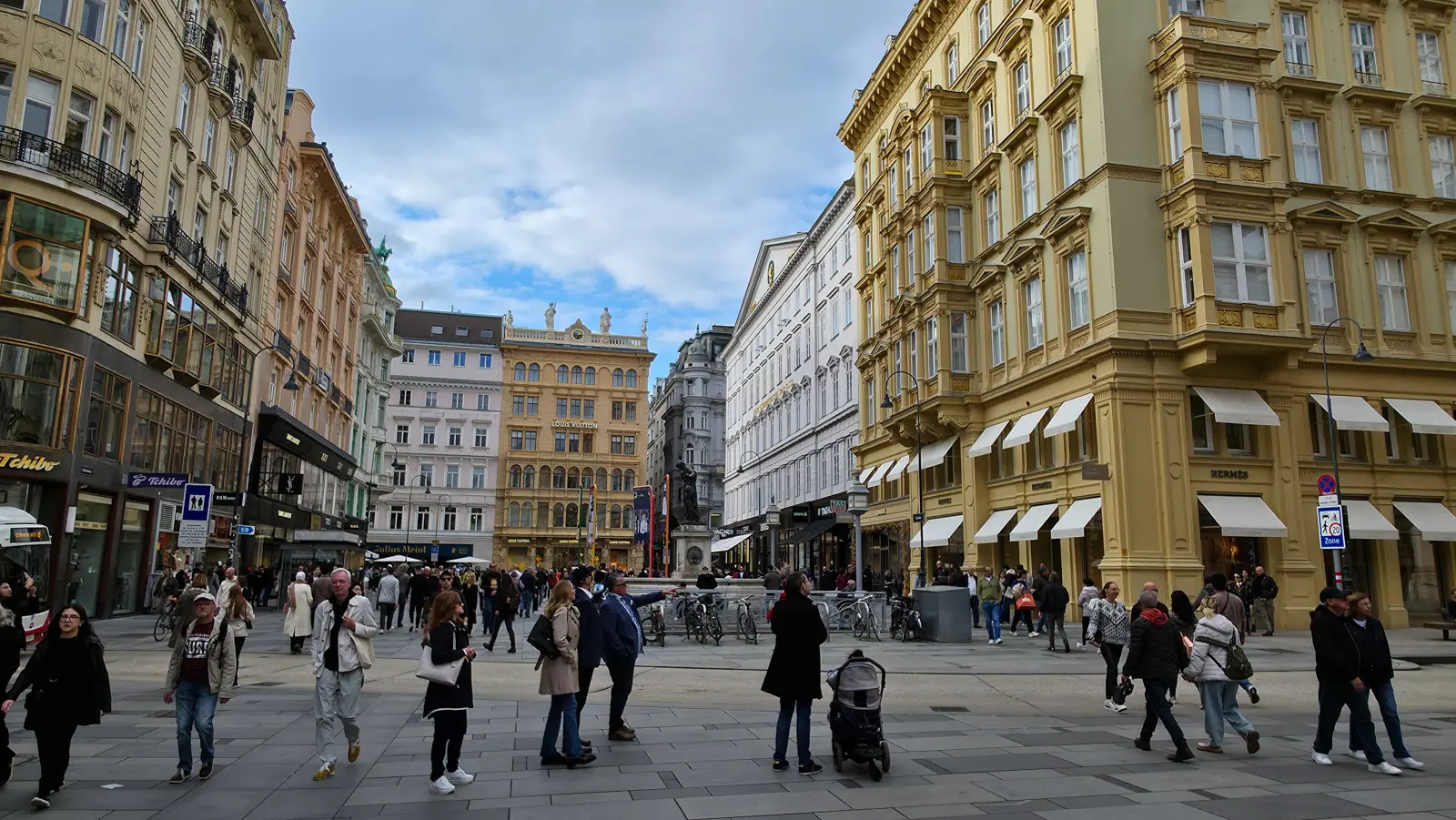
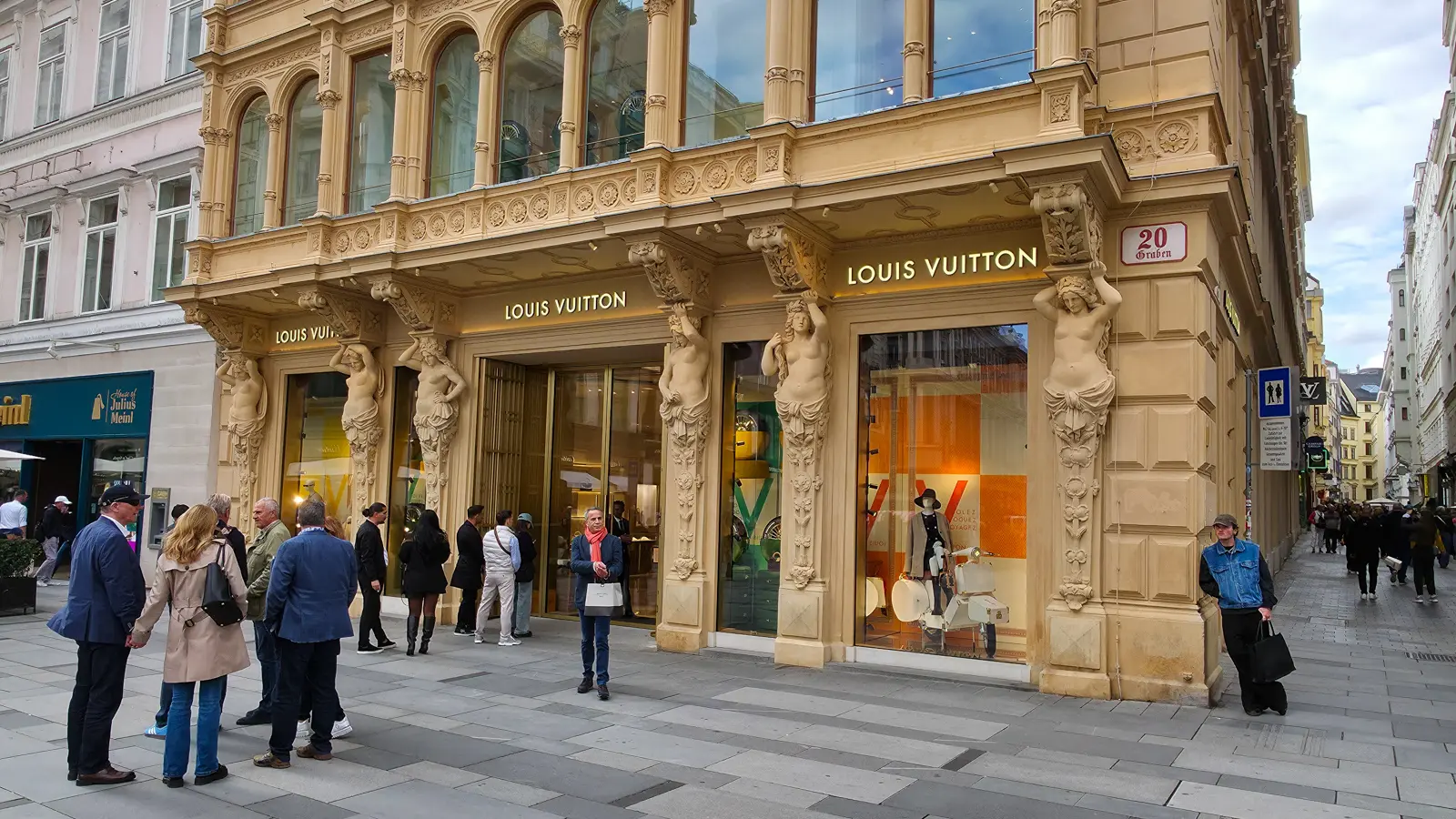
And within this carefully preserved architectural rhythm, something else begins to unfold. Graben is also one of Vienna’s most prestigious shopping streets, where contemporary life moves naturally through a historic setting. International luxury brands sit alongside long-established institutions, their storefronts reflecting the movement of the street and adding layers of light and motion that shift throughout the day. What is striking is not their presence, but their restraint – nothing feels intrusive, and nothing disrupts the character of the space.
People move through Graben in different ways, and the street accommodates them all with ease. Some walk with purpose, others linger, pause, or simply observe. There is no clear distinction between those passing through and those experiencing it more slowly, both become part of the same rhythm. The coexistence of old and new feels unforced, as though modern life has simply settled into its place within a much older framework. It is this quiet integration that gives Graben its distinctive character – not a contrast between past and present, but a seamless continuity between the two.
Everyday Vienna: Moments Between Destinations
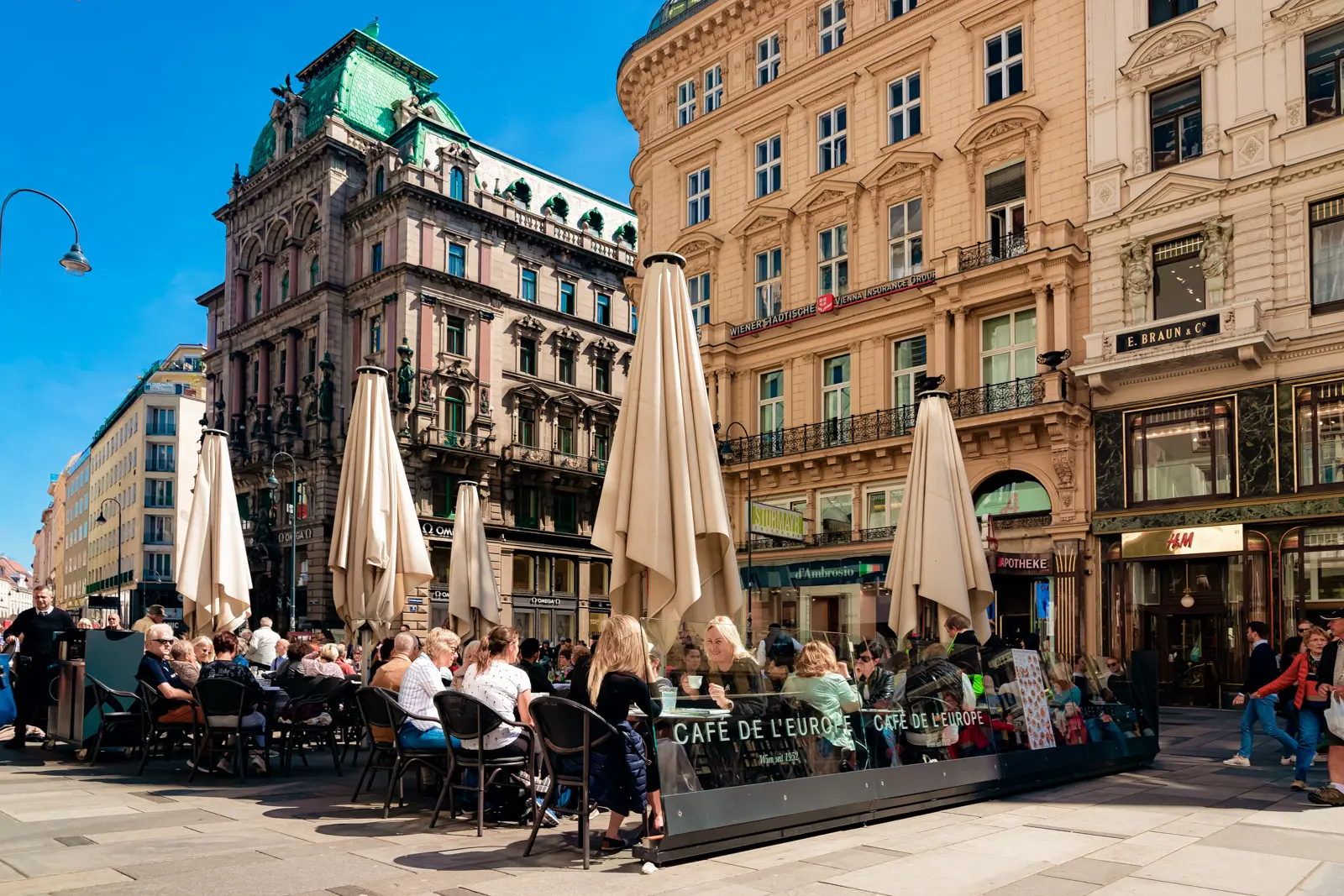
Beyond its architecture and landmarks, Graben reveals itself most clearly in its quieter, more personal moments. People pause at cafés along the edges of the street, stand briefly to take in their surroundings, or slow their pace without any particular destination in mind. These moments are subtle, but they define the experience just as much as the grander elements.
There is something distinctly Viennese in this rhythm – a balance between movement and stillness, between intention and observation. It is not uncommon to see someone linger over a coffee, watching the flow of people pass by, before continuing on. These pauses are not interruptions; they are part of the experience itself. They transform Graben from a space of transit into a place of presence, where even the simplest moments feel meaningful.
Atmosphere: Light, Movement, and Time
Graben changes throughout the day in ways that are subtle yet deeply felt, shaped as much by light as by movement. In the morning, the street carries a quieter energy, as the city begins to wake and the light softens the edges of its architecture. The space feels open and unhurried, allowing details to emerge gradually – the rhythm of façades, the texture of stone, the quiet presence of the street before it fully comes to life.
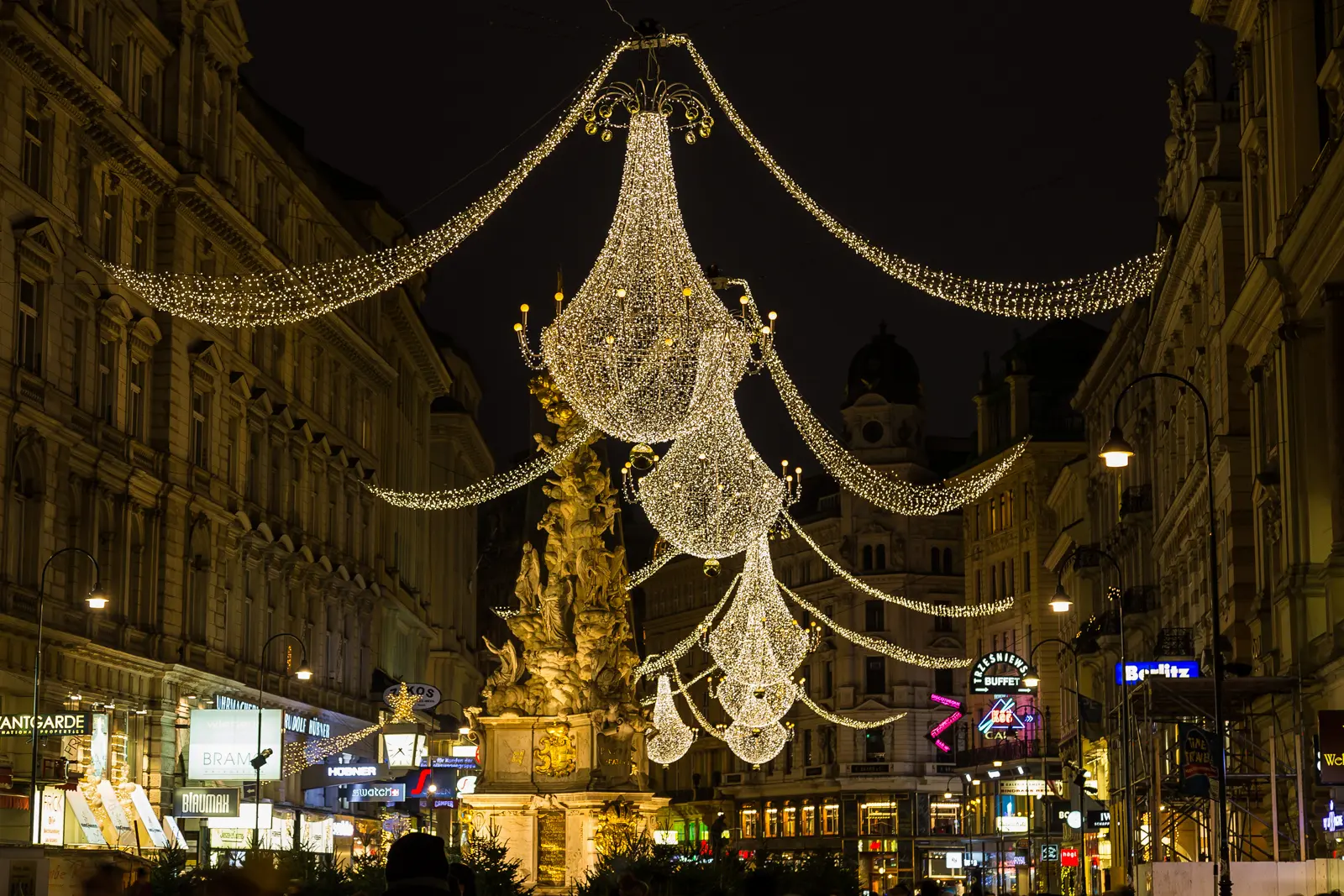
By midday, the atmosphere becomes more animated. Movement increases, reflections sharpen in glass storefronts, and the street takes on a brighter, more dynamic quality. As evening approaches, the transformation continues. The pace slows, illumination from boutiques and surrounding buildings adds warmth, and architectural details become more pronounced under softer light. And during the holiday season, Graben reveals yet another layer of its character – becoming one of Vienna’s most enchanting destinations. Festive lights stretch across the street, chandeliers and luminous decorations hover above, and the entire space takes on a glow that feels almost theatrical. It is no longer just a street, but an experience shaped by light, movement, and time, continuously evolving yet always recognizable.
The Experience: Where Vienna Feels Effortless
What makes Graben so memorable is not any single feature, but the way everything comes together with a sense of ease. History, architecture, commerce, and daily life coexist without tension, creating a space that feels both refined and accessible at the same time. Nothing feels staged or imposed; instead, each element settles naturally into the rhythm of the street, contributing to a whole that feels greater than its parts.
Walking along Graben, you are not stepping into a preserved version of the past, you are moving through a living city where history is integrated into the present in a quiet, unobtrusive way. There is something grounding about that experience. It suggests that beauty does not need to be isolated or elevated to be appreciated; it can exist within movement, within routine, within the quiet flow of everyday life. And it is perhaps this effortless coexistence – this sense that everything belongs exactly as it is – that leaves the most lasting impression.
Bubbly Tips: Visiting Graben
To make the most of your visit to Graben, here are a few helpful tips:
- Visit at different times of day – mornings feel quieter and more reflective, midday is lively and energetic, and evenings bring a softer, more elegant atmosphere
- Experience Graben during the holiday season – it becomes one of Vienna’s most magical streets, illuminated with chandeliers and festive decorations
- Allow at least 20-30 minutes – or longer if you plan to pause, explore, or enjoy a café
- Stop at the Plague Column Vienna – take time to look closely at its intricate Baroque details and symbolism
- Look up as you walk – many of Graben’s architectural details are above eye level and easy to miss
- Take your time – this is not a street to rush through, but one to experience slowly
- Pause for a coffee or simply observe – everyday moments are part of what makes Graben special
- Explore the surrounding streets – smaller side streets often reveal quieter and equally beautiful corners
- Combine your visit with nearby landmarks like Stephansplatz and the Hofburg Palace
- Visit both day and night if possible – the atmosphere shifts beautifully with light and movement
Final Thoughts
Graben is not a place you visit once and fully understand. It is a place that reveals itself gradually, through movement, detail, and experience, offering something slightly different each time you pass through.
It is where Vienna feels both elegant and approachable, historic yet fully present. A street that does not demand attention, but rewards it quietly, allowing you to discover its character at your own pace. And perhaps that is what makes it so memorable – not what it shows you immediately, but what it allows you to notice over time.
Have you wandered along Graben, or is it on your Vienna list? Let me know in the comments section below, I’d love to hear from you.
Happy travels!

🌟 Everything You Need to Plan Your Dream Trip in 2026
- 🌟 Luxury Hotels - Find premium stays with Booking.com & Hotels.com
- 🏡 Vacation Rentals - Discover unique properties on VRBO
- 🏞️ Guided Tours - Explore with Viator or GetYourGuide
- 🎫 Attraction Tickets - Skip the lines with Tiqets
- 🚢 Ocean Cruises - Set sail with Cruise Direct
- 📱 International SIMs - Stay connected with Saily
- 🚗 Car Rentals - Budget-friendly options from Discover Cars
- 🌐 Secure VPNs - Browse safely with NordVPN
- 💶 Currency Exchange - Best rates with Wise
- 🗣️ Learn Languages - Master the local language with Babbel and Rosetta Stone