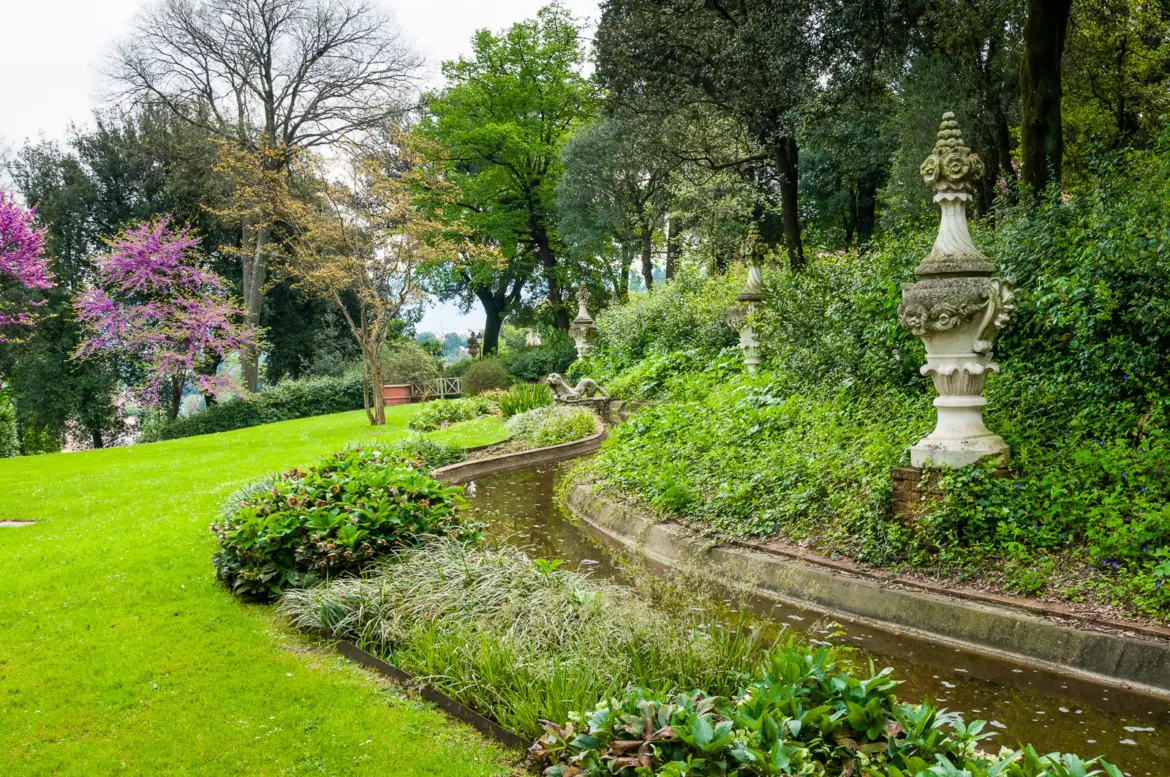
Ciao my friends! There are places in Florence that announce themselves loudly – grand piazzas, iconic domes, masterpieces that draw crowds from every corner of the world. And then there are places like Giardino Bardini, a garden that reveals itself gently, rewarding those willing to climb a little higher and move a little slower.
Perched above the city on the Oltrarno side, Giardino Bardini feels less like a monument and more like a secret conversation between nature, history, and light. Here, Florence stretches below you – the Duomo rising from terracotta rooftops – while pathways, staircases, and terraces invite quiet reflection rather than spectacle. This is not just a garden. It is a perspective – on Florence, on beauty, and on the art of slowing down.
Giardino Bardini at a Glance
📍 Location: Via dei Bardi 1/r (bottom entrance) or Costa San Giorgio 2 (top, near Forte Belvedere)
🌸 Known For: Grand Baroque staircase, famous wisteria pergola (blooms mid-April to early May), panoramic Duomo views, layered garden styles
🎟️ Tickets: ~€10 adults (includes Boboli Gardens), free first Sunday of each month, free under 18 (EU)
🕐 Hours: Daily from 10:00 AM (closed first and last Monday of each month), seasonal closing times
⏱️ Time Needed: 1–1.5 hours
💡 Tip: Enter from Via dei Bardi and climb upward — the views build beautifully. Pair with Boboli Gardens or San Miniato al Monte
The History Behind Giardino Bardini
Giardino Bardini’s story is layered, shaped over centuries by different owners and evolving tastes. The area has been cultivated since at least 1309, when it was owned by the Mozzi family as a mix of ornamental garden and orchard. Over the following centuries it evolved through Baroque formal design and later romantic and English landscape garden influences, reflecting the changing tastes of Florence’s wealthy families.
The garden’s modern identity is closely linked to Stefano Bardini, a celebrated art dealer and collector active in the late 19th and early 20th centuries who purchased the property in 1913. Bardini was one of the most influential figures in the Renaissance art market of his era, and his vision extended beyond galleries to landscapes. Interestingly, he reconfigured and partially replaced earlier medieval terraces that had survived until then, reshaping the garden to reflect his own eclectic aesthetic, a reminder that preservation and transformation have always existed in tension in Florence.
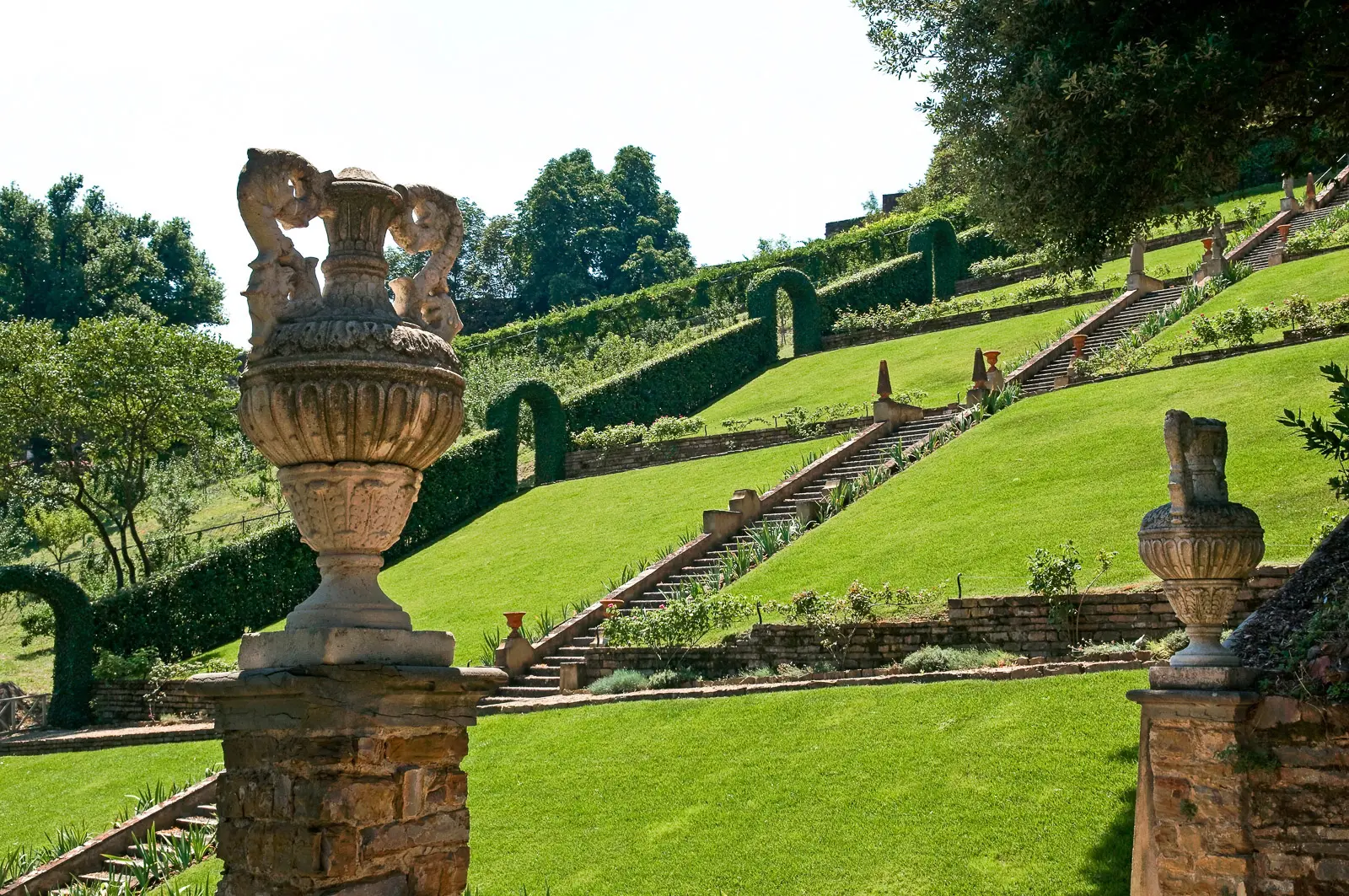
After Bardini’s death, the garden passed through a complicated inheritance dispute – at one stage even designated to pass to the Swiss Confederation – before eventually being acquired by the Fondazione Parchi Monumentali Bardini in 2000. The garden had lain largely forgotten and overgrown for decades, and the Fondazione spent five years carefully restoring it before reopening it to the public in 2005. What visitors experience today is both historical and renewed – a garden that carries centuries of Florentine life within it, and one of the city’s most rewarding and peaceful escapes for those willing to climb the hill.
The Grand Staircase: A Journey Upward
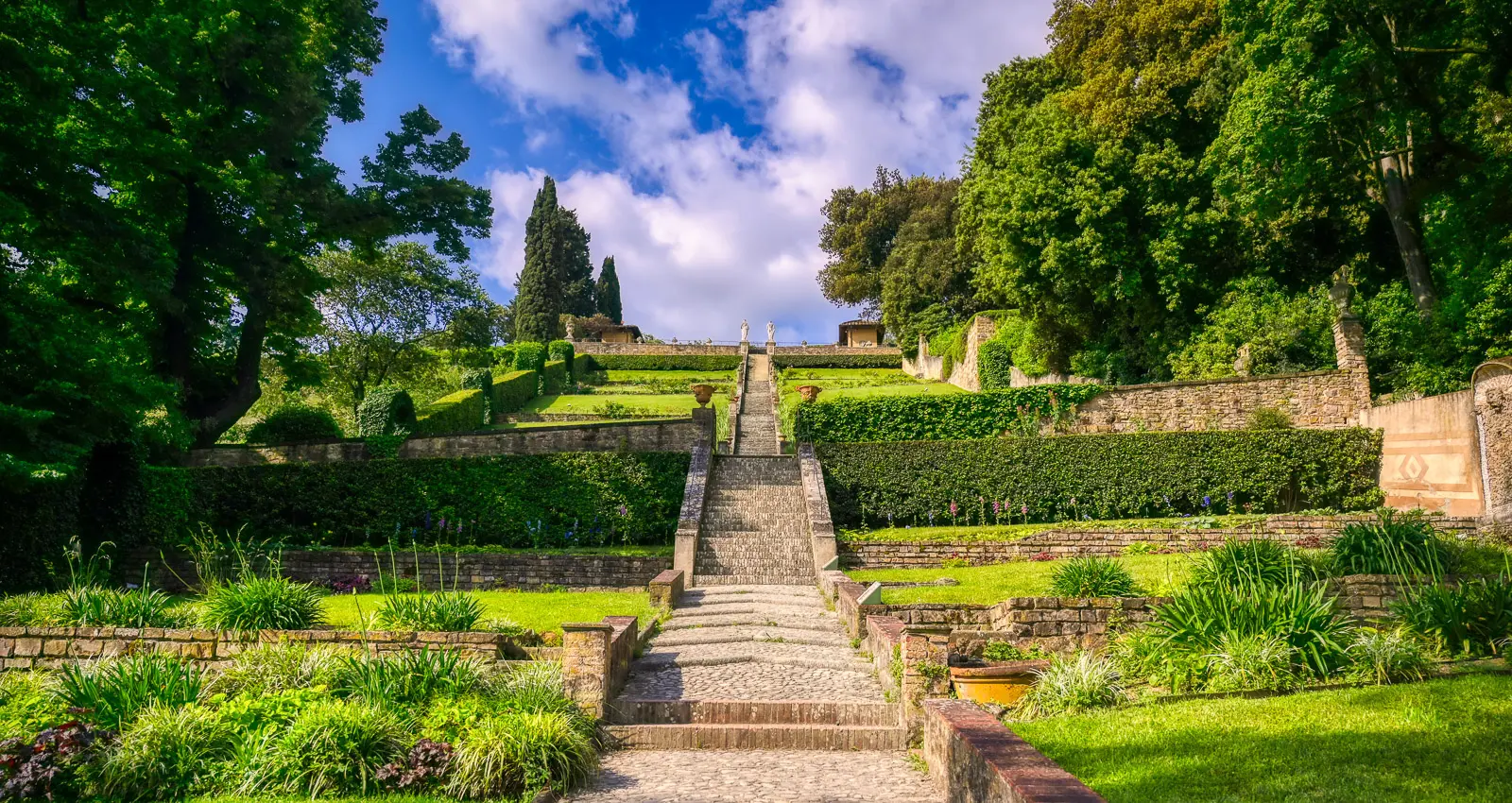
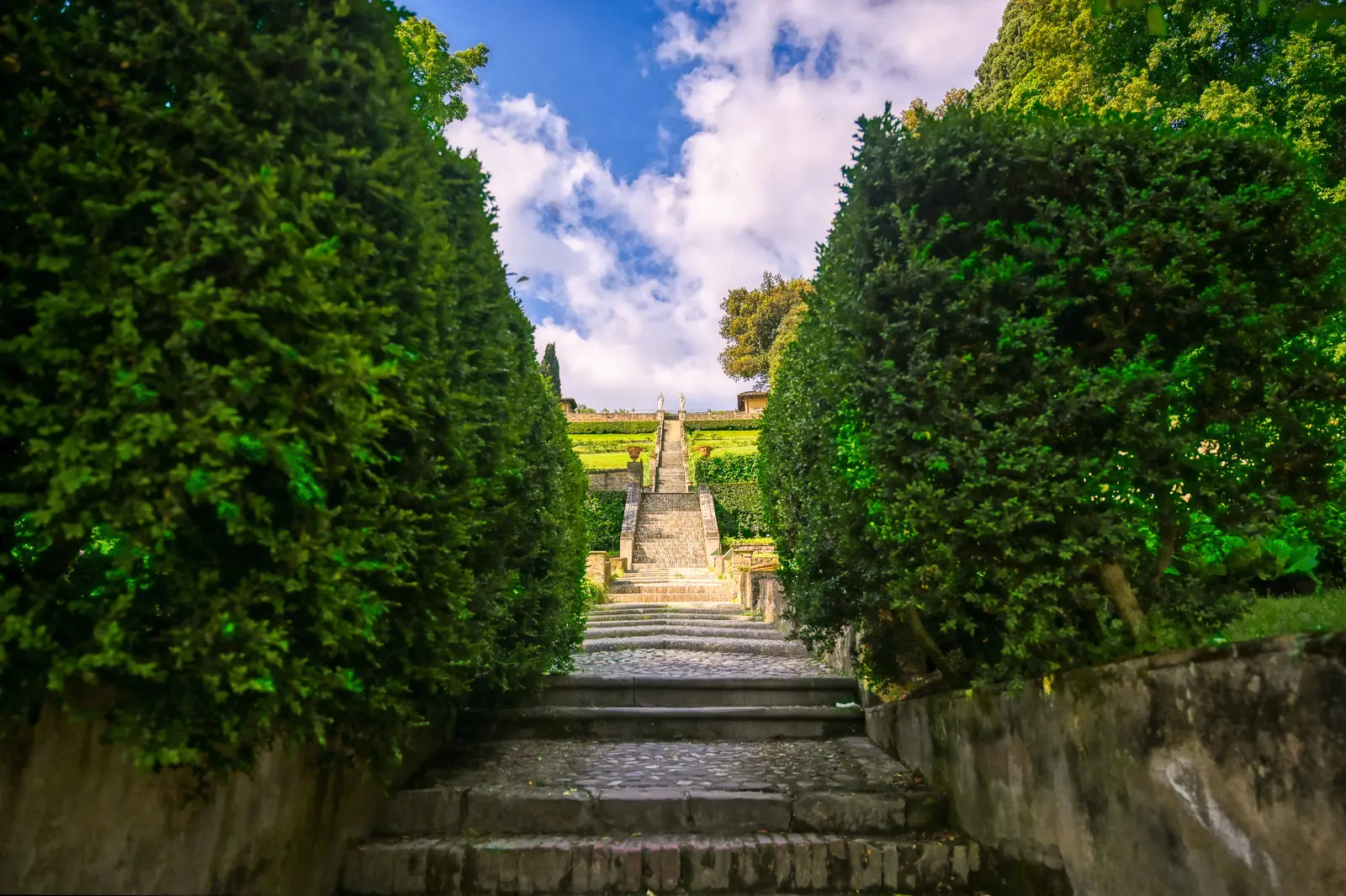
One of the most iconic features of Giardino Bardini is its dramatic central staircase, a visual axis that immediately draws the eye upward. Flanked by manicured greenery and framed by classical symmetry, the staircase feels almost theatrical, yet never overwhelming. Walking these steps becomes part of the experience itself. With every ascent, the city slowly begins to appear behind you, revealing glimpses of domes and rooftops between branches and stone walls. The climb feels symbolic, a gradual transition from the energy of Florence’s streets into a quieter, more contemplative world. It is a reminder that some views must be earned slowly.
A Garden of Different Worlds
Unlike gardens designed as a single unified composition, Giardino Bardini unfolds in distinct layers, each reflecting different periods and styles. There are Italianate terraces where geometry and order dominate, evoking Renaissance ideals of harmony between humanity and nature. Higher up, more romantic English-style landscapes introduce softness – winding paths, shaded corners, and a sense of natural spontaneity. Fruit trees, flowers, and ornamental plants create seasonal shifts that ensure the garden never feels exactly the same twice. This variety makes wandering here feel organic. You are not following a strict route; you are discovering small moments – a hidden bench, a framed view, a burst of color – that invite you to pause.
The Famous Wisteria Pergola
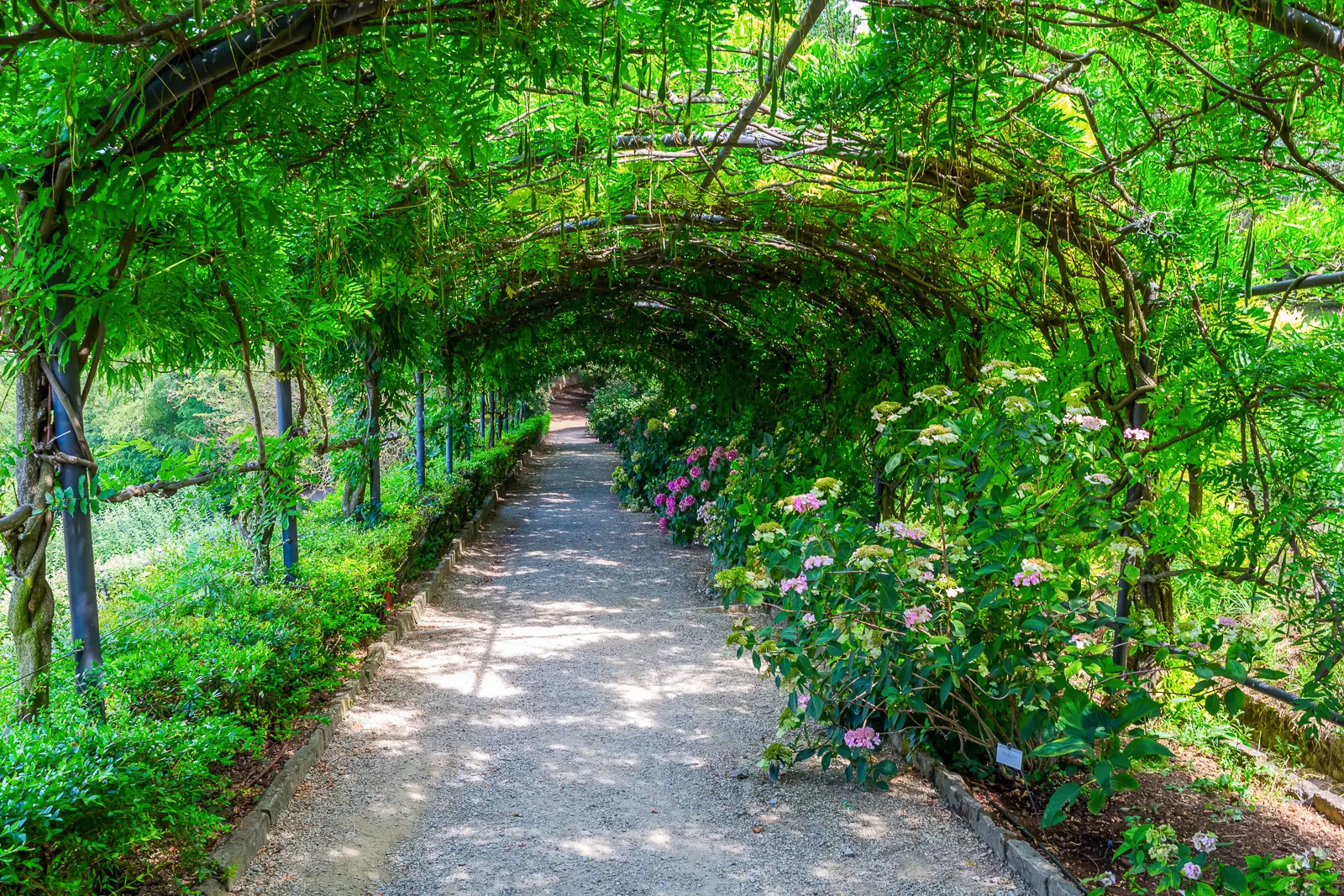
If you visit in spring, Giardino Bardini reveals one of Florence’s most magical scenes: the wisteria pergola. Cascading violet blooms form a tunnel of color and fragrance, transforming the garden into something almost dreamlike. The pergola itself was designed not simply as decoration but as a passage – a gentle architectural guide that frames both movement and perspective, inviting visitors to slow down as the city gradually appears through bursts of color and light. Even outside wisteria season, the structure remains beautiful, its clean lines and climbing vines creating rhythm and shadow that shift throughout the day. The changing seasons remind us that gardens are living spaces, never static, always evolving, and walking here feels like witnessing time itself expressed through nature. Here, beauty feels fleeting – and therefore more precious, lingering in memory long after you leave.
Views Over Florence: A Different Perspective
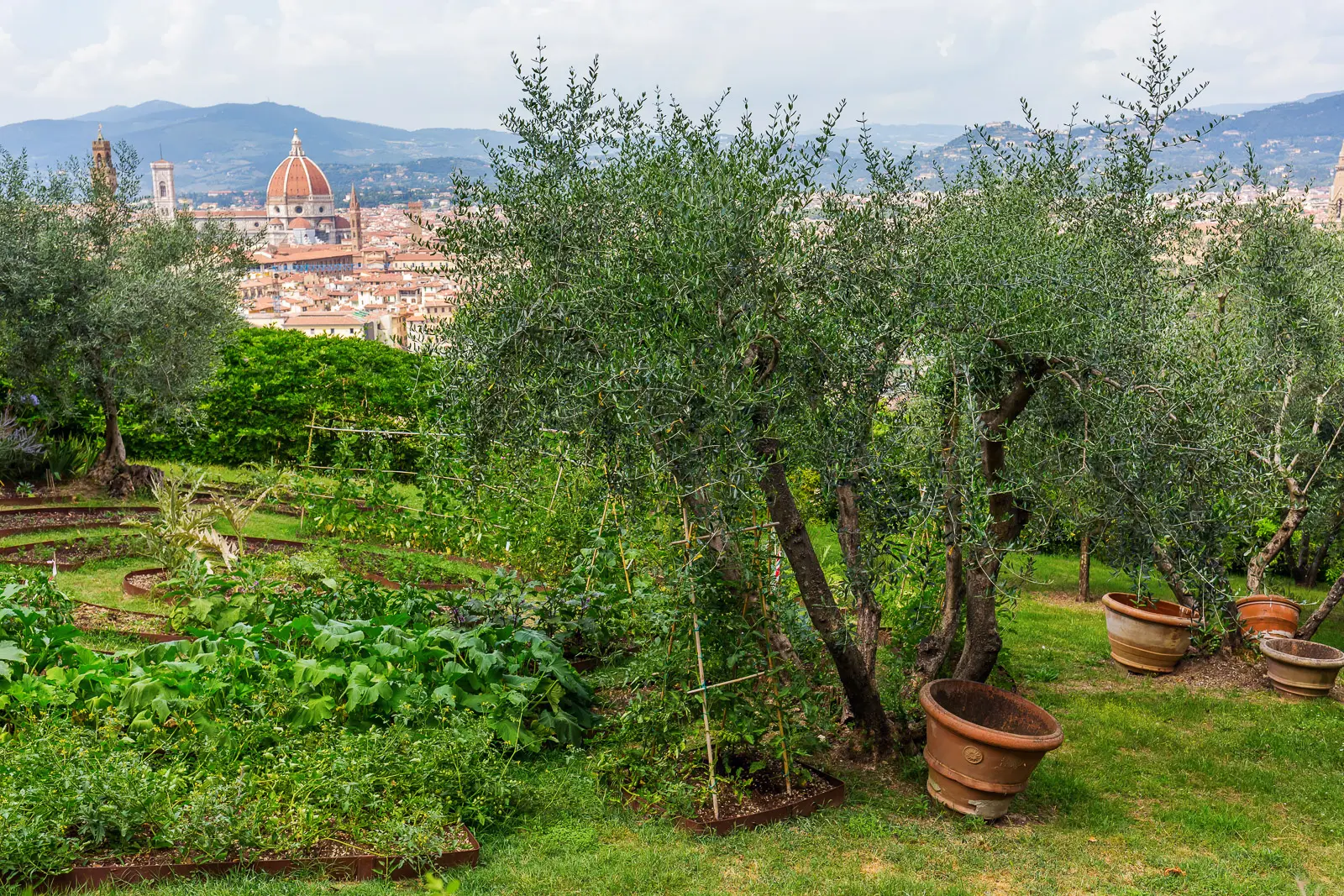
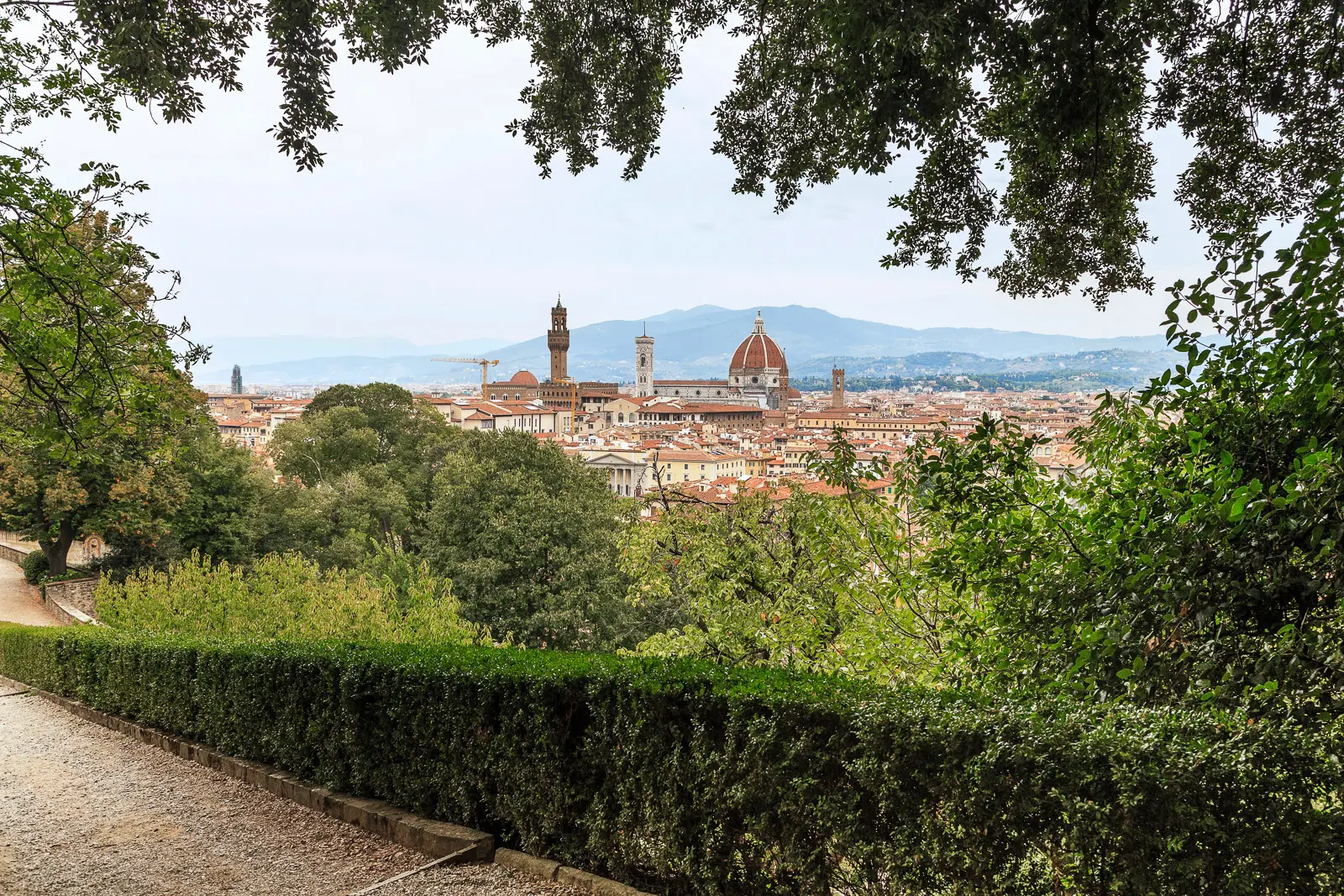
Many visitors come to Giardino Bardini for its panoramic views, and they do not disappoint. From the terraces, Florence appears almost painterly – the dome of Santa Maria del Fiore rising proudly, Giotto’s Bell Tower punctuating the skyline, and the Arno winding quietly through the city. What makes this viewpoint special is its atmosphere. Unlike more crowded overlooks, Bardini feels intimate. Visitors tend to speak softly, lingering rather than rushing. The city below seems calmer, as if distance allows you to see Florence not just as a destination but as a living place shaped by centuries of creativity. Standing here, it becomes easy to understand why artists fell in love with this city.
The Atmosphere: Quiet Luxury Without Excess
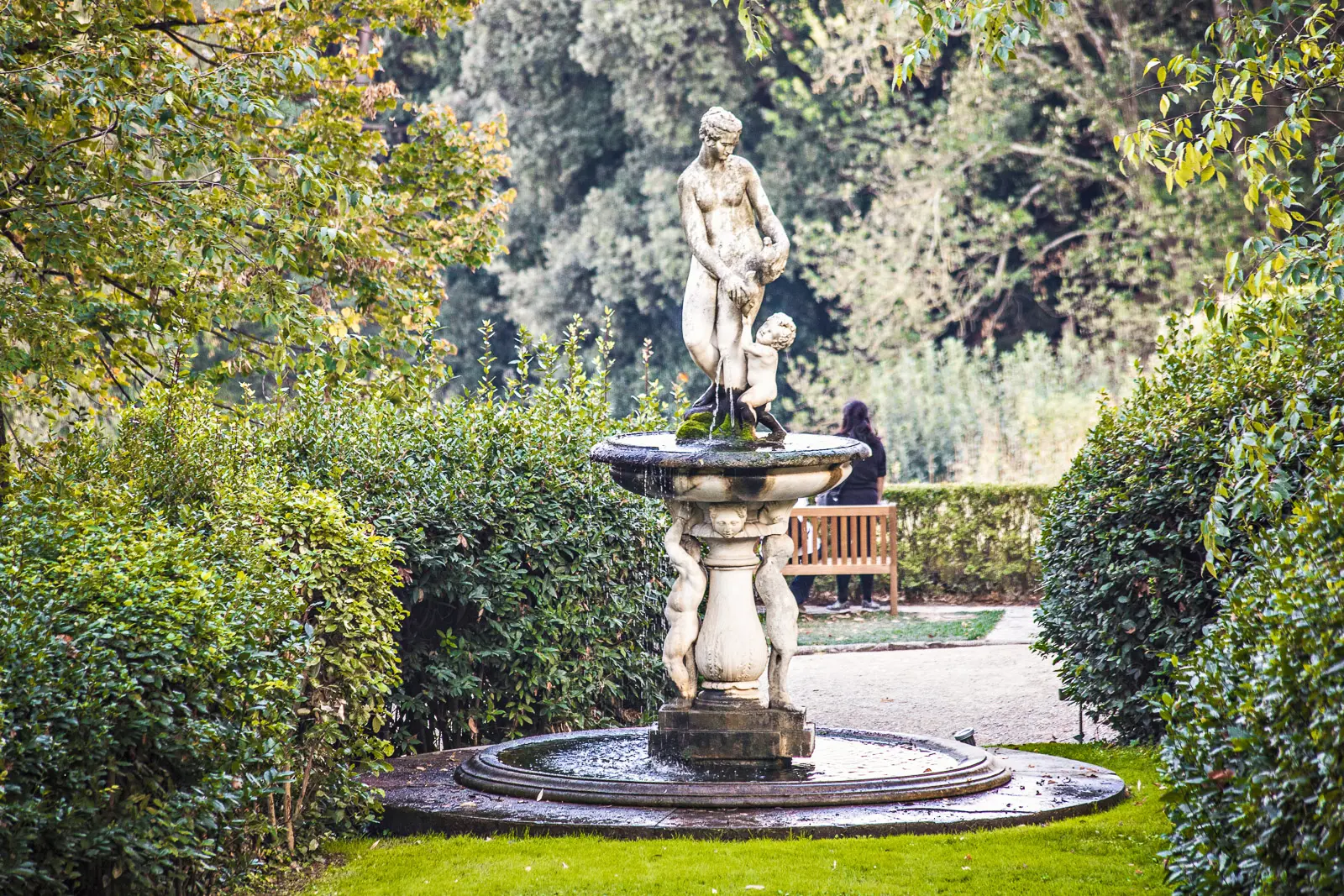
Giardino Bardini does not try to impress through grandeur alone. Its beauty lies in restraint, the careful balance between cultivated elegance and natural growth. Birdsongs replace traffic noise, and pathways encourage wandering without urgency, creating a rhythm that feels almost meditative. Throughout the garden, classical touches appear unexpectedly: stone urns, sculptural fountains, and statues inspired by Renaissance and ancient Roman ideals quietly punctuate the greenery, reminding visitors that this landscape was designed not only to be admired but to be contemplated. Water features add movement and softness, their gentle sound blending with the rustling trees and reinforcing the garden’s sense of calm refinement. There is something deeply restorative about Bardini. After the intensity of museums and busy piazzas, it feels like a breath of fresh air, a place where Florence’s artistic spirit meets simple stillness. It is the kind of space that invites reflection rather than photography alone, rewarding those willing to slow down and simply be present.
Why Giardino Bardini Still Matters
In a city celebrated for its masterpieces, Giardino Bardini reminds us that beauty is not limited to galleries or churches. It lives in landscapes, in perspectives, and in the quiet spaces between famous landmarks. The garden teaches patience. It rewards curiosity. It asks visitors to slow down and notice details – the play of light on stone, the framing of a view, the feeling of moving through living history. In an era when travel often feels rushed and checklist-driven, Bardini offers something increasingly rare: space to breathe and experience Florence at a gentler pace. It shows how gardens can serve as living works of art, shaped by human hands yet constantly changing with time and season. Florence is often described as a city of art, but Bardini reminds us that nature can be just as expressive – and sometimes even more profound when encountered quietly.
Bubbly Tips for Visiting Giardino Bardini
- When to visit: Spring for the famous wisteria bloom, but autumn offers beautiful golden light and fewer crowds
- Best time of day: Late morning or early afternoon for soft views over Florence
- Wear comfortable shoes: The garden is built on terraces with many steps
- Combine your visit: Pair with nearby Boboli Gardens or San Miniato al Monte for a beautiful walking route
- Pause often: The magic of Bardini lies in slowing down and simply enjoying the atmosphere
Final Thoughts
Giardino Bardini feels like Florence whispering rather than shouting. It is a place where history and nature meet quietly above the city, where every turn reveals another small moment of beauty.
Some travelers come to Florence searching for masterpieces. Others discover that the most meaningful experiences are found in spaces like this – gardens where time seems to soften, and the city below feels both distant and deeply connected. If you allow yourself to slow down here, Florence reveals a gentler side – one that stays with you long after you leave.
Have you visited Giardino Bardini or found a hidden garden that surprised you? I’d love to hear your thoughts and favorite Florence moments.
With love,
Bubbly 🌺
🌟 Everything You Need to Plan Your Dream Trip in 2026
- 🌟 Luxury Hotels - Find premium stays with Booking.com & Hotels.com
- 🏡 Vacation Rentals - Discover unique properties on VRBO
- 🏞️ Guided Tours - Explore with Viator or GetYourGuide
- 🎫 Attraction Tickets - Skip the lines with Tiqets
- 🚢 Ocean Cruises - Set sail with Cruise Direct
- 📱 International SIMs - Stay connected with Saily
- 🚗 Car Rentals - Budget-friendly options from Discover Cars
- 🌐 Secure VPNs - Browse safely with NordVPN
- 💶 Currency Exchange - Best rates with Wise
- 🗣️ Learn Languages - Master the local language with Babbel and Rosetta Stone