
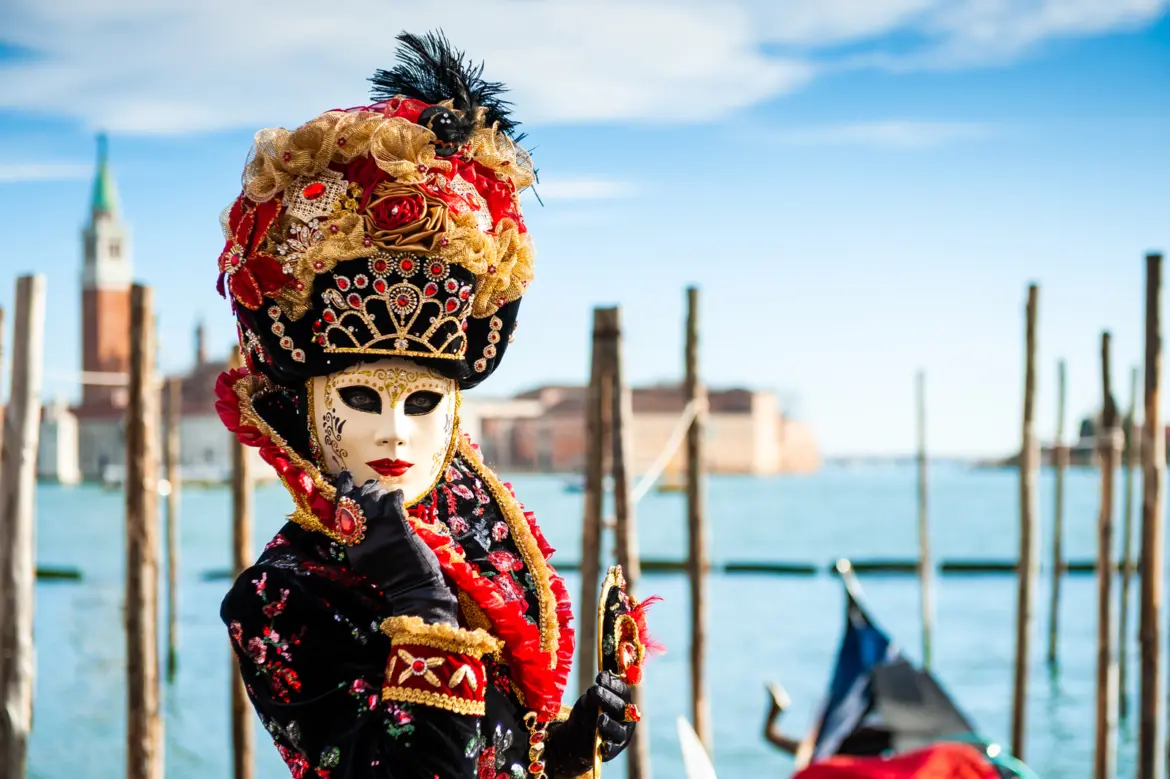
Hello, my friends! Venice has many moods – contemplative, luminous, restrained – but during Carnival, the city reveals another layer entirely. One rooted not in excess, but in ritual. Not in chaos, but in carefully choreographed freedom. The Carnival of Venice is not simply a festival. It is a centuries-old conversation between anonymity and identity, power and play, history and imagination.
Experiencing Venice during Carnival is unlike any other time of year. The winter mist lingers longer. Footsteps echo more sharply on stone. Bells seem to carry further across the lagoon. And suddenly, at the turn of a corner or beneath a colonnade, a masked figure appears – still, composed, timeless – as if the city itself has stepped briefly out of another century.
Carnival of Venice at a Glance
🎭 Origins: Officially recognized 1296 — the Venetian Senate declared the day before Lent a public holiday
📅 When: Late January through February, culminating on Shrove Tuesday (Martedì Grasso)
🎪 Purpose: Temporary equality — behind a mask, social distinctions dissolved and speech became bolder
👤 Key masks: Bauta (anonymous civic mask), Moretta (silent women’s mask), Volto (full concealment), Medico della Peste (plague doctor — adopted from medical history)
📍 Where: Piazza San Marco for grand events; Castello and Cannaregio for quieter, local Carnival
🕐 Best time: Weekday mornings and early evenings — fog and winter light enhance the atmosphere
🎨 Costumes: A simple artisan-made mask is enough — restraint often feels more appropriate than excess
💡 Tip: Observing Carnival without wearing a mask is equally valid and aligns with Venice’s quieter rhythms
The Origins of Carnival: A City That Needed Disguise
The Carnival of Venice dates back to the Middle Ages and was officially recognized in 1296, when the Venetian Senate declared the day before Lent a public holiday. Today, the celebration takes place each year in the weeks leading up to Lent, typically from late January through February, culminating on Shrove Tuesday (Martedì Grasso).
Venice was a powerful maritime republic, wealthy, hierarchical, and intensely structured. Carnival offered something radical: temporary equality. Behind a mask, social distinctions dissolved. Nobles and commoners could mingle freely. Gender roles blurred. Speech became bolder. Behavior loosened, but always within understood limits. This was not rebellion. It was regulation through release. Venetian authorities understood that allowing controlled freedom strengthened social order rather than threatening it. Carnival became a pressure valve for the city, an elegant solution to human nature.
Masks as Meaning: More Than Ornament
Masks are the soul of Carnival, and in Venice they have always carried purpose beyond decoration. Each traditional mask conveyed a specific social function, and understanding them deepens the experience immeasurably.
The Bauta, perhaps the most iconic, features a white mask with a pronounced chin and no mouth opening, traditionally worn with a black cloak and tricorn hat. Its design allowed the wearer to eat, drink, and speak without revealing identity. It was used not only during Carnival, but also for political gatherings and voting, reinforcing the Venetian obsession with anonymity as a tool of fairness.
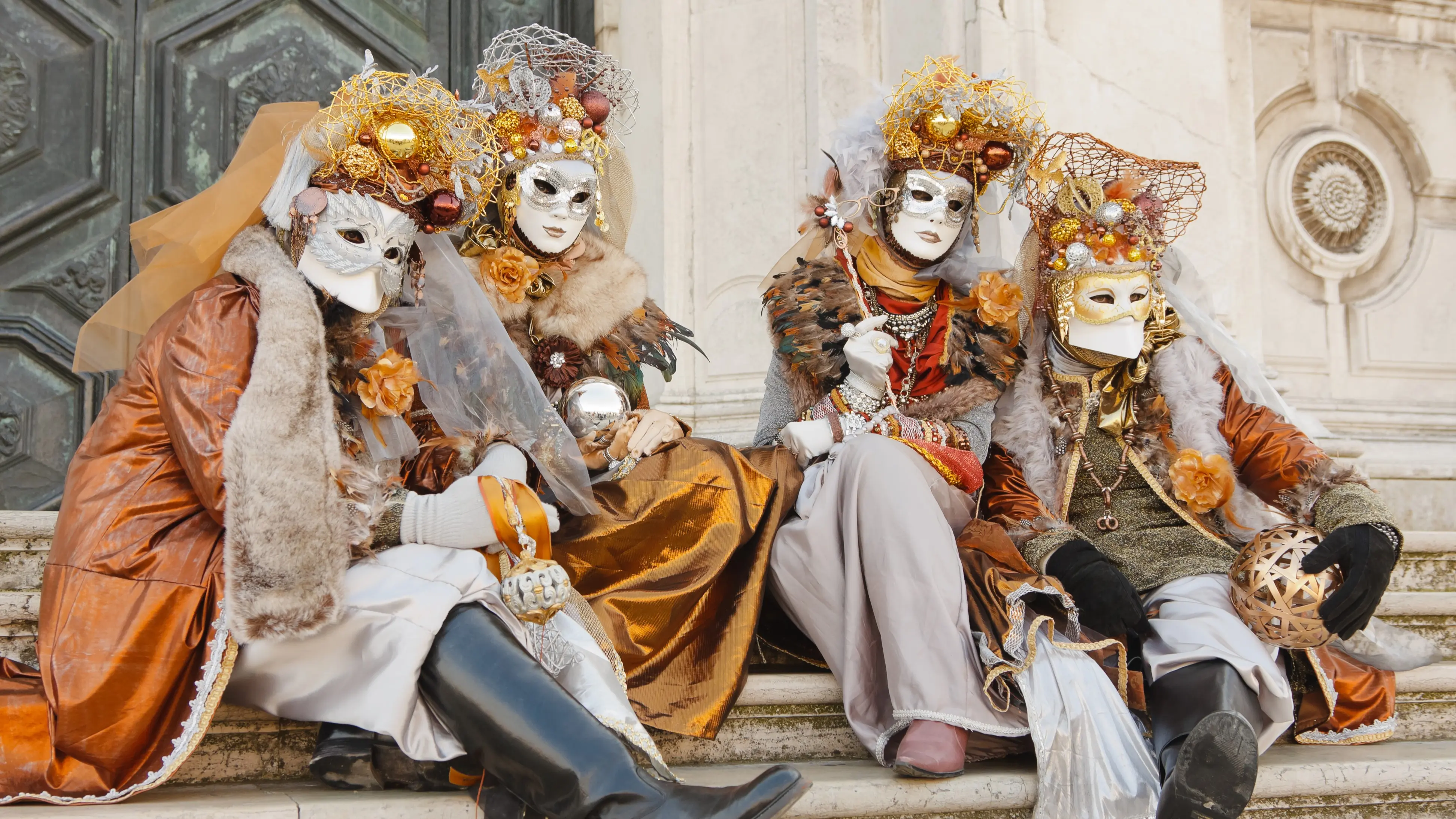
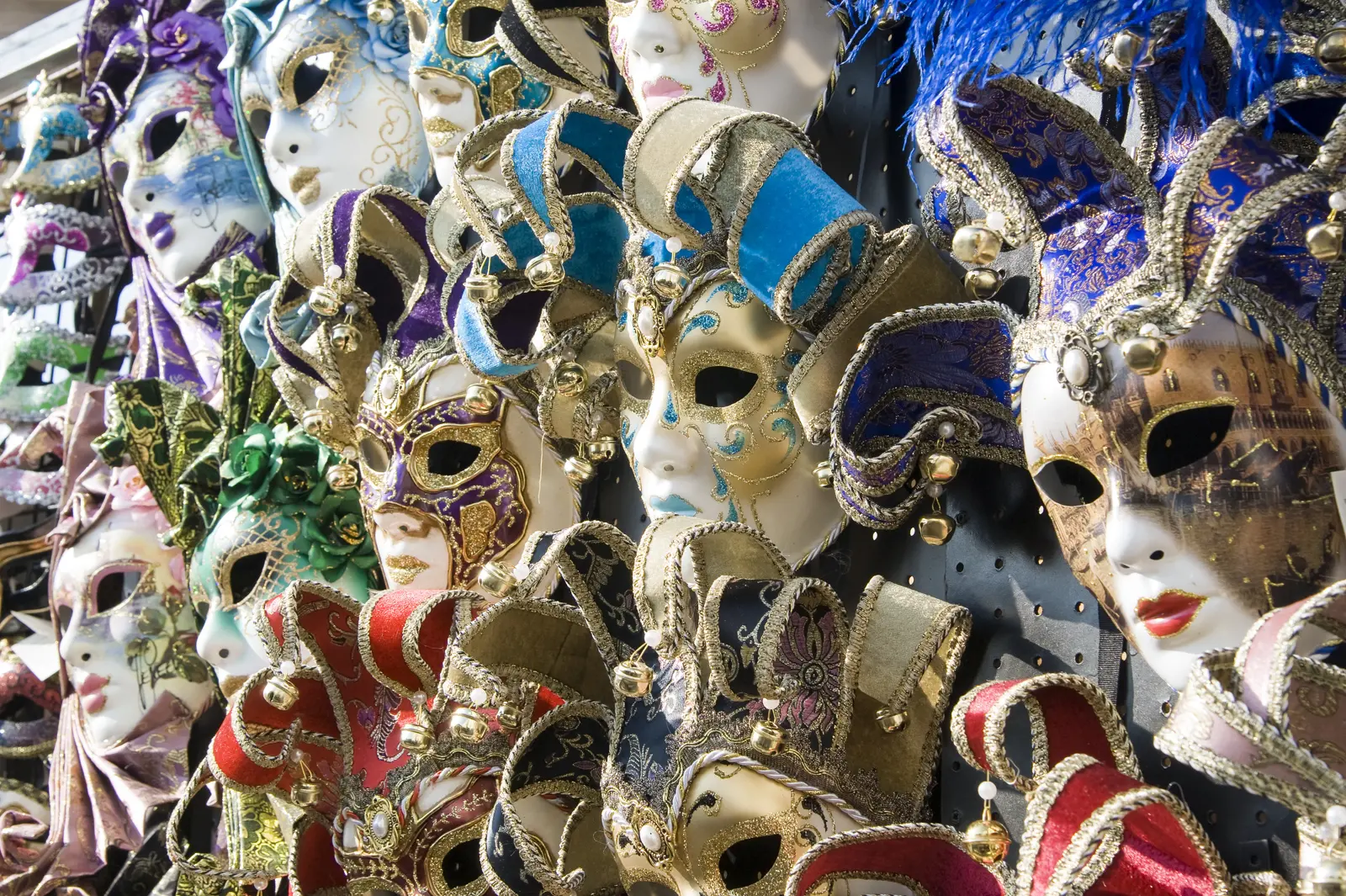
The Moretta, a small oval mask traditionally worn by women, was held in place by biting a button inside the mouth, rendering the wearer silent. It created an aura of mystery and restraint, reinforcing presence through stillness rather than speech. The Volto, simpler and more neutral, offered complete concealment and remains one of the most common masks today. The Medico della Peste, with its elongated beak, though not a historical Carnival mask but rather genuine plague-era medical attire, has been adopted into modern Carnival as a powerful symbol, a reminder that Venice’s festivities exist alongside the city’s history of survival and loss.
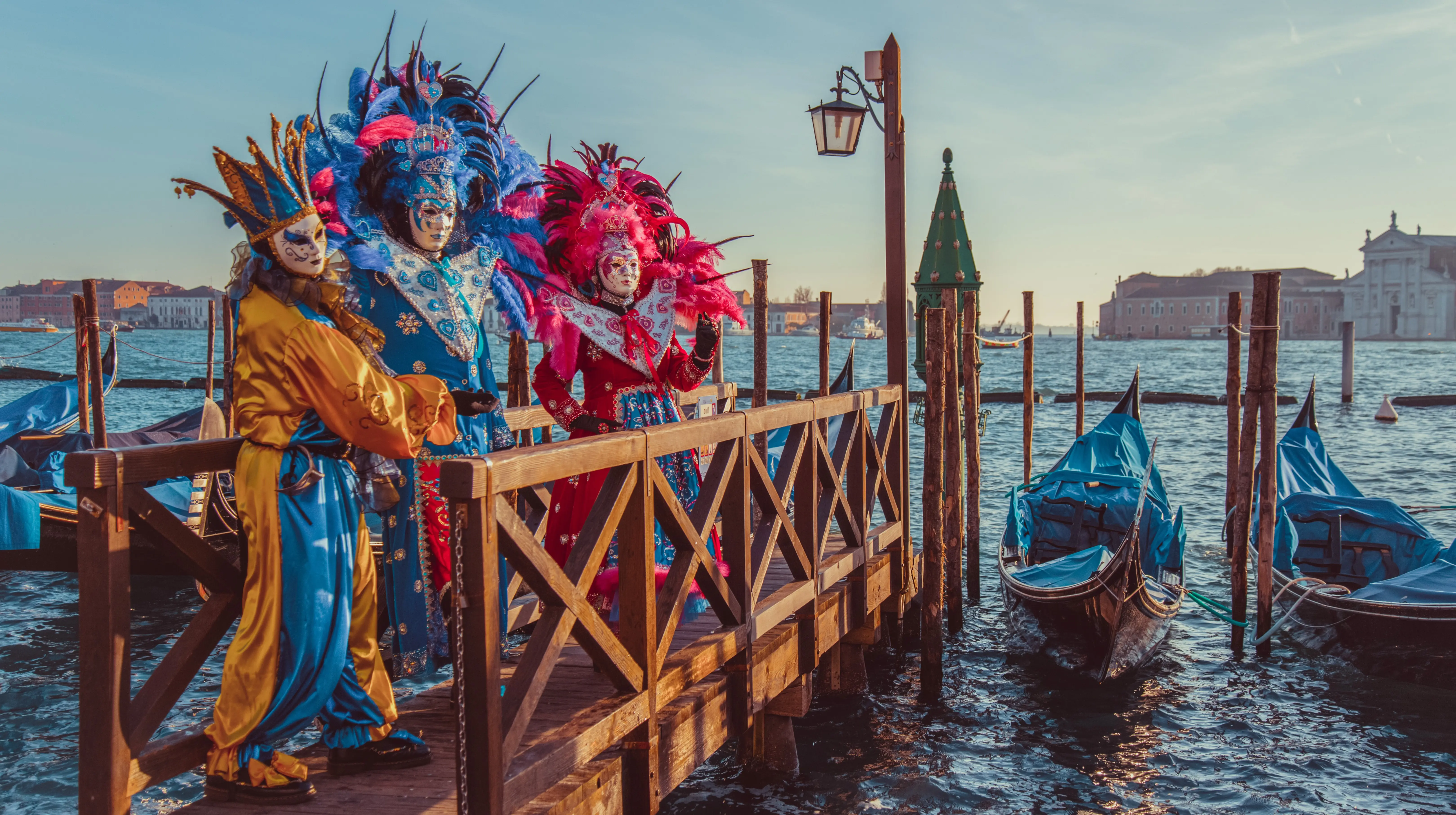
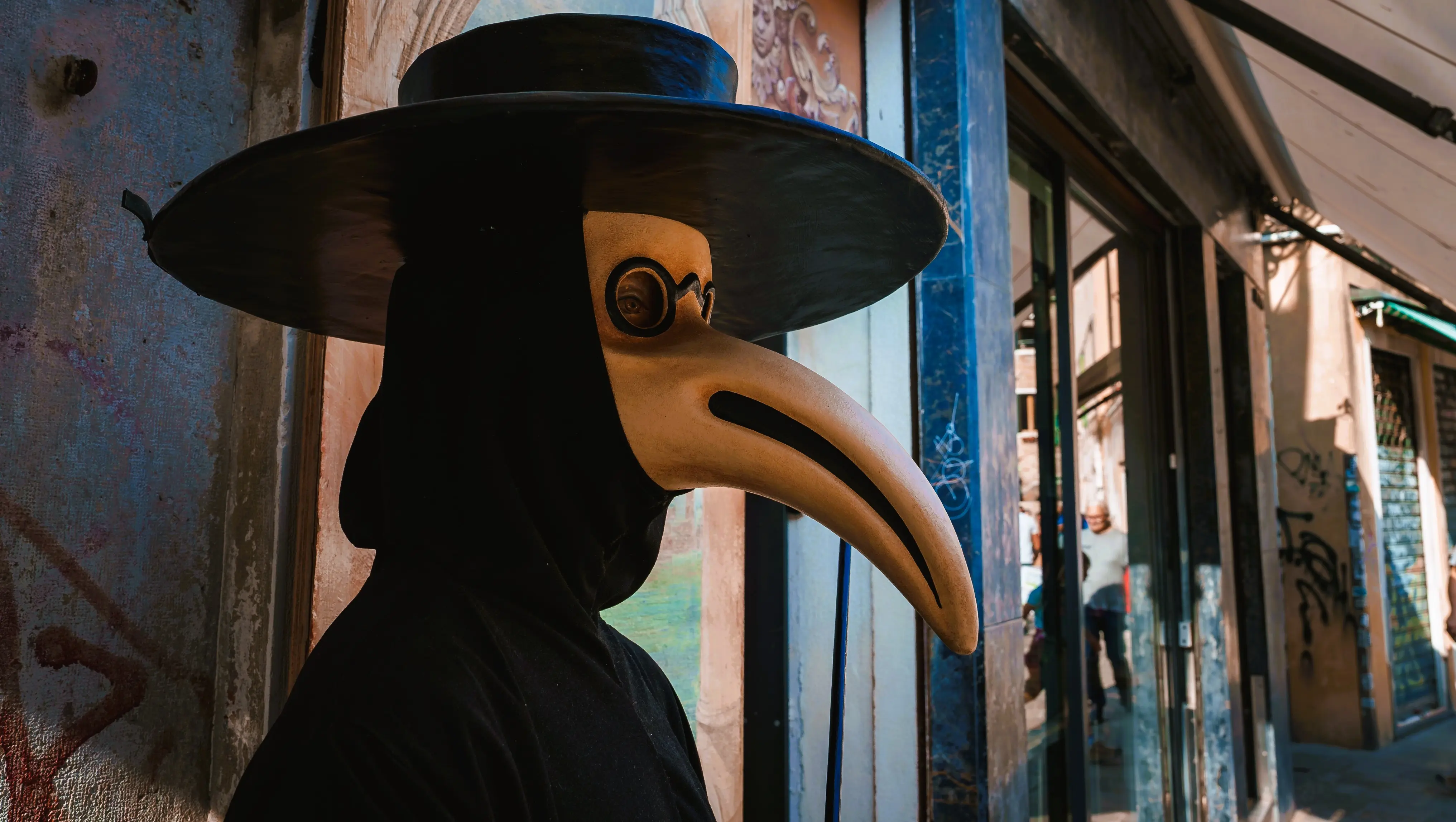
These masks were never about hiding alone. They were about permission – to observe, to cross boundaries, to exist briefly outside one’s assigned role.
Experiencing Carnival Today: Between Spectacle and Silence
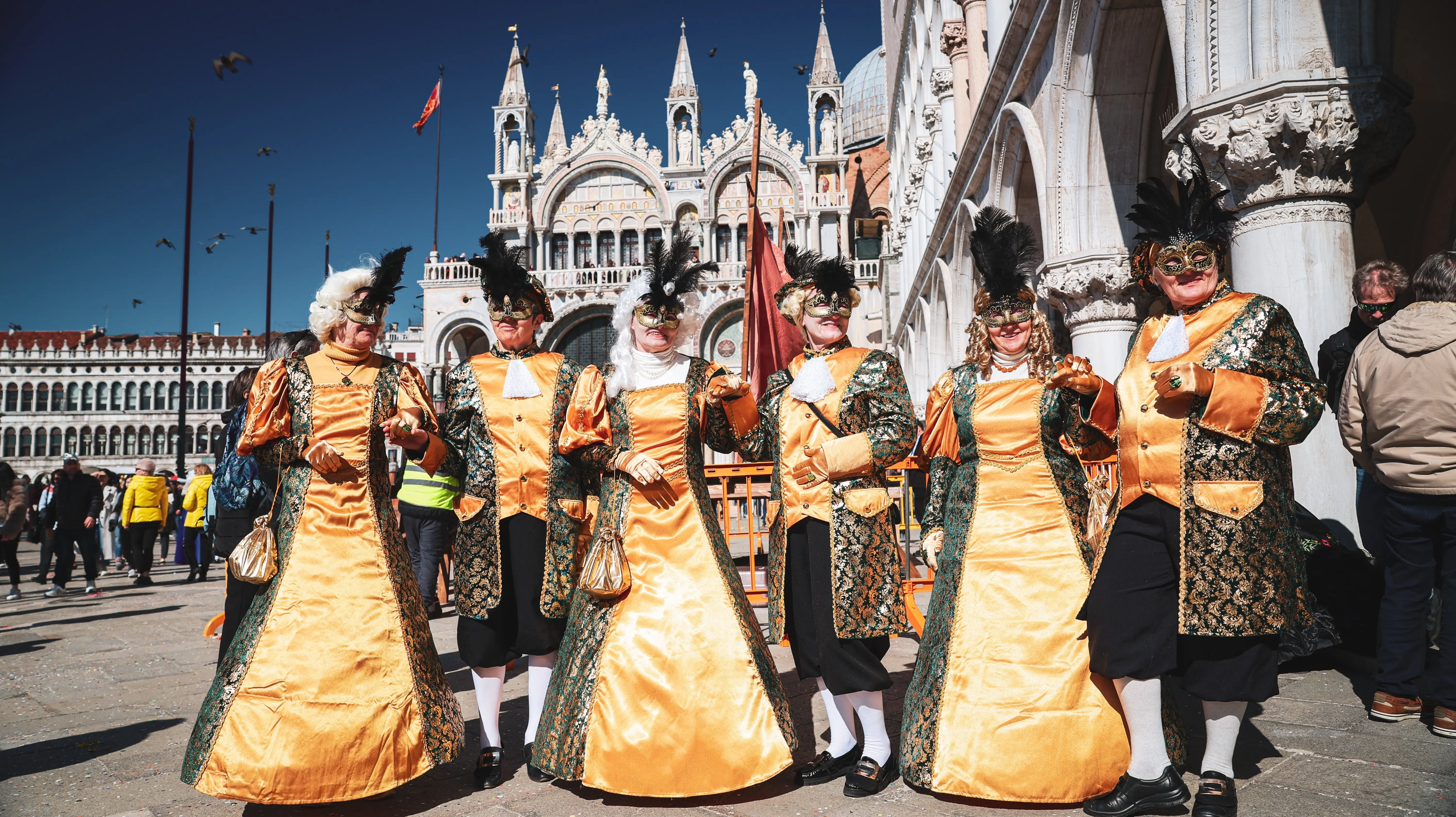
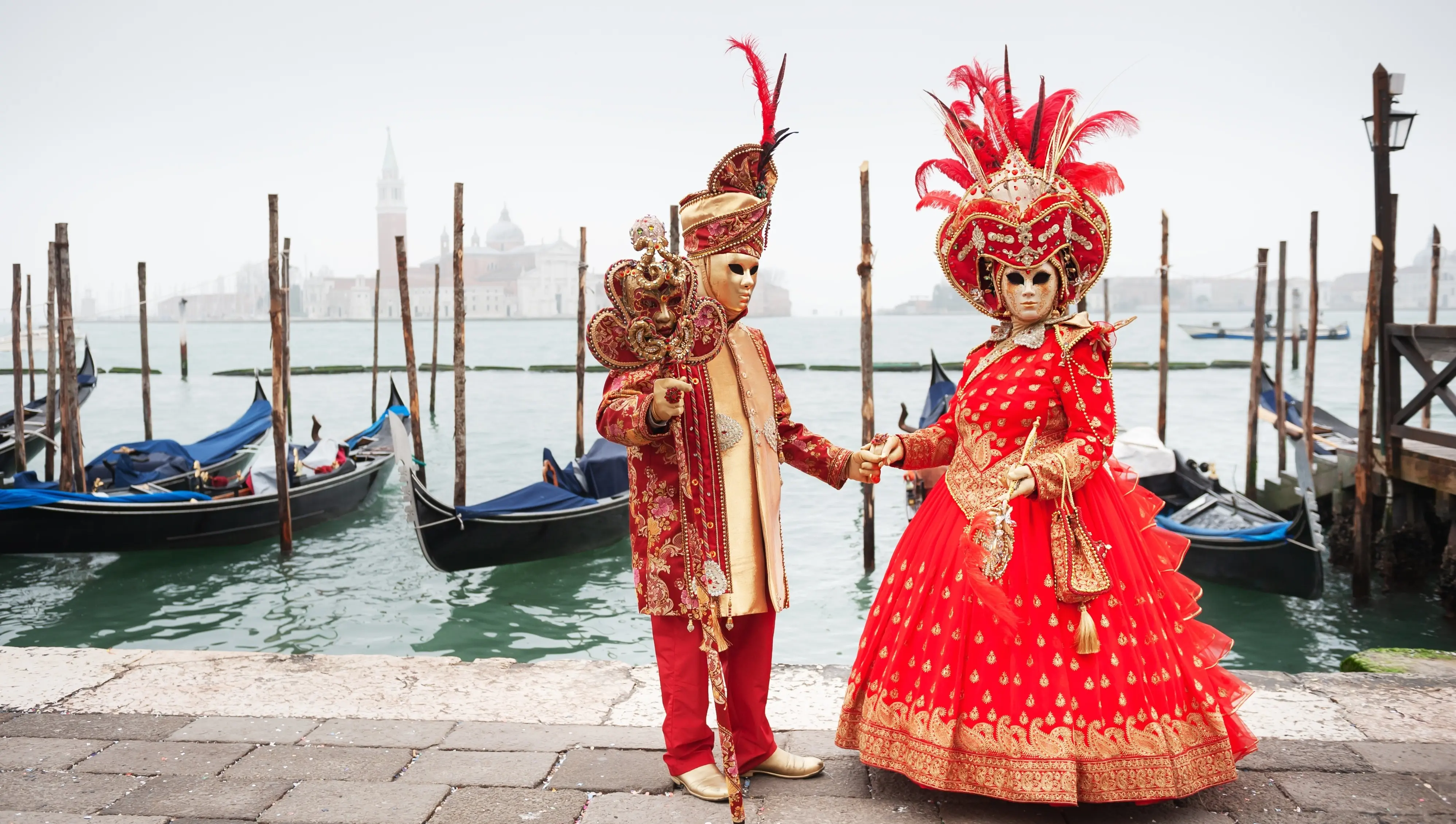
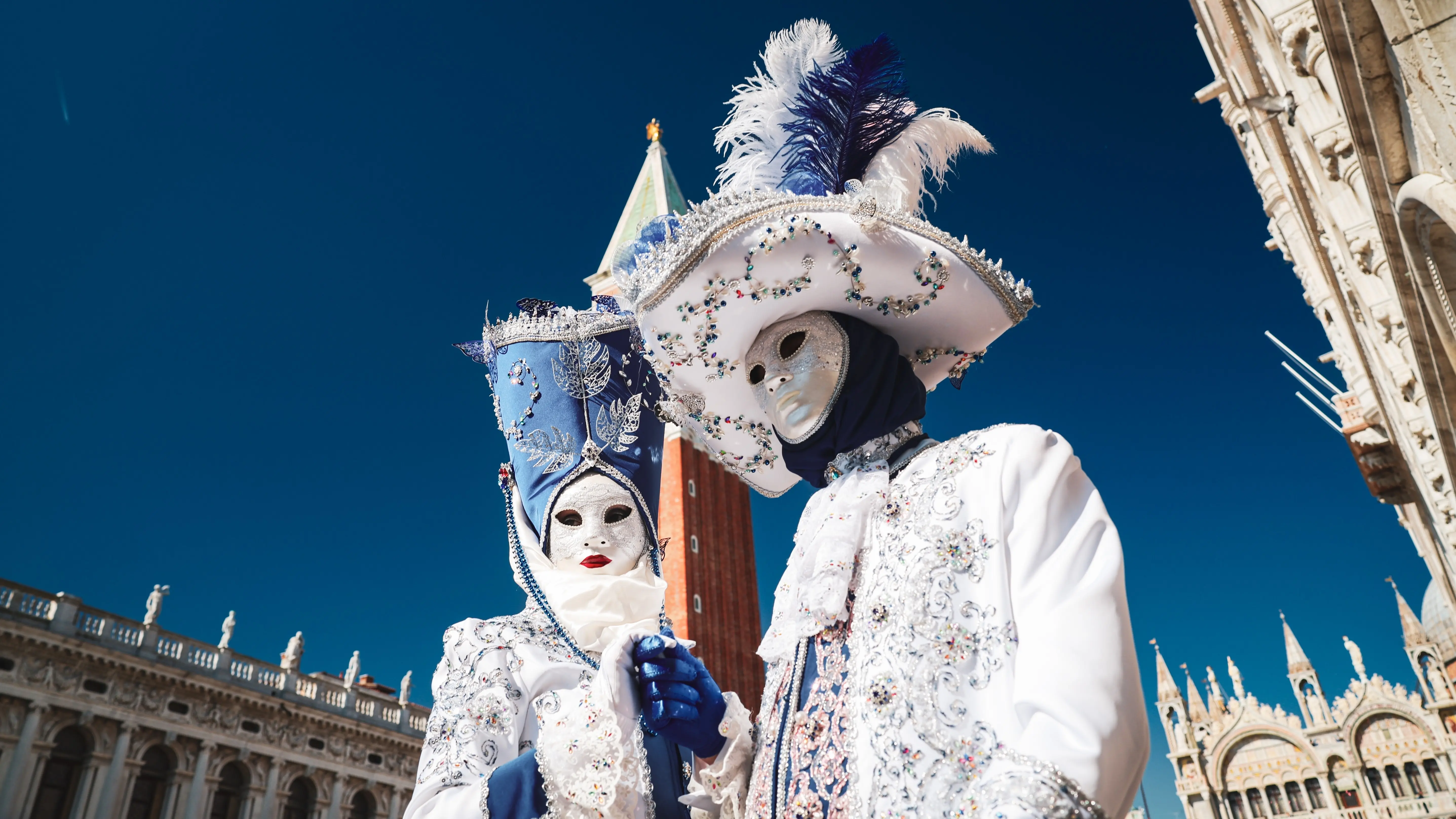
Modern Carnival has both grand and intimate expressions. Piazza San Marco hosts elaborate costumed parades, official events, and carefully staged performances. The craftsmanship is extraordinary: hand-sewn garments, brocade fabrics, feathers, lace, and masks that resemble museum pieces.
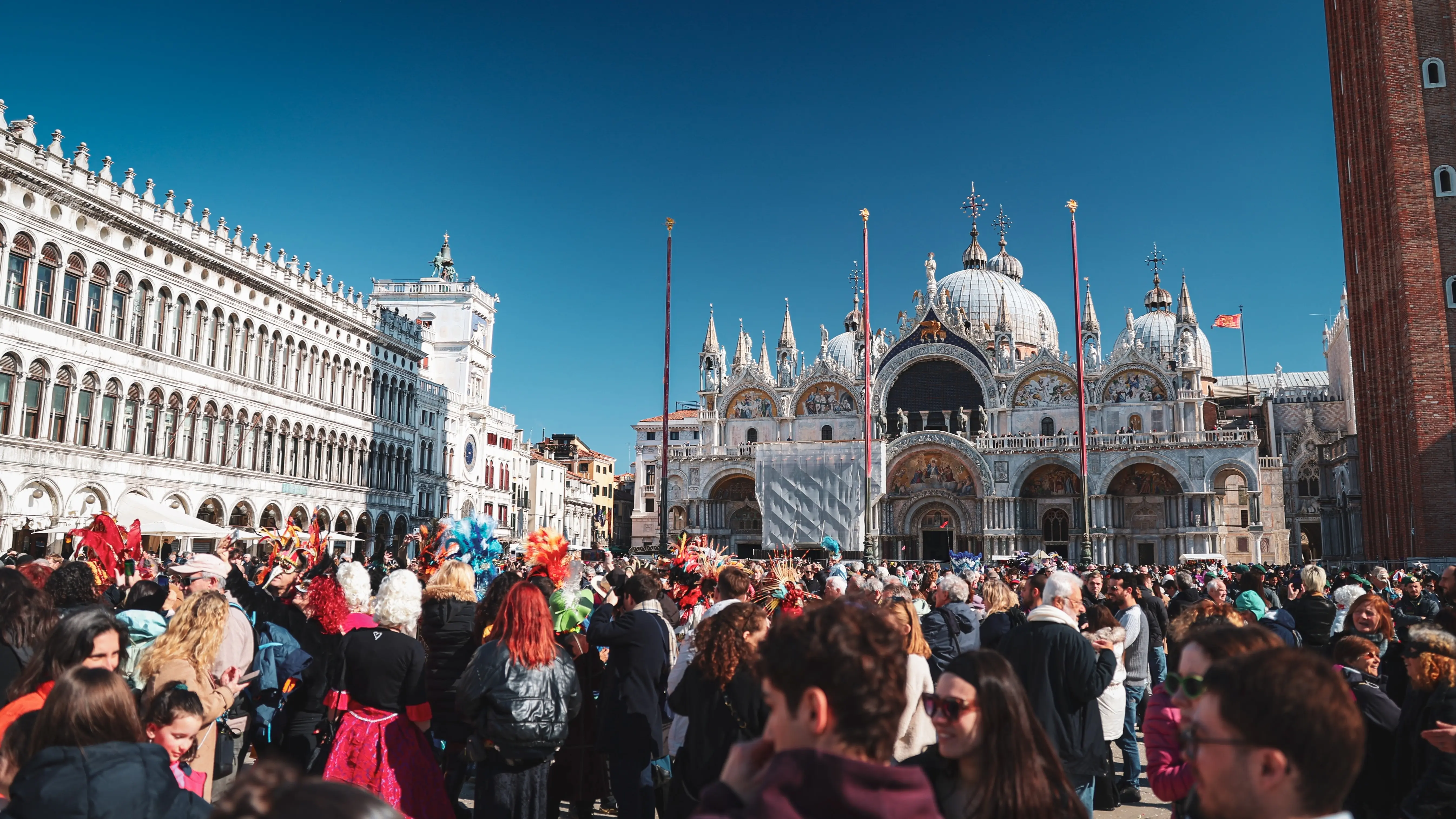
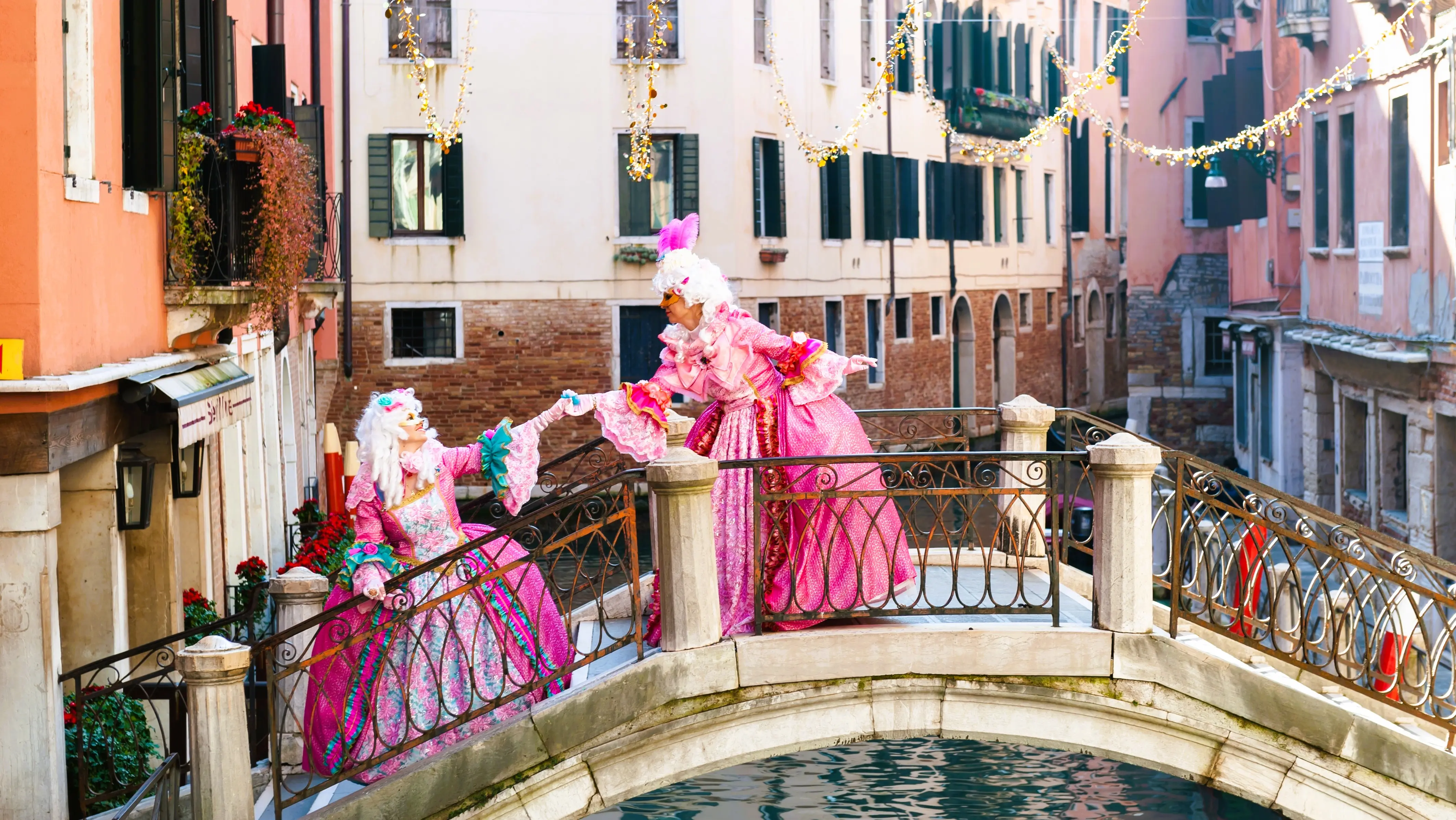
But some of the most powerful Carnival moments happen away from the crowds. Early mornings are particularly evocative. Costumed figures appear quietly along canals, standing near bridges or reflected in shop windows. There is no performance, no audience. Just presence. At these hours, Carnival feels less like an event and more like a shared understanding between the city and those willing to move slowly.
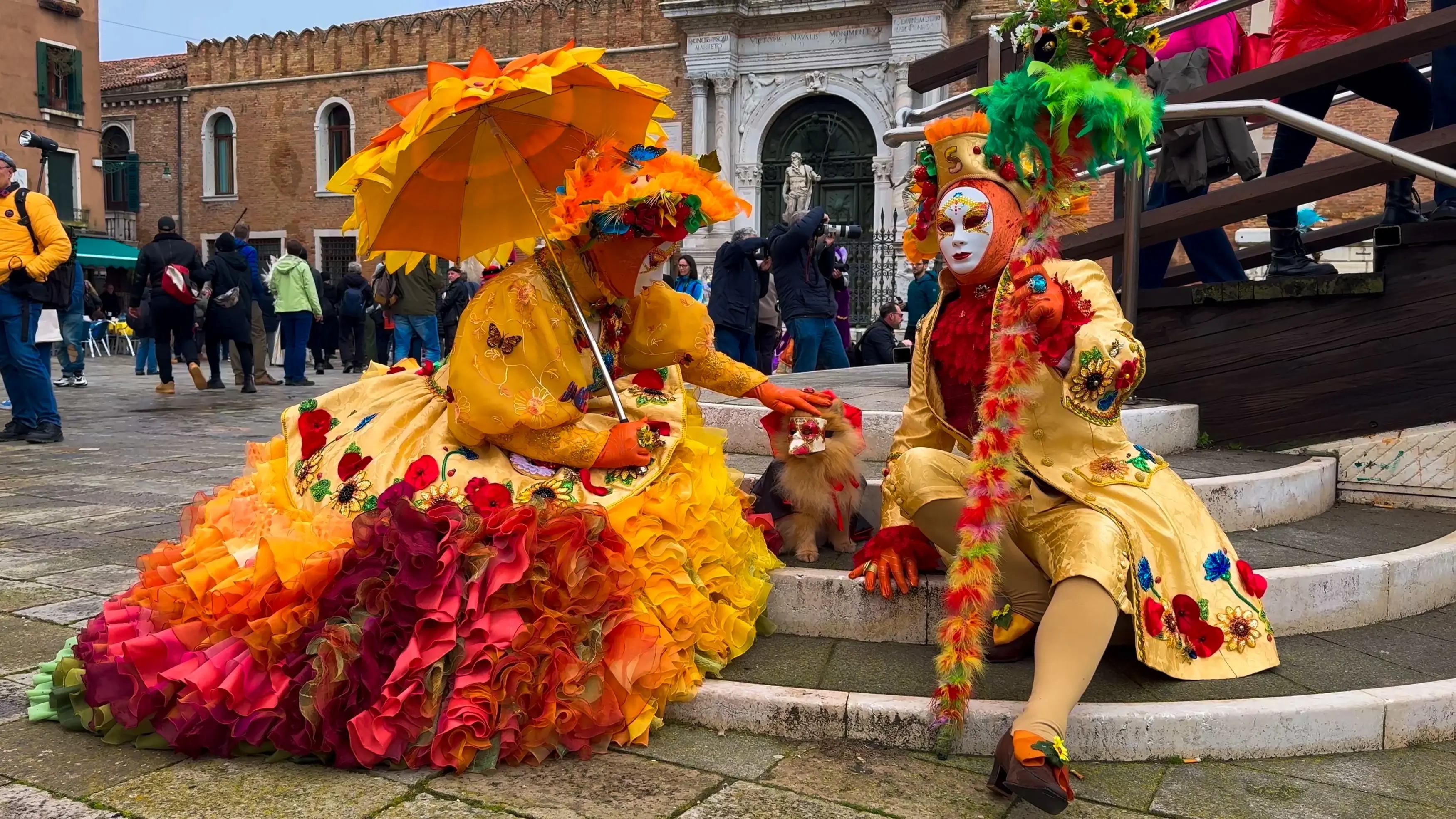
In neighborhoods like Castello and Cannaregio, Carnival remains subtle. Locals continue daily routines. Children wear small masks. Conversations unfold normally. Venice does not stop for Carnival, it absorbs it.
What to Wear to Venice Carnival (and How to Belong)
You do not need an elaborate costume to experience Carnival meaningfully. In fact, restraint often feels more appropriate than excess. A simple, well-crafted mask paired with neutral clothing allows you to participate without overpowering the moment. Masks are best purchased from reputable Venetian artisans rather than souvenir stalls. Quality matters here – not only for appearance, but for honoring a tradition rooted in craftsmanship.
Equally valid is choosing not to wear a mask at all. Observing Carnival, rather than performing within it, aligns beautifully with Venice’s quieter rhythms. There is dignity in watching, in noticing details, in letting the city unfold without inserting yourself into the frame.
Timing Your Visit: When Carnival Feels Most Authentic
Carnival typically takes place in February, culminating in the days leading up to Lent. Weekends draw the largest crowds, especially in central Venice. For a more reflective experience, weekday mornings and early evenings are ideal. Weather plays a role too. Fog, mist, and soft winter light enhance Carnival’s atmosphere, transforming the city into something cinematic and hushed. Venice in winter rewards patience – layers, warm coffee, and unhurried movement.
Why Carnival Still Matters: Identity, Concealment, and Freedom
Carnival endures because it expresses something essential about Venice. This is a city built on contradiction: stability on water, wealth through trade, order through flexibility. Carnival reflects that balance. It is not about escape. It is about acknowledgment – that identity is layered, that society functions best when it allows space for transformation, that beauty can be playful without losing depth. In a modern world increasingly defined by visibility and exposure, Venice offers a counterpoint: the power of concealment. The freedom found not in being seen, but in choosing how – or whether – to be known.
Bubbly Tips: Experiencing Venice Carnival Thoughtfully
- When to visit: Venice Carnival typically takes place in the weeks leading up to Lent, with peak festivities in the final weekend and Shrove Tuesday
- Best time for photos: Early morning (especially around Piazza San Marco and Piazzetta San Marco) before crowds arrive
- Costumes & masks: Wearing a mask is optional – observing is just as meaningful
- Where to wander: Piazzetta San Marco, quiet bridges, and the lagoon’s edge offer the most atmospheric encounters
- Mindset: Carnival isn’t a performance to consume – it’s a tradition to witness slowly
Final Thoughts
Carnival of Venice stays with you not because of spectacle, but because of tone. The way the city softens. The way sound carries differently. The way time seems suspended between centuries.
You remember a masked figure standing alone near the lagoon. A quiet canal reflecting candlelight. The feeling that Venice, for a moment, was allowing you to see beneath its surface – not through excess, but through intention.
Have you experienced Venice during Carnival, or would you prefer to observe it quietly from the edges? I’d love to hear how you imagine this season of disguise and revelation.

🌟 Everything You Need to Plan Your Dream Trip in 2026
- 🌟 Luxury Hotels - Find premium stays with Booking.com & Hotels.com
- 🏡 Vacation Rentals - Discover unique properties on VRBO
- 🏞️ Guided Tours - Explore with Viator or GetYourGuide
- 🎫 Attraction Tickets - Skip the lines with Tiqets
- 🚢 Ocean Cruises - Set sail with Cruise Direct
- 📱 International SIMs - Stay connected with Saily
- 🚗 Car Rentals - Budget-friendly options from Discover Cars
- 🌐 Secure VPNs - Browse safely with NordVPN
- 💶 Currency Exchange - Best rates with Wise
- 🗣️ Learn Languages - Master the local language with Babbel and Rosetta Stone