
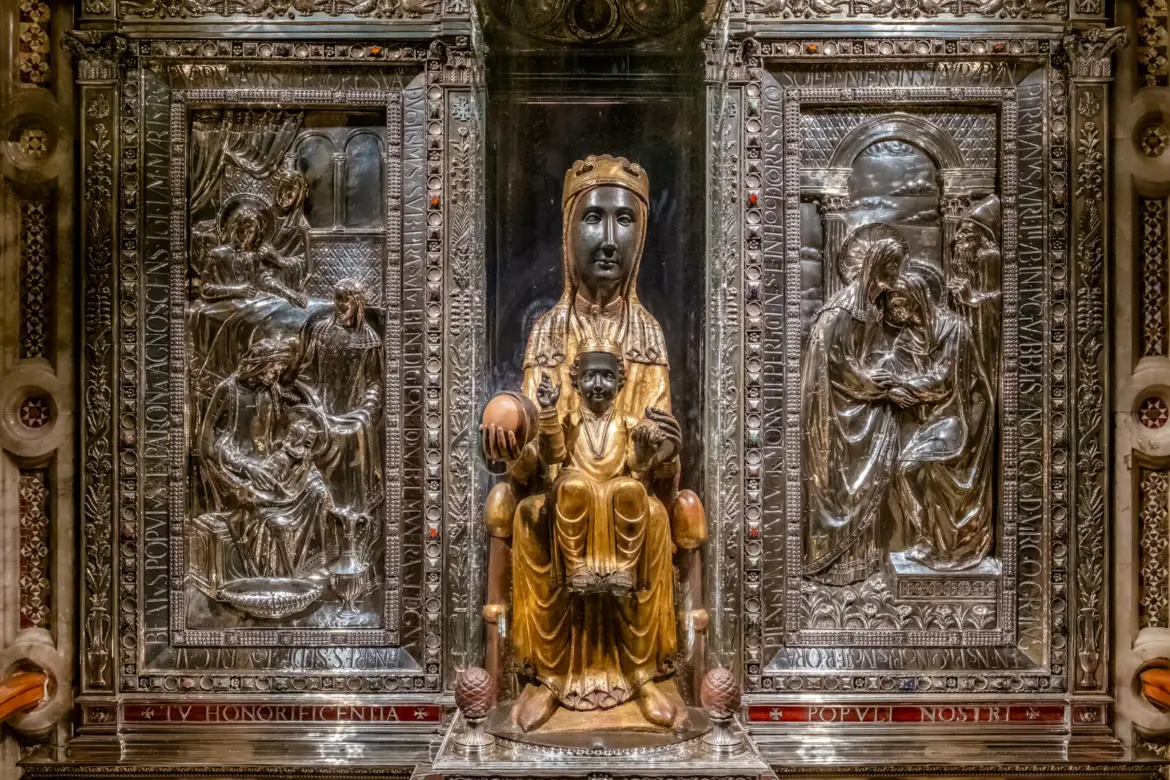
Montserrat is a mountain that feels ancient the moment you arrive – serrated peaks rising like stone cathedrals, layers of mist curling around cliffs, and a silence that settles into your skin. But the true heart of this sacred place lies inside the Basilica of Santa Maria de Montserrat, where visitors from around the world journey to meet La Moreneta (the Black Madonna of Catalonia or Our Lady of Montserrat or the Virgin of Montserrat).
My visit to her was one of the most moving moments of my time in Spain, not because she’s famous, but because she carries centuries of devotion, legend, and cultural identity in the quietest, most powerful way. This post weaves together her history, her symbolism, and what it truly feels like to meet her in person.
The Black Madonna of Montserrat at a Glance
🕊️ Identity: La Moreneta — a 12th-century Romanesque wood carving, one of Europe’s most venerated Black Madonnas
👑 Patroness: Of Catalonia since 1881 (Pope Leo XIII)
🔮 The orb: Visitors touch the sphere in her right hand — symbolizing the world — as they pass through her chamber
📖 Legend: Shepherd boys discovered the statue in a mountain cave (Santa Cova) after seeing celestial lights and hearing heavenly music. She became too heavy to move — a sign she wished to stay
🎵 Escolania: One of Europe’s oldest boys’ choirs (documented since 1307). Daily at 1 PM (Mon–Fri), noon (Sun). The Virolai hymn is unforgettable
⛪ Basilica: 11th-century origins, rebuilt after Napoleonic destruction. Gothic and Renaissance elements, gold leaf altar, raised walkway to La Moreneta’s chamber
🚂 Getting there: R5 train from Barcelona Plaça Espanya → cable car (Aeri) or rack railway (Cremallera)
👗 Dress code: Shoulders covered appreciated inside the basilica
📸 Photo note: Photography is restricted near La Moreneta — you’ll have about 30 seconds in her presence
A Little History: How La Moreneta Became the Soul of Catalonia
The Black Madonna of Montserrat has been cherished for nearly a thousand years, and yet her origin is wrapped in both history and legend. A medieval carving dated to the 12th century, she is believed to have been brought to Montserrat by monks during the early Middle Ages, though local lore pushes the story even further back.
According to tradition, shepherd boys discovered her statue inside a cave on the mountain after seeing strange lights and hearing celestial music. When local authorities tried to move her, she became impossibly heavy, a sign that she wanted to remain on Montserrat. That cave, the Santa Cova, became the earliest pilgrimage site, and the monastery grew around the devotion to her.
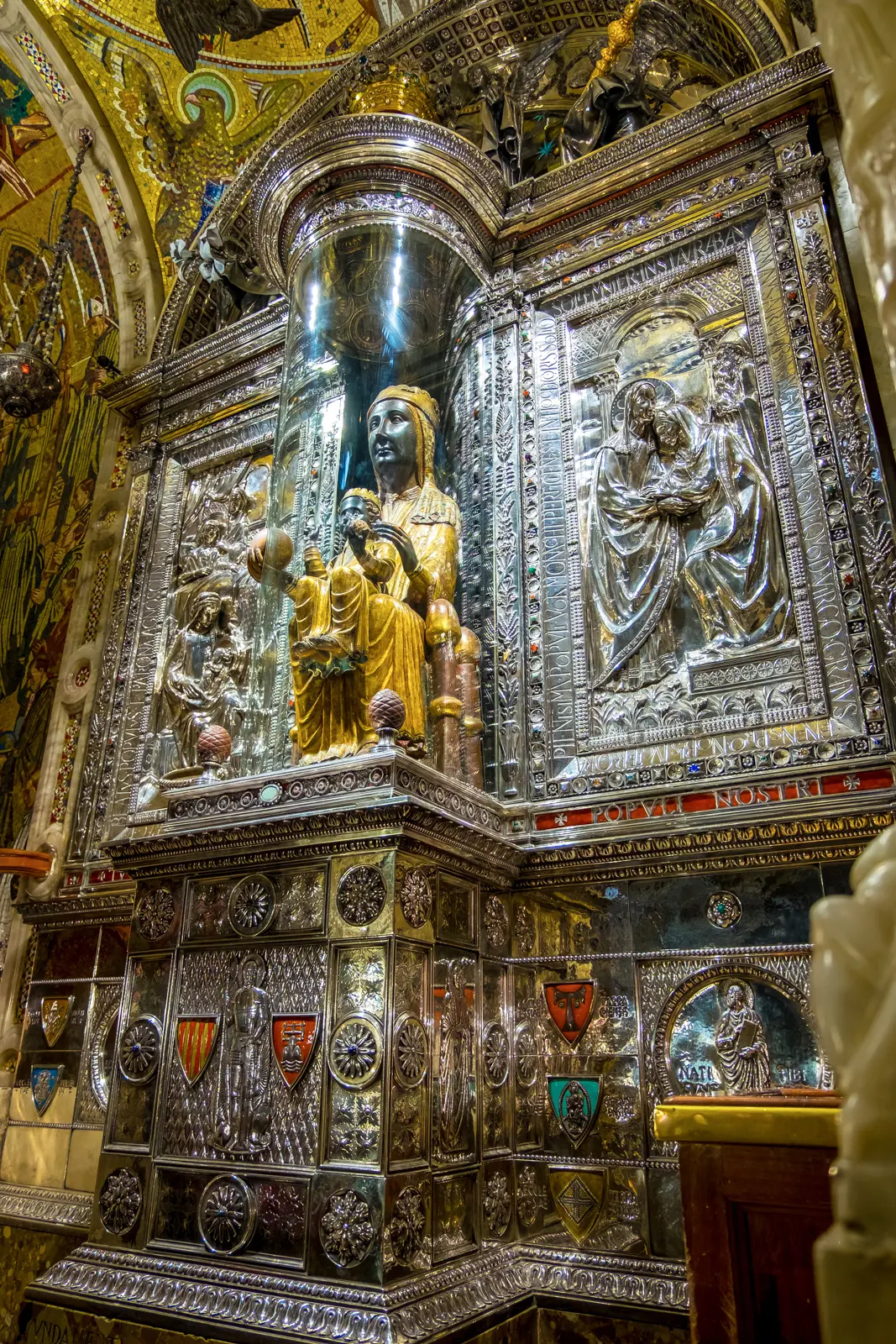
Her dark complexion has inspired centuries of interpretation. Some believe it symbolizes the universality of faith and the maternal warmth of the Earth. Others argue that the color comes from natural oxidation of wood varnish over the centuries. Whatever the reason, La Moreneta’s appearance is part of her identity, and the reason she is so deeply tied to Catalan culture. She is the patroness of Catalonia, a spiritual protector, and a symbol of endurance.
The Basilica: A Sacred Journey Through Light and Stone
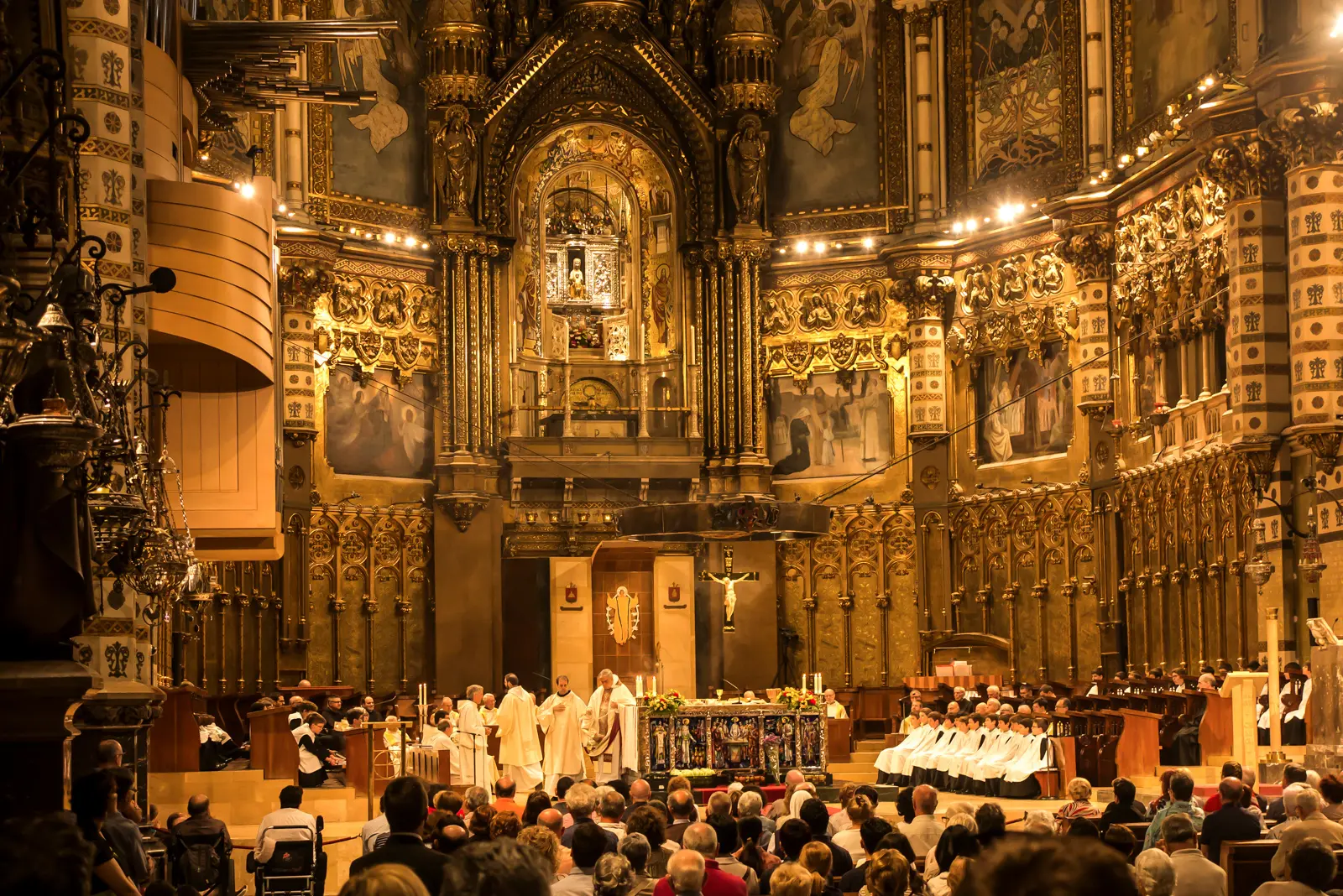
Stepping into the basilica feels like entering a place where time stands still. Its origins date back to the 11th century, though most of what we see today was rebuilt after the Napoleonic invasions. The architecture blends Gothic lines, Renaissance flourishes, and warm golden tones that soften even the busiest afternoon. As I walked inside, the atmosphere shifted immediately. Tall archways held pools of quiet light, gold leaf shimmered softly above the altar, and the murmur of visitors felt more like a prayer than a conversation. The basilica is grand but not intimidating; it invites you to slow down, breathe, and listen.
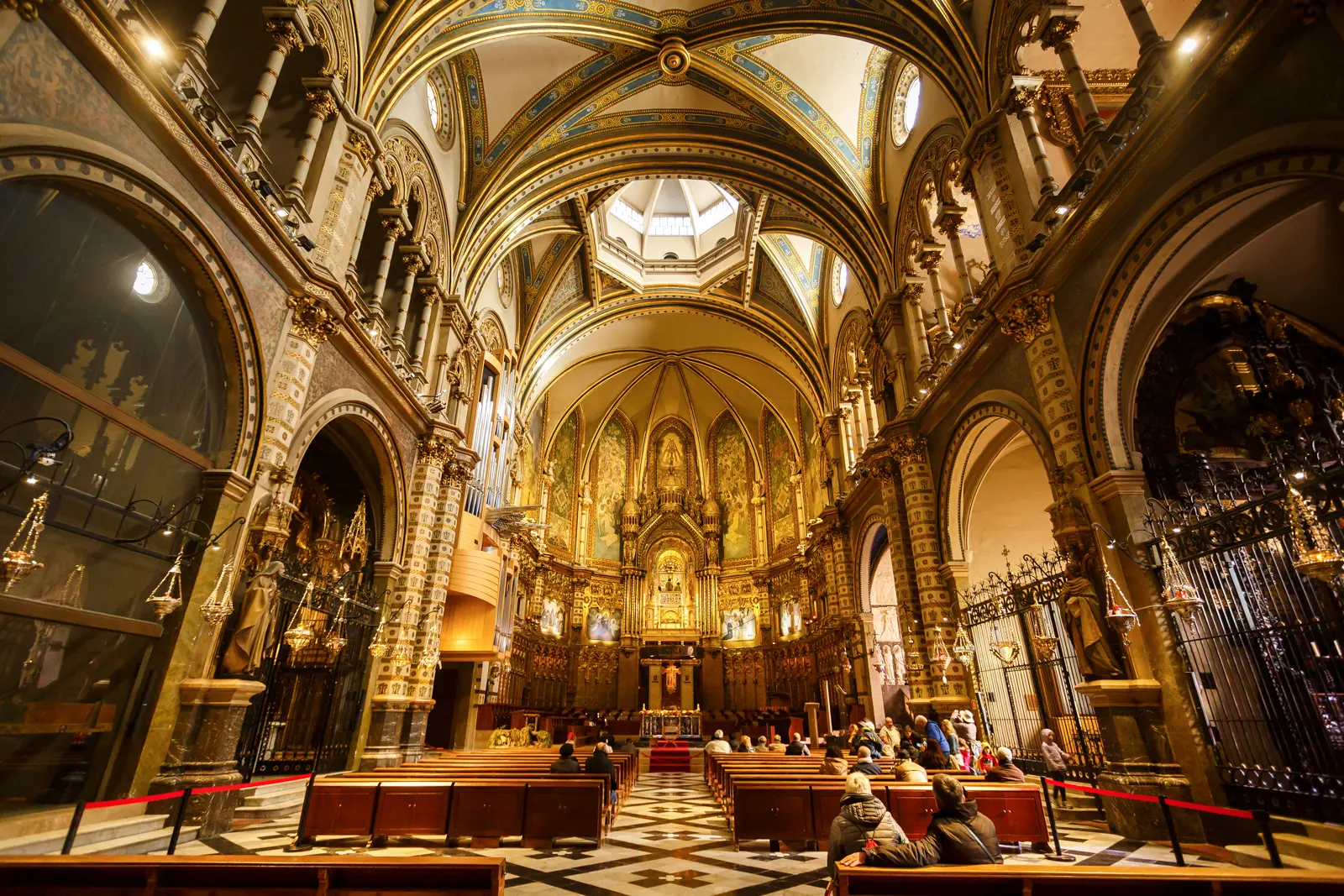
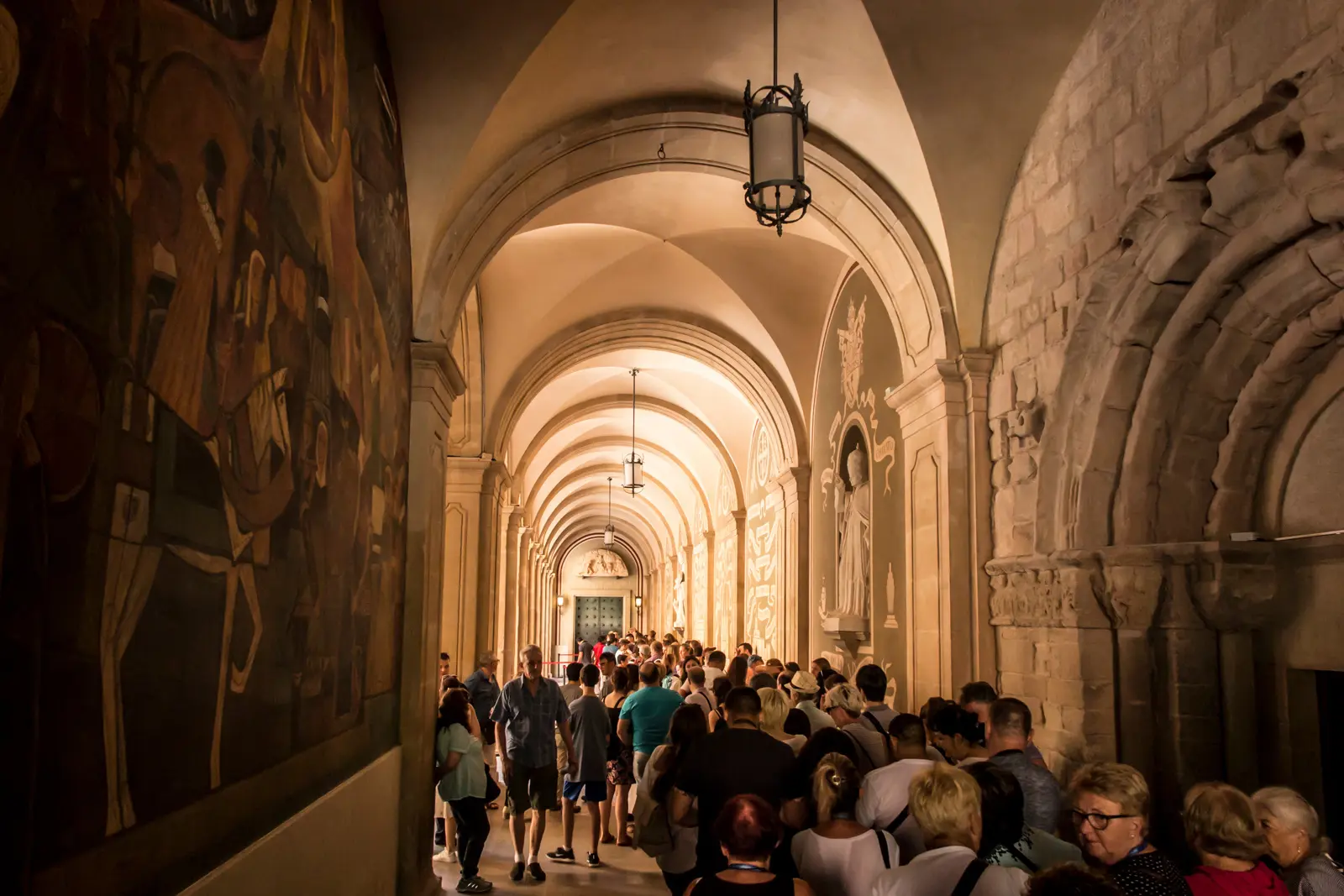
It is here, above the main altar, that the Black Madonna waits. A raised walkway guides visitors behind the altar, through narrow corridors lined with votive offerings left by pilgrims who came seeking healing, hope, or gratitude. The air becomes still, almost reverent, as you approach the small chamber where she sits.
Meeting La Moreneta: A Moment Carved Into Memory
There is no rush as you move forward. The pace of the line naturally slows because everyone, regardless of belief, seems instinctively aware that this is a moment worth savoring.
When I finally stepped into the chamber, she appeared exactly as I had imagined, yet somehow more striking. Seated on a throne of gilded decoration, her expression is serene and steady, almost timeless. She holds a sphere in her right hand, symbolizing the world, while the infant Jesus sits on her lap, extending a blessing to those who come before them. People gently place a hand on the orb. Some close their eyes. Some whisper something quiet and private. Some simply look up in silence. And while I’m not particularly religious, I felt an unexpected wave of emotion – a mix of gratitude, peace, and a strange sense of connection to centuries of people who had stood right where I was standing. The moment wasn’t grand or dramatic. It was gentle. Consoling. Human.
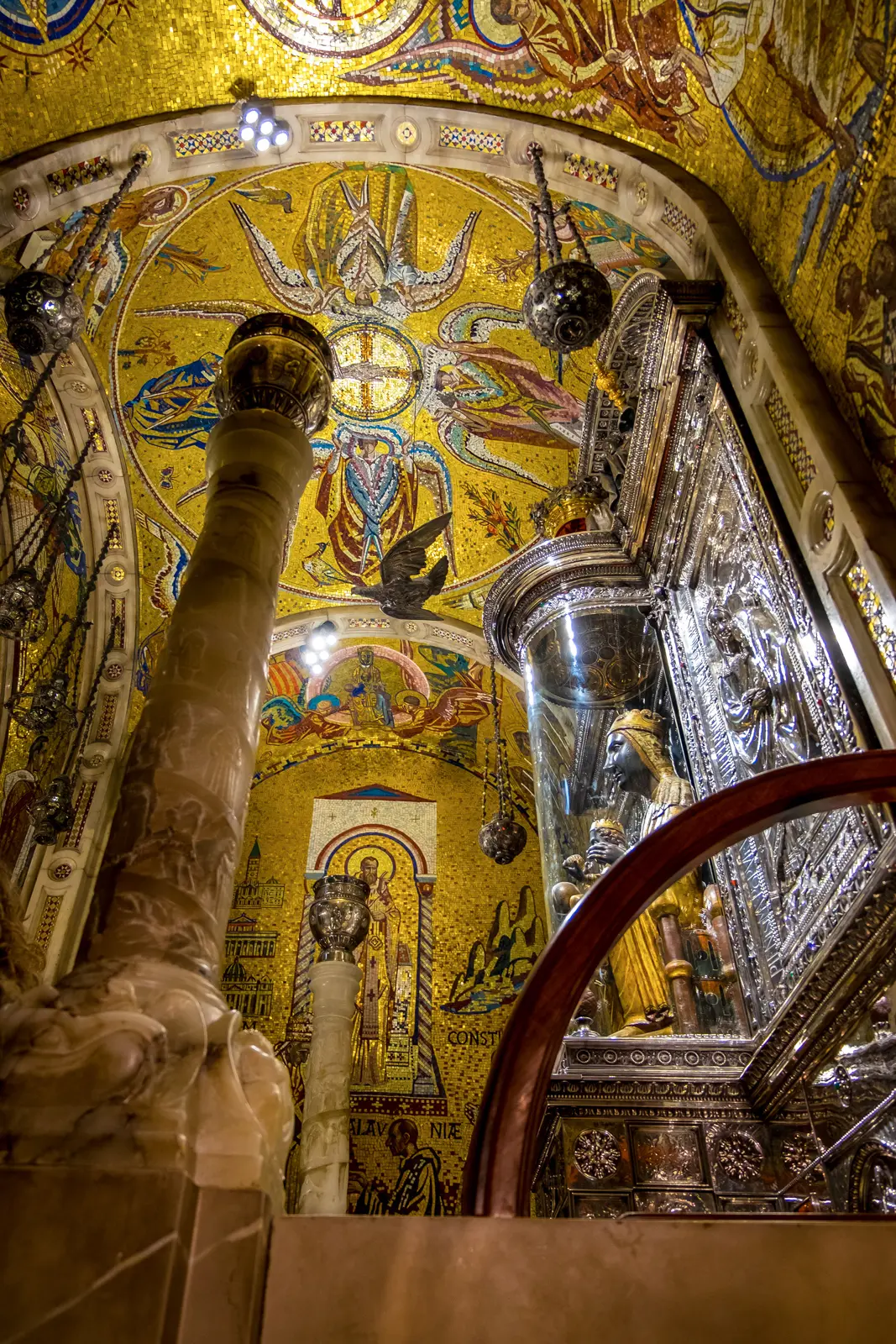
Afterward, visitors are guided toward a balcony overlooking the basilica from above. Seeing the sanctuary from this elevated view – candles flickering below, sunlight catching the gold of the altar – felt like the soft exhale at the end of a prayer.
The Soul of Montserrat: Sounds, Rituals, and Daily Life
Montserrat is not a museum. It’s a living sanctuary, sustained by the Benedictine monks who reside there. Throughout the day, you’ll see them moving through the courtyard in their black-and-white habits, often quietly offering guidance to visitors or preparing for mass. If you arrive at the right time, you might hear the Escolania, the famed boys’ choir that has sung here since the Middle Ages. Their pure, angelic voices fill the basilica with harmonies that seem to float through the air like a blessing.
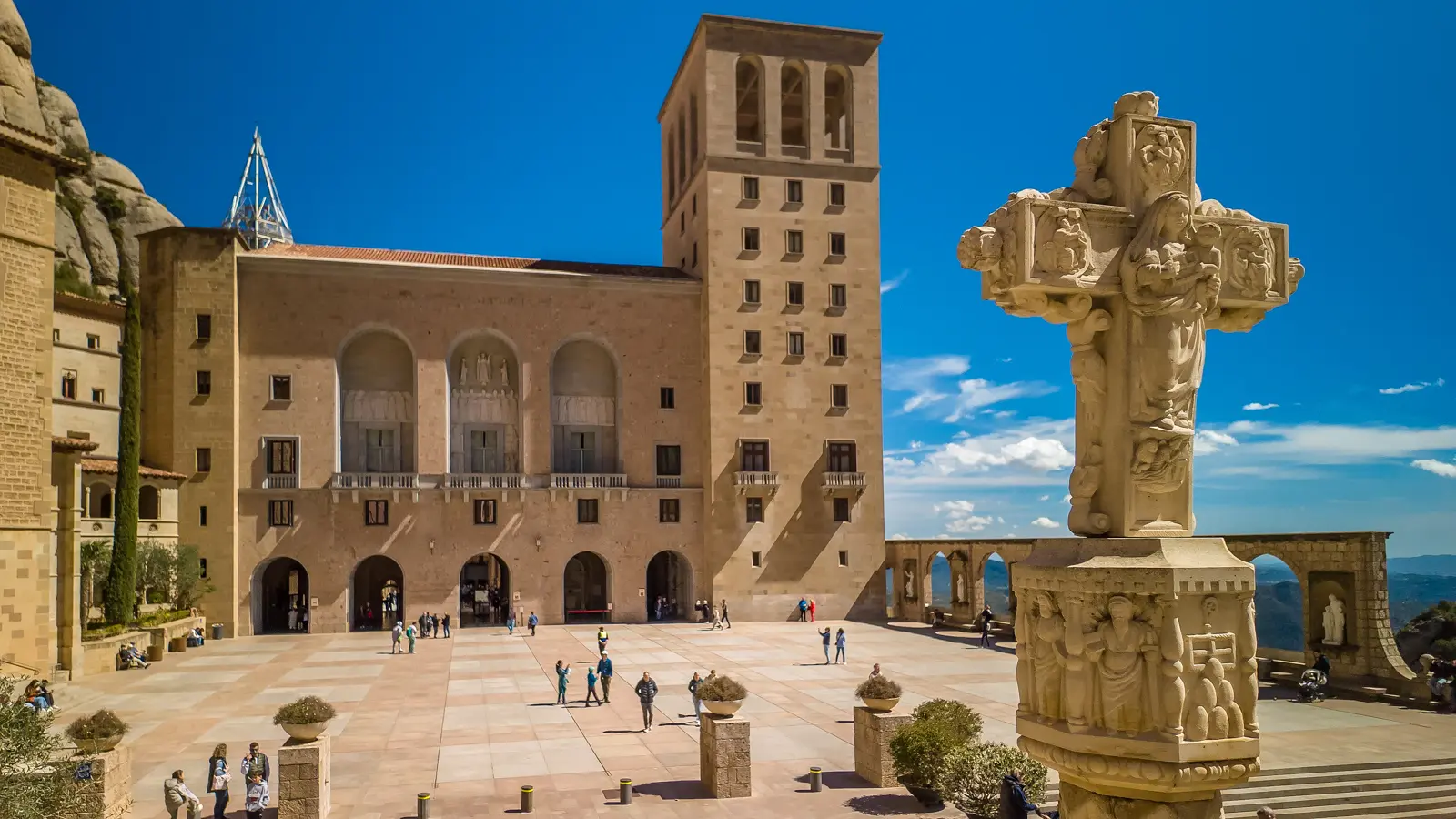
Even outside, the atmosphere carries a different rhythm – the soft hum of conversation, the distant toll of bells, the wind brushing against stone that has stood through wars, revolutions, and generations of devotion. Montserrat reminds you that faith isn’t just found in silence; it’s found in everyday life, in music, in footsteps, in history, and in the way people gather around something that gives them hope.
Bubbly Tips for Visiting the Black Madonna
- Arrive in the morning to avoid long queues for the statue.
- If you’re arriving from Barcelona, take the R5 train from Plaça Espanya, then choose either the cable car (Aeri) or the rack railway (Cremallera). Both are scenic, but the cable car is breathtaking.
- Check performance times for the Escolania choir if you want to experience their daily hymn.
- Wear respectful clothing inside the basilica (shoulders covered is appreciated).
- Move slowly through the line, not out of obligation, but because the experience is more meaningful when you let it unfold at its own pace.
- Stop at the viewing balcony after seeing her. It’s one of the most breathtaking angles of the basilica.
- Combine this visit with the Abbey, funicular, and trails, perfect for linking to your other Montserrat posts.
- Bring water and comfortable shoes, Montserrat’s altitude and dry air can surprise you.
Final Thoughts
The Black Madonna of Montserrat isn’t just a religious icon. She’s a symbol of Catalan pride, a keeper of stories, a quiet witness to centuries of hope and hardship, and for many travelers, a profoundly emotional moment.
Standing before her felt like pressing pause on the world, like being invited into a space where history, faith, and humanity overlap. Whether you visit out of curiosity, devotion, or simple wanderlust, she has a way of touching you softly and unexpectedly.
If Montserrat is a sanctuary carved into a mountain, then La Moreneta is its soul.

🌟 Everything You Need to Plan Your Dream Trip in 2026
- 🌟 Luxury Hotels - Find premium stays with Booking.com & Hotels.com
- 🏡 Vacation Rentals - Discover unique properties on VRBO
- 🏞️ Guided Tours - Explore with Viator or GetYourGuide
- 🎫 Attraction Tickets - Skip the lines with Tiqets
- 🚢 Ocean Cruises - Set sail with Cruise Direct
- 📱 International SIMs - Stay connected with Saily
- 🚗 Car Rentals - Budget-friendly options from Discover Cars
- 🌐 Secure VPNs - Browse safely with NordVPN
- 💶 Currency Exchange - Best rates with Wise
- 🗣️ Learn Languages - Master the local language with Babbel and Rosetta Stone